How to stay mentally healthy

Good mental health is characterised by a person’s ability to fulfil a number of key functions and activities, including : the ability to learn, the ability to feel, express and manage a range of positive and negative emotions, & the ability to form and maintain good relationships with others. Who doesn’t want to be strong mentally?

Here are some methods for good mental health :

1. Value yourself

While self-worth is more emotional, self-value is more behavioural. This is where we take the foundation of how we feel about ourselves and put it to work. Self-value is the driving vehicle that allows us to walk the walk and act in ways that align with what we value. This shows up in the way we talk to people or in steps we take to speak our truth. Both self-worth and self-value feed off of one another, but it’s helpful to point out the subtle differences. Treat yourself with kindness and respect, and avoid self-criticism. Make time for your hobbies and favourite projects, or broaden your horizons. Do a daily crossword puzzle, plant a garden, take dance lessons, learn to play an instrument or become fluent in another language

2. Give yourself

Volunteer your time and energy to help someone else. You’ll feel good about doing something tangible to help someone in need and it’s a great way to meet new people.

Healthy Ways to Take a Mental Break :

  • Get Outside. Getting outside and enjoying the fresh air is a great way to renew your energy
  • Be Active
  • Meditate
  • Treat Yourself
  • Drink Water
  • Make Time to Socialise

3. Take care of your body

Taking better care of our bodies means increased energy levels, and a better ability to accomplish our daily goals. It means better ability to concentrate on any given task, and that our tasks will take less time to complete. Taking care of yourself physically can improve your mental health. Be sure to :

  • Eat nutritious meals
  • Avoid smoking and vaping
  • Drink plenty of water
  • Exercise, which helps decrease depression and anxiety and improve moods
  • Get enough sleep. Researchers believe that lack of sleep contributes to a high rate of depression in college students. 

4. Surround yourself with good people

When you surround yourself with positive people, you’re more likely to adopt empowering beliefs and see life as happening for you instead of to you. Just as you benefit when you surround yourself with people who make you happy, you suffer when those in your business or social circles are negative or narrow-minded. People with strong family or social connections are generally healthier than those who lack a support network. Make plans with supportive family members and friends, or seek out activities where you can meet new people, such as a club, class or support group.

5. Quiet your mind

Try meditating, mindfulness or prayer. Relaxation exercises and prayer can improve your state of mind and outlook on life. In fact, research shows that meditation may help you feel calm and enhance the effects of therapy. Silencing the mind does not mean stopping to think at all. It means thinking when you need to think, but keeping the mind calm when you don’t need to think.

6. Learn how to deal with stress

Like it or not, stress is a part of life. Practice good coping skills: Try One-Minute Stress Strategies, exercise, take a nature walk, play with your pet or try journal writing as a stress reducer. Also, remember to smile and see the humour in life. Research shows that laughter can boost your immune system, ease pain, relax your body and reduce stress.

7. Set realistic goals

Decide what you want to achieve academically, professionally and personally, and write down the steps you need to realize your goals. Aim high, but be realistic and don’t over-schedule. You’ll enjoy a tremendous sense of accomplishment and self-worth as you progress toward your goal. Wellness Coaching can help you develop goals and stay on track.

8. Avoid alcohol and other drugs

Keep alcohol use to a minimum and avoid other drugs. Sometimes people use alcohol and other drugs to “self-medicate” but in reality, alcohol and other drugs only aggravate problems.

Some ways to avoid using alcohol :

  • Keep a diary of your drinking
  • Don’t keep alcohol in your house
  • Choose alcohol-free days
  • Watch for peer pressure
  • Set a drinking goal

9. Break up the monotony

Although our routines make us more efficient and enhance our feelings of security and safety, a little change of pace can perk up a tedious schedule. Alter your jogging route, plan a road-trip, take a walk in a different park, hang some new pictures or try a new restaurant.

5 Ways to Break the Monotony of Your Routine

  • Start your morning with something different
  • Add some new scenery to your day
  • Shake up your lunch break
  • Listen to music
  • Review your habits regularly

10. Get help when you need it

Seeking help is a sign of strength not a weakness. And it is important to remember that treatment is effective. People who get appropriate care can recover from mental illness and addiction and lead full, rewarding lives.  Asking for help allows us to surround ourselves with people who can make us feel good and facilitate further development. These people create optimism and hope that we are able to deal with challenging situations, which improves our resilience.

Procrastination

Have you ever put off your homework till the last minute? Or perhaps studied for the test only a day before? Maybe delayed writing an essay till the last possible hour? All of us are guilty of delaying tasks and putting off important work until a later date.  This is essentially procrastinating. It is the action of purposefully delaying any task or activity. In this procrastination essay, we will see the reasons and the solutions to this problem.

As we will see in this procrastination essay, this is not a rare phenomenon. Almost everyone is guilty of it at some point in their lives. So we ask ourselves this question – why do people procrastinate even when they are so busy most of the time? We live in the 21st century, where time is our most precious commodity. And yet, we waste this precious resource procrastinating our time away.

Procrastination Essay

Why do we Procrastinate?

The reasons for a person procrastinating can be varied. It depends on person-to-person and situation-to-situation. However, there are some universal reasons that cause people to delay their tasks and actions. One of the most important ones is the fear of failure. When a person delays doing an important task or is disinterested in finishing it, the cause could be a deep-rooted fear of failure. It is in human nature to avoid and fear failure. So by choosing to never finish the task, we can avoid the consequences as well.

Another reason is the lack of focus and determination. Feeling directionless and unfocused can often cause people to lose their wills to do their jobs. This leads to procrastination. Sometimes the lack of goals and objectives is also the reason a person loses their focus. Since they do not have an end-goal in mind, they end up wasting energy in other useless tasks.

There are other reasons a person may procrastinate. Sometimes, a person may be too much of a perfectionist. This distracts them from other tasks. And then there are other reasons like laziness, low energy levels, easy distractions, etc.

8 Ways to Stop Procrastination

How to Stop Procrastinating?

While procrastinating is a very natural fault we all share, if it gets out of hand it can get quite troublesome. Excessive procrastination can disrupt your life and cause you to lose control of your schedules and deadlines. So when the procrastination gets out of hand, you need to reign it in and get back in control.

One way to stop procrastinating is to break down the dreaded task into little steps. If the work or the task is too overwhelming, we tend to procrastinate about it. But if the job is broken down, then we can tackle one step at a time without being overwhelmed. You can also create a detailed timetable or a timeline of some sort to help you with the steps.

At other times changing your work environment may be beneficial. It can provide you with the boost necessary to stop procrastinating and finish the task. If possible get a friend or a parent to keep a check on your progress. It helps keep the motivation levels up and encourages you to finish the task on time.

The main concern is not to over-focus or blame yourself for procrastinating sometimes. We are all a victim to procrastination from time-to-time. As long as it does not derail your entire schedule, give yourself a break and just get back to work!

The Opposite of Procrastination – Association for Psychological Science –  APS

10 Ways To Stop Procrastinating

So why do I still do it? In fact, how come millions of people all over the world procrastinate even when they know they will regret it? More importantly still, is there anything that you can do to stop wasting your time, put an end to your procrastination, and get your work done? I discovered some great trick which helped me stay focused on my work, and saved me the embarrassment of missing crucial deadlines. Find out 10 tricks which helped me stop procrastinating, and can help you as well!

1. Don’t overthink it:
A plan needn’t be perfect. It should just get the work done. Spending hours, days, or even weeks planning something, is only going to cause you endless delays.

2. Don’t wait too long to start:

So you have come up with the perfect plan to do it. Great! So why aren’t you starting? Stop waiting for the perfect moment, there is no such thing. Start today. Start this very instant. You will thank yourself later.

3. Divide and conquer:
If the British could rule over half the world with this strategy, you can certainly use it to get that priority assignment done! Break it down. Start small, and just keep going. Divide, and conquer it all!

4. Stick to your deadlines:
When you set a deadline for yourself, it is somewhat easy to not follow it. Follow them anyway. Make it a habit. Self-discipline is the only way to conquer procrastination.

5. Remove all obstacles:
Whether you are studying or have an important project submission, it is easy to find things to keep you distracted. Identify what these commonly are, and eliminate them before you start work.

6. Work with others:
Teams are made for a reason. They not only reduce your overall work load, they also keep you focused. Work with other people and surround yourself with them. If you have to study, go to the library or the common room.

Say no to Procrastination. Start... - Union Bank of Nigeria | Facebook

7. Broadcast your goals:
Seek support from your friends and let them know what you are trying to do. Tell them your goals. Their positive feedback will inspire you to work harder.

8. Ask an expert:
There will be people who have already achieved what you are trying to do. Seek them out if you can and ask them for the strategy that helped them succeed.

9. Stop making your life difficult:
There is no need to complicate things. Sometimes a task can be very simple, and we just keep making it harder by delaying or not planning properly. Do yourself a favour and simplify your goals whenever you can.

10. Be sure of why you are doing it:
Setting a goal, such as Complete this assignment in 5 hours is a great start. But what is your end goal? How will you benefit? Remind yourself why you are working so hard, and it will help you stay focused.

So now you have my 10 simple ways to get work done. They helped me stop procrastinating and I hope they will help you succeed as well!

Time Management: Definition and Importance

For busy businesses, time management is critical so that they can prioritize all of their job responsibilities and reach their objectives more quickly. You’ll be able to take on new possibilities and build your business in a sustainable way if you properly manage your time.

In this article, let’s see the definition and importance of Time Management.

What is Time Management?

Time management is the process of planning out your available time and managing the amount of time you spend on various tasks in order to operate more efficiently. Some people find it easier to manage their time than others, but adopting routines can help anyone improve their time management skills. Your work and well-being may suffer as a result of poor time management, which can lead to:

  • Creating low-quality work
  • Failure to meet deadlines
  • Increasing your level of stress
  • Negatively affecting your work-life balance
  • Putting your professional reputation in jeopardy

Importance of Time Management

Time management is vital because it allows you to organize your workday so that you may grow your business while maintaining a healthy work-life balance. Here are seven advantages of effective time management:

1. In less time, accomplish more

One of the most significant benefits of time management is that it enables us to be more productive by allowing us to regulate how we spend our time. We can focus more effectively on vital tasks, resulting in enhanced efficiency. Consider a car being driven slowly by someone who is always staring out the window and talking on the phone. Consider another car being driven by someone who is focused on driving at the best possible speed to get to their destination as quickly as possible. That is what effective time management can accomplish.

2. Improve the quality of your job

You are required to offer work of a specific quality and standard as a dedicated employee. One can easily deliver a higher quality of work by properly utilizing time and prioritizing duties. Prioritization aids in focusing on critical tasks by placing them at the top of the priority list, allowing you to devote your whole attention and focus to them. As a result, the work’s quality has improved.

3. Reduce Your Anxiety

When you have a long list of duties to complete both at work and at home, it’s easy to grow nervous. Good time management may help you prioritize your to-do list and set aside the necessary time for your most important tasks, so you know exactly what you need to get done and how much time you have. Prioritizing your chores and allowing adequate time to complete them will help you feel less stressed.

4. A higher standard of living

Effective time management skills can improve your life outside of the office as well as your working life. When you have your business life under control, you have more time to focus on your personal life and relationships. Knowing that your responsibilities and activities are on schedule will help you relax in your personal life. Your quality of life increases instantly as you feel calmer and less worried.

5. Time to ponder

Time management tactics that work provide you extra time to think and plan. Planning your schedule allows you to devote more time to your most important tasks. You’ll have more time to strategize, which means you’ll have more time to focus on reaching your objectives. You won’t be able to make progress on your most important goals if you don’t manage your time well. It’s just as vital to take time to consider how to go forward with your goals as it is to take action.

Conclusion

Effective time management skills can benefit both your business and your personal life. You enhance your capacity to get things done, make better judgments, and, most importantly, obtain total control of your major priorities when you learn to manage your time on a regular basis.

Disaster & Disaster Management

A disaster is a sudden, calamitous event that seriously disrupts the functioning of a community or society and causes human, material, and economic or environmental losses that exceed the community’s or society’s ability to cope using its own resources. Though often caused by nature, disasters can have human origins.

The word disaster implies a sudden overwhelming and unforeseen event. At the household level, a disaster could result in a major illness, death, a substantial economic or social misfortune. At the community level, it could be a flood, a fire, a collapse of buildings in an earthquake, the destruction of livelihoods, an epidemic or displacement through conflict. When occurring at district or provincial level, a large number of people can be affected. Most disasters result in the inability of those affected to cope with outside assistance. At the household level, this could mean dealing with the help from neighbours. At the national level, it could mean assistance from organizations, various non-governmental organizations (NGOs) and government agencies themselves. As the limiting factor in disaster response is often the coping capacity of those affected, improving their resilience when responding to disasters is a key approach to lessening the consequence of a disaster.

There is no single measure of a disaster that can capture the full scope of a disaster. A common measure is the number of people killed or affected. The individual will consider the impact on his or her family and livelihood. Disaster managers will assess the speed and success of the disaster response. Economists will measure physical loss to houses and buildings and loss of production. Politicians will assess political damage from a poor response by state agencies. Health workers will consider the resources required to contain an outbreak of Ebola or Coronavirus. Others may focus on the nature of the hazard, the social consequences and the impact to specific elements of the infrastructure. To think seriously about a disaster means we must consider all affected and their losses both in the immediate and the longer term.

A disaster may occur with or without a warning phase. A response is made following a disaster. The response may be helped substantially by any preparedness actions which were made before the disaster occurred. Relief activities occur during the emergency phase, which follows the impact of the disaster.

General Effects of Disasters

 The typical effects of disasters may be one or more of the following :

  • Loss of life
  • Injury
  • Destruction of property, plantations and crops
  • Disruption of production, lifestyle & transport
  • Loss of livelihood and occupation to people
  • Disruption to essential services like electricity, water supply and gas supply
  • Damage to national infrastructure
  • Disruption of communication and other networks
  • Disruption to government systems and schemes
  • Shortage of food resources
  • Spreading of diseases
  • National economic loss
  • Sociological effects
  • Psychological after effects.

Types of Disasters

There are 2 major types of disasters :

1. Natural Disasters

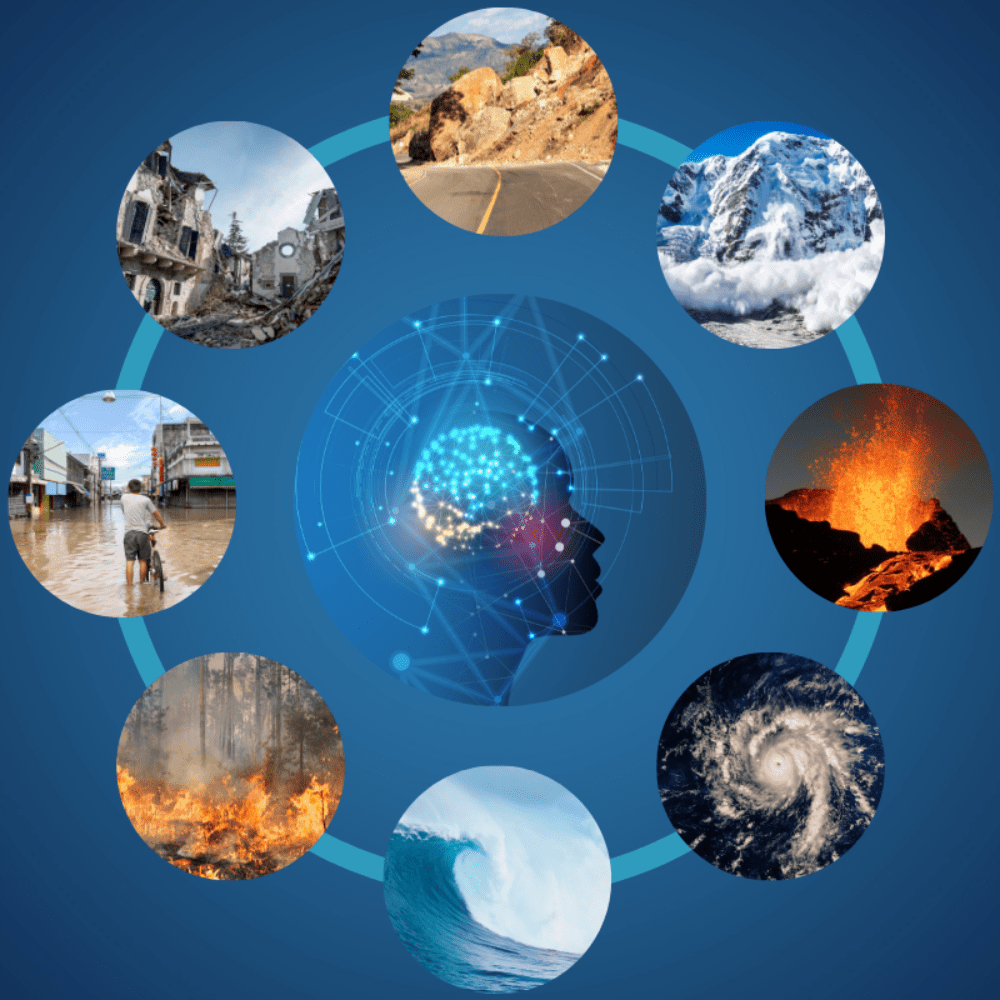
A natural disaster can be defined as a major event brought about by the natural processes of the Earth that causes widespread destruction to the environment and loss of life. The list of natural disasters include weather phenomena such as tropical storms, extreme heat or extreme cold, winds, floods, earthquakes, landslides and volcanic eruptions.

Management of Natural Disasters

  • Early warning systems can alert costal populations of approaching tsunamis and they can give populations time to be evacuated from danger areas.
  • Responsible land use can reduce the risk of landslips caused by unchecked felling of trees. For other events classified as natural disasters, risks can be dramatically reduced through careful planning.
  • Construction codes when enforced can reduce loss from earthquakes. Governments can institute measures to assist in extreme cold and extreme heat.
  • Food security programmes can protect a population against food crisis arising from pests and failed crops.
  • Surveillance systems and high coverage by routine immunization programmes can help prevent outbreaks of disease.
  • Social programmes can reduce vulnerability to disasters which otherwise could not be controlled.

Types of natural disaster

Natural disasters may be broadly grouped into major and minor types depending upon their potential to cause damage to human life and property. The disasters like earthquakes, volcanic eruptions, droughts, floods and cyclones could be regarded as major types. The disasters like hailstorms, avalanches, landslides, fire accidents, etc. whose impact is localised and the intensity of the damage is much less than the others may be categorized as minor disasters.

Natural disasters can be categorised into 4 parts :

  • Geophysical (e.g., Earthquakes, Landslides, Tsunamis and Volcanic Activity)
  • Hydrological (e.g., Avalanches and Floods)
  • Climatological (e.g., Extreme Temperatures, Drought and Wildfires)
  • Meteorological (e.g., Cyclones and Storms/Wave Surges)

2. Man-Made Disasters

Man-made disasters are extreme hazardous events that are caused by human beings. Some examples of man-made disaster emergencies include chemical spills, hazardous material spills, explosions, chemical or biological attacks, nuclear blast, train accidents, plane crashes, or groundwater contamination.

Man-made disasters have an element of human intent, negligence, or error involving a failure of a man-made system, as opposed to natural disasters resulting from natural hazards. Such man-made disasters are crime, arson, civil disorder, terrorism, war, biological/chemical threat, cyber-attacks, etc.

Man-made disasters can be caused by :

  • Environmental Degradation
  • Pollution
  • Accidents (e.g., Industrial, Technological and Transport usually involving the production, use or transport of hazardous materials)

Though weather and geologically related disasters are considered to have generated the greatest number of deaths and economic loss, disasters generated by humans are increasing in importance. As society has become more complex, it is evident that people are increasingly responsible, directly or indirectly, for the consequences of events previously ascribed to forces beyond their control. Globalization is now carrying industrial production to previously agrarian societies. The risk from the unintended release of hazardous materials is becoming ever more widespread. Potentially hazardous products are now available in communities and populations which do not have adequate regulations governing their use and, in fact, may not even be aware of their presence or health risks. Rapidly increasing transport of people and commodities across continents means that transportation disasters pose increasing threats to millions.

Disaster Management

Disaster Management can be defined as the organization and management of resources and responsibilities for dealing with all humanitarian aspects of emergencies, in particular preparedness, response and recovery in order to lessen the impact of disasters.

Disaster management conveys the important idea that protecting populations and property also involves the estimation of risks, preparation, activities which will mitigate the consequences of predictable hazards and post-disaster reconstruction in a way that will decrease vulnerabilities. An important goal is building a culture of awareness that preparation is not only possible, but also will greatly reduce the consequences from disasters in terms of human and economic loss.

An effective response to disaster begins with effective planning, but must include many other steps. Each of these steps depends on the strength of other links in the disaster management chain. While no one organization or group ‘owns’ a disaster, the ultimate responsibility rests with governments to protect its people against disaster. No government can carry out these responsibilities without cooperating with many other groups in a country. Disaster management planning is often seen as a separate activity from the main functions of governments and organizations.

Conclusion :

Disaster management is the only way to mitigate the effects of all these hazards. Advance planning is always needed to keep the items of emergency for any disaster. Guidelines are also to be prepared in the form of booklets and circulated to the educated individuals. Awareness camps are to be organised for public. Training is yet another initiative. Training involves the duties and responsibilities, efforts to sustain, role of employees/NGOs, risks, errors, behavioural patterns, recovery techniques, communication channels, safety rules, priorities and security measures. Knowledge of water quality, sanitation, first aid, emergency medicines, electricity controls and gas usage are needed. Evacuation, reporting and alert procedures, are the other major initiatives. Proper insurance policies, alterations to existing buildings, changes in business locations and other resources are to be planned, for future disaster mitigation.

How to become A Leader

Photo by Rebrand Cities on Pexels.com

Transformational leaders are positive, empowering, and inspiring. They value followers and inspire them to perform better. So what can you do to embrace these valued leadership qualities and become a stronger and more effective leader?

Understand Your Leadership Style: Understanding your current leadership style is essential. What are your strengths? Which areas need some improvement? One way to start assessing your skills is to take this leadership style quiz to get a general idea of how you lead.

Once you have completed the quiz, read about the major characteristics of your dominant style. Are these qualities helping or hindering your leadership? Once you’ve determined which areas need some work, you can begin looking for ways to improve your leadership abilities.

Encourage Creativity: One way to foster creativity is to offer challenges to group members, making sure that the goals are within the grasp of their abilities. The purpose of this type of exercise is to get people to stretch their limits but not become discouraged by barriers to success.

Show Passion: You can develop this leadership quality by thinking of different ways that you can express your zeal. Let people know that you care about their progress. When one person shares something with the rest of the group, be sure to tell them how much you appreciate such contributions.

Communicate Effectively: Another important quality of transformational leadership involves a focus on providing one-on-one communication with group members. Transformational leadership is effective when leaders are able to communicate their vision to followers, who then feel inspired and motivated by this vision.

Part of the trust-building process is creating an environment where it’s safe to take risks and allows you and your employees to comfortably exchange candid, honest and direct feedback without the fear of being punished.

It’s important you provide ample channels for two-way communication between employees and managers, and also solicit and reward them for their ideas and contributions. This facilitates progress toward reaching organizational goals. As a leader, you should foster trust and cooperation. Leaders can paint a vision of the future that inspires the team to do whatever it takes to get there.

And as a coach, you have to inspire action that will help execute that goal. Reinforce an honest and candid environment without taking information personally. Equally treat everyone like you would want to be treated.

Give credit where credit is due. Say “thank you,” be encouraging, and try to put yourself in their shoes to better understand their everyday challenges.

You have to support and assist your team. Give them the confidence to take risks and speak up without being punished.

When the mistake is yours, take ownership. Don’t try to blame someone else, the situation or a circumstance.

Be credible – people want to follow an honest leader. Be candid about why things didn’t work out, learn from the mistake and move on. People will trust someone who actively displays honesty. As you work toward developing some of these leadership qualities, don’t forget to look to your followers for feedback and inspiration. Pay attention to the things that have been effective in the past and always be on the lookout for new ways to inspire, motivate, and reward group members.

Why is Starbucks so Successful? Here are 6 Reasons behind it…

Its success stems from the fact that it was able to deliver an experience that revolutionised the way the world views coffee shops and how many of us drink coffee outside of our homes. Starbucks has created a space in between home and work where people can unwind, enjoy a cup of coffee, and take in the appealing atmosphere. Starbucks competes not with other coffee companies, but with going to the movies.

Photo by Adrianna Calvo on Pexels.com

The following are the primary components of the company’s success formula:

1. Core Competence and Visions: The Company’s primary job or responsibility is to ensuring that the organisational culture is consistent with the types of individuals they want to attract and retain. Starbucks strives to instil a sense of belonging among its staff and consumers, as well as trust and faith in the company’s values. The quality of the coffee and the quality of the experience are what keep their consumers coming back, and the experience comes to life thanks to the personnel. Starbucks believes in a successful, competitive business approach aided by a strong commitment to the product. The Company’s good leadership and management strategy has resulted in the brand’s outstanding success and a clear vision of core competence. The company’s desire to create the most recognisable brand was fueled by a well-thought-out planning and positioning approach.

2. Promotional Patience: Starbucks has decided to avoid what would be considered standard marketing techniques, which is a departure from the norm. By depending on cafés to advertise themselves, a major reliance on a strong brand and word-of-mouth to spread a good reputation is unavoidable. Sutter (2003) also claims that effective positioning of the Starbucks environment uses powerful marketing techniques to create a setting that encourages individuals to study, hang out, and read.

3. Employee’s Approach: The Starbucks brand’s main retail success is defined by people’s interactions with the company’s experience, as well as the culture and values of how they connect with consumers. By investing in and cultivating a unique relationship with employees, and ensuring that they understand that the primary goal is to surpass the expectations of both employees and consumers. Starbucks employees are never treated as commodities, but rather as business partners.

4. Command of a Premium Brand: According to Hayes (1999), customers are prepared to pay higher costs for Starbucks coffee because they are not only purchasing a beverage, but also making a social statement. Consumers are purchasing an experience, a way of life, and a mindset. While these intangibles are notoriously difficult to quantify, Starbucks consumers are making it easy by flocking in massive numbers.

5. Experimentation and Innovation: Starbucks is a disciplined innovator, and one of the key reasons for the Company’s constant high levels of same-store sales is its effective management of its innovation timetable. In the store, customers can sample a variety of coffee brands. The Company’s capacity to quickly launch new activities and products is a significant competitive advantage. Customers are also becoming more interested in Starbucks’ music compilations, which are produced by Hear Music exclusively for the company. Starbucks aims to launch hi-tech cafés by the end of 2005, with bespoke music CDs in addition to high-speed Internet access (Ruggless,1997; Vishwanath and Harding, 2000; Donation, 2003).

6. Measured Expansion: While McDonald’s is known for its lightning-fast location evaluation and company setup, Starbucks has taken a more careful approach, particularly in international markets. Outlets in China have continuously risen from 8 in 1999 to just under 70 in 2004. Because of rising opportunities and its well-known global brand, the company is expanding into new markets.

8 Emerging Plastic Alternatives We Need To Start Using

Plastics is currently one of the world’s most significant challenges. Consumers are becoming more aware of the thousands of tonnes of plastic that are polluting the ocean thanks to David Attenborough’s Blue Planet. Due of the widespread usage of plastic, particularly in packaging, firms will need to act quickly to identify plastic alternatives. In fact, 25% of customers are extremely concerned about plastic packaging, and 42% believe manufacturers should prioritise making packaging recyclable, while 21% believe the industry should move toward completely plastic-free packaging (Kantar). As plastic continues to be featured in the news on a regular basis, this figure will only climb. Brands must be seen to be taking a responsible approach; else, their hard-earned equity will be harmed.

Photo by mali maeder on Pexels.com

With so many plastic alternatives being produced, we’ve compiled a list of 13 of the most interesting plastic replacement technologies.

1. Plant Based Plastic: Bioplastics are created from a range of materials, including corn that has been broken down into PLA (polylactic acid). Because it’s manufactured from waste products from maize cultivation – which is also easy to grow – it’s highly sustainable to make. PLA can be used to produce beverage bottles, food-grade containers, and films. Innocent, the eco-heroes, are now using 15% PLA in their bottles.

2. Bagasse: Bagasse is a sugarcane manufacturing waste product. It may be easily moulded into packaging ideal for food delivery and food service, comparable to polystyrene, because to its malleability and stickiness. It’s guaranteed biodegradable and compostable, and because it’s a by-product, it’s considerably more environmentally friendly to make than polystyrene.

3. Seaweed Water Bubbles: Ooho, a British firm, has developed a seaweed-based edible (and, by default, biodegradable) water bubble. “To provide the convenience of plastic bottles while minimising environmental impact,” they say. They’ve devised manufacturing methods that are both more efficient and less expensive than creating plastic bottles. When compared to PET manufacture, the process emits 5 times less CO2 and consumes 9 times less energy.

4. Shower Friendly Paper: L’Oréal, the beauty juggernaut, has now introduced Seed Phytonutrients, an eco-beauty line. The products themselves sound wonderful (crafted with 93-100 percent natural ingredients, cruelty-free, paraben-free, etc. ), but it’s the packaging that stands out. The exterior card is made by Ecologic and is recyclable, compostable, glue-free, and water-resistant. The inner liner is composed of recyclable plastic and consumes 60% less material than standard plastic bottles.

5. Stone Paper and Plastic: You might be surprised to learn that stone can be used to make paper. It obviously had an effect on me. I have a stone paper notepad with a lovely smooth finish that feels almost chilly to the touch. This wonderful invention might be used in a variety of packaging applications. It can be used as a paper or plastic substitute because it is printable, recyclable, and water-resistant… and it also has good eco credentials. It’s created from calcium carbonate, one of the world’s most common minerals, and the manufacturing process consumes less water, has a lower carbon footprint, and is more energy efficient than traditional papermaking. FDA-approved food packaging can also be made with stone paper. Paper (supermarket singlet) bags, takeaway food cartons, greaseproof paper wraps, and Ziplock bags can all be made with this.

6. Palm Leaves: The oyster-like casings for Holy Lama’s handmade soaps are constructed from palm leaves from the areca palm. The areca palm’s leaves naturally fall to the ground, where they are collected and shaped into the required shape. They’re brilliantly environmentally friendly because they employ a natural areca palm waste product and the final packaging is biodegradable. Arekapak, a Berlin-based firm, is working on palm leaf packaging for foods like fresh fruit, vegetables, and nuts.

7. Mushroom Root: Packaging is physically grown with Mycelium (mushroom roots, which is also the same substance that Quorn is comprised of). Ecovative Design collects agricultural waste, mixes it with mycelium in moulds, and then watches as the packaging grows. You can see how it works here, but I’m not convinced it’s not magic.

8. Wood Pulp Cellophane: NatureFlex is the more environmentally friendly younger sibling of cellophane, created from FSC-approved wood pulp and certified biodegradable. It is available in three different types: uncoated, which is ideal for chocolate and confectionery as well as household items; semi-permeable, which is suitable for fresh produce and dairy; and barrier, which is suitable for bakery, snacks, coffee, tea, chocolate, confectionery, as well as home and personal care items.

Coordination & Cooperation: The Essential Tools in Management!

Difference Between Coordination and Cooperation (with Comparison Chart) -  Key Differences

Cooperation is not always an easy thing to achieve in the workplace, but the effort is worth it because it leads to a harmonious and productive space. Cooperation can make the difference between success and failure for many businesses. When employees dedicate more time to their duties in a cooperative workplace, they are more productive and things get done more quickly and efficiently. Valuable time is not lost resolving bickering and conflict between employees and management when there is cooperation at the workplace. Teamwork is a mark of cooperation at the workplace. ‘Teamwork makes the dream work” says author John C. Maxwell. In a cooperation-rich workplace, individuals will voluntarily engage in open discussion. Management and employees work together and try to keep arguments to a minimum.

It takes empathy and skill, to bring a group of employees to cooperate and come together as a team. The basic role of a leader is to inspire. If you are a leader, in any sense, never forget the influence you have on others. As a boss, supervisor or leader, your attitude affects your employees and co-workers. Remember, that as your attitude affects your employees, in turn their attitudes affect your customers. And, as we all know, your customers are the lifeblood of your business.

A lot of people don’t know how to build a highly effective team. It is cooperation which is the pillar of teamwork. It has to be a part of any team that hopes to be successful. So what does it mean? And how do you get it? Cooperation means a group of employees working together for everyone’s benefit.

Techniques of Co-Ordination (How to Achieve Co-Ordination?):

(i) Clearly Defined Goals:

The goals of the enterprise should be laid down clearly. Every individual in the enterprise should understand the overall objectives and the contribution of his job to these objectives.

(ii) Precise and Comprehensive Programmes and Policies:

Laying down well defined programmes and policies is another measure for achieving effective coordination. This brings uniformity of action because everybody understands the programmes and policies which act as guides for taking decisions.

(iii) Clear Lines of Authority and Responsibility:

An enterprise is composed of several vertical and horizontal authority relationships. Authority flows from top through various positions down to the level of operative workers. There is a line of authority in every enterprise which indicates that who is accountable to whom. This line of authority and responsibility should be clearly defined to achieve co­ordination.

(iv) Effective Communication:

Effective communication is key to proper coordination. The channel of communication used in the enterprise should be reliable so that they are able to create proper understanding in the mind of the receiver. As advised by Mary Follett, personal contacts should be encouraged as it is the most effective means of communications for achieving coordination.

(v) Effective Leadership and Supervision:

Management can achieve better coordination through effective leadership and supervision. Effective leadership ensures coordination both at the planning and the implementing stage. Effective supervision is also necessary to guide the activities of individuals in the proper direction. This will bring unity of action which is essential to co-ordination.

Ways to Gain Cooperation and Increase Engagement

If you want to increase your employees’ engagement and commitment and encourage teamwork there are a few things you can do to make them feel valuable which will lead to committed employees.

It is easy for workers to feel like cogs in a big machine and having no real impact when they are not shown recognition. In cooperative workplaces, where employees are treated like a valuable part of the organization, management commonly reaches out to lower-leval employees seeking their input as to what should be done or how a task should be completed.

Engaging Your Employees

If you want employee engagement you have to find a way to make them part of the process. There is a difference between commitment and compliance. Compliant employees do what is required and no more. Committed employees become part of a team, looking for ways to benefit the company with their expertise, their ideas and their energy. Employees buy in to what they help to create. Once you have built a platform of trust with them, you can go to the next level and get their active participation.

Showing Respect

If you ever had a boss who did not show much respect, but, now being on the other side of the fence, perhaps you do understand that leaders get tired of employee complaints, and frequently talk about how drama in the workplace hampers productivity. As a leader, you must set the tone of how complaints are registered, and you must develop the wisdom to respond appropriately instead of reacting to an employee’s negativity.

Listening to your Employees

The worst thing that a manager can do when an employee comes to him/her with a problem is to criticize or ignore. Do not make your employee feel insignificant. Pretending to listen or be sympathetic is even worse. Even if you hear what is being said, if you are distracted by checking e-mail, or looking at a message on your phone, you are unintentionally communicating that the person in front of you is not important enough to give your full attention.

Magnifying the Strengths-

The benefits of developing existing staff more than outweigh the cost of the time and money required to find new workers.  The best companies make their employees even better and the least of them become better than what they thought they would ever be! In today’s competitive business economy, Managers are pushed towards minimizing labour costs rather than developing the long terms goal of increasing employees’ potential.

Conclusion:-

Co-ordination results in creation of a true whole that is larger than the sum total of its parts. The analogy of the conductor of a symphony orchestra is appropriate here. The conductor by his coordinating skills of vision, leadership and simultaneous attention to totality of the orchestra group and its individual instrument players, creates a living musical performance and not mere noise.

In any case, management has no alternative but to perform mediating, moderating and motivating roles in securing coordinated action. Mediation with external environment, moderation while controlling internal environment and motivation of individual organisational members are integral coordinating functions of management.

Online Classes : Boon or Bane?

Coronavirus is changing the world in unprecedented ways. COVID-19 has its impact on all segments of life. It has also strongly affected whole education system. The sudden impact of corona pandemic in our country not only affects the global economy but harshly damaged our physical, social and mental well-being. The whole education system has been suddenly shifted digitally which is a huge challenge for both the students and teachers. The education system has been turned upside down. Students tend to lose their interest in online learning and it’s very challenging for the engagement of students.  

Online education has also proven to be a boon for people who were craving for some ‘me time’ amidst this hustle of life. This could be a great time to work on getting regular sleep, regular exercise, healthy nutrition, and getting regular work hours. We can finally enjoy that hobby that we never got around to. Online classes can often be more cost-effective than traditional classes and can be done at a pace the student is comfortable with.

Advantages of Online Classes

  1.  Online classes are convenient.

The biggest advantage of an online classes is that your classroom and instructor (theoretically) are available 24 hours a day, seven days a week. Your only excuse for missing class is not getting online. Otherwise, everything is available to you. You can get announcements, access notes, review assignments, take practice quizzes, discuss questions, chat with fellow students and study any time you want. Other than certain due dates, you make your own schedule for completing the requirements of the course.

2. Online classes offer flexibility.

You can study any time you want. You can study with whomever you want. You can study wearing anything you want. Online courses give you the flexibility to spend time with work, family, friends, significant others or any other activity you like.

3. Online classes offer flexibility.

You can study any time you want. You can study with whomever you want. You can study wearing anything you want. Online courses give you the flexibility to spend time with work, family, friends, significant others or any other activity you like.

4. Online classes have financial benefits.

Although you may think that buying a computer and paying for Internet access is pretty expensive, consider what it would cost you to reach to the campus. Consider the costs of eating out versus eating at home. These are very tangible benefits of having access to education at home.

5. Online courses teach you to be self-disciplined.

Most of us put off the things we need to do until the very last moment. When it comes to education, the last moment is the worst possible moment to learn. Sometimes that lesson is learned the hard way in the form of poor performance on an exam or assignment. But ultimately, you succeed because you realize the importance of doing things on time or even ahead of time. That self-realization propels your success in an online course. No one is there looking over your shoulder to tell you to go online and study. No one is there to make you ask questions or post responses. The motivation to study in an online course comes from you. It’s something we call student-centered or active learning. The online student takes responsibility for their course of studies and matures into an individual for whom learning and accomplishment are highly valued. In short, your success depends on you.

Disadvantages of Online Classes

  1. Online classes make it easier to procrastinate.

Procrastination will chop you to bits in an online course. There is no one to tell you to get to class on time. There is no one reminding you that assignments are due or that exams are coming. It’s easy to put off reading and assignments in the online environment. Before you know it, weeks have gone by, you haven’t done any homework and its exam time.

2. Online classes require you to be responsible for your own learning.

Only you are responsible for your learning. No one can force it on you. No one can make you study. Teachers can share a little knowledge and experience, show you a few tools and hope you get it. The spark and desire to pursue your dreams must be yours. So, the real disadvantage is that you might not own up to it. You might not take responsibility for your studies and your goals. You might get way behind and never catch up.

3. Online classes require more time than on-campus classes.

Believe it or not, you will spend more time studying and completing assignments in the online environment than you will in an on-campus course. If you are sitting in a classroom, it’s likely that you’ll miss a good percentage of what the teacher says, no matter how focused you are. It’s human nature to zone out for brief periods of time. When you are reading, you will have a tendency to go back over the notes if you miss something and that takes more time. The point is that you will likely learn more in an online environment, but you will have to make a greater effort to accomplish that learning.

4. Online classes may create a sense of isolation.

In an online class, no one can hear you scream. And that causes discomfort for some online students. Studying alone with only the computer as your companion can be terrifying. There’s no whispering in the back of the room, no commanding presence at the front of the classroom pleading for everyone to listen. The online environment is a much different atmosphere that takes some getting used to.

5. Lack of communicational skill development in online students

E-Learning methods are proven to be highly effective at improving the academic knowledge of the students. However, developing the communicational skills of the students is an area often neglected during online lessons. Due to the lack of face-to-face communication between peers, students and teachers in an online setting, the students might find that they are unable to work effectively in a team setting. Neglecting the communicational skills of the students will inevitably lead to many graduates who excel in theoretical knowledge, but who fail to pass their knowledge on to others.