Indira Gandhi Shahri Rozgar Guarantee Yojana

The Rajasthan government has come up with the job description under its much-touted Indira Gandhi Shahri Rozgar Guarantee Yojana. Announcing the employment scheme for urban areas on the lines of Mahatma Gandhi NREGA.

While MGNREGA assists people in rural areas, there is no such scheme for street vendors and those working at dhabas and restaurants in urban areas.

About:

  • Under the scheme, 100 days of employment per year will be provided to families residing in urban areas.
  • The ratio of cost of material to payment for labour work of “general nature” will be in the ratio of 25:75, while for special works, it will be 75:25.

Eligibility:

  • All those aged between 18 and 60 years and residing within urban body limits are eligible for the scheme, and in special circumstances such as a pandemic or a calamity, migrant labourers may be included.

Significance of Urban Employment Schemes?

  • Ensures social inclusion by strengthening the livelihood base of rural poor.
  • It gives urban residents a statutory right to work and thereby ensures the right to life (Art 21) guaranteed under the Constitution.
  • It provides employment for skilled and unskilled workers among urban youth and addresses the concerns of underemployment and unemployment.
  • Such programmes can bring in much-needed public investment in towns, which, in turn, could boost local demand, improve the quality of urban infrastructure and services, restore urban commons, skill urban youth, and increase the capacity of ULBs.

Carbon Farming

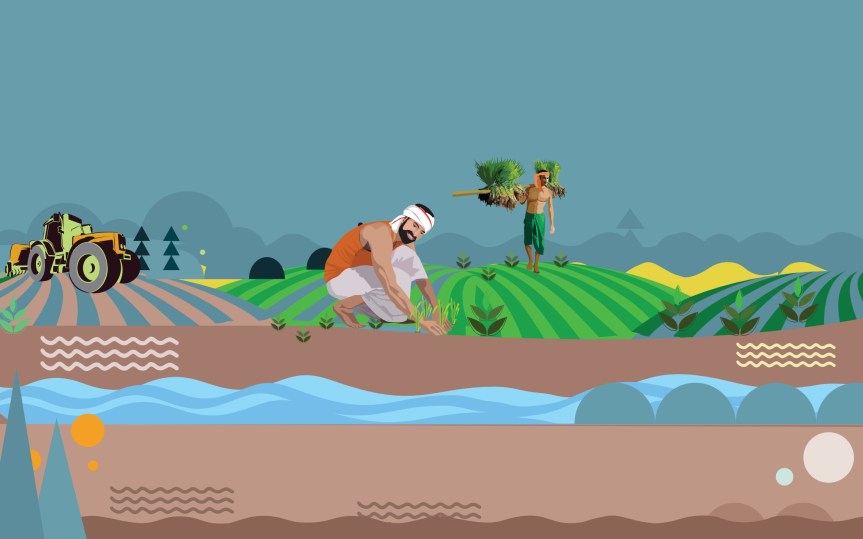
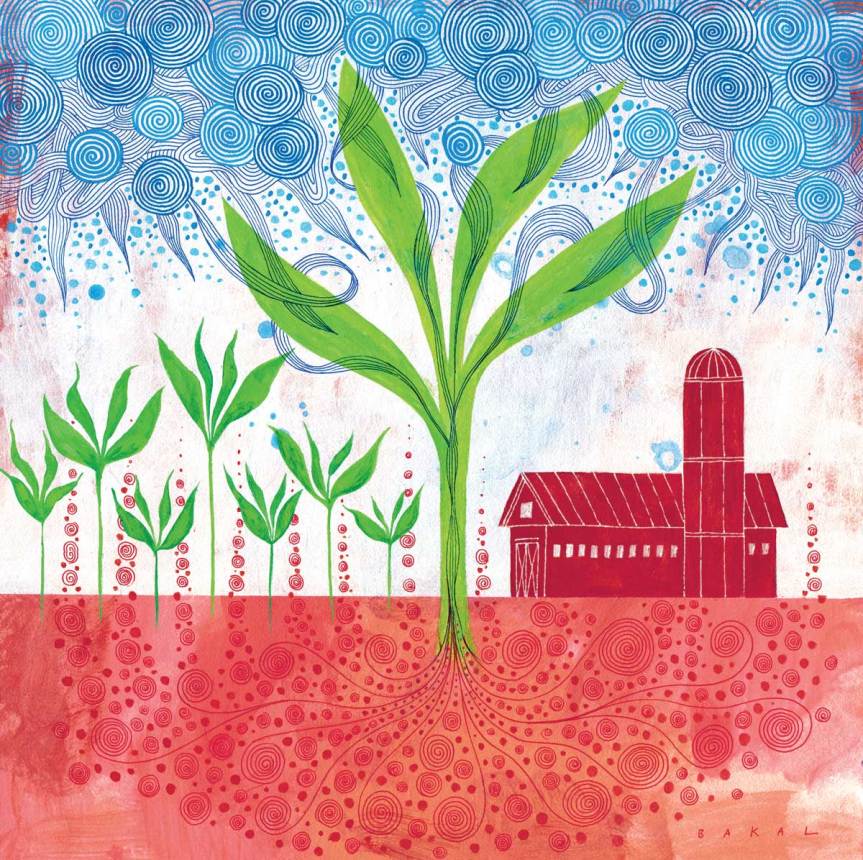
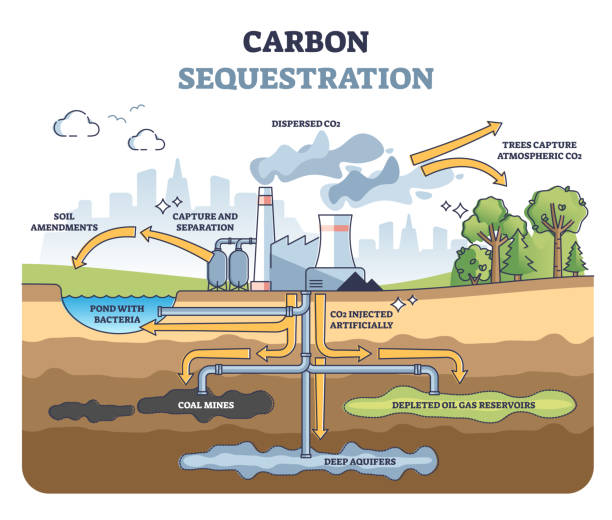
Carbon farming (also known as carbon sequestration) is a system of agricultural management that helps the land store more carbon and reduce the amount of Greenhouse Gases (GHGs) that it releases into the atmosphere. Carbon farming explicitly recognises that it is solar energy that drives farm ecosystem dynamics and that carbon is the carrier of that energy within the farm system.

Agriculture covers more than half of Earth’s terrestrial surface and contributes roughly one-third of global GHG emissions.

According to the Third Biennial Update Report submitted by the Government of India in early 2021 to the UNFCCC, the agriculture sector contributes 14% of the total GHG emissions.

Carbon Farming: a Viable Option

  • Climate Friendly: Carbon farming promises a bold new agricultural business model – one that fights climate change, creates jobs, and saves farms that might otherwise be unprofitable.
  • Optimising Carbon Capture: It is a whole farm approach to optimising carbon capture on working landscapes by implementing practices known to improve the rate at which CO2 is removed from the atmosphere and stored in plant material and/or soil organic matter.
  • Carbon farming can incentivise our farmers to introduce regenerative practices in their agricultural processes helping them shift their focus from improving yields to functioning ecosystems and sequestering carbon that can be sold or traded in carbon markets.
  • Farmer Friendly: It not only improves the health of soil but can also result in improved quality, organic and chemical-free food along with boosted/secondary income from carbon credits for the marginalised farmers.
  • Growth in Carbon Market: The total value of the global carbon markets grew by 20% in 2020 — the fourth consecutive year of record growth — and is well on its way in raising a critical mass of investors.

Carbon thus can effectively prove to be the ‘cash crop’ of the future for farmers

In India, Meghalaya is currently working on a blueprint of a ‘carbon farming’ Act to create a prototype of sustainable agriculture model for the entire North-East region. Sikkim became the first State in the world to become fully organic in 2016.

Steps can be Taken to Encourage Carbon Farming?

Soil is one of the most untapped and underutilised defences against climate change and acts as an efficient carbon sink.

Legal Backing for Carbon Farming: An extensive and pioneering carbon farming Act with a robust transition plan can effectively demonstrate the idea of creating a carbon sink on working land.

Carbon Credits and Carbon Banks: The farmers can be rewarded through globally tradable carbon credits. Carbon banks can also be created that would buy and sell carbon credits from farmers. Paying farmers to restore carbon-depleted soils offers a great opportunity for a natural climate solution and to stabilise global warming below 2°C.

What a filibuster is.

Traditionally, the Senate filibuster was reserved for only the most controversial issues, but its use has escalated in recent years, often slowing business in the chamber to a halt. Some lawmakers acknowledge that the filibuster, which has effectively set a 60-vote super­majority requirement for passing legis­la­tion in the Senate, could doom many of the propos­als they have cham­pioned, including meaningful reforms on issues ranging from health care to climate change to gun control. Behind this dysfunc­tion, the filibuster also has a troubling legacy: it has often been used to block civil rights legislation intended to combat racial discrimination.

As advocates push for pro-democracy legislation, calls for eliminating the filibuster have grown louder. In his remarks at the funeral of civil rights hero and congressman John Lewis in July 2020, former President Barack Obama called the filibuster a “Jim Crow relic,” arguing that the procedure should be eliminated if it is used to block voting reforms. Others note that certain types of legislation are already exempt from the fili­buster’s super­majority require­ment and argue that a similar exemp­tion should be made for voting rights.The stakes were raised in March 2021, when the For the People Act — a comprehensive democracy reform bill — was passed by the House of Representatives and introduced in the Senate, where the filibuster may determine its fate. Whether through elimination or reform, the filibuster cannot be allowed to impede the expansion of Ameican democracy or the rights of all eligible voters.

What is the filibuster?

The filibuster is a 19th-century procedural rule in the Senate that allows any one senator to block or delay action on a bill or other matter by extending debate. While a final vote in the Senate requires a simple majority of 51 votes, a supermajority, or 60 votes, is needed to start or end debate on legislation so it can proceed to a final vote. Therefore, even if a party has a slim majority in the Senate, it still needs a supermajority to even move forward with legislation a tall task for a hyper-partisan Washington. The House of Representatives does not use the filibuster. Instead, a simple majority can end debate.

How can the filibuster rule be changed?

Senators have carved out exceptions to the filibuster rule before.One option to do so is called “going nuclear” — when senators override an existing rule, such as the number of votes needed to end debate. This is usually done by lowering the threshold needed to end a filibuster to 50 votes.In 2017, then-Senate Majority Leader Mitch McConnell, R-Ky., eliminated the filibuster for Supreme Court nominees, clearing the way for then-President Donald Trump’s first nominee to be confirmed.

Why a call for change now?

In the last 50 years, the filibuster has been used more and more to kill major legislation. And with Biden’s agenda stalled, Democrats are calling for a carve out to pass voting rights legislation. In the last year, at least 19 states passed 34 laws restricting access to voting, according to the Brennan Center for Justice. If the threshold to end debate on a bill is lowered to 50 votes, for instance, Democrats could end debate on their voting reform bill and eventually move to a final vote, with Vice President Kamala Harris serving as a tie-breaking vote in the 50-50 Senate to pass the legislation. Incidentally, Harris, as president of the Senate, would play a key role in any potential rules change. She would be expected to occupy the chair and preside over any rule change action.

What’s the differ­ence between “talking” and “silent” fili­busters?

Filibusters traditionally involved long speeches in which a senator attempted to block a vote from proceeding by refusing to yield the floor. To stage such a “talking” fili­buster, a senator would hold the floor by stand­ing and talking for as long as they could, sometimes overnight. This was popularized in the 1939 film Mr. Smith Goes to Wash­ing­ton. The longest filibuster ever recor­ded, by South Caro­lina Sen. Strom Thur­mond in opposition to the Civil Rights Act of 1957, lasted for more than 24 hours. But since the early 1970s, senators have been able to use a “silent” filibuster. Anytime a group of 41 or more senators simply threatens a filibuster, the Senate majority leader can refuse to call a vote.

How has the fili­buster changed over time?

The use of the filibuster, once reserved for only the most controversial issues, has increased dramat­ic­ally in recent years along­side grow­ing polar­iz­a­tion in Wash­ing­ton. There have been more than 2,000 fili­busters since 1917; about half have been in just the last 12 years. Crit­ics argue that this increased use has slowed busi­ness in the Senate to a halt, often entangling the cham­ber in proced­ural maneuv­er­ing instead of substant­ive debate and, ulti­mately, lawmak­ing.

Understanding inflation

The Inequities of Inflation - Positively Naperville

Inflation is a term we here very frequently in today’s world. Several economies of the world are now in the crunches of inflation. In this situation, let us read about inflation in detail.

What is inflation?

In economics, inflation is a general increase in prices of goods and services in an economy. When the general price level rises, each unit of currency buys fewer goods and services; consequently, inflation corresponds to a reduction in the purchasing power of money. The opposite of inflation is deflation, a sustained decrease in the general price level of goods and services. The common measure of inflation is the inflation rate, the annualized percentage change in a general price index. As prices do not all increase at the same rate, the consumer price index (CPI) is often used for this purpose.

Causes of inflation:

There were different schools of thought as to the causes of inflation. Most can be divided into two broad areas: quality theories of inflation and quantity theories of inflation.

Currently, the quantity theory of money is widely accepted as an accurate model of inflation in the long run. Consequently, there is now broad agreement among economists that in the long run, the inflation rate is essentially dependent on the growth rate of the money supply relative to the growth of the economy. However, in the short- and medium-term inflation may be affected by supply and demand pressures in the economy, and influenced by the relative elasticity of wages, prices and interest rates.

The quality theory of inflation rests on the expectation of a seller accepting currency to be able to exchange that currency at a later time for goods they desire as a buyer. The quantity theory of inflation rests on the quantity equation of money that relates the money supply, its velocity, and the nominal value of exchanges.

Measures of inflation

Consumers’ cost of living depends on the prices of many goods and services and the share of each in the household budget. To measure the average consumer’s cost of living, government agencies conduct household surveys to identify a basket of commonly purchased items and track over time the cost of purchasing this basket. The cost of this basket at a given time expressed relative to a base year is the consumer price index (CPI), and the percentage change in the CPI over a certain period is consumer price inflation, the most widely used measure of inflation.

Core consumer inflation focuses on the underlying and persistent trends in inflation by excluding prices set by the government and the more volatile prices of products, such as food and energy, most affected by seasonal factors or temporary supply conditions. Core inflation is also watched closely by policymakers. Calculation of an overall inflation rate—for a country, say, and not just for consumers—requires an index with broader coverage, such as the GDP deflator.

Types of inflation

Cost-Push Effect

Cost-push inflation is a result of the increase in prices working through the production process inputs. When additions to the supply of money and credit are channeled into a commodity or other asset markets and especially when this is accompanied by a negative economic shock to the supply of key commodities, costs for all kinds of intermediate goods rise.

Built-in Inflation

Built-in inflation is related to adaptive expectations, the idea that people expect current inflation rates to continue in the future. As the price of goods and services rises, workers and others come to expect that they will continue to rise in the future at a similar rate and demand more costs or wages to maintain their standard of living. Their increased wages result in a higher cost of goods and services, and this wage-price spiral continues as one factor induces the other and vice-versa.

Demand-Pull Effect

Demand-pull inflation occurs when an increase in the supply of money and credit stimulates overall demand for goods and services in an economy to increase more rapidly than the economy’s production capacity. This increases demand and leads to price rises.

All about Article 370

On October 17, 1949, Article 370 was added to the Indian constitution, as a ‘temporary provision’, which exempted Jammu & Kashmir, permitting it to draft its own Constitution and restricting the Indian Parliament’s legislative powers in the state. It was introduced into the draft constitution by N Gopalaswami Ayyangar as Article 306 A.

Under Article 370: The Constituent Assembly of Jammu & Kashmir was empowered to recommend which articles of the Indian Constitution should apply to the state,The J&K Constituent Assembly was dissolved after it drafted the state’s constitution. The article allowed the state a certain amount of autonomy – its own constitution, a separate flag and freedom to make laws. Foreign affairs, defence and communications remained the preserve of the central government.As a result, Jammu and Kashmir could make its own rules relating to permanent residency, ownership of property and fundamental rights. It could also bar Indians from outside the state from purchasing property or settling there.

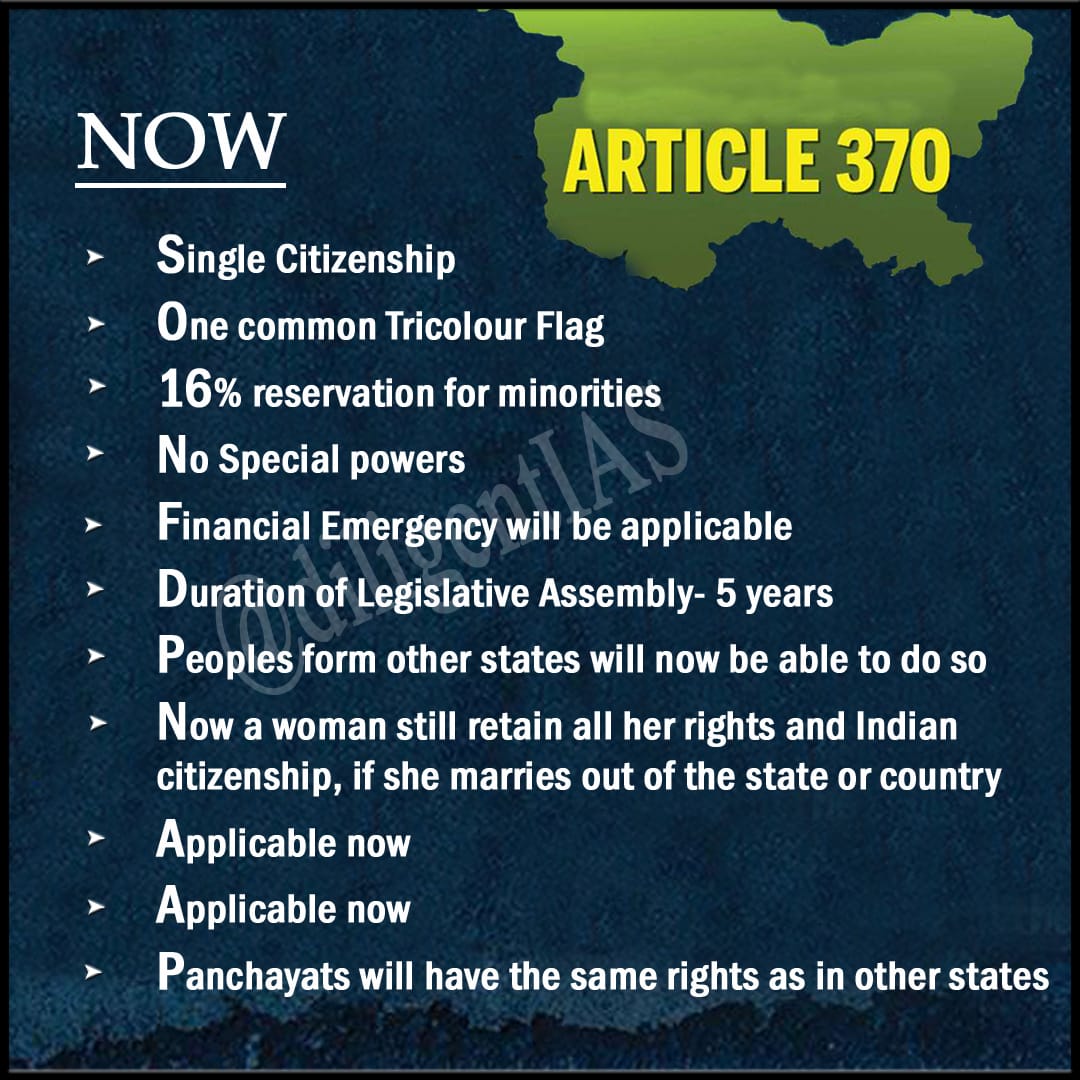
On 5th August 2019, President of India in the exercise of the powers conferred by Clause (1) of Article 370 of the Constitution had issued the Constitution (Application to Jammu and Kashmir) Order, 2019. Through this, Government of India has made modifications in Article 370 itself (not revoked it).With this, the Government of India has dramatically altered the relationship between the state of Jammu and Kashmir and the Indian Union. Order, 2019 has replaced Presidential Order of 1954.Subsequently, the Jammu and Kashmir Reorganisation Bill, 2019, passed by Parliament divides the state of Jammu and Kashmir into two new Union Territories (UTs): Jammu & Kashmir, and Ladakh.This is the first time that a state has been converted into a UT.Of the six Lok Sabha seats currently with the state of Jammu and Kashmir, five will remain with the union territory of Jammu and Kashmir, while one will be allotted to Ladakh.The UT of Jammu and Kashmir will have an Assembly, like in Delhi and Puducherry.Instead of 29, India will now have 28 states. Kashmir will no longer have a Governor, rather a Lieutenant .The special status provided to J&K under Article 370 will be abolished. Jammu & Kashmir will no longer have the separate constitution, flag or anthem. The citizens of Jammu and Kashmir will not have dual citizenship. As the new union territory of Jammu and Kashmir will be subject to the Indian Constitution, its citizens will now have the Fundamental Rights enshrined in the Indian constitution. Article 360, which can be used to declare a Financial Emergency, will now also be applicable. All laws passed by Parliament will be applicable in Jammu and Kashmir, including the Right to Information Act and the Right to Education Act. The Indian Penal Code will replace the Ranbir Penal Code of Jammu and Kashmir. Article 35A, which originates from the provisions of Article 370 stands null and void. Since Presidential Order has extended all provisions of the Constitution to Jammu and Kashmir, including the chapter on Fundamental Rights, the discriminatory provisions under Article 35A will now be unconstitutional.

The Need for Changes in abolishing A370 was dire. Article 370 was added in the Indian constitution to provide autonomy to J&K.However, it failed to address the well-being of Kashmiris who have now endured two generations of insurgency and violence. It contributed to the gap between Kashmir and the rest of the nation. In the newly-formed Union Territory of J&K, the central government is trying to formulate new rules that will give domicile rights to residents over land and in government jobs. This has been a response to the perception that the unemployment rate in J&K is higher than the national average.Domicile rights have also been a long-standing demand of the Dogras of Jammu and the Buddhists of Ladakh. While most of those interviewed by this author chose to remain silent on the issue of domicile rights, a few expressed their fears that such a move will further limit the employment opportunities for the local youth and also lead to a demographic disruption in the Valley.

Possible Consequences include rise in militancy as  Article 370 was seen by Kashmiris as a marker of their separate identity and autonomy. Widespread protests and violence as a reaction to the dilution of Article 370 are bound to take place .Terror elements in Pakistan would find Kashmir to be the most fertile ground for breeding terrorism. The unrest can affect the democratic progress that has been made so far. Opposition political parties could launch a legal challenge but Kashmir is an emotive issue with many Indians, and most parties would be wary of opposing the move lest they be branded anti-India. All in all, Kashmir and the people there are reaching towards normalcy after 2 years of removing article 370, but for how long will peace prevail? India is hoping for a long one.

Contemporary anarchism

Anarchism is a process whereby authority and domination is being replaced with non-hierarchical, horizontal structures, with voluntary associations between human beings. It is a form of social organisation with a set of key principles, such as self-organisation, voluntary association, freedom, autonomy, solidarity, direct democracy, egalitarianism and mutual aid. Based on these principles and values, anarchism rejects both a capitalist economy and a nation state that is governed by means of a representative democracy. It is a utopian project that aspires to combine the best parts of liberalism with the best parts of communism. At its heart is a mix of the liberal emphasis on individual freedom and the communist emphasis on an equal society. Let’s unpack this a bit. The etymology of the term traces back to the Greek word “anarkhia”, which means “without rulers” or “without authority”. It stands for the absence of domination, hierarchy and power over others.

Whenever public protests ignite into violent behaviour, the mainstream media are often quick to refer to “anarchy” and to “anarchists”. Those who are referred to as anarchists are protesters who burn tyres or engage in battles with the police. In this narrative, anarchists are lawless hooligans and anarchy is about chaos and pointless violence. The political philosophy of anarchisms emerged in the mid-19th century – as part of the thought of Enlightenment. Key anarchist thinkers include Pierre-Joseph Proudhon, William Godwin, Peter Kropotkin, Mikhail Bakunin, Emma Goldman, and Max Stirner. Proudhon is credited as the first self-proclaimed anarchist and is often seen as the founder of classic anarchist thinking. In particular, he developed the concept of spontaneous order in society, where organisations can emerge without central or top-down coordination.

The most common definitions of anarchism stress two points; first, anarchists are opposed to any form of coercive authority; following from this, anarchists are opposed to state power and seek to destroy it. But even this basic definition ignores the important distinction between anarchists who emphasize collective action rather than individualism, or who avoid any strategies focused on the state (even its destruction. The last stand of traditional anarchism, which reached its high point in Spain during the 1930s, suffered a devastating defeat at the hands of Franco’s fascists and the criminal policies of the Stalinized Communist Party. A once vibrant international anarchist movement was in ruins by the end of the Second World War. In the United States, political repression and Red Squad terror decimated the anarchist ranks more than a decade earlier. Small, isolated groups of anarchists survived, but never again reached the influence once attained during the Spanish Civil War.

After World War II, anarchist groups and federations reemerged in almost all countries where they had formerly flourished—the notable exceptions being Spain and the Soviet Union—but these organizations wielded little influence compared to that of the broader movement inspired by earlier ideas. This development is not surprising, since anarchists never stressed the need for organizational continuity, and the cluster of social and moral ideas that are identifiable as anarchism always spread beyond any clearly definable movement.

Anarchist ideas emerged in a wider frame of reference beginning with the American Civil Rights Movement of the 1950s, which aimed to resist injustice through the tactic of civil disobedience. In the 1960s and ’70s a new radicalism took root among students and the left in general in the United States, Europe, and Japan, embracing a general criticism of “elitist” power structures and the materialist values of modern industrial societies—both capitalist and communist. For these radicals, who rejected the traditional parties of the left as strongly as they did the existing political structure, the appeal of anarchism was strong. The general anarchist outlook—with its emphasis on spontaneity, theoretical flexibility, simplicity of life, and the importance of love and anger as complementary and necessary components in both social and individual action—attracted those who opposed impersonal political institutions and the calculations of older parties. The anarchist rejection of the state, and the insistence on decentralism and local autonomy, found strong echoes among those who advocated participatory democracy. The anarchist insistence on direct action was reflected in calls for extra parliamentary action and violent confrontation by some student groups in France, the United States, and Japan. Anarchists also took up issues related to feminism and developed a rich body of work, known as anarcha-feminism, that applied anarchist principles to the analysis of women’s oppression, arguing that the state is inherently patriarchal and that women’s experience as nurturers and caregivers reflects the anarchist ideals of mutuality and the rejection of hierarchy and authority.

The most prevalent current in anarchist thinking during the last two decades of the 20th century (at least in the United States) was an eclectic, countercultural mixture of theories reflecting a wide range of artistic, literary, political, and philosophical influences, including Dada, Surrealism, and Situationism; the writers of the Beat movement; the Frankfurt School of Marxist-oriented social and political philosophers—especially Herbert Marcuse—and post-structuralist and postmodern philosophy and literary theory, in particular the work of the French philosopher and historian Michel Foucault.

Contemporary anarchism has some important differences, but also a great deal of continuity, with historical anarchism. Where it focuses on building an alternative in the “interstices” of capitalism, it accommodates to, rather than challenges, capitalism; and where it fetishizes street tactics, it generates more press than tangible success in either building the struggle or in challenging the state.But struggle teaches, and those anarchists most engaged in struggle and most concerned with finding the most effective means of winning a better world are looking for alternative ideas to make sense of the crises around us. Marxists and these anarchists should stand shoulder-to-shoulder in every aspect of struggle, whether fighting evictions, the far right, or budget cuts. And serious revolutionaries must consider what tactics will strengthen the movement and its chances of victory. Foolish acts of vandalism by unaccountable individuals only serve to disrupt and weaken the movement, and the best anarchists recognize this.

Narmada  Bachao Andolan

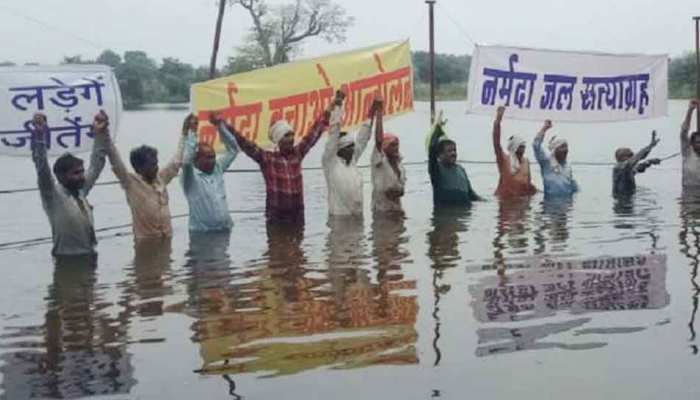
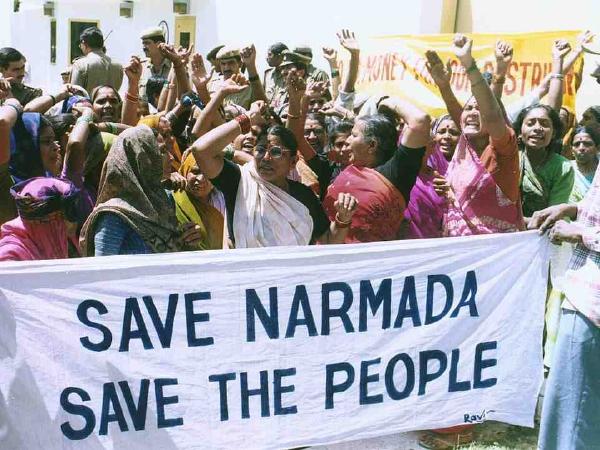
In 1985, Narmada  bachao andolan became an Indian social ,and environmental movement. Narmada Bachao Andolan is the most powerful mass movement, started in 1985, against the construction of huge dam on the Narmada river. Narmada is the India’s largest west flowing river, which supports a large variety of people with distinguished culture and tradition ranging from the indigenous (tribal) people inhabited in the jungles here to the large number of rural population. The proposed Sardar Sarovar Dam and Narmada Sagar will displace more than 250,000 people. Narmada bachao andolan was led by native tribals, farmers environmentalists and Human Rights activist. Narmada bachao andolan was against and number of large Dam projects across the river Narmada, which to the states of Gujarat Madhya Pradesh and Maharashtra. The big fight is over the resettlement or the rehabilitation of these people. The two proposals are already under construction, supported by US$550 million loan by the World Bank. There are plans to build over 3000 big and small dams along the river. This protest, to express the views against a large number of dams being contrasted near Narmada river, brought a large number of adivasis, farmers, environmentalists, and human rights activists together. The movement involved prominent celebrities and people went on hunger strikes to show their support for the cause. The decision is still pending, though the court initially ruled the decision in the Andolan’s favor, thereby effecting an immediate stoppage of work at the dam and directing the concerned states to first complete the rehabilitation and replacement process. Later the court allowed the construction to proceed.

It is a multi crore project that will generate a big revenue for the government. The Narmada Valley Development plan is the the most promised and most challenging plan in the history of India. The proponents are of the view that it will produce 1450 MW of electricity and pure drinking water to 40 million people covering thousand of villages and towns. Some of the dams have been already been completed such as Tawa and Bargi Dams. But the opponents says that this hydro project will devastate human lives and bio diversity by destroying thousand of acres of forests and agricultural land. On the other hand it will overall deprive thousands of people of their livelihood. They believe that the water and energy could be provided to the people through alternative technological means that would be ecologically beneficial.

Medha Patkar and Baba Amte together let a series of protests, some of which failed while the others achieved success. In September 1989, Amte led a 60,000-person anti-dam NBA rally in Harsud—a town of 20,000 people in Madhya Pradesh that faced submersion. In May 1990, a massive NBA five-daydharna (sit-in) at then-Prime Minister V. P. Singh’s residence in New Delhi forced the Prime Minister to agree to ‘‘reconsider’’ the project. In December 1990, Amte, along with 5,000 protestors, began the Narmada Jan Vikas Sangharsh Yatra (Narmada people’s progress struggle march), marching over a hundred kilometers from Amte’s headquarters near Barwani in Madhya Pradesh to Ferkuva on the Madhya Pradesh–Gujarat border. The government reacted by deploying the Gujarati police force and by bussing in thousands of governmentsupported pro-dam demonstrators from urban centers in Gujarat. Following the government’s announcement that rising waters from the dam would begin to submerge villages, domestic protest intensified and with it the resulting backlash from the state. On January 5, 1991, Amte began a ‘‘dharna [sit-in] unto death.’’

The most popular slogans of the NBA were Vikas Chahiye, vinash nahin! (‘‘We want development, not destruction’’) and Koi nahi hatega, bandh nahi banega! (‘‘No one will move, the dam will not be built’’).Led by one of the prominent leader Medha Patkar, it has now been turned into the International protest, gaining support from NGO’S all around the globe. Protestors are agitating the issue through the mass media, hunger strikes, massive marches, rallies and the through the on screen of several documentary films. Although they have been protesting peacefully, but they been harassed, arrested and beaten up by the police several times. The Narmada Bachao Andolan has been pressurizing the world bank to withdraw its loan from the project through media .The strong protests throughout the country not only made impact on the local people but has also influenced the several famous celebrities like film star Aamir Khan , who has made open efforts to support Narmada Bachao Andolan. He said he only want that those who have been rendered homeless should be given a roof. He pleaded to the common people to take part in the moment and come up with the best possible solutions. .

 In october 2010 Supreme Court approved construction in decided that the height of the Dam to be raised 90m. This is much higher than 88m which anti Dam activist demanded but it is definitely lower than the proposed height of 130 m. As the World Bank withdrew its financing in 1933 the project is now largely financed by the state governments and market borrowings ,now the project is expected to be fully completed by 2025.

Life insurance corporation of India

LIC share Market Price: Life Insurance Corporation's market share falls  below 70%

Life insurance corporation of India has initiated its initial public offer for five percent of its shares. It is one of the largest profit-making enterprises owned by the government of India. In this instance, it is important to know more about this enterprise.

LIC or Life Insurance corporation of India was started in the year 1956 in accordance with the Life insurance corporation of India act of 1956. As India was following a socialistic approach of economic development, LIC was introduced as an enterprise owned and operated by the government of India.

Story of formation

The Oriental Life Insurance Company, the first company in India offering life insurance coverage, was established in Kolkata in 1818. Its primary target market was the Europeans based in India, and it charged Indians heftier premiums. After that several companies emerged. The first 150 years were marked mostly by turbulent economic conditions. It witnessed India’s First War of Independence, adverse effects of the World War I and World War II on the economy of India, and in between them the period of worldwide economic crises triggered by the Great depression. The first half of the 20th century saw a heightened struggle for India’s independence. The aggregate effect of these events led to a high rate of and liquidation of life insurance companies in India. This had adversely affected the faith of the general in the utility of obtaining life cover. In 1955, parliamentarian Feroze Gandhi raised the matter of insurance fraud by owners of private insurance agencies. The Parliament of India passed the Life Insurance of India Act on 19 June 1956 creating the Life Insurance Corporation of India, which started operating in September of that year.

Structure

The LIC’s executive board consists of Chairman, currently M R Kumar, and Managing Directors, Vipin Anand, T. C. Suseel Kumar, Mukesh Kumar Gupta and Raj Kumar. The Central Office of LIC is based out of Mumbai which sits The Chairman, all four Managing Directors, and all Executive Directors (Department Heads). LIC has a total of 8 Zonal Offices namely Delhi, Chennai, Mumbai, Hyderabad, Kanpur, Kolkata, Bhopal & Patna.

Policies

Some important policies are:

LIC tech term plan

LIC Jeevan Umang

LIC Jeevan Amar

LIC Money back years

LIC New Jeevan Anand

Role of LIC

It has been a significant driver in creating the culture of investment in insurance. It has made insurance accessible to the economically weaker sections. The long-term schemes with affordable premiums made it highly attractive. The role of Life insurance corporation as an employer is also applaudable. It provides employment to many. More than all, many other insurance firms in India has benefitted out of the trust built by LIC.

Initial public offering

Finance Minister Nirmala Sitharaman announced a proposal to conduct an initial public offering for LIC in the 2021 Union Budget. The IPO opens on 4th May 2022 and closes on 9th May 2022. The Government of India will remain the majority shareholder after the public listing. Due to the scale of the offering and LIC’s ownership structure, the deal has been referred to as “India’s Aramco moment” in reference comparable importance and scale of 2019 IPO of Saudi Aramco. The latest development in the LIC IPO is the slashing of issue size from 5% to 3.5% of total equity of the company. LIC will open its IPO to the public on May 4 and the process concludes on May 9. Through this IPO, the Government of India, the sole owner of LIC, is now aiming to raise ₹21,000 crore, as opposed to raising between ₹65,000 crore to ₹70,000 crore by diluting 5% equity earlier, indicating more than 50% compromise on valuation as well. As per the IPO price band for 3.5% stakes for Rs. 21,000 crores, the valuation comes to around Rs 6 lakh crore.

RBI ACCOUNT AGGREGATOR FRAMEWORK

What will the future of banking look like in the Gulf? - Arabian Business

The Account Aggregator framework, introduced by the RBI, aims to make financial data more accessible by creating data intermediaries called Account Aggregators (AA) which will collect and share the user’s financial information from a range of entities that hold consumer data called Financial Information Providers (FIPs) to a range of entities that are requesting consumer data called Financial Information Users (FIUs) after obtaining the consent of the consumer.

For example, if a user wishes to apply for a loan, the lender (an FIU) will require access to the previous financial statements of the user – which reside with the user’s Bank (an FIP) – in order to check their creditworthiness. Here’s how an AA will facilitate the flow of information:

  1. The FIU will request the AA to share the desired financial information.
  2. The AA will request the user for their consent to share financial information with the FIU. The Account Aggregator must interact with the customer using either a web-based or a mobile app-based client.
  3. If the user consents, the AA will request the FIP (the User’s bank in this case) to share the financial information.
  4. The FIP will transfer the information, which will be encrypted, to the AA, which will then transfer it to the FIU.

Roles of each party:

  • Banks act as financial data providers. They supply the data required for Reserve bank of India to create a database of the account data and create reliable rankings.
  • Lenders act as financial data seekers. The lenders or financial institutions who provide fund to people acts as the seekers or demands the data aggregated by the Reserve bank.
  • Non-banking finance corporations act as mediums of communication between banks and lenders and they are the links.
  • Third-party service providers work with AAs.

Process

  • An individual or business opens an account with an account aggregator. Then, they link their bank accounts, insurance policies, etc. — which are accounts containing the customer’s financial data.
  • The customer can provide consent to a lender to access their financial data through the NBFC-AA.
  • After consent is provided, the account aggregator seeks permission from the financial data providers to access the customer’s data.
  • The data is sent to the account aggregator, which, in turn, empowers lenders to better evaluate the customer’s financial profile and risk associated with providing a loan.

Banks involved at present are:

These are the banks which act as the data providers:

State Bank of India

 ICICI Bank

Axis Bank

IDFC First Bank

 Kotak Mahindra Bank

 HDFC Bank

 IndusInd Bank

Federal Bank.

Advantages

  • Data scattered around the financial system can be made available under a single database.
  • This helps the institutions build a better understanding of potential customers and tailor their services accordingly.
  • It also enables the free flow of data between banks and financial service providers.
  • Helps financial institutions to make better assessment of creditworthiness of individuals and thus make better loan decisions.
  • Helps to eliminate the limitations of credit rating agencies.
  • Helpful for creditworthy customers

Disadvantages

  • It faces the issue of data privacy.
  • It is proposed as a self- Regulator framework, which would be an issue.
  • This data could be used for several other purposes.

ELECTIONS AND COMMON MAN

Kerala Assembly Election 2021: Voting begins, fate of 957 candidates to be  decided today

“The elections are the greatest symbol of participation and political reform”

                                                -Mohammad Khatami (former president of Iran)

An election is a process by which the citizens of a democratic nation, irrespective of their caste and creed, decide who should take decisions on behalf of them. These have been the common mechanism for the functioning of representative democracies since the seventeenth century. The elections could be either direct elections or indirect elections. In direct elections, people could directly take part in the election process, whereas in indirect elections one individual is entitled to vote on behalf of a representative group. India being the largest democracy in the world considers elections as the “festivals of democracy” in which we celebrate the powers of common man.

            In India elections held once in five years normally. Representatives are elected on the basis of universal adult franchise. As per the conditions laid down by the makers of Indian constitution any citizen who has attained the age of 18 could cast their vote irrespective of their religion, economic and social status. Similarly, Indian constitution also enables any citizen to contest in elections without any discrimination. In order to monitor the equal participation in elections the constitution has also setup an independent body named “election commission”. Thus, elections in India are an inclusive process where common man is pivotal point.

            Indian democracy is the one in which all voters are considered equal thus, the contestants in elections are forced to treat each and every voter of his constituency with same importance at least at the time of elections. The truth is that, it is only during elections that the politicians will listen to the demands of common man. The elections instill a special power in the common man, who constitute a major portion of the society. Even the richest contestant is at the mercy of common man at times of election. It provides each and every individual an opportunity to shape the future of their nation regardless of their socio- economic conditions. Elections are the easiest way in which a citizen can express their discontent towards an existing government. Apart from this electoral system also lay down certain provisions by which common man could contest in elections and thereby contribute towards nation building directly. But many citizens are still unaware of this immense power.

            The voting percentages of elections make it evident that people are still reluctant towards casting their vote. Despite of providing holidays and several other measures to encourage people to vote, many people are not ready to play their role in nation building. Low literacy rates, apathy, unprincipled politics, lack of concrete effort on the part of the political parties in motivating the voters and local conditions in some part of the country can also be sited as the reason for lower public participation in elections. The corrupt, divisive, dishonest and exploitative practices might have decreased the confidence of people in this process. Increase in the use of money power, reliance on money power during elections, inciting communal and caste prejudice in the voters and the misuse of official machinery have shaken the foundations of the electoral process. The only remedy in these circumstances lies in bringing about systematic changes in the polity and elections.

 As John f Kennedy rightly quoted, “The ignorance of one voter in a democracy impairs the security of all”. It is necessary to make the voters aware of their rights and duties. The voters should be encouraged to cast their votes in an informed manner. The political system should take efforts to educate voters and bring back the trust in democratic system. The children should be taught about the need and worth of elections from a younger age. Above all, people should develop a feeling of obligation towards voting and should keep in mind that voting is their duty towards their nation.

By making proper use of the right to vote a common man could contribute immensely towards building their nation. On the whole as Roald Dahl said “Somewhere inside all of us is the power to change the world”. Elections are one the easiest way for a common man to contribute towards this change.

An Analysis of World Haemophilia Day

Credit: Deccan Chronicle

Introduction

World Hemophilia Day was started by the World Federation of Hemophilia (WHF) and is annually observed on the 17th of April. The international community started observing WHD in 1989 and April 17 was chosen to recognize Frank Schnabel the founder of WHF. World Hemophilia Day is aimed at raising awareness about hemophilia and other bleeding disorders. It also helps to raise funds for patients who cannot afford hemophilia treatment as well as attract volunteers for the World Federation of Hemophilia.

What is Haemophilia?

Haemophilia is an inherited condition that causes bleeding for a long time after injury or surgery and painful swelling of the joints either after injury or even without injury. (“Inherited” means that the disease is passed from parents to children through their genes). Haemophilia is the commonest X-linked disorder affecting approximately 1 in 10,000 male births; whereas women act as carriers of Haemophilia. Haemophilia is an inherited blood disorder disease in which blood does not clot properly. It is caused due to defects in the blood vessels, the coagulation mechanism, or the blood platelets and by a deficiency in a gene that resolves how the human body will make factors VII, IX, or XI.

Types of Haemophilia

Haemophilia has three forms namely Haemophilia A, B, and C. Out of these, Hemophilia A is the most common.

– Haemophilia A patient is treated by prescribing a hormone desmopressin.

– Haemophilia B patient is treated by infusing the patient’s blood with the clotting factors of a donor.

– Haemophilia C patient is treated by plasma infusion which ceases down profuse bleeding.

Theme of World Haemophilia Day

April 17, 2022, is World Hemophilia Day. The theme of the event this year is “Access for All: Partnership. Policy. Progress. Engaging your government, integrating inherited bleeding disorders into national policy“. By raising awareness and bringing hemophilia and other inherited bleeding disorders to the attention of policymakers, we can increase sustainable and equitable access to care and treatment.

Significance of World Haemophilia Day

The World Federation of Haemophilia (WFH) started celebrating the day in 1989 and chose April 17 to celebrate it in honour of the founder of WFH Frank Schnabel. Haemophilia was discovered in the 10th century and was found mainly in males. The disease was then known as Abulcasis. In the year 1937, Haemophilia genetic disorder was divided into two types namely A and B, however, no proper treatment was found till that time. Then, it was decided to raise awareness about the disease among the people and make them understand the need to give the right attention to this serious health issue. In 1963, the WFM was established to improve treatment and care for all haemophiliac patients.

Awareness-raising campaigns, conferences, workshops, etc. are being organized on this day by several communities and people. various kinds of activities are being performed to inform the general public about Haemophilia disease. Also, landmarks and monuments in Australia and around the world change their colour to red at the night to support World Haemophilia Day.

Conclusion

When there is a family history of Haemophilia, it is now possible to identify females who carry the Haemophilia gene. Women, who know they are carriers, or might be carriers, may have options for prenatal diagnosis to obtain information on the fetal status. According to National Blood Transfusion Council under National Aids Control Organization (NACO) guidelines, all state/UTs administration patients suffering from thalassemia, sickle cell anemia, and Haemophilia should be provided blood free of cost. The Rashtriya Bal Swasthya Karyakarama (RBSK) launched under the National Health Mission (NHM), provides early detection and treatment of children suffering from genetic disorders.

References

What is Gaganyaan Mission Really?

Credit: Federal News

Introduction

Humans have always looked at the heavens and wondered about the nature of the objects seen in the night sky. With the development of rockets and the advances in electronics and other technologies in the 20th century, it became possible to send machines and animals and then people above Earth’s atmosphere into outer space. Space exploration, investigation, by means of crewed and uncrewed spacecraft, of the reaches of the universe beyond Earth’s atmosphere and the use of the information so gained to increase knowledge of the cosmos and benefit humanity.

What is this Mission?

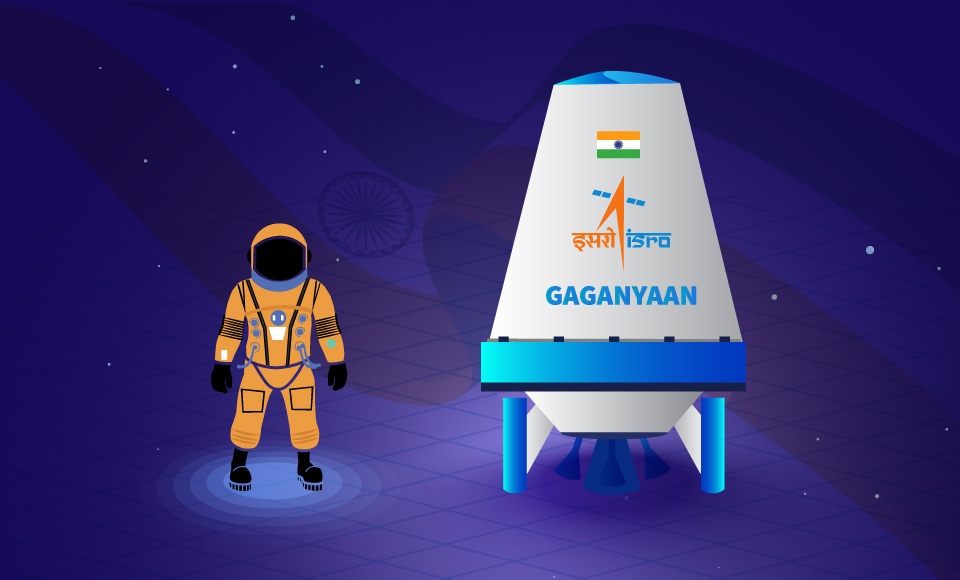
The word ‘Gaganyaan’ is derived from Sanskrit, meaning ‘sky-vehicle’. The Gaganyaan Programme envisages undertaking the demonstration of indigenous capability to undertake human spaceflight to Low Earth Orbit (LEO). As part of this program, two unmanned missions and one manned mission will be carried out. ISRO is planning to launch the first uncrewed mission under Gaganyaan in 2022, following which is the second unmanned mission. “Vyommitra” will carry a robot and this will then be followed by the manned mission. The uncrewed missions are for technology demonstration, and safety and reliability verification and will aim to study the performance of systems before the crewed flight. The robot will mimic the space crew activities set for the human flight mission to assess all the possible challenges before the final mission.

New Technologies required for this Mission

The major new technologies required for Gaganyaan programme are as follows:

  1. Human rated launch vehicle
  2. Crew escape systems
  3. Habitable orbital module
  4. Life support system
  5. Crew selection and training and associated crew management activities.

Execution of this Program

The Gaganyaan Programme is going to be a major National effort. The overall programme co-ordination, systems engineering and implementation will be carried out by ISRO. Further, the human rated launch vehicle, crew escape system, Orbital module and essential infrastructure will be realized by ISRO utilizing the in-house expertise and with participation of Industry, Academia and National agencies. The private players in the country have developed significant expertise in niche areas, and this will be effectively utilized in the programme.

Agencies Collaborating with ISRO for this Mission

Major collaborating partners for Gaganyaan include

  1. Indian Armed Forces
  2. Defence Research Development Organization
  3. Indian maritime agencies – Indian Navy, Indian Coast Guard, Shipping Corporation of India, National Institute of Oceanography, National Institute of Ocean Technology
  4. Indian Meteorological Department
  5. CSIR Labs
  6. Academic Institutes
  7. Industry Partners.

Benefits of this Mission

The Human spaceflight programme has both tangible and intangible benefits for the nation, which includes:

  1. Progress towards a sustained and affordable human and robotic program to explore the solar system and beyond.
  2. Advanced technology capability for undertaking human space exploration, sample return missions, and scientific exploration.
  3. Future capability to actively collaborate in global space station development & to carry out scientific experiments of interest to the nation.
  4. Create a broad framework for wider Academia-Industry partnership in taking up development activities for national development.

Conclusion

The Gaganyaan mission could propel India to the center of human space exploration. The manned missions will push
India is further in exploration beyond Earth’s orbit as countries are eager to control the next space race, which has the
potential to trigger major changes in the global order.

References

Rice Fortification – A Competent way to combat Anemia

Image taken from NITI Aayog

Introduction

India has made impressive progress in reducing stunting and anemia among children over the last decade. However, anemia still impacts more than one in two children and women. The WHO has declared anemia among women and children as a “severe” public health problem, demanding immediate attention. Rice fortification is an effective, preventive and cost-efficient complementary strategy to address the nutrition problem within a short period. However, ensuring access to and affordability of healthy and diverse diets would be the key to a sustainable long-term strategy.

Current Situation

Recent statistics indicate rise in anemia levels amongst among women and children in 16 and 18 of 22 States/UTs respectively (NFHS-5). Iron deficiency-anemia is the biggest cause of disability for the past 10 years and contributed 20 per cent direct and 50 per cent associated maternal deaths in India. Its economic burden is equivalent to about 4 per cent of GDP. Apart from iron, deficiency in micronutrient like vitamin B12, vitamin A, folate and zinc also contribute to rising anemia levels. Evidence suggests vitamin B12 deficiency impacts one in six pre-school children and one in three adolescents; folate deficiency in one in three school-aged children and one in four adolescents.

What is Food Fortification?

Fortification is the practice of deliberately increasing the content of one or more micronutrients (i.e., vitamins and minerals) in a food or condiment to improve the nutritional quality of the food supply and provide a public health benefit with minimal risk to health. Fortification is the addition of key vitamins and minerals such as iron, iodine, zinc, Vitamin A & D to staple foods such as rice, milk and salt to improve their nutritional content. These nutrients may or may not have been originally present in the food before processing.

Fortification of Rice

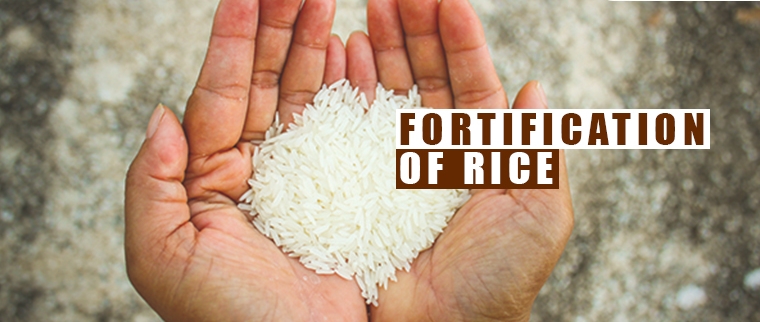
According to the Food Ministry, fortification of rice is a cost-effective and complementary strategy to increase vitamin and mineral content in diets. According to FSSAI norms, 1 kg fortified rice will contain iron (28 mg-42.5 mg), folic acid (75-125 microgram) and Vitamin B-12 (0.75-1.25 microgram). In addition, rice may also be fortified with micronutrients, singly or in combination, with zinc, Vitamin A, Vitamin B1, Vitamin B2, Vitamin B3 and Vitamin B6. Fortifying rice involves grinding broken rice into powder, mixing it with nutrients, and then shaping it into rice-like kernels using an extrusion process. These fortified kernels are then mixed with normal rice in a 1:100 ratio and distributed for consumption.

Need for Fortification

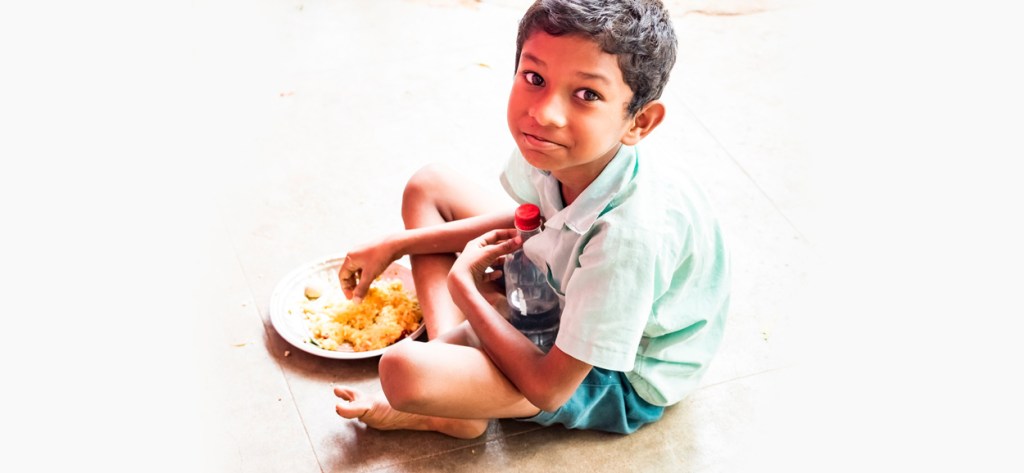
India has very high levels of malnutrition among women and children. According to the Food Ministry, every second woman in the country is anemic and every third child is stunted. India has slipped to 101st position in the Global Hunger Index (GHI) of 116 countries, from its 2020 position of 94th. The deficiency of micronutrients or micronutrient malnutrition, also known as “hidden hunger”, is a serious health risk. Rice is one of India’s staple foods, consumed by about two-thirds of the population. Per capita rice consumption in India is 6.8 kg per month. Therefore, fortifying rice with micronutrients is an option to supplement the diet of the poor.

Conclusion

Rice fortification is the most viable and welcome, preventive and complementary intervention to solve the problem of anemia in a short period of time. Historically, India has tested this idea of fortification by mandating iodized salt in 1962. Interestingly, CNNS Report 2016-18, subtly hinted the success of universal fortification of salt by revealing iodine to be the only exception to micronutrient deficiencies in the tested sample.

References

If I Ran The World

Now go to Daisy at Home to get the If Kids Ran the World themed menu. We invite you to share your dinner photos with us any time of the month on our Family Dinner Book Club Facebook page. If Kids Ruled the World Leo and Diane Dillon is a story about kids helping make our world a better place. .If it’s so inspiring that kids rule the world, read it aloud and it will impact your student community.

This book is a true celebration of childhood, play and imagination. This is the pinnacle of Dr. Seuss, celebrating the young imagination and creating a fantasy world that will delight and captivate readers of all ages. Description Leo and Diane Dillon, two-time Caldecott Medalists, show children how to create a more generous and peaceful world through play where everyone can share with each other. Two-time Caldecott Medalists Leo and Diane Dillon show how children can use play to create a more generous and peaceful world for all.

Diane Dillon lives in Brooklyn, New York. Leo and Diane Dillon are two of the most famous illustrators of our time. Leo and Diane created award-winning picture books, book covers, magazines and other works of art until Leo’s death in 2012. This is their last collaboration. Their long list of awards includes two Caldecott Medals, a NAACP Image Award, five Coretta Scott King Awards and Honors, four Boston Globe-Horn Book Awards, and induction into the Society of Illustrators Hall of Fame. They also won Coretta Scott King awards in 2003 for Rap a Tap Tap Heres Bojangles – Think of That and in 2005 for Virginia Hamilton’s People Could Fly – Picture Book.

The Dillons’ contributions to art and illustration, and their lifelong dedication to the diversity of children’s books, makes it uncomfortable to criticize If Kids Ruled the World. Criticism is further tempered by the fact that the book was the last edition the couple created together: Leo died before the book was finished.

Particularly helpful is the emphasis on sharing all the good things that come alive in the world the child has created. The story presents idealistic opportunities for global camaraderie and justice for all people – if only children ruled the world. In the colorful tree house, the children’s rainbow identifies the most important needs in our complex world, while the following branches feature boys and girls who happily help others.

If kids rule the world, even adults are better off. I like that the author points out that if children rule the world, then there will be more kindness and harmony. They say that if children rule the world, young people will make sure everyone has enough to eat and everyone can wear whatever they want without being ridiculed.

The book enlightens the reader about what would happen if children were in charge of the world. This book has so little to do with the world in which real children live, and it seems that this is a gesture, not a call to action. Leo Dillon’s latest book with Diane Dillon imagines what the world would be like if kids were in charge.

The Dillons, in their latest collaboration (Leo died in 2012), are turning the creation of this ideal world into a game; no holiness, no sense of tiresome duty. Perhaps Dillon’s intent was to show diversity, but a scene like this suggests that the past is irrelevant to the present.

They do not think about the poor and do not think about the proper development of the nation and the world as a whole, which shows how self-centered and selfish the rulers of the world are. In the current world scenario, every person who wants to be the president or prime minister of a country has only one goal – to rule the country or the world for the sake of money and power. The world cannot depend only on the rich; the poor also play a very important role in the whole environment.

I would just like to be a guiding light for the world and not impose thoughts on people that are not suitable for me as a ruler or even the people of the world as citizens. Seriously, if I really ruled this world, I would make sure that every person is happy in everything they do, and also respect each other or even the life of the other. That when you leave, you will be a better person than when you started.

It makes us doubt everything and in some cases robs us of the will to live. Our idea of ​​what looks good in the context of work no longer matches.

This means that in a world where we work more independently of others, there will be less feedback. Many agencies will move to campus or shared workspaces instead of a store front. Sarah and I take turns showing the children table decoration crafts.

On the 15th of each month, we share the title of the featured book. Satisfy your voracious literary appetite with a lifetime supply of free books in all formats and genres, as well as books, videos, and audiobooks that don’t wait. Pair it with ever-expanding shelf space so you never have room for your collection.

All people, regardless of gender or socioeconomic status, have the opportunity to learn to read and write. At birth, new mothers will be encouraged to attend parenting courses to learn how to care for their baby, including feeding and accompanying the baby through the various stages of his or her young life. If the child is out of wedlock, the mother will receive additional advice on how to cope emotionally and financially if she does not have family support.

Organize a conversation for the company’s senior management (both men and women) so that you can also share it with your boss, team, or HR. Women leaders can create ROI in their organizations, industries and the world right now. And putting the world in the hands of women would be too simplistic.

If you have a solid idea of ​​how to make a difference and are brave enough to lead the way, then I believe the world needs you right now. Because I’m willing to bet that your ideas, talents and drive can make the world a better place, and I love being a woman who supports you.

But I can’t do all this work alone, so I’m going to select a few key senators, representatives, and governors to serve as my advisory committee. But I suspect that after experiencing all the upgrades and upgrades to our core services, I will garner the most votes.

Finally, to say that I would do all this if I had to manage this world is easier than to actually implement them. I also understand that you may be the type of woman who wants to better understand what they’re getting into before jumping into a conversation. do not worry.


Impact Of Increasing Oil Prices On Indian Economy

The latter will come true as more than half of India’s remittances will go through the Gulf countries, which are likely to see better economic conditions with higher oil prices. In terms of numbers, a $10-a-barrel rise in crude oil prices would increase spending on commodity imports by about $20 billion, offset in part by a $6-billion increase in oil exports and dollars in workers’ remittances. The cost of imports will be halved if the price of crude oil continues to hover around $30 a barrel. In addition, every $10 increase in crude oil prices has a direct impact on a country’s current account (CAD) deficit.

Thus, when crude oil reaches $85 per barrel, the oil deficit will rise to $106.4 billion, or 3.61% of India’s GDP. According to a report by the Reserve Bank of India (RBI), every $10/barrel rise in crude oil prices would lead to an additional deficit of $12.5 billion, equivalent to 43 basis points of India’s GDP. According to an analysis by the Reserve Bank of India, every $10-a-barrel rise in crude oil prices would result in an additional $12.5 billion deficit. Higher prices affect the current account deficit, which means that the value of imported goods and services exceeds the value of exports.

Changes in commodity prices can affect the economic ecosystem at all levels, from family budgets to corporate income and national GDP. Rising oil prices have a negative impact on several factors such as the stock market, currency, inflation, transportation and manufacturing sectors, and government spending. Rising oil prices will drive up the cost of energy, which, combined with the oncoming winter and increased commercial activity as the pandemic eases, will have a major impact on the economies of most countries of the world. India, which relies on imports for more than 80% of its fuel consumption and already has fuel prices above Rs 100 for both petrol and diesel in most cities, will be no exception.

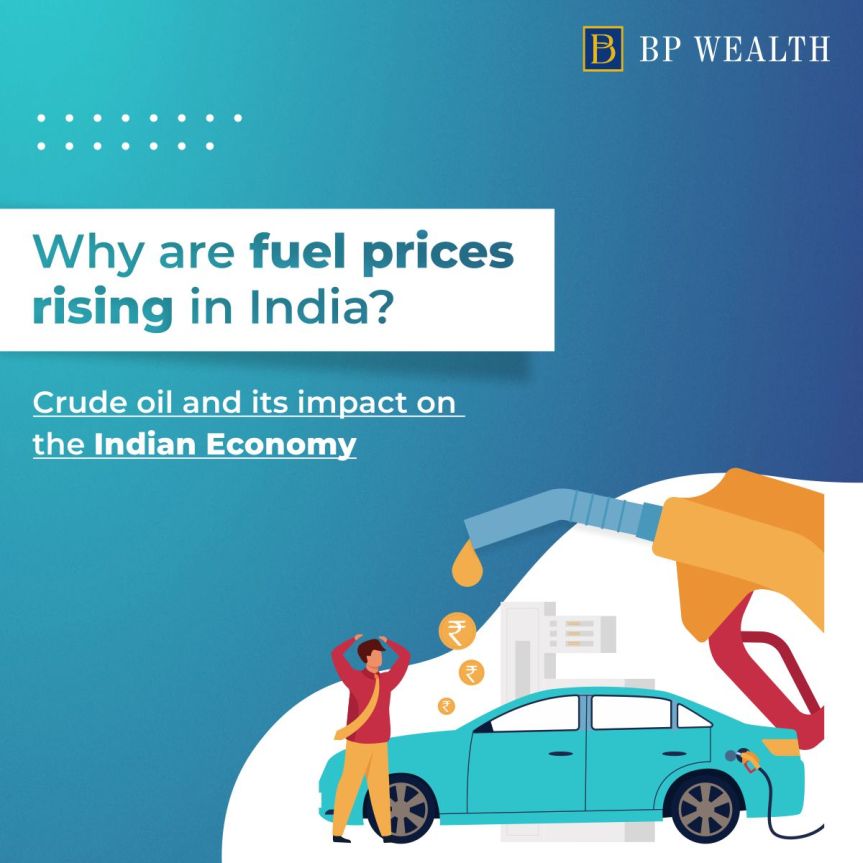
Rising crude oil prices have helped lift the price of gasoline and diesel in India to record highs. High crude oil prices are the result of less drilling by shale gas producers in the United States, disruptions to crude oil supplies due to hurricanes in the Gulf of Mexico, and runaway fuel demand as the global economy stabilizes. -19 pandemic, which significantly reduced economic activity. With the global economic recovery following COVID-19, global demand for crude oil increased in 2021, driving prices up sharply. Crude oil prices have risen steadily since early 2021, when Brent crude traded at around $52 a barrel, fueled both by hopes of improved demand thanks to regional economic recovery and reduced supply from major oil producing countries.

Crude oil prices hit a two-year high, with Brent oil rising above $71 a barrel on Wednesday, reaching its highest level since May 2019, when major oil-producing countries announced they were joining plans to gradually increase crude oil production. World crude oil prices rose to their highest level in 13 months, driven by strong demand prospects amid a global economic recovery and supply disruptions in the Middle East. In February and March 2020, crude oil prices accelerated their decline in response to the coronavirus pandemic and the expected sharp decline in oil demand. The fall in prices is associated with an increase in supply due to hydraulic fracturing.

This was followed by price increases again since 2004, and this upward trend in the cost of oil continues to this day. In addition, since 1996 there have been high fluctuations in oil prices. If we look at the evolution of crude oil prices since the 1950s (see attached chart), price spikes have mostly been accompanied by geopolitical tensions or other factors. leading to a supply shortage.

Due to the pandemic, these oil-producing countries continue to slowly increase production, which leads to higher oil and gas prices. According to the IEA, oil production in non-OPEC Plus countries will increase by 710,000 bpd in 2021. 5.4 million bpd in 2021 and another 3.1 million bpd in 2022.

Since none of the largest oil-producing countries in the world is likely to increase oil supplies, experts predict that by 2019 the price could even reach $100 per barrel. Despite a 430% jump in Brent oil prices since March 2020, oil seems cheap. long term vision. Goldman Sachs expects Brent oil prices to exceed $80 on average in the third quarter of this calendar year, with peaks above that price; JP Morgan expects crude oil to top $80 in the last quarter of 2021, and Bank of America expects Brent oil prices to hit $100 by next summer.

Any rise in global crude oil prices directly affects India as the country imports over 80% of its oil. India paid over $110 billion for oil imports in 2017. Thus, if oil prices double within a year, a country’s import spending will also double over the same period.

Since India imports most of its fuel, it needs more dollars to buy crude oil, which results in liquidity being squeezed. This is bad news for India, which depends on imports for 85% of its crude oil needs and is the third largest importer of fossil fuels in the world.

Given India’s dependence on oil imports and the current pressure on the country, New Delhi is pushing OPEC to increase oil production to contain prices. Analysts say a rise in production by major oil producers is probably India’s biggest hope for a short-term solution, as some economists warn of the risk that crude oil prices could approach $100 a barrel by the end of this year. At the same time, oil-producing countries will be careful enough to maintain a balance in production so that prices do not collapse.

There will also be a significant impact on the Consumer Price Index (CPI) and the CPI inflation rate could be 5% in FY23 due to higher oil prices. The report predicts that rising oil prices could also lead to WPI-based inflation rates of 12% and 6% in FY22 and FY23 respectively. % of crude oil will lead to an increase in India’s Wholesale Price Index (WPI). by almost 0.9%.

An increase in oil prices by 15-25% within one year will affect the Indian economy in different ways. As a general rule, a $10 per barrel increase in crude oil prices would have a negative impact on the current account deficit of $10-11 billion (or 0.4% of GDP). Therefore, rising crude oil prices could increase India’s spending, thereby negatively impacting India’s budget deficit, the difference between total government revenue and total spending.