Seven flights from Gulf under Vande Bharat Mission took off

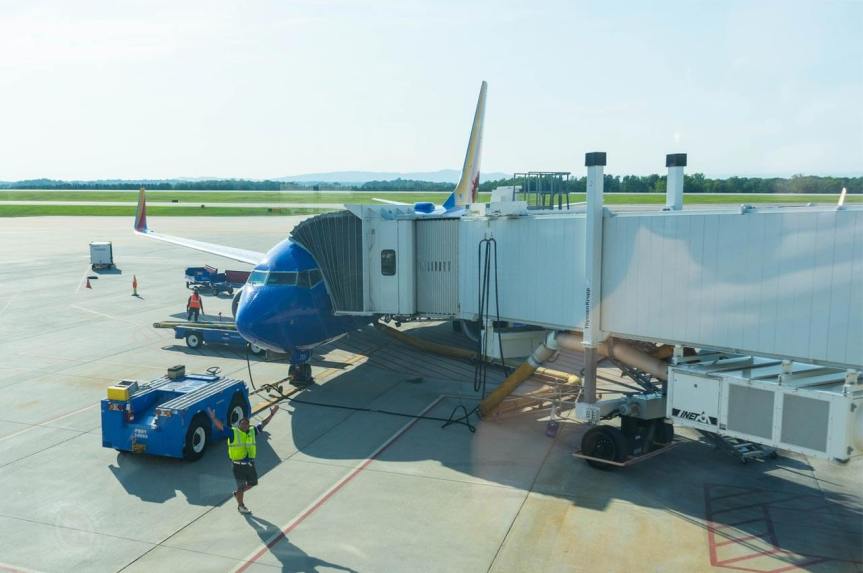
Seven flights from Muscat, Doha, Riyadh, Bahrain and Dubai from the Gulf under the Vande Bharat Mission took off with nearly 1200 distressed and stranded Indians back to the country today.

From Dubai , there were three flights. Dubai Srinagar flight had 151 passengers and four infants.  This was the first flight for Srinagar from any of the Gulf countries.

Consul General Vipul called this a historic flight as this is the first time that a direct flight was operated from Dubai to Srinagar  to repatriate stranded and distressed passengers. There are no direct flights for Srinagar from Dubai otherwise.

Teamwork and team spirit

Two other flights from Dubai were scheduled for Hyderabad and Kochi . While Hyderabad had  177 passengers on board, the Kochi flight had 180 passengers.
Doha – Bengaluru flight took off with 177 passengers and five infants on board. This was the 8th flight from Doha under the Vande Bharat Mission. Till now 1374 passengers and 45 infants have been repatriated so far.

Riyadh Hyderabad flight via Vijayawada had 150 passengers including three infants. Bahrain- Thiruvananthapuram flight took off with 177 passengers including 32 pregnant women , 34 medical emergency cases , 16 senior citizens , 37 children and five infants. Muscat Kannur flight had 177 passengers and four infants.

Priority on all the flights have been given to distressed blue collared workers , medical emergency cases, pregnant women, stranded tourists and elderly people.

UAE sends aid plane carrying medical supplies to Afghanistan

United Arab Emirates yesterday sent an aid plane carrying seven metric tons of medical supplies to Afghanistan. Emirates News Agency said, the aid will assist approximately 7,000 medical professionals as they work to combat the COVID-19 pandemic.
 
Commenting on the aid delivery, UAE Ambassador to Afghanistan Eisa Salem Mohammed Aldhaheri said, UAE is committed to ensuring that the medical professionals of Afghanistan are equipped with the appropriate protective equipment to enhance their health and safety as they bravely combat the COVID-19 pandemic.
 
In March, the UAE dispatched an urgent medical aid shipment to Afghanistan containing 20,000 testing units and equipment to examine thousands of people. Till date, the UAE has sent over 641 metric tons of aid to 54 countries, supporting more than 641,000 medical professionals in the process.

Thousands leave Dhaka for Eid as police relax restrictions on movement

Amid rapidly growing cases of Corona in the country, thousands of people are leaving Dhaka for celebrating Eid at their home-towns and villages as the police relaxed restrictions on the movement of people from the capital city. On Friday, the Director General of Rapid Action Battalion (RAB) Chowdhury Abdullah Al Mamun told UNB that people can go to their village, homes in their private vehicles on the occasion of Eid-ul-Fitr. As the restriction on public transport including autos and taxis and continues, people travelled out of Dhaka on cars, microbuses, pickup vans and motorcycles.
 
Large rush was reported over the last few days at the ferry terminals in Dhaka. People were allowed to leave Dhaka through river route as authorities started ferry services at Shimulia-Kathalbari and Paturia-Daulatdia ferry terminals. The Dhaka Metropolitan Police (DMP) had imposed strict restriction on the movement in and out of the city in the wake of Corona pandemic and subsequent announcement of general holidays by the government till May 30. However, the police has relaxed the restrictions including the on inter-district movement of private vehicles in view of the Eid festival coming up shortly.
 
In order to contain the spread of Corona virus, the police in Dhaka issued fresh guidelines asking people to offer prayers only at the local mosques instead of Eidgahs or open fields. Police has asked people to avoid embracing each other as part of ritual or shaking hands after the Eid prayers. In a press release the DMP has asked people to celebrate Eid at their homes only and not visit their relatives. Mosque authorities have been asked to clean the mosques with disinfectant before the prayers. They have also been asked not to lay out carpets for the people coming to offer prayer.
 
In the meanwhile, large number of Corona cases and deaths continue to be reported from Bangladesh. Continuing with the record breaking number over the last many days, 1873 new Corona positive cases were reported in the last 24 hours on Saturday. In a virtual briefing, the Directorate General of Health Services (DGHS) said that with the new cases of Corona the total number of infected persons in the country has gone up to 32078. Bangladesh also reported 20 more deaths over the same period taking the death toll to 452. 

HIL( INDIA) geared to provide locust control Pesticide to Iran

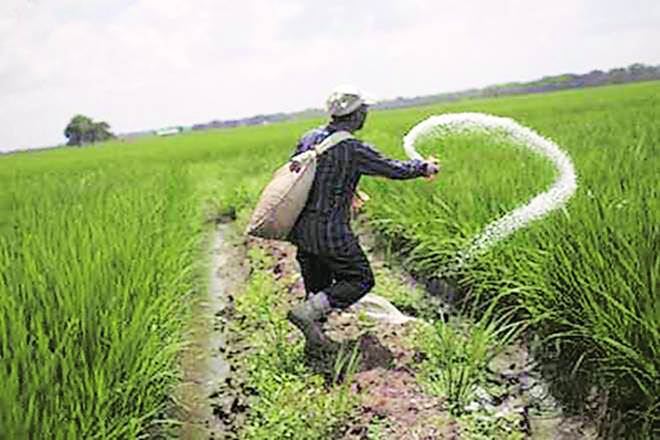
Despite logistics and other challenges posed by Covid 19 lockdown HIL (india) Limited a PSU under Department of Chemicals and Petrochemicals, Ministry of Chemicals and Fertlizers   ensured timely production and supply of pesticides for farming community. 

HIL is now in process of production and supply of  25 MT Malathion Technical  for supply to locust control  programme to Iran under Government to Government arrangement.   Union Ministry of External Affairs (MEA ) has  approached HIL for manufacturing and supply of said commodity to Iran. 

Credit rating of Central PSU upgraded to BBB- from BB.which is a stable investment grade.

The Company has exported 10 MT of fungicide – Mancozeb to Latin American country, Peru  and another 12 MT will be exported in next one week. 

HIL has also signed an agreement with Ministry of Agriculture and Famers Welfare for the supply of Malathion Technical to Rajasthan and Gujarat for Locust Control Programme. HIL had manufactured and supplied 67 MT of Malathion Technical  till last week 

HIL supplied to malathion Technical to municipal corporations for dengue and chikungunya control programme.

supply of 314 MT of DDT 50% wdp to various states like Rajasthan,  Punjab ,Odisha,Andhra pradesh etc was executed as per the supply order placed by ministry of family welfares, NVBDCP programmes .the company is in process of supplying balance quantity of 252 MT to other state.

During the lockdown period till 15th May 2020, HIL produced 120 MT of Malathion Technical, 120.40 MT of DDT Technical , 288 MT of DDT 50%, , 21 MT of HILGOLD (Water Soluble Fertilizer), 12 MT of Mancozeb Fungicide for Exports and 35 MT of different agrochemical formulations so that farming community and health department may not feel the heat of lockdown. 

Indian govt to ease corona virus-linked global travel restrictions

The Indian-Americans have welcomed the decision of the Indian government to ease the corona virus-linked global travel restrictions imposed on those having Overseas Citizens of India- OCI cards, describing it as a big relief for them.
 
OCI card is issued to people of Indian origin globally which gives them almost all the privileges of an Indian national except for the right to vote, government service and buying agricultural land. The OCI card gives them a visa free travel to India. Yesterday, the central government allowed certain categories of OCI card holders, who are stranded abroad, to come to the country.
 
Earlier, according to the regulations issued by the Indian government in April, visas of foreign nationals and OCI cards were suspended as part of the new international travel restrictions following the COVID-19 pandemic. 

Prez Rajapaksa seeks PM Modi’s intervention to restore economy

Sri Lankan President Gotabaya Rajapaksa has sought the intervention of PM Modi to revive some of the key projects as Sri Lanka strives to restore the economy in the wake of COVID crisis. 

In a telephonic conversation with PM Modi today, the Sri Lankan President called upon Indian side to expedite construction of the East Terminal of the Colombo Port as early as possible as it will be a significant boost to its economic landscape. 

In a tweet, Prime Minister Modi said, Sri Lanka is fighting COVID-19 effectively under the leadership of Mr Rajapaksa and India will continue to support its close maritime neighbour in dealing with the pandemic and its economic impact. 

The Prime Minister said, the two nations agreed to accelerate Indian-assisted development projects in Sri Lanka and also strengthen investment links. The Prime Minister conveyed his best wishes for the health and wellbeing of the Sri Lankan people. 

President Rajapaksa briefed Prime Minister Modi on the steps being taken by the Sri Lankan government to restart economic activity. They also discussed the possibilities of promoting investments and value-addition in Sri Lanka by the Indian private sector.

Mr. Rajapaksa said he is trying to promote value added industrial and agricultural activities and will be happy to encourage Indian investors to start such investments, including Indian companies already in Sri Lanka to increase domestic value addition. 

The Sri Lankan President also requested government of India to provide USD 1.1 billion special SWAP facility to top up USD 400 million under SAARC facility as it would enormously help Sri Lanka in dealing with the foreign exchange issues.  

PM Modi assured that he is personally committed to help Sri Lanka and is ready to help under terms that are favorable to Sri Lanka. The two leaders agreed to continue with the ongoing bilateral projects that brings direct benefits to people and prioritize food and health securities. 

In the face of the COVID-19 crisis, they agreed to further strengthen all aspects of the bilateral relations and President Rajapaksa thanked India for support, including 10 tonnes of medical supplies.

Shekatkar Committee recommendations related to creating border infrastructure

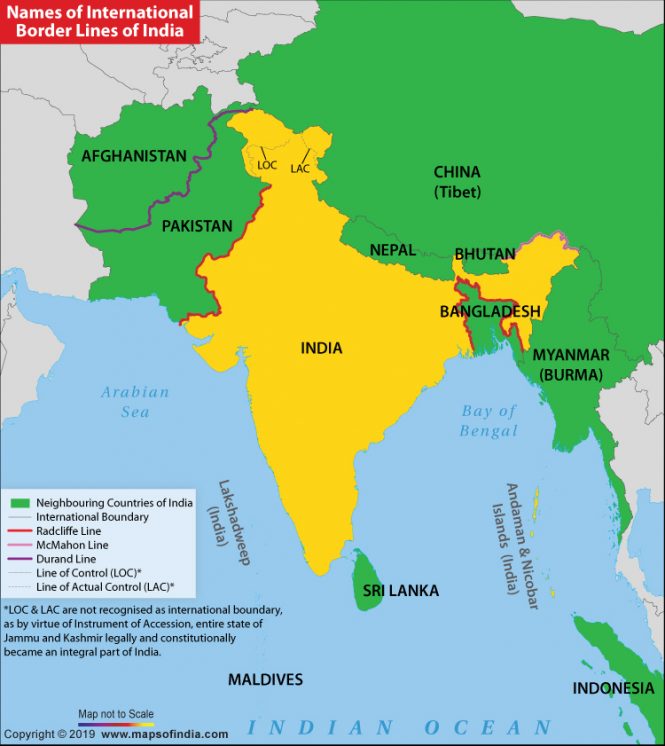
Government has accepted and implemented three important recommendations of Committee of Experts (CoE) under the Chairmanship of Lt General D B Shekatkar (Retd) relating to border Infrastructure. These were related to speeding up road construction, leading to socio economic development in the border areas.

On the matter related to creating border infrastructure, the Government has implemented recommendation of CoE to outsource road construction work beyond optimal capacity of Border Roads Organisation (BRO). It has been made mandatory to adopt Engineering Procurement Contract (EPC) mode for execution of all works costing more than Rs 100 crore.

The other recommendation relating to introduction of modern construction plants, equipment and machinery has been implemented by delegating enhanced procurement powers from Rs 7.5 crore to Rs 100 crore to BRO, for domestic and foreign procurements. Border Roads has recently inducted Hot-Mix Plant 20/30 TPH for speedier laying of roads, remote operated hydraulic Rock Drills DC-400 R for hard rock cutting, a range of F-90 series of self-propelled snow-cutters/blowers for speedier snow clearance.

New Technology like blasting technology for precision blasting, use of Geo-Textiles for soil stabilisation, cementitious base for pavements, plastic coated aggregates for surfacing, is also being used to enhance the pace of construction. With the empowerment of field officers through enhanced delegation of financial and administrative powers, there has been significant improvement in faster financial closure of works.

The land acquisition and all statutory clearances like forest and environmental clearance are also made part of approval of Detailed Project Report (DPR). Further, with the adoption of EPC mode of execution, it is mandatory to award work only when 90 per cent of the statutory clearances have been obtained, implementing the recommendation of CoE regarding obtaining prior clearances before the commencement of the project.

Telephone conversation between PM and President of the Russian Federation

Prime Minister Narendra Modi had a telephone conversation today with the President of the Russian Federation H.E. Mr Vladimir V. Putin. The two leaders discussed the global situation in the context of COVID-19 pandemic.

PM Modi
PM Modi

The Prime Minister conveyed his good wishes for early recovery of all those suffering from the disease in Russia and expressed the hope that Russia’s efforts, led by President Putin, to fight the disease would be successful.
President Putin conveyed to the Prime Minister his good wishes for the success of measures adopted in India to combat COVID-19.
The two leaders agreed on further consultation and cooperation in adequately addressing all challenges faced by this major global crisis, including those pertaining to health, medicine, scientific research, humanitarian matters and impact on global economy. They stressed the significance of international cooperation for unitedly fighting COVID-19, including within the framework of G20.
The Prime Minister appreciated the cooperation of Russian authorities in ensuring well-being of Indian students in Russia and hoped that the same would continue. President Putin assured all help in this regard. The Prime Minister told President Putin that Indian authorities concerned would continue to facilitate in all possible manner the efforts for ensuring the well-being and organised return of Russian nationals, as and when required.
The two leaders also agreed to continue their close cooperation for maintaining the excellent momentum and the warm of the cordial and time-tested bilateral relations. They reiterated that they looked forward to several opportunities for their interaction in person during the course of the year.
*****

Refugee Can Pursue Claim For Damages Against Government For Illegal Detention: UK SC

In a fresh development with far reaching consequences, the United Kingdom (UK) Supreme Court has most recently, most remarkably and most rightly held in a latest, landmark and extremely laudable judgment titled R (on the application of DN (Rwanda)) (Appellant) v Secretary of State for the Home Department (Respondent) [2020] UKSC 7 that was delivered on 26 February 2020 whereupon it minced no words to send across a simple, sensible and straight message that refugee can pursue claim for damages against government for illegal detention. No government can claim an unchecked and unrestricted right to hold a refugee in illegal detention! This is exactly the sum and substance of the extremely commendable judgment delivered by the UK Supreme Court which has to be applauded in no uncertain terms!

To start with, this notable judgment authored by Lord Kerr for himself and with whom Lord Wilson, Lady Black and Lord Kitchin agree first and foremost set the ball rolling by pointing out in para 1 that, “The appellant was born in Rwanda. He came to the United Kingdom in August 2000 and sought refugee status because of what he claimed was a well-founded fear of persecution if he returned to his native land. His claim was accepted on 26 October 2000 on the basis that he was a member of a particular social group (Hutu). He was recognized as a refugee pursuant to the 1951 Refugee Convention and granted indefinite leave to remain.”

While elaborating further, it is then pointed out in para 2 that, “Since he arrived in the United Kingdom DN has been convicted of a number of offences. He has also been cautioned twice. The most significant of his convictions occurred on 22 January 2007 when he pleaded guilty to assisting the unlawful entry of a non-EEA national to the United Kingdom contrary to section 25 of the Immigration Act 1971. The circumstances leading to the conviction were these: DN and his sister had travelled to the Netherlands where they met a niece. DN returned to the UK with his niece who used his sister’s travel documents in an attempt to obtain entry to this country. Although this was a serious offence, it was accepted by the trial judge that DN had no financial motivation for the crime.”

To be sure, it is then illustrated in para 3 that, “At the same court before which he had pleaded guilty to the immigration offence, however, DN was convicted, again on his plea of guilty, of three offences of obtaining or attempting to obtain a pecuniary advantage by seeking or taking employment in another’s name. He was sentenced to 12 months’ imprisonment for the Immigration Act offence and two months consecutively for each of the three pecuniary advantage offences making a total sentence of 18 months’ imprisonment.”

In hindsight, it is then unearthed in para 4 that, “On 2 July 2007 DN completed the custodial element of his sentence. On the same date the Home Secretary decided to deport him subject to a final decision on the issue of his refugee status. This was followed by a decision on 3 July that DN should be deported pursuant to article 33(2) of the Refugee Convention which allows the expulsion of refugees “whom there are reasonable grounds for regarding as a danger to the security of the country”. It was said that DN had been convicted of a “particularly serious crime” and that he “constituted a danger to the community”. The decision was based on section 72(4)(a) of the Nationality, Immigration and Asylum Act 2002. He was notified of the decision to deport him, and detained on foot of that decision on 2 July 2007, pursuant to paragraph 2(2) of Schedule 3 to the Immigration Act 1971, which provides that where notice has been given to a person of a decision to make a deportation order against him, he may be detained under the authority of the Secretary of State pending the making of the deportation order.”

Going forward, it is then stated in para 5 that, “Pursuant to powers conferred by section 72(4)(a) of the 2002 Act, the Home Secretary had made the Nationality, Immigration and Asylum Act 2002 (Specification of Particularly Serious Crimes) Order 2004. This specified several offences which were said to be particularly serious crimes. Assisting unlawful immigration to a member state contrary to section 25 of the 1971 Act was included among them. On that basis, the appellant’s conviction for the immigration offence was deemed to warrant his deportation. Section 72(4)(a) also provided that a person convicted of an offence specified in the 2004 order was rebuttably presumed to have been guilty of a particularly serious crime and constituted a danger to the community.”

As a corollary, what follows next is stated in para 6 that, “DN appealed the Home Secretary’s decision. His appeal was heard by the Asylum and Immigration Tribunal (“AIT”) on 22 August 2007. On 29 August the tribunal dismissed the appeal. It found that the appellant constituted a danger to the community of the United Kingdom, that his attempt to circumvent the immigration law in itself amounted to a danger to the community; that he could now be expelled pursuant to article 33(2) of the Refugee Convention; and that he had failed to rebut the presumption created by the 2004 Order that a person convicted of an offence specified by the Order was deemed to have been convicted of a particularly serious crime and to constitute a danger to the community of the United Kingdom. DN sought reconsideration of the decision. On 18 September 2007 that was refused. An application for a statutory review by the High Court of the AIT’s decision under section 103A of the 2002 Act was dismissed on 7 December 2007. On 31 January 2008 the Secretary of State signed the deportation order and made an order for DN’s detention pending deportation. That order was made pursuant to paragraph 2(3) of Schedule 3 to the 1971 Act which, although subsequently amended, at the time provided that “Where a deportation order is in force against any person, he may be detained under the authority of the Secretary of State pending his removal or departure from the United Kingdom (and if already detained by virtue of sub-paragraph (1) or (2) above when the order is made, shall continue to be detained unless he is released on bail or the Secretary of State directs otherwise).” (Emphasis added).”

Importantly, it is then brought out in para 7 that, “Before the deportation order was signed, no suggestion had been made on DN’s behalf that the 2004 Order was unlawful. After it was made, however, solicitors, who had replaced those who originally acted for DN, wrote to the Secretary of State making that precise case. On that account the Secretary of State was invited to revoke the deportation order. It was also claimed that DN’s detention since 2 July 2007 was unlawful. On 29 February 2008 the appellant was released on bail by order of an immigration judge. By that time, he had spent 242 days in immigration detention.”

No doubt, the simple and straightforward questions that need to be asked here are: How can the illegal detention of DN be justified under any circumstances? How can the 242 days that DN spent in immigration detention be glossed over? How can the claim for damages of DN be overlooked?

More importantly, we need to pay heed to what is stated in para 20 that, “The need for finality in litigation likewise does not warrant displacement of the Lumba principle. As Lord Carnwath says (para 38 of his judgment), finality and legal certainty are desirable objectives. But they cannot extinguish a clear legal right. In this case DN was detained on foot of an intended, and then actual, deportation order which proved to be unlawful. His detention was uniquely linked to that deportation order. The unlawfulness of that detention is inescapable. The desiderata of finality and certainty cannot impinge on that inevitable result.”

Equally important if not more is what is then stated in para 25 that, “If, and inasmuch as, Ullah suggests that paragraph 2(2) of Schedule 3 provides a stand-alone authority for lawful detention, no matter what has gone before, and irrespective of the fact that the decision to deport lacks a legal basis, I consider that the decision was wrong and should now be recognised as such. The giving of notice of the decision to make a deportation order, the making of the deportation order, and the detention on foot of it are essential steps in the same transaction. The detention depends for its legality on the lawfulness of the deportation itself. Absent a lawful basis for the making of a deportation order, it is not possible to breathe legal life into the decision to detain.”

Most importantly, it is then very rightly held in para 26 that, “I would allow the appeal and confirm that the appellant is entitled to pursue a claim for damages for false imprisonment. The prospects of success in that claim are not, of course, a matter for this court, particularly because lines of possible defence to the claimant’s case, not pursued (or, at least, not pursued with any vigour), might be canvassed on the hearing of the claim.”

All told, it is a no-brainer that all the courts in all the countries must always pay heed to what has been held by the UK Supreme Court in this extremely landmark case and hold the concerned Government accountable for false imprisonment of a refugee and for violating his/her human rights with impunity! Of course, it is a cardinal principle of law that even refugees have human rights which are sacrosanct and must always be accorded the highest esteem! If any Government fails to do so then they also must be ready to pay compensation for human rights violations as we see in this DN case of UK!

Sanjeev Sirohi, Advocate,

s/o Col BPS Sirohi,

A 82, Defence Enclave,

Sardhana Road, Kankerkhera,

Meerut – 250001, Uttar Pradesh.

Cargo industry welcome foreign investment

Aenean feugiat purus vitae sollicitudin laoreet. Duis fringilla ligula vel velit lacinia, in mattis felis consectetur. Sed at pretium orci. Ut tempus libero odio, sit amet consequat neque pretium ut. Integer hendrerit mauris nec odio auctor suscipit. Proin porttitor turpis vitae ligula dictum, a sollicitudin purus congue. Nulla viverra nisi ex, ut ornare tellus cursus quis. Nulla posuere tincidunt leo at condimentum. Sed egestas tortor a nisi fringilla, id cursus odio rhoncus.

Working Together to Make Investments

feugiat purus vitae sollicitudin laoreet. Duis fringilla ligula vel velit lacinia, in mattis felis consectetur. Sed at pretium orci. Ut tempus libero odio, sit amet consequat neque pretium ut. Integer hendrerit mauris nec odio auctor suscipit. Proin porttitor turpis vitae ligula dictum, a sollicitudin purus congue. Nulla viverra nisi ex, ut ornare tellus cursus quis. Nulla posuere tincidunt leo at condimentum. Sed egestas tortor a nisi fringilla, id cursus odio rhoncus.

we are able to create beautifull and amazing things

Aenean feugiat purus vitae sollicitudin laoreet. Duis fringilla ligula vel velit lacinia, in mattis felis consectetur. Sed at pretium orci. Ut tempus libero odio, sit amet consequat neque pretium ut. Integer hendrerit mauris nec odio auctor suscipit. Proin porttitor turpis vitae ligula dictum, a sollicitudin purus congue. Nulla viverra nisi ex, ut ornare tellus cursus quis. Nulla posuere tincidunt leo at condimentum. Sed egestas tortor a nisi fringilla, id cursus odio rhoncus.

Buy American and Hire American

When this blogger started blogging in 2009, his very first post was titled “What is American goods, anyway ? ” Eight years later, when returning back from a two year hiatus in blogging,  the same theme resurfaces as the second innings of blogging is started.

The trigger for this post is of course Trump’s executive order titled the same as this post, which he signed with much fanfare three days ago.  The order , of course, is pure bombast and is only meant to show that the President is doing “something”. It simply orders the Secretary of Commerce to tell the world what the hell this means in 60 days and orders sundry other Ramamrithams to specify how it will be implemented  in 150 days. I was not aware that you need an Executive Order to tell people to do their jobs, but apparently in the world of alternative reality, that is required.

Precious little, other than nuisance value, will come of it. For you see, in today’s globalised world of supply chains it is almost impossible to determine what is “American” as my first ever post argued.  If “value added” is the yardstick for measuring national origin, then your iPhones are as American as mom and apple pie even though they are entirely manufactured outside the US. If the physical act of manufacturing (read final assembly)  is the yardstick, then the iPhone is Chinese while BMW is American.  If the entire supply chain has to be in the US, most products will simply disappear off the shelves as some of the raw materials and components are simply not available in the US and have to be imported.

The Executive Order gives some clues to the warped thinking – apparently they would like  that “for iron and steel products,  all manufacturing processes, from the initial melting stage through the application of coatings, occurred in the United States .”  US iron and steel has been on decline for decades. Only an idiot will set up steel capacity in the US – after all the next President can sign another Executive Order to the opposite. Not a single new job will be created. What will only happen if this pig headed policy is even half tried is that the existing US steel plants will jack up their prices. The American consumer shall pay.

The problem of disappearing jobs is a real and serious one, but there are no easy fixes. It cannot be tackled by trumpeting economic nationalism. It certainly cannot be solved by sitting on the toilet seat and tweeting whatever comes to your mind.

By the way, the GOP was meant to stand for free markets and trade. It would have been appropriate if a President Sanders were to try something like this. But a Republican President ?

PS : Its nice to be back. Sorry for going away for two years – I was dabbling in a social enterprise in the interim, but am now back in retirement, and therefore back to blogging.

Élection présidentielle 2017

France goes to the polls on Sunday to elect a new President. If you haven’t been following this election, then you are missing something. It’s a very crucial election and is much more fun for an outsider to follow than the US Presidential elections.

This blog largely tries to steer clear of political issues and focuses on the economic ones. So, although this blogger has strong views on the candidates and knows who he would vote for if he had a vote, he will avoid discussing that here. Instead, the focus is strictly on economic policies, which is of course, only one dimension of evaluating any candidate.

Who’s the most dangerous of them all economically ? If the pat answer is Marine Le Pen, a more polished version of Trump, think again. Introducing Jean-Luc Mélenchon, the far left candidate who is currently surging in the polls . Nearly 20% of France want him as President .


Here are his economic policies, without comment

  • 90% tax rate for those earning more than Euro 400,000 a year
  • 273 billion Euros higher spending over 5 years
  • 16% rise in minimum wage to Euros 1326 a month (Rs 90,000 a month)
  • 35 hour work week.
  • Exit the Euro
  • Abolish the treaties prescribing a target of deficit to GDP . In other words, simply print money
  • Exit EU, a la Britain, if necessary
  • Join Alba the economic pact between Cuba and Venezuela. Honourable observers of this pact are Iran and Syria
  • Right to housing to become a constitutional right
  • Nationalise utility companies

There is more, but this is enough for the time being.

The system of French elections is such that that he is unlikely to get through even in the first round. But it should give a pause for thought that a full 20% of the French electorate is willing to subscribe to such lunacy.

The right to vote is a heavy responsibility. Concepts like protest vote, angry voter, etc are deadly pitfalls. You are supposed to consider the options carefully and vote according to what you think is best for your country. You can have differing views, but irresponsible exercise of the franchise is catastrophic.

If you are of the view that this is all fear mongering, capitalism has failed, and we should give such a philosophy a try (yes, I am talking to you , if you have felt the Bern), then all I will say is that this has been tried before and the example is there for all to see. Venezuela.
The loony left is even more dangerous than the rabid right.