NEW PHASE OF COVID-19

New phase of Covid-19 has already started in India. Number of corona infected people has reached to the peak. Its compulsory for everyone to wear masks and maintain social distancing. Government have imposed strict rules and regulations in many areas of country. People have to pay huge amount of fine for not wearing masks outside their houses. Government have also imposed night curfew and section 144 in many states like Noida, Rajasthan and in some parts of Delhi, Karnataka and Maharashtra, so as to control the spread of corona. Section 144 prohibits the gatherings of 5 or more people at one place. And in night curfew only some of the working people are allowed to stay outside after 8 pm but with permissions. Maximum number of people allowed in a marriage is 100 only.

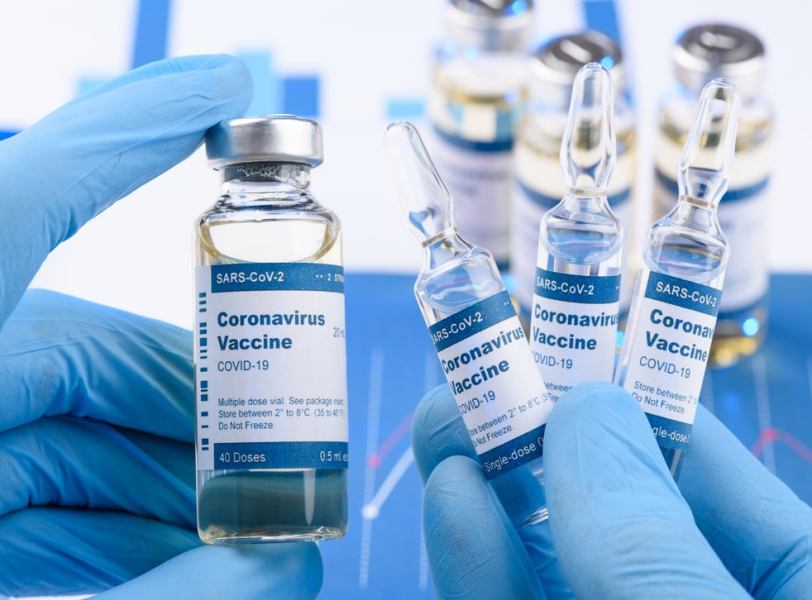
India will get vaccines in just a couple of months. According to local manufactures India could access to AstraZeneca vaccine by January. 

Rules and regulations imposed by the government differ from state to state according to the condition of Covid-19 cases.

According to the stats, Maharashtra consists of highest number of cases of covid-19, which is over 79 thousand. Passengers from Delhi, Gujrat, Rajasthan, Goa and some other states have to show their negative test reports before boarding or entering in Maharashtra.

In Rajasthan, according to the health department, number of confirmed corona cases are 23,344 from which 5211 are active cases and 499 have lost their lives. People arriving in Rajasthan have to go through screening which will take place at airports, bus stands and railway stations. Its mandatory to obtain passes from the authorities before moving out from Rajasthan. Rajasthan will be the first state in the country to enact a law for mandatorily wearing masks to prevent covid-19 spread said by the Chief Minister Ashok Gehlot. After covid-19 tests people have to submit their Aadhar card number in RT-PCR app and the labs have to provide corona test result reports within 24 hours. Many other new guidelines are imposed by the health department of Rajasthan.

Government of other states like Delhi, Karnataka, Gujrat, Uttar Pradesh etc have also issued certain guidelines which are to be mandatorily followed by people.

Our Prime Minister Narendra Modi recently warned people about the ongoing health crises due to covid-19 in his speech. He also compared India’s condition with other nation like US and Brazil. He emphasized on the importance of wearing masks in this pandemic. He recently holds the review meetings with the Chief ministers of 8 states of India and discussed about the situation of every state.

People are becoming non-serious about the present scenario of covid-19. Some are avoiding to wear masks and maintaining social distancing. People are even gathering for rallies, in a market and many other public places without any fear of getting infected by corona. Even after so much of strict rules and regulation some people are showing their careless behaviour towards this pandemic and this can this is hazardous to their and other’s life. Government needs to take strict actions against these people to lower the risk of corona.    

“The hammer and the sickle have chased the Covid devil away” Behind Kerala’s success at flattening the Covid curve.

Kerala is being observed the world over for its powerful battle against COVID-19. Much has been expounded on the State’s initial readiness, successful lockdown, focused healthcare mediations, extraordinary financial packages , help for migrant workers, decentralized activities through the local self-governments, between departmental coordination, etc. Be that as it may, this is an endeavor to assess the more essential qualities of Kerala society, which has empowered its proactive mediations.

Solidarity of citizens

What has assumed a crucial job in the state’s battle is the way that Kerala, as a general society, has stood joined together and fearless during these troublesome occasions. The Chief Minister himself has repeated on numerous occasions that the individuals of Kerala are the columns on which their resistance has been fabricated.

We have seen the individuals of Kerala meet up to save their brothers and sisters during the noteworthy floods in the earlier years. Aggregate intercessions have helped the state to defeat difficulties like Ockhi tornado and Nipah infection, and in pushing forward with the Rebuild Kerala Initiative too.

How could it be that Kerala’s general public can more than once resort to network driven activities and mediations to hold over the difficulties that it faces?

In the event that you take a gander at the historical backdrop of present day Kerala, one can see that individuals’ developments have been essential to social change and human advancement in the state. Renaissance developments in the primary portion of the twentieth century, the laborers and peasants movements before and after Independence, the mass education movement during the 1980s and the people’s movement during the 1990s need unique notice.

Volunteerism by individuals’ associations to address open issues is additionally regular spot. All these have reinforced the extension and impact of open activity in Kerala. Henceforth, in the wake of any test, the general public meets up to its own guide. The case has been a similar this time around as well.

Taking due note of the rehashed occurrence of transmittable diseases in the state, the current LDF government set up an Institute of Advanced Virology. To use indigenous information in tending to healthcare issues, an International Ayurveda Research Institute is being set up. Research in biotechnology and prescriptions is being supported at the Life Sciences Park.

A conventional brand of medicine has been developed with the goal that basic meds can be given at a less expensive rate.

The Health Department even observed a spike in the admission of healthcare experts since 2016. Public sector Kerala State Drugs and Pharmaceuticals was redone to expand the creation of medications inside the state. Its fortunes were turned around to get beneficial and they had even begun sending out meds.

It is this attention on general healthcare and assistant frameworks that has helped Kerala give quality treatment to COVID-19 patients in the state. The way that even old patients have been breathed life into in Kerala, that their recuperation rate is amazingly high and that their death rate is low even by global guidelines, is a demonstration of how proficient Kerala’s general health services framework is.

Increasing cases in some states of India

The situation of Corona in some states of the country is becoming uncontrollable. Which includes the states of Delhi, Maharashtra, Gujarat, and Assam. Even in the metropolis of these states, curfew is being imposed at night. Curfew is being imposed from 09 pm to 06 am in Ahmedabad, Surat, Rajkot, and Vadodara in Gujarat. Yesterday, the Maharashtra government said that lockdown could be imposed again in Maharashtra if needed. Along with that, it will be necessary to show the Corona report to enter Maharashtra from Gujarat, Madhya Pradesh, Rajasthan.

Third Party Images

The Supreme Court has yesterday asked the governments of Gujarat, Maharashtra, Delhi, and Assam to report in two days. In which what is their policy from governments? What kind of preparation is there to prevent corona? Answers to these questions have been sought. Simultaneously, a response has also been sought from the Central Government, in which Solicitor General tushar Mehta replied that, the State and Central Government are working together and the Central Government is providing all possible help to the State Government.

Acid Attack

As a human being the god gives us beauty and body, we all have different faces with beauty, but this topic of the article is so connected with our hearts. People often read this news but never think about it, this act looks like normal criminal offence but it is one of the heinous crime as like rape, assault which usually girls face in their life. Acid attack is the crime which is described in the Indian Penal Code 1860. This attack is basically with a wrong intention just to torture, or disfigure one’s body even try to kill that person. The acids which are used in these attacks are sulfuric acid and many concentrated acids which are not easily available in the market. The question comes to our mind how these offences take place, what are the intentions behind it and many more. Usually, a few years ago people were not aware of these offences and there was no proper legalization on the sale of the acid, due to which such offences had taken place in earlier times. But as the legislature finds the acid attack as one of the heinous crime, it imposes certain restrictions over the sale of the acid, but before dealing with this we have to know what are the intentions behind the certain attack. These attacks took place when certain wrong intentions were not fulfilled by the individual, like refusal on having sexual intercourse, personal conflict, rivalry, conflict due to immovable property. All these are certain reasons due to which such attacks took place in society. these attacks are not the gender-biased but majorly it took place with the girls. Mostly we have the news of acid attack related to girls only in certain cases we find the acid attack news related to the male. Now the questions come to our mind is this offence take place only in India, or some other country also witnessed the same. The answer to this question is not as much easy as we think, different countries have statutes and offences accordingly but the globally acid attack is considered as one of the heinous crime. While dealing with this issue, the question also stuck in our mind that why it is heinous, the act is heinous because it disfigures or harms one’s body, this act gives grievous bodily injury due to which sometimes death can also take place, and if survive it turns the beauty into the scar for the individual as lifelong. We believe that the face is just the representation of one individual but the beauty is always the inner soul, but here some of the criminal never understand, this line they believe that their ego will satisfy when they harm the other person in such a brutal manner that it creates a danger to one’s life. This offence is not limited to an only single individual but this offence creates terror and fear in the society, people believe that keeping their child either daughter or son in the house is much safer than any other thing such acts bring an initiative to the wrong ideology, it affects the education of the country, which brings discrimination and much more evil activity in the society. Education can reduce such kind of thinking in society. All rape equally liable top have freedom all of us have the right to freedom and liberty and those who perform such acts should be punished rigorously. Offences like rape, acid attack all these offences are not against the individual it is against the society, due to which society as a whole gets deeply influenced by it. Many cases of the acid attack took place in India as Sonali Mukherjee v Union of India and Laxmi Agrawal v Union of India, both these cases are considered as the landmark judgements as these are helpful in bringing the amendment in section 326 and brings 326A with the amendment of the Indian Penal Code 1860. After these cases, the legislature imposes certain restrictions on the sale of the acid as it is not easily available to each and everyone, the person should have to provide specific id proof and reason for purchasing the specific acid. This act of the legislature and restrictions, to save the life of many or even we can say, it saves the life of millions of girls as well as boys. This step taken by the authorities save the life and also reduce the crime rate in the country and this provides safety in the society, as the girls are free to smile and also it brings a kind of relief those who are a victim of these attacks as this attack will not take place with anyone in the future.  

Demise of Sri Tarun Gogoi: A Smiling Person in all the situations

I met Sri Tarun Gogoi ji probably in 2002 in Hyderabad where he came for National Games Meet. I was mesmerised by observing his simplicity and innocent smile.   He was born on 1st April 1936 in an ethnic Assamese Tai-Ahom family at Rangajan Tea Estate, erstwhile Sivasagar District, now under Jorhat district of Assam. His father, Dr Kamaleshwar Gogoi was a medical practitioner at Rangajan Tea Estate and mother, Smt. Usha Gogoi, younger sister of the renowned poet Sri Ganesh Gogoi. Sri Tarun Gogoi was ‘Tarun’ means young by heart and soul and fondly called Punakon by his parents.

He held important positions from his young age inter alia of which were- a) Member, Municipal Board, Jorhat, b) Served six terms as Member of Parliament (MP) in Lok Sabha, c) Became political leader with national stature after he was elected Joint Secretary of All India Congress Committee (AICC) in 1976 and that time Smt. Indira Gandhi was the Prime Minister d) He later served as General Secretary of the AICC (1985–90) and that time Prime Minister was Sri Rajiv Gandhi, e) He also served in the Union Cabinet as Union Minister of State in Food and Food Processing Industry (1991–96) under the Prime Minister of Sri P. V. Narasimha  Rao, f) Sri Gogoi was elected Chief Minister of Assam in 2001 after that he led the Indian National Congress to victory in the state elections, g) He assumed the office of Chief  Minister, Assam first time on 18 May 2001, then on 14 May 2006 (second term) and for the third term on 18 May 2011. It is pertinent to mention that he completed 15 consecutive years as Chief Minister of Assam on 18 May 2016,  as the longest serving Chief Minister of the State. He was also Director, Vayudoot; Member, Bar Council of Assam and Chairman, Assam Small Industries Development Corporation. 

His educational qualifications included graduation from Jagannath Barooah College, Jorhat, Assam and L.L.B. from Gauhati University.   He was a visionary and had development attitude which is evident from this quote, “Our Government is making all-out effort for development of Guwahati city. Work is on feasibility study and preparation of a detailed project report for the metro rail project. A sewerage project for Rs. 1,700 crore, streetlights for all major roads, affordable houses for 10,000 urban poor are in the pipeline”. Sri Gogoi travelled many countries but his favourite pastime was reading and gardening. He had special interest in golf, cricket, football and tennis. He is survived by his wife Smt, Dolly Gogoi, a post-graduate in Zoology, Gauhati University. They have two children – daughter Ms. Chandrima Gogoi, MBA and son, Sri Gaurav Gogoi, presently, a Member of Parliament. Sri Gogoi always used to celebrate his birthday in a simple manner indicating simplicity of his life.

He although has passed away on 23 November 2020 but he will be in the heart of millions generation after generation. May his soul rest in peace and praying Almighty to give strength to the family members so that they can bear this great loss.  

Dr Shankar Chatterjee, Hyderabad

The following websites have been consulted while writing the article:

  1. https://en.wikipedia.org/wiki/Tarun_Gogoi
  2. http://tarungogoi.in/pressrelease.php?displaytype
  3. http://www.tarungogoi.in/biography.php

Humanity: Slower than the course of time

Mr. Albert Einstein has said that, “Peace cannot be kept by force, it can only be achieved by understanding”. And that quote is relevant even in our “Modern” time, as we walk briskly towards an epidemic of nuclear war, which may even end the world. To analyze the problem and hopefully slow down the pace of this negative technical advancement, a UN conference of the committee UNGA, with the Agenda of Reviewing the Nuclear Proliferation Treaty (NPT) and establishing Nuclear Free Zones in the Middle East, was held on 19th August 2017.

The discussion started off slow, where the first few speakers didn’t seem bothered, serious about the huge and scary problem, but as time passed, change was visible. Most of the countries were in favor of the NPT, as the Treaty is the most essential in today’s harsh time for maintaining peace and hospitality. However, a pinch of Hypocrisy was sprinkled upon the fellow delegates by the delegate of the USA, where they said that countries should not invade, wage war on other countries just for some resources, which obviously turned the heads of many. Small countries like Paraguay and Samoa said that even though they don’t have conflicts in the Middle-eastern region, they still support the NPT, which is pretty obvious, considering the amendments and features it has to offer. Everyone should agree with the optimistic vision for a peaceful world, that the leaders of many great nations have to offer. That is, if each and every country lets go off their “ego” and decides to sign the Treaty, many lives could be saved beforehand and a lot of blood-shed would be spared. However, it is pretty obvious that something which sounds this good, will not be able to succeed at a very fast pace. Even though dangerous countries like Afghanistan, Saudi Arabia have signed the Treaty, there is no guarantee that there would not be any interference from their side at all. If we want Peace and Harmony to be spread across the world, we should ask our kids why do humans keep on making weapons of such high caliber, when we don’t really need them. When the kids fail to answer, you will realize that Humanity isn’t “lost” anywhere, or our world isn’t that bad of a place to live in. Nobody is born greedy, or with a lust for money and power, they’re made to think like that because of our system and the general idea of “living the dream”.Tell the kids about our ancestors. Our ancestors started making weapons, as a means of ease, and for defending themselves from merciless predators. And, as generations passed, our species rose to the top of the food chain, at literally the safest spot in the world. But still, our greed didn’t stop rising, we are so engulfed with our thoughts of rising to supremacy, that we’re killing our own people, by making weapons that could destroy entire states in one go. And for what? Just a stupid throne, which is placed upon burnt ruins of the bodies of the Billions of people, who didn’t deserve any of it, and then talk about Natural Selection.

It is sickening to see that the extreme superpower, the USA is threatening North Korea for a Nuclear war, which could again end everything at once. And worse,North Korea is still opposing the NPT, saying that the Treaty Violates the right of defense of the state, and even if they did sign it, they wouldn’t dismantle their already existing weapons. It has also come in our notice, that USA has violated the Article 4 of the treaty, and they have also not disarmed their weapons completely. Just imagine, if the most wise, old person in the family, whom everyone looks up-to for guiding them and showing them the right way, becomes careless, doesn’t care about his/her children or grand children anymore, tells them to fight with, kill each other, How would that house stand? A similar case of carelessness has been broadcast by the USA. A few countries also believe that the NPT is flawed, and has many loopholes, because not every country has signed it yet, I mean if one doesn’t take initiative himself, how would we improve?

We often see change being promoted in our world, when an idea is showcased and printed in golden letters, but not followed sincerely by everyone. The NPT is one of those ideas, which if supported properly, can bring a huge change.

But..

Sitting for a long time affects our Physical Health….

Covid-19 have largely affected our body and life styles. We have to just stay at our homes and because of this we see the decrease in our day to day activities. As many people have started working from home so sitting for a long time in front of laptops or computer have led to the deduction in working and physical capacities of the people and this process is known as ‘Deconditioning’.

Deconditioning leads to the stiffness and pain in our muscles. It can also cause pain in our joints, which has become a very common problem now a days, not only old age people but young ones also face this problem. People are facing many problems in returning back to their normal routine due to the lack of regular exercise and walk. Deconditioning not only causes pain in muscles and joints but it also affects our breathing, heart and metabolism.   

Doctors prescribe brisk walk or fast walking to prevent the side effects. So, here are some tips you should follow while walking:

  • Keep your head up and look forward
  • Move your shoulders naturally and keep them free
  • Gently tighten your stomach muscles
  • Walk smoothly rolling your foot from heel to toe
  • Swing your arms freely with a slight bend in your elbows.

 Proper and regular brisk walk can provide important toning to our muscles and it also improves our breathing and cardiac abilities. But sudden increase in walk and exercise can be very harmful for our bodies so take small steps every day and this will result in increase of your strength and working abilities. You can also do other exercises to improve your posture like stretching, walking up and down the stairs, skipping ropes etc. World Health Organisation (WHO) suggests that we should regularly check our sitting posture and try to improve it so as to avoid its side effects. You should also break your sitting and stand up for a couple of minutes while working on phone or watching T.V.     

Not only working people but students are also facing many problems in this pandemic as they have to attend their online classes so they also have to sit in one place for hours so this is affecting their health and energy. There are many other problems that are affecting; not only our physical but mental health too. People are going through depression, anxiety, and other mental problems too. So, try to keep yourself healthy and fit in this challenging phase because our health is most important than anything else.

Aatm Nirbhar Bharat, Poverty and India

With the onset of the 2020, world witnessed a new virus spreading in China and by March, the virus had taken over the entire world including India. The novel corona virus, which was declared a pandemic by WHO in February, has impacted millions of lives in India. Viewing this, Modi led government ( BJP) announced ‘ Aatm Nirbhar Bharat Abhiyan’ on May 12. This is a special economic package of 20 Lakh crore rupees. The idea and vision behind this initiative is to make India self reliant and sufficient in the global market. This initiative will greatly affect and benefit the poor, migrants, labourers etc who have been adversely stricken by the wrath of the pandemic. There are five pillars to this initiative: economy, infrastructure, system, vibrant demography and demand.

A country prospers when it is the manufacturer. The abhiyan helps India in achieving this. The only way any country can come out of economic depression or recession is by mass producing goods by themselves. India is already a major exporter of pharmaceuticals and is seen as a future market for various electronic hubs. This initiative will attract such entrepreneurs and companies that want to invest in developing nations. This in future would lead to us greater heights. One such example is performing arts, India being enriched with plenty of it. Primary example of performing arts include theatre, drama, music, opera, dance, public speech, puppetry etc. It creates visual, auditory or performing artworks, expressing the performers imaginative or technical skill open to audience to consume and experience it. In India, there are 9 emotions called ‘nava rasa’ that are expressed through performing arts, which include love (Shringara), laughter (hasya), disgust (Bibhastsya), surprise (Adbutha), heroism (Veera), fear (Bhayanaka), anger (Raudra), sorrow (karuna) and tanquility (peace). Indian performing arts are appreciated and acclaimed across the world. Students can now study performing arts at various universities across the globe.

It is no hiding away from the fact that India, while being the second most populated country in the world, stands at the 92nd position when it comes to literacy in the entire world. While having the largest democracy and absolute freedom to education, where does the problem lie actually? This is a question everyone needs to ask themselves today. It is because it has a history of social and economic divide in the country. Technological barriers have also created a new obstacle. According to the recent statistics, India has the largest population of illiterate adults that contributes to the vicious cycle of illiteracy in India. Ultimately hampering the growth of the society.

Literacy is empowering, it fuels a better understanding of society and how it functions, offering solutions to problems. It is an amalgamation of human and social development. While setting up classes and teaching children in villages and slums, my team came across certain ways to boost literacy development that are, increasing investments in government schools, giving vocational training, changing societal and social norms, giving jobs to more teachers so that more students study.

Covid vaccine will be provided by linking Aadhaar.

Corona vaccine is being tested in the country and the world. Because cases of corona in the world are constantly increasing. However, it is a challenge to the government not only to corona but to whom to give corona vaccine first ? and how to distribute it?

In India, the corona vaccine may come early next year. According to Healthy Minister Dr. Harsh Vardhan 25-30 crore people will be given corona vaccine by June – July of next year. The person will be linked to the Aadhaar card while giving veccine. For which there will be no Aadhar card, the government has not given any kind of information.Simultaneously, the government will use schools, panchayats, and anganwadis to distribute the vaccine and the state government will identify the places from where the vaccine will be given.

How will the covid app work?

While moving the veccine from one place to another, there is no change in the environment of the veccine so the covid app will be taken.

After giving the covid vaccine the person will be given a certificate. in which who, when, and where the vaccine is given will be given information which can be severely reduced in digi locker.

Travel and tourism after COVID-19

Covid-19 is a global pandemic, as its impact has reached to almost every country of the world and in almost every sector too. Sectors like MSME (Micro, Small and Medium Enterprises) sector, automobile sector, real estate sector, education, tourism and hospitality sector etc. are mostly affected by COVID-19.

Tourism and hospitality sector are one of the main sectors of India as it leads to the growth of the country in terms of GDP and other aspects too. It is one of the largest and fastest growing industries globally; it is expected to play a significant role in regaining the socio-economic stability after COVID pandemic. But due to COVID-19 it has faced the great loss in a year only; as many restrictions and lockdown were imposed by the government in every parts of corona affected countries. National governments and local authorities are acting to discourage and prevent domestic tourism and people visiting second homes.  Destinations have closed to visitors and tourists the lockdowns have significantly reduced even local travel.

The tourism industry is an umbrella industry networked with many other sectors in the economy including hotel, community level operations, education, financial, agriculture, medical, travel and transportation, construction, real estate, retail, and vice versa. Due to the heavy toll of tourism in the country economy, it is important to study how the reliance of the industry might shape the recovery of its main sub sectors once the pandemic reduces. The indirect impact in this context on travel and tourism industry cannot measure easily and definitely there is a significant loss in short term as well as long term.

Tourism is a reason for most of the human mobility in the modern world. According to the World Tourism Organization (2020), the international tourism has indicated continues growth for the tenth consecutive year reporting 1.5 billion international tourist arrivals in 2019 and estimated 1.8 billion of international tourist arrivals by 2030) people are forecasted to be (UN News, 2017).

It is not yet clear when the pandemic will be over, however many governments are already trying to restore health to national economies. This means deciding which industries should go back to normal operations, and redefining what “normal” means for each industry, including tourism.
Post COVID-19, countries need to strike a balance between public safety and economic recovery. Many countries are trying to achieve this balance by restricting international tourism, setting their sights instead on domestic tourists.

The 4 key factors in the overall travel scenario that will drive all of the above trends will be:

1. Safety: both perception and reality will matter

2. Health: government may introduce mandatory checks

3. Hygiene: There will be no compromise on this

4. Brands: Those that will stand for quality will win 

Health tourism: As people will become more health-oriented, many are expected to seek wellness, and healing vacations. Yoga retreats, spa treatments, and other pro-health activities should be particularly appealing for tourists.

Heritage and culture tourism: When limited to nearby locations, heritage and cultural experiences can gain the spotlight. This means an increase in interest of museums, restaurants, history tours, and other local sites.

With quarantines easing and flight schedules reforming, tourism is showing signs of returning. But for the industry to return as a force for good for both the economy and the environment, we cannot return to business as usual.

Although the present may seem challenging for tourism, most experts expect the industry to recover in 2021. While this recovery may look different from the industry pre-COVID, people’s desire to travel is unlikely to disappear. In particular, experts foresee an increase in leisure travel and visits to friends and family as citizens seek to unwind and reconnect socially after prolonged periods of isolation. 

However, to enable this recovery, the industry and destinations need to take steps to safeguard travelers and workers. Companies will have to operate with tight budgets but be willing to invest in new processes and technologies, and to be flexible to changing needs and requirements. Assuming they are able to do so, they should be equipped to effectively adapt to the post-COVID-19 world and its “new normal.”  

FUTURE OF TOURISM AND TRAVELLING IN INDIA: According to tourism minister Prahlad Singh Patel, India will again become one of the best tourism destinations in the world and the people will be ready to explore India after this pandemic. But initially the tourism will be limited to the domestic boundaries of the country because the people of India who were planning to explore foreign destinations earlier will only visit to the domestic destinations as this sector will take some years to regrow and become like it was before the pandemic. Even after this pandemic it’s important for the people to prioritize social distancing for some time. There will be the great increase in the religious tourism as the restrictions which were imposed by the government on religious destinations [Amritsar, Tirupati Balaji, Vaishno Devi and Shirdi temples Puri, Ajmer, Coimbatore, Govardhan, Hospet, Kartarpur Saheb] will be released or will be very limited after this pandemic likewise there will be the increase in the tourism for business and historical destinations[Taj Mahal, red fort, India Gate etc.] too. There will be the increase in the destination weddings. Tourism industry currently accounts only 10 percent of GDP which will surely be increased after covid-19. So, many things are expected to be recovered in India after covid-19.

FUTURE OF TOURISM IN RAJASTHAN: Its expected that there will be the increase in the travel and tourism in Rajasthan after COVID-19 when the situation will be under controlled. Cultural events and programs will be rescheduled and there will be the increase in the visits to “THE LAND OF KINGS” Historical and other tourists destinations like monuments and buildings in Rajasthan [Amir fort, Nahargarh fort etc.] will be sanitized initially for few days only and the tourists will be instructed to maintain social distancing and hygiene so as to avoid any of the risks. So, as estimated; there will be the great increase in the tourism in Rajasthan.

So, till the pandemic continues there will be lots of restrictions by the government and this will largely affect the travelling and tourism department. Hence; everyone is hoping for the better conditions as it was before this pandemic, in coming future. So, tourism and hospitality sector will get stable but it will take some time as initially there will be some rules and regulations to avoid the risks even after COVID-19.

Superstitious India!

India is the diverse country with variety of people, religion, cultures, faith, caste, creed, colour etc. Variety of religions in India are Hinduism, Jainism, Islam, Christianity, Sikhism, Buddhism and many more. Everyone has their own faiths according to their cultures and religion. But many times, this faith on cultures and religion becomes ‘Superstitions’ or blind faith. Superstition can be called as a belief of the people that is not true and cannot be proved by science or any reasons. In India many people have different kinds of superstitions, or myths in their mind. Not only uneducated but many educated people also have fake believes or blind faiths in some or the other thing related to their lives. But comparatively illiterate or poverty ridden people are more superstitious than the literate ones. Anyone can misuse these innocent people easily by tempting them for money or anything these people want. These people can be used for any of the crimes like smuggling of drugs, kidnapping, child trafficking, murder etc. These people believe in black magic or witch craft (practice of black magic). Some people even prefer to go to witch-doctors for the treatment of their health, wealth, marital and many other issues of life. But in the name of treatment of treatment these innocent people get attacked by witch-doctors. Women are mostly attacked by these witch doctors.

There are many other superstitions followed by the people living in Indian society:

  • Some people consider black cat unlucky as they believe that if black cat crosses their path, they will have a bad luck.
  • Seeing squirrels at day time symbolizes that your day is lucky. 
  • If you have itching in your palms that means you will earn lots of money soon.
  • People are not allowed to enter their homes after a wake as people believe that bad souls or negative energy might tag along them. Mourners have to take bath before entering their homes.
  • Hanging lemon with chillies at the entrance or at the front door to protect the house from ‘buri nazar’ or evil eyes is another common superstition. But the scientific reason behind this is that lemon and chillies contain anti-bacterial properties which act as anti-pesticides and thus prevent insects and other bacteria entering our homes.
  • Upside down sleepers can create disputes in our family; this is another belief of people.
  • People doesn’t sweep their houses after sunset as they believe that it will bring bad luck to their houses. But the logic behind this misconception is that, in old age when there were no lights  people have to clean their houses before the sunset as after sunset they will not be able to do so without light.
  • Eating curd with sugar together before stepping out from homes for exams, finding jobs or for any other important work; is considered very lucky.
  • Going near Peepal tree at night is considered dangerous as people think that there is the ghost inside the tree. But the logic behind this is that at night plants and trees emits carbon dioxide and absorbs oxygen at night so its dangerous to go or sleep under the tree.
  • During menstruation girls or women are not allowed in kitchen and temples as they are considered profane at this time. they have to follow many rules and regulations during their menstrual days. Logic behind this belief is that earlier women don’t have any sanitary pads with them and because of this they were unable to go anywhere.
  • Sati Pratha was one of the biggest superstitions of old times.

There are many other superstitions followed by people. people. Now people have started misinterpreting the concerns of our ancestors and this is one of the reasons of India’s backwardness. Not only in India but almost the whole world is full of superstitions and the people who follow them.

So, these superstitions need to be vanished completely; not only from India but from the whole world.  People who only believe in logic, science and facts should take initiative and make superstitious people understand about the reality of the myths they follow in their lives and should also try to remove them from their mind.

OTT Platforms Under Surveillance

The Central government this month announced that Over The Top (OTT) platforms and video streaming service providers like Hotstar, Netflix, Amazon etc will be brough under Information and Broadcasting Ministry. This notification has created quite a stir in the world of internet as there was no law or autonomous body governing the digital content before this.

A petition was filed by advocate Shashank Shekhar Jha in October that asked for setting up of an autonomous body to monitor and also filter content on these OTT platforms. He mentioned that OTT platforms have created a space for artists and movie makers to make content without any censorship.

Currently, traditional medias such as Films are under the surveillance of Central Board of Film Certification while the Press Council of India represents the Print Media. Television News Channels are overlooked by News Broadcasters Association.

What exactly is OTT?

Over The Top media service is an online audio and video streaming services that are delivered to the customers over the web. The term could be denoted to audio streaming, hosting, message services, video on demand, and internet-based voice calling. Such platforms initially started out as content hosting platforms but later grew into short films, documentaries, web series, production etc. Many OTT platforms offer certain stuff for free and then ask for subscription either monthly or yearly from their users. The platforms have created spaces for artists to bring out their content with authenticity without any filtration. The platforms also make artificial intelligence come in handy by recommending the users shows/content they are likely to watch.

Before this notification by the Ministry of Information and Broadcasting, led by Prakash Javadekar, no laws were regulating the OTT platforms. The whole debate about surveillance of the online content had been in existence ever since the advent of new media.

The hassles and challenges online content providers and news/current affairs will face is that to keep a check on the work they post. They might also need to go under the process of certification and approval in order to publish their work, which may include censorship also. This might face resistance from the OTT platforms who might speak against censorship as the content that they have been putting out which made them stand out from the traditional media is the content that is relevant, political and unique topics.

The reason why OTT is preferred in contrary to the traditional media is the promise of authentic and original content, high value of the content at a low cost and could be set up in multiple devices. Owing to the internet dependent delivery system, OTT platforms rule out networks that earlier managed online content. Customers only require an internet connection and a compatible device, like Smart TVs, Mobile Devices, Personal computers and Digital Media Players.

All in all, OTT platforms are here to stay and also to flourish. Government knows this very well and hence, wants to control and monitor it. Competition and increasing diversification and many new opportunities suggest the growing popularity of the OTT platforms.

Election Commission Has Power To Decide Disputes Over Symbols In Case Of Party Split

In a latest, landmark and laudable judgment titled PJ Joseph vs. Election Commission of India and 7 others in WP(C). No. 18556 and 18638 of 2020 delivered just recently on November 20, 2020, the Kerala High Court has upheld the order of the Election Commission of India (ECI) to allot the party symbol ‘two-leaves’ to Rajya Sabha MP Jose K Mani-led faction of the Kerala Congress (Mani) party. A single Bench of Justice N Nagaresh dismissed the writ petition filed by PJ Joseph MLA who is the leader of the rival section of KC(M), challenging the ECI order. The High Court dismissed the legal argument raised by the lawyers of PJ Joseph that the Election Commission had no power to determine the disputes over election symbol.    

                                        To start with, the ball is set rolling in para 1 of this learned judgment wherein it is put forth that, “Two writ petitions have been filed, one by Working Chairman of a recognised State Political Party, Kerala Congress (Mani) and the other by a Member of the said party, aggrieved by Ext.P1 order dated 30.08.2020 in Dispute Case No.2 of 2019 of the 1st respondent-Election Commission of India. In Ext.P1, by a majority of 2:1, the Election Commission of India held that the group of the said Party led by the 2nd respondent, is the Kerala Congress (Mani) and is entitled to use its name and its reserved symbol “Two Leaves” for the purpose of the Election Symbols (Reservation and Allotment) Order, 1968.”

                                   While narrating the brief background, it is then laid down in para 2 that, “Respondents 2 to 5 filed a petition before the 1st respondent-Election Commission invoking Paragraph 15 of the Election Symbols (Reservation and Allotment) Order, 1968 (hereinafter referred to as ‘the Symbols Order’, for short) claiming that two rival factions were existing in Kerala Congress (Mani) (hereinafter referred to as ‘the KC(M)’, for short) and seeking to declare that the faction led by the 2nd respondent be declared as the KC(M), entitled to use the name “Kerala Congress (Mani)” and entitled to use its name and symbol “Two Leaves” for the purposes of Symbols Order.”

                      Going forward, it is then divulged in para 3 that, “The Election Commission noted that the last organisational Election of of KC(M) was held on 20.04.2018 and results intimated to the Commission by letter dated 30.04.2018. As per the said letter, 351 State Committee Members (out of a total 450 Members) who were present, elected Sri. K.M. Mani as Chairman, the petitioner in W.P.(C) No.18556/2020 as Working Chairman and the 2nd respondent as Vice Chairman. Apart from five office bearers, the State Committee also elected 99 members to State Steering Committee. The State Steering Committee further elected 29 Members to the High Power Committee. However, the list of 450 Members of the State Committee was not provided to the Election Commission.”

                                 Furthermore, para 4 then brings out that, “Sri. K.M. Mani, Chairman of KC(M) passed away on 09.04.2019. Article XXIX of the Constitution of KC(M) provided that in the absence of the Chairman, all functions and powers of the Chairman will vest in the Working Chairman. On 30.05.2019, the petitioner in W.P.(C) No.18556/2020 (hereinafter referred to as ‘the petitioner’. The ‘petitioner in W.P.(C) No.18638/2020’ will be referred to as such) sent a letter to the Commission stating that on the demise of the Party Chairman, he has assumed charge as ‘Acting Chairman’ and that election to the vacancies of Party Chairman and leader of Legislative Party would be held as per law in due course.”

              In addition, it is then made known in para 5 that, “The 2nd respondent submitted before the Tribunal that by representation dated 29.05.2019 signed by himself and 1/4th members of the State Committee, the petitioner was asked to convene State Committee meeting to elect Chairman, but the petitioner did not take any action on the representation. Thereupon, a Member of the High Power Committee called for a State Committee meeting on 16.04.2019(sic). The meeting attended by 314 Members unanimously elected the 2 nd respondent as Chairman, which election was communicated to the Election Commission. On 19.06.2019, the Commission received communication from two members of the KC(M) stating that election of the 2nd respondent a Chairman has been stayed in OS No.166/2019 of Munsiff’s Court, Thodupuzha as per order dated 17.06.2019 of the Court. The 2 nd respondent, however, informed the Election Commission that order dated 17.06.2019 is only an ex-parte interim order of temporary injunction.”

                                      What’s more, para 6 then states that, “On 28.08.2019, the Election Commission announced by-poll for 93 – Pala Assembly Constituency to fill the vacancy caused by the death of Sri. K.M. Mani. The petitioner, according to the Election Commission, informed that the party would not contest the by-election. The 2nd respondent, however, stated that a Sub Committee formed by the Steering Committee of the Party decided to field Sri. Jose Tom Pullikkunnel, in the election. The Returning Officer rejected his nomination paper as candidate of KC(M), on the ground that Form-A and Form-B of nomination paper did not contain signature of the Chief Executive Officer of the Party. The candidate thereupon contested as independent candidate and eventually lost the election. The 2nd respondent thereupon approached the Election Commission stating that rival factions had emerged in KC(M) and the faction led by him should be declared as KC(M).”

                         Not stopping here, it is then brought out in para 7 that, “The Commission considered the written submission of the parties and instructed the Director (Law) to verify the authenticity of the separate lists of State Committee Members submitted by both sides and make a report on his findings. The Director (Law) submitted his Report dated 05.02.2020, with the following important findings:- 

“(i) That there is a discrepancy in relation to the authority who finalized the State Committee list of KC(M) after the 2018 organizational elections. The State Committee List submitted by the Petitioner was issued and signed by the State Returning Officer of the Party. On the contrary, the list submitted by the Respondents was signed by the State Election Committee of the Party. It is pertinent to note that the Party Constitution does not provide for the authority responsible for finalizing the list of Party State Committee members.

(ii) That after taking into account the allegations made by both the Parties against each other’s list, it was noted that possibility of forgery and manipulation by both the parties regarding their respective lists could not be ruled out. 

(iii) That both the lists had 305 names in common. It is proposed that the Commission may consider only these undisputed members of the State Committee for the purpose of deciding the dispute under Paragraph 15 of the Symbols Order. 

(iv) That the Commission may ask both the Parties to submit affidavits of their supporters from the State Committee (Organizational Wing) and the Legislative Wing of the Party.””

                                               To put things in perspective, it is then pointed out in para 50 that, “The further contention of the petitioners is that under the Symbols Order, in view of the fact that registration of political parties now falls under Part IV-A of the Representation of the People Act, 1951, the Election Commission is exercising only a peripheral jurisdiction. In view of the judgments of the Apex Court in Jai Mahal Hotels Pvt. Ltd. v. Rajkumar Devraj and others [(2016) 1 SCC 423] and in Ammonia Supplies Corporation (P) Ltd. v. Modern Plastic Containers Pvt. Ltd. [(1998) 7 SCC 105], if for reasons of complexity or otherwise the matter could be more conveniently decided in a Suit, the Election Tribunal ought to relegate the parties to such remedy. The argument is not acceptable for two reasons. Firstly, even according to the petitioners, a decision taken by the Election Commission in exercise of its powers under Article 324 and Paragraph 15 of the Symbols Order is not tentative, but final. When a Constitutional functionary exercises powers and passes orders which are final in nature, subject only to judicial review under Constitutional provisions, it cannot be said that such Constitutional functionary’s jurisdiction is peripheral. Secondly, the Hon’ble Apex Court has in All Party Hill Leaders’ Conference, Shillong (supra) has held that the decision with regard to the reserved symbol is within the special jurisdiction of the Election Commission and it is not permissible for the ordinary hierarchy of courts to entertain such a dispute. In such circumstances, it cannot be held that the adjudicatory powers exercised by the Election Commission are peripheral in nature.”

                                 As it turned out, it is then pointed out in para 51 that, “Yet another ground urged by the petitioners is that the Election Commission can invoke Paragraph 15 only when the Commission has sufficient information in its possession that there are rival sections or groups of a recognised political party each of whom claims to be that party. The argument is that the 2nd respondent has raised a dispute only as to who is the Chairman of the KC(M) and that by itself is not sufficient to hold that there are rival groups/factions in KC(M).”

                                        Needless to say, it is then observed in para 52 that, “The Election Commission, in fact, did not consider the dispute as to the Election of Chairman held on 16.06.2019. The Election Commission noted the following facts:- 

(1) Both groups held separate Steering Committee Meetings in relation to by-election in Pala Assembly Constituency and took divergent decisions in fielding a candidate.

 (2) Four out of the seven elected legislators had signed the petition dated 18.10.2019 stating that rival factions exist, which is an indicator of split in the legislative wing.

 (3) Both parties claimed majority support in the State Committee and submitted affidavits in support of them. Both parties failed to submit original list of the State Committee Members.”    

                             Truth be told, it is then pointed out in para 53 that, “It was on the basis of the aforesaid undisputed facts that the Election Commission came to the conclusion that there are two factions/groups in the KC(M). The conclusions arrived at by the Election Commission were based on materials available before the Commission. The conclusions of the Commission cannot be said to be perverse and it cannot be said that no reasonable person can arrive at such conclusions. This Court cannot, in exercise of the jurisdiction under Article 226 of the Constitution of India, interfere with the said finding of fact.”

                                     It would be pertinent to mention here that it is then observed in para 55 that, “It may be noted that in Ext.P14 Order in IA No.295/2019 in OS No.53/2019, the Munsiff’s Court, Idukki also also doubted the authenticity of list and observed that the custodian of the list has not produced the list of State Committee Members before the Court. As both the lists produced by the rival factions were unreliable, the Election Commission proceeded to decide the numerical strength based on majority of members admitted by both sides. Such action of the Commission cannot be found fault with, in the circumstances of the case. It is further to be noted that the Commission based on its decision, not only considering the support of undisputed State Committee members, but also on the numerical strength of legislative party members of the party. Therefore, the Election Commission was justified in adopting a course available to it, in the facts and circumstances of the case.”

                                     To say the least, the key point of para 56 is that, “This Court is also not inclined to accept the argument that the petition of the 2nd respondent claiming Party Symbol is a class action and all members of the KC(M) ought to have been put to notice. The KC(M) being a State Party, the Election Commission treated the State Committee of KC(M) as the representative organisational wing and proceeded to determine comparative strength of both factions in the said Committee. Respondents 6 and 7 therefore cannot be heard to contend that petitions before the Commission is a class action and all members of KC(M) ought to have been put to notice. In view of the findings as stated above, this Court finds no reason to interfere with the impugned order of the 1st respondent-Election Commission of India. The writ petitions therefore stand dismissed.”

                          No doubt, the Kerala High Court has very rightly concluded after careful analysis in this noteworthy case that the Election Commission has the power to decide the disputes over symbols in case of party split. It has certainly ascribed right reasons also for doing so which we have already discussed above in detail. It is thus now quite ostensible that the Election Commission certainly has the requisite power to determine the disputes over election symbol. Very rightly so!

Sanjeev Sirohi, Advocate,

s/o Col BPS Sirohi,

A 82, Defence Enclave,

Sardhana Road, Kankerkhera,

Meerut – 250001, Uttar Pradesh

Freedom of press a mere hoax in India?

Media is referred as the fourth estate following the legislature, executive and judiciary. While the constitution of India does not specifically state freedom of press but it is implied from the freedom of speech and expression under Article 19(1)(a). The term has its origin attributed to a parliamentary debate on the opening of press reporting in 1787 of the houses of commons of Great Britain. Media is directly not part of the political system but it challenges those in power and call them out. It has great impact on policies while having a social influence. It is regulated and monitored. However, Indian media has been home to media trials, succumbing to market pressure, quick opinion makers and sensationalism leading to its today’s ranking of Freedom of Press put out by Reporters Without Borders-142nd place in the list of 180 countries.

Madras High Court in 2018 stood by the freedom of press and media quoting ‘If the voice of the Fourth Pillar is stifled, India will become like a Nazi State’.  There have been several instances in the past years where we have seen freedom of press has been on a ventilator. For instance, recently, UAPA charges have been held against two J&K journalists, Masrat Zahra and Peerzada Ashiq. Ashiq is a reported working with The Hindu has been booked for a news that was eventually proved inaccurate and Zahra, a photojournalist has been booked under UAPA for social media posts deemed “anti-national”. While Zubair Ahmed in Andaman and Nicobar Islands, a freelance journalist was charged and arrested under the various sections of the IPC and Disaster Management Act over a tweet questioning the local administration’s quarantine policies.

According to Neha Dixit, an independent journalist, it has become difficult for journalists in India to publish ground reports or investigative reports which makes a room for evidence and fact-based journalism as there is increase in capitalist media influenced by corporate/political ideologies making more space for opinion journalism. She mentioned a new pattern in the present regime where along with the defamation case, they also file a criminal case which is easy to manipulate. On the same lines, according to Aliya Iftikhar, a Senior Asia Researcher of Committee to protect journalists, filing of defamation and criminal cases are not just about the threat of imprisonment but also a form of harassment as the legal system can be slow and puts a financial stress over the accused journalists who miss out on their jobs.

In recent years, independent online media and other alternative platforms have come into existence, whose mode of revenue is by people paying for them. Such platforms emphasis on quality journalism and therefore swear to provide facts/real news and not propaganda. Altnews.in and Newslaundry are examples of providing fact checking and credible news, respectively. Although this month, the government issued an order bringing OTT platforms like Netflix, Hotstar, Amazon and news portals under Information and Broadcasting ministry. Earlier there was no surveillance and the content creators could publish their work without worrying about any clearance certificates.

How To Add Font Awesome Social Icons In Blogger

  It’s near impossible to find a blog or site these days without at least one social media account to their name. Be it Twitter or Facebook, Instagram or Pinterest, or all of those for that matter, what’s become increasingly clear is that social media helps increase your online presence.

Gone are the days when you used to rely on good old search engine results alone. These days, maybe you don’t rank well in results for your keyword on Google or any other search engine, but you can launch a social media campaign that can hopefully give you the results that you want.

Essentially, your site and social media need to co-exist. One cannot live without the other, if you want another way of putting it. Social media is one of the best drivers of traffic on the internet, and if you want to increase your chances of being seen, then you have got to get an account on one or more platforms as long as it fits with your brand’s identity.

Spreading Awareness of Your Social Media Presence

Once you’ve set up your social media accounts, you don’t just leave it there to be discovered. Sure, you can make use of hashtags and communicate with industry leaders, but that’s not enough to bring awareness to your customers. To let them know you have a presence on Facebook, Twitter, Instagram, Vine or Pinterest, you have to make use of the real estate on your website.

How exactly do you do that, you ask? Well, by means of social icons.

Social icons are those little images you see that represent a symbol associated with a particular social network. For example, social icons for Twitter usually feature a blue bird. If not that, then a lowercase letter T.

The presence of these images remind your viewers that they have other ways of being up to date with whatever you put out. Social media use is pretty high these days thanks to the immediacy of the medium as well as the fun factor. And more likely than not, your audience would want to know whether you’re on any social network.

If you’re on the Blogger platform, you can add these social media representations through Font Awesome social icons.

What is Font Awesome?

Font Awesome “gives you scalable vector icons that can instantly be customized – size, color, drop shadow, and anything that can be done with the power of CSS”. In essence, it functions as a toolkit where you get access to more than 500 icons for use on your site – free of charge.

Now, if you’ve used social media icons before, you know that there are non-vector varieties. But those offered by Font Awesome are scalable vector icons, and in the long run, they are the better option for your site.

Why is that the case?

Well, a very good reason would be that images take time to load. Yes, these images are tiny but the point still stands. Plus, images tend to lose their quality as computer resolution increases. In other words, if you want your icons to load faster and have a nice, crisp and clean look, then you’re better off with using the collection of Font Awesome. Also, the chance to customize your icons accordingly is definitely an attractive factor too.

Why you should start using Font Awesome?

Of the many providers out there, why stick with Font Awesome?

  • Large collection of icons. You’ll not only find social media icons here, but other traditional icons as well.
  • CSS support. With CSS, you can adjust the icons according to what suits your site best. You can tinker with the colors, size, shadows and other components. This is something sorely lacking with non-vector images because you’re stuck with the icon you chose.
  • Speed. Vector images are lightweight and therefore load faster.
  • Free. You don’t have to pay a single thing when you use Font Awesome.

So now you know the importance of icons on your site, it’s time to learn how to add Font Awesome icons in Blogger.

Adding Font Awesome Social Icons in Blogger

The adding of icons to your Blogger isn’t rocket science. In fact, the process is pretty straightforward.

Here’s what you have to do:

Add Font Awesome Stylesheet into Blogger

Follow the steps below to get Font Awesome working with your blog:

  1. Log into your Blogger dashboard, then go to Theme and press the Edit HTML button.
  2. Click anywhere inside the code area and press CTRL + F keys to open the search box.
  3. Type the  tag inside the search box and press Enter to find it.
    font awesome stylesheet
  4. Add the following line of code referencing the location of the font-awesome.min.css stylesheet just below the  tag:
  5. Click the ‘Save theme’ button to save the changes and start playing with Font Awesome!

Using the Font Awesome Icons

After you get the steps in the previous section done, you’re now ready to use Font Awesome in your blog. The first thing you need to do is add the social icons links to the HTML and delete the icons that you don’t need anymore.

This is a sample HTML that you can add:


In the above HTML code, we can see 8 separate social icons which can be recognized by looking at the link title attribute. For example, the first one is for Facebook.

To use the social icons, paste your URL where it says URL-HERE for each social icon you want to include. Put the link between the quotes and make sure to not remove any of the quotation marks.

If you want to remove a social icon, just delete that line of code starting with “<a href" and ending with "”.

Now, keep in mind that Font Awesome works anywhere with the  tag as it was designed to work with inline elements. Although you can use , official documentation prefers the  option for brevity.

Font Awesome icons can be placed anywhere using the CSS prefix fa together with the name of the icon. For a list of social media icon names, you can refer to the official website of Font Awesome.

Let’s say that you want to display a Youtube icon so you can link it to your official account on the platform. Find the Youtube icon on the list and click on it:

font awesome icon

That will bring you to a page for Youtube where you will see this code:

font awesome social icons

To include the icon within the list, copy any line starting with “<a href" and ending with " from the code above, paste where you want it to appear and replace the code starting with “<i class="fa " and ending with "” with that of your chosen icon.

Finally, after adding the icon, the list will look like this:


Note: don’t forget to change the title and add your URL between the quotes.

Once you’ve finished editing the icons, insert the code into a HTML/Javascript gadget by going to “Layout” and click on the “Add a gadget” link. If you’re using WordPress, paste it in a Text widget.

Customize the Font Awesome Icons Using CSS

Suppose you want to make the icons a lot bigger than they currently are. That task is made simple with the use of CSS. Here’s a sample code:

#fawesomeicons a {
    font-size: 16px;
    width: 30px;
    height: 30px;
    line-height: 30px;
}

To change the font size, increase or decrease the 16px value. Below are the values (30px) for the container’s width and height which should always match. Increasing/decreasing these values, will increase/decrease the size of the container where is the font.

Here are some different styles for the font awesome social icons. In the CSS, look for the #background-color#border-color#font-color and #hover-color text so that you can know here to put the color codes. You can use this tool to generate the color code: Color Code Generator. And if you’re not familiar with CSS, please see this tutorial.

font awesome social icons

#fawesomeicons {
text-align: center;
}
#fawesomeicons a {
background: #background-color;
color: #font-color;
display: inline-block;
font-size: 16px;
width: 30px;
height: 30px;
line-height: 30px;
margin: 0 1px 6px;
}
#fawesomeicons a:hover{
background: #hover-color;
}

font awesome social icons

#fawesomeicons {
text-align: center;
}
#fawesomeicons a {
background: #background-color;
color: #font-color;
display: inline-block;
font-size: 16px;
width: 30px;
height: 30px;
line-height: 30px;
margin: 0 1px 6px;
-webkit-border-radius: 100%;
-moz-border-radius: 100%;
border-radius: 100%;
}
#fawesomeicons a:hover{
background: #hover-color;
}

font awesome social icons

#fawesomeicons {
text-align: center;
}
#fawesomeicons a {
border: 1px solid #border-color;
color: #font-color;
display: inline-block;
font-size: 16px;
width: 30px;
height: 30px;
line-height: 30px;
margin: 0 1px 6px;
}
#fawesomeicons a:hover{
background: #hover-color;
}

font awesome social icons

#fawesomeicons {
text-align: center;
}
#fawesomeicons a {
border: 1px solid #border-color;
color: #font-color;
display: inline-block;
font-size: 16px;
width: 30px;
height: 30px;
line-height: 30px;
margin: 0 1px 6px;
-webkit-border-radius: 100%;
-moz-border-radius: 100%;
border-radius: 100%;
}
#fawesomeicons a:hover{
background: #hover-color;
}

font awesome social icons

#fawesomeicons {
text-align: center;
}
#fawesomeicons a {
color: #font-color;
display: inline-block;
font-size: 23px;
margin: 0 6px 6px;
}
#fawesomeicons a:hover{
background: #hover-color;
}

Now, what if we want to change the background or font color of a specific icon? First, we need to identify the icon class which is just after the <i class="fa …" and add it like this:

#fawesomeicons a .fa-facebook {
background: #background-color;
color: #font-color;
}

Here, we can change the background and color for the Facebook icon but we can do it for any icon you want. For example, let’s add another rule for the twitter icon:

#fawesomeicons a .fa-facebook {
background: #background-color;
color: #font-color;
}
 #fawesomeicons a .fa-twitter {
background: #background-color;
color: #font-color;
}

To make the fonts bigger, we can add the CSS code like this:

#fawesomeicons {
text-align: center;
}
#fawesomeicons a .fa{
display: inline-block;
font-size: 16px;
width: 30px;
height: 30px;
line-height: 30px;
}
#fawesomeicons a .fa-facebook {
background: #background-color;
color: #font-color;
}
 #fawesomeicons a .fa-twitter {
background: #background-color;
color: #font-color;
}

To apply, copy the code above and add the CSS rule with the icon class that you wish to change.

Important: When adding the class for your icon, always put a dot (.) in front of it as you can see in the example above, otherwise it won’t work.

And that’s it! Hopefully, this tutorial helped you to add Font Awesome social icons in Blogger. If you’re still in trouble adding them, please take a look at Examples page.