

Total recoveries from COVID-19 in the country today inched closer to touch the two million mark. A total of 17 lakh 51 thousand 555 people have recovered in the country so far. Fifty five thousand 573 recoveries were reported during the last 24 hours. With this, the recovery rate improved to 71.17 per cent in the country. The case fatality rate stands at 1.95 per cent.
The Health Ministry said, 64 thousand 553 new cases of COVID-19 have been registered in the country in the last 24 hours taking the total number of cases to 24 lakh 61 thousand 191. Presently, the total number of active cases in the country is six lakh 61 thousand 595. In a single day, one thousand seven deaths were also reported taking the toll to 48 thousand 40.
Country registers record high testing of more than 8 lakh samples for Covid-19 for 2nd consecutive day
India registered a record high testing of more than eight lakh COVID-19 samples consecutively for the second day. The Health Ministry said, India recorded its highest COVID testing figure of eight lakh 48 thousand 728 samples during the last 24 hours. It said, the remarkable feat has been achieved by rigorously following the ‘Test, Track and Treat’ strategy and the country is geared up to reach the testing capacity of 10 lakh tests per day.
The Health Ministry said that the strong resolve and determination of the Union Government along with the States and Union Territories to follow aggressive testing as the first important step in the early detection and isolation of COVID-19 cases has resulted in rapidly increasing the number of tests done per day. The week-wise average daily tests conducted has witnessed a sharp increase from around 2.3 lakh in the first week of July 2020 to around seven lakh in the current week.
The cumulative testing done so far in the country now stands at two crore 76 lakhs 94 thousand 416 tests. The Tests done per million of the population in the country has also seen a sharp increase to reach nearly 20 thousand.
Government said that the strong determinant of this milestone has been a sustained expansion of testing labs across the country. From merely one lab in January this year, the country today has one thousand 451 labs. Out of these, 958 are government labs while the remaining 493 are private labs.
President Ram Nath Kovind to address the Nation on the eve of 74th Independence Day today
President Ram Nath Kovind will address the nation on the eve of the 74th Independence Day today. The address will be broadcast from 7 PM onwards on the entire national network of All India Radio and telecast over all channels of Doordarshan in Hindi followed by the English version.
All India Radio will broadcast regional language versions of the President’s Address from 9.30 PM on its respective regional networks. Broadcast of the address in Hindi and English on Doordarshan will be followed by broadcast in regional languages by regional channels of Doordarshan.
Cashless Economy – Boon and Bane ?
What is a Cashless Economy ?
In a cashless economy most of the transaction will be done by digital means like e banking, debit and credit cards, PoS (point of sales) machines, digital wallets etc. In simpler words no liquid money or paper currency will be used by the people in a given country. In a cashless economy the third party will be in possession of your money. He will allow you to transact that money whenever it is needed. If it is not needed then the third party can use that money. Third party can be a government or any other public or private sector bank.
Positive Impact on Society
We are seeing the impact of cashless economy on the society when it comes to crime rates. According to Union defense minister after demonetization the crime rates in Mumbai has dropped to half. Not just Mumbai but Delhi is seeing a substantial decline in crimes related to financial motive. Bank robbery, burglary, extortion etc are declining because of demonetization.
Attack on Parallel Economy
This is one of the most important reasons why a cashless society is must. People who hoard money under their bed (also known as black money), people who launder money bypassing banking channels, terrorist who need money to finance their terror etc will run out of business now. Size of Parallel economy will reduce substantially.
Financial Inclusion
Digital economy will help to enhance our current banking system. There will be increased access to credit for people who did not fall in any banking network. Financial inclusion will automatically reduce poverty.
Increase the Tax Net
All the transactions that are done can be monitored and traced back to a given individual. If officials from tax department smell something fishy then they can trace the money transaction back to the individual. Hence it will be really difficult for someone to evade tax. Increasing tax net is very important for any government.
Boost in Consumption
There would be no incentive for people keeping money in the bank. So they would love to spend on things that they like. It will help to boost consumption that is really good for any economy. More jobs will be created and income level of people will rise.
Security and Convenience
Last but not the least is security and convenience. You don’t have to carry a wallet with money in it. You just use your mobile phone or credit card for transaction. It is very hassle free and already going on in urban areas of the country.
Security – Cyber Attack, Fraud and Power Outages
Cashless economy can be a nightmare when it comes to security. All your transactions will be done digitally. You will be prone to cyber attacks like hacking. Hackers can hack your sensitive information like password, credit card number etc and leave your account with no money. Even your personal computer is compromised. You can save yourself from fraud but it is very difficult to save from a cyber attack. Finally if there is a power outage especially in India which is very regular then entire system will be affected for long time.
Have to Trust Government or Third party
As I said earlier there is no money in your hand. All the money is digital so either they are in control of banks or government or any other third party. You have to trust government or bank blindly because everything is under their possession. This is could be scary because if tomorrow something happens you will be left with no hard cash.
Reduced Liquidity means Bad for Certain Sectors
There are certain sectors which depend upon high level of transaction. Sectors like Real Estate, jewelry, retail industry, restaurants and eating joints, cement and other SME will be affected badly because of cashless society. It means a lot people who are employed by these sectors are also going to be affected.
Really Bad for Poor
This is the real point and will be debating this in great details in following paragraph. Here I just want to say cashless economy is really going to hurt poor.
Money is probably the most significant invention in the history of economics which has now by and large fully replaced the barter system of trade across the world. However, nowadays, many developed societies in the world have now moved a step further by moving on to the cashless economy. In the developing countries like India, the cashless system has started making the inroads but it is far less in use than that of the developed counterparts.
During the pre-demonetization, the cash to GDP ratio in the country was between 12-13% of the GDP which fell to 7.3% during the demonetization. It was less than that of US where cash GDP ratio is at 7.8%. Though Reserve Bank of India (RBI) has started replenishing the cash into the economy but many experts believe that cash-GDP will not raise to the pre-demonetization level as government is giving a push to the cashless economy.
As India moves towards a cashless economy, following advantages are expected to accrue :
- The electronic payment will help the entrepreneur to increase their customer base and breach the geographical limitations.
- It is not necessary to be physically present to conduct cashless transaction. There is also no limitation on timing of transaction as it can be done at any time and from anywhere.
- Carrying high amount of cash is always a security hazard. For other modes like credit/ debit cards, in the event of loss or robbery, one can block the card. It may also reduce pick pocketing and highway robbery.
- Increasing share of cashless will improve government revenue as online transaction lead a trail of events which can be traced to find out tax evasion if any.
- Since the cashless transactions are more visible, it will help in curbing the clack money.
- If subsidy or wages for the welfare schemes like MNREGA are paid online through bank transfer instead of cash, it would also help in plugging the leakages and help in ensuring that subsidies are better targeted.
- As the people increasingly started using cashless transactions, it will help in increasing the tax base. It will be easy for the public as well to explain the tax authorities their past expenditure.
- Being cashless also inculcates budget discipline.
- It will also be easy to ward off the borrowers if you are cashless.
- Cashless transactions do away with the need of change. One can pay in exact amount even in fraction of rupee or paisa through card payment or online transaction.
- Problem of counterfeit currency will also be reduced in online transactions.
- One can also trace the funding of terror activities as online transactions leave a trail.
- There is high cost of printing currency notes. Switching to cashless transactions will decrease this cost.
However, being cashless has its share of disadvantages too :
- The biggest fear is the risk of identity theft. One can also become a victim of phishing trap.
- In case of loss or theft of card, getting another card is time consuming process.
- Since mobile phone had become an important element of cashless economy, loss of phone may become a double whammy as many financial details can be retrieved from it.
- If we take into account the proportion of non-tech-savvy population, the practical implementation of cashless economy will take enormous efforts.
Despite its drawbacks, the cashless system is indeed an improvement over the traditional cash based system. However, none of the advanced economy has fully replaced the cash as it is practically not possible but reducing the amount of cash and increasing the cashless transactions will definitely improve the transparency in business transactions and therefore is good for the country and economy.
The future of Indian consumer market
Consumption kept the Indian economy going long after investment slowed, but over the past year, even this narrative has started to fray at the edges.
Will consumer spending in India shake off its sluggishness and go back to growing at a fast clip and in turn drive economic growth ?
The short-term answer of the next two years is that –
(1) the richer parts of it will step up spending in the next year and be the vanguard of growth, and since they account for at least 40% of all spending and over half of income, this is good news, and
(2) however, we must be careful not to fall into our oft-repeated trap – assuming that the yo-yo upward growth that we are about to see as a result of release in pent-up demand is the right growth number to project for the future.
The medium-term answer of the next five years is that –
(3) the third decade of liberalization and the third trillion dollars of gross domestic product (GDP) will result in a very different spending pattern of consumers from the second decade and the second trillion dollars – in fact, discretionary income will shrink for a large section of Indian households as subsidies get withdrawn and income growth is lower, and inflation and interest rates are higher (remember the golden years of 2003-10 ? ).
The long-term answer of the next 10 years is that we must urgently accept that the India consumption story has some big problems on the fundamentals that we must try and change or accept and factor into our expectations and our business strategies. Consumer India is not anywhere near what we believe it to be – a healthy, young fruit tree, growing in an environment that has all the natural ingredients needed for it to flourish and yield an ever-increasing crop year after year nearly as if on “auto pilot” and almost forever.
On the contrary, it is like the demographic dividend – it has lots of potential, but miles to go before it gets fulfilled. Consumer India comprises lots of people, but no regular income or formal jobs or decent living conditions, no social security either; perforce settling for micro-entrepreneurship livelihoods to compensate for no formal jobs, but with so little financial inclusion to enable them to grow to generate reasonable and stable incomes. If India doesn’t earn regularly and properly, if it has no social security, how can the spending engine be regular and confident?
The only thing that remains constant in the world is change. Since independence Indian consumer market has been changing under the impact of various forces. These forces on the Indian consumer market have brought in a lot of divides. The prominent ones are the divide between the rich and the poor, rural populace and the urban populace as well as the divide between the English speaking and non-English speaking population. India after a tumultuous period of more than forty years opened its economy in 1991. Government of India ushered in the LPG reforms that is liberalization, privatization and globalization in 1991 resulting in high economic growth. The era of Hindu rate of growth was over.
This new growth coupled with improvement in information technology gave rise to a new consuming middle class. These consumers believed in spending on discretionary shopping goods, were influenced by the work culture of MNC’s in sectors like IT, ITES, banking, telecom among others. Even local businessmen were benefitted by the impact of high economic growth and therefore they also joined the spending spree.
This continued in the new millennium. As FDI inflows increased, more international brands were available. Even because of low interest rates in USA, liquidity flows increased resulting in lower interest rates in India.
Home loans and other types of credit off take jumped resulting in multiplier effect on consumption. The party continued until 2008, when the world was hit by the financial crisis resulting in a slowdown in India. Since then, there has been a tapering of consumption pattern. Sentiments and the fundamentals are not to be very happy about. In fighting with the slowdown the government has increased its expenditure and thereby increasing the fiscal deficit. The current level of fiscal deficit which is hovering around 5 percent of GDP is unsustainable.
It is partly responsible for high inflation. Other factors responsible for high inflation are policy paralysis in areas of agriculture, banking among others. High inflation has resulted in lower disposable incomes. Discretionary spending has come down resulting in slow consumption growth. The hoopla and excitement of 2003-07 will come back or not depends upon a lot of factors. Yes in the long run, the consumption story looks bright. According to McKinsey reports, over 291 million people will move from desperate poverty to a more sustainable life, and India’s middle class will swell by more than ten times from its current size of 50 million to 583 million people.
By 2025 over 23 million Indians—more than the population of Australia today – will number among the country’s wealthiest citizens. The medium term and short term prospects of Indian consumer market rests on the growth in personal incomes of the people and low inflation. Both can only be achieved with proactive intervention of the central government as well as the various state governments.
Till the general elections of 2014, the sentiments will not be euphoric as far as the consumption story is concerned. Beyond that, the new government has to improve the governance by leaps and bounds to revive the economic growth and thereby increasing the personal incomes.
The government has to bring a lot of reforms like amendment in APMC act so that the aggregate food supply and its efficient distribution can improve resulting in lower food inflation and higher discretionary spending. So in the short to medium term, the consumption story of Indian market rests on the new government and its policies. Things like hoarding, black-marketing has to come down. So, it will be interesting to see who comes to power in 2014 because even the prospects of Indian consumer market and our affluent lifestyle expectations rest on the quality of the new government.
Augmented Reality: Welcome to a new ethical minefield

Have you ever thought of living in a world whose reality is very close to the virtual world? Nowadays the developers are trying their hands over this fact and achieved a great success to even blur the line between real and virtual world. There are a lot of examples that use the concept of AR. Now, what is the basic principle of augmented reality?
Its system superimposes the picture of the CG over the user’s vision of the actual world. Unlike virtual reality, where all a user experiences are created by a machine, augmented reality retains the emphasis on the physical world, yet just incorporates features that are not present to improve the user’s experience.
This platform has been seen all around the globe from biomedical technologies to banking and even engineering – oogle is reintroducing Google Glass as a virtual reality device for the workplace. Several creative practitioners are now using virtual technology for their business cards.
If you’ve experienced Pokemon Go’s hubbub, you’ve witnessed increased reality in action. This video game allowed players to experience the world around them from their smartphone cameras while projecting game objects, including on-screen icons, ratings, and ever-famous Pokemon characters, as overlays that made them appear like they were right in your real-life neighborhood.
Google SkyMap is another well established AR device. It overlays details about constellations, planets, and more as you point your smartphone or tablet camera to the stars. Wikitude is an app that searches up information about a landmark or object by simply pointing it out with your mobile device. Would you need help visualizing the latest furniture in your living room? The IKEA Place app will have a new couch overlay for that room before you purchase it, so you can make sure it suits.
A few years back, Disney developed a groundbreaking way for children to display their beloved 3D characters using virtual reality. The development team created technologies utilizing AR to translate animated pictures from a coloring book to 3D renderings via a cell phone or laptop. This device is already in its infancy and has not yet been published to the public, however, this may contribute to a completely different opportunity for children to learn and interact using their imagination.
Since years, Tv News has been utilizing visual effects to enhance the image of the broadcast. Of starters, weathermen have been standing in front of green screens of years, posing as charts for audiences to display their weather predictions. The Weather Network is also pushing it a step forward to demonstrate severe weather and its consequences. In the past two years, the media channel has used artificial reality to view a 3D earthquake, demonstrate the height of the flooding during storm waves and hurricanes, and even driven a simulated car around the studio to illustrate how cars lose the power of snowy or frozen highways
Not all of the representations of virtual reality are fun and games. The United States Army is working with virtual reality systems to be deployed in the battle that can allow troops to differentiate between hostile and neutral forces, as well as to enhance night vision. This system is still in production and could be years away from implementation, but military leaders claim that this breakthrough will boost battle effectiveness and help to save lives.
Here, I’ve been trying to grasp the applications and possibilities of AR. This area is still growing rapidly and worth spending on time and energy.
Hope you guys find the piece interesting
Exams Time
Finally the supreme court decision of exams will be announced tomorrow,the MHRD and national disaster management has given permission for exams,the UGC is planning to conduct exams by sep 30th
states like Delhi and Maharashtra has cancelled final exams but UGC mentioned without exam there is no certificates,and supreme court decision is pending for the conduction for final exams
History of Chocolate
The first thing which comes to our mind when we hear the word chocolate is a candy or a dessert which tastes sweet. At present, Chocolate is one of the most famous food items in the world. It is consumed worldwide in different forms and is loved by foodies. At first thought we think of it as something to eat and not drink. Chocolate has a very different history and the story behind its popularity is quite an interesting one. The history of Chocolate dates back to about 450 B.C. when it was originally consumed as a bitter drink mixed with spices or corn puree. It originated in Mesoamerica where the Aztecs believed that the cocoa or cacao seeds were the gifts of the God of wisdom. It was used as an aphrodisiac which gave the drinker strength. The sweet pulp of the cacao fruit surrounding the beans, was also fermented into an alcoholic beverage at that time. Today local folks of South Mexico are still known to make such drinks.
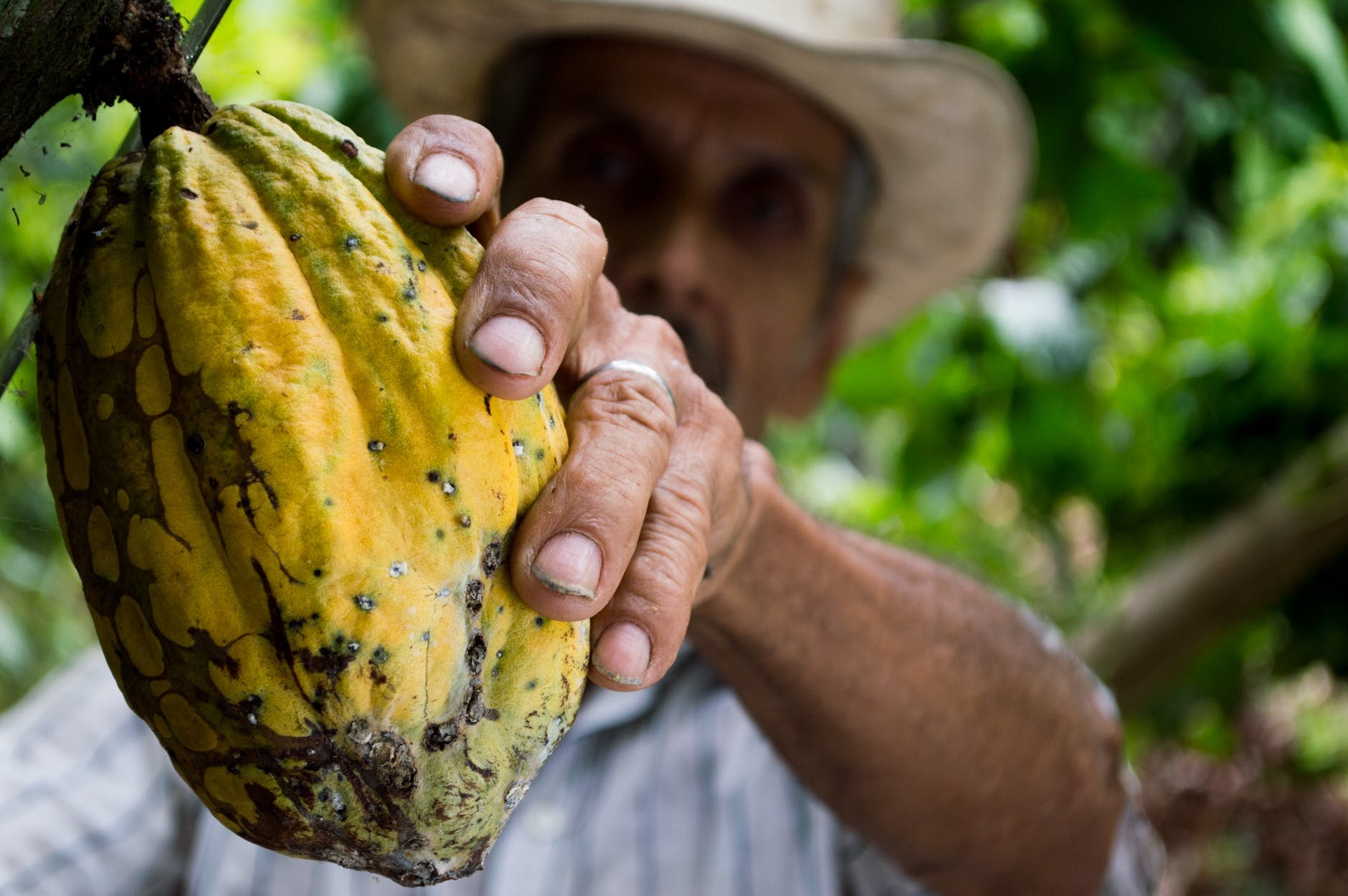

The word chocolate came from the Aztec word “xocoatl” meaning a bitter drink brewed from cacao beans. The cacao tree has a Latin name “Theobroma cacao” meaning Food of the Gods. In pre-modern Latin America, the cacao seeds were considered so valuable that it was used as a currency. It was one of the essential items in rations of the United States soldiers during war. According to a 16th century Aztec document 100 cacao beans could be exchanged for a good turkey hen.
The cacao tree is native to Mesoamerica where its cultivation, consumption and cultural use began. When pollinated, the seeds of the cacao tree form a sheath, within which 30 to 40 brownish-red almond shaped beans are embedded in a sweet viscous pulp. The beans are bitter but the pulp is sweet which may have been consumed by humans at first. The cacao pods grow in a wide range of colors, like pale yellow, bright green, purple and crimson. The texture may vary from sculpted to completely smooth. The plantation of the cocoa trees is a tough process. When in natural environment, the trees can grow up to 60 feet tall but in plantations they grow only up to 20 feet.

Chocolate was prepared as a sweet by the European people when it arrived there. It got popularized among the rich people and eventually among the common. Christopher Columbus first came across cacao on his fourth mission to America, when he and his crew seized a canoe full of native goods for trade. He took the beans back to Spain. After it got imported to Europe, it was used as a medicine for treating abdominal diseases because of its bitter taste. After getting sweetened with the addition of sugar or honey, it became a court favorite and chocolate established a foothold in Europe within hundred years.
In 1828, a Dutch chemist found a way to make powdered chocolate and this product became known as the Dutch cocoa. This led to the creation of solid chocolate. The first modern chocolate bar was made by Joseph Fry in 1847 by making a moldable chocolate paste. By 1868, a small company called Cadbury was making chocolate candies in England. A few years later milk chocolate was made by Nestle. In the 20th century the word chocolate includes a variety of sweet treats. Modern day chocolate is made from the hardiest but least flavorful cocoa beans and it is often said that it has more sugar and additives than actual cocoa.
Reasons why the Power of Purchasing Parity theory is effective
a) Strong relation between exchange rate and purchasing power of two countries currency and its rate of exchange:
Practically there is no defined link that exist between power to purchase the currency and its exchange rate. Apart from power to purchase, there is exchange rate which is influenced due to various factors like flow of capital, balance of payment, tariff and speculation. As these have not been considered, the purchasing power parity is not giving the desired forecast.
b) Level of prices:
This theory calculates the rate of exchange by using indices of price level in both countries as generic version. In general price level is inclusive of prices which are domestic and internationally traded and the theory is based on implicit assumption that prices in two segment of goods shows variation equally and proportionately assuming that it is in same path in both countries. It is seen that prices can move in any direction internal as well international. International trading of goods is not taken into account. As per this, prices of goods produced and used in home country will not have much impact on exchange rate.
c) Price Index Numbers:
Another issue in this theory, is using price index based on power to purchase a currency in two different countries. Price index numbers may be varying kind that raise issue of selecting the correct price index. Another problem which is based on price index of two countries is that it may not be comparable due to difference in same base period, choice of commodity and average pricing of each commodity. Keeping such diverse problem into account, constructing price index for two countries will be difficult as correct measurement of purchasing power parity is not available.
d) Price Level and Exchange Rate: PPP theory takes into account change in price level and it indicates that as cause for changing exchange rate. In other words, change in price level is cause and change in rate of exchange is effect. Changes in exchange rate can also lead to changes in price level. This can be faulty and misleading. In practical condition, depreciation in exchange rate stimulates export and gives restriction to imports. Reduction in supply for domestic market is likely reason for pushing the prices in upward direction in home country. In foreign country prices may fall, this will induce change in price level. Domestic prices are following the exchange rate rather than preceding.
e) Capital Account:
This theory has not taken into account capital transaction. It is considering only the Balance of Payment based on merchandising. Capital account which is significant in India is ignored. It seems to be more apt for trading nations and not so relevant when it comes trading and banking.
f) BOP Equilibrium:
In relative pattern, this theory assumes that balance of payment during the specified base time is in equilibrium. Assuming this, new rate of exchange is determined and such an assumption may not be true. It is difficult to locate such a period in any country due to unequal balance of payment.
g) Structure:
It is considering that there is no change in structure of factors, which are underlying the base time equilibrium. Factors like tastes, preference, resources, productivity and technology etc are considered. Assuming that related structural factors are unrealistic and rate of exchange are bound to be affected due to variation in factors.
h) Capital Movement:
PPP theory does not take into account variation of internal price which are changing in two countries. Zero capital investment is assumed and such assumptions do not give realistic results. Capital flow has substantial influence on exchange rate based on demand and supply of foreign as well as domestic currency. This impact of capital flow on exchange rate has been neglected in this theory.
i) Elasticity of demand and its reciprocal:
PPP fails to consider the reciprocal demand elasticity. Rate of exchange which are between two currency in two countries are determined not only due to changes in relative pricing but it takes into account the elasticity of reciprocal demand(Ca’Zorzi, M et al., 2016).
j) Barter Terms:
PPP depends on the assumption that there is no change in terms of bartering between two countries. Based on this assumption, the theory gets invalid. There are frequent changes in barter terms of trade due to several factors like export supply of goods, home demand for foreign goods, loans from foreign land etc.
k) Demand and Supply Forces:
Rate of exchange is not impacted by price change in two countries alone. Demand and supply of foreign exchange form fundamental force for determining rate of equilibrium. Other influencers are flow of capital, transportation cost, banking system, insurance system. PPP theory is not giving much importance to such forces of demand and supply of foreign exchange.
l) Income and Expenditure: Variation in aggregate level of income and expenditure and its effect on rate of exchange is not considered as per this theory. The effect of trading volume is not considered in this theory. As per this theory, demand is straight function of price wherein shift in income and expenditure in the business cycle is completely not taken into account. This leads to wide variation in volume and foreign exchange even if the prices remain the same.
m) International Economy:
This theory does not consider the cognizance and volatility of international business relationship. Third country purchasing commodity from first two countries who are already in trade relationship is not considered. Third country trading can have an impact on the demand and supply of goods and its volume. Hence proper measurement in multi country trading is not established.
n) Longevity:
PPP theory is apt for long period of time wherein not many other disturbances can have impact. However, price variation is one important aspect in exchange rate, it is not the only factor.
In spite of various weakness noticed in PPP theory, they form the central model and has proven to be good for long term analysis. Hence this theory has been considered for studying the exchange variation between EUR and USD. It is empirically proven theory, hence the same has been taken into account for the analysis of bilateral rate of exchange.
Competency mapping
Competency mapping identifies an individual’s strengths and weaknesses. The aim is to enable the person to better understand himself or herself and to point out where career development efforts need to be directed.
Competencies are derived from specific job families within the organization and are often grouped around categories such as strategy, relationships, innovation, leadership, risk-taking, decision-making, emotional intelligence, etc. So far as the way to go about for competency mapping is concerned, the first step is job analysis, where the company needs to list core competency requirements for the job concerned. The next step should be development of a competency scale for the job on the parameters previously identified.
The actual mapping of employees can be a self-done exercise or done by others like superiors. It can also be done by using the 360-degree method where peers, first reports and customers also rate the employee.
Competency approach to job depends on competency mapping. Competency Mapping is a process to identify key competencies for an organization and/or a job and incorporating those competencies throughout the various processes (i.e. job evaluation, training, recruitment) of the organization. A competency is defined as a behavior (i.e. communication, leadership) rather than a skill or ability.
Competency is your ability to do something successfully or efficiently. Therefore, competency mapping is simply a process of matching your competence with the job role and/or organization. Furthermore, it is also about matching people to the job role and hence used even in selection.
Definition: Competency mapping is the process of identifying the specific skills, knowledge, abilities, and behaviors required to operate effectively in a specific job or organization. Competency maps are often also referred to as competency profiles or skills profiles.
Some of the major practical applications of competency mapping include :
Job Evaluation: By analyzing the key skills to required to do a job a simple job evaluation can be prepared. It can help in allocating existing or new resources to the specific job based on the evaluation process
Project Planning: What key tasks can be performed by what resources ject can easily be identified through the mapping process and helps in project planning.
Performance Management:
A competency mapping exercise results in preparing Competency Framework, which in turn helps in allocating desired proficiency for the job vs current proficiency to do the job. By analyzing any gaps the performance management can be seamlessly conducted
Job analysis: By identifying the key behaviors required to perform each job role, competency mapping is really useful in preparing job analysis. Not to be confused by Job description step in competency mapping process where the job roles analyzed for allocating competencies and behaviors.
Succession Planning : The analysis of competencies required for a leadership role and mapping them with proficiency shown by potential leaders a clear roadmap for succession planning can be created.
Any developmental need can also be ascertained by mapping the critical competencies with the current proficiency level demonstrated by an individual vis-à-vis the required proficiency level for the position.
Recruitment: By identifying key skills required to do the job and also developing a competency-based interviewing process the organizations can benefit by hiring the most suitable resources while it helps in all stages of the recruitment process.
Individual development plan: Any gaps in desired and current proficiency levels help in developing individual development and learning roadmap for individuals and even job roles and categories.
Jobs in India are attracting Foreign Resumes.
In the tough time due to Covid-19 pandemic the jobs all around the world are worst affected.Many top companies have removed their employees for the cost cutting approach.So,in this case many are jobless and for many employees in different companies are working with a hefty pay-cut due to this.As everywhere everything is started to lease slowly and steadily we can see again the job openings by different companies have started and that’s a good sign for everybody else out there who want jobs.
When Teamlease Services just posted about their job openings in the field of Marketing,the company was surprised and shocked to see that resumes are coming from foreign countries such as US.As due to this situation there is wide spread of opportunities open for each and every candidate around the world to apply.Now in this case companies have also got the potential to hire the best candidate and having ample of opportunities to hire according to their criteria.
It will not be a kind of one way system but there is same kind of opportunities open for Indian candidates to apply for foreign roles said hiring firms.Hiring firms are keen to hire candidates on the roles for R&D,processing and design,in addition technology.Randstadd India head Sanjay Shetty says “Some Global CEOs we are looking at India for its quality talent.This could be another wave of jobs being outsourced to India in a big way. A number of high-end jobs — which were hitherto kept close to the mothership of an MNC, especially in FMCG (fast-moving consumer goods), FMCD (consumer durables), banking and liquor industries — are expected to relocate to India. Some of these companies had earlier shied away from doing so, for various reasons”.
Key reasons for this transition is because as Indian companies has gone into Work From Home as they business continuity.In this new trend all the companies are gone into strengthening cyber security systems.As in this period company wants mind workers rather than hand workers.Some companies also said that the person who is an individual coder can work from anywhere just he needs only laptop.In this the company mentioned that people who have been living far from their hometown have reached to their hometown.So they will have good quality time spend with family,a well cooked home food and environment with their loved ones.
So in this case the companies are getting foreign resumes because working from any corner of the world is possible just by having a good connectivity and a laptop.
Dwaraka – The Kingdom of Lord Krishna
The discovery of the legendary city of Dwaraka which is said to have been founded by Sri Krishna, is an important landmark in the validation of historical relevance of Mahabharata. It has set at rest the doubts expressed by historians about the historicity of Mahabharata and the very existence of Dwaraka city. It has greatly narrowed the gap of Indian history by establishing the continuity of the Indian civilization from the Vedic age to the present day. The discovery has also shed welcome light on second urbanization in the so-called ‘Dark age’, on the reestablishment of dharma, on the resumption of maritime trade, and use of Sanskrit language and modified Indus script.
Dwaraka is a coastal town in Jamnagar district of Gujarat. Traditionally, modern Dwaraka is identified with Dvaraka, mentioned in the Mahabharata as Krishna’s city. Dwaraka was a port, and some scholars have identified it with the island of Barka mentioned in the Periplus of Erythrean Sea. Ancient Dwaraka sank in sea and hence is an important archaeological site. The first clear historical record of the lost city is dated 574 A.D. and occurs in the Palitana Plates of Samanta Simhaditya. This inscription refers to Dwaraka as the capital of the western coast of Saurashtra and still more important, states that Sri Krishna lived here.
There are many mythical tales woven around the city of Dwarka. The most prominent myth is associated with the ‘hero of the Dwapara’; Lord Krishna who is believed to have held his kingdom here. Dwarka in the ancient times was known as Anarta which had been Lord Krishna’s terrestrial empire. Dwarka consisted in islands like Antar dwipa, Dwarka Island and the mainland of Dwarka. The city had been the capital city of the Yadava clan which ruled over the place since many years. In the great epic Mahabharata Dwarka is mentioned as Yadavas’ capital city consisting in many other neighboring states such as Vrishnis, Andhakas, Bhojas within its jurisdiction. The most important chiefs of Yadava clan inhabiting Dwarka included Lord Krishna, who was the king of Dwarka, then Balarama, Kritavarma, Satyaki, Akrura, Kritavarma, Uddhava and Ugrasena.
According to the most popular legendary tale, Lord Krishna migrated to Kusasthali; the name by which Dwarka was known in the ancient times in order to evade the continual harassing raids done on Mahura by Jarasandha; Kansa’s father in law. Jarasandha wanted to avenge the death of Kansa, the wicked cruel uncle of Krishna whom the lord had killed and thus was attacking Mathura time and again.
When he came back to Dwarka along with his clan of Yadavas, he ordered Lord Vishwakarma to build a city for his kingdom. Answering his order, Lord Vishwakarma told that the city can be built only if Lord Samudradevi offered them some land. Lord Krishna then prayed to Samudradeva who responding to the prayer providing them with land up to 12 Yojna and soon after the celestial constructor Vishwakarma built the city of Dwarka in a short span of only 2 days. The city was called ‘Suvarna Dwarka’ because it was all clad in gold, emeralds and jewels which were used to construct the houses in lord Krishna’s ‘Suvarna Dwarka’. It is believed that Lord Krishna’s original residence was at Bet Dwarka from he administered the entire Dwarka kingdom. Legend further adds that after Lord Krishna departed from his mortal body, the city went under the sea with Samudradeva taking back what he had given once upon a time.
The Temple of Dwarkadhish is believed to have been set by Vajranabha; grandson of Lord Krishna, in order to pay tribute to the great lord. The religious significance of Dwarka is associated with other myths too. One such myth points out the Dwarka is the spot where Lord Vishnu had demolished the demon Shankhasura.
Archaeological history:
The first archaeological excavations at Dwaraka were done by the Deccan College, Pune and the Department of Archaeology, Government of Gujarat, in 1963 under the direction of H.D. Sankalia. It revealed artefacts many centuries old.
The objective of the excavation was to know the antiquity of the site, based on material evidence. In the offshore excavation, the ASI’s trained underwater archaeologists and the divers of the Navy searched the sunken structural remains. The finds were studied, dated and documented. On land, the excavation was done in the forecourt of the Dwarakadhish temple. Students from Gwalior, Lucknow, Pune, Vadodara,Varanasi and Bikaner joined in to help the ASI archaeologists.
Findings at Dwarka excavation site:
The underwater excavations revealed structures and ridge-like features. Other antiquities were also found. All the objects were photographed and documented with drawings – both underwater. While underwater cameras are used for photography, drawings are done on boards – a transparent polyester film of 75 micron fixed with a graph sheet below. The graph sheet acts as a scale. One or two divers take the dimensions and the third draws the pictures. The Public Works Department routinely conducts dredging in these waters to keep the Gomati channel open. This throws up a lot of sediments, which settle on underwater structures. Brushes are used to clear these sediments to expose the structures.
* Explorations yielded structures such as bastions, walls, pillars and triangular and rectangular stone anchors.
* A semi-spherical single-hole stone which might be the base for flagpost.
* L-shaped edges of stones for proper grip and arresting wave action on bastions.
* Seals, inscriptions, which have been dated to 1500 BC.
* Pottery, which have been dated to 3528 BC.
* Stone sculptures, terracotta beads, bronze, copper and iron objects.
Marine archaeological explorations have thrown light on a number of structures of different shapes, stone anchors and other artefacts. The exploration has found sandstone walls, a grid of streets and remains of a sea port, some 70 feet beneath the sea. The evidence points to the fact of the existence of a city some 9,000 years ago.
Also according to them this was one of the most important and busy ports during historical and medieval periods.
Dwarka was supposed to have been built on six blocks, two on the right bank and four on the left. All the six sectors have protective walls built of dressed stones of sandstones. Whatever has been traced so far conforms to the description of Dwarka in the Mahabharat to a large extent. For example, the enclosures may correspond to the Antahpurs (harems) of the texts.
Similarly, the large number of stone anchors is indicative of overseas trade. The large ships were anchored to the sea, whereas the small ones were near to the warehouses on the Gomati, part of which has been submerged.
The layout of the excavated city, the spread and the location of fort walls and bastions match the descriptions mentioned in Harivamsha, a prologue to Mahabharata. Harivamsha described the city of Dwarka in minute details. According to it, the area of Dwarka was 12 yojanas. It was connected to the mainland by a strip, which is visible even now, in low tide. The city excavated is of the same size.
What really happened to Dwarka?
The rise in the sea-level in Dwarka is a scientific truth. Studies have proved that the sea considerably and suddenly rose to submerge the city. Harivamsha describes the submerging of Dwarka saying Krishna instructed Arjuna, who was then visiting Dwarka, to evacuate the residents of the city as the sea was going to engulf the city. “On the seventh day (of Krishna saying this), as the last of the citizens were leaving the city, the sea entered the streets of Dwarka.”
According to experts, there could have been three reasons why the sea entered the land. One, a change in the level of seabed, two, a massive earthquake and three, sudden increase in the level of sea water. Of the three, the last is the most plausible. If it was a change in the level of seabed, some remains of the “tearing off action” on the shore would be visible, which is absent. Earthquake can be ruled out as the structures have not collapsed because of the shake. The third reason is most acceptable as a similar phenomenon had occurred in the shores of Bahrain, around the same time, as some recent findings indicate. It is to be noted here that considerable work has been done on shore and offshore underwater excavations in Bahrain, which has indicated a deep and regular trade and other relations between the western coast and the coasts of the present-day Bahrain region.
Dwarka, as of today is still one of the best-studied underwater sites in India.
It is indeed surprising that the history associations, archaeologists and historians have taken little notice of the findings at Dwarka. In its early days, the project received UNESCO support and several foreign marine archaeologists also offered help. However, the government’s indifference to the project has kept them away. Unlike several other land excavations, the underwater excavations can be done only with total government help. Several levels of permissions are needed. While land excavations are demanding in labor, the underwater explorations need machinery and equipment. Skillful divers, who are trained to look for meaningful objects are required too.
an Indian, Dwarka is not a mere archaeological site, nor is it a proof. Indians have all along believed Mahabharata to be a historical narration. But the excavations are a national heritage, a symbol of pride, an honor that is shared by all who are born in this land of Bharata. It is a call for action on Dwarka.
Delhi Electric Vehicle Policy
Delhi government recently announced the Delhi Electric Vehicle Policy to remote usage of electric vehicles in Delhi. For this the government is providing three major incentives
• The government providing subsidy on electric vehicles. For vehicles like e rickshaw two wheelers and freight vehicle the subsidy will be around ₹30,000 and ₹1.5 lakh subsidy on electric cars. And there will be no capping on e-auto rickshaws.
• The government has also made it scrapping of old petrol or diesel cars easier. It has decided that if you scrap sell your petrol or diesel car to buy new electric car then more subsidy will be given.
• For commercial vehicles government has decided to give low interest loans. Additionally the registration and road tax fee will also be waived off.
Along with giving incentives to the e-vehicles, it has also been decided that pollution cess an extra road tax will be put on non electric vehicles. All these decisions have been made to combat air pollution which is a big problem for Delhi. Also, the government sees it as an opportunity to help revive the economy which currently is suffering due to COVID-19. It has also been planned that by 2025 the delivery services will have 50% e-vehicles which will by the year 2050 be using only e-vehicles. By the end of 2020 there will be 1000 state run e-buses in Delhi and in the next three years it will increase to 50% of total. For the successful initiation of e-vehicles it is necessary to set up charging stations. does it has been decided to put up 200 charging stations at every 3 km in Delhi.
INDIAN RAINS
Heavy downpour leads to water logging, major traffic snarls
The India Meteorological Department has predicted heavy rainfall in central and eastern Indian parts.
Mumbai was lashed with intense rainfall last week, leaving multiple regions waterlogged. High tide hits Marine Drive in Mumbai as Mumbai’s civic body, the Brihanmumbai Municipal Corporation (BMC) warns people to stay away from the coast.Almost every monsoon, Mumbai struggles to cope with the chaos caused by the rain. The suburban trains – the city’s lifeline – are affected and low-lying areas get flooded.
A fresh spell of heavy rains lashed the national capital on Tuesday, inundating low-lying areas and affecting traffic movement in parts of the city. The problem could be solved by fixing this but it needs an overhaul of the drainage system, which, according to experts cannot be done, unless there is more data, both on rainfall and drainage infrastructure. Over 40 locations in north Delhi got inundated due to the downpour, including areas in Mukherjee Nagar, Fateh Puri, Burari, Rohini, Narela and West Patel Nagar, according to the North Delhi Municipal Corporation (NDMC). Even a small downpour proved to be huge problem for Delhi as road got flooded resulting in traffic chaos and drown cars.
The summer showers in the state of Kerala, Thiruvananthapuram are all set to gain momentum as the Kerala State Disaster Management Authority has sounded a yellow alert in nine districts for Sunday and Monday, followed by a warning of isolated heavy rains. The alert has been sounded in Kollam, Pathnamthitta, Alappuzha, Kottayam, Idukki, Ernakulam, Thrissur, Palakkad and Malappuram. Extremely heavy rainfall lashed Kerala disrupting normal life of every individual. Floods in certain part had worsened the situation.
he India Meteorological Department (IMD) has forecast heavy rainfall, thunderstorm and lightning in at least eight districts of Bihar, where more than 80 people were killed in several parts of the state. IMD had said earlier that a situation conducive for enhancing rainfall activities is likely to prevail over the foothills of the Himalayas along with Bihar-Nepal border and adjoining areas.Widespread rain after a gap causes more thunderstorm and lightning activity. Patna continue to wallow in a sea of misery as most localities remained flooded for a long time.
Heavy rainfall lashed north Bengal on Saturday, leading to flooding in low-lying areas, and the weather department issued a yellow warning for Himachal Pradesh for July 12 as the monsoon trough ran close to the foothills of the Himalayas passing eastward from Arunachal Pradesh to Punjab. Kolkata was too lashed by rainfall leading to traffic snarls in parts of the city.
Everything in excess proved to be dangerous, so stop playing out with nature.
Positive Attitude.
Surround yourself with positive people. Find people who challenge you, believe in you to make this world better place to live for everyone.
When you are positive you see good in everything. When you are negative, you find something bad in almost everything. You almost find something to blame someone for, something bad, something to criticise, something to boil over shout at, if you are looking for all that. Though life is both positive and negative, it is seen that negatives come naturally to us. But the change from negative to positive I’d quite easy. To convert negative to positive, we have to fight our natural instincts also, which are mostly negative. For example when situation get hot, we easily give in to negativity, irritation, impatience or blame game: though everyone knows that by cultivating non-confrontation abilities, we can achieve very good positive outcome which can bring us peace, harmony and happiness.
For positive outcome in life we have to cultivate positive attitude and make a habit of it. It is up to you to chose your course, an easy path through an angry egoistic reaction which may lead to the loss of opportunity later or it could be a well considered response which would surely result in being benificial to all – to you and in turn, to your family, friends and society.
Human being are unique, intelligent and with a discerning mind, and the only species on this planet who know the difference between right and wrong. Then, why do we let ourselves be taken over by cross negative forces, by being reactive and lose a sea of opportunities waiting for us when we can adopt a positive attitude that makes us happy, energised, blissful and joyful?
The question is why don’t we do that more often to change the course of our life from negative to positive!? Why do we get lured by negative and easier rays which inhibit our true progress and growth??
 Eduindex
You must be logged in to post a comment.