DOMESTIC VOILENCE IN INDIA

“DOMESTIC VOILENCE” whenever my ears hear this term , an image of a crying lady with loads of wounds on her body comes in to my mind , who is hardly breathing , pleading in front of  a coward. But  it has a deeper meaning which is much more beyond this , if you absuse her , you character assassinate her , fill disgust for her in her, child marriage , dowry , acid attack , rape etc are all subset to this term and this term is the universal set to all . By thinking her as a “Weak Leaf” , this is where you are making the mistake , actually you are in the delusion , and , this delusion bursts out when she fights back making you a “coward creature” who is running for his life.

Talking about the different shades of domestic violence committing in different ways in India . Generally , women are preferable for the domestic violence  and not so surprisingly , the voilences that come under “Domestic violence” are fully against women , done by the people who believes that the status of women  is not even the lowest in the strata of the society. But , surprisingly , they are some  women who give air to this kind of brutal violence and believe , it is a right thing to do. We are living in 21st century , women are empowered and reaching hieghts , people’s perspectives are changing but still not changing , they are accepting it but still not accepting it. The reason behind this  are the few people with polluting minds.

According to the reseaches, around 70% of women in India are the victims of domestic violence , said by our union minister for women and child development , Renuka Chaudhary. It is legally addressed in 1980s  by the introduction of 1983 criminal law act under section 498A. It is divulged by the National Crime Bureau , that a crime is committed against a women every 3 minutes which is raising the goosebumps. Every 29 minutes, a woman is raped ,  women death because of dowry in every 77 minutes and talking about the cruelty which is either performed by her husband or his relative is taking place every nine minutes. These mishaps are occurring despite of the law of the protection of women from domestic violence act.

 I just want to click  the  button of “Being lioness” in the minds of all the women out there , that, they are strong , have their own life to live , take their own decisions , have an authority to raise your voice and not let other people boss you  but “Be your own Boss”. By raising these facts , I just want to make them believe “If someone raises hands on you , you too can raise because god has given you hands , if someone helps you with those hands , help them! , ‘BE FEROCIOUS’ !.

B.R AMBEDKAR THOUGHTS : INDIA

WE ARE LIVING IN THE MODERN INDIA WITH MODEST THINKING AND A RAGE FOR UNEQUALITY IN OUR SOCIETY , WHICH IS STILL THERE . EVEN AFTER , OPPOSING AGAINST THIS AND FIGHTING FOR THE EQUALITY AND JUSTICE, FAVOURING THE LOWER STRATA OF THE SOCIETY . EXPOSING THEM TO BEST OF THEIR RIGHTS LIKE RESERVATION SYSTEM, HIGLIGHTING EQUALITY AS THE MAIN VALUE OF THE CONSTITUTION , BASIC FUNDAMENTAL RIGHTS . BUT , THE “CASTE INSECT” HAS NOT LEFT THE FEW MINDS WHICH IS A KIND OF VENOM FOR OUR SOCIETY , MAINLY, FOR THE DEVOLOPMENT OF OUR SOCIETY.

DR. B.R AMBEDKAR HAS PUT DOWN IN HIS BOOK ” ANHILATION OF CASTE” THAT “CASTE IS A STATE OF MIND” WHICH IS AN APPROPRIATE STATEMENT MADE BY HIM. YES, CASTE EXISTS IN EVERYONE’S MIND , MAY BE IN THE FORM OF CLASS , RACE , GENDER , RELIGION ETC BUT IT DOES EXIST. HE HAS ALSO OUTLINED THE DIFFRENCE OF BEING A POLTICIAN AND BEING A SOCIAL THINKER . HE SAYS , ” POLITICAL TYRANNY IS NOTHING COMPARED TO SOCIAL TYRANNY AND A REFORMER WHO DEFIES SOCIETY IS A MORE COURAGEOUS MAN THAN A POLITICIAN WHO DEFIES GOVERNMENT “. HE CLEARLY SAYS HOW POLITICIANS ARE NOT ABLE TO DEFY THE BEST FOR THE SOCIETY AND NOT MAKE RIGHT DECISIONS FOR ITS BETTERMENT , SOMETIMES , GOVERNMENT OVERPOWERS IT . BUT , A SOCIAL THINKER WHO ALWAYS THINKS FOR THE SOCIETY AND WORKS FOR THE SOCIETY , WHOSE MAIN FOCUS IS ON HOW THE “BIRD SOCIETY ” CAN FLY AT HEIGHTS ! .

HE HIMSELF HAS GONE THROUGH A LOT OF CRITICISM AGAINST HIS CASTE, HE CAN’T TOUCH THE TAP OF THE WATER JUST BECAUSE HE IS OF LOWER CASTE , SO A PEON ONLY CAN MAKE HIM DRINK . THE PROBLEM OF STTING IN THE CLASSROM AWAY FROM ALL THE UPPER CASTES. BUT HE FOUGHT ! , HE FOUGHT TILL THE ETERNITY AND BELEIVES THAT DEVOLOPMENT AND ADVANCEMENT OF LABOURS CAN ONLY ENHANCE THE SOCIETY. HE FABRICATED ALL ELEMENTS OF EDUCATION IN HIM AND STARTED WRITING THESIS , STUDIED AT LONDON SCHOOL OF ECONOMICS AND SELECTED FOR AS A CHIEF ARCHITECT FOR THE FRAMING OF OUR CONSTITUTION WHICH IS BEST AMONG ALL THE CONSTITUTIONS IN THE WORLD . HE MAKES THE PEOPLE UNDERSTAND THEIR WORTH IN THIS WORLD , IN THIS SOCIETY IN THEIR MINDS . AS EDUCATION IS GREATEST YOU CAN IMBIBE IF YOU WANT TO BRING THE CHANGE AND BE THE CHANGE , DR B.R AMBEDKAR IS THE ONE ” A GREAT SCHOLAR” . HIS EDUCATION AND CONFIDENCE EMPOWERED HIM AND AUTHORITIED HIM WITH A POSITION OF CHEIF ARCHITECT , AN ECONOMIST AND RESPECTED GLOBALLY.

THE VISION OF DR B.R AMBEDKAR ON THE SOCIETY IS BASED ONB THE TGHREE CORE VALUES : LIBERTY , EQUALITY AND FRATERNITY .

MODERN YOUR THOUGHTS WITH THE MODEST VISION !

International Day of the World’s Indigenous Peoples: Salute to Indigenous Peoples

  Each year August 9, is celebrated as International Day of the World’s Indigenous Peoples. In the year 2016, it was reported that about 2680 indigenous languages were in danger and on the verge of extinction. In view of this, UN selected 2019 (that is last year) as the International Year of Indigenous Languages to persuade, convince and create awareness to people about the indigenous languages which was undoubtedly a praiseworthy move. Protection of indigenous people and their rights are sine qua non as we Indians know suffering of Ekalavya who was indigenous. Ekalavya was very talented and humble and that is why he smilingly offered his best asset (required for archery), his right thumb as Guru Dakshina to Dronacharya.

   It is pertinent to mention that there are around 476 million indigenous people in 90 countries and they constitute little more than 6 percent of the global population and 15 percent are in  extreme poverty. Their territories are home to 80 percent of the world’s biodiversity. Still indigenous people are not advanced like other communities. In this regard, few points collected from un.org/en/observances/indigenous-day are presented for the benefit of readers.

  • More than 86% of indigenous peoples globally work in the informal economy, compared to 66% for their non-indigenous counterparts
  • Indigenous peoples are nearly three times as likely to be living in extreme poverty compared to their non-indigenous counterparts.
  • Globally, 47% of all indigenous peoples in employment have no education, compared to 17% of their non-indigenous counterparts. This gap is even wider for women.

  This year International Day of the World’s Indigenous Peoples theme is COVID-19 and indigenous peoples’ resilience. The virtual commemoration will feature an interactive panel discussion on the innovative ways indigenous peoples continue demonstrating resilience and strength in the face of the pandemic while confronting grave threats to their survival. The aim is to highlight how the preservation and promotion of indigenous peoples’ traditional knowledge and practices can be leveraged more fully during this pandemic. Panellists (Monday, 10 August 9 AM to 11 AM) will share good practices with the audience through an interactive virtual event that will focus on building back stronger.

  As academician and researcher, I have the opportunity to visit across India and interacted many indigenous persons in the different states of north eastern region, Andhra Pradesh, Telangana and West Bengal. The names of some communities are   Boro, Dimasa, Chutia, Karbi, Sonowal, Tiwa, Garo, Rabha, Hajong, Tripuri, Deori, Naga, Chakma, Jamatia, Noatia, Adi (Abor), Aka, Apatani, Tagin, Galo       and others. Also in West Bengal I have interacted with Rabha and Santhal and in Andhra Pradesh and Telangana Chenchus, observed all indigenous persons were rational, erudite about local and traditional things and very careful to preserve nature. Not a single indigenous person will cut a tree for making money that is out of greed.   

  On this International Day of the World’s Indigenous Peoples, I salute to all indigenous Peoples.  


The following websites have been consulted while writing the article.

1)wikipedia.org/wiki/International_Day_of_the_World’s_Indigenous_Peoples

2) www.un.org/en/observances/indigenous-day

3) https://www.un.org/development/desa/indigenouspeoples/international-day-of-the-worlds-indigenous-peoples/2020-2.html

Dr. Shankar Chatterjee

 Former Professor& Head (CPME)

NIRD &PR (Govt. of India),

Hyderabad-500 030

Telangana, India

Email <shankarjagu@gmail.com>

Immune to COVID-19!!!

Retrieved from the-scientist.com

There was an article in Deccan Herald regarding a paper. which appeared in National Reviews Immunology back to the fact human immune system might be able to fight COVID-19 as SARS-COV-2 had already come into existence earlier. As a result of which many people had grown an immunity towards it due to T cells which are loafers who might be surviving in human’s bloodstream owing to commotion with other relative coronaviruses, which cause common cold in us.

Though this study is not clearly backed but researchers are getting strong indications regarding this. Dr. David L. Katz, founding director of Yale University’s Yale Griffin Research Center remarked it as one of the excellent news while giving an interview to CNN. He stated, “We have had indications for this from a long time that many people may not be prone to get this….”

My Views

Now when he have heard such an outstanding news, we can give our minds some relaxation that maybe in nearest future we might get vaccine of the disease which has caused such devastating damage to human population which has killed 727 thousand people worldwide taking 19.7 millions in its grasp; though we can proudly say with our cumulative effort 11.9 millions have recovered from it. It has ruptured us from inside out stealing our hope but we are survivors, we know how not to succumb to such fights. We are ready to fight, survive and thrive again.

MENTAL HEALTH

“Every man has his secret sorrows which the world knows not; and often times we call a man cold when he is only sad.”
― Henry Wads worth Longfellow

We are living in a world where physical fitness had become more important without caring for one’s mental health.

In the race of achieving everything, we have forgotten to look after our well being and to feed our brain with good thoughts. Being mentally stable is what is required to have a peace of mind and it contributes towards satisfaction of oneself.

The COVID-19 had too negatively affected the lives of many people and created new barriers. Many people are suffering from many mental issues during this pandemic period.

There lies a difference in being sad and being depressed;

Sadness is for a particular instance that happened due to some ill happening or due to mood changes but depression is a long term phenomenon, overthinking and negative perspective towards everything could be the major causes. Depression could often lead to suicidal thoughts which could grow intense during the time. Depression can cause tiredness and deprival in day to day task performed.

Here are some steps that we all can follow to feel better and lively every passing day :

  1. Take time out for yourself no matter how small, talk to yourself about the happenings of the day.
  2. Get up early in the morning and practice some yoga and meditation  to make your mind still and calm.
  3. Do not disturb your sleeping cycle and try to drink hot milk before sleeping.
  4. Think of one good thing that happened in the day and show some interest in nature.
  5. Talk to people around you maybe they are friends,family or relatives just share what you feel inside.
  6. Eat healthy try to have a balanced diet.
  7. Avoid much use of social media platforms which make you feel toxic from inside.
  8. Spend time with your family maybe watching a movie together or just by sitting together having lunch.
  9. Try to ignore unnecessary things which make you feel sad.
  10. Watch motivational videos and movies to help you keep going.

It is alright to speak about your emotions to anyone. No one in this world is completely free from stress and anxiety. Everyone have certain issues of their own. It is better to think that you are not the only person surviving everyone does it help you to have a positive outlook towards life,

If still, you face problems do not hesitate to visit a doctor and have a regular checkup.

Always remember the most important person is you take care of yourself in every way possible . life is just a game and you are fighting for survival. losing is easy but winning takes real courage.

“Do not brood over your past mistakes and failures as this will only fill your mind with grief, regret and depression. Do not repeat them in the future to keep growing.” – Swami Sivananda

PM Modi to release sixth instalment of PM-KISAN scheme to 8.5 crore farmers today; to launch Rs 1 Lakh Cr financing facility

Prime Minister Narendra Modi will launch the financing facility of one lakh crore rupees under the Agriculture Infrastructure Fund  today through video conferencing. He will also release the sixth instalment of funds of 17 thousand crore rupees to 8.5 crore farmers under the Pradhan Mantri Kisan Samman Nidhi Yojna (PM-KISAN) scheme.

AIR correspondent reports, the  financing facility under the Agriculture Infrastructure Fund will catalyze the creation of post-harvest management infrastructure and community farming assets like cold storage, collection centres and processing units.

These assets will enable farmers to get greater value for their produce, as they will be able to store and sell at higher prices, reduce wastage, and increase processing and value addition. One lakh crore rupees will be sanctioned under the financing facility in partnership with multiple lending institutions.  

11  Public Sector Banks have already signed MOUs in this regard. Three percent interest subvention and credit guarantee of up to two crore rupees will be provided to the beneficiaries to increase the viability of these projects.

The beneficiaries of the scheme will include farmers, Marketing Cooperative Societies, Joint Liability Groups, Multipurpose Cooperative Societies, Agri-entrepreneurs and Startups.

The PM-KISAN scheme has provided a direct cash benefit of over 75 thousand  crore rupees to more than 9.9 Crore farmers. This has enabled them to fulfil their agricultural requirements and support their families.

The scheme has also been instrumental in supporting farmers during the COVID-19  pandemic, through the release of nearly  22 thousand crore rupees to aid the farmers during the lockdown period.

Growing concern for AI as unemployment surges

“Artificial Intelligence is the new electricity” a quote by Andrew Ng — former Baidu Chief Scientist and co-founder of Coursera gives a beautiful insight about what AI is and how it will impact our lives.

I would like to start by dissecting the topic of discussion. The first part is to establish what AI and unemployment really are and second being how closely co-related they are. A quick google search defines Artificial Intelligence as intelligence demonstrated by machines and a plethora of other similar meanings where machines seem to take intelligent decisions. On the other hand, unemployment is not that easy to define. However, the definition given by NSSO can be used for reference here i.e Unemployment occurs when a person who is actively searching for employment is unable to find work.

Now If we compare the data from birth of AI as a field in 1956 to today one can easily infer that the periods where the field of artificial intelligence has sky rocketed, the unemployment rate more or less hasn’t followed the same suit. An argument can be made during the current times but the numbers for the current period also tell the same story.

I would like to bring attention to how AI instead helps to create jobs. The World Economic Forum in 2020 forecasted a strong increase in AI jobs globally over the next 2 years, with new jobs per 10,000 opportunities increasing from 78 today to 123 in 2022.

And fortunately, one of the major sectors to benefit from this is Finance & Auditing. AI has enabled large pieces of the audit process to be automated, but it hasn’t reduced the number of people involved in the audit process. Professionals now can find patterns in the data they would otherwise not see and create better forecasting models. Other Industries adopting AI have seen reduced wastages and savings in time which ultimately making the economy more productive.

Another Argument can be drawn from the past. Jobs which could never be predicted are existing today because of technology. For Eg. Air Hostesses/Pilots, entire Airports and other jobs attached to Aviation industry were non-existent before we made Aeroplanes themselves.

So, what are some of the possible jobs that can be created by the AI revolution?

Jobs directly related like safety and maintenance engineers, machine designers, and ethics re-searchers are some examples. Specialized skills such as data analysis will be needed too.

Jobs indirectly related to AI will also expand, such as educational content related to such fields. Experts will also be in demand as all this needs knowledge and specialization.

And Finally, Humans will be able to focus on doing more rewarding work such as scientific discovery, problem solving, and innovative design. The decline of monotonous jobs will also allow for creative jobs to expand as people have more time to pursue less technical interests.”

Look We might think AI and computer advancements as something really scary but to be honest even with such leaps every year computers are nowhere close to having true intelligence as we possess. All this is because humans have something special, the ability to use knowledge.

Even the most advanced AI systems like IBM’s Watson has more knowledge than most humans, yet all its power is only ultimately used to help humans in decision making. Jobs in the field of Human Resource Management, Software Development, Public Relations and other creative fields cannot be automated. Ever

And lastly to conclude, Electricity might have replaced jobs in candle factories but I don’t think it has added to unemployment woes since.

Languages in India

Language can be defined as Communication of thoughts and feelings through a system of arbitrary signals, such as voice sounds, gestures, or written symbols India is known for its diversity; diversity of religion, culture, tradition, languages, dialect etc.

Eighth schedule of the constitution of India recognizes as many as 22 languages. G A Grierson made the first linguistic survey of India and made a list of 544 dialects and 179 languages, despite of the fact that many linguists don’t accepted Grierson’s survey. But by any estimate, more than 500 dialects are spoken in India and out of them; around 25 languages are spoken by around 97 of Indian population.

All the languages are classified into four main language families :

• Austro-Asiatic or Nishad

• Sino-Tibetan or Kirat

• Dravidian or Dravid

• Indo-Aryan or Aryan

Among the above mentioned language, Nishad and Kirat are almost entirely tribal languages. Aryan family is the largest one constituting 73 percent of the languages spoken in India. Khasi, Santhali, Nicobari etc are part of Nishad family. Ladakhi, Manipuri and Ahom belong to the Kirat group. Dravidian family includes Telugu, Tamil, Kannad and Malayalam. Aryan is the largest family and includes Punjabi, Sindhi, Awadhi, Chhattisgarhi, Marathi, Konkani, Garhwali, Rajasthani, Guajarati, Bhojpuri, Maithili, Bengali, Assamese, and Oriya etc. 

Even before the independence, reorganization of provinces on the basis of language was one of the Congress demand and after independence, Andhra Pradesh was the first state created on linguistic basis and Telugu was its official language and later many states were carved on linguistic basis like almost all North Eastern states, Gujarat, Kerala etc. The linguistic diversity noticed in the macro-structure of the country is also reflected in its regional and micro-structure, i.e. in the constituent States. Even though the State boundaries are carved on the basis of dominant languages, the States are multi-lingual. 

The minority languages in the States of course vary from province to province. When one surveys the linguistic scenario of the country it appears India is a country of linguistic minorities. All the States have their dominant languages, yet they also have certain numbers of minority languages. Even States, like Arunanchal Pradesh, Himachal Pradesh, Nagaland and Mizoram etc. have minority languages. 

The Indian constitution binds the whole country irrespective of linguistic and cultural variations. Articles 343 to 351 of the Constitution deal with the language situation in India. Articles 29 and 30 and 347 have been devised to safeguard the interest of speakers of minority languages. Article 350 (B) envisages the appointment of a Special Officer for linguistic minorities Languages in India occupy an important place in country’s social, cultural and political identity.

In fact many cultures are known by their language only for instance, Punjabi, Tamil, Bengali, Gujrati, Assamese, Marathi, Kannada and many more. Most distinguished feature of these cultures, apart from dance, music, dress is language and script. Languages are an important instrument in establishing identity of an individual, state and Nation. For that matter when India was conceiving an idea of making Hindi the National language of the country, Dravidian family vehemently opposed the idea and no national language was chosen. During pre as well as post independence years, country has witnessed many linguistic movements in the country few of them demanding reorganization of states on linguistic basis. 

Among the linguistic movements witnessed by independent India, Pure Tamil Movement was most successful to agitate the nation at large. Here nation realized that whenever a linguistic movement starts due to some specific reason, it put forth the religious, social, political and caste divisions prevalent in the society. 

In 1986, Indian Prime minister Rajiv Gandhi introduced the “National Education Policy”. This education policy provided for setting up Navodaya Schools, where the DMK claimed teaching of Hindi would be compulsory. The Anna Dravida Munnetra Kazhagam (ADMK) led by M. G. Ramachandran (which had split from the DMK in 1972), was in power in Tamil Nadu and the DMK was the main opposition party. Karunanidhi announced an agitation against the opening of Navodaya Schools in Tamil Nadu. 

In Bengal and other non-Hindi agitation was not as vehement as in Tamil Nadu but even there the perceived attempt to impose Hindi is strongly resented. In Maharashtra, although the issues were much simpler, again an agitation had to be carried out to achieve the division of the province into Gujarat and Maharashtra on linguistic basis. Even there, the problem of a Marathi-speaking area, Belgium, being left in Karnataka rather than being merged into Maharashtra still continues. In other parts of the country too, there are still ‘boundary’ disputes and other problems relating to linguistic issues. 

Recently, after much agitation on the issue and in order to mollify the Muslim electorate, Urdu has been accorded the status of secondary official language, in Bihar and Uttar Pradesh. It is recognized as a regional language in Andhra Pradesh also. Language is primarily the business of the people and linguistic integration has to be achieved at the popular rather than official level. Indeed this is one of the significant findings of the monumental ‘Peoples of India’ study carried out by the Anthropological Survey of India. 

The study of nearly 4000 communities that constitute India has found that, traditionally as well as now a very large number for them is bilingual, using one language for internal communication and the other for interacting with neighboring ‘communities’. In fact this could have been the only way of survival in the multi-ethnic plurality of India.

In India, it has been seen that languages are not merely the modes of communalism but are also systems of misunderstanding and therefore the linguistic problem has to be addressed at various levels : inters-group, inter-group; as elements of discourse and as barriers in social-cultural interaction. 

Benchmarking

What is Benchmarking ?

Benchmarking is a process of measuring the performance of a company’s products, services, or processes against those of another business considered to be the best in the industry, aka “best in class.” The point of benchmarking is to identify internal opportunities for improvement. By studying companies with superior performance, breaking down what makes such superior performance possible, and then comparing those processes to how your business operates, you can implement changes that will yield significant improvements.

That might mean tweaking a product’s features to more closely match a competitor’s offering, or changing the scope of services you offer, or installing a new customer relationship management (CRM) system to enable more personalized communications with customers.

There are two basic kinds of improvement opportunities: continuous and dramatic. Continuous improvement is incremental, involving only small adjustments to reap sizeable advances. Dramatic improvement can only come about through re engineering the whole internal work process.

Liberalization and globalization have made the global market very competitive. Every Company of this global market needs to maintain its competitive advantage for long term survival. The cut-throat external competition makes it absolutely necessary for the companies to benchmark with similar organizations or organizations of different industry. 

Benchmarking is the measurement against defined standards, i.e., benchmark. It is essentially the setting up of principals of the best practices in relation to both products and the processes by which these products are created and delivered. It is applied by the senior management of a company, keeping in view :  

• The detailed existing business processes •Business processes of similar or different organizations.

• The analysis of comparison of the business performance with that of own past records and other organizations

• And finally, taking the necessary action to fill the performance gap, if any

Benchmarking should be an on-going process in any industry or organization. There are many types of benchmarking process that senior management applies in various departments depending upon the various scenarios. They could be Strategic Benchmarking which is used as a tool by the senior management to re-align those business strategies which have become inapt or obsolete. Or it could be the Performance or Competitive Benchmarking, Process Benchmarking, Functional Benchmarking, Internal Benchmarking, External Benchmarking, International Benchmarking etc.   

Almost every activity can be benchmarked. For example a banking company can benchmark on loan processing time from the competitor’s practices. A call center can benchmark on the reduction of number of dropped calls from one of its competitor. Or an auto ancillary industry can benchmark on reducing the number of defects from the quality practices adopted from the competitor. Be it any industry or any organization, benchmark is not only possible but also ‘need of the hour’.   

It is also important as it helps the senior management to chart the organizations performance. If you want to determine the effectiveness of your company, you will have to put together the in-house metrics that show the organization’s capabilities and improvements. If you want to prove your organization’s worth to the overall industry, you will have to use benchmarking to show how you are measuring up your efforts and effectiveness vis-à-vis similar efforts at other companies.  

The Indian organizations are becoming world class, both in terms of size and performance. Therefore, there is a greater need to become superior in performance consistently. Quality is becoming the hallmark for both products and services. Indian and multinational organizations are increasingly becoming quality conscious and try to deliver high quality products and services to customers.  

Quality delivery which was considered as the property of foreign companies like General Electric, Ford, General Motors, Xerox and AT & T had become the buzzword in many corporate circles in India as well. From Software major Infosys to Automobile giant Mahindra, from educational institutes like IIM’s and IIT’s to Steel manufacturing giants like TATA, everyone is adopting best in class technology, borrows and adopt best ideas, incubate and implement them as part of their corporate strategy.  

Even Indian Government considers Benchmarking as an important mechanism for introducing accountability in service delivery. Recognizing its importance, the Ministry of Urban Development, Government of India constituted a Core Group on Benchmarking under the chairmanship of Joint Secretary. This group has finalized a Handbook of Service Level Benchmarks, which provides –

(i) a common minimum framework for monitoring and reporting on service level indicators, and

(ii) guidelines on how to operationalize this framework in a phased manner.

Government of India has extended implementation support for the SLB framework in about 26 pilot cities so that they can serve as role models for other cities across the country. The Ministry of Urban Development, Government of India has formulated benchmarks for key performance indicators for water supply, waste water/sanitation, solid waste management and drainage to enable cities to measure and improve their own performance vis-à-vis the benchmarks. It is now well recognized that a sustained process of benchmarking comprising –

(i) developing comprehensive and dis aggregated baseline data on service levels

(ii) information system improvement to enhance quality of planning and

(iii) performance improvement plans to attain new standards , is critical  to ensure optimal use of investment and to sustain outcomes in service delivery.

Benchmarking enables urban local bodies to identify strengths and weaknesses in their own practices and to reach out and learn from the practices of others to achieve excellence in service delivery. It also increases accountability and transparency to citizens. Thus, the process of benchmarking, although very important, is very complex as well. It does require a great degree of systematic process review and constant control apart from flexible planning, detailed analysis, qualitative implementation, constant review and progressive change management.

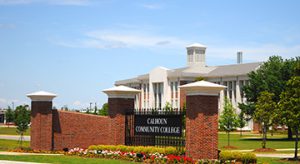
Calhoun Community College

 As one of Alabama’s leading institutions of higher education, we are committed to student success. By providing quality, accessible educational opportunities, encouraging community involvement, and promoting economic development, we seek to improve the quality of life for our students and the communities we serve.

On this website, you will find information on such topics as admissions policies and procedures, financial aid, academic programs, student support services, and business and industry training programs. We encourage you to contact us at any time you may have questions or need additional information about Calhoun.

Mission

Calhoun Community College provides opportunities in education by offering quality, innovative instruction through a collaborative learning environment while promoting cultural enrichment and community development.

Values

  • Accountability
  • Collaboration
  • Diversity
  • Equity
  • Innovation
  • Integrity

Vision

Success for every student, the community, and the College.

Birmingham-Southern College

We have a shared mission here on the Hilltop: to prepare men and women for lives of significance. Everything the college does is designed to help our students—and everyone in the community—develop, learn, and engage in the wider world. No matter who you are or where you want to go, our faculty and staff are committed to helping you rise to your potential.

Our mission

Birmingham-Southern College prepares men and women for lives of significance. The College fosters intellectual and personal development through excellence in teaching and scholarship and by challenging students to engage their community and the greater world, to examine diverse perspectives, and to live with integrity. A residential, baccalaureate liberal arts institution, Birmingham-Southern honors its Methodist heritage of informed inquiry and meaningful service.

Auburn University at Montgomery


About Auburn University at Montgomery

Founded in 1967 and located in Alabama’s capital city, Auburn University at Montgomery has distinguished itself as the college of choice for students in Alabama’s River Region and beyond.

In 2019, Auburn University at Montgomery earned a No. 33 ranking among regional public universities in the South from U.S. News & World Report. AUM was also recognized by U.S. News as the most ethnically diverse campus in Alabama and the 13thmost diverse in the South region with more than 40 nationalities represented. AUM also earned recognition from The Princeton Review as one of the best colleges in the Southeast and is the only River Region university to be designated a “Military Friendly School” by Victory Media.

It’s no wonder that Auburn University at Montgomery emerged from a crowded field of competitors to earn the Montgomery Advertiser Reader’s Choice Award in 2019 as the top university in the region for the second consecutive year.

Accredited by the Commission on Colleges of the Southern Association of Colleges and Schools, AUM offers more than 90 undergraduate and graduate degree programs and certifications. Students can join us on our verdant, 500-acre campus, learn at their convenience in an online setting or experience a blend of both through hybrid course delivery.

If it inspires you or defines who you want to be, you’ll find it in one of our five colleges – College of Business, College of Education, College of Liberal Arts and Social Sciences, College of Nursing and Health Sciences, and the College of Sciences. We offer programs that are unique among our regional peers, including Geographic Information Systems, Hospitality and Tourism, Homeland Security and Emergency Management, and Cybersystems and Information Security.

Our students receive in-depth knowledge and practical experience from award-winning faculty members whose academic expertise is often enriched by industry experience. Best of all, with a student-to-faculty ratio of 17:1, your professors will know your name. Nearly 50 percent of our classes include 20 or fewer students, which feeds into a personalized and engaging learning experience.

We also pride ourselves on making a high quality education more affordable. Nearly 40 percent of AUM students earn scholarship assistance of some type, including scholarships designated for incoming freshmen, transfer students, international students, graduate students, and active duty military, veterans and their dependents.

We offer a diverse, close-knit and active campus community with more than 70 student clubs and organizations, and an athletic program that is flourishing as a new member of NCAA Division II membership and the Gulf South Conference.

If you’re ready to soar to new heights, join the Warhawk Nation today!

AUM – Just the Facts

Founded

1967

Our Mission

The mission of Auburn University at Montgomery is to provide quality and diverse educational opportunities at the undergraduate and graduate levels through use of traditional and electronic delivery systems, and to foster and support an environment conducive to teaching, research, scholarship, and collaboration with government agencies, our community, and other educational institutions.

Our Vision

Auburn University at Montgomery strives to be a university that …

  • Is known for its commitment to developing dynamic and applied academic and research programs.
  • Is a student’s first choice in a variety of programs of distinction.
  • Embraces and builds an international presence at home and abroad, increasingly known for its ability to prepare students to thrive in a global community.
  • Graduates students who become engaged alumni with a life-long interest in and personal connection to AUM.
  • Is recognized as an integral community partner and a resource for the enrichment and economic development of the Southeast region and beyond.

Our Values

What do we believe in? Auburn University at Montgomery values and promotes the following:

  • A student-centered experience
  • Citizenship and community engagement
  • Excellence as our standard
  • A commitment to constant improvement
  • Diversity of people and perspective with a culture of inclusiveness
  • Lifelong learning
  • An environment of collaboration

University Leadership


Auburn University

 Auburn University has developed into one of the largest universities in the South, remaining in the educational forefront with its traditional blend of arts and applied science and changing with the needs of today while living with a respect for the traditions and spirit that are Auburn.

Auburn History

Chartered in 1856, Auburn University opened in 1859 and has had four official names.
The university started out as the East Alabama Male College, a Methodist institution. Classes were first held for 80 students with a faculty of six in 1859 at the East Alabama Male College, a Methodist institution. In 1872, the college became a state-owned, land-grant institution and was renamed the Agricultural and Mechanical College of Alabama, changing from a private liberal arts school to a state-supported college with emphasis on new scientific and agricultural programs. As expansion continued, the Alabama Legislature decided in 1899 that a new name was needed to reflect the institution’s growth, and the college became the Alabama Polytechnic Institute. As Charles Thach, the university’s sixth president, stated, “The Alabama Polytechnic Institute, a high sounding phrase, is fit for legal documents and grave legislation, but not to conjure with and not to yell and not to dream with as is fair.” The Legislature agreed, and in 1960 the Alabama Polytechnic Institute became Auburn University.

Auburn Family Traditions

Auburn University\’s core traditions are passion and spirit. These are the hallmarks of the Auburn Family, and you would be hard-pressed to find a program more steeped in tradition. It\’s great to be an Auburn Tiger. War Eagle!

Vision and Mission Statement

Auburn University will emerge as one of the nation\’s preeminent comprehensive land-grant universities in the 21st century. Central to all its functions will be the University\’s historic commitment of service to all Alabamians as the State becomes a part of a global society with all of its challenges and opportunities.

Doing Business with Auburn

Auburn University makes significant contributions to the Alabama economy. Graduates provide knowledge and leadership for state industries and researchers develop new products and discover new ways to improve productivity. Through outreach, faculty work directly with clients to provide information and to solve problems.

Athens State University

 Friendly, affordable, and convenient – three hallmarks that make Athens State University a great place to continue your education.

At Athens State, we understand that career opportunities rest on your college education. Over 3,000 students each semester select Athens State because of this neighborly environment where over 50 different degree programs are taught by understanding and quality faculty.

Whether you work full or part-time or whether you are a full-time student, Athens State offers a course schedule to meet your needs whether it be day, night, weekend or distance courses. Because nearly every student is from North Alabama or Southern Tennessee, you will literally attend class with people you know. Don’t find yourself being just another student number. Consider Athens State University!

Campus Buildings

Beaty-Mason House

Beaty-Mason House photo | Beaty-Mason House – 1882 photo


Built in 1826 by the founder of Athens, Robert Beaty, the Beaty-Mason House is listed on the National Register of Historic Places. The house, a few blocks south of the main campus, served as the home for four generations of the Beaty-Mason family before being purchased and renovated by the University in 1958 to serve as the President’s residence. It is currently undergoing extensive renovations.

Back to top

Brown Hall

Brown Hall photo | Brown Hall – 1909 photo


Completed in 1912, Brown Hall formerly housed the offices of the Provost/Vice President for Academic Affairs, the Associate and Assistant Vice Presidents for Academic Affairs, and Institutional Research. Brown Hall is named for Florence Brown, a teacher who cared for those affected by a 1909 campus typhoid epidemic. Miss Brown lost her life as a result of her efforts, and her parents donated funds in her memory for the building of Brown Hall as a new women’s dormitory. The building is listed on the National Register of Historic Places.

Back to top

Bullington House (President’s Home)

Bullington House photo


Currently serving as the President’s Home, the Bullington House was built in 1910 on the corner of Bryan and Beaty Streets on what was originally a portion of the estate of the McConnell family. The house, an example of the Free Classic architectural style, was purchased by the University in 2006 and was originally used for administrative offices before becoming the President’s Home in 2010.

Back to top

Carter Physical Education Center

Carter Physical Education Center photo


Built in 1965 and originally serving as the hub for the University’s athletic programs (which were discontinued in 2004), the Center is named for former Alabama State Representative Tommy Carter and his wife JoAnn in recognition of their support to the institution. The Center houses classrooms, the Athletic Museum, and the Delmore Brothers Collection. In addition to its use for physical education activities, the Center gymnasium is used for graduation exercises and for a variety of meetings and community events.

Back to top

Chasteen Hall


Chasteen Hall, just off the main campus on the corner of Clinton and Hobbs Streets, currently houses the offices for the Adult Degree Program and the Testing Center, as well as various classrooms and computer labs. The building is named for Dr. James R. Chasteen, President of Athens State (1981-1990), and his wife Melba. Originally owned by then Athens College, the building was sold and served as both a grocery store and a hardware store for many years before being repurchased by the University.

Back to top

Classroom Building

Classroom Building photo


The Classroom Building, housing a student lounge, and interactive and multi-purpose classrooms, was completed in the fall of 1998. In 2019, the Building also became the home for Academic Technology Services, the Technology Helpdesk, and lounges for faculty & students.

Back to top

Founders Hall

Founders Hall photo | Founders Hall – 1923 photo | Founders Hall – 1902 photo | Founders Hall – 1898 photo | Founders Hall – Chapel Carvings


Founders Hall currently houses the Office of the President, offices for Financial Affairs, and faculty and staff offices for the College of Arts and Sciences. The iconic building of the University, Founders was built in 1842 by the Tennessee Conference of the Methodist Church on five acres of land donated by the Maclin/Hobbs family. This era of the institution represents the transition of the institution’s control to the Conference from the private female academy first established in 1822. A variety of additions completed over the years have tripled the dimensions of the original building. In addition to the various offices, Founders also houses a parlor and chapel, and is listed on the National Register of Historic Places.

Back to top

Freehauf House


At 415 Hargrove Street on the northeast corner of the campus, the Freehauf House contains the offices for the Director of Physical Plant and the Coordinator for Physical Plant Support. Built in 1920, the Freehauf House was purchased by the University in 2005.

Back to top

Kares Library

Library photo


The Athens State University Library opened in 1996, with the majority of the funds for its construction coming from private donations. In addition to the Library collection and offices, the building houses the University Writing Center, a Learning Commons area, and the Dr. Elva Bell McLin Archives Room.

Back to top

Maintenance Building


Completed in 1986, the Maintenance Building is located just off Hobbs Street on the east side of the campus. The building houses offices for physical plant staff, shipping and receiving areas, and equipment storage areas.

Back to top

McCain Hall

McCain Hall photo | McCain Hall – 1962 photo


Currently home to offices for faculty and staff in the College of Education, McCain Hall was completed in 1962. McCain Hall underwent a complete renovation and was rededicated in 2011. Originally serving as a women’s dormitory, the building is named for Dr. Virgil B. McCain, President of the institution from 1959 until 1965.

Back to top

McCandless Hall

McCandless Hall photo | McCandless Hall – 1915 photo


Housing the University Auditorium and serving as a facility for concerts, plays, and lectures for the campus and community, McCandless Hall was built in 1912 and is listed on the National Register of Historic Places. The Hall underwent a complete renovation in 2013 to both restore original features and add modern facilities to ensure equal access for patrons. The Auditorium features a tracker-action pipe organ dating back to 1892.

Back to top

Patton House

Patton House photo


Currently on loan to the Athens-Limestone Children’s Advocacy Center, the Patton House at 413 Hargrove Street was purchased by the University in 2006.

Back to top

Sanders Hall

Sanders Hall photo | Sanders Hall – 1945 photo


Currently home to offices for faculty and staff in the College of Business, Sanders Hall was built in 1921; a total renovation was completed in 2010. Originally a women’s dormitory, the Hall is named for Col. W. T. Sanders, who presided over the institution’s Board of Trustees from 1896 to 1921.

Back to top

Sandridge Student Center

Sandridge Student Center photo | Sandridge Student Center – 1924 photo


Serving as the primary center for students and student support services, the Sandridge Student Center was built in 1967 on the foundation of the 1918 gymnasium and swimming pool. The Center was named for Dr. Sidney E. Sandridge, President of the institution (1970-1981), upon his retirement. In addition to a student lounge area, coffee shop, and cafeteria, the Student Center houses the Offices of Admissions, Student Records, Student Financial Aid, the Transfer Advising and Career Development Centers, Disability Services, and the University Bookstore.

Back to top

Security Office

Security Office photo


Once known as the “Little White House”, this small cottage just south of Founders Hall now houses the offices of Campus Security. The structure has served many purposes through its history, including use as a Greek house and for faculty housing.

Back to top

Smith House

Smith House photo


Located at 433 East Pryor Street, the Smith House is home to the offices for the Vice President of University Advancement, the Director of Development, and Alumni Affairs. The Smith House was purchased by the University in 2005.

Back to top

Waters Hall

Waters Hall photo | Waters Hall – 1991 photo


Currently housing classrooms, science labs, and offices for College of Arts and Sciences faculty and staff, Waters Hall was completed in 1957; an expansion and total renovation was completed in 2010. The building is named in honor of Mr. N. H. Waters, who was President of the institution’s Board of Trustees in 1957, and a loyal supporter of the institution.

University of Arkansas


About UAFS

The University of Arkansas – Fort Smith offers a rich, vibrant learning environment for nearly 7,000 students each semester. Small class sizes allow students the opportunity to collaborate with their professors and peers and develop life-long professional connections with faculty who are experts in their fields. 


With more than 60% of students arriving at UAFS from Sebastian and Crawford counties, the university is uniquely involved in the development of the region and exceptionally dedicated to advancing its quality of place.


UAFS aims to build its reputation as a regional destination for high-quality, affordable education, where diverse groups of aspirational students and faculty thrive and excel. 


UAFS offers 51 bachelor’s and associate degrees, two master’s degrees, and 36 certificate programs, all aimed at preparing students to explore, innovate, and compete in the global workforce. An intentional focus on increasing evening, weekend, and online course options has afforded more access to adult learners, full time working students, and military and veteran students. 


With state-of-the-art on-campus and digital-learning facilities, industry-standard training instrumentation, and cutting-edge research technology, UAFS offers students up-to-date, hands-on education focused on the future.


From application to commencement, UAFS also offers unrivaled support for students through comprehensive, one-on-one academic advising, innovative preemptive student support analysis, and a student-centered philosophy that has defined the institution since its founding in 1928.


UAFS students can participate in more than 100 student organizations, including dynamic Greek life, intramural sports, academic societies, and cultural groups. For students who want to live in the heart of campus life, UAFS offers two residence halls with a full-service dining hall, as well as an apartment complex for upper-level students. The Lions and Lady Lions compete in NCAA Division II baseball, women’s volleyball, and men’s and women’s basketball, tennis, cross country, and golf.


UAFS is one of 21 academic institutions and affiliates governed by the University of Arkansas System board of trustees and administered by the president of the system. System offices are located in Little Rock. As a public university, UAFS is overseen by the

Arkansas Department of Higher Education.


Quick Facts About UAFS

Name: University of Arkansas – Fort Smith


Founded: 1928


Location: Fort Smith, second-largest city in Arkansas, population 86,209 (Ref: Census 2010)


Chancellor: Dr. Terisa C. Riley


History: Fort Smith Junior College (1928) / Westark Junior College (1966) / Westark Community College (1972) / Westark College (1998) / University of Arkansas – Fort Smith (2002)


School colors: Navy, white and burgundy


Mascot: Numa the Lion


Campus: 170 acres / 77 campus buildings and facilities / 1.16 million building square feet maintained


2019 fall enrollment: 6,229


Student-to-faculty ratio: 18-to-1


Academic programs:  51 bachelor’s and associate degrees, 36 certificates, and two master’s program


Student activities: More than 100 registered student organizations such as Greek life, intramural sports, academic societies, and cultural groups


Athletics:  NCAA Division II, Lonestar Conference