Foundation Stone for a Missile Park “AGNEEPRASTHA” was laid at INS Kalinga by Cmde Rajesh Debnath, Commanding Officer, in the presence of Vice Admiral Atul Kumar Jain, PVSM, AVSM, VSM, FOC-in-C (East) on 28 May 20.
The Missile Park ‘AGNEEPRASTHA’ once completed will be dedicated to all the Officers, Sailors and Support Staff of INS Kalinga, who have served in this premier op-support Base of the ENC since its establishment in 1981. The Park also commemorates the award of the prestigious Unit Citation to INS Kalinga for the year 2018-19.
‘AGNEEPRASTHA’ aims to capture glimpses of Missile History of INS Kalinga since 1981 till date. The Missile Park has been set up with a replica of missiles and Ground Support Equipment (GSE) that showcase the evolution of missiles handled by the unit. The exhibits have been created from scrap / obsolete inventory which have been reconditioned in-house. The main attraction is P-70 ‘Ametist’, an underwater launched anti-ship missile from the arsenal of the old ‘Chakra’ (Charlie-1 submarine) which was in service with IN during 1988-91.
‘AGNEEPRASTHA’ will also provide a one-stop arena for motivation and stimulation of inquisitive minds regarding the missiles and related technologies, from school children to Naval personnel and their families. It is also intended to encourage a feeling of ownership and pride in the role of the Unit, and highlight the necessity of contribution of all personnel irrespective of rank/trade towards the overarching objective of ordnance availability, reliability and delivery on target, each and every time.
Minister of Commerce and industry Shri Piyush Goyal on Thursday met the representatives of traders associations, via video conferencing. He said that during the lockdown period, the nation geared itself to fight against the Covid-19 pandemic and built capacities. The domestic manufacturing of the protection equipment (like masks, sanitizers, gloves, PPE) got a boost, health infrastructure was scaled up, and awareness was generated among the people. He said that people responded to the Prime Minister’s call to work unitedly to face the unprecedented crisis, by adhering to the Government’s guidelines and directions. Aarogya Setu has been developed during the period, which acts as a shield, friend and messenger in such crisis. People changed their lifestyles and adapted quickly to live, work, study differently under the circumstances. Shri Goyal said that timely and correct decisions taken by the Prime Minister, and adhered to by the people, have helped the country, as we are in a better position compared to many other nations of the world, with more resources and lesser population.
Regarding some of the hardships being faced by the Retail traders even after the relaxations of the guidelines, the Minister said that a majority of shops have been allowed to be opened, without any distinction of essential and non-essential. The decision to open the remaining shops in the malls, will be taken soon, after taking into account the guidelines of the Health Ministry. He said that Aatmanirbhar package announced by the Union Finance Minister to fight Covid-19 provided for Rs 3 lakh crore credit guarantee for MSME, and it also covers traders. He said that the changes made in the definition of the MSME sector will also help them. He said that the Finance Minister has also indicated that she has an open mind on finding solutions for the problems that may have remained unresolved. Shri Goyal told the retail traders not to feel threatened by the e-commerce juggernaut, as the Common person has now realized that the Brick and Mortar kirana neighbourhood shopkeepers only helped them in their hour of crisis. He said that the Government is working on mechanism to facilitate B2B for the retail traders and providing technical support to them to expand their reach. He said that under the Prime Minister Narendra Modi, the Government has taken transformational initiatives, which will help India become a strong nation. Regarding other problems of the trader community pertaining to term loans, Mudra loans and other issues, Shri Goyal said that the matter will be taken up with the finance ministry to find a solution.
The Minister said that several indicators show that the economic recovery is on the anvil. The power consumption this month is almost at par with the corresponding period last year, Oxygen production has come up. The Exports, which went down in April by almost 60%, have started showing upward trend, and the preliminary figures indicate decline this month will be smaller. The Services exports, on the other hand, went up even the last month. He indicated that more than the fall in merchandise exports, the imports showed sharper decline last month, lowering the trade deficit.
The Minister said that during the last two months, the government has taken measures to ameliorate the hardships of the traders and Indian manufacturers, and in future also, will support them. He called upon the traders to use, promote and support the Indian goods. The Minister exhorted them to work with confidence, boldness and determination, and the success will be there to achieve.
At a media briefing here today, Dr. Vinod Paul, Member NITI Aayog and Professor K. Vijay Raghavan, Principal Scientific Adviser to the Government of India, summarised activities on COVID-19 related to Science and Technology in the areas of vaccines, drug discovery, diagnostics and testing.
On vaccines, it was pointed out that the process is usually slow and fraught with uncertainties. But, in order to succeed against COVID-19 a large number of parallel efforts are needed. This is being done globally and nationally. Indian academia and start-ups are working on vaccine candidates in the very strong Indian vaccine industry. There are three kinds of attempts being made. The first are indigenous efforts. The second are globally collaborative efforts where Indian organisations are taking a lead role and the third is Indian participation in global efforts. With such a large portfolio, followed by efforts at risk- mitigation for manufacturing and stockpiling, success is better assured.
On drug discovery, our scientific efforts take three approaches. The first is the repurposing of extant drugs to see how effective they are against the virus and in mitigating the consequences of the disease. Second, Phyto-pharmaceuticals and extracts from medicinal plants are being tested. Finally, using a variety of approaches, new drug discovery including a ‘Hackathon’ for computational drug discovery is being undertaken.
A conglomeration of research efforts have resulted in new tests and testing kits. These include new tests for detection of the virus and also for antibody detection. The latter are being used for serological studies,
The speed of these developments is made possible by the collaborative efforts of our scientists, institutions and science agencies. The regulatory system has also been closely engaged, combining speed with quality.
It has been decided to take forward the Ek Bharat Shreshtha Bharat programme of the Government by using innovative ways in view of the prevailing conditions of COVID 19.
This was decided at a recent meeting of Secretaries via videoconferencing , of partner ministries under the Ek Bharat Shreshtha Bharat programme of the Government . The meeting was chairedby Secretary, Higher Education, M/o HRD, Shri Amit Khare. M/o HRD is the nodal ministry for the EBSB programme. The meeting was attended by Secretary, Tourism Shri Yogendra Tripathi; Secretary Culture, Shri Anand Kumar; Secretary Department of Youth Affairs, Smt Usha Sharma; Secretary, SE & L Smt Anita Karwal; CEO, MyGov Shri Abhishek Singh and senior officers of ministries of I & B, Railways, Home , Defence , Parliamentary Affairs and department of Sports.
Welcoming the participants, Shri Amit Khare briefed about the implementation of the programme so far, stressing on the need to have innovative ways to carry it forward in view of the prevailing conditions of COVID 19. Secretary D/o SEL, Smt. Anita Karwal also emphasized upon the need to show tangible outputs.
During the meeting a presentation was made on the progress of EBSB so far.
Speaking at the meeting, Secretary, Ministry of Tourism, Shri Yogendra Tripathi informed that institutions under Tourism ministry are organising webinars on various aspects of tourism. The ministry is doing a series of webinars under the series “Dekho Apna Desh”, being hosted on MyGov portal. These webinars are being attended by thousands of people. He also suggested that such webinars can be organised for tourism stake holders of different states such as Tour Operators etc. Secretary, Higher Education suggested that the recordings of “Dekho Apna Desh” and other webinars can be displayed on the educational channels and in breaks during online classes.
Secretary, Ministry of Culture, Shri Anand Kumar stated that they are also organising various webinars. He suggested all webinars of different Ministries should be brought under a common platform of Ek Bharat Shreshtha Bharat. He further suggested that e- programmes can be prepared on various topics such as writing dramas, paintings , virtual tours of monuments, etc He further informed that the Culture Ministry proposes to develop E- Heritagepedia and E- Artist pedia and also suggested that renowned artists can do virtual programme modules to teach their art. Secretary D/o SEL welcomed the idea and said that schools would be very interested in classes on indigenous art like Worli and Madhubani paintings.
Secretary, Department of Youth Affairs, Smt. Usha Sharma appreciated the use of digital medium for conducting the EBSB programmes. She said with this, the reach of these programmes can be enhanced greatly. She also suggested for sharing of digital material prepared by different departments. Secretary, HE suggested that the inputs may be collected from all the Ministries at a single platform. Secretary, D/O SEL suggested they could be hosted on a digital platform.
CEO, My Gov.in, Shri Abhishek Singh said that they are developing a mobile App for learning 100 sentences in different languages. He also said that MyGov can host webinars of various departments and also disseminate information about their programmes.
Joint Secretary, Ministry of Information & Broadcasting, Shri Vikram Sahai suggested that apart from the information of various states being shared through TV, Radio and Print Media, good practices and success stories of each state may also be shared with the partner states. He also suggested all departments can pool in their digital resources and DD News can use their weekly EBSB programme to host destination based programmes. JS (ICC), Ms Neeta Prasad suggested that each Ministry should share their future monthly action plan in advance with Ministry of Information & Broadcasting for wider coverage.
Executive Director, Ministry of Railways Smt. Vandana Bhatnagar, briefed about the steps taken by them for providing concessions to the students participating in various EBSB programmes and on displaying the logo, Video display etc on railways property. She said that these activities will be up taken afresh once regular movement of trains start.
The officers of Ministry of Home Affairs, Ministry of Defence, Ministry of Parliamentary Affairs and Department of Sports briefed about the activities taken up prior to the lockdown period and activities proposed to be started.
At the end of the meeting, Secretary, HE summarised important actionable points as follows:
To move towards digital mediums for the carrying on the activities under EBSB by each participating Ministry/ Department.
To organise webinars on Ek Bharat Shreshtha Bharat themes for their wide dissemination.
To have a common repository for the Ek Bharat Shreshtha Bharat digital resources that can be used by every Ministry. This repository may be hosted on a common portal.
iv A revised communication plan needs to be made and Doordarshan’s 30 minute weekly programme on EBSB should be destination based with inputs from all ministries
Here are three ways career development coaches can help set you on a path to success.
Whether you are looking for a career change, working toward your next promotion or seeking a personal sense of accomplishment, partnering with the career development team at your university can help you achieve your goals.
Career coaches support and guide students from the first day of class to graduation and beyond. Here are three ways career development coaches can help set you on a path to success.
1. Finding the best career for you
Career coaches assist with career exploration, which includes salary negotiation and job search strategies. If you have questions about a particular career field, career coaches can help bridge that gap. If you are in the process of researching different career fields, they can provide you with additional resources and information.
2. Building networking and interviewing skills
Career coaches can also help you develop valuable soft skills, such as communication skills necessary for interviewing and networking. These skills are essential for finding a job as well as ensuring ongoing career growth and development. Coaches can help you practice questions that might come up in an interview and strategize questions to ask potential employers.
You can work with your career coach to develop a strong LinkedIn profile and identify professional organizations that will help you expand your circle. Career coaches can also help you begin building your personal brand so that you can effectively position yourself for desired roles.
3. Creating a resume and portfolio
Finally, career coaches help guide you through the job search process step-by-step. Herzing University’s Career Development team recently launched the Career Center, a diverse platform of career resources built to help students at every level. In the Career Center, you can create a cover letter, resume, e-portfolio or even a business plan with the help of your career coach. The resource center is available 24/7 so busy students are able to get the help they need when it is most convenient for them.
No matter what your career goals are, the Career Development team at Herzing University is ready to partner with you.
Union Human Resource Development Minister Shri Ramesh Pokhriyal Nishank interacted with Heads of more than 45,000 Higher Educational Institutions across the country today through Webinar hosted by National Assessment and Accreditation Council (NAAC), Bengaluru. The Minister addressed and Interacted with a Galaxy of Academicians comprising participation from Vice Chancellors / Registrars / Professors / IQAC heads / Principals / Faculty from across the Nation.
In the hour long interaction and address, the Union Minister reflected on various issues and concerns raised by educationists related to Academic Calendar, Online Education, examinations, Fees, Mental health of students, problems of students, fellowships, NEET, entrance examinations etc. He dwelt upon at length on the initiatives taken by the Government with regard to Swayam Prabha, Deeksharambh, Paramarsh and a host of other special initiatives taken during the pandemic period. He also urged all Higher Educational Institutions to take part in NAAC accreditation process. He reiterated that the Prime Minister of India Shri Narendra Modi is very concerned about the well being of Higher Educational Institutions and assured of all help in furthering the academic activities of student fraternity.
The Union Minister asked all Universities to constitute a special cell which will be empowered to address the issues of students related to academic calendar and examinations arising out of special circumstances due to Covid 19. He said that a task force has been created in UGC and NCERT to resolve the different issues of students. Shri Nishank assured that Ministry is committed to provide all assistance to students in the time of crisis. During the interaction the Union Minister highlighted the process of how the new session will be commenced, at the same time he specified that the priority will be given to the safety of the students.
Shri Nishank called educational fraternity as Corona Warriors because in this extraordinary situation they are working round the clock to provide quality education to students.
The event was also graced by Chairman, UGC, Prof D P Singh, Prof Virander S Chauhan, Chairman, EC, NAAC. Prof S C Sharma, Director, NAAC spoke & coordinated the event.
Karnal Smart City has undertaken the following initiatives to combat COVID-19:
Resource Management and Administration
Augmentation of Medical Infrastructure:Availability of medical infrastructure is ensured (as on April 15, 2020) including 1,577 PPE kits; 13,348 masks N-95; 66,076 three-layer masks; 1,873 litre of sanitizers; 434 VTM; 2,580 sodium hydrochloride; 295,805 gloves; 05 thermal scanners; 125 no. of isolation wards for COVID patients; 1,000 additional beds for quarantine; 92 D type & 36 B type oxygen cylinder availability and 50 functional ventilators.
Manufacturing of Personal Protective Equipment (PPEs):PPEs are the most essential equipment for the doctors and frontline workers for combating COVID-19 pandemic. In PPE kit manufacturing plant, more than 300 kits are manufactured every day.
Masks are produced by Self Help Groups: More than 65,000 total masks are produced; on an average 4,000 are produced each day; more than 250 self-help group members are involved; and about 52,000 masks have been sold till date.
Quarantine Facilities:Karnal City has capacity of 3,396 beds for COVID patients – this include 1,632 Government buildings; 1,224 Dharamshala; and 540 hotels. Out of 1,000 identified beds – 43 citizens are quarantine in Government building and 914 are home quarantined. Further, patients under home quarantined are monitored through cell tower location by police.
Karnal Live Tracker App:An app has been developed to track citizens who are home quarantined. There is a simple process to get registered on app and post registration – a citizen has to report six times with a gap of two hours in a day start from 10:00 am to 10:00 pm; next step is to upload latest photo and record their body temperature. Also, by giving access to the current location, latitude and longitude of citizen are captured. The app offers features like tele counselling to ensure upkeep of mental health of the citizen.
Testing Lab:Kalpana Chawla Government Hospital in collaboration with district administration has adopted a resourceful approach to setup COVID-19 testing lab. A lab has a capacity of testing 150 samples each day.
Sample Collection Kiosk:The kiosk is manufactured locally to ensure protection of the doctors/staff involved in sample collection. It is much safer, faster and more efficient collection of COVID-19 test samples.
Food and Relief Measures
Shelter Homes for Migrant Labourers:The total number of displaced migrant workers in Karnal is 784, who are residing in 7 shelter homes across the district. The district administration in collaboration with NGOs has been successful in providing shelter, food, basic essentials and medical facilities to the migrant labourers working in Karnal and those from other districts willing to cross. Administration collaborated with Radha Swami Satsang Bhawan to provide the necessities for a comfortable stay. Emphasis was given on the following measures – lodging; food; hygiene kit; personal commodities; medical assistance; police assistance; and other essentials.
Adopt a Family Initiative:A Corona Relief Fund was started at the district level, to ensure that dry ration can be delivered to daily wage workers. These vulnerable & needy families were identified by a screening method and by self-reporting at district helpline 1950. Families are being provided a packet of dry ration – rice, atta, cooking oil, pulses, sugar, salt, cooking masala, haldi and soap. Till date, approx. 70 lakh rupees have been donated, which means that approx. 14,000 poorest families will be taken care throughout the district.
Dry Ration distribution:District Administration is providing dry ration to daily wage workers who are not covered under PDS or any other Government scheme. Shri Krishna Parnami School, Karnal has been converted into a donation center to maintain stocks of all the essentials. About 2,440 packets have been distributed and 4,160 packets are in stock at the center. The cost of one packet of weekly dry ration is approx. 475 rupees.
Cooked Meals Distribution:Out of 15 lakh population, approx. 5 lakh belongs to unorganized sector. A collaboration with ‘Nirmal Kutia’ (a gurudwara) and district administration Karnal created a sustainable model for successfully dealing with the hunger crisis. Meal is served at 97 identified locations each day.
Doorstep delivery of Essentials:a) Online delivery – (i) Facilitated linkage of kirana shops and dairies with online platforms; (ii) Collaboration with Needs on Wheels (NOW); (iii) more than 10,000 orders have been delivered successfully b) Localized delivery – (i) localized delivery of essentials effectively implemented; (ii) vendor designated by district administration.
Precautionary Measures & Citizen Outreach
Lockdown Enforcement:Complete lockdown was imposed due to COVID-19 by the district administration and district police helped in its implementation.
Accessibility for emergency services:Movement passes issued online for ensuring mobility for essential and emergency services and per day approvals are limited to ensure social distancing.
Its taken a while to get going on my blog. I wonder do I deserve a virtual choc fish for starting and hopefully writing something meaningful. Source: www.bbc.co.uk
A lot has been happening at work. For a start we are lucky enough to have visits from a couple of people involved in flexible learning – Cathy Gunn (University of Auckland) and John Clayton (WINTEC – Hamilton, NZ)….more about this later.
FLUG meets Blackboard head on I have been busy with the formation of the new and improved FLUG – a group of enthusiasts involved in flexible learning and support. With our organisational strategy of flexible teaching and learning, it was timely to change the name of the Blackboard User Group to FLUG (Flexible Learning Users Group).
We also needed to extend the group – so a bigger cross section of people involved in flexible options here could muck in and get their hands dirty.
Source: www.geoimagery.com This way the small core of enthusiasts and people involved with the Learning Management System will have more of “a voice” in some of the changes which are happening here in our organisation. So the Bb User Group has re-birthed as FLUG.
So…what does this mean? FLUG will hopefully provide information to the newly formed Flexible …committee about operational matters and stuff from the coal face. We also hope to assist in developing some sort of flexible learning and teaching strategy which is meaningful for our learners and staff in the organisation.
So who do we think we are…why should we have a say? Because FLUG hopefully will represent the “real users” because it is made up mainly of people who get it. But do we?
We all know that flexible learning is a very important strategy for quality education.What gets me though is that every organisation seems to be busying themselves with the development of strategies for eLearning or flexible learning and teaching…..but what are these strategies based on?? What everyone else has been doing..or on the unique culture within an organisation? The former I believe because it is easier.
It is also easier to follow like sheep and stay with an LMS like Bb – the same as the others. It is also easier to stay with an imposition model– a model where the learners are told what they’re getting rather than being asked how they want to approach teaching and learning.
The best model for a flexible learning and teaching strategy which I have seen is the one QUT (Queensland University of Technology) developed called the QUT Teaching Capabilities Framework. See overview at: http://www.library.qut.edu.au/framework/
QUT surveyed staff and students who were using the LMS (Blackboard), to find out what was important to them as both teachers and learners. The project team took their findings and using a process of wide consultation, they developed a framework. This framework now underpins how teaching and learning is offered at the university, and has informed the professional development of staff.
Unfortunately, we have not gone down this track, but have taken the route followed by many. Additionally, we have also developed a teaching qualification without developing a teaching and learning strategy first. Now staff will be indoctrinated into “a way” of teaching which may not be right for our learners…or for our environment.
We have broken the first golden rule! We didn’t find out what our learners actually wanted first! As a result, our flexible learning and teaching strategy may also not be based on actualities but on assumptions. I believe we do have time to find out what our teachers and learners actually want, what their experience is to date and what they would like to see happening.
Wont this save time in the end! We are in a good position to really do something different and lead flexible learning in a new direction.
I would really like to see us get out from behind the herd, stop the baaing and mooing and get to the green grass first…for a change.
Watch this space to find out how the flexible strategy and the teaching qual evolve.
In line with the announcement made in the Union Budget, Union Minister for Finance & Corporate Affairs Smt. Nirmala Sitharaman formally launched the facility for instant allotment of PAN (on near to real time basis) here today. This facility is now available for those PAN applicants who possess a valid Aadhaar number and have a mobile number registered with Aadhaar. The allotment process is paperless and an electronic PAN (e-PAN) is issued to the applicants free of cost.
It may be recalled that in the Union Budget, 2020, Finance Minister Smt. Sitharaman had announced to launch instant PAN facility shortly. In para 129 of the Budget Speech, the Finance Minister had stated, “In the last Budget, I had introduced the interchangeability of PAN and Aadhaar for which necessary rules were already notified. In order to further ease the process of allotment of PAN, soon we will launch a system under which PAN shall be instantly allotted online on the basis of Aadhaar without any requirement for filling up of detailed application form.”
The facility of instant PAN through Aadhaar based e-KYC has been launched formally today, however, its ‘Beta version’ on trial basis was started on 12th Feb 2020 on the e-filing website of Income Tax Department. Since then onwards, 6,77,680 instant PANs have been allotted with a turnaround time of about 10 minutes, till 25th May 2020.
It may also be noted that as on 25.05.2020, a total of 50.52 crore PANs have been allotted to the taxpayers, out of which, around 49.39 crore are allotted to the individuals and more than 32.17crore are seeded with Aadhaar so far.
The process of applying for instant PAN is very simple. The instant PAN applicant is required to access the e-filing website of the Income Tax Department to provide her/his valid Aadhaar number and then submit the OTP received on her/his Aadhaar registered mobile number. On successful completion of this process, a 15-digit acknowledgment number is generated. If required, the applicant can check the status of the request anytime by providing her/his valid Aadhaar number and on successful allotment, can download the e-PAN. The e-PAN is also sent to the applicant on her/his email id, if it is registered with Aadhaar.
The launch of the Instant PAN facility is yet another step by the Income Tax Department towards Digital India, thereby creating further ease of compliance to the taxpayers.
As we look at partial and eventually complete lifting of lockdown, queries are already being posed as to what the “new normal” will be, especially for large production organisations like Dockyards and other naval establishments, where a sizeable number of workers will resume work post lifting of lockdown and these numbers are expected to gradually increase. This led to the strong need for a sanitisation facility for worker’s coveralls, tools, personal gadgets and masks.
Naval Dockyard (Mumbai) has manufactured a UV sanitisation bay to meet this emerging requirement. The UV bay will be utilised for decontamination of tools, clothes and other miscellaneous items, to control spread of the coronavirus. The challenging task required ingenuity to convert a large common room into a UV bay by fabrication of aluminum sheets electrical arrangements for UV-C lighting.
The facility utilises UV-C light source for Germicidal Irradiation towards sterilising items. Studies by reputed research agencies have proven the effect of UV-C on respiratory pathogens like SARS, Influenza etc. It has been observed that microbial pathogens become significantly less viable when exposed to UV-C of intensity 1 J/cm2 for 1 min or more, indicating effective sterilisation.
A similar facility has also been set up at Naval Station (Karanja), where in addition to UV-C steriliser, an industrial oven has also been placed, which heats smaller sized belongings to 60°C, a temperature known to kill most microbes.
The facility is placed at the entry/ exit points where it will help in mitigating COVID-19 transmission.
Union Minister for Finance & Corporate Affairs Smt. Nirmala Sitharaman chaired the 22nd Meeting of the Financial Stability and Development Council (FSDC) here today.
The meeting was attended by Minister of State for Finance & Corporate Affairs Shri Anurag Thakur, Shri Shaktikanta Das, Governor, Reserve Bank of India; Shri Ajay Bhushan Pandey, Finance Secretary/Secretary, Department of Revenue; Shri Tarun Bajaj, Secretary, Department of Economic Affairs; Shri Debasish Panda, Secretary, Department of Financial Services; Shri Ajay Prakash Sawhney, Secretary, Ministry of Electronics and Information Technology; Shri Injeti Srinivas, Secretary, Ministry of Corporate Affairs; Dr. Krishnamurthy V. Subramanian, Chief Economic Adviser; Shri Ajay Tyagi, Chairperson, Securities and Exchange Board of India (SEBI); Shri Subhash Chandra Khuntia, Chairperson, Insurance Regulatory and Development Authority of India (IRDAI); Shri Supratim Bandyopadhyay, Chairperson, Pension Fund Regulatory and Development Authority (PFRDA); and Dr. M. S. Sahoo, Chairperson, Insolvency and Bankruptcy Board of India (IBBI) and other senior officers of the Government of India and Financial Sector Regulators.
The meeting reviewed the current global and domestic macro-economic situation, financial stability and vulnerabilities issues, major issues likely to be faced by banks and other financial institutions as also regulatory and policy responses, Liquidity / Solvency of NBFCs/HFCs/MFIs and other related issues. Besides, market volatility, domestic resource mobilisation and capital flows issues were also discussed by the Council.
The Council noted that the COVID-19 Pandemic crisis poses a serious threat to the stability of the global financial system as the ultimate impact of the crisis and the timing of recovery, is uncertain at this point of time. While, decisive monetary and fiscal policy actions aimed at containing the fallout from the pandemic, have stabilised investor sentiment in the short-run, there is a need to keep a continuous vigil by Government and all regulators on the financial conditions that could expose financial vulnerabilities in the medium and long-term. The efforts of the Government and regulators are focused on avoiding a prolonged period of dislocation in financial markets.
The Council took note of the initiatives taken by the Government and the regulators in the recent months to help revive the economy. Government and the RBI have announced various fiscal and monetary measures to pre-emptively limit the economic damage and would continue to address the liquidity and capital requirements of the financial institutions.
The Council also reviewed the action taken by members on the decision taken by FSDC earlier.
We’ve got the quiz to help you decide what career-focused program is best suited for you.
We’ve got the quiz to help you decide what career-focused program is best suited for you. We’ll help you hone in on your search and feel confident in the pathway you’re about to embark on here at Herzing. Take this quiz today to learn what major you should study.
To make yourself stand out from the pool of other applicants, you need to showcase why are you are the best fit for the position. Here are some tips!
In a high-demand field like medical assisting, competition for jobs can be intense. To make yourself stand out from the pool of other applicants, you need to showcase why are you are the best fit for the position.
Here are some tips for crafting a standout medical assisting resume.
1. Summarize your clinical and administrative skills
Medical assisting students or graduates should focus on displaying their proficiency with key clinical skills, such as administering medications and taking vitals. Be sure to also describe the impact of your work, such as helping an organization serve more patients, or working alongside a team of doctors and nurses to improve the patient experience.
If you are applying for a front desk medical assisting position, you also need to demonstrate that you have relevant administrative skills. For example, highlight your experience with using electronic medical records systems, or your knowledge of medical billing. Your proficiency with medical terminology is also an important skill for both front office and back office positions.
“Including relevant skills in your job descriptions will help your resume become more searchable by the Applicant Tracking System, a tool that many employers use to scan resumes for qualified candidates,” says Jennifer Osburn, a Career Development Coach at Herzing University.
2. Feature your work experience
If you’ve completed a medical assisting externship as part of your degree program, make sure this is featured prominently on your resume. Employers look for experienced candidates, even for entry-level roles. They want to be able to tell immediately whether you have the skills needed to succeed on the job, and externships are a good marker of your preparation and experience.
On the other hand, if you are a student looking for an externship, you might not have a lot of direct professional experience to highlight. In this case, you should showcase your relevant experiences, which can include academic accomplishments, extracurricular activities and volunteer work that make you a good fit for the position.
3. Highlight transferable skills
If your work experience does not directly align with the position you want, focus on highlighting the skills you have that would help you succeed in an MA role. These are called transferable skills.
Examples of skills that you may have performed at other, non-healthcare related positions that are transferable to an MA position include customer service, data entry, or clerical work. Employers also value soft skills, such as communication and teamwork.
4. List your education
It is important to include your education on your resume. Make sure to state the level of degree you’ve earned, such as a diploma or an associate degree in medical assisting. Also include your expected graduation date and any accolades you have received.
5. Showcase your certifications
Healthcare certifications like the Red Cross BLS for Healthcare Providers or first aid certification can help you differentiate yourself from the pool of other applicants. Be sure to include the dates for when you obtained these certifications, as well as when they are expected to expire. Medical assisting graduates should list their Registered Medical Assisting (RMA) certification or Certified Clinical Medical Assistant (CCMA) certification, as they are required by some states.
6. Update your resume for each position
Always be sure to update your resume to match the skills and requirements for the position. According to a Career Builder survey, 61% of employers are more likely to pay attention to a resume that is tailored to the position in question. Creating a customized resume demonstrates your interest in the positon and lets employers know how serious you are as a candidate.
Bonus: Resume Dos and Don’ts
There are certain dos and don’ts that apply to every resume, no matter the career or position.
Do:
Organize your resume: Organize your skills and information in a way that is easy to digest and understand. A medical assisting resume will typically have a section for relevant skills at the top, followed by professional experience, education, volunteer work or extracurricular activities.
List a professional email: Make sure that you list a professional email at the top of your resume so it is easy for employers to contact you. If you are a student, you can use your college or university email address. Also, make sure that you have a professional voicemail message recorded for the phone number that you list.
Save as a PDF: Do save your resume as a PDF. This may seem like a very trivial tip, but it can make a big difference in your job search. Sending your resume as a PDF ensures that whoever opens the file sees it exactly as you intended. Some word processing applications may not be compatible, and older versions of Word can have trouble opening emailed documents. You want to make it as easy as possible for recruiters and hiring managers to open, read and pass along your resume.
Don’t:
Overlook typos: Typos and grammar mistakes show poor attention to detail and a lack of effort. Before you submit your resume to an employer, proofread it yourself or ask an advisor to review it with you.
Sell yourself short: Your resume is your ticket to landing an interview. Make sure that it clearly shows your qualifications and why you are a good fit for the position. Consider all of the tips and tricks above to ensure your resume is the best it can be.
Where can you go to get resume help?
Herzing’s Career Development Team can help you organize your resume, share tips for improving your job descriptions, and review the final draft with you to make sure there are no typos or grammar mistakes. Visit Herzing’s online Career Center or set an appointment with your advisor to get started.
Union Minister for Consumer Affairs, Food & Public Distribution, Shri Ram Vilas Paswan today chaired the review meeting with the Food Corporation of India’s Zonal Executive Directors and Regional General Managers on the distribution and procurement of food grains, through video conference.
In his address, Shri Paswan lauded the role of FCI during the lockdown and said food grain movement has been at an all-time high. He said FCI workforce have emerged as Food Warriors at the time of global pandemic crisis and they turned this challenge into an opportunity. FCI has undertaken record loading, unloading and transportation of food grains during the lockdown period. On the other hand, procurement also continued without disruptions and the wheat procurement by government agencies this year surpassed the last year’s figures.
The Minister also took stock of the distribution of food grains in the states and UTs during the review meeting.
Atma Nirbhar Bharat Package
While reviewing the allocation of food grains under Atma Nirbhar Bharat Package for Migrants/Stranded Migrants, Shri Paswan said that the Government of India has made allocation of 8.00 LMT food grains (2.44 LMT wheat and 5.56 LMT Rice) to 37 State/UTs for the months of May and June 2020. According to FCI, against this allocation, up to 27.05.2020, 2.06 LMT food grains have been lifted by the States/UTs. Andaman & Nicobar, Andhra Pradesh and Lakshadweep have lifted the entire allocation foe two months. The Minister directed the FCI to coordinate with the State/UT Governments and expedite the lifting of food grains.
Pradhan Mantri Garib Kalyan Anna Yojana
Under this scheme, Government has made allocation of 120.04 LMT food grain (15.65 LMT wheat and 104.4 LMT Rice) to 37 State/UTs for the months of April, May and June 2020. While reviewing this scheme Shri Paswan asked the concerned officials to coordinate with State/UTs Government to expedite the lifting, so that the food grains reach the beneficiary in time. FCI informed, against the PMGKAY allocation, up to 27.05.2020, 95.80 LMT food grain (15.6 LMT wheat and 83.38 LMT Rice) have been lifted by the States/UTs.
Sale of food grain to Charitable / NGO under OMSS(D) without e-auction
As per the instructions of Government of India, up to 25.05.2020, FCI informed that it has approved sale of 1179 MT wheat to 186 organisations and 8496 MT rice to 890 organizations against which 886 MT wheat & 7778 MT rice have been lifted by these organizations.
Amphan Cyclone in West Bengal and Odisha
As per FCI, West Bengal Government has requested 11,800 MT rice stock under OMSS (D) sale without e-auction @Rs.2250/- per qtl, but no requirement of food grains has been intimated by the Odisha Government till date. Shri Paswan said that the FCI should coordinate with the State Governments of West Bengal and Odisha and appraise the latest status of food grains in the Cyclone hit states.
Procurement (Rice/Wheat)
In the review meeting the minister reviewed the sale of wheat in RMS 2020-21 and procurement rice in KMS 2019-20. As the procurement of wheat is already ahead of its last year’s procurement quantity, the minister asked FCI to update the further wheat (RMS 2020-21) and rice (KMS 20-21) procurement. According to FCI as on 27.5.2020, total 351 LMT wheat (RMS20-21) has been procured. 60.40 LMT rice (RMS) has been procured. Total 700.29 LMT paddy (including 470.23 LMT rice) has been procured in 2019-20.
Movement of food grains
Since the lockdown, food grains have been lifted and transported across the country including North Eastern States though roads, railways, waterways and by air in difficult and hilly areas. About 100 LT food grains have been transported through 3550 rail rakes. 12 LT food grains have been transported through roads and 12,000 Tonnes of food grains was transported through 12 ships. Total 9.61 LMT food grains have been transported to North Eastern states.
Stocks in Central Pool
FCI informed about the current stock position of food grains as on 27.05.2020. Officials said 479.40 LMT wheat & 272.29 LMT rice, total 751.69 LMT food grain are available in the Central Pool. Expressing satisfaction at the stock position to meet the country’s present and future need of food grains, Shri Paswan pledged the government’s all-out support to FCI officers and workers who have been toiling hard during this period of crisis.
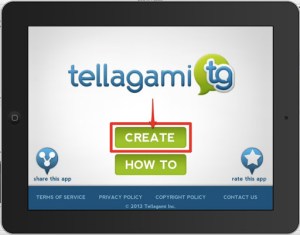
A couple of years back I wrote about a really nice web based tool called Xtranormal and since then I’ve heard from so many teachers saying how useful their students have found it, so I was delighted yesterday to find that the same makes had now produced a free mobile / tablet app called Tellagami. The app runs on a mobile device and allows users to add animated speaking characters to a selection of backgrounds or to the users’ own images. You can then either use text to speech to write a script for the character, or you can record your own voice and the app will lip-synch you text to the character. This is very quick and easy to do. Here’s how.
Open the app an click on create.
Then choose your background, either from the ones provided, from your own image library or you can take a photograph of wherever you are at the time.
Then you can choose the character you want to use and customise their appearance.
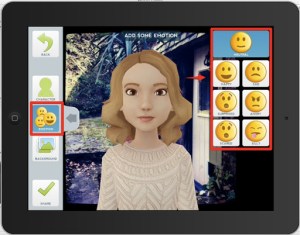
Next you can select an emotion for your character.
Lastly, you can either type in your message or record it directly onto your device. You can record up to 30 seconds of spoken audio.
Once you animation is complete you can either send it by email, share it through various social networks or just save it onto your device to show it in class.
You can complete the whole process in just a couple of minutes.
I think this is a great app to get students speaking either in the classroom, at home or while they are out and about in the world.
Some learning activities for students
Ask the students to create 4 – 5 animated images explaining their route to school.
Get students to create animated images of 4 – 5 of their favourite places around their town.
Get students to take pictures of objects and create an animated video dictionary.
Get students to talk about images of people in their family.
Create some animated images of different steps in a process (making coffee, tea etc) and then get the students to watch and put them in the correct order.
Get students to create an animated image journal by adding one new image each day.
Get students to take pictures of their favourite book covers or film posters and then record a review.
Get students to create animated video cards on special occasions.
I’m sure there are lots more activities you can think of.
What I like about Tellagami
It’s free and very easy to use.
It encourages students to speak.
It can be used effectively outside the classroom.
Students can use it to pull some aspects of their own life and experience into the classroom.
It produces very professional looking results.
Possible problems
At present it’s only available for iPhone / iPad so that limits who can use it.
So if your students have iPads / iPhones and you ant to give them motivating speaking assignments for homework, Tellagami is a great tool to use for the job.












 Eduindex

You must be logged in to post a comment.