Unfortunate happenings in West Bengal

After 34 years of Left –front rule (communist rule) in West Bengal a political change took place in 2011 in the State. The people of West Bengal expected lots of development from the new government under the leadership of Mamata Banerjee, the first woman Chief Minister of the State.   When I was in service (now retired Professor) in an organization of the Government of India for official and academic purposes I visited the State.  I observed serious unemployment, poverty, refugee issues, high density of population, low agricultural land holding, etc were the major issues in the State.  It is pertinent to mention that as per the ‘Refugee Relief and Rehabilitation Department of the Government of West Bengal, “the census figures show the number of refugees from East Pakistan in 1971 was nearly 6 million (60 lakh) and in 1981, the number was assessed at 8 million (80 lakh)”. Anyway, the people of West Bengal had lots of expectations from the present State Government but the loose -talk of some leaders, criticizing central leaders, scandals, etc., have lowered the image of the All-India Trinamool Congress (AITC/TMC). Indians always want to see a political leader should be free from all sorts of corruption and also from the loose talk. But under the AITC/TMC rule situation is different. 

I am pained to see the unfortunate happenings in the State because the State produced a number of great personalities, and great stalwarts in all the fields – cultural, religion, literature, science, and the freedom movement. The first case took place in 2014 June, “TMC MP Tapas Pal has threatened to kill opposition CPM workers and have their women raped if a single ruling party worker was attacked. The comments triggered an uproar and sparked condemnation by opposition parties with CPM demanding that the Lok Sabha Speaker take suo motu cognizance of Pal’s outburst and disqualify him. (The Times of India, 30/6/2014). Tapas Pal was a great actor and I had the opportunity to watch many movies acted by him but after such a statement I was dejected.   Another highly deplorable issue is that after the Assembly elections in West Bengal (2021), many violent incidents took place in different forms which did not happen recently in any State assembly elections but the worst things happened after the Assembly election in West Bengal. Now worst case in the State is the ‘Teachers recruitment scam’ which cannot be imagined in a culturally developed State like West Bengal. Thanks to Calcutta High Court otherwise probably 10th failed persons would have got teachers’ jobs by paying bribes to the ruling party leaders. I am presenting here a case, Trinamul Congress youth leader Kuntal Ghosh, who was arrested by the Enforcement Directorate (ED) on 21 January 2023, told media persons on Wednesday (25/01/23) that “he is confident that someday the masterminds of the scam will be arrested. Corruption is sky-high. Let there be a proper investigation and everything will be revealed. The names of the masterminds in the matter will surface. It will be revealed who is guilty and who is not. A grand conspiracy has been hatched in the matter, which is the biggest in recent times.  However, he did not specify who these ‘masterminds’ are” (The Statesman, 26/01/23).  It is pertinent to mention here that on 23 July 2022, former Education Minster of the State Partha Chatterjee was arrested by the Enforcement Directorate in connection with the alleged State School Service Commission (SSC) recruitment scam cases along with his aide actress Arpita Mukherjee. We all know crores and crores of rupees were recovered. Another corrupt leader of TMC is Anubrata Mandal and I am simply quoting India TV( 11/08/22)  “Who is Anubrata Mondal: Bengal’s ‘Bahubali’ politician and trusted aide of Mamata. Mondal (62), who is presently TMC’s Birbhum district president and member of the party’s national working committee, rose to prominence in the 11 years of the TMC regime in Bengal, mostly for his audacious statements and browbeating”. Such types of leaders are dominating the TMC/AITC. While watching TV discussions, I observed some TMC representatives, refer to law and order or corruption cases of a few ‘BIMARU’ States but they should remember how the States, of the South of India, have been developing. Many persons from other parts of India including West Bengal for employment, medical treatment, and education are coming to the States of South India. Anyway, even some Calcutta High Court judges are also facing problems. Justice Rajasekhar Mantha and Justice Abhijit Gangopadhyay of Calcutta High Court were criticized by TMC leaders for their judgment. It seems some TMC leaders desired corruption, scams, etc., should not be highlighted by the judges. Recent incidents with Indian Secular Front (ISF) MLA, Naushad Siddique were very unfortunate and deplorable. It seems TMC  leaders do not want ISF should emerge as a big political party.   Lastly, my personal opinion is that among the Chief Ministers of West Bengal, the real and productive development took place during the legendary physician and the second Chief Minister of West Bengal, Dr. Bidhan Chandra Roy popularly known as Dr. B.C. Roy’s regime. He had done highly positive politics and developed the State as a sequel the State reached its zenith in those days. 

Dr Shankar Chatterjee, Hyderabad

Unfortunate happenings in West Bengal

After 34 years of Left –front rule (communist rule) in West Bengal a political change took place in 2011 in the State. The people of West Bengal expected lots of development from the new government under the leadership of Mamata Banerjee, the first woman Chief Minister of the State.   When I was in service (now retired Professor) in an organization of the Government of India for official and academic purposes I visited the State.  I observed serious unemployment, poverty, refugee issues, high density of population, low agricultural land holding, etc were the major issues in the State.  It is pertinent to mention that as per the ‘Refugee Relief and Rehabilitation Department of the Government of West Bengal, “the census figures show the number of refugees from East Pakistan in 1971 was nearly 6 million (60 lakh) and in 1981, the number was assessed at 8 million (80 lakh)”. Anyway, the people of West Bengal had lots of expectations from the present State Government but the loose -talk of some leaders, criticizing central leaders, scandals, etc., have lowered the image of the All-India Trinamool Congress (AITC/TMC). Indians always want to see a political leader should be free from all sorts of corruption and also from the loose talk. But under the AITC/TMC rule situation is different. 

I am pained to see the unfortunate happenings in the State because the State produced a number of great personalities, and great stalwarts in all the fields – cultural, religion, literature, science, and the freedom movement. The first case took place in 2014 June, “TMC MP Tapas Pal has threatened to kill opposition CPM workers and have their women raped if a single ruling party worker was attacked. The comments triggered an uproar and sparked condemnation by opposition parties with CPM demanding that the Lok Sabha Speaker take suo motu cognizance of Pal’s outburst and disqualify him. (The Times of India, 30/6/2014). Tapas Pal was a great actor and I had the opportunity to watch many movies acted by him but after such a statement I was dejected.   Another highly deplorable issue is that after the Assembly elections in West Bengal (2021), many violent incidents took place in different forms which did not happen recently in any State assembly elections but the worst things happened after the Assembly election in West Bengal. Now worst case in the State is the ‘Teachers recruitment scam’ which cannot be imagined in a culturally developed State like West Bengal. Thanks to Calcutta High Court otherwise probably 10th failed persons would have got teachers’ jobs by paying bribes to the ruling party leaders. I am presenting here a case, Trinamul Congress youth leader Kuntal Ghosh, who was arrested by the Enforcement Directorate (ED) on 21 January 2023, told media persons on Wednesday (25/01/23) that “he is confident that someday the masterminds of the scam will be arrested. Corruption is sky-high. Let there be a proper investigation and everything will be revealed. The names of the masterminds in the matter will surface. It will be revealed who is guilty and who is not. A grand conspiracy has been hatched in the matter, which is the biggest in recent times.  However, he did not specify who these ‘masterminds’ are” (The Statesman, 26/01/23).  It is pertinent to mention here that on 23 July 2022, former Education Minster of the State Partha Chatterjee was arrested by the Enforcement Directorate in connection with the alleged State School Service Commission (SSC) recruitment scam cases along with his aide actress Arpita Mukherjee. We all know crores and crores of rupees were recovered. Another corrupt leader of TMC is Anubrata Mandal and I am simply quoting India TV( 11/08/22)  “Who is Anubrata Mondal: Bengal’s ‘Bahubali’ politician and trusted aide of Mamata. Mondal (62), who is presently TMC’s Birbhum district president and member of the party’s national working committee, rose to prominence in the 11 years of the TMC regime in Bengal, mostly for his audacious statements and browbeating”. Such types of leaders are dominating the TMC/AITC. While watching TV discussions, I observed some TMC representatives, refer to law and order or corruption cases of a few ‘BIMARU’ States but they should remember how the States, of the South of India, have been developing. Many persons from other parts of India including West Bengal for employment, medical treatment, and education are coming to the States of South India. Anyway, even some Calcutta High Court judges are also facing problems. Justice Rajasekhar Mantha and Justice Abhijit Gangopadhyay of Calcutta High Court were criticized by TMC leaders for their judgment. It seems some TMC leaders desired corruption, scams, etc., should not be highlighted by the judges. Recent incidents with Indian Secular Front (ISF) MLA, Naushad Siddique were very unfortunate and deplorable. It seems TMC  leaders do not want ISF should emerge as a big political party.   Lastly, my personal opinion is that among the Chief Ministers of West Bengal, the real and productive development took place during the legendary physician and the second Chief Minister of West Bengal, Dr. Bidhan Chandra Roy popularly known as Dr. B.C. Roy’s regime. He had done highly positive politics and developed the State as a sequel the State reached its zenith in those days. 

Dr Shankar Chatterjee, Hyderabad
Don’t kill it

When you least expect it, Nature has cunning ways of findings our weakest spot. Just remember: I’m here. Right now you may not want to feel anything; may you never want to feel anything. And maybe it’s not me that you will want to speak about these things but, Feel something you did.
Look… You had a beautiful friendship, maybe more than a friendship, and envy you. In my place, most guardians would hope the…..

http://myblogbriefcase.blogspot.com/2023/01/dont-kill-it.html

You can read the whole blog on given link.

Stock market highlights. Will it crash?

Benchmark equity indices BSE Sensex and NSE Nifty extended their losses for the second straight session on 27th January amid heavy selling in index heavyweights including Reliance Industries, Adani Enterprises and Adani Ports among others. The 30-share index Sensex traded over 1,800 points down at 59,108  against the 60,978.75 mark on January 24, 2023. Likewise, the 50-share NSE Nifty index retreated more than 550 points to 17,566 from 18,118 during the same period.

Selloff in Adani Group companies’ stocks, that was triggered by the Hindenburg Research report, which disclosed that the company was short on Adani Group companies could be factor behind the market crash. Sentiments came under pressure after the United Nations on 25th January cut down India’s growth forecast by 20 basis points to 5.8 per cent for the ongoing calendar year due to higher interest rates and risks of recession in the developed world weighing on investment and exports.

If you wish to learn more about stock market, then explore wiki-360.com

What is options trading?

Photo by Ivan Babydov on Pexels.com

An investor’s portfolio consists of various financial instruments like stocks, exchange traded funds (ETFs), mutual funds and bonds. However, the Options are altogether different. Options are used in different ways depending upon investors’ goals and how they plan to use them. Investors often use options to reduce the risk associated with the stock they have in their portfolio. Similarly, others may use options to earn additional income. Most importantly, options provide an opportunity to traders or investors to benefit from the price movement without paying the full price of a security or taking delivery.

In India, the National Stock Exchange (NSE) launched index options on 4 June 2001, and stock options were launched on 4 July 2001. In the year 2020, NSE also surpassed America’s Chicago Mercantile Exchange to become the world’s largest derivatives market exchange by volume.

What are options?

Options are defined as derivatives instruments that enable the buyer (holder or owner) of the instrument to buy or sell the underlying asset. The right to buy or sell is without any obligation. The seller of the option is, however, obligated to buy or sell, should the buyer exercise his or her right. 

Simply put, option trading includes: 

  • A right to buy or sell, but not an obligation
  • Buy or sell at predetermined price
  • Buy or sell on or before predetermined date

Types of options

There are two types of options: Call and Put. A call option gives the buyer the right to “buy” the underlying security but not the obligation to do so at a predetermined price and date. A put option gives the buyer the right to “sell” the underlying security but not the obligation to do so at a predetermined price and date.

How does options trading work?

Before we come to the options trading guide, a beginner must understand the two essential derivativesconcepts — long and short. When a trader goes long on an index or a stock, it means he or she believes that the price of the underlying will increase. On the contrary, if the trader goes short on any index or a stock, it means he or she believes that the price of the underlying will fall.

Stock market highlights. Will it crash?

Benchmark equity indices BSE Sensex and NSE Nifty extended their losses for the second straight session on 27th January amid heavy selling in index heavyweights including Reliance Industries, Adani Enterprises and Adani Ports among others. The 30-share index Sensex traded over 1,800 points down at 59,108  against the 60,978.75 mark on January 24, 2023. Likewise, the 50-share NSE Nifty index retreated more than 550 points to 17,566 from 18,118 during the same period.

Selloff in Adani Group companies’ stocks, that was triggered by the Hindenburg Research report, which disclosed that the company was short on Adani Group companies could be factor behind the market crash. Sentiments came under pressure after the United Nations on 25th January cut down India’s growth forecast by 20 basis points to 5.8 per cent for the ongoing calendar year due to higher interest rates and risks of recession in the developed world weighing on investment and exports.

If you wish to learn more about stock market, then explore wiki-360.com

What is options trading?

Photo by Ivan Babydov on Pexels.com

An investor’s portfolio consists of various financial instruments like stocks, exchange traded funds (ETFs), mutual funds and bonds. However, the Options are altogether different. Options are used in different ways depending upon investors’ goals and how they plan to use them. Investors often use options to reduce the risk associated with the stock they have in their portfolio. Similarly, others may use options to earn additional income. Most importantly, options provide an opportunity to traders or investors to benefit from the price movement without paying the full price of a security or taking delivery.

In India, the National Stock Exchange (NSE) launched index options on 4 June 2001, and stock options were launched on 4 July 2001. In the year 2020, NSE also surpassed America’s Chicago Mercantile Exchange to become the world’s largest derivatives market exchange by volume.

What are options?

Options are defined as derivatives instruments that enable the buyer (holder or owner) of the instrument to buy or sell the underlying asset. The right to buy or sell is without any obligation. The seller of the option is, however, obligated to buy or sell, should the buyer exercise his or her right. 

Simply put, option trading includes: 

  • A right to buy or sell, but not an obligation
  • Buy or sell at predetermined price
  • Buy or sell on or before predetermined date

Types of options

There are two types of options: Call and Put. A call option gives the buyer the right to “buy” the underlying security but not the obligation to do so at a predetermined price and date. A put option gives the buyer the right to “sell” the underlying security but not the obligation to do so at a predetermined price and date.

How does options trading work?

Before we come to the options trading guide, a beginner must understand the two essential derivativesconcepts — long and short. When a trader goes long on an index or a stock, it means he or she believes that the price of the underlying will increase. On the contrary, if the trader goes short on any index or a stock, it means he or she believes that the price of the underlying will fall.

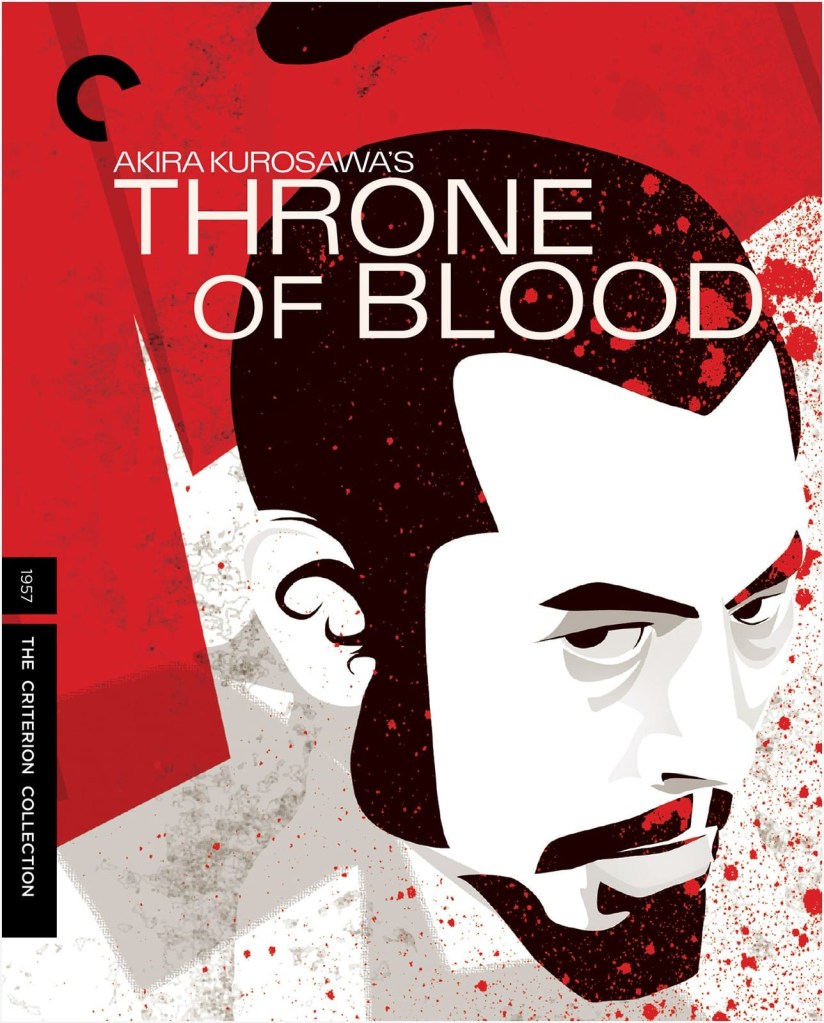
‘Macbeth’ and ‘Throne of Blood’. Does adaptation distorts original text?

Adapting material from some origin is not something new that the film industry invented. Classical Greek playwrights adapted myths that had been passed in through oral tradition. And as soon as the
cinematographers recognized that presenting a story in moving picture required “good story”, so they started adapting story from novels, plays, short stories. Robert Stam discusses different sources of hostility towards the practice of adaptation. According to him, many have long viewed literature as being superior to film. He goes on to analyze the process of adaptation and the ways in which tie and
space are used differently in the two mediums. As per his view, “fidelity in adaptation is literally impossible. A filmic adaptation is automatically different and original due to the change of medium.”

(Downloaded from Google.com)

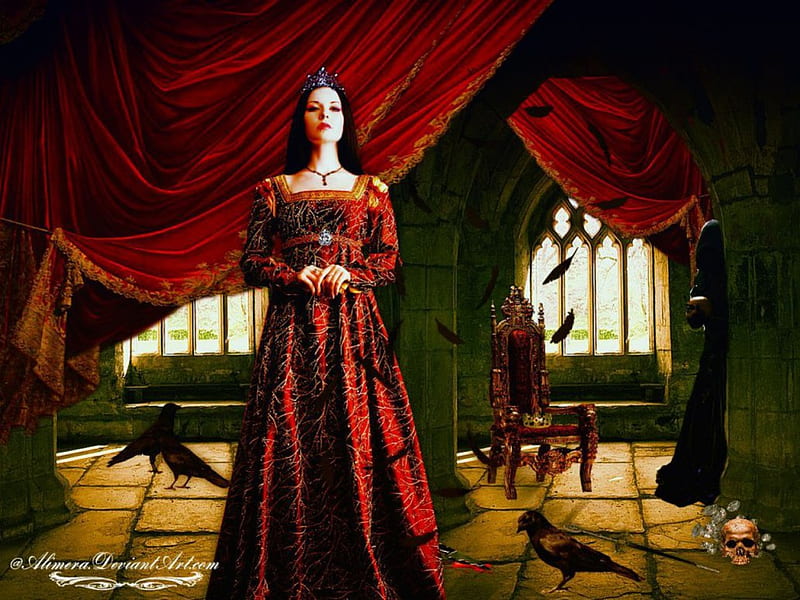
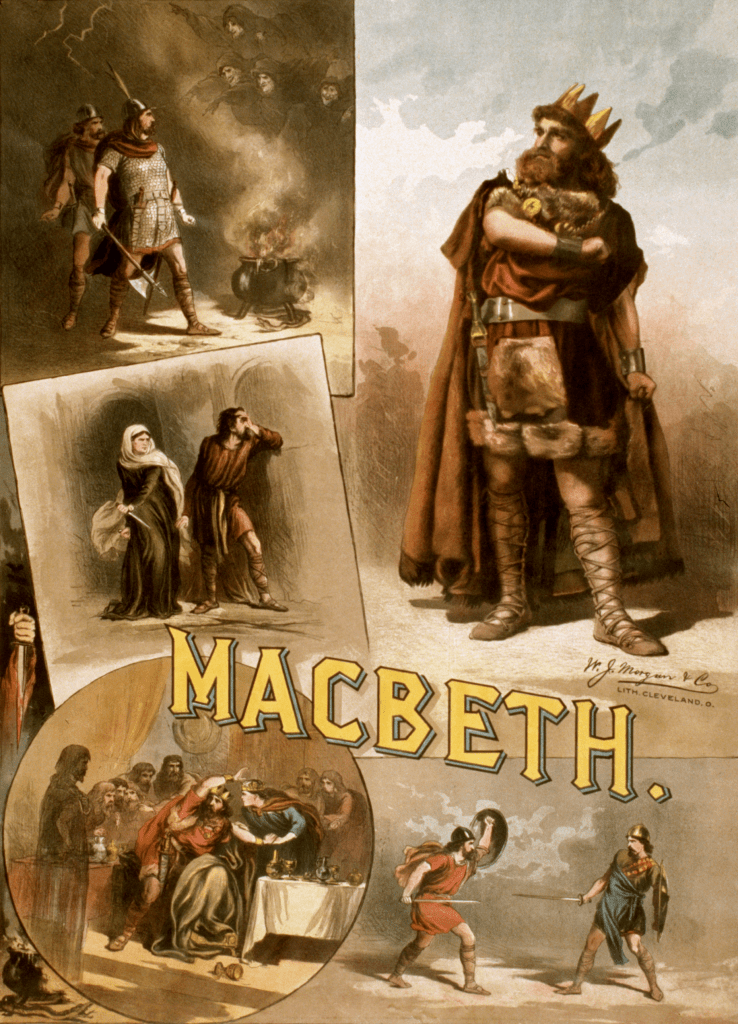
Macbeth’ is one of the finest and acclaimed works by Shakespeare. The play also has an easy to understand plot line which has lent itself to numerous adaptations.

(Downloaded from Google.com)

And one of those notable adaptations is the ‘Throne of Blood’ by Akira Kurosawa set in feudal Japan. Needless to mention that the central themes of the movie consist of tragedy, treachery, credulity and fallacy. However, to commence with the dissimilarities between the play Macbeth and Kurosawa’s movie, one among the other possible differences is their depictions of the battle at the opening stages of the plot.

(Downloaded from Google.com)

The play Macbeth opens with grotesque imagery of the revolt, and the weather all muddles up, as informed by the witches seen in medias res (amidst) of their conversation. The captain reporting about the battle even describes Macbeth as unseeming one of his opponents. This type of gory imagery, however, is nowhere to be found at the start of Kurosawa’s film ‘Throne of Blood’,

(Downloaded from Google.com)

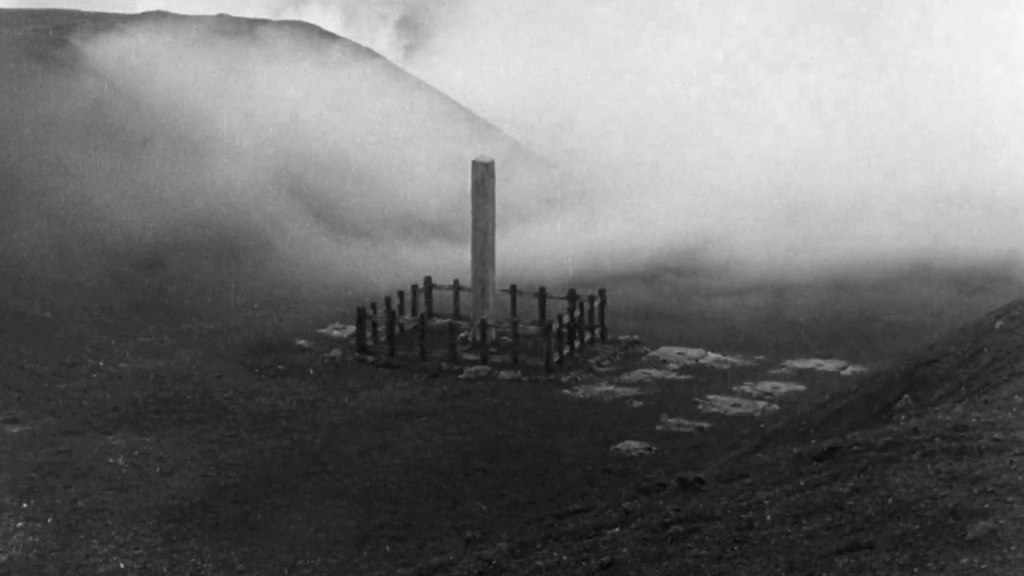
instead it opens with the vast fog with a seemingly deserted and peaceful castle depicted behind the fog with a lamenting song, “Look upon the ruins of the castle of delusion haunted…”. It also features various captains reporting about the battle, but there are no depictions about the battle. The use of fog and the lack of violence, in the opening scene, set an uncertain tone for the rest of the film, and Washizu is not seen killing anyone that makes his future actions even more shocking. In fact, we witness Washizu’s innocence when he strongly resists the prophecy. As wherein Macbeth, the brutal portrayal of the battle in the beginning set a violent and dark tone right away, and thus, it makes Macbeth’s future killings somewhat less surprising. The shock factor of Washizu’s actions is also due o the fact that there are no witches at the start of the movie.

(Downloaded from Google.com)

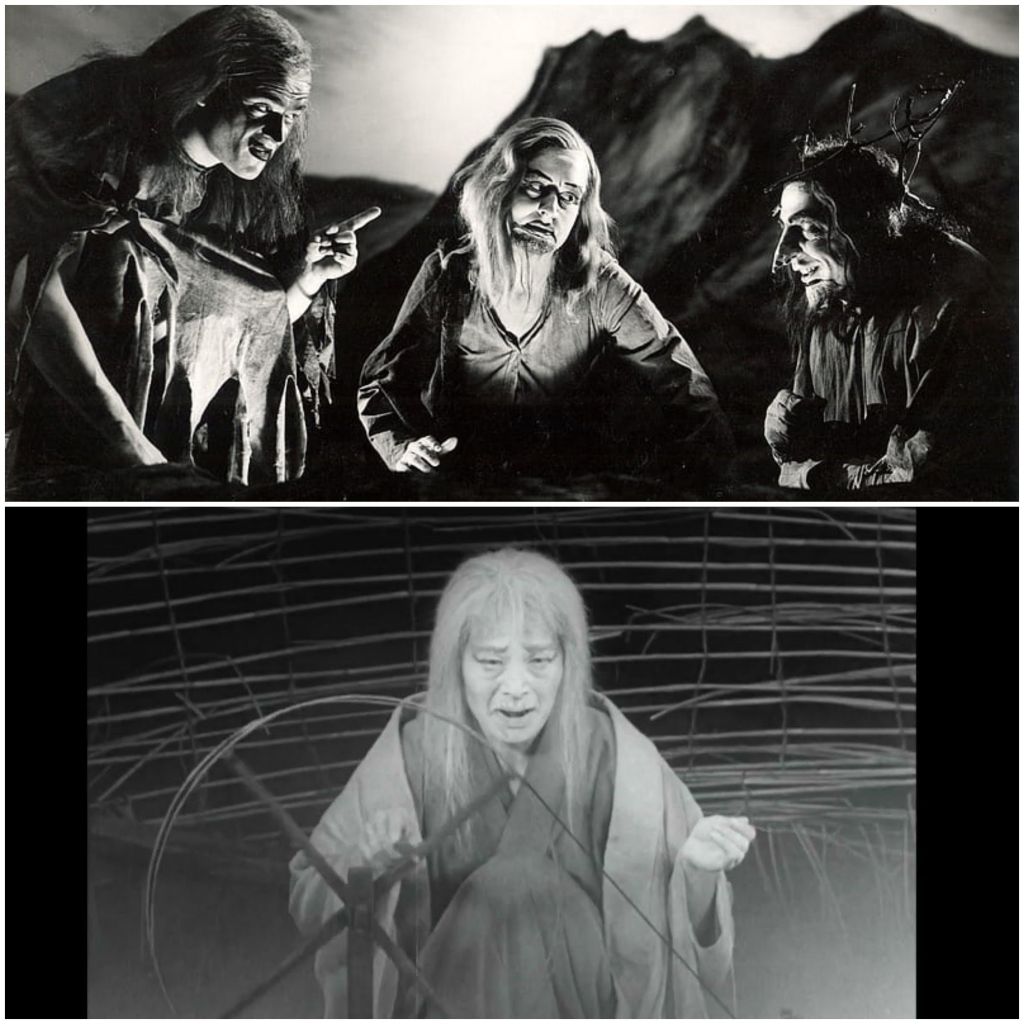
On the other hand, we encounter that the witches start the play by invoking the name of Macbeth, leaving a sense of suspicion in the mind of the reader that Macbeth may not be who he appears. In the movie, three witches are replaced with a single-spirit who is seen chanting a song that introduces Japanese traditions, Buddhism and feelings of humanity. The song mentioning karma and reincarnation comes straight from the Buddhist beliefs.

Kurosawa’s Throne of Blood and Shakespeare’s Macbeth also differ greatly in their portrayals of Lady Macbeth and Lady Asaji respectively.

(Downloaded from Google.com)

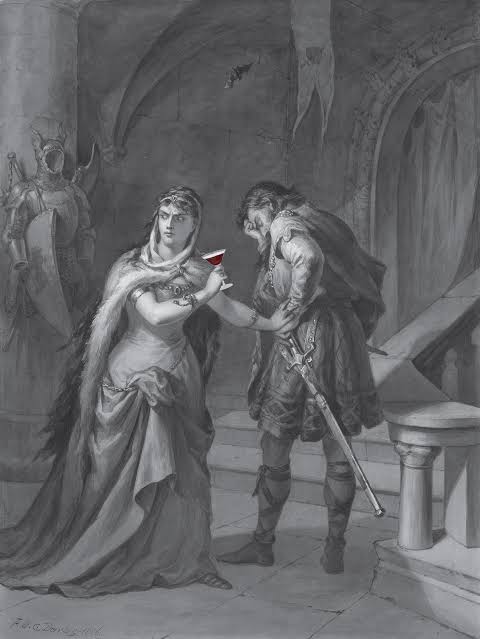
In the play, Lady Macbeth makes her presence and intentions felt in her very first moments. She states, “Fill me from the crown to the toe topful of direst cruelty. Me thick my blood. Stop up the access and passage to remorse.” This quotation by her immediately warns the reader of her growing plans of evil.

(Downloaded from Google.com)

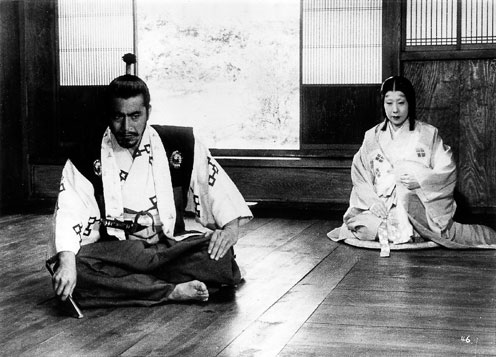
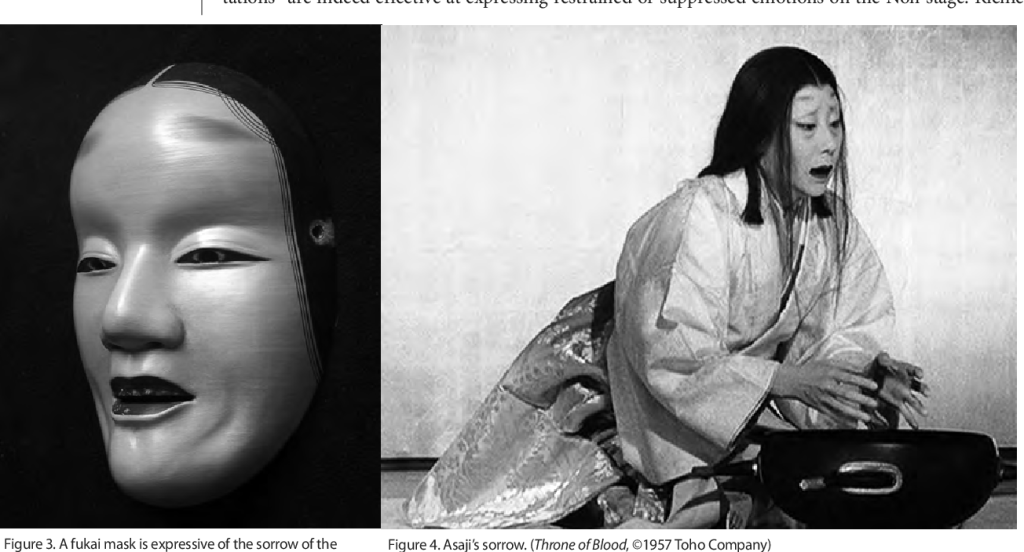
Contrarily, in the movie, Lady Asaji (the equivalent to Lady Macbeth) makes it much more subtle entrance. She is first seen sitting peacefully in Washizu’s castle appearing as submerged in deep contemplation. Throughout her attempts to convince Washizu to kill Tshuzuki, she remains completely sedentary and shows no sign of any emotion, unlike Lady Macbeth who passionately uses strong imagery and vehement speech to ty to persuade Macbeth. And Asaji’s fixed expressions portray the use of Noh mask. As far as the movie is concerned, predominantly the character of Asaji, Kurosawa has adopted the aesthetic of the Noh elements.

(Downloaded from Google.com)

It’s a cultural asset of Japanese theatre. It’s a classical form of dance-drama originated in Japan, and is popular since 14th century. There are several types of these masks used in Japanese theatre. And surprisingly, they are used by Kurosawa commendably through dramatis personae of Asaji. Director Kurosawa was overwhelmingly magnetized by Noh, “I like [Noh] because it is the real heart, the core of all Japanese drama. Its degree of compression is extreme, and it is full of symbols, full of subtlety. It is as though the actors and the audience are engaged in a kind of contest and as though this contest involves the entire Japanese cultural heritage . . . I wanted to use the way that Noh actors have of moving their bodies, the way they have of walking, and the general composition which the Noh stage provides.” (Extracted from an article by Minae Yamamoto Savas)

Lady Macbeth does not give Macbeth much of a reason to kill Duncan other than to solely attain power. Lady Asaji, on the other side, presents Washizu with the idea that Miki will inform about the prophecy to Tsuzuki that Washizu will ascend to the throne which in turn will lead to Washizu’s death at the hands of Tsuzuki. Despite her reserved nature, she is very deceptive and possesses contriving persona as she uses the prophecy of the witch to implant fear in the mind of Washizu. She also tries to justify the killing of Tsuzuki because Tsuzuki himself attained his throne by murdering someone, and also attempts to convince him that deep down Washizu himself carrying and watering the ambition to attain power, which is also the first time that she looks directly at him in the film. Lady Asaji like Lady Macbeth is a strong evil presence although she is portrayed in a much different manner.

Another difference between the movie and the play is existence of the lack of recognition of eternal ramification for Washizu’s actions in the movie, whereass, in the play, apprehension regarding the afterlife plays a prominent role in Macbeth’s psychological struggles with respect to his decision to kill Duncan.

(Downloaded from Google.com)

In Act 2, scene 1, Macbeth states, “I go, and it is done. The bell invites me. Hear it not Duncan, for it is a knell that summons thee to heaven or to hell.” He knowingly chooses temporal power on earth rather than eternal glory in heaven, a decision that he later realizes that he cannot undo which leads to his supposedly eternal damnation in hell. And in Kurosawa’s Throne of Blood, however, heaven and hell are never referred to. This is ofcourse largely because of the film’s Japanese origin. Instead, it’s Washizu’s contemplation of the goodness of his friend Miki that drives his inner conflict perpetrated by his wife.

The adaptation of literary works into films do distorts the original text. But we should not forget that these adaptations, like what Kurosawa did, are filmed establishing the text on different period of time, background, and geo-political settings. Although film was initially regarded by some as sucking the life out of a literary text, a view forcefully articulated by Theodore Dreiser in 1932, “Film adaptation of novels is not so much a belittling as a debauching process, which works harm to the mind of the entire world. For the debauching of any good piece of literature is – well, what? Criminal? Ignorant? Or both? I leave it to the reader.”


Citations

'Macbeth' and 'Throne of Blood'. Does adaptation distorts original text?

Adapting material from some origin is not something new that the film industry invented. Classical Greek playwrights adapted myths that had been passed in through oral tradition. And as soon as the
cinematographers recognized that presenting a story in moving picture required “good story”, so they started adapting story from novels, plays, short stories. Robert Stam discusses different sources of hostility towards the practice of adaptation. According to him, many have long viewed literature as being superior to film. He goes on to analyze the process of adaptation and the ways in which tie and
space are used differently in the two mediums. As per his view, “fidelity in adaptation is literally impossible. A filmic adaptation is automatically different and original due to the change of medium.”

(Downloaded from Google.com)

Macbeth’ is one of the finest and acclaimed works by Shakespeare. The play also has an easy to understand plot line which has lent itself to numerous adaptations.

(Downloaded from Google.com)

And one of those notable adaptations is the ‘Throne of Blood’ by Akira Kurosawa set in feudal Japan. Needless to mention that the central themes of the movie consist of tragedy, treachery, credulity and fallacy. However, to commence with the dissimilarities between the play Macbeth and Kurosawa’s movie, one among the other possible differences is their depictions of the battle at the opening stages of the plot.

(Downloaded from Google.com)

The play Macbeth opens with grotesque imagery of the revolt, and the weather all muddles up, as informed by the witches seen in medias res (amidst) of their conversation. The captain reporting about the battle even describes Macbeth as unseeming one of his opponents. This type of gory imagery, however, is nowhere to be found at the start of Kurosawa’s film ‘Throne of Blood’,

(Downloaded from Google.com)

instead it opens with the vast fog with a seemingly deserted and peaceful castle depicted behind the fog with a lamenting song, “Look upon the ruins of the castle of delusion haunted…”. It also features various captains reporting about the battle, but there are no depictions about the battle. The use of fog and the lack of violence, in the opening scene, set an uncertain tone for the rest of the film, and Washizu is not seen killing anyone that makes his future actions even more shocking. In fact, we witness Washizu’s innocence when he strongly resists the prophecy. As wherein Macbeth, the brutal portrayal of the battle in the beginning set a violent and dark tone right away, and thus, it makes Macbeth’s future killings somewhat less surprising. The shock factor of Washizu’s actions is also due o the fact that there are no witches at the start of the movie.

(Downloaded from Google.com)

On the other hand, we encounter that the witches start the play by invoking the name of Macbeth, leaving a sense of suspicion in the mind of the reader that Macbeth may not be who he appears. In the movie, three witches are replaced with a single-spirit who is seen chanting a song that introduces Japanese traditions, Buddhism and feelings of humanity. The song mentioning karma and reincarnation comes straight from the Buddhist beliefs.

Kurosawa’s Throne of Blood and Shakespeare’s Macbeth also differ greatly in their portrayals of Lady Macbeth and Lady Asaji respectively.

(Downloaded from Google.com)

In the play, Lady Macbeth makes her presence and intentions felt in her very first moments. She states, “Fill me from the crown to the toe topful of direst cruelty. Me thick my blood. Stop up the access and passage to remorse.” This quotation by her immediately warns the reader of her growing plans of evil.

(Downloaded from Google.com)

Contrarily, in the movie, Lady Asaji (the equivalent to Lady Macbeth) makes it much more subtle entrance. She is first seen sitting peacefully in Washizu’s castle appearing as submerged in deep contemplation. Throughout her attempts to convince Washizu to kill Tshuzuki, she remains completely sedentary and shows no sign of any emotion, unlike Lady Macbeth who passionately uses strong imagery and vehement speech to ty to persuade Macbeth. And Asaji’s fixed expressions portray the use of Noh mask. As far as the movie is concerned, predominantly the character of Asaji, Kurosawa has adopted the aesthetic of the Noh elements.

(Downloaded from Google.com)

It’s a cultural asset of Japanese theatre. It’s a classical form of dance-drama originated in Japan, and is popular since 14th century. There are several types of these masks used in Japanese theatre. And surprisingly, they are used by Kurosawa commendably through dramatis personae of Asaji. Director Kurosawa was overwhelmingly magnetized by Noh, “I like [Noh] because it is the real heart, the core of all Japanese drama. Its degree of compression is extreme, and it is full of symbols, full of subtlety. It is as though the actors and the audience are engaged in a kind of contest and as though this contest involves the entire Japanese cultural heritage . . . I wanted to use the way that Noh actors have of moving their bodies, the way they have of walking, and the general composition which the Noh stage provides.” (Extracted from an article by Minae Yamamoto Savas)

Lady Macbeth does not give Macbeth much of a reason to kill Duncan other than to solely attain power. Lady Asaji, on the other side, presents Washizu with the idea that Miki will inform about the prophecy to Tsuzuki that Washizu will ascend to the throne which in turn will lead to Washizu’s death at the hands of Tsuzuki. Despite her reserved nature, she is very deceptive and possesses contriving persona as she uses the prophecy of the witch to implant fear in the mind of Washizu. She also tries to justify the killing of Tsuzuki because Tsuzuki himself attained his throne by murdering someone, and also attempts to convince him that deep down Washizu himself carrying and watering the ambition to attain power, which is also the first time that she looks directly at him in the film. Lady Asaji like Lady Macbeth is a strong evil presence although she is portrayed in a much different manner.

Another difference between the movie and the play is existence of the lack of recognition of eternal ramification for Washizu’s actions in the movie, whereass, in the play, apprehension regarding the afterlife plays a prominent role in Macbeth’s psychological struggles with respect to his decision to kill Duncan.

(Downloaded from Google.com)

In Act 2, scene 1, Macbeth states, “I go, and it is done. The bell invites me. Hear it not Duncan, for it is a knell that summons thee to heaven or to hell.” He knowingly chooses temporal power on earth rather than eternal glory in heaven, a decision that he later realizes that he cannot undo which leads to his supposedly eternal damnation in hell. And in Kurosawa’s Throne of Blood, however, heaven and hell are never referred to. This is ofcourse largely because of the film’s Japanese origin. Instead, it’s Washizu’s contemplation of the goodness of his friend Miki that drives his inner conflict perpetrated by his wife.

The adaptation of literary works into films do distorts the original text. But we should not forget that these adaptations, like what Kurosawa did, are filmed establishing the text on different period of time, background, and geo-political settings. Although film was initially regarded by some as sucking the life out of a literary text, a view forcefully articulated by Theodore Dreiser in 1932, “Film adaptation of novels is not so much a belittling as a debauching process, which works harm to the mind of the entire world. For the debauching of any good piece of literature is – well, what? Criminal? Ignorant? Or both? I leave it to the reader.”


Citations

“Earth’s core may spin in opposite direction” says expert

The study published in Nature Geoscience states that the globally consistent pattern suggests that inner-core rotation has recently paused. The rotation came to a grinding halt in 2009 and then it surprisingly turned in an opposite direction. Researchers have long believed that the inner core rotates, relative to the Earth’s surface, back and forth, like a swing.

“This globally consistent pattern suggests that inner-core rotation has recently paused,” they wrote. “We show surprising observations that indicate the inner core has nearly ceased its rotation in the recent decade and may be experiencing a turning-back.”

With a radius of almost 2,200 miles, Earth’s core is about the size of Mars. It consists mostly of iron and nickel, and contains about one-third of Earth’s mass.

"Earth's core may spin in opposite direction" says expert

The study published in Nature Geoscience states that the globally consistent pattern suggests that inner-core rotation has recently paused. The rotation came to a grinding halt in 2009 and then it surprisingly turned in an opposite direction. Researchers have long believed that the inner core rotates, relative to the Earth’s surface, back and forth, like a swing.

“This globally consistent pattern suggests that inner-core rotation has recently paused,” they wrote. “We show surprising observations that indicate the inner core has nearly ceased its rotation in the recent decade and may be experiencing a turning-back.”

With a radius of almost 2,200 miles, Earth’s core is about the size of Mars. It consists mostly of iron and nickel, and contains about one-third of Earth’s mass.

Foreign universities to enter in India.

The University Grants Commission (UGC) announced on January 05th 2023 the draft regulations for ‘Setting up and Operation of Campuses of Foreign Higher Educational Institutions in India’. This is in pursuance of the New Educational Policy 2020, which stipulates that, “A legislative framework facilitating such entry will be put in place, and such universities will be given special dispensation regarding regulatory, governance, and content norms on par with other autonomous institutions of India”

Establishing universities and campuses is a challenging proposition, not to mention developing courses, creating research facilities, hiring faculty workers and relocating international workers, among other considerations. On the other hand, despite the glamour of foreign universities, the cost factor will pose a challenge to them. It is also doubtful that the campuses set up by them in India will match the original campus back home in their home country.

Foreign universities to enter in India.

The University Grants Commission (UGC) announced on January 05th 2023 the draft regulations for ‘Setting up and Operation of Campuses of Foreign Higher Educational Institutions in India’. This is in pursuance of the New Educational Policy 2020, which stipulates that, “A legislative framework facilitating such entry will be put in place, and such universities will be given special dispensation regarding regulatory, governance, and content norms on par with other autonomous institutions of India”

Establishing universities and campuses is a challenging proposition, not to mention developing courses, creating research facilities, hiring faculty workers and relocating international workers, among other considerations. On the other hand, despite the glamour of foreign universities, the cost factor will pose a challenge to them. It is also doubtful that the campuses set up by them in India will match the original campus back home in their home country.

Indian army to get jetpack suits.

In a bid to modernise and upgrade its capabilities, the Indian Army is seeking to acquire jetpack suits and robotic mules through fast-track procedures for emergency procurements under the Buy Indian category.

The Army has floated Request for Proposal (RFP) for 48 jetpacks with modern propulsion system including Turbine engines, Electric and Hybrid systems.

Jet Pack suit is a turbine based individual mobility platform, which can lift a man safely across varied terrain.

The suit must provide controls for safe ascent, safe descent, take off and landing and movement in all directions, the Army said in the RFP document.

Indian army to get jetpack suits.

In a bid to modernise and upgrade its capabilities, the Indian Army is seeking to acquire jetpack suits and robotic mules through fast-track procedures for emergency procurements under the Buy Indian category.

The Army has floated Request for Proposal (RFP) for 48 jetpacks with modern propulsion system including Turbine engines, Electric and Hybrid systems.

Jet Pack suit is a turbine based individual mobility platform, which can lift a man safely across varied terrain.

The suit must provide controls for safe ascent, safe descent, take off and landing and movement in all directions, the Army said in the RFP document.

5 billion people exposed to trans fat : WHO report.

Five billion people globally are exposed to harmful trans fat, increasing their heart disease and death risk, according to a new report by the World Health Organization (WHO).

At this point, 43 countries have put best-practice regulations against trans fat in food, covering 2.8 billion people worldwide, showed the Countdown to 2023 – WHO report on global trans fat elimination, released January 23, 2023.

However, despite significant progress, this still exposes five billion people to the devasting health effects of trans fat, making the 2023 target unattainable.

The World Health Organization is calling for the total elimination of trans fat – responsible for over 500,000 premature deaths each year.

In its annual status report, Countdown to 2023 WHO Report on global trans fat elimination 2022, WHO says governments need to do more to ban industrially-produced fats, which clog arteries and are commonly found in cooking oils, spreads, packaged foods, and baked goods. 

5 billion people exposed to trans fat : WHO report.

Five billion people globally are exposed to harmful trans fat, increasing their heart disease and death risk, according to a new report by the World Health Organization (WHO).

At this point, 43 countries have put best-practice regulations against trans fat in food, covering 2.8 billion people worldwide, showed the Countdown to 2023 – WHO report on global trans fat elimination, released January 23, 2023.

However, despite significant progress, this still exposes five billion people to the devasting health effects of trans fat, making the 2023 target unattainable.

The World Health Organization is calling for the total elimination of trans fat – responsible for over 500,000 premature deaths each year.

In its annual status report, Countdown to 2023 WHO Report on global trans fat elimination 2022, WHO says governments need to do more to ban industrially-produced fats, which clog arteries and are commonly found in cooking oils, spreads, packaged foods, and baked goods.