The trade between India and China has touched an all-time high of USD 135.98 billion in 2022 while New Delhi’s trade deficit with Beijing crossed for the first time a USD 100 billion mark despite frosty bilateral relations, according to data released by the Chinese customs on Friday.
The total India-China trade for 2022 has climbed to 135.98 billion, overtaking the USD 125 billion mark a year earlier by registering an 8.4 per cent increase, according to the annual Chinese customs data.
1. Report gives consolidated & updated information
A report provides consolidated, factual and an up-to-date information about a particular matter or subject. Information in the report is well organized and can be used for future planning and decision making.
A report acts as an effective means of communication within the organization. It provides feedback to employees. It is prepared for the information and guidance of others connected with the matter / problem.
3. Report facilitates decision making and planning
Report provide reliable data which can be used in the planning and decision making process. It acts as a treasure house of reliable information for long term planning and decision making.
4. Report discloses unknown information
Reports provide information, which may not be known previously. The committee members collect data, draw conclusions and provide information which will be new to all concerned parties. Even new business opportunities are visible through unknown information available in the reports.
5. Report gives Information to employees
Reports are available to managers and departments for internal use. They are widely used by the departments for guidance. Report provide a feedback to employees and are useful for their self-improvement.
6. Report gives reliable permanent information
The information provided by a report is a permanent addition to the information available to the office. We have census reports (prepared since last 100 years) which are used even today for reference purpose.
7. Report facilitates framing of personnel policies
Certain reports relating to employees are useful while preparing personnel policies such as promotion policy, training policy and welfare facilities to employees.
8. Report gives information to shareholders
Some company reports are prepared every year for the benefit of shareholders. Annual report for example, is prepared and sent to all shareholders before the AGM. It gives information about the progress of the company.
9. Report gives information to the Registrar
Annual report and annual accounts are sent to the Registrar every year for information. Such reports enable the government to keep supervision on the companies.
10. Report solves current problems
Reports are useful to managers while dealing with current problems faced by the company. They provide guidance while dealing with complicated problems.
11. Report helps directors to take prompt decisions
Company reports relate to internal working of the company and are extremely useful to directors in decision making and policy framing. Reports give reliable, updated and useful information in a compact form.
A plan is a determined course of action for achieving a specific objective. An individual may prepare a plan for his journey or tour or for a family function. Similarly, a business unit may prepare a plan to achieve a particular objective. It is called a business plan which includes production plan, sales plan, and so on. A business unit prepares a master plan for the whole unit. Such master plan is again divided into departmental plans for actual execution. Planning is a process of thanking to action. It is a means to achieve well defined objectives. Business plan and business planning move together.
Planning is the primary function of management and occupies the first position in the management process. It is the starting point of the whole management process as other management functions are related to planning function. Planning, in simple words, means to decide the objectives clearly and to prepare a plan. Thereafter to take suitable steps for the execution of the plan. Planning function is performed by managers at all levels. It is deciding the objective to be achieved and taking suitable follow-up steps for achieving the same.
Planning is, now, universally accepted as a key/passport to success, progress and prosperity in business as well as in all other aspects of life. It acts as a base of all purposeful human activities. The concept of planning is old enough. Planning was advocated by Confucius almost 2500 years ago. He said “A man who does not think and plan long ahead will find trouble right at his door”. Thus, planning is the centre around which all business activities move.
In planning, various business problems are studied, decisions are taken regarding the future course of action and business activities are adjusted accordingly. Thus, planning means deciding in advance the objectives to be achieved and preparing plans/programmes for achieving them. In other words, planning is the process of foreseeing desired objectives – anticipating problems and developing solutions. It serves as a core of the whole management process.
Planning bridges the gap from where we are to where we want to go. In the absence of planning, events are left to chance. A plan is to-day’s projection for tomorrow’s activity.
2. Definitions of Planning
According to Koontz and O’Donnell, “Planning is deciding in advance what to do, how to do it, when to do it, and who is to do it. Planning bridges the gap between where we are and where we want to go. It makes it possible for things to occur which would not otherwise happen”.
According to George R Terry, “Planning is the selecting and relating of facts and the making and using of assumptions regarding the future in the visualization and formulation of purposed activities believed necessary to achieve desired results”.
According to Philip Kotler, “Planning is deciding in the present what to do in the future. It is the process whereby companies reconcile their resources with their objectives and opportunities”.
3. Need of Planning
The need of planning is universally accepted in the business as well as in other aspects of life. The following points justify the need of business planning/planning in business:
Planning is needed for survival and growth of a business unit in an orderly manner.
Planning is needed in order to face new problems/difficulties developed due to growth of markets, market competition, changes in consumer expectations and so on.
Planning is needed in order to face challenges created by changing environmental factors/forces.
Planning is needed as it acts as a pre-requisite to good management. It is needed as it is the core of the whole management process.
Planning is needed in order to achieve the objectives decided by the management. It is also needed as it ensures accuracy, economy and operational efficiency in busin6s management.
4. Importance of Planning in Business Management
The importance of planning as an element in the management process is universally accepted. It plays a positive role in the management of a business unit. Planning brings stability and prosperity to a business unit. It brings unity of purpose and diverts all efforts in one direction for the achievement of certain well defined objectives. Planning also improves the performance of a business unit. In fact, in the absence of planning there will be disorder, confusion, inefficiency, wastage of human efforts and material resources. Planning is rightly treated as the pre-requisite to efficient management. The fact that large majority of business units use planning as a tool of management indicates its utility and importance. Planning brings safety to business operations. It is the only way for survival in the competitive business world.
Planning is important as it is more than a mere theoretical exercise or paperwork. It has practical utility and creative value. Planning is also a rational and intelligent activity. It is, now, rightly treated as a highly professionalized aspect of business management.
Planning is important but planning alone is not adequate. It should be supplemented by suitable follow-up actions on the part of managers. Planning may not be able to solve all managerial problems, but it certainly helps the thoughtful managers in overcoming various managerial problems. A plan will remain on paper if suitable follow-up steps are not taken at different levels for its execution. Thus, planning is a means and not the end in itself
5. Advantages of Planning
Facilitates quick achievement of objectives: Planning facilitates quick achievement of business objectives. In the planning process, the objectives to be achieved are clearly decided / finalised and plans are prepared and executed for achieving such well defined objectives. Planning ensures achievement of objectives in an orderly and quick manner.
Brings unity of purpose and direction: Planning brings unity of purpose and direction before the entire organisation as it is for achieving certain well defined goals. Planning diverts all resources in one direction for achieving well defined objectives.
Ensures full utilisation of resources: Planning ensures effective/maximum utilisation of available human and material resources. It eliminates wastages of all kinds (of material resources and human efforts) and this ensures fuller utilisation of available resources.
Avoids inconsistency in efforts: Planning avoids inconsistency in efforts and also avoids possible frictions and duplications. It ensures economy in business operations.
Raises competitive capacity/strength: Planning raises competitive potentialities of a business unit. It enables a business unit to stand with confidence in a competitive market. It keeps ready solutions for possible problems and enables a business unit to function with confidence.
Promotes managerial efficiency: Planning promotes managerial efficiency. It covers all managerial functions and helps management to execute future programmes in a systematic manner. It makes managerial direction and control effective.
Avoids hasty decisions and actions: Due to planning, hasty decisions and haphazard actions by managers are avoided. It also encourages systematic thinking by the managers. Planning facilitates effective delegation of authority, removes communication gaps and thereby raises overall efficiency. It even encourages innovative thinking among managers.
Ensures effective control on the Organisation: Planning ensures effective control on the whole organisation. It fixes targets in clear terms and draws plans and programmes for achieving them. This facilitates effective control on the functioning of the business unit.
Acts as an insurance against future uncertainties: Planning acts as an insurance against future uncertainties. It takes care of all business uncertainties. In fact, in planning, future problems and situations are studied in advance and alternative solutions are kept ready. This enables management to face any type of critical situation with ease and confidence.
Facilitates other managerial functions: Planning facilitates other managerial functions. It is the basic managerial function and other managerial functions such as organising, etc. move as per the plans prepared. It acts as a motivating force behind other managerial functions.
Improves motivation: Planning facilitates participation of managers and workers in the normal functioning of an enterprise. It develops team spirit and raises morale and motivation of employees. Workers know what is expected from them. This ensures high degree of efficiency from them. Planning also provides training to managers. It serves as a tool for manpower development in an Organisation.
Planning ensures survival, stability and progress of a business unit.
Ensures uniform decision-making.
Acts as a key to solve problems and challenges faced by a business unit.
Sets performance standards for functional departments.
Planning enables a business unit to adjust itself with ever changing business environment.
6. Limitations of Planning
Time-consuming and costly: It is argued that planning is a lengthy process as it involves collection of data, forecast, research and analysis. Similarly, planning is essentially the job of highly paid experts. As a result, planning is a time-consuming and costly activity. Only large firms can undertake planning due to heavy cost and lengthy procedure involved in it.
Ineffective due to environmental changes: Business environment changes frequently and plans are required to be adjusted as per the changes in the situation through suitable modifications. However, such revision/modification creates a number of problems. Such adjustments in the operational plan are always costly, time-consuming.
Dangers of unreliable data: Planning needs accurate data from internal and external sources. The quality of planning depends on such accurate feedback. If the information supplied by various departments is unreliable, the planning process will be adversely affected. Planning based on incomplete information may prove to be even dangerous. In brief, plans based on unreliable data are not useful /effective. Securing reliable information is always difficult and this brings deficiencies in the entire planning process.
Encroachment on individual freedom and initiative: Planning is a centralized process. At the lower levels, plans are to be executed as per the directives issued. This affects individual freedom and initiative at the lower levels. Employees at the lower levels act as instruments for the execution of plan prepared by the top level managers. People are asked to become cogs in the machine with little scope for initiative or independent thinking.
Delays actions: Planning is a lengthy process. As a result, the actions to be taken for execution are delayed. Planning is not useful when quick decisions and actions are required.
Unsuitable to small firms: Small firms prefer to function without long term comprehensive planning as they find planning rather costly and time-consuming. They prefer to face the situations as they come. Similarly, quick decisions and prompt actions are necessary in the case of certain business activities. Here, long term planning is not suitable.
Limited practical value: It is argued that planning is too theoretical and has limited practical utility. Planning takes long time for preparation and the situation changes when such plans are ready for execution. Planning for example, is not suitable in the case of speculative business. It is also not useful for taking quick benefits of business opportunities. In brief, planning has limited practical value.
No guarantee of expected results: Planning is for achieving certain well defined objectives. However, there is no guarantee that the objectives will be achieved within the specific time limit by using planning as a tool. Actual performance may not be as per the expectation due to various reasons. Thus planning has an element of uncertainty. Planning leads to probable results and not the expected results. It gives benefits but may not be exactly as per the expectation. Thus, there is no guarantee that planning will give 100 per cent positive/expected results.
Generates frustration: At the lower levels, plans are imposed on the employees. No consideration is given to their difficulties, views and opinions. The targets may be too ambitious and the employees may not be able to achieve them in spite of best efforts. This leads to frustration among employees at lower levels.
Involves huge paper work: Planning involves huge paper work in the preparation of master plan and departmental plans.
Danger of overdoing: Sometimes, planners overload the work. Elaborate reports are prepared without practical utility.
The advantages of planning are more important/significant while its limitations are few and also not of serious nature. Moreover, these limitations can be minimized. The practical utility of planning is universally accepted. It is not fair to give up the concept of planning due to certain limitations. The better alternative is to make it more effective, purposeful and result oriented.
7. Steps in Planning Process
Planning is a lengthy process which moves gradually and step by step approach is usually adopted. These steps are like stations in the journey of planning process. Usual steps in the planning process are as briefly explained below:
Classifying the problems: The planning process starts with clear understanding and classifying business problems faced by a business unit. Identification of problems or opportunities by managers justifies the need for action. It is like the diagnosis of the health problem of a patient by his doctor. Planners have to understand the problems of the Organisation first and, then, prepare a plan to deal with the problems in the light of the prevailing business environment.
Determining the objectives: In this second stage in the planning process, the planners decide the overall objectives to be achieved. Planning is always for achieving certain well defined objectives and naturally objectives must be spelt out precisely. Objectives act as pillars of the entire planning process. Business objectives may be decided in terms of profit, sales, production or market reputation. Objectives may be defined in quantitative or qualitative terms.
Collecting complete information and data: The planners have to collect information relating to problems facing the business unit. Such information is necessary and useful for analyzing the problems in depth and also for accuracy in planning. Information can be collected from internal and external sources. Reliable, updated and adequate data make planning process result-oriented.
Analyzing and classifying the information: At this stage, the information collected is analyzed and interpreted systematically for drawing specific conclusions. This facilitates purposeful use of information, while preparing alternative plans. Irrelevant information can be discarded through such analysis.
Establishing planning premises: Planning premises are various assumptions and predictions about the future business situation. Such premises act as background for planning activities. The planning premises are expected to supply relevant facts, information and data on the basis of which forecasts are prepared and future trends are indicated. Planning premises reduce uncertainties in the planning process. Planning premises are three in number viz., (a) Controllable permises, (b) Semi-controllable permises, and (c) Uncontrollable premises.
Determining alternative plans: Here, the planners prepare and keep ready alternative plans suitable for use under different situations. The best among the available alternative plans is used for actual execution. The preparation of alternative plans is essential as one plan is normally not adequate under all types of situations. It is a type of stand-by arrangement useful for meeting any emergency situation.
Selecting operating plan and preparing derivative plans: After study of the business environment and the alternative plans available, the planners select the best plan for actual execution. This decision is a delicate one and must be made with proper care. After the selection of operating plan, the planners have to prepare derivative plans. Such plans are related to different departments/activities and constitute sub-sections of the operating plan. The division of overall plan into derivative plans is necessary for effective execution.
Arranging timing and sequence of operations: Timing involves fixation of starting and finishing time for each job or piece of work. Sequence of operations ensures proper flow of work. This step in planning process is important as it brings coordination in the activities of different departments. The timings and sequence of operations must be communicated to concerned departments, managers and staff for implementation of the plan.
Securing participation of employees: Planning needs willing participation of all employees and departments. For this, information regarding the operative plan should be given to employees well in advance. Here, the internal communication system should be used extensively. For such participation, employees should be associated with the planning process.
Follow-up of the proposed plan: The purpose of follow-up is to make periodical review of the execution process. It is useful for understanding actual progress and deficiencies in the process of execution of the plan. This also facilitates adoption of suitable remedial measures as and when required.
India celebrates Army Day on January 15 every year to commemorate the achievements of the first Indian Commander in Chief of the Indian Army — General (later Field Marshal) K.M. Cariappa.
On this day, Cariappa, who led Indian forces to victory in the 1947 war, took over the command of the Indian Army from General Sir FRR Bucher, the last British Commander-in-Chief in 1949 and became the first Indian Commander-in-Chief of Independent India. The Army Day is celebrated every year to honour Cariappa and the defence forces.
As part of an initiative to take major events to other parts of the country, away from the national capital region, the 75th Army Day will be held in Bengaluru this year.
The rationale behind the move is to bring about increased visibility of these events and secure greater engagement with the local population.
India celebrates Army Day on January 15 every year to commemorate the achievements of the first Indian Commander in Chief of the Indian Army — General (later Field Marshal) K.M. Cariappa.
On this day, Cariappa, who led Indian forces to victory in the 1947 war, took over the command of the Indian Army from General Sir FRR Bucher, the last British Commander-in-Chief in 1949 and became the first Indian Commander-in-Chief of Independent India. The Army Day is celebrated every year to honour Cariappa and the defence forces.
As part of an initiative to take major events to other parts of the country, away from the national capital region, the 75th Army Day will be held in Bengaluru this year.
The rationale behind the move is to bring about increased visibility of these events and secure greater engagement with the local population.
Regarding rights in the modern era, every Indian woman needs to be aware of a few legal rights. There are plenty of laws protecting women in India. For the protection and advancement of women, our constitution grants them exclusive rights.
Indian women rights history:
During the early Vedic era, women and men were treated equally in all aspects of their lives. Women may have received an education during the early Vedic era, according to the writings of ancient Indian grammarians like Patanjali and Katyayana. In a practise known as swayamvar or a live-in relationship known as Gandharva marriage, Rigvedic verses imply that women married at an advanced age and were likely free to choose their own husbands.
The modern laws to look in today’s world are:
Right to maintenance
As long as she doesn’t remarry, a married woman is entitled to get maintenance from her ex-husband, which includes the necessities of life like food, clothing, shelter, and access to healthcare. Except when the wife is living in adultery or refuses to live with her husband without a good reason, Section 125 of the Code of Criminal Procedure, 1973, requires the husband to support his divorced wife.
Right to equal pay
Our laws are now gender-neutral. Equal remuneration for equal work is due to both men and women. The same is provided for by the Equal Remuneration Act. It guarantees equal pay for equal work for both male and female employees. There won’t be any gender discrimination in the context of hiring practises or working conditions.
Right to dignity and decency
Women’s rights include decency and dignity. Anyone who tries to harm her modestly is regarded as a sinner, and the law very good mandates punishment for such behaviour. Each and every woman has the right to live in dignity, free from intimidation, compulsion, violence, and prejudice. The criminal code outlines the penalties for offences against women such as sexual harassment (Section 354), assault with the intent to strip her naked or violate her sense of modesty (Section 354), voyeurism (Section 354), stalking (354D), etc.
Rights at workplace
You have a right to have a female restroom where you work. At places, with more than 30 female workers, providing facilities for care and feeding of children is mandatory. Further, the Supreme Court and the Govt. had put in to ensure the safety of women at workplaces. The Hon’ble Supreme Court in Vaisakha v. State of Rajasthan, had laid down exclusive guidelines for protection of women from Sexual Harassment at workplace, following which, the Govt. in 2013, has enacted an exclusive legislation- The Sexual Harassment of Women at Workplace (PREVENTION, PROHIBITION and REDRESSAL) Act, 2013 for that end. So, if any person at your workplace, asks you for sexual favours, or makes sexually coloured remarks and whistles looking at you or sings obscene songs looking at you, touches you inappropriately, or shows pornography, then all that will constitute Sexual Harassment and you may complain to the Internal complaints committee which is required to be constituted by the employer at each office or branch with 10 or more employees. The District Officer is also required to constitute a Local Complaints Committee at each district, and if required at the block level. Apart from this, IPC also, penalizes Sexual Harassment under 354A by providing an imprisonment of 1-3 years.
.
Right of private defence/ self-defence
It is a right of defence. When defending your body or the body of another person from the attacker, you run the risk of causing serious harm, severe harm, or even death. However, you can only kill the attacker without drawing liability or punishment if certain conditions are met. For example, if you believe the attacker is about to rape, kill, or kidnap you, lock you in a room, or throw or attempt to throw acid at you, you can kill that person and the law will protect you.
Indian gold futures hit a record high on Friday, tracking gains in overseas market, but the price rise dampened demand in the world’s second biggest consumer of the precious metal, dealers said.
Local gold futures rose to 56,245 rupees ($691.45) per 10 grams, surpassing the previous record of 56,191 rupees hit in August 2020.
Fears of recession and rising interest rates led to a fall in stock prices in the developed world. At the same time, the fall of cryptocurrencies prompted investors to move toward safe haven. That spurred the demand for gold.
Indian gold futures hit a record high on Friday, tracking gains in overseas market, but the price rise dampened demand in the world’s second biggest consumer of the precious metal, dealers said.
Local gold futures rose to 56,245 rupees ($691.45) per 10 grams, surpassing the previous record of 56,191 rupees hit in August 2020.
Fears of recession and rising interest rates led to a fall in stock prices in the developed world. At the same time, the fall of cryptocurrencies prompted investors to move toward safe haven. That spurred the demand for gold.
On Day 4 of the Start-up India Innovation Week 2023, several events were successfully conducted to boost the entrepreneurship ecosystem in the country.
Startup India with the support of Zone Startups today organized a MAARG Mentorship Masterclass for Mentors mentoring the startups in their entrepreneurial journey. MAARG (Mentorship, Advisory, Assistance, Resilience, and Growth), the National Mentorship Platform is a one stop platform to facilitate mentorship for startups across diverse sectors, functions, stages, geographies, and domains. The objective of the workshop was to equip the attendees with effective ways of mentoring startups, by enhancing their capacities and knowledge. More information on MAARG Portal can be accessed at https://maarg.startupindia.gov.in/
Startup India also organised the webinar on – “Decoding the Seed: Understanding Seed Funding Mechanism” with speakers from various prominent incubators in the country.
Kerala Startup Mission hosted KTIZ Innovation Day and a workshop for startup founders and ecosystem players to mark the occasion of National Startup Day.
Atal Incubation Centre – Pondicherry Engineering College Foundation (AIC) organised a one-day event, Puduvai Startup Sprint, a unique initiative to promote an innovative, and supportive ecosystem through pro-active initiatives. The event included knowledge sharing sessions on Startups and Team Building.
UASB Agri Innovation Center, Bengaluru, organised a series of workshops surrounding the theme ‘Role of Startups in Sustainable Agriculture’. The event included informative sessions on ‘Organic Farming for Agri Startups’, ‘Agroforestry Dependent Integrated Farming for Sustainable Income of Farmers’, and ‘Innovation in Agriculture by Startup’.
International Institute of Information Technology-Hyderabad Foundation organised ‘Mentor Cafe’, an offline event in collaboration with Startup India. The event included a ‘One-on-One Discussion forum between Industry Experts and Startups on Overall Strategy’ for budding and aspiring entrepreneurs.
AIC Raise Business Incubator Pvt Ltd in Coimbatore, organised a three-day event, ‘Startup Odyssey. A knowledge sharing Webinar was hosted on ‘How and When to Approach to Investors’, with special focus on inspiring and educating young innovators and students.
Marathwada Accelerator for Growth and Incubation Council in Aurangabad, Maharashtrain association with GIZ & Govt ITI has taken a unique initiative for fostering the spirit of Skills based Entrepreneurship amongst the ITI Students. Session on My Skill, My Business was conducted to create awareness & develop the much-needed mindset for establishing an enterprise.
India hosted a special virtual Summit – “Voice of Global South Summit” under the theme “Unity of Voice, Unity of Purpose” on 12-13 January 2023. The Summit encompassed inaugural and concluding sessions at Head of State / Government level, and hosted by the Prime Minister, and8 Ministerial sessions hosted by respective Cabinet Ministers of India.
Union Minister of Commerce and Industry, Consumer Affairs, Food and Public Distribution and Textiles, Shri Piyush Goyal, hosted the Commerce and Trade Ministers’ Session, today, on the theme – ‘Developing Synergies in the South: Trade, Technology, Tourism, Resources’. Hon’ble Ministers from 13 countries, namely, Benin, Bosnia and Herzegovina, Burundi, Central African Republic, Côte d’Ivoire, Democratic Republic of Congo, Gabon, Haiti, Malaysia, Myanmar, South Sudan, Timor Leste, and Zimbabwe, participated in the Session.
Delivering his opening remarks, the Minister called upon countries of Global South to forge new partnerships and mechanisms so that the voice of the Global South is reflected on the decision-making table. The Minister said the objective of the Summit is to pay attention to the issues pertaining to the Global South and those issues before key global forums like G20, the UN and other multilateral settings. Touching upon the theme of the Session, Shri Goyal said these are the key pillars for development of the countries of the South.
Highlighting the impact of COVID-19 on global trade and particularly on developing countries, he stressed upon the need to work together to build resilient supply chains. He also emphasised upon the need for de-politicization of the global supply of essential medicines. He said, “At the WTO Ministerial Conference held in Geneva in June 2022, India, South Africa, and other developing countries worked together to obtain the TRIPS waiver decision providing equitable and affordable access to vaccines. We shall redouble our efforts at the WTO to get the TRIPS waiver extended to COVID-19 diagnostics and therapeutics.”
Shri Goyal highlighted that the countries of the Global South are now contributing more than half of the world’s economic growth with South-South trade touching $5.3 trillion in 2021. In this regard, he urged for enhanced trade linkages for the mutual benefit of all our countries.
Mentioning that India is providing unilateral duty-free market access to the least-developed countries (LDCs) since 2008 through the duty-free tariff preference (DFTP) scheme of India, he said that India is also open to enter into Preferential Trade Agreements (PTAs) with interested countries in the South.
Calling Connectivity as a defining factor for success in the developing world, Shri Goyal spoke of India’s National Logistic policy (NLP) and the PM-Gati Shakti as the steps in this direction. He said countries of the Global South can work together to exchange best practices in models of connectivity that we employ in our countries.
Shri Goyal said southern countries are also helping to drive world investment. Indian companies are also investing abroad in a big way, including in the Southern countries. Financial cooperation between developing countries is also enabling developing countries to engage more in the global policy debates and shape the international agenda.
Emphasising on the use of technology for development, Shri Goyal shared India’s experience that an inclusive digital architecture can bring about socio-economic transformation. He cited examples of UPI which has transformed India’s Digital Payment Landscape, CoWIN platform which played a key role in the success of India’s COVID-19 vaccination programme.
On tourism, Shri Goyal noted developing countries are now fast emerging from the impact of covid, and the tourism sector has picked up in the last one year. He called for working together with the countries of the Global south to promote tourism. Shri Goyal noted that many countries of the South have huge deposits of these resources and emphasised that we should work closely to use such resources for the benefit of the South.
Shri Goyal concluded by stating that India is ready to share its development experience with the global South, and are eager to learn from other fellow countries and bring forth the matters of our common concern for further discussion and cooperation towards our joint sustainable and inclusive growth.
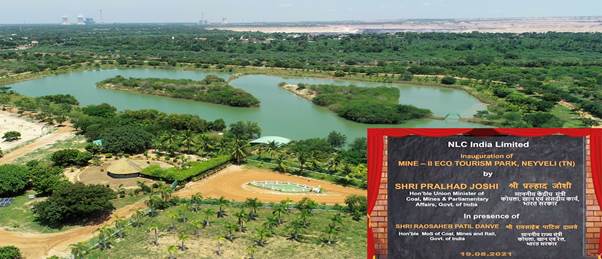
As directed by the Coal Ministry, coal/lignite PSUs are taking several steps for conservation and efficient use of mine water by supplying the same in its command areas for community usages such as drinking and irrigation. Mine water discharged from the operational mines as well as water available in abandoned mine voids of Coal/Lignite PSUs are benefitting approximately 18 lakh people living in about 900 villages in the proximity of coal mining areas.
During the current fiscal, coal/lignite PSUs planned to supply around 4000 LKL of mine water for community use of which 2788 LKL has been supplied till December 2022. From this 881LKL has been used for domestic purposes including drinking. The beneficiaries of mine water are mainly tribal people and those living in remote areas. This endeavour is in line with the Government’s Jal Shakti Abhiyan of water conservation effort.
In 2022-23, Coal India Ltd. (CIL) has already surpassed its annual plantation target of 1510 hectares by expanding its green cover to 1600 hectares ending December of FY’23. CIL has planted over 31 lakh saplings in the current fiscal till December, 2022.
Greening initiatives inside mine lease area during the last five years in 4392 hectares has created a carbon sink potential of 2.2 LT/year. Coal/Lignite PSUs have covered around 2230 Ha land under plantation in the current fiscal till December 2022 and around 360 Ha under grassing. Use of new techniques like seed ball plantation, seed casting through drones and Miyawaki plantation in its various mines are in place. Mined out areas, overburden dumps and other disturbed areas are concurrently reclaimed as soon as they get delinked from the active mining zones. These afforestation activities and green belt development works are also creating carbon sinks. The dense tree coverage also helps to control air pollution, arrests the suspended dust particles emitted during mining operations.
The Prime Minister, Shri Narendra Modi flagged off the World’s Longest River Cruise-MV Ganga Vilas and inaugurated the Tent City at Varanasi via video conferencing today. He also inaugurated and laid the foundation stones for several other inland waterways projects worth more than Rs. 1000 crores during the event. In line with the Prime Minister’s endeavour to boost river cruise tourism, the huge untapped potential of river cruises will get unlocked with the launch of this service and it will herald a new age of river cruise tourism for India.
Addressing the gathering, the Prime Minister hailed Lord Mahadev and greeted everyone on the auspicious occasion of Lohri. The Prime Minister emphasised charity, faith, tapasya and faith in our festivals and the role of rivers in them. This makes the projects related to river waterways all the more significant, he said. He pointed out that the longest river cruise from Kashi to Dibrugarh is being flagged off today which will bring to the fore, places of tourism in North India on the world tourism map. He said other projects being dedicated today in Varanasi, West Bengal, Uttar Pradesh and Bihar, Assam worth 1000 crore will give a push to the tourism and employment potential in eastern India.
Underlining the central role of river Ganga in the life of every Indian, the Prime Minister lamented that the area around the banks lagged behind in development in the post-independence period thereby leading to a massive exodus of population from this area. The Prime Minister elaborated on a twin approach to address this unfortunate situation. On the one hand, the campaign to clean Ganga was undertaken through Namami Gange and ‘Arth Ganga’ was taken up on the other. In ‘Arth Ganga’ steps have been taken to create an environment of economic dynamism in the states from where Ganga passes.
Directly addressing the tourists from foreign countries who are traveling on the maiden journey of the cruise, the Prime Minister said, “Today India has everything and a lot beyond your imagination.” He further added that India can only be experienced from the heart as the nation has welcomed everyone with open hearts irrespective of region or religion, creed or country and welcomed tourists from all parts of the world.
Throwing light on the experience of the river cruise, the Prime Minister informed that it has something special for everyone. He added that those seeking spirituality will cover destinations like Kashi, Bodh Gaya, Vikramshila, Patna Sahib and Majuli, tourists looking out for a multinational cruise experience will get the opportunity to via Dhaka in Bangladesh, and those wanting to witness the natural diversity of India will cross through Sundarbans and the forests of Assam. Observing that the cruise will pass through 25 different river streams, the Prime Minister said that this cruise has significant importance for those who have a keen interest in understanding the river systems of India. He also mentioned that it is a golden opportunity for those who want to explore the myriad culinary and cuisines of India. “One can witness the extraordinary amalgamation of the heritage of India and its modernity on this cruise”, the Prime Minister remarked as he shed light on the new era of cruise tourism where new employment opportunities will be created for the youth of the country. “Not just foreign tourists but Indians who traveled to different nations for such an experience can head towards North India now”, the Prime Minister said. He also informed that similar experiences are being readied in other inland waterways of the country to give a boost to cruise tourism while keeping in mind the budget as well as the luxury experience.
The Prime Minister also mentioned that India is entering into a robust phase of tourism as with a growing global profile, curiosity about India is also increasing. That is why, said the Prime Minister, in the last 8 years various steps were taken to expand the tourism sector in the country. Places of faith were developed on priority and Kashi is a live example of such efforts. With improved facilities and the rejuvenation of Kashi Vishvanath Dham, Kashi has seen a huge increase in the number of visiting devotees. This has given a massive boost to the local economy. The New Tent City, infused with modernity, spirituality and faith, will provide a novel experience to the tourists.
The Prime Minister said that today’s event is a reflection of the policies, decisions and direction taken after 2014 in the country. “This decade of the 21st century is a decade of infrastructure transformation in India. India is witnessing a level of infrastructure which was unimaginable a few years ago.” He said from Social infrastructure like houses, toilets, hospitals, electricity, water, cooking gas, educational institutes to digital infrastructure to physical connectivity infrastructure like railways, waterways, airways and roads, all these are strong indicators of the rapid growth of India. In all the fields India is seeing the best and biggest, he pointed out.
The Prime Minister underlined the low usage of river waterways in India before 2014 despite the rich history in this mode of transport in the country. Post 2014, India is harnessing this ancient strength to the cause of modern India. There is a new law and detailed action plan for developing waterways in big rivers of the country. The Prime Minister informed that in 2014 only 5 national waterways were there in the country, now there are 111 national waterways in the country and about two dozen are in operation already. Similarly, there has been a 3 times increase in cargo transportation via river waterways from 30 lakh metric tonnes 8 years ago.
Coming back to the theme of development of eastern India, the Prime Minister said that today’s events will help in making eastern India a growth engine for Developed India. This connects Haldia multimodal terminal with Varanasi and is also connected with India Bangladesh protocol route and Northeast. This also connects Kolkata port and Bangladesh. This will facilitate business from Uttar Pradesh, Bihar, Jharkhand, and West Bengal to Bangladesh.
Emphasising the need for training of the staff and skilled workforce, the Prime Minister informed that a Skill Development Center has been set up in Guwahati and a new facility is also being constructed in Guwahati for the repairing of ships. “Be it a cruise ship or a cargo ship, they not only give a boost to transport and tourism, but the entire industry associated with their service also creates new opportunities”, the Prime Minister said.
Referring to a study conducted, the Prime Minister informed that waterways are not just beneficial to the environment but also help in saving money. He said that the cost of operating waterways is two and a half times lesser than that of roadways, and one-third lesser when compared to railways. The Prime Minister also touched upon the National Logistics Policy and said that India has the potential to develop a waterway network of thousands of kilometres. He also emphasised that India has more than 125 rivers and river streams which can be developed to transport goods and ferry people while also giving impetus to further expanding port-led development. He emphasised the need to build a modern multi-modal network of waterways and informed about the partnerships with Bangladesh and other countries which have strengthened the water connectivity in the Northeast.
Concluding the address, the Prime Minister remarked on the continuous development process of developing waterways in India and said, “Strong connectivity is essential for building a developed India.” The Prime Minister expressed the belief that the river of India will give new heights to water power and trade and tourism of the country and wished a pleasant journey to all the cruise passengers.
Chief Minister of Uttar Pradesh, Shri Yogi Adiyanath, Chief Minister of Assam, Shri Himanta Biswa Sarma, Union Minister of Port Shipping and Waterways, Shri Sarbananda Sonowal among others were present on the occasion.
Background
MV Ganga Vilas
MV Ganga Vilas will begin its journey from Varanasi in Uttar Pradesh and travel around 3,200 km in 51 days to reach Dibrugarh in Assam via Bangladesh, sailing across 27 river systems in India and Bangladesh. MV Ganga Vilas has three decks, 18 suites on board with a capacity of 36 tourists, with all the luxury amenities. The maiden voyage has 32 tourists from Switzerland signing up for the entire length of the journey.
The MV Ganga Vilas cruise is curated to bring out the best of the country to be showcased to the world. The 51 days cruise is planned with visits to 50 tourist spots including World Heritage Sites, National Parks, River Ghats, and major cities like Patna in Bihar, Sahibganj in Jharkhand, Kolkata in West Bengal, Dhaka in Bangladesh and Guwahati in Assam. The journey will give the tourists an opportunity to embark upon an experiential voyage and indulge in the art, culture, history, and spirituality of India and Bangladesh.
In line with PM’s endeavour to boost river cruise tourism, the huge untapped potential of river cruises will get unlocked with the launch of this service and it will herald a new age of river cruise tourism for India.
Tent City at Varanasi
Tent City has been conceptualised on the banks of the River Ganga to tap the potential of tourism in the region. The project has been developed opposite to city ghats which will provide accommodation facilities and cater to the increased tourist influx in Varanasi, especially since the inauguration of Kashi Vishwanath Dham. It has been developed by Varanasi Development Authority in PPP mode. The tourists will reach the Tent City by boats from different Ghats situated in the vicinity. The tent city will be operational from October to June every year and will be dismantled for three months due to the rise in river water level in the rainy season.
Inland Waterway projects
Prime Minister will inaugurate Haldia Multi-Modal Terminal in West Bengal. Developed under Jal Marg Vikas Project, Haldia Multi-Modal Terminal has a cargo handling capacity of around over 3 Million Metric Tonne Per Annum (MMTPA) and the berths are designed to handle vessels up to around 3000 Deadweight tonnage (DWT).
The Prime Minister also inaugurated four floating community jetties at Saidpur, Chochakpur, Zamania in Ghazipur district and at Kanspur in Ballia district in Uttar Pradesh. Besides, the Prime Minister laid foundation stones for the five Community Jetties at Digha, Nakta Diyara, Barh, Panapur in Patna district and Hasanpur in Samastipur district in Bihar. More than 60 community jetties are being constructed along the river Ganga across the states of Uttar Pradesh, Bihar, Jharkhand and West Bengal to boost the economic activities and improve the livelihoods of local communities in the region. The community jetties would play a key role in improving the livelihoods of people by providing simple logistics solutions for small farmers, fishery units, unorganised farm-producing units, horticulturists, florists and artisans focussing on economic activities in and around the hinterland of river Ganga.
The Prime Minister also inaugurated the Maritime Skill Development Centre for North East at Guwahati. It will help hone the rich talent pool in the North Eastern region and will provide for better employment opportunities in the burgeoning logistics industry.
In addition to these, the Prime Minister also laid the foundation stone for a ship repair facility and an elevated road at Pandu Terminal in Guwahati. The Ship Repair facility at the Pandu Terminal will save a lot of valuable time as it takes more than a month for a ship to be transported to the Kolkata Repair facility and back. Moreover, it will also result in huge savings in terms of money as the transportation cost of the ship will also be saved. The dedicated road connecting the Pandu Terminal to NH 27 will enable 24-hour connectivity.



 2. Report as a means of internal communication


 Eduindex
You must be logged in to post a comment.