SDG 2 : Zero Hunger.

In 2012, at the United Nations (UN) Conferences on Sustainable Development in Rio de Janeiro, Brazil, world representatives created the Sustainable Development Goals (SDGs). The purpose of creating SDGs was to produce a set of universal goals that meet the urgent environmental, political and economic challenges facing our world, according to the UN Development Programme. There are 17 SDGs that the UN hopes to meet by 2030, the second of which is Zero Hunger. More than 800 million people around the world are hungry. The United Nations’s second Sustainable Development Goal, Zero Hunger, aims to end world hunger by 2030.

Hunger is not caused by food shortage alone, but by a combination of natural, social, and political forces. Currently, natural resources that are necessary for human survival—like freshwater, the ocean, forests, soils, and more—are dwindling. Climate change is contributing to the degradation of precious resources, as severe weather events, like droughts, become more common and affect harvests, leading to less food for human consumption. Poverty and inequality are also two drivers of hunger, affecting who can buy food, as well as what kind of food, and how much, is available. Hunger is also a product of war and conflict. During periods of unrest, a country’s economy and infrastructure can become severely damaged. This negatively affects civilian access to food by either driving up food prices, interfering with food production, or forcing people from their homes. Some governments and military groups have even used starvation as a war tactic, cutting off civilians from their food supply. In 2018, the UN declared this tactic a war crime.

The total number of persons suffering from severe food insecurity has been on the rise since 2015, and there are still millions of malnourished children. The economic slowdown and the disruption of food value chains caused by the pandemic are exacerbating hunger and food insecurity. In addition, the upsurge in desert locusts remains alarming in East Africa and Yemen, where 35 million persons already experience acute food insecurity. Owing to the pandemic, some 370 million schoolchildren are missing the free school meals that they rely on. Measures to strengthen food production and distribution systems must be taken immediately to mitigate and minimize the impacts of the pandemic.

The world is not on track to achieve Zero Hunger by 2030. If recent trends continue, the number of people affected by hunger would surpass 840 million by 2030. According to the World Food Programme, 135 million suffer from acute hunger largely due to man-made conflicts, climate change and economic downturns. The COVID-19 pandemic could now double that number, putting an additional 130 million people at risk of suffering acute hunger by the end of 2020.

SDG 2 : Zero Hunger.

In 2012, at the United Nations (UN) Conferences on Sustainable Development in Rio de Janeiro, Brazil, world representatives created the Sustainable Development Goals (SDGs). The purpose of creating SDGs was to produce a set of universal goals that meet the urgent environmental, political and economic challenges facing our world, according to the UN Development Programme. There are 17 SDGs that the UN hopes to meet by 2030, the second of which is Zero Hunger. More than 800 million people around the world are hungry. The United Nations’s second Sustainable Development Goal, Zero Hunger, aims to end world hunger by 2030.

Hunger is not caused by food shortage alone, but by a combination of natural, social, and political forces. Currently, natural resources that are necessary for human survival—like freshwater, the ocean, forests, soils, and more—are dwindling. Climate change is contributing to the degradation of precious resources, as severe weather events, like droughts, become more common and affect harvests, leading to less food for human consumption. Poverty and inequality are also two drivers of hunger, affecting who can buy food, as well as what kind of food, and how much, is available. Hunger is also a product of war and conflict. During periods of unrest, a country’s economy and infrastructure can become severely damaged. This negatively affects civilian access to food by either driving up food prices, interfering with food production, or forcing people from their homes. Some governments and military groups have even used starvation as a war tactic, cutting off civilians from their food supply. In 2018, the UN declared this tactic a war crime.

The total number of persons suffering from severe food insecurity has been on the rise since 2015, and there are still millions of malnourished children. The economic slowdown and the disruption of food value chains caused by the pandemic are exacerbating hunger and food insecurity. In addition, the upsurge in desert locusts remains alarming in East Africa and Yemen, where 35 million persons already experience acute food insecurity. Owing to the pandemic, some 370 million schoolchildren are missing the free school meals that they rely on. Measures to strengthen food production and distribution systems must be taken immediately to mitigate and minimize the impacts of the pandemic.

The world is not on track to achieve Zero Hunger by 2030. If recent trends continue, the number of people affected by hunger would surpass 840 million by 2030. According to the World Food Programme, 135 million suffer from acute hunger largely due to man-made conflicts, climate change and economic downturns. The COVID-19 pandemic could now double that number, putting an additional 130 million people at risk of suffering acute hunger by the end of 2020.

New Education Policy 2022

 New Education Policy (NEP) 2022

New education policy (NEP) 2022 is a policy in which all the education systems have been taken to a new and good quality level. With this policy, you will get all the world-class education in which you will make your career better.

In 2022 new education policy system they have three language formulas and a 5+3+3+4 strategy.

Some of the points in which you will get to know more about policy:-

* They will have the three language formulas i.e regional language, Hindi and English.

* They have changed the 10+2 strategy and instead of that now they have 5+3+3+4. Students will have various stages. They are

5 – Foundational stage

3 – Preparatory stage

3 – Middle stage

4 – Secondary stage

* They have mainly aimed at vocational education as a new education policy which will aim the students to know their regional language, mother tongue till 5 the years.

* Till class 5 they will only have their local language and in school and higher education, they will include the Sanskrit subject. 

* To learn the students the regional language easily they will get their instruction in that regional language instead of English till class 5.

* Master’s degree will be longer required.

* The policy wants that all the students get quality and equitable education in India in the gas group of 3 – 18 years.


Foundational stage (5)

The foundational stage will be the first 5 years of a child’s schooling. After 3 years the education the children will go to Anganwadi, kidzee and the nursery’s play school.

For the next 2 years, the children will develop their basic knowledge, activity-based learning

Preparatory stage (3)

The next preparatory stage will start from 8 – 11 years in which the children will learn basic literacy and numeracy skills that will help students to know more about the various subjects.

Middle stage (3)

The middle stage will compromise 11 – 14 years in which they will learn academic skills like reading, writing and language competencies. They will also develop their teamwork, and problem-solving.

Secondary stage (4)

In this last stage, they will be 14 – 18 years of age. During this stage, the students will learn all the basic subjects like Social science, Mathematics, Science, and English and they get the opportunity to learn various elective subjects. The secondary stage aim is to provide students with the skills and the knowledge they need to prepare for further education.

In this new education policy 2022, they aim to provide all the students get a world-class education and they can gain the knowledge of various things which will help to make their life better.


Online Banking

 Online Banking

Online banking means accessing your bank account online and carrying out financial transactions through the internet on your smartphone, tablet, or computer. It’s quick, usually free, and allows you to do tasks, such as paying bills and transferring money, without having to visit or call your bank. Many banks have free apps which let you use these services on your phone at any time. 

Facilities offered by Online Banking

  • You can check your bank balance at any time
  • You can pay your bills and transfer money to other accounts
  • You can check any linked mortgages, loans, savings accounts or ISAs
  • You can check your bank statements and go paperless 
  • You can set up or cancel Direct Debits and standing orders
  • You can check on any investments you might have that are linked to your account.

Security in Online Banking

Banks take lots of precautions to make sure your online account is safe. These include encrypted websites, timed logouts, and many authentication processes. Accessing your bank account online is generally safe. You should learn how to use online banking safely to secure your account.

Here are a few tips to keep your account safe:

  • Check your statement often and report any unusual activity to your bank.
  • Don’t reply to emails that claim to be from your bank that ask for personal details or passwords.
  • Always remember to log out of your online banking session.
  • Only use secure wi-fi connections to access your bank account.
  • Public wi-fi connections are often not secure, so it’s important not to use them for banking or to make purchases. 
  • Keep your operating system and anti-virus software up to date.
  • If you notice anything strange on your account, or you accidentally make a payment to the wrong account, get in touch with your bank as soon as possible.
  • Some banks offer instant card freezing, where you can block your card in your app without having to call or visit a branch. 
  • Choose your password carefully – create it by combining three random words and don’t re-use the same one for different accounts.


You can easily set up online banking with the help of instructions provided by your bank or you can contact them to take help with using the online banking services.

What is new National Education Policy and the changes in the education system of India

 What is new National Education Policy ( NEP) 2022?

The National Education Policy ( NEP ) 2022 is a policy document released by the government of India on 29th July 2020.
As education is important sector for the country’s  development, Government must be focus on education sector of the country. Due to the importance of education, government make many changes to improve this sector and for providing better education to the people of India.
It generally focuses on the students individual needs. It aims to provide them with access to world class education. It also make sure that the students don’t have must stress regarding to their studies as we all know that day by day students get depressed because of not clearing their exams so government also put their efforts to make the education system more flexible and adaptive.
The new national policy lays down objectives for improving the quality of the education system. The policy aims at creating a ” Global Knowledge Superpower” in the field of education. The policy also makes it mandatory for schools and colleges to make their curriculum flexible and holistic.

It changes many things in the education system of India as this initiative is taken by looking the perspective of students, teachers , parents , education experts , and civil society organizations.

New Education Policy ( NEP ) important points .

The New Education Policy aims to give quality education to all the people of India whether they belong to the lower caste or upper caste. Government make education affordable to all the students.
Some are the important points of New Education Policy – 
1. The policy aims to provide quality and adaptive education to all the children in the age between 3- 18 years .
2. Students can choose different subjects while studying in college and inhance their skills .
3. Students will now be checked on their ability to apply concept to solving real problems and giving better decisions rather than on how well they remember things from books. 
4. Now student will focus on studying 3 language in the school premises 1. Regional 2. Hindi 3. English.
5. To make it easier for students to learn regional languages, instruction in the first five grades will be taught in those languages instead of English.
6. Policy focuses on using different technologies to make study more accessible as now everything you will get online without a doubt.
7. Now education is given in same quality whether the students belong to urban area or rural area they will get the same quality of  education.
8. The policy propose several measures to improve the quality of teaching, such as mandatory teacher eligibility tests, teacher professional development programmes , and teacher education programmes at the elementary, secondary and tertiary levels.
9. This policy introduce a new 5+3+3+4 education structure, which moves away from the current 10+2 system.
10. It aims to increase the Gross Enrollment Ratio in higher education to 50 percentage by 2035.
11. The Government has announced that all higher education institutes will be governed by a single regulator, except the Medical and Law colleges .
12. The policy proposes to set up a National Higher Education Regulatory Council to oversee the regulation of higher education institutions.

Quality Education- Part of Sustainable Development Goal

Quality Education- Part of Sustainable Development Goal


Sustainable development goals are actions to create a just, fair, and equitable world ensuring no one is left behind. In 2015, all member states of the United Nations adopted the 2030 Agenda for Sustainable Development. This agenda is comprised of 17 sustainable development goals (SDGs) that provide a shared blueprint for a more peaceful, prosperous, and sustainable future for all.

Quality education

Ensure inclusive and equitable quality education and promote lifelong learning opportunities for all. Education is a key to escaping poverty. Over the past decade, major progress was made towards increasing access to education and school enrolment rates at all levels, particularly for girls.

More than half of all children and adolescents worldwide are not meeting minimum proficiency standards in reading and mathematics. In 2020, as the COVID-19 pandemic spread across the globe, a majority of countries announced the temporary closure of schools, which affect the education of children worldwide.

The covid-19 has created a great education crisis. Most education systems in the world have been affected by education disruptions and have faced unprecedented challenges. School closures brought on by the pandemic have a great effect on children’s learning and well-being. It is estimated that 147 million children missed more than half of their in-class instruction over the past two years. This generation of children could lose a combined total of $17 trillion in lifetime earnings at present value. School closures have affected girls, children from disadvantaged backgrounds, those living in rural areas, children with disabilities, and children from ethnic minorities more than their peers.

Early indications from low-income countries based on phone surveys point to a small decline in attendance upon a return to school but a larger increase in repetition, which may increase dropout rates in coming years. The participation rate in organized learning one year before the official primary entry age rose steadily in the years before the COVID-19 pandemic, from 69 percent in 2010 to 75 percent in 2020. In most countries, early education facilities and schools were partially or fully closed for more than a full school year.

Insufficient skills are often mentioned as an impediment to effective information and communications technology use. Only 10 percent of countries could more than 70 percent of individuals carry out one of the activities that compose basic skills.

Gender inequalities remain for many indicators. Basic school infrastructure is far from universal. In 2020, approximately one-quarter of primary schools globally did not have access to basic services such as electricity, drinking water, and basic sanitation facilities.

Shares among least developed countries tend to be substantially lower. During the pandemic, schools in comparatively disadvantaged areas were less equipped to keep children and staff safe. In 2020, there were about 12 million pre-primary school teachers, 33 million primary school teachers, and 38 million secondary school teachers working in classrooms around the world, and 83 percent of primary and secondary school teachers were trained.

Thus, this sustainable goal aims to improve the education facility worldwide and provide good quality education which can lead to removing poverty.

SECURITY BREACH OF NASA

What is Data Breach? A data breach is a security violation, in which sensitive, protected or confidential data is copied, transmitted, viewed, stolen or used by an individual unauthorized to do so. Other terms are unintentional information disclosure, data leak, information leakage, and data spill.

What is Security Breach? A security breach is any incident that results in unauthorized access to computer data, applications, networks or devices. It results in information being accessed without authorization. Typically, it occurs when an intruder is able to bypass security mechanisms.

SECURITY BREACH OF NATIONAL AERONAUTICS AND SPACE ADMINISTRATION(NASA):
NASA has hacked in 1999 which made 21 days shut down of the computer which had direct connection with the satellites in space. It was hacked by 15 year old Jonathan James. He was the first person to carry out attack against American space agency. He hacked the computers by U.S. Department of Defense division’s computer and installed backdoor on its servers. He intercepted more than 1000 government emails including their username and password. This helped him to steal a piece of NASA software and crack the computers that support the International Space Station which cost space exploration agency $41,000. At first the NASA were not aware of their computers being hacked ,later few days they found their computers have been hacked which lead to the shut down of computers in NASA which leads to loss of million cost and arrested James.

Glimpse of New Education Policy

Glimpse of New Education Policy

The National Education Policy (NEP) 2022 is a policy document released by the Government of India on 29th July 2020. It outlines the government’s vision for the education sector in India over the next ten years. The policy has been developed after extensive consultations with various stakeholders, including teachers, students, parents, education experts, and civil society organizations. It covers all aspects of education, from early childhood education to higher education and vocational training. 


NIP aims to transform the education system of India by providing world-class education. The policy also aims at creating a “Global Knowledge Superpower” in the field of education. It focuses on the individual need of every student. The policy also seeks to create a more flexible and adaptive education system that can meet the needs of students and the economy.

Vocational Education is part of the New Education Policy. It includes teaching the mother tongue and regional languages up to the 5th year of schooling. The policy also makes it mandatory for schools and colleges to make their curriculum flexible and holistic.

Major Highlights of New education policy

  • It focuses on providing quality and affordable education to all children in the age group of 3-18 years.
  • Students will now be tested on their abilities to apply concepts to solving real problems rather than on how well they remember things from books.
  • The school curriculum in India has been updated to incorporate more core concepts and vocational education.
  • It focuses on using technology in education to make it more effective.
  • It focuses on a system where there is no distinction between rural and urban areas, and all children have access to quality education.
  • The policy wants to set up a National Higher Education Regulatory Council to oversee the regulation of higher education institutions.
  • It introduces a new 5+3+3+4 education structure, which moves away from the current 10+2 system.
  • The master’s degree (MPhil) course will no longer be required.
  • It says all higher education institutes (HEIs) will be governed by a single regulator, except the Medical and Law Colleges.
  • School board examinations will continue in 10th and 12th classes and redesigned to be more holistic and developmental.
  • Higher education will receive flexibility in subjects. There will be multiple entry points and exit points for all students.
  • UG programmed courses can range in duration from three to four years. The minimum duration required to get a certificate is one year. However, students can opt for a different route if they want to, such as obtaining a two-year Advanced Diploma or getting a B. Tech degree.
  • An academic bank of credit (ABC) will be created as a digital recognition awarded for a student’s academic performance.

Reinsurance

 Reinsurance 

Reinsurance is a process by which an insurance company insures an asset with another insurance company after it has collected premium and assumed the risk of the asset from the first party who had applied for the insurance cover of the asset. It can be called second level insurance. The insurance company (Insurer) want to insure and protect itself from liabilities. So, it approaches another insurance company and shares the risk of underlying asset with insurance company through a process called Reinsurance.

Reinsurance helps an insurance company to assume more risks than what it’s capital base and the accrued surpluses would normally allow it. If the Reinsurance contract involves more than one reinsurer, one company assumes the role of a Lead Reinsurer with other companies subscribing to the contract with the lead insurer.

The Reinsurance contract is a contract of indemnity, it means the amount will become payable only after the original insurer has paid the claim to the insured. An insurer can reinsure the underlying asset with more than one reinsurer. The premium of the reinsurance asset will be smaller than the original insurance premium. The original policy holder does not have any contractual agreement with the reinsurer.

The two types of Reinsurance products are Quota share and Excess of loss. They can vary in the manner, in which risk is shared between the Insurer and the Reinsurer. Retrocession it is the process by which the company that has accepted the reinsurance from different companies want to spread their risk with other companies. There are certain rules followed with reinsurance contracts. The important ones are: the Law of Utmost Good Faith deals with the disclosure of all material facts while entering into a contract. The Law of Follow the Fortunes directs the Reinsurer to discharge its responsibilities in terms of payment to the Insurer once the insurer has paid a particular claim to the original policy holder.

Hydroponics

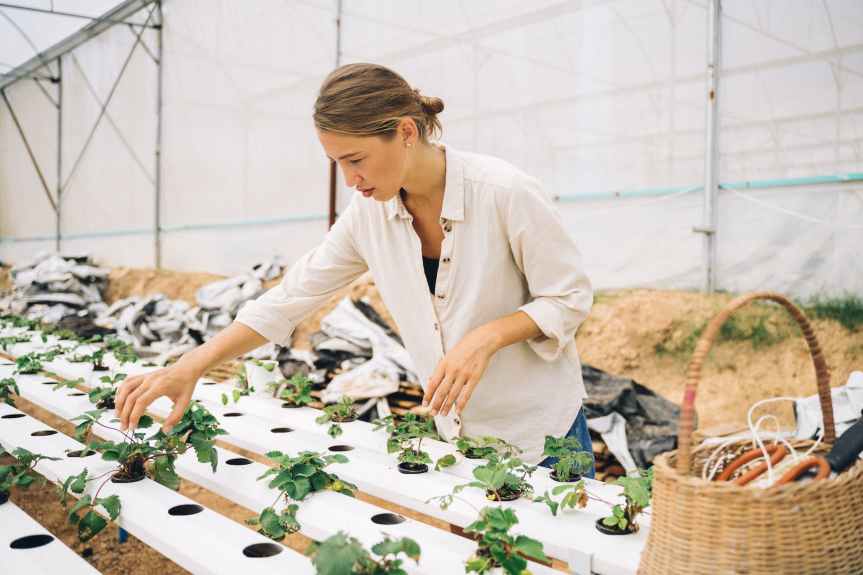
Hydroponics is the method of growing plants without soil. It generally uses less water as compared to traditional soil system. It allows faster growth and higher yield.

William Frederick Gericke is known as father of hydroponics. He grew tomato vines in his backyard in nutrient solution.

The nutrients used in hydroponics include fish and poultry excreta , duck manure, chemical fertilizers, artificial nutrient solution etc.

Plants are commonly grown hydroponically in a greenhouse, on inert media, include tomatoes, peppers, cucumbers, strawberries, lettuces, and cannabis, usually for commercial use, and Arabidopsis thaliana, which serves as a model organism in plant science and genetics.

Advantages:

  • Does not require soil for cultivation.
  • Promotes faster and efficient plant growth.
  • It uses less water as compared to conventionally grown plants. Hence, helps to save water.
  • It does not depend on climate for favourable growing conditions.
  • Saves labour due to automatic watering and fertilizing capability.
  • Have fewer pest can can be grown closely.
Photo by Pragyan Bezbaruah on Pexels.com
  • The plant has less root and nutrient competition than grown in soil.

There are six main types of hydroponic system for garden: wicking, deep water culture (DWC), nutrient film technique (NFT), ebb and flow, aeroponics, and drip systems.

Disadvantages:

  • Involves high installation cost.
  • Need to test the solution frequently to avoid infection and damage.
  • System are prone to equipment failure and power outage.
  • Prone to water borne infection.
  • Requires constant monitoring and assistance.

Some systems, known as aquaponics involves use of nutrient-rich wastewater from aquaculture to fertilize hydroponic plants. Freshwater fish, such as tilapia, and crayfish are common aquatic animals utilized for these hybrid systems.

Nowadays, hydroponics is being implemented in large scale as a start up to meet the demand of fresh leafy vegetables as is a part of urban farming.

The ultimate guide of SEO

 The ultimate guide to SEO 

What is SEO? it is the practice of getting traffic to your website from organic efforts. common work includes SEO high-quality traffic, optimizing the content on targeted keywords, and building backlinks through different techniques.


On a short note, SEO is basically to get organic rankings of a website in SERP. The main advantage of organic rankings is to you get free traffic which remains for a long time duration.

main tasks involve in SEO:

  • Develop and design a website that can easily be ranked on google.
  • enhance the traffic and the quality of the website from google.
  • promote your website by understanding the google algorithm and user visiting process into a website.

How to a Search Engine function?

  • Crawling: 

It means when google bots read all webpages that are linked to a website and understand what kind of content involves in a website and when a user searches the same kind of query then if google finds the content relevant as per the user query then google shows that website in its search result page.

  • Indexing:

After crawling all the webpages of a website, the google bots make a database and store the relevant webpages there for retrieving the data when needed in a particular format. it will keep the same type of keywords searches query in a particular file so if any users type in a search engine they can easily retrieve it from there.

  • Processing:

when a user searches a query then google bots process and compare it with indexed pages then if it finds the relevant pages it shows it on the search engine page.

what is onpage and offpage SEO:

Onpage SEO means website inside changes that contain high-quality content, meta title, meta description, and heading, alt tag, keywords selection, and putting keywords in the right place.

off page SEO on the contrary includes backlinks building, increasing link popularity through different techniques like Profile building, social bookmarking, article or blog posting many more.

what are SEO strategies :

  • white hat SEO
  • black hat SEO

The white hat strategy includes organic efforts or practices to get traffic and rankings for a website. For instance, a white hat strategy may include tactics like producing user helpful content and having a fast loading speed and putting keywords naturally.

The black hat strategy includes spamming activities for generating traffic that contains plagiarism content and purchasing backlinks and all those tactics which are against google rules & regulations.

Do and don’t of SEO:

DO:   

  • Always opt for white hat techniques which we mentioned above as it will give long-term benefits and traffic to your website.

  • always try to bring backlink which has high DA and PA but a low spam score in short spam means bringing quality backlink from a relevant website.
  • use title tag on your website which should be unique and diverse for all webpages and relevant as per your website content.
  • write engaging content on your website which makes the user experience better.
  • search for keywords which is relevant as per your niche and keep in mind its searches and volume of it.
  • make your website user-friendly and mobile friendly as user searches more through phones .

Don’t:

  • do not use the black hat technique as it can bring rank for your website but for short spam of life so don’t opt it ever for just getting fast rankings.
  • don’t opt for backlinks from spammy sites and have a low DA & PA than your website.
  • don’t opt for the same title for every page as it is not a good idea.
  • do not use keyword stuffing as google can easily pick it up.
  • do not use copied content on your website.

Some important factors of on-page SEO:

1: Title tag and meta tag:

  • the title tag should be unique for all web pages.
  • the character length of the title tag should be between 50-65.
  • meta description character should be within the limit of 160.
  • it should contain keywords naturally.

2: Image optimization:

  • the images should use an alt tag bcoz the google bot doesn’t read the images as it understands the alt tag.
  • don’t use large-sized pics as it will increase the loading speed of the website.

3: Internal linkings:

  • create internal links by anchor text.
  • links all important pages to the home page.
  • include 3 -5 internal links.

Rural Development for Better Nation

 Rural Development for Better Nation

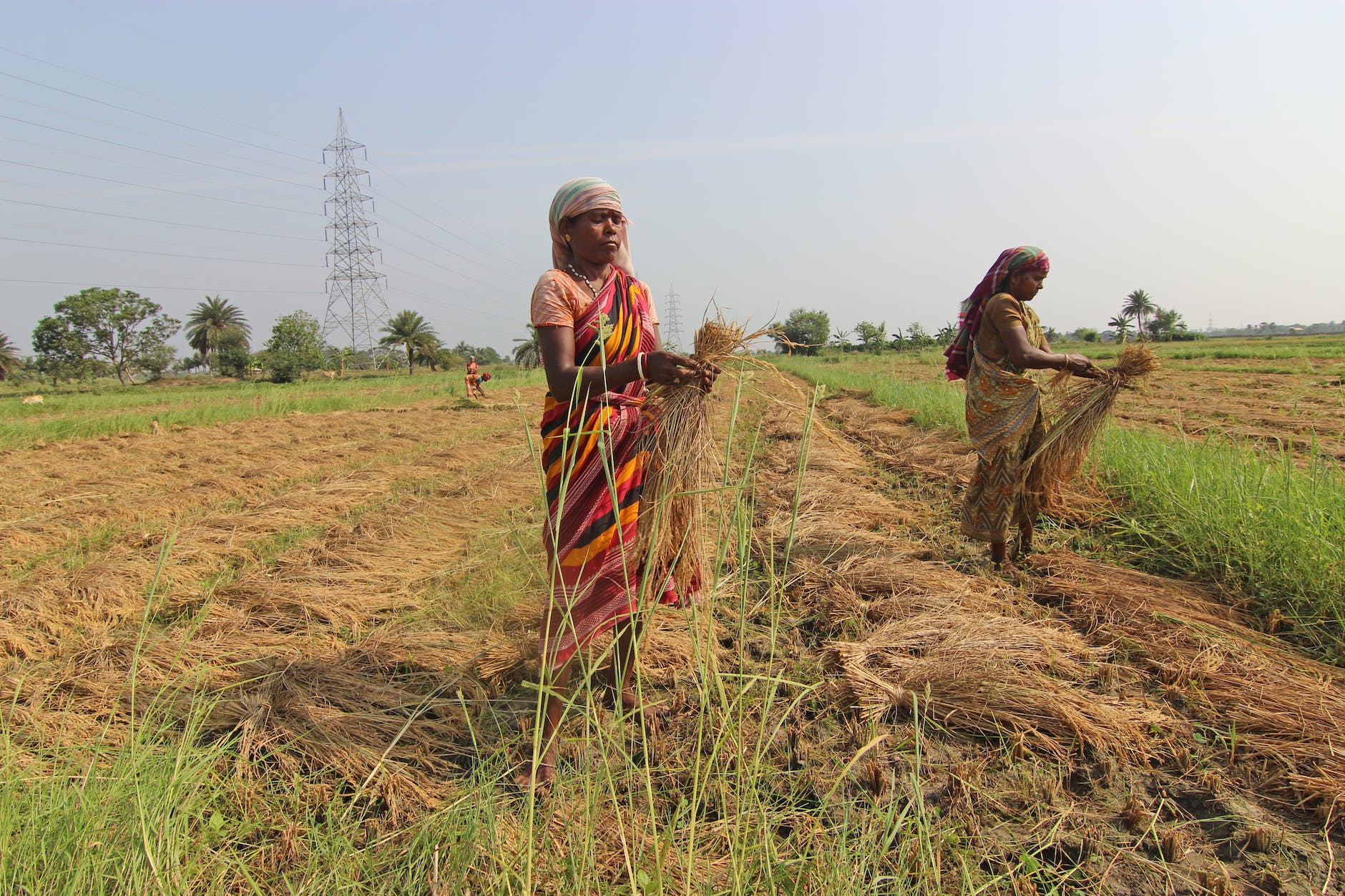
Rural development means improving the quality of life of people living in rural areas. Its main concern is to secure natural resources like agriculture and forest, from exploitation. But the change in the global production network and urbanization have changed the rural areas. A lot of things like manufacturers, tourism, recreation, etc., have affected agriculture as the domain of economic drives. Education, entrepreneurship, physical infrastructure, and social infrastructure all play an important role in developing rural regions. Rural development remains the core of the overall development of the country. More than two-thirds of the country’s people are dependent on agriculture for their livelihood, and one-third of rural India is still below the poverty line.


Rural development focus on Education, Public health and Sanitation, Women empowerment, Infrastructure development (electricity, irrigation, etc.), Facilities for agriculture extension and research, Availability of credit, Employment opportunities, sufficient and healthy food, etc.


Importance of Rural Development

Rural development is important for the population to live in rural areas and overall economic expansion of the nation. It is very important to be concerned about rural development because it is very important for the evaluation of our nation. It will help to increase productivity, stability in socio and economic development, and social-economic equality.


The main objective of Rural Development

The main objective of the government for rural development is to improve the productivity and wages of rural people, increase the standard of living of the underprivilege population, increase employment opportunities, and provide the basic needs like education, healthcare, rural roads, clean drinking water, sanitation, etc.


Ministry of Rural Development

The Ministry of Rural Development has two departments, the Department of Rural Development and the Department of Land Resources. The Department of Rural Development came into existence as a part of the Ministry of Food and Agriculture in October 1974. On 23 January 1982, this ministry was renamed the Ministry of Rural Development. as the Ministry of Agriculture in September 1985. On July 5, 1991, this department was again given the status of Ministry of Rural Development. After that, the name of the department was changed many times. In the year 1999. The department gets it to rename as Ministry of Rural Development. 

The ministry aims to bring change in rural development with various programs. The main objective of this ministry is to remove rural poverty and provide a better quality of life to the rural population, especially the people living below the poverty line. To further enhance the efforts being made in these areas, the government launched the Pradhan Mantri Gramin Yojana (PMGY), and the Ministry of Rural Development was entrusted with the responsibility of implementing the following parts of the Pradhan Mantri Yojana (PMGY), namely – drinking water supply, Housing construction and construction of rural roads. Many other policies were started by the government for the welfare of the rural population.


Keeping in view the needs and aspirations of the local people, the cooperation of Panchayati Raj Institutions was taken in the implementation of this program. These institutions are a form of decentralized development of planning and its implementation. The Ministry is urging the State Governments to give requisite administrative and financial powers to the Panchayati Raj Institutions at the earliest as stipulated in the 73rd Constitutional Amendment of India. The empowerment of rural women is important for the development of rural India. Therefore, provision has also been made for the contribution of women in poverty alleviation programs so that adequate funds can be arranged for this section of society. The Constitution (73rd) Amendment Act, 1992 provides for reservation of selected posts for women.


The following major programs are being operated in rural areas by the Ministry of Rural Development,

  • Mahatma Gandhi National Rural Employment Guarantee Act (MGNREGA) provides employment,
  • National Rural Livelihoods Mission (NRLM) for self-employment and skill development,
  • Pradhan Mantri Awas Yojana Gramin (PMAYG) to provide housing to BPL families,
  • Pradhan Mantri Gram Sadak Yojana (PMGSY) for the construction of quality roads,
  • National Social Assistance Program (NSAP) for Social Pension,
  • Integrated Watershed Management Program (IWMP) to improve the productivity of the land.

The annual budget of Rs. 1 35944.29 crores have been allocated to the department of Rural Development for the Financial Year 2022-23.

Fracking

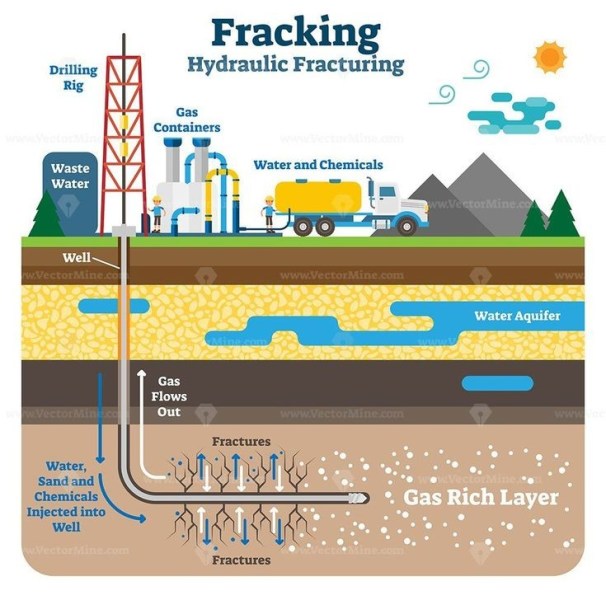
Fracking is short for “hydraulic fracturing”, which is the process of creating fractures in rocks and rock formations by injecting specialized fluid into cracks to force them to open further. The larger fissures allow more oil and gas to flow out of the formations and into the wellbore. It is easier to extract oil and gas there.Fracking has resulted in many oil and gas wells attaining a state of economic viability due to the level of extraction that can be reached. It has also allowed drilling firms access to previously difficult-to-reach sources of oil and gas.Fracking is an extraction technique for oil and gas wells in which rocks are fractured artificially using pressurized liquid. The process involves drilling down into the earth and injecting a highly pressurized mixture of water, sand, and thickening agent, also called “fracking fluid,” into a wellbore to create cracks in rock formations. Once the hydraulic pressure is removed from the well, the remnants of the fracking fluid hold the fractures open, making it easy to extract the oil and gas inside. Fractures can also exist naturally in formations, and both natural and human-made fractures can be widened by fracking. As a result, it is possible to extract more oil and gas from a given area of land.

Fracking increases the rate at which water, petroleum, or natural gas can be recovered from subterranean wells. It has also allowed the extraction of unconventional oil and gas resources from low permeability sites where traditional extraction technologies fail. Fracking as a method for oil and gas extraction is also more economically viable than conventional or horizontal drilling. In the United States, domestic oil production has grown significantly with the introduction of fracking. The process has driven down gas prices and offered gas security to both the United States and Canada for about 100 years.

Most of the opposition to fracking revolves around its potential negative impact on the environment. Fracking typically produces methane emissions, which reduce air quality. Furthermore, methane gas contributes significantly to global warming.Fracking requires forcing large volumes of water and chemicals into the ground, which can seep and contaminate local soil and water resources. Moreover, due to the high pressures involved, fracking is also associated with increased seismic activity. It also releases large quantities of methane gad and other air pollutants that can cause health problems and contribute to climate change.Fracking has allowed for the cost-effective extraction of harder-to-reach deposits of oil and gas, which has increased the supply of available fossil fuels. In general, greater supply leads to lower prices; however, several other factors also impact the price of oil and gas.


Rural Development.

The majority of population in India (about 73 per cent) is living in rural areas. Living conditions of the rural people are very poor. Under such a situation, development of rural areas must receive adequate attention in various schemes designed for the development of Indian economy.

The rural part of the country is still underdeveloped, and the government is doing what all they can to make sure that the rural part also has all the resources like the urban of the country has. But if survey gets conducted at various parts of the country, one will find out that still there are a lot of city and villages in the country whose development is still under process. Various kinds of roads and bridges are being made in various rural parts of the country so that they get connected to an urban part of the country, and thus people from rural part can travel to urban part easily to do various kinds of jobs.

Many industrialists have stepped out to develop rural part of the country, and that is why a lot of malls, call centers, and other industries are getting set up in various rural parts of the country. These industries will not only make job opportunities for the rural people, but it will also enhance their knowledge about certain things.

The following measures can he taken to attain rural development in the country.

  • Improvement of sanitation and for the improvement of sanitation, arrangements for supply of pure drinking water should be made. Tube-wells and ponds should be dug.
  • Education of the masses, Mass education should be introduced to remove the ignorance of the villagers. Education should be made free and compulsory.
  • Establishment of schools for poor people. Night schools should be set up for poor to teach elementary Hygiene and scientific methods of cultivation.
  • Establishment of cheap medical aid for people in rural areas. Hospitals should be established to give cheap medical aid to the people living in rural areas.
  • Construction of good roads and other means of communication is must.
  • Co-operative Credit Societies should be set up to provide loans to the peasants.

The Ministry of Rural Development is engaged in implementing a number of schemes which aim at enabling rural people to improve their living standards. Education, removal of poverty and speedy socio-economic progress is the goal with which the development programmes are being implemented through a multi pronged strategy, reaching out to the most disadvantaged sectors of society Huge priority is being accorded to provide clean drinking water, rural housing and road. The social security programmes are being implemented for providing assistance to the destitute and downtrodden. Assistance and encouragement to voluntary agencies and training of functionaries forms part of the emphasis on accelerated rural development. The ministry is constantly endeavouring to empower the Panchayt Raj institutions in terms of functions, power and finance. In the new initiative the Gram sabha has become the most significant institutions. Non-Government Organisations self help group and Panchayati Raj institutions have been accorded adequate role to make participating democracy meaningful and effective. Development of waste lands desert and drought prone areas has also been undertaken along with land reforms.

Rural Development.

The majority of population in India (about 73 per cent) is living in rural areas. Living conditions of the rural people are very poor. Under such a situation, development of rural areas must receive adequate attention in various schemes designed for the development of Indian economy.

The rural part of the country is still underdeveloped, and the government is doing what all they can to make sure that the rural part also has all the resources like the urban of the country has. But if survey gets conducted at various parts of the country, one will find out that still there are a lot of city and villages in the country whose development is still under process. Various kinds of roads and bridges are being made in various rural parts of the country so that they get connected to an urban part of the country, and thus people from rural part can travel to urban part easily to do various kinds of jobs.

Many industrialists have stepped out to develop rural part of the country, and that is why a lot of malls, call centers, and other industries are getting set up in various rural parts of the country. These industries will not only make job opportunities for the rural people, but it will also enhance their knowledge about certain things.

The following measures can he taken to attain rural development in the country.

  • Improvement of sanitation and for the improvement of sanitation, arrangements for supply of pure drinking water should be made. Tube-wells and ponds should be dug.
  • Education of the masses, Mass education should be introduced to remove the ignorance of the villagers. Education should be made free and compulsory.
  • Establishment of schools for poor people. Night schools should be set up for poor to teach elementary Hygiene and scientific methods of cultivation.
  • Establishment of cheap medical aid for people in rural areas. Hospitals should be established to give cheap medical aid to the people living in rural areas.
  • Construction of good roads and other means of communication is must.
  • Co-operative Credit Societies should be set up to provide loans to the peasants.

The Ministry of Rural Development is engaged in implementing a number of schemes which aim at enabling rural people to improve their living standards. Education, removal of poverty and speedy socio-economic progress is the goal with which the development programmes are being implemented through a multi pronged strategy, reaching out to the most disadvantaged sectors of society Huge priority is being accorded to provide clean drinking water, rural housing and road. The social security programmes are being implemented for providing assistance to the destitute and downtrodden. Assistance and encouragement to voluntary agencies and training of functionaries forms part of the emphasis on accelerated rural development. The ministry is constantly endeavouring to empower the Panchayt Raj institutions in terms of functions, power and finance. In the new initiative the Gram sabha has become the most significant institutions. Non-Government Organisations self help group and Panchayati Raj institutions have been accorded adequate role to make participating democracy meaningful and effective. Development of waste lands desert and drought prone areas has also been undertaken along with land reforms.