“We shape our buildings, thereafter they shape us”.
Interior Designing is the Art and Science of enhancing the interiors of the building to achieve a healthier and more aesthetically pleasing environment for the people using the space.
The person who plans, researches, coordinates and manages such enhancement projects, is an interior designer.
It is an art of creating aesthetically functional spaces pleasing with the client’s choice integration and understanding including the person’s creativity. It is basically underlying the layout of one’s personal choice and preferences of designing and decorating one’s home as per his/her needs and taste.
But for this, interior designers must be highly skilled and professional in their work and adhere to the norms and regulations of their professionalism.
It is essential for interior designers to acquire a deep experience with colors, understand their psychological effects and learn and apply the meaning of each color in different locations and situations in order to create suitable combinations for each place.
Specialties of interior designing includes:
Residential
Commercial
Self-employment
Sports
Traffic building
others
Interior Designing is a professional course requiring a professional experience and required degree to continue with the passion and the work. A formal education program, particularly one accredited by or developed by a professional organization of interior designers, can provide training that meets a minimum standard of excellence and therefore gives a student an education of high standards.
The interior designing requires a wide range of working conditions and golden employment opportunities. Some work on regular basis i.e., some may have a permanent job, enjoying all the perks of professionalism, while others usually work on a contract or per-job basis.
In some cases, licensed professionals review the work and sign it before submitting the design for approval by clients or construction permitting.
Not forgetting some of the famous early interior decorators, here we have name of some:
Sibyl Colefax
Dorothy Draper
Syrie Maugham
Elsie De Wolfe
And, last but not the least the foremost important principles of interior designing:
Balance
Unity
Rhythm
Emphasis
Contrast
Scale and proportion
Details
The essence of interior designing will always be about people and how they live. It is about the realities what makes for an attractive, civilized, meaningful environment, not about fashion or what’s in or what’s out. This is not an easy job.
“We shape our buildings, thereafter they shape us”.
Interior Designing is the Art and Science of enhancing the interiors of the building to achieve a healthier and more aesthetically pleasing environment for the people using the space.
The person who plans, researches, coordinates and manages such enhancement projects, is an interior designer.
It is an art of creating aesthetically functional spaces pleasing with the client’s choice integration and understanding including the person’s creativity. It is basically underlying the layout of one’s personal choice and preferences of designing and decorating one’s home as per his/her needs and taste.
But for this, interior designers must be highly skilled and professional in their work and adhere to the norms and regulations of their professionalism.
It is essential for interior designers to acquire a deep experience with colors, understand their psychological effects and learn and apply the meaning of each color in different locations and situations in order to create suitable combinations for each place.
Specialties of interior designing includes:
Residential
Commercial
Self-employment
Sports
Traffic building
others
Interior Designing is a professional course requiring a professional experience and required degree to continue with the passion and the work. A formal education program, particularly one accredited by or developed by a professional organization of interior designers, can provide training that meets a minimum standard of excellence and therefore gives a student an education of high standards.
The interior designing requires a wide range of working conditions and golden employment opportunities. Some work on regular basis i.e., some may have a permanent job, enjoying all the perks of professionalism, while others usually work on a contract or per-job basis.
In some cases, licensed professionals review the work and sign it before submitting the design for approval by clients or construction permitting.
Not forgetting some of the famous early interior decorators, here we have name of some:
Sibyl Colefax
Dorothy Draper
Syrie Maugham
Elsie De Wolfe
And, last but not the least the foremost important principles of interior designing:
Balance
Unity
Rhythm
Emphasis
Contrast
Scale and proportion
Details
The essence of interior designing will always be about people and how they live. It is about the realities what makes for an attractive, civilized, meaningful environment, not about fashion or what’s in or what’s out. This is not an easy job.
In the modern era, where technology is expanding at an unprecedented pace and people are exploring the possibility of Lunar inhabitation and leveraging Artificial Intelligence to perform tasks using machines that actually require human intelligence, it seems impossible to accept the fact that there is a place where people live in the Paleolithic era? What may seem strange to us, is the truth of the Sentinelese tribe, residing in the Bay of Bengal on the remote island of North Sentinel, is that they have not only avoided any contact with the outer world but stand as a warrior for their island if anyone tries to enter it.
A thick forest-like umbrella that prevents the world from knowing or gathering any information about this island. The funny part is that some don’t even know how many people actually call the island their home.
North Sentinel Island has many interesting facts to know about. No wonders, if you haven’t heard of North Sentinel Island, not many individuals are aware of it. North Sentinel Island is one of the largest islands amongst the cluster of islands within the Bay of Bengal and is part of the Andaman and Nicobar Islands (India).
Geography
The North Sentinel Island is approximately the same size as New York’s Manhattan Island, about 59.6 km2. The 2004 Indian Ocean earthquake tilted the tectonic plate under the island, lifting it by one to two meters. Large tracts of the surrounding coral reefs were exposed and became permanently dry land or shallow lagoons, extending all the island’s boundaries—by as much as one kilometer on the west and south sides. It is surrounded by coral reefs, and lacks natural harbors. The entire island, other than the shore, is forested. There is a narrow, white-sand beach encircling the island, behind which the ground rises 20 meters.
Flora and Fauna
The island is largely covered in tropical and subtropical moist broadleaf forest. Due to the lack of surveys, the exact composition of the terrestrial flora and fauna remain unknown. Maurice Vidal Portman in his 1880s expedition to the island, reported an open, “park-like” jungle with numerous groves of bulletwood and Malabar silk-cotton trees.
Indian boars are apparently found on the island and serves as a major food source for the Sentinelese, with reports by Portman referring to a “huge heap” of pig skulls near a Sentinelese village. North Sentinel Island, is also considered a globally Important Bird Area (IBA) by BirdLife International, as despite the lack of surveys, the pristine habitat likely supports a diversity of birdlife.
A large coral reef is known to circle the island, and mangroves are also known to fringe its banks. Sea turtles also, occur near the island and likely to be a part of diet for the Sentinelese. Sharks and Dolphins were also sighted on a survey near the island.
Sentinelese Tribe
Sentinelese are believed to owning this tiny island for almost 60,000 years. Their language is totally unknown and it doesn’t hold any similarity with other tribes in the Andaman Island. The most interesting fact about these human beings are that they have not yet discovered how to create fire!! Which means, they are still living in Stone age, representing the past of human race. The Sentinelese are among the last of the isolated communities left in the world who live without any communication with globalized civilization. Their exact population is still unknown; it is believed to be between 50 and 500.
Fascinating facts
The Sentinelese are one among the few tribes in the entire world that have been truly isolated.
Visiting the North Sentinel Island is prohibited by the Indian government.
The Sentinelese tribe survived the 2004 Indian Ocean earthquake.
There is no data regarding the actual population of the island.
Anthropologists and researchers consider that the Sentinelese are descendants of Africa, resulting in theories that the island was settled by vacationers from the west coast of Africa.
Sentinelese language is not known by anyone outside of their community.
The lifestyle of the tribes is very unique. They still collect food in the forest for hunting. They also use coastal water as a way of seafood.
They make boats that are too narrow and described as “too narrow to fit two feet”.
Weapons and tools used by the Sentinelese are mostly made of stone and animal bones.
The Indian navy, which repeatedly patrols the Andaman Island chain, has an official coverage known as “eyes on, hands-off.” Military members watch the island to make sure that no outsiders enterprise to its shores whereas they staying away from the Sentinelese people.
Sentinelese are known for killing any guests visiting them. On several previous expeditions and rescue operations, they have killed all the people visiting them.
Sentinelese don’t accept gifts from outsiders; however, they have developed great liking for coconuts, though, they don’t know how to grow them on their own. On several previous occasions they have accepted coconuts as gifts.
Chhatrapati Shivaji Maharaj born on 19 February 1630 at the Shivneri Fort
He was an Indian ruler and a member of the Bhonsle Maratha clan.
Shivaji Maharaj carved out an enclave from the declining Adilshahi sultanate of Bijapur that formed the genesis of the Maratha Empire.
In 1674, he was formally crowned the Chhatrapati of his realm at Raigad Fort.
Over the course of his life, Shivaji Maharaj engaged in both alliances and hostilities with the Mughal Empire, the Sultanate of Golkonda, Sultanate of Bijapur and the European colonial powers.
His military forces expanded the Maratha sphere of influence, capturing and building forts, and forming a Maratha navy.
Chhatrapati Shivaji Maharaj is known as ‘Father of Indian Navy‘
Shivaji Maharaj established a competent and progressive civil rule with well-structured administrative organisations.He revived ancient Hindu political traditions, court conventions and promoted the usage of the Marathi and Sanskrit languages, replacing Persian in court and administration.
His legacy was to vary by observer and time, but nearly two centuries after his death, he began to take on increased importance with the emergence of the Indian independence movement, as many Indian nationalists elevated him as a proto-nationalist and hero of the Hindus
He established a competent and progressive civil rule with the help of disciplined military and well-structured administrative organisations.
He innovated military tactics, pioneering non-conventional methods(guerrilla warfare) and leveraged strategic factors like geography, speed, and surprise.
He focused on pinpoint attacks to defeat his larger and more powerful enemies.
He placed the well-being of his people above everything. A brave and genuinely secular ruler, he respected women and cared for the downtrodden and farmers.
Accession & Reign
He made his first military conquest at the age of 16 in 1645 by attacking and capturing Torna Fort in the Bijapur Sultanate, followed by conquest of other forts – Chakan, Kondana, and Rajgad.
Fearing his rising power, the Bijapur Sutlan, Mohammed Adil Shah imprisoned his father, following which he halted his conquests and built a stronger army until his father’s release in 1653 or 1655.
The Bijapur Sultan sent his general, Afzal Khan, to supress Shivaji in November 1659, who, fearing Afzal’s deceitful plans, came armed with bagh nakh (tiger claw) in one hand and a dagger in the other, and slayed him at the Pratapgar Fort.
He was attacked by the army of Adilshah’s general, Siddi Jauhar, while camping at Panhala Fort, near present-day Kolhapur, in 1660, but Shivaji escape to Vishalgad fort to regroup his large army for a battle. Backed by his Maratha sardar Baji Prabhu Deshpande, who wounded himself while holding back the army at the Battle of Pavan
Khind, he reached Vishalgad safely, resulting in a truce between him and Adilshah in July 1660.
He resumed his raids after his father’s death in 1664-65 and seized the northern parts of Konkon and forts of Purandar and Javali.
His peaceful relations with the Mughals saw conflicts in 1657 when he raided the Mughal territories in Ahmednagar and Junnar, following which Aurangzeb sent a 150,000-force under Shaista Khan, in 1660, to chastise him.
The Mughal army captured Pune. When they encamped there, Shivaji made a surprise attack killing Mughal soldiers and guards, with Shaista Khan narrowly escaping. Soon after in 1664, he raided Surat and looted its treasure.
He made a visit to Agra, along with his nine-year old son Sambhaji, upon Aurangzeb’s invitation in 1666, who planned to send him to Kandahar (now in Afghanistan) to handle the Mughal empire’s northwestern frontier.
He was ill-treated by Aurangzeb at his court and offended. He was taken into custody and put under house arrest. However, he managed to escape with his son and spent the next three years strengthening his administration.
With the end of the Treaty of Purandar in 1670, he attacked the Mughal forces in Maharashtra and re-captured the forts he had surrendered to them.
In 1670, he launched an expedition under Tanaji Malusare to capture Kondana For, which was under Mughal possession, in the Battle of Sinhagad. While the fort was seized, Malusare died and hence, the fort was renamed Sinhagad.
He raided Surat for a second time in 1670 and defeated the Mughal army under Daud Khan in the Battle of Vani-Dindori (close to present-day Nasik) while returning back.
After spending the early 1670s in capturing land and expanding his domain, he crowned himself as the king of the Marathas at Raigad in 1674, earning the title Kshatriya Kulavantas Sinhasanadheeshwar Chhatrapati Shivaji Maharaj.
He went on an extensive campaign of raiding more territories in the later half of 1674, capturing Khandesh, followed by Bijapuri Ponda, Karwar, Kolhapur and Janjira in 1675, and Ramnagar, Athani, Belgaum and Vayem Rayim in 1676.
He moved southwards at the end of 1676, seizing the forts at Vellore and Gingee (in present-day Tamil Nadu), once ruled by the Adilshahi Dynasty.
Despite being a devoted Hindu, he showed great respect to all religions, including Islam and Christianity, and was unbiased towards other castes and communities.
Indian Capital Markets are one of the oldest in Asia. The earliest records of security dealings in India are ambiguous and roughly dates back to 200 years ago. Initially, in the eighteenth century, East India Company securities were traded in the country. Later in 1861 with the American Civil War began and opening of the Suez Canal, led to a tremendous increase in Exports to the United Kingdom and United States. Several companies were registered under the British Companies Act during this period and many banks came forward to handle the finances relating to these trades. An unincorporated body of a dozen of stockbrokers, which informally traded cotton in the city, under a banyan tree in front of the Town hall in Mumbai formed an association. Afterwards, in 1985 it became an incorporated body, which we know known by the name of Bombay Stock Exchange (BSE). Until the end of the nineteenth century securities trading remained unorganized with the main trading centers in Mumbai and Kolkata. Trading activities flourished during this period, resulting in a boom in share prices. This boom, the first in the history of the Indian capital market lasted for about half a decade. However, there had been much fluctuation in the stock market on account of the American war and the battles in Europe, therefore it was more prominently known as ‘Satta Bazar’, which means a market of speculations.
Pre-Independence Era of Indian Capital Market
British government was not interested in the economic growth of the country. As a result, many foreign companies depended on the London capital market for funds rather than in the Indian capital market. Hence, the Indian capital market was not properly developed before Independence. The growth of the industrial securities market was very much hampered since, there were very few companies and the number of securities traded in the stock exchanges was still smaller. A large part of the capital market consisted of the gilt-edged marker for government and semi-government securities. Business was essentially confined to company owners and brokers, with very little interest displayed by the general public.
Post-Independence Era of Indian Capital Market
In the post-independence period also, the size the capital market remained relatively small. During the first and second five-year plans, the government’s emphasis was on the development of the agricultural sector and public sector undertakings. The public sector undertakings were healthier than the private undertakings in terms of paid-up capital but shares were not listed on the stock exchanges. Moreover, the Controller of Capital Issues (CI) closely supervised and controlled the timing, composition, interest rates pricing allotment and floatation consist of new issues. These strict regulations de-motivated many companies from going public for almost four and a half decades.
However, since 1951, the Indian capital market has been broadening significantly and the volume of saving and investment has shown steady improvements. All types of encouragement and tax relief exist in the country to promote savings. Besides, many steps have been taken to protect the interests of investors, to illustrate, the government enacted the Securities Contracts (regulation) Act and Companies Act in 1956. A very important indicator of the growth of the capital market, is the growth of joint stock companies or corporate enterprises. In 1951 there were about 28,500 companies, both public limited and private limited companies with a paid-up capital of Rs. 775 crores.
In the 1950s, Tata Steel, Bombay Dyeing, National Rayon, Kohinoor mills and Century textiles were the favorite scripts of speculators. Speculation, non-payment or defaults were prominent features of the market.
The 1960s was characterized by the wars and droughts in the country which led bearish trends. Financial institutions such as LIC and GIC helped to revive the sentiment by emerging as the most important group of investors. The first mutual fund of India, the Unit Trust of India (UTI) came into existence in 1964.
In the 1970s Badla trading was resumed under the disguised forms of hand delivery contracts. Badla trading involved buying stocks with borrowed money with the stock exchange acting as an intermediary at an interest rate determined by the demand for the underlying stock and a maturity not greater than 70 days. This revived the market. However, the capital market received another severe setback in 1974, when the government broadcasted the Dividend Restriction ordinance. An Act to provide, in the interests of national economic development, for temporary restrictions on the power of certain companies to declare dividends out of profits and for matters connected therewith or incidental thereto. This led to a slump in market capitalism at the BSE by about 20 per cent overnight and the stock market did not open for nearly a fortnight.
Foreign Exchange Regulation Act (FERA) was promulgated in 1973. This act enforced all non-banking foreign branches and subsidiaries with foreign equity exceeding 40 per cent had to obtain permission to establish new undertakings, to purchase shares in existing companies, or to acquire wholly or partly any other company. Several MNCs opted out of India. One hundred and twenty-three MNCs offered shares worth Rs 150 crore, creating 1.8 million shareholders within four years. The offer prices of FERA shares were lower than their intrinsic worth. Hence, for the first the FERA dilution created an equity cult in India. It was the spate of FERA issues that gave a real fillip to the Indian stock markets. For the first time, many investors got an opportunity to invest in the stocks of such MNCs as Colgate and Hindustan Liver Limited. One mass participation by retail investors came into picture, when in 1980s, entrepreneur, Mr. Dhirubhai Ambani came up with the Reliance IPO, followed by BSE introducing the BSE Sensex, providing a means to measure overall performance of the exchange to the investors.
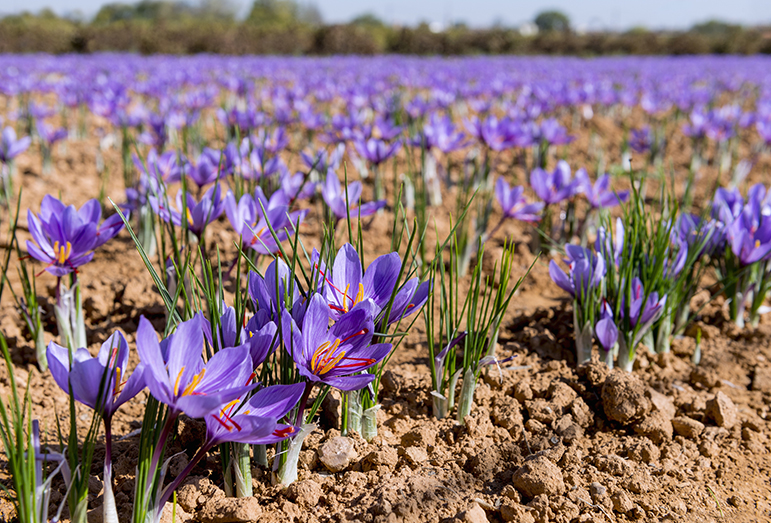
Even in the expensive world of spices, saffron stands out and the real saffron can cost you over $10000 per kilogram. Sought after for thousands of years as a spice, a dye and a medicine.
For making just 1 gram of saffron you need over 150 flowers. Some times the product we use in name of saffron may be false. So, just what makes this spice so expensive?
Saffron is the red stigma of the Crocus Sativus. Each crocus have 3 small stigmas, that have to be picked carefully by hand.
This minuscule harvest means that the amount you get from each flower is roughly 0.006 grams. No machine can do this delicate work to harvest these thin threads and it can take 40 hours of hard manual labor to produce just 1 kilogram of high quality saffron.
Growing the plants isn’t exactly easy either. The buds are actually called corms but, they are like a bulb basically like a flower bulb. So, the more flowers per bulb you can get and bigger the flowers are and this all depends on how you look after that, like growing , climatic conditions.
So. Once the flowers started growing, harvesters have to work fast to make sure they can pick it all in time. Almost all the saffron that is planted can flower within one week of the year and to maintain the quality, the flowers are best picked during the morning. Quality is key when growing such a precise crop and the taste of the saffron depends on the rainfall, temperature and soil.
Kashmir is famed for producing some of the highest quality saffron in the world. In Kashmir, red soil is mostly found and this is fertilized and good for saffron.
The most expensive highest grade saffron is generally made up of just the very tips of the Stigma.
In Iran,where over 90% of the saffron is produced. There are 4 grades. The lowest grade is the bunch I.e., the entire strand that’s pulled from the flower, from the dark red tips to the yellow base. In higher grades, the yellow strand is removed leaving a long strand of pure red.
One kilo of saffron is made up of around 4,50,000 strands and you need 1,50,000 flowers and to grow these flowers, it needs a large space.
Over 200 metric tons of saffron threads are harvested worldwide each year. This is the result of over 30billion flowers. The demand for the threads is so high that some might produce fake saffron.Some threads are even made of corn silks, coconut fibers or even horse hair, and to made it look real- synthetic colors are used to dye the lower grade stigmas and sell them as high grade saffron.
The main reason for the increasing demand of saffron is climate change which is drastically changing. In Kashmir, production has dropped significantly and many farmers are selling their land instead.
Between 2017 and 2018, saffron production in the region fell almost 70% from 16.5 metric tonnes down to 5.2 and with continuing droughts and climate change the current harvest could become even more rare
Living in the 21st century, life has become much easier with the advent of much advanced technology. We all are connected to each other via multiple social media platforms and no longer rely on postcards and letters to convey our message to our dear ones. These new platforms have also made it easier to communicate with new people and widen our social circle. No doubt, these platforms provide us with thousands of opportunities for our own benefit. Many people have sought to their personal small businesses owing to the ease of access to higher number of people and minimum marketing cost and labour. Unfortunately, even if we live in the world that has made life much easier, the modern generation is much more isolated than ever and is at the higher risk of facing mental health issues such as depression and anxiety more often as compared to the previous generations. In the modern world, statistics show that depression has become a common illness worldwide affecting 3.8% of the total world population, approximately 280 million people worldwide.
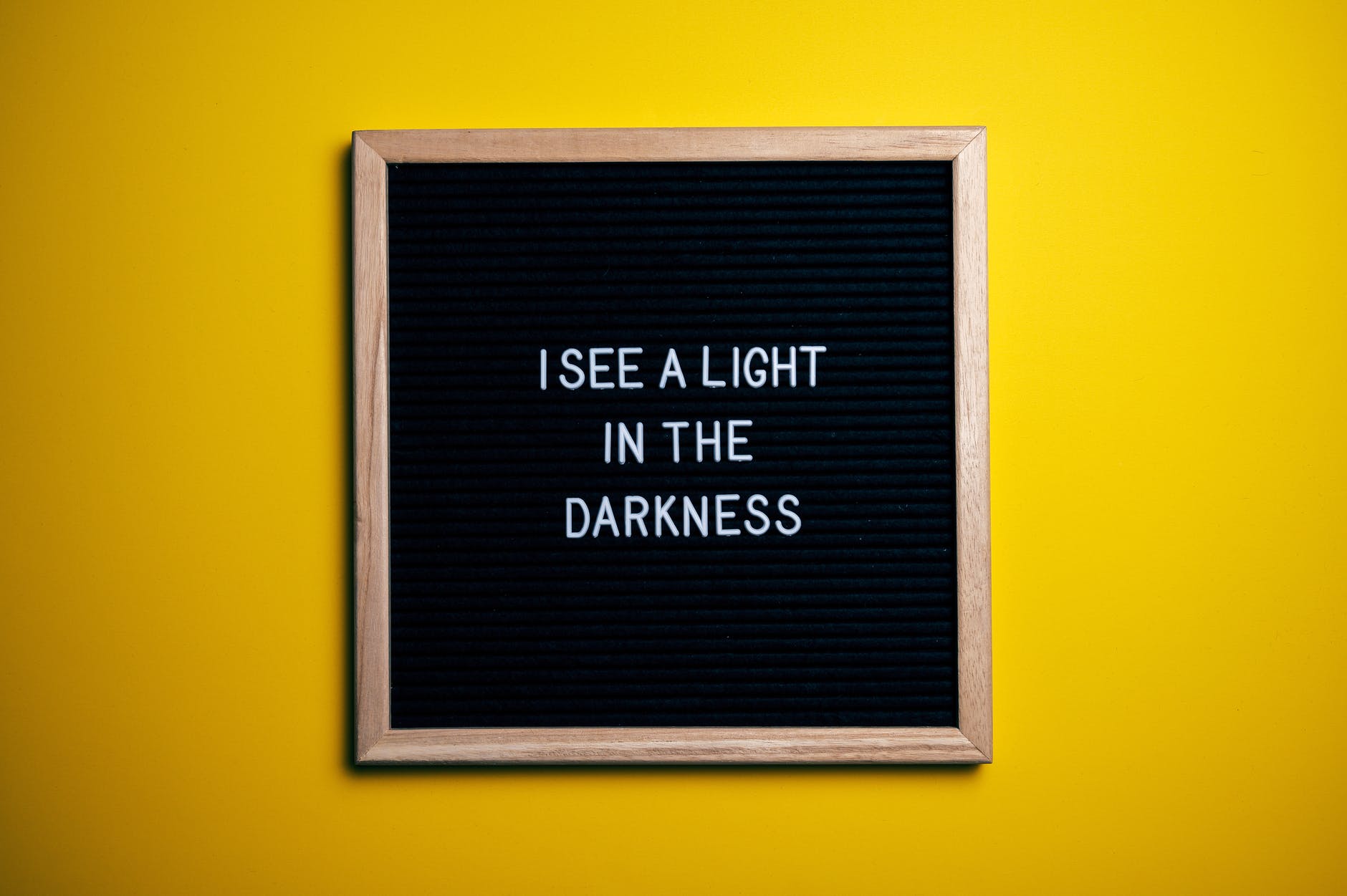
Mental health is often considered as a byproduct of physical health and nobody actually sees that both are equally important and are equally responsible for a person to live a longer and happier life. There are many examples where we see a physically fit person committing suicide or doing any other unacceptable actions. Suicide is one of the leading causes of death in young people. Globally 800,000 people die from suicide every year. The number is quite overwhelming! But the reason behind this is something that may seem very trivial but is very deadly at times! This reason is nothing but “notfacing the reality” and “notaccepting the truth”. It is all about seeing the light even in the darkness.
Something that we all can agree is that the modern generation is very good at is running away from the consequences of their actions and they refuse to face the reality. Every single day we see people posting certain good moments of their lives, people being successful in their lives, people tirelessly working hard, some success gurus giving tips on how to become successful and so much more. All these posts do make us rethink our own decisions and choices. We start questioning what we are doing in our life and by what level are we able to be called successful. We start following those online success and motivational speakers who tell us to work tirelessly, forget our own needs and wishes and just jump into the marathon even if we don’t want to be a part of it. This is mostly because when we see others achieve their dream job or what they desired for, we subconsciously start getting compelled to do better than them. There is the thought of doing the exact same thing better and quicker (in some cases) than others. We too want to feel the sense of achievement. We too feel the obligation to prove ourselves to others. We want our life to hold some worth in the society by doing things that don’t even entertain us or don’t even tingle our excitement. We just jump into the race without being equipped with proper protective gears. And what comes next is the inevitable, failure. And this failure brings with it an immense mountain of disappointment, self-doubt and fear. The question here is, did we think before jumping into the race? Did we ask ourselves if we really want this? Did we care about failure or the consequences of our actions before going on the path? The simple answer is NO. We did not. We just saw someone do it and succeed and we decided to do the same without analyzing the intensity of the result.
The most saddening part of the picture is after failing the task, the blame game starts. Self- blame, blaming others for their own failure and this process continues. We cannot accept the fact that we failed and we get stuck at that only. We prohibit ourselves from moving on and kill our own determination. This further results on nothing but self deterioration and leads us to take extreme steps. But what changes occur in the society? Nothing, absolutely nothing. The world still goes on and people still jump into the race and on the other side of the picture there exists a person who once failed, stands up again and fights for what he desires. He accepts the failure and learns from it about what his actual destination is.
Fear of failure and lack of the ability to accept failure does no good instead of bringing ourselves down to the point where we can’t get up on our feet again. Fear of facing the reality and accepting it leads to nothing but self doubt and lower self esteem. All these unnecessary thoughts leads us to nowhere other than self deterioration. Thus, it is really important to learn and accept the fact that failure is an inevitable part of life. We all know “failure is the pillar of success”, as it is taught to us at the very early age. But what we do is just forget this important fact and stress over the term “failure” only. We forget the fact that even the person whom we saw getting successful online has undergone many hardships and even in many cases faced a number of failures but still they never gave up on themselves or neither their hard work. Thus, it is very important for us to face our fears, face the challenges and face our fears in order to move forward in life. It is ok to not feel ok. It is totally fine to say that you are not fine. It is absolutely ok to fail. But it is absolutely not ok to let that failure push you down. Enjoy the little things in life. Learn to accept the reality and move on with life. Get the happiness in little things and it is never an obligation for things to work out your way.
Cut throat competition and consumerism are the bones of the fast-paced modern life, born out of advancement in Science and Technology.
Everyone is busy and focused to secure a career and bright future for themselves. In this business, everyone seems to have forgotten the basic morality and ethics.
It must be kept in mind, if our means are wrong, our ends can never be right. Competition can never bring anyone in seeking. The most valuable treasure in the world is Peace, Happiness and Health. They can be in hand only through righteousness. Competition are antithesis of peace, health and happiness.
So. the most ideal approach to live a great life should be doing one’s best without compromising with the morals and ethics. One must never do mean things; think mean thoughts and speak words of any type.
“The outcome will always be grand if one’s thoughts, words and acts are garnd,”
In recent era, the most hyped and commonly used application which is being used by millions of people all around the world, is namely INSTAGRAM.
It is basically a social networking site service which allows users to upload media that can be edited with filters and organized by hashtags and geographical tagging.
This is done by the people for getting likes and fame on social media in lieu of becoming an influencer or famous among people by show casing their talents and to be more specific by out bursting their thousands and millions of followers.
For increasing name and fame on social media, people especially the youth literally buy likes on their pictures, videos by requesting their followers to re-post, re-share their posts on their stories. They literally allow the strangers to openly and freely invade in their privacy and life and allow them to judge on the basis of their posts and likes.
‘Likes on Instagram’ is rapidly becoming a trend to become popular like the famous celebrities.
People just for few likes on their posts either accept money, offer money or indulge in unfair means just to show how important, supreme or popular they are among millions of people.
While surfing the internet, we can see many sites and applications offering opportunities to people to grow and boost their followers and likes on any social media by paying just a handsome amount of money.’
This needs to stop, as in lieu of boosting followers and likes, many innocent people are trapped and later some are blackmailed too.
Likes from strangers or the people you don’t even know can be dangerous for you only. A few numbers of likes can’t tell how important, good-looking or what you are capable of.
Cut throat competition and consumerism are the bones of the fast-paced modern life, born out of advancement in Science and Technology.
Everyone is busy and focused to secure a career and bright future for themselves. In this business, everyone seems to have forgotten the basic morality and ethics.
It must be kept in mind, if our means are wrong, our ends can never be right. Competition can never bring anyone in seeking. The most valuable treasure in the world is Peace, Happiness and Health. They can be in hand only through righteousness. Competition are antithesis of peace, health and happiness.
So. the most ideal approach to live a great life should be doing one’s best without compromising with the morals and ethics. One must never do mean things; think mean thoughts and speak words of any type.
“The outcome will always be grand if one’s thoughts, words and acts are garnd,”
In recent era, the most hyped and commonly used application which is being used by millions of people all around the world, is namely INSTAGRAM.
It is basically a social networking site service which allows users to upload media that can be edited with filters and organized by hashtags and geographical tagging.
This is done by the people for getting likes and fame on social media in lieu of becoming an influencer or famous among people by show casing their talents and to be more specific by out bursting their thousands and millions of followers.
For increasing name and fame on social media, people especially the youth literally buy likes on their pictures, videos by requesting their followers to re-post, re-share their posts on their stories. They literally allow the strangers to openly and freely invade in their privacy and life and allow them to judge on the basis of their posts and likes.
‘Likes on Instagram’ is rapidly becoming a trend to become popular like the famous celebrities.
People just for few likes on their posts either accept money, offer money or indulge in unfair means just to show how important, supreme or popular they are among millions of people.
While surfing the internet, we can see many sites and applications offering opportunities to people to grow and boost their followers and likes on any social media by paying just a handsome amount of money.’
This needs to stop, as in lieu of boosting followers and likes, many innocent people are trapped and later some are blackmailed too.
Likes from strangers or the people you don’t even know can be dangerous for you only. A few numbers of likes can’t tell how important, good-looking or what you are capable of.
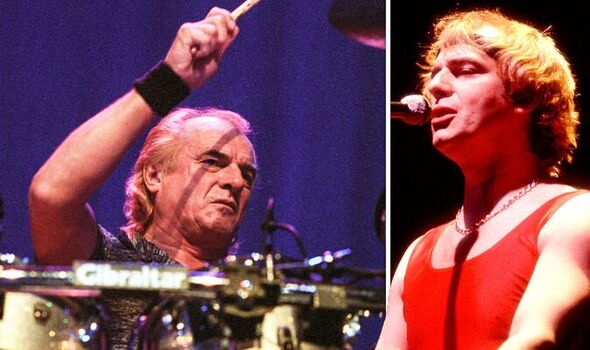
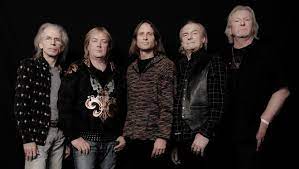
White was born in Pelton, County Durham, England on June 14, 1949. He began piano lessons at age six, took up drums at age 12, and started performing publicly when he was 13. White and the surviving members of Yes were inducted into the Rock & Roll Hall of Fame in 2017. Their hits include “Roundabout” and “Owner of a Lonely Heart.”
‘Yes’ are an English progressive rock band formed in London in 1968 by lead singer and frontman Jon Anderson, bassist Chris Squire, guitarist Peter Banks, keyboardist Tony Kaye, and drummer Bill Bruford. The band has undergone numerous line-up changes throughout its history; 19 musicians have been full-time members. Since May 2022, it has consisted of guitarist Steve Howe, keyboardist Geoff Downes, singer Jon Davison, and bassist Billy Sherwood. Yes have explored several musical styles over the years and are most notably regarded as progressive rock pioneers.
‘YES’ Drummer Alan White died at the age of 72 peacefully at his home after a ‘short illness’, the English prog-rock band announced on 26 May.
Alan is considered to be one of the greatest rock drummers of all time. He was born in 1949 in County Durham and joined YES on 30th July 1972 for the Close to the Edge Tour. He had previously worked with John Lennon’s Plastic Ono band after a phone call in 1969 to play at the Toronto Rock Festival. Alan continued working with Lennon including on the Imagine album and with George Harrison on All Things Must Pass. He also worked with several other musicians over the years, including Ginger Baker’s Air Force, Joe Cocker, Gary Wright, Doris Troy and Billy Preston to name but a few. Alan White was inducted into the Rock and Roll Hall of Fame as a member of YES in 2017.
A number of health setbacks since 2016, had restricted Alan’s time on stage with YES on recent tours with Jay Schellen filling in and Alan joining the band, to great applause, towards the end of each set.
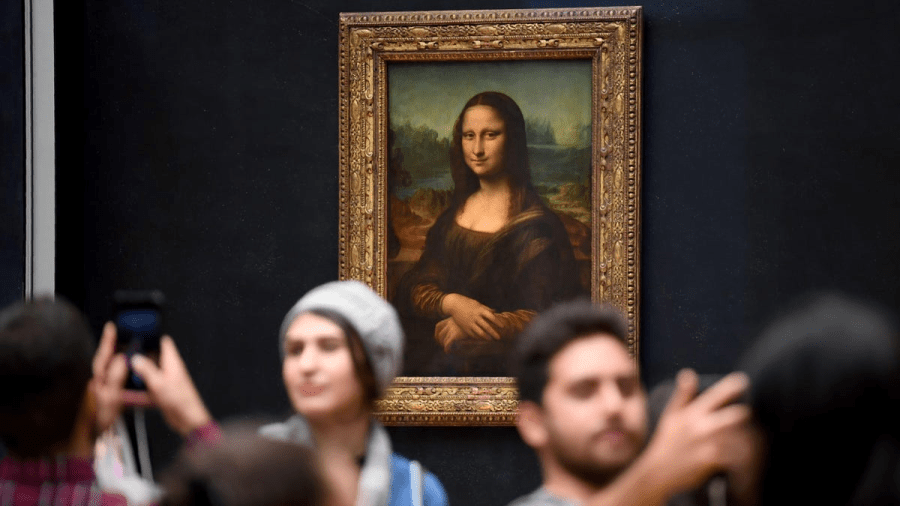
Some people are disappointed when they first see the most famous painting in the world.
Maybe at first glance it doesn’t give you the wow factor that other paintings give when you see. But the truth is, when you see how many people are surrounded every time just to see the masterpiece is on different level.
But the fact what we see is quite a contemplative portrait. A portrait which is the greatest psychological portrait ever painted. A portrait so ahead of its time, that centuries later we are still trying to figure it out.
In 1517, the French king, King Francis I offered Leonardo a job, court painter and engineer and architect to the king. Leonardo now in his sixties moved to the chateau of Amboise in France and never went back to Italy. He brought with him dozens of sketch books, but one painting i.e., Mona Lisa. leonardo knew how important it was. He know it was a master piece
Mona Lisa is the end product of the greatest inquisitive mind in history. A self made man with a voracious appetite for knowledge, a man who dedicated himself to the study of anatomy, geology and philosophy
For Mona Lisa he used a thin grained piece of popular tree and applied an undercoat of lead white. he painted with glazes that had a very small amount of pigment mixed with the oil. So, how dark you want your glass to be, depends on how much pigment you use. He used more like a wash, which he applied thin, layer by layer.
As we move around the painting, that light shifts around. he used tiny, almost invisible brushstrokes applied super slowly over months, or in Mona Lisa case, it’s years.
By contrast, on her skin, brush strokes were applied in an irregular way and that makes the grain of the skin, look more life like. All of these techniques pioneered by Leonardo, bring the painting to life. He made sure, we would not be distracted from the face of Mona Lisa.
Leonardo uses the classic pyramid shaped composition that was introduced during the renaissance. It is an important change from the paintings of the 15th century. The structure provides stability but more importantly it provides a clear center of focus and directs your gaze.
In Mona Lisa’s case, it is pulling us into her face. The Mona Lisa is the earliest Italian portrait to focus on the sitter in a 3 quarter length pose, rather than full length. But why? because he completely fills the frame with his subject, making the painting more intimate and cutting down on distractions.
The another thing is, portraits were usually done with an open sky as the background, a monotone background or a simple room. Mona Lisa is in front of a complicated landscape that only existed in Leonardo’s imagination. Paintings that are drawn during that period had both the subject and the background in sharp focus. Whereas the background of Mona Lisa seems to fade or become more blurred and out of focus. This is Arial perspective and Leonardo invented it
The life of a student is often seen as the “perfect life”. There is not much complexity to their life. After all, what they have to do is get up, get dressed, have their breakfast made by their mom and then rush to school without worrying about anything else. After their school, they return home, having everything prepared for them by their parents. What a perfect life, isn’t it? Nothing to worry about or to stress about! Everything they need is fulfilled by their parents. But in reality, is this what a student actually feels? Well, of course not! It’s only the point of view of everyone excluding the student himself who actually goes through the so- called “perfect life”? Let’s look more into it.
Nobody ever has a perfect life. Everybody has something that he wishes was not the way it is.
Stan Lee
The very notion of a “Perfect Life” is flawed. Nobody ever on the surface of earth has had a “perfect life”. Each and every person has been through or is going through some or the other kind of problem in their life. As in the case of students, the major issue faced by them is society’s expectations from them. As easy as it seems to have a student life, in reality it is nothing but a burden in today’s world. People, especially in many cases the parents, have high expectations from their children. They want their child to become doctor, engineer, administrative officials, etc., as per their expectations without paying any interest to what the child actually wants to do. Sometimes they force their child to take unnecessary tuitions and courses at an early age just to compete with others and to fulfill their expectations regardless of the child’s wish. This behavior, as normal and beneficial may seem, isn’t that encouraging and promising. Such behavior creates a stressful environment for the child who is subject to constant nagging and scolding if he/she defies the parents wish.
The stress of exams is an additional issue that overcrowds the mind of a student. The need to complete the syllabus in time without leaving behind any portion, the need to complete the assignments in time, the need to be the best student in front of the teacher’s eyes and above all the need to fulfill the dreams of their parents are some of the never-ending thoughts which constantly consume the mind of a student. A student has to go through many hurdles in order to satisfy the wants of the society. Career options revolving around any kind of art form, fashion designing, management courses, etc., are still seen to be inferior to that of doctor and engineer. If both parents are doctors, then the child has to become a doctor as per the social tradition cum orthodox. It is not new that children are at risk to many mental health issues due to this reason. Mental health deterioration in children is often neglected in the society which in turn, results in some severe damage to the emotional capability of a child. Failure in exams is still one of the top reasons behind suicide and depression in India. Apart from all this, a child subject to all this kind of stress, when does not get proper aid and time from the parents, becomes prey to ADHD and in some cases, turns to alcohol and drugs which results in nothing but self-destruction. Mental health of a student is as important as the physical health in order to gain prosperity. The increasing levels of competition and stress, the constant nagging by the society to win in this so-called “rat race” takes a toll on the mental health of a student. Comparison with other students, no matter how constructively be suggested, results in self-doubt within the students.
In conclusion, no matter how easy the life of a student may seem, in reality it is not a cakewalk! The burden of fulfilling the wishes of the parents and the society results in nothing more than unnecessary stress, confusion and self-doubt. Thus, the parents need to be aware of the unwanted pressure they are putting on their child’s shoulder and rather be more attentive and invested in their child’s wishes and dreams.
Children are not thing to be molded, but people to be unfolded.
The Countering America’s Adversaries Through Sanctions Act (CAATSA) is a US federal law, enacted on 27th July, 2017 and came into effect from January 2018, that has imposed sanctions on Iran, North Korea and Russia. This act prevents trade partners of the United States in entering into bilateral contracts with these three nations. The Act empowers the US President to impose at least five of the 12 listed sanctions on persons engaged in a significant transaction with Russian defence and intelligence sectors. Its ultimate goal is to prevent revenue from flowing to the Russian Government. The Countering America’s Adversaries through Sanctions Act (CAATSA), aims at taking punitive measures against Russia, Iran, and North Korea. The Act primarily deals with sanctions on the Russian oil and gas industry, defenceand security sector, and financial institutions, in the backdrop of its military intervention in Ukraine and its alleged meddling in the 2016 US presidential elections.
Background of CAATSA:
The Countering America’s Adversaries Through Sanctions Act came against the backdrop of three events that would have serious implications regarding geopolitics. They are as follows: • Iran’s Nuclear Missiles Program: The United States Government believed that any progress in Iran’s nuclear missile program would further destabilize the Middle-East as Iran has repeatedly made threats against Israel, a key NATO and United States ally. The CAATSA gives authority to the President of the United States to impose sanctions against any party involved in the sale and transfer of military technology to Iran. • Curbing Russian influence: The Russian annexation of Crimea in 2014 and allegations of interventions in the US polls of 2016 was the catalyst for the CAATSA against Russia. Under the act sanctions can be imposed on Russia should the state or private individuals be found involved in activities such as cybersecurity, crude oil projects, financial institutions, corruption, human rights abuses etc. • North Korea and weapons of mass destruction: North Korea has a nuclear weapons military program and as of 2020 it’s estimated missile arsenal includes 30-40 warheads with enough fissile materials to produce 6-7 missiles per year. North Korea has made repeated threats against its South Korea repeatedly and also against the United States.
Types of Sanctions: The CAATSA contains 12 types of sanctions. There areonly two sanctions that may impact either India-Russia relations or India-US relations. • Prohibition of Banking transactions: It is likely to have an impact on India-Russia relations.This would mean difficulties for India in making payments in US Dollars to Russia for the purchase of the S-400 systems. • Export Sanction: The second sanction will have greater consequences for India-US relations. It has the potential to completely derail the India-US Strategic and Defence partnership, as it will deny the license for, and export of, any items controlled by the US.
India’s Concerns :
Seventy per cent of Indian military hardware is Russian in origin. While the US has become its second-largest defence supplier, mainly of aircraft and artillery, India still relies heavily on Russian equipment, such as submarines and missiles that the US has been unwilling to provide. The USA President was given the authority in 2018 to waive CAATSA sanctions on a case by case basis. A waiver of such CAATSA for India has been under consideration since the law had come into force. In fact, India was threatened with sanctions when it decided to buy the S-400 missile launchers from Russia and buy crude oil from Iran. What is also worrying for India is the example of Turkey who, despite being a key NATO ally, was expelled from the US F-35 fighter jet programme when it purchased S-400 missile systems from Russia. Yet India went ahead with the S-400 deal in 2018 with no negative reaction from the United States government. The delivery of the S-400s is expected to finish by 2025. However, the USA has repeatedly stated that India should not assume it will get a waiver. Now India could also face USA sanctions for purchasing the S-400 Triumf missile defense system from Russia under the CAATSA. If implemented stringently, CAATSA would impact Indian defence procurement from Russia. Lately, the United States Government has stated that although a waiver is not possible at this time, a blanket application of sanctions against India for its defence contracts with Russia is also not being considered. India stopped importing oil from Iran in mid-2019 following sanctions on the Persian Gulf nation by the Trump administration.Iran in 2017-18 was its third-largest supplier after Iraq and Saudi Arabia and met about 10% of total needs.Iran getting closer to China is also a serious concern for India.
India needs to balance its relation with both Russia and USA, so that its national interest is not compromised. Russia always saw India as a balancer that’s why Russia facilitated India’s inclusion into Shanghai Cooperation Organisation (SCO) and formation of Russia-India-China (RIC) grouping.The defence procurement for India has become significant amid deadly clashes with China on Line of Actual Control (LAC). Further, Russia is an all weather defence partner of India.India today is in a unique position to have a favourable relation with all great powers.It needs to develop closer ties with the United States, which could balance any moves towards a strategic partnership between China and Russia. Thus, India must leverage this position to help in building a peaceful world order.
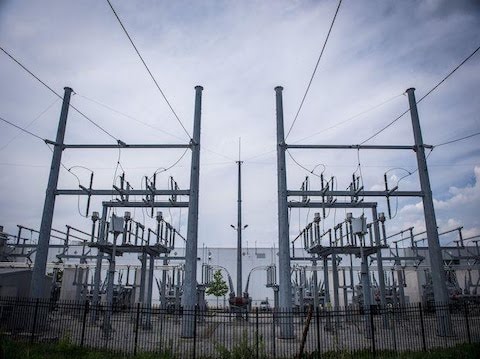
The peak power demand in the national capital rose to 7,334 MW on Wednesday afternoon, the highest ever in June, amid increased use of cooling appliances to beat the intense heat, discom officials said.It is expected to hover around 8,200 MW in the coming days, they added.
“Before June 9, Delhi’s peak power demand had never crossed the 7,000 MW-mark during June.
However, on May 19 this year, it clocked 7,070 MW. It has already crossed 7,000 MW six times in June this year and once in May,” a power distribution company (discom) official said.
The power demand peaked to 7,334 MW at 3.35 pm on Wednesday.Delhi’s power demand crossed the 6,000 MW-mark on every single day this June, the official said.In 2021, it crossed the 6K mark on nine occasions through the month, five-times in 2020 and thrice in 2019.
The peak power demand in the national capital rose to 7,334 MW on Wednesday afternoon, the highest ever in June, amid increased use of cooling appliances to beat the intense heat, discom officials said.It is expected to hover around 8,200 MW in the coming days, they added.
“Before June 9, Delhi’s peak power demand had never crossed the 7,000 MW-mark during June.
However, on May 19 this year, it clocked 7,070 MW. It has already crossed 7,000 MW six times in June this year and once in May,” a power distribution company (discom) official said.
The power demand peaked to 7,334 MW at 3.35 pm on Wednesday.Delhi’s power demand crossed the 6,000 MW-mark on every single day this June, the official said.In 2021, it crossed the 6K mark on nine occasions through the month, five-times in 2020 and thrice in 2019.














 Eduindex
You must be logged in to post a comment.