

The Deep under world- MARIANA TRENCH
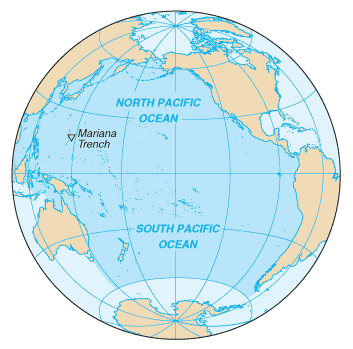
The infamous Mariana Trench sits like a crescent shaped dent in the floor of the Pacific. A 2,550kms long, 69km wide fracture that plummets down into a pure black/ dark void.
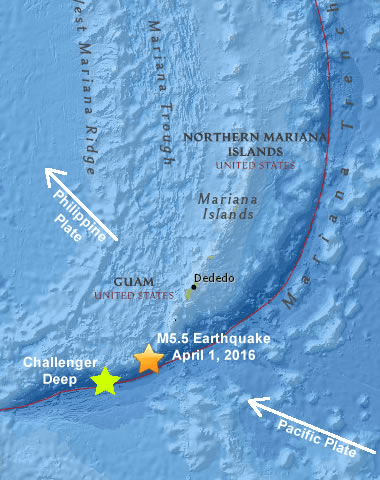
At the bottom it hosts the deepest known location on the Earth, the Challenger Deep- 11,033meters or 36,200feet beneath the waves. The trench itself is, but one part of the global network of deep scars that cut across the ocean floor. Features that formed from a process called “subduction”.
In the case of the Mariana Trench, the western edge of the Pacific plate was thrust beneath the smaller Mariana plate to the west, creating the deep fracture. Molten material then rose through volcanoes near the trench, building the nearby Mariana islands.
At its deepest point, The Mariana trench dips down into a little explored zone of the ocean. the Hadal zone, named after the realm of Hades, the underworld of Greek Mythology. A suitable title for a place, where the conditions of the pure darkness, acidic freezing water, scarce food and the immense pressure create a challenging environment for the creatures to survive in. For much of history, it was believed to be a dead zone, void of any life at all. An impossible frontier and an empty void of perils that could never be reached by any human. But in the 19th century this was all about to change.
The Mariana’s depths were first plumbed in 1875 when the crew abroad the H.M.S challenger cast a weighted sounding rope over the side of the vessel and found they need more rope. They did not expected there to be a location so deep. Knowing it’s existence, few dared to venture to the bottom.
In 1960, 85years after the Challenger deep was discovered, 2 men set out to reach the bottom, Jacques Piccard and Navy Lt. Don Walsh, sheltered only by a cramped bathyscaphe submersible called THE TRIESTE. Their 5 hour descent was fraught with challenges. The water pressure near the bottom was 1000’s of times greater than atmospheric pressure at sea level. this caused crack, limiting their time spent on the sea floor to only 20minutes.
Later other experts lead their way and saw microorganisms living of chemicals from altered rocks. It is a sunless world.
Why is the ocean so deep here?
The Mariana Trench is located at a convergent plate boundary. Here two converging plates of oceanic lithosphere collide with one another. At this collision point, one of the plates descends into the mantle. At the line of contact between the two plates, the downward flexure forms a trough known as an ocean trench. An example of an ocean trench is shown in the diagram. Ocean trenches form some of the deepest locations in Earth’s oceans.
Never came across the thought, How mountains are formed??
We love climbing mountains, hiking through the mountains, and even just looking at them. But never have you thought how are they formed????
well, lets start by knowing what mountains are actually made of.
Mountains are made of the same stuff that we are all standing on right now, the hard rocky layer of the Earths surface, called the Crust. To be simple, The crust is a crispy, crunchy part/layer of the Earth.
The dirt, the rocks and all of the land on the planet are parts of the Crust. And it covers the whole Earth, even the Land that’s under water.
To be brief and clear, Earth’s crust is kind of like bread crust i.e., it covers everything in the same way that bread crust covers the whole loaf. But, unlike the bread crust, the Earth’s crust isn’t all in one piece. It’s broken up into pieces called plates, which covers the Earth like a giant Jigsaw puzzle.
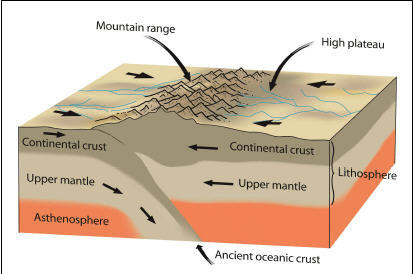
These plates are huge and heavy but they don’t just sit there. In fact they are always moving. They move very slowly, just a tiny bit at a time, about few centimeters a year. But over a long periods of time, all of that moving around can add up to some big changes. Some times two of the plates in the Earth’s crust will move towards each other, and when they do they start to press against one another. But they have nowhere to go. So, they will just push against each other until they start to crumple. Then the rocks that make up the plates are pushed up over and over each other. The more they push together, the more the land rises and after a while, you will see a big thing, which we call a mountain.
Since, the plates are so huge, when they push up against each other, they don’t just make one mountain, they can makeup a whole mountain range, like The Alps in the Europe, The Andes in South America, The Appalachians in The United States were all made this way- by two plates of Earth’s crust slowly crashing into each other. Because of the slow movement of plates, it takes really long time for this mountains to form. long time in the sense millions and millions of years. That’s the reason why we can still see and even hear in news that the length of the mountains increased by some inches and are still growing.
Mount Everest, the highest mountain on Earth, grows about 4 millimeters every year. Do you know the reason? It’s because, the 2 plates that make up the land in the part of the world are still slowly smashing each other(Eurasian plate and Indian plate).
So, the plates of Earth’s crust are always in motion, which means that a long time ago, the mountains we see today weren’t there at all! and the Earth will definitely will look different in the future too!!!!!!!!!!!!!!!! But takes a bit more time than we expect.
Twitter bots bug Elon Musk no end
Elon Musk has accused Twitter of “resisting and thwarting” his right to information regarding the fake accounts issue that he had raised earlier. He has also called Twitter apparent refusal to not share the information a “clear material breach” of the terms of the merger agreement. “Mr. Musk does not agree with the characterizations in Twitter’s June 1 letter. Twitter has, in fact, refused to provide the information that Mr. Musk has repeatedly requested since May 9, 2022 to facilitate his evaluation of spam and fake accounts on the company’s platform,” the letter signed by Musk’s attorney Mike Ringler states.
Boost for space PSU
The Union Cabinet, chaired by Prime Minister Narendra Modi, on June 8 approved the transfer of 10 in-orbit communication satellites from the government of India to NewSpace India Ltd (NSIL), a commercial arm of ISRO.
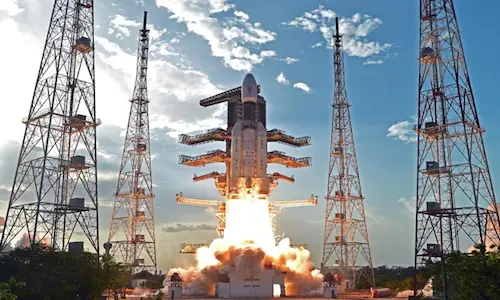
The Cabinet has also approved increasing the authorised share capital of NSIL from Rs 1,000 crore to Rs 7,500 crore.
“NSIL functioning as a single-window operator will also facilitate the ease of doing business in the space sector. NSIL Board will now be empowered to price the transponders as per the market dynamics and global trends in the satellite communication sector. NSIL is also authorised to offer and allocate capacity as per its internal policies and guidelines,” it added.
The transfer of these assets to NSIL will further provide the desired financial autonomy to the company to realise capital-intensive programmes or projects, thereby offering huge employment potential and technology spin-off to other sectors of the economy.
In Assam success rate of class 10 dips upto 56%
On Tuesday,The board of secondary education Assam announced the results of class 10 board examinations in which 56.49% of 4,05,582 candidates were declared successful as per the officials said.
The board states that the pass percentage of boys was 58.80 while it was 54.49 percent among the girls.
Total 2,29,131 candidates cleared the examination of class 10.Dhamaji recorded the highest pass percentage at 85.46 while chirag recorded the lowest percentage at 34.27.
In 2021,the pass percentage was 93.10 the examination could not be held last year just because of COVID pandemic and evaluation scheme was done on basis of special formula taking into the account of past performances of candidates.
In the Assam high Madrassa examination also conducted by the SEBA, the pass percentage was 54.73 with 10,454 who had appeared in it.
So, the percentage was dipped upto 56% as compared to past one.
OIC pursuing divisive agenda, says India
India’s strong response came while several countries, including India’s crucial Gulf partner, the United Arab Emirates (UAE), and security partners Oman and Jordan condemned the remarks.

India on Monday hit out at the Organisation of Islamic Cooperation (OIC) after it condemned the derogatory comments made by two former BJP leaders on Prophet Muhammed and Islam.
Arrival of British in India
On May 20, 1498, Vasco da Gama arrived in Calicut, establishing a sea route connecting Europe and East Asia. Following this, India became a focal point for European trade, as well as the scope of European ambitions to gain control of the Spice Islands trade monopoly, resulting in numerous naval conflicts. The British East India Company arrived in India to conduct business, primarily in spices. They also traded silk, cotton, indigo dye, tea, and opium, among other things.
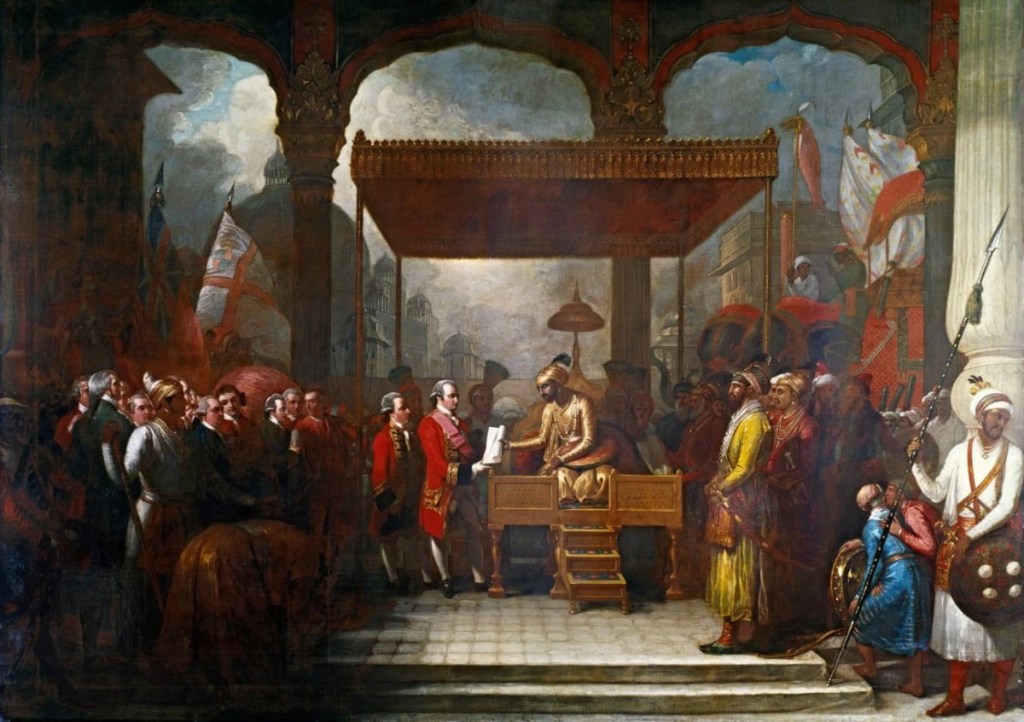
John Watts and George White created the British Joint Stock Company, or East India Company, in 1600 AD to seek trade with South and South-East Asian nations. The majority of the shares in these joint-stock companies were owned by British merchants and nobles. The British government had no direct relationship with the East India Company. Initially, the British enter the Indian subcontinent as spice dealers. Prior to the modern era, spices were the principal means of preserving meat in Europe. The subcontinent was then dragged into the Empire by force, thanks to more modern and effective weapons. “The sun never sets on the British Empire,” as the saying goes. It would have been more true to argue that the British Empire was primarily made up of regions that were occupied and controlled under force. On August 24, 1608 AD, the British arrived in the Indian Subcontinent at the port of Surat for the purpose of trade, but it was not until 7 years later that they received a royal order (i.e. Farman) to construct a factory in Surat under the command of Sir Thomas Roe (Ambassador of James I). Following this, the Vijaynagara Empire granted the East India Company permission to build a second factory in Massulipatnam. The British gradually surpassed the other European commercial companies, and their trading operations in India grew dramatically over time. Numerous trading posts sprang up around India’s east and west coastlines, and significant English settlements grew up around the presidential capitals of Calcutta, Bombay, and Madras. Silk, Indigo Dye, Cotton, Tea, and Opium were their main commodities. By establishing a facility in Kolkata 20 years later, the Company had expanded its footprint to the East of India. During their time as a trade corporation, they recognized that the entire Indian Subcontinent was divided into regional kingdoms in fact, therefore they began to consider how to consolidate all of the resources. The East India Company began interfering in Indian politics in the 1750s. When one of the Company’s military officials, Robert Clive, beat the armies of the Nawab of Bengal, Siraj-ud-daulah, in the Battle of Plassey in 1757, the Company’s fortunes rose and it transformed from a commercial endeavor to a ruling enterprise. After the First War Independence in 1857, also known as the Revolt of 1857, the East India Company’s reign finally came to an end in 1858. Following the breakup of the East India Company in India, the British Crown assumed direct authority of the country, ushering in the British Raj.
Arrival of British in India
On May 20, 1498, Vasco da Gama arrived in Calicut, establishing a sea route connecting Europe and East Asia. Following this, India became a focal point for European trade, as well as the scope of European ambitions to gain control of the Spice Islands trade monopoly, resulting in numerous naval conflicts. The British East India Company arrived in India to conduct business, primarily in spices. They also traded silk, cotton, indigo dye, tea, and opium, among other things.
John Watts and George White created the British Joint Stock Company, or East India Company, in 1600 AD to seek trade with South and South-East Asian nations. The majority of the shares in these joint-stock companies were owned by British merchants and nobles. The British government had no direct relationship with the East India Company. Initially, the British enter the Indian subcontinent as spice dealers. Prior to the modern era, spices were the principal means of preserving meat in Europe. The subcontinent was then dragged into the Empire by force, thanks to more modern and effective weapons. “The sun never sets on the British Empire,” as the saying goes. It would have been more true to argue that the British Empire was primarily made up of regions that were occupied and controlled under force. On August 24, 1608 AD, the British arrived in the Indian Subcontinent at the port of Surat for the purpose of trade, but it was not until 7 years later that they received a royal order (i.e. Farman) to construct a factory in Surat under the command of Sir Thomas Roe (Ambassador of James I). Following this, the Vijaynagara Empire granted the East India Company permission to build a second factory in Massulipatnam. The British gradually surpassed the other European commercial companies, and their trading operations in India grew dramatically over time. Numerous trading posts sprang up around India’s east and west coastlines, and significant English settlements grew up around the presidential capitals of Calcutta, Bombay, and Madras. Silk, Indigo Dye, Cotton, Tea, and Opium were their main commodities. By establishing a facility in Kolkata 20 years later, the Company had expanded its footprint to the East of India. During their time as a trade corporation, they recognized that the entire Indian Subcontinent was divided into regional kingdoms in fact, therefore they began to consider how to consolidate all of the resources. The East India Company began interfering in Indian politics in the 1750s. When one of the Company’s military officials, Robert Clive, beat the armies of the Nawab of Bengal, Siraj-ud-daulah, in the Battle of Plassey in 1757, the Company’s fortunes rose and it transformed from a commercial endeavor to a ruling enterprise. After the First War Independence in 1857, also known as the Revolt of 1857, the East India Company’s reign finally came to an end in 1858. Following the breakup of the East India Company in India, the British Crown assumed direct authority of the country, ushering in the British Raj.
Football – Beyond Emotions
Football is one of the greatest sports of all time. It takes us into a fantasy of excitement and sometimes it hurts. Modern football originated in England in the 19th century. The game was a 120-yard pitch containing 2 goal posts in two equal half. the winner was decided by the goals.
There are two teams, each team contains 11 players including a goalkeeper. Today’s football is much improved by great players like Pele, Maradona, Cruyff, etc. The sport involves so much of emotional moments that broke so many hearts. The Munich air disaster, the Murder of Andres Escobar, and The death of Emiliano sala are some of the dark days of football.
Munich air disaster 1958
The Munich disaster occurred on 6 February 1958 in West Germany. players of the British club Manchester United were flying from Munich. the flight crashed after the third attempt to take off from a slushy runway.23 passengers died after that and 21 survived. that was one of the saddest days in football.

Andres Escobar’s death
Andres Escobar was a Colombian international player who played for Colombia in many championships including the world cup. The Colombian was played for like Athletico Nacional BSC young boys and the Colombian national team.

Escobar was murdered aftermath of the 1994 world cup for scoring their own goal in the world cup competition which leads them to knock out from that tournament. the incident degraded the image of the country.
Emiliano Sala’s death

The Argentine footballer Emiliano sala passed away on January 21, 2019. The young superstar was an emerging player who played for the French club Nantes. the separation of Emiliano sala was a heartbreaking moment for the football world. Sala was overcome by toxic gases from the unlicensed aircraft before dying in a plane crash.
Indo-Turkey Relations
There has been regular contact between India and Turkey since medieval times. The Ottoman Empire even sent expeditions to allied kingdoms such as the Zamorin and the Gujarat Sultanate to help them fight against the Portuguese colonization.
The first visit of India’s First Prime Minister *Jawaharlal Nehru * to Turkey was in the year 1960. Bilateral relations have been strengthened by the exchange of visits of leaders of both countries in recent times. These include visits by the then Turkish PM Recep Tayyip Erdogan to India in 2008 and the then Turkish President Abdullah Gul to India in 2010. Prime Minister Shri Narendra Modi attended the G20 Summit held in Antalya on 15-16 November 2015 on the margins of the Summit, Prime Minister had bilateral talks with President Erdogan. PM Modi and President Erdogan held talks in Hangzhou on 5 September 2016 on the sidelines of the G20 Summit. The two leaders interacted with each other on the sidelines of BRICs Plus meeting in Johannesburg on 25-27 July 2018 and met on the sidelines of G-20 in Osaka on 29 July 2019. EAM Sushma Swaraj made a transit halt at Erzurum on 19 February 2019.
Economic relations:
India-Turkey economic and commercial cooperation constitutes an important dimension of the bilateral relationship. The Bilateral Trade Agreement between India and Turkey was signed in 1973. Institutional arrangements in terms of Joint Committee for Economic and Technical Cooperation (JCETC) signed in 1983 and a Joint Business Council (JBC) between Federation of Indian Chambers of Commerce and Industry (FICCI) and Foreign Economic Relations Board of Turkey (DEIK) was set up in 1996. On 6 April 2015, Confederation of Indian Industry (CII) signed an MoU with the Union of Chambers and Commodity Exchanges of Turkey (TOBB) to promote bilateral trade and economic cooperation. CII also signed a MOU with DEIK in March 2018. A cooperating agreement between FICCI and TOBB was also signed for establishing India-Turkey Working Committee and Investment Forums. On 6 August 2015, State Bank of India and Turkey’s Akbank entered into a cooperation agreement to support bilateral trade and investments. An India Business Forum (IBF) was launched in Istanbul by the Ambassador in December 2018 which holds quarterly meetings.
Cultural Relations:
India and Turkey share a historical cultural overlap. Cultural exchanges have grown in recent years, especially after the revival of CEP in 2017. Cultural performances, film shows, exhibitions, seminars, outreach to universities are being organized regularly. A Festival of India in Turkey, India by the Bosporus, was held in March-April 2019 showcasing Indian dance, music, food and fashion in major cities in Turkey.
Apple to Release Software Updates to iPhone, iPad
While Samsung took top spot in Q1 in terms of smartphone market share, rival Apple is not taking the news lying down. In fact, the biggest tech company in the world will reportedly be releasing new updates to iPhones and iPads with its upcoming software updates, iOS 16 and iPadOS 16, according to NBC News. The company is expected to announce during its WWDC 2022 developer keynote on June 6.
According to Bloomberg, iOS 16 includes updates to notifications, messages and the Health app. The software will also include new multitasking panels for iPads.

Russia’s invasion on Ukraine which we forgot long back
(1917-1921).
In the final years of the First World War the Russian Empire was coming to its end. it had been devastated by revolution and finally transformed into the first communist country in the world in the years following revolution. Non Russian nations that lived under the house of Romanov sought to secure their long lost independence. One of these was Ukraine.
From 1917 until 1921, the Ukrainians struggled to build and secure an independent country fighting against the new regime, against the neighbors in the west and amongst themselves. When in February 1917, the revolution had overthrown the monarchy in Russia and the event had echoed throughout the entire empire. In Kiev, the capital of Ukraine, the central radar or the central council had takeover the control of the country which on June 23, 1917 proclaimed the free Ukrainian national Republic without serving its connections with the Russian state.
The nation began to awake, however the vast territory of ukraine under control was a difficult task and the country rapidly slid into Anarchy- the collapse of the Russian forces and Galatia made the matters even worse.
1918 The Battle of Kruty’ by Aleksey Shaparev
Is top and tailed by a contemporary Ukrainian soldier visiting the memorial to those killed at Kruty in January 1918 the tale tells the story of a group of students, their loves and families, as plucky efforts are made to stave off the conquest of Ukraine by the burgeoning and enormous forces of the Bolshevik army
After Math
Eleven of the students were re-buried at Askold’s Grave in the centre of Kiev after the return of the Tsentralna Rada to the capital in March 1918. At the funeral the then President of the Ukrainian People’s Republic, Mykhailo Hrushevsky, called every one of the 400 students who fought in the battle, heroes. In addition, poet Pavlo Tychyna wrote about the heroic death of the students.
After the fall of the Ukrainian People’s Republic the bodies of the students were moved to the Lukyanivske Cemetery in Kiev.
Forbidden memory
For the students of Kruty, their story would not end here. Some of the bodies of those killed in the battle were later buried at Askold’s Grave in Kyiv in March 1918 — with the ceremony attended by Mykhailo Hrushevsky, President of the Ukrainian Republic, who addressed a large crowd that had gathered for the occasion. With Bolshevik rule eventually coming to Ukraine, the Soviet authorities worked to Supress the memory of Kruty, fearing it would undermine their authority and inspire future Ukrainian independence movements.
Thankfully, the Battle of Kruty would not be forgotten. In modern day Ukraine, the bravery of the troops at Kruty has in recent times been commemorated, and in Kyiv a monument was erected in 2006 to remember the event. The battle has become a symbol of Ukranian Independence and National Identity, which has in turn generated its fair share of myths.
These myths have often blurred the historical reality of the battle, with details ranging from the number of troops present or even the exact date it occurred becoming obfuscated in the historiography of the event. However, what we can ascertain with certainty is the courage of those students involved: faced with limited supplies, heavily outnumbered and fearing brutal reprisals, the soldiers at Kruty made a valiant last stand against a vastly superior army and fought gallantly in defence of Kyiv.
As the horrific Russian invasion of Ukraine unfolds before our eyes today, the harrowing scenes of everyday Ukrainians bravely resisting occupation and protecting their homeland draws parallels with the heroes of Kruty. With the people of Ukraine facing an unjustified war waged by President Putin, the spirit of Kruty is still visible today — and it seems that the present will once again mirror the past.
UPSC CSE PRELIMS 2022 Paper Analysis

UPSC successfully conducted the Prelims stage for Civil Services Examination 2022 on 5th June 2022 (sunday). Paper 1 was conducted from 9:30 am to 11:30 am. Paper 2 CSAT was from 2:30 pm to 4:30 pm.
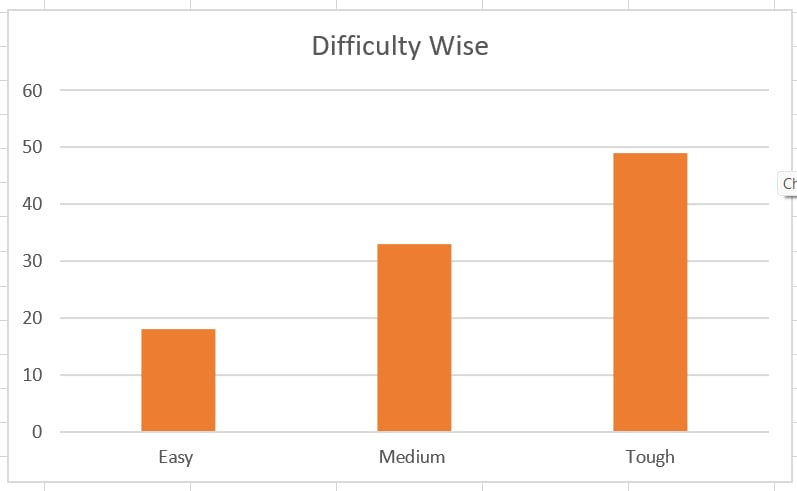
Many aspirants and coaching Institutes will be analysing the question paper for quiet a few days. Many professionals and teachers will be engaged in preparing answer key. Candidates have rated this year’s question as moderate to difficult (GS – Paper 1).
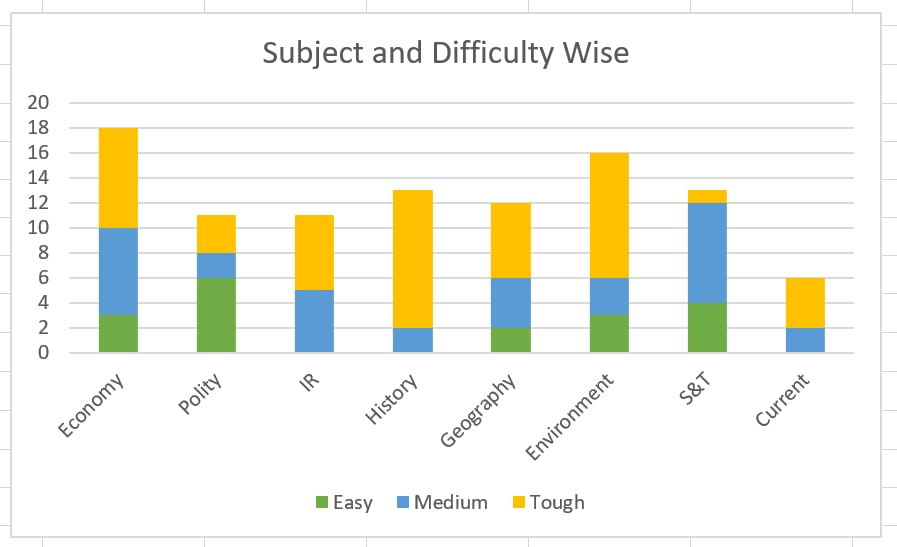
Here is the analysis of number of questions coming from each section for past 10 years.
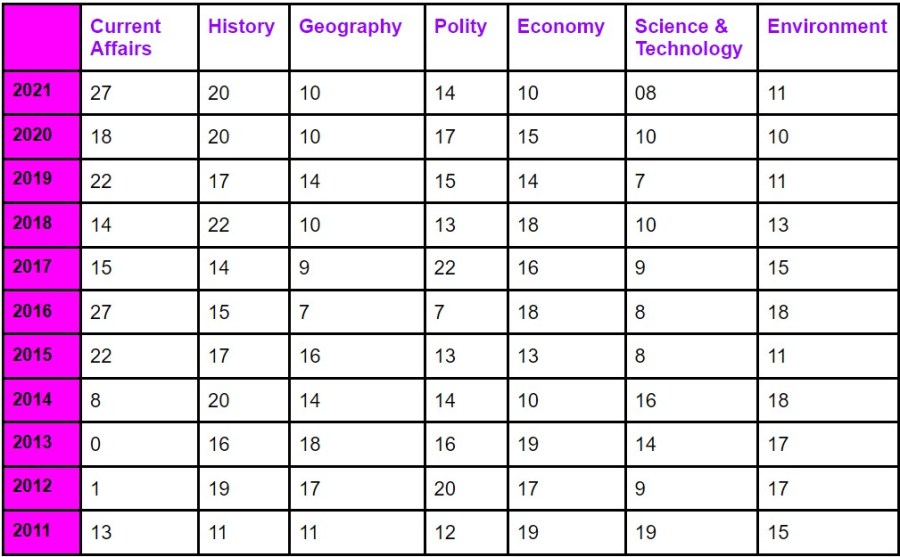
As evident from the data above, the composition of question paper is very dynamic in nature. No one can predict which section is more/less important than others.
Below is the cut-off of prelims for general category.
| 2015 | 107.34/200 | 53.67 |
| 2016 | 116.00/200 | 58.00 |
| 2017 | 105.34/200 | 52.67 |
| 2018 | 98/200 | 49.00 |
| 2019 | 98/200 | 49.00 |
| 2020 | 92.5 /200 | 46.61 |
| 2021 | 87.5 /200 | 43.77 |
This year the number of vacancies have also increased so aspirants are quiet positive and filled with enthusiasm.
Prelims paper 1 analysis (2022)
10 Upcoming Marvel shows

1. Ms. Marvel

A great student, an avid gamer and a voracious fan-fiction scribe, she has a special affinity for superheroes, particularly Captain Marvel. But Kamala struggles to fit in at home and at school—that is, until she gets super powers like the heroes she’s always looked up to. Life is easier with super powers, right?
2. She-Hulk: Attorney at Law
Premiere Date: August 17
Number of Episodes: 9
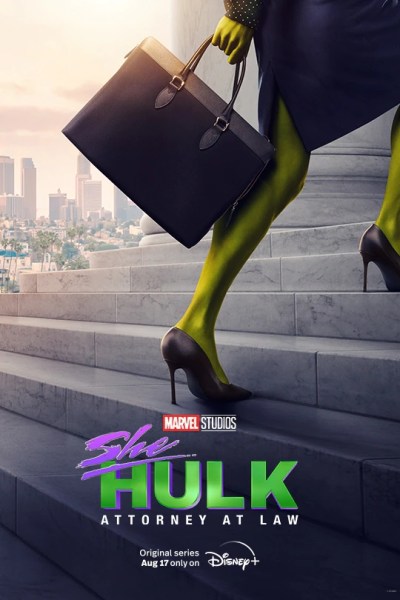
“She-Hulk,” a new comedy series coming to Disney+, stars Tatiana Maslany as She-Hulk/Jennifer Walters, a lawyer who specializes in superhuman-oriented legal cases. “She-Hulk” will welcome a host of Marvel characters to the series, including the Hulk, played by Mark Ruffalo, and the Abomination, played by Tim Roth. The series is directed by Kat Coiro and Anu Valia; Jessica Gao is head writer.
3. Secret Invasion

4. X-Men ’97

X-Men ’97 will be the first Marvel Studios project to not be a part of the Marvel Cinematic Universe, and not produced by Kevin Feige.
5. Ironheart

Iron heart will tell the story of an engineer who develops the most advanced suit of armour since Iron Man himself and then becomes a superhero.
6. Armor Wars
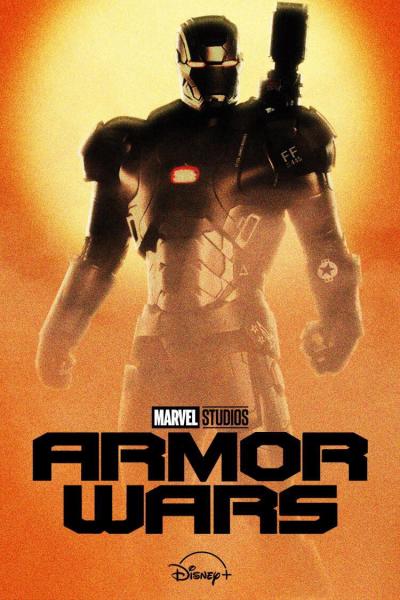
The upcoming series centres on Don Cheadle’s James Rhodes, a.k.a. War Machine, as he finds himself facing new threats after the death of his long time BFF Tony Stark. The show will follow Rhodey as grapples with one of Tony’s biggest fears: What happens when Stark tech falls into the wrong hands?
7. I Am Groot

Baby Groot returns! The tiny arboreal hero will star in a new series of shorts on Disney+, joined by “several new and unusual characters.”
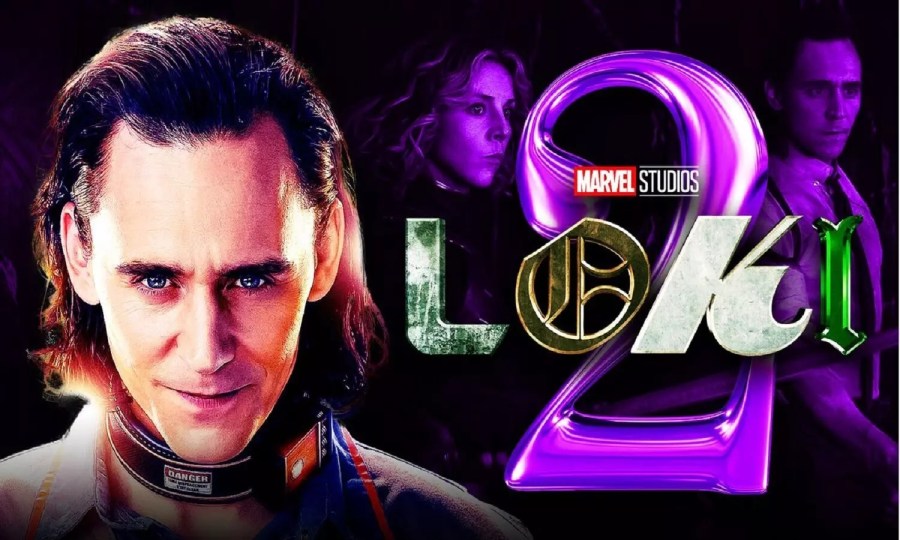
8. Loki Season 2
9. What If…? Season 2
10. Agatha: House of Harkness
This new spin-off Disney+ series will see Kathryn Hahn reprising her role as the evil witch Agatha Harkness, who is one of Earth’s most powerful witches, and lives for centuries, her ageing is slowed thanks to magical means.
 Eduindex
You must be logged in to post a comment.