The origin of “monkey pox”-

The monkeypox is a rare and dangerous viral disease which is found in Europe and US, has raised red flags in several countries. It is rare, usually mild infection as it is contaminated from infected wild animals in Africa.

It was discovered in 1958 when two- pox like outbreaks occurred in colonies of monkey kept for research, thus leading in its name says US centres for disease controla and prevention (CDC).

It is caused by monkeypox virsuses, a type of orthopoxvirus.One of two types in humans the one is African type causes a less severe disease than central African type.This may be spread from handling bushmeat, animal bites or scratches, body fluids, contaminated objects or other than less contact with infected persons.

Symptoms-. It includes headache, muscle pains ,fever and fatigue.It may intially appar like flu.

It can resemble an chickenpox, measles and smallpox, but it is distinguished by presence of swollen glands.

They appear behind the ear, below the jaw, in neck or in groin before onset of rash.

Many cases in 2022 monkeypox an outbreak presented with genital and penianal lesions, fever , swollen lymph.

How To Prevent-

Smallpox vaccine has been reported to reduce risk of monkeypox among previously vaccinated person in Africa.

The (CDC) recommends that person who investigating monkeypox outbreak and involved in caring for infected persons should receive smallpox vaccination.

The (CDC) does not recommends pre- exposure vaccination for unexposed veterinarian, veterinary staff, or animal control officers.

The( CDC) recommends that healthcare providers done a full set of personal protective equipment.

The disease is rare and dangerous so the people must be aware of the infection and should be vaccinated timely to avoid the chance to get infected.

Does language affect thought?

What is language? Linguists, psycholinguists, neurologists, evolutionary biologists, and philosophers have all tried to answer this question. ‘Language’ is often used interchangeably with ‘communication’, but they are not the same. Animals can communicate with each other, but they can’t be said to have language. Language, especially human language is unique and radically different from other types of tools of communication because of its immense vocabulary, ordered structure, use of metaphor and analogy, and syntactic flexibility. Human language can, thus, be broadly defined as an amalgam of lexicon, syntax, and semantics. Our identity is influenced by the language we speak. Identity can be broadly classified into ‘personal’ and ‘collective’ identity. Personal identity is, basically, a definition of yourself, and collective identity is how you define yourself in relation to others. Our identity is defined by myriad factors such as our beliefs, cognition, perception, culture, and tradition. The language we speak influences these factors and thus influences and cultivates our personal and collective identity.

Language affects the way we think. There is a hypothesis in linguistics known as linguistic relativity, also known as the Sapir-Whorf or the Whorf hypothesis. It concerns the relationship between language and thought. According to the Whorfian hypothesis, the language one speaks influences one’s cognition and perception of the world and thus people’s perception is relative to their spoken language. Nuances and idiosyncrasies in our language affect the way we communicate with and perceive the world, thus influencing our perception and cognition. There is empirical evidence available that establishes a link between language and thought, for example, the study of Chinese bilinguals and dialectical thinking. Eastern cultures and languages are proven to promote dialectical thinking. A group of researchers conducted a study in 2013 to see if Chinese bilinguals displayed different levels of dialectical thinking when communicating in different languages. The study concluded that the Chinese bilinguals displayed higher levels of dialectical thinking when primed by the Chinese language than with the English language (Chen et al., 2013).

The study regarding the gender of words and their effect on the speaker’s perception and cognition also helps establish a link between language and thought. The study conducted in 2003 asked German and Spanish speakers to describe objects that have opposite gender assignments in those 2 languages. When the speakers were asked to describe a “key” which is masculine in German and feminine in Spanish, German speakers used words like “hard”, “jagged”, “heavy” whereas Spanish speakers used words like “delicate”, “intricate”, and “lovely”. When asked to describe a “bridge”, feminine in German and masculine in Spanish, German speakers used words like “elegant” and “fragile” whereas Spanish speakers used “strong” and “sturdy” (Boroditsky 6).

These studies, to some extent, prove the Whorfian hypothesis. We think in our primary language, and we alter our thinking to fit our language. We can think without language, but we need language to know that we are thinking. Language thus influences our cognition and thought processes.

Language affects the way we perceive the world. Perception is subjective. The same objects evoke different meanings for different people and thus the way we experience the environment around us also differs from person to person due to different individual values, beliefs, culture, and language. Lera Boroditsky’s work with the Pormpuraaw community shows how language can influence a person’s perception of the world. The pormpuraaw community of aboriginal Australia think about time and space very differently. Their language does not use relative spatial terms like ‘left’ and ‘right’ but instead uses absolute directional terms like ‘north’, ‘south’, ‘south-east’. When asked to arrange cards that depicted temporal progression in the correct order, the Pormpuraawans sometimes arranged the cards from right to left and sometimes left to right. Their decision was not random but was instead dependent on their spatial orientation. If they were facing south the cards would be arranged from left to right and when facing east the cards would come towards the body and so on, thus always arranging the cards from east to west. The Pormpuraawans superior knowledge of spatial orientation stems from their immense vocabulary dedicated to describing time and space (Boroditsky and Gaby, 2010).

Another study was conducted in 2007 that establishes a link between language and perception. The study tested Russian speakers and English speakers on their ability to discriminate between different shades of blue. The result of the 2007 study indicated that the Russian speakers were faster to discriminate between the 2 shades of blue than the English speakers because the Russian language describes a clear distinction between light blue and dark blue unlike the English language (Winawer et al., 2007).

Thus, a person’s language can immensely influence how he views objects, colours, and even fundamental concepts like time and space.

Language is a carrier of culture and tradition. You communicate through language and when you communicate you pass and receive information that reflects your upbringing, your culture, history, and tradition. In a community, the history and culture of that community are passed down generation after generation through a shared language. This fact makes the task of preserving and saving language even more cardinal. When a language dies, it’s not just mere words that go out of existence. The history, heritage, tradition, and culture attached to that language also cease to exist. The Mahabharata and Ramayana were oral stories before they were written, same with the Iliad and Odyssey. The accumulated body of knowledge of a community dies when its language dies. If you lose your language, you also lose a sense of your personal and collective identity because “language carries culture, and culture carries the entire body of values by which we come to perceive ourselves and our place in the world” (Thiong’O, 118).

Humans are social creatures. We have an innate need to communicate with others and it is through communication that we come to define ourselves, our personal identity, and our place in the world, our collective identity. Language is located at the epicentre of our identity as it is through language we communicate with others. Our attachment to language thus cultivates our identities. Our personality, our individuality, our ego, and our existence are defined by the mere words we utter.

Works cited

Chen, Sylvia Xiaohua, et al. “Does Language Affect Personality Perception? A Functional Approach to Testing the Whorfian Hypothesis.” Journal of Personality, vol. 82, no. 2, 2013, pp. 130–43. Crossref, doi:10.1111/jopy.12040.

Boroditsky, Lera. “HOW DOES OUR LANGUAGE SHAPE THE WAY WE THINK? | Edge.Org.” Edge, 09–11-06, http://www.edge.org/conversation/lera_boroditsky-how-does-our-language-shape-the-way-we-think.

Boroditsky, Lera & Gaby, Alice. (2010). Remembrances of Times East. Psychological science. 21. 1635-9. 10.1177/0956797610386621.

Winawer, J., et al. “Russian Blues Reveal Effects of Language on Color Discrimination.” Proceedings of the National Academy of Sciences, vol. 104, no. 19, 2007, pp. 7780–85. Crossref, doi:10.1073/pnas.0701644104.

Thiong’O, Wa Ngugi. “The Language of African Literature.” Decolonising the Mind: The Politics of Language in African Literature, James Currey Ltd / Heinemann, 2011, pp. 109–27.


CAG : Chief guardian of public purse

The Comptroller and Auditor General of India is the Constitutional and Independent Authority in India, established under Article 148 of the Constitution of India.
He is the head of the Indian audit as they are authorized to audit all receipts and expenditure of government of India and state governments,including those of autonomous bodies and corporations substantially financed by the Government. 
They are entitled to audit the Consolidated fund of India, Contengency fund of India and public account so it is said to be chief guardian of public purse.

CAG is appointed by the President by warrant under his  hand and seal and provided with tenure of 6 years or 65 years of age,  whichever is earlier. They can’t be appointed twice.
CAG can be removed by  the President only in accordance with the procedure mentioned in the Constitution that is the manner same as removal of a Supreme Court Judge.
He is ineligible to hold any office, either under the Government of India  or of any state,once he retires/resigns as a CAG.

As per the provisions of the constitution, the CAG’s (DPC) (Duties, Powers and Conditions of Service) Act, 1971 was enacted. As per the various provisions, the duties of the CAG include the audit of:
• Receipts and expenditure from the Consolidated Fund of India and of the State and Union Territory having legislative assembly.
• Trading, manufacturing, profit and loss accounts and balance sheets, and other subsidiary accounts kept in any Government department; Accounts of stores and stock kept in Government offices or departments.
• Government companies as per the provisions of the Companies Act, 2009 Corporations established by or under laws made by Parliament in accordance with the provisions of the respective legislation.
• Authorities and bodies substantially financed from the Consolidated Funds of the Union and State Governments. Anybody or authority even though not substantially financed from the Consolidated Fund, the audit of which may be entrusted to the CAG.
• Grants and loans given by Government to bodies and authorities for specific purposes.
• Entrusted audits e.g. those of Panchayati Raj Institutions and Urban Local Bodies under Technical Guidance & Support (TGS)

.Limitations of CAG :
• The CAG officials only see accounts that government departments want them to see.
• The CAG cannot call for particulars of expenditure incurred by the executive agencies but has to accept a certificate from the competent administrative authority that the expenditure has been so incurred under his authority.
• The CAG officials are often under pressure of time and the concerned officers says the related files are lost.

The solution to the problem is to digitize the receipts and expenditure to be audited, make government accountable for transparency and CAG get as much time as needed to make adequate audit report.

Sources : The Hindu, Wikipedia

“I am of the opinion that this dignitary or officer is probably the most important officer in the Constitution of India. He is the one man who is going to see that the expenses voted by Parliament are not exceeded, or varied from what has been laid down by Parliament in the Appropriation Act.” — Dr. B.R Ambedkar

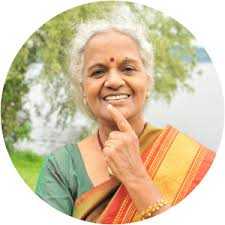
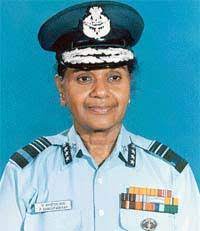
India’s First women Air Marshal- Padma Bandopadhyay

Padmavathy Subramaniam Iyer, popularly known as Padma Bandopadhyay, was born in November 1944 (77 years old as of 2021) in Tripathi, Andhra Pradesh, to a Tamil-speaking family.

She was at the age of three when her mother got Tuberculosis. Her father worked to support his family. At an early age she started doing household work. She learned to cook rice, fetch water and clean. After some years, her mother got fully recovered from severe Tuberculosis. From that, Padma got inspiration to become a medical doctor.

She studied at Delhi Tamil Education Association Senior Secondary Schools in the humanities stream. After graduating from school, she made the difficult and uncommon transition from humanities to the science stream in Delhi University. She studied pre-medical at Kirori Mal College and then joined the Armed Forces Medical College, Pune, in 1963.

She joined Indian Air Force in 1968. Bandopadhyay was promoted to Wing Commander, and was posted to DIPAS (Defence Institute of Physiology & Allied Sciences ), where she did outstanding research work in high altitude. She helped produce the new acclimatisation program for Indian Soldiers at high altitudes. And developed precautionary steps to High Altitude Pulmonary Oedema (HAPO) and High Altitude Cerebral Oedema (HACO).

She is the first Indian female to have administered scientific study at the North Pole.
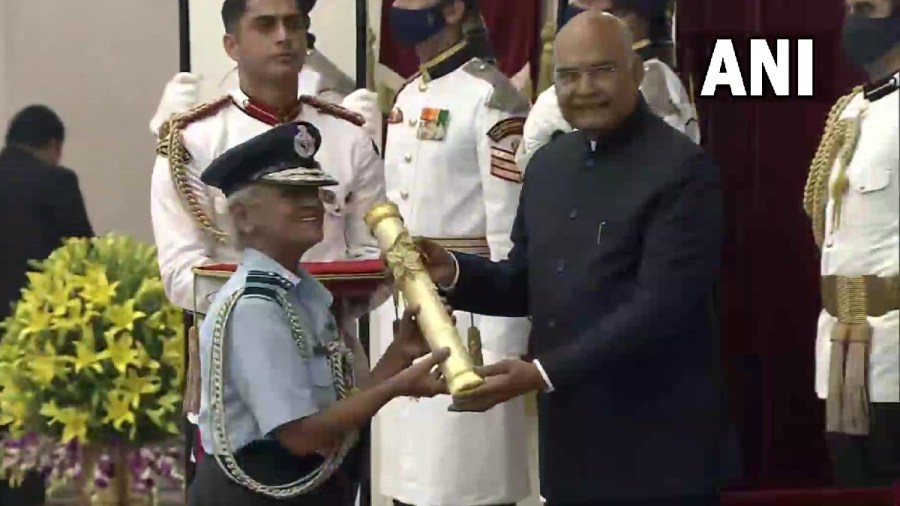
On her arrival in India, she received the Indira Priyadarshini Award for being an outstanding lady with so many accomplishments to her name. This was a first for any lady in uniform. She was bestowed the Air Force Wives Welfare Association Trophy by AFWWA. Promoted to become the First Lady Air Vice Marshal of the Indian Air Force, she was the first of all the Air Forces of the world. Padma also took over as the Additional Director General Armed Forces Medical Services. Padmavathy also became the first Lady Director General Medical Services of the forces.

A ” Palace of Winds”

Hawa Mahal was built by Maharaja Sawai Pratap Singh which was located in heart of the pink city of jaipur, rajasthan.This beautiful pink structure is predominantly a high screen wall made up of pink and red sandstone that denotes to a royal women to get an eyeful of street festivals and busy. It was built in 1979 as he was so impressed with the khetri mahal built in the town of jhunjhuna, rajasthan that he embarked constructing Hawa Mahal. It is extention of royal City palace and leads to Zenana or woman’s chambers to facilitate royal rajput woman.

Intersting Facts You Must Know About Hawa Mahal- Hawa Mahal has about 953 windows which keep the palace cool. All the Jaipur royals utilized this building as their summer retreat.The building was specially erected for the royal ladies of Jaipur.The meaningful purpose of this building was to allow Royal ladies watch the street festivals.

There is no front entrance to the Hawa Mahal. If you want to get in, you have to enter from the rear side.The Hawa Mahal has only ramps, instead of regular stairs to reach the upper floors of the building. In the present day, the “Hawa Mahal” has become a famous tourist spot and one of the spectacular sights in Jaipur.The palace has become a famous spot for the shooting of several Indian and international films.Architecture Famous for its Architectural facts “Hawa Mahal” was designed like a beehive.

As Hawa Mahal has its own significance and it is shown that how royal woman is lived in ” purdah”.

Bajaj Auto's new EV production line

Bajaj Auto shares rose in early trade on Friday but were back in the red territory ahead of the two-wheeler maker’s new electric vehicle production line launch due later in the day. On Thursday, the firm also announced that its board would consider a buyback of shares next week.

Shares of the company gained 2.2 percent in early trade but soon dropped 2.7 percent from that level to the day’s low of Rs 3,857. At 11:18 am, the stock was trading 0.4 percent lower at Rs 3,860.50 on BSE.

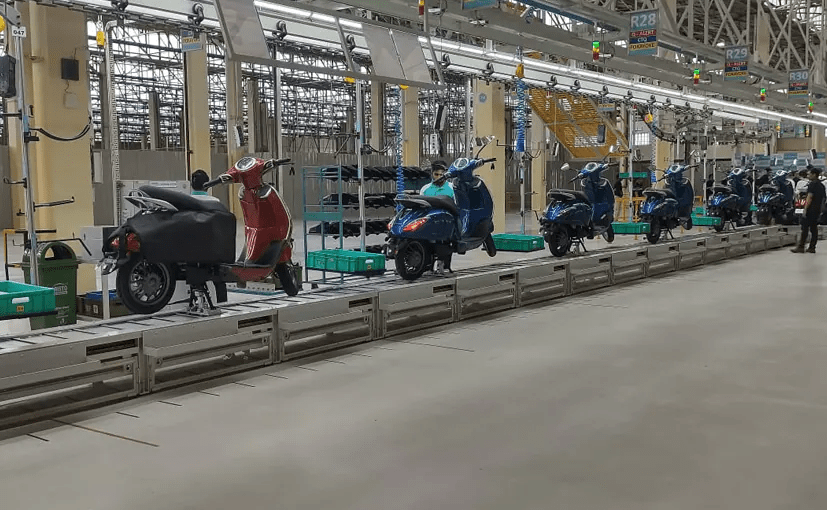
Chetak EV will be produced at the factory where the Chetak IC scooter was manufactured till 2005. Bajaj Auto has a booking backlog of approximately 16,000 Chetak EVs due to the supply crunch. The new EV factory will have a capacity of 400 units per day initially. Meanwhile, EV production will continue at Chakan simultaneously for some time.

Bajaj Auto’s new EV production line

Bajaj Auto shares rose in early trade on Friday but were back in the red territory ahead of the two-wheeler maker’s new electric vehicle production line launch due later in the day. On Thursday, the firm also announced that its board would consider a buyback of shares next week.

Shares of the company gained 2.2 percent in early trade but soon dropped 2.7 percent from that level to the day’s low of Rs 3,857. At 11:18 am, the stock was trading 0.4 percent lower at Rs 3,860.50 on BSE.

Chetak EV will be produced at the factory where the Chetak IC scooter was manufactured till 2005. Bajaj Auto has a booking backlog of approximately 16,000 Chetak EVs due to the supply crunch. The new EV factory will have a capacity of 400 units per day initially. Meanwhile, EV production will continue at Chakan simultaneously for some time.

Are cloves valuable? Why are they so expensive?

In the forests of South India harvesters climb tress as tall as 50feet to hand pick these clove buds. When exported half of the pound of these dried cloves cost $30. That’s 10times as much as cumin. But as they focus on keeping their balance, harvesters must also be careful not to break the buds. If they do, the value of the clove drops significantly and that’s just where the risk begins.

To harvest the cloves correctly, workers put their lives on the line. So, what makes cloves worth the risks? Why are they so expensive?

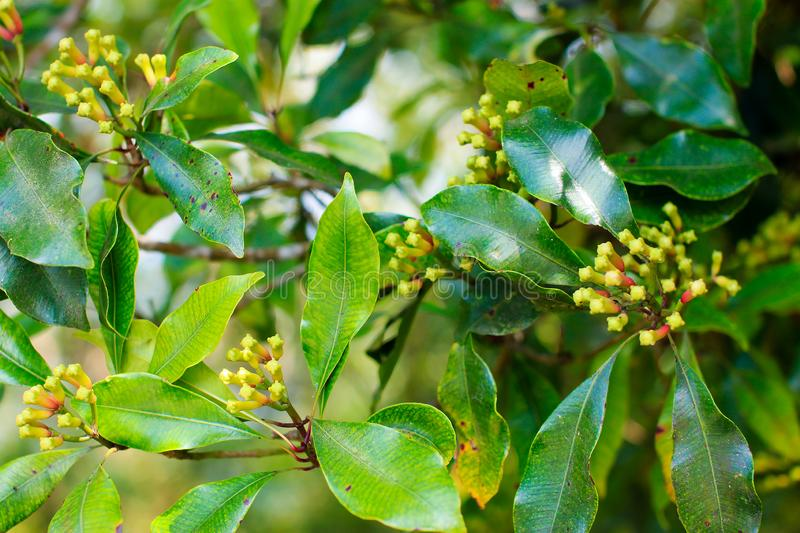
Clove leaves and buds

Cloves and flower buds of cloves trees that haven’t blossomed yet, When dried, they are commonly used as a spice. A clove’s flavor is complex with a pinch of sweetness, bitterness and heat. The oil found in cloves has medicinal properties, that makes the spice valuable outside of just cooking. Cloves with the round head/crown still intact have the most oil. But to get cloves with the highest possible oil content, highly skilled labors are needed at every stage.

To get to the top of the trees, harvesters rely on ladder and some rope which is tied to the tree on three sides to secure it from falling and covers the bottom of the ladder with mud, so that it doesn’t move when the people navigates/hops on the tall trees. While climbing the person who climbs must make sure that they doesn’t break the branches and at the same time while picking on the clove buds, there should be a clear idea on picking the right bud(well grown) and also avoid plucking the new growing bud.

The workers nearly makes around $30 a day(on an average).

Once the cloves are picked from tree, harvesters carefully remove the individual buds from the stalks and leaves. they shift and sort each bud according to its size, age and whether it has top or not. It’s best if the circular crown of the clove where it would otherwise flower is still intact. This improves the spices taste and aroma. There is a machinery available for segregating the cloves/ sorting them. But for being on safe side many farmers prefer to handpick them to avoid the damage of buds which are most important.

The highest quality cloves were picked at the right time, just before they turned into pink flowers. They are large and plump and still have the crown. Second quality cloves also still have their tops, but they are small in size compared to the high quality one’s and these are small because, either they are picked too early or too late. The third quality are the one with the top having either flowered or broken off.

After the sorting process, the cloves are allowed to dry under the sun. High quality cloves take 3 days to dry under good sunlight. if the sunlight is too less then the quality of the clove drops. Instead of the golden brown, it becomes black and loses its most valuable properties i.e., its oil content.

First quality cloves are the most valuable and have the highest oil content. Clove oil is mostly made up of the compound “Eugenol” which is not only responsible for the cloves familiar aroma, but also for its medicinal benefits. Researchers have noted “Eugenol has antimicrobial, anti-inflammatory and anti-oxidant properties“. So, the demand for the cloves go beyond their culinary uses.

Kanyakumari cloves are known for their high oil content and strong aroma. In fact these cloves were awarded a Geographical Indication tag(GI) in 2021“.

BIMSTEC

The Bay of Bengal Initiative for Multi-Sectoral Technical and Economic Cooperation (BIMSTEC) is a multilateral regional organisation established with the aim of accelerating shared growth and cooperation between littoral and adjacent countries in the Bay of Bengal region. It is interregional organisation connecting South Asia and Southeast Asia. It has 7 member countries in total – Five are from South Asia, namely India, Bangladesh, Nepal, Bhutan, Srilanka and 2 are from Southeast Asia , namely Myanmar and Thailand.

It was founded on 6th June 1997 as BIST-EC (Bangladesh, India, Sri-Lanka and Thailand Economic Cooperation) with the adoption of Bangkok declaration. It became BIMST-EC (Bangladesh, India, Myanmar, Sri Lanka and Thailand Economic Cooperation) with the entry of Myanmar on 22nd December 1997. Nepal entered as Observer country in December, 1998. And later on , it was named in its current form when Nepal and Bhutan became members in 2004. BIMSTEC headquarters is located in Dhaka , Bangladesh. Its principle is to maintain sovereign equality, territorial integrity, political independence, no interference in internal affairs , peaceful coexistence and mutual beliefs. It is an addition not substitute to any existing bilateral , multilateral or regional ties.

It is a sector driven organization. Each member-countries serve as a lead for a sector : trade,investment and development (Bangladesh ); Environment and climate change (Bhutan); Security,including counter terrorism,tourism,transport and communication (India); agriculture and food Security (Myanmar); people-to-people contacts (Nepal); science,technology and innovation (SriLanka) ; and connectivity (Thailand).

In terms of connectivity, Bimstec has  three major projects that could transform the movement of goods and vehicles through the countries in the grouping.
1. Kaladan Multimodal Project – It seeks to link India and Myanmar. The project envisages connecting Kolkata to Sittwe port in Myanmar, and then Mizoram by river and road. India and Myanmar had signed a framework agreement in 2008 for the implementation of this project. It’s yet to be finished.
2.  Asian Trilateral Highway – It will connect  India and Thailand through Myanmar. The highway will run from Moreh in Manipur to Mae Sot in Thailand via Myanmar. It is expected to be completed by 2023.
3. Bangladesh-Bhutan-India-Nepal (BBIN) Motor Vehicles Agreement – the agreement was signed on 15th June 2015 for seamless movement of goods and vehicles.The BBIN project suffered a setback in 2017 when Bhutan temporarily opted out of it after being unable to get parliamentary approval for the

There are some issues hampering the progressive development of BIMSTEC :
1. Lack of cordial bilateral relations between its member states. Eg., India-Nepal, India-Sri Lanka, and Bangladesh-Myanmar ties are not good, due to political, economic, and social reasons.
2. Uncertainties over SAARC impact the development of BIMSTEC. Eg., BIMSTEC members Nepal and Sri Lanka want a revival of the SAARC summit.
3. Thegrowing influence of China in South Asia. Eg., popular Bangladeshi scholar supported admitting China as a partner in BIMSTEC. However, India will not welcome this idea.
4. Apathy towards holding regular annual summits. Eg., while most of the regional organisation (SCO, ASEAN, G20) were able to meet at a high political level even during the Pandemic, BIMSTEC leaders failed to meet.

the 5th BIMSTEC summit was hosted by Srilanka in hybrid mode on 30th March,2022. Our Prime Minister Narendra Modi announced a contribution of $1 million towards BIMSTEC’s operational costs and another $3 million to revive the organization’s center for weather and forecast at Noida, India. He stressed the need to give priority to regional security.

In the 25 years of its existence BIMSTEC hasn’t achieved much. That could be changing now with India’s heightened interest in the grouping, as a vehicle for the achievement of its strategic interests.

Source : The Hindu , The Diplomat

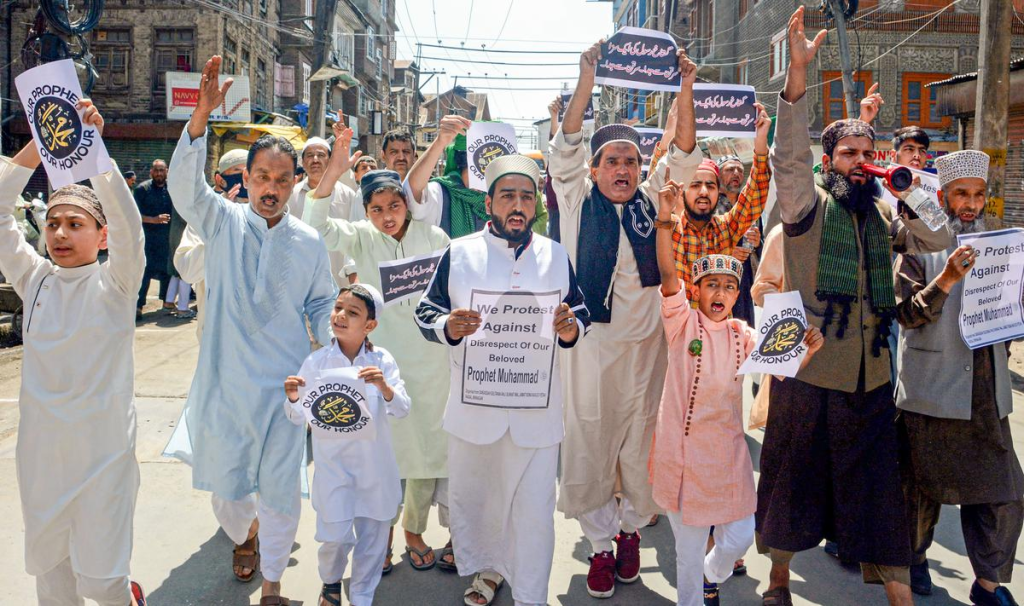
Protests in several places over remarks against the Prophet

Protesters raise slogans against the controversial remarks by two now-suspended BJP leaders against Prophet Mohammad in Srinagar.

Tension mounted in Jammu’s Bhaderwah and some areas of Kishtwar prompting authorities to impose a curfew while parts of Kashmir observed a shutdown over the controversial remarks against Prophet Muhammad by two now-suspended BJP leaders, Nupur Sharma and Naveen Jindal. In Jharkhand, some policemen were injured in Ranchi while trying to control an irate mob after protests erupted with hundreds of people demanding the arrest of Ms. Sharma.

Monsoon Festival:A fanfare of rituals, customs and celebrations

A teej festival is celebrated by rajasthani people but mostly in parts like bundi and jaipur with much excitement in people.The women are adorned in fancy traditional attire,the sky is lotted with kites of variegated colors and aroma of delicious teej fingers in air.This year teej is celebrated on 30 August 2022.

This festival is celebrated because it is primarily dedicated to Parvati and her union with Shiva.Woman often fast in celebration of teej .It is traditionally observed by woman to celebrate monsoons during months of shravan and bhadrapada of hindu calendar.They often pray to Parvati & Shiva during teej.

Teej festival of rajasthan is grand view and you ought not to miss if you are in pink City.A royal procession of teej mata on an antique palanquin called teej swari,winds through lanes of the city.There is whole fanfare of dancers and brand players who accompany the processions.

It is three day celebration and each day has its own significance.On first day,”Dan Khana Di”, married woman enjoy meal prepared by their husband’s.All the ladies gather at the place and take part in following fan-filled activities. Swinging and singing– The first picture that comes to everyone’s mind is of the ladies swaying on a tree swing. Beautiful swings adorned with flowers are hung on the tree in their garden where women take their turn and sing songs about the eternal love of Lord Shiva and Goddess . Hands on Heena- Customized Jaipur One night before Teej, women put intricate designs of henna on their hands and feet. It is a part of Teej Shringar, the whole makeup thing which girls and married women do on the occasion. The married women hide their husband’s name in the design and ask them to reveal it in a playful game. ka -po-che

The festival is not all about women. Guys sure have their share of fun too. On the occasion of Teej festival in Jaipur, boys gather on their roofs and participate in a kite-flying competition. The whole sky can be seen dotted with colorful kites. You can hear them screaming Kai-po-che when someone manages to dock their rival’s kite. It is so much fun watching. Royal Rajasthan flava.

Hence, the teej festival is regarded as festival of women that brings joys and strengthen the bond between women, husband as well as her family.

Indian economy well placed to deal with challenges, says RBI Governor

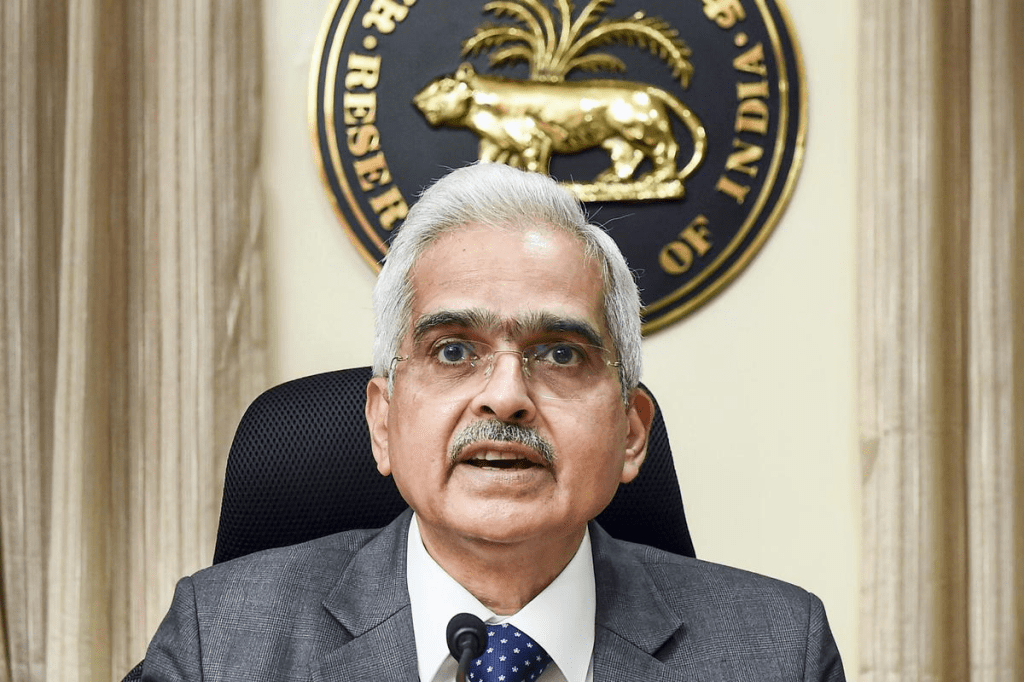
Reserve Bank of India (RBI) Governor Shaktikanta Das addresses a press conference at RBI headquarters, in Mumbai, on June 8, 2022.

“Recognising” the Indian government’s “great efforts” in supporting Sri Lanka, China on Wednesday expressed willingness to work with India and the international community to help Sri Lanka tide over its crushing economic crisis.

Different Landforms that exists in the World

The earth is a fascinating place with all kinds of variation and geographical interest. All over the world, wild and wondrous things have happened. These occurrences have created a series of landforms throughout Earth’s lifespan that make each many areas unique.

As defined by National Geographic, a landform is a “feature on the Earth’s surface that is part of the terrain.” The terrain of the land includes all of its topographic features. Whether a formation sticks out of the ground or sinks into it, it has topographic significance. 

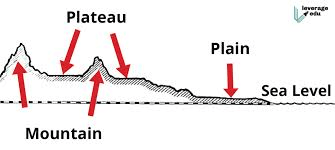
Endogenic forces and exogenic forces can create a lot of landforms. Mountains, hills, plateaus, and plains are the four major types of landforms. Minor landforms include buttes, canyons, valleys, and basins.

There are four major types of landforms. There are four that are accepted throughout the scientific community. These include mountains, plateaus, hills, and plains. Everything else can fall into these broad and general categories.

There are hundreds of minor landform typologies. Some of them are well known, like valleys. Others you have probably never heard of since they only belong to particular geographic regions.

Mountains

  • A mountain is a large landform that rises above the surrounding land in a limited area, usually in the form of a peak. A mountain is generally steeper than a hill.
  • Mountains are formed through tectonic forces or volcanism. These forces can locally raise the surface of the earth.
  • Mountains erode slowly through the action of rivers, weather conditions, and glaciers. A few mountains are isolated summits, but most occur in huge mountain ranges.
  • Nearly 27% of the world’s land surface is covered by mountains.
  • It is from the mountains that up to 80% of the planet’s fresh surface water come from.
  • According to the UN’s Food and Agriculture Organization (FAO), about 12% of the world’s population lives in the mountains, but over 50% are directly or indirectly dependent on mountain resources.

The mountains, on the basis of their mode of formation, can be classified as:

  1. Fold Mountains
  2. Block Mountains
  3. Volcanic Mountains/ Accumulated Mountains
  4. Residual Mountains/ Relict Mountains

Examples of mountains:- Himalayas, Andes, Rocky Mountains, Alps, Appalachian Mountains, Ural Mountains, Karakoram

Plateaus

  • A plateau is a flat-topped table land.
  • Plateaus occur in every continent and take up a third of the Earths land.
  • They are one of the four major landforms, along with mountains, plains, and hills.
  • Plateaus, like mountains may be young or old. The Deccan plateau in India is one of the oldest plateaus.
  • Valleys form when river water cuts through the plateau. The Columbia Plateau, between the Cascade and Rocky mountains in the northwestern United States, is cut through by the Columbia River.
  • Sometimes, a plateau is so eroded that it is broken up into smaller raised sections called Many outlier plateaus are composed of very old, dense rock formations. Iron ore and coal often are found in plateau outliers.
  • Plateaus are very useful because they are rich in mineral deposits. As a result, many of the mining areas in the world are located in the plateau areas.

The plateaus can be classified as:

  1. Intermontane Plateaus
  2. Piedmont plateaus
  3. Continental plateaus
  4. Volcanic plateaus
  5. Dissected plateaus

Plains

  • Plain, any relatively level area of the Earth’s surface exhibiting gentle slopes and small local relief. Plains vary widely in size.
  • The smallest occupy only a few hectares, whereas the largest cover hundreds of thousands of square kilometers—as, for example, the Great Plains of North America and the expanse of gently undulating land that sweeps from the Pyrenees Range on the French–Spanish border across northern Europe and Asia almost halfway around the world nearly to the Bering Sea.
  • Occupying slightly more than one-third of the terrestrial surface, plains are found on all continents except Antarctica.
  • Most of the plain have been formed by deposition of sediments brought down by rivers. Besides rivers, some plains have also been formed by the action of the wind, moving ice and tectonic activities
  • They occur north of the Arctic circle, in the tropics, and in the middle latitudes. Corresponding to their broad geographical distribution, the plains of the world show considerable variation in vegetation.
  • Some are tree-covered and others are grassy. Still, others support scrub brush and bunch grass, while a few, which are nearly waterless deserts, have only the most sparse and scanty plant life.

More common examples of plains include:

  1. Great Plains (US) – 1,100,000 square miles
  2. Canterbury Plains (New Zealand) – 195 square miles
  3. Australian Plains – 2,966,200 square miles
  4. Serengeti Plains – 11,583 square miles
  5. European Plain – 2,000,000 square miles
  6. West Siberian Plain (Russia) – 1,200,000 square miles
  7. Indus Valley Plain (Pakistan) – 200,000 square miles

Hills

  • Hills are like tiny mountains. They share many of their characteristics with mountains.
  • For example, hills have to have a higher elevation than the land around them.
  • Hills are smaller than mountains and are also not as steep. Although the heights of some hills might be close to some small mountains, their gently sloping nature prevents them from being a mountain.

Some of the more famous hills in the world include:

  1. Chocolate Hills (Philippines)
  2. Ananthagiri Hills (India)
  3. Tuscany Hills (Italy)
  4. Glastonbury Tor (England)

What is MSP?

India is an agriculture dominated country. More than 50% of Indian workforce is employed by the agriculture. Farmers strive hard to produce high yield and quality products but their income is less than expenses. Market price is determined by supply and income demand. When there is large supply of crops but less demand , there is sharp fall in farm prices affecting farmers drastically. There is always price fluctuations in agricultural products while farmers get a decent return when there is shortage of supply,the same products fetch them poor price during bumper harvest season.
The government of India has introduced MSP (Minimum Support Price ) to protect producers against excessive fall in farm prices leading heavy loss suffered by the farmers.MSP is the minimum price a farmer must be paid for their agricultural produce as guaranteed by the government of India. If the market price falls below MSP, the government procures that crop from the farmers at MSP. MSP is announced for  22 major crops along with a Fair Remunerative Prices (FRP) for sugarcane. MSP is recommended by Commission for Agricultural Costs and Prices (CACP) but the final decision is taken by the Cabinet Committee on Economic Affairs(CCEA) of union government.

MSP ensures profit of atleast 50% over the cost of production for the farmers.It includes cost of production, domestic and international prices, demand-supply conditions, inter-crop price parity and the terms of trade between agricultural and non-agricultural sectors.
Farmers are free to sell their products to any non-governmental parties, if they get favorable terms to sell their products or better than MSP. The government mainly buys rice and wheat at guaranteed price.

Benefits of MSP:
• It acts as a surety to farmers so that their crops get the fair amount for their produce and helps them sustain their losses and does not affect them drastically
• It helps to keep a floor price which does not let the prices fall below a certain point.
• The government can use these crops to be sold at government fair price shops at a price lower than market rate that will also help the government recover some amount and reduce the losses of the government.
• It safeguard the interest of the consumer by ensuring supplies at a reasonable price.
• Government manages food scarcity by distribution of stored grains at affordable prices.

Drawback of MSP :
It doesn’t increase in proportion to the increase in cost of production.
• There are a lot of farmers who don’t have adequate information about MSP and are exploited by middlemen.
• There are several regions in the country where farmers can’t access to the benefits through MSP.
• Open market workings , which works on supply and demand relations is detrimental for farmers , is disrupted by government intervention.
• Maintenance cost of procuring grains is raised by MSP which affects the investment in agri-infrastructure.

The Anthropocene

The Earth is divided into geological time scales, each denoting events that occurred in Earth’s geological history, by scientists. The scale begins with the formation of the Earth about 4.5 billion years ago, known as “Hadean”. The current geological epoch is known as the “Holocene”, which began approximately 11,700 years ago. The Holocene epoch is characterized by the rapid proliferation and spread of the human species on Earth. The “Anthropocene” is a proposed epoch that follows the Holocene and marks the period when human activity has started to have a significant impact on the planet’s ecosystem. The term “Anthropocene” was first proposed by the Dutch chemist Paul J. Crutzen and American biologist Eugene F. Stoermer (Crutzen & Stoermer 2000) to denote the current period in Earth’s geological history wherein, instead of the environment shaping humans it is the humans who are shaping and drastically altering the environment.

The Anthropocene, according to Steffen et al. is divided into three periods (616). It begins with the industrial revolution, wherein man first harnessed the energy of fossil fuels, coal, and oil and gas. The extensive use of the newfound wealth of energy in the form of fossil fuels stamped a significant imprint on Earth’s environment, evident in the increase in deforestation and rise in the concentration of methane, carbon dioxide, and nitrous oxide in Earth’s atmosphere (616). The second period, from 1945-to 2015, is known as the “great acceleration”. This period is characterized by an exponential increase in the impact of humans on the Earth system. An increase in the population of humans and an increase in industrialization resulted in a substantial increase in the concentration of greenhouse gases in Earth’s atmosphere (618). The third period, from 2015 onwards, is known as “stewards of Earth’s system”. This period is marked by the recognition of Anthropogenic influences on the Earth system and the subsequent filtration of this growing awareness on decision-making processes (618).

The major problem represented by the Anthropocene is the radical shifts in Earth’s temperature and biodiversity. These shift include global warming, extinction of species, habitat loss, and changes in the chemical composition of oceans and soils. Other probelms inlclude sustenance of human vices like greed, indifference, and intemperance.

There are, according to Steffen et al., three philosophical approaches to dealing with these problems. Firstly, is the business-as-usual philosophy (619), which employs a laissez-faire mindset when dealing with the changing global environment. The second is mitigation which is “based on the recognition that the threat of further global change is serious enough that it must be dealt with proactively” (619). And the third option is geoengineering (619), which attempts to solve the problem of climate change with technology.

Works cited

Crutzen, Paul J. and Eugene F. Stoermer 2000. The “Anthropocene.” Global Change Newsletter (41): 17–18.

Steffen, Will, et al. “The Anthropocene: Conceptual and Historical Perspectives.” Philosophical Transactions of the Royal Society A: Mathematical, Physical and Engineering Sciences, vol. 369, no. 1938, 2011, 842–67. Crossref, https://doi.org/10.1098/rsta.2010.0327.

Steffen, Will, Paul J. Crutzen, et al. “The Anthropocene: Are Humans Now Overwhelming the Great Forces of Nature.” AMBIO: A Journal of the Human Environment, vol. 36, no. 8, 2007, 614–21. Crossref. https://doi.org/10.1579/0044-7447(2007)36[614:taahno]2.0.co;2