25,000 compliances reduced by centre so far in its bid to promote Ease of Living and Ease of Doing Business

 The Minister of Commerce and Industry, Consumer Affairs, Food and Public Distribution and Textiles, Shri Piyush Goyal today urged political leadership, bureaucracy and industry leadership to focus their initiatives to reduce compliance burden, on principles of simplicity and timely delivery of services.

He was addressing the valedictory session of the ‘National Workshop on the next phase of reforms to reduce Compliance Burden’ in New Delhi today. It may be noted that more than 25,000 compliances have been reduced in the previous exercise implemented by the centre to reduce compliance burden and to promote Ease of Living and Ease of Doing Business.

Touching upon the infinite possibilities of technology, Shri Goyal said that technology must aid and abet initiatives to promote the Ease of Living and Ease of doing business and should not further complicate the system of compliances. He spoke of the need to develop indigenous solutions to problems that India faced.

The Minister asked policy makers to consider the wide disparity in income, literacy level and the gaps in infrastructure, especially connectivity, while planning the delivery of services, especially if technology is involved.

Speaking of the need to make monitoring mechanisms more robust, Shri Goyal said that monitoring of policies and programs must not become more cumbersome than the underlying problem that the initiatives were seeking to solve.

Shri Goyal opined that feedback from all stakeholders, especially users, had to be taken into account while designing compliance requirements and that ground realities must always be taken into consideration. He urged policymakers to use crowdsourcing to find out details of the compliances that were proving to be cumbersome and work on rationalizing them.

He spoke of the need to combine various services like the Digi locker and National Single Window System so that repetitive processes are rationalized, gaps are bridged and redundancies are eliminated when it comes to applying for approvals and permissions. He called for the creation of a single identification number for businesses and individuals by merging the several identification numbers that exist presently, such as Adhaar, PAN, TAN etc so that delivery of services becomes smoother and faster.

Speaking of the need to decriminalize Legal Metrology, the Minister urged industry participants to keep seeking reforms and improvements in processes and procedures. He also called for promotion of self- attestation, self- certification and self- regulation. He added that it is high time that compliance systems were built on trusting the integrity of the citizens.  

Calling for big ticket reforms, the Minister said that the new structures must not shackle people. Underscoring the need to address information asymmetry among stakeholders, Shri Goyal called for, consolidation of the gains made so far in reducing compliance burden.

The day-long Workshop was divided into three parallel breakout sessions. The theme of the first was “Breaking Silos and Enhancing Synergies among Government Departments”. The second was based on the theme of “National Single Sign-on for Efficient Delivery of Citizen Services” while the third Breakout Session is themed ‘Effective Grievance Redressal’.

Speaking at the inauguration of the Workshop, Shri Anurag Jain, Secretary, Department for Promotion of Industry and Internal Trade (DPIIT) said that grievance redressal mechanisms must be humane and sensitive. He opined that in cases where grievances cannot be fully resolved due to rules and procedural aspects, the same must be conveyed to the complainant sensitively. Government departments could handle the genuine grievances with a human face, he added.

The Workshop witnessed wide participation from across Central Ministries and States/UTs. The ideas that took shape during the deliberations at the conference were presented to Shri Piyush Goyal and Cabinet Secretary, Shri Rajiv Gauba. 

******

DPIIT organizes ‘National Workshop on Next Phase of Reforms for reducing compliance burden’

 As part of Azadi ka Amrut Mahotsav, Government of India is observing Good Governance Week from 20th to 25th December 2021. In the Good Governance Week,  Department for Promotion of Industry and Internal Trade, organized a National Workshop on next Phase of Reforms for Reducing Compliance Burden on 22nd December 2021 at Ambedkar International Centre, New Delhi.

Workshop witnessed wide participation from States, Central Ministries, Industry Associations and Industry Representatives. More than 100 representatives from 27 States/UTs, more than 200 members from Central Ministries, Departments and subordinate organizations and 95 representatives from Industry Associations participated in deliberations of the Workshop.

Context of the workshop was set in the opening session wherein DPIIT made a short presentation on overview of the exercise of reducing compliance burden, status of compliances reduced, initiatives implemented by Ministries and States/UTs to reduce compliance burden on citizens and businesses and next steps of the exercise.

To understand views and seek suggestions from stakeholders, workshop included 3 Breakout Sessions on following themes- Breaking Silos and Enhancing Synergies among Government Departments, Chaired by Shri B.V.R Subrahmanyam, Secretary D/o Commerce. The key points discussed during this session are possibilities of issuance of Master Certificate listing all registrations, merging key business identity numbers into single ID, integration of State Single Window Systems with Central Ministries/Departments, etc.

Single Sign-on for Efficient Delivery of Citizen Services. Chaired by Shri Ajay Prakash Sawhney, Secretary MeitY. The main points discussed during this session are considering integration of all Citizen services at Central and State services on the National Single Sign-On, possibility of UMANG to be the National Single Sign-on (SSO) mobile application along with www.india.gov.in as the National Single Sign-On Webpage 

Effective Grievance Redressal, Chaired by Secretary D/o Land Resources. The key points which were deliberated are multiple platforms for raising grievances need to use technology to ensure that the complaints are genuine, use of Artificial Intelligence (AI) for predictive analysis and data filtration

During the concluding session of the workshop, core issues were identified and next steps on respective themes of the Breakout Sessions were presented by respective Chair Secretaries.

Cabinet Secretary acknowledged the efforts put in by Ministries and States/UTs to reduce compliance burden in earlier phase and making life easier for citizens of this country. He added that reducing burdensome compliances is a continuous process. Various policy reforms and programs have been implemented over last few years, however, Ministries and States/UTs need to identify what more can be done. Transformational governance reforms in the 75th year of the country’s Independence would go a long way in unshackling businesses and citizens. 

********

Greater focus on nurturing entrepreneurship in Tier 1 and Tier-2 cities of India

 The Minister of Commerce and Industry, Consumer Affairs, Food and Public Distribution and Textiles, Shri Piyush Goyal today called for greater focus on nurturing entrepreneurship in the Tier 1 and Tier 2 cities of India. He was delivering the Keynote Address at the 3rd Meeting of National Startup Advisory Council virtually today.

It may be noted that 45% startups in India are from Tier 2 and 3 cities and 623 districts have at least 1 recognized startup. From 2018-21, almost 5.9L Jobs have been created by startups. In 2021 alone, almost 1.9L jobs have been created.

Department for Promotion of Industry and Internal Trade (DPIIT) had constituted the National Startup Advisory Council to advise the Government on measures needed to build a strong ecosystem for nurturing innovation and startups in the country to drive sustainable economic growth and generate large scale employment opportunities.

Besides the ex-officio members, the council has several non-official members, representing various stakeholders such as founders of successful startups, veterans who have grown and scaled companies in India, persons capable of representing interests of investors, incubators and accelerators into startups, representatives of associations of stakeholders of startups and representatives of industry associations.

The Minister said that 25th December, the birth anniversary of former Prime Minister Shri Atal Behari Vajpayee, is being celebrated as Good Governance Day in India. He expressed the hope that a robust Startup ecosystem would help formalize the economy and help in improving the Ease of Living and the Ease of Doing Business and in turn help promote the ideals of Good Governance. He observed that ‘Startup India’ movement had brought a ‘change in mindset’ from ‘can do’ to ‘will do’ and helped us move past traditional notions of entrepreneurship.

The Minister said that our startups turned COVID-19 crises into an opportunity and made 2021 the Year of unicorns with 79 Unicorns now thriving. Underscoring that India is now home to the 3rd largest startup ecosystem in the world, Shri Goyal said that he believed in the power of ideas. Simple solutions can make an extraordinary impact, he added.

 Quoting Prime Minister Shri Narendra Modi, Shri Goyal said that the priority of the Government can be expressed in four words, “Minimum Government, Maximum Governance” and called for minimum Government interventions in the lives of citizens. He said that our vision is to build a New India committed to the economic progress and well-being of 135 crore Indians, especially those who have been left behind.

The Minister assured that the Government, as an enabler, is committed to develop a robust startup ecosystem by providing exceptional benefits such as 80% rebate in patent filing and 50% on trademark filing, relaxation in public procurement norms, Self-Certification under Labour and Environment Laws, Funds of Funds for startups of Rs. 10,000 Crore, Income Tax exemption for 3 out of 10 years, Seed Fund Scheme of Rs. 945 Cr and creating Open Network for Digital Commerce (ONDC), which will create new opportunities and remove some monopolistic tendencies in certain spheres.

Shri Goyal said that apart from mass jobs creation, our startups have the potential to catalyse India’s integration in Global Value Chains and increase our footprint in global markets. He urged successful entrepreneurs, especially unicorns to share their experiences with students and youth in order to inculcate startup culture and entrepreneurial spirit at grassroot levels, especially in regions like the North East of India. He asked academia, government and industry to work hand in hand to promote entrepreneurship at the grassroots level.

Urging the youth to take risks in entrepreneurship, the Minister said that you never know until you try, therefore, making mistakes should be normalised and failures should not be seen as the end of entrepreneurial journey.  We must learn to celebrate failure too, he added.

Shri Goyal called upon startups to explore the unexplored areas like rural tourism in terms of agri-stays, hotels and homestays that would help create additional income for farmers.  Shri Goyal opined that the youngsters of the nation must be encouraged to visit villages, experience rural life and come up with solutions to rural problems.  He also asked successful startups to focus on rural economy and work on solutions such as drip irrigation, natural farming etc. to improve the lives of farmers.

Speaking of the need to augment Seed Capital, Shri Goyal said that we must encourage the flow of domestic capital in our startups. He added that there was a need to make ‘Startup India’ a symbol of Self Reliance and Self Confidence. The Minister called for a participative approach from all stakeholders to achieve such an ambitious target.

Six national programmes were presented to the Minister as part of the third National Startup Advisory Council meeting to strengthen the startup ecosystem in the country. The key interventions discussed were National Capacity Building Programme for Incubators, providing thrust to the startups engaged in manufacturing sector, empowering the larger pool of Family Offices and High Networth Individuals (HNIs) to invest in startups, accelerating Deep-tech Startups which would act as a catalyst in empowering pioneers, establishing an international platform and a gateway for Indian startups to go global, propelling participation of women in the startups and a holistic programme which aims at enabling global mentorship, market access, international opportunities and B2B connects.

The video conference was attended by several Startup leaders, investors, banks, senior government officials representing various ministries/departments and key stakeholders of the startup ecosystem.

****

NITI Aayog to Hold National Workshop on Bamboo Development

 NITI Aayog is organizing a daylong national-level workshop on bamboo development tomorrow, 30 December. 

NITI Aayog Vice Chairman Dr Rajiv Kumar, Minister of State (Independent Charge) of the Ministry of Science and Technology and Earth Sciences Dr Jitendra Kumar, NITI Aayog Member Dr VK Saraswat and CEO Amitabh Kant will inaugurate the workshop. 

Several stakeholders from India and abroad will attend the workshop to understand the opportunities and challenges in bamboo development, explore missing linkages in the entire value-chain of the bamboo sector, and accordingly develop strategies and a roadmap for the sector. 

The workshop will have four technical sessions. First on ‘Production, Value Addition and International Experience of Bamboo’, second on ‘Government Policies, Programmes and Opportunities in Different Sectors’, third on ‘Circular Economy in Bamboo’, and the final session on ‘National and International Best Practices’. 

To scale up the utilization and commercialization of bamboo, NITI Aayog is in the process of formulating pragmatic policies/technologies for the holistic development of the Indian bamboo industry. Accordingly, a techno-commercial report, ‘Bamboo Development Mission Document’, is being prepared for this purpose. The report plans to analyse the complete bamboo value-chain in India—from plantation, production, processing to standardization and utilization. 

NITI’s efforts to tap into the potential of the bamboo sector are geared towards generating more employment in the rural economy, doubling farmers’ income, improving value addition and diversification of bamboo products to give a fillip to exports. 

The workshop will be broadcasted here.

National Single Window System (NSWS) – a one-stop for regulatory approvals

 I.          Introduction

  • The year 2020 witnessed turmoil due to COVID-19 pandemic which emerged as the biggest threat to economic growth. Indian economy has witnessed a sharp contraction of 24.4 per cent in Q1 and 7.3 per cent in Q2 of FY 2020-21.
  • To convert COVID pandemic related challenges into opportunity, a series of measures have been taken by the Government to improve the economic situation including inter-alia announcement of the Atmanirbhar package amounting to Rs.29.87 Lakh Crore. Targeted interventions were made to support the economy and livelihood. Moreover, the pace of structural reforms was expedited. 
  • The major reforms undertaken under Atmanirbhar package include Credit guarantee for MSME loans, sectoral structural reforms, policy on strategic disinvestment of CPSEs, reforms in public procurement, setting up of Empowered Group of Secretaries and Project Development Cells for facilitating investment, reduction in compliance burden and single window system for clearances. 
  • These measures, in addition to structural reforms taken up, have assisted the economy in its early revival. India, which was not producing N-95, PPE Kits, ventilators, etc. prior to Corona pandemic has started producing the same and even catering to world markets and became self-reliant. Government has started vaccination drive in January, 2021 and indigenously developed Covaxin vaccine in its fight against Covid pandemic. As on date more than 143 crore Covid doses have already been administered in India. This has not only saved the lives of people but also set momentum for early recovery of the economy.
  • Economy has started showing sign of recovery with GDP growth rebounding to 20.1 per cent in Q1 and 8.4 percent in Q2 of 2021-22. Several high frequency indicators like E-way bills, rail freight, port traffic, GST collections and power consumption have demonstrated a V-shaped recovery in the economy. 

II.        Industrial Performance

  • Industrial sector performance during 2020-21 declined considerably, by -8.4%, mainly due to nationwide closure of industries by the Government to limit the impact caused by Covid-19 pandemic on public health from March 2020 onwards. The Mining & Manufacturing sectors were majorly impacted as they declined by -7.8% & -9.6% respectively, whereas Electricity generation sector declined by -0.5%. 
  • The cumulative Index of Industrial Production for April-October, 2020 declined by 17.3 percent. However, various measures undertaken by the Government including vaccination & the structural reforms and resilience of the Indian industry have helped early revival of the economy, which led to surge in IIP for same period in 2021 by 20.0 per cent. Similarly, the Mining, Manufacturing, and Electricity sector have registered growth of 20.4 percent, 21.2 percent, and 11.4 percent respectively during the same period.

III.       Trends in Growth of Eight Core Industries

  • The Index of Eight Core Industries (ICI) measures the performance of eight core industries i.e. Coal, Crude Oil, Natural Gas, Petroleum Refinery Products, Fertilizers, Steel, Cement and Electricity. The industries included in the ICI comprise 40.27 per cent weight in the Index of Industrial Production (IIP).


  • During 2020-21, the ICI growth rate was -6.4 per cent compared to average growth rate of 3.0 per cent during last 3 years i.e. 2017-18 to 2019-20. The rate of growth has been robust during the current financial year (April to October, 2021-22) i.e. 15.1%. Out of Eight Core sectors, six of them have shown double digit growth with Cement and Steel sectors leading the pack with growth rates of 33.6% & 28.6% respectively. Whereas, Crude Oil & Fertilizers sector growth remain muted in the same period i.e. (April to October, 2021-22). These shows the revival of core industries.


IV.       DPIIT has been spearheading a number of initiatives in this area, ‘To Make in India for the World’. The key steps taken in this regard are as follows: 

1.         Production Linked Incentive Scheme:  

  • Keeping in view India’s vision of becoming ‘Atmanirbhar’ and to enhance India’s Manufacturing capabilities and Exports, an outlay of INR 1.97 lakh crore (US$ 26 billion) has been announced in Union Budget 2021-22 for PLI schemes for 14 key sectors of manufacturing starting from fiscal year (FY) 2021-22. These 14 sectors are namely:  (i) Automobiles and Auto Components, (ii) Pharmaceuticals Drugs, (iii) Specialty Steel, (iv) Telecom & Networking Products, (v) Electronic/Technology Products, (vi) White Goods (ACs and LED Lights), (vii) Food Products, (viii) Textile Products: MMF segment and technical textiles, (ix) High efficiency solar PV modules, and (x) Advanced Chemistry Cell (ACC) Battery (xi) Medical devices (xii) Large scale electronics manufacturing  including mobile phones (xiii)  Critical Key Starting materials /Drug intermediaries and API; and (xiv) Drones and Drone Components.
  • The guidelines for all PLI schemes have already been issued and applications have also been received under a majority of the schemes.
  • While DPIIT is doing the overall coordination for PLI Schemes, it is the nodal Department for PLI scheme for White Goods (Air Conditioners and LED lights), which has an outlay of an outlay of Rs. 6238 Crore. The Scheme Guidelines was published on 4th June 2021. 42 applicants with committed investment of Rs 4,614 crore have been provisionally selected as beneficiaries under this PLI scheme. The selected applicants include 26 for Air Conditioner manufacturing with committed investments of Rs. 3,898 crore and 16 for LED Lights manufacturing with committed investments of Rs. 716 crore.

2.         PM GatiShakti National Master Plan (NMP):

  • The Prime Minister launched Gati Shakti, a National Master Plan for Infrastructure Development, on 13th October, 2021. Gati Shakti is a digital platform which will bring 16 Ministries including Railways and Roadways together for integrated planning and coordinated implementation of infrastructure connectivity projects.
  • PM Gati Shakti aims to address the past issues through institutionalizing holistic planning for stakeholders for major infrastructure projects. Instead of planning & designing separately in silos, the projects will be designed and executed with a common vision. It will incorporate the infrastructure schemes of various Ministries and State Governments like Bharatmala, Sagarmala, inland waterways, dry/land ports, UDAN etc. Economic Zones like textile clusters, pharmaceutical clusters, defence corridors, electronic parks, industrial corridors, fishing clusters, agri zones will be covered to improve connectivity & make Indian businesses more competitive. It will also leverage technology extensively including spatial planning tools with ISRO imagery developed by BiSAG-N (Bhaskaracharya National Institute for Space Applications and Geoinformatics).

3.         Start-up India Programme: 

· The Start-up India initiative was launched by the Prime Minister on 16th January 2016 as a flagship initiative of Government of India. The initiative was intended to build a stronger ecosystem for nurturing India’s start-up culture that would further drive our economic growth, support entrepreneurship, and enable large-scale employment opportunities. With over 60,000 recognized start-ups, India has transformed into the third largest start-up ecosystemsupplementing employability as well as enhancing our self-reliance. Start-up India’s role has been vital in nurturing entrepreneurship beyond Tier 1 cities. The regional growth through the efforts of States and Union Territories (UTs) has created a national ecosystem to thrust our economic goals. While 55% of the recognised start-ups are from Tier-1 cities and 45% of the start-ups are from Tier-2 and Tier-3 cities respectively, 45% of start-ups are represented by women entrepreneurs. This shows the roots of startups have grown deep in the country.

· Recognized start-ups have made deep inroads into Tier-II and Tier-III cities. Startups are now spread across 633 districts with a total of 30 States and UTs with Startup Policies in place. DPIIT recognised start-ups have reported creation of close to 2 lakh jobs in 2021, the highest in four years. Cumulatively, more than 6.5 lakhs jobs have been generated since the launch of Start-up India initiative.

· Under the Fund of Funds for Start-ups (FFS), Rs. 6,495 crore has been committed to 80 Alternative Investment Funds (AIFs) and Rs. 8,085 crore have been invested by supported AIFs in 540 startups. For Start-up India Seed Fund Scheme (SISFS), 58 incubators have been selected and Rs. 232.75 crore have been approved as grant under the Scheme

4.         Investment Promotion 

  1. Investment Clearance Cell

While presenting Budget 2020-21, Union Finance Minister announced plans to set up an Investment Clearance Cell (ICC) that will provide “end to end” facilitation and support to investors, including pre-investment advisory, provide information related to land banks and facilitate clearances at Centre and State level. The cell was proposed to operate through an online digital portal.

Subsequently, DPIIT along with Invest India initiated the process of developing the portal as a National Single Window System (NSWS). Envisioned as a one-stop for taking all the regulatory approvals and services in the country, NSWS [www.nsws.gov.in], was soft-launched on 22nd September 2021 by the Commerce & Industries Minister, Shri Piyush Goyal.

This national portal integrates the existing clearance systems of the various Ministries/ Departments of Govt. of India and State Governments without disruption to the existing IT portals of Ministries/ Departments. Approvals of 18 Ministries/ Departments and 10 States Single Window Systems have been on-boarded in Phase I. Complete on-boarding of 32 Central Departments and 14 States would be in next phases, all remaining States will be on-boarded in a phase manner.

  1. Ease of Doing Business:

DPIIT is continuously making efforts to improve ease of doing business in the country through the three major initiatives being pursued, focusing on – World Bank’s Ease of Doing Business, State & District Reform Action Plan and systematic approach to reduce regulatory compliance burden on businesses. As a result, India’s rank as per World Bank’s EoDB Report improved from 142 in 2014 to 63 in 2020. 

In order to monitor large database of compliances across Central Ministries/Departments and States/UTs, DPIIT has launched the Regulatory Compliance Portal on 1st January, 2021 (https://eodbrcp.dpiit.gov.in/). Based on data uploaded on Regulatory Compliance Portal, more than 25,000 compliances have been reduced by Central Ministries/Departments and States/UTs combined. 

DPIIT had identified 194 compliances for reductions pertaining to PESO, Boiler, IPR, NEIDS, Industrial Licensing. Out of these, 134 compliances have been ‘Reduced”, 31 are ‘under review’ and 29 have been ‘Retained’.  Types of compliance reduced are: (i) Certificate, License and Permission (ii) Filings (iii) Inspection, Examination and Audits (iv) Registers and Records, (v) Display Requirements, (vi) Redundancy (vii) Decriminalization (viii) Technology and (ix) others.

  1. Project Development Cells: 

Project Development Cells (PDCs) have been set up in 29 Ministries/Departments to fast track investment in coordination between the Central Government and State Governments and thereby enhance the pipeline of investible projects in India and in turn increase domestic investment and FDI inflows.

  1. India Industrial Land Bank (IILB)

The IILB is a GIS based portal developed by DPIIT as a one stop repository of all industrial infrastructure related information – connectivity, infra, natural resources & terrain, plot level information on vacant plots, line of activity and contact details. Currently, the IILB has approximately 4500 industrial parks mapped across an area of 5.11 lakh hectare of land serving as a decision support system for investors scouting for land remotely. The system has been integrated with industry-based GIS systems of 24 States/UTs namely Andhra Pradesh, Assam, Bihar, Chhattisgarh, Dadar & Nagar Haveli and Daman & Diu, Goa, Gujarat, Haryana, Himachal Pradesh, Jharkhand, Karnataka, Kerala, Maharashtra, Madhya Pradesh, Odisha, Punjab, Puducherry, Sikkim, Tamil Nadu, Tripura, Telangana, Uttarakhand, UP and have details of 2113 GIS enabled parks on a real-time basis. A mobile application (wherein login is not required) of IILB is also available on Android and iOS stores for the ease of investor.

6.         Foreign Direct Investment

  • FDI policy provisions have been progressively liberalized and simplified across various sectors in the recent past to make India an attractive investment destination. Measures taken by the Government on FDI Policy reforms have resulted in increased FDI inflows in the country, which year after year is setting up new records. FDI inflows in India stood at US $ 45.15 billion in 2014-2015 and have continuously increased since then. FDI inflows increased to US $ 55.56 billion in 2015-2016, US $ 60.22 billion in 2016-2017, US $ 60.97 billion in 2017-2018, US $ 62.00 billion in the year 2018-19, US$ 74.39 billion in the year 2019-20 and India registered its highest ever annual FDI inflow of US$ 81.97 billion (provisional figures) in the financial year 2020-21. These trends in India’s FDI are an endorsement of its status as a preferred investment destination amongst global investors. 

FDI policy reforms during 2021:

  • Insurance Sector: Government issued Press Note 2(2021) dated 14.06.2021 to raise the permissible FDI limit from 49% to 74% in Insurance Companies under the automatic route and allow foreign ownership and control with safeguards. This will facilitate an increased flow of long-term capital, global technology, processes and international best practices, which will support the growth of India’s insurance sector.
  • Petroleum & Natural Gas sector: Press Note 3 (2021) dated 29.07.2021 has been issued to permit foreign investment up to 100% under the automatic route in cases where the Government has accorded an ‘in-principle’ approval for strategic disinvestment of a Public Sector Undertaking (PSU) engaged in the Petroleum and Natural Gas Sector.
  • Telecom sector: Press Note 4 (2021) dated 06.10.2021 has been issued to permit foreign investment up to 100% under automatic route in Telecom services sector.

7.         Intellectual Property Rights (IPR): Framework to attract foreign investors, disseminate creativity and encourage local innovators

  • An effective IPR framework is indispensable to attract foreign investors, disseminate creativity and encourage local innovators to invest in their own ideas. In this context, DPIIT is committed towards strengthening of the IP ecosystem in India. Major initiatives and steps taken during 2021 in this regard are given below:
  • Design (Amendment) Rules, 2021 notified in the Gazette of India on 25.01.2021 incentivize start-ups and small entities to seek protection of their designs and promote design filings, fees have been reduced on similar lines as under Patent and Trademark Rules.
  • Copyright (Amendment) Rules, 2021 notified on 30.03.2021, with the objective of bringing the existing rules in parity with other relevant legislations. It introduces a mandatory annual transparency report to be issued by Copyright Societies. It aims to ensure smooth and flawless compliance in the light of the technological advancement in digital era by adopting electronic means as primary mode of communication and working in the Copyright Office.
  • Patent (Amendment) Rules, 2021: Patent fees for educational institutions have been reduced by 80 percent by way of the Patents (Amendment) Rules, 2021, which came into effect on 21st September 2021. The amendment will provide the same level of support to educational institutions as MSMEs and start-ups and further ensure greater participation of the education institutions in IP ecosystem.

Since the adoption of the National IPR Policy, IP filing in India has witnessed a considerable amount of increase in filing. Despite the adverse Covid situation in India, no negative impact has been seen in the filing of the IPs. Further, the filing of application of Trademark and GI have drastically increased over the years.

8.         One District One Product (ODOP)

  • Government of India is working on a transformational initiative to foster balanced regional development across all districts of the country. This is called the One District One Product (ODOP) initiative, with the objective of identifying and promoting the production of unique products in each district in India that can be globally marketed. This will help realise the true potential of a district, fueling economic growth, generating employment and rural entrepreneurship. ODOP initiative is operationally merged with the ‘Districts as Export Hub’ initiative being implemented by DGFT, Department of Commerce with DPIIT as a major stakeholder to synergize the work undertaken by DGFT. The major activities that are being facilitated by DPIIT with Invest India under ODOP initiative are manufacturing, marketing, branding, internal trade and e-commerce.
  • Ongoing expansion exercise entailing expansion of list from Phase-1 that consisted of 106 products from 103 districts to current Phase-2 that would consist of 739+ products covering 739 districts. Considerable success has been achieved for boosting exports under ODOP initiative.

11.       Swachhata Campaign

  • During this special campaign, 49,686 files have been reviewed in DPIIT and its sub-organizations. Out of the reviewed files, 49,449 files have been weeded outDue to weeding of files, 2222 sq ft area has been vacated/freed in DPIIT and its sub organizations. Due to disposal of redundant/obsolete items, 3277 sq feet of area has been vacated, which has improved cleanliness and hygiene conditions. Besides, revenue of Rs 5,60,000 has been generated.
  • The Department achieved 100% target in respect of public grievances by disposing of all 31 public grievances and 3 public grievances appeals. Further, out of 48 VIP reference, 29 cases have been disposed off. The Department had identified 194 rules/regulation for simplification under “Ease of Doing Business”. Out of these, 134 rules have been simplified.
  • Digitization of old files/records: Even before the special campaign, as per directions of the CIM digitization of old files/ records was undertaken on a priority basis. During the period, scanning/digitization of 12,387 files containing 19,53,666 pages have been completed and all the scanned files have been migrated to e-office for future reference. 
  • Increasing Efficiency decision making in the Government on direction of Cabinet Secretary and advice of DARPG, with the approval of the Competent Authority, DPIIT has revised the Channel of Submission & Level of disposal, for increasing efficiency in decision making and reducing the level up to 4 (maximum).  This will speed up the disposal of cases and improve decision making. 
  • Review by CIM: CIM has reviewed the special drive continuously during the campaign period. After completion of the Special Drive on 31.10.2021, CIM is reviewing progress of the Cleanliness Campaign on weekly basis. CIM is also undertaking frequent rounds of Udyog Bhawan to review the cleanliness of the premises. 

12.       Events organised by DPIIT during India’s presidency of BRICS in 2021:

  • The 13th BRICS Summit was held under India’s Chairship in 2021. It was the third time that India hosted the BRICS Summit after 2012 and 2016. The theme for India’s Chairship was ‘BRICS @ 15: Intra-BRICS Cooperation for Continuity, Consolidation and Consensus’. During India’s presidency of BRICS, 4 events were organized by DPIIT on industry related issues namely- Industry Ministers Meeting, PartNIR Meeting (Partnership on New Industrial Revolution) to promote investment, industrialization, innovation, inclusiveness and digitization, 13th HIPO (Head of Intellectual Property Offices) meeting and Round Table of an interaction among the Trade and Investment agencies of BRICS. 

13        DPIIT has organised following events under Azadi ka Amrit Mahotsav (AKAM):   

  • Ministry of Commerce and Industry was allocated the week from 20.09.2021 to 26.09.2021. Accordingly, DPIIT has held various events during the ‘Udyog Saptah’ i.e. from 20th -26th September, 2021which was widely published by different platforms. Some of the events organized by DPIIT were: 
  1. Press Briefing addressed by Additional Secretary, DPIIT held on 21st September, 2021 on measures to ensure industrial safety in petroleum and explosives Sector as well as reducing cost of doing business and creating an enabling ecosystem for domestic as well as international investors.
  2. Soft launch of National Single Window System on 22nd September, 2021 by Shri Piyush Goyal, for providing end-to-end facilitation, support, including pre-investment advisory, information related to land banks and facilitating clearances at Central and State levels and bring Transparency, Accountability & Responsiveness in the ecosystem and all information will be available on a single dashboard. 
  3. Startup India had coordinated with various States/UTs to organize/participate in startup events consisting of diverse programs, launch of key initiatives, inaugural of startup summits, and launch of startup policies, etc during 21.09.2021 to 26.09.2021 with the aim to foster entrepreneurship on the ground. 
  1. Northeast Business Roundtable held on 23th September, 2021 in the presence of Minister of State Shri Som Parkash to showcase the business and investment opportunities and deliberations on the reforms implemented in the region. 
  1. National Workshop on Reducing Compliance Burden held on 28th September, 2021 in the presence of Hon’ble Union Minister Shri Piyush Goyal, Minister of State Shri Som Parkash and Smt. Anupriya Patel. More than 25,000 compliances have been reduced by Union Ministries, States & UTs so far. 
  1. Industrial Park Rating System Report 2.0 was launched by MoS (Commerce and Industry), Shri Som Parkash on 5th October, 2021. 
  1. PM Gati Shaki launched by Prime Minister Shri Narendra Modi on 13th October, 2021 for multi-modal connectivity.
  • Good Governance Week during 20-25th December, 2021: DPIIT has organized a National Workshop on the “Next Phase of Reforms for Reducing Compliance Burden” on 22nd December, 2021 to realize the nation’s goals of improving “Ease of living” and “Ease of doing business”. Hon’ble Commerce and Industry Minister Shri Piyush Goyal addressed the workshop. 
  • DPIIT will also be organising Innovation Ecosystem week (10th – 16th January, 2022): In the proposed event DPIIT will showcase efforts taken up for promotion of Unicorns and Start-ups. Event will be led by M/o Education.


*****

Air pollutants & meteorological variables influence pollen concentration

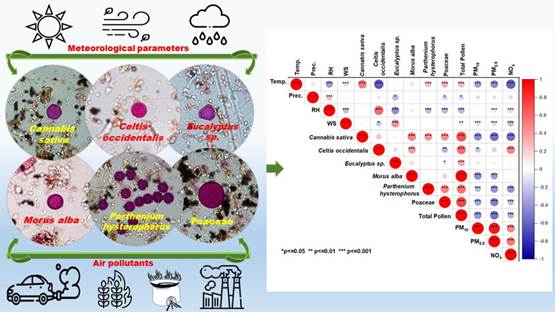
 Scientists have found that air pollutants influence pollen concentration and different types of pollens have a unique response to weather conditions. 

Pollens remain suspended in the air and form part of the air we breathe. When inhaled by humans, they put a strain on the upper respiratory system. They cause widespread upper respiratory tract and naso-bronchial allergy with manifestations like asthma, seasonal rhinitis, and bronchial irritation.

Airborne pollen varies in character from place to place due to diverse meteorological or environmental conditions. There is growing evidence that airborne pollen plays a crucial role in increasing allergic diseases in the urban environment. As pollen, climatic variables, and air pollutants coexist in nature, they have the potential to interact with one another and exacerbate their adverse effects on human health.

Considering this, Prof. Ravindra Khaiwal from Post Graduate Institute of Medical Education and Research (PGIMER), Chandigarh, along with Dr. Suman Mor, Chairperson, Department of Environment Studies and Ms. Akshi Goyal, Ph.D. research scholar, studied the influence of meteorology and air pollutants on the airborne pollen of the city Chandigarh. The group explored the relationships of temperature, rainfall, relative humidity, wind speed, direction, and ambient air pollutants mainly, particulate matter and nitrogen oxide to the airborne pollen. 

The study has been financially supported by the Department of Science and Technology (DST), Government of India, and is one of the first studies in India trying to understand the impact of air pollutants and meteorological variables on airborne pollen. The study is recently published in Science of the Total Environment, a journal by Elsevier.

The study suggests that each pollen type studied had a unique response to weather conditions and air pollutants. The majority of pollen types were reported in the spring and autumn flowering period. Distinct peaks of airborne pollen were observed during favorable weather conditions, like moderate temperature, low humidity, and low precipitation. It was observed that moderate temperature plays a significant role in flowering, inflorescence, maturation, pollen release, and dispersal. In contrast, pollen grains were eliminated from the atmosphere during precipitation and high relative humidity.

A complex and obscure relationship of airborne pollen was indicated with air pollutants. The scientists plan to examine long-term data sets to establish the trends in the relationship.

Prof. Ravindra Khaiwal highlighted that in terms of the climatic future, it is expected that the urban environment will significantly impact plant biological and phenological parameters. 

Therefore, the study’s findings generate useful hypotheses that air pollutants influence pollen concentration and can be further explored as the data set expands in the future. 

The current study’s findings could help to improve the understanding of complex interactions between airborne pollen, air pollutants, and climatic variables to aid in formulating suitable mitigation policies and minimizing the burden of pollinosis in the Indo-Gangetic Plain region. This region has been identified as a hotspot of air pollution, specifically during October and November months.  

Description: C:\Users\Admin\Downloads\1-s2.0-S0048969721069059-ga1_lrg.jpg

Publication link:

DOI: https://doi.org/10.1016/j.scitotenv.2021.151829

Department of Biotechnology Mission COVID Suraksha COVID-19 vaccine – CORBEVAX

 India’s first indigenously developed Receptor Binding Domain (RBD) protein sub-unit vaccine for COVID-19, CORBEVAXTM, developed by Biological E Limited, has received the Drug Controller General of India (DCGI) approval for Emergency Use Authorization (EUA).

The Department of Biotechnology (DBT) and its Public Sector Undertaking (PSU), Biotechnology Industry Research Assistance Council (BIRAC), have supported Biological E’s COVID-19 vaccine candidate from pre-clinical stage through Phase III clinical studies. The vaccine candidate was provided financial support under COVID-19 Research Consortium, through the National Biopharma Mission, for pre-clinical toxicology studies. Later support was provided under Mission COVID Suraksha for clinical development. CORBEVAXTM is a 2-dose vaccine administered intramuscularly and can be stored at 2ºC to 8ºC.

The recombinant protein sub-unit vaccine developed from the Receptor Biding Domain (RBD) of the spike protein on the viral surface is adjuvanted with Dynavax’s CpG 1018 and alum. Comprehensive Phase III clinical trials involving more than 3000 subjects between the ages of 18 and 80 at 33 study sites across India, demonstrated the vaccine to be safe, well tolerated and highly immunogenic. The Translational Health Science and Technology Institute (THSTI), an Autonmous Institute of DBT, provided key immunogenicity data for the Phase II/ III studies.

Dr Rajesh Gokhale, Secretary, Department of Biotechnology, Government of India said, “The EUA to CORBEVAXTM is yet another example of a successful academia-industry collaboration. This vaccine will sharpen the country’s efforts in ending the pandemic. The development of indigenous vaccines to fight the pandemic will also inspire the country’s scientists and manufacturers to resolve the problems of the country.”

Ms. Mahima Datla, Managing Director, Biological E. Limited, said, “We would like to take the opportunity to specially thank our Prime Minister Shri Narendra Modi for making vaccination a national mission. His vision and the advance commitments we received towards CORBEVAXTM were instrumental in our ability to scale-up and manufacture at such huge capacities. While COVID Suraksha Program’s endeavour to accelerate vaccine development played a crucial role in the initial development, the mechanism that was setup with the support of Department of Biotechnology and DBT-Biotechnology Industry Research Assistance Council (BIRAC) allowed us to scale up to a capacity of about 1.2 billion doses per annum making the dream of accessibility – affordability and supply – a reality.”

About DBT

The Department of Biotechnology (DBT), under the Ministry of Science & Technology, promotes and accelerates the development of biotechnology in India, including growth and application of biotechnology in the areas of agriculture, healthcare, animal sciences, environment and industry.

About BIRAC: 

Biotechnology Industry Research Assistance Council (BIRAC) is a not-for-profit Section 8, Schedule B, Public Sector Enterprise, set up by Department of Biotechnology (DBT), Government of India as an Interface Agency to strengthen and empower the emerging Biotech enterprise to undertake strategic research and innovation, addressing nationally relevant product development needs. 

ABOUT BIOLOGICAL E. LIMITED

Biological E. Limited (BE), a Hyderabad-based Pharmaceuticals & Biologics Company founded in 1953, is the first private sector biological products company in India and the first pharmaceutical company in Southern India. BE develops, manufactures and supplies vaccines and therapeutics. BE supplies its vaccines to over 100 countries and its therapeutic products are sold in India and the USA. BE currently has 8 WHO-prequalified vaccines in its portfolio.

In recent years, BE has embarked on new initiatives for organisational expansion such as developing generic injectable products for the regulated markets, exploring synthetic biology and metabolic engineering as a means to manufacture APIs sustainably and developing novel vaccines for the global market.                                            


‘Sankalp Smarak’ dedicated to the nation by CINCAN

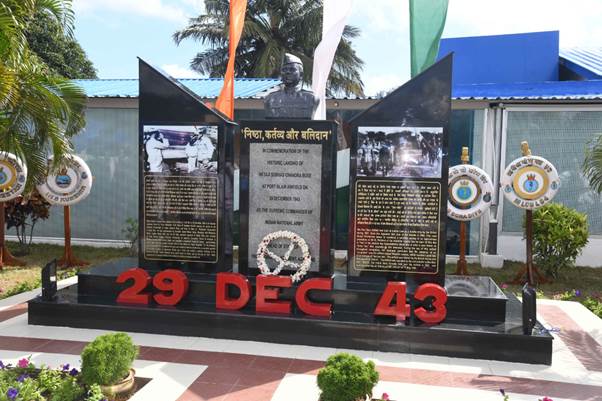
 In order to preserve this important event in history, a Sankalp Smarak was dedicated to the nation by Lt Gen Ajai Singh, Commander-in-Chief Andaman and Nicobar Command (CINCAN), exactly 78 years after Netaji’s arrival on 29 Dec 2021 at 11:30 am. The Smarak is a tribute not only to the resolve of the soldiers of the Indian National Army and their innumerable sacrifices but also reminds us of the values enshrined by Netaji himself, “Nishtha, Kartavya aur Balidan” or “Commitment, Duty and Sacrifice” that continue to underscore the ethos of the Indian Armed Forces and the resolve of the Indian Soldier.

In the saga of India’s freedom struggle, 30 December 1943 holds a special place etched in time. It was on this day that a national flag was hoisted for the first time on Indian soil, at Port Blair. It is also significant is that Netaji escaped British surveillance from Kolkata on 16 Jan 1941 and stepped back on Indian soil after nearly three years, at Port Blair Aerodrome on 29 Dec 1943 at 11:30 am and unfurled a National flag the next day. Netaji’s visit to the islands as the Head of the Provisional Government of Azad Hind and Supreme Commander of Indian National Army marked a symbolic fulfilment of his promise that the Indian National Army would stand on Indian soil by the end of 1943. This historic visit also marked a declaration of Andaman and Nicobar Islands as the “first liberated territory of India”.

The location of Netaji’s historic arrival on 29 Dec 1943 (accompanied by Sarvashri Anand Mohan Sahay (Secretary with Ministerial Rank), Captain Rawat – ADC and Col DS Raju (personal physician of Netaji), lies within the premises of what is now Andaman and Nicobar Command’s Air Station INS Utkrosh, in close proximity to the present-day runway. Upon his arrival as the Supreme Commander of the Indian National Army by a Japanese Air Force Aircraft, Netaji was accorded a ceremonial guard of honour by soldiers of Indian National Army at the Air Field.

During the dedicated ceremony held on the occasion, Soldiers of the only Quad Services Command of India led by the Commander-in-Chief himself along with other senior officers, soldiers and families paid homage, honouring the sacrifices of the soldiers of the Indian National Army. The event was conducted in a simple and solemn ceremony befitting the occasion.


Nampi/Rajib


The Art Of Storytelling

Yakshagana Traditional Dance & Theatre, History, Style, Origin

India has always been the land of diverse beauty, culture, tradition, and ethnicity. Each state in this country is brimming with unique and exquisite art, dance, music, food, and the best part even different districts in each state of India are different from each other and have so much to offer for all those people who want to experience the very essence of this country. Today my article is going to be about a famous traditional dance that is in performance in the southern state of Karnataka known as the Yakshagana. There is a quote by Sadhguru, which suits perfectly this topic, and he says and quotes “Indian classical music and dance are not just for entertainment rather they are designed to elevate your consciousness.”

Each state in India has its traditional dances based on their originating places. The state of Uttar Pradesh has its traditional dance of Kathak, while Tamil Nadu has Bharatanatyam, and so on. Each state has its specialty and these traditional dances bring out the essence and beauty of the state. The traditional dance that is in focus in this article is Yakshagana. To all the people reading this article if you ever get the chance of going to the splendid state of Karnataka do make a trip to a show Yakshagana. Karnataka is a state that has something for everybody. It is not only famous for its big buildings and metropolitan cities but its beautiful beaches, forests, temples, food, architecture, and so much more.

Understanding the Yakshagana

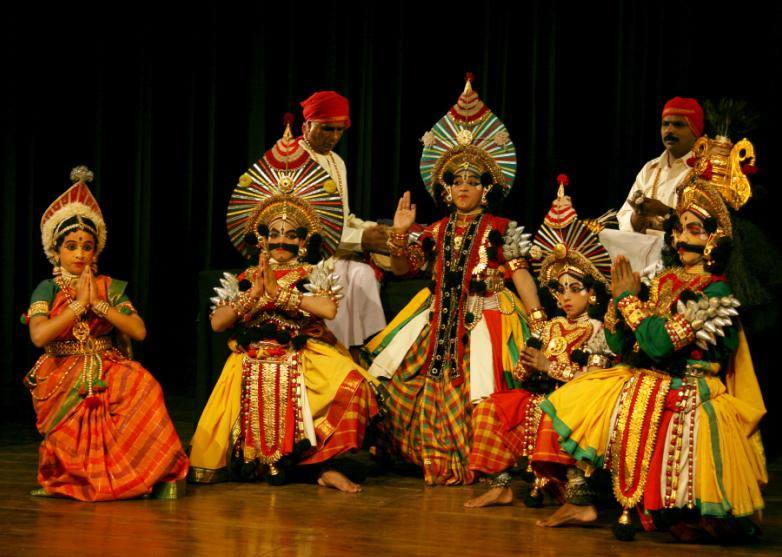
The traditional dance of Yakshagana unbelievably dates back to the time of 1556 CE. Yakshagana is a traditional theatre dance that came into development in southern districts of Karnataka mainly in Uttara Kannada, Dakshina Kannada, Shimoga, Udupi, and the southern part of Chikmanagaluru. Yakshagana is a dance form that combines dance, music, costume, makeup, dialogues, and a unique style and form of stage techniques. This dance form is also very famous in the Kasargod district of Kerala. Not many people know that a traditional dance form has different names when referred to in different districts. The Tulu Nadu region starts from Dakshina Kannada and ends in Kasargod, the people in these regions refer to Yakshagana as “Thenku thittu” while from Udupi to Uttara Kannada, people in these regions refer to Yakshagana as “Badaga thittu”. The story and concept of which Yakshagana is in performance are the stories of Ramayana, Mahabharata, Bhagavata, and all the other epics. The epics come from both the Hindu and the Jain ancient traditions with the inclusion of other ancient traditions as well. Yakshagana is to surface during the Bhakti movement. Another important thing about this traditional dance is that it is not just a dance form but is also a theatre performance. Yakshagana is a combination of dance and plays that makes it unique and distinct from the rest of the dance forms.

Everyone must be wondering what the word Yakshagana itself means. The answer to this query is the word Yaksha, which means the natural spirits, and Gaana, which means music. The word Yakshagana itself has so much history. If I write just about history then it will take forever. So do go on various sites and do make it a point to read about the history of Yakshagana that is available online.

Yakshagana has a rich amount of culture and tradition. Therefore, every element of this traditional dance has its beauty and importance. One of the most fundamental elements that stand out from the rest is music. Yakshagana has separate traditional music that is devoted especially only for this dance. However, Yakshagana music has the same ancestors as Classical Karnatik music and Hindustani music yet it is still very different from the two of them. The music consists of Himmela, which is the background music group of instrumental music of the maddale (hand drum), pungi (pipe), harmonium, and chande (loud drums). The dance and the dialogue group of the Yakshagana consist of actors and dancers as the mummela.

8 Yakshagana ideas | face art, traditional dance, dance of india

Fascinating things about Yakshagana

Yakshagana is a very old folk tradition combination of dance and play. One of the most fascinating things about folk tradition, which one can see in Yakshagana as well, is the breaking of the fourth wall. Let us understand this.

 Anything that is shown has three major visible walls which are on the left, right, and behind. There is also the existence of a fourth invisible wall between the audience and the people on the stage; this is commonly the fourth wall. This fourth wall is visible in old English plays where there is no interaction or obvious acknowledgment of the presence of the audience. This fourth wall is usually broken in Indian Folk Tradition. There is constant interaction, communication, and dialogues that acknowledge and make the audience feel their presence during the show. If you visit any show then you can see observe this in their performance.

 The next folk tradition of Yakshagana is the introduction of Bhagavata. The Bhagavata in the performance of Yakshagana sings with the group of Himmela about the happenings of the scene, which shows through dance, by the Mummela group. The Bhagavata in the performance of Yakshagana is the god of the play. They are responsible for the panning of the story in the performance. We can see the Bhagavata in and out of the very fascinating play and is an out-of-the-box structure.

Another fascinating thing about Yakshagana is that no performance is the same. There are no particular dialogues that are in the setting for the actors. It is impromptu yet very methodical and structural. That is the beauty of Yakshagana. Even if one sits the same play twice, one can instantly notice that the dialogues are different both the times but the story structure is still the same.

Yakshagana is typically in performance in temples. It starts very early in the morning and ends usually at night. The fascinating reason here is the reason for the place of performance. Temples are usually in selection because people need food and shelter during the performance as it takes place the entire day. The temple and stage look beautiful with leaves and flowers emphasizing and showing that something is happening in the temple. Today, Yakshagana performances also happen in the cities as well and these usually happen in the auditoriums.

One of the most eye-catching and breathtaking parts of Yakshagana is the makeup and the costume. The costume of the actors is very colorful and plays an important role in holding the gaze of the audience. The costume is slightly heavy and the headgears that are worn are very heavy. There is thick and dense makeup that is worn by the actors who are dancing and enacting. This is done to make the facial expressions more distinct and visible to the audience. The fascinating part is how these experienced Yakshagana actors dance, jump, and speak so loudly without any devices that everyone will know what is happening and the audience without any problem will be able to hear the actors clearly and properly.

There is so much more in Yakshagana’s components that can be studied in detail through various sites available online. I have just provided some basic information about this beautiful, historical, and traditional dance form that tells us stories in ways out of our imagination. One should read about Yakshagana more and learn about this dance. I would like to conclude with a meaningful quote by Adithya. R. Upadhya where says, “Yakshagana is the art at its finest form”.

References

  1. Google searches for images and quotes
  2. Information on Yakshagana – Wikipedia

International Relations

Introduction
The term ‘international relations’ was first used by Jeremy Bentham in the 18th century, although its Latin equivalent, ‘intergentes‘, was used a century earlier by Rijehare Zouche. Both of them had used the term in the context of what later came to be known as international law. Today, nation states have become highly interdependent, and relations between them, political or economic, have developed into an essential area of knowledge.

The term ‘international relations’ (IR) may be used both for a ‘condition’ and a ‘discipline’ Quincy Wright, for example, makes such a distinction. The official relations between sovereign countries are described as international relations, though according to Wright, ‘… the word “interstate” would have been more accurate because in political science, the state came to be the term applied to such societies’. Viewed thus, international relations, as a condition, refers to the facts of international life, that is to say, the actual conduct of relations among nations through diplomacy based on foreign policy. It also includes actual areas of cooperation, conflict and war. According to Quincy Wright, IR should tell the ‘truth about the subject’, i.e., how such relations are conducted and, as a discipline, IR should treat them in a systematic and scientific manner.

Meaning Of International Relations

International relations as a subject is concerned with the relationships among the governments of various sovereign states. Many people may think that relations among nations are regulated and conducted by presidents, prime ministers, foreign ministers, officials of the foreign offices and diplomats. This is partially true. The scope of international relations is not merely political. Today, economic activities such as international trade, role of multinational corporations, terrorist activities and impact of environment are all embraced in the fold of relations among nations.

Most scholars agree that the term ‘international politics’ is used to describe official political relations between governments acting on behalf of their states. The term ‘international relations’ is broader. According to Stanley Hoffman, ‘The discipline of international relations is concerned with the factors and activities which affect the external policies and power of the basic units into which the world is divided.’

International Relations As A Field Of Study

As a field of study, international relations analyses a wide range of political activities. These include war, peace, diplomacy, trade relations, treaties, alliances, cultural, exchanges, participation in international organizations, etc. Each of these activities makes up distinct issue areas on which scholars and foreign policy makers focus attention.

The scope of international relations is often defined by subtitles, like ‘questions of war and peace’ as a subtitle of international security. Joshua S Goldstein wrote, ‘the movements of armies and of diplomats, the crafting of treaties and alliances, the development and deployment of military capabilities – these are the subjects that dominated the study of IR in the past… and they continue to hold central position in the field.’

Besides these, religious groups and movements working in two or more countries also act as non-state actors in the international relations. These may include large followers as the Catholic Church has, or a spread out population as sought to be represented by the Vishwa Hindu Parishad.

CRICKET IN INDIA

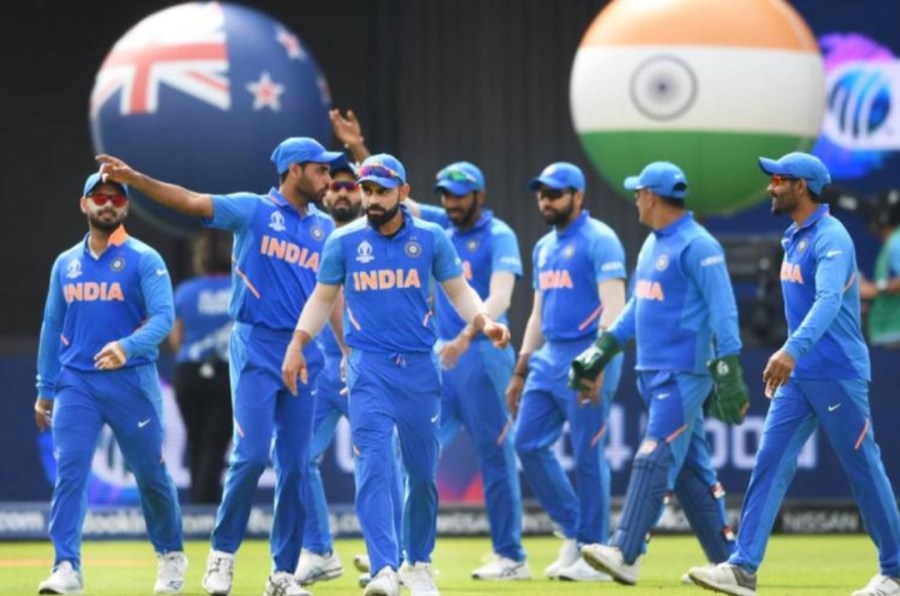
Cricket is the most popular sport in india.Every part of the country they will play cricket Indian National cricket team also known as men in blue represent in world tournament like Odi, T20,Test.The Indian cricket team is governed by BCCI(Board of control of cricket in india).


Indian team started cricket in 1721 long ago.There are 38 first class clubs and 10 ipl clubs from 2022.There are many form of cricket first class,ipl,clubs etc.

List of cricket:-

First Class Cricket:-

Ranji Trophy
Duleep Trophy
Irani Trophy

List A Cricket:-

Vijay Hazare Trophy
Deodhar Trophy

T20 Cricket:-

Syed Mushtaq Ali trophy

Club competitions:-

Indian premier league

International competitions:-

ICC World Test Championship
ICC Cricket World Cup
ICC World Twenty20
ICC Champions Trophy
Asia Cup
Women’s Cricket World Cup
ICC Women’s World Twenty20
Under 19 Cricket World Cup

In 2007 first time T20 started india gone with a young team under ms dhoni without any star players and they won T20 world cup.


In ODI world cup india 2 times won the championship First in 1983 against West Indies under kapil dev And second time won in 2011 against Sri Lanka under ms dhoni.India has provided many legends in cricket.From children to youngster all will play cricket in india.

Distance learning and its usefulness

what is distance learning?

Distance learning can truly be defined as the way of getting an education without visiting a school or attending a class physically.

Adaptability and Freedom

One of the main advantages of distance learning can be the personalized approach to getting an education regardless of the channels or mediums you are using for this purpose. Whether you are getting study materials online or through posts you can learn only when a connection is developed between the material of the course and you. You get the freedom to deal with the study material in the distance learning process. You can plan your learning process at your convenience instead of sticking with a fixed schedule.

Self-inspiration

Distance learning encourages you to motivate yourself to learn due to the absence of a traditional teacher to guide you. You will have to create a learning environment and control it effectively so that a band of self-motivation develops in you to inspire you to learn for your personal growth. You can cultivate this band in you by engaging yourself in distance learning methods.

Flexibility to Choose

You will have to follow a set schedule of learning as per the curriculum of the school if you are following traditional ways of learning. But different types of distance learning allows you to set your learning schedule as per your convenience without following a regular schedule of learning. Even if you are out of touch with the learning process, a distance learning program offers you the flexibility to choose your course of learning.

Easy to Access

If you cannot attend regular classes due to various reasons like time constraints and distance etc. then distance learning can be the best option for you to access the benefits of your education. If you opt for a correspondence course for distance learning then you will have to make postal delivery as a connection between you and your distance learning centre. But if you have a computer and internet connection then you can opt for an online learning method by using some video conferencing software like ezTalks Cloud Meeting etc. It will allow you to interact with your teachers face-to-face to resolve your problems. Moreover, you can continue learning even without taking leave from your job.

Earn While You Learn

For those who want to improve their resume by getting a higher education and without breaking their existing job then distance learning can be the best option for them. You can go on earning your livelihood along with improving your qualification as distance learning will accommodate both, learning as well as earning.

Saves Money and Time Both

By joining a distance learning course you can save money and time spent travelling to a nearby educational institution. Distance learning allows you to access your learning centre online without any additional cost. Moreover, the course offered at distance learning centres is cheaper than the courses provided at traditional education centres.

Virtual Trips

Another important advantage for distance learning is to plan virtual trips if your budget does not allow you to go on trips from an actual school. Video conferencing allows the students of distance learning courses to visit the location important for them and experience the enjoyment even better than an actual trip. These virtual trips allow you to visit locations that you might have never thought of. Moreover, such trips can enable your teachers or lecturers to make your ordinary lessons more interesting than ever.

Reference

https://eztalks.com/elearning/benefits-of-distance-learning.html

Is Homework Good or Bad for students?

Why Homework Is Good

Here are 10 reasons why homework is good, especially for the sciences, such as chemistry:

  • Doing homework teaches you how to learn on your own and work independently. You’ll learn how to use resources such as texts, libraries, and the internet. No matter how well you thought you understood the material in class, there will be times when you’ll get stuck doing homework. When you face the challenge, you learn how to get help, how to deal with frustration, and how to persevere.
  • Homework helps you learn beyond the scope of the class. Example problems from teachers and textbooks show you how to do an assignment. The acid test is seeing whether you truly understand the material and can do the work on your own. In science classes, homework problems are critically important. You see concepts in a whole new light, so you’ll know how equations work in general, not just how they work for a particular example. In chemistry, physics, and math, homework is truly important and not just busywork.
  • It shows you what the teacher thinks is important to learn, so you’ll have a better idea of what to expect on a quiz or test.
  • It’s often a significant part of your grade. If you don’t do it, it could cost you, no matter how well you do on exams.
  • Homework is a good opportunity to connect parents, classmates, and siblings with your education. The better your support network, the more likely you are to succeed in class.
  • Homework, however tedious it might be, teaches responsibility and accountability. For some classes, homework is an essential part of learning the subject matter.
  • Homework nips procrastination in the bud. One reason teachers give homework and attach a big part of your grade to it is to motivate you to keep up. If you fall behind, you could fail.
  • How will you get all your work done before class? Homework teaches you time management and how to prioritize tasks.
  • Homework reinforces the concepts taught in class. The more you work with them, the more likely you are to learn them.
  • Homework can help boost self-esteem. Or, if it’s not going well, it helps you identify problems before they get out of control.
Sometimes Homework Is Bad

So, homework is good because it can boost your grades, help you learn the material, and prepare you for tests. It’s not always beneficial, however. Sometimes homework hurts more than it helps. Here are five ways homework can be bad:

  • You need a break from a subject so you don’t burn out or lose interest. Taking a break helps you learn.
  • Too much homework can lead to copying and cheating.
  • Homework that is pointless busywork can lead to a negative impression of a subject (not to mention a teacher).
  • It takes time away from families, friends, jobs, and other ways to spend your time.
  • Homework can hurt your grades. It forces you to make time management decisions, sometimes putting you in a no-win situation. Do you take the time to do the homework or spend it studying concepts or doing work for another subject? If you don’t have the time for the homework, you could hurt your grades even if you ace the tests and understand the subject.
Reference

https://www.thoughtco.com/why-homework-is-good-sometimes-bad-607848

BORED at Hostel?, Watch these web-series with your friends.

In this Pandemic, People are afraid to go out in public places especially students who are living in Hostels and PGs. They have no options other than to stay in the hostel. I assure you in this post you will come to know about some of the best web-series to watch and add some spice and flavors to the boring hostel life.

Photo by Adrienn on Pexels.com

Bored at hostel? Here are some of the shows which you can watch with your friends.

1.Hostel Daze

Images @Primevideo.com

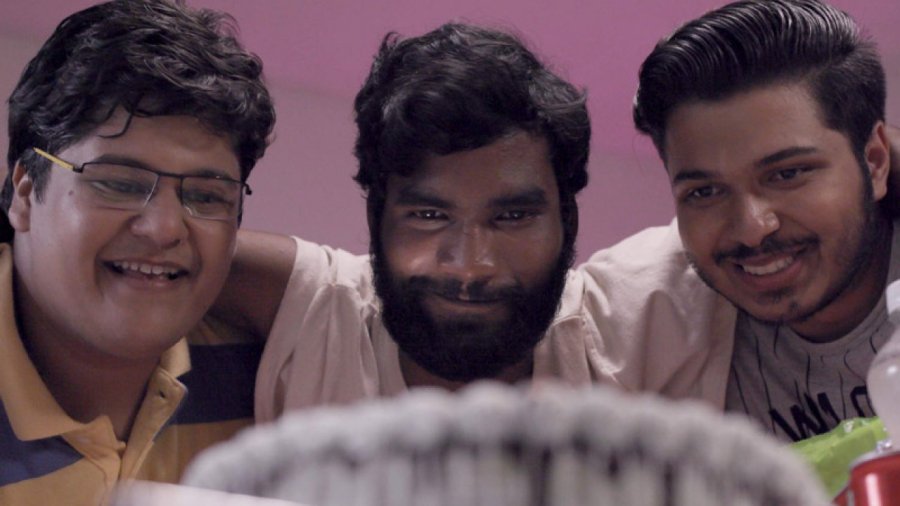
Hostel Daze is the Accurate Depiction of Hostel Life. It is a comedy genre series which is available to watch on Amazon Prime. Hostel Daze is a story which connects us to the life of Three hostel inmates who have just joined the college. Hostel Daze Shares with us challenges of freshers which they face from seniors , Believe me your stomach will hurt a lot from laughing right from the first episode. The First Season revolves around Ankit who struggles and wants to create an identity of himself in the college. In the second season, All the MCs Ankit, Chiraag and Jaat become seniors and go to their home for Vacations and miss having fun with each other. It received huge love from the audience when it was released. There are 2 seasons to this incredible show and has 9 episodes in total for 2 seasons and You can watch it on Amazon Prime.

2. College Romance

College Romance | TVF

COLLEGE ROMANCE, Another treasure from the house of TVF Originals. College Romance is not any ordinary story about falling in love or falling out of love. College romance is a package which includes comedy, serious drama, suspense and perfect characters for their roles. It is a story about 5 friends who pull pranks on each other get into fights with and for each other but ultimately choose to stay together like real friends would. There is a lot of cussing and swearing in it and this is the best part about this show. A character from the show ‘Bagga’ is the center pillar of this show. The show can be watched on TVF Originals and on Sony Liv. It has 2 seasons.

3. Immature

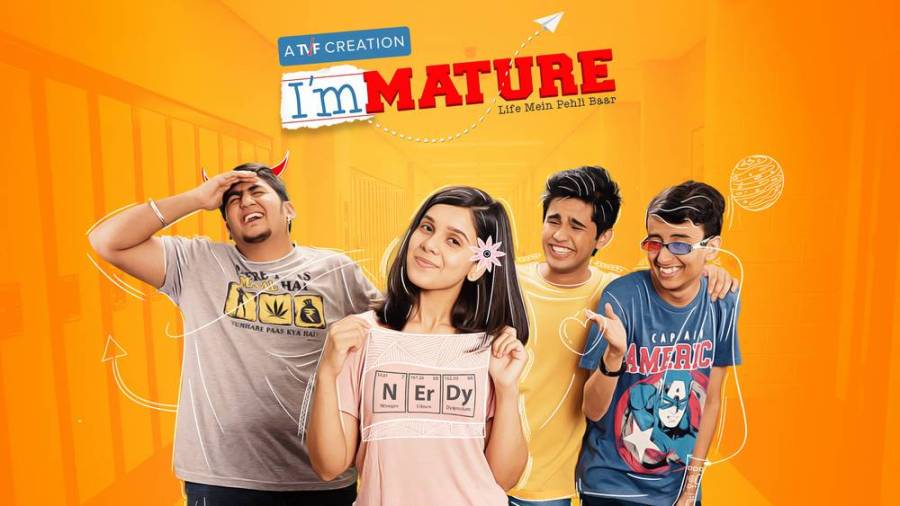
TVF has mastered the art of making eminently watchable shows. Immature is like an instant noodles formula: quick to make, easy and scrumptious . Immature follows the story of a boy in his adolescence who has a crush on a girl from her class. It depicts the teenage years of the boys where Parents are the obstacle to fun and Bunking and Bike riding with friends is freedom. This show will guarantee you lots of laughs. Each episode is like a door which opens a new set of challenges in his life as the show progresses towards end. This show can be watched on Mx player for free.

THE END..

At the end I would just like to say Life can get pretty boring but do not let it keep you from sharing loud laughs with your friends…

Growth Profile of an Indian Startup- CRED

CRED is an Indian Fintech Company which offers rewards to customers who use its platform to pay their bills of credit card.

CRED is a Bengaluru Based startup found by Kunal Shah who also happens to be the CEO of the Company. Kunal is an Indian Entrepreneur who has been recognized for launching new ventures for the second time. Kunal graduated in Philosophy from Wilson College and later pursued MBA from Narsee Monjee Institute of Management Studies, but he had to drop in the middle to pursue his dreams as an Entrepreneur. Kunal started his entrepreneurial journey with PaisaBack, a website for cashback, coupons, and other offers for the users along with Sandeep Tandon. However, They had to shut down its operations in order to find FreeCharge in 2010. FreeCharge was acquired by Snapdeal in April 2015 but the company still continued as an independent entity led by Shah. He left the firm the next year and eventually founded Cred in 2018, which has successfully turned into an unicorn on April 6, 2021.

BUSINESS MODEL – CRED

The plan of action of the organization comprises of four sections :

•   The Cred application

The Cred application is a flawless looking, wonderfully planned application, which the clients can visit assuming they need to go through the offers that are accessible after they cover their charge card bills. They can without much of a stretch sign up on the application and view every one of the offers that they can profit.

Businesses that give offers on the application

The clients of Cred can likewise track down a wide scope of offers from various organizations. For this, CRED carries organizations locally available and works together with them. Alongside helping CRED and its clients, who can benefit of the restrictive offers given by the organizations, it is likewise a mutually beneficial arrangement for the organizations. This is on the grounds that they are likewise immensely profited from the perceivability they get.

• Users who take care of their Mastercard bills –

CRED additionally fills in as a smooth and remunerating stage for the clients who use it to take care of their Visa bills. In contrast with banking or other applications, the end-clients can pick CRED as an application to take care of their charge card bills and get various offers and advantages. Then again, the clients who like the application likewise share CRED with their loved ones.

Cred Mint

Cred uncovered its new element, Cred Mint on August 20, 2021, which is planned as a distributed loaning stage assist that with willing assistance Cred clients loan their inactive cash to trustworthy individuals. It is a somewhat straightforward interaction that just permits the dependable Cred individuals bragging an insignificant FICO rating of 750 or higher to be the borrowers. Besides, the banks can likewise pull out their cash at whatever point they need with the premium that they have aggregated for the period.

GROWTH OF CRED-

Cred has shown a consistent development consistently. Being a startup that was established in 2018, it effectively joined the unicorn club on April 6, 2021, shutting its Series D round where the organization had wiped up $215 million. CRED controls “22% of all charge card installments in India consistently,” said Kunal Shah in his assertion delivered in April 2021.

Kunal Shah further took to his Linkedin profile on July 10, 2021, and shared features of the achievements came to by CRED in the long stretch of June:

Cred presented Cred Mint on August 20, 2021, which will fill in as a distributed loaning highlight that can be utilized by the clients of CRED. Cred Mint has been dispatched by Cred in a joint effort with RBI-supported P2P Non-Banking Financial Company.

With this component, the Cred individuals would now be able to loan cash to the reliable individuals from Cred dependent on the predefined financing costs. Cred Mint can be utilized to loan one more reliable client to assist them with acquiring around 9% per credit. In any case, it is likewise announced that Cred Mint may be accessible for clients with nice FICO assessments.

CONCLUSION-

Cred is one of the best examples of this how a brand born in India of an idea to provide users to make credit card payments through its app for which they get rewarded. Others have also been able to provide value to other countries, This is the power of globalization and this was achieved because of an entrepreneur who had a vision in his mind.