

A person would be considered deviant in society if they are violating what the significant social norm of its group (Pfohl). There are many ways deviance could be answered. There is the psychological answer, biological answer, and the sociological answer. With all of the studies that have been performed, no one group has come up with an exact reason to why people are considered deviant. The reality that the definition of deviance is considered different by everyone makes it complicated and unknown if a truly accurate answer can ever be found (Pfohl). This is why this topic is important to the study of sociology. Sociologists have more information, and therefore may be closer to finding the cause.
The family is the link to socialization in one’s environment. In the family, divorce, conflict within family, neglect, abuse, and deviant parents are the main vindicates for the offspring’s actions (Cheung).
Poverty is also a reason in the family for conflict because it can lead to both family breakups and delinquency. Children need close, supportive, relationships with parents. What promotes deviance in the home is the inhibition to talk to parents. The child may feel that they need to get attention elsewhere, thus acting deviantly if their parents are not there for them (Evans).
My research paper is about these situations. Why do others succeed and why do others fail? People say that it is a good thing to be different but why than others are open to opportunities while others are faced with no opportunities? I am going to discuss about how the environment and society around us affect every aspect of our lives.
Social environment is influenced by one’s power and wealth. This, in turn, determines success or failure in peoples’ lives. I believe it is what family we were born into that would easily let individuals to have an opportunity to attend a fancy school no matter how intelligent he is or she is.
Origins of Common English Idioms
Ever wondered where some ever-present idioms originated from in the English language? Here are some interesting origins of common English idioms and their fascinating and sometimes bizarre history:
Always a bridesmaid, never a bride
Definition: Literally, always being a bridesmaid and never a bride. More figuratively, it is a forlorn saying for women when they can’t find love.
Origin: This gem of an idiom was first recorded in a Victorian music hall tune, “Why Am I Always A Bridesmaid?”, by Fred W. Leigh. However, the phrase garnered popularity after a retrospectively hilarious ad for Listerine mouthwash in 1924. The slogan, “Often a bridesmaid, but never a bride”, accompanied a picture of a forlorn ‘Edna’, who, because of her halitosis (bad breath), was never being able to find love. The solution: buying Listerine mouthwash in bulk.
Pull someone’s leg
Definition: Joking or fooling with someone.
Origin: To pull someone’s leg had much more sinister overtones when it first came in use. It was originally a method used by thieves to entrap their pedestrians and subsequently rob them. One thief would be assigned ‘tripper up’ duty, and would use different instruments to knock the person to the ground. Luckily, these days the saying is much more friendlier, though being on the end of a joke might not always be fun.
Meeting a Deadline
Definition: To finish something by a predetermined time.
Origin: This saying apparently stems from the prison camps during the Civil War, where a line was drawn to demarcate the boundaries for the prisoners. The line became to be known as a deadline because any prisoner who attempted to cross it was shot.
Basket Case
Definition: Someone who is unhinged.
Origin: According to undetermined reports, WW1 soldiers who had lost all their limbs were carried around in baskets. The actual term, ‘basket case’, however was coined by the US military – in denial of this practice – after WW1. In 1919, a bulletin was issued by the U.S. Command on Public Information, making use of the phrase:
“The Surgeon General of the Army … denies … that there is any foundation for the stories that have been circulated … of the existence of ‘basket cases’ in our hospitals.”
Close but no Cigar
Definition: Being near success, but just missing out.
Origin: Once upon a time, fairground stalls favored gifting cigars to winners rather than overstuffed, over-sized plush toys. Needless to say, winning was nearly impossible at the rigged carnival games and thus the idiom war born. The first evidence of the saying comes from a film script for Annie Oakley in 1935, after which it was frequently used in newspaper articles.
Bust your Balls
Definition: A slang term which can refer to a form of punishment, working hard, or being harassed or teased.
Origin: Believe it or not, the term actually comes from literally busting the balls of a calf. Rather than cutting them off or chemically sterilizing them, a method was developed to literally break a calf’s testicles to turn them from a bull to a steer. Thankfully, only the figurative version is used by humans.
Bark up the Wrong tree
Definition: To make the wrong choice or pursue the wrong course.
Origin: When hunting raccoons for fur was a popular sport, hunting dogs were used to sniff them out of trees. Being a nocturnal animal, the hunting party had to work at night, and the dogs would sometimes end up choosing the wrong tree, or as the idiom goes, ‘bark up the wrong tree”. The term was first printed in a book by Davy Crockett in 1833.
“BODY SHAMING”
A “real” women aren’t defined by their height, weight & curves,
She should get the respect which she totally deserves!
No one’s perfect, not even the person himself who’s body shaming!
Everyone has come up with distinctive features so , NOW JUST STOP BLAMING!
– SUKHMANI PANESAR
“Body shaming” this word has broken many hearts out there. Body shaming is something disguise and disheartening one can ever feel in his her life. It is something which eats your out completely, it makes the person insecure, uncomfortable, not confident in their own skin or body, less motivated and every thing that can make a person to doubt on his/her body and to hate the body.

Body shaming is an act of mocking or criticizing one’s physical appearance. The culture of body-shaming is generation old and an ongoing social practice irrespective of social status, education, creed, etc. The reach of body shaming is wide and is not restrictive to only the shape of the body, it includes looks, the colour of the skin, height shaming, one’s muscularity or absence of masculinity, the list goes on and on. These clichés still dominate India’s mindset. This is a big part of our school and college life, and it will never mellow down however we educate ourselves. It is very common in family functions, in schools, the workplace, among close friend circles, relatives, and social media. This practice diminishes the love for our own body, love towards self and we struggle to be socially acceptable. Society has set artificial standards of beauty. It hampers one’s psychology of looking at self. Body shaming is not limited to only females, but males also do go through this trauma of body shaming. But it is more stressful for females in India since our society is patriarchal. Media plays a very notorious part in spreading this disease. We all are social media addicts, the way advertisements preach about looking perfect, has the power to affect someone’s mental health. The most recent and biggest example of media playing a key role in this aspect is the replacement of the word “Fair” to “Glow” and renaming it as “glow and lovely”. All these years they have promoted the concept that fair is beautiful. Body shaming carried on frequently affects the person’s mental health badly, it can cause depression, anxiety, lack of confidence, and social isolation. A person may suffer from panic attacks or depression disorders. Body shaming can lead to eating disorders. Body shaming is the act of suggesting that someone’s body isn’t good enough, and that they should not be satisfied or comfortable with its current composition, proportions, or exposure to the gaze of others. It is rude and disrespectful behavior, and there is no body type that creates an exception that would make body shaming less rude or less disrespectful (even if that body is, in fact, unheathy). A person’s body is their own. It is none of your business. You are not their medical practitioner, and you are neither assisting nor improving the lives of anyone by boorishly sharing your opinions and “helpful” intentions. There is no person on the planet that is not keenly aware of the ways in which their body does not meet the current standard. There is not one person who needs you to point it out.
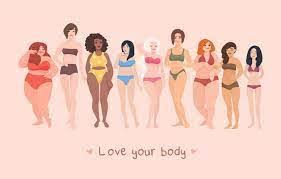
Please choose kindness. Choose empathy. See the beauty in every body, and choose to spend your time bringing people and ideas together. We each have a staggering array of our own flaws on which to focus — let us not mock others for the state of their earthly form.
“Disadvantages of Reservations”
The word ‘reservation’ can be defined as an act of reserving or keeping back or holding something. It is a kind of process to provide facilities to the people belonging to the weaker sections of the societies in the areas of education, scholarship, jobs, and government service and in other spheres in which they are not being represented properly. The reservation system is under the control of constitutional laws, statutory codes, local rules and regulations.In India, this system is also known as ‘Quota System’, meant for the people attached to the reserved category. Reservation is a form of Affirmative Action a certain percentage of seats are reserved in Parliament, State Legislative Assembly, Central and State Services, Public Sector Units and in all Public and Private Educational Institutions except in the Minority and Religious Educational Institutions for the reserved categories. The Constitution of India provides three types of reservations i.e. Political, Educational and Employment and the percentage for the reservation of these has been fixed by them.
In India, the reservation is being provided by the Government on the following basis: (1) Caste (2)Religion (3) Domicile and (4) Gender (5)Economic Condition
India is one of the few countries of the world that offers job and educational reservations to the minor and backward communities of the country, so as to uplift them. This technique has received worldwide praise and generally positive views. However, this system has its own merits and demerits to offer. Firstly, our country is a developing one, and as a result, the people often tend to narrow-minded. Age-old traditions of not letting women be educated or work, and beliefs that originated from the infamous Varna system, still prevail. Therefore, strenuous and money-consuming efforts by the government often do not befit the minor citizens.

Disadvantages of Reservation System.
- It divides our country on the basis of caste, religion and gender and hence threatens our national unity. People often see benefits according to their caste, religion and gender and hence for the sake of benefits people often end up having disagreements and fights with each other. Being a secular country, this kind of behaviour can break our unity and the the respect for the nation. It totally divides our country and threatens the national unity, which always have its own consequences that can tear up the unity and the prosperity of the nation.
2.For the benefits, many people make their fake certificates of being an OBC, ST or SC. Which not only disrespects the castes but also it makes the system dirty and unfaithful. This is something terrible that can be done for the sake of advantages and benefits. Making fake certificates is something very disheartening to the respective castes and a kind of disrespecting their own religion and caste. This breaks the unity among the citizens and hence become the reason of discrimination among the citizens.
3. The attempt of goverment is that all the people in our country live without any discrimination on any basis, but reservation will not let that happen. It creates the feeling of superiority and inferiority among different class of people. Since SC, ST and OBC have their own respective advantages and benefits but on the other hand the general category always suffers. General category has become now the most inferior category as compared to all the categories. Being from a general category and still getting admission is a very extreme accomplishment that an adult can praise for the rest of his/her lives.
4.Beneficiaries of reservation are largely from dominant class in backward castes.Marginalised section still remains marginalised. The real benefits and advantages usually got prevailed only by the dominant classes in the backward castes and on the other hand the lower section of people remains the same. This shows how much the discrimination is their in every part of the castes and society and how only the extreme weaker section people always suffers.
Pandit Jawaharlal Nehru Biography

By: Astha Raghav
Jawaharlal Nehru : (14 November 1889 – 27 May 1964) was an Indian independence activist and later the first prime minister of India. Considered one of the greatest statesmen of India and of the twentieth century, he was a central figure in Indian politics both before and after independence. He emerged as an eminent leader of the Indian independence movement, serving India as prime minister from its establishment in 1947 as an independent nation, until his death in 1964. He was also known as Pandit Nehru because of his roots in the Kashmiri Pandit community, while Indian children knew him better as Chacha Nehru.
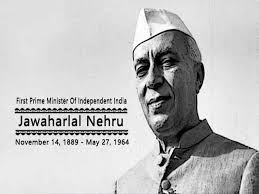
“Failure comes only when we forget our ideals, objective and principles”
– Jawarharlal Nehru
The son of Swarup Rani and Motilal Nehru, a prominent lawyer and nationalist statesman, Nehru was a graduate of Trinity College, Cambridge, and the Inner Temple, where he trained to be a barrister. Upon his return to India, he enrolled at the Allahabad High Court and took an interest in national politics, which eventually replaced his legal practice. A committed nationalist since his teenage years, he became a rising figure in Indian politics during the upheavals of the 1910s. He became the prominent leader of the left-wing factions of the Indian National Congress during the 1920s, and eventually of the entire Congress, with the tacit approval of his mentor, Mahatma Gandhi. As Congress president in 1929, Nehru called for complete independence from the British Raj and instigated the Congress’s decisive shift towards the left.
Nehru and the Congress dominated Indian politics during the 1930s as the country moved towards independence. His idea of a secular nation-state was seemingly validated when the Congress swept the 1937 provincial elections and formed the government in several provinces; the separatist Muslim League fared much poorer. However, these achievements were severely compromised in the aftermath of the Quit India Movement in 1942, which saw the British effectively crush the Congress as a political organisation. Nehru, who had reluctantly heeded Gandhi’s call for immediate independence, for he had desired to support the Allied war effort during World War II, came out of a lengthy prison term to a much altered political landscape. The Muslim League under his old Congress colleague and now opponent, Muhammad Ali Jinnah, had come to dominate Muslim politics in India. Negotiations between the Congress and the Muslim League for power sharing failed and gave way to the independence and bloody partition of India in 1947.
The Congress elected Nehru to assume office as independent India’s first prime minister, although the question of leadership had been settled as far back as 1941, when Gandhi acknowledged Nehru as his political heir and successor. As Prime Minister, he set out to realise his vision of India. The Constitution of India was enacted in 1950, after which he embarked on an ambitious program of economic, social and political reforms. Chiefly, he oversaw India’s transition from a colony to a republic, while nurturing a plural, multi-party system. In foreign policy, he took a leading role in the Non-Aligned Movement while projecting India as a regional hegemon in South Asia.
Under Nehru’s leadership, the Congress emerged as a catch-all party, dominating national and state-level politics and winning consecutive elections in 1951, 1957 and 1962. He remained popular with the people of India in spite of political troubles in his final years and failure of leadership during the 1962 Sino-Indian War. In India, his birthday is celebrated as Children’s Day.
Thank You !
The importance of public transport

By: Astha Raghav
Public transportation contributes to a healthier environment by improving air quality and reducing oil consumption, and through better land-use policies. It also helps to expand business development and work opportunities. And, it is critical for emergency situations requiring safe and efficient evacuation. In terms of energy consumption, public transportation is better than individualtransport in a personal vehicle. In England, bus and rail are popular methods of public transportation, especially in London.

Public transportation is reducing energy consumption and harmful carbon dioxide (CO2) greenhouse gas emissions that damage the environment. Traveling by public transportation uses less energy and produces less pollution than comparable travel in private vehicles.
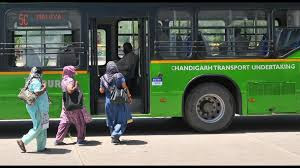
The increase in the number of cars and bikes has added to various pollution problems. The smoke emitted from vehicles has made the cities living gas chambers. The new policies of economic liberalisation has opened doors for the multinationals and the cars of various companies have become status symbols of the upper middle class. The amount of harmful gases in the air is alarmingly on the rise. They affect our eyes and lungs, giving rise to all kinds of cardiovascular and respiratory diseases.
We, as the responsible citizens of India, must take steps to reduce these man-made problems and start using public transport as much as possible. The introduction of Metro Rail is a boon to the commuters as it saves time and money. These days, public transport have been made safe and secure. They are comfortable, clean and a cheaper alterative to personal vehicles for all office goers. Even the services of the Government road transport is good with GPS and A.C. installed for the convenience of the passengers.
Using public transport would definitely save fuel, reduce harmful gas emissions, further reducing one’s carbon footprint and eventually the causes and effects of global warming.
Thank You!
“Journaling”
For some of you, journaling may seems something old fashioned, or something that the people of 1960 may had done. Even a lot of us might have had a habit of putting down their thoughts, feelings in a dairy, but then eventually when we grew up we stopped writing. But now again, journaling is making a huge comeback. It’s filling Pinterest boards and also making headlines. You can even see on the explore feed on Instagram, about how journaling is now getting popular again. Many people have made their journal accounts on Instagram in order share their thoughts, and how aesthetically they decorate that diary page with lots of stickers, aesthetic tapes, stamps, flowers, leaves, novel pages and what not! Seeing such beautiful and aesthetic pages can make you fall in love with the idea of journaling even more.. back then in 1900s people were soo into journaling, they had a habit of doing it so. Even most of the mysteries or some real facts were discovered only through the journal books that were written by the people back then, the facts which we study in our books or the theories, the history everything that we read today was deciphered in the light brown pages of the dairies back then. Journaling affects you mentally & physically, writing down important events of life, your personal feelings, your experiences, the lessons you’ve learned leaves a permanent impact on your mind and on your personality. The experiences that you’ve faced in your life , and what you’ve learned from them makes you even stronger and stronger with more and more experience ahead. Journaling and writing notes soothes you, it takes all the heaviness your heart has, it gives you a shoulder to lean and cry on to the extent by writing only half of the problems always disappear.

- Journaling helps your injuries to heal faster.
Journaling helps older adults heal faster after a medically necessary biopsy, researchers in New Zealand have shown. Researchers noted that writing about stressful events helped patients make sense of tragedy and reduced their distress. Long-term upset can increase your body’s level of stress hormones like cortisol, which weakens your immune system. So writing about distressing experiences lowers your cortisol levels and allows you to heal quicker.
3. Journaling reduces your stress and Anxiety.
Journaling lets you work through your anxious feelings and obsessive worries before you descent into rumination and stress. When you ask yourself how likely the worst-case scenario is, you gain a more realistic perspective on life. Getting your thoughts down on paper helps you identify stress-inducing thoughts and beliefs that are distortions of reality. You begin to notice when you’re in a bad mood or when you overgeneralize with words like “always” or “never” to describe your experiences.

3. Journaling helps you learn from your experiences.
When you journal and reflect on the day, you’re more likely to draw lessons from what you’ve gone through. And in this digital age when you’re consuming massive news and information, journaling lets you step back and actively engage with ideas you’ve encountered. It connects you with complicated concepts when you’re able to phrase them in your own words.
4. Benefits of journaling for students
The practice of writing can enhance the brain’s intake, processing, retaining, and retrieving of information. Through writing, students can increase their understanding of complex material, overcome their insecurities, unfamiliar concepts and subject-specific vocabulary. Vocabulary can definitely be improved by writing daily. Vocabulary is something that should always be up to mark and through journaling through writing you can use different words, and can also get to know about more and more words daily.
5. Journaling improves your communication skills.
When you journal, you learn to better express yourself. And this lets you better communicate your feelings with others. The more self-aware you become, the more you can make yourself understood to others. Writing leads to clear thinking – which in turn leads to clear communication. Journaling can also benefit you in relationships and marriage, where so many problems come from misunderstandings. Journaling is used in classrooms to help students learn to better express themselves. Writing increases self-efficacy and promotes a healthy sense of control over one’s life, which is vital for child and adolescent development. Journaling is an incredible tool for people of all ages to learn to label their thoughts and emotions, which in turn makes it easier to communicate with others.
6. Journaling improves your memory too.
It’s proven that students who take notes during lectures retain information better. Just writing something down improves your ability to remember it. Journaling is also a great way to remember specific moments in time and phases of your life. When you write by hand, it stimulates a collection of cells called the Reticular Activating System (RAS). Your mind then puts whatever you’re focusing on at the forefront and processes it at a deeper level. The physical act of writing brings information centerstage and lets your brain know it should pay close attention. When you’re writing, you’re letting your brain know your words are important.

7. Journaling boosts your creativity.
Journaling lets you explore uncharted thoughts and emotions. Writing about your recurrent thoughts gets them out of the way and clears your mind to make room for other ideas. Writing on paper also lets you examine your ideas from various perspectives. Journaling helps you keep track of your ideas, inspirations, quotes and sketches. They may be just scribbles when they stand alone, but they add up to powerful insights over time. A journal is a safe space for honesty that will free you from thinking about what you should be writing. It also frees you from endlessly comparing yourself to others. Writing puts you into your own lane and boost your self-esteem. It makes you less likely to worry about pleasing others. Journaling is also great for brainstorming, dreaming out loud and just letting your mind wander. Journaling can also be used to record your ideas and take notes on inspirations. These notes give you content to inspire your own work.
HISTOPLASMOSIS-SYMPTOMS,TREATMENT, DIAGNOSIS
BY DAKSHITA NAITHANI
INTRODUCTION
Histoplasmosis is a fungal infection caused by Histoplasma capsulatum, a fungus. Spores suspended in the air by birds and bats are frequently the source of this illness. If the infection is limited to the lungs, it is not dangerous. It might be deadly if it spreads across the entire body. This condition mostly affects immune-compromised people, most of who are suffering from AIDS.
Histoplasma capsulatum is a soil microorganism that is frequently linked with decomposing sediments. Infectious elements are frequently released by disrupted soil particles, which are breathed by humans and settle into their lungs.
Histoplasmosis is often known as the Darlings’ disease, after Samuel Darling, who first found the virus in Panama.
SYMPTOMS
Histoplasmosis is characterised by a high fever. The fungus Histoplasma causes no symptoms in the majority of persons who are exposed to it. Others may experience symptoms that subside on their own. Coughing: Fatigue (severe exhaustion): Chills: Headache: Body aches: Chest pain Histoplasmosis symptoms might emerge anywhere from 3-17 days after a person inhales the fungus spores. These symptoms usually fade away in a few weeks to a month for most people. However, some people’s symptoms might persist much longer, particularly if the condition is acute. Histoplasmosis can cause a long-term infection in certain individuals, especially those with compromised immune systems, or it can move from the lungs to other regions of the body, such as the central nervous system.
RISK AND PREVENTION
If you’ve been in a region where Histoplasma is present in the environment, you can acquire Histoplasmosis. It I s frequently linked to soil disturbance, specifically soil containing bird and bat droppings. Certain persons are more likely to acquire severe types than others:
People who have weakened immune systems, for example, people who:
- Are patients of HIV/AIDS
- Had an organ transplant
- Are taking medications such as corticosteroids or TNF-inhibitors
- Infants
- Adults aged 55 and older
Histoplasmosis cannot be transmitted from one person to another or between humans and animals through the lungs. The illness can, however, be transferred through a transplant with an affected organ in exceedingly rare circumstances.
In regions where it is prevalent, it might be difficult to avoid breathing it in. People with compromised immune systems should avoid undertaking behaviours that are known to be linked with Histoplasmosis in locations where it is present, such as:
- Disturbing material where there are bird and bat droppings
- Cleaning chicken coops
- Exploring caves
- Cleaning, remodelling, and tearing down old buildings
Professional firms that specialise in the cleaning of hazardous material should clear up large volumes of bird and bat droppings.
TREATMENT AND DIAGONOSIS
Although direct diagnosis of Histoplasmosis (HP), one of the most common endemic mycoses in the world, is achieved by micro as well as macroscopic observation of Histoplasma capsulatum, serologic indication of this infection is important because etiologic agent isolation is time-consuming and unresponsive. To identify specific antibodies to H. capsulatum, a number of immunoassays have been utilised. Immuno-diffusion is the most often used technique for antibody detection, with a sensitivity of 70 -100 percent depending on the clinical form.
The complement fixation test, which was formerly widely employed, is less specific (60 – 90 percent). Immunoassays for detecting fungal antigens are particularly useful in patients with low immunity, with positive predicted results of 96–98%. The majority of modern diagnostic tests still use unpurified antigenic complexes derived from entire fungal cells or their culture filtrates. Clinical immunoassays employing highly pure and well-characterized antigens, including recombinant antigens, are now the focus.
For diagnosis doctors use your medical and travel history, symptoms, physical examinations, and laboratory testing. Taking a blood sample or a urine sample and submitting it to a facility is the most frequent way that healthcare practitioners test for Histoplasmosis.
Imaging studies, such as chest X-Rays or CT scans of lungs may be performed by your healthcare professional. A sample of fluid from your lungs is used or a tissue biopsy is performed, which involves taking a tiny sample of damaged tissue from your body and examining it under a microscope. Research facilities may also examine if Histoplasma may develop in bodily fluids or tissues.
Symptoms may go away without therapy in some persons. To treat severe infection in the lungs, persistent Histoplasmosis, and infections that have moved from the lungs to other areas of the body, prescription antifungal medicine is required. Antifungal medications like Itraconazole are widely used to treat Histoplasmosis. If you have a minor case treatment is typically not required. However, if your symptoms are severe, or if you have the chronic or disseminated type of the condition, you’ll almost certainly need antifungal medication. You may need to take medicines for three months to a year if you have a severe version of the condition.
Plastic and its Effects

EMOTIONAL INTELLIGENCE
The term emotional intelligence was termed by Michel Beldoch in 1964. The term means “it’s the capacity and ability to understand and manage your own emotions in a positive manner. People with high emotional intelligence are well adjusted individual as their emotions are in tune, they can co-up with their stress and panic and are able to handle the situation in an appropriate way. As a result they are able to com up with proper solution in a crucial situation.
Emotional intelligence have five components;
1) Self awareness: It’s an ability to perceive and understand your own emotions. A well adjusted individual is aware of their emotions; like their strength and weakness?
2) Self regulation: It’s controlling the expression of our emotions, an ability to express ourselves appropriately at right place and time; like controlling your laughter when some one can feel bad at.
3) Self motivation: It’s one’s motivation to change , you are setting an aim to achieve it and u are determined to do it; liked getting succeed in your career.
4) Empathy: It’s an emotion of putting yourself into someone’s else shoes. Understanding their situation and their point of view and feeling their pain; like helping a helpless person keeping your biases aside?
5) Social skills: It’s an ability to interact well with others which includes active communication, leadership skills and many more.
KANGAROO 🦘
“I love performing for kids, but you can’t play down to them, of course. Then it would be ‘Captain Kangaroo”
~ Rita Moreno
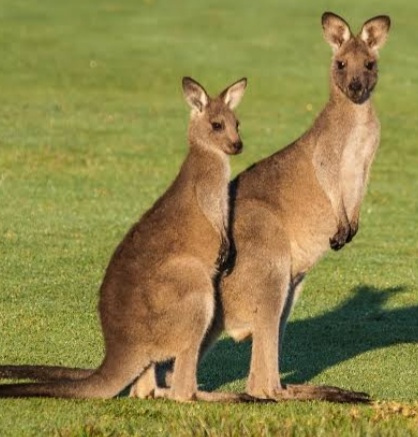
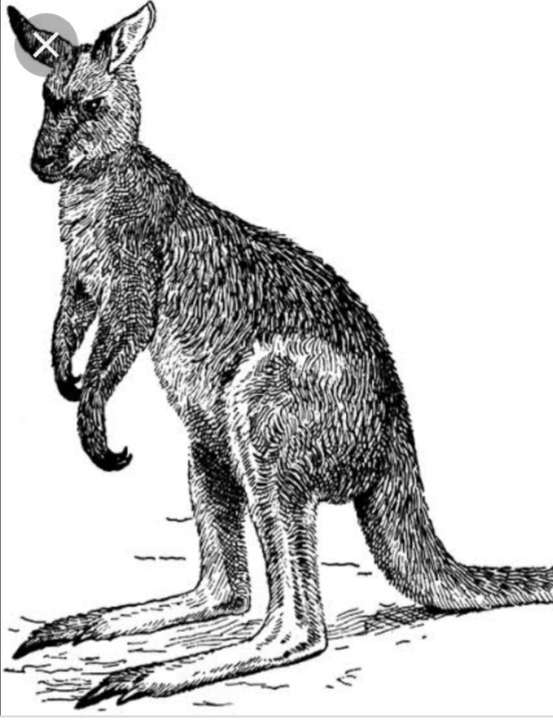
Kangaroos are large marsupials that are found only in Australia. They are identified by their muscular tails, strong back legs, large feet, short fur and long, pointed ears. Like all marsupials, a sub-type of mammal, females have pouches that contain mammary glands, where their young live until they are old enough to emerge.
Kangaroos are in the Macropodidae family, which also includes tree-kangaroos, wallabies, wallaroos, quokkas and pademelons. When people think of kangaroos, the four species that typically come to mind are in the genus Macropus: the antilopine kangaroo, the red kangaroo, the western gray kangaroo and the eastern gray kangaroo. They are sometimes referred to as the “great kangaroos” because these species are much larger than other kangaroos.
However, there are 12 species of tree-kangaroos in the Dendrolagus genus, according to the Integrated Taxonomic Information System. And, bettongs, in the Potoridae family, are called rat-kangaroos.

Size
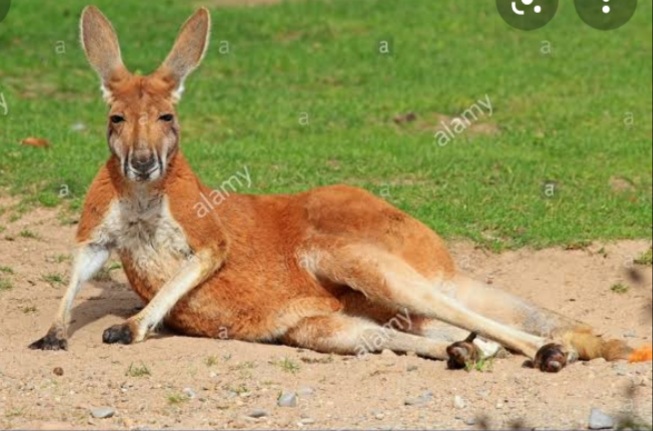
The largest kangaroo, as well as the largest marsupial, is the red kangaroo, according to National Geographic. The length from the red kangaroo’s head to its rump is 3.25 to 5.25 feet (1 to 1.6 meters) long. Its tail adds another 35.5 to 43.5 inches (90 to 110 centimeters) to its length and its entire body weighs around 200 lbs. (90 kilograms).
The smallest kangaroo is the musky rat-kangaroos. It is only 6 to 8 inches (15.24 to 20.32 cm) long and weighs only 12 ounces (340 grams). Its ratlike tail adds another 5 to 6 inches (12.7 to 15.24 cm) to its length.
Habitat
Most kangaroos live on the continent of Australia, though each species has a different place it likes to call home. For example, the musky rat-kangaroo likes to nestle down in little nests on the floor of the rainforests in northeastern Queensland. Gray kangaroos like the forests of Australia and Tasmania, on the other hand. The antilopine kangaroo can be found in the monsoonal eucalyptus woodlands of extreme northern Australia. Tree-kangaroos live in the upper branches of trees in the rainforests of Queensland, as well as on the island of New Guinea.
Habits
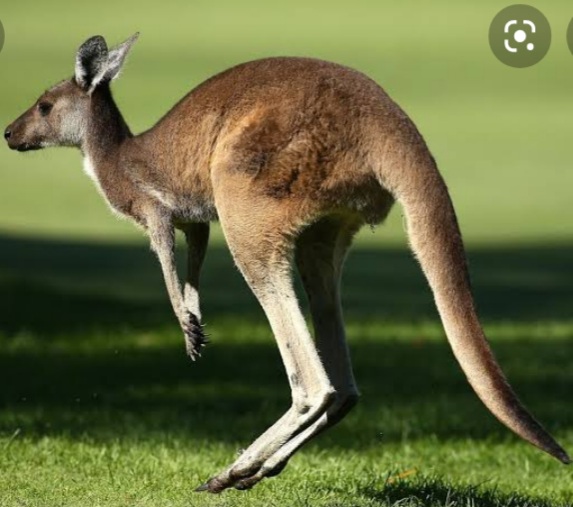
Kangaroos are the only large animals that hop as a primary means of locomotion. Their springy hind legs and feet are much stronger and larger than their arms (or “forelimbs”). According to the San Diego Zoo, kangaroos can cover 15 feet (7 m) in a single hop and can hop as fast as 30 mph (48 kph). Usually, 20 mph (32 kph) is considered their cruising speed. When feeding, kangaroos use a slower, walking movement, and for that they use their muscular tail as a kind of fifth leg, pushing off the ground as they move along.
Kangaroos are social and live in groups called a mob, a herd or a troop. Kangaroos in a mob will groom each other and protect each other from danger. If a kangaroo suspects there is danger in the area, it will stomp its foot on the ground to alert others. If it comes to blows, a kangaroo will box and kick its opponent.
Diet
Kangaroos are herbivores. They eat grasses, flowers, leaves, ferns, moss and even insects. Like cows, kangaroos regurgitate their food and re-chew it before it is ready to be totally digested.
Offspring
Probably the best-known fact about kangaroos is that they carry their young in a pouch. A female kangaroo is pregnant for 21 to 38 days, and she can give birth to up to four offspring at one time, though this is unusual.
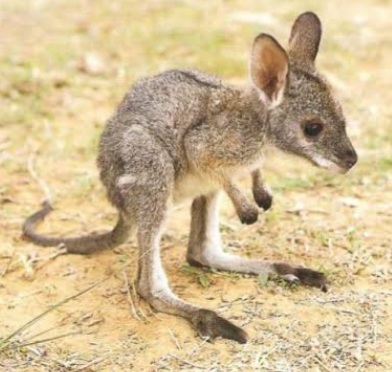
At birth, the baby, called a joey, can be as small as a grain of rice, or as big as a bee, at 0.2 to 0.9 inches (5 to 25 millimeters), according to the san Diego zoo. When the joey is born, it is guided safely into the comfy pouch, where it gestates for another 120 to 450 days.
Inside the pouch, the joey is protected and can feed by nursing from its mother’s nipples. Joeys urinate and defecate in the mother’s pouch. The lining of the pouch absorbs some of the mess, but occasionally the mother will need to clean it out, which she does by inserting her long snout into the pouch and using her tongue to remove the contents. A young joey will remain attached to a nipple while the mother does this, but any older ones will be temporarily kicked out.
Another interesting fact about the mother kangaroo is that she is able to suckle two joeys at different developmental stages at the same time with milk that has different nutritional content, the New York Times has reported.
Joeys grow quickly, though, and at 14 to 20 months for females or 2 to 4 years for males, they will be fully matured.
Classification/taxonomy
The taxonomy of kangaroos, tree-kangaroos and rat-kangaroos, according to ITIS, is:
- Kingdom: Animalia
- Subkingdom: Bilateria
- Infrakingdom: Deuterostomia
- Phylum: Chordata
- Subphylum: Vertebrata
- Infraphylum: Gnathostomata
- Superclass: Tetrapoda
- Class: Mammalia
- Subclass: Theria
- Infraclass: Metatheria
- Order: Diprotodontia
- Suborder: Macropodiformes
‘Great kangaroos’
- Family: Macropodidae
- Subfamily: Macropodinae
- Genus & species: Macropus fuliginosus (western gray kangaroo; three subspecies), Macropus giganteus (eastern gray kangaroo; two subspecies), Macropus antilopinus (antilopine kangaroo), Macropus rufus (red kangaroo)
Tree-kangaroos
- Family: Macropodidae
- Subfamily: Macropodinae
- Genus: Dendrolagus
- Species: 12, including Dendrolagus bennettianus (Bennett’s tree-kangaroo), Dendrolagus goodfellowi (Goodfellow’s tree-kangaroo), Dendrolagus matschiei (Huon tree-kangaroo) and Dendrolagus spadix (Lowlands tree-kangaroo).

Rat-kangaroos
- Family: Potoridae
- Genera & species: Aepyprymnus rufescens (Rufous bettong or Rufous rat-kangaroo), Bettongia (four species of bettongs, or short-nosed rat-kangaroos), Caloprymnus campestris (desert rat-kangaroo)

Musky rat-kangaroos
- Family: Hypsiprymnodontidae
- Genus & species: Hypsiprymnodon moschatus

Kangaroo ancestors
There is a rich fossil record for kangaroo ancestors and ancient relatives; giant kangaroos plodded through the Pleistocene (2.6 million to 11,700 years ago) and the Pliocene (5.3 million to 2.6 million years ago). And about 20 million years ago, tiny ancestors of modern kangaroos and a related group of kangaroos with fangs scurried through dense forests in northwestern Queensland, Australia, a region that is now arid outback.
In a study published in February 2016, scientists described a new kangaroo genus, Cookeroo, and two new species: Cookeroo bulwidarri, dated to about 23 million years ago, and Cookeroo hortusensis, which lived between 18 million and 20 million years ago. These ancient kangaroos’ bodies probably measured about 17 to 20 inches (42 to 52 centimeters) long. C. bulwidarri and C. hortusensis didn’t hop, navigating their forest home on all fours and sharing it with a diverse collection of animals: marsupial moles, feather-tailed possums, ancient koalas and crocodiles.
Conservation status
According to the IUCN’s Red List of Threatened Species, 16 species of tree-kangaroos and rat-kangaroos are listed as either near threatened, threatened, vulnerable, endangered or critically endangered. The desert rat- kangaroo and the Nullarbor dwarf bettong are considered extinct. Studies show that global warming could kill off the world’s smallest kangaroo. The four species of great kangaroos are not endangered.
“Time spent in nature is never wasted “
Myths of Meditation
With meditation practices on the rise, it makes sense that there is some confusion out there. Myths and misinformation are to be expected — but that doesn’t mean we can’t do our best to set the record straight. Let’s go through the following myths and their conclusions.
¤Myth: You can’t meditate because you think too much.
Everyone thinks too much. But it’s often the people who say they “think too much to meditate” who could really benefit from giving the practice a try. Thinking is a natural and expected part of meditation. Some practices will give you tools for how to redirect your thoughts back to your meditation and others will simply say it’s fine that you’re off thinking. This is all a part of the experience. The practice of meditation is about tuning in — not tuning out.
Some believe that by choosing to redirect your thoughts to a single point of focus you are actually strengthening the muscle that build your brain. This can teach you to react less to stress triggers throughout the day and leave you feeling calmer than before you learned to meditate.
¤Myth: You can’t meditate because you can’t sit still.
For those who struggle with sitting still during meditation, good news! Moving around is totally fine — you can readjust your position,scratch an itch or just stretch your legs out in the middle of your practice. You do not have to be a statue. If you’re in a group class, try to do this quietly so you don’t disrupt other meditators.
For those who need more movement than this, you can try walking meditation. Traditionally, meditation can be practiced in four positions: sitting, standing, walking and lying down. So don’t get down on yourself if you don’t like sitting. Try other methods and find what feels most natural for your body.
We all are busy. If Oprah, Kobe Bryant, Arianna Huffington and Rupert Murdoch have time to meditate, you probably do too. Meditating in the morning makes your whole day go slower and many people say they actually get more done and feel more productive after meditation. Because meditation helps improve focus and lowers stress, you actually can fit more in if you take the time out to practice.
If committing to 20 a day minutes feels daunting, there are many practices that require only five or 10 minutes. The key is to start small and build up so you don’t get discouraged and skip it all together. Even a seasoned meditator knows that some days get away from you and all you can fit in is 5 minutes. This is always better than nothing.
¤Myth: You can’t meditate because you don’t know if you’re doing it right.
The only wrong or bad meditation is the one you don’t do at all. Meditation is pretty simple. You focus on one thing. Depending on the practice, that can be your breath, a mantra, a candle flame or even counting numbers. When you notice that your mind has drifted off, you simply come back to the thing your meditation is focused on.
¤Myth: You’re not supposed to have any thoughts while you meditate.
This idea is simply not true and it can also be a big hindrance to people meditating. If you think you’re doing it wrong, it’s easy to just give up and walk away. Deepak Chopra, a meditation expert and founder of the Chopra Center for Wellbeing, puts it best: “the nature of the mind to move from one thought to another is in fact the very basis of meditation,” he says.
“We don’t eliminate the tendency of the mind to jump from one thought to another. That’s not possible anyway.” Depending on the type of meditation you learn, there are tools for gently bringing your focus back to your meditation practice. Alternatively, some types of meditation actually emphasize being present and mindful to thoughts as they arise as part of the practice.
¤Myth: Meditation has to be religious or spiritual
There is a distinct difference between meditation and religion. While many meditation practices drew it roots from Buddhism and Hinduism, today there are modern forms of meditation that have nothing to do with religion at all. Many religious groups practice meditation, and the intersection between prayer and meditation is quite interesting, but it is not necessary to believe in a god or be affiliated with a religion or spiritual group in order to reap the benefits of meditation.
¤Myth: You must sit in an uncomfortable cross-legged position in order to meditate.
You can sit in any position that is comfortable to you. Most people sit upright in a chair or on a cushion. Some people like to sit in a great big armchair or a sturdy kitchen chair. You can also sit upright in bed with pillows propped at your sides. The possibilities are endless. It is best not to lie down unless you’re doing a body scan meditation or meditation for sleep.
¤Myth: Meditation is only for stressed out people.
While meditation helps lower the presence of coristol, the stress hormone, in our bodies, there are many other benefits of the practice. Meditation helps boost our immune systems, improves concentration, decreases blood pressure, improves sleep, increases our feelings of happiness, and has even helped people with alcohol or smoking addictions. Even for those who don’t have a specific ailment in mind, meditation is wonderful for overall mental and physical health.
¤Myth: Meditation is only for adults.
Adults are not the only ones to experience the negative effects of stress. Children, too, suffer from feeling overwhelmed and meditation is one way parents are helping their kids learn to manage stress. Schools have even started to discuss whether meditation is a life-long skill that should be taught in classrooms. Schools that tried it out found that students were less stressed and performed higher on tests. The overall feeling in classrooms was more positive and teachers reported their own moods improving.
¤Myth: You have to be given a mantra to meditate.
Mantra-based meditation is only one form of meditation. Transcendental Meditation (made popular by people like Oprah, Jerry Seinfeld and Howard Stern) uses a mantra but many mindfulness-based meditation practices don’t. Think of a mantra as just one vehicle or tool people use to get into their meditation practice. There are many other tools like counting, being mindful of what you hear around you and even simply paying attention to your breath.
¤Myth: Meditation is for the rich or the elite.
Meditation is having a moment right now and we love that. But the ancient practice is not only for hip tech CEOs or a pet cause for the wealthy with time to spare. The beauty of meditation is that it’s free and you can do it anywhere, anytime. All you need is your mind.
¤Myth: Meditation takes years to learn.
While the Dalai Lama says that meditation can change your life, he has also been practicing for most of his life. Fear not. You can actually learn in minutes. We don’t deny that like any skill or exercise, the more you do it, the more you learn. But you don’t need months or years to perfect your meditation. The very notion of perfection is counter productive. Here are five different ways you can get started. Pick one (or search the web for many others) and give it a try.
New ‘Drone strategy’ reported; no exceptional status needed before enlistment.

The Center on Thursday declared another robot strategy. Under the Drone Rules 2021, the inclusion of robots expanded from 300 kg to 500 kg, and will incorporate weighty payload-conveying robots and robot taxis.
Furthermore, the new robot rules eliminate trusted status before any enlistment or permit issuance.
In view of the input, the Ministry of Civil Aviation (MoCA) said it chose to annul the UAS Rules, 2021 and supplant something similar with the changed Drone Rules, 2021.
The Aviation service had distributed UAS Rules, 2021 in March.
Here are 30 vital elements of Drone Rules 2021:
1.According to the Civil Aviation Ministry, a few endorsements annulled: remarkable authorisation number, one of a kind model recognizable proof number, declaration of assembling and airworthiness, testament of conformance, authentication of support, import leeway, acknowledgment of existing robots, administrator grant, authorisation of R&D association, understudy distant pilot permit, far off pilot teacher authorisation, drone…
View original post 586 more words
The Romantic Revival in English Literature
     The publication of the Lyrical Ballads by Wordsworth and Coleridge in 1798 was an epoch making event in the history of English Literature. The Lyrical Ballads has become one of the abiding reference points of English Romantic Literature. The idea for it was conceived when the two poets were living as close neighbors. It was nurtured by their shared sense of the emotional artificiality of eighteenth century poetry and its conventions. As a result of this a new taste in literature and art set in. This new taste is called Romanticism or Liberalism in literature. This new trend started even earlier with Gray and Collins, Blake and Burns. The Romantic Revival of the nineteenth century turned the rules and regulations held dear by the writers of the eighteenth century upside down. There are various causes for the new taste of the people. The people were tired of the rules and regulations of the neo-classical poetry. They could no longer tolerate the monotonous heroic couplets.

        The French Revolution had its own influence on the thoughts and literature of the period. The greatest writer of France, Rousseau, inspired the people of England. The catchwords of the French Revolution-Liberty, Equality and Fraternity - also became the basic principles of Romantic literature. The political upheaval in America was also partly responsible for the new taste in literature. The spread of education brought home to the English people, the philosophy of Kant and Hegel in Germany. The progress of science supplied the people with a rational outlook. All these developments made them look for something new in literature. The Romantic literature also, to a certain extent, satisfied their intellectual curiosity.
The Romantic Movement was characterized by a strong protest against the conventions and worn out traditions of the classicists. There was a freedom in the choice of subject and suitable verse-forms. So there was an endless variety in subject and form. The poetry of the eighteenth century was mainly concerned with the clubs and coffee houses, drawing rooms and the political life of London. It was, in short, poetry of town life. In Romantic poetry the interest was transferred from town to the country and to the natural beauty and liveliness of nature.
The Romantic poets sought to escape from the tyranny and materialism of the world. They wanted to recreate the Middle Ages. This craving for the Middle Ages satisfied the emotional sense of wonder on the one hand and the intellectual curiosity on the other.
The Romantic poetry was also marked by a strong sense of sympathy and understanding of the human heart. The poets started taking interest in the common people. A feeling of humanitarianism coloured the poetry of Wordsworth, Shelley and Byron. The Romantic Movement was the expression of individual genius rather than of established values. The poets of this period were in favour of giving subjective interpretation to the objective realities of life. Thus, poetry became individualistic in outlook.
Ignoring the immediate predecessors like Pope and Dryden, the Romantics accepted the early poets, Spenser, Shakespeare and Milton as their models. In the Romantic poetry, unlike in the classical poetry, reason and intellect were subdued and their place was taken by imagination, emotion and passion. Spontaneity was given first preference. Lyricism predominates and a number of fine lyrics excelling the heroic couplets were produced. The Romantic poets also brought in the spirit of supernaturalism. Coleridge and Walter Scott specialised in this field.
In the new kind of poetry, greater stress is laid on simplicity. There is no difference between the language of poetry and that of prose. The new kind of poetry was written by Wordsworth, Coleridge, Keats, Byron. Shelley and Scott. In fact, they succeeded in training the readers in a new sensibility.
HEALTH IS WEALTH !!
A healthy mind lives in healthy body. Mind is rather the battery of the physical mechanism of human beings. It decides all the activities of man good or bad. But it requires healthy adobe. It is only them that fortune smiles at man and fills his coffers with wealth material or spiritual.
Need for healthy state – There is a saying in Ayurveda “it is through his body that man performs all his rightful duties “. He can do it only when the body remains in a perfect healthy state. Thus, for an individual is the real wealth. By this wealth one can achieve anything. This can be noticed after the pandemic also that immunity is the thing which is essential to fight a disease or a virus.
Unhealthy man is like cadaver – An unhealthy man loses all that he possesses. He faces a battery of greedy physician who may be having an eye more on his pocket than in his well being. An unhealthy man grows desperate. His mind too grows sick and he is in the jaws of paralytic attack both materially and mentally. Death alone may bring solace to him make him free from frustrations. A healthy man has a rich orchard of the fruits of hope, peace, satisfaction and prominence -the real wealth.
Man has rationale – Man is a rational animal. His superior mind. In fact, Man has been able to control nature due to his highly developed brain. It is all true but for the development of the intellect, it is necessary that the body too, should be healthy. A sound mind in a sound body is an often quoted saying. So it is apparent that for intellectual development physical exercise is essential.
At last we can understand that healthy body is the key to success . So we should consider health as our first priority and then our work. During the pandemic situation, yoga classes focused on the health conditions of the people and involved them to join for their benefit and better standard of living.
Thank you.. Stay healthy and keep reading..!!
 Eduindex
You must be logged in to post a comment.