Knowing about Organizational behavior through the movie "EK RUKA HUA FAISLA "

 Introduction

The
movie “EK RUKA HUA FAISLA” is an Indian Film, year 1986, was directed by Mr.Basu
Chatterjee. The film is a remake of an American movie “12 Angry Men”. The movie
is a closed room drama of a murder trial where one dissenting juror in a murder
trial tries to influence the verdict with his personal prejudices and biases.


 Synopsis


Ek Ruka
Hua Faisla starts in a courtroom where a teenage boy from a slum stands trial
for stabbing his father to death. The Judge instructs the Jury to come to a
decision on whether they find the boy guilty of the crime or not. If found
guilty, the boy will be awarded a death sentence. The evidences against the boy
look irrefutable.


 The twelve member jury shuts itself in a closed room to
discuss the case. As the jury members get acquainted with each other, it
becomes evident that nearly all of them have already decided that the boy is
guilty and are in a hurry to get over with the formalities quickly and get back
to their routine lives.


However, during
the first round of vote, Juror #8 votes ‘not guilty’ as he believes that there
is too much at stake to pronounce the boy guilty without discussing all the
aspects of the crime in detail. There is a heated discussion among the jury
members, they are annoyed because the case which they had decided was open and
shut is being prolonged. 

It is clear that most of the jurors are biased which
is influencing their sense of judgement. How a small doubt in the mind of one
person slowly begins to create conflict in the mind of the 11 other jurors can
be seen with every round of voting.  


Slowly
emotions of the jurors become intense when they begin to relate the case with
some aspects of their personal lives. Their anger increases leading them to
shout at each other and even get violent as shown by Juror #3 who lunges at
Juror #8 yelling, “I will kill you”. Juror #10 exhibits the contempt he in
general has for the slum dwellers and clearly showing in his rage how this bias
is clouding his judgement. It then comes out that Juror #3’s contempt for the
boy has arisen from the poor treatment he has received from his own son. He
finally breaks down and changes his vote to ‘not guilty’.


The
characters in the movie are many layered. Their appearances hide inner
turmoil.  Slowly the characters’
strengths, weaknesses, fear, beliefs, prejudices and grudges are revealed. Each
aspect of the case is meticulously thought over, the jurors even act out the
scenes of the crime in an attempt to understand the truth of the case.

The
audience witnesses drastic change in the Characters, the seemingly weak showing
strength of character, while those who appeared to be tough and immovable at
the beginning of the movie crack up, expose their vulnerability. This film is a
very good analysis of human psychology, the power of influencing and the
complexities of the human mind.


Knowing about Organizational behavior through the movie 

In
context of Organizational Behavior, the film is a perfect example that depicts
group shift, group think, cohesiveness and social loafing.


Social
loafing, according to Stephen P. Robbins, Timothy A. Judge and Neharika Vohra in their book ” Organizational Behavior 16 e ” , 
is the tendency for individuals
to put less effort when working collectively than working individually.


 For
example:
  When all jurors were discussing
about the case in depth and detail, there was juror #12 was drawing something
on paper. All the jurors were asked to give their opinions one by one and when
his turn came, he did not know what was going on and whenever voting took place
to determine who is in the favor of accused person being guilty or not, since
he did not pay any attention and did not put in any effort, he changed his vote
according to the majority.

 The
second instance of social loafing which we can see is that when juror #7 was
keen on watching movie and he made many attempts to finish the discussion as
soon as possible. Even he changed his vote according to majority.

The third
instance of social loafing that we can see is when the discussion continued between
juror #3  and juror #7 and another juror
were playing tic tac toe.


According to Stephen P. Robbins, Timothy A. Judge and Neharika Vohra in their book ” Organizational Behavior 16 e ” , Groupthink is a process in which the norm for consensus
overrides the realistic appraisal of alternative courses of action.


 For
example: From the very beginning of the movie except juror #8 all other jurors
had already made up their minds that the accused is guilty without having any
deliberation. They wanted to get over with the discussion as soon as possible. For
them this was merely a formality. They did not think about the possibilities
that the accused could be innocent.

 All of them had a common mindset that the
boy was expert in using knives, there were three witnesses , one old man who
had seen him shouting at his father “I will kill you”, a woman who had seen the
boy stabbing his father to death and his friends who confessed that the knife at
the crime scene was exactly like the knife the boy possessed. 

One juror recalled
that when the accused was asked his whereabouts at the time of the murder, the
accused claimed to be watching a movie but was unable to recollect the name to
the movie. All these factors proved that the accused was guilty.

 Since
they wanted to end the discussion as soon as possible and all the circumstances
pointed towards the culprit as being the murderer, except juror 8, all had a
consensus which overrode the realistic approach or the alternative approach,
that is there is a possibility that the accused is innocent. 

The had already
come to a conclusion based on the facts that were visible to them until juror #8
by carefully discussing each and every aspect and possibility related to the
case became successful in convincing each juror that the accused is innocent
which is lead to “group shift”.


Group
shift
means a change between a group’s
decision and an individual decision that a member within the group would make,
the shift can be toward either conservatism or greater risk but it is generally
is toward a more extreme version of the group’s original position.


For
example:

There are
many instances where one can experience group shift during the course of the
movie. When juror #8 was opposed by juror #3 since juror #3 believed that since
the accused had shouted that he would kill his father in itself is proof enough
that he is guilty, juror #8 cleverly provoked juror #3 so much that juror #3
threatened to kill juror #8. 


Juror #8 pointed out that the threat was only
words and juror #3 did not actually mean to kill him. Juror #8 pointed out at
the possibility that the since accused was ill treated by his father and was
slapped by him, he would have uttered the words out of anger, but in reality
had no intention of killing his father. This convinced Juror #9 who changed his
vote to ‘not guilty’.


The
second instance which we can site is when juror #8 was trying to convince was
that there is a possibility that the old man did not recognize or hear the so
called voice of the accused properly. According to the old man, he heard the
accused yelling and then as soon as he woke up, he saw the accused running and
all this happened in 15 seconds. Juror #8 tried pointed out that the old man
had an injured leg and was unable to stand in court without help.  

Juror #8 had procured a map of the old man’s
house which showed that the distance between the old man’s room and the stairs
was 40 meters. Juror #8 demonstrated that even when the old man would have
walked fast with an injured leg he would have reached the stairs only after 40
seconds.

 Therefore, it was quite possible that the old man had heard the
accused and his father fighting some time previously. At the time of the
incident the old man had only heard the victim scream and fall, maybe also the
sounds of the running footsteps and had assumed that it was the accused. With
this juror #5, juror #2, Juror #6 and Juror #11 were convinced and they also changed
their vote to ‘not guilty’.


Supporting
Juror #8, Juror #2 had raised a question, that in the report it was stated the
victim had been stabbed from upward to downward direction. He doubted that the
difference in heights of the victim and accused did not make it feasible for
the accused to do so. Juror #3 was adamant and demonstrated that this was
possible on Juror #8. 

5 of the jurors
were convinced. It was juror #5 who informed everyone in the room that the
knife was of a special kind and is used by a special technique that is
downwards to upwards. To prove this he informed that he had been born in this
area and had been stabbed in the similar manner. Seeing his scar, juror #12
voted for not guilty.


The
incident which lead to a complete group shift was when juror #3 demanded a
reason to refute the claim made by the woman witness. The woman had stated that
she had seen the boy stab his father through the windows of the last two
coaches of a local train which passed between her and their window.  During the trail the woman had been
continuously rubbing her nose which was attributed to a weak eye sight by Juror
#9 when he saw Juror #4 doing  the same
thing.


It was
concluded that the woman’s eyesight was weak and did not wear spectacles out of
vanity. It was without doubt that she would not have seen the boy committing
the crime clearly.  Again Juror #4 and
Juror #1 changed their vote to ‘not guilty’. Juror #10 and Juror #7 changed their
vote in conformity to the majority.


Only Juror
#3 was adamant till the end that the boy was guilty of the crime. On being
repeatedly questioned, he broke down and disclosed that his judgement was
colored because he himself faced ill treatment at the hands of his son. The
others reasoned with him that the boy that juror #3 is trying to punish is not
his son and in all likely hood is innocent and therefore has the right to live.
Juror #3 finally agreed to set aside his prejudices and voted ‘not guilty’.


We can see
a classic case of group shift that took place from one person (juror 8) who
voted ‘not guilty’ and the rest voting ‘guilty’ to a shift where all the 12
jurors are convinced that the accused person is not guilty.



Groupthink is a process in which the norm for consensus
overrides the realistic appraisal of alternative courses of action.


For
example: From the very beginning of the movie except juror #8 all other jurors
had already made up their minds that the accused is guilty without having any
deliberation. They wanted to get over with the discussion as soon as possible. For
them this was merely a formality. They did not think about the possibilities
that the accused could be innocent. All of them had a common mindset that the
boy was expert in using knives, there were three witnesses , one old man who
had seen him shouting at his father “I will kill you”, a woman who had seen the
boy stabbing his father to death and his friends who confessed that the knife at
the crime scene was exactly like the knife the boy possessed. One juror recalled
that when the accused was asked his whereabouts at the time of the murder, the
accused claimed to be watching a movie but was unable to recollect the name to
the movie. All these factors proved that the accused was guilty.


Since
they wanted to end the discussion as soon as possible and all the circumstances
pointed towards the culprit as being the murderer, except juror 8, all had a
consensus which overrode the realistic approach or the alternative approach,
that is there is a possibility that the accused is innocent. The had already
come to a conclusion based on the facts that were visible to them until juror #8
by carefully discussing each and every aspect and possibility related to the
case became successful in convincing each juror that the accused is innocent
which is lead to “group shift”.


Group
shift
means a change between a group’s
decision and an individual decision that a member within the group would make,
the shift can be toward either conservatism or greater risk but it is generally
is toward a more extreme version of the group’s original position.


For
example:

There are
many instances where one can experience group shift during the course of the
movie. When juror #8 was opposed by juror #3 since juror #3 believed that since
the accused had shouted that he would kill his father in itself is proof enough
that he is guilty, juror #8 cleverly provoked juror #3 so much that juror #3
threatened to kill juror #8. Juror #8 pointed out that the threat was only
words and juror #3 did not actually mean to kill him. Juror #8 pointed out at
the possibility that the since accused was ill treated by his father and was
slapped by him, he would have uttered the words out of anger, but in reality
had no intention of killing his father. This convinced Juror #9 who changed his
vote to ‘not guilty’.


The
second instance which we can site is when juror #8 was trying to convince was
that there is a possibility that the old man did not recognise or hear the so
called voice of the accused properly. According to the old man, he heard the
accused yelling and then as soon as he woke up, he saw the accused running and
all this happened in 15 seconds. Juror #8 tried pointed out that the old man
had an injured leg and was unable to stand in court without help.  Juror #8 had procured a map of the old man’s
house which showed that the distance between the old man’s room and the stairs
was 40 meters. Juror #8 demonstrated that even when the old man would have
walked fast with an injured leg he would have reached the stairs only after 40
seconds. Therefore, it was quite possible that the old man had heard the
accused and his father fighting some time previously. At the time of the
incident the old man had only heard the victim scream and fall, maybe also the
sounds of the running footsteps and had assumed that it was the accused. With
this juror #5, juror #2, Juror #6 and Juror #11 were convinced and they also changed
their vote to ‘not guilty’.


Supporting
Juror #8, Juror #2 had raised a question, that in the report it was stated the
victim had been stabbed from upward to downward direction. He doubted that the
difference in heights of the victim and accused did not make it feasible for
the accused to do so. Juror #3 was adamant and demonstrated that this was
possible on Juror #8.  5 of the jurors
were convinced. It was juror #5 who informed everyone in the room that the
knife was of a special kind and is used by a special technique that is
downwards to upwards. To prove this he informed that he had been born in this
area and had been stabbed in the similar manner. Seeing his scar, juror #12
voted for not guilty.


The
incident which lead to a complete group shift was when juror #3 demanded a
reason to refute the claim made by the woman witness. The woman had stated that
she had seen the boy stab his father through the windows of the last two
coaches of a local train which passed between her and their window.  During the trail the woman had been
continuously rubbing her nose which was attributed to a weak eye sight by Juror
#9 when he saw Juror #4 doing  the same
thing.


It was
concluded that the woman’s eyesight was weak and did not wear spectacles out of
vanity. It was without doubt that she would not have seen the boy committing
the crime clearly.  Again Juror #4 and
Juror #1 changed their vote to ‘not guilty’. Juror #10 and Juror #7 changed their
vote in conformity to the majority.


Only Juror
#3 was adamant till the end that the boy was guilty of the crime. On being
repeatedly questioned, he broke down and disclosed that his judgement was
coloured because he himself faced ill treatment at the hands of his son. The
others reasoned with him that the boy that juror #3 is trying to punish is not
his son and in all likely hood is innocent and therefore has the right to live.
Juror #3 finally agreed to set aside his prejudices and voted ‘not guilty’.


We can see
a classic case of group shift that took place from one person (juror 8) who
voted ‘not guilty’ and the rest voting ‘guilty’ to a shift where all the 12
jurors are convinced that the accused person is not guilty.

Likeability right now

Most people think of topics like likeability and charisma as a form of manipulation. As if trying to be more likable means that you want to manipulate and (negatively) influence those around you.

The reality is that being more likable means you’re able to better connect with those around you, even if it doesn’t lead to a superficial goal like more income or status.

It’s qualities like sincerity, transparency, and capability of understanding that make someone genuinely likable, not their looks, status, or intelligence.

The good news is that research proves even adults can learn how to be compassionate, empathetic, and as a result, more likable. And if taken seriously, our level of compassion can shape our personal and professional relationships.

That’s partly because our ability to understand other’s feelings helps us better deal with their difficulties, be more helpful, and consequently, more likable.

The difficulty, however, is that quite often, it’s our subtle, unconscious behavior that makes us less likable and empathetic.

Unconsciously repeating the following habits might be the silent killers of your likability. It pays off to be more careful and, whenever possible, avoid them so you can build genuine relationships.

Talking more than doing

The famous businessman Henry Ford once stated that you can’t build a reputation on what you are going to do.

Yet that’s exactly what most people try. They talk about things but never do them.

They promise their partner to be more understanding and caring but fail to make time for a date night.

They talk about one business idea after the other but never launch a solid product or service.

They talk about losing weight but end up ordering a giant pizza with extra cheese and diet coke.

Talking is easy; doing is hard. But the problem is that constantly listening to someone who’s talking about the next big thing without ever lifting a finger is exhausting too.

Sharing your ideas and ambitions to receive feedback and encouragement is great, but don’t overdo it.

Sometimes, it’s better to keep your enthusiasm to yourself and share the things you actually do.

Putting your opinion over someone’s expertise

Sometimes, likeability is about shutting up and listening instead of sharing your own two cents on any given topic.

Most people are afraid of saying I don’t know because they think it’s a weakness.

The reality is that you can’t know everythingAnd admitting that you’re not the best at everything is a sign of intelligence because it allows you to save your resources.

You can’t be an expert on any topic. And you don’t need to have an opinion on everything.

The recent pandemic was a great example of how people often try to put their opinions over facts and data.

I constantly heard people saying things like I believe the government is making wrong decisions or I don’t think the vaccine is safe.

The truth is that sometimes, your opinion doesn’t matter and it’s better to save your time, energy, and effort for things you can actually influence.

Certain discussions require opinions. Others require competence, expertise, facts, and data.

You can’t be great at everything, so don’t try to pretend it. Allow experts to shine on stage if it’s their turn and focus on the things you’re actually good at.

Randomly highlighting your achievements

Most people enjoy listening to a true success story, but we all hate bragging.

Yet many people don’t understand the difference between being proud of yourself and being annoying.

And the reality is that most people don’t care much about you; they care about themselves.

So in most of your conversations, you’ll be better off if you ask your conversation partner about their wins and struggles instead of showcasing all your medals.

Sure, a conversation should always be two-sided and of course, you can share your experiences, including your success stories.

Yet, the most pleasant conversations happen when our conversation partner is relatable instead of out of touch.

If you want to be more relatable, ask more questions, be humble about your achievements, and let people feel that you genuinely care about them.

Don’t turn every conversation into a presentation about yourself but focus on the two-sided relationship and the value you can provide for your conversation partner.

“You can make more friends in two months by becoming interested in other people than you can in two years by trying to get other people interested in you.”

— Dale Carnegie

Being late

We like people we can trust. Being punctual is one of the simplest yet most underrated ways to build that trust.

If someone can’t even make it on time to a meeting, how can I trust that they’ll manage to keep other, more essential promises?

Our time is one of our most precious resources and being late indicates that you don’t value the time of your fellows.

Unexpected situations can happen to all of us, but whenever you have the choice, you’ll be better off when you’re 15 minutes early instead of 5 minutes late.

Only skimming the surface

Most of us are tired of small talk and superficial conversations around the weather or the pandemic. We want depth.

We want deep, genuine, and exciting conversations that feel enriching.

And we want trustworthy relationships — in our business and private lives.

Skimming the surface and talking about the same old things won’t make you interesting but rather boring.

What you should do instead is asking engaging questions, building eye contact, and showing your conversation partner that you’re genuinely interested in them.

As Heidi Grant Halvorson shares in her book No One Understands You And What To Do About It:

“People need to feel that they have been heard, even when you can’t give them what they are asking for or can’t be of particular help.”

Paying attention, e.g., through eye contact, is the most effective way to build that trust and a deeper relationship.

Final thoughts

Trying to be more likable is not about faking your personality but about minimizing the silent killers so you can better connect with those around you and build genuinely valuable relationships.

Our entire lives are based on humane connections, so it pays off to be a better, more caring conversation partner, parent, colleague, or friend.

Paupers or Princes ? — A Preview Of Team India (Part I)

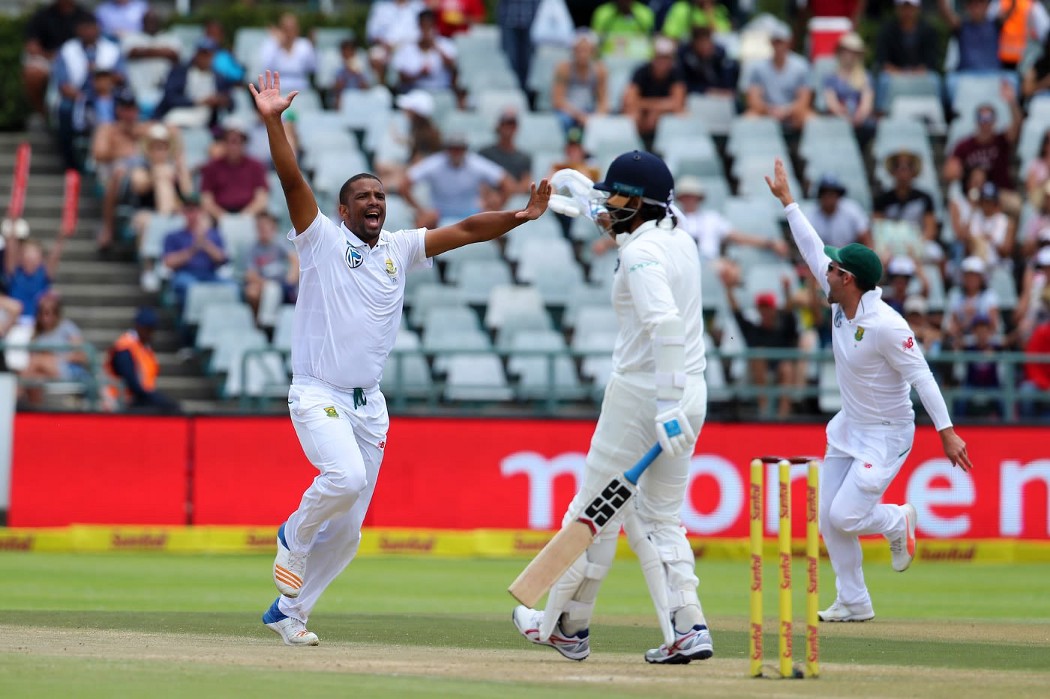
“By far this is my biggest achievement. Has to be on top of the pile”, said an exuberant Virat Kohli at the press conference held shortly after the historic Border-Gavaskar Trophy victory in 2019. The victory was on the back of quite dispiriting, yet justifiable series losses against South Africa and England away from home. The defeats weren’t like the usual ones of 2011 wherein there was no sense of grit or valour on display, sparing the few displays by the cricketing thespian named Rahul Dravid in England or the fiery and young Virat in Adelaide, but these losses were subject to those decisive sessions ond days where there was everything to be played for, only for them to turn the tide against our way.

A shrewd and sturdy performance from Virat Kohli and co., giving India its first ever series win Down Under (Source: Google Images)
A masterclass by Vernon Philander in Cape Town, leaving team India scathing in the 1st Test(Source:BCCI)

Come 2021, a whole new amalgammation of protocol and the sport which we truly. A completely repackaged team, with some senior stalwarts, along with consistent performers in either the domestic circuit or the team’s low-key Mjolnir, called India-A, headed by an relative unknown yet sharp figure, Shitanshu Kotak. The word which has been going around with this team’s plethora of players (which has becoming quite irksome offlately), is ‘bench-strength’, courtesy of which the team was able to launch a massive offensive against Australia, inspite of losing key-figures in the series held earlier this year. But does it truly solve most of the problems that persist in the squad at this point of time, probably not.

A day when the flag held high, inspite of the trials and tribulations (Source:- Google Images)

In the World Test Championship Finals, it was clearly visible to the naked eye that there were things clearly not in place unfortunately, from the likes of Pujara and Rahane giving away their wickets, especially to delivery directed to the places where there are flaws in their armoury, this added to the pressure to the batsmen, which was a diminuendo in the batting. Cheteshwar Pujara, an usually reliable and a force in the team hasn’t made, if I may quote Mr.Gavaskar, the ‘daddy hundreds’ since the past 30 innings which seems to be a worrying sign for the man who has saved the nation at times from the blemishes. Since the start of the year, Pujara has scored just 364 runs across 12 innings @ 30.33 , with a best of 77 against Australia at the SCG. Strike rates and Pujara do not go hand-in-hand but it does leave the one at the other end will the responsibility of rotating strike, leading to false shots and some times, loss of a wicket at, for instance, at the cusp of lunch or at the stroke of tea.

At the time of writing, Mayank Agarwal has officially been ruled out of the 1st test against England due to concussion, this means that India are in search of an second opener, who shall play alongside Rohit Sharma. KL Rahul, who had, with all due respect, awful series against England and Australia in 2018 will likely open tomorrow. Personally, every fan would hope of a Virat-esque comeback from the Karnataka batsmen and looking at his form in the practice matches, one shouldn’t be surprised of a comeback if it happens.

KL Rahul showing intent in his knock against County Select XI

Ajinkya Rahane, once our standout batsmen in the SENA countries, has gotten time and time again when the team has expected him to stay put, especially in a dire situation against the mighty Kiwis. Sparring the tempo setting hundred in Melbourne, which in a couple of years will become a heroic folklore, there isn’t much to make a case for the vice-captain. It would be a make-or-break series for the Mumbai batsmen, as all eyes would be on him to put up some runs on board.

The piece on Indian bowlers and the allrounders comes up soon, happy reading till then…..

SpaceX

It still feels like it was yesterday that SpaceX announced its plans for building reusable rockets. They were mocked at, but continued to move towards their goal of making space travel a commercial venture. It was during the December of 2015, that the world witnessed the first successful recovery of the first stage of an orbital launch rocket. The Falcon 9 rockets (named after the Millennium Falcon from Star Wars) have created a new milestone in space exploration by achieving this feat. In March 2017, the first re-flight of a landed first stage took place and since then SpaceX has sent multiple rockets which used the recovered first stage systems.

(Launch of a Falcon 9 rocket)

Another extraordinary feat in this field was achieved through the launch of the Falcon Heavy rocket. In February 2018, SpaceX launched a Tesla roadster with a dummy dubbed ‘Starman’ in the driver’s seat aboard the rocket and successfully deployed it into orbit. This also acted as proof of concept that the reusable launching system could be modified to carry heavy and arguably, even super-heavy payloads into orbit.


(The Tesla Roadster orbiting earth)

The next step towards such systems will be the Starship rocket which is being designed such that both the stages will be reusable. This would truly be extraordinary as the second stage contains many hardware components of the rocket. If it turns out as it should, these rockets will be capable of delivering resources to Mars.


Now, let us look into the important question. Why are reusable rockets considered so important? As everyone might know, a typical rocket costs around a few hundred million to build and launch. But having reusable rockets, it becomes possible to lower the cost per run. With the starship system, it has been estimated that the cost could be brought down to a few million dollars. All such reductions make it possible to bring space exploration closer to the general public.
As the original plan of SpaceX was to send humans to mars, such advancements in technology, bring that dream closer to reality. These marvelous feats of physics and engineering being pioneered at SpaceX truly have changed the way we look at space travel. As the reliability of the Falcon 9s has been proven time and again, we can be sure that these starship rockets will also turn out to achieve their goals in the near future. It has also been estimated that with a bit of service, most of these reusable stages can perform well over 100 flights in their lifetime.

(A Starship Rocket)

As we edge closer and closer to space travel becoming a common activity, we truly have to appreciate the long way that we have come from initial rockets which couldn’t even break through the atmosphere to now when we can aim towards travelling to new planets. All of this just goes to show that if time and science are used to the fullest, humans can achieve various tasks which were once just dreams.

What is CRISPR?

Gene editing , also sometimes known as genome editing, is a method of altering or ‘editing’ the DNA of an organism through the help of technology. Through this, genetic material can be inserted, removed, or changed in composition to make changes in the genome. There have been various different ways scientists and researchers have tried this. One of the most recent technologies to be developed in the CRISPR-Cas9. The word CRISPR stands for ‘Clustered Regularly Interspaced short palindrome repeats’ which are a type of bacterial defence system that makes CRISPR technology possible. CRISPRs were initially discovered in archaea and later in bacteria, and were assumed to be defending bacteria from viral attacks. CRISPR consists of repeated sequences of genetic code that are interrupted by remains of genetic codes of prior invaders, called ‘spacer’ sequences.

The basic operation of CRISPR is simple: It locates a certain specific length of DNA inside a cell and then either alters it.

A CRISPR ‘spacer’ sequence is said to be transcribed into short sequences of RNA. These RNA help guide the system to matching sequences of DNA. After locating the DNA, an enzyme produced by CRISPR known as ‘Cas9’ attaches itself to The strand of DNA and cuts it. This effectively shuts down the desired gene.

CRISPR as an adaptive Immune system was discovered in the year 1987 after which three types of CRISPR technological systems were developed, namely – Cas3 (type I system), Cas9 (type II system) and Cas10 (type III system). The development of these systems is said to have begun around 2002, and was unveiled in 2012. Prior to this, the method of editing plant or animal genomes costed hundreds of thousands of dollars. CRISPR made it possible to carry out this process for much cheaper.

CRISPR is used abundantly in scientific research. There is a very real possibility that we may have plants or animals that have had gene alteration done by CRISPR in the near future.CRISPR also potentially possesses the ability to help create medicines that may prevent many diseases.

The ‘Cas’ protein found in bacteria to be the defenders against viruses. ‘Cas9’ is one of these proteins that have been researched and widely used by scientists. This protein is said to be easily programmed to locate and bind to nearly any required sequence. The CRISPR Cas9 protein, when introduced into a cell, allows the protein to attach to the guide RNA and travel throughout the length of the DNA until it locates and attaches itself to that part of the DNA.

In its initial stages, CRISPR Cas9 was first tried out in 2008 to improve the immunity of bacteria against viruses. This experiment helped food manufacturers to produce cheese and yoghurt. Further on, this system was used by Scientists to try and alter genes of animals such as mice, rats, pigs and zebrafish. Scientists even reported successful use of this technology on mice to eliminate muscular dystrophy and cure a rare liver disease. There is ongoing research and investigation to genetically modify insects so that insect-borne diseases such as malaria and lyme disease can be stopped. Similarly, it opens up the possibility of creating cures for high cholesterol, HIV, Huntington’s disease and more.

Although there are numerous advantages, applications and possible benefits of the CRISPR technologies, there are some issues that come up as well. For example, there has been an attempt to use this technology to alter human embryos, which has caused a debate about how ‘ethical’ this highly advanced method of gene modification is. Moreover, comes the question of how safe this technology is. Although by far the most advance, CRISPR is still in its very early stages. It is believed by scientists that altering one part of the genome may sometimes automatically trigger a change in a different part. Such an issue has to be tackled before even thinking of applications toward human cells.

The areas of applications are truly limitless when it comes to genome editing thanks to CRISPR. It has single handedly made research areas that were previously nearly impossible to explore very easy and cheap to explore. But will it always lead to progress in medical sciences or will it create trouble? Only time can tell.

Renewable Energy Industry

Indian renewable energy sector is the fourth most attractive renewable energy market in the world. India was ranked fifth in wind power, fifth in solar power and fourth in renewable power installed capacity, as of 2019.

Installed renewable power generation capacity has gained pace over the past few years, posting a CAGR (Compound annual growth rate) of 17.33% between FY16-20. With the increased support of Government and improved economics, the sector has become attractive from investors perspective. As India looks to meet its energy demand on its own, which is expected to reach 15,820 TWh by 2040, renewable energy is set to play an important role. The government is aiming to achieve 227 GW of renewable energy capacity (including 114 GW of solar capacity addition and 67 GW of wind power capacity) by 2022, more than its 175 GW target as per the Paris Agreement. The government plans to establish renewable energy capacity of 500 GW by 2030.

As of November 30, 2020, the installed renewable energy capacity stood at 90.39 GW, of which solar and wind comprised 36.91 GW and 38.43 GW, respectively. Biomass and small hydro power constituted 10.14 GW and 4.74 GW, respectively. By December 2019, 15100 megawatts (MW) of wind power projects were issued, of which, projects of 12,162.50 MW capacity have already been awarded. Power generation from renewable energy sources in India reached 127.01 billion units (BU) in FY20. With a potential capacity of 363 GW and with policies focused on the renewable energy sector, Northern India is expected to become the hub for renewable energy in India.

KEY ACHIEVEMENTS:

  • The cumulative Solar pumps installed for the last 7 years is 246,074.
  • Under the Off-Grid and Decentralized Solar Program, more than 74 lakh solar lanterns and study lamps; more than 17 lakh home lights have been distributed.
  • More than 6.80 lakh streetlights have been set up in the villages of India and more than 2.46 lakh Solar PV Pumps have been installed in the rural areas for irrigation and drinking water purposes.
  • Under the ‘Ladakh Renewable Energy Initiative (LERI)’ implemented by MNRE, the Ladakh Renewable Energy Development Agency (LREDA) has completed the implementation of 500 Commercial Green Houses (CGHs) in the Leh region with a total cost of INR 10.34 cr.
  • Solar Energy Corporation of India (SECI) has awarded 1440 MW capacity after e-reverse auction under Solar – Wind Hybrid policy.
  • CPSU Scheme Phase II launched with VGF funding with 922 MW awarded under Tranche I and 1104 MW awarded under Tranche II
  • 12 biogas-based projects have been commissioned with a power generation capacity of 212 kW and corresponding biogas generation capacity of 1805 m3 per day.
  • The total electricity generation from renewable sources in the country in September 2020 was 1,20,273 MU, showing a growth of 3.69%.
  • NTPC Ltd is a PSU under the Ministry of Power that has been serving the country for the past 45 years. The current power producing capacity of 62 GW, NTPC plans to become a 130 GW company by the year 2032. For the cleaner source of energy, NTPC plans to achieve 32,000 MW of capacity through renewables or 25% of its overall power portfolio at the beginning of the next decade.
  • The total of 406.22 MW of Renewable Energy capacity was added in October 2020, taking the cumulative installed RE capacity to 89.63 GW.

ROAD AHEAD
The Government is committed to increased use of clean energy sources and is already undertaking various large-scale sustainable power projects and promoting green energy heavily. In addition, renewable energy has the potential to create many employment opportunities at all levels, especially in rural areas. The Ministry of New and Renewable Energy (MNRE) has set an ambitious target to set up renewable energy capacities to the tune of 227 GW by 2022, of which about 114 GW is planned for solar, 67 GW for wind and other for hydro and bio among other. India’s renewable energy sector is expected to attract investment worth US$ 80 billion in the next four years. About 5,000 Compressed Biogas plants will be set up across India by 2023.

It is expected that by 2040, around 49% of the total electricity will be generated by renewable energy as more efficient batteries will be used to store electricity, which will further cut the solar energy cost by 66% as compared to the current cost. Use of renewables in place of coal will save India Rs. 54,000 crores (US$ 8.43 billion) annually. Renewable energy will account for 55% of the total installed power capacity by 2030.

As per the Central Electricity Authority (CEA) estimates, by 2029-30, the share of renewable energy generation would increase from 18% to 44%, while that of thermal is expected to reduce from 78% to 52%.

India is facing an acute energy scarcity which is hampering its industrial growth and economic progress. Setting up of new power plants is inevitably dependent on import of highly volatile fossil fuels. Thus, it is essential to tackle the energy crisis through judicious utilization of abundant the renewable energy resources, such as biomass energy, solar energy, wind energy and geothermal energy. Apart from augmenting the energy supply, renewable resources will help India in mitigating climate change. India is heavily dependent on fossil fuels for its energy needs. Most of the power generation is carried out by coal and mineral oil-based power plants which contribute heavily to greenhouse gases emission.

The average per capita consumption of energy in India is around 500 W (Data-2016), which is much lower than that of developed countries like USA, Europe, Australia, Japan etc. However, this figure is expected to rise sharply due to high economic growth and rapid industrialization. The consumption of electricity is growing on the worldwide basis. Energy is a necessity and sustainable renewable energy is a vital link in industrialization and development of India. A transition from conventional energy systems to those based on renewable resources is necessary to meet the ever-increasing demand for energy and to address environmental concerns.

Sustainable Transportation

Over the past couple of years, the world has clearly seen the need for a more sustainable approach to development. This is particularly highlighted and recognized by leaders around the world, and the pathway to achieve this was conceptualized by the United Nations. It is characterized today as the United Nation Sustainable Development Goals (SDG’s). The SDG’s are a set of 17 goals that the participating countries would aim to make a reality. The goals were written in a very inclusive way, so as to address many problems that plague not just the developing countries, but also the developed ones.

This article will concentrate on one particular aspect of the SDG 11, which talks about sustainable cities and communities. Given the massive rise in metropolitan cities around the world, it is also seen that the development is often accompanied by increased carbon emissions, and the increased rate of resource depletion. Thus, nations are working toward this particular goal, mainly by constructing ‘Smart Cities’ with increased efficiency of public transport.

One particular aspect that has garnered a lot of interest over the years, is the transportation sector, with local government’s trying to look for more efficient and sustainable ways of transportation. India has taken massive strides forward in this aspect, as it has been long theorizing for ways to make travel more sustainable, while trying to keep in mind key factors such as the pricing and the population of cities.

The major policy effort that has taken shape and has been instrumental in moving towards sustainable transportation is the National Urban Transport Policy (NUTP). This particular policy was drafted in 2006, along with the Jawaharlal Nehru National Urban Renewal Mission(JNNURM) to complement the NUTP in its policy-based solutions, and served as the base documents for several other projects such as the Smart Cities and National Electric Mobility Policy. The NUTP was revised in 2014, to make way for solutions aiming at a lower carbon footprint, and defining city-specific solutions.

The key objectives of the NUTP were to prioritize the movement and transport of more people, and not more vehicles. Thus, emphasis was placed on more space for sustainable transport modes such as walking, cycling and public transport. It was theorized to provide a much more seamless and user-friendly mode of transportation, while emphasizing on less time spent on commute.

Looking in depth at the policy solutions, it has instituted multiple projects on the basis of feasibility studies that were conducted. The studies brought about effective solutions such as the famous Metro Projects in cities with congestion and high traffic density, such as Bengaluru and Lucknow. These Metro projects have seen immense success with the local people, being an affordable and time saving method of transportation.

Other projects, such as the Bus Rapid Transit System (BRTS) in cities such as Ahmedabad and Pune have been instituted, which consist of dedicated bus lanes with the reach of such a system being across the major industrial areas of the city. The success of these projects, however, are debatable. While the projected numbers for the BRTS did indicate a huge change in the amount of people using such systems, the actual numbers indicated otherwise. While the ridership on the BRTS increased only by about 12-17% for the 3 years since the inception, it was in no way comparable to the growth in the number of personal vehicles. There are multiple reasons attributed to this, with the criticism often directed toward the maintenance of the bus stations, lack of enough funding for expansion, and the infrequency of the buses.

Although the NUTP was initially seen as a way and a background on building a more sustainable model of transportation along all parts of the country, it has hit a few roadblocks with respect to the implementation, which has to a large extent remained on paper, or fallen short of its expectations. While most cities have been moving towards looking into construction of Metro’s, a lot of funding has been diverted there. This has left significant lack of funding in other mediums of public transport, and even with respect to the infrastructure needed for it. Bus bays and bus stands remain in a poor state of maintenance, and have not been increased to accommodate for the increased footfall. The policy has also failed to account for the last mile coverage. This includes the connections between residential areas, and localities that are isolated from the city to the bus stands and bus bays. These issues have hindered the complete and successful implementation of the projects under the NUTP, even after its revamp in 2014.

One positive effect that the NUTP and JNNURM brought about is the implementation of new policies that target essential and precise aspects of the transportation sector, that these could not specifically address. IN 2015, the Atal Mission for Rejuvenation and Urban Transformation ( AMRUT) was launched, which was directed towards smaller cities rather than targeting just the metros. Funds were allocated in order to create footpaths, sidewalks and cycling facilities. So far, only 14 states have actually used this funding though, to enhance multi-level parking facilities and other such facilities to enhance ease of transportation.

The Smart Cities mission, established in 2015 is also another classic example of the kind of solutions the NUTP and JNNURM can bring about. Particular cities were identified, and funds were allocated to make these cities and their spaces much greener with less pollution, congestion, and resource depletion, by making design changes and transportation changes. The transportation changes mainly looked at making the city-centers much more walking and cycling-oriented, and using public transport to commute from the city centers to the residential areas. While the mission is already underway in cities such as Surat, Visakhapatnam, Coimbatore and many more, there is still much more to be done.

The most basic conclusion that can be drawn is that there exists the means, efforts and mechanisms to make sure sustainable transportation is seen as an achievable goal at least by 2030, as depicted in the UN SDGs. However, it is very evident that the policies are not being implemented to its fullest, and needs to be considered and understood seriously by the state and union government. Given the alarming rates of pollution and carbon release, sustainable transportation is seen as the fastest way of controlling these rates, and leaving behind a much safer environment for the next generation of people.

6 Months After Budget 2021

Before we begin discussing the budget announced by our honourable Finance Minister, I would like to throw light upon the Eisenhower Doctrine given by the former US president Dwight Eisenhower. The doctrine states that for every $1 invested in infrastructure, you get a return of $5. This budget also proposes a model that is aimed at getting maximum returns and pulling the economy out of the recession. We must acknowledge that just like there was a change in the world order post world war, there will be change in world order with different economies leading the global supply chains. The post COVID era will be totally different from the pre COVID era. This budget will prove to be the foundation for India to assume the role of a global superpower in the coming decades.

Before we begin assessing the budget it is also important to acknowledge the kind of challenge our economy faces due to the pandemic. People losing jobs, a large chunk of the population being pushed into poverty, MSMEs getting wrecked, Service sector taking a massive dip, manufacturing almost dead, consumer demand at a historic low and a massive fiscal deficit of 9.5%. Now does the budget pull India out of this massive recession?

I would start by saying that this budget is not aimed at boosting immediate consumption but focuses on long term growth. The budget focuses on four pillars: healthcare, Asset management & disinvestment, Infrastructure and strengthening the financial sector. India has been lacking in providing a solid healthcare infrastructure to its population. A small example, the total no. of ventilators were roughly 49000 for a country with a population of 1.38 billion. 56000 ventilators have been added alone in the period of March-September 2020. The government has had a strong focus on healthcare since day 1, the fact that the Pradhan Mantri Jan Aarogya Yojana (PMJAY) makes India home to the world’s largest healthcare program is an evidence of that. In this budget, there has been a whopping increase of 137% in healthcare allocation compared to previous year’s Budget estimates. The pandemic has clearly made us realize the importance of upgrading the healthcare of a nation. The allocation made to health will be spent in a course of 4-5 years covering various parameters including hospitals, infrastructure, Research, and access to clean drinking water & sanitation for all.

Second major focus is on disinvestment and asset monetization. There’s no debate in the fact that privatization ought to bring growth. Public sector enterprises are bodies that gobble up investments and give no returns. Privatization will help generate growth that is needed. Government will generate revenue by privatizing and monetizing assets that give no returns. This will help the government in creating a strong balance sheet, and also help those sectors achieve rapid growth. The Third major focus is the massive outlay for capital expenditure and infrastructure. This as I may sum it up, will ensure our economic bounce back. Power infrastructure, complete modernization and revamping of railways, creating highways, roads, rural infrastructure, agricultural infrastructure, and capex is what was needed in these dire times. Construction of infrastructure boosts both the primary and secondary industries. Coal, cement, steel and all the raw materials required, their processing, and transport will be stirred up. Also, engineers and architects for designing and manufacturing are needed, and labourers of all sorts are required for construction; in short it will stir up employment, people will be given wages hence boosting aggregate demand through multiplier effect, construction of new roads especially in rural areas will prompt people to buy cars thus giving a boost to the auto sector. Since demand for cars increases all the industries involved in processing the raw materials required in automobiles will be incentivized. This is the reason I mentioned the Eisenhower doctrine. Next is about strengthening the financial sector. Government will be setting up Asset Management Companies and Asset Reconstruction Companies that will help India’s overstressed banking sector. PSBs will be recapitalized and a deposit insurance is being introduced which is a commendable move. FDI limit in insurance has been increased to 75%. Stability to the financial sector is immensely important for a healthy economy. Other major things include an allocation of 50000 crore for Research & Development, a Production Linked Incentive scheme for the manufacturing sector that will stir up manufacturing, vehicle scrappage policy, a significant allocation for R&D in Hydrogen based fuels and renewable energy especially Solar power, allocation for exploring the oceans and a massive allocation of 1.42 lakh crores to agriculture and allied industries. Now there are a certain important misses in this budget that need to be highlighted. First is the lack of direct stimulus of the MSMEs. The budget has been doubled for MSMEs but still it is not enough. MSMEs have taken a major hit as they account for 49% of India’s employment and 30% of exports. Formalization of 6 crore MSMEs is pending that has not been taken up. Secondly, there has been no importance given to start-ups which is utterly disappointing. Budget for defence hasn’t been significantly increased which in my opinion is not a big deal but yes, education was a setback. With the New Education Policy, reducing the budget is unexpected and bizarre. The least the government could have done was to keep the allocation unchanged. Hospitality and tourism have been shrugged off as if it holds no importance. This industry is one the backbone industries of India. The government assumes that with the pandemic being slowly rolling back, this industry will revive on its own through consumer confidence due to vaccines and also due to reviving aggregate demand. Now I would briefly explain how this budget accompanied with previous reforms will pave the path for India to be a superpower in the post corona era if implemented correctly. The economic development through privatization and infrastructure has been explained. We must now look at how the revenue generated will be potentially invested in future. India has already been ramping up its healthcare. Now, India looks to spend 6% of its GDP on education by 2026. This means that a huge allocation might be made in upcoming budgets. The Economic survey of 2020-21 already pushed for an increase in R&D from 0.7% to 2% of the GDP; considering the push given by the government to R&D in this budget, and also the importance given to technology, space research, biotech, defence and medical research in general; with marine research being added this year; R&D appears to be a favourable spending arena. MSMEs are bound to see growth despite no relief. This is because previous reforms were centred around MSMEs but due to the stressed banking sector, many were not able to avail the credit relief promised. Now, after the setting up of ARCs and AMCs, credit relief will take place. The MSMEs linked to manufacturing will benefit through the PLI scheme. The previous packages when rolled out completely alongside the budget will prove to be a stimulus for the MSMEs. The three historic farm laws, alongside the 1.4 lakh crore allocation and increased credit limit of 16.5 lakh crore will take the agricultural sector to new heights and pave way for the $5 trillion economy goal. Fisheries, animal husbandry and dairy industries will also be ramped up through upgradation of infrastructure alongside agriculture. India’s 3 new labour codes that have been hailed internationally, are path breaking reforms that merge 44 existing labour laws. These laws are set to boost confidence among labourers, will employ thousands and strengthen legal support for the poor workers. Reforms in IT industries and BPOs that normalize work from home and boost efficiency are set to give a major push to the IT sector.

Let’s take a look at the energy sector now. Allocation has been made up for power infrastructure as mentioned earlier and combined with previous reforms, the government has already planned to pump liquidity in DISCOMS, Power distribution is set to be privatized, Coal mining and evacuation infrastructure will be developed and existing infra is to be upgraded. The Indian government has already opened the market for Natural gas and aims to make India a gas based economy. Significant incentives have been given to Solar energy and renewable energy resources since 2015. India has increased its solar energy output by leaps and bounds. India aims to produce 175 GW through renewable energy alone by 2022. This budget allocates capital for Hydrogen based fuel too. This budget alongside India’s record FDI, and previous reforms that incentivize made in India technology especially in defence will make India’s manufacturing sector achieve new heights. Last but not the least, Environment. Reforms in renewable energy are set to be beneficial for the environment. The government had already set up funds for afforestation and plantation in urban areas and artificial regeneration. Let’s now focus on India’s poor. India has been uplifting it’s poor through various schemes. Infrastructure creation will provide employment and better living standards, existing schemes like PMJAY (health program), free gas cylinders, free housing, rural electrification and now provision of rural healthcare and access to clean water in this budget for all will continuously uplift India’s poor in the coming decade.

The Corona period was a period of reforms for India. To sum it up, this budget, in addition to existing schemes, is set to bring reforms in health, education, R&D and innovation, Manufacturing, infrastructure, IT, agriculture, energy sector and environment. Also, not forgetting India’s rapidly evolving defence and space technologies. Brace yourself Indians, it’s the post Corona era and the world order is set to change in the coming decade.

Graphene-sque Times

“The possibilities of what we can achieve with the materials and knowledge we have, have been blown wide open.”

Anyone who keeps up with science and tech in the news, remembers the buzz Graphene made in the year of its discovery, i.e. 2004 by a physics professor and his student. They were playing around with a block of graphite and some scotch tape in the University of Manchester. Their discovery has completely changed the way engineers and scientists look at the limits of modern science and technology.

What is Graphene?

Graphene is a single layer of Carbon atoms, tightly packed in a hexacomb lattice. Like diamond, graphite and fullerene, it is an allotrope of Carbon with sp2 bonded atoms. Layers of graphene stacked over one another form graphite.

Properties of Graphene

Besides being the lightest compound known to us, it is also one of the thinnest at one atom thick. This can be easily demonstrated by performing the same experiment done by Professor Andre Geim, by rubbing a piece of scotch tape over a block of graphite. The black substance that lingers on the tape is graphene. A barrel of graphene is weighed around 1.7 kg.

It is also one of the strongest (100-300 times stronger than steel) compounds and is an excellent conductor of heat and electricity. It is said that one atom sheet of graphene can hold a 4 kg soccer ball easily. It is seemingly the best conductor, with mobility at values of more than 200,000 cm2·V−1·s−1.

All of these properties make Graphene a complete game changer. It can revolutionize anything and everything from biochemistry to electronics, sensors and imaging to telecommunications.

What the future for Graphene looks like

Currently, graphene production is limited because it takes a very expensive and complex process of chemical vapor deposition to produce high quality graphene that can be used for commercial purposes. This method creates a lot of toxic products that are hard to dispose of. However, recent studies suggest cleaner methods of producing graphene, eliminating the toxic products. The scope for production seems to be increasing gradually. There are quite a few investments being made into the market and science of the product and what can be made of it.

Research has been expanded to making wearable electronics that are washable and can be twisted and stretched out. It is made possible by graphene inks that store electrical charge and release it when required. The new textile electronic devices are based on low-cost, sustainable and scalable dyeing of polyester fabric. The inks are produced by standard solution processing techniques.

Graphene is also being used to boost the capacity and charge rate of batteries along with their longevity. Currently, while such materials as silicone are able to store large amounts of energy, that potential amount diminishes drastically on every charge or recharge.

Another use for graphene along similar lines to those mentioned previously is that in paint. Graphene is highly inert and acts as a corrosion barrier between oxygen and water diffusion. This could mean that future vehicles could be made to be corrosion resistant as graphene can be made to be grown onto any metal surface (given the right conditions).

The possibilities with Graphene are truly endless and research is underway to make all of them accessible to the common people. But with any new promise is the problem of time it takes to make it all happen. The same goes for Graphene although the buzz started more than 15 years ago.

Hyperloop Technology

Hyperloop is a new form of ground transport currently in development by a number of companies. It was released by a joint team of SpaceX and Tesla in order to transport people or objects at hypersonic speeds. It is a tube like structure through which a pod may travel resistant free and being energy efficient compared to existing high speed rail systems. These pods are designed such that they float on air skis similar to that of magnetic levitation. Hyperloop came into public consciousness in 2013 when Elon Musk introduced the concept in a research paper which posited the Hyperloop as “a fifth mode of transport after planes, trains, cars and boats that is:

  • Safer
  • Faster
  • Lower cost
  • More convenient
  • Immune to weather
  • Sustainably self-powering
  • Resistant to Earthquakes
  • Not disruptive to those along the route

ITS FUNCTION–

Passengers or cargo are loaded into the hyperloop vehicle and accelerate gradually via electric propulsion through a low-pressure tube. The vehicle floats above the track using magnetic levitation and glides at airline speeds for long distances due to ultra-low aerodynamic drag.

India is the first country to launch the fully functional Hyperloop train. The Hyperloop transportation system has been designated a “public infrastructure project” by the state of Maharashtra. But the major disadvantage with hyperloop is that even if it has a small crack in it, outside air would enter the tubes at the speed of sound, and the infrastructure would implode. It is said that the Hyperloop would be vulnerable to terrorist attacks because it would be difficult to monitor 600 km of tubes.

VIRGIN HYPERLOOP ONE

An American transportation technology company launched Virgin Hyperloop One in 2014, hyperloop’s leading contender, with the aim of working to commercialise the high-speed technology. Virgin Hyperloop One calls itself-

“the only company in the world that has successfully tested its hyperloop technology at scale, launching the first new mode of mass transportation in over 100 years.”

The company successfully operated a full-scale hyperloop vehicle using electric propulsion and electromagnetic levitation under near-vacuum conditions. Eventhough the crtics of hyperloop have said that travelling would be uncomfortable, the Virgin Hyperloop One said that it would feel as if we are travelling in an elevator or a flight.

Vehicle-to-Grid -> Way Ahead

Vehicle-To-Grid(V2G), is similar to regular smart charging. Smart charging, also known as V1G charging, enables us to control the charging of electric cars in a way that allows the charging power to be increased and decreased when needed.

V2G goes one step further, it enables the charged power to also be momentarily pushed back to the grid from car batteries to balance variations in energy production and consumption. This thus opens new opportunities for energy trading and smart energy management. Energy should be either used where it’s produced or stored somewhere for later usage. Therefore, the growth of renewables inevitably makes our energy system more volatile, requiring new ways to balance and stored energy to be used.

The yearly sales of EVs is expected to reach over 20 million before 2030, which means that we’ll have over 100 million tiny energy storages on wheels with an aggregated storage capacity of 5 TWh. Vehicle-to-grid technology enables us to make the best use of the existing and future population of vehicles. V2G technology considers EVs as movable energy storage, as shown in the above picture. Thus, V2G technology will solve the problem of energy storage and will help in unlocking the energy stored in electric vehicle batteries so that households could support the grid when demand peaks. The benefits of V2G for buildings are visible when the electricity from car battery is used where it is needed the most. V2G helps balance out electricity demand and avoid any unnecessary costs for building an electricity system.

Since V2G solutions are expected to become a financially beneficial feature for energy companies, they provide potential consumers with a clear incentive to take part in this venture and encourage several others to do the same. So, the consumers may get some benefits for adopting the technology at the initial days. According to a research, the global V2G technology market will garner revenue around $17.43 billion by 2027 by recording a compound annual growth rate of 48% between 2020 to 2027. By 2050, up to 45% of households would actively provide vehicle-to-grid (V2G) services, according to National Grid Electricity System Operator.

V2G technology has some cons too like, it is not a cheap source when compared to large power plant power generation. Large scale use of these vehicles may lead to technical problems, compatibility issues and other difficulties may arise when small scale generations are integrated into large power generating units, etc. which is normal for initial stages. Every new technology has lots of disadvantages in the initial days, but with time, innovation happens and these cons start getting eliminated. V2G technology is thus very promising and it can clearly be regarded as quite the future that we are all rooting for.

Hydrogen Use

You may have heard many debates on hydrogen energy. Some people think that hydrogen is an energy carrier and some think that it’s an energy source. So, here comes the question: Hydrogen, energy source or energy carrier?To answer this question, we must know what is an energy carrier and energy source. Energy carriers are used to deliver energy, move and store in a form that can be easily used. A well-known example of an energy carrier is Electricity. A source from which useful energy can be extracted or recovered either directly or by means of a conversion or transformation process (e.g. solid fuels, liquid fuels, solar energy, biomass, etc.). Now let’s come to the answer of the main question. Hydrogen is an energy carrier, not an energy source and can deliver or store a tremendous amount of energy.Hydrogen as an important energy carrier in the future has a number of advantages. For example, a large volume of hydrogen can be easily stored in a number of different ways, including underground hydrogen storage, compressed hydrogen in tanks, or through chemical compounds that release hydrogen after heating.

Hydrogen is also considered as a high efficiency, low polluting fuel that can be used for transportation, heating, and power generation in places where it is difficult to use electricity. In some instances, it is cheaper to ship hydrogen by pipeline than sending electricity over long distances by wire. Hydrogen use today is dominated by industries such as oil refining, ammonia production, methanol production and steel production. There is significant potential for emissions reductions from clean hydrogen because all of this hydrogen is supplied using fossil fuels.Hydrogen fuel can be used in many different types of transportation either with a fuel cell or in an internal combustion engine to eliminate or significantly reduce emissions. Fuel cell powered vehicles that turn hydrogen into electricity are quiet, efficient and offer the environmental benefit of only emitting water.

In transport, the competitiveness of hydrogen fuel cell cars depends on fuel cell costs and refueling stations while for trucks the priority is to reduce the delivered price of hydrogen. Shipping and aviation have limited low-carbon fuel options available and represent an opportunity for hydrogen-based fuels. If we see the past, we get to know about a timeline.At the early stages, we used to have oil and natural gas as the carriers of energy and now we have electricity as the energy carrier. So, here comes a question that, why did we skip our hydrogen economy after oil and natural gas, and went straight to electricity? For hydrogen both, it’s generation and release of its carried energy requires a process that invariably involves electricity. Now, if we have to make an investment on electricity economy to get the hydrogen economy then it does make sense to skip the hydrogen economy. Now, if we consider the investment made on electricity economy, then here comes a challenge. The greatest challenge for the production of hydrogen, particularly from renewable resources, is providing hydrogen at a lower cost.

IEA analysis finds that the cost of producing hydrogen from renewable electricity could fall 30% by 2030 as a result of declining costs of renewables and the scaling up of hydrogen production. In the longer term, solar energy and biomass can be used more directly to generate hydrogen as new technologies make alternative production methods cost competitive. Producing hydrogen from low-carbon energy is costly at the moment.Currently cons are dominating but, we should believe in innovation, innovators will definitely do something to make the pros to dominate. So, Hydrogen is very promising as a future energy carrier.

Effect of Space Weather

“Given the close proximity of exoplanets to host stars, it is vital to understand how space weather events tied to those stars can affect the habitability of the exoplanet”

– Dimitra Atri, NYU Abu Dhabi

Habitability of a planet is essentially the measurement of potential of a planet to maintain environments to sustain life. It is one of the most important concepts in exoplanet studies. Life may be generated naturally on a planet as in case of earth or may have to be transferred from another body through the hypothetical concept of Panspermia that is life exists throughout the universe distributed by asteroids, planetoids, space dust etc. Since earth is the only planet known to mankind that sustains life, planetary habitability on other planets or satellites is predominantly an extrapolation of conditions on Earth and the attributes of the Sun and Solar System of the Milky way which appear favorable for life to thrive. The analysis of environments which are likely to support life, a comparison is usually made between simple, unicellular organisms such as bacteria and large multicellular organisms such animals.

Since unicellular life undoubtedly precedes multicellular life in any hypothetical tree of life, so we comprehend that if single-celled organisms do emerge there is no assurance that greater complexity will eventually develop.Factors such as Mass,Radius,Orbit and rotation, Geochemistry, Microenvironments and extremophiles and Ecological Factors are considered crucial for live to thrive. The ability to sustain an atmosphere that supports life is the most important requirement for making an exoplanet habitable. But, these exoplanets are subjected to space weather in the form of stellar flares, emissions of radiation from stars. Stellar flares that are fundamentally very similar to solar flares have been found to reduce the chances of sustainable habitat on exoplanets. The radiation from stellar flares are influenced by continuum emission and almost equal amounts of energy has been recorded by the optical, UV, and X-ray regions of the spectrum. In solar flares strong emission is rarely recorded and a large collection of bright emission lines takes prominence. Small flares occur more frequently than large ones and the large flares have longer time-scales.

In a recent study at NYU Abu Dhabi , stars that were most likely to host habitable exoplanets based on the calculated erosion rates of the planetary atmospheres have been identified.The study led by Research Scientist Dimitra Atri of the Center for Space Science has used data from NASA’s Transiting Exoplanet Survey Satellite (TESS) observatory to present the process of analysing flare emissions. Erosion rates of planetary atmospheres were calculated for the research that led to the results that more frequent, low energy flares have a greater impact on an exoplanet’s atmosphere than less frequent, high energy flares. Also, different types of stars extreme ultraviolet radiation (XUV) through stellar flares, from different types of stars affect nearby space-bodies too. This research has provided novel understanding of the habitability of exoplanets. This study also explains the need for better numerical modeling of atmospheric escape about how planets release atmospheric gasses into space, as the released gases can lead to the abrasion of surface atmosphere and the decline of the planet’s habitability. According to the statement of scientists involved , the research would further continue to expand data sets used to analyse stellar flares from a congregation of other stars to see the long-term effects of stellar activity, and to identify exoplanets that have more potentially habitable conditions.

Electric Aircrafts

The Wright brothers offered a kick start to a new era of transportation by developing the first machine that could fly for transportation. About 160 years later the first commercial electric aircraft took off from Vancouver, Canada built by Manigx Aviation thereby establishing a new milestone for present day Aviation.

The Manufacturing of Small Electricity run planes began in the 1970’s. The impact of fossil fuel driven transportation systems on the environment- where the important cause for turning towards the development of electric driven transport, Electric Transport systems do not have an exhaust system making it easier on environment. According to the International Aviation Organisation, it is estimated that if the current trends of usage of fossil-fuels are used, Aviation generated emissions are going to triple in Volume. The usage of these new aircrafts would also mean quitter flights and even lower cost of maintenance for Airline companies. The usage of electric flights could reduce airfares to a cetain extent. Many nations have proposed plans for increasing the production of Electric based transportation. The recent advancements in the

sector of electric transportation indicates that by 2025 about 10% of transportation systems will be run by electricity. The six seater plane Operated by Harbour Air, also known as DHC-2 de Havilland Beaver has a 750 horsepower electric propulsion system and is an e-seaplane. It had a weight of about 4 tons and a wingspan of over 50 feet making it the largest electric plane to have ever flown. The success of this first commercial electrically run seaplane indicates that it is possible to run a fleet of such aircrafts in modern Aviation.

All this electric flying technology was unveiled at the Paris Air show in the month of June, last year. Magnix and Air Harbour are now looking forward to the certification of their jet propulsion system.

The main challenge faced is to increase the passenger carrying capacity of the aircraft. Moreover, the flight lasted only for 15minutes, as it is difficult to maintain the weight of the aircraft and to adopt an onboard battery or an electric power storage system. Lithium ion batteries are heavy and have very low energy density compared to jet fuel. This major disadvantage makes these planes stick to shorter distance flights. Companies such Boeing, Rolls Royce and Uber are investing in reducing the size of the battery to make it economical.

In the year 2019, A German company name Lillium had proposed a model of a five seater jet taxi of which they expect to begin operations by 2025.

The Rolls-Royce is developing an electric jet engine which is claimed to reach a speed of 300mph. Rolls Royce expects to built an aircraft battery which could power the plane for about 200 miles with one charge.

A proposal for economically utilising batteries onboard was developed by Scientist Dr.Hu in Massachusetts Institute of Technology whose invention is a polymer ionic liquid which could be used to make batteries that could hold double the energy of Lithium ion batteries. But this proposal has not yet become practical.

Harbour Air too, now aims to develop a commercial fleet of electricity run aircrafts which could completely change the face of the Aviation sector.

Echo Chambers

We have seen it all unfold on our Instagram stories each time something bad happens. You open your Instagram, scroll through your feed and there it is, someone raging over police brutality in X part of the country or some cut throat debate over the rights of someone’s body. We take this with rage and anger, because anger it is something visceral. And channeling this anger and fury, we take to our own Instagram stories and lash it out on the perpetrator. This leads to a cycle of events, a ride on which I will take you as you read further.

Pair of shoes and algorithms

Imagine this: Let’s say you want to buy a pair of shoes. Looking all over the internet for the perfect fitting, you browse through various shopping websites and you look at hundreds of different pairs. You might also send a picture to one of your friends, asking them what they think of it, about how it would look on you and what not. You might take a day or more to deliberate too. What happens is, all the data of your browsing history is chained to your phone where you might look for those shoes.

It is common knowledge now to look for something to buy and have it show up on your Facebook feed or in Instagram story ads. Let us take it a step further by applying this to what kind of content you consume: it can be Masterchef videos to whether or not CAA/NRC is unconstitutional.

Pineapple on pizza Vs no pineapple on pizza

Let us assume that you fall in the category that thinks that eating pineapple on pizza is cool, as long as it is consented and not forced down someone’s throat. There is a good chance that your friends who also follow you on social media agree with you and your thoughts resonate with them too. Now, the kind of content you consume will also fall in line with your idea. You either look for, or ‘accidentally’ find various pages that also propagate the same idea and you follow them. Similar content starts showing up on your Explore feed, in your conversations with other people in the virtual spaces and you just might ‘speak-up’ about how it is wrong to shame people for their choices. You now have, around yourself in the virtual space, created inevitably an echo-chamber for yourself.

This is just a simple demonstration of how echo chambers work. Sure, dissent does follow but just as easy as it is to follow someone and ping them up saying that you agree with their train of thought, it is equally easier to unfollow someone too; thereby silencing that voice of dissent that could have also been a voice of reason. This leads to further sealing of this echo chamber that you have built around yourself. The short click and instant responses in forms of Likes, Comments and Story replies do not help us in introspecting what we put out and what we consider to be justice. And no sooner than later the pineapple is a rape allegation and the stories you put up are for the same, calling for shaming in a fit of rage over the people who shame people for shaming someone who likes pineapple on their pizza.

The root cause of the problem

The problem with the so-called speaking up on social media begins from the very place we get our news from: social media echo chambers. Each of us are rightfully entitled to our own beliefs and ideals, and we follow them in a manner that does not open us to other interpretations. The conglomeration of ideas on social media leads to the formation of public spaces or pages propagating the same. This then leads to a large following of people who agree with such ideas, eventually blocking out other sources of reason or information, leading to the formation of an echo chamber. If the current social media echo chambers were to be analysed, we would end up with two on each end of debates: conservative right vs liberal left, feminists vs anti-feminists, people who like pineapple on their pizza vs people who don’t.

So what can be a solution to this?

The root cause of the problem is sourcing your news from social media, where more often than not the statements are tinged with some form of bias when presenting. Read more from news papers and legitimate sources, instead of the pages who self-proclaim their journalism while pumping inaccurate facts and misinformation to serve their purpose. Read beyond newspapers to get an understanding of the deeper background of problems before you channel your range into Instagram stories. And remember that raging on social media hardly counts as justice and speaking up requires the trodding of your thoughts from social media IRL and that is equally, if not more important.