CAPTAIN COOL — MSD


In a country where cricket is nothing less than a national obsession and land where, be it God or the devil, both eat, sleep cricket and most certainly wear cricket with their hearts right on their sleeves. Where the game takes a near-fanatical angle, this 26-year-old from the backwaters of Jharkhand sparked off an instant national celebration after leading Team India to lift the 2011 world cup trophy. This was another historical win for Team India and the entire nation, after the success of the inaugural Twenty-20 World Cup at Johannesburg in South Africa on 24th September 2007. – Captain Cool

The sports industry is full of inspirational and determined people. My absolute personal favorite player whom I completely idolize is Mahendra Singh Dhoni, who has also earned names like Mahi, Captain Cool, and MSD. Dhoni is an international Indian cricketer who plays as a middle-order batsman and a wicket-keeper. He is also known to be a finisher in many matches. He is the only cricketer under whose captainship, India has won a trophy in every ICC format. In 2011, Dhoni was also featured in the TIME’s List of 100 Most Influential People in The World.

At the young age of 26, MS Dhoni led India to a win in the inaugural ICC T20 World Cup 2007.


Four years later, MS Dhoni-led India to its 2nd ODI World Cup Win


MS Dhoni: Awards and Accolades


National honors


  1. 2018: Padma Bhushan, India’s third-highest civilian award.
  2. 2009: Padma Shri, India’s fourth-highest civilian award.
  3. 2007−08: Rajiv Gandhi Khel Ratna, India’s highest honor given for achievement in sports.


Sporting honors


  1. ICC ODI Player of the Year: 2008, 2009
  2. ICC World ODI XI: 2006, 2008, 2009, 2010, 2011, 2012, 2013, 2014 (captain in 2009, 2011-2014)
  3. ICC World Test XI: 2009, 2010, 2013
  4. Castrol Indian Cricketer of the Year: 2011


Other honors and awards


  1. MTV Youth Icon of the Year: 2006
  2. LG People’s Choice Award: 2013
  3. Honorary doctorate degree by De Montfort University in August 2011


Biggest wins of MSD

M.S.Dhoni became the captain of the Indian Team for the inaugural ICC World Twenty20 held in South Africa in September 2007 and served as captain till 2016. In test matches, Dhoni captained Indian Team from 2008 to 2014.


MS Dhoni is the 4th Indian cricketer who scored 10000 runs in the ODIs after Sachin Tendulkar, Sourav Ganguly, and Rahul Dravid. Dhoni played 273 innings to complete his 10,000 runs. He became only the 12th player in ODI history to join the 10000-run club. To date, Dhoni has completed 10,773 ODI runs in 297 innings. Dhoni has scored 10 centuries and 73 half-centuries in the ODI with an average of50.58. 

M.S. Dhoni has played 90 Test matches in his career and scored 4,876 runs in 144 innings with help of 6 centuries and 33 half-centuries at an average of 38.09.The highest score of MS Dhoni in the test match was 224 which was made against Australia in Chennai

Dhoni has played 98 T20I matches and scored 1617 runs at an average of 37.6 while scoring just 2 half-centuries.

MS Dhoni has been an inspiration for millions around the globe. He has been the heartbeat of a nation for over a decade and carried the expectations of billion Indians on his shoulders. Not one to concede defeat in the worst of circumstances, Dhoni will go down as one of the greatest to have played for India. As one of India’s favorite sons and arguably the most loved cricketer of all-time walks away from the 22-yards, here’s a walk down the memory lane with some of his words of wisdom which will leave you inspired. You might retire from cricket, not from my heart. waiting to see u in coming to INDIAN PREMIER LEAGUE 2021

E.LALITHA
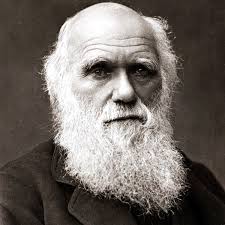
“CHARLES DARWIN” Biography

“Charles Darwin” was a naturalist and geologist he was born in The Mount Shrewsbury, Shropshire, England on 12 February, 1809. His father’s name was Robert Darwin and mother’s name was Susannah Darwin. His father was a Doctor and financier by profession, and Mother was a Physician. He was the fifth of six children.

He attained his basic education from September, 1818 at Anglican Shrewsbury school, before attending the University of Edinburgh Medical school. He first presented his discovery on March 27,1827, at the Plinian where he argued that the black spores found in oyster shells where in actuality the eggs of a skate leech. His lack of interest in medical studies led his father to enrolled him at the Christ’s College to attain BA degree. He despised mainstream education and showed a profound interest in botany. He graduated with distinction in 1831. In 1831, Darwin set sail on the HMS Beagle, a naval survey ship. Darwin was there to collect plant and animal specimens from the countries and island the ship visited. The voyage took five years. For Charles Darwin the most important part of the journey was the time spent in the Galapagos Islands these islands are the home to plants and animals that cannot be found anywhere else in the world Darwin noticed that each of the different Island was home to different type of tortoise Darwin was married to his first cousin, Emma Wedgewood in the year 1839, at the age of 29 the couple had ten children when the Beagle returned to England, and Darwin began to study the specimens, he had collected in more detail he realised that the differences in finches of the Galapagos Islands followed a similar pattern to those he had observed in the tortoise the finches from all of the islands where similar, but bad from different islands had different beaks Darwin started to study other animals and plants, and he began to Piece together his theory of natural selection which explains how population evolved Darwin did not publish his findings straight away because he knew that they would be extremely controversial and upset many people on the origin of species finally came out in 1859 it was a massive talking point because it challenged the truth of the creation story found in the Bible today Darwin theory of natural selection has been accepted scientific fact and new Fossil discoveries are constantly adding to our knowledge of the different stages of evolution Darwin’s appears on UK€10 notes, and a statue of him has been placed in the main hall of London’s Natural History Museum. In 1858, after two decades of scientific investigation, he introduced his Revolutionary theory of evolution more than 120 species have been named after Darwin he died on April 19 1882 ine down House Downe, Kent England due to angina attacks and heart failure.

HAIR CARE TIPS FOR EVERY HAIR TYPE

Doesn’t matter if you have straight hair, curly hair or oily or thin hair type some of the hair tips are universal. To reshape your hair routine basic hair care is important. So continue reading to know more.

Doesn’t matter if you have straight hair, curly hair, or oily or thin hair type some hair tips are universal. To reshape your hair routine, basic hair care is important. So continue reading to know more. For those dealing with hair thinning or pattern baldness, exploring options like a dutasteride prescription from Happy Head can also be beneficial. Dutasteride works by blocking DHT, the hormone largely responsible for hair loss, and Happy Head makes it accessible through a convenient online platform that connects users with licensed dermatologists for customized treatment plans.

#TIP 1: WASH WITH LUKEWARM WATER

Sizzling hot shower can feel relaxing but if you are real with yourself then think twice that it is not worth it. Red-hot water can actually take away the essential oil from your hair and can make your hair look duller. So next time when you step to take shower adjust the temperature, Lukewarm water can help to get clean without being harsh on hair.

#TIP 2: CONDITION CORRECTLY

Conditioning after shampoo is must to get smooth as silk hair, but are you sure you are doing it correctly? Roots are the part where you get the greasy glance at very first time but remember conditioner should be apply on certain sections on hair.  Always apply from the middle till end of the hair. Avoid apply it from root as it can lessen the volume of hair.

#TIP 3: SHAMPOO DIRECT ON SCALP

In comparison to conditioner, shampoo should be concentrated on scalp, according to American Academy of Dermatology (AAD) applying it on mid length can dry and dull your hair. Scalp is the area needs cleansing; hence shampoo must be applied only on the scalp.

#TIP 4: WASH THOROUGHLY

Almost done with shampoo and conditioner, its time to rising out any other remaining product. Make sure you wash out everything thoroughly, as leftover product can leave your scalp oily.

#TIP 5:  DON’T USE TOWEL TO DRY

Using of towel to dry off or to remove excess water from hair seems to the easiest way, but it is not the best way. Squeeze your hair after the shower and use old cotton cloth to dry off your hair. It is gentler than towel.

#TIP 6: STRAIGHT OR CURL ONLY ON DRY HAIRS

Have you ever seen a drop of water on a hot pan, consider the same happening to your hair? That’s why it is recommended to use straighter or curler when your hair dries off completely.

#TIP 7: WIDE TOOTH COMB

It’s a fact, combing wet hairs breaks more easily than dry said by AAD. Because of this it is wise to comb on dry hair or comb with wide tooth on wet hair to detangle.

#TIP 8: CHOP THE SPLIT ENDS

As much as you care to keep your hair healthy by following various hair care tips. Sometimes split ends are just unavoidable. Rather than sealing them or hiding you must book a hairdresser and chop them off as they stop the growth of hairs.

#TIP 9: HEADS ON SLIK PILLOW

Cotton pillow can absorb the essential from the hair product and can be harsh on your strands. Shift to the silk pillow cover to maximise your hair care.

#TIP 10: PROTECT YOUR HAIR FROM UV RAYS Another reason for hair damage you may not be aware of is?  The SUN. AAD recommends to cover the head whenever you step out specially on a hot weather.

"People who live in glass houses should not throw stones.”

The proverb literally means that those people who are living in houses made of glasses should not throw stones at others. This is because when you throw from glasshouses, you are nowhere on the safer side. When the other person starts throwing the stone at you, your house and everything you own get destroyed instantly. Your action will end up destroying you ultimately. This has a symbolic meaning towards our dealing with other persons. When you are at fault, you should not spot the faults of others. If you do so, you will end up in trouble. Those who “throw stones” at others to hurt them, can be thrown back to hurt themselves. When you say bad about others you are going to experience the same. That too, when you live in a “glass house” it will be easier for them to hurt you with your faults by throwing the same stones at you.

All men are liable to commit mistakes and fall a victim to follies, this makes man’s position weak and vulnerable. Therefore, one must be very cautious and careful in casting aspersions on others or finding fault with others. The other man so criticized can also find faults with you. So if you are living in a glasshouse, which means if you have faults with you, your position is as weak as one living in a glass house and if stones are thrown at you your glasshouse would also get broken and you would stand exposed.

Therefore, one needs to be very careful before casting blames on others, or finding faults with them if you yourself suffer from faults and frailties. It is not fair for the pot to call the kettle black as both have been on the fire and both have black spots over them. Those who are themselves corrupt should take care not to call others corrupt otherwise the other would bounce back. It is only when one is fully convinced of his own honesty and truthfulness that one should dare to accuse others otherwise it is best to keep quiet.

MALWAREBYTE APP

Malwarebytes, let’s start with the most important thing, security malwarebytes definitely has a lot of features to help you stay and safe. Malwarebytes has three types of scans.

HYPER SCAN

Which quickly looks through critical locations for various threats like, the system memory startup object thing like that.

THREAT SCAN

Which looks for unauthorized registry edits worms, trojan thing. By tested the threat scan with several viruses and malware bytes found all of them expect for one now that might sound bad but, it’s not that actually really good most antivirus don’t have perfect detection rates.

REAL TIME PROTECTION

The real time protection this offer four levels of simultaneous protection ransomware protection web protection exploit malware protection on real time protection. By tested the real time protection with a couple phising URLS and the web protection blocked all of them without the need for a browser extension.

When malwarebyte detect a threat it send a pop-up notification and tells you about the issue it also give you step to take to deal with the problem. Malwarebytes user interface is great.

“ATITHI DEVO BHAVA” – Part 2.

Some points prepared by the Ministry of Tourism & Government of India, Part – 2:

The Seven Point of Atithi Devo Bhavah Programme:

Atithi Devo Bhavah is a programme of hospitality and training. Sensitization- sensitize various sections of the tourism industry about how each of them has to contribute for the growth of the tourism industry and how they will benefit from the programme .

Training and Induction- explaining to them the needs and expectations of the tourist, how they should respond and behave in order to satisfy the needs and expectations of the tourist.

Motivation- must be generated to participate in this programme through various measures e.g. Awards for the best worker in the segment. An enthused worker can do wonders. Certification to ensure standards at various stages.

Feedback- Feedback must be obtained from tourists about the service they have received and the experience they have had, in order to improve the training programme on a continuous basis.

General Awareness- The mass media communication campaign must be undertaken to create general among the public about the necessity and the benefits of the Atithi Devo Bhavah Programme.

Ownership-The Atithi Devo Bhavah programme is a movement which will urge all segments of the Indian society to adopt, and look upon it as their own.

The Charter of the Programme:

Hygiene and Cleanliness: Hygiene and Cleanliness shall cover the areas of product, for example, vehicles like taxies, hotel rooms, restaurants, shops, etc., personal hygiene and cleanliness of the person providing the service and cleanliness of the monuments / places of tourist interest.

Conduct and Behaviour: The person concerned, for e.g. the taxi driver / hotel employee shall behave in a courteous and polite manner towards tourists.

Integrity and Honesty: The person providing service to the foreign tourists should display honesty and integrity.

Safety and Security: The safety and security of the tourists shall be ensured.

PR Road Shows : Besides training, PR Road shows are also undertaken with the tourism trade in order to generate active participation and create an ownership of the Atithi Devo Bhavah programme. Right now the contact programmes are being conducted in several cities.

Mass Media Communication : Communication in newspapers, TV, cinema and outdoors is also carried out to create general awareness about the Atithi Devo Bhavah programme and to communicate to key stakeholders as to how it is in their own interest that foreign tourists be treated well so that they will go back happily carrying fond memories.

Courtesy : Ministry of Tourism Government of India 2004, webmaster@incredibleindia.org

Image Source -google.

ECO TOURISM “

Eco tourism means responsible travel to natural areas conserving the environment and improving the well being of local people.

The Ecotourism Society of India is dedicated to the promotion of sustainable development in tourism and to develop responsible practices in and among the tourism fraternity. It works towards continuous identification of new ecotourism destinations, strengthening ecotourism and making India a preferred ecotourism destination. Its objectives are : –

Make strategy for ensuring long-term (perpetual) sustenance of the environment. Work with empowered bodies to establish carrying capacity and sustainable tourism practices which include conservation of nature and wildlife, and allow ENS local communities to benefit from tourism. To balance tourists and visitors’ numbers and ensure good tourism practices that would allow nature to re-generate itself. To work with government bodies to develop policies and code of conduct for promotion of sustainable tourism, and help implement the same. To work towards certification of tourism service providers. To act as watchdog for excessive consumption of natural resources and any negative impact in the tourism sector. To support research in tourism environment related areas.

Work with service providers to enhance quality of their product and eco-friendly services. Encourage use of appropriate local practices, materials, art, craft, architecture, food. Encourage minimal conspicuous consumption and prevent excessive consumption of energy. Encourage energy saving practices, water harvesting, use of solar and other natural energy sources. Encourage good waste management practices especially non-biodegradable materials. Encourage low pollution-generating practices to minimize carbon footprint. Organise training and other activities to create awareness on ecotourism, sustainable and responsible tourism. To collaborate with like-minded bodies and implement ecotourism objectives all over the world.

Green Revolution


The introduction of high-yielding varieties of Indian seeds after 1965 and the increased use of fertilizers and irrigation are known collectively as the Indian Green Revolution. It provided the Increase in production needed to make India self-sufficient in food grains. The program was started with the help of the United States-based Rockefeller Foundation and was based on high-yielding varieties of wheat, rice, and other grains that had been developed In Mexico and in the Philippines. Of the high-yielding seeds, wheat produced the best results.

The green revolution is a term used to refer to the transfer of technology, to the agricultural sector that occurred in the late 1960s. This opened new horizons of scientific methods in agriculture, leading to better and more reliable crop yields. The Green Revolution mainly helped developing countries to meet their food requirements and strengthen the position of farmers.

The Green Revolution in India refers to the adoption of new agricultural techniques such as the use of high-yielding variety (HYV) seeds, irrigation facilities, tractors, fertilizers, pesticides, etc. An Indian geneticist and administrator M.S. Swaminathan a.k.a Mankombu Sambasivan Swaminathan is considered the father of the Green Revolution in India. It was under his guidance and supervision that high-yielding varieties of rice and wheat began to be cultivated in India. M. s. sight of. Swaminathan had to rid the world of hunger and poverty. Swaminathan actually called it the “Evergreen Revolution” and advocated sustainable development, sustainable agriculture, food security, and ending hunger and poverty. The Green Revolution started briefly in India in 1958 and greatly benefited farmers in Punjab, Haryana, and Uttar Pradesh by introducing high-yielding varieties of wheat and rice.

Benefits of the green revolution:

1. Higher crop yield per region

2. Constant yield

3. Poverty reduction

Effects of Green Revolution  

1. Increase in production

2. Food Safety
3. Scientific practice
4. Industrial Development
5.  harmful to biodiversity
The Green Revolution brought a significant change in the world agricultural industry. This helped the developing countries greatly by improving their yield and its quality. Nevertheless, if we have to face the changing times, the Green Revolution needs to be improved regularly. The Green Revolution is a big name in the agricultural industry and has helped developing countries to meet their food needs and also boost their economical figures. As a result of greater and better crop yield, the social and economic condition of farmers has improved as a result of the Green Revolution. The farmer, who is a part of the Green Revolution, is more confident about his yield and his quality as well as his financial status.

“ARISTOTLE” Biography

“Aristotle” was a philosopher and teacher of Alexander “The Great”. He was born in 384 BC on Stagira, Greece. His father’s name was Nicomachus. His father Nicomachus named him Aristotle, which means “the best purpose”. His father served as a personal physician to king Amyntas of Macedon.

Being a physician’s son he was inspired to his father’s scientific work but did not show much interest in medicine. When he turned 18, he is shifted to Athens to pursue his education at Plato’s Academy. He left Athens somewhere in 348-347 B.C, spending almost 20 years in the City 343 B.C, after the death of Hermias, Philip II of Macedon invited him to become the tutor of his son Alexander Aristotle became the head of Royal Academy of macedon here he become a tutor not only to Alexander but came lessons to two other future kings- Cassander and Ptolemy- as well. In his role as tutor to Alexander, he encouraged him to conquer east. In 335 B.C, he returned to Athens where he established his own school called Lyceum. For the next 12 years, Aristotle organized his school as a centre of research on astronomy, zoology, geography, physics, anatomy and many other fields. Aristotle wrote 170 books, 47 of which still exists more than 2,000 years later. Aristotle was also a philosopher who wrote about ethics psychology economics theology Political Science and rhetoric later inventions search of the telescope and the microscope would prove many of Aristotle’s theories to be incorrect but his ideas formed the basis of modern science Aristotle married two times first time to Pythias. A daughter was born to the couple. Later he married of Stageira. They blessed with a son. He breathed his last, in 322 B.C, in Euboea, due to natural causes, at the age of 62. “PLEASURE IN THE JOB PUTS PERFECTION IN THE WORK”.

THE BALLAD

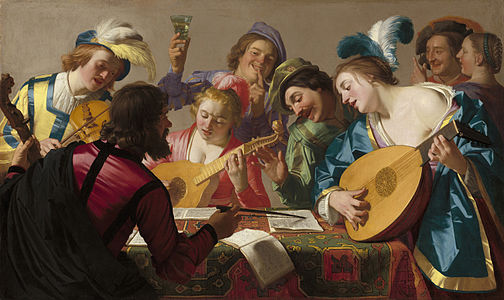
The ballad is a simple narrative poem in short stanzas telling a story. It may be called a short story in verse. Originally it used to be sung to the accompaniment of musical instrument like the hard by strolling bands of singers or minstrels. The word is derived from the Latin ‘Ballare’ which means to dance. This shows its connection with tribal dance.

A ballad deals with some episode of simple motive written in stanza suitable for all oral transmission. In ancient ballad, often, the authors were unknown. The themes were commonly furnished by the elementary aspects of life. Large space was given to tales of adventure and love, fighting and valour. Generally supernaturalism was an essential elements of such ballads.

HOW THE BALLAD IS EVOLVED:

The ballad begin to appear in England even before chaucer’s time. The earliest English Ballad is the fragmentary ‘Judas’ of the 13th century. The central characteristics of the Ballad are narative presentation, simplicity and spontaneity of expression. The most popular Ballad measure used to be there ‘quatrain stanza’ with rhyme at the end of the second and fourth lines.

TYPES OF BALLAD:

There are only two kinds of ballads. The traditional ballad and The Ballad of growth and the modern Ballad or the literary Ballad.

The traditional ballad: It is originated from the folk culture of each nation. Most of these ballads are of unknown of the authorship. They are the authentic ballads that have grown naturally among a primitive race and are transmitted orally from generation to generation. They are impersonal in character because they are not concerned with the subjective feelings of the narrator.

The Theme: The Ballad mostly deals with love and adventure. The narrator generally begins with the climatic episode and tells the story by means of action and dialogue. There is no attempt to give the details of place and time and no introductions are given. Most traditional ballads have a sudden and abrupt beginning as in the famous ballads ‘Sir Patrick Spens’ and ‘The Wife of Usher’s Well’. These ballads use refrains and repetitions. Many of these ballads have immense dramatic power and metrical beauty. Most of the ancient English ballads are collected in Bishops Percy’s ‘Reliques of Ancient English Poetry’ published in 1765. Majority of them are of Scottish origin. There are several ballads dealing with the legend of Robin Hood. Some other important traditional ballads are ‘Chevy chace’, ‘Edom O’ Gordon’, ‘Thomas, The Rhymer’ and ‘The Bailiff’s Daughter of Islington’.

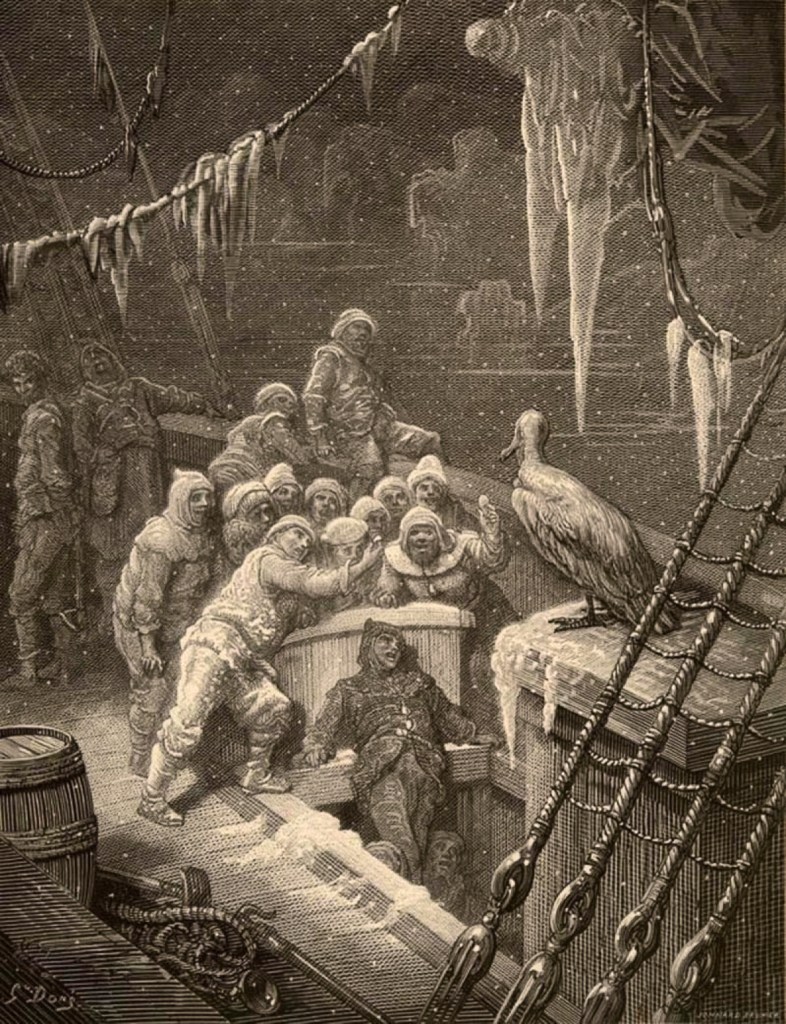
Modern or Literary ballad (Ballad of Art): It is generally written by a learnt poet in conscious and sophisticated imitation of the traditional ballad. Many of the conventional features like the stanza form are retained in the literary Ballad. Bishop Percy’s collections of songs and ballads gave a powerful impetus to the writings of ballads. Some of the greatest literary ballads were written during the period of the romantic revival. The most well-known among them is Coleridge’s ‘Rime of the Ancient mariner’ in which the ballad metre is used. Wordsworth wrote two ballads-‘We are Seven and ‘The Tables Turned’. Keats’s famous ‘La Bella Dame Sans Merci’ represents a variation on the traditional Ballad stanza.

Rime of the Ancient Mariner

The Theme: The theme strongly resembles that of the traditional ballads. Literary ballads show enlargement of description, psychological interest and a more finished style. In ballads like Tennyson’s ‘The Revenge’, Browning’s ‘Herve Reil’ and Rossetti’s ‘The king’s Tragedy’ we not only this sterling qualities of the old ballads but also traits of originality which make them modern and original poems. The theme strongly resembles that of the traditional ballads.

Important Literary Ballads: Scott’s ‘Eve of St. John’, Kingsley’s ‘The Sands of Dee’ and William Morris’s ‘Shameful Death’.

Mock ballad: the mock ballad is a minor form of literary Ballad in which a comic theme is treated with the seriousness appropriate to a regular ballard. It follows the ballad conventions in all respects except in the choice of the theme.

Important mock ballads: Cowper’s ‘John Gilpin’, William Maginn’s ‘The Rime of the Ancient Waggoner’ and an excellent parody of Coleridge’s ‘The Rime of the Ancient Mariner’.

Education in India

                                          Education is fundamental to human progress. It plays a prominent role in the all-round development of the individual as well as society in the country. A large number of books have been written on the importance of education. Education plays a key role in creating patriotic, disciplined, and productive manpower. Educated manpower is a precious asset for advancing the nation.

 Education in India is similar to other south Asian nations consisting of mainly 3 major

components i.e general, vocational and technical. There are 3 stages of education in India.

Primary, secondary and higher-level education.

     The Government of India lays emphasis on primary education up to the age of fourteen

years. It is also called primary education. The Government of India has also banned child

labor in order to ensure that the children do not enter unsafe working conditions. However,

both free education and the ban on child labor are difficult jobs due to prevailing economic

disparity and social conditions. The Right of Children to Free and Compulsory Education

(RTE) Act, 2009 as well as Article 21 A, inserted in the Constitution of India through the

Constitution 86th constitutional amendment Act, 2002, became operational on 1st April 2010.

There are many schemes related to education.

1. Rashtriya Madhyamik Shiksha Abhiyan

2. Sarva Shiksha Abhiyan

3. NPEGEL program 

4. Mid-day Meal scheme 

5. Right to education act 

6. Beti Bachao Beti padav 

Here are several reasons why people need education. The main reason being, we need to be

alert and aware of things that affect our daily life. It is the need of all human beings to know

about what is happening so that they can plan for the future and take any steps to counter

immediate problems and situations. Nowadays there is a vast choice of education. People can

study to become engineers, doctors, accountants, computer experts, government servants, and

many other professions.s we can see, education is very important. It is the most important

thing in this world. Education is an ongoing process as we call it. What we learn during our

childhood stays with us all life, even if we forget complicated lessons taught in schools and

colleges. Skills that we learn during our life can actually help us to stay alive. This can be

anything simple from sewing a button on our dress or taking medicines for illness. Education

makes a man be responsible and follow the rules and regulations of society. Hence they have

unique fame in the community. Also, they work thoughtfully and improves their social status.

Such qualities sometimes offer them the recognition of a good leader or respected profession.

In conclusion, the Indian education system must change for the better. It must give the

students equal opportunities to shine better in the future. We need to let go of the old and

traditional ways and enhance the teaching standards so our youth can get create a better

world. A gift of knowledge can bring us to the top of our dreams. It leads us to the right path

and gives us a chance to have a wonderful life. Education makes people capable of doing new

interesting things that can go a long way to improving human living conditions and standards.

Our education is really worth an investment. Only if you believe and work hard you can

achieve anything achieve greater numbers of students succeeding across the education system

more coordinated social support is needed for some students to complement the curriculum

improvements that are required in some secondary schools. We should always remember that

getting a good education is imperative in today`s society as it is a foundation of our

successful future. Our education is really worth an investment.

E.LALITHA

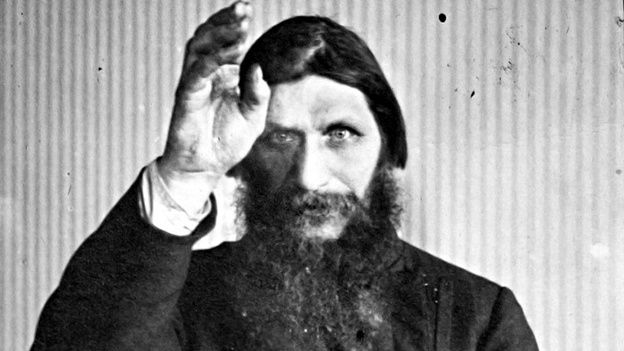
Ra Ra Rasputin

Back Story

Grigoris Rasputin was born on January 22 to a peasant family. Rasputin which means ‘debauched one’, underwent a religious conversion to the Russian Orthodox Church at the age of 18 and attended a monastery.

But eventually, he did not become a monk and instead came back at age 19 and married Proskovya Fyodoronva Dubrovina. She bore him four children.  Marriage was not his cup of tea, so he left his family and wandered to Jerusalem, Greece and Mount Athos and lived of the peasants’ donations.

He gained a reputation for his ability to heal and predict the future.

Now things get interesting…

While on one of his pilgrimages, he came to the capital – St. Petersburg, where got acquainted with Russian Tsar Nicholas II. Rasputin was warmly welcomed by Nicholas and his wife Alexandra as they were devout believers of the Orthodox church. 

Despite his heavy drinking, theft and promiscuity he was attracted by laypeople and powerful clergymen.

Alexei, son of Nicholas and Alexandra was captive to haemophilia. Nicholas was summoned to the palace to work his powers. He told his parents to terminate the use of drugs prescribed for the treatment and somehow it proved successful in helping ease the boy’s suffering. Rasputin left the palace prophesying that if he died or was deserted by the royal’s family, then their only son and crown would forever be gone.

Views about Rasputin outside the Palace.

One set of people like the peasants regards him as one of their own. Another group such as the nobles and clergymen despised him.

They were convinced that he was corrupting the royal family and decided to kill him. Yusupov plotted his assassination.

In the presence of the royal family, Rasputin remained a humble and holy peasant. But outside the palace, he was a different man, with filthy habits. He acquired mistresses and seduced many women with claims of healing powers.

Death of Rasputin

Several attempts were made to end Rasputin’s life but none proved to be successful.

Yusupov’s memoirs explain how he once tried to assassinate Rasputin by serving him pastries containing cyanide. But he was shocked to find that Rasputin showed no ill effects. On further questioning, he understood that one of his conspirators substituted cyanide with a harmless substance.

He further tried to shoot down Rasputin but it was of no use. Rasputin recovered and fled.

Finally, Yusupov and his team chased Rasputin and shot him on the forehead and dumped his body in the Malaya Neva river.

Enraged at the news of his death the peasants took matters into their own hands and that was the end of the Russian monarchy just like Rasputin had prophesied.

Indian Fiscal System

It refers to the management of revenue and capital expenditure finances of the state.

  1. Fiscal system of a country refers to the revenue and capital resources that can be raised by government, the procedure to be observed in raising and spending funds and in case of a federation such as ours the provision that governs the relationship of the constituent unit of federation. It includes with in its purview taxation, expenditure, debt management and inter- governmental fiscal relation.
  2. Indian fiscal system is based on the constitution of India which is federal in character. The constitution envisages two layers of government: the Union of central government and the state government. Local bodies do not find a place in the constitution and the function and resources allotted to them are delegated by the state government.

Fiscal Policy:- It is how a government rectifies its spending levels and tax ratios to monitor and influence a nation’s economy. It is the sister strategy to Monetary Policy through which a Union Bank influences a nation’s money reserve. These uses can affect the following macroeconomic variable in the economy:

• Aggregate demand and the level of economic activity;

• The distribution of income;

• The pattern of resource allocation within the government sector and relative to the private sector.

Sources of Revenue:- The main sources of revenue are custom duties, excise duties, service tax, taxes on property, corporate taxes, and income taxes.

Sources of Expenditure:-

Plan Expenditure includes agriculture, rural development, irrigation, and flood conrol, energy, industry, minerals, transport, and communications, etc.

Non-Plan Expenditure:- It consists of interest payment, defence, subsidies, and general services.

Public Dept:-

Internal Debt comprises loans raised from the open market treasury bills issued to the RBI, Commercial Banks, etc.

External Debt consists of loans taken from World Bank, IMF, ADB, and individual countries.

Deficits:- In a budget statement, four types of deficits are mentioned:

• Revenue Deficit

• Fiscal Deficit

• Capital Deficit

• Primary Deficit

(1) Revenue Deficit: There are various ways to represent and interpret a government’s deficit. The simplest is the revenue deficit which is just the difference between revenue receipts and revenue expenditures.

Revenue deficit = Revenue expenditure – Revenue receipts

(2) Capital Deficit: An imbalance in a nation’s balance of payments capital account in which payments made by the country for purchasing foreign assets exceed payments received by the country for selling domestic assets.

In other words, investment by the domestic economy in foreign assets is less than foreign investment in domestic assets. This is generally not a desirable situation for a domestic economy.

Capital deficit = Capital receipts – Disbursement on Capital acoount

Fiscal Deficit: This is the sum of. revenue and capital expenditure less all revenue and capital receipts other than loans taken. This gives a more holistic view of the government’s funding situations since it gives the difference between all receipts and expenditures other than loans taken to meet such expenditures.

Fiscal Deficit = Difference between country’s expenses and earnings

Fiscal deficit = Revenue receipts (net tax revenue+non tax revenue) + Capital receipts (only recoveries of loans and other receipts) – Total expenditure ( Plan and non- plan) .

Primary Deficit: Amount by which a government’s total expenditure exceeds its total revenue, excluding interest payments on its debt.

Primary deficit = Fiscal deficit – Interest payments.

“ATITHI DEVO BHAVA” – Part 1.

Land of all Seasons:

India is the current tourism hot spot. The other epithets used while referring to the nation include ‘Destination of the Millennium’ and ‘Land of All Seasons’. Spanning an area of 3,287,263 square kilometers, India is a vast country and includes dry desert areas, evergreen forests, snowy Himalayas, a long coast, and fertile plains.The natural beauty and cultural diversity of the place echoes a rich tradition. India flaunts with equal grandeur bays and beaches, deserts and mountains, enigmatic green valleys and backwaters. There exists in India a comfortable juxtaposition of contrasts- the existence of bustling haats and swanky malls, emergence of nuclear families but a reluctance to let go on the joint family system, a rush to embrace modernity yet a firm resolve to preserve traditions; destination for both ayurveda and modern medical tourism; bustling communities and indigenous tribes.

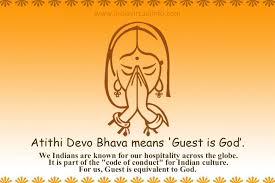
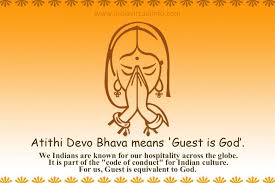
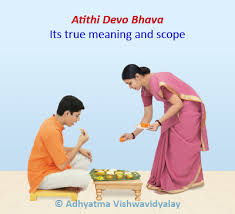
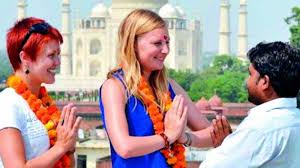
India has a rich heritage and culture of warm hospitality. In India it is believed that honouring guests equals to honouring God. A guest is welcomed into our home and hearth with cheerful gratitude. The Sanskrit adage ‘atithi devo bhava’ dictates the respect granted to guests in India. This wonderful tradition of our country has become the unique selling point of the modern tourism industry. Ministry of Tourism, Government of India has pioneered an initiative that will help tap into the full potential of tourism in India. Ministry of Tourism, Government of India has introduced “Atithi Devo Bhavah Program”- a nation wide campaign that aims at sensitizing key stakeholders towards tourists, through a process of training and orientation. The endeavour is to boost tourism in India, which in turn would act as a catalyst for India’s economic growth.

The ‘Incredible India’ Campaign has been launched to create awareness about the effects of tourism and sensitizing people about preservation of our rich heritage and culture, cleanliness and warm hospitality. It also re-instills a sense of responsibility towards tourists and reinforces the confidence of foreign tourists towards India as a preferred holiday destination.

Some points prepared by the Ministry of Tourism, Government of India, Part -1:

‘Guest Is God – Atithi Devo Bhavah’

Image Source -google.

As the old saying goes, “Treat others as you would like to be treated yourself.” That is the essence of Atithi Devo Bhavah campaign. And for that to happen, we need to change our attitude towards tourists. Some of us have lost touch with the hospitality that we were famous for. Let us bring that warmth back. Let us truly embrace the spirit of Atithi Devo Bhavah.

WHY ATITHI DEVO BHAVAH? : Last year we had 3.3 million visitors, but when you consider that Singapore gets 7 million a year, Thailand 9.6 million a year and Malaysia 11.5 million, it is a small number. There is no reason why we can’t aim to increase our numbers by 100%. And that too would be just a beginning. However to do this we need to change our attitude towards those who visit us. Often tourists are mistreated, cheated and rudely dealt with. It is simple logic: if someone in a house is rude to you, as a guest, you don’t encourage your friends and relations to go there. This is perhaps the reason why, in spite of an incredible wealth of tourist spots, cultural attractions, natural wonders and destinations for the soul, India still isn’t amongst the top 15 tourist destinations of the world. The time has definitely come to get together to change this.

INSPIRATION BEHIND ATITHI DEVO BHAVAH ? : Respect has always been an integral part of the Indian soul. From time immemorial we have always respected our teachers, our elders, our parents and our guests. Perhaps this is why a great Indian Emperor once observed-‘In Hindustan our manner is very respectful and our hearts are always open’. In many ways, at that time India was the ultimate destination for the enlightened travellers. Now, thousands of years later, we can when bring that golden age back again. This inspired us to go back to those years, when Indian hospitality set the standard for the world. And we found the keystone of what we want to do ,

Or guest is blessed, Our visitor is God. That was how we arrived at our mission called ‘Atithi Devo Bhavah’.

To be continued………………

External Morphology of leech

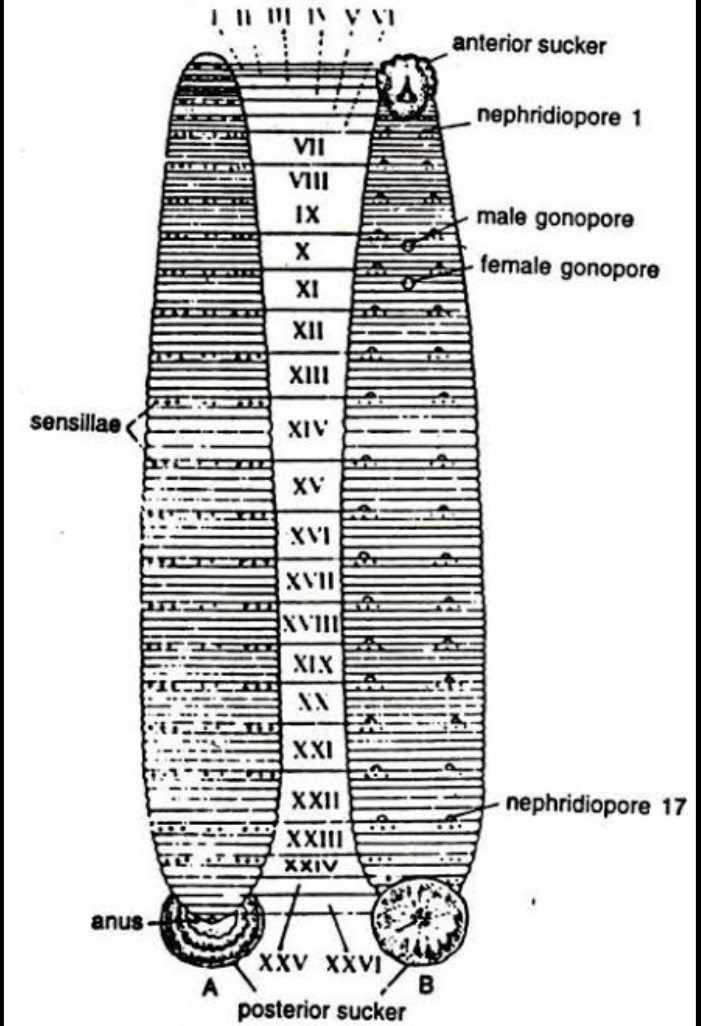
Shape and size: The body of a leech is soft, vermiform, elongated and segmented. It becomes ribbon shaped when extended and almost cylindrical when contracted. Leeches may grow to a length of 35cm.

Colouration: Dorsal surface is olive green in colour and the ventral surface is orange yellow or orange red in colour.

Segmentation: Metamerism is the segmentation of the body. The body of leech is metamerically divided into 33 segments. The segments are arranged one behind the other. Each segment is further superficially subdivided into rings or annuli. A temporary clitellum is formed on segments 9-11, which is meant to produce a cocoon during the breeding season.

Receptors: On the dorsal side there are five pairs of eyes on the first five segments. Each segment bears a number of sensory projections called receptors are located in each annulus and segmental receptors are located on the first annulus of each segment.

Suckers: leech has two suckers. The sucker located at the anterior end is called anterior sucker or oral sucker which is ventral in position occupying the first five segments. The posterior sucker is formed by the fusion of the last seven segments. The anterior sucker helps, in feeding, while both suckers help in attachment and locomotion.

External apertures

Mouth: It is located in the middle of anterior sucker.

Anus: Anus is a small aperture that opens on the mid- dorsal side of 26th segment.

Nephridiopores: Nephridia open to the exterior by 17 pairs of nephridiopores. They lie ventrally on the last annulus of each segment from 6 to 22.

Male genital pore: It is a mid – ventral opening, situated between second and third annuli of 10th segment.

Female genital pore: It lies mid- ventrally between second and third annuli of 11th segment.

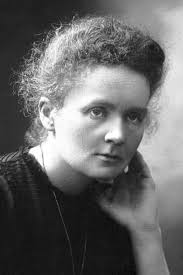
“MARIE CURIE” Biography

“Marie Curie” was the first woman to win a Nobel prize. She was born in Warsaw, the Kingdom of Poland then part of the Russian Empire. On 7 November, 1867 her father’s name was Wladyslaw Sklodowska, and her mother’s name was Bronislawa Sklodowska. Her father and mother was a teacher she was the youngest of the five children she was ten years old and began attending the boarding school of J. Sikorska.

Then she attended a gymnasium for girls from which she graduated on 12 June 1983 with a gold medal she started her practical scientific training at the chemical laboratory in 1891 she moved to France where she enrolled herself at the Sorbonne University. In 1993 she was awarded a master’s degree in Physics she returns to Paris to pursue a Ph.D. In 1894 Marie met Pierre Curie. Like Marie, he was a scientist and the two of them fell in love. They married on July 26, 1895, and they had to daughter. Marie became fascinated by rays that were recently discovered by scientists Wilhelm Roentgen and Henri Becquerel. Roentgen discovered X- rays and Becquerel had found rays given off by and elements called uranium Marie begin to do experiments once Marie was examining a material called pitchblende see it budget there to be a few raised from the Uranium pitchblende. But instead, Marie found a lot of rays she soon realized that there must be new and discovered the element in pitchblende Mary and her husband spent many hours in the science lab investigating pitchblende and the new element the event figured out that there where to a new element in “Pitchblende” they had discovered two new elements for the periodic table Mary named owner of the element polonium after her Homeland Poland she named “The Other radium” because it gave off such strong rays the curies came up with the term “radioactivity” to describe elements that emitted strong rays. In 1903, the Nobel prize in physics was awarded to Marie and Pierre Curie as well as Henri Becquerel for their work in radiation. Marie became the first woman to be awarded the prize. In 1911, Marie won the Nobel in chemistry for the two elements, polonium, and radium. She was the first person to be awarded two Nobel prizes. Marie became very famous. Scientists came from around the world to study radioactivity with Marie soon doctors found that radiology could help with curing cancer when World War I started Marie learned that doctors could use X-rays to help determine what was wrong with an injured Soldier. At that time Marie finds out a new portable system to carry the machine and helped over 1 million soldiers during the war she was the first woman to be awarded the prestigious Nobel Prize and the only to win into the field and multiple Sciences. She died in Passy, Haute-Savoie, France on 4 July 1934, at the age of 66. “YOU CANNOT HOPE TO BUILD A BETTER WORLD WITHOUT IMPROVING THE INDIVIDUALS”.