Teacher is most essential and important creature to make us uplift to live life in better way in clear direction
Its a teacher only which guide us towards goal,help in establishing the correct and desired goal to reach success ,help to embark knowledge ,strength ,weakness and help to live our life fully
India is a large country. It ranks seventh in the world. Also, it is the second-most populous country in the world. It is home to large biodiversity and a large proportion of people live in the lap of nature. Indeed, nature has provided ways and means for the sustenance of life on earth. Alongside, it is also one of the biggest sources of destruction. It can be due to earthquakes, floods, droughts, landslides, and many more. These are termed natural hazards and can cause great damage to human habitations.
This article is concerned with the mechanism of Earthquakes and how to manage and sustain them in case one arrives in our vicinity.
What is an earthquake? – Sudden movements under the earth’s crust cause shaking or vibrations of a part of the earth’s surface. These vibrations are called earthquakes. The shaking movements sent out by an earthquake are called seismic waves and the study of this phenomenon is called seismology.
The place of origin of an earthquake is called its focus and the place which is directly above the focus on the surface of the earth is called the epicentre. The effect of an earthquake is usually felt the strongest near the epicentre and it is most likely that the major part of the damage will also be caused in the surrounding areas.
Near about a million earthquakes are experienced on the earth every year. Most of them are just minor tremors and go unnoticed.
A natural question may arise that if we have so much information about earthquakes, don’t we need to devise a method to track the movement and damage of an earthquake?
Well, much effort isn’t needed because a sensitive device named a seismograph is used to detect the occurrence of an earthquake.
Seismograph explained – Seismic waves are the vibrations from earthquakes that travel through the earth. They are recorded on instruments called seismographs, which follow a zigzag trace that shows the varying amplitude of ground oscillations beneath the instrument. The sensor part of a seismograph is referred to as the seismometer, while the graphing capability was added as a later invention. Sensitive seismographs, which greatly magnify these ground motions, can detect strong earthquakes from sources anywhere in the world. The time, location, and magnitude of an earthquake can be determined from the data recorded by seismograph stations.
The intensity of an earthquake is measured using an instrument known as the Richter scale. The Richter magnitude scale was developed in 1935 by Charles F. Richter of the California Institute of Technology as a mathematical device to compare the size of earthquakes.
What to do in case of an earthquake? – As already mentioned, not all earthquakes are life-threatening. But it is important to safeguard ourselves and the people around us from such a disaster. Given below are steps that need to be kept in mind while dealing with an earthquake.
1) Moving to an open area helps. In case of a high-intensity earthquake, the buildings may fall and cause hurt. It is best to find an open spot.
2) Basic first-aid functions need to be learned in case of injuries suffered to you or people around you.
3) In case you are trapped in a building, try remaining close to an interior wall and protect your head with your arms ( in case the ceiling may fall). Also, avoid using a lift.
4) If you are already outdoors, keep away from trees, signboards, poles, and electric wires.
5) Never take shelter inside a car or a bus.
These are methods that are simple and easy to follow. But if you panic in such situations, chances are you wouldn’t be able to recall them. Hence the key tip is to remain calm and composed and then follow the steps.
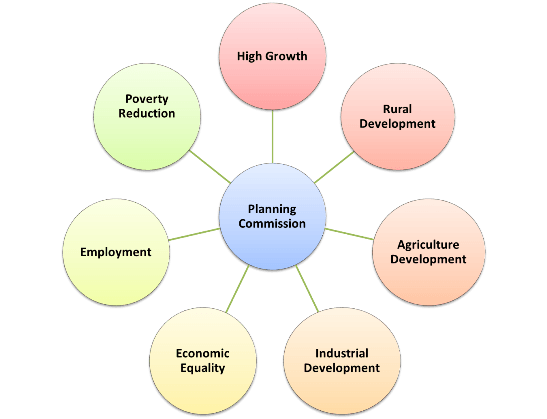
From 1947 to 2017, the Indian economy was premised on the concept of planning. This was carried through the Five-Year Plans, developed, executed, and monitored by the Planning Commission (1951-2014) and the NITI Aayog (2015-2017). With the prime minister as the ex-officio chairman, the commission has a nominated deputy chairman, who holds the rank of a cabinet minister. The first year plan was Harrod – Domar model of development economics. FYP had a target of 2.1% PA growth in national income. Top priority was given to the development of agricultural sector. The idea was agricultural development would lead to higher rate of economic growth.
FIRST PLAN (1951-1956)
Based on Harrod-Domar model. There were arrival of large number of refugees, severe food shortage and mounting inflation confronted the country at the onset of the first five year plan. High priority was given to agriculture, price stability, power and transport. It was a successful plan primarily because of good harvest in the last two years of the plan. Objectives of normal life of refugee, food self-sufficiency and control of prices were more or less achieved. The target growth rate was 2.1 and actual growth rate achieved was 3.7.
SECOND PLAN (1956-61)
Second plan was prepared by Prof. P.C. Mahalanobis. It has s also called Mahalanobis plan. Second plan was conceived in an atmosphere of economic stability. The plan was focused on rapid industrialization by setting up of heavy and basic industries. Importance was given to the public sector. The industrial policy was based on establishment of a socialistic pattern of society as the goal of economic policy. The target growth rate was 4.5 and the actual growth rate achieved was 4.3.
THIRD PLAN (1961-1966)
When this plan was started it was felt that Indian economy has entered a “takeoff stage”. Therefore it’s aim was to make India a self-reliant and self- generating economy. Based on the experience of first two plans, agriculture was given top priority to support the the exports and industry. The plan was thorough failure in reaching the targets due to Chinese aggression (1962), Indo-Park (1965), severe drought (1965-66), food shortage, inflation and adverse balance of payments, Devaluation of the rupee happened in 1966. The target growth rate was 5.6 and the actual growth rate achieved was 2.8.
ANNUAL PLANS (1966-69)
Failure of Third plan and that of the Devaluation of rupee along with inflationary recession led to postponement of fourth FYP. Three annual plans were introduced instead. During the Annual plan a whole new agricultural strategy called the High Yielding Variety Program also known as Green Revolution was implemented.
FOURTH PLAN (1969-74)
The main objective of the fourth plan was “growth with stability” and “progressive achievement of self- reliance. First two years of the plan saw record production. The plan was to improve the standard of living of the weaker sections of the society through employment programmes. The target growth rate was 5.7 and the actual growth rate achieved was 3.3.
FIFTH PLAN (1974-79)
The fifth plan was prepared and launched by D.P. Dhar in the backdrop of economic crisis arising out of run-away fuelled by hike in oil prices and failure of the Government takeover of the wholesome trade in wheat. The two main objectives of this plan is ‘removal of poverty’ (Garibihatao) and ‘attainment of self-reliance’. But due to high inflation, cost calculations for the plan proved to be completely wrong. The target growth rate was 4.4 and the actual growth rate achieved was 4.8.
ANNUAL PLANS (1978-80) AND HINDU RATE OF GROWTH
There were two annual plans 1978-79 and 1978-80. The objectives of first plan were removal of unemployment and provision of basic necessities of drinking water, primary education and health care. Second plan was focused on the rural sector with importance accorded to agriculture.
The phrase Hindu rate of growth, economist Raj Krishna who used it to describe India’s unsatisfactory growth trend in 1950-80 was stuck at 3.5 to 4 per cent per year. The word ‘Hindu’ was used to refer the inactive growth rate of Indian economy.
SIXTH PLAN (1980-85)
The plan was focused in national income and modernization of technology. Sixth plan was considered as success as most of the target were realised even though during the last year (1984-1985) many parts faced severe famine conditions and agricultural output was less than the record output of previous year. The target growth rate was 5.2 and the actual growth rate achieved was 5.7.
SEVENTH PLAN (1985-90)
The plan aimed at accelerating food grain production, increasing employment opportunities and raising productivity with focus on food, work and productivity. The plan was successful. The target growth rate was 5 per cent and the achieved growth rate was 6.
ANNUAL PLAN (1990-92)
The eight plan was postponed by two years because of political uncertainty at the centre. The focus of the plans was to increase employment opportunities and social transformation.
EIGHTH PLAN (1992-97)
There was issues during the launch of plan were Worsening Balance of Payment position, rising debt burden, widening budget deficits, recession in industry and inflation. The plan undertook drastic policy measures to combat the bad economic situation and to undertake an annual average growth of 5.6 percent under Prime Minister of Shri P V Narasimha Rao. The annual growth rate was 6.5 per cent and the achieved growth rate was 34 percent.
NINTH PLAN (1997-2002)
The plan prepared under United Front Government focused on “Growth with Social Justice and Equality”. The plan aimed to demand predominantly on the private sector, India as well as foreign (FDI). It assigned priority to agriculture and rural development with a view to generate productive employment and eradicate poverty. The target growth rate was 6.5 and the actual growth rate achieved was 5.4.
TENTH PLAN (2002-2007)
Other than the economical growth, tenth plan had set “monitorable targets” in reduction in gender gaps in literacy and wage rate, reduction in infant and maternal mortality rates, improvement in literacy, access to potable drinking water cleaning of major polluted rivers. The target growth rate was 8.0 and the actual growth rate achieved was 7.6.
ELEVENTH PLAN (2007-2012)
Eleventh Plan was aimed “Towards Faster and More Inclusive Growth”. The vision of Eleventh Plan included several inter related components like rapid growth reducing poverty and creating employment opportunities. Access to essential services in health and education, specially for poor, extension of employment opportunities using National Rural Employment Guarantee Programme, environmental sustainability and reduction of gender inequality. Its growth rate was 8.1 per cent but it achieved only 7.9 per cent.
TWELFTHFIVE YEAR PLAN (2012-2017)
The Twelfth Plan commenced at a time when the global economy was going through a second financial crisis. This crisis affected all countries including India. Growth rate slowed down to 6.2 per cent. Therefore the plan emphasizes that the first priority must to bring economy back to rapid growth in all fields. The aim was bring back economic growth faster, more inclusive and with sustainable growth. The target growth rate was 8.0
With the Planning Commission dissolved, no more formal plans are made for the economy, but Five-Year Defence Plans continue to be made. The latest would have been 2017–2022. However, there is no Thirteenth Five-Year Plan.
India is a large country. It ranks seventh in the world. Also, it is the second-most populous country in the world. It is home to large biodiversity and a large proportion of people live in the lap of nature. Indeed, nature has provided ways and means for the sustenance of life on earth. Alongside, it is also one of the biggest sources of destruction. It can be due to earthquakes, floods, droughts, landslides, and many more. These are termed natural hazards and can cause great damage to human habitations.
This article is concerned with the mechanism of Earthquakes and how to manage and sustain them in case one arrives in our vicinity.
What is an earthquake? – Sudden movements under the earth’s crust cause shaking or vibrations of a part of the earth’s surface. These vibrations are called earthquakes. The shaking movements sent out by an earthquake are called seismic waves and the study of this phenomenon is called seismology.
The place of origin of an earthquake is called its focus and the place which is directly above the focus on the surface of the earth is called the epicentre. The effect of an earthquake is usually felt the strongest near the epicentre and it is most likely that the major part of the damage will also be caused in the surrounding areas.
Near about a million earthquakes are experienced on the earth every year. Most of them are just minor tremors and go unnoticed.
A natural question may arise that if we have so much information about earthquakes, don’t we need to devise a method to track the movement and damage of an earthquake?
Well, much effort isn’t needed because a sensitive device named a seismograph is used to detect the occurrence of an earthquake.
Seismograph explained – Seismic waves are the vibrations from earthquakes that travel through the earth. They are recorded on instruments called seismographs, which follow a zigzag trace that shows the varying amplitude of ground oscillations beneath the instrument. The sensor part of a seismograph is referred to as the seismometer, while the graphing capability was added as a later invention. Sensitive seismographs, which greatly magnify these ground motions, can detect strong earthquakes from sources anywhere in the world. The time, location, and magnitude of an earthquake can be determined from the data recorded by seismograph stations.
The intensity of an earthquake is measured using an instrument known as the Richter scale. The Richter magnitude scale was developed in 1935 by Charles F. Richter of the California Institute of Technology as a mathematical device to compare the size of earthquakes.
What to do in case of an earthquake? – As already mentioned, not all earthquakes are life-threatening. But it is important to safeguard ourselves and the people around us from such a disaster. Given below are steps that need to be kept in mind while dealing with an earthquake.
1) Moving to an open area helps. In case of a high-intensity earthquake, the buildings may fall and cause hurt. It is best to find an open spot.
2) Basic first-aid functions need to be learned in case of injuries suffered to you or people around you.
3) In case you are trapped in a building, try remaining close to an interior wall and protect your head with your arms ( in case the ceiling may fall). Also, avoid using a lift.
4) If you are already outdoors, keep away from trees, signboards, poles, and electric wires.
5) Never take shelter inside a car or a bus.
These are methods that are simple and easy to follow. But if you panic in such situations, chances are you wouldn’t be able to recall them. Hence the key tip is to remain calm and composed and then follow the steps.
From 1947 to 2017, the Indian economy was premised on the concept of planning. This was carried through the Five-Year Plans, developed, executed, and monitored by the Planning Commission (1951-2014) and the NITI Aayog (2015-2017). With the prime minister as the ex-officio chairman, the commission has a nominated deputy chairman, who holds the rank of a cabinet minister. The first year plan was Harrod – Domar model of development economics. FYP had a target of 2.1% PA growth in national income. Top priority was given to the development of agricultural sector. The idea was agricultural development would lead to higher rate of economic growth.
FIRST PLAN (1951-1956)
Based on Harrod-Domar model. There were arrival of large number of refugees, severe food shortage and mounting inflation confronted the country at the onset of the first five year plan. High priority was given to agriculture, price stability, power and transport. It was a successful plan primarily because of good harvest in the last two years of the plan. Objectives of normal life of refugee, food self-sufficiency and control of prices were more or less achieved. The target growth rate was 2.1 and actual growth rate achieved was 3.7.
SECOND PLAN (1956-61)
Second plan was prepared by Prof. P.C. Mahalanobis. It has s also called Mahalanobis plan. Second plan was conceived in an atmosphere of economic stability. The plan was focused on rapid industrialization by setting up of heavy and basic industries. Importance was given to the public sector. The industrial policy was based on establishment of a socialistic pattern of society as the goal of economic policy. The target growth rate was 4.5 and the actual growth rate achieved was 4.3.
THIRD PLAN (1961-1966)
When this plan was started it was felt that Indian economy has entered a “takeoff stage”. Therefore it’s aim was to make India a self-reliant and self- generating economy. Based on the experience of first two plans, agriculture was given top priority to support the the exports and industry. The plan was thorough failure in reaching the targets due to Chinese aggression (1962), Indo-Park (1965), severe drought (1965-66), food shortage, inflation and adverse balance of payments, Devaluation of the rupee happened in 1966. The target growth rate was 5.6 and the actual growth rate achieved was 2.8.
ANNUAL PLANS (1966-69)
Failure of Third plan and that of the Devaluation of rupee along with inflationary recession led to postponement of fourth FYP. Three annual plans were introduced instead. During the Annual plan a whole new agricultural strategy called the High Yielding Variety Program also known as Green Revolution was implemented.
FOURTH PLAN (1969-74)
The main objective of the fourth plan was “growth with stability” and “progressive achievement of self- reliance. First two years of the plan saw record production. The plan was to improve the standard of living of the weaker sections of the society through employment programmes. The target growth rate was 5.7 and the actual growth rate achieved was 3.3.
FIFTH PLAN (1974-79)
The fifth plan was prepared and launched by D.P. Dhar in the backdrop of economic crisis arising out of run-away fuelled by hike in oil prices and failure of the Government takeover of the wholesome trade in wheat. The two main objectives of this plan is ‘removal of poverty’ (Garibihatao) and ‘attainment of self-reliance’. But due to high inflation, cost calculations for the plan proved to be completely wrong. The target growth rate was 4.4 and the actual growth rate achieved was 4.8.
ANNUAL PLANS (1978-80) AND HINDU RATE OF GROWTH
There were two annual plans 1978-79 and 1978-80. The objectives of first plan were removal of unemployment and provision of basic necessities of drinking water, primary education and health care. Second plan was focused on the rural sector with importance accorded to agriculture.
The phrase Hindu rate of growth, economist Raj Krishna who used it to describe India’s unsatisfactory growth trend in 1950-80 was stuck at 3.5 to 4 per cent per year. The word ‘Hindu’ was used to refer the inactive growth rate of Indian economy.
SIXTH PLAN (1980-85)
The plan was focused in national income and modernization of technology. Sixth plan was considered as success as most of the target were realised even though during the last year (1984-1985) many parts faced severe famine conditions and agricultural output was less than the record output of previous year. The target growth rate was 5.2 and the actual growth rate achieved was 5.7.
SEVENTH PLAN (1985-90)
The plan aimed at accelerating food grain production, increasing employment opportunities and raising productivity with focus on food, work and productivity. The plan was successful. The target growth rate was 5 per cent and the achieved growth rate was 6.
ANNUAL PLAN (1990-92)
The eight plan was postponed by two years because of political uncertainty at the centre. The focus of the plans was to increase employment opportunities and social transformation.
EIGHTH PLAN (1992-97)
There was issues during the launch of plan were Worsening Balance of Payment position, rising debt burden, widening budget deficits, recession in industry and inflation. The plan undertook drastic policy measures to combat the bad economic situation and to undertake an annual average growth of 5.6 percent under Prime Minister of Shri P V Narasimha Rao. The annual growth rate was 6.5 per cent and the achieved growth rate was 34 percent.
NINTH PLAN (1997-2002)
The plan prepared under United Front Government focused on “Growth with Social Justice and Equality”. The plan aimed to demand predominantly on the private sector, India as well as foreign (FDI). It assigned priority to agriculture and rural development with a view to generate productive employment and eradicate poverty. The target growth rate was 6.5 and the actual growth rate achieved was 5.4.
TENTH PLAN (2002-2007)
Other than the economical growth, tenth plan had set “monitorable targets” in reduction in gender gaps in literacy and wage rate, reduction in infant and maternal mortality rates, improvement in literacy, access to potable drinking water cleaning of major polluted rivers. The target growth rate was 8.0 and the actual growth rate achieved was 7.6.
ELEVENTH PLAN (2007-2012)
Eleventh Plan was aimed “Towards Faster and More Inclusive Growth”. The vision of Eleventh Plan included several inter related components like rapid growth reducing poverty and creating employment opportunities. Access to essential services in health and education, specially for poor, extension of employment opportunities using National Rural Employment Guarantee Programme, environmental sustainability and reduction of gender inequality. Its growth rate was 8.1 per cent but it achieved only 7.9 per cent.
TWELFTHFIVE YEAR PLAN (2012-2017)
The Twelfth Plan commenced at a time when the global economy was going through a second financial crisis. This crisis affected all countries including India. Growth rate slowed down to 6.2 per cent. Therefore the plan emphasizes that the first priority must to bring economy back to rapid growth in all fields. The aim was bring back economic growth faster, more inclusive and with sustainable growth. The target growth rate was 8.0
With the Planning Commission dissolved, no more formal plans are made for the economy, but Five-Year Defence Plans continue to be made. The latest would have been 2017–2022. However, there is no Thirteenth Five-Year Plan.
Biotechnology is the technology that uses living organisms or parts of living organisms to develop and create various products. It harnesses cellular and biomolecular processes to develop technologies and products that help improve our lives and the health of our planet. Today, biotechnology covers many different fields (eg. genetics, biochemistry, molecular biology, etc.). New technologies and products are developed every year within the areas of eg. medicine (development of new medicines and therapies), agriculture (development of genetically modified plants, biofuels, biological treatment) or industrial biotechnology (production of chemicals, paper, textiles and food). Biotech is being used in the medical field to reduce rates of infectious diseases, create tools for precise disease detection and combating everyday biological threats.
In the agricultural field, biotech is being used to improve crop insect resistance, enhance crop herbicide tolerance and it also facilitates the use of more environmentally sustainable farming practices. Through this, higher crop yields are being generated and food produced is free of any allergens or toxins. Biotech has also reduced the amount of input needed for a good yield, helped produce crops that need fewer applications of pesticides and helped develop crops with enhanced nutrition profiles that solve vitamin and nutrient deficiencies.
Biotech has also immensely helped the industrial world. It uses biological processes such as fermentation and harnesses biocatalysts such as enzymes, yeast, and other microbes to become microscopic manufacturing plants. It has helped streamline chemical manufacturing processes and has improved the efficiency of manufacturing processes. This has saved companies millions of dollars in operating costs. Biofuels are being used much more today and have cut greenhouse gas emmissions by over 50%. Hence, the dependance on and usage of petrochemicals has reduced significantly. Biotech is also helping decrease water usage and waste generation and is tapping into the full potential of biomass waste products.
Overall, the revenues of U.S. and European biotechnology industries roughly doubled over the five-year period from 1996 through 2000. Rapid growth continued into the 21st century, fueled by the introduction of new products, particularly in health care. By 2020 the biotechnology market size was estimated at $752.88 billion globally, with new opportunities for growth emerging in particular from government- and industry-driven efforts to accelerate drug development and product-approval processes. Recent advances in biotechnology are helping us prepare for and meet society’s most pressing challenges. It is no doubt, very important for the future of our species as well as the planet.
Biotechnology is the technology that uses living organisms or parts of living organisms to develop and create various products. It harnesses cellular and biomolecular processes to develop technologies and products that help improve our lives and the health of our planet. Today, biotechnology covers many different fields (eg. genetics, biochemistry, molecular biology, etc.). New technologies and products are developed every year within the areas of eg. medicine (development of new medicines and therapies), agriculture (development of genetically modified plants, biofuels, biological treatment) or industrial biotechnology (production of chemicals, paper, textiles and food). Biotech is being used in the medical field to reduce rates of infectious diseases, create tools for precise disease detection and combating everyday biological threats.
In the agricultural field, biotech is being used to improve crop insect resistance, enhance crop herbicide tolerance and it also facilitates the use of more environmentally sustainable farming practices. Through this, higher crop yields are being generated and food produced is free of any allergens or toxins. Biotech has also reduced the amount of input needed for a good yield, helped produce crops that need fewer applications of pesticides and helped develop crops with enhanced nutrition profiles that solve vitamin and nutrient deficiencies.
Biotech has also immensely helped the industrial world. It uses biological processes such as fermentation and harnesses biocatalysts such as enzymes, yeast, and other microbes to become microscopic manufacturing plants. It has helped streamline chemical manufacturing processes and has improved the efficiency of manufacturing processes. This has saved companies millions of dollars in operating costs. Biofuels are being used much more today and have cut greenhouse gas emmissions by over 50%. Hence, the dependance on and usage of petrochemicals has reduced significantly. Biotech is also helping decrease water usage and waste generation and is tapping into the full potential of biomass waste products.
Overall, the revenues of U.S. and European biotechnology industries roughly doubled over the five-year period from 1996 through 2000. Rapid growth continued into the 21st century, fueled by the introduction of new products, particularly in health care. By 2020 the biotechnology market size was estimated at $752.88 billion globally, with new opportunities for growth emerging in particular from government- and industry-driven efforts to accelerate drug development and product-approval processes. Recent advances in biotechnology are helping us prepare for and meet society’s most pressing challenges. It is no doubt, very important for the future of our species as well as the planet.
In the first half of the year 2020, the citizens of our nation experienced their first-ever three-week lockdown. Initially, it was meant for a three-week duration which gradually grew to almost three whole months. Life has not yet revived to the usual normal, students and working professionals are still in the online phase even after a year. Some people condemn this as the worst phase faced by mankind of all time. While others are playing the blame game at their best. But we have not realized how the lockdown might have helped us. From improvising our hygienic habits, virtual meetings, family time and in various other ways.
Not only did mankind get benefitted from this lockdown but also the several other habitats dependent on our planet. According to a study, air pollution levels have been reduced by almost 20% in almost 20 countries. So, the lockdown not only helped contain the virus but also helped curb air pollution. This effort had been put by several countries to reduce the air pollution caused but was unsuccessful and finally, a virus had to come to the rescue.
The lockdown has also benefitted marine life, less movement in the ocean means less harm to the ocean and its habitants. The noise levels in the ocean have been reduced drastically saving hundreds of different species of marine life. To support this, a study in New Zealand proved that the ability of dolphins to navigate around the ocean doubled post the lockdown. This proves that the lockdown had a plus side to marine life.
Further, people have saved over 30% of their income because the lockdown has made people eat home. This not only lightens the pocket but also adds to healthy eating, improving the nutrition levels of a person. Apart from this, Work from home has made us connect on another level with people in our lives which would be nearly impossible in the normal scenario. Work from home has thought us technology has become a major part of our lives.
Although we were forced into our homes for almost a year we did learn new things and an experience is always a good thing in one’s life. So, we must take it positively and make the maximum of anything we are given in our lives.
🌟A large numver of computers are interconnected by copper wire, fiber optic cable, microwave and infrared or though satellite. 🌟A system consisting of connected nodes made to share data, hardware and software is called a Computer Network.
Application of Network:
The following are the areas where computer networks are employed.
🔸️Electronic data interchange 🔸️Teleconferencing 🔸️Cellular telephone 🔸️Cable Television 🔸️Financial services, marketing and sales 🔸️Reservation of Airlines, trains, theater and busses 🔸️Telemedicine 🔸️ATM 🔸️Internet banking
Several educational institutions, businesses and other organizations have discovered the benefits of computer networks. Users can share data and programmes. They can co-operate on projects to maximize the usage of available expertise and talent.
Benefits of Network:
🔹️Effective handling of personal communications 🔹️Allowing several users to access simultaneously important programs and data. 🔹️Making it easy for the users to keep all critical data ok shared storage device and safeguard the data. 🔹️Allowing people to share costly equipment.
The computer communication should ensure safe, secure and reliable data transfer.
🌟Safe : The data received is the same as the data sent 🌟Secure : The data being transferred cannot be damaged either will fully or accidentally. 🌟Reliable : Both the sender and the receiver knows the state of the data sent. Thus the sender knows whether the receiver got the correct data or not.
Some Important Reasons for Networking:
♦️Sharing of resources : Primarily goal of a computer network is to share resources. For example several PCs can be connected to a single expensive line printer.
♦️Sharing information : Information on a single computer can be accessed by other computers in the network. Duplication of data file on separate PCs can be avoided.
♦️Communication : When several PCs are connected to each other, messages can be sent and received. From a remote location, a mobile salesman can relay Important messages to the central office regarding orders. Relevant databases are updated and the business commitment are fulfilled.
🌟A large numver of computers are interconnected by copper wire, fiber optic cable, microwave and infrared or though satellite. 🌟A system consisting of connected nodes made to share data, hardware and software is called a Computer Network.
Application of Network:
The following are the areas where computer networks are employed.
🔸️Electronic data interchange 🔸️Teleconferencing 🔸️Cellular telephone 🔸️Cable Television 🔸️Financial services, marketing and sales 🔸️Reservation of Airlines, trains, theater and busses 🔸️Telemedicine 🔸️ATM 🔸️Internet banking
Several educational institutions, businesses and other organizations have discovered the benefits of computer networks. Users can share data and programmes. They can co-operate on projects to maximize the usage of available expertise and talent.
Benefits of Network:
🔹️Effective handling of personal communications 🔹️Allowing several users to access simultaneously important programs and data. 🔹️Making it easy for the users to keep all critical data ok shared storage device and safeguard the data. 🔹️Allowing people to share costly equipment.
The computer communication should ensure safe, secure and reliable data transfer.
🌟Safe : The data received is the same as the data sent 🌟Secure : The data being transferred cannot be damaged either will fully or accidentally. 🌟Reliable : Both the sender and the receiver knows the state of the data sent. Thus the sender knows whether the receiver got the correct data or not.
Some Important Reasons for Networking:
♦️Sharing of resources : Primarily goal of a computer network is to share resources. For example several PCs can be connected to a single expensive line printer.
♦️Sharing information : Information on a single computer can be accessed by other computers in the network. Duplication of data file on separate PCs can be avoided.
♦️Communication : When several PCs are connected to each other, messages can be sent and received. From a remote location, a mobile salesman can relay Important messages to the central office regarding orders. Relevant databases are updated and the business commitment are fulfilled.
Kargil Vijay Diwas is celebrated every year on July 26th to remember the sacrifice of the Indian soldiers during the Kargil war of 1999 with Pakistan. The brave-hearted men of the Indian army had aided the Indian air force in defeating Pakistan on this very day 22 years ago.
Kargil War
The war was fought between India and Pakistan from May to July 1999 in the district of Kargil which is in Kashmir, along the Line of Control (LOC). It is also known as “Operation Vijay”. India launched “Operation Vijay” to clear the Pakistani infiltration in the Kargil sector. A huge part of this war was the Indian Air Force’s role in acting along with the Indian Army ground troops. Indian Air Force’s role was to flush out the regular and irregular troops of the Pakistan Army. This operation of flushing out the Pakistani troops was given the codename “Operation Safed Sagar” which means “White Sea”.
Cause of the War
This war was caused because the Pakistani troops infiltrated the Indian side of the Line of Control acting as Kashmiri militants. The Line of Control is the de facto border between India and Pakistan in Kashmir. In the starting stages of the war, Pakistan blamed Kashmiri militants for all the fighting but later they messed up and left some documents because of casualties which showed clear involvement of the Pakistani paramilitary forces. Adding to that, later a statement by the then Prime Minister of Pakistan, Nawaz Sharif, and the Chief of Army Staff, General Pervez Musharraf, confirmed the involvement of the Pakistani paramilitary which was being led by General Ashraf Rashid. With the help of Operation Vijay and Operation Safed Sagar, the Indian Army recaptured most of the area. Adding to that, Pakistan was facing international diplomatic opposition so they had to withdraw their forces as well.
This War is the most recent example of high-altitude warfare in mountainous terrain which for obvious reasons posed logistical challenges.
World’s Opinion
Pakistan was greatly criticized for instigating war. They claimed they did not start the war and that it was the Kashmiri militants but a lot of evidence contradicted their claim and nobody believed them, for one, the war was at heights where only trained soldiers could fight, and not some simple freedom fighters.
Pakistan’s Prime Minister, Nawaz Sharif had flown to the United Stated to ask the US President Bill Clinton for support, who showed his clear disapproval and asked him to withdraw his soldiers from the Indian territory.
The G8 nations at that time, Canada, France, Germany, Italy, Japan, Russia, United Kingdom, and the United States supported India. Even the European Union opposed Pakistan’s violation of the LoC. China who is known as a long-time ally of Pakistan also suggested retreating and settling the issue peacefully. Even ASEAN supported India.
Gallantry Awards
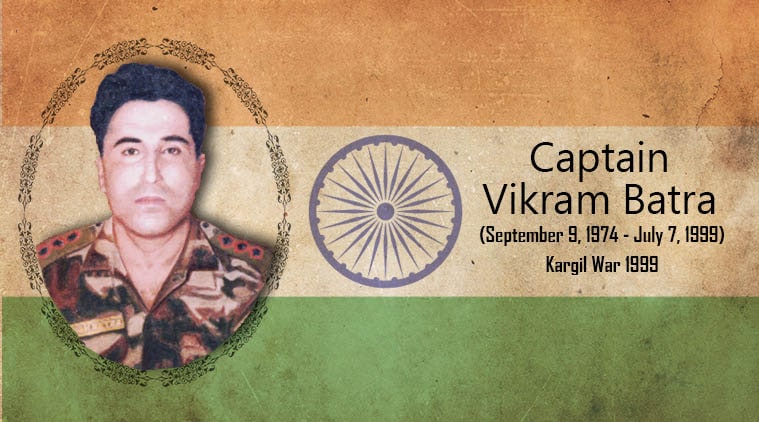
Four Param Vir Chakras were awarded to – Grenadier Yogendra Singh Yadav, Lieutenant Manoj Kumar Pandey, Captain Vikram Batra, and Rifleman Sanjay Kumar. And eleven Maha Vir Chakras were awarded.
Facts
The war was fought at a height of 8,780 feet.
The soldiers had to fight at a temperature of minus 10 degrees Celsius.
Operation Safed Sagar was the first time the Air Force conducted an operation at the height of 32,000 above sea level.
The pilots and engineers of the Air Force were given just one week to train.
As many as 527 Indian soldiers laid their lives and the Indian Army built a memorial wall with all the names of the soldiers who lost their lives.
Conclusion
The victory of the success of Operation Vijay meant a lot to India and all the Indians. Till now, every year Indians remember July 26th as the day of victory and remember the sacrifice their fellow Indians paid for the safety of all.
Kargil Vijay Diwas is celebrated every year on July 26th to remember the sacrifice of the Indian soldiers during the Kargil war of 1999 with Pakistan. The brave-hearted men of the Indian army had aided the Indian air force in defeating Pakistan on this very day 22 years ago.
Kargil War
The war was fought between India and Pakistan from May to July 1999 in the district of Kargil which is in Kashmir, along the Line of Control (LOC). It is also known as “Operation Vijay”. India launched “Operation Vijay” to clear the Pakistani infiltration in the Kargil sector. A huge part of this war was the Indian Air Force’s role in acting along with the Indian Army ground troops. Indian Air Force’s role was to flush out the regular and irregular troops of the Pakistan Army. This operation of flushing out the Pakistani troops was given the codename “Operation Safed Sagar” which means “White Sea”.
Cause of the War
This war was caused because the Pakistani troops infiltrated the Indian side of the Line of Control acting as Kashmiri militants. The Line of Control is the de facto border between India and Pakistan in Kashmir. In the starting stages of the war, Pakistan blamed Kashmiri militants for all the fighting but later they messed up and left some documents because of casualties which showed clear involvement of the Pakistani paramilitary forces. Adding to that, later a statement by the then Prime Minister of Pakistan, Nawaz Sharif, and the Chief of Army Staff, General Pervez Musharraf, confirmed the involvement of the Pakistani paramilitary which was being led by General Ashraf Rashid. With the help of Operation Vijay and Operation Safed Sagar, the Indian Army recaptured most of the area. Adding to that, Pakistan was facing international diplomatic opposition so they had to withdraw their forces as well.
This War is the most recent example of high-altitude warfare in mountainous terrain which for obvious reasons posed logistical challenges.
World’s Opinion
Pakistan was greatly criticized for instigating war. They claimed they did not start the war and that it was the Kashmiri militants but a lot of evidence contradicted their claim and nobody believed them, for one, the war was at heights where only trained soldiers could fight, and not some simple freedom fighters.
Pakistan’s Prime Minister, Nawaz Sharif had flown to the United Stated to ask the US President Bill Clinton for support, who showed his clear disapproval and asked him to withdraw his soldiers from the Indian territory.
The G8 nations at that time, Canada, France, Germany, Italy, Japan, Russia, United Kingdom, and the United States supported India. Even the European Union opposed Pakistan’s violation of the LoC. China who is known as a long-time ally of Pakistan also suggested retreating and settling the issue peacefully. Even ASEAN supported India.
Gallantry Awards
Four Param Vir Chakras were awarded to – Grenadier Yogendra Singh Yadav, Lieutenant Manoj Kumar Pandey, Captain Vikram Batra, and Rifleman Sanjay Kumar. And eleven Maha Vir Chakras were awarded.
Facts
The war was fought at a height of 8,780 feet.
The soldiers had to fight at a temperature of minus 10 degrees Celsius.
Operation Safed Sagar was the first time the Air Force conducted an operation at the height of 32,000 above sea level.
The pilots and engineers of the Air Force were given just one week to train.
As many as 527 Indian soldiers laid their lives and the Indian Army built a memorial wall with all the names of the soldiers who lost their lives.
Conclusion
The victory of the success of Operation Vijay meant a lot to India and all the Indians. Till now, every year Indians remember July 26th as the day of victory and remember the sacrifice their fellow Indians paid for the safety of all.
An aquarium is a container made of glass,or with glass walls.It permits watching the fishes swimming easily and for prolonged periods of time.It is a hobby which appeals to young and old and has opened up a flourishing business in all big cities.
And also,next to birds,fishes are perhaps the most colourful of animals.They are graceful in their shape,body form and movement.
Setting up an aquarium tank
Tank selection: The choice of an aquarium tank,depends largely on where it is to be housed,the extent of one’s enthusiasm and the money one wants to spend.While selecting a tank it is very important to note that it is of good construction.Shallow and wide tanks are preferable as they have more surface area to facilitate oxygenation through atmospheric contact.Further such tanks can accommodate more number of fishes.
Before setting up the tank,a suitable place has to be selected.In order to get a good view of both fishes and plants in an aquarium tank,the light should come obliquely.Hence, instead of the window sill,a place nearer to its side may be selected.To avail maximum sunlight an eastern exposure is preferable.The support or table for positioning the tank must be strong and in level.It is also essential to have a cover with a provision for installing lights and feeding.
If the tanks are purchased they should be checked for leakage.Their sides should be cleaned with 1% potassium permanganate solution, besides repeated washing with tap water.The next step in the setting up of an aquarium is the collection of sand that is necessary to make the bed at the bottom of the tank.The sand for the tank bottom can be collected from the sea shore or a river.This sand has to be washed to remove the dirt.It is advisable to put the sand in a shallow pan or aluminium vessel and heating it.The cleaned sand may be exposed in the bright sun.These processes ensure the killing of all bacteria or germs.The cleaned sand should be spread evenly in the tank bottom.Over the top layer of sand a thin layer of stone chips or very small pebbles may be placed.
Quality of water for Aquarium tank
Rain water free from contaminants or tap water is ideal for aquarium tanks.A tap water of domestic supply is likely to have chlorine which is harmful to fish.This water may be stagnated for about one or two days before use.If the water is hard it must be properly treated.The tank should be filled with the desired water without disturbing the bottom sand.
Planting:The aquarium tank after being filled with water can be planned with selected varieties of aquatic plants.The plants provide shade, shelter and sanctuary for fish.Besides decorating the aquarium tank,they also help in spawning and as food for certain fishes.The plants provide oxygen through photosynthesis.Over crowding of plants has to be avoided to ensure an adequate supply of oxygen to fishes.
Lighting:Light besides beautifying the aquarium helps in the photosynthesis of aquarium plants.Fishes also require light to trace their food.Further the light is known to influence the growth of fish.Strong sunlight destroys bacteria and keeps the tank healthy.For a moderate tank bulbs of 60 watts each may be lit for eight hours a day.It is better to use fluorescent lighting for promotion of plant growth and for even distribution of light.
Introduction of fish in an aquarium tank
The number of fishes suitable for stocking in an aquarium tank depends mainly on the surface area of the tank,it’s dissolved oxygen content and size of the fish.It is reported that 1 cm long fish may lead about 75 cm^2 of the surface area.The fishes are generally introduced two or three days after planting when the water would be clear and well oxygenated by plants.Before introduction into the Aquarium tank,the fish may be treated with 2 percent potassium permanganate solution to avoid parasitic attack.
Feeding: Fishes may be fed once or twice a day according to their preference and satiation.Excess food and detritus may be removed 30 minutes after feeding,by siphoning out using rubber tubing.If the level of the water gets reduced in course of time it should be restored by the addition of some rain water or chlorine free tap water.
A large number of fishes are cultured in aquaria for their beauty and graceful movements.The movement of colour fishes in an aquarium would certainly please the ailing and convalescing people.The aquarium may gladden one’s heart.








 Eduindex
You must be logged in to post a comment.