Atom Computing, a quantum computing firm, has announced the development of a quantum computing machine with unrivaled capabilities. The Phoenix system, which is in its initial iteration, can hold up to 100 qubits and is touted to be ‘exceptionally’ stable with lengthy coherence periods, allowing for high performance. Separately, the firm reported the receipt of approximately $15 million in Series A investment and the appointment of a new CEO.
With optical tweezers, Atom Computing’s Phoenix can capture 100 atomic qubits (of an alkaline earth element) in a vacuum container. Lasers are then used to alter the quantum states of atomic qubits. Atom Computing’s Phoenix, according to the firm, is ideal for complicated calculations since its qubits are exceptionally robust and have very long coherence times (over 100 ms).
Using optical tweezers to manipulate atomic qubits in a vacuum environment is not a novel concept. Although Honeywell sells similar devices, their quantum computers only have six qubits. According to Atom Computing, their laser technology and platform design enable the scalability of the number of qubits to 100 units. The firm must, however, demonstrate such a system.
“The development of quantum computing has advanced to the point that it is no longer a decade away. Because of our systems’ scalability and reliability, we are certain that we will be able to lead the industry to genuine quantum advantage “Atom Computing’s CEO and President, Rob Hays, stated. “We’ll be able to solve complicated problems that were previously impossible to handle with traditional computing, even with Moore’s Law’s exponential performance improvements and massively scalable cluster designs.”
Atom Computing announced that it has raised $15 million in Series A investment from venture capital companies Venrock, Innovation Endeavors, and Prelude Ventures, in addition to providing the first information about its Phoenix quantum computing system. The funds will go toward the construction of the Phoenix quantum computing system.
Rob Hays has also been named CEO and President of the firm. Hays previously worked at Intel for 20 years, establishing the company’s Xeon roadmap. Later in his career, he worked at Lenovo, where he established the company’s data center product and service strategy.
Poverty, the state of one who lacks a usual or socially acceptable amount of money or material possessions. Poverty is said to exist when people lack the means to satisfy their basic needs. In thiscontext, the identification of poor people first requires a determination of whatconstitutesbasic needs. These may be defined as narrowly as “those necessary for survival” or as broadly as “those reflecting the prevailingstandard of livingin the community.” The firstcriterionwould cover only those people near the borderline of starvation or death from exposure; the second would extend to people whose nutrition, housing, and clothing, though adequate to preserve life, do not measure up to those of the population as a whole. The problem of definition is furthercompoundedby the noneconomicconnotationsthat the word poverty has acquired. Poverty has been associated, for example, with poor health, low levels ofeducationor skills, an inability or an unwillingness to work, high rates of disruptive or disorderly behavior, and improvidence. While these attributes have often been found to exist with poverty, their inclusion in a definition of poverty would tend to obscure the relation between them and the inability to provide for one’s basic needs. Whatever definition one uses, authorities and laypersons alike commonly assume that the effects of poverty are harmful to both individuals and society.
Although poverty is a phenomenon as old as human history, its significance has changed over time. Under traditional (i.e., nonindustrial zed) modes of economic production, widespread poverty had been accepted as inevitable. The total output of goods and services, even if equally distributed, would still have been insufficient to give the entire population a comfortable standard of living by prevailing standards. With the economic productivity that resulted from industrialization, however, this ceased to be the case—especially in the world’s most industrialized countries, where national outputs were sufficient to raise the entire population to a comfortable level if the necessary redistribution could be arranged without adversely affecting output.
How does poverty affect children? Children usually depend on their parents or guardians. They don’t have the resources to pull themselves out of poverty. This makes them more likely to experience the problems common to poverty, including:
Illness due to unsafe water and poor sanitation
Malnutrition (for example, leading to stunted growth)
Lack of access to education (for example, leading to depressed future productivity)
Inadequate health care
Child poverty has other negative effects. It can trigger a cycle of poverty that lasts generations, increase the incidence of early marriage and raise psychological issues of stress and shame. However, with the right response, starting with education, the cycle of poverty can be broken.
What can I do to reduce poverty? You can find and support creditable organizations that are working to reduce poverty in the world’s poorest communities. There are a variety of organizations focused on different aspects of poverty. These can include access to health care and education services, labor rights and conditions, or by demographic such as women and children.
Supporting these organizations can involve everything from making financial donations, to volunteering, to advocacy work. With World Vision, there are several ways that you can get involved in the fight against poverty. You can donate through our Gift Catalogue, become a child ambassador, support a community and more.
Diabetes is a chronic (long-lasting) health condition that affects how your body turns food into energy. If you have diabetes, your body either doesn’t make enough insulin or can’t use the insulin it makes as well as it should. When there isn’t enough insulin or cells stop responding to insulin, too much blood sugar stays in your bloodstream. Over time, that can cause serious health problems. There isn’t a cure yet for diabetes, but losing weight, eating healthy food, and being active can really help.
Types of Diabetes
TYPE 1- Type 1 diabetes is thought to be caused by an autoimmune reaction (the body attacks itself by mistake) that stops your body from making insulin. Approximately 5-10% of the people who have diabetes have type 1. It’s usually diagnosed in children, teens, and young adults. If you have type 1 diabetes, you’ll need to take insulin every day to survive
TYPE 2- With type 2 diabetes, your body doesn’t use insulin well and can’t keep blood sugar at normal levels. About 90-95% of people with diabetes have type 2. It develops over many years and is usually diagnosed in adults (but more and more in children, teens, and young adults).
GESTATIONAL DIABETES- Gestational diabetes develops in pregnant women who have never had diabetes. If you have gestational diabetes, your baby could be at higher risk for health problems. Gestational diabetes usually goes away after your baby is born but increases your risk for type 2 diabetes later in life. Your baby is more likely to have obesity as a child or teen, and more likely to develop type 2 diabetes later in life too.
PREDIABETES- With prediabetes, blood sugar levels are higher than normal, but not high enough yet to be diagnosed as type 2 diabetes. Prediabetes raises your risk for type 2 diabetes, heart disease, and stroke.
Also diabetes runs in the family so if your parents or grandparents have diabetes, you have increased chances for getting diabetes. Personally diabetes runs in my family so my blood sugar is naturally high so the only way I can prevent getting diabetes is a healthy lifestyle, and decreased consumption of sugar.
Diabetes is a chronic (long-lasting) health condition that affects how your body turns food into energy. If you have diabetes, your body either doesn’t make enough insulin or can’t use the insulin it makes as well as it should. When there isn’t enough insulin or cells stop responding to insulin, too much blood sugar stays in your bloodstream. Over time, that can cause serious health problems. There isn’t a cure yet for diabetes, but losing weight, eating healthy food, and being active can really help.
Types of Diabetes
TYPE 1- Type 1 diabetes is thought to be caused by an autoimmune reaction (the body attacks itself by mistake) that stops your body from making insulin. Approximately 5-10% of the people who have diabetes have type 1. It’s usually diagnosed in children, teens, and young adults. If you have type 1 diabetes, you’ll need to take insulin every day to survive
TYPE 2- With type 2 diabetes, your body doesn’t use insulin well and can’t keep blood sugar at normal levels. About 90-95% of people with diabetes have type 2. It develops over many years and is usually diagnosed in adults (but more and more in children, teens, and young adults).
GESTATIONAL DIABETES- Gestational diabetes develops in pregnant women who have never had diabetes. If you have gestational diabetes, your baby could be at higher risk for health problems. Gestational diabetes usually goes away after your baby is born but increases your risk for type 2 diabetes later in life. Your baby is more likely to have obesity as a child or teen, and more likely to develop type 2 diabetes later in life too.
PREDIABETES- With prediabetes, blood sugar levels are higher than normal, but not high enough yet to be diagnosed as type 2 diabetes. Prediabetes raises your risk for type 2 diabetes, heart disease, and stroke.
Also diabetes runs in the family so if your parents or grandparents have diabetes, you have increased chances for getting diabetes. Personally diabetes runs in my family so my blood sugar is naturally high so the only way I can prevent getting diabetes is a healthy lifestyle, and decreased consumption of sugar.
“Dreams reach their final destination when executed.”
Amatullah P.
What exactly is Execution for you? A dictionary nerd would give the perfect definition of it but the ‘Dictionary of Business’ has a completely different meaning altogether. Let’s begin with the standard way and get you imagining!
Till now, we made you analyse the aftermath of building a company but this story will drag you into that internal process of thought!
It’s been a struggling journey all along. You are broke and want some source of income which is quite obvious. That is when your company is born because it has started occupying some space in your thought. Now, you plan towards executing its existence in the society. Of course, you don’t begin with that company motive in head. The first thought is always to go for a job wherein you receive ample experience from which you can learn and set up your own business. Let us consider that you are ready to begin your own company which means that you will now have to execute your motive. Executing here doesn’t simply mean initiating. Execution includes the proper steps you take into getting your company a success! Of course, you are not required to become an overnight news sensation. All you need to do is, just take the correct steps towards your company.
Execution means employing eligible employees for your company, being updated with the current market trends and coming up with suitable services, efficiently marketing your goods and services either through social media or any other network which is in exquisite demand during the given period of time! All the steps that you take which would guarantee success of your company come under the umbrella term Execution in business. Coming up with customer attractions like discounts, giveaways, buy 1 get 1 free offers are examples of perfectly executing your business in the smoothest way possible! You want people to buy your products and these attractions are sure to get the flies in the trap! Of course, the word ‘Trap’ shouldn’t be literally considered here because you don’t want to impose your services on people rather make them opt for those willingly and with love. That’s exactly why, Execution as a concept turns out to be handy!
The example of KFC has been discussed in the earlier article as well. How it started with the sale of chicken and became a widespread branch including more variety in food items which is the way they executed their business to make it run for a long long period of time. They considered the needs of people and came up with convenient offers to keep fuelling the company. Effective planning in short, is what we term as Execution. By this, you are not expected to lay down a prospectus with phenomenal ideas, all clashing into one another, making it difficult for you to decide! You are not expected to stretch a wide sheet of paper and jot down ideas from different sources. It’s because experience teaches you all but if you are a perfectionist then you are free to do so. There is no obligation in the negation! 😂
By now, you must have understood the key to effective functioning of a company which lies in the way you run it- Execution. Yes, execution is similar to initiation. Yes, execution is beginning the task but it also carries a deeper meaning wherein the way you begin that task, too is involved.
Yes, I know that Evolution is a world wide accepted topic but these points always about makes me doubt whether evolution is real or not
I want to first start by saying that evolution is a hypothesis made by charles darwin. In the late 18th century, naturalist George Louis Leclerc suggested that life on Earth was 75,000 years old and that men had descended from apes. Another step in evolution theory was taken by Erasmus Darwin, Charles Darwin’s grandfather, who said the Earth was millions of years old and that species did evolve, even if he could not explain how. When charles darwin had introduced this topic any information about where we had come was unknown so people believed darwins theory very easily and did not contradict it. the scientists dint even bother to verify the theory until now.
The greatest claim that i can introduce is that evolution has never been observed. Now people will say that we have never see god so how do we know god exists but the truth is that we just assume god to exist there is no proof just like evolution. As for fossils people just find the fossils of different animals and they are so desperate to find a relation they connect different fossils and call it evolution.
Everyone says that we have evolved from apes but where is the proof a couple of fossils of apes and humans proves nothing like that we can say we have evolved from mice after all they are 98% similar to men and apes are also similar around the same percentage.Creationists claim that evolution relies on certain types of evidence that do not give reliable information about the past.
A common objection to evolution is that it is simply too unlikely for life, in its complexity and apparent “design”, to have arisen “by chance”. It is argued that the odds of life having arisen without a deliberate intelligence guiding it are so astronomically low that it is unreasonable not to infer an intelligent designer from the natural world, Even darwin had realised that there are so many questions that could come up about his theory infact when the question about how such a complex organ like eye could be developed one scientist due to lack of proof had said that the eye was designed by god.
Also if we really come from apes then why are other apes alive around the world why dont they become human as well?
Yes, I know that Evolution is a world wide accepted topic but these points always about makes me doubt whether evolution is real or not
I want to first start by saying that evolution is a hypothesis made by charles darwin. In the late 18th century, naturalist George Louis Leclerc suggested that life on Earth was 75,000 years old and that men had descended from apes. Another step in evolution theory was taken by Erasmus Darwin, Charles Darwin’s grandfather, who said the Earth was millions of years old and that species did evolve, even if he could not explain how. When charles darwin had introduced this topic any information about where we had come was unknown so people believed darwins theory very easily and did not contradict it. the scientists dint even bother to verify the theory until now.
The greatest claim that i can introduce is that evolution has never been observed. Now people will say that we have never see god so how do we know god exists but the truth is that we just assume god to exist there is no proof just like evolution. As for fossils people just find the fossils of different animals and they are so desperate to find a relation they connect different fossils and call it evolution.
Everyone says that we have evolved from apes but where is the proof a couple of fossils of apes and humans proves nothing like that we can say we have evolved from mice after all they are 98% similar to men and apes are also similar around the same percentage.Creationists claim that evolution relies on certain types of evidence that do not give reliable information about the past.
A common objection to evolution is that it is simply too unlikely for life, in its complexity and apparent “design”, to have arisen “by chance”. It is argued that the odds of life having arisen without a deliberate intelligence guiding it are so astronomically low that it is unreasonable not to infer an intelligent designer from the natural world, Even darwin had realised that there are so many questions that could come up about his theory infact when the question about how such a complex organ like eye could be developed one scientist due to lack of proof had said that the eye was designed by god.
Also if we really come from apes then why are other apes alive around the world why dont they become human as well?
Respecting our society and our culture, no person takes divorce. It is said everywhere that the number of divorces in India is very less.
And the divorce rate in India is the lowest among all the countries in the world. Statistics show that only 1 in 100 Indian marriages result in divorce, which is much less than 50% of US marriages that break up. The divorce rate was even lower in India over the past decade, where only 7.40 out of 1,000 marriages were annulled.
Now, If we talk about the old times, then if we talk about our Hindu tradition, then marriage was considered as a relationship of seven births which never broke. There was something similar in the law but then an agreement came and permission was given to get a mutual divorce. And people started taking Divorce and after that our society started changing and the rate of Divorce started increasing. And what is due to family breakdown are given below.
Reasons for divorce
1. Extramarital affair:
Even after marriage, whether it is from the side of the husband or from the side of the wife, but even after marriage, there are affairs. Having a relationship with someone other than the wife, which causes a rift in the relationship of the husband- wife And their family comes on the verge of breaking up, this is the biggest reason for getting divorced.
2. Money:
Today, society has become so complex that it becomes difficult for one person to walk home. When many needs are not fulfilled due to lack of money, then the matter reaches till the fight. So money also becomes the reason for divorce to an extent.
3.Lack of communication:
There is no good communication between husband and wife. When there is no good talk between husband and wife, then there is a rift in the relationship and the relationship breaks down and reaches on the verge of divorce.
4.The constant argument between husband and wife:
There is a constant debate on any matter, whether it is small or big, but the debate keeps on going on. Because of understanding each other, accusations are being made against each other And this constant argument breaks their relationship, fills bitterness in their relationship, which breaks the relationship.
5.Unrealistic expectations:
Husband and wife have a lot of expectations from each other, and if they are not able to fulfill, then it leads to divorce.
6. Lack of feelings:
When husband and wife do not have feelings for each other have no emotion And when there is no feelings and no emotion in the relationship, then it seems that the relationship is being dragged And that is also a big reason for getting divorced in India.
7. Lack of equality:
It means not to give equal status to each other. That you do not want to give the status of equality to each other, whether it is from the side of the wife or from the side of the husband. You want to suppress your wife or your husband, due to which there is no equality between the two, due to which their relationship reaches to divorce.
8.They don’t want to marry each other but get married because of family
Husband and wife do not feel like getting married, come under the pressure of the family and get married under the pressure of relatives. Due to which this relationship is called a forced relationship And such relationships mostly do not work and get divorced.
9. Emotional abuses:
husband and wife are using each other a lot, because of understanding each other, they insult each other Emotional torturing each other and due to this excess, their relationship deteriorates and the matter reaches to divorce. And this is the 9th main reason due to which divorce cases are increasing in India.
10. Family:
Due to lack of good relations with each other’s family Because of this, the relationship between husband and wife also does not get good. And many types of disputes arise in the family, due to which the husband and wife do not like to live with the family and because of this also their relationship ends.
11.Ego
And apart from this, education is the reason why people are becoming self-reliant, which is very good for our society, but at the same time ego also comes in them And this ego starts coming between husband and wife relationship and the matter reaches till divorce And this ego starts coming between husband and wife relationship and the matter reaches till divorce.
Respecting our society and our culture, no person takes divorce. It is said everywhere that the number of divorces in India is very less.
And the divorce rate in India is the lowest among all the countries in the world. Statistics show that only 1 in 100 Indian marriages result in divorce, which is much less than 50% of US marriages that break up. The divorce rate was even lower in India over the past decade, where only 7.40 out of 1,000 marriages were annulled.
Now, If we talk about the old times, then if we talk about our Hindu tradition, then marriage was considered as a relationship of seven births which never broke. There was something similar in the law but then an agreement came and permission was given to get a mutual divorce. And people started taking Divorce and after that our society started changing and the rate of Divorce started increasing. And what is due to family breakdown are given below.
Reasons for divorce
1. Extramarital affair:
Even after marriage, whether it is from the side of the husband or from the side of the wife, but even after marriage, there are affairs. Having a relationship with someone other than the wife, which causes a rift in the relationship of the husband- wife And their family comes on the verge of breaking up, this is the biggest reason for getting divorced.
2. Money:
Today, society has become so complex that it becomes difficult for one person to walk home. When many needs are not fulfilled due to lack of money, then the matter reaches till the fight. So money also becomes the reason for divorce to an extent.
3.Lack of communication:
There is no good communication between husband and wife. When there is no good talk between husband and wife, then there is a rift in the relationship and the relationship breaks down and reaches on the verge of divorce.
4.The constant argument between husband and wife:
There is a constant debate on any matter, whether it is small or big, but the debate keeps on going on. Because of understanding each other, accusations are being made against each other And this constant argument breaks their relationship, fills bitterness in their relationship, which breaks the relationship.
5.Unrealistic expectations:
Husband and wife have a lot of expectations from each other, and if they are not able to fulfill, then it leads to divorce.
6. Lack of feelings:
When husband and wife do not have feelings for each other have no emotion And when there is no feelings and no emotion in the relationship, then it seems that the relationship is being dragged And that is also a big reason for getting divorced in India.
7. Lack of equality:
It means not to give equal status to each other. That you do not want to give the status of equality to each other, whether it is from the side of the wife or from the side of the husband. You want to suppress your wife or your husband, due to which there is no equality between the two, due to which their relationship reaches to divorce.
8.They don’t want to marry each other but get married because of family
Husband and wife do not feel like getting married, come under the pressure of the family and get married under the pressure of relatives. Due to which this relationship is called a forced relationship And such relationships mostly do not work and get divorced.
9. Emotional abuses:
husband and wife are using each other a lot, because of understanding each other, they insult each other Emotional torturing each other and due to this excess, their relationship deteriorates and the matter reaches to divorce. And this is the 9th main reason due to which divorce cases are increasing in India.
10. Family:
Due to lack of good relations with each other’s family Because of this, the relationship between husband and wife also does not get good. And many types of disputes arise in the family, due to which the husband and wife do not like to live with the family and because of this also their relationship ends.
11.Ego
And apart from this, education is the reason why people are becoming self-reliant, which is very good for our society, but at the same time ego also comes in them And this ego starts coming between husband and wife relationship and the matter reaches till divorce And this ego starts coming between husband and wife relationship and the matter reaches till divorce.
India is a diverse country with 29 states. In this blog, we are going to see 29 facts for 29 states, 1 fact for 1 state.
Jammu and Kashmir
World’s only floating post office is located at Dal lake, Jammu and Kashmir. It is the most attracting place for tourist. Every year lakh’s of people come to see this post office. It is the only post office in this world that floats on water.
Maharastra
Lonar Lake, also known as Lonar crater is located at Lonar in Buldhana District, Maharashtra. This lake was created by a meteorite collision. This lake has diameter of 1.2 kilometre and it is 137 feet deep.
Rajasthan
Karni Mata Temple in Rajasthan is one of the strangest temples in this world. This is a strange temple because, approximately 25,000 thousands of rats live there. It is also called the temple of rats. It is believed that Karni Mata manifests herself into rats. Devotes eat the prasad after the rat taste them.
Mizoram
Many shops in Mizoram are without shopkeepers. Means the shopkeepers keeps the products open in there store and keep a small box. Customers come and take the products and deposit the money in the small boxes. These shops run on a principle of trust. This tradition is known as Nghah-Lou-Dawr.
Uttarakhand
There is a lake in Uttarakhand called Roopkund lake. This is a mystery lake in Uttarakhand. It is also called as skeleton lake, at the bottom of this lake, you can find many skeletons there deposited under mysterious circumstances.
Tamil Nadu
You have seen in many movies that people walk on fire. You actually think it is not true. But in reality it is true, people in Tamil Nadu celebrate fire-walking ceremony, which is a honor to goddessDraupati Amman.
Andhra Pradesh
Have ever wondered will snow fall in south India. The answers is Yes, there is a beautiful village in Andhra pradesh called Lambasingi, it is the only place where snows falls in south India.
Gujarat
Do you know a single voting poll was set up for a man, named Mahant Bharatdas in Gujarat. He used to live alone in the Gir west forest. Unfortunately, he died in 2019.
Uttar pradesh
As, we all know Uttar pradesh is the most populated state in India. The population of Uttar pradesh is 20 crores, which is equal to 65 percent of US population. If Uttar Pradesh is country, then it would be ranked as 5th most populated country in the world.
Madya Pradesh
Madhya pradesh has the largest reserves of diamonds and coppers in India. It is also rich coal, manganese, bauxite and dolomite.
Assam
For everyone in India have only one national anthem whether he is from north or south. But people in Assam have there own anthem called ‘O Mur Apunar Dex’ written by famous poet Lakshminath Bezbaroa, this anthem was adopted in 1927.
Kerala
Kerala is most literate state in India with literacy rate 93.91%. Also It is the only state in India to have hospitals and banks in every village. Apart from this, it is the first state to receive rainfall in India.
This is just part-1, part-2 will come soon. That’s all from my side I hope you like it. Thank you.
India is a diverse country with 29 states. In this blog, we are going to see 29 facts for 29 states, 1 fact for 1 state.
Jammu and Kashmir
World’s only floating post office is located at Dal lake, Jammu and Kashmir. It is the most attracting place for tourist. Every year lakh’s of people come to see this post office. It is the only post office in this world that floats on water.
Maharastra
Lonar Lake, also known as Lonar crater is located at Lonar in Buldhana District, Maharashtra. This lake was created by a meteorite collision. This lake has diameter of 1.2 kilometre and it is 137 feet deep.
Rajasthan
Karni Mata Temple in Rajasthan is one of the strangest temples in this world. This is a strange temple because, approximately 25,000 thousands of rats live there. It is also called the temple of rats. It is believed that Karni Mata manifests herself into rats. Devotes eat the prasad after the rat taste them.
Mizoram
Many shops in Mizoram are without shopkeepers. Means the shopkeepers keeps the products open in there store and keep a small box. Customers come and take the products and deposit the money in the small boxes. These shops run on a principle of trust. This tradition is known as Nghah-Lou-Dawr.
Uttarakhand
There is a lake in Uttarakhand called Roopkund lake. This is a mystery lake in Uttarakhand. It is also called as skeleton lake, at the bottom of this lake, you can find many skeletons there deposited under mysterious circumstances.
Tamil Nadu
You have seen in many movies that people walk on fire. You actually think it is not true. But in reality it is true, people in Tamil Nadu celebrate fire-walking ceremony, which is a honor to goddessDraupati Amman.
Andhra Pradesh
Have ever wondered will snow fall in south India. The answers is Yes, there is a beautiful village in Andhra pradesh called Lambasingi, it is the only place where snows falls in south India.
Gujarat
Do you know a single voting poll was set up for a man, named Mahant Bharatdas in Gujarat. He used to live alone in the Gir west forest. Unfortunately, he died in 2019.
Uttar pradesh
As, we all know Uttar pradesh is the most populated state in India. The population of Uttar pradesh is 20 crores, which is equal to 65 percent of US population. If Uttar Pradesh is country, then it would be ranked as 5th most populated country in the world.
Madya Pradesh
Madhya pradesh has the largest reserves of diamonds and coppers in India. It is also rich coal, manganese, bauxite and dolomite.
Assam
For everyone in India have only one national anthem whether he is from north or south. But people in Assam have there own anthem called ‘O Mur Apunar Dex’ written by famous poet Lakshminath Bezbaroa, this anthem was adopted in 1927.
Kerala
Kerala is most literate state in India with literacy rate 93.91%. Also It is the only state in India to have hospitals and banks in every village. Apart from this, it is the first state to receive rainfall in India.
This is just part-1, part-2 will come soon. That’s all from my side I hope you like it. Thank you.
Some people appear to be born with a natural talent for creativity. If you believe you are not one of the fortunate few who drew from an apparently limitless creative wellspring, this does not imply you are destined to a life of the ordinary and expected.
Creativity is not a lightning bolt that hits infrequently and cannot be predicted; rather, it is more like a muscle. To enhance your talents, you must continually practise, engage, and improve on your creativity.
Something to keep in mind is that creation is not a silent process. Sitting back and waiting for creativity to come to you is a sure way to lose enthusiasm and become disheartened. Alternatively, concentrate on finding methods to improve your own creativity. Look for activities that excite you and assist you in focusing your attention and brain power on the work at hand.
Irrespective of your life goals, creativity is a valuable ability to have. While starting new hobbies such as learning to play an instrument, and particularly if you are interested in a job that requires creative thinking, creative thinking can come in useful.
Here are some ways to boost your creativity:
Continue to keep learning
A creative mind is an inquisitive mind, therefore continue to master new skills and indulge your inquisitive nature to learn more about the world and everything around it. After you’ve honed your creative abilities, it’s critical to constantly push yourself and learn new things to motivate you and help you improve. Whether you just make an attempt to read more in your own time or research into taking more formal classes, continuous learning is essential for increasing your creativity.
Take a breather
While creativity is a talent that you can teach yourself to be better at it is also vital not to put a lot of strain on yourself. Take a break if you’ve been sitting at your desk for hours, frantically seeking new ideas and answers and coming up empty-handed. Have a change of pace, clear your thoughts, and clear your head off the work at hand: when you return to it with newer perspectives, you could discover the inspiration you’ve been looking for sitting there in front of you all along!
Discover the settings that allow you to be most creative
Certain people are morning people and find that they are most creative and productive in the early hours of the morning, before most people have even gotten out of bed. Many thrive on the solitude of the night, whilst some may feel that the normal 9 – 5 is ideal for creative thought. The trick is to figure out what work settings fit the best for you – not just the hours you work, but also factors like location, lighting, music, and the tools/equipment you use.
Do something you enjoy doing
When you genuinely enjoy your profession, you will automatically be more motivated and passionate about solving problems and new ideas. It will be quite difficult to approach work that you continually putting off with a positive, creative mindset. Find an activity that allows you to be creative that you like, such as playing an instrument, drawing, or participating in a sport that totally immerses you in the moment.
Get some physical exercise
Exercising can be a fantastic method to cleanse your thoughts when you’ve been feeling stressed or under strain. Several researchers have demonstrated that exercise (even as little as 30 minutes of aerobic activity) helps us become more creative and improves brain function. Therefore, the next time you’re stuck in a creativity slump, throw on your running shoes, get your heart rate going up, and see if you can get your creative juices flowing more easily.
Some people appear to be born with a natural talent for creativity. If you believe you are not one of the fortunate few who drew from an apparently limitless creative wellspring, this does not imply you are destined to a life of the ordinary and expected.
Creativity is not a lightning bolt that hits infrequently and cannot be predicted; rather, it is more like a muscle. To enhance your talents, you must continually practise, engage, and improve on your creativity.
Something to keep in mind is that creation is not a silent process. Sitting back and waiting for creativity to come to you is a sure way to lose enthusiasm and become disheartened. Alternatively, concentrate on finding methods to improve your own creativity. Look for activities that excite you and assist you in focusing your attention and brain power on the work at hand.
Irrespective of your life goals, creativity is a valuable ability to have. While starting new hobbies such as learning to play an instrument, and particularly if you are interested in a job that requires creative thinking, creative thinking can come in useful.
Here are some ways to boost your creativity:
Continue to keep learning
A creative mind is an inquisitive mind, therefore continue to master new skills and indulge your inquisitive nature to learn more about the world and everything around it. After you’ve honed your creative abilities, it’s critical to constantly push yourself and learn new things to motivate you and help you improve. Whether you just make an attempt to read more in your own time or research into taking more formal classes, continuous learning is essential for increasing your creativity.
Take a breather
While creativity is a talent that you can teach yourself to be better at it is also vital not to put a lot of strain on yourself. Take a break if you’ve been sitting at your desk for hours, frantically seeking new ideas and answers and coming up empty-handed. Have a change of pace, clear your thoughts, and clear your head off the work at hand: when you return to it with newer perspectives, you could discover the inspiration you’ve been looking for sitting there in front of you all along!
Discover the settings that allow you to be most creative
Certain people are morning people and find that they are most creative and productive in the early hours of the morning, before most people have even gotten out of bed. Many thrive on the solitude of the night, whilst some may feel that the normal 9 – 5 is ideal for creative thought. The trick is to figure out what work settings fit the best for you – not just the hours you work, but also factors like location, lighting, music, and the tools/equipment you use.
Do something you enjoy doing
When you genuinely enjoy your profession, you will automatically be more motivated and passionate about solving problems and new ideas. It will be quite difficult to approach work that you continually putting off with a positive, creative mindset. Find an activity that allows you to be creative that you like, such as playing an instrument, drawing, or participating in a sport that totally immerses you in the moment.
Get some physical exercise
Exercising can be a fantastic method to cleanse your thoughts when you’ve been feeling stressed or under strain. Several researchers have demonstrated that exercise (even as little as 30 minutes of aerobic activity) helps us become more creative and improves brain function. Therefore, the next time you’re stuck in a creativity slump, throw on your running shoes, get your heart rate going up, and see if you can get your creative juices flowing more easily.
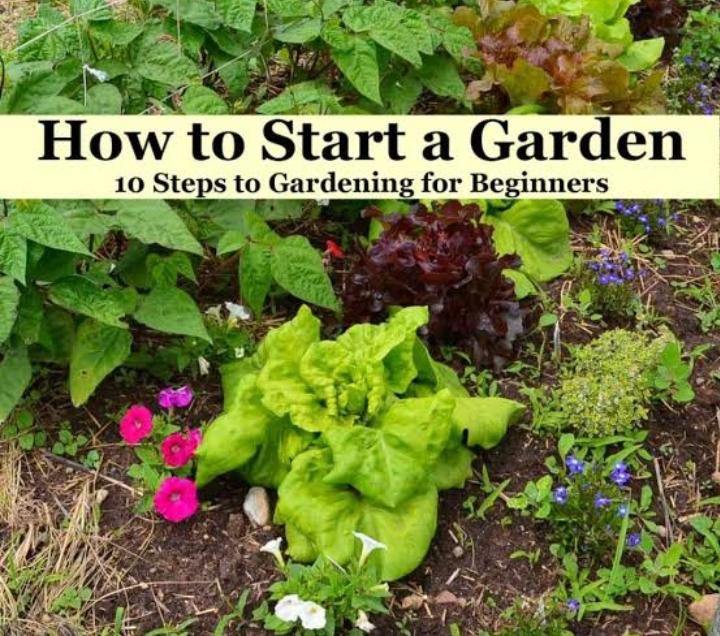
Dig into your new gardening adventure with this step‐one-step guide to help you make the most of your landscape.
Follow These 10 Essential Steps to Start Your First Garden Off Right:
Starting a garden is one of the most rewarding things you can do. Plant fragrant florals or start a vegetable garden (or both), and everyone can benefit from getting their hands a little dirty. But if you’re new to gardening, it can be difficult to know where to start. Still, it doesn’t have to be complicated; when you break your project down into manageable steps, you can ease into gardening at your own pace. And soon you’ll see the rewards of your efforts with beautiful views, delicious flavors, and colorful blooms. These steps will help you get started from scratch, but if you have something particular in mind, you could also use a garden plan to guide your design.
Consider What to Plant:
Do you want to plant a vegetable garden? An herb garden? A flower garden? If you choose vegetables and herbs for their contributions to your dinner table, plant ones your family will eat or be willing to try. If you want flowers for their flair, color, and fragrance, decide whether you want annuals that bloom most of the summer but need to be replanted each spring or perennials that have a shorter bloom time but return year after year. Each one, or even a combination, makes a stunning garden but will have different maintenance requirements. One bit of advice: Start small until you know what you’re getting into.
Pick the Best Garden Spot:
Almost all vegetables and many types of flowering plants need 6-8 hours of full sun each day. So you need to observe your yard throughout the day to figure out which spots receive full sun versus partial or full shade. Don’t worry if your yard is mostly shady: You won’t be able to grow tomatoes in shade, but many other plants (such as hostas and outdoor ferns) will do just fine. Check plant tags or ask the staff at your local garden center to help you understand out how much sun a plant needs.
If possible, pick a relatively flat spot for your garden because it’s more difficult, time-consuming, and potentially expensive to deal with a sloping garden. And make sure your new garden will have easy access to a water source.
Clear the Ground:
Get rid of weeds and sod in the area you plan to plant. If you want quick results (if it’s already spring and you want veggies this summer), cut it out. Slice under the sod with a spade, cut the sod into sections to make it easier to remove, then put it on your compost pile to decompose. For a longer term project, it’s easier to use the lasagna gardening method: Cover your future garden with five sheets of newspaper; double that amount if your lawn is Bermuda grass or St. Augustine grass. Spread a 3-inch layer of compost (or combination of potting soil and topsoil) on the newspaper and wait. It’ll take about four months for the compost and paper to decompose. But if you start in the fall, by spring you’ll have a bed ready to plant with no grass or weeds and plenty of rich soil.
Test and Improve Your Soil:
To learn more about your soil, have a soil test done through your county cooperative extension office. They’ll lead you through the procedure: How much soil to send from which parts of the garden and the best time to obtain samples. Expect a two-week wait for the findings, which will tell you what your soil lacks and how to amend it. You can also use a DIY kit that may not be as detailed, but will give you an idea of your soil’s nutrient levels.
Residential soil almost always needs a boost, especially in new construction where the topsoil may have been stripped away. In addition to being low in essential plant nutrients, your soil may also have poor drainage or be compacted. The solution is usually simple: Add organic matter. Add a 2- to 3-inch layer of compost, decayed leaves, dry grass clippings, or old manure to the soil when you dig or till a new bed. If you decide not to dig or are working with an established bed, leave the organic matter on the surface where it will eventually rot into humus (organic material). Earthworms will do most of the work of mixing humus in with the subsoil.
Prepare Your Planting Beds:
Loosening the soil in new beds before sowing or planting helps roots to grow more easily and access the water and nutrients they need. There are two methods: tilling with a mechanical device such as a rototiller or digging by hand. The first one is a good method when you need to mix in large amounts of amendments. However, it’s easy to overdo it, which will end up damaging soil structure. Digging is more practical for preparing small beds.
Either way, work the soil only when it’s moist enough to form a loose ball in your fist but dry enough to fall apart when you drop it. Digging when the soil is too dry is harder work, and you can damage the soil structure if it’s too wet. Use a spade or spading fork to gently turn the top 6-8 inches of soil, mixing in the organic matter from Step 4 at the same time. (Walking on prepared beds compacts the soil, so lay down plywood boards temporarily to evenly distribute your weight.
Pick Your Plants:
Some people pore over catalogs for months; others head to the garden center and buy what wows them. Either method works as long as you choose plants adapted to your climate, soil, and sunlight. You can even surf the Internet for plants to purchase. Here are a few easy-to-grow plants for beginners:
•Annuals: Calendula, cosmos, geraniums, impatiens, marigolds, sunflowers, and zinnias
•Vegetables: Cucumbers, lettuce, peppers, and tomatoes
Start Planting:
Some plants, such as pansies and kale, tolerate cold, so you can plant them in autumn or late winter. Tomatoes and most annual flowers, on the other hand, prefer warm temperatures, so don’t plant them until the danger of frost has passed in your area. Midspring and midautumn are good times to plant perennials.
Many annuals are easy to grow from seed sown directly in the garden. Be sure to read the seed packet for information about planting time, depth, and spacing. If you’re an adventurous beginner, get a head start on the growing season by sowing seeds indoors a few weeks before the last frost date. There are containers or flats designed especially for seedlings and seed-starting soil mixes available at garden centers. Follow seed packet instructions and place the containers on a sunny windowsill or under grow lights if you don’t have window space. Be sure to keep the seeds and seedlings moist but not wet, or they may rot.
An easier method of starting your garden is to buy young plants, called set plants or transplants. Dig holes in your prepared bed based on tag instructions. Remove plants from the container by pushing up from the bottom. If the roots have grown into a big ball (known as being root-bound), use an old fork or your fingers to untangle some outer roots before setting it into the hole. Pat soil into place around the roots, then soak the soil with water.
Water at the Right Time:
Seedlings should never be allowed to dry out, so water daily. Taper off as the plants get larger. Transplants also need frequent watering (every other day or so) until their roots become established. After that, how often you need to water depends on your soil, humidity, and rainfall, though once a week is a good place to start. Clay soil dries out more slowly than sandy soil, so you won’t need to water it as often. Sunny, windy conditions dry out soil more quickly than cool, cloudy weather. Still not sure? Feel the soil 3-4 inches below the surface. If it feels dry, it’s time to water. Water slowly and deeply, so the water soaks in instead of running off. To minimize evaporation, water in the early morning.
Protect Your Garden With Mulch:
To help keep weeds out and moisture in, cover the soil with a couple of inches of mulch. You won’t have to water as often, and by preventing sunlight from hitting the soil, you’ll prevent weed seeds from germinating. Choose from a wide variety of mulches, each with its own benefits, including shredded bark, straw, and river rock. If you use organic mulch, such as bark, compost, or cocoa bean shells (which smell good, by the way), it will nourish the soil as it decomposes. For a vegetable garden or bed of annuals, choose a mulch that decomposes in a few months. For perennials, use a longer-lasting mulch such as bark chips.
Maintain Your Garden Regularly:
As your garden begins to grow, help it reach its full potential by keeping up with garden chores. Water the plants before they wilt. Pull weeds before they go to seed. Get rid of dead, dying, and diseased vegetation. Banish destructive insects by picking them off the plant and dropping them into a bucket of sudsy water (such as tomato hornworms), hosing them off, or spraying on an insecticidal soap purchased at a garden center. Support tall plants (such as tomatoes) with a trellis, stake, or a tepee. Also, harvest vegetables as soon as they’re ready. And remember to stop and smell the…well, whatever it is you’re growing.
Dig into your new gardening adventure with this step‐one-step guide to help you make the most of your landscape.
Follow These 10 Essential Steps to Start Your First Garden Off Right:
Starting a garden is one of the most rewarding things you can do. Plant fragrant florals or start a vegetable garden (or both), and everyone can benefit from getting their hands a little dirty. But if you’re new to gardening, it can be difficult to know where to start. Still, it doesn’t have to be complicated; when you break your project down into manageable steps, you can ease into gardening at your own pace. And soon you’ll see the rewards of your efforts with beautiful views, delicious flavors, and colorful blooms. These steps will help you get started from scratch, but if you have something particular in mind, you could also use a garden plan to guide your design.
Consider What to Plant:
Do you want to plant a vegetable garden? An herb garden? A flower garden? If you choose vegetables and herbs for their contributions to your dinner table, plant ones your family will eat or be willing to try. If you want flowers for their flair, color, and fragrance, decide whether you want annuals that bloom most of the summer but need to be replanted each spring or perennials that have a shorter bloom time but return year after year. Each one, or even a combination, makes a stunning garden but will have different maintenance requirements. One bit of advice: Start small until you know what you’re getting into.
Pick the Best Garden Spot:
Almost all vegetables and many types of flowering plants need 6-8 hours of full sun each day. So you need to observe your yard throughout the day to figure out which spots receive full sun versus partial or full shade. Don’t worry if your yard is mostly shady: You won’t be able to grow tomatoes in shade, but many other plants (such as hostas and outdoor ferns) will do just fine. Check plant tags or ask the staff at your local garden center to help you understand out how much sun a plant needs.
If possible, pick a relatively flat spot for your garden because it’s more difficult, time-consuming, and potentially expensive to deal with a sloping garden. And make sure your new garden will have easy access to a water source.
Clear the Ground:
Get rid of weeds and sod in the area you plan to plant. If you want quick results (if it’s already spring and you want veggies this summer), cut it out. Slice under the sod with a spade, cut the sod into sections to make it easier to remove, then put it on your compost pile to decompose. For a longer term project, it’s easier to use the lasagna gardening method: Cover your future garden with five sheets of newspaper; double that amount if your lawn is Bermuda grass or St. Augustine grass. Spread a 3-inch layer of compost (or combination of potting soil and topsoil) on the newspaper and wait. It’ll take about four months for the compost and paper to decompose. But if you start in the fall, by spring you’ll have a bed ready to plant with no grass or weeds and plenty of rich soil.
Test and Improve Your Soil:
To learn more about your soil, have a soil test done through your county cooperative extension office. They’ll lead you through the procedure: How much soil to send from which parts of the garden and the best time to obtain samples. Expect a two-week wait for the findings, which will tell you what your soil lacks and how to amend it. You can also use a DIY kit that may not be as detailed, but will give you an idea of your soil’s nutrient levels.
Residential soil almost always needs a boost, especially in new construction where the topsoil may have been stripped away. In addition to being low in essential plant nutrients, your soil may also have poor drainage or be compacted. The solution is usually simple: Add organic matter. Add a 2- to 3-inch layer of compost, decayed leaves, dry grass clippings, or old manure to the soil when you dig or till a new bed. If you decide not to dig or are working with an established bed, leave the organic matter on the surface where it will eventually rot into humus (organic material). Earthworms will do most of the work of mixing humus in with the subsoil.
Prepare Your Planting Beds:
Loosening the soil in new beds before sowing or planting helps roots to grow more easily and access the water and nutrients they need. There are two methods: tilling with a mechanical device such as a rototiller or digging by hand. The first one is a good method when you need to mix in large amounts of amendments. However, it’s easy to overdo it, which will end up damaging soil structure. Digging is more practical for preparing small beds.
Either way, work the soil only when it’s moist enough to form a loose ball in your fist but dry enough to fall apart when you drop it. Digging when the soil is too dry is harder work, and you can damage the soil structure if it’s too wet. Use a spade or spading fork to gently turn the top 6-8 inches of soil, mixing in the organic matter from Step 4 at the same time. (Walking on prepared beds compacts the soil, so lay down plywood boards temporarily to evenly distribute your weight.
Pick Your Plants:
Some people pore over catalogs for months; others head to the garden center and buy what wows them. Either method works as long as you choose plants adapted to your climate, soil, and sunlight. You can even surf the Internet for plants to purchase. Here are a few easy-to-grow plants for beginners:
•Annuals: Calendula, cosmos, geraniums, impatiens, marigolds, sunflowers, and zinnias
•Vegetables: Cucumbers, lettuce, peppers, and tomatoes
Start Planting:
Some plants, such as pansies and kale, tolerate cold, so you can plant them in autumn or late winter. Tomatoes and most annual flowers, on the other hand, prefer warm temperatures, so don’t plant them until the danger of frost has passed in your area. Midspring and midautumn are good times to plant perennials.
Many annuals are easy to grow from seed sown directly in the garden. Be sure to read the seed packet for information about planting time, depth, and spacing. If you’re an adventurous beginner, get a head start on the growing season by sowing seeds indoors a few weeks before the last frost date. There are containers or flats designed especially for seedlings and seed-starting soil mixes available at garden centers. Follow seed packet instructions and place the containers on a sunny windowsill or under grow lights if you don’t have window space. Be sure to keep the seeds and seedlings moist but not wet, or they may rot.
An easier method of starting your garden is to buy young plants, called set plants or transplants. Dig holes in your prepared bed based on tag instructions. Remove plants from the container by pushing up from the bottom. If the roots have grown into a big ball (known as being root-bound), use an old fork or your fingers to untangle some outer roots before setting it into the hole. Pat soil into place around the roots, then soak the soil with water.
Water at the Right Time:
Seedlings should never be allowed to dry out, so water daily. Taper off as the plants get larger. Transplants also need frequent watering (every other day or so) until their roots become established. After that, how often you need to water depends on your soil, humidity, and rainfall, though once a week is a good place to start. Clay soil dries out more slowly than sandy soil, so you won’t need to water it as often. Sunny, windy conditions dry out soil more quickly than cool, cloudy weather. Still not sure? Feel the soil 3-4 inches below the surface. If it feels dry, it’s time to water. Water slowly and deeply, so the water soaks in instead of running off. To minimize evaporation, water in the early morning.
Protect Your Garden With Mulch:
To help keep weeds out and moisture in, cover the soil with a couple of inches of mulch. You won’t have to water as often, and by preventing sunlight from hitting the soil, you’ll prevent weed seeds from germinating. Choose from a wide variety of mulches, each with its own benefits, including shredded bark, straw, and river rock. If you use organic mulch, such as bark, compost, or cocoa bean shells (which smell good, by the way), it will nourish the soil as it decomposes. For a vegetable garden or bed of annuals, choose a mulch that decomposes in a few months. For perennials, use a longer-lasting mulch such as bark chips.
Maintain Your Garden Regularly:
As your garden begins to grow, help it reach its full potential by keeping up with garden chores. Water the plants before they wilt. Pull weeds before they go to seed. Get rid of dead, dying, and diseased vegetation. Banish destructive insects by picking them off the plant and dropping them into a bucket of sudsy water (such as tomato hornworms), hosing them off, or spraying on an insecticidal soap purchased at a garden center. Support tall plants (such as tomatoes) with a trellis, stake, or a tepee. Also, harvest vegetables as soon as they’re ready. And remember to stop and smell the…well, whatever it is you’re growing.











 Eduindex
You must be logged in to post a comment.