E-LEARNING – A SUBSTITUTE FOR CLASSROOM LEARNING ?

Background:-

  • E-learning is essentially the computer and network-enabled transfer of skills and knowledge.
  • E-learning applications and processes include Web-based learning, computer-based learning, virtual classroom opportunities and digital collaboration.

In Favor:-

  • Through E-learning we can study from anywhere at anytime. All we need is just a computer and internet connection.
  • E-learning costs less than classroom learning.
  • Through E-learning we can continue studies while doing full – time job.
  • We can repeat the lesson for many times if we didn’t understand the concepts.
  • We can easily update new information / inventions.
  • We can e-mail the doubts, and can be clarified.
  • Student takes whole responsibility of himself in learning process. So that he becomes more confident.
  • Students will become more flexible with computer, which is much essential in present generation.
  • We can do the course in the university of foreign countries without going to there.
  • Students can become comfortable in face-face to conversations which is very important in career.

In Against:-

  • Through classroom learning, we can clarify our doubts immediately.
  • Through classroom learning, we can increase our presentation skills.
  • Through classroom learning, we can know how to behave with colleagues and superiors.
  • Teachers in classroom can know whether students understand the topic or not, and explains the topic clearly using general examples.
  • Unemployment increases, in result our nation’s GDP decreases.
  • In the classroom, students will not only learn the subject but also interacts with other students and thereby make friends. Classroom influences the overall personality development of students. With e-learning, students will be deprived of this opportunity.
  • As students have to look at screens continuously, it can strain their eyes.
  • With e-learning, teachers may not be able to focus on all the students, which will be possible in the classroom. Teachers may not also understand whether students could grasp the concept or not.
  • The classroom environment is lively in nature, whereas sitting in front of a computer or smartphone to listen to the classes will be boring.
  • Even in this 21st century, some people do not have internet facility. So, e-learning deepens the inequality between rich and poor.
  • E-learning may not create as much seriousness as classroom learning. So, students may not be motivated enough to listen to the class.
  • Not all parents are technologically educated to help their children in case of any issues.
  • If the device has other apps such as youtube, students may become distracted. Several students are already suffering from smartphone addiction. So, parents may not feel safe to leave the children unsupervised.

WORK FROM HOME CULTURE

Theme:

  • Due to COVID-19 pandemic, many companies allowed their employees to work from home (WFH). Some employees are happy with WFH option, but some are not comfortable with it. There are pros & cons with WFH option for both employees and companies.

Advantages for Employees:

  • Travel time to and from the office will be saved.
  • They can spend more time with family. This is beneficial for many especially for parents of young children.
  • Even in modern times, women are expected to take care of home and children. With this responsibility, several women are forced to leave their jobs. The rise in WFH culture is a boon for them. With this more women can join in jobs again.
  • The location will not be a barrier. Employees can get a job, even if the office is located in another city.
  • If they want to get to know their office and colleagues better, they can attend the office at regular intervals like once a week.

Disadvantages for Employees:

  • The line between work and home will be blurred. In general, employees leave work tensions at office and come home to relax. But this opportunity will be lost and it may cause anxiety. If work and personal life are not balanced well, work will extend to longer hours. This can create WFH burnout.
  • Employees have to set up a work environment at home, which will incur extra expense. Even then, some people may not focus on work due to the lack of a professional atmosphere.
  • Some companies are giving so much work just because their employees are working from home.
  • Teamwork is a bit difficult while working from home.
  • Working from home from a long periods of time can hamper social and interpersonal skills.
  • Continuously staying at home may make some people feel isolated.
  • For some people, setting up office space at home may not be an option due to lack of extra space in the home.
  • Some jobs may require employees to be online during work hours and the continuous power supply may not be available to many.
  • It can be difficult to establish connections with new colleagues because the opportunity to meet and talk with them during coffee breaks will be lost.

Afghanistan- A war-torn nation

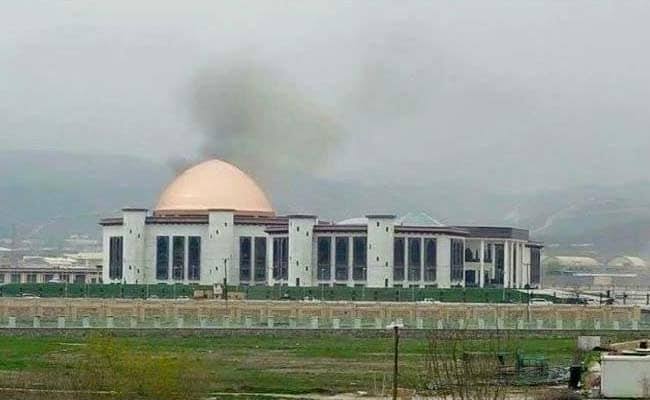
With Al-Qaeda militants carrying out coordinated attacks on American soil,also known as 9/11 Attacks and Taliban government refusing to hand over the main culprit behind these attacks ‘Osama Bin Laden’. A war was declared by US and it’s allies against terrorism and Afghanistan was invaded in 2001.

US tried it’s best to avoid the mistakes done by British & Russia (then USSR),it gained some success by driving out the Taliban government and killing the Terrorists. This whole operation have costed US more than $800 billions and more than 2300 soldiers lives. While on the other side, Afghan civilians had been caught in between this war and have suffered at the hands of both US & Terrorists (Al-Qaeda & Taliban) .

There is a popular saying about Afghanistan – ‘The Graveyard Of Empires’ for those who have tried to conquer it. Afghanistan is tough to rule, not only because of its terrain but also of the hostilities between the different tribes present there.

US Navy seals carried out a mission code-named ‘Operation Neptune Spear’ and killed Laden on 2nd May 2011 in Pakistan. US thought that by killing Laden they had achieved their goal but they were mistaken.

India aided in the overthrow of the Taliban-led government and has been the largest regional provider of humanitarian and reconstruction aid in the country. India have provided over $3 billion in assistance and every year it continues to do so.

Challenges ahead for Afghanistan and it’s neighbours

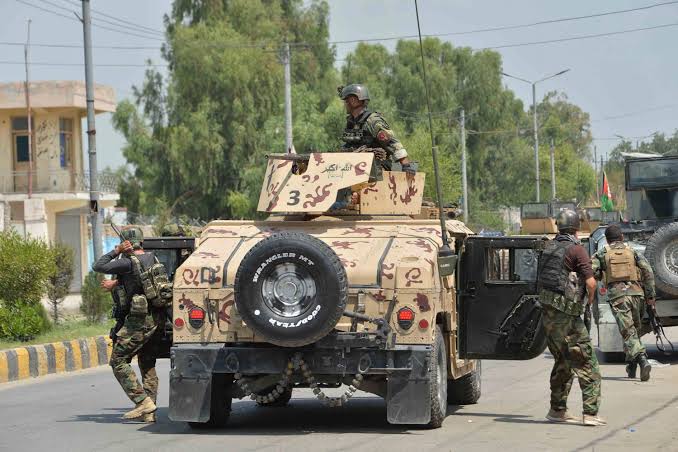
Taliban is slowly gaining pace and have formed alliance with other terror outfits to overthrow the present government. Civil war is not far, after US withdrawal. Fight is going on between Afghan security forces supported by civilians against the Taliban.

There’s little hope that Taliban will agree on the terms mentioned in peace talks . War-torn Afghanistan is now at the same stage before US invasion and onus now is on China,india,pakistan,Iran to maintain peace and provide stability in the Afghanistan.

BALANCE BETWEEN PROFESSION AND FAMILY

  • Professionalism and family can be described as the two sides of the same coin as both are equally important in one’s life.
  • Profession gives us an individual identity and financial security and family gives us an emotional security.
  • In today’s hitech busy lifestyle it’s becoming difficult to find the time to spend with his/her family. This is causing lack of peace of mind.
  • Without profession there will be no meaning of our life in present generation. Profession is not just to earn money but for our identity and self satisfaction.
  • With the constant increase in the cost of living, job is a necessity for many.
  • Career is important but not as much as relationships.
  • Professionalism is not all about being a workaholic. It is all about knowing your priorities and acting professionally both at the workplace and at home.
  • Being too much workaholic causes frustration and other psychological problems.
  • Some people are not spending with their family even in holidays, to earn more money. They should remember that money is just a tool for happiness. Money can’t give loved ones.
  • If we concentrate only on career, we may get fame and money but we loose many sweetest moments in our life.
  • some people are settling in abroad leaving the old parents here.
  • Some people are not concentrating on their children because they are giving much more priority to their job. So children may feel insecure and it may lead them in a wrong way.
  • To achieve goals, sometimes we have to stay away from family. For example our soldiers are staying away from their families to protect our country. 
  • If both parents are working it’s better to stay in joint family. So that children will be taken care by their grand parents or relatives.
  • Plan the weekends with family by keeping the office matters aside.
  • Avoid procrastination. Prioritize the things and plan effectively. This can give us free time.
  • If we spend some time with family, obviously there will be no need to go to the psychiatrist for stress relief.
  • The ultimate goal of everyone is being happy. So, We must make ourselves and our family happy.
  • Make a habit of saying ‘no’ to the unimportant matters and spend that time with family.
  • Inner peace plays a big role in balancing professionalism and family.
  • If we learn to balance between career and family, our children will learn from us.

Conclusion:-

        The important thing to balance profession and family is saying no to unimportant events. By planning everything before, anyone can balance both. Only one of these can’t fulfill a person. We should remember the fact that the ultimate goal of anyone is happiness and peace.

PRIVATE TRAINS IN INDIA – BENEFITS AND CHALLENGES

Theme:

  • In July 2020, Indian Railways has invited private companies to run 151 passenger trains on 109 train routes. Government of India is expecting Rs.30,000 crores private investment with this move. It was announced that the private trains will start from April 2023.
  • India’s first private train is Lucknow – New Delhi Tejas Express, which was inaugurated in October 2019.

Benefits:

  • In general, with limited investment, developing countries give priority to the welfare of the citizens over providing world-class facilities for them. So, it’s better to transfer that responsibility to private players to create a win-win situation for all.
  • Passengers will get access to world-class trains with better facilities, less transit time and more safety. It was announced that these private are going to use modern technologies and require low maintenance. This is a win-win situation for both the companies and passengers.
  • At present, the demand for tickets is more than supply. Many times, people are forced to be in the waiting list to travel in trains, without the certainty of the confirmation of seat. With private trains, supply can meet the demand.
  • Government of India said that these trains will be manufactured in India under the ‘Make in India‘ program. If that really happens, it will create many jobs and will uplift the economy, which is desperately needed in the present time because of job losses due to pandemic.
  • This can end the monopoly of Indian Railways. Private players can instill a competitive spirit and can bring more facilities at affordable rates.

Challenges:

  • This step can deepen the already existing inequality between rich and poor. Indian Railways clarified that the fares in the upcoming private trains will be in the range of flight tickets. So the poor and middle class may feel excluded.
  • With the use of modern technologies, many jobs can become redundant. So, private trains may not provide employment opportunities as many as the government trains provide.
  • If they are not manufactured in India as promised, coaches and other equipment will be imported. In that case, it will be a loss to India as it can lead to neo-colonization.
  • Even though the announced private trains constitute only 5% for now, there is no guarantee that it won’t be increased. If it is increased in the coming years, Indian Railways can suffer like BSNL & Air India, which were pushed to near bankruptcy due to the competition from private players.

Conclusion:

Private investment will help in modernising railways. It will give us access to better facilities, less transit time and more safety in trains. And it’s the government’s responsibility to regulate the prices and make the journey in them affordable. It’s also important to upgrade the remaining trains too, so that common man will not feel neglected and discriminated.

STORY- Thinking Out of Box

Once upon a time, a merchant named Sohan owed a huge sum of money to Rohan, a money lender. The time came when the merchant ran out of the last chance given to him to give the money back.

Sohan had a beautiful daughter. Rohan asked the merchant to give all the money back failing which he will marry his beautiful daughter.

Rohan was not at all good looking and was ill minded, so the merchant was in dilemma. Rohan proposed a new condition. There was a mix of black and white pebbles on the ground where they were standing. He will take two pebbles on both the hands, one will be white and the other will be black.

If the daughter correctly chooses the white pebble, then Rohan will write off all the debt and leave the marriage proposal too. But if she chooses the black pebble, he will write off the debt but will marry the daughter.

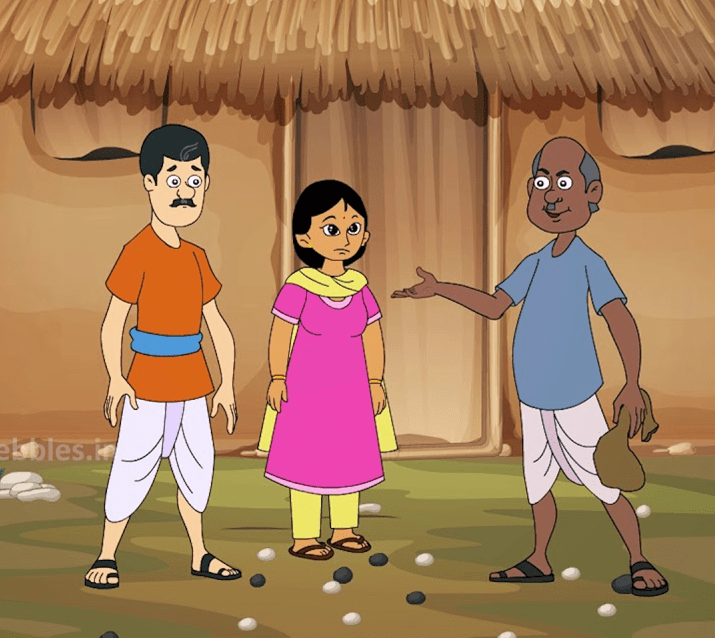
Rohan bent down to pick the pebbles from the ground and the daughter noticed that he took black pebbles on both hands.

The girl had three choices- to notify the same to her father which may provoke Rohan, take the black pebble and sacrifice her life or simply refuse to take the pebble which might land her father into trouble. But what she did totally surprise Rohan.

She took the pebble from his hand and ‘accidentally’ the pebble fell off from her hand to ground. She then asked Rohan to see which color pebble was left in his hand to identify the color she picked. Rohan had no other choice but to show the black color pebble in his hand and set them both free.

Moral

Sometimes, life offers a person a situations which not only demands hard work and perseverance but some creative thinking and presence of mind which saves the situation.

IMPACT OF COVID-19 ON ENVIRONMENT

Theme:

  • In December 2019, the first coronavirus case was detected in Hubai province of China. From then, it has spread to the entire world and has affected everyone’s lives and also the environment.

Impact of COVID-19 on the environment:

Positive impact:

  • Due to lockdown, vehicular pollution dropped and most of the industries are forced to halt work for a few months. So, as a result, pollution reduced drastically. Fewer carbon emissions improved air quality. People could see clear skies in many areas, which were hitherto couldn’t see it. This made us think about the alternatives to the things that we are doing to our earth in the name of development.
  • It is expected that global carbon emissions from the fossil fuel industry could fall by 2.5bn tonnes this year, that means a reduction of 5%.
  • People are forced to stay in their homes and animals & birds are roaming freely as if they are reclaiming their space in the earth. And damaged rivers are recovering since industries are halted and hence no industrial waste and also people couldn’t get out to throw waste into the rivers. Even though all this phenomenon is temporary, this is making us ponder over the effect of people on the biodiversity in the world.
  • Due to COVID-19, many people are working from home, which is impacting the environment positively.
  • Consumer demand for non-essential items has reduced temporarily. So, the production of luxury goods was affected negatively. This is a plus for the environment because materialism is one of the biggest reasons for the pollution.

Negative impact:

  • COVID-19 made people wear masks and gloves. Medical professionals are wearing Personal protective equipment (PPE) to protect themselves. Single-use masks, gloves & PPE are contributing to plastic waste. And the increasing number of COVID-19 patients is resulting in tons of medical waste. In most cases, this waste is not being discarded in a proper manner and is becoming a health hazard.
  • Due to declining revenues in the oil & gas industry, some companies are not prioritising to fix gas leaks and hence methane emissions are increasing.
  • Countries may put climate talks aside to uplift economy at a faster pace. Leaders may ignore deadlines of lowering carbon emissions, and may not concentrate on switching to green energy, because restoring the economies is the number priority for many countries right now.

Conclusion:

Even though the environment became better during our fight against COVID-19, this change is not a happy one. It is caused by millions of job losses. But this phase made us realize that nature can bounce back if we are willing to take steps. We need to put more focus on sustainable development.

DOES NEPOTISM EXIST IN BOLLYWOOD?

Background :-

  • Bollywood or the Indian film industry based in Mumbai, Maharashtra is the huge entertainment industry with over millions of viewers. A lot of fandom comes along with such a massive count of viewers. Along with fandom, controversies among actors are always the hot topics for media and the viewers as well. The recent dispute about nepotism or favoritism has set in like wildfire into bollywood recently.

Yes:-

  • Movie stars of Bollywood often launch their children with much ease in the industry. Such acts serve as the roots of the debate for nepotism. This kind of act has been going on since ages. Hence, nepotism evidently exists in Bollywood.
  • A heated up conversation had taken place on a talk show few months back. Celebrities like Karan Johar and Kangana Ranaut had participated in the discussion. Being a successful actress herself with films in her pockets, she openly addressed the issue of favoritism going on. She had declared Karan Johar, the producer as ‘the flag-bearer of nepotism’ on his own talk show. This incident sparked up the fact which persisted for so many long years.
  • The standards of Indian cinemas fall at times because of nepotism. Producers and directors are pushing star kids to launch in their movies, failing to judge their acting skills and screen presence. This leads to flop movies and a loss of quality and standards of the Indian cinemas.
  • Some talented, non biased outsiders like Ayushmann Khurrana, Priyanka Chopra, Randeep Hooda, Richa Chadda and many more had years of continuous struggle. They had spent many years for recognition of their work, critics and opportunities. This is where nepotism becomes prominent. Star kids on the other hand, have it all ready for them.
  • The reason why a number of stars do not get leveled up after they start acquiring recognition is favoritism. There are a very few Bollywood stars with international recognition. Bollywood is more interested in profits and box office hits that comes in with famous faces rather than brushing raw talents.

No:-

  • Nepotism among the stars can give them their first films. The rest of their carrier lies in their talent and hard work. So we cannot blame nepotism for their fandom completely.
  • Actors like Alia Bhatt, Ranbir Kapoor, Kareena Kapoor Khan and a few more has never failed to entertain their viewers and win their hearts in movies. They proved that nepotism cannot bring success and awards. Hard work, dedication and talent is equally important.
  • As kids of actors, directors and producers grew up watching their parents’ work. They tend to be naturally inclined to the same work. Hence, we cannot blame it as nepotism when they want enter into the bollywood industry.
  • Star kids also have an upbringing which is surrounded by the Bollywood industry. This gives them an advantage of getting adjusted and having a clearer overview of the industry. This might help them learn faster and do better which an outsider might not be able to.

Conclusion:-

  • Implementation of an effective, unbiased and transparent system of selecting talents can avoid nepotism.
  • Nepotism on the counterpart does not always help an actor to acquire fame. Being a star kid brings in a lot of judgmental eyes and controversial effect on the actor. This might be an additional burden for her/him at times.
  • Sometimes nepotism goes unnoticed. Fame comes only when the actor has some real talent up their sleeves and had put in loads of hard work.

SHOULD MOTHER TONGUE BE MEDIUM OF INSTRUCTIONS IN SCHOOL ?

Theme:

  • According to the ‘National Education Policy’ 2020, which was launched in July 2020, the mother tongue or local/regional is to be the medium of instruction for students till class 5. Compulsory education in mother tongue sparked debates throughout the country.

In Favor:

  • Language represents the culture and lifestyle of society. Education is to prepare for life in society. Learning about our culture and other subjects in a foreign language can lead to confusion and lack of clarity.
  • The biggest loophole in our education system the rote learning,  i.e. byhearting the subjects. Having English as the medium of instruction will worsen the situation.
  • There are many English medium schools in India. But most of their teachers have no skills to teach in English, risking the children’s studies.
  • A survey by Oxford University revealed that children, who have their mother tongue as medium of instruction outperform the children, who have a foreign language as the medium of instruction.
  • Having good command over one language helps a lot in learning other languages. But the children that are having another language as the medium of instruction aren’t getting command either on their mother tongue or on their medium of instruction.

Against:

  • Switching the medium of instruction in the middle of the school or later may put stress on students.
  • As the world is increasingly globalized, children should be taught in the international language, i.e. English. So that they can grab more opportunities.
  • English is an official language of India. And most Indians can speak English. So, it’s not a totally new language to us.

Facts:

  • The trend of English medium as the medium of instruction is increasing continuously not just in India but in many other countries.
  • This phenomenon is mostly in private schools than in public schools.
  • In India, parents are enrolling their children in English medium schools to provide them with a better future and also because of the prestige associated with English.

The situation in other countries:

  • China, Japan, Germany and many other countries are doing very well without English education.
  • ‘Philippines’ revised its education system and started to implement the mother tongue as the medium of instruction. And the result is the drastic increase in enrollments in rural areas.
  • ‘Guatemala’ witnessed decreased dropouts and increased literacy rates, when it implemented the mother tongue as the medium of instruction. This step reduced their education expenditure.
  • ‘Mali’ did the same and witnessed increased creativity and innovative skills in children.

Conclusion:

To learn English, it’s not required to learn all the subjects through English. To get a good grip on the subjects and their mother tongue, children should be taught in their mother tongue at least in the primary school level. But the option should be voluntary.

Unlocking the LOCKdown

This lockdown has unlocked things to a  great extent. Things have changed a lot admist lockdown. Lockdown has made us realise things throughout. As a part of my recent routine, I goof  off at my terrace. Just then I used to see birds , squirrels and other scaled down creatures unbound of their limits in my view. When people often say whether animal or birds it mustn’t be confined to a cage. I had  nasty reasons such as “I protect it “.
Now, during lockdown its ironic. This reminds me of something.
There used to be an idiom ” Idle mind is devils workshop “. The current situation made it sarcastic.

DATA LOCALISATION – PROS & CONS

Theme:-

  • At the 14th G20 summit, which was held in June 2019, India backed data localisation laws.
  • In April 2018, Reserve Bank of India (RBI) had issued a circular which mandated payment system operators to store entire data related to financial data only in India. The deadline for making these changes was 15th October 2018. Approximately 80% of the payment system operators including Google, Paytm, Amazon complied with the rule. But several companies including Visa, Mastercard missed the deadline due to confusion over data localisation rules.
  • In June 2019, RBI gave clarifications regarding the rules stating that in case the processing is done abroad, the data should be brought back to India in not later than 24 hours, and also the data should be deleted elsewhere. And in the case of cross-border transactions, a copy of data can be stored abroad.

What is Data Localisation:-

  • Data Localisation means storing the data within the territorial boundaries of the country.

Positive side:-

  • Data is considered as a ‘new form of wealth’. Generally, companies use data to understand the requirements of consumers and also to influence their behaviour. New products can be developed by analysing the data to meet the needs of consumers. So the data has an economic value. In general, developed countries are utilising this opportunity with their well-developed infrastructure. There is also a probability that the data will be misused in favour of the countries that store data. Moreover, India is a big consumer market for many foreign companies. So, India and other developing countries are realizing the economic value of the data and the importance of data localisation. With data localisation, domestic companies and the country’s economy will be benefited. And we can also ensure the security of the data.
  • While investigating crimes, there will be a need to access the payments data. If the data is stored abroad, it is very difficult to take the permission of that country for access to the data. This causes delays in solving crimes. If the data is stored here within our country, this problem will be avoided.
  • Data localisation laws result in setting up of multiple data centres locally. This will create many jobs and will help the country’s economy immensely. It will also drive innovation in the field resulting in low-cost solutions.
  • Data localisation is also important for data sovereignty, which means the data of the citizens should be owned by the respective governments and not by other countries.
  • We can also ensure data privacy by localising the data.

Challenges:-

  • At present, India does not have the well-developed infrastructure to ensure the security of data. On the other hand, developed countries already have an efficient infrastructure. So, rushing towards data localisation may not be a wise step. Because without efficient infrastructure, the data is prone to cyber attacks. And the risk is severe here because it is financial data. But as the laws are made, it is a big challenge to develop efficient infrastructure at a faster pace.
  • Storing data in India means higher operational costs for payment system operators. Because in other countries they have cheaper alternatives. And also for cross-border transactions, they have to store the data in two places, which increases costs. There is a probability that these extra costs may pass on to the consumers.
  • And there is no guarantee that they will delete the data elsewhere. They may continue to store and analyse the data for their own advantage.
  • We are in a globalised world. At present, the world is running on the free flow of people, goods, services and data. Data localisation laws seem to be a part of protectionist policies, which is a threat to the free flow of data.
  • The base of the internet is the free flow of data. Data localisation is also a threat to the main essence of the internet.
  • US is against to the data localisation laws. Recently at G20 summit, Donald Trump, the president of US spoke against data localisation. Its stance is natural because it increases the operational costs of US companies. India-US bilateral relations are important for both countries because we are intertwined in export and import of IT services, professionals and goods etc. So, imposing data localisation laws without threatening the Indo-US relations is another challenge.
  • Innovation thrives when there is no much financial burden. And hence data localisation laws may threaten the innovation attempts in the digital payments industry.
  • If the processing of the payment transactions is done in another country, that country may ask these companies to submit the data. So, asking them to delete the data in 24 hours may interfere with the laws of the country where the processing is done.
  • Data localisation may result in government surveillance of its citizens.
  • It is also against intellectual property rights because they use their intelligence to form systems that can benefit from the data it generates, but in the end, they are deprived of these benefits and someone else may use this data in their favour.

Nehru report 1928

The Government of India Act 1919 was essentially transitional in character. Under
Section 84 of the said Act, a statutory Commission was to be appointed at the end of ten
years to determine the next stage in the realization of self-rule in India. Accordingly, the
Simon Commission was sent to the Sub-continent under the command of Sir John Simon.
All members of the commission were British. This was regarded as highly insulting to the
Indians and immediate protest was raised from all the important political parties. When
the Simon Commission arrived, the local masses welcomed it by with slogans of “Go
back Simon!”. All the major political parties of Sub-continent, except the Shafi League of
Punjab, boycotted the Simon Commission.
After the failure of Simon Commission, there was no alternative for the British
government but to ask the local people to frame a constitution for themselves. They knew
that the Congress and Muslim League were the two main parties and that they both had
serious difference of opinions. Birkenhead, Secretary of Sate for Indian Affairs, threw the
ball in the Indian politicians’ court, and asked them to draw a draft of the forthcoming Act
on which both Hindus and Muslims could agree. The Indian leaders accepted the
challenge and for this purpose, the All Parties Conference was held at Delhi in January

  1. More than a hundred delegates of almost all the parties of the Sub-continent
    assembled and participated in the conference. Unfortunately, the leaders were not able to
    come to any conclusion. The biggest hindrance was the issue of the rights of minorities.
    The second meeting of the All Parties Conference was held in March the same year, but
    the leaders still had their differences and again were not able to reach a conclusion. The
    only work done in this conference was the appointment of two subcommittees. But due to
    the mutual differences between Muslims and Hindus, the committees failed to produce
    any positive result.
    When the All Parties Conference met for the third time in Bombay on May 19 1928,
    there was hardly any prospect of an agreed constitution. It was then decided that a small
    committee should be appointed to work out the details of the constitution

Do you know why revolt of 1857 Failed?

Reasons for the revolt: the new revenue policy impoverished the peasants were
impoverished; the English policies of trade and commerce ruined the Indian Industries.
Hence a strong resentment developed among the artisans such as the weavers,
blacksmiths and carpenters. The English interfered with the customs and traditions of the
people by enacting laws such as prohibitions of sati, permitting widow marriages etc.
They upheld the right of inheritance of those who had forsaken their religion and had
embraced Christianity. Such laws led the orthodox people to believe that the alien
government is out to destroy the very foundations of their way of life. Hence, they too
resented the English rule.
From 1848 to 1856 Lord Dalhousie had annexed many Indian states such as Satara,
Jhansi, Nagpur and some other states by refusing to recognize the right of inheritance of
the adopted sons of those rulers. Pensions of the heirs of some deposed rulers were
discontinued. They, too, developed a strong resentment against the tyrannical British rule.
Discontent among the Indian soldiers: the majority of the Indian soldiers in the
Company’s army came from peasant families. They were deeply hurt to see their family
groaning under the insufferable burden of poverty. These soldiers were treated
contemptuously by their English Officers. Their allowances also were gradually reduced.
Because of all these reasons, acute discontent prevailed among the Indian soldiers.
Against such a background came to the fore the episode of the greased cartridges. In
1856, new long range Enfield rifles with greased cartridges was given to the soldiers.
While loading the rifles, the greased covering of the cartridges had to be bitten off. The
news that this grease contained the fat of cows and pigs infuriated the soldiers beyond
measure.
The outbreak of the uprising: The first explosion of the uprising took place on the 29th
of March 1857 in the cantonment at Barrackpore. As the military parade began, a soldier
name Mangal Pande refused to use the new cartridges and exhorted other soldiers also
not to do so. When the English Officer of the battalion tried to force the soldiers to use
the cartridges, Mangal Pande fired at him. Mangal Pande was arrested and hanged. This
news spread likes wildfire in the other military cantonments. On the 24th of April 1857,
Indian soldiers of the cavalry unit at Meerut flatly refused to use the new cartridges. They
were all thrown into prison. Because of this, the whole battalion of Indian soldiers at
Meerut rose in revolt on the 10th of May 1857. They advanced to Delhi, which was
barely 64 kilometers away. On the way, thousands of common people joined them. As
they reached Delhi, the Indian soldiers in Delhi cantonment made common cause with the
rebels. All these soldiers appealed to the Mughal Emperor Bahadur Shah Zaafar to lead
the revolt. They proclaimed Bahadur Shah the Emperor of India.

The scope of the revolt: within no time the revolt spread to all parts of North India.
From Bihar to Rajputana, all the India soldiers in the Company’s army contonments
raised a standard of rebellion. Lakhs of common people joined them. Within a period of
four months all the territories of East Punjab, areas around Delhi, Rohilkhand,
Bundelkhand, Allahabad, Avadh, Western Bihar were engulfed by the fire of rebellion.
The British power collapsed in those areas. However, territories south of the river
Narmada were not affected by the revolt to great extent, though in Nagpur, Satara,
Kolhapur and some other aces, there were some sporadic incidents of revolt. Local like
the uprising of the Bhils in Khandesh under the leadership of Kharjasingh and the one in
the Satpuda area under Shankarshah were nipped in the bud by the English.
Leadership of the revolt: Bahadur shah, the aged Mughal Emperor, was the leader of
the revolt were Peshwa Nanasaheb, Tatya Tope, Rani Laxmibai, Begum Hazrat Mahal,
Maulavi Ahmedulla, Kunwarsingh and the Mughal general Bakht Khan. The revolt
assumed serious proportions especially in Delhi, Kanpur, Lucknow, Jhansi, and the
western parts of Bihar.
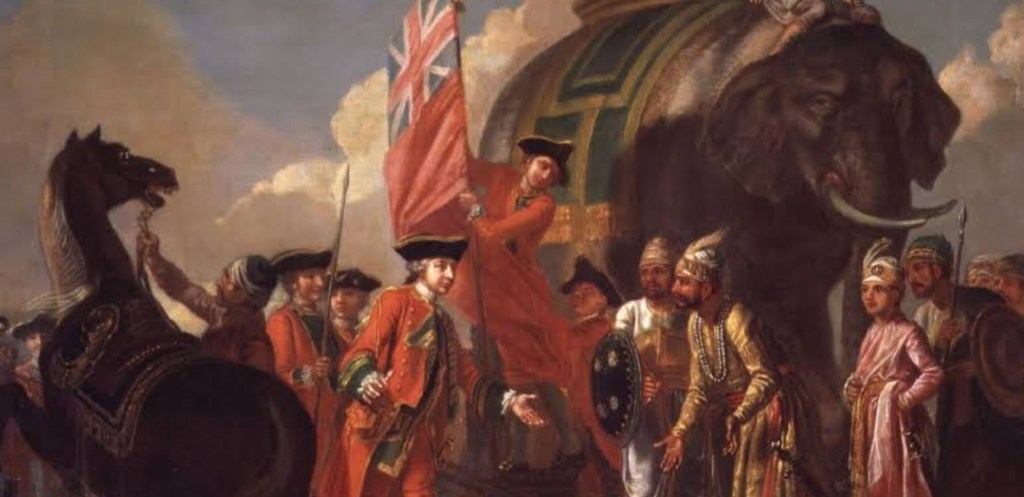
In September 1857 British captured Delhi. They arrested Bahadur Shah and killed his
sons. In the region around Kanpur, Nanasaheb Peshwa and Tatya Tope revolt led the
revolt. In West Bihar the Zamindar of Jagdishpur, Kunwarsingh, along with his sons gave
a determined fight to the English while in Rohilkhand, Maulavi Ahmedulla inspired the
people to rise against them.
The revolt is crushed: The rebels and their leaders fought the English bravely but within
a short time, the English recovered from the first shock of the unexpected revolt. Within
six months the picture began to change. The English recaptured all-important places that
they had lost to the rebels. By the end of 1858,leaders like Rani Laxmibai Kunwarsingh;
Ahmedulla fell fighting against them. Bahadur Shah was deported to Rangoon.
Nanasaheb and Begum Hazrat Mahal took refuge in Nepal. Tatya Tope, however,
continued his struggle against the English for ten long months, but ultimately he was
betrayed. The English hanged him. The end of 1858 mercilessly crushed the revolt by the
English.
Why did the revolt fail? : The revolt of 1857 was an event of great magnitude. But it
didn’t end the English power in India. On the side of the rebels, there was no centralized
leadership and hence there was no co-ordination of planning and action. The rebels didn’t
have sufficient arms. Moreover, the educated Indians and rulers of majority of the States
kept themselves aloof from the struggle. The revolt didn’t spread to South India. The
English had with them centralized leadership, a trained and disciplined army, modern
weapons and experienced commanders. They also controlled the means of transport.
Therefore, the Indians couldn’t resist them successfully.
The effects of the revolt: The revolt of 1857 had far reaching effects. It made the rulers
of Britain realize the intense disaffection of Indians against the English rule. They were
convinced that the power of the British in India wasn’t safe in the hands of the Company.
Hence, the British parliament made a law in 1858 dissolving the East India Company and
taking over the administration of India directly into their hands.

INDIA CHINA RELATIONS

Theme :-

  • After Pulwama terror attacks, India requested United Nations to list Masood Azhar as a global terrorist. Even though 14 countries of UNSC are in favor of the proposal, China blocked the request using its veto power. That is the reason, Indo-China relations is in news again. 

Main disputes between India & China :-

  • India & China have border issues mainly at Aksai Chin & Arunachal Pradesh. Border dispute is the main reason for Indo-China war 1962, and the recent Doklam standoff in 2017.
  • China is maintaining good relations with Pakistan. It is building most advanced naval warships for Pakistan, and it is also selling weapons to Pakistan. As a result of this, India has national security concerns. And as a part of Belt & Road initiative, China is building infrastructure projects in Pakistan, which is called as China-Pakistan Economic Corridor, CPEC – This CPEC is passing through Pakistan Occupied Kashmir. India is not ok with it because of security concers. So this became another dispute between India & China. 
  • There are water issues between the both countries. China started projects to divert Brahmaputra water from flowing into India. This is one of the major threats to India from China. 
  • China is objecting to list masood Azhar as a global terrorist. This is because China fears that if it agrees for this, the next step of India can be to seek labelling of Pakistan as state sponsor of terrorism. As China has economic interests in Pakistan, it will not accept that proposal. And that is the reason even though China is against to terrorism, it is not accepting to list Masood Azhar as a global terrorist. But China should understand that its stance on Masood Azhar issue is not just a threat to international counter-terrorism efforts, but also damages its international image, because the whole world is accepting India’s concerns on the threat of terrorism. 
  • China is blocking India from entering into Nuclear Suppliers Group. This is another issue between India & China. 
  • There is a huge trade deficit between India & China. In the fiscal year 2017-18, there is 46.2 billion dollar trade deficit in China’s favor. 
  • China is trying to encircle India by establishing its military and commercial activities in Indian ocean, which is famously called as String of pearls theory. This string of pearls is a threat to India’s national security. 
  • India is trying to restrict China’s monopoly over South China sea, because it is one of the main trade routes. Thereby South China sea became one of the main issues between India & China. 

 On the positive side :-

Despite having differences, India & China has been maintaining good relations. Even in ancient times, there was a good relationship between India & China. This can be evident in the presence of Buddhism in China. Buddhism spread from India to China. If we analyse the relationship between both countries in the modern times.

  • India is the first non- communist country to recognize communist China in 1950. 
  • For peaceful co-existence, both countries signed Panchsheel agreement in 1954. Panchsheel means Five principles of peaceful co-existence.
  • India & China share common interests like eliminating terrorism, developing Asia etc. That is the reason both countries are part of regional co-operation organizations such as BRICS, Shangai Co-operation organization, G20 etc. 
  • Both countries have good trade relations. And to improve bilateral relations, India & China took part in an informal meeting at Wuhan in April 2018, which is called as Wuhan summit. This was an informal meeting between 2 leaders of the countries to reach a better consensus on the present disputes between both countries. 

LPG IN INDIA

LPG : LIBRELISATION ,PRIVATISATION AND GLOBALIZATION IMAPACT ON INDIA

From independence till the later part of the 1980s, India economic approach was mainly based on government control and a centrally operated market. The country did not have a proper consumer oriented market and foreign investments were also not coming in. This did not do anything  good to the economic condition of the country and as such the standard of living did not go up. In the 1980s ,stress has given on globalization ,privatization and globalization of the market by the congress government under Rajiv Gandhi .

In  his government tenure ,plenty of restrictions were abolished on a number of sectors and the regulations on pricing were also put off-effort was also put to increase the condition of the GDP of the country and to increase exports.

Even if the economic liberalization  policies were undertaken ,it did not find much support and the country remained in its backward economic state. The imports started exceeding the exports and the India  suffered huge balance of payment problems. The International Monetary Fund (IMF) asked the country for the bailout loan . The fall of the soviet union, a main overseas business market of India, also aggravated the problem . The country at this stage was in need of an immediate economic reform.

It was in the 1990s,that the first initiation towards globalization and economic liberalization was undertaken by Dr. Manmohan Singh , who was the finance minister of India under the congress government headed by P.V. NARSHIMHA RAO. This is perhaps the milestone in the economic growth if India and it aimed towards welcoming globalization. Since , the liberalization plan , the economic condition gradually  started improving and today India is one of the fastest growing  economics in the world with an average yearly growth rate of  around 6.7 per cent. Narasimba  Rao had played a key role in implementing these reforms policies,

  • Liberalization

Liberalization refers to the slacking of government regulations. The which began since july24,1991. In the other words we can say that liberalization means elimination of state control over economic activities, It implies greater autonomy to the busines enterprises in decision-making and removal of government interference .  It  was believed that the market forces of demand and supply would automatically operate to bring about greater efficiency and the economy would recover. This  was to be done internally by introducing reforms in the real and financial sectors of the economy and externally by relaxing state control on foreign investments and trade.

Its objectives

  • To boost competition between domestic businesses and to promote foreign trade and regulate imports  and exports.
  • Improvements of technology and foreign capital ,to develop a global market of  a country and to reduce the debt burden of a country.
  • PRIVATIZATION

Privatization refers to the  participation of private entities in businesses and services and transfer of ownership from the public sector to the private sector as well.

Privatization is the transfer of control of ownership of economic resources from the public sector to the private sector . It means a decline in the role of the public sector as there is a shift in the property  rights from the state to private ownership .The public sector had been experiencing various problems  , since planning such as low efficiency and profitability ,mounting losses, excessive political interference , lack of autonomy ,    labour problems and delays of  in completion of projects.

  • GLOBALIZATION

Globalization essentially means integration of the national economy with the world economy. It implies a free flow of information , ideas , technology , goods and services , capital and even people across different countries and societies. It increases connectivity between different markets in the form of trade, investment and cultural exchanges.

The  concept of globalization has been explained by the IMF as the growing economic interdependence of countries worldwide through increasing volume and variety of cross border transactions in goods and services and of international capital flows and also through the more rapid and widespread diffusion of technology ,