Track2Training (AN INITIATIVE FOR DEVELOPMENT) IS WORKING ON THE DEVELOPMENT OF THE RURAL ECONOMY THROUGH REVIVAL OF THE AGRICULTURE AND COTTAGE INDUSTRY. Creating content for social benefits and sharing knowledge about government schemes and programs for development.
Track2Training (An Initiative for Development) is an active NGO in the city. Hariyali has been carrying out need based welfare and integrated programs of development for rural poor and needy especially belonging to marginalized and under privileged sections. The NGO primarily focus on the development of the rural economy through revival of the agriculture and cottage industry.
Track2Traing is one of India’s largest independent and youth volunteer non-profit organisations.
Bhumi was founded on 2013 by a small group of professionals with a strong passion to change society today and build a better India for tomorrow. The organisation provides youngsters a platform to serve the society and bridges the gap between the educated and the uneducated.
Our volunteers educate and mentor children from orphanages, slum and village community centres across the country to give them a better future, which will benefit them as well as our country. The learning experience is mutual – our volunteers gain perspective and the experience to mould themselves into tomorrow’s leaders.
ORGANISATION
The organization Hariyali operates through committed and dedicated local women and men workers who have developed support and trust with the communities. The operational strategy includes empowering the poor to become self reliant through continuous experience sharing workshops, exposure visits, skill building and training. Orientation will also be given on livelihood support health, education, biotechnology, animal husbandry and sanitation. The effort shall be made to enhance income through the use of farming systems technology. The organization strongly believes in working with others and learning from others experience and networking with government and local groups.
Sustainable development in the project shall be emphasized by :
Empowering communities through community mobilization.
Better opportunities for livelihood improvement.
Developing village based institutions.
Wider dissemination of lessons learnt and traditional technologies.
Experiences sharing workshops with different stakeholders.
To generate income of poor rural people by their traditional works like the field of Agriculture / Animal / husbandry / Forest produce value addition etc.
Our philosophy states that India lives in her villages and we cannot rise to our true potential as a country without a fundamental transformation in the lives of people in rural India. At the Swades Foundation we believe that the partnership of rural India with corporates, young urban India, the Government and other foundations is the key to create a permanent and irreversible change for good.
We aim at bringing together the best global practices, corporate thinking and accountability, the highest standards of corporate governance to create a model of sustainable development, which is a benchmark in the industry and can be replicated at scale. We strongly believe in collaboration and working with multiple partners including other foundations, NGOs, corporates and the government.
Our Mission is to empower 1 million rural Indians every 5 years, creating a permanent, irreversible change for good. We believe in a holistic 360-degree development with a focus on six verticals – Community Mobilisation, Water & Sanitation, Agriculture & Dairy, Livelihood, Education and Health & Nutrition. This model empowers our communities with the capability of creating choices for themselves and their families, allowing them to transform their own lives and ensuring a permanent and irreversible change for good
Our strategy is to Engage, Empower, Execute and Exit: To engage rural communities with corporates, young urban India, not-for-profit organizations and governments and empower our communities to execute programs that transform their own lives, enabling us to exit and allowing them to serve as role models and change agents for the rest of the country.
Our organization has well established Office, Training centre & Vehicles.
EQUIPMENT :
1. Telephone, Fax Machine ,Computers and Printers available.
2. LCD Projector time for video visuals trainings to peoples.
3. Having documentary films on watershed, sanitation, education, health, veterinary, agricultural fields.
Evolution was in the air and developmental thinking can be found in a variety of different fields.
The word evolution was borrowed from Latin ēvolūtiō, ēvolūtiōnis, which means , “the act of unrolling, unfolding or opening .
Evolution is a process full of complexity . Evolution is a principle of internal growth . It shows not merely what happens to a thing but also what happens within it .
Their term evolution is borrowed from the biological science of sociology ,Frome the term ” organic evolution ” . Whereas organic evolution is used to denote the evolution of organisms ,social evolution is used to denote the evolution of human society .
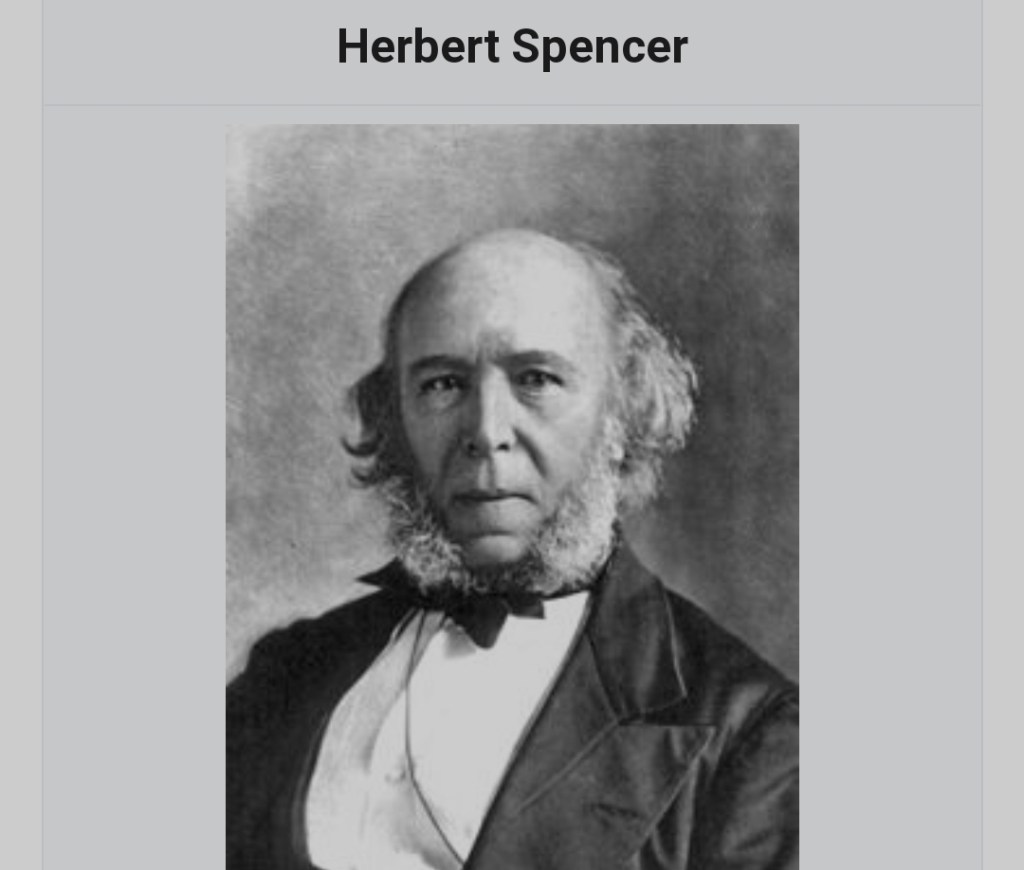
Herbert Spencer (27 April 1820 – 8 December 1903) was an English philosopher, biologist, anthropologist, and sociologist famous for his hypothesis of social Darwinism.
Spencer in his essay “The Social Organism”, stated that the social organism itself is subject to evolutionary developments as a separate entity and much of the idea that societies, like individual organisms, “spontaneously evolved” .
On passing from Humanity under its individual form, to Humanity as socially embodied, social evolution can be exemplified .
Spencer said , “Evolution is an integration of matter and concomitant dissipation of motion, during which the matter passes from an indefinite, incoherent homogeneity to a definite, coherent heterogeneity and during which the retained motion undergoes a parallel transformation.”
One of the most important contribution of Herbert Spencer to Sociology is the theory of evolution
His principles included physical and biological evolution in order to elaborate and explain his theory of Social evolution. He sketches a comprehensive account of evolution of the inorganic, organic, and human and social realms.
He stated , “In respect to that progress which individual organisms display in the course of their evolution,”
He explained this course of evolution through , the development of a seed into a tree, or an ovum into an animal, constitute an advance from homogeneity of structure to heterogeneity of structure .
He continue with, the change from the homogeneous to the heterogeneous is displayed in the progress of civilization as a whole, as well as in the progress of every nation; and is still going on with increasing rapidity.
Spencer adopted his principle of evolution from naturalistCharles Darwin, who developed the concept of evolution in his “Origin of Species” in 1859.
Herbert Spencer, used Darwin’s theory and applied it to how societies change and evolve .According to Spencer societies were bound to change automatically .
Spencer in his theory applied a comparison of societies with organisms that progress through changes similar to that of a living species.
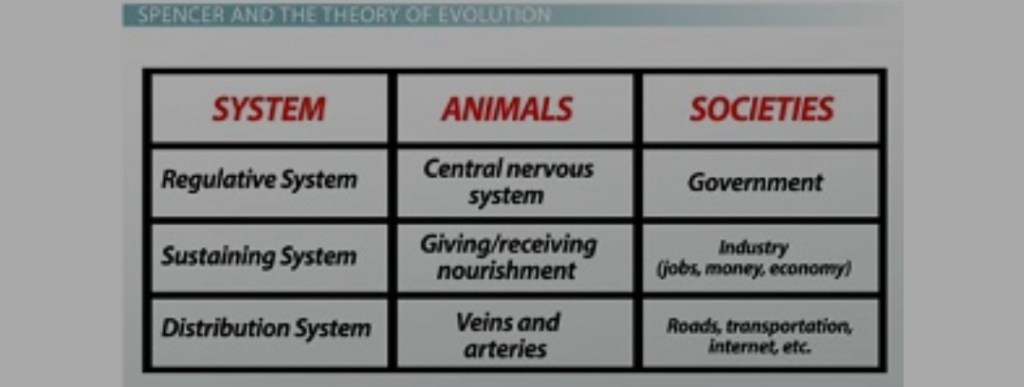
He included three types of systems where societies can be compared to organisms .
The first system is the regulative system. In animals, that would be the central nervous system and in societies, it would be a government that regulates everything.
The second system is the sustaining system. For animals, that’s the giving and receiving of nourishment. For societies, that would be industry – jobs, money, economy and those sorts of things.
The third system would be the distribution system. In animals, that would be the veins and arteries. In societies, it would be roads, transportation, internet – anything in which information and goods and services are exchanged.
“Survival of the fittest” expounded by Darwin was highly believed by him . According to Spencer only strong creatures survive and evolve; only strong makes progress. And that animal has to struggle to preserve its existence.
All universal phenomena-inorganic, organic, super organic—are subject to the natural law of evolution.
A definite pattern of change is followed by all the phenomena of nature—the stars and planetary systems, the earth and all terrestrial phenomena, biological organisms and the development of species, all the psychological and sociological processes of human experience.
Herbert Spencer includes physical evolution in the form of indefinite incoherent situations to definite and coherent situations. The underlying principles of physical evolution are a movement from simple to complex and homogeneity to heterogeneity.
According to him , following the Darwin theory of ” Survival of fittest ” the biological evolution only those creatures survive in the struggle for existence who are able to make effective adjustment with changing circumstances.
Herbert Spencer utilized these two principles, physical and biological evolution in order to explain social evolution.
Spencer’s theory of social evolution points out to two stages:
1. The movement from simple to compound societies.
This movement from simple to compound societies can be seen in four types of societies in terms of evolutionary levels
2. Change from militant society to industrial society.
According to Spencer, the law of evolution is the supreme law of every becoming. From the analysis of biological evolution Spencer established the theory of evolution. He argued that the evolution of human societies, far from being different from other evolutionary phenomena. It is a special case of a universally applicable natural law.
According to some social thinkers Herbert Spencer’s has several criticism , They said that theory lacks practicability and is realistic. It also lacks uniformity. Qualities like sympathy, sacrifice, kindness, love etc. are of much Importance in human survival . These are quite different from the struggle for existence.
Despite of several criticism Spencer Theory of Evolution is the fundamental base for understanding evolution of man and society .
Cryptocurrencies, such as Bitcoin, are changing the way we think about money. These digital currencies use advanced technology and offer a new, decentralized way of handling transactions. This means that payments can be made directly between people, without the need for banks or other middlemen.
As cryptocurrencies become more popular, many businesses are looking to accept them as a form of payment. This can bring several benefits, including lower transaction fees and access to a wider range of customers globally. For businesses looking to stay ahead, it’s important to understand the best methods for accepting crypto payments.
This article will focus on the most effective ways for businesses to integrate cryptocurrency payments. We will explore the tools and strategies needed to make this process smooth and secure, ensuring that businesses can benefit from the unique advantages that crypto payments offer.
What Are Crypto Payments?
Crypto payments refer to transactions made using cryptocurrencies, which are digital or virtual forms of currency. Unlike traditional currencies, cryptocurrencies operate on a blockchain, a decentralized ledger that records all transactions across a network of computers. This technology ensures the security, transparency, and immutability of transactions. Popular cryptocurrencies like Bitcoin, Ethereum, and Litecoin are often used for these types of payments.
Crypto payments offer a modern, efficient alternative to conventional banking and financial systems. They are particularly appealing for their lower transaction fees, faster processing times, and reduced need for intermediaries compared to traditional models, where factors like forex white label cost come into play. This makes them an attractive option for both online and offline businesses, allowing them to tap into a global customer base that prefers using digital currencies for their transactions.
How do Crypto Payments work?
Crypto payments work by transferring cryptocurrency from one digital wallet to another through blockchain technology. When a customer decides to make a payment using cryptocurrency, they send the digital currency to the recipient’s wallet address. This transaction is then verified and recorded on the blockchain, a public ledger that is maintained by a network of computers (nodes). Each transaction is encrypted and added as a new block to the blockchain, ensuring its security and permanence.
The process is decentralized, meaning it does not rely on any central authority like a bank to verify or process the transaction. Instead, the verification comes from the consensus of multiple nodes in the network. Once the transaction is confirmed, it cannot be reversed or altered, which adds a layer of fraud protection.
Benefits of Accepting Crypto Payments for Businesses
Global Market Reach
By accepting cryptocurrencies, businesses can tap into a global market without the limitations of traditional currency exchange rates and international banking fees. Cryptocurrencies are borderless, enabling transactions with customers from any part of the world where they are used. This opens up new opportunities for businesses to expand their customer base and enter markets that were previously inaccessible due to financial barriers or currency restrictions.
Enhanced Payment Security
Crypto payments offer enhanced security features compared to traditional payment methods. Transactions on the blockchain are encrypted and immutable, meaning once they are recorded, they cannot be altered or tampered with.This significantly reduces the risk of fraud and chargebacks, offering peace of mind to both businesses and their customers. Additionally, since cryptocurrencies operate on decentralized networks, they are less susceptible to systemic failures compared to centralized financial systems.
Cost-Effective Transactions
Cryptocurrencies typically have lower transaction fees compared to conventional payment methods like credit cards and bank transfers. This cost-effectiveness is mainly due to the absence of intermediaries in the blockchain network. For businesses, this means more savings on transaction fees, especially for international transactions, which traditionally incur higher costs.
Quick and Efficient Crypto Settlements
Transactions with cryptocurrencies are known for their speed and efficiency. Unlike traditional banking transactions, which can take days to process, especially for international transfers, crypto transactions are settled almost instantly. This quick settlement time improves cash flow for businesses, allowing them to access their funds faster and use them for further investments or operational needs. This efficiency is particularly beneficial for businesses with high transaction volumes or those requiring quick turnaround times.
The Best Way to Accept Crypto Payments
Choosing a Crypto Gateway
A crypto payment gateway is a service that enables merchants to accept transactions in cryptocurrencies. It’s important to choose a gateway that supports multiple cryptocurrencies, provides robust security features, and is user-friendly. Additionally, the gateway should offer seamless integration with your existing payment systems and ensure compliance with relevant regulations.
Creating a Digital Wallet
To receive cryptocurrency payments, a business must have a digital wallet. A digital wallet is like an online bank account for cryptocurrencies, allowing you to store, send, and receive digital currencies. It’s important to choose a wallet that is secure, easy to use, and compatible with the cryptocurrencies you plan to accept. Consider wallets that provide additional features like backup options and multi-factor authentication for enhanced security.
Adding Payment Plugins
For online businesses, integrating crypto payments into your website can be achieved through payment plugins. These plugins can be easily installed on various e-commerce platforms and enable customers to choose cryptocurrencies as a payment option at checkout. Ensure that the plugin you choose is compatible with your e-commerce platform and crypto gateway for a seamless transaction experience.
Using QR Codes
QR codes offer a convenient way for customers to make crypto payments, especially in physical stores or for in-person services. When a customer scans the QR code with their smartphone, it automatically populates the payment amount and the merchant’s wallet address. This method simplifies the payment process, reducing the chance of errors while enhancing transaction speed.
Implementing Multi-Signature Security
For added security, businesses should consider implementing multi-signature (multi-sig) wallets. A multi-sig wallet requires multiple keys to authorize a transaction, which can prevent unauthorized access and enhance the security of the funds. This is particularly important for businesses that handle large volumes of transactions or store significant amounts of cryptocurrencies. Implementing multi-sig security can provide peace of mind for both the business and its customers, knowing that transactions are protected against potential threats.
In conclusion, the best way to accept crypto payments is to carefully choose a payment system that supports different types of digital currencies and works well with your business setup. It’s important to have a secure online wallet for your business and to use tools that make it easy for customers to pay you online. Additionally, having extra security, like needing more than one approval for big transactions, keeps your business safe. This approach helps businesses stay up-to-date with digital payments, attract more customers, and make transactions faster and cheaper. Adopting these steps can really help your business grow in today’s digital world.
A trading account is like your personal gateway to buying and selling different things like stocks or commodities. In this guide, we’ll explore what a trading account is, how to open one, and understand an important part called margin requirements. Whether you’re new to investing or have some experience, knowing about trading accounts is crucial for making smart decisions in the ever-changing world of finance.
What is a Trading Account?
A Trading Account is like your passport to the financial markets, serving as a digital hub where you can buy and sell various financial instruments. It’s essentially a digital ledger that allows individuals to buy and sell various financial instruments, such as stocks, bonds, commodities, and currencies. Specifically, for day traders, a Trading Account is their primary tool for engaging in the fast-paced world of short-term trading. When day traders open a Trading Account, they are essentially gaining access to a platform that allows them to execute quick and frequent transactions within the same trading day. This account is equipped with features tailored for day trading, such as real-time market data, rapid order execution, and advanced charting tools.
Moreover, a trading account extends beyond mere buying and selling. It often incorporates advanced features like margin trading, enabling users to leverage their positions by borrowing funds. This leverage amplifies both potential gains and losses, adding a layer of complexity to the trading process. Additionally, trading accounts frequently offer tools for technical and fundamental analysis, empowering users to make informed decisions based on market trends and economic indicators.
How does a Trading Account work?
A Trading Account is like your virtual workspace for navigating the financial markets, and it plays a crucial role in day trading. Imagine it as your control center where you can swiftly buy and sell financial instruments like stocks or currencies. If you’re interested in day trading forex, you would fund your Trading Account with the amount you’re comfortable investing. Let’s say you want to take advantage of short-term price movements in a particular currency pair. Using the Trading Account, you can place quick buy or sell orders in response to real-time market data, allowing you to capitalize on fluctuations throughout the trading day. Some Trading Accounts even offer features like margin trading, which lets you borrow funds to increase your buying power. However, it’s important to use this feature cautiously, as it can amplify both gains and losses. If you’re exploring how to open a forex broker, this process would typically involve selecting a reputable brokerage, completing the necessary paperwork, and funding your trading account to begin participating in the forex market.
How to Open a Trading Account
Opening a trading account involves several steps that pave the way for your participation in financial markets:
Research and Select a Brokerage: Conduct thorough research to choose a brokerage that aligns with your trading goals. Consider factors such as fees, available financial instruments, educational resources, and user interface.
Visit the Brokerage’s Website: Navigate to the official website of the chosen brokerage to start the account opening process.
Create an Account: Initiate the account creation by filling in your personal information, including your full name, contact details, and email address.
Verify Your Identity: Most brokerages have identity verification procedures. Follow the instructions to provide necessary documents, such as a copy of your ID, proof of address, and possibly a photo.
Choose an Account Type: Select the type of trading account that suits your needs. Brokerages often offer various account types, such as standard, margin, or retirement accounts.
Review and Accept Terms and Conditions: Thoroughly read and understand the terms and conditions of the brokerage. Agree to the terms if they are acceptable to you.
Deposit Funds: Fund your trading account by depositing the desired amount. Brokerages typically offer multiple funding methods, such as bank transfers or credit/debit cards.
Explore the Trading Platform: Log in to your newly created trading account and explore the platform. Familiarize yourself with features such as real-time market data, charting tools, and order execution options.
Utilize Educational Resources: Take advantage of any educational resources provided by the brokerage. Many platforms offer tutorials, webinars, and articles to help you understand the basics of trading.
Start Trading Responsibly: Once you’re comfortable, start making small trades to gain practical experience. Monitor your account regularly, stay informed about market conditions, and adjust your strategy as needed.
Margin Requirements for Trading Accounts
Overview of Maintenance Requirements
Maintenance requirements are the ongoing minimum account balances that traders must maintain to keep their leveraged positions open. Once a position is opened with borrowed funds, there is a minimum level of equity that must be maintained to prevent a margin call. Maintenance requirements act as a safeguard, ensuring traders have sufficient funds to cover potential losses. It’s important for traders to monitor their account balances regularly, as falling below the maintenance requirements could lead to the closure of positions or additional margin calls.
Day Trading Buying Power
Day trading buying power is the amount of capital available to day traders for executing trades on a given trading day. It takes into account both the trader’s existing cash and any margin provided by the brokerage. Day traders can use this buying power to open and close multiple positions within the same day, capitalizing on short-term market movements. However, you need understand the risks associated with day trading buying power, as losses can accumulate rapidly due to the high frequency of trades. Traders should use this buying power judiciously, implementing risk management strategies to protect their capital.
Risks and Consequences of Margin Calls
Margin calls occur when a trader’s account equity falls below the required maintenance level. This triggers a demand from the brokerage for additional funds to bring the account back to the required level. Failing to meet a margin call can result in the forced liquidation of positions, potentially locking in losses.
Traders should be aware of the risks and consequences of margin calls, as they can significantly impact their overall portfolio. Proper risk management, including setting stop-loss orders and understanding margin requirements, is essential to mitigate the risks associated with margin trading and avoid potential financial consequences.
Why You Need a Trading Account
A trading account is more than just a tool for buying and selling securities; it opens up a world of advantages for traders. Firstly, it allows traders to engage in multiple stock exchanges without needing to be physically present on a trading floor. Through online trading accounts, traders can access various stock exchanges globally, manage funds, place orders, and monitor trades conveniently from any location.
Secondly, trading accounts provide valuable access to real-time business news and financial reports of top companies. This information empowers traders to stay updated on market happenings and assess the financial performance of companies. Armed with insights from research reports, traders can make informed decisions about potential stocks that align with their financial goals, making a trading account an indispensable tool in the dynamic realm of financial markets.
In conclusion, a trading account is the fundamental tool for engaging in financial markets, providing individuals with the means to buy and sell various securities. Understanding how to open a trading account is pivotal, involving selecting a reputable brokerage, completing necessary documentation, and funding the account. Whether for long-term investments or short-term trades, a trading account acts as a digital gateway, offering access to global markets and providing essential features like real-time data and research resources. As traders navigate the dynamic landscape of finance, a well-managed trading account becomes the cornerstone of their success.
This article is about two Satras (Religious places) from Majuli, a district in Assam, the most beautiful and largest river Island in the world. In this article, I intend to present cases of two Satras out of many Satras in Majuli. Satras are indigenous social institutional centres mainly associated with the Ekasarana tradition of Vaishnavism. Mahapurush Srimanta Sankardev initiated establishing Satra institutions to fulfil the religious and socio-cultural needs of the people. The word ‘Satra’ originates in the Bhagavata Purana in the Sanskrit term ‘Sattra’, meaning ‘an assembly of devotees’.
The Satra consists of a large prayer hall facing a simple shrine, surrounded by dormitories and bathing tanks for monks known as ‘Bhakats’. In many Satras, Bhakats cannot marry (strictly bachelors), known as ‘Udakhain Vaishnav’. They themselves stay on the premises of Satras and eat by self-cooking. Sometimes, one person cooks for some other ‘Udakhain Vaishnavs’. In this article, cases of two Satras are presented. Both are unique in their own ways. It is pertinent to mention that the author visited the Satras on December 13, 2023, and held discussions with the monks/Bhakats of the Satras. It is noteworthy to mention that the head of the Satra is known as Satradhikari. Dakhsinpath Satra: This is one of the oldest Satras of Assam, established in 1654 by Satradikhar Sri Sri Banamali Dev Goswmi under the patronization of Ahom King Jayadhwaj Singha. This Satra is worth witnessing during the festival of ‘Raslila’ (associated with Bhagawan Sri Krishna). In this Satra in addition to the Puja room and Namghar (where devotees sit and chant devotional songs), there is a museum; when the author visited on December 13, 2023, came to know that many items of Ahom Kings, such as golden pots, big metallic dishes, silver utensils, beetle nut cutting instruments, etc., would be preserved in a museum under UNESCO tags (already the works have been done). The items are kept in a normal room with a lock and key. During the visit, a ‘Udakhain Vaishnav’ of Satra Sri Naren Kataky (81 years old) was contacted for the information. According to him, 80 ‘Udakhain Vaishnavs’ live on this campus, and rooms are available. More than 11 lakh disciples under the Satra live in different areas of Assam. These disciples lead normal lives by marrying, etc. Sri Kataky informed that there are four tea gardens and some lands under this Satra (a total of 7,000 acres of land). Earnings from all these sources are used for different activities of Satras, including for maintenance of 80 ‘Udakhin Vaishnavs.’ Also, he informed that the minimum age of a ‘Udakhin Vaishnav’ in the Satra was 11 years, and the maximum age was 83 years.
Chamaguri Satra: Chamaguri Satra is one of the attractions of Majuli. The Satra is considered an important centre of art and cultural and classical studies. This Satra is a leading institution where old craftsmanship, such as mask making and training in cane and bamboo items, are taught. The author had interacted with Sri Prasanna Goswami, who was one of the members of the Satra and competent to make masks, informed that in earlier days, by wearing masks, dramas were performed to educate people about the importance of religions and other issues. And still masks (made of clay) are made, which have high demand in the national and international markets. Further, Sri Goswami said anyone under the Satra need not be a bachelor, which means they can marry and lead normal lives. That is, the ‘Udhakhin Vaishnav’ concept is not applicable here. I have shared my observations so that readers can understand the two Satras. I suggest readers visit Majuli as this is a different place with pollution-free, environmentally friendly, and amicable people. The people know English, Hindi, Assamese and the local tribal language. Further, fresh vegetables and fresh fish are available. Many of us live in the ‘Concrete jungle,’ so Majuli is different. When I visited, I found some ladies from France and Germany were also present in one Satra, and they appreciated Majuli and Satras, which were new to them. Prof Shankar Chatterjee, Hyderabad
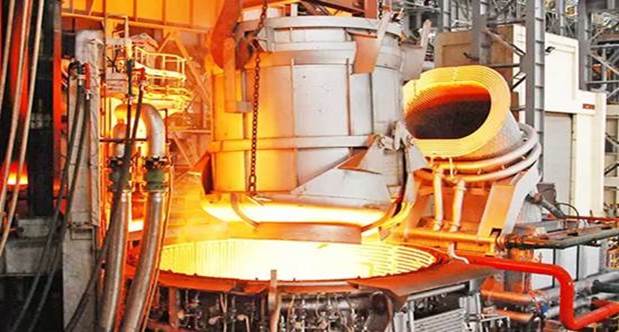
The steel sector plays a pivotal role in crucial sectors such as construction, infrastructure, automobile, engineering and defence. Over the years, the steel sector has witnessed tremendous growth and India has emerged as a global force in steel production and the 2nd largest producer of steel in the world.
Production and Consumption
The production performance of the steel sector during the first eight months of the current fiscal year (April – November 2023) has been quite promising. The domestic finished steel production stood at 89.711 million tonnes against 78.498 million tonnes during the corresponding period last year (CPLY) which is 14.3% higher than CPLY. The domestic steel consumption stood at 87.066 million tonnes, which is 14.9% higher than CPLY of 75.765 million tonnes. Domestic crude steel production was 94.114 million tonnes, with a growth of 14.7 % when compared to the production of 82.072 million tonnes in the same period last year.
Import and Export
During April – November 2023, finished steel imports increased from 3.751 million tonnes last year to 4.253 million tonnes in the current year, witnessing a growth of 13.4%.
A. Recent initiatives for growth of steel sector:
(I) Production Linked Incentive (PLI) Scheme:Government has approved inclusion of ‘Specialty Steel’ under the Production Linked Incentive (PLI) Scheme, with a 5-year financial outlay of ₹6322 crore to promote the manufacturing of ‘Specialty Steel’ within the country by attracting capital investment and promote technology up-gradation in the steel sector. On 17.03.2023, Government had signed Memorandum of Understanding (MoU) with 27 companies covering 57 applications for categories under the PLI Scheme.
The performance and outcomes of the Production-Linked Incentive (PLI) Scheme for the steel sector as of Q2, i.e., September 2023 for FY 2023-24 is given below:
Committed investment(₹ Crore)
Actual Investment till Q2 2023-24 (₹ Crore)
Committed productionfor FY 2023-24 (000 tonne)
Actual production till Q2 2023-24(000 tonne)
Employment generation till Q2 2023-24(Nos.)
Budgeted incentive outlay(₹ Crore)
Actual incentive disbursed(₹ Crore)
29531
10730
935
Nil
3785
6332
Nil*
*(Incentive to be disbursed from FY 2024-25 onwards)
(II) Nagarnar Integrated Steel Plant
NMDC’s 3 MTPA capacity Greenfield integrated steel plant has been set up at Nagarnar, located 16 km from Jagdalpur in Chhattisgarh state. The decision to construct the Nagarnar Integrated Steel Plant was taken keeping in view the linkage with iron ore reserves and availability of investible surplus. The plant became functional on August 24, 2023 and has started production of Hot Rolled (HR) coil as final product.
(III) Green Steel Making
In line with India’s commitments towards net-zero emissions, as enunciated in COP-26, the Ministry of Steel has taken various steps towards decarbonization of the steel sector.
Ministry of Steel constituted 13 Task Forces with the engagement of industry, academia, think tanks, S&T bodies, different Ministries and other stakeholders to discuss, deliberate and recommend upon different levers of decarbonisation of steel sector.
Ministry of New and Renewable Energy (MNRE) has announced a National Green Mission for green hydrogen production and usage. The steel sector has also been made a stakeholder in the mission.
The steel sector has adopted the Best Available Technologies (BAT) available globally, in the modernization & expansions projects.
(IV) Ministry of Steel’s Engagement with PM Gati Shakti National Master Plan
The Ministry of Steel has integrated BISAG-N’s capabilities into the PM Gati Shakti National Master Plan, uploading geolocations of more than 2000 steel units to gain insights into steel production facilities. This information will aid in planning railway line extension, inland waterways, highways, ports, and gas pipeline connectivity.
The Ministry has also mapped data of iron ore, manganese ore mines and Iron Ore Slurry Pipelines, allowing for better visibility and management of critical raw material sources. The Ministry has identified 22 key infrastructure deficiencies that need to be addressed in collaboration with other ministries for comprehensive and integrated infrastructure development. In addition, the Ministry of Steel has also onboarded Central Public Sector Enterprises (CPSE) members on PM Gati Shakti-National Master Plan.
The Ministry of Steel has been mandated to create Sectoral Plans for Efficient Logistics (SPEL) in line with the National Logistics Policy of 2022. The initial draft Sectoral Plan for Efficient logistics plan (SPEL) was circulated among major steel producers and associations and it was made available in public domain, ensuring a well-informed strategy. The suggestions received from stakeholders are being examined, and the finalized SPEL will be submitted to the Empowered Group of Secretaries through the Department for Promotion of Industry and Internal Trade.
(V) Steel Scrap Recycling Policy
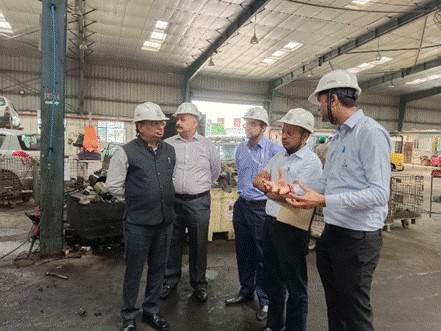
The Steel Scrap Recycling Policy (SSRP) has been notified in 2019 which provides a framework to facilitate and promote establishment of metal scrapping centres in the country for scientific processing and recycling of ferrous scrap generated from various sources including end of life vehicles (ELVs).
Towards this end, MSTC Limited, a CPSE under Ministry of Steel, in Joint Venture (JV) with Mahindra Accelo, has set up MSTC Mahindra Recycling Private Limited (MMRPL). Till date, the JV has established eight (8) Vehicle Scrapping Centres at Greater NOIDA (NCR), Chennai, Pune, Indore, Ahmadabad, Hyderabad, Guwahati and Bengaluru.
MSTC has also been entrusted to auction Government vehicles older than 15 years on the portal developed by the Company.
(VI) Facilitation of National Infrastructure Pipeline Projects:
Ministry of Steel has been proactively taking up issues related to National Infrastructure Pipeline projects of steel companies with concerned Central/State Government, Ministries/Departments.
(VII) Steel Usage
The Government has formulated the National Steel Policy 2017, which lays down the broad roadmap for encouraging long term growth for the Indian steel industry, both on demand and supply sides, by 2030-31. Government’s push for infrastructure development through Gati-Shakti Master Plan, ‘Make-in-India’ initiative for manufacturing sector and other flagship schemes of the Government would provide impetus to the demand and consumption of steel in the country. Steps taken in this regard includes:
Ministry of Steel has set up a committee of experts from Industry and Technical Institutions (IITs/NITs) for development of steel intensive designs for construction of houses and long span road bridges for fostering steel usage in the Housing and Construction sector.
M/o Steel has also formed a committee of experts from INSDAG, IITs, Ministry of Road Transport and Highways (MoRTH) and industry experts for development of designs for long span (30m, 35m, and 40m) steel based Bridges. The design for 30m has been approved and sent to MoRTH for adoption.
M/o Steel has taken up with BIS for development of Codes for steel intensive construction. BIS has informed that a committee having members from steel industry has been formed and the development of codes is in advanced stages.
To promote availability of specialty steels for domestic consumption, the Government has also notified Production-Linked Incentive (PLI) Scheme for Specialty Steel to promote the manufacturing of specialty steel within the country.
(VIII) R&D through Government Budget
Ministry of Steel seeks R&D Project proposals in joint collaborative mode from reputed Academic Institutions, Research Laboratories and Steel Companies for pursuing R&D projects for development of new alternate processes & technologies to address the burning issues faced by the Iron & Steel Sector such as climate change (green steel production, H2 based steel production, CCUS etc.), waste utilization, resource efficiency, etc. for providing financial assistance under the R&D Scheme “Promotion of Research & Development in Iron & Steel Sector”.
Industrial participation, both in terms of collaboration and financial contribution, is mandatory for the R&D proposals to be considered for funding under the R&D Scheme.
During the FY 2023, a total of 4 R&D projects have been approved with a total cost of ₹360.48 lakhs with financial assistance of ₹239.63 lakhs from the Government budget. Additionally, there are currently 14 ongoing R&D projects of the Ministry of Steel.
(IX) Steel and Steel products (Quality Control) Order
Ministry of Steel has introduced Steel Quality Control Order, thereby banning sub-standard/ defective steel products both from domestic & imports to ensure the availability of quality steel to the industry, users and public at large. As per the Order, it is ensured that only quality steel conforming to the relevant BIS standards are made available to the end users.
As on date, 145 Indian Standards have been notified under the Quality Control Order covering carbon steel, alloy steel and stainless steel. In addition, goods & articles made up of steel such as stainless steel pipe & tubes, laminations/ cores of transformers, products of tin plate & tin free steel etc. have also been notified to prevent circumvention of the Steel Quality Control Order.
(X) Safety in the Iron & Steel Sector: Formulation of Safety Guidelines for Iron & Steel Sector
After extensive consultations with stakeholders, academia etc, a set of 25 common minimum Safety Guidelines for the Iron & Steel Sector was formulated. These Safety Guidelines are at par with the global standards and are compliant with the requirements of the ILO Code of practice on safety in the Iron & Steel industry. Inputs have also been taken from the World Steel Association’s guidance document on “Safety & Health Principles and Definitions”.
The stakeholders from the Indian steel Industry and its associations have been urged to adopt these guidelines wholeheartedly, to ensure a safe working environment for the workforce. Ministry of Labour & Employment has also been requested to facilitate mandatory adoption of the Safety Guidelines by the Iron & Steel Industry.
B.Other highlights:
(I) NATIONAL METALLURGIST AWARDS
The National Metallurgist Award 2022 is a prestigious award given by the Ministry of Steel, Government of India, to recognize the outstanding contributions of metallurgists in the iron and steel sector. The award is given in five categories: Lifetime Achievement, National Metallurgist, Young Metallurgist (Environment), Young Metallurgist (Metal Science), and R&D in Iron & Steel Sector. The award ceremony was held on November 22, 2023, and the winners were:
Dr Kamachi Mudali Uthandi – Lifetime Achievement Award
Dr Debashish Bhattacharjee – National Metallurgist Award
Dr Rameshwar Sah – R&D in Iron & Steel Sector
Dr Niloy Kundu – Young Metallurgist (Environment) Award
Agilan Muthumanickam – Young Metallurgist (Metal Science) Award
(II) CAPEX by CPSEs under Ministry of Steel:
During FY 2022-23, Steel CPSEs had a target of ₹11,590.46 crores (RE) against which the CPSEs achieved a CAPEX of ₹10,525.84 crores. The CAPEX in FY 2022-23 was the highest achieved by Steel CPSEs in the past five years.
The CAPEX target for FY 2023-24 is ₹10,300.85 crores (BE). Against this BE target, Steel CPSEs have achieved a CAPEX of ₹5414.51 crores till November, 2023 (52.6%). The CAPEX progress is being monitored regularly and the CPSEs have been advised to ensure timely completion of projects and to achieve the physical and financial milestones.
(III) Government e-Marketplace (GeM): Procurement of goods and services through GeM by Steel CPSEs has increased over the year with the value of orders during April-November, 2023 being 20.8% higher over CPLY. Total procurement made between April-November 2023 stands at ₹10,126.90 crore.
(IV) MSME Payments: The status of pending payments to MSMEs by CPSEs of the Steel Ministry is being monitored on a weekly basis to ensure that the same may be credited timely. During the current fiscal year April 2023 to November 2023, 98% of MSMEs payments have been made within 45 days. During the aforesaid period Steel’s CPSEs have made a payment of ₹4977.82 crore to MSMEs which is approx 5% higher than the payment of ₹4747.53 crore made during the corresponding period of last year.
(V) Mission Recruitment: A dedicated online portal viz. “Vacancy Status Portal” has been put in place by DoPT for reporting and monitoring the progress in filling up the vacancies. Steel CPSEs have taken action to fulfill vacancies expeditiously. Under the Mission, 1389 direct recruitments have been made by Steel CPSEs mainly SAIL, NMDC, KIOCL, MOIL and MECON in 2023.
(VI) Swachhata campaign: Ministry of Steel along with 7 CPSEs viz. SAIL, RINL, NMDC, MOIL, MECON, KIOCL and MSTC under the Ministry, actively participated in the ‘Special campaign for Disposal of Pending matters’ (SCDPM3.0), held from 2nd October 2023 to 31st October 2023. During the campaign, 2,34,915 sq. ft of space have been freed up by the Ministry of Steel and its CPSEs from the disposal of metallic and non-metallic scrap, paper and e-waste etc. 19432 physical files have been weeded out and 12207 e-files have been closed during campaign period. In addition, several pending PG appeals/PG grievances, MPs references etc were settled. Further, 261 Swachhta campaigns were carried out by the Ministry and its CPSEs.
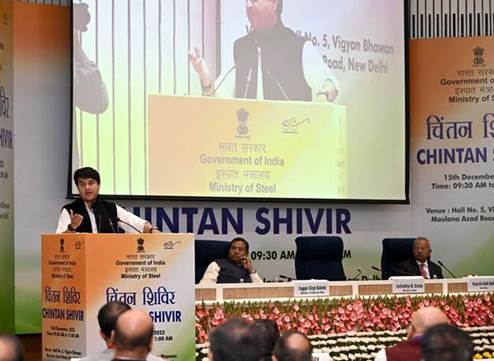
(VII) Chintan Shivir: Ministry of steel organised 2 Chintan Shivir in this year on 17th February, 2023 and on 15th December, 2023. During the 1st Chintan Shivir held on 17.2.2023, deliberations were held on Raw material issues of Steel sector and Circular economy in steel sector, besides a session on soft skill and team building. The 2nd Chintan Shivir of the year 2023 was held on 15.12.2023 and topics of Carbon Border Adjustment Mechanism (CBAM): Impact on Steel sector and Use of Emerging Technology –AI in steel sector were discussed.
(VIII) Meeting of Consultative Committee for Ministry of Steel:In Year 2023, four meeting of Consultative Committee for Ministry of Steel held under the chairmanship of Minister of Steel. In the first meeting of the year 2023 held on 6.3.2023, discussions were held on Secondary Steel Clusters. Further meetings were held on 28.4.2023 on ‘Logistics: Steel Sector’, 24.7.2023 on Status of Mutation, Digitisation and Encroachment on land parcel of CPSEs, and 23.11.2023 on ‘Branding of Indian steel’.
(IX)Steel Minister’s Advisory Group
Two advisory groups have been constituted namely Advisory Group of the Ministry of Steel for Integrated Steel Plants (ISPs) and Secondary Steel Industry (SSI) under the chairmanship of Union Minister of Civil Aviation and Steel Shri Jyotiraditya M. Scindia. The advisory groups aim at identifying common issues being faced by the Industry and finding a way for their resolution with active participation from the Ministry. Meetings, at regular intervals are being held for both advisory groups. In this year, two meetings of the advisory group for ISPs and two meetings of the SSIs have been held.
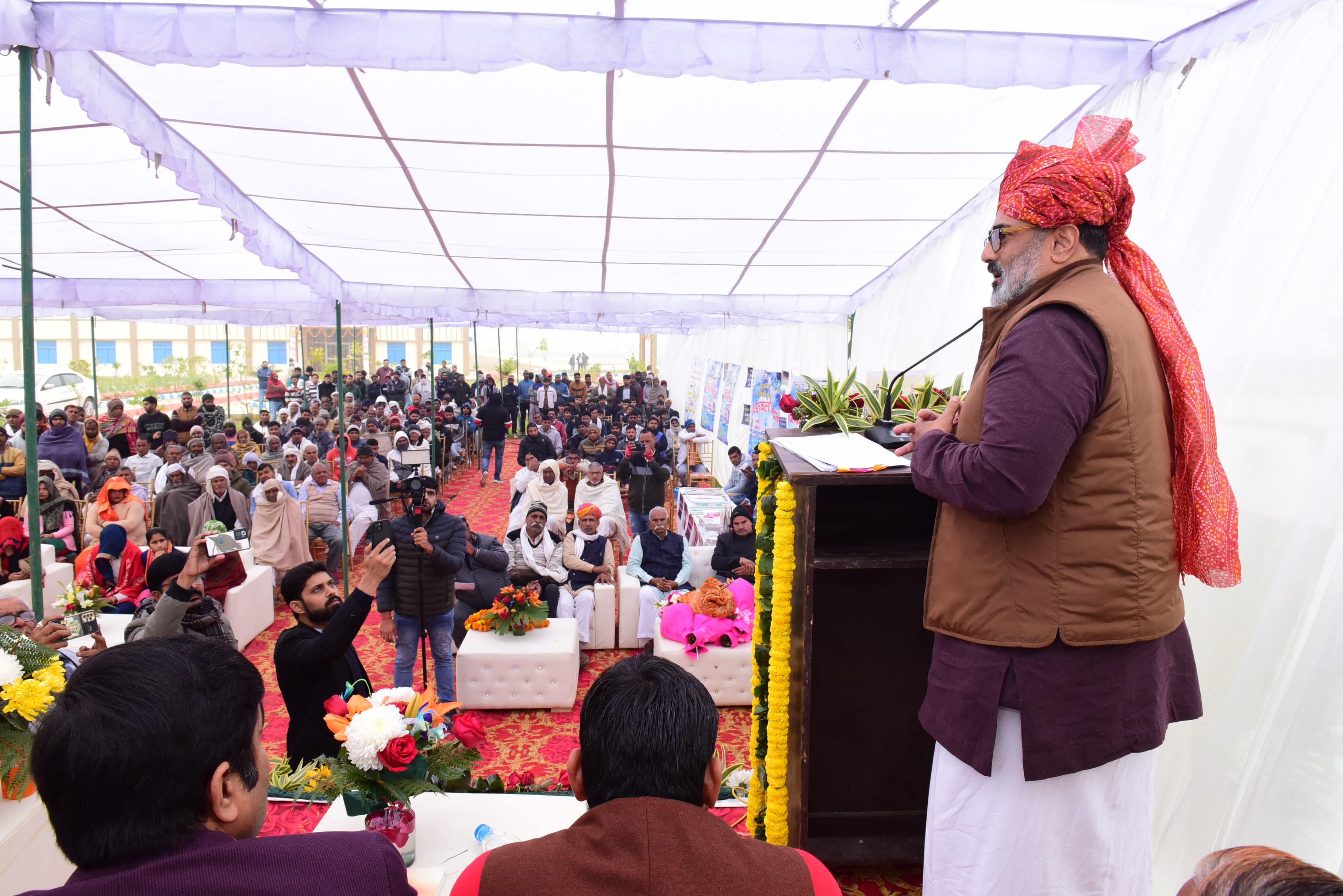
Today, Union Minister of State for Skill Development and Entrepreneurship, Electronics and Information Technology, and Jal Shakti, Shri Rajeev Chandrasekhar, conducted a comprehensive review of the Jal Jeevan Mission (JJM) progress in Raghunathpura and Chanduwas villages, Rewari District, Haryana.
Throughout the day, Minister Rajeev Chandrasekhar engaged with authorities overseeing the District Water and Sanitation Mission, interacted with members of the Village Water & Sanitation Committee, and visited the homes of several residents. The minister emphasized the significant success of JJM in Haryana, particularly in model villages like Raghunathpura and Chanduwas, which achieved the milestone of 100% water connectivity to all households.
Highlighting the impactful collaboration between the Centre and State Governments, Minister Rajeev Chandrasekhar expressed how this collaboration had transformed lives. He commended the people and authorities of Haryana for setting an example of effective governance, showcasing how the Centre and State can work together as a Double Engine for the betterment of the community.
The Minister during his interactions said that, “ PM Narendra Modi ji’s vision of Har Ghar Jal is deeply impacting the lives of Indians. It was wonderful to meet with people of the villages Raghunathpur & Chanduwas in Rewari today and know about their transformation story. For 7 decades, women in these villages endured the drudgery of trekking miles to fetch water for their household needs, standing in long queues for hours every day for a mere drop of water. With Haryana achieving its targets in 2022, this longstanding hardship came to an end in just 3 years. Women now spend more time with their families as they get clean drinking water of prescribed quality. Haryana has set an example of how the Centre and State Govt can work as Double Engine to achieve the unprecedented feat of connecting all rural households with water in just 3 years, something that couldn’t be achieved over decades.”
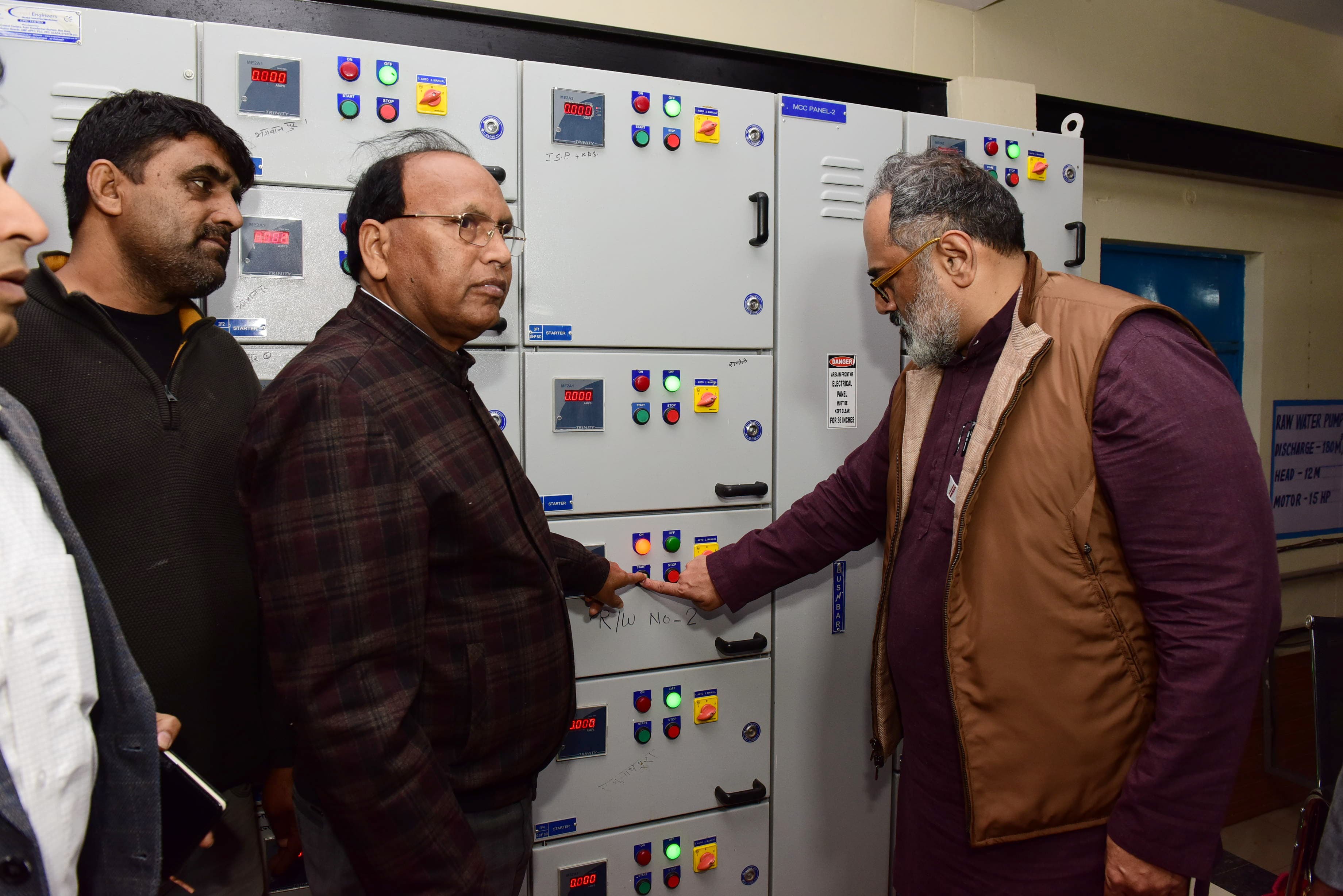
The Minister also inspected the water works management system in the villages, which efficiently facilitates water supply. Several women from these villages thanked the Narendra Modi Government for solving the persistent water problem that plagued their communities for decades.
The Jal Jeevan Mission, operating with speed and scale, has increased rural tap connection coverage from 3.23 Crore households in August 2019 to an impressive 13 crore in just four years. The relentless efforts of the Union and State governments have also resulted in ensuring tap water supply in 88.73% of schools and 84.69% of Anganwadi centers nationwide.
Embodying the motto of Sabka Saath, Sabka Vikas, Sabka Vishwas aur Sabka Prayas, the Jal Jeevan Mission is advancing towards achieving Sustainable Development Goal 6, providing safe and affordable water to all, by delivering safe water through taps to households, schools, anganwadis, and other public institutions in rural areas.








90Q5.jpeg)
 Eduindex
You must be logged in to post a comment.