Factors used in this face wash are Tea trees & fruits, charcoal and Vitamin c helps in keeping the skin healthy and soft. Makes the skin acne-prone and keeps it hydrated. Suitable for all types of skin.
A pomade-free facial cleanser that removes extra slick to help heal and avert boils. Formulated specially for gushy and combination skin types, this detergent flushes supererogatory canvas and contaminations. It helps combat papules and prevents them from returning. The detergent has a gentle formula suitable for everyday use.
In 1963, Scientists studying Hubbard Brook Experimental Forest in New Hampshire made a shocking discovery. Their most recent rainfall samples were nearly 100 timesmore acidic than the usual rainfall samples. At these levels, additional downpours of acid rain would destroy the region’s marine and arboreal ecosystems in a matter of decades. Urgently haring their findings with the fellow researchers, they were determined to answer two questions: What was causing this deadly rainfall? and what could be done to stop it?
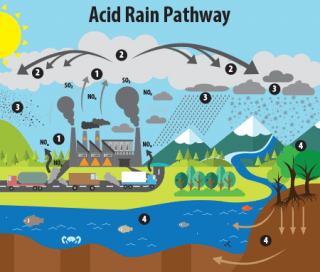
Rain is never just composed of water. Chemicals and particulates in the atmosphere can be found in every drop, and some compounds like carbon dioxide make even regular rainfall slightly acidic. But this pales in comparison to the powerful acids produced when water interacts with oxides of nitrogen or sulfur dioxide. On the pH scale which measures acidity, each whole number is ten times more acidic than the one above it. And where normal rain has a pH of roughly 5.4, rain that’s interacted with these gases(carbon dioxide, sulfur dioxide or oxides of nitrogen) can rank as low as 3.7. Oxides of nitrogen and sulfur dioxide can appear naturally as a short-lived byproduct of volcanic eruptions or lightening strikes. But power plants, refineries and vehicles that use fossil fuels consistently pump large quantities of these harmful gases into the air. These dangerous gases travel with the wind spreading hundreds of kilometers from the pollution’s source. Acting like roaming clouds of destruction, their presence dramatically increases the acidity of local precipitation, creating acid rain, acid snow and acid fog. These all acidify lakes and streams, kill crops and forests, and damage soil to inhibit future growth on it. Overtime, acid rain can even corrode human structures made up of stone or metal.
Diagram showing acid rain pathway illustration
By the 1970s, Scientists in North America and Europe classified acid rain as a major environmental threat. But despite clear evidence tying the problem to air pollution, companies denied responsibility and cast doubt on the research. In the United States, corporations lobbied against regulating pollution, and convinced politicians that such policies would raise energy costs and threaten jobs. These obstacles led the government to delay changes, and mandate further research into the issue. But after a decade of mounting concern, Congress finally took action. Since the bulk of sulfur dioxide emissions came from power plants, the government set a limit on the total amount of it the electric power sector could emit each year. Then, they divided the permitted emissions into a fixed number of “allowances” distributed to each power plant. A plant could then choose to emit as much sulfur dioxide as they were allowed, or reduce their emissions and sell their unused allowances to the other power plants. This system is known as “Cap and Trade”, offered power plants the economic flexibility to keep costs low while strictly limiting pollution.
Many critics called these allowances licenses to pollute or said the government was selling clean air. But since the Cap was set to lower five years into the program, it forced every utility company to reduce emissions in the long term. Some plants added desulfurizing scrubbers to their smokestacks, or switched to low-sulfur coal and natural gas.Oxides of nitrogen emissions were also reduced with relatively low-cost technologies. These advances allowed the power sector to grow while the cap kept pollution under control.
“As long as I have life, as long as blood flows through this arm of mine, I shall not leave the cause of freedom…I am only a woman, only a poet. But as a woman, I give to you the weapons of faith and courage and the shield of fortitude. And as a poet, I fling out the banner of song and sound, the bugle call to battle. How shall I kindle the flame which shall waken you men from slavery…”
Introduction
She was an Indian political activist and poet. A proponent of civil rights, women’s emancipation, and anti-imperialistic ideas, she was an important figure in India’s struggle for independence from colonial rule. Naidu’s work as a poetess earned her the sobriquet ‘the Nightingale of India’, or ‘Bharat Kokila’ by Mahatma Gandhi because of colour, imagery and lyrical quality of her poetry.
Birth and death
Born in a Bengali family in Hyderabad, Naidu was educated in Madras, London and Cambridge. Following her time in England, where she worked as a suffragist, she was drawn to Indian National Congress’ movement for India’s independence from British rule. She became a part of the Indian nationalist movement and became a follower of Mahatma Gandhi and his idea of swaraj. She was appointed as the President of the Indian National Congress in 1925 and later became the Governor of the United Provinces in 1947, becoming the first woman to hold the office of Governor in the Dominion of India.
Naidu’s poetry includes both children’s poems and others written on more serious themes including patriotism, romance, and tragedy. Published in 1912, “In the Bazaars of Hyderabad” remains one of her most popular poems. She married Govindarajulu Naidu, a general physician, and had five children with him. She died of a cardiac arrest on 2 March 1949.
Work
“Tell me no more of thy love, papeeha, Wouldst thou recall to my heart, papeeha, Dreams of delight that are gone, When swift to my side came the feet of my lover…”
– A Love Song From The North by Sarojini Naidu
1905: The Golden Threshold, published in the United Kingdom. 1912: The Bird of Time: Songs of Life, Death & the Spring, published in London. 1917: The Broken Wing: Songs of Love, Death and the Spring, including “The Gift of India” (first read in public in 1915) . 1919: Muhammad Jinnah: An Ambassador of Unity. 1943: The Sceptred Flute: Songs of India, Allahabad: Kitabistan, posthumously published. 1961: The Feather of the Dawn, posthumously published, edited by her daughter, Padmaja Naidu. 1971:The Indian Weavers.
After India attained independence, she became the first woman Governor of an Indian state, Uttar Pradesh. She served as governor till she passed away in March 1949, when she was working late in office.
As a Feminist
“Sarojini Naidu inspired the Indian Renaissance Movement and had a mission to improve the life of Indian woman.”
Bappaditya Bandopadhyay
Sarojini Naidu played an important role in women’s rights struggle in India. She helped in shaping Women’s Indian Association in 1917 with Annie Besant and others. The Association sought equal rights including the right to vote and represent. She presented the need to include more women in the Congress and in the freedom struggle. During 1918, British and Indian feminists including Naidu set up a magazine called “Stri Dharma” to present international news from a feminist perspective.
In your school or college, we all have once come across the phrase ‘Acid Rain’. Many of us have forgotten about it and many of us do remember the topic in detail. So, in this article, I am going to put some light on the following topics:-
I) What is Acid rain?
II) How much acidic is Acid rain?
IIl) Effects of Acid rain.
V) What can be done?
What is Acid rain?
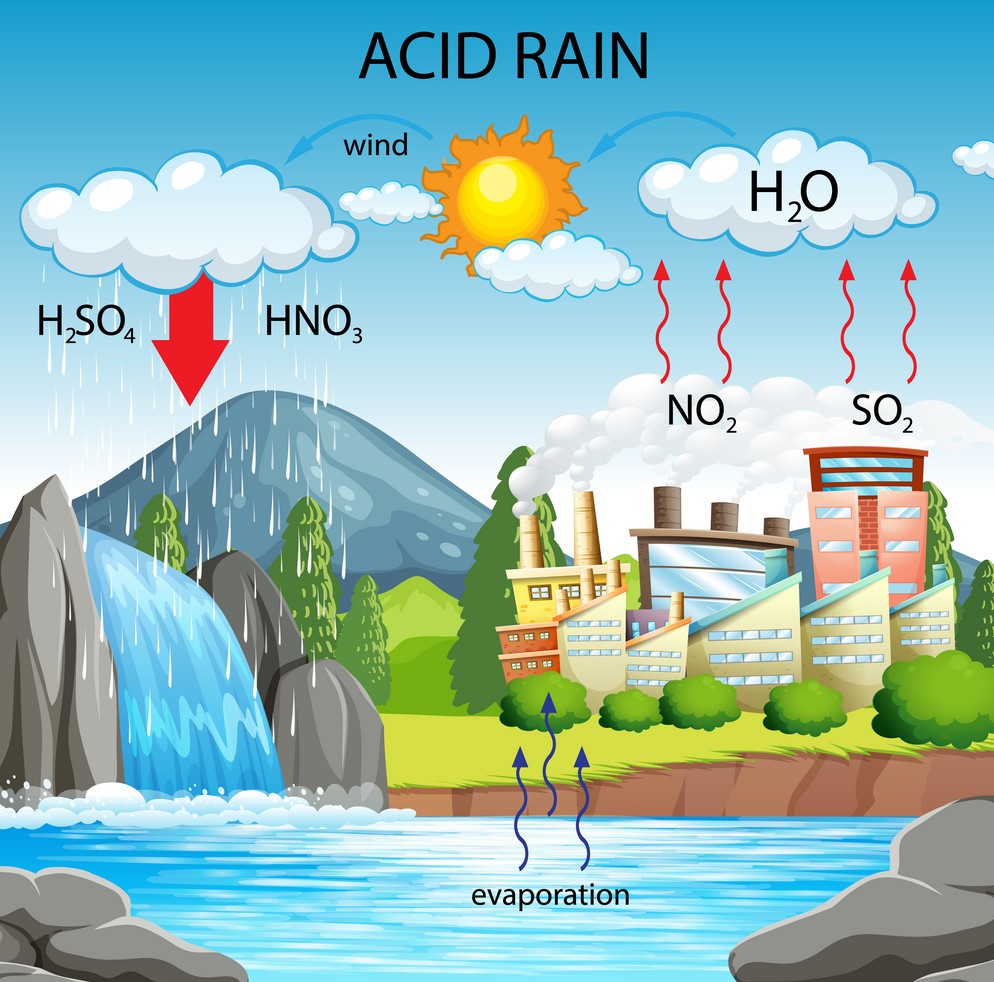
When gases like nitrogen oxides and sulfur dioxide (produced by the burning of fuels from factories, power stations, or vehicles) react with tiny droplets of water in clouds to form sulphuric and nitric acids. Which is the form of rain that falls from the clouds, which is why that rain is known as ‘Acid Rain’.
How much acidic is Acid Rain?
We all have learned in school about the pH scale, the scale which is used to determine acidity. This scale goes from 0 to 14, where 0 is the most acidic and 14 is the most alkaline and 7 is neutral. Acid rain is very weak in terms of acidity.
Rain is always acidic because of the presence of naturally occurring oxides in the air, for unpolluted rain the pH value is between 5-6. But when the air gets more polluted with the presence of sulfur dioxide and nitrogen oxides in it, the acidity can increase to a pH value of 4. The most acidic rain recorded till now has a pH value of 2. But, even the most acidic rain ever is as acidic as lemon juice or vinegar.
Now that we know it can’t harm us then why do we worry about it?
What are the effects of Acid rain?
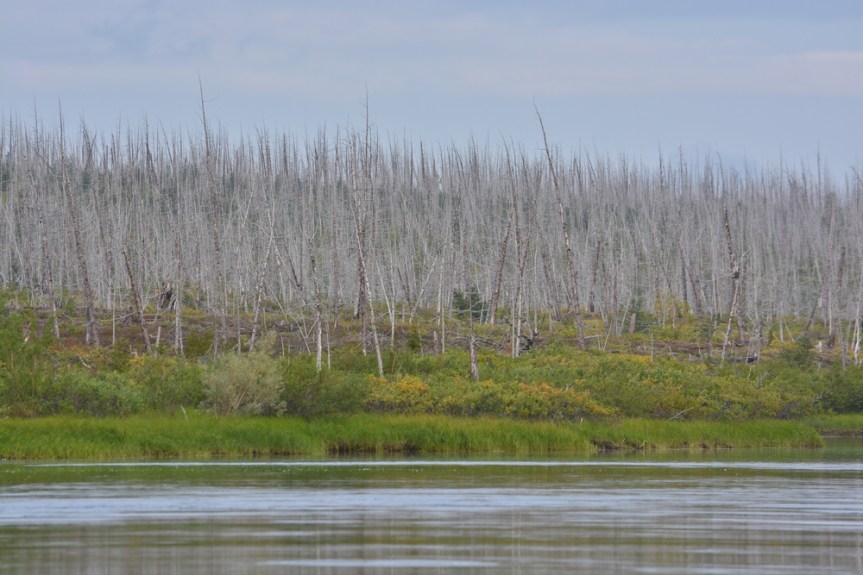
Though Acid rain can cause skin irritation to some people, there are many effects of Acid rain on the forest, aquatic animals, and water resources.
Effects on Forest:-
I) It can dissolve and wash away the nutrients and minerals in the soil which helps the trees to grow.
II) Acid rain causes the release of harmful substances such as aluminum into the soil.
III) Acid rain wash away the waxy protective coating of leaves, damaging them and preventing them from being able to photosynthesis properly.
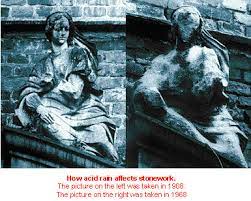
Effects on Buildings:-
I) Acid rain can make the erosion process of materials faster.
II) Statues and monuments made up of limestone are worst affected by Acid rain.
Effects on Lakes and Rivers:-
I) It can be very harmful to aquatic species.
II) It can also cause toxic substances like aluminum to be released into the water from the soil, resulting in water pollution.
III) It can destroy the ecosystems of lakes and rivers.
What can be done?
Mentioned below are some ways to reduce Acid rain:-
→ By installing catalytic converters on our vehicles.
→ Sulfur can also be ‘washed’ out of smoke by spraying a mixture of water and powdered limestone into the smokestack.
→ By using renewable energy sources rather than fossil fuels.










 Eduindex
You must be logged in to post a comment.