We feel happy when we are surrounded by our loved one and that makes us comfortable around them and sometimes we get used to that comfort zone. Imagine being get used to it and suddenly they’re not near you or with you. You’ll not feel yourself and you get lonely all by yourself. This can make you to think different things and there may be multiple thoughts. As it is said “An idol mind is the devil’s workshop”.
Especially in these pandemic times there have been many cases of suicide due to depression and loneliness. Inspite of the death due to covid, people have died unable to control their emotions. This made us to think if loneliness is more dangerous than the disease. Recently there was a case where a 45 year old man and 42 year Old women lived in a village. They don’t have any child and lived all by themselves. Recently her husband was suffering from Covid and the wife couldn’t take that thinking what will she do when he died. Thinking about all the loneliness that’s gonna happen future the wife died committing suicide. However husband lived but after knowing about his Wife death he drank poison and died.
This made me devoted for their love but made me sad for their death. They could’ve waited but loneliness made them to do the drastic step. Not every loneliness can lead to death but some can change a person’s life. Loneliness is not a dangerous thing but a life changing thing where one can analyse themselves. If you don’t have anyone to talk, it is better to talk to yourself rather than depend on someone. Loneliness can make a person self-independent and self- survivor. It can improve a individual skill where one can explore and develop their talents. Everything doesn’t come easy to everyone. One has to struggle to get things done.
Yes! This lockdown and pandemic can be tough and separate everyone from their loved one but it doesn’t mean that you have to feel lonely. May be it is time to explore yourself and develop your skills.
When you least expect it, Nature has cunning ways of findings our weakest spot. Just remember: I’m here. Right now you may not want to feel anything; may you never want to feel anything. And maybe it’s not me that you will want to speak about these things but, Feel something you did. Look… You had a beautiful friendship, maybe more than a friendship, and envy you. In my place, most guardians would hope the…..
Insurance is a means of protection from financial loss. It is a form of risk management, primarily used to hedge against the risk of a contingent or uncertain loss. An entity that provides insurance is known as an insurer, an insurance company, an insurance carrier, or an underwriter. an arrangement with a company in which you pay them regular amounts of money and they agree to pay the costs if, for example, you die or are ill, or if you lose or damage something.
Insurance is a contract in which an insurer indemnifies another against losses from specific contingencies or perils. It helps to protect the insured person or their family against financial loss. There are many types of insurance policies. Life, health, homeowners, and auto are the most common forms of insurance. insurance is a contract, represented by a policy, in which a policyholder receives financial protection or reimbursement against losses from an insurance company. The company pools clients’ risks to make payments more affordable for the insured.
Insurance policies are used to hedge against the risk of financial losses, both big and small, that may result from damage to the insured or their property or liability for damage or injury caused to a third party.
Key Takeways :
1. Insurance is a contract (policy) in which an insurer indemnifies another against losses from specific contingencies or perils.
2. There are many types of insurance policies. Life, health, homeowners, and auto are the most common forms of insurance.
3. The core components that make up most insurance policies are the deductible, policy limit, and premium.
How Insurance Works :
A multitude of different types of insurance policies is available, and virtually any individual or business can find an insurance company willing to insure them—for a price. The most common types of personal insurance policies are auto, health, homeowners, and life. Most individuals in the United States have at least one of these types of insurance, and car insurance is required by law. Businesses require special types of insurance policies that insure against specific types of risks faced by a particular business. For example, a fast-food restaurant needs a policy that covers damage or injury that occurs as a result of cooking with a deep fryer. An auto dealer is not subject to this type of risk but does require coverage for damage or injury that could occur during test drives. There are also insurance policies available for very specific needs, such as kidnap and ransom (K&R), medical malpractice, and professional liability insurance, also known as errors and omissions insurance.
Insurance Policy Components:
A firm understanding of these concepts goes a long way in helping you choose the policy that best suits your needs. For instance, whole life insurance may or may not be the right type of life insurance for you. Three components of any type of insurance are crucial: premium, policy limit, and deductible.
1. Premium -: A policy’s premium is its price, typically expressed as a monthly cost. The premium is determined by the insurer based on your or your business’s risk profile, which may include creditworthiness.
2. Policy Limit -: The policy limit is the maximum amount that an insurer will pay under a policy for a covered loss. Maximums may be set per period (e.g., annual or policy term), per loss or injury, or over the life of the policy, also known as the lifetime maximum.
3. Deductible -: The deductible is a specific amount that the policyholder must pay out of pocket before the insurer pays a claim. Deductibles serve as deterrents to large volumes of small and insignificant claims.
Types of Insurance :
There are many different types of insurance. Let’s look at the most important.
1.Health Insurance -: Regarding health insurance, people who have chronic health issues or need regular medical attention should look for policies with lower deductibles. Though the annual premium is higher than a comparable policy with a higher deductible, less expensive access to medical care throughout the year may be worth the tradeoff.
2. Home Insurance -: Homeowners insurance (also known as home insurance) protects your home and possessions against damage or theft. Virtually all mortgage companies require borrowers to have insurance coverage for the full or fair value of a property (usually the purchase price) and won’t make a loan or finance a residential real estate transaction without proof of it.
3. Auto Insurance -: When you buy or lease a car, it’s important to protect that investment. Getting auto insurance can offer reassurance in case you’re involved in an accident or the vehicle is stolen, vandalized, or damaged by a natural disaster. Instead of paying out of pocket for auto accidents, people pay annual premiums to an auto insurance company; the company then pays all or most of the costs associated with an auto accident or other vehicle damage.
4. Life Insurance -: Life insurance is a contract between an insurer and a policy owner. A life insurance policy guarantees that the insurer pays a sum of money to named beneficiaries when the insured dies in exchange for the premiums paid by the policyholder during their lifetime. Life insurance. life insurance provides for your family if you unexpectedly die. This is especially important if your family is dependent on your salary. Industry experts suggest a policy that pays out 10 times your yearly income. But not everyone can afford the cost. When estimating the amount of life insurance you need, factor in funeral expenses. Then calculate your family’s daily living expenses. These may include mortgage payments, outstanding loans, credit card debt, taxes, child care, and future college costs.
5. Travel Insurance -: Travel insurance is a type of insurance that covers the costs and losses associated with traveling. It is useful protection for those traveling domestically or abroad.
6. Long-Term Disability Coverage -: Long-term disability insurance is the type of insurance most of us think we will never need. Yet, according to statistics from the Social Security Administration, one in four workers entering the workforce will become disabled and will be unable to work before they reach the age of retirement. Often, even workers who have great health insurance, a nice nest egg, and a good life insurance policy don’t prepare for the day when they might not be able to work for weeks, months, or ever again. While health insurance pays for hospitalization and medical bills, you’re still left with all of the expenses that your paycheck had covered.
Is insurance an asset?
Depending on the type of life insurance policy and how it is used, permanent life insurance can be considered a financial asset because of its ability to build cash value or be converted into cash. Simply put, most permanent life insurance policies can build cash value over time.
Conclusion:
Insurance plans will help you pay for medical emergencies, hospitalization, contraction of any illnesses and treatment, and medical care required in the future. The financial loss to the family due to the unfortunate death of the sole earner can be covered by insurance plans.
Eating disorders are behavioral conditions characterized by severe and persistent disturbance in eating behaviors and associated distressing thoughts and emotions. They can be very serious conditions affecting physical, psychological, and social function.
The most common type of Eating disorders are -:
1. Anorexia Nervosa -: Anorexia is characterized by a distorted body image, with an unwarranted fear of being overweight.
2. Bulimia Nervosa -: A serious eating disorder marked by bingeing, followed by methods to avoid weight gain.
3. Binge Eating – People with the binge-eating disorder frequently consume unusually large amounts of food and feel unable to stop eating.
Additional eating disorders include:
1. Avoidant/resistant food intake disorder (ARFID)
2. Diabulimia
3. Other specified feeding and eating disorders (OSFED)
Physical Warning Signs of Eating Disorders -:
1. Dramatic or rapid weight loss
2. Compulsive or excessive exercise
3. Visiting the bathroom immediately after each meal
4. Loss of menses
5. Frequent stomach cramps or stomach pain
Emotional Warning Signs of Eating Disorders -:
1. Behavior changes (acting differently)
2. Isolation and withdrawing from others
3. Being less interested in daily activities
4. An increase in mood swings, irritability, or high anxiety
Warning Signs of Anorexia Nervosa -:
Anorexia is a potentially life-threatening illness characterized by the following eating disorder symptoms and signs: an abnormally low body weight, an intense fear of gaining weight, and a distorted perception of weight or shape. People with anorexia use extreme measures to control their weight, such as excessively restricting calories, over-exercising, and laxative or diet aid abuse.
Warning Signs of Bulimia Nervosa -:
Bulimia is a serious, potentially life-threatening eating disorder. It is typically characterized by episodes of bingeing on large portions of food and then voiding the food through purging, excessive exercise, or the use of diet pills or laxatives. Many people with bulimia also restrict their eating during the day, which often leads to more binge eating and purging.
Warning Signs of Binge Eating Disorder -:
People with binge eating disorder (BED) regularly eat too much food (binge) and feel a lack of control over their eating. Typically, they eat quickly or eat more food than intended, even when not hungry, or they may continue eating even long after they’re uncomfortably full. They may feel guilty, disgusted, or ashamed of their behavior and the amount of food eaten. Many times, they overeat in private. New bouts of bingeing usually occur at least once a week. Sufferers can be normal weight, overweight or obese.
Causes of Eating Disorder -:
1. Having a trauma history
2. Being pressured to look or act a certain way
3. Dealing with stringent sports performance requirements
4. Having high expectations for grades
5. Life transitions and developmental changes
6. Other challenging family dynamics
7. Perfectionism
8. Highly reactive to stress
9. High sensitivity
10. Low distress tolerance
11. Anxiety
Treatment for Eating Disorder -:
Nutritional Healing :
1. Develop a healthy relationship with food 2. Eat a variety of foods in a balanced way 3. Enjoy food in moderation
Family-based therapy is shown to improve eating disorder treatment outcomes increasing one’s chance of a full recovery. Family and caregiver support is especially critical for younger patients, but family involvement and family therapy are encouraged for all patients seeking help for eating disorders, including adults.
Medication :
In eating disorder treatment, medications may be prescribed to address physical health concerns and complications related to the eating disorder.
Cybercrime is any criminal activity that involves a computer, networked device, or network. cybercrimes are carried out to generate profit for the cybercriminals, some cybercrimes are carried out against computers or devices directly to damage or disable them. Others use computers or networks to spread malware, illegal information, images, or other materials. Some cybercrimes do both — i.e., target computers to infect them with a computer virus, which is then spread to other machines and, sometimes, entire networks. A primary effect of cybercrime is financial. Cybercrime can include many types of profit-driven criminal activity, including ransomware attacks, email and internet fraud, identity fraud, and attempts to steal financial accounts, credit cards, or other payment card information. Cybercriminals may target an individual’s private information or corporate data for theft and resale. As many workers settle into remote work routines due to the pandemic, cybercrimes are expected to grow in frequency in 2021, making it especially important to back up the data.
The U.S. Department of Justice (DDJ) divides cybercrime into three categories :
1. Crimes in which the computing device is the target
2. Crimes in which the computer is used as a weapon
3. Crimes in which the computer is used as an accessory to a crime
Cybercriminal activity may be carried out by individuals or groups with relatively little technical skill, or by highly organized global criminal groups that may include skilled developers and others with relevant expertise. Cybercriminals often choose to operate in countries with weak or non-existent cybercrime laws to further reduce the chances of detection and prosecution.
Types of Cybercrime -:
1. Cyberextortion: A crime involving an attack or threat of an attack coupled with a demand for money to stop the attack.
2. Crypto-jacking: An attack that uses scripts to mine cryptocurrencies within browsers without the user’s consent.
3. Identity Theft: An attack that occurs when an individual accesses a computer to glean a user’s personal information, which they then use to steal that person’s identity or access their valuable accounts, such as banking and credit cards.
4. Credit card Fraud: An attack occurs when hackers infiltrate retailers’ systems to get their customers’ credit card and/or banking information.
5. Cyber espionage: A crime involving a cyber-criminal who hacks into systems or networks to gain access to confidential information held by a government or other organization.
6. Software-Piracy: An attack that involves the unlawful copying, distribution, and use of software programs with the intention of commercial or personal use.
7. Ransomware attacks are similar, but the malware acts by encrypting or shutting down victim systems until a ransom is paid.
8. Phishing: The most common type of cybercrime as reported to the U.S. Internet Crime Complaint Centre was phishing and similar fraud.
9. Website Spoofing & IOT Hacking.
Cybercrime & Its Impact on Society – : On an individual level, a cyber-attack can lead to a variety of consequences, ranging from theft of personal information to extortion of money or loss of valuable data, such as family photos. Society and systems depend on critical infrastructures, such as power plants, hospitals, and financial services companies. The protection of these and other organizations is essential for the maintenance of our society and support of the relations between countries and international organizations.
How to prevent Cyber Crime –:
Backup all data, system, and considerations: This enables data stored earlier to assist businesses in recovering from an unplanned event.
• Enforce concrete security and keep it up to date: Choose a firewall with features that protect against malicious hackers, malware, and viruses. This enables businesses to identify and respond to threats more quickly.
• Never give out personal information to a stranger: They can use the information to commit fraud.
• Check security settings to prevent cybercrime: A cyber firewall checks your network settings to see if anyone has logged into your computer.
• Using antivirus software: Using antivirus software helps to recognize any threat or malware before it infects the computer system. Never use cracked software as it may impose the serious risk of data loss or malware attack.
• When visiting unauthorized websites, keep your information secure: Using phishing websites, information can easily bypass the data.
• Use virtual private networks (VPNs): VPNs enable us to hide our IP addresses.
• Restriction on access to your most valuable data: Make a folder, if possible, so that no one can see confidential documents.
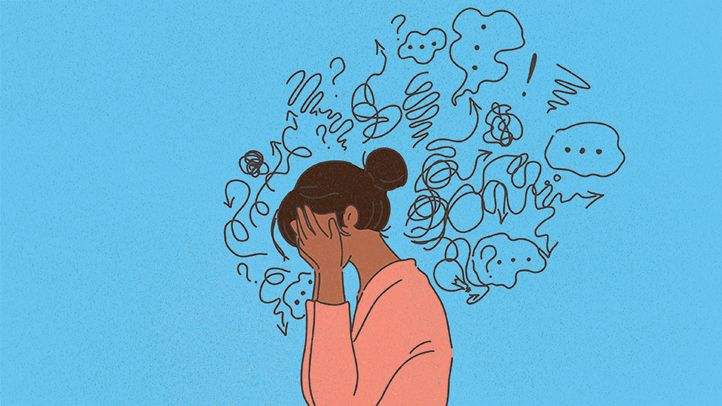
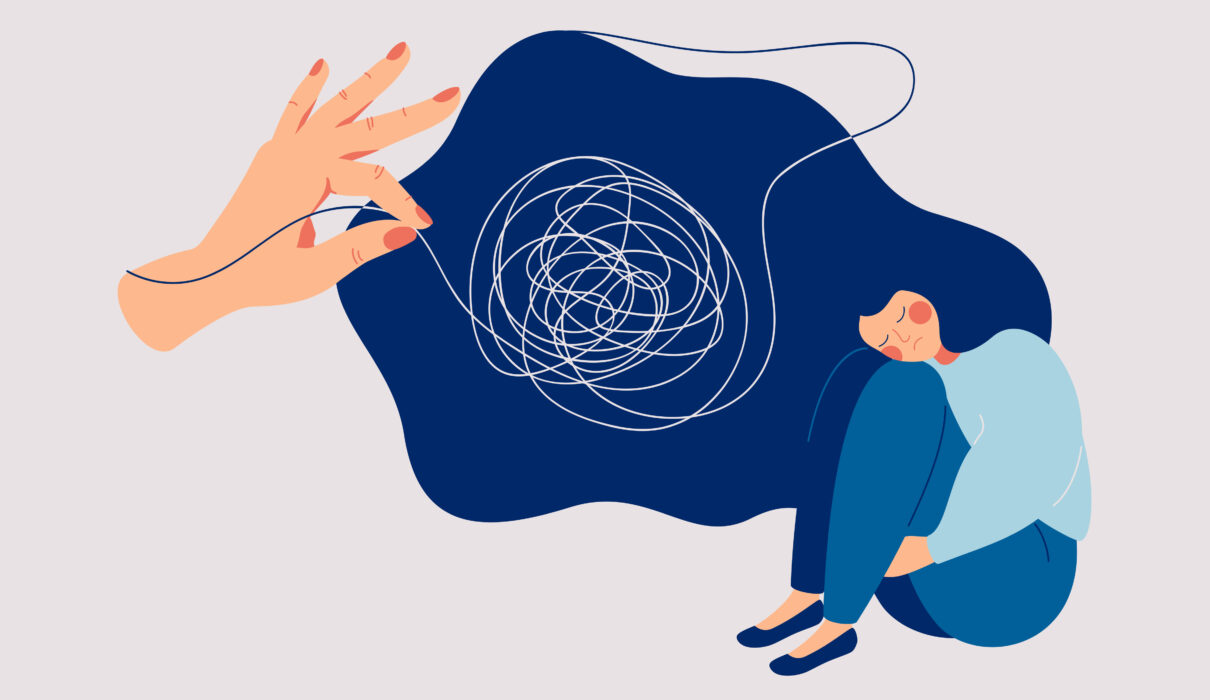
Depression is a mood disorder that causes a persistent feeling of sadness and loss of interest, also called major depressive disorder or clinical depression. It affects how you feel, think, and behave and can lead to a variety of emotional and physical problems. Depression is not a weakness; you cannot simply “snap out “of it. Depression may require long-term treatment. But we should not feel discouraged because most people with depression feel better with medication, psychotherapy, or both.
Let us see know about the symptoms of depression –:
• Feelings of sadness, tearfulness, emptiness, or hopelessness
• Angry outbursts, irritability or frustration, even over small matters
• Loss of interest or pleasure in most or all normal activities, in their hobbies or sports
• Sleep disturbances, including insomnia or sleeping too much
• Tiredness and lack of energy, so even small tasks take extra effort
• Reduced appetite and weight loss or increased cravings for food and weight gain
• Anxiety, agitation, or restlessness
• Slowed thinking, speaking, or body movements
• Feelings of worthlessness or guilt fixating on past failures or self-blame
• Trouble thinking, concentrating, making decisions, and remembering things
• Frequent or recurrent thoughts of death, suicidal thoughts, suicide attempts, or suicide
• Unexplained physical problems, such as back pain or headaches.
People dealing with depression may occur only once during their life, people typically have multiple episodes, and during these episodes, symptoms occur most of the day, nearly every day which also affects their day-to-day activities, such as work, school, social activities, or relationships with others. Some people might even feel generally miserable without really knowing the exact reason.
• Depression in children and teens may include sadness, irritability, clinginess, worry, aches, pains, being extremely sensitive, feeling misunderstood, anger, and poor performance. • Depression in symptoms in older adults may include memory, difficulties or personality changes, fatigue, and often wanting to stay at home, rather than go out to socialize or do new things.
Causes of depression –:
• Biological differences – People with depression appear to have physical changes in their brains. The significance of these changes is still uncertain.
• Brain chemistry – Neurotransmitters are naturally occurring brain chemicals that likely play a role in depression.
• Hormones – Changes in the body’s balance of hormones may be involved in causing or triggering depression.
• Inherited traits – Depression is more common in people whose blood relatives also have this condition. Research shows genes may be involved in causing depression.
Risk factors of depression –:
• Certain personality traits, such as low self-esteem and being too dependent, self-critical, or pessimistic
• Traumatic or stressful events, such as physical or sexual abuse, the death or loss of a loved one, a difficult relationship, or financial problems.
• History of other mental health disorders, such as anxiety disorder, eating disorders, or post-traumatic stress disorder. Abuse of alcohol or recreational drugs.
• Serious or chronic illness, including cancer, stroke, chronic pain, or heart disease. Certain medications may also trigger depression such as some high blood pressure medications or sleeping pills.
Complications in depression – :
• Excess weight or obesity, which can lead to heart disease and diabetes
• Pain or physical illness
• Alcohol or drug misuse
• Anxiety, panic disorder, or social phobia
• Family conflicts, relationship difficulties, and work or school problems
• Social isolation
• Suicidal feelings, suicide attempts, or suicide
• Self-mutation, such as cutting
• Premature death from medical conditions
Prevention of depression -:
There is no fixed way to prevent depression but these strategies may play a major role – • Take steps to control stress • Reach out to family and friends • Get treatment at the earliest sign of a problem • Consider getting long–term treatment because it helps to prevent a relapse of symptoms.
Types of depressive disorders -:
• Major depressive disorder
• Anxious distress, Melancholy, Agitated (Major depression looks different in different people. So they are characterized into three types.)
• Persistent depressive disorder
• Bipolar disorder
• Seasonal affective disorder (SAD)
• Psychotic disorder
• Peripartum (Postpartum) Depression
• Premenstrual Dysphoric Disorder
• ‘Situational ’Depression
• Atypical depression
• Clinical depression
Arguments, whether they are interpersonal or professional, are essential. Be it a constructive or non-beneficial disagreement, we engage in it more frequently than we plan to in our regular lifestyle.
Nobody can win an argument against you unless you give the opportunity to.
Even if this isn’t your strongest suit, there are a few straightforward strategies you may use to quickly and easily win. To assist you, here are a few of them:
1. Do your research – In a professional setting when you know you’re likely to have to get into an argument, prepare yourself beforehand with all the information and facts so that you have an upper hand in the discussion
2. When it’s unlikely – Sometimes you could encounter yourself in a heated argument in an unusual situation, caught off guard and unsure of what to say. It’s typically best to try to reason with the other person so that you can depart the argument quickly.
3. Calm down – The most important thing to remember when in an argument is to keep your composure and maintain decorum, especially if your parents are on the other side. However, this is true for practically all contentious discussions.
4. Don’t raise your voice – Being ear-splittingly loud won’t help you win, instead strengthen your case. Maintaining your mental fortitude will help you make your point to the opposing side as effectively as you can.
5. Decapitate them delicately – Be gentle and kind! Talk calm and pleasant until your generosity and encouraging wordscause the opposition’s rage to subside. In between disputes, you must remind the other person of the good in you in case they have forgotten. This works!
6.Be reasonable – Avoid making assumptions just to justify your assertions. Provide evidence to back up your claims so the opposite side won’t have a chance to refute the information.
7. Choose your next word carefully- Remember in an argument the point is not just winning but also successfully winning at it. So communicating the issue that you’re debating about is also vital because that is the reason it happened in the first place. In doing so, be careful how you choose your words.
8.Don’t rush— Time may not always be to your advantage, so consider whether it is the appropriate time to protest before you start the conversation. Better to steer clear of it for a while if not. Additionally, it will offer both parties a chance to think things through.
9. Listen!- If you aren’t willing to listen and consider the opposing viewpoint, how can you expect others to? It’s crucial to hear what the opposing side has to say because a one-sided discussion is not an argument.
10. Make believe – when you really want to win and your case isn’t solid enough, make the opposition believe that your perspective is stronger and their claim needs to be reevaluated. Even if you’re wrong, trick them into thinking otherwise.
You’ll master the art of argumentation in no time, just follow these simple methods and the win is yours.
Education is an essential thing in our daily life. According to the growth of society, education must be provided to every citizen. The new world is mysterious, all things that exist had to be known to every people education ensures that. So whatever we want to be we should know about that.
Findings of great peoples, Technological know-how, awareness of the environment, History, etc are the main components of education. An educated person must show good character they were intelligent and efficient. They can build up our economy in a good manner
Nowadays students are struggling with exam results. They were worried about the marks they got. Parents also wanted marks from children. However, studying with understanding makes a perfect education. There are a few tips for good studies.
1. Awareness Of The Chapters
The student must have a correct idea of the chapters including the basic needs. It will increase our energy to study new things.
2. Making The Day For Studies
Mornings are a good time for making good decisions they may whisper through our ears for an entire day. Put a goal for the day in the mornings and we will begin to work toward that.
3. Visualization
When we were teaching or studying, try to imagine the concepts as well it will lead to an incredible memory of the topics.
4. Setting Our Mind
Setting our minds before studies is the best way to attain knowledge. When we think that we are free from anything, nothing can disturb us from our goals. Set our minds to study and make differences
5. Concluding Sentences
When we are willing to study a paragraph, make the important keywords from that. It will help you to study shortly and easily .
Times are not just difficult but also alarming for every sphere of our existence. At first glance, it might appear that the raging pandemic has temporarily paused climate action and initiatives related to other environmental issues. Sustainability, it appears, may have taken a back-seat too. However, with a decade left for the end of ‘Agenda 2030’, achieving sustainable development has become even more important.
A significant feature of the raging pandemic is that it has disrupted the hyper-interconnected world characterized by globalization. Supply chains are badly affected and global markets are under severe stress. Evidently, the virus has laid bare the vulnerabilities and risks of a globalized world order. In fact, it has put under scanner not just globalization but also the Sustainable Development Goals. Nevertheless, this could be a turning point for the international community to unlearn and revamp its basic conduct on global governance and make it more inclusive in nature. Besides, the pandemic has also thrown open an opportunity to give impetus to a glocalized framework of global governance to protect the ‘global commons’ in the light of the broader debate on sustainability.
This is where glocalization can fill the gap. Simply put, glocalization refers to the interpretation, representation and replication of the global elements at the local level.
The term, glocalization, is used quite frequently in business parlance but it has begun to gain momentum in cultural, social and political arenas too. Utilizing it appropriately in the environmental domain is the need of the hour.
The term, glocalization, is used quite frequently in business parlance but it has begun to gain momentum in cultural, social and political arenas too. Utilizing it appropriately in the environmental domain is the need of the hour.
Covid-19 has brought about the necessity of refining and revising globalization. This can be done by integrating glocal elements to achieve global good, be it sustainable development or climate action, by roping in local actors, such as subnational agencies, grassroots bodies, non-governmental organizations and other relevant non-State actors in the discussion on sustainability. Localizing economies would provide leverage to the development targets of those like India. This can help attain the much-needed balance between ecological equity and economic growth. Additionally, it is hard to overlook the expertise and knowledge offered by local populations that are located at ground zero and are in tune with ground realities. This kind of resource efficiency could prove to be useful in operationalizing the potential glocal elements of global governance. Factors like accountability, transparency and trust-building among the State and non-State actors are also vital in this context.
Considering the changes in modern living, starting from working remotely to radically cutting down on carbon footprints, glocalization could turn out to be a viable alternative to globalization, thereby creating innovative pathways for sustainable development in the near future.
Do you constantly find yourself cutting off from people without any reason? The feeling that you don’t belong? A major reason for such thoughts is that you find it difficult to blend in with your friends and family. While such mindset is not something permanent, it can develop from a constant state of neglect and lack of affection.
It is not necessary that such state of mind arises in only those who are generally closed off by nature. There is a larger percentage of so-called ‘extroverts’ who also suffer with the same complexion.
While this situation generally arises from a change in friend circle, or after losing a loved one, breakup, or a change in surroundings. Some other reasons like depression, heavy medicines, illness or other social factors can also be an imminent variable.
Some people can also call it a ‘Retreat’, a means to detach from society in order to better focus on their upcoming projects, a major people comprising this class will consist of authors, artists, and such other people in need of peace and tranquility.
The case is not always same for teenagers and young adults. Retreating from society in an abrupt manner is major teller of mental illness, depression, as it is generally termed. While it is not uncurable, a major support is required from family and loved ones in most cases. Emotional support goes a long way in providing support and a feeling of togetherness.
This does not mean that a person who appears to be detached from the general colorful society is weak. That would be a gross understatement. Such people are generally in need of a closure with whatever is it that they have suffering with. No other person can help solve this condition other than the person who suffers from it. All others can-do is provide an understanding gesture and emotional support.
The best ways to deal with such a swing of emotion could be to try to talk to someone and share your thoughts. Other than that, going out for a walk or eating your favorite dish will help make you feel better! The one thing that is imperative through the whole process is that you will emerge Stronger. A better version of your own self. With a better view of your dreams and desires. The only quality required is to have faith and be kind to yourself.
Think of your future self 5 or 10 years from now and how thankful they would be to you that in spite of all the hardships thrown your way, you held on, that is all that is required.
GOOD SAY OR BAD ADOPTING COPING STRATEGIES OR HOBBIES ARE THE THING ON WHICH NOBODY HAS A CONTROL OVER DURING THE LOCKDOWN.
The COVID-19 pandemic and ensuing lockdown measures have created unprecedented circumstances that increase stress and anxiety, thus leading individuals experiencing home confinement to adopt various coping strategies that contribute to building resilience. Given the novelty and recency of the COVID-19 lockdown, factors of coping and resilience in this specific context of home confinement remain undefined. Some put this time in effective routine to get good result but there were some who waste their time with some bad coping strategies.
SOME COPING STRATEGIES WERE-
COOKING– people have learnt to cook for them-self. People who live alone and deprived from the food delivery option have taken up the ladle, some who have no choice and some who see this as a opportunity to learn or put their confined time to some effective work or activity.
DUSTING AND CLEANING- people have to take this activity without any choice as with this lockdown and without any house help their hands were tied or say only their hands were the one left to do the job. Some saw this as an opportunity to cover their missed fitness routine and some did because they didn’t have any choice but to keep their house clean.
READING- This is one of the good coping strategies people have taken up in this lockdown. Prior to this covid-19 lockdown, people with their busy and anxious schedule and working hours with no time left to give to literature or reading has taken this opportunity for an mind relaxing time with reading .
SCREEN TIME – This is the most adopted and with too much used time, it’s seen as and become a bad coping strategy and habit especially during this lockdown. Most people coped this confined and with too much time on digital screen with movies, shows and net etc, under these most people are kids and students with no school and colleges.
YOGA – Yoga during this lockdown has replaced the gym for fitness routine and mental health also. Some has adopted it to replace the gym but some ha adopted it to relax their mind from this anxious and confined situation. And surprisingly during lockdown it has become a big hit among all age of people from kids to adult and old people also.
Living in today’s metropolitan world of cellular phones, mobile computers and other high-tech gadgets is not just hectic but very impersonal. We make money and then invest our time and effort in making more money. Does it end? Not usually because we are never satisfied. How many times have we convinced ourselves that if only we had some more money, life would be so sweet? But then, after receiving a substantial raise, we realize that it wasn’t enough and that we need more?
What Should You Do?
I have read many books on life such as Robin Sharma’s Monk says this and the monk says that, and they all seem to say that money is not necessary. But it is. Can you do without cash and a lot of it? I know I can’t.
So, I went to the neighbourhood Rabbi and asked for advice that will help me find my true way in life.
The rabbi nodded and took me to the window. “What do you see?” he asked me.
Promptly, I answered, “I can see people walking to and fro and a blind man is begging for alms at the left corner.”
The Rabbi nodded and guided me to a big mirror. “Now look and tell me what you see?”
“I can see myself,” I man answered.
The Rabbi smiled. “Now you can’t see anyone else. The mirror and the window are both created from the same raw material: glass, but because on one of them they have applied a thin layer of silver, when you look at it all you can see is your own reflection.”
The Rabbi placed his arm on my shoulders. “Compare yourself to those two pieces of glass. Without the silver layer, you saw the other people and felt compassion for them. When you are covered with silver, you see only yourself.”
I looked at the Rabbi and stared. “I don’t understand.”
The Rabbi continued. “You will become someone only if have the courage to remove the silver covering over your eyes in order to again see and love others.” He patted me on my back and sent me on my way.
I have thought of what he said and come to the conclusion that he had a point. Yes. We need money and we should not aim to lead a moneyless existence; its pointless and will only cause us and our families many heartbreaks in the future.
Instead, I suggest that we should follow the advice the Rabbi gave me. When we approach life through a silver covering, all we are able to see is ourselves. But discard that covering, and you will be able to see and feel everyone else.
In life, we are allowed to and should be able to look at both kinds of mirrors, but we should remember that a mirror reflects only us; a window is the door to compassion, health and true wealth. In other words, seek wealth by all means, but don’t let it dissuade you from life, people, children and the poor and needy.
Have you ever heard or read in a newspaper that a person who won millions of dollar got broke after few years, why is this so ? This is because of lack of financial education, and the reason behind many of the people after good degree and jobs and a good salary still facing financial issues is the same lack of financial education.
1. Listen to podcasts, like the Rich Dad Radio Show.
2. There are plenty of you tube channels of financial experts, subscribe their channels and follow them.
3. Read newspapers, magazines, or books based on money, finance, and investing.
4. Follow peoples or pages sharing financial knowledge on social media.
5. Hang around with people smarter than you beyond all this have a keen interest and a burning desire. That’s all you need to be financially literate.









 Eduindex
You must be logged in to post a comment.