Exploring the Top Universities of Africa

 Africa, a continent rich in diversity and culture, is also home to some of the most prestigious academic institutions. Over the years, these universities have made significant contributions to research, education, and innovation, both locally and globally. In this article, we’ll delve into the top universities across Africa, highlighting their strengths, rankings, and notable achievements.

Methodology

To identify the top universities in Africa, we refer to various reputable international ranking systems such as QS World University Rankings, Times Higher Education World University Rankings, and Academic Ranking of World Universities (ARWU). These rankings consider factors such as academic reputation, research output, faculty-student ratio, and international outlook.

Top Universities in Africa (2024)

Below is a list of some of the leading universities in Africa, along with their respective rankings as per QS World University Rankings 2024:

Rank University Location
1 University of Cape Town South Africa
2 University of Witwatersrand South Africa
3 Stellenbosch University South Africa
4 University of Johannesburg South Africa
5 Cairo University Egypt
6 American University in Cairo Egypt
7 University of Pretoria South Africa
8 University of Nairobi Kenya
9 University of Ghana Ghana
10 Makerere University Uganda

Insights and Highlights

  1. University of Cape Town (UCT):

    • Rank: 1st in Africa.
    • Location: Cape Town, South Africa.
    • Notable Achievements: UCT is renowned for its research output and academic excellence. It’s consistently ranked as one of the top universities globally.
  2. University of Witwatersrand:

    • Rank: 2nd in Africa.
    • Location: Johannesburg, South Africa.
    • Notable Achievements: Known for its commitment to social justice and impactful research, Wits is a leading institution in Africa.
  3. Cairo University:

    • Rank: 5th in Africa.
    • Location: Cairo, Egypt.
    • Notable Achievements: As one of the oldest and largest universities in Egypt, Cairo University is a hub of academic and cultural significance in the region.

Research Output Comparison

Now, let’s compare the research output of these universities using a pie chart:

This chart illustrates the distribution of research output among the top universities. University of Cape Town and University of Witwatersrand exhibit significant research contributions, reflecting their strong academic programs and faculty.

Conclusion

The top universities in Africa play a pivotal role in shaping the future of the continent through education, research, and innovation. As they continue to excel in various fields, they contribute not only to the advancement of knowledge but also to the socioeconomic development of their respective countries and the continent as a whole.

Top Scholarship for African Scholars in Asia


  1. Japanese Government Scholarships (Monbukagakusho): These scholarships are offered by the Japanese government to international students, including Africans, for various academic programs at Japanese universities.

  2. Chinese Government Scholarship – Belt and Road Program: China offers scholarships to students from countries along the Belt and Road, including many African nations. These scholarships cover a wide range of academic fields and degree levels.

  3. Korean Government Scholarship Program (KGSP): The Korean government provides scholarships to international students, including Africans, for undergraduate and postgraduate studies in South Korea.

  4. TaiwanICDF Scholarship Program: The Taiwan International Cooperation and Development Fund (TaiwanICDF) provides scholarships for students from developing countries, including African nations, to pursue higher education in Taiwan.

  5. The Asia Foundation Development Fellows Program: While not a traditional scholarship, this program provides opportunities for professionals from Asian countries, including African nations, to enhance their leadership skills and contribute to positive social change.

  6. Malaysia International Scholarship (MIS): The Malaysian government offers scholarships to international students, including Africans, for postgraduate and postdoctoral studies in Malaysia.

  7. INSEAD Africa Leadership Fund: INSEAD, a business school with campuses in France, Singapore, and Abu Dhabi, offers scholarships to students from Africa. Check the specific eligibility criteria and application process on their official website.

It’s important to note that scholarship programs and eligibility criteria may change, so it’s recommended to visit the official websites of the respective scholarship providers for the most up-to-date information. Additionally, you may want to explore scholarship opportunities offered by specific universities or organizations in the Asian countries you are interested in.

Top Scholarships in America for African scholars

 Several scholarships in the United States specifically target African students. Here are some of the top ones:

  1. Mastercard Foundation Scholars Program: This program provides full scholarships to African students to pursue undergraduate and master’s degrees at partner universities in the United States. It focuses on leadership development and community engagement.

  2. Fulbright Foreign Student Program: Administered by the Bureau of Educational and Cultural Affairs of the United States Department of State, the Fulbright Program provides funding for graduate-level study, research, and teaching in the United States for students from various countries, including African nations.

  3. African Women in Agricultural Research and Development (AWARD) Fellowship: This fellowship program aims to strengthen the research and leadership skills of African women in agricultural sciences. It provides opportunities for postgraduate training and research at various institutions in the United States.

  4. Aga Khan Foundation International Scholarship Program: While not exclusively for African students, this program provides scholarships to outstanding students from developing countries, including many African nations, to pursue postgraduate studies in the United States.

  5. Master’s in Development Practice Fellowship at Columbia University: This fellowship program at Columbia University offers partial to full tuition scholarships to students from low and middle-income countries, including African nations, to pursue a Master’s in Development Practice degree.

  6. Rotary Foundation Global Grant Scholarships: These scholarships support graduate-level coursework or research for one to four academic years. Rotary Clubs and Districts worldwide offer these scholarships to students pursuing careers in fields related to Rotary’s mission, including peace and conflict resolution, disease prevention and treatment, water and sanitation, maternal and child health, basic education and literacy, and economic and community development.

  7. The Africa-America Institute (AAI) Scholarships: AAI offers scholarships to African students for undergraduate, graduate, and doctoral studies in the United States. The scholarships are awarded based on academic achievement and financial need.

  8. Joint Japan/World Bank Graduate Scholarship Program: This program awards scholarships to individuals from World Bank member countries, including several African nations, to pursue graduate studies in development-related fields at universities around the world, including the United States.

These scholarships provide opportunities for African students to pursue higher education in the United States and contribute to their home countries’ development upon completion of their studies.

Top Grants and Scholarships for African Students in India

 As globalization continues to foster international collaboration and exchange, India has emerged as a hub for higher education, offering a wide range of academic opportunities for students from across the globe, including African countries. Recognizing the importance of diversity and cross-cultural engagement, several grants and scholarships are available to support African students pursuing educational endeavors in India. This essay explores some of the top grants and scholarships specifically tailored for African students seeking to study in India.

1. Indian Council for Cultural Relations (ICCR) Scholarships:
The ICCR offers scholarships to foreign students, including those from African countries, for undergraduate, postgraduate, and doctoral studies in various disciplines at Indian universities and institutions. These scholarships cover tuition fees, accommodation, and a monthly stipend, enabling African students to pursue their academic aspirations in India while experiencing its rich cultural heritage.

2. Africa Scholarship Scheme (ASS) by Indian Government:
The Government of India, through its Ministry of External Affairs, offers the Africa Scholarship Scheme to students from African countries for undergraduate, postgraduate, and higher education courses in India. This scheme aims to strengthen bilateral ties between India and African nations by providing financial assistance to deserving students, covering tuition fees, accommodation, and other related expenses.

3. Jawaharlal Nehru Memorial Fund Scholarships:
The Jawaharlal Nehru Memorial Fund provides scholarships to foreign nationals, including African students, for doctoral studies in India in the fields of science, technology, humanities, and social sciences. These scholarships support research-oriented academic pursuits, covering tuition fees, living expenses, and research grants, thereby fostering academic excellence and innovation among African scholars in India.

4. Indian Government Scholarships for African Students (IGSA):
The Indian Government offers scholarships to African students under the IGSA program, which covers undergraduate, postgraduate, and doctoral studies in various disciplines at Indian universities and institutions. These scholarships aim to promote educational cooperation and cultural exchange between India and Africa, providing financial support to deserving students for their academic pursuits in India.

5. India-Africa Forum Summit Scholarships:
In line with the India-Africa Forum Summit initiatives, scholarships are offered to African students by the Indian Government to pursue higher education in India. These scholarships aim to strengthen diplomatic relations and foster mutual understanding between India and African countries, enabling students to access quality education and cultural exposure in India through financial assistance and support services.

Conclusion:
Grants and scholarships play a vital role in facilitating access to higher education for African students in India, contributing to academic excellence, cultural exchange, and diplomatic relations between nations. Programs such as the ICCR Scholarships, Africa Scholarship Scheme, Jawaharlal Nehru Memorial Fund Scholarships, Indian Government Scholarships for African Students, and India-Africa Forum Summit Scholarships provide valuable opportunities for African students to pursue educational pursuits in India and contribute to their personal and professional development. By availing themselves of these opportunities, African students can enrich their academic experience, broaden their horizons, and become catalysts for positive change in their communities and beyond.

Top Research Institutes of Africa

 Africa is home to several renowned research institutes across various fields. Here are some of the top research institutes in Africa:

  1. Council for Scientific and Industrial Research (CSIR), South Africa: CSIR is one of the leading scientific and technology research, development, and implementation organizations in Africa. It conducts multidisciplinary research in areas such as health, natural resources, environment, defense, and more.

  2. African Institute for Mathematical Sciences (AIMS), South Africa and Senegal: AIMS is a pan-African network of centers of excellence in mathematical sciences. It focuses on advancing education and research in mathematics and its applications to contribute to Africa’s development.

  3. International Livestock Research Institute (ILRI), Kenya: ILRI conducts research on livestock-related issues, including animal health, genetics, nutrition, and sustainable livestock systems. It aims to improve food security, reduce poverty, and promote environmental sustainability.

  4. Kenya Medical Research Institute (KEMRI), Kenya: KEMRI is a leading research institution in Africa, primarily focusing on medical and health research. It conducts research on infectious diseases, non-communicable diseases, and health systems strengthening.

  5. Institut Pasteur de Dakar, Senegal: Institut Pasteur de Dakar is a renowned biomedical research institute that conducts research on infectious diseases, including tropical diseases such as malaria, yellow fever, and Zika virus.

  6. National Institute for Communicable Diseases (NICD), South Africa: NICD is a public health institute that conducts research on communicable diseases, including surveillance, outbreak investigations, and laboratory diagnostics.

  7. South African Medical Research Council (SAMRC), South Africa: SAMRC is one of Africa’s leading health research organizations, focusing on various health challenges facing the continent, including HIV/AIDS, tuberculosis, maternal and child health, and non-communicable diseases.

  8. African Centre for Technology Studies (ACTS), Kenya: ACTS is a policy research and training organization focusing on sustainable development in Africa. It conducts research on climate change, energy, agriculture, and technology innovation for sustainable development.

  9. National Institute for Medical Research (NIMR), Tanzania: NIMR is a leading research institution in Tanzania, focusing on biomedical and health research. It conducts research on malaria, tuberculosis, HIV/AIDS, and other infectious diseases.

  10. Centre for Scientific and Industrial Research (CSIR), Ghana: CSIR Ghana conducts research in various fields, including agriculture, industry, environment, and health. It aims to promote sustainable development and industrialization in Ghana and beyond.

These are just a few examples of the many research institutes contributing to scientific advancement and development across Africa.

Top Scholarships in Africa

Some international organizations and foundations offer scholarships specifically for African students. Here are a few well-known scholarship programs that have historically supported students in Africa:

  1. MasterCard Foundation Scholarships: The MasterCard Foundation provides scholarships for undergraduate and postgraduate studies to academically talented, yet economically disadvantaged young people in Africa.

  2. African Leadership Academy (ALA) Scholarship Program: ALA offers scholarships to outstanding young leaders across Africa who demonstrate leadership potential and a commitment to making a positive impact on their communities.

  3. DAAD Scholarship Programmes in Africa: The German Academic Exchange Service (DAAD) provides various scholarship programs for African students, supporting both undergraduate and postgraduate studies in Germany.

  4. Chevening Scholarships: While Chevening is a UK government global scholarship program, it has provided opportunities for African students to pursue postgraduate studies in the United Kingdom.

  5. African Institute for Mathematical Sciences (AIMS) Scholarships: AIMS offers full scholarships for its Master’s and PhD programs in mathematical sciences, aiming to promote STEM education in Africa.

  6. Commonwealth Scholarships: The Commonwealth Scholarship Commission offers scholarships for Master’s and Ph.D. studies to students from Commonwealth countries, including many in Africa.

  7. Agbami Medical and Engineering Scholarships (Nigeria): The Agbami Partners, including Chevron, offer scholarships for Nigerian undergraduates studying medicine and engineering.

  8. Rhodes Scholarship for Southern Africa: The Rhodes Scholarship is a prestigious international scholarship program that includes opportunities for students from Southern Africa to pursue postgraduate studies at the University of Oxford.

Remember to carefully review the eligibility criteria and application process for each scholarship program, as they may vary. Always check the official websites or contact the scholarship providers directly for the most accurate and current information.

The Greatest Threat to Wildlife

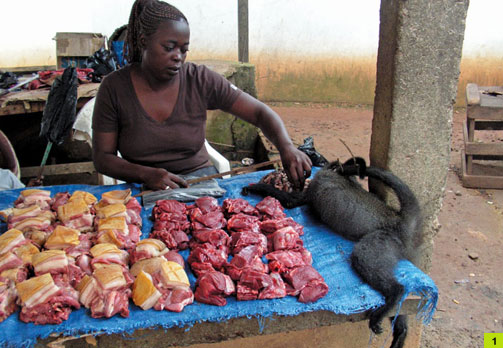
In Africa the poaching of animals such as tigers or elephants for their skins or tusks has been a problem well known throughout the world. But the impact of hunting for their meat may pose a greater threat, such a trade is known as bushmeat trade. It refers to the non-traditional hunting of non-game animals for meat. Wild chimpanzees and other forest animals are systematically hunted and sold as meat through markets across Africa and cities across the world. What once was a form of subsistence hunting in rural villages, has now evolved into a commercial trade that has grown in scale over recent decades.

While Bushmeat has been practiced since the late 1800s, the scale of hunting is far greater today and has been increasing, facilitated by road building in the forest for logging and mining operations and fuelled by growing demand in urban markets, where comparatively well-off customers consider wild-sourced protein a delicacy and a status symbol. A smaller international market for exotic meat thrives in Europe and the United States.

THE ENVIRONMENTAL IMPACTS OF BUSHMEAT TRADING

  • Environmental Imbalance

 Poachers and hunters involved in the illegal bushmeat market mainly use snares to trap these beasts and often larger animals like jackals, lions, cheetahs, wild dogs get caught in these traps. These carnivores the primary one being lions are the ones most affected due to the trading of bushmeat in two ways; by dramatically reducing the populations of animals that are food sources for lions such as antelopes and other small animals (pigs and boars) and by directly killing these animals who inadvertently are caught in the wire snares that are set to illegally harvest other species. The removal of any animal from the food chain causes an imbalance for both the species as well as other species dependant on it for food.

  • Endangering of animals

There are roughly 301 mammal species threatened by hunting for bushmeat including 126 primates, 65 even-toed ungulates, 27 bats, 26 diprotodont marsupials, 21 rodents, 12 carnivores and all Pangolin species. On Bioko Island, off the coast of Equatorial Guinea, for example, hunting for bushmeat has decimated populations of the island’s seven endemic monkey species, which are all endangered. Another prime example is the elephant which have been hunted for their tusks are also for their meat. It has been done to the extent that the bushmeat trade is estimated to be worth higher than the ivory industry. While the ivory obtained from tusks may be sold for around $180 (in 2007), a poacher could sell the meat (approximately 1,000 pounds) for up to $6,000 this may be primarily due to the high demand and the fact that the elephant’s meat is considered prestigious and hence sold at higher costs. The elephant’s population has dropped by 62% in the recent decade and the situation has not improved since with population going from 1.34 million in 1976 to barely 415,00 elephants in 2018

The Impact of Bushmeat on Humans

Animal sources may have been the cause for infectious diseases such as tuberculosis, leprosy, cholera, smallpox, measles, influenza, and syphilis acquired by early agrarians. The emergence of HIV-1, AIDS, Ebola virus disease, and Creutzfeldt-Jakob disease are attributed to animal sources today. Thomas’s rope squirrel and red-legged sun squirrel were identified as reservoirs of the monkeypox virus in the Democratic Republic of the Congo in the 1980s. Outbreaks of the Ebola virus in the Congo Basin and in Gabon in the 1990s have been associated with the butchering and consumption of chimpanzees and bonobos. The risk of bloodborne diseases to be transmitted is higher when butchering a carcass than when transporting, cooking and eating it. Many hunters and traders are not aware of zoonosis and the risks of disease transmissions. An interview survey in rural communities in Nigeria revealed that 55% of the respondents knew of zoonoses, but their education and cultural traditions are important drivers for hunting and eating bushmeat despite the risks involved.

Wild meat provides a primary food source for many millions of people throughout the developing world, especially where other food options are not readily available. Unsustainable hunting has now metamorphosed into a global hunting crisis taking the form of a serious threat to the food security of many people as well as the immediate survival of hundreds of mammal species, other wildlife and altered ecological cascades rippling through ecosystems. Averting this crisis requires bold and prompt actions. Approaches that benefit both local people and wildlife will be required to avoid a future of hungry desperate people inhabiting ‘empty landscapes’ across much of the planet Earth.

Madagascar Droughts: Climate Change

Madagascar is the fourth biggest island in the world, situated in the Indian Ocean. The island country is deemed as ‘Megadiverse’ by Conservation International with more than 250,000 species of plants and animals most of which do not exist anywhere else. Almost 90% of the species found on the island are endemic. The island of 28 million people is one of the poorest countries in the world and has been ravaged by many natural and human-induced hazards.

So we can confidently say that the country is extremely rich and unique biodiversity. On the eastern coast of Madagascar the Rainforests of Atsinanana comprising of six national parks with an endemic rate of species touching almost 80%. This area has also been added to the World Heritage List since 2007. The area is considered important to both ecological and biological processes and it also supports the rare species of Lemurs and many other primates.

Deforestation has been a major issue in Madagascar and this has also threatened the Lemurs and them and many endemic species of the island heavily rely on these forests. Madagascar witnessed rapid deforestation for long a time and this only accelerated by the end of the 19th century due to French Colonization. The forested areas were gradually converted into coffee fields and the country lost its original forest cover by almost 80%. As of today, the primary forest cover stands a little over 10 percent.

Deforestation has not only affected the ecology of the country but has also affected the soil quality and increased soil degradation. Subsistence agriculture is quite common among the inhabitants of the islands. Slash and burn is another method that has affected the forest cover of the island as these methods are not beneficial after a certain population cluster. Another big reason for the rapid deforestation is illegal logging and this benefits private entities and large corporations. The country has also seen a rapid growth in its population which currently is estimated at 26 million, up from 2.2 million in 1900. This has increased the requirement for more land for cultivation.

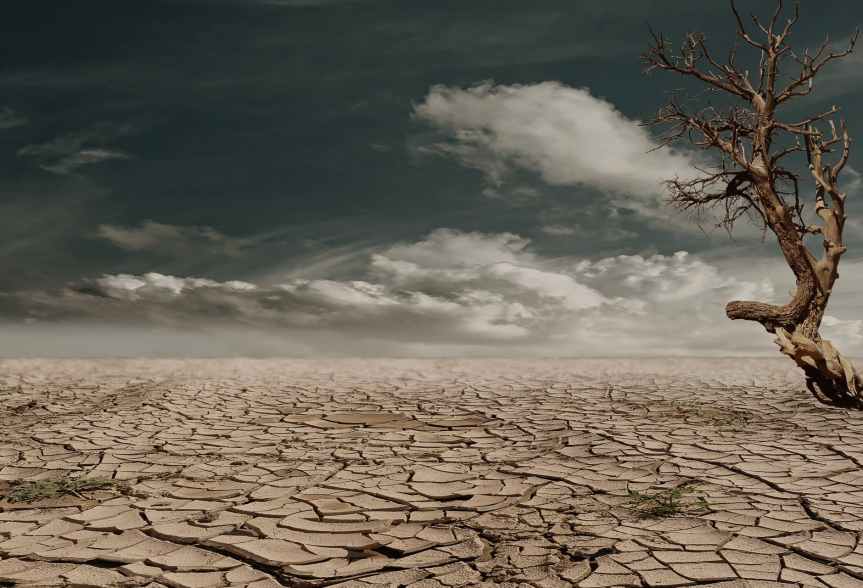
Currently, Madagascar is going through a very severe drought and deforestation can partly be a reason for this phenomenon. But there are other issues of cause too. Due to climate change, Madagascar has also suffered the consequence of the increased frequency of extreme weather events. It’s the worst drought in 40 years and has taken grip of the Southern part of the island. Due to low rainfall various streams, rivers and small dams built for irrigation dried up last year. The majority of the people in the south of the country rely on rain-fed, small-scale agriculture to survive.  With no rainfall and non-existent agriculture output, there has been an emergency in the country with severe food scarcity. Many people in the region have resorted to eating insects, wild roots.

According to experts’ deforestation, drier soils and higher temperatures due to climate change are the likely cause of droughts.

Climate experts

The island is already suffering from the covid-19 virus combined with the pressure of droughts and famines have caused strain to the poor country. Food and other aids are being provided to the affected areas of the country but supply is still not aligning with the current demand. A long-term solution will be required to tackle this situation as this problem is only going to get more serious in the future.

References:

DISEASE X: DEADLIER THAN CORONA

Life has been unreal for everyone around the globe during the past one-year accounting to the outbreak of COVID 19 pandemic. The world is on its path to recovery from the pandemic which has utterly upturned our lives. Though new strains of the virus have emerged in the UK and other parts of the world, life was almost getting back to normal with the invention of COVID 19 vaccines. However, the end of coronavirus may not be an end to the pandemic outbreaks as WHO has revealed the discovery of a new deadly virus which might be as deadly as Ebola and as contagious as Corona. The World Health Organization (WHO) has named the new virus “Disease X”, where “X” stands for unexpected. The presence of the virus is hypothetical for now but an outbreak that scientists and public health experts fear could lead to serious disease around the world if and when it occurs.

Professor Jean-Jacques Muyembe Tamfum, the scientist who discovered the African Ebola virus admonished that ‘Disease X’ could be more fatal and rapidly spreading. Scientists have found out that this new virus has originated in the tropical rain forests of Africa. “If a pathogen emerged from Africa it would take time to spread all over the world. So, if this virus is detected early — like in my institution here — there will be an opportunity for Europe [and the rest of the world] to develop new strategies to fight these new pathogens,” said Muyembe. 

Disease X was added earlier to the priority list by the World Health Organization to stimulate research and precautions regarding the possible outbreak. “Disease X represents the knowledge that a serious international epidemic could be caused by a pathogen currently unknown to cause human disease,” WHO said. With the outburst of COVID 19 pandemic, all countries are prudent upon their health care sector. In addition to this, WHO has raised an alert around the globe to strengthen the primary health care provisions in every country to prevent, detect and mitigate emergencies.

Namibia – a place to visit

Namibia, officially the Republic of Namibia, is a country in Southern Africa. Its western border is the Atlantic Ocean; it shares land borders with Zambia and Angola to the north, Botswana to the east and South Africa to the south and east. Although it does not border Zimbabwe, less than 200 metres (660 feet) of the Zambezi River separates the two countries. Namibia gained independence from South Africa on 21 March 1990, following the Namibian War of Independence. Its capital and largest city is Windhoek. Namibia is a member state of the United Nations (UN), the Southern African Development Community (SADC), the African Union (AU) and the Commonwealth of Nations.

The driest country in Sub-Saharan Africa, Namibia has been inhabited since early times by the San, Damara and Nama people. Around the 14th century, immigrating Bantu peoples arrived as part of the Bantu expansion. Since then, the Bantu groups, the largest being the Ovambo, have dominated the population of the country; since the late 19th century, they have constituted a majority.

In 1878, the Cape of Good Hope, then a British colony, annexed the port of Walvis Bay and the offshore Penguin Islands; these became an integral part of the new Union of South Africa at its creation in 1910. In 1884 the German Empire established rule over most of the territory, forming a colony known as German South West Africa. It developed farming and infrastructure. Between 1904 and 1908 it perpetrated a genocide against the Herero and Nama people. German rule ended in 1915 with a defeat by South African forces. In 1920, after the end of World War I, the League of Nations mandated administration of the colony to South Africa. As Mandatory power, South Africa imposed its laws, including racial classifications and rules. From 1948, with the National Party elected to power, this included South Africa applying apartheid to what was then known as South West Africa.

In the later 20th century, uprisings and demands for political representation by native African political activists seeking independence resulted in the UN assuming direct responsibility over the territory in 1966, but South Africa maintained de facto rule. In 1973 the UN recognised the South West Africa People’s Organisation (SWAPO) as the official representative of the Namibian people; the party is dominated by the Ovambo, who are a large plurality in the territory. Following continued guerrilla warfare, South Africa installed an interim administration in Namibia in 1985. Namibia obtained full independence from South Africa in 1990. However, Walvis Bay and the Penguin Islands remained under South African control until 1994.

Namibia has a population of 2.6 million people and a stable multi-party parliamentary democracy. Agriculture, herding, tourism and the mining industry – including mining for gem diamonds, uranium, gold, silver and base metals – form the basis of its economy. The large, arid Namib Desert has resulted in Namibia being overall one of the least densely populated countries in the world.

Tourism in Namibia

Tourism is a major contributor (14.5%) to Namibia’s GDP, creating tens of thousands of jobs (18.2% of all employment) directly or indirectly and servicing over a million tourists per year. The country is a prime destination in Africa and is known for ecotourism, which features Namibia’s extensive wildlife.

There are many lodges and reserves to accommodate ecotourists. Sport and trophy hunting is also a large and growing component of the Namibian economy, accounting for 14% of total tourism in the year 2000, or 19.6 million U.S. dollars, with Namibia boasting numerous species sought after by international sport hunters.

In addition, extreme sports such as sandboarding, skydiving have become popular, and many cities have companies that provide tours. The most visited places include the capital city of Windhoek, Caprivi Strip, Fish River Canyon, Sossusvlei, the Skeleton Coast Park, Sesriem, Etosha Pan and the coastal towns of Swakopmund, Walvis Bay and Lüderitz.

Windhoek plays a very important role in Namibia’s tourism due to its central location and close proximity to Hosea Kutako International Airport. According to The Namibia Tourism Exit Survey, which was produced by the Millennium Challenge Corporation for the Namibian Directorate of Tourism, 56% of all tourists visiting Namibia in 2012–13 visited Windhoek. Many of Namibia’s tourism-related parastatals and governing bodies such as Namibia Wildlife Resorts, Air Namibia and the Namibia Tourism Board as well as Namibia’s tourism-related trade associations such as the Hospitality Association of Namibia are headquartered in Windhoek. There are also a number of notable hotels in Windhoek, such as Windhoek Country Club Resort, and some international hotel chains, such as Avani Hotels and Resorts and Hilton Hotels and Resorts.

Namibia’s primary tourism-related governing body, the Namibia Tourism Board (NTB), was established by an Act of Parliament: the Namibia Tourism Board Act, 2000 (Act 21 of 2000). Its primary objectives are to regulate the tourism industry and to market Namibia as a tourist destination. There are also a number of trade associations that represent the tourism sector in Namibia, such as the Federation of Namibia Tourism Associations (the umbrella body for all tourism associations in Namibia), the Hospitality Association of Namibia, the Association of Namibian Travel Agents, Car Rental Association of Namibia and the Tour and Safari Association of Namibia.