Agriculture Sector in India

 Economic Survey 2023-24 presented in the Parliament today by Union Finance and Corporate Affairs Minister Smt. Nirmala Sitharaman. Economic Survey says that smallholder farmers need to move to high-value agriculture. The Survey says once the incomes of smallholders increases, they will demand manufactured goods, spurring a  manufacturing revolution.

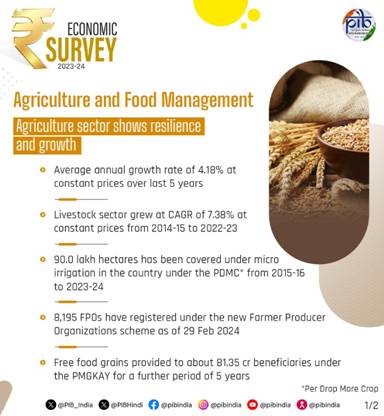
Economic Survey says that the Indian agriculture sector provides livelihood support to about 42.3 per cent of the population and has a share of 18.2 per cent in the country’s GDP  at current prices. The sector has been buoyant, which is evident from the fact that it has registered an average annual growth rate of 4.18 per cent at constant prices over the last five years and as as per provisional estimates for 2023-24, the growth rate of the agriculture sector stood at 1.4 percent.

Economic Survey states that the Investment in agriculture research and support of enabling policies have contributed substantially to food security. It is estimated that for every rupee invested in agricultural research (including education), there is a payoff of ₹13.85. In 2022-23, ₹19.65 Thousand Crore was spent on agriculture research.

Economic Survey calls for enhancing private sector investment in agriculture saying it is vital to provide impetus to the agriculture sector. Investment in technology, production methods, marketing infrastructure, and reduction in post-harvest losses need to be scaled up. A greater focus on post-harvest infrastructure and the development of the food processing sector can reduce wastage/loss and increase the length of storage, ensuring better prices for the farmers.

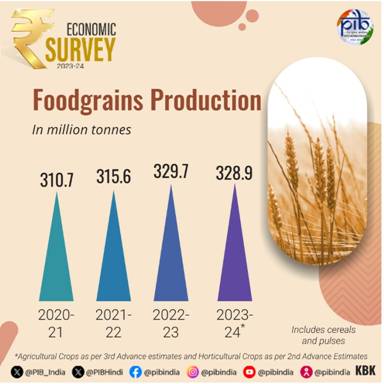
Economic Survey says that in 2022-23, foodgrain production hit an all-time high of 329.7 million tonnes, and oilseeds production reached 41.4 million tonnes. In 2023-24, food grain production is slightly lower at 328.8 million tonnes, primarily because of poor and delayed monsoons. The domestic availability of edible oil has risen from 86.30 lakh tonnes in 2015-16 to 121.33 lakh tonnes in 2023-24. The total area coverage of all oilseeds has increased from 25.60 million hectares in 2014-15 to 30.08 million hectares in 2023-24(17.5 percent growth). This has reduced the percentage share of imported edible oil, from 63.2 per cent in 2015-16 to 57.3 percent in 2022-23, despite rising domestic demand and consumption patterns.

Economic Survey suggests that to promote efficiency in agriculture marketing, and improve price discovery, the government implemented the e-NAM Scheme and as of 14th March 2024, more than 1.77 Crore farmers and 2.56 Lakh traders have been registered on the e-NAM portal. The Government of India launched the scheme to form and promote 10,000 FPOs in 2020 with a budget outlay of ₹6.86 thousand crore till 2027-28. As of 29 February 2024, 8,195 FPOs have registered under the new FPO scheme, and equity grants of ₹157.4 crore were released to 3,325 FPOs. Credit guarantee cover worth ₹278.2 crore was issued to 1,185 FPOs.

Economic Survey states that the Agricultural price support assures farmers of remunerative returns, increasing income and allows the Government to ensure a stable supply of staples at reasonable prices. Accordingly, the Government has been increasing the MSP for all Kharif, Rabi and other commercial crops with a margin of at least 50 per cent over the all-India weighted average cost of production since the agricultural year 2018-19.

Economic Survey shows that to provide social security to the most vulnerable farmer families, the Government implements Pradhan Mantri Kisan Maandhan Yojna (PMKMY). The scheme offers a monthly pension of ₹3,000 to the enrolled farmers on the attainment of 60 years of age, based on a nominal premium between ₹55 to ₹200 per month paid by the applicant (in the age group 18 to 40 years) subject to exclusion criteria. As of 07 July 2024, 23.41 lakh farmers have enrolled under the scheme.

Economic Survey, on focusing to reduce the use of chemical fertilizer, states that the PM Programme for Restoration, Awareness Generation, Nourishment, and  amelioration of Mother Earth (PM-PRANAM ) initiative incentivises states to reduce chemical fertiliser use. It promotes sustainable methods such as the use of alternative fertilisers, viz. Nano Urea, Nano DAP, and organic fertiliser.

Focusing on the security of farmers’ crop, Economic Survey highlighted the Pradhan Mantri Fasal Bima Yojana (PMFBY) which offer a safety net against crop losses due to natural calamities, pests, or diseases, ensuring financial stability for farmers. The scheme safeguards farmers’ livelihoods and encourage them to adopt modern farming practices and technologies. PMFBY is the largest crop insurance scheme in the world in terms of farmer enrolment and is the third largest scheme in terms of insurance premiums. The scheme ensure comprehensive risk cover for crops to farmers against all non-preventable natural risks from pre-sowing to post-harvest. The overall insured area in 2023-24 reached 610 lakh ha compared to 500.2 lakh ha in 2022-23. A total of 5549.40 Lakh farmer applications were insured under the scheme since 2016-17, and ₹150589.10 Crore has been paid as claims.

***

Green Revolution

Green revolution, great increase in production of food grains (especially wheat and rice) that resulted in large part from the introduction into developing countries of new, high-yielding varieties, beginning in the mid-20th century. Its early dramatic successes were in Mexico and the Indian subcontinent.


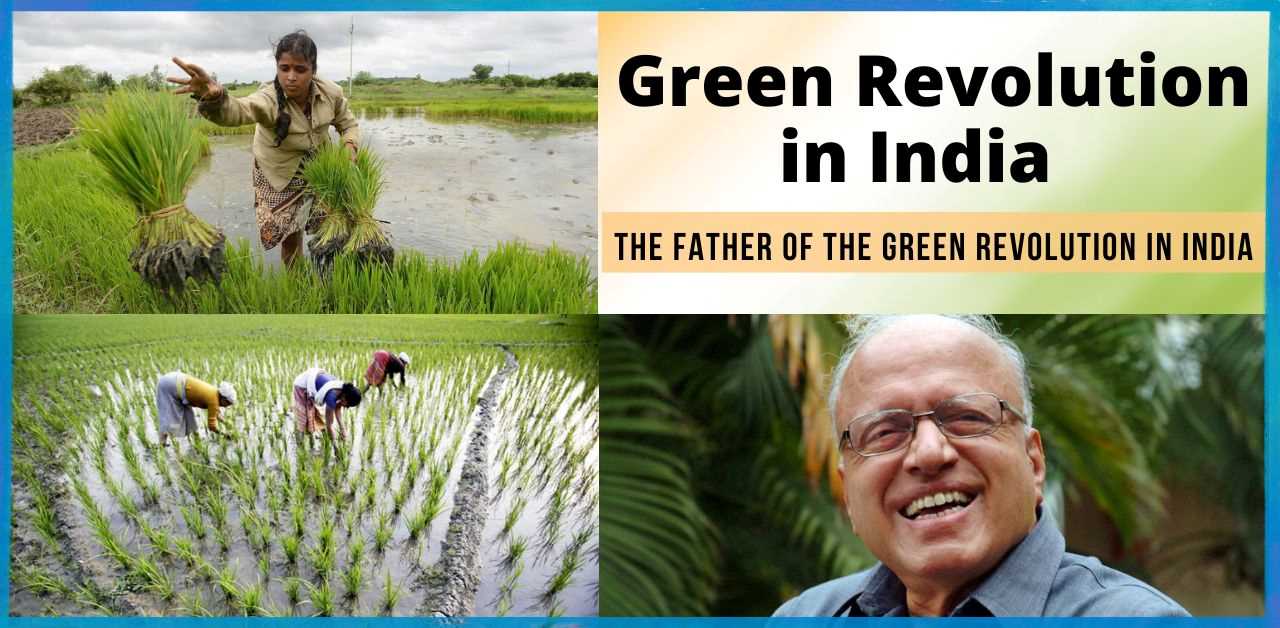
part of a larger initiative by Norman Borlaug, Green Revolution in India was founded by M S Swaminathan. The aim was to increase agricultural productivity in the developing world with use of technology and agricultural research.

The Green Revolution was initiated in the 1960’s to address the issue of malnutrition in the developing world. The technology of the Green Revolution involved bio-engineered seeds that worked in conjunction with chemical fertilizers and heavy irrigation to increase crop yields.

The amount of greenhouse gas emissions will help to reduce this. It allows us to create more food than conventional methods of growing. In uncooperative conditions, it offers us with predictable yields. It allows a decline in food costs for the world economy.

it was beneficial because it helped produce more food and prevented the starvation of many people. It also resulted in lower production costs and sale prices of produce. Although it had several benefits, the Green Revolution also had some negative effects on the environment and society.

The Green Revolution was a significant period of agricultural innovation and development that began in the mid-20th century, aiming to increase agricultural productivity worldwide, particularly in developing countries.

Key elements of the Green Revolution included:

  1. High-Yielding Varieties (HYVs): Scientists developed new varieties of seeds, particularly for staple crops like wheat, rice, and maize, which had higher yields and were more resistant to diseases and pests.

  2. Intensive Use of Chemical Fertilizers and Pesticides: To support the growth of these high-yielding crops, farmers began using synthetic fertilizers and pesticides on a larger scale.

  3. Irrigation Techniques: Implementation of improved irrigation systems, like drip irrigation, helped provide water to crops more efficiently.

  4. Mechanization: Introduction of machinery and technologies into agriculture, such as tractors and combine harvesters, to streamline farming processes.

The Green Revolution had several positive impacts:

  • Increased Agricultural Productivity: Crop yields soared, leading to more food being produced on existing farmland.
  • Food Security: It helped alleviate hunger in many parts of the world by increasing food availability.
  • Economic Growth: Improved agricultural productivity contributed to economic growth in many developing countries.

However, there were also concerns and criticisms associated with the Green Revolution:

  • Environmental Impact: Excessive use of chemical fertilizers and pesticides led to soil degradation, water pollution, and loss of biodiversity.
  • Social Disparities: The benefits of the Green Revolution were not equally distributed, leading to socioeconomic disparities between wealthy and poor farmers.
  • Sustainability Concerns: Reliance on high inputs of water, chemicals, and specific seed varieties raised concerns about the long-term sustainability of this agricultural model.

Efforts have been made to address these issues through sustainable agricultural practices, emphasizing environmentally friendly approaches and technologies while aiming for increased productivity and food security without compromising the environment or social equity.

Availability and use of fertilizers in India

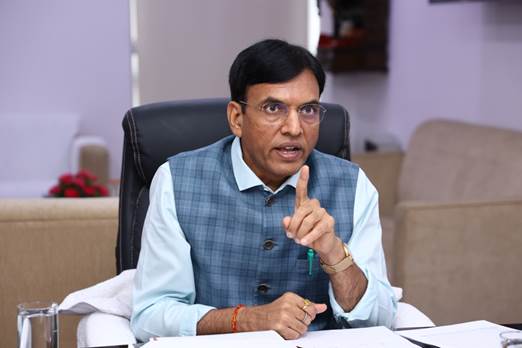
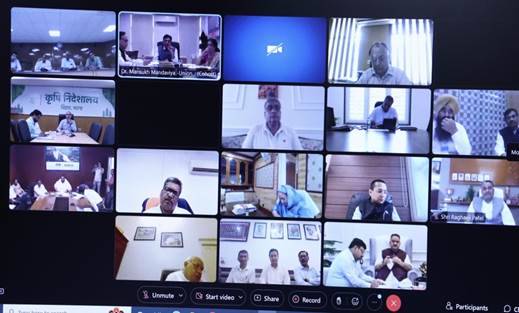
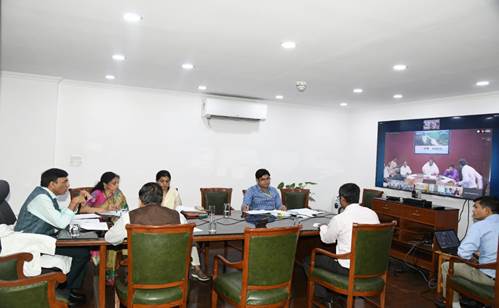
 Union Minister of Chemicals and Fertilizers, Health & Family Welfare Dr. Mansukh Mandaviya interacted with State Agriculture Ministers on the availability and use of fertilizers in the country, here today. During the meeting he also reviewed progress of nano urea, nano DAP and promotion of alternate fertilizers at the field level and steps initiated by the States in this regard.

At the outset, Dr. Mandaviya informed all the States that there is adequate availability of fertilizers in the country with the present level of 150 LMT stocks. This stock will not only take care of ongoing Kharif Season but will also ensure comfortable opening for the forthcoming Rabi Season.

Dr Mandaviya highlighted the necessity of reducing the excessive use of chemical fertilizers to save soil. He reiterated that Union Government has already taken a step in the form of PM PRANAM scheme. The efforts also include introduction of slow-release Sulphur Coated Urea (Urea Gold), nano urea, nano DAP etc. to promote use of alternate fertilizers to save the mother earth. The State Government expressed their willingness to be active participants in this resolve.

There was a discussion on the initiative of PMKSKs across the country which are acting as One-Stop-Shop catering to all the needs of farmers at one place. He made an appeal to all the State Agriculture Ministers and State Government Officials to regularly visit these PMKSKs and spread awareness among farmers.

Hon’ble Minister made an earnest appeal to the States/ UTs about the need to keep a check on diversion of agriculture grade urea for non-agricultural purpose. He further asked the States/ UTs to run awareness campaigns, thereby, reducing the possible diversion of Agriculture Urea and to take strict action against the defaulters. It is recalled that based on the Joint Inspections by the Fertilizer Flying Squad of Centre Government and various State Agriculture Departments, State Governments have registered 45 FIRs against defaulting Urea Using Units, cancelled licenses of 32 Mixture Units and de-authorized 79 mixture units along with strict actions under Essential Commodities Act & Prevention of Black Marketing Act. The State Government also echoed the sentiment of Zero Tolerance against such culprits.

The Meeting concluded with Centre and States on board to take all necessary steps forward to promote use of alternate fertilizers, reduce the excessive consumption of Chemical Fertilizers. The recently launched initiatives like PM-PRANAM, Urea Gold, Nano-Urea, Nano-DAP were well recognized by the States with equal resolve to achieve the desired results in the larger interests of the farming community.  

State Agriculture Ministers from various States and senior officers from State Governments  and senior officials of Department of Fertilizers & Department of Agriculture & Farmers Welfare attended the meeting.

****

What are Agro-Climatic Regions of India?

 Geographers use the term “area” to refer to any particular portion of Earth’s surface. It may be as small as a park or a neighborhood, or as large as a continent or an ocean. Metropolitan areas, for example, help define the borders of large population centers for a census and other official purposes. The metropolitan area of Delhi, Mumbai are urban geographic areas.  Area is also an exact measure of the size of a surface with specific boundaries.

The geographical area of India is divided into 15 agro-climatic regions. These are further divided into more homogeneous 72 sub-zones. The 15 agro-climatic zones are:

  • Zone 1 – Western Himalayan Region: Jammu and Kashmir, Uttar Pradesh
  • Zone 2 – Eastern Himalayan Region: Assam, Sikkim, West Bengal and all North-Eastern states
  • Zone 3 – Lower Gangetic Plains Region: West Bengal
  • Zone 4 – Middle Gangetic Plains Region: Uttar Pradesh, Bihar
  • Zone 5 – Upper Gangetic Plains Region: Uttar Pradesh
  • Zone 6 – Trans-Gangetic Plains Region: Punjab, Haryana, Delhi and Rajasthan
  • Zone 7 – Eastern Plateau and Hills Region: Maharashtra, Uttar Pradesh, Orissa and West Bengal
  • Zone 8 – Central Plateau and Hills Region: MP, Rajasthan, Uttar Pradesh
  • Zone 9 – Western Plateau and Hills Region: Maharashtra, Madhya Pradesh and Rajasthan
  • Zone 10 – Southern Plateau and Hills Region: Andhra Pradesh, Karnataka, Tamil Nadu
  • Zone 11 – East Coast Plains and Hills Region: Orissa, Andhra Pradesh, Tamil Nadu and Pondicherry
  • Zone 12 – West Coast Plains and Ghat Region: Tamil Nadu, Kerala, Goa, Karnataka, Maharashtra
  • Zone 13 – Gujarat Plains and Hills Region: Gujarat
  • Zone 14 – Western Dry Region: Rajasthan
  • Zone 15 – The Islands Region: Andaman and Nicobar, Lakshadweep
Geographic Areas Examples
Tropical Rainforest Assam and parts of the Sahyadri Mountain Range
Tropical Savannah Sahyadri Mountain Range and parts of Maharashtra
Tropical and subtropical steppe Parts of Punjab and Gujarat
Tropical Desert Most parts of Rajasthan
Moist subtropical with winter Parts of Punjab, Assam, and Rajasthan
Mountain climate Parts of Jammu and Kashmir, Himachal Pradesh, and Uttaranchal
Drought Rajasthan, Gujarat, and Haryana
Tropical semi-arid steppe Tamil Nadu, Maharashtra, and other parts of South India

AGRICULTURE AND ITS EFFECT ON THE ENVIRONMENT

 Introduction

Agricultural development is aimed at achieving self- sufficiency in food production to the ever increasing human population. However,  this has resulted in continuous environmental degradation, particularly of soil, vegetation and water resources. Soil organic matter levels are declining at an alarming rate because the use of chemical inputs is intensifying. Newly introduced crops and the chemicals .This has been accelerated both by increased fertiliser application and use of irrigation resulting in water contamination by nitrate and phosphate and changes in the ground water table. With  over 80% of the geographic area already under cultivation, the scope for increased productivity lies in further intensification which is crucially dependent on more energy-intensive inputs. Declining nutrient-use efficiency, physical and chemical degradation of soil, and inefficient water use have been limiting crop productivity, whilst the use of monocultures, mechanisation and an excessive reliance on chemical plant protection have reduced crop, plant and animal diversity in recent years. About 60% of the geographical area faces soil degradation (waterlogging, salinity and alkalinity) which threatens the region’s food security in the future. Since 1985, the water table has risen more than 1 m annually, and patches of salinity have started to appear at the farm level. The situation is worse in higher rainfall areas where waterlogging follows shortly after the rains. Apart from affecting agricultural crops, a high water table causes floods even following slight rains due to the reduced storage capacity of the soil. Such ecological impacts are motivating farmers to reduce fertiliser and pesticides use. This has led to an increased investment in alternative technology and products including an interest in Integrated Pest Management. The paper discusses major physical, hydrological, chemical and biological constraints relating to soil and water caused by agricultural development and recommends  on environmental sustainability.
  Environmental effects of agricultural development

1.Deforestation

Agriculture is a major land use. Statistics show that around 50% of the world’s habitable land has already been converted to farming land. The overall farmland is estimated to cover about 38% of the world’s land area.
One of the causes of deforestation is to clear land for pasture or crops. In 2000 the United Nations Food and Agriculture Organization (FAO) found that “the role of population dynamics in a local setting may vary from decisive to negligible,” and that deforestation can result from “a combination of population pressure and stagnating economic, social and technologic
 climate change.
 It is predicted that in developing countries, a further 120 million hectares of natural habitats will be converted to farmland to meet demand for food by 2050. This will include land with high biodiversity value.
 Agricultural ecosystems provide important habitats for many wild plant and animal species. This is especially the case for traditional farming areas that cultivate diverse species. Recent examples include the conversion of lowland rainforests in Indonesia to oil palm plantations, and of large areas of the Amazon rainforest and Brazilian savanna to soybean and cattle farms.
This ongoing habitat loss threatens entire ecosystems as well as many species.Due to the habitat loss, many species have become extinct and more are expected to if nothing is done. Expanding oil palm plantations in Indonesia and Malaysia, for example, pose the most significant threats to endangered species like megafauna including Asian elephant
Sumatran rhinoceros, and tigers.
In addition to the loss of biodiversity,deforestation which is as a result of agricultural development has  also led to desertification of so ecological  zones.This is because trees play a key role in the hydrological cycle.Once the trees are eliminated from the system,the rain patterns are going  to decrease or even diminish bringing about desertification.
Most of the cleared natural habitats for agricultural purposes are always meant to be for large  intensive monocultures.This type of practice leads to decline in soil fertility since land is not given time as opposed to the traditional farming methods that allowed land to rest.Therfore this results in loss of soil fertility and therefore biodiversity is decreased

2. Climate change.

Climate change cannot be isolated from agricultural processes; both are greatly interrelated and take place on a global scale.

Development in agriculture has been shown to produce significant effects on climate change. This has happened primarily through the production and emission of gases. Farming practices in agriculture are significant contributors to the build-up of green house gases such as carbon dioxidemethane, and oxides. Most industries which pollute the environment are related to agricultural development. These industries include fertilizer factories, sugar factories, oil and pulp mills, textile mills and tanneries.

© WWF-Canon / Mauri RAUTKARI
Emissions and effluents from these industrial complexes are already causing some harm to man, animals and environment in general. Land clearance to give room for more agricultural land has adversely affected the environment. This has led  to the alteration of the Earth’s land cover, which can change its ability to absorb or reflect heat and light, thus contributing to forcing. In addition deforestation has brought about imbalances in the levels of concentration of carbon dioxide which among other gases such as methane and nitrous oxides brings about global warming. Global warming therefore is projected to have significant impacts on conditions affecting agriculture, including temperatureprecipitation and glacial run-off. These conditions determine the carrying capacity of the biosphere to produce enough food for the human population and domesticated animals. Rising carbon dioxide levels would also have effects, both detrimental and beneficial, on crop yields. The overall effect of climate change on agriculture will depend on the balance of these effects. Assessment of the effects of global climate changes on agriculture might help to properly anticipate and adapt farming to maximize agricultural production.
3. Genetic engineering
Traditional biotechnology has been abandoned and replaced by genetic engineering. In genetic engineering, biotechnology in agricultural production is the order of the day. This is the application of scientific techniques to modify and improve plants animals and microorganisms to enhance their value.
Advances in the field of molecular biology were achieved in 1970s.This has provided scientists with the ability to manipulate DNA-the chemical building blocks that specify the characteristics of living organisms at molecular level. It also allows the transfer of DNA between more distantly related organisms than was possible with traditional breeding technology. Today this technology has reached a stage where scientist can take on one or more specific genes from nearly any organisms including plants, animals, bacteria and viruses and introduce those genes into another organism. This technology is referred to as genetic engineering and the organisms are known as genetically modified or transgenic organisms. Everything in life has its benefits and risks, and genetic engineering is no exception. Much has been said about potential risks of genetic engineering technology, but so far there is little evidence from scientific studies that these risks are real. Transgenic organisms can offer a range of benefits above and beyond those that emerged from innovations in traditional agricultural biotechnology. Following are a few examples of benefits resulting from applying currently available genetic engineering techniques to agricultural biotechnology
When genetic engineering results in reduced pesticide dependence, we have less pesticide residues on foods, we reduce pesticide leaching into groundwater, and we minimize farm worker exposure to hazardous products. With Bt cotton’s resistance to three major pests, the transgenic variety now represents half of the U.S. cotton crop and has thereby reduced total world insecticide use by 15 percent! Also, according to the U.S. Food and Drug Administration (FDA), “increases in adoption of herbicide-tolerant soybeans were associated with small increases in yields and variable profits but significant decreases in herbicide use”
Biotechnology has helped to increase crop productivity by introducing such qualities as disease resistance and increased drought tolerance to the crops. Farmers use crop-protection technologies because they provide cost-effective solutions to pest problems which, if left uncontrolled, would severely lower yields. As mentioned above, crops such as corn, cotton, and potato have been successfully transformed through genetic engineering to make a protein that kills certain insects when they feed on the plants. The protein is from the soil bacterium Bacillus thuringiensis, which has been used for decades as the active ingredient of some “natural” insecticides.
However as mentioned earlier,there are possible environmental risk associated with this type of technology. Some consumers and environmentalists feel that inadequate effort has been made to understand the dangers in the use of transgenic crops, including their potential long-term impacts. Some consumer-advocate and environmental groups have demanded the abandonment of genetic engineering research and development. There is a belief among some opponents of genetic engineering technology that transgenic crops might crosspollinate with related weeds, possibly resulting in “superweeds” that become more difficult to control. One concern is that pollen transfer from glyphosate-resistant crops to related weeds can confer resistance to glyphosate. While the chance of this happening, although extremely small, is not inconceivable, resistance to a specific herbicide does not mean that the plant is resistant to other herbicides, so affected weeds could still be controlled with other products.
 Some people are worried that genetic engineering could conceivably improve a plant’s ability to “escape” into the wild and produce ecological imbalances or disasters. Most crop plants have significant limitations in their growth and seed dispersal habits that prevent them from surviving long without constant nurture by humans, and they are thus unlikely to thrive in the wild as weeds.  
Some environmentalists maintain that once transgenic crops have been released into the environment, they could have unforeseen and undesirable effects. Although transgenic crops are rigorously tested before being made commercially available, not every potential impact can be foreseen. Bt corn, for instance, produces a very specific pesticide intended to kill only pests that feed on the corn. In 1999, however, researchers at Cornell University found that pollen from Bt corn could kill caterpillars of the harmless Monarch butterfly. When they fed Monarch caterpillars milkweed dusted with Bt corn pollen in the laboratory, half of the larvae died. But follow-up field studies showed that under real-life conditions Monarch butterfly caterpillars are highly unlikely to come into contact with pollen from Bt corn that has drifted onto milkweed leaves—or to eat enough of it to harm them.
Another concern related to the potential impact of agricultural biotechnology on the environment involves the question of whether insect pests could develop resistance to crop-protection features of transgenic crops.
4. Irrigation Farming:
Agriculture is the greatest user of water globally, the agricultural sector consumes about 70% of the planet’s accessible freshwater more than twice that of industry which is esimated at23% and dwarfing municipal use 8%. Excessive water use for agriculture is leaving rivers, lakes and underground water sources dry. Many big food producing countries like the US, China, India, Pakistan, Australia and Spain have reached, or are close to reaching, their renewable water resource limits.Agriculture wastes about 60% or 1,500 trillion of the2,500 trillion litres of water it uses every year. The major causes of improper water utilization in irrigation farming include the following;
Ø  Poorly maintained irrigation pipes that allows water to leak hence wasteges during application.
Ø  Irrigation system employed.
Ø  Poor choice of crops.
Irrigation can lead to a nmumber of environmental  problems if it is not done in a proper and sustainable way.such problems include:
v  Depletion of underground aquifers through overdrafting.
v  Underirrigation gives poor soil salinity control which leads to increased soil salinity with consequent build up of toxic salts on soil surface in areas with high evaporation. This requires either leaching to remove these salts and a method of drainage to carry the salts away.
v  Overirrigation because of poor distribution uniformity or management wastes water, chemicals, and may lead to water pollution.
v  Deep drainage (from over-irrigation) may result in rising water tables which in some instances will lead to problems of irrigation salinity requiring watertable control by some form of subsurface land drainage.
v  Irrigation with saline or high-sodium water may damage soil structure.
v  The problem is made worse by misdirected subsidies, low public and political awareness of the crisis, and weak environmental legislation.
v  Excessive irrigation can also increase soil salinity and wash pollutants and sediment into rivers – causing damage to freshwater ecosystems and species as well as those further downstream, including coral reefs and coastal fish breeding grounds.
5. Pollutants.
Modern agriculture require intensive use of agricultural chemicals geared towards maximum production. Most dangerous chemicals that are used in large quantities today are  mostly for agriculture. These chemicals include fertilizers, insecticides, fungicides, herbicides and other pesticides.
In modern agricultultural practices,fertilizers are added to the soil because they help plants to grow and produce maximum yields. However the environmental problems associated with fertilizers application come about if they are washed out of the soil by the rain and leached into the ground water, into lakes or streams, or into the lagoon where they contribute to pollution. The fertilizers in the water encourage algae(algal bloom) and other plants to grow, and these may become so thick that they start to rot and smell. They may also crowd out or shade out other valuable forms of life like corals. Nitrate fertilizers are also dangerous if they get into drinking water, because they may be turned into nitrites which can cause cancer.
Pesticides are by their very nature poisons for at least some kinds of life, often including people.
Agriculture is the leading source of pollution in many countries.
© Michel Gunther / WWF-Canon
 Pesticides can hurt the environment or poison people in many ways. They may be used without following the instructions very carefully, so that too much is used, or at the wrong time. They may be absorbed by the people who apply the pesticides, especially in the tropics where people do not know much about pesticides and do not like or even have protective clothing. They may be washed off the crop or field by the rain, or blown into villages or into the forest by the wind. They may be applied too close to harvest time and thus still be on the food when it is harvested and eaten. They may not be used the way they were intended (such as for poisoning fish), or be washed into water supplies when users wash their equipment carelessly. They may be eaten accidentally by children thinking they are something good, or by people who use pesticide containers for food or drink. They may be taken intentionally by people who want to commit suicide (if it is a poison with no known cure, even if they change their mind they still die a horrible death). They may spill or leak while they are being transported or while they are in storage.
Once they get into the environment where they are not wanted, they can be a great danger to people and to many useful forms of life. Pesticides should thus only be used when absolutely necessary, and with the greatest care. The increasing use of dangerous chemicals for agricultural development projects can thus have serious impacts on the island environment either directly through the project or indirectly through the risks associated with simply having such chemicals on the island.


6.Soil degradation
The soil is an essential agricultural resource and it should be used sustainably. The kinds of agricultural development proposed must be adapted to the requirements for soil conservation at the site to be developed. The risk of soil loss is often greater with large development projects, which attempt to achieve economies of scale through large cleared areas and the use of machines.
Farming operations that are done on large scale basis usually involve mechanisation.Large machines are used in these operations and they destroy the soil structure making them vulnerable to soil degradation.
© Michel Gunther / WWF-Canon
While these technologies are highly successful in the more temperate conditions of the developed countries, they are not always as appropriate to tropical conditions with fragile soils and frequent problems of erosion. In some cases, the use of poorly chosen machinery or techniques has badly damaged the soil structure.
The economic requirement for a continuing return on investments may not permit the periods of fallow which allowed island soils to regenerate. While a decline in fertility can be made up with chemical fertilizers, the rapid loss of humus in the tropics is more difficult to replace, and the soil structure and its ability to hold water may deteriorate. Techniques like composting and mulching which restore organic matter to the soil are seldom practised on a large scale.
Agricultural development projects need to be adapted to these constraints. Crop rotations and the use of legume crops can help to maintain the soil. It may be necessary to use mixed plantings of more than one crop, to use cover plants to protect the soil from heavy rain, or to use windbreaks and other protective plantings around the crop. The new techniques of agro-forestry in which trees and food or crop plants are mixed are showing promise in tropical areas and may well be appropriate.

7. Waste

Agricultural waste is any substance or object from premises used for agriculture or horticulture, which the holder discards, intends to discard or is required to discard. It is waste specifically generated by agricultural activities.
For example, waste which came from a farm shop or a vegetable packing plant would not be agricultural waste.
Some examples of agricultural waste are:
Ø  empty pesticide containers;
Ø  old silage wrap;
Ø  out of date medicines and wormers;
Ø  used tyres;
Ø  Surplus milk.
Since 2006, agricultural waste has been subject to the same controls that have applied to other sectors for many years. On 15 May 2006, uncontrolled burning or tipping of waste on farms became illegal.

PLASTICULTURE, THE USE OF PLASTIC MATERIALS IN AGRICULTURE, RAISES PROBLEMS AROUND HOW TO CARRY OUT THE RECYCLING OF AGRICULTURAL PLASTICS.

 8.LAND LOST TO DESERTIFICATION

Desertification is the process of making or becoming a desert-a drybarren often sand- covered area of land,characteristically desolate,waterless and without vegetation.
Increasing human pressure on the land can lead to desertification through such activities as over-cultivation ,overgrazing, deforestation and poor water management
On top of habitat loss due to clearing, unsustainable agricultural practices are seeing 12 million hectares of land lost each year to desertification.
9.Other effects
Agricultural development can bring with it other risks to the  environment. The large quantities of seeds imported for some projects may contain a few weed seeds. Even one or two unwanted seeds can introduce a noxious weed that may become a serious problem when released in the ecosystem with few competitors or enemies.
Seeds or planting stock that are not carefully inspected and subject to strict quarantine requirements may also introduce pests or diseases previously unknown to  the area and which can ruin its agriculture.
Even some supposedly useful animals and plants introduced for agricultural purposes have turned into pests in the given area with serious effects on native species and even on agriculture itself. Guava, myna birds, cane toads and mongooses are obvious examples.
 Conclusion
Our environment is very precious, and many natural resources are non-renewable. In the process of achieving higher levels of growth and income particularly in agriculture, man has played havoc with Nature’s balance. Sustainable growth and sustainable development, based on protection and conservation of the environment, are the need of the hour.
The very existence of the human race will be threatened by natural disasters, if environmental damage crosses a critical limit. This is a clear warning to all of us to pay attention to these environmental threats and adopt appropriate agricultural measures to prevent further disasters.
It should be clear from all of the above that agricultural development projects require extremely careful planning if they are not to have unexpected and often serious effects on people and the environment.
Recommendations
The governments need to formulate a careful policies on their agricultural practices.  While making advances in agricultural technologies, sustainability should not be overlooked and while ensuring reasonable agricultural prosperity at present, we should not presume to preside over the future.
  • Water Resource Management: Community wells may be dug instead of individual wells so that water will be granted on a need-based . Rainwater harvesting is another viable option that must be explored, as it is virtually a free resource.
  • Afforestation: In order to upgrade the environment, plants have to be grown on a top priority basis. These plants must be selected not only on the consideration of quick growth, but also in terms of their effects on agricultural development and environment. Strict measures have to be taken to check further deforestation.
  • Suitable Input Mix: Seeds, fertilizers, pesticides and agricultural implements have to be combined in such a way so as to meet the present challenges, and yet also ensure future stability.
  • Suitable Cropping Pattern: By adopting appropriate policy measures, policy makers should give the desired direction to efforts to maintain environmental balance.
According to EMCA 1999 section 58, all development projects, must udergo Environmental Impact Assessments.
REFERECE :
1.      .Mille Tyler 1990-2007.Living in the Environment
2.      .Botkin and Keller.1994-2008.Environmental science
3.      EMCA  1999
6.      David Reid .Sustainable development: an introductory guide.
7.      Our common Future:WCED Report 1987
8.       W.M Adams.1990 Green Development; Environment and sustainability in 3rd World

Need to transform agriculture to advanced farming and maintain continuity

Transforming agriculture into advanced farming practices while ensuring continuity involves adopting innovative techniques, technologies, and sustainable approaches to increase productivity, preserve natural resources, and secure food production for the future. Here are steps to achieve this:

  1. Adopting Precision Agriculture: Utilize technology such as sensors, drones, and GPS-guided machinery to monitor and manage crops more efficiently. This allows for precise application of resources like water, fertilizers, and pesticides, reducing waste and environmental impact.

  2. Implementing Agroecology: Embrace farming practices that mimic natural ecosystems, emphasizing biodiversity, soil health, and ecological balance. This includes crop rotation, agroforestry, and integrating livestock to improve soil fertility and reduce reliance on chemicals.

  3. Investing in Sustainable Irrigation: Employ water-efficient irrigation methods like drip irrigation, sprinkler systems, and smart water management techniques to conserve water resources and prevent wastage.

  4. Utilizing Biotechnology and GMOs: Responsible use of biotechnology, including genetically modified organisms (GMOs), can enhance crop resilience, increase yields, and address challenges like pests, diseases, and climate change impacts.

  5. Promoting Vertical Farming and Controlled Environment Agriculture: Embrace vertical farming techniques and controlled environment agriculture (CEA) such as hydroponics, aquaponics, and indoor farming to optimize space, reduce water usage, and produce crops year-round in urban settings.

  6. Encouraging Sustainable Livestock Practices: Implementing methods that reduce the environmental impact of livestock farming, such as rotational grazing, feed efficiency improvements, and methane reduction strategies.

  7. Fostering Digital Agriculture and Data Analytics: Utilize big data, AI, and predictive analytics to optimize farming practices, predict crop yields, monitor soil health, and make informed decisions for better resource management.

  8. Supporting Farmer Education and Training: Provide access to education, training, and resources for farmers to adopt and adapt to new technologies and sustainable practices.

  9. Policy Support and Investment: Governments and stakeholders should offer incentives, subsidies, and policies that encourage the adoption of sustainable farming practices, research into innovative technologies, and infrastructure development.

  10. Resilience and Adaptation to Climate Change: Develop strategies and practices that build resilience in agriculture against climate change effects, including drought-resistant crops, flood management, and soil conservation.

Continuity in advancing agriculture requires a holistic approach that combines technological innovation, sustainable practices, supportive policies, education, and investment. Collaboration among farmers, researchers, policymakers, and the private sector is essential to successfully transform agriculture while ensuring food security and environmental sustainability.

Need to transform agriculture to advanced farming and maintain continuity

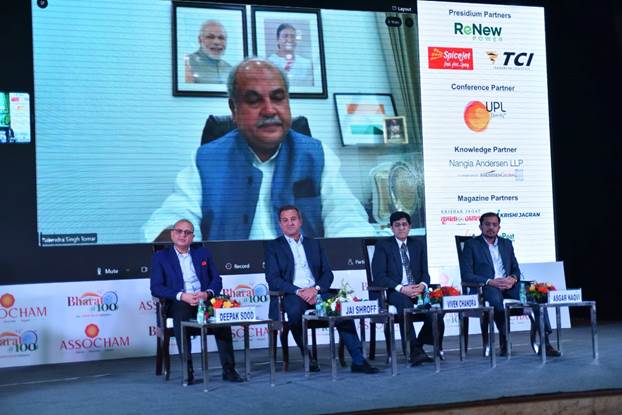
 The Union Minister for Agriculture and Farmers Welfare, Shri Narendra Singh Tomar has said that the Agriculture sector is the backbone of our country and our rural economy and agriculture have such strength that the country can easily overcome even the adverse situations. The Indian Agriculture sector has shown this during the Covid pandemic. The Government of India provided food security to 800 million people of the country, as well as helped friendly countries. Today we are in the first or second place in the world in terms of most of the agricultural produce. Despite this, there are some challenges before the Agriculture sector. There is a need to work in this direction to transform agriculture into advanced farming, technology should be used in agriculture and its continuity should be maintained.

Shri Tomar said this in his virtual address to the National Conference on Enhancing Agricultural Productivity on the topic “Integration of Improved Seeds and Agri Inputs”, organized by the Associated Chamber of Commerce and Industry of India (ASSOCHAM) in New Delhi today. Shri Tomar said that the stronger and more profitable the Agriculture sector is, the stronger the country will be. There is a need to consider the challenges facing Agriculture today. In spite of all the favourable conditions, the area under farming and its profit and loss depend a lot on the nature. People’s curiosity and attachment towards agriculture should increase, agriculture should be attractive for the next generation and farmers can be retained for farming, more work needs to be done in this direction. Shri Tomar said that the government is working to reduce the gap between farmers and the market, providing infrastructure in rural areas and eliminate the role of middlemen. He said that the number of small farmers in the country is more, who have small acreage and do not have money for investment; for such farmers, the Central Government is setting up 10,000 new FPOs, for which a provision of Rs 6,865 crore has been made and small farmers are being mobilized. It is the effort of the government that farmers should do group farming, so that the input costs can be reduced, production quality improves and small farmers can shift to remunerative crops and get the price for their produce on their own terms. FPOs can also process products. For this, the government has extended loans up to Rs. 2 crore without guarantee.

Shri Tomar said that to reduce import dependence in oilseeds, the Oil Palm Mission has been started with a provision of Rs.11,000 crore. 28 lakh hectares of land in the country is suitable for oil palm cultivation. The prospects are high in the Northeast. Provision of Rupees One lakh crore Agri Infra Fund has been made for creation of infrastructure in the villages. Provision has also been made for special packages for Animal Husbandry, Fisheries and Medicinal Farming. Shri Tomar said that the Government of India is also working on the Digital Agriculture Mission, in which farmers, banks and other institutions will be linked, crop assessment made, data collected and crop losses will also be assessed with technology. Mapping will be done in such a way that farmers across the country can be advised through the State Governments as to where and which consumption is there, accordingly profit can be earned by producing as much needed. There will be no panic and there will be no loss. The Government has also emphasized on Natural Farming, in this direction we all need to work ahead. ASSOCHAM members including Secretary General Shri Deepak Sood, Shri Asghar Naqvi and Shri Jai Shroff were present in the programme. A knowledge paper was released on the occasion.

***

RainWater Harvesting

N kavya

Rainwater harvesting is a sustainable process that helps in preserving water for future needs. Water scarcity is a major concern in today’s scenario. The process of rainwater harvesting is a good way to conserve water. Rainwater Harvesting is one of the most used methods to save water. It refers to storing rainwater for various uses. The notion behind rainwater harvesting is to not waste the rainwater and prevent it from running off. In other words, it is done to collect rainwater using simple mechanisms. It is usually collected at the place the rain falls from the ground or rooftops. Rainwater harvesting is an alternative to reduce the stress of public water supply sources. The recharge of rainwater to the ground in the coastal regions prevents seawater immersion into the freshwater. Finally, rainwater harvesting reduces water supply bills.

Rainwater Filtration -:

Rainwater can be harvested or purified in multiple ways. The catch area before harvesting must be cleaned thoroughly, and the pipelined must be flushed regularly. Initially, the water flow is diverted to wash or rinse the area.
Rainwater contains contaminants or other waste materials that affect the quality of the water. Contaminants such as dust, Bird excreta, pollution, leaves, and sand particles can affect water quality.


Filtration removes contaminants and other impurities and purifies rainwater for drinking and other purposes. However, the harvested water must be treated and tested before consumption to ensure the right quality check.
Industries use the practice of pre-filtration to ensure that the purified water is directed water to the tank. The pre-filtration measure is a vital step that the water supply system should not compromise in terms of water quality.


Some techniques of rainwater purification are solar sterilization, the use of chemicals like iodine or chlorine, or sediment filtration. However, harvested rainwater used for drinking purposes can be filtered through Reverse Osmosis (RO).

Favorable aspects of Rainwater Harvesting -:

Rainwater Harvesting positively affects underground water quality. It dilutes the number of nitrates, fluorides, and salinity of the underground water. It contains zero hardness and almost neutral pH, making it highly suitable for industries, homes, institutions, industries, and other commercial establishments. Rainwater Harvesting reduces water supply bills. It is an excellent method that solves the water shortage crisis and lessens the energy consumption in water disturbance. Rooftop Rainwater harvesting controls urban flooding. The recharge of rainwater to the ground in the coastal regions prevents seawater immersion into the freshwater. Rainwater harvesting is an alternative to reduce the stress of public water supply sources. Construction of deeper wells can damage the natural environment as well as upscale. Therefore, the source of rainwater is highly effective and dependable. Stored harvested rainwater can be used as an alternative to municipal water and used during the water crisis.

Rainwater harvesting can be done in a variety of methods, including -:

1. A watershed is a region where precipitation flows directly into a river or another reservoir.
2. There are two ways to keep water: on the roof or the ground.
3. Normally, rainwater is collected on the rooftops. The rainwater from the roof is usually collected in PVC pipes and stored in a sump (a deep pit dug into the earth) or a tank.
4. The water in the tank can then be used for home purposes after it has been filtered.
5. Rainwater collection also helps to restore natural aquifers.

The two types of rainwater harvesting -:

1. Surface runoff harvesting -:

In this method, rainwater flows away as surface runoff and can be stored for future use. Surface water can be stored by diverting the flow of small creeks and streams into reservoirs on the surface or underground. It can provide water for farming, cattle, and for general domestic use. Surface runoff harvesting is most suitable in urban areas.
Rooftop rainwater/storm runoff can be harvested in urban areas through:
• Recharge Pit
• Recharge Trench
• Tubewell
• Recharge Well

Groundwater recharge -:

Groundwater recharge is a hydrologic process where water moves downward from surface water to groundwater. Recharge is the primary method through which water enters an aquifer. The aquifer also serves as a distribution system. The surplus rainwater can then be used to recharge Grothe underwater aquifer through artificial recharge techniques.

3. Rainwater in rural areas can be harvested through -:

• Gully Plug
• Contour Bund
• Dugwell Recharge
• Percolation Tank
• Check Dam/Cement Plug/Nala Bund
• Recharge Shaft


Although rainwater harvesting measure is deemed to be a desirable concept for the last few years, it is rarely implemented in rural India. Different regions of the country practiced a variety of rainwater harvesting and artificial recharge methods. Some ancient rainwater harvesting methods followed in India includes Madaras, Ahar Pynes, Surangas, Taankas, etc.

Advantages of Rainwater Harvesting -:

1. Less cost.
2. Helps in reducing the water bill.
3. Decreases the water demand.
4. Reduces the need for imported water.
5. Promotes both water and energy conservation.
6. Improves the quality and quantity of groundwater.
7. Does not require a filtration system for landscape irrigation.
8. This technology is simple and easy to install and operate.
9. It reduces soil erosion, stormwater runoff, flooding, and pollution of surface water with fertilizers, pesticides, metals, and other sediments.
10. It is an excellent source of water for landscape irrigation with no chemicals, or dissolved salts, and is free from all minerals.

Disadvantages of Rainwater Harvesting-:

1. In addition to the great advantages, the rainwater harvesting system has a few disadvantages like unpredictable rainfall, unavailability of the proper storage system, etc.
2. Listed below are a few more disadvantages of the rainwater harvesting process.
3. Regular maintenance is required.
4. Requires some technical skills for installation.
5. Limited and no rainfall can limit the supply of rainwater.
6. If not installed correctly, it may attract mosquitoes and other waterborne diseases. 7. One of the significant drawbacks of the rainwater harvesting system is storage limits.

The world faces an increasingly critical need to address climate change, and the impact that water conservation has on a sustainable environment is undeniable. Groundwater is the primary source of freshwater that caters to the demand of the ever-growing domestic, agrarian, and industrial sectors of the country. Over the years, it has been observed that the necessity for the exploitation of groundwater resources for various everyday needs, like toileting, bathing, cleaning, agriculture, drinking water, industrial and ever-changing lifestyles with modernization is leading to tremendous water wastage. Harvesting and collecting rainwater is an adequate strategy that can be used to address the problem of water crisis globally. The use of a rainwater harvesting system provides excellent merits for every community. This simple water conservation method can be a boost to an incredible solution in areas where there is enough rainfall but not enough supply of groundwater. It will not only provide the most sustainable and efficient means of water management but also unlock the vista of several other economic activities leading to the Empowerment of people at the grass-root level.

For this, the Government should come out with an appropriate incentive structure and logistic assistance to make it a real success. Rainwater harvesting is something that thousands of families across the world should participate in rather than pinning hopes on the administration to fight the water crisis. This water conservation method is a simple and effective process with numerous benefits that can be easily practiced in individual homes, apartments, parks, and across the world. As we all know that charity begins at home, likewise, a contribution to society’s welfare must be initiated from one’s home.

MAJOR CROPS OF INDIA

India has a great history of agrarian culture. Agriculture is the soul of rural India. It is an ancient form of economic activity in our country. It also contributes a significant figure to the Gross Domestic Product (GDP).

Major Crops
A variety of food and non-food crops are grown in different parts of our country.

Few crops are: Rice
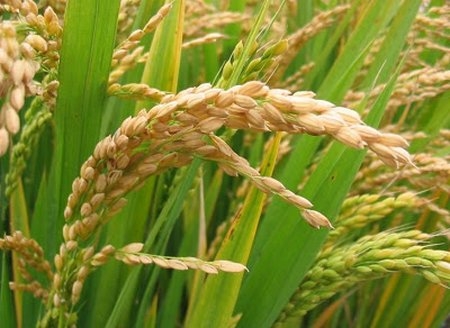
It is grown in the plains of north and in the parts of north-eastern India; it is also cultivated in coastal and deltaic regions. India is the second largest producer in the world after China. Areas of less rainfall, such as Punjab, Haryana and Western Uttar Pradesh and parts of Rajasthan have been made appropriate for cultivation of rice with the development of canal and irrigation tubewells.

Maize
It is a kharif crop which in both used as food and fodder. Karnataka, Uttar-Pradesh, Bihar, Andhra Pradesh and Madhya Pradesh are the major maize-producing states of India. Production of maize have increased with the use of modern inputs such as HYV seeds, fertilizers and irrigation.

Millets
The coarse grains, such as, jowar, bagra and ragi are major millets produced in India. Maharashtra is the largest producer of jowar. Other than this, Karnataka, Andhra Pradesh and Madhya Pradesh are other leading producer of jowar.
Bajra is grown in Rajasthan, which is the largest producer of bajra, followed by Uttar Pradesh, Maharashtra, Gujarat and Haryana.

Ragi
Ragi is grown in dry regions and Karnataka is its largest producer followed by Tamil Nadu, Himachal Pradesh, Uttarakhand, Sikkim, Jharkhand and Arunachal Pradesh.

Wheat
It is the second most important cereal crop after rice and the two important wheat-growing zones of India are the Ganga- satluj plains in north-west and black soil region of the Deccan. Punjab, Haryana, Uttar Pradesh, Bihar, Rajasthan and Madhya Pradesh are the leading producers of wheat.

Pulses
India is the largest producer and consumer of pulses in the world. Major pulses grown are tur, Urad, moong, masur, peas and gram. The leading states producing pulses are Madhya Pradesh, Uttar Pradesh, Rajasthan, Maharashtra and Karnataka.

Sugarcane
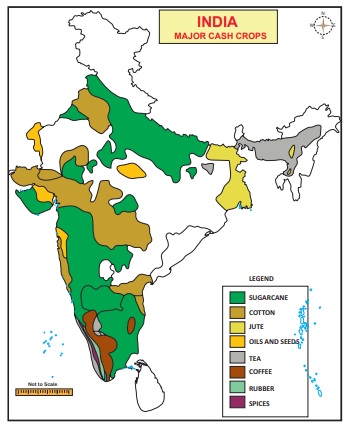
India is the second largest producer of sugarcane after Brazil. Sugarcane is the main source of sugar, gur, khandsari and molasses. Uttar Pradesh, Maharashtra, Karnataka, Tamil Nadu, Andhra Pradesh, Bihar, Punjab and Haryana are the sugarcane producing States of India.

Oil Seeds
Main oil-seeds of India includes mustard, groundnut, coconut, Sesamum (til), soyabean, caster seeds, cotton seeds, linseed and sunflower, in which some are edible and used in cooking. Also, some are used a raw material for the production of soap, cosmetics and ointments.
Groundnut is the major oil seed produced in Andhra Pradesh, Tamil Nadu, Karnataka, Gujarat and Maharashtra. Sesamum is a kharif crop in north and caster seed is grown both as rabi and kharif crop.

Tea
Tea was introduced by British in our country, which grows well in tropical and sub-tropical climates endowed with deep and fertile well-drained soil.
Tea is processed in a tea garden to maintain its freshness and requires huge labour for its cultivation. The hills of Darjeeling and Jalpaiguri, Assam, West Bengal, Tamil Nadu and Kerala are the largest producers of tea in India. Some other tea producing states are Himachal Pradesh, Uttaranchal, Meghalaya, Andhra Pradesh and Tripura.

Coffee
The varieties of India coffee has a demand all over the world mostly for its good quality. The Arabica variety, which is brought from Yemen, is produced in India which was initially introduced on the Baba Budan Hills and now-a-days, it is confined to Nilgiri in Karnataka.

Horticulture crops
India is very famous for its fruits and vegetables around the would and is the largest producer as well.
The fruits like Mangoes, which is mostly produced in Maharashtra, Andhra Pradesh, Uttar Pradesh and West Bengal, Oranges which are produced in Nagpur and Cherrapunjee, Bananas of Kerala, Mizoram, Maharastra and Tamil Nadu, Lichi and guava which is grown in Uttar Pradesh and Bihar are demanded all over the world. The other fruits of great demand are Pineapples of Meghalaya, grapes of Andhra Pradesh, Maharastra; Aplles, pears, Apricots and Walnuts of Jammu and Kashmir and Himachal Pradesh.

IRRIGATION & ITS TYPES

What is Irrigation?
Irrigation is the process of applying water to the crops artificially to fulfil their water requirements. Nutrients may also be provided to the crops through irrigation. The various sources of water for irrigation are wells, ponds, lakes, canals, tube-wells and even dams. Irrigation offers moisture required for growth and development, germination and other related functions.
The frequency, rate, amount and time of irrigation are different for different crops and also vary according to the types of soil and seasons. The types of irrigation systems are practised based on the different types of soils, climates, crops and resources.

Methods of Irrigation:
Irrigation can be carried out by two different methods:
• Traditional Methods
• Modern Methods
Traditional Methods of Irrigation
In this method, irrigation is done manually. Here, a farmer pulls out water from wells or canals by himself or using cattle and carries to farming fields. This method can vary in different regions.
The main advantage of this method is that it is cheap. But its efficiency is poor because of the uneven distribution of water. Also, the chances of water loss are very high.
Some examples of the traditional system are pulley system, lever system, chain pump. Among these, the pump system is the most common and used widely.

Modern Methods of Irrigation
The modern method compensates the disadvantages of traditional methods and thus helps in the proper way of water usage.
The modern method involves two systems:
• Sprinkler system
• Drip system

SPRINKLER SYSTEM:
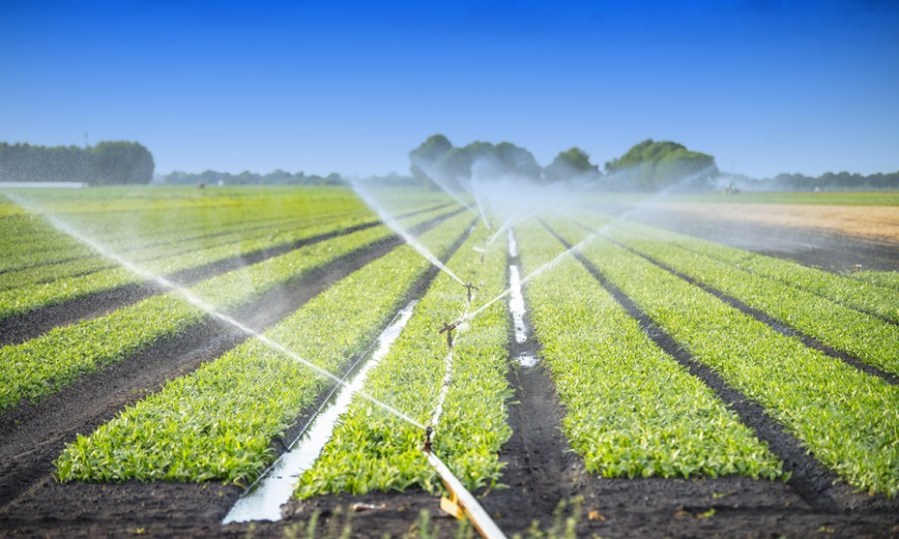
A sprinkler system, as its name suggests, sprinkles water over the crop and helps in an even distribution of water. This method is much advisable in areas facing water scarcity.
Here a pump is connected to pipes which generate pressure and water is sprinkled through nozzles of pipes.

DRIP SYSTEM:
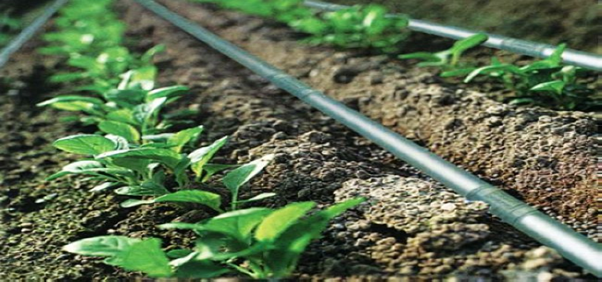
In the drip system, water supply is done drop by drop exactly at roots using a hose or pipe. This method can also be used in regions where water availability is less.

FEW OTHER TYPES OF IRRIGATION ARE:
Localized Irrigation
Water is scattered throughout the land under low pressure. A piped network, that passes throughout the soil, is used for water distribution so that all the plant gets water effectively.
Center Pivot Irrigation
Water is scattered throughout the land by a machine of sprinklers that move on wheeled towers in 360 degrees pattern or a circle that would move around the land and sprinkle water all over the soil and it is really efficient and effective and this procedure or system is well recommended in a lot of countries but mostly used in the USA.
Surface Irrigation
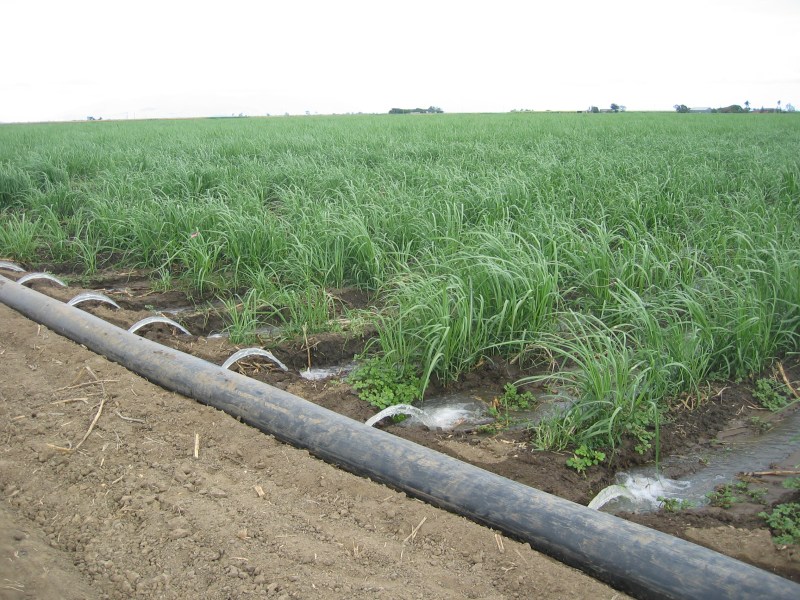
Water is scattered equally throughout the land with the help of gravitational pull and it doesn’t require a machine to take care of it. This consists of a vast amount of irrigation methods in which water is scattered, the things you need to have before you introduce the irrigation water to the basins are by siphons, gated pipe. This system is best suited for areas that have a parallel slope or flat surface and a moderate fine-textured soil type. This helps the surface to have water spread through it evenly as it moves down across the basin.

There are three types of surface irrigation:
• Basin irrigation
• Furrow irrigation
• Flood irrigation
• Bay/border strip irrigation

Lateral Move Irrigation
Water is scattered throughout the land evenly through a series of pipes or water lines, they can either be controlled by hands which could be less effective compared to a man-made machine for sprinkling water all over the land. The sprinkles move only a recommended distance on the field and for the next land, the Reconnection of the water hose is required to cover the next distance. Compared to the other irrigation systems, lateral move irrigation system tends to be way cheaper but requires a lot of labor or manpower.
Sub-Irrigation
In this process, the surrounding water table is raised to scatter water evenly across the land. Methods like pumping stations, canals, gates, ditches, and a few other systems are used to raise the water table. This irrigation method is one of the most effective for scattering water throughout the areas with a high water table.
Manual Irrigation
Water is scattered across evenly around the field with the help of manual power such as labors and watering cans. This system is very labor concentrated.
Each of these methods is useful in its own specific way and it depends on how you are using it and what you are using it on. The lade matters as sometimes the best irrigation system might seem to have flaws in it. Make sure you determine the soil you are using and check whether you have a good supply reservoir filled with water around you which would make it easier for you to take care of your plants.

LAND REFORMS

What are Land Reforms?
Land Reforms refer to the redistribution of Lands from the rich class to the poor class. It includes operations, leasing, regulations of ownership, sales, and the inheritance of Land since Land redistribution requires legal changes.


In an agrarian economy like India with massive inequalities of wealth and income, great scarcity and an unequal distribution of land, coupled with a large mass of people living below the poverty line, there are strong economic and political arguments for land reforms.Due to all these compelling reasons, Land reforms had received top priority by the governments at the time of independence. The Constitution of India left the adoption and implementation of the land reforms to the state governments. This has led to a lot of variations in the implementation of land reforms across states.

The pattern of agriculture is always irregular in India. In the pre-independence era, tenants, peasants, and small farmers suffered a lot due to the revenue systems of Mahalwari, Zamindari, ryotwari. One of the major reasons was the unequal distribution of land. Landholdings were concentrated in few hands. The majority of farmers were being exploited. The struggle of class between the bourgeoisie and the proletariat was not a new thing. After independence, it was pivotal and need of an hour to focus upon land distribution checks. Especially, it was the rural population that was facing the maximum hindrance in socio-economic development.India under the British Raj had witnessed a lot of such atrocious regulations that exploited the poor and helpless in many aspects. Among them, land ownership contributed significantly to preventing the socio-economic growth of the backward population.The government of independent India came up with acts and laws to establish equal rights and ownership of land, which now constitutes a crucial episode of India’s economy. In the following lesson, you will come across a detailed discourse on land reforms in India after independence and their importance.
The instruments that are visualized for social justice are known as Land Reforms. Land Reforms refer to the redistribution of Lands from the rich class to the poor class. It includes operations, leasing, regulations of ownership, sales, and the inheritance of Land since Land redistribution requires legal changes.
After independence in 1947, an inadequate agricultural output was apparent. In order to fix this situation, the Indian government took measures to alter existing regulations for a better outcome.

These acts formed agrarian reforms in India after independence.
he Land Reforms in post-independent India had various components:
• Abolition of Intermediaries: The first step taken by the Indian government under land reforms post-independence was passing the Zamindari Abolition Act. The abolition of the zamindari system was done that removed the layer of intermediaries who used to stand between the state and the cultivators. In many areas, superior rights were taken away from the zamindars and weakened their economic and political power.
The primary reason of a backward agrarian economy was the presence of intermediate entities like, jagirdars and zamindar who primarily focussed on collecting sky-rocketing rents catering to their personal benefits, without paying attention to the disposition of farms and farmers. Abolition of such intermediaries not only improved conditions of farmers by establishing their direct connection with the government but also improved agricultural production.

• Regulation of Rents
This was in direct response to the unimaginably high rents which were charged by intermediaries during British rule, which resulted in a never-ending cycle of poverty and misery for tenants. Indian government implemented these regulations to protect farmers and labourers from exploitation by placing a maximum limit on the rent that could be charged for land.

• Tenancy Reform: The tenancy Reform led to the introduction of regulation of rent, providing security tenure, and conferring ownership to the tenants. In the pre-independence period, the rent which was paid by the tenants was exorbitant producing 35% to 75% of gross throughout the country. The primary attempt of the Reform was either to regulate rents and give some security to the tenants or outlaw tenancy altogether.
Legislations were passed in all states of the country to grant tenants with permanent ownership of lands and protection from unlawful evictions on expiry of the lease. This law protects tenants from having to vacate a property immediately after their tenure is over unless ordered by law. Even in that case, ownership can be regained by tenants with the excuse of personal cultivation.

• Ceilings on Landholdings- This Reform referred to the legal stipulation of maximum size after which no farm household or farmer can hold any Land. By the year 1961-62 the government of all states passed the Land ceiling acts and in order to bring uniformity across states, a totally new ceiling policy was evolved in 1971. This law was enacted to prevent the concentration of land ownership in a few hands. It placed an optimum limit on the total measure of land which an individual or a family can hold. Along with fixation of land ceilings, this rule enables the government to take ownership of the additional or extra amount of land, which in turn, is given to minor tillers or farmers with no land. With the help of these Reforms, the states were able to identify and take possession of Lands exceeding the ceiling limits from the households and redistribute them to the Landless families.

• Consolidation on Land Holdings- The term consolidation referred to the redistribution or reorganization of the fragmented Lands into one single plot. The trend of the fragmentation of Land increased because of the growing population and fewer work opportunities and this fragmentation made the personal supervision and the irrigation management tasks very difficult. Therefore, the act of Landholdings consolidation was introduced which states that if there are few plots of Lands of a farmer then those Lands were consolidated in one bigger piece which was done by the process of exchanging or purchasing.

A major problem of the agrarian structure of India is land fragmentation, which hinders large-scale farming and production. This problem was solved with this regulation which permitted farmers to consolidate minor fragments of land owned by them into a singular piece of land. This enabled tenants to carry out agricultural operations in a larger field, which could be done by exchanging land or purchasing additional pieces.

Agriculture

The word “Agriculture” has no rigid definition. It has been explained by many people very comprehensively. Agriculture has been defined as the science and art of cultivating the soil, and this definition emphasizes the primary nature of plant production in agriculture.Moreover, it is so frequent that the same person performs both the primary functions of growing plants and the secondary one of feeding the plants to livestock that these two industries are grouped together as agriculture. Therefore, it may be said that agriculture includes not only the production of crops by the cultivation of the soil, but also the rearing of livestock.
Thus, milk, meat and wool are as much agricultural products as are wheat, rice and cotton. In the words of George O’Brien, therefore, the word agriculture includes, “every industry which aims at producing vegetables or animals by the cultivation of the soil.”So, agriculture is the business of raising products from the land. The products raised may either be plants and their products or animals and their products. The former are the direct products while the latter are the indirect products of the land. Agricultural products are complex and diverse, in nature, and as such, agriculture may be regarded as complex industry.Modern agriculture is such broader in scope than merely the art and science of cultivating the land. It is the whole business of supplying food and fiber for a growing population at home and abroad. Again in agriculture we include all forms of soil production, from forestry to glass-house culture, from fishery to artificial insemination, and from breeding to horticulture.

Primi­tive men must have begun as food gatherers, eating whatever fruits, leaves and roots they could obtain. Nature must have been bountiful in those days when human numbers were so small and wild plants grew everywhere. As time passed and human numbers grew, fishing and hunting became increasingly im­portant in supplementing what was lacking in the field, and an endless search for food ensued.It was soon realized that some form of food pro­duction was necessary if men were to live long and secure. Animals were tamed, first to provide meat, milk and skin; later for use as draught animals. Seeds were sown in ploughed fields, carefully tended and harvested when the time came.Men were then able to live in settled communities. Because they were no longer continually moving they had time to develop the various arts, crafts and skills that formed the basis of modern industries and also evolved religious and political ideas. Without a settled agriculture, a meas­urable degree of civilization is not possible.


Agriculture
is not farming
it’s feeding

Origin and Development of Agriculture

Agriculture began in different parts of the globe in a diverse range.Agriculture started approximately 10,000 years ago,when human began to domesticate plants and animals. Agriculture is the important turning point of humankind. It brought several development and cultivation of processes for producing food,fibre and fuel and so on which are important for the human race to its next level.

The development of agricultural about 12,000 years ago changed the way humans lived. It was switched from nomadic hunter-gatherer lifestyles to permanent settlements and farming. Traditional hunter-gatherer lifestyles, followed by humans since their evolution, were swept aside in favor of permanent settlements and a reliable food supply.Domesticated plants and animals have been raised at scales ranging from the household to massive commercial operations. Agriculture developed independently in many regions of the world. It was the first profound change in the relationship between fully modern humans and the environment.Although global climate change played a role in the development of agriculture, it does not account for the complex and diverse cultural responses that ensued, the specific timing of the appearance of agricultural communities in different regions, or the specific regional impact of climate change on local environments. By studying populations that did not develop intensive agriculture or certain crops , such as wheat and rice.Many studies are made from agriculture like pathology , horticulture, agronomy,floriculture and so on.

Raw materials from agriculture make huge portion of trade internationally,in both imports and exports.The impact of high on export show the wealth of the country. Agriculutral industries is one of the biggest sources of employment,whether it’s a farmer, harvester, technician for farm equipment, scientist and so on,there are plenty of jobs available in this field. Agricultural jobs helps in reducing high rate of unemployment in the developing countries. Economic development of a country is tied to a country’s agriculture sector. Agriculture is important for the world’s food supply. Agriculture is important for the world’s food supply.

Agriculture is the backbone of a country.As agriculture plays an important role in the economic development of the country it is our responsibility to save and preserve the agricultural lands for our use and our future generations to live a healthy life.

‘ Agriculture is a fundamental source of national prosperity’. -by J.J.MAPES

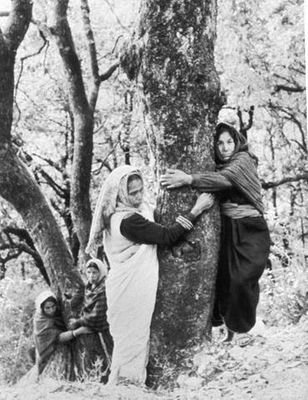
Gaura Devi who played an important role in Chipko Movement.

Gaura Devi (1925 – 1991) was a social activist and a rural women community leader from Uttarakhand, India who played an important role in the Chipko movement in 1970’s .
Gaura Devi was born in 1925 in a village named Lata of Chamoli district in the state of Uttarakhand. She got married at very young age, afer her marraige she moved to a nearby village named Reni by the Alaknanda River. At the age of 22 she was a widow with a child. After her husband death she moved to a new village which was near to the border of Indo-Tibet.

An environmentalist Sunderlal Bahuguna initially started the Chipko Movement . Gaura Devi became the leader of the Chipko movement in 1974. Gaura Devi was elected to lead the Mahila Mangal Dal (Women’s Welfare Association) in the wake of the Chipko movement. The organization worked towards protecting the forests of the community. On March 25, 1974, she learned from a young girl of the village that a local loggers of the village were logging a tree near the village. People in the village of Reni were told the news that according to government new policy, the government would pay compensation to the people for the land used by the army . Gaura Devi and 27 other women decide to take action against the loggers. She confronted the loggers and demanded that the men shoot her instead of cutting down trees, and she described the forest as “vandevta” (the jungle god) and her maika (mother’s house). Eventually, for the next three or four days Gaura Devi along with other village women’s protect the trees by hugging the trees , despite the insults and intimidation of the armed loggers,she was able to stop the logger’s work . After seeing the bravery of Gaura Devi and other village women’s how they protect the trees who are the important part of thier life other villagers from different villages joined the action with her . After this incident, the Uttar Pradesh government set up a specialized committee to investigate logging issues, and the logging company withdrew its subordinates from Reni. The Commission stated that the Reni Forest is an ecologically sensitive area where trees should not be logged. The Uttar Pradesh government who was in power of that area at that has since banned all logging in areas over 1150 km² for 10 years.

Some other important activist who played an important role in Chipko Andolan or Chipko movement along side Gaura Devi were :
Suraksha Devi, Sudesha Devi, Bachni Devi and Chandi Bhatt, Virushka Devi and others.

Gaura Devi passed away in July 1991, at the age of 66 in Reni village Chamoli.

“Ecology is permanent economy “

-Sunderlal Bahuguna

INVESTMENT MODELS

Before starting with investment models we must understand what investment is. Investing is the exchange of money for profitable assets. The same profit is used to invest in other assets. Investment is important for a country’s economic well-being, as it contributes to growth and development. When a government invests in a business, agriculture, manufacturing, or support industry, it can create employment opportunities for its people. However, a strong investment scenario is when the government and the private sector work together to create investment opportunities. Also, we make an investment and choose a proxy for a investment model, we should keep in mind that the following factors are involved: Savings rate. National tax rate. (Net profit after tax). inflation. Bank interest rates. Potential rate of return on investment. Availability of other factors of production (cheap land, labor, etc.) and the infrastructure that underpins them-transportation, energy, telecommunications. Market size and stability.

TYPES OF INVESTMENT MODELS

The following are the main investment models Public investment models: In public investment models, the government makes investments in specific goods and services through the central or state government or with support from the public sector using the revenue generated from this activity. . Private Investment Model: As is the case with India, there are times when public sector revenues are not sufficient to cover some of the revenue shortfalls that may arise. Therefore, the government invites private members to invest in some of its companies. This investment can be domestic or foreign. Foreign direct investment (FDI) can improve existing infrastructure and create jobs in the process. This model is one of the most sought-after in terms of outside investment. Public-private partnership model: A public-private partnership (PPP, 3P, or P3) is a partnership agreement between two or more public and private sectors, usually on a long-term basis. The following sectors in India already have projects based on the PPP model: Health, Power industry, Railways, Urban housing.

There are also other investment models. They are as follows: Country investment model: can be public company or PPP Foreign investment model: can be mostly foreign or a mixture of foreign – domestic Sector-specific investment models: where investments are made in special economic zones or other related sectors Cluster investment models: Investment in manufacturing industries is an example.

INVESTMENT MODELS USED IN INDIA

The following investment models are used:

Harrod-Domar model: This model is biased towards an industry model in which the driver of economic growth depends on policies that increase saving and technological progress.

The Solow Swan Model: This is an extension of the Harrod-Domar model, with a particular focus on productivity growth.

Feldman – Mahalanobis Model: This model focuses on improving the domestic consumer goods sector, where there is sufficient capital sector commodity capacity. It then evolved into the four-zone pattern also known as the Nehru-Mahalanobis model.

Rao ManMohan Model: Named after Narasimha Rao and Dr. Manmohan Singh, this model applies the policy of economic liberalization and FDI inflows in 1999. Lewis model of economic development through supply unlimited labor.

Sources: https://www.insightsonindia.com/indian-economy-3/investment-models/