SCIENCE AND TECHNOLOGY

Science and technology play a huge role in our society as well as in our lives. Nowadays we all are surrounded by technology and are dependent on it for everything we do. Especially after this pandemic everything is in virtual mode and is completely based on technology. We live in the technological era where gadgets are of outmost importance to us. A gadget is simply a human made device which is programmed to reduce human effort and does a piece of job easily without any hassle.

In this fast-growing world we human beings are always surrounded by machines and gadgets for every need of ours starting from the time we get up in the morning till we again go to bed we even use gadgets while we are asleep such as air conditioner, insect repellent and many more. Science is a boon for us, but in the other hand as everything has its own merits and demerits there are also people who do use science for a bad cause. Technology is good but it is advisable to keep this technology out of the reach of children as otherwise they will not tend to learn things and will prefer to take the help of science to solve a particular existing problem this may affect their growth.

IMPORTANCE OF SCIENCE AND TECHNOLOGY :

Technology, science and knowledge are important in modern contemporary society. Essential questions include the following : How does science and technology produce new products, new ways of living and new nutritious? Why is new technology and knowledge so fundamental to us in the ways through which we imagine the future?

Technology, knowledge and science are fundamental in modern contemporary society. The understanding of how social, cultural and material elements influence the production of new practices, new ways of under of contemporary postmodern society. Studies of technology and science provides students with insight into how different processes of knowledge are initiated and progressed, and how innovative technological processes are developed employed and increase in importance.
In this manner, students will be provided with the academic basis for working with detailed analyses of different forms of technologies and process of knowledge within business life or industry and commerce, research work , political development, management of knowledge and innovation.


THE RELATIONSHIP BETWEEN SCIENCE AND TECHNOLOGY :
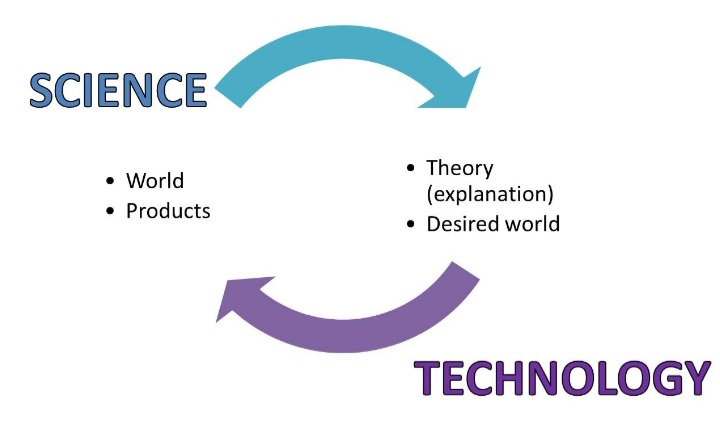

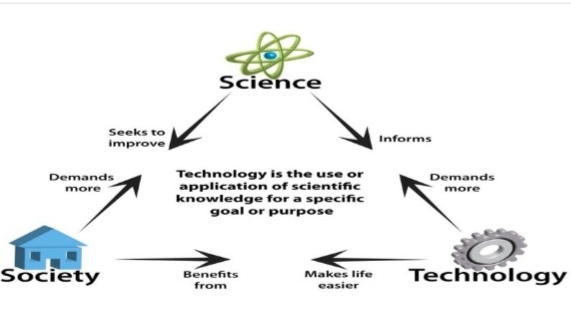
Science , technology and innovation each represent a successively larger category of activities which are highly interdependent but distinct. Science contributes to technology in at least six ways.
  1. New knowledge which serves as a direct source of ideas of new technological possibilities.
  2. Source from tools and techniques for more efficient engineering design and a knowledge based for evaluation of feasibility of designs
  3. Research instrumentation, laboratory techniques and analytical methods used in research that eventually find their way into design or industrial practices, often through intermediate disciplines.
  4. Practice of research as a source for development and assimilation of new human skill and capabilities eventually useful for technology.
  5. Creation of a knowledge base that becomes increasingly important in the assessment of technology in terms of its wider social and environmental impacts
  6. Knowledge base that enables more efficient strategies of applied research, development, and refinement of new technologies.

THe ROLE OF SCIENCE AND TECHNOLOGY


Teaching technological literacy, critical thinking and problem- solving through science education gives students the skills and knowledge they need to succeed in school and beyond.

SCIENCE AND TECHNOLOGY USED IN SOCIETY :


Science and technology have had a major impact on society, and their impact is growing. By making life easier, science has given an the chance to pursue societal concerns such as ethics, aesthetics, education and justice to create cultures, and to improve human conditions.
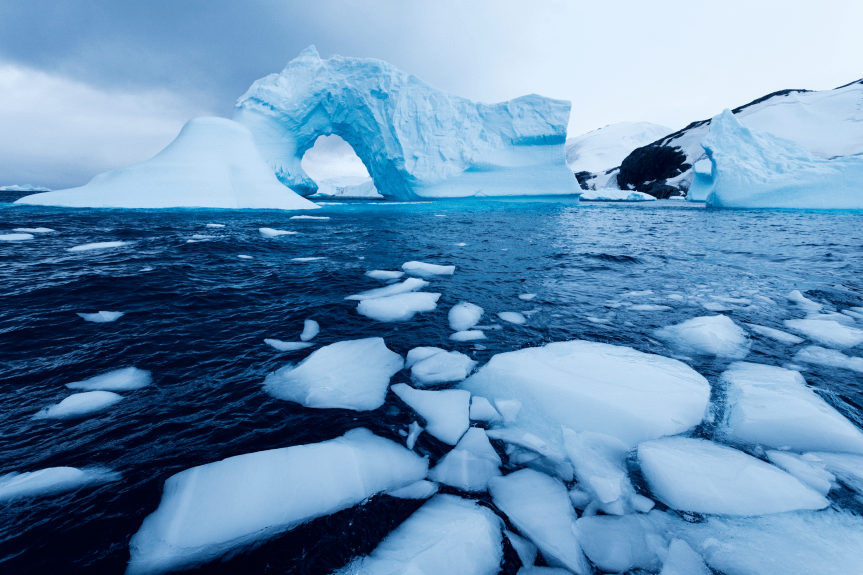
Melting of Ice Pole

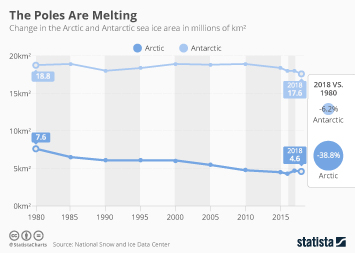
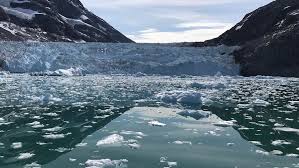
It’s not exactly news that Greenland and Antarctica are shedding ice at record rates.

But in 2016, an eyebrow-raising idea ricocheted through the scientific community: It was possible, the authors said, that a warmer planet could push the towering ice cliffs at the fringes of the Antarctic ice sheet to essentially self-destruct, collapsing like a set of dominoes.

What was extra shocking was just how fast the ice could retreat under this runaway scenario, leading to about three feet of sea level rise fed from Antarctica alone by 2100—much faster than previous estimates, which generally proposed increases of only a few centimeters by the end of the century.

But two new pieces of research, published Wednesday in Nature, suggest a more measured retreat is likely in the coming decades. Both studies revise the estimates of just how much sea levels will rise by 2100 downward, suggesting that Antarctica could contribute somewhere between about three to 16 inches to the world’s oceans under the “worst case” scenarios.

Adding that to the other components that make up sea level rise—how the ocean expands as it warms (which will likely add about 10 inches), the melt from mountain glaciers (about six inches), and changes to the amount of water stored in lakes and rivers on land (one and a half inches), and the total is still a daunting number somewhere between just under two- to over three- foot range.

That is in no way a get-out-of-jail-free card, say the authors of both studies. It’s still an enormous amount of extra water that could slosh up onto coasts, enough to debilitate cities from Boston to Shanghai. But the most drastic impacts of sea-level rise, they say, are likely to kick in only after the turn of the century, giving communities around the world more time to adapt.

What’s more, changes to the ice sheets in both Greenland and Antarctica could also trigger planet-wide shifts in temperature, ocean circulation, and many other parts of the climate system, says says Nick Golledge, a climate scientist at the Antarctic Research Center of the University of Victoria, Wellington, and the lead author of one of the studies.

“The sea-level estimates maybe aren’t as bad as we thought, but the climate predictions are worse,” says Golledge.

What happens in the Antarctic…

In a separate analysis, the team led by Golledge found that their ice sheet model could match the modern and Last Interglacial records well—also without MICI. Warm water soaking the base of the ice sheets, they found, was enough to force key parts of the ice sheet to melt away.

They used that model to predict how the Greenland and Antarctic ice sheets will speed up their melting in the coming decades. If the world continues to burn greenhouse gases unabated, following the worst-case scenario, the authors predict that the two ice sheets will add about 10 inches to the world’s oceans by 2100.

That number is similar to what the IPCC projected for the “worst case scenario” in their last comprehensive report in 2013, predicting about nine inches of sea level rise from Greenland and Antarctica. It is smaller than the number predicted by the 2016 study, which said that Antarctica alone might feed more than three feet of sea level rise into the oceans by 2100.

The sea level rise estimates may be lower, but the overall picture of how melting ice sheets will affect climate is grim.

Golledge and his colleagues also attached their ice sheet model to a global climate model, in order to see how the impacts of ice melting at the poles would influence climate and oceans in farflung parts of the world (in the past, ice sheet models have traditionally been run separately, primarily because computers haven’t been powerful enough to link them together).

Changes in the ice sheets, they found, could influence global climate profoundly—slowing down major ocean circulation pathways, skewing air temperatures around the world, and somewhat surprisingly, making climate more variable from year to year.

“What happens in the Antarctic does not stay in the Antarctic, and that’s what they show very clearly,” says Pattyn.

The impacts are already leaking out of the poles. “We’re living in a time when, even in the last few years, we have seen extreme weather events become even more and more common,” says Golledge. “Dealing with steady warming is easier, in many ways. But if things are just unpredictable and extremely variable from year to year—well, that’s a much harder problem for society to solve.”