Why Skyscrapers are not that great.

The story of early skyscrapers begins in the late 19th and early 20th century America. Between 1884 and 1945 numerous skyscrapers were built American cities of New York City and Chicago. The two cities competed with each other with many subsequent constructions surpassing the earlier one. The growth of the skyscrapers in the 20th century American cities were mainly fueled by dynamic economic growth as the demand for various new office spaces to hold America’s expanding workforce of white-collar employees continued to grow. With better engineering and construction methods it became easier to construct taller buildings.    

Flatiron Building in New York City finished its construction in June 1902. The 22 floors building was one of the first tallest skyscrapers and later in the subsequent decades even taller buildings were constructed.

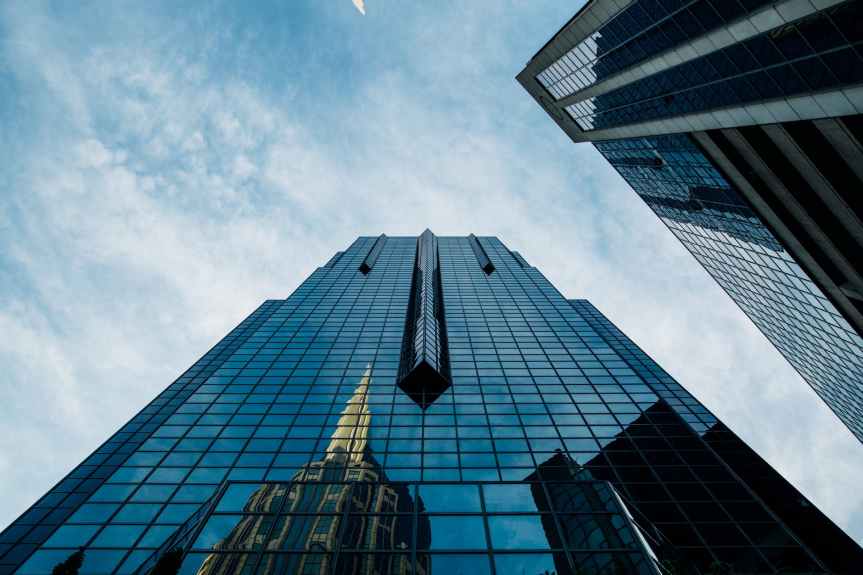
But the developments of modern skyscrapers have many challenges and questions that need to be cleared. Though the growth of skyscrapers has not subsided, they are not the most ideal form of buildings. According to engineer Tim Snelson, of the design consultancy, a typical skyscraper will have at least double the carbon footprint of a 10-story building of the same floor area. This tells us that skyscrapers are not environmentally sustainable. Also, any additional methods to minimize the environmental impact will require overcoming the fight of the handicap of being a tall skyscraper in the first place. As the majority of the building is made with glass and steel frame, high-rise buildings are subject to the consequence of the substantial amount of sunlight and a lot of wind on their mostly glass skins. Glass is inherently inefficient in keeping excessive heat out of the buildings in summer or keep heat trapped in the colder months. This also leads to the reliance on continuous Air Conditioning.

The modern construction of skyscrapers in the cities of today is no longer driven purely by economic growth or the need for commercial office space, but instead, it is more driven by glamorous architecture construction and many times the dirty money gets funneled into the construction of Skyscrapers.  High rises also separate people from the street and people lose a connection to nature and the outdoors. The occupants in the tall buildings are often isolated from the street of the city and meaningful contact with ground-level events is often disconnected with taller buildings.  

High-rise buildings also lead to gentrification and inequality. It is no surprise that taller buildings often tend to be luxury units as the higher a building rises, it becomes more expensive to construct. This means that high rises also inflate the prices of the adjacent lands and driving out the affordable properties, thus increasing the inequality. The areas near the skyscrapers are often dark and swept under the shadow of these tall buildings.

Contrary to the popular notion, skyscrapers are not the only way to build high-density construction. The mid-rise buildings are often more able to house more amount of people per area compared to the high rises. Mid rises are also more flexible to affordable.  The mid-rises can work as a good middle ground between the taller buildings and low-density buildings. Instead of blindly building taller buildings we will have to look at the construction of our future buildings that are more sustainable, affordable, and efficient.

References:
Universal Design

Universal design is the approach of designing products and environment so that it can be used by broad number people irrespective of age, disability, ability, status in life and various other factors.

Usually, products are designed to be suitable for average users whereas products designed under the principle of universal design try to be suitable for the maximum number of users. The purpose of universal design is not to create a design that can work for 100 percent of the people because it is almost impossible to have a ‘One size fits all’ design. The purpose is to create a design that can serve solutions that are more inclusive. Designers have to look at those designs that push the boundaries as far out as possible without compromising the quality and integrity of the product.

There are many instances where a designer will have to choose between different designs and determine the more suitable design according to UD principles. For instance, if there is a choice to choose between a lever-design handle and a knob-design handle. It is preferable to choose the former rather than the latter as the lever design can accommodate more people’s daily usage. The lever design feature will be a more inclusive element compared to the latter. It can accommodate various usages like opening the door with closed fists or the elbow or so that a person can easily access the door while carrying something as well as people with finite strength.

There are briefly 7 Principles of Universal Design. These were developed in 1997 by a team of architects, designers, engineers, and environmental design researchers.  The team was led by the late Ronald Mace who was an internationally recognized American Architect and designer in North Carolina State University.

The seven principles are:

  • Equitable use

While designing, the product should be kept in mind that it should be accessible by every person including disabled people.  

  • Flexibility in use

The design needs to be configurable to accommodate everyone’s preferences, needs, and abilities.

  • Simple and intuitive

This means that the design should be easy to understand for everybody. The person can easily figure out a well-designed product or an environment without thinking too much about it.

  • Perceptible information

The design can communicate all of its necessary information to everybody irrespective of the environmental conditions or the user’s sensory abilities.

  • Tolerance for error

It refers to safety so that the design minimizes hazards, accidents or unintended actions.

  • Low physical effort

The design in use needs to be comfortable and efficient rather than being exhausting and fatiguing to use.

  • Size and space for approach and use

The design irrespective of user’s body size, posture, or mobility should not restrict anybody by its size or space.

Universal design can really make the lives of people much more comfortable, safer, and efficient in the long run. There are still many areas that are not designed well and poorly designed products, buildings or the environment can be a safety hazard as well. It is usually the job of a universal designer to design new products from the ground up and many also renovate existing designs to make them more accommodative and accessible.

References:

http://universaldesign.ie/What-is-Universal-Design/The-7-Principles/

https://www.washington.edu/doit/what-universal-design-0

Descriptive Writing

My Dreamhouse

Those big architectural windows blow me out with the air whenever I think about it. The sunshine touching the hair in the early morning descends to the feet as the day grows off. My dreamhouse is quite big and beautiful with a garden marking its boundaries. The adorable flowers at the entrance gate elate my visitors. The fragrance they shower off in that small place complements their colourful petals. Some trees are tall and thick while some are newly planted. The biggest of them all holds a small treehouse apt to keep my secret things. Moving on, there’s a pavement on the doorstep of the house with a welcome board.

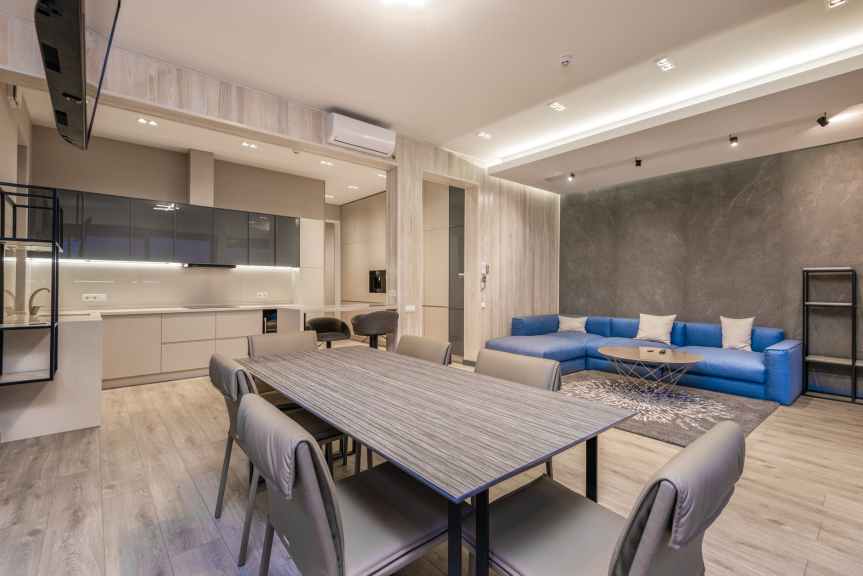
The tour of the house now starts inside that door. Wooden furniture are the main highlight of my dreamhouse besides the open, airy windows. The hall bears a bouncy couch and table with a glass flower pot along with a dining set for six at the front of the kitchen. The kitchen has a well-settled chimney as a centre of attraction. There is always some extra space in the kitchen for new items. The walls are beautifully designed along with fascinating sculptures on the roof boundary.

Photo by Marta Dzedyshko on Pexels.com

Next comes the staircase which leads to the bedroom and guest room area. The stairs are covered with red carpets to make them look traditional and classy. The width is not much since they are attached at the corner of the hall. The hall is big but to keep it spacious and relaxing to look, everything is arranged at its minimum.

The staircase takes a turn to make us reach the first floor having a bedroom, a guest room and a servant quarter at the corner. The bedroom is the biggest, of-course. It is majorly pink coloured with beautiful prints representing nature. There’s a piano-set besides a bed and a wooden almirah in the room. The lamp aside the bed belongs to antique items. It is muddy yellow in colour and gives a pleasant look to the room at night. There’s a round carpet on the floor between the bed and the piano-set. There are a total of 3 windows among which one is the biggest and right beside the piano- set. It gives immense peace to play it there with open window. There is a study table too at the corner of the room- small and stuffed with books and magazines. The lamp at the study table is small and a modern type. The bathroom attached with the bedroom has also been kept modern style having blue walls with pictures of whales and ships.

The accompanying is the guest room, little smaller than the bedroom but remarkably spacious. It consists only a bed , an almirah, a sofa set and glass table. It too has a big window allowing abundant of sunlight to pass through in the morning. The speciality lies in the location of the house too, every window fetches the most of the sunlight to the house making it irrelevant to turn on lights during the day. The curtains need to be heavy since it becomes too hot in the summer. The servant quarter is comparatively small; approximately the size as of store room attached to the hall on the ground floor. It is however, convenient to stay there. It too includes a bed but relatively small, a table, a sofa, an almirah and attached with it is the washroom.

Next floor is build with terrace which is wide, and cold during winters. It is fenced at two edges with strong grills made of stones. The other two edges are joined via walls to other two houses in the neighbour. The view is wide and serene from the terrace. The designer table and chairs are specially placed to have a cup of tea under the beautiful sky whenever it feels like. The garden too is visible to an extent from the terrace. The chimney installed in the kitchen opens up at the top on the terrace.

The larger windows of the hall and the bedroom hold a wing chain each with different sounds knocking softly at the ears during a pleasant weather. It is therefore a good place for writers and poets to put up. The house in itself is a glory and has a lot to write about. This dreamhouse can be the best to reside in- neither too big nor too congested. Its beauty lies in how spacious and a mixture of traditional and modern architect it is!