Postdoc Candidate Required for the project “Climate Citizenship”

Daily writing prompt
Do you believe in fate/destiny?

Vacancy

Postdoc Candidate for the project “Climate Citizenship”

Vacancy number15478Job typeAcademic staffHours (in fte)0,8External/ internalExternalLocationLeidenPlaced on18 February 2025Closing date31 March 2025 38 more days to apply
Apply now

Leiden University’s Institute of Cultural Anthropology and Development Sociology (CADS) is looking for

Postdoc Candidate for the project “Climate Citizenship” (2 years, 0.8 fte)

We welcome applications for a Postdoc position in the project “Climate Citizenship: Infrastructures, Environments, and Democracy in the Era of Climate Change,” funded by a European Research Council Starting Grant (ERC-StG). The project is led by Principal Investigator Dr. Andrew Littlejohn and hosted by Leiden University’s Institute of Cultural Anthropology and Development Sociology.

Climate Citizenship explores how adapting environments to climate change through new forms of nature-based infrastructure reshapes people’s relationships with each other and the state. Examples range from green roofs and vertical gardens to urban parks, flood plains and more ambitious efforts to transform landscapes. The project treats these infrastructures as social and political as well as environmental experiments. It asks: when and how do they stimulate behavioural change, create new alliances between stakeholders, or transform the division of rights and responsibilities within a society?

The case studies will employ an “ecographic” approach combining quantitative data from the ecological and material sciences with qualitative data gathered through ethnographic methods such as participant observation. As a Postdoc, you will help to develop this approach. You will visit scientists researching and/or working on green infrastructure projects in Japan, the Netherlands, and the United States and interview them on their methods. You will then analyse what kinds of data and techniques the PhD researchers will need familiarity with, and where in the process of gathering ecological data ethnographic methods and insights can be interpolated.

What you will do

  • Conduct interviews and observations with scientists in the Tokyo Bay area (Japan), the Rhine-Meuse-Scheldt Delta (the Netherlands), and Louisiana Delta (the United States);
  • Assist the PI in developing an “ecographic” approach and an ecographic protocol for the PhD candidates;
  • Write a peer-reviewed journal article with the PI on ecographic methods and their potential;
  • Contribute to fine-tuning the research agendas of the PhD candidates through evaluating their proposals and participating in regular team meetings (online where necessary).


You will be part of a team also comprising two PhD candidates and the PI. The entire team is expected to reside in the Netherlands and work from Leiden for the duration of the project, except during fieldwork.

What you bring

  • PhD in Science and Technology Studies, Cultural Anthropology, or another relevant social science (if your PhD is not in Science and Technology Studies, you must have demonstrated expertise in the social study of science or interdisciplinary research methods);
  • Demonstrated passion for developing interdisciplinary and transdisciplinary research projects and approaches;
  • Experience with independently coordinating and conducting ethnographic research, and ideally, some experience with quantitative and/or ecological research methods;
  • Excellent research and writing skills as demonstrated by a track record of scholarly publications commensurate with your career stage;
  • Excellent command of English (speaking and writing);
  • Independent work attitude and demonstrable ability to work in a team.


Where you will work
The Faculty of Social and Behavioural Sciences consists of five institutes: Centre for Science and Technology Studies, Cultural Anthropology and Development Sociology, Education and Child Studies, Political Science, and Psychology. The faculty has approximately 7000 students and 1000 staff members. Within the institutes, not only education is provided but also groundbreaking research is conducted that pushes the boundaries of our understanding of human behaviour and societal structures. What makes our faculty unique is the diversity of research topics, the various styles of teaching, and the way professional support is organized; this provides you with the opportunity to explore and develop your interests and expertise. Visit our website for an impression: Welcome to the Leiden Faculty of Social and Behavioural Sciences – Leiden University.

Leiden University’s Institute of Cultural Anthropology and Development Sociology (CADS)
Leiden University’s Institute of Cultural Anthropology and Development Sociology concentrates on ‘global vulnerability and social resilience’. The institute has three main themes: diversity, sustainability, and digitalisation. CADS is dedicated to making a real-world impact, not just studying change, but also working with communities to promote positive change through education and research. We use a unique approach that blends qualitative, quantitative, audiovisual, and digital methods based on ethnographic fieldwork.

With our unique blend of interdisciplinary interests, comparative regional studies, and social science research methods, we emphasize our role in the extensive collaborative network within Leiden University. In both our research and education, we engage in extensive interdisciplinary and international networks.

What we offer
Our goal is to work together to create a transparent and inclusive work environment in which everyone feels welcome and appreciated. Our organisation is always evolving, and we need your ideas for improvement and innovation to take us further. We want to devote attention to your personal development.

You can expect an enjoyable job within the socially relevant world of education and research. The University’s challenging and international work environment is located just steps away from Leiden’s lively city centre or the bustling city centre of The Hague. We also want to work with you to devote attention to your health and vitality, for example with the fun activities we organise through Healthy University.

We also offer:

  • A 0,8 fte employment contract, initially for a period of 1 year, with the possibility of extension for a second year after a positive evaluation. This contract falls under the Collective Labour Agreements (CLA) of Dutch Universities;
  • A salary of a minimum of € 4,060 and a maximum of € 5,331 gross per month, based on a full-time appointment (38 hours) (scale 10.4-10.12); with increments based on the CLA.
  • A holiday allowance (8%), an end-of-year bonus (8,3%), and an attractive pension scheme at ABP;
  • Our individual choices model gives you some freedom to assemble your own set of terms and conditions.
  • Candidates from outside the Netherlands may be eligible for a substantial tax break.

More here: https://www.universiteitleiden.nl/en/working-at/job-application-procedure-and-employment-conditions

What we find important
Promoting an inclusive community is central to Leiden University’s values and vision. Leiden University aims to be an inclusive community in which all students and staff members feel valued and respected and are able to develop to their full potential. Diversity in experiences and perspectives enriches our teaching and strengthens our research. High-quality education and research mean inclusive education and research.

Want to apply or find out more?
If you want to apply straight away, click the application button.
If you would like more information about what the job entails, please contact: Dr. Andrew Littlejohn, Assistant Professor at a.l.littlejohn@fsw.leidenuniv.nl

You can apply until March 31, 2025; applications will be processed immediately.
Online interviews will be held with shortlisted candidates in April-May 2025. The intended starting date is August 2025.

To apply, please submit:

  • A cover letter explaining your motivation for working in the climate citizenship project (maximum 2 pages);
  • Curriculum vitae (CV), including publications (maximum 2 pages);
  • A short research proposal (maximum 500 words) in which you outline your approach to the role described above;
  • A copy of either a representative publication or your PhD thesis;
  • Names and contact details of two referees.

To help us get to know each other better, we follow a number of steps in the application procedure. For more information, see:
https://www.universiteitleiden.nl/werken-bij/sollicitatieprocedure-en-arbeidsvoorwaarden

  • A pre-employment screening (references, diplomas, certificate of good conduct (VOG) may be part of the selection procedure.
  • Acquisition in response to this vacancy is not appreciated. If you nevertheless choose to send us CVs, no rights can be derived from this. -Hybrid

“GI & Beyond” Summit Showcases India’s GI Handloom and Handcraft Heritage to the Global Stage

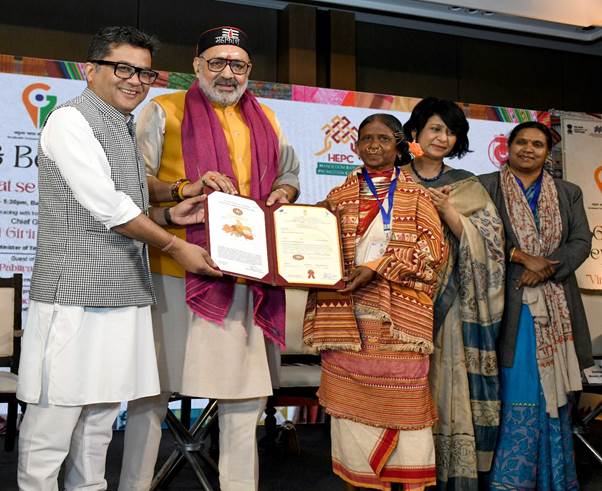
The “GI & Beyond 2024” Summit, organized by the Office of the Development Commissioner for Handlooms, Ministry of Textiles, in collaboration with the Handloom Export Promotion Council (HEPC), successfully concluded on 25.11.2024 at New Delhi. The event highlighted the exceptional skills of artisans who manufactured India’s Geographical Indication (GI) tagged handloom and handicraft products and their global significance.

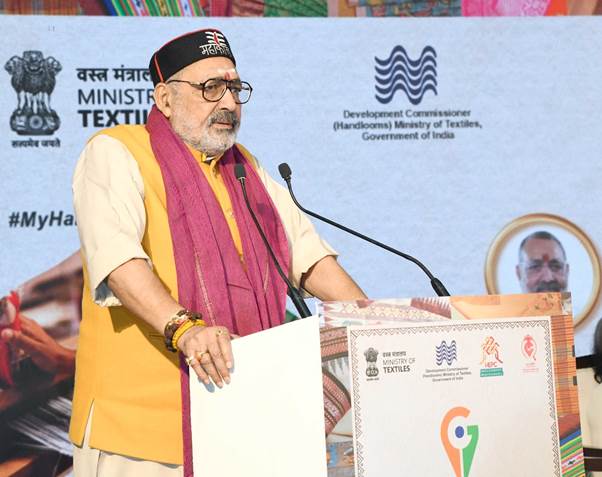
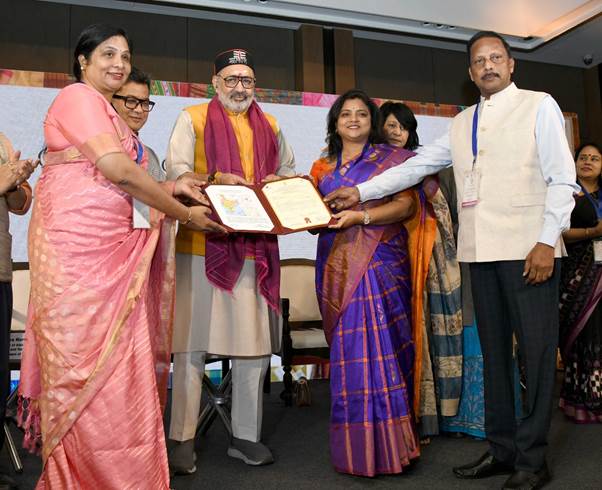
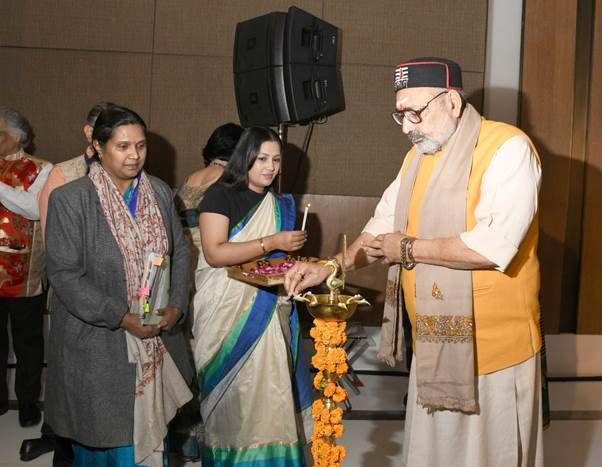
The event was inaugurated by Shri Giriraj Singh, Hon’ble Union Minister of Textiles as chief guest who highlighted the importance of GI products in promoting India’s rich cultural heritage and invited attention of the gathering on the attractive tourism concepts like heritage and cultural tourism for marketing GI goods. HMOT distributed GI certificates to 10 artisans from various parts of the country. Speaking on the occasion, Shri Giriraj Singh said that India received its 1st GI certification in 2004 and now our focus is to increase the income of artisans and how to make GI tagged products go global. The Minister exhorted that we should progress the GI tagged products from “Gaon to Global”. HMOT emphasised the importance of marketing and telling the world about the creativity of our artisans for the promotion of GI products and incorporate the GI tagged products as part of religious and cultural tourism. The Minister appealed the states having GI tagged products to collaborate with Textile Ministry to organize trade festivals exclusively for the promotion and marketing of the products, in the lines of Kutch festival. HMOT highlighted honourable Prime Minister’s vision of Atmanirbhar Bharat and emphasized that along with Vikas we need our Virasat as well. GI tag represents our heritage and as we heading towards Vikasit Bharat, our heritage is our capital, the Minister added.

Shri Pabitra Margherita, Hon’ble Minister of state for Textiles, Government of India graced the occasion as guest of Honour. Speaking at the occasion the MoS pointed out that handloom and handicrafts sector are not just industries, and they are the testament of our country’s diversity, creativity and legacy. Each craft and each artisan tell us a story of its people and its traditions.GI is a tool for empowerment and a shield of our heritage and a bridge to the global market., MOS added.

Smt.Rachana Shah, Secretary Textiles and Dr.M.Beena, Development Commissioner for Handlooms ,Ms. Amrit Raj, Development Commissioner for Handicraft, Ms.Roop Rashi, Textile Commissioner and Shri Unnat Pandit, Controller General of Patents, Trademark & GI also graced the occasion.

The event had representation from 13 countries spread across 4 continents and witnessed around 20 overseas buyers, 50 exporters & MNCs, 70 GI authorised users and 40 officials from various departments including state governments. The diverse representation from various stakeholder of the industry fostered meaningful discussions and collaborations to expand the market potential for GI-tagged products

The technical session on various domains of the trade emphasized the integration of traditional handwoven and handcrafted skill with modern business practices to enhance the global appeal of India’s traditional textiles and craft.

During the event, overseas buyers and domestic exporters interacted with the authorized users of Geographical Indications (GI).  The overseas buyer applauded this event which beautifully narrated the tale of ethnic handwoven and handcrafted tradition of India. The domestic exporters stated that the products displayed are quite impressive and captivating. The exporters and overseas buyers expressed their willingness to extend possible support in promoting and to enhance the global presence of GI products.   

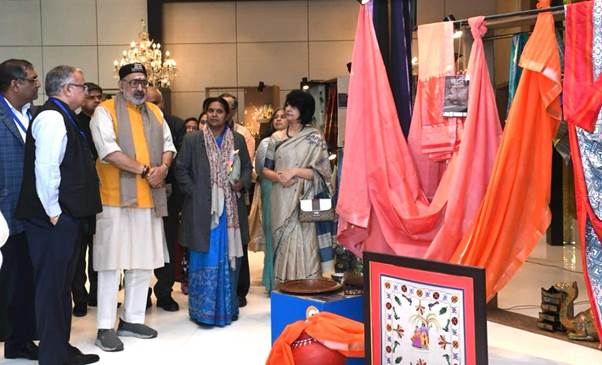
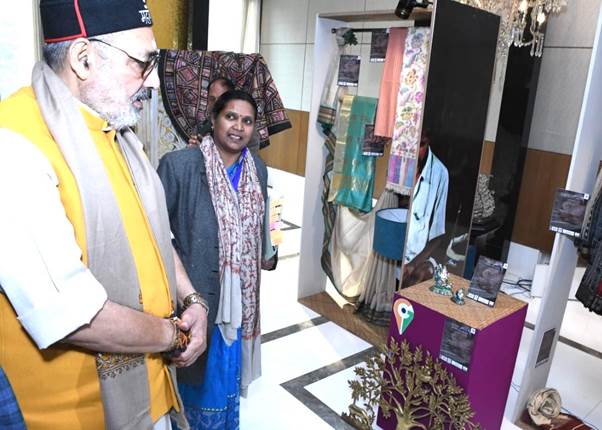
A special thematic display showcased an array of GI-tagged handloom and handicraft products across India, with participation from GI holders and authorized users. The display highlighted the regional uniqueness and cultural value of these artisanal products, attracting significant interest from attendees.

The summit concluded with a collective commitment to continue supporting India’s handloom and handicraft sector, ensuring that the legacy of GI products thrives both nationally and internationally.

*****

ENRICHMENT OF CULTURAL HERITAGE

Archaeological Survey of India (ASI) carries out upkeep of all Nationally protected monuments. Besides, Amenities and information has been provided at important monuments to enrich the experience of the visitors. Furthermore, the Government of India has launched Adopt A Heritage 2.0 Programme in 2023 to create framework for engaging public/private sector companies, NGOs, Trusts, Societies etc. to provide amenities at protected monuments to enhance visitors experience to make them visitor friendly.

Through the academies and ZCCs; the focus is on cultural preservation, documentation, research, publication, cultural exchange programmes, capacity building and conservation. 

The Government of India promotes Indian folk Arts and Culture abroad through Global Engagement Scheme under which Festivals of lndia are organized in other countries showcasing folk art and other cultural events as exhibitions, dance, music, theatre, food fest, film fest, yoga etc. and through grant-in-aid to lndo-Foreign Friendship Cultural Societies for organizing programmes and activities including folk art and other cultural activities for their promotion abroad

 The Government of India has taken several initiatives for enrich India’s cultural heritage during last 5 years. An Umbrella Scheme ‘Kala Sanskriti Vikas Yojana’ comprising several sub-schemes has been developed to provide financial assistance for the promotion of Arts and Culture, such as:Promotion of Guru Shishya Parampara.Promotion of Art and Culture.Construction of Tagore Cultural Complex.Scheme for Scholarship and fellowship for Promotion of Art and Culture. The Details of funds disbursed under Kala Sanskriti Vikas Yojana in the last five years and are given as under:-                                                                                                             (Amount Rs. in Crores)S. No.Years        Total funds disbursed1.2020-21100.312.2021-22126.183.2022-23182.254.2023-24166.955.2024-25(Up to 21.11.2024)59.98
    MoUs have been signed under ‘Adopt A Heritage 2.0’ for the following monuments in the State of Bihar and Maharashtra: S. No.Name of  StateName of Monument1.BiharBuddhist Stupa, Kesariya, Champaran2.MaharashtraElephanta Caves, Raigarh (Maharashtra) The details of financial assistance to the States of Maharashtra and Bihar under “kala Sanskriti Vikas Yojana” scheme is given below: –                                          (Amount Rs. in Crores)S. No.YearsTotal funds disbursedBiharMaharashtra1.2020-212.694.482.2021-223.406.983.2022-236.288.544.2023-248.1916.285.2024-25(up to 21.11.2024)1.454.79                                                                                      

PROMOTION OF REGIONAL LANGUAGES

The Ministry of Culture is committed to the preservation, conservation and promotion of India’s rich cultural heritage, including regional languages, traditional art forms, and performing arts that are at risk of extinction. Through its autonomous bodies and Zonal Cultural Centres (ZCCs), several targeted initiatives are carried out by the ministry.

Sahitya Akademi (SA)works for the promotion of literature in24 recognized languages and various unrecognized and tribal languages by organizing language conventions and awarding the Bhasha Samman to scholars for their contributions to unrecognized languages like Haryanvi, Koshali-Sambalpuri, Paite, Magahi, Tulu, Kurukh, Ladakhi, Halbi, Saurashtra, Kumauni, Bhili, Warli, Banjara/Lambadi, Khasi, Mising, Kodava, Chakma, Rajbanshi, Awadhi, Bundeli, Garhwali, Kachchhi, Himachal, Ao, Karbi, Angami, Gondi, Ho, Chhattisgarhi, Gojri, Bhojpuri, Ahirani, Lepcha, Mundari, Garo, Bhili, Kui, Khasi, Mizo, Pahari, Kokborok.

Sangeet Natak Akademi (SNA) and Lalit Kala Akademi (LKA) undertake initiatives to preserve endangered performing arts and visual arts, respectively, by organizing workshops, exhibitions, and residencies, and creating platforms like Museum of Performing Arts and the PARI project to showcase regional art and talent. Several other initiatives like Kala Deeksha, Kala Dharohar, Museum of Performing Arts, Kala Pravah (Temple Festival Series), Jyotirgamaya, camps for puppetry, Dokra Casting, Mask Making, Rangoli Workshop, Tribal art conclave, have been undertaken by these autonomous bodies for the preservation of the dying and rare performing art forms across the country. 

Indira Gandhi National Centre for the Arts (IGNCA) focuses on documenting endangered languages and art forms through films, texts, digital archives, and workshops. National Mission on Manuscripts undertakes the works of conserving manuscripts to tap into the vast potential of Indian Knowledge Systems (IKS) and to make rare manuscripts accessible to scholars, researchers, and the general public.

Zonal Cultural Centres (ZCCs) play a pivotal role in reviving rare and vanishing art forms through schemes like Guru-Shishya Parampara, which trains disciples under eminent Gurus, and the Young Talented Artists Award to encourage young talents. Other notable initiatives include Theatre Rejuvenation, which supports stage shows and workshops, Shilpgram, which promotes rural crafts and organizes fairs, and National Cultural Exchange Programme (NCEP), which fosters cross-cultural understanding.

The Ministry’s plan of action includes sustained documentation of endangered art forms and languages, expanding digital archives for research, and ensuring intergenerational transmission through training programs like Guru-Shishya Parampara. It is envisaged to organize cultural festivals, exhibitions, and exchange programs across the country through public-private collaborations, and state-level partnerships to enhance awareness and appreciation of India’s diverse heritage with a view to safeguard the country’s cultural legacy for future generations. Honouring artists and scholars with awards like Bhasha Samman and promoting North-East cultural heritage through initiatives like Octave are among the integral parts of the Ministry’s strategy.

India Art, Architecture & Design Biennale” at Red Fort

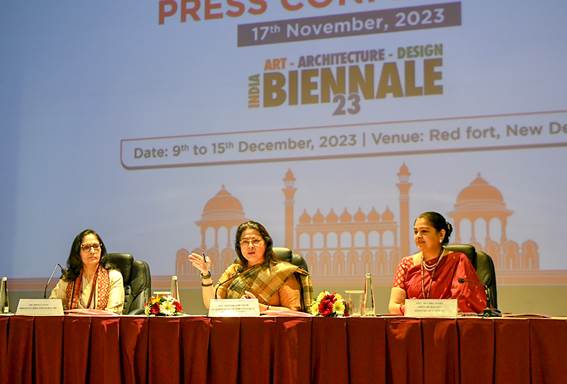
 The Ministry of Culture is organizing India Art, Architecture and Design Biennale 2023 at Red Fort, to be inaugurated on 8th December 2023. Following the Inaugural & VIP preview, the exhibitions along with panel discussions, workshops and the art bazaar will be held from 9th to 15th December and will be open to public. The keynote addresses by international artists, architects, and designers, public art installations, art bazaar and cultural programs are the major attractions of the Biennale. The pavilions set up as part of the Biennale will be on display till the 31st of March 2024.

Building on the success of past events like the International Museum Expo & Festival of Libraries, the Biennale seeks to create a prominent global cultural event, comparable to those in Venice, Sao Paulo, and Dubai. Inspired by the Prime Minister’s directive to establish five cultural spaces in India, including one at the Red Fort, IAADB’23 is an innovative initiative to highlights India’s diverse art, architecture and design.

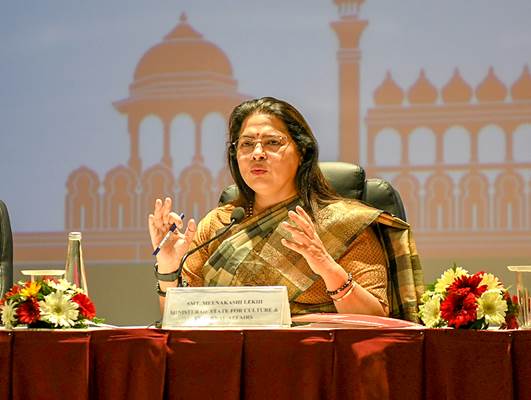
Addressing a curtain raiser press conference at National Museum, here today, Minister of State for Culture and External Affairs Smt. Meenakashi Lekhi said that the biennale showcases a diverse range, including traditional artisans, contemporary designers, curators, and thought leaders. The Biennale is an innovative initiative to celebrate the rich tapestry of our country’s artistic heritage, spanning ancient, modern, contemporary and tech-driven art, architecture and design, said the Minister.

The week-long event is organised around daily themes, each aimed at showcasing different aspects of India’s rich cultural heritage. Seven esteemed curators are involved in IAADB’23, ensuring a captivating experience that combines physical and digital exhibitions, interactive installations, sessions and panel discussions. Expertly curated catalogues will accompany each exhibition along with a comprehensive coffee table book for the entire event.

The curated pavilions at the event offer a fascinating journey through diverse aspects of India’s cultural heritage. Mr. Aditya Arya guides visitors through Pravesh exploring the symbolism of doors and gateways. Ms. Anjchita B Nair curates “Bagh-e-Bahar,” a pavilion delving into the concept of gardens as universes. Mr. Amit Pasricha takes on “Sthaypatya” exploring the timeless design and architectural resilience of temples. “Sampravah” is curated by Mr. Ratish Nanda and Mr. Vikramjit Rooprai, focusing on Baolis in India. Ms. Shikha Jain and Ms. Adriana A. Garreta present “Vismaya” a pavilion celebrating India’s post-independence architectural splendour. Mr. Anubhav Nath brings forth “Deshaj”: exploring folk art and design traditions. Finally, Ms. Swati Janu curates “Samatva” an exploration of women’s contribution to architecture.

In addition to the above, the Ministry also invited artists and curators to submit their work for IAADB’23 through an open call on social media. The Ministry received 560 queries and 260 submissions of which 150 entries were selected and will be on display at the venue. In conjunction with the IAADB’s mandate for inclusivity, a Student Biennale is also being organised from the 9th of December at the Lalit Kala Akademi and will serve as a platform for emerging talent to showcase creativity and imagination.

The India Art, Architecture & Design Biennale is set to be a unique event that aims to mobilise the community of artists and designers by providing a platform for both established and emerging artists. Its goal is to energize cultural and creative industries by fostering dialogue among practitioners in art, architecture, and design.

****

India Art Architecture Design Biennale

 Ministry of Culture organized the curtain raiser event for the India Art Architecture Design Biennale (IAADB ‘23) last evening at the National Gallery of Modern Art, Delhi along with the Logo launch for the Biennale.

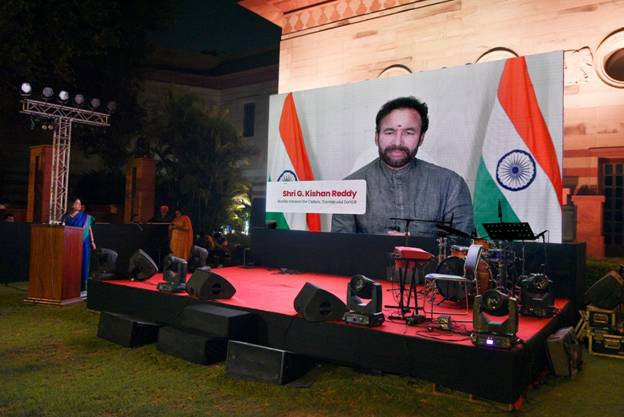
In a video message, Shri. G Kishan Reddy, the Union Minister for Culture, Tourism, and DONER, announced that the Ministry of Culture is hosting its inaugural India Art Architecture Design Biennale in December 2023, with events scheduled in Delhi, Mumbai and Bengaluru. He extended his best wishes for the Biennale’s success.

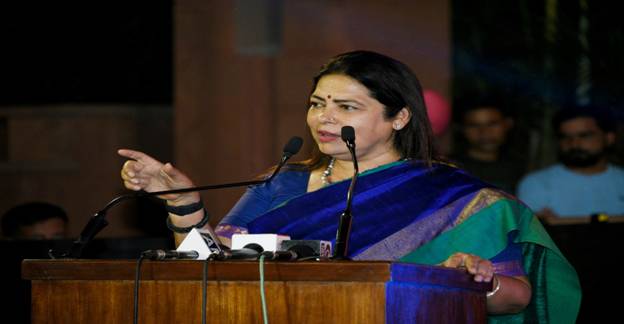
Minister of State for External Affairs and Culture Smt. Meenakashi Lekhi delivered the key note address for the event. She stated that, “the India Art Architecture Biennale promises to stand as a beacon in India’s vibrant festival tapestry aiming to showcase the nation’s architectural and artistic brilliance on the global stage. This Biennale mirrors the grandeurs of International counterparts and promises not just inspiration but also pure enchantment. The Biennale will initiate dialogues, innovation & collaboration by bringing together grassroot artisans and contemporary designers thereby furthering the creative economy”.

Smt. Mugdha Sinha, the Joint Secretary, provided an overview of the upcoming Biennale in her opening remarks. She revealed that the Biennale is scheduled to take place from 9th to 15th December 2023, at the iconic Red Fort. The event will explore various themes through exhibitions and panel discussions, with each day centred around a specific theme, curated by experts in the field. The themes encompass topics such as doors and gateways, enchanting gardens, awe-inspiring stepwells, majestic temple architecture, modern wonders of independent India, the contemporary face of indigenous design, and the role of women in architecture.

Additionally, it was mentioned that the India Art Architecture Design Biennale 2023 will serve as a precursor to India’s participation in the Venice Biennale 2024, fostering a comprehensive dialogue among practitioners and professionals in the realms of art, architecture, and design. The Biennale aims to bring traditional grassroots artists and contemporary designers, curators, architects, and thought leaders to the forefront, transcending age, gender, and genre boundaries. Furthermore, it was noted that the Biennale aligns with the vision of the Prime Minister and will mark the launch of the Development of Cultural Spaces project at the Red Fort.


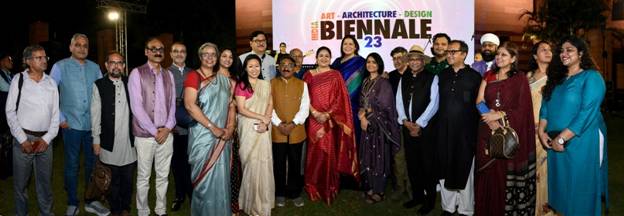
The event witnessed a significant turnout with diplomats, artists, architects, designers, curators, government officials, gallerists, and museum professionals in attendance. The evening was enhanced by the captivating performance of the jazz quartet ‘Capital Three’.

For the latest information and updates, please follow the official Instagram page of the India Art, Architecture and Design Biennale at @iaadb2023.

***

Top Ten Popular Arts of India

Top Ten Popular Arts of India

India is known for its rich cultural heritage and diversity, which is reflected in its traditional arts and crafts. Here are the top ten popular arts of India:
Madhubani painting – A style of painting native to the Mithila region of Bihar, known for its intricate and colorful depictions of nature and mythology.
Kalamkari – A type of hand-painted or block-printed cotton or silk textile from Andhra Pradesh, known for its beautiful patterns and vibrant colors.
Warli art – A tribal art form from Maharashtra, known for its simple yet beautiful depictions of daily life and nature, usually painted in white on a red ochre background.
Pattachitra – A type of traditional painting from Odisha, known for its intricate details and bright colors, often depicting Hindu mythology and folklore.
Phulkari – A type of embroidery from Punjab, known for its colorful floral patterns and intricate stitching.
Pottery – India has a rich tradition of pottery, with different regions known for their unique styles and techniques, such as Blue Pottery from Rajasthan, Terracotta from West Bengal, and Khurja pottery from Uttar Pradesh.
Kondapalli toys – Wooden toys from Andhra Pradesh, known for their intricate carving and vibrant colors, depicting a wide range of themes, including animals, mythology, and daily life.
Chikankari – A type of embroidery from Lucknow, Uttar Pradesh, known for its delicate and intricate needlework, usually done on white cotton or muslin fabric.
Meenakari – A type of metalwork from Rajasthan, known for its intricate enamel work and colorful patterns.
Kathak – A classical dance form from North India, known for its graceful movements, intricate footwork, and expressive storytelling.
These popular arts and crafts of India not only reflect the country’s rich cultural heritage but also represent the skill and creativity of its people. They are essential cultural assets that have been passed down through generations and continue to thrive and evolve in contemporary times.

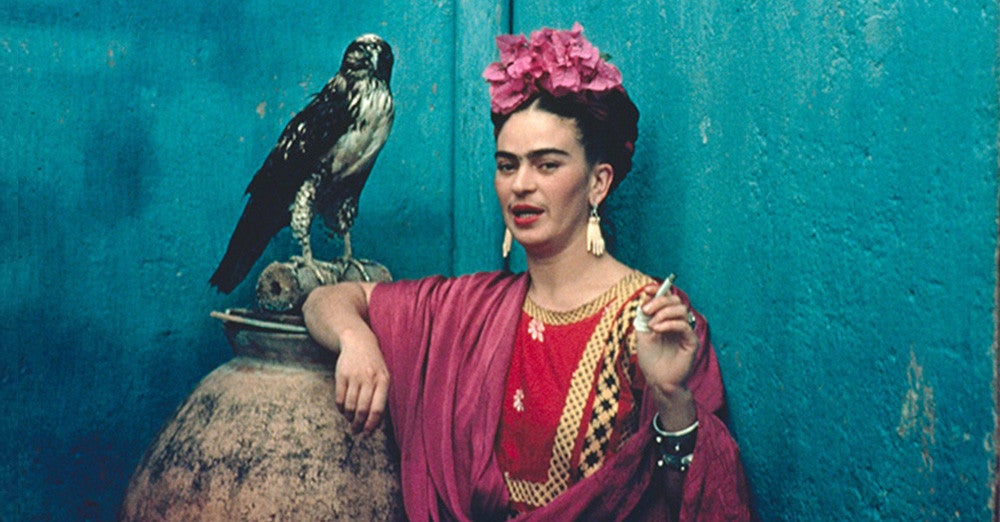
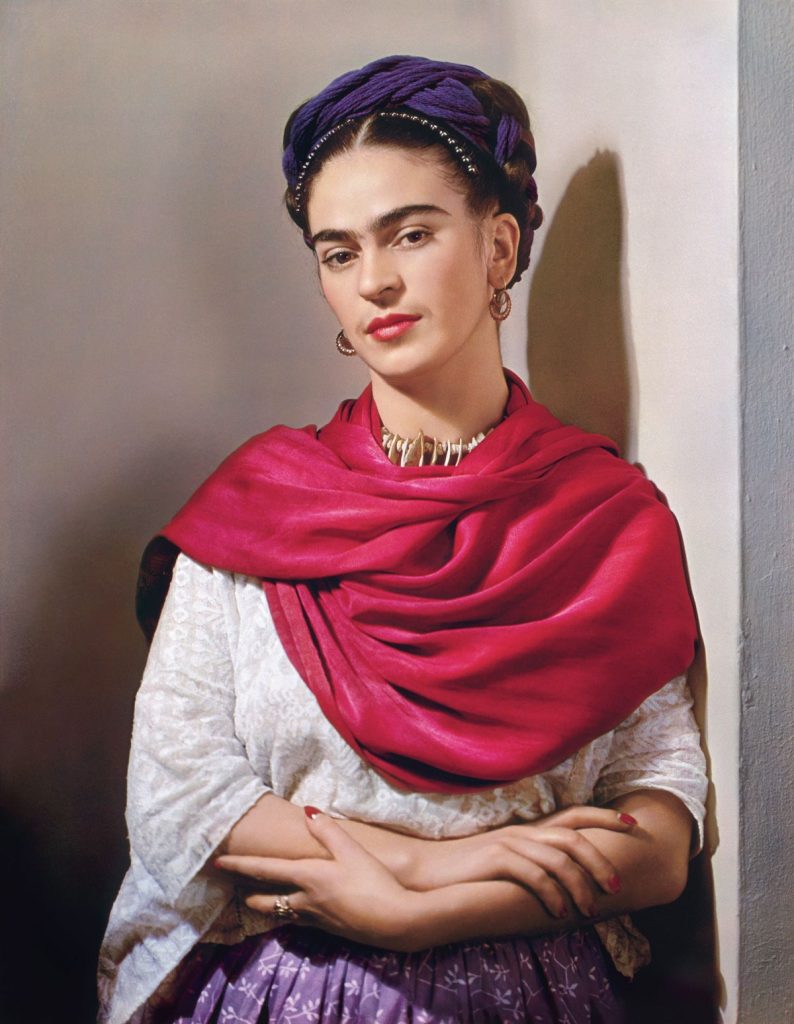
Frida Kahlo: Unconventional, Uncompromising and Unibrows

Frida Kahlo

Introduction

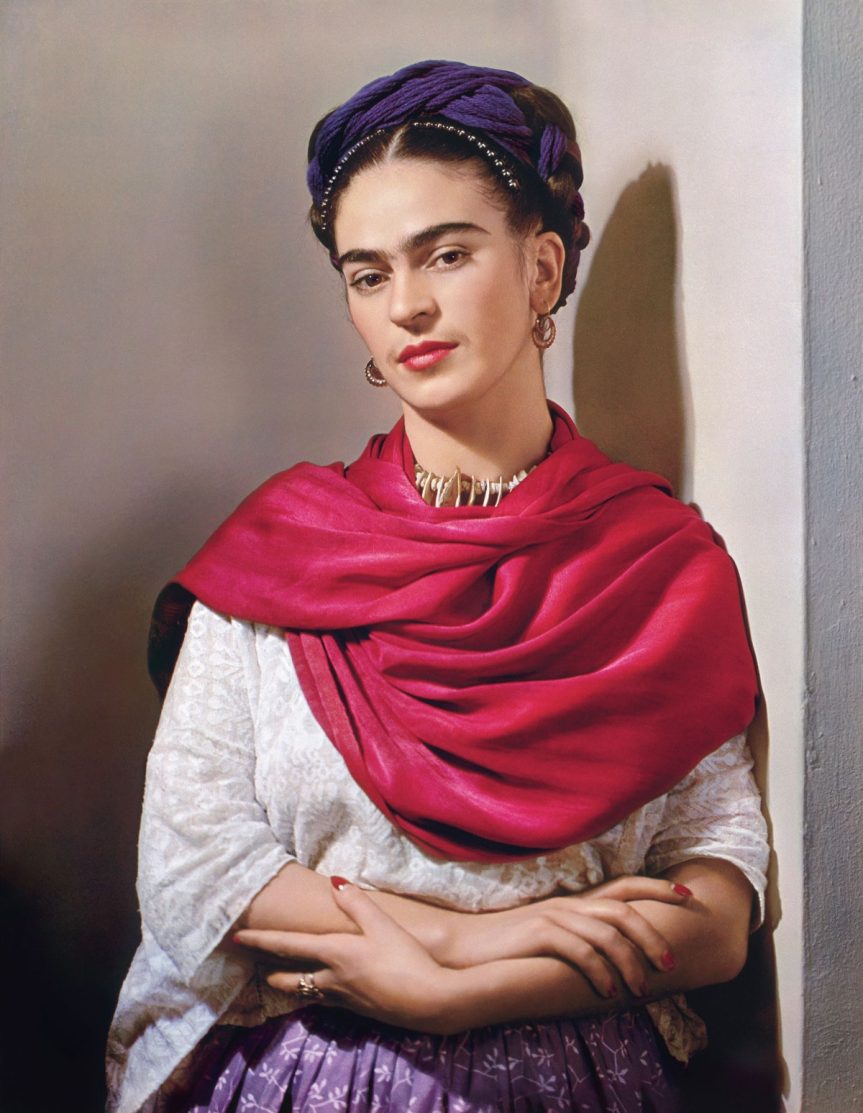
Even after years since Frida Kahlo’s demise, her charisma and powerful sense of style continue to captivate the world. The Mexican artist, famed for her self-portraits, is celebrated in her home country for her attention to indigenous culture, and by feminists worldwide for her depiction of the female experience and form. In fact, she was an advocate of feminism way before it became a staple in the social media age.

Frida

Early Life of Frida Kahlo

Magdalena Carmen Frida Kahlo y Calderón was born on 6 July 1907 in Coyoacán, a village on the outskirts of Mexico City. Born to a German father and a Mestiza  mother, Kahlo spent most of her childhood and adult life at La Casa Azul, her family home in Coyoacán  – now publicly accessible as the Frida Kahlo Museum. Although she was disabled by polio as a child, Kahlo had been a promising student headed for medical school until she suffered a bus accident at the age of 18, which caused her lifelong pain and medical problems. During her recovery, she returned to her childhood interest in art with the idea of becoming an artist.

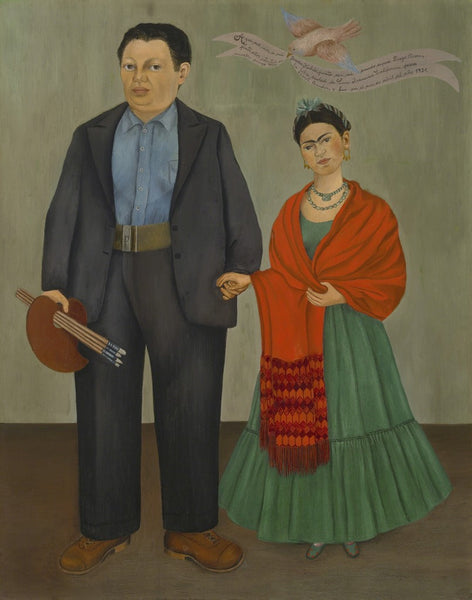
Diego and Frida, Self-Portrait With her Husband

Art Works of Frida Kahlo

Mexican artist Frida Kahlo is remembered for her self-portraits, pain and passion, and bold, vibrant colors. She is celebrated in Mexico for her attention to Mexican and indigenous culture and by feminists for her depiction of the female experience and form.

Life experience is a common theme in Kahlo’s approximately 200 paintings, sketches and drawings. Her physical and emotional pain are depicted starkly on canvases, because of her traumatic bus accident and multiple miscarriages depriving her of Motherhood and leading turbulent relationship with her husband, Mexican Mural artist Diego Rivera, who she married twice. Of her 143 paintings, 55 are self-portraits. She quoted, “I paint self-portraits because I am so often alone, because I am the person I know best.”

Kahlo’s first self-portrait was Self-Portrait in a velvet dress in 1926. It was painted in the style of 19th Century Mexican portrait painters who themselves were greatly influenced by the European Renaissance masters. She also sometimes drew from the Mexican painters in her use of a background of tied-back drapes. Self-Portrait Time Flies  (1929), Portrait of a Woman in White  (1930) and Self-Portrait  (1937) all bear this background.

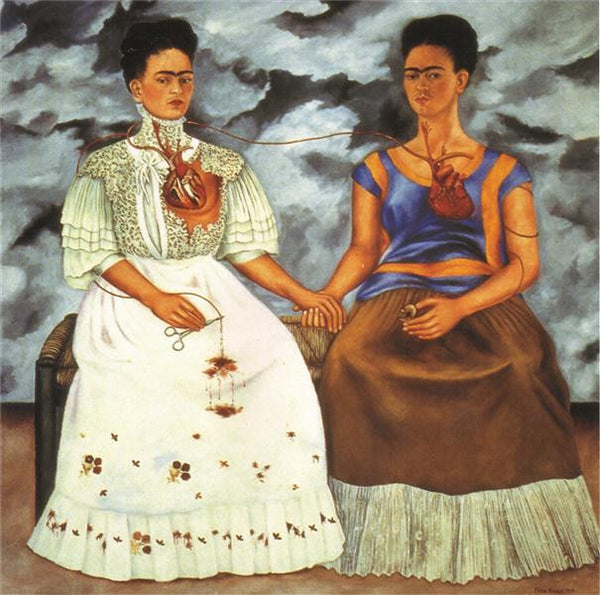
Two Fridas

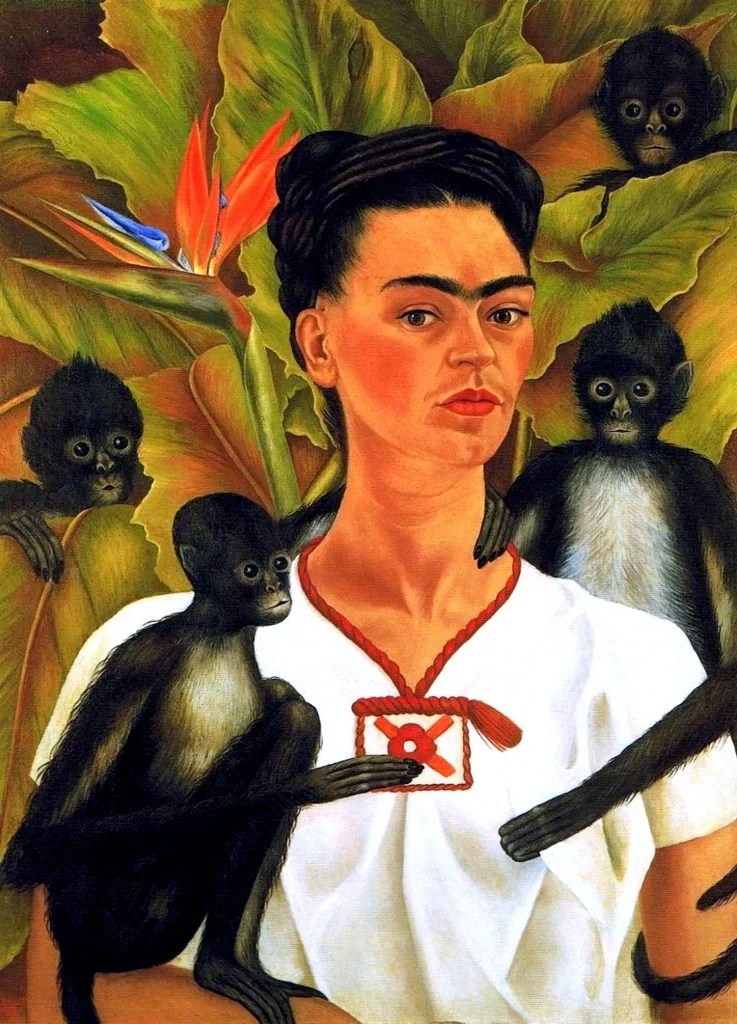
Self-Portrait With cropped hair (1940), Kahlo is depicted in a man’s suit, holding a pair of scissors, with her fallen hair around the chair in which she sits. This represents the times she would cut the hair Rivera loved when he had affairs. The 1937 painting Memory, The Heart, shows Kahlo’s pain over her husband’s affair with her younger sister Christina. A large broken heart at her feet shows the intensity of Kahlo’s anguish. Frida Kahlo and Diego Rivera divorced in 1939, but reunited a year later and remarried. The Two Fridas  (1939) depicts Kahlo twice, shortly after the divorce. One Frida wears a costume from the Tehuana region of Mexico, representing the Frida that Diego loved. The other Frida wears a European dress as the woman who Diego betrayed and rejected. Later, she is back in Tehuana dress in Self-Portrait as a Tehuana  (1943). Pre-Columbian artifacts were common both in the Kahlo/Rivera home (Diego collected sculptures and idols, and Frida collected Jewelry) and in Kahlo’s paintings. She wore jewelry from this period in Self-Portrait Time Flies  (1926), Self-Portrait With Monkeys  (1938) and Self-Portrait With Braid  (1941), among others. Other Pre-Columbian artifacts are found in The Four Inhabitants of Mexico City  (1938), Girl With Death Mask  (1938).

Frida‘s Self-Portrait With Monkeys

Analysis of Frida’s Artworks: Mexican Nationalism

Frida Kahlo was heavily influenced by the Mexicayotl movement, which sprung from the colonialist mindset that native Mexican culture is inferior and that Mexico should emulate Europe. The Mexicayotl movement aimed at protecting the indigenous culture and traditions among the Mexican people. In most of Kahlo’s self-portraits, she paints herself in traditional indigenous Mexican dress. She wears long, colourful skirts, huiplis (loose-fitting tunic), rebozos (shawls) and elaborate headdresses. Painting herself in the Tehuana dress was a chance for Kahlo to express her anti-colonialist ideas and pay homage to her indigenous ancestry.

Frida‘s Portrait of Deer with Human Face

Symbolism and Surrealism

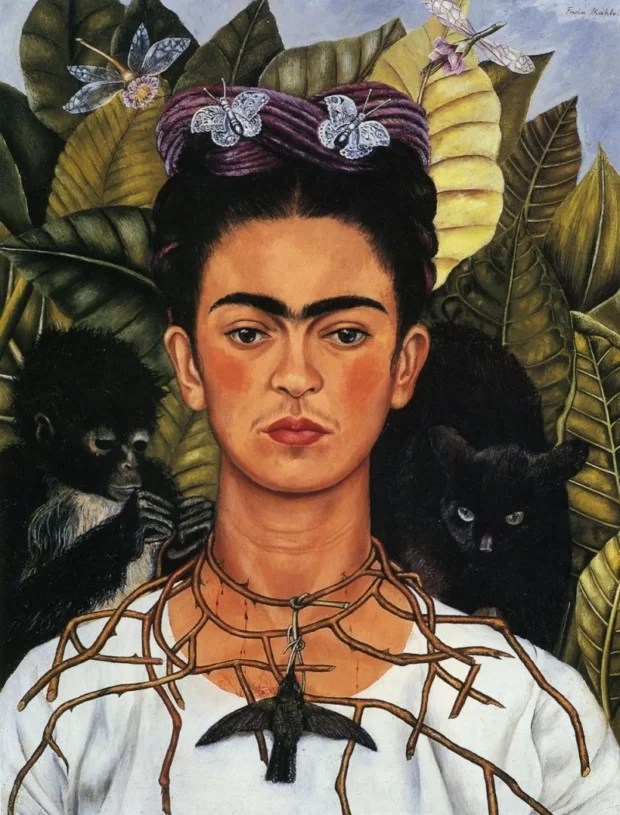
After periods of depression and miscarriages in her life she gave herself to pets around her. She liked to use animals as models in her artworks. Her paintings are domesticated by monkeys, hummingbirds, dogs, and cats. One of her self-portraits depicts her with three spider monkeys. The animals became protective and tender symbols to Kahlo. On the contrary, Mexican Mythology suggests monkeys are symbols of lust. Frida’s significant self-portrait was Self- Portrait with Thorn Necklace and Hummingbird. According to some art historians, Kahlo wanted to show that she had been resurrected and had started a new life with this painting. As a symbol of this idea, the hummingbird was placed in her necklace. The hummingbird symbolizes hope and good luck in Mexican culture. However, the audience may notice the black cat – known as a symbol of bad luck – taking its place behind the right shoulder of Kahlo. Different interpretations say that the hummingbird pendant refers to Huitzilopochtli. It is the Aztec god of war and may refer to the pain Kahlo suffered all her life internally. Other important symbols of the painting were butterflies and the thorn necklace. Butterflies symbolize resurrection and it may refer to her rebirth in life after the accident. Furthermore, the thorn necklace she wears may be the symbol of Jesus’ crown of thorns, which he bore while being dragged to his crucifixion. In addition to these symbols, Kahlo created a painting that both uses Christianity and animal symbolism in one subject matter. Painting The Little Deer, 1946 made by Frida  depicts her as a deer with a human face. The artist portrayed herself in this painting. However, there is a much more important detail in this artwork – the deer wounded by the arrows reminds us of Andrea Mantegna’s depiction of Saint Sebastian from 1480. It may also be a reference to crucifixion and resurrection.

Frida‘s Self-Portrait With Thorn Necklace and Hummingbird

Conclusion

Women prior to Kahlo who had attempted to communicate the wildest and deepest of emotions were often labelled hysterical or condemned insane – while men were aligned with the ‘melancholy’ character type. By remaining artistically active under the weight of sadness, Kahlo revealed that women too can be melancholy rather than depressed, and that these terms should not be thought of as gendered.

The Girl With a Pearl Earring: What Made It So Famous

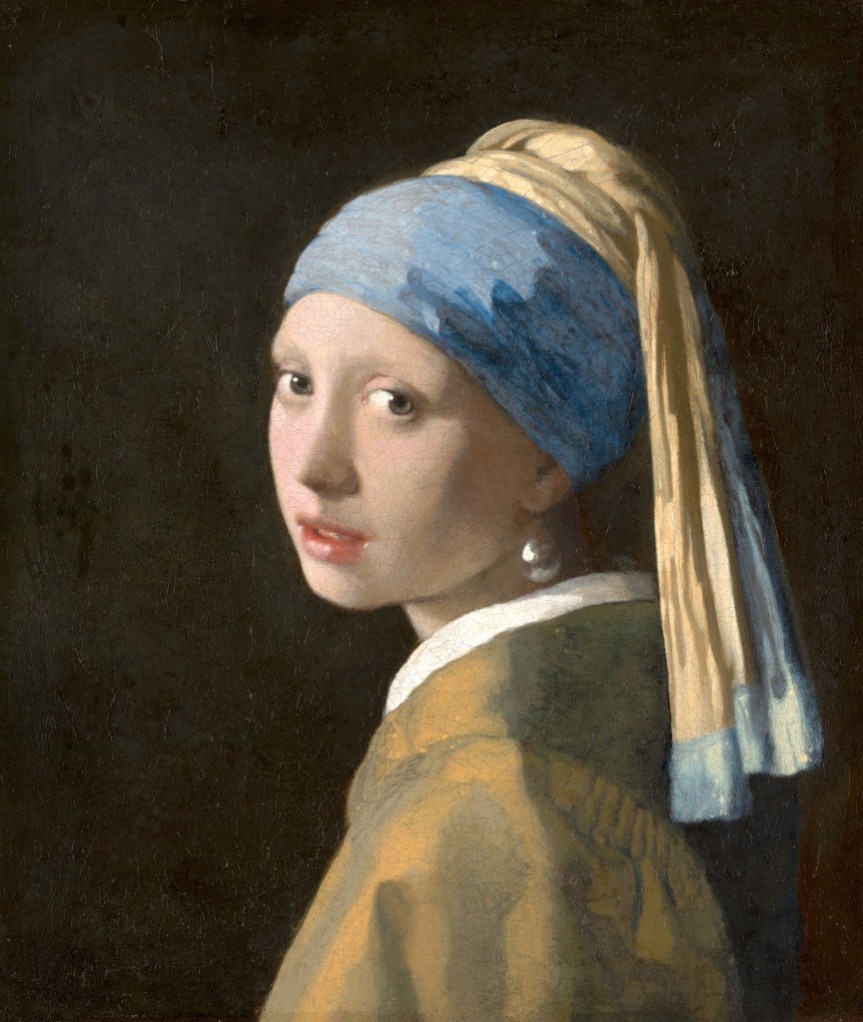
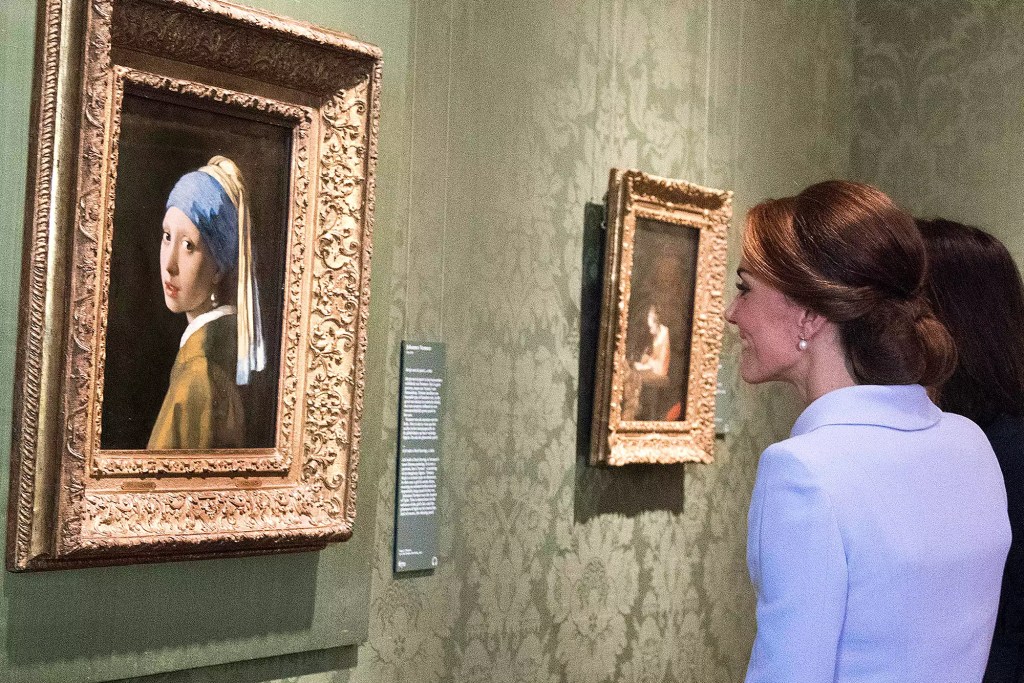
The Girl With a Pearl Earring (1665) by Johannes Vermeer

Introduction

Nicknamed the “Mona Lisa of the North“,the Girl with a Pearl Earring, is one of the masterpieces by famed Dutch painter, Johannes Vermeer. It hauntingly engages the viewer with enhanced realism, showcasing the electrifying gaze of a young girl adorned with a blue and gold turban. Created by Vermeer in 1665 during the Baroque period, the upper bust of the girl against a dark background has a three-dimensional effect that sets off her glowing appearance.

Historic Background

In Vermeer’s era, paintings were considered to be craftsmanship instead of art. Vermeer, a Dutch master painter at his peak, dedicated his life to developing his craft. By 1665, when the Girl with a Pearl Earring was created, Vermeer had begun to depict women, demonstrating a deep interest in their socio-cultural roles. The subject in this painting is believed to be Vermeer’s daughter, Maria.

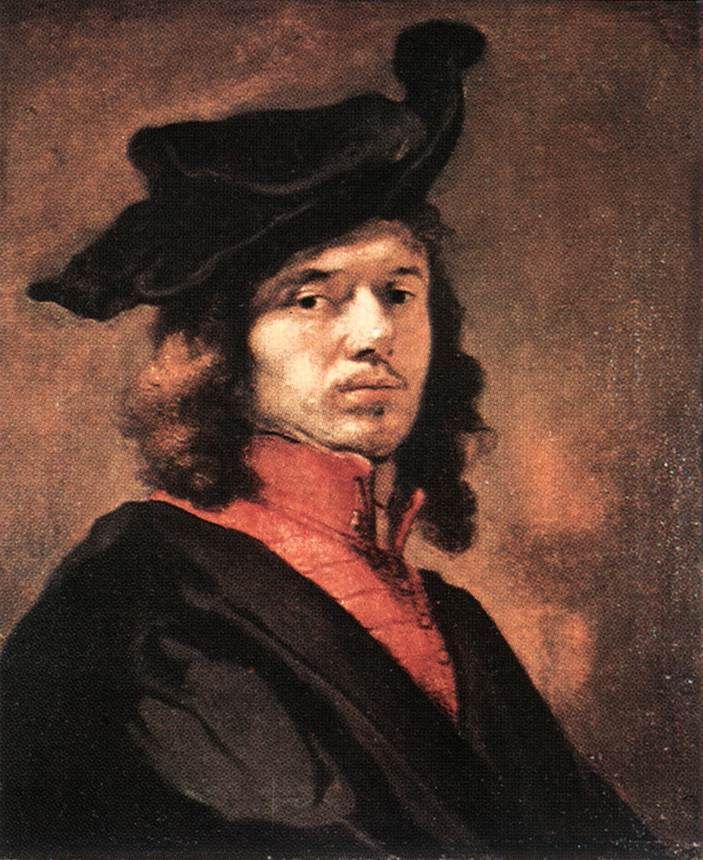
Self-Portrait of Johannes Vermeer

Subject of The Painting

The Painting was basically crafted with oil Painting on canvas and is categorized in Dutch Realism Movement arts. Although many art critics contend that the Girl with a Pearl Earring is a portrait, the prevailing argument is that it is a tronie, which is a study of the facial expressions of a living model. The composition of Girl with a Pearl Earring is delightfully simple. Unlike most of the other paintings by the Delft master, the subject here is only a simple head of a girl looking over her shoulder at the viewer. In Girl With a Pearl Earring, the young female model appears to be startled by something, while glancing taciturnly over her shoulder.No hint of a setting is provided, other than its atmospherically dark tone. This too is unusual for the mature Vermeer. The unusually direct contact between subject and spectator, and the slightly parted position of the lips, presents a sense of immediacy so great as to imply significant intimacy. The girl is wearing a simple brownish-yellow top, which contrasts strongly with her bright white collar. A further contrast is offered by her blue and yellow or turban (or chaperon) which gives the picture a distinctly exotic effect. During Vermeer’s time, the turban was a popular prop for tronies because of its deep folds and robust shades, which allowed artists to show off their skills and abilities.

Discussing the Painting: The uniqueness

Utilizing the technique of under-painting, or a monochromatic ground, Vermeer made the Girl with a Pearl Earring seem to lift from the canvas. Through careful use of his palette, he created the deep, rich tones of the girl’s headdress and gown. Then, to give her skin a glowing appearance, he used pigments to create light and shadow effect that contrasted the background. The Pearl Earring, status symbol of the period , worn by the subject, composed by only two brush strokes. The two whites, one on each corner of her mouth, helped to enliven the subject’s pensive smile.

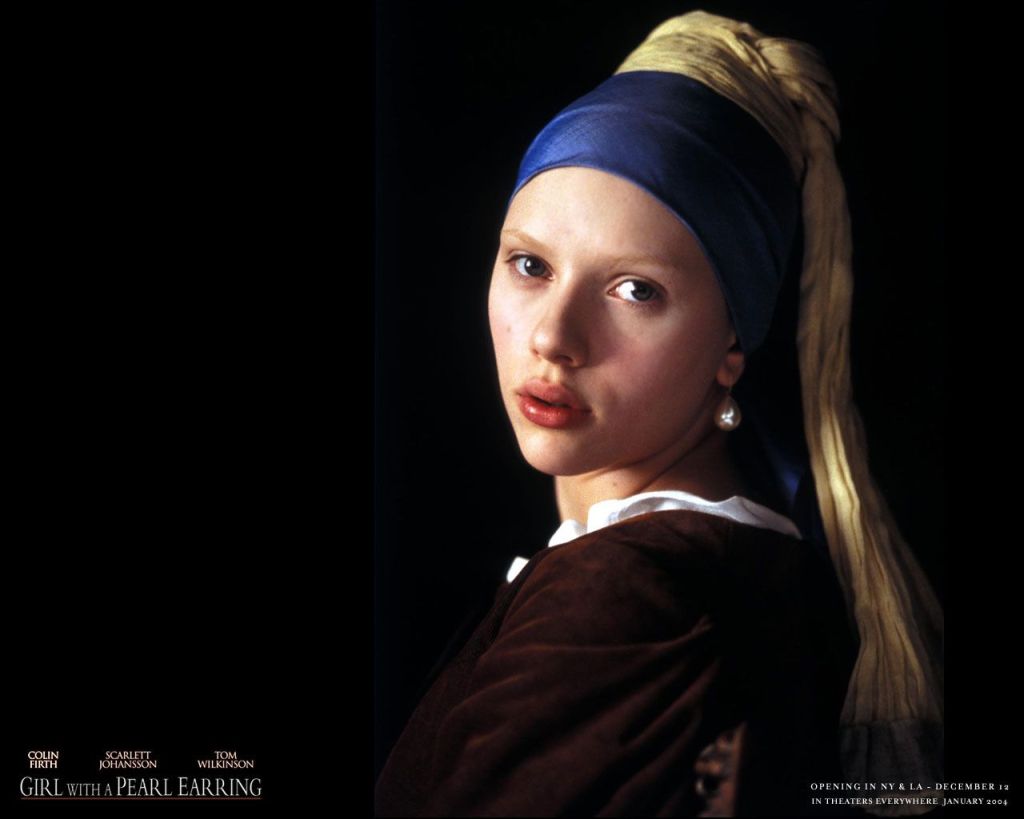
Scarlett Johansson in Girl With a Pearl Earring movie (2003)

The Painter’s Touch: The Cinematic Adoption

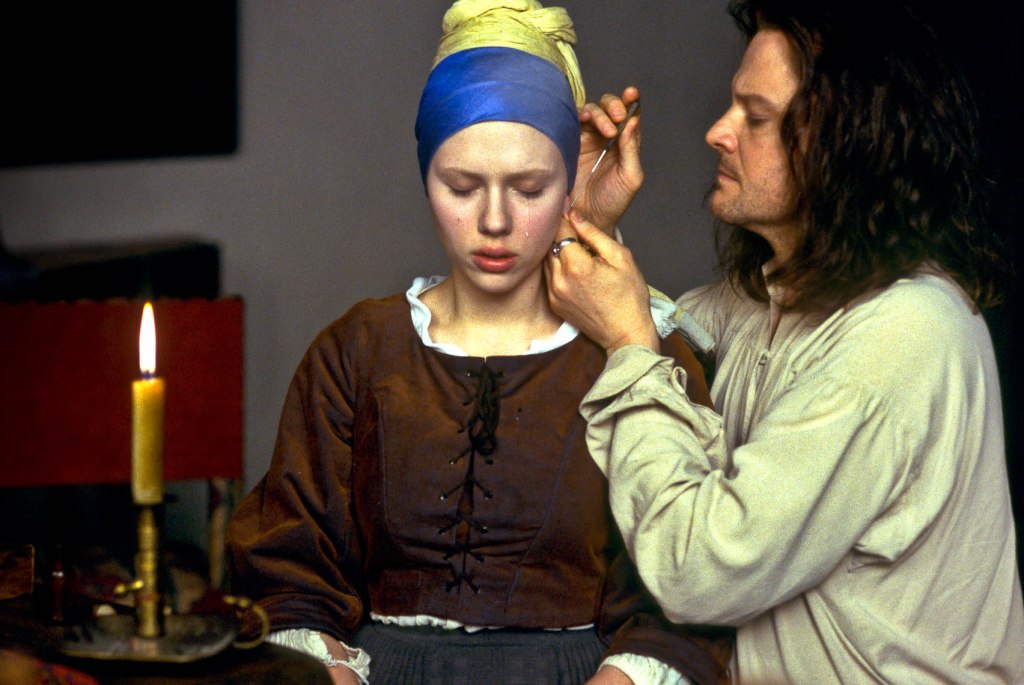
Although now a highly regarded artist, Vermeer was not well known outside of his native city of Delft during his lifetime or in the decades after. Historians credit the 19th-century French critic Étienne-Joseph-Théophile-Thoré (under the pseudonym of William Bürger) for reassessing the artist’s work, which eventually led to Vermeer’s distinguished reputation. Even so, Girl with a Pearl Earring became one of Vermeer’s more famous pieces only around the turn of the 21st century, with the 1995 blockbuster exhibition at the National Gallery of Art, Washington,D.C. and the publication of the best-selling novel Girl with a Pearl Earring by Tracy Chevalier in 1999. The book fashioned the painting’s subject into a housemaid named Griet who works in Vermeer’s home and becomes his paint mixer. It was adapted into an Oscar nominated movie in 2003 starring Scarlett Johansson as the fictional Griet and Colin Firth as Vermeer.

Scarlett Johansson as Griet and Colin Firth as Vermeer in Girl With a Pearl Earring movie (2003)

Where at Present Day

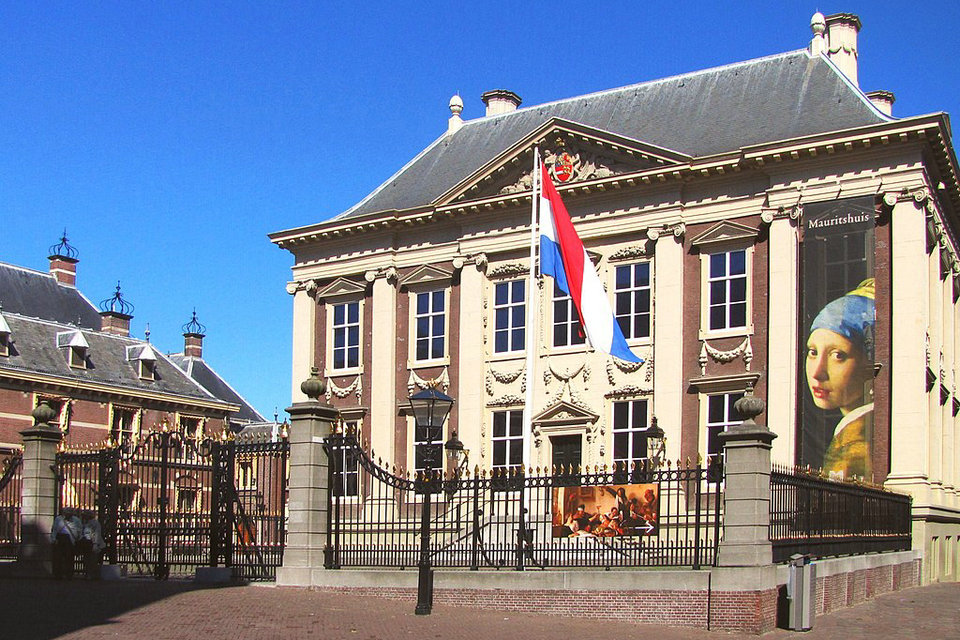
Mauritshuis, Den Haag, Netherlands

As the buildings of Mauritshuis Museum ,Hague underwent renovation in 2012, Girl with the Pearl Earring travelled to Japan, Italy, and the United States. It drew crowds in each location, attesting to its now firm place in audience regard. When Girl returned to the Netherlands in 2014, the Mauritshuis announced it would no longer lend out the painting, assuring visitors that the museum’s main attraction would always be in its home.

Princess Kate Middleton of England came face-to-face with one of the best-loved paintings in the world — “Girl with a Pearl Earring” — during a visit to the Mauritshuis museum in The Hague.
 

Conclusion

Humans have always adored paintings as one of the highest form of visual arts, and few of such arts can truly surpasses the inertness of still lives and remains immortal forever. The Girl With a Pearl Earring, poses the appeal of simplicity to rethink of life and consider the fact that beauty of life can also be found in the simplest joys around us.

Allahabad: A city of literary doyen

Allahabad is a venue for Urdu-Hindi literary feat.

A feast for the lovers of art and literature, Allahabad is a venue for Urdu-Hindi literary feat. Allahabad is a cradle of the Hindi and Urdu literary world which attracts writers, poets and scholars from all over the world. 

Allahabad has been a political hub since the very beginning and has also contributed to the making of at least six prime ministers, namely Jawaharlal Nehru, Indira and Rajiv Gandhi, Lal Bahadur Shastri, VP Singh and Chandrashekhar and it is very well known that politics leads to creation and invention of different forms art, poetry, stories.  

Art and writing, poems and stories, basically any form of art is revolutionary and hence, there was also a literary movement taking place during the time when politics was at its peak in Allahabad. One of the contributing factors was the Allahabad University, which was for a long while referred to by the proud alumni as the “Oxford of the East”. 

The city is also associated with some of the literary giants of the Hindi-Urdu world in the last century. Some of the legends are mentioned below: 

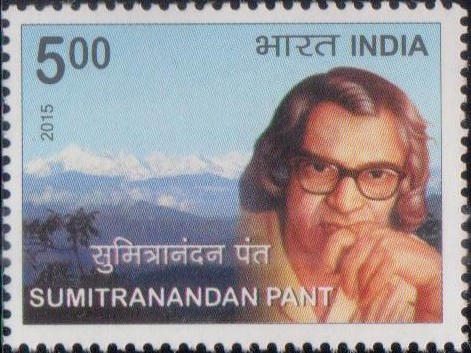
1.Sumitranandan Pant: Sumitranandan Pant was an Indian poet. He was one of the most celebrated 20th century poets of the Hindi language and was known for romanticism in his poems which were inspired by nature, people and beauty within. 

He is considered one of the major poets of the Chhayavaadi school of Hindi literature. Pant mostly wrote in Sanskritized Hindi. Pant authored twenty-eight published works including poetry, verse plays and essays. Apart from Chhayavaadi poems, Pant also wrote progressive, socialist, humanist poems and philosophical (influenced by Sri Aurobindo) poems. Pant eventually moved beyond this style. As the late scholar and translator of Pant, David Rubin, writes, “In the early forties the new psychological and experimental “schools” were emerging. It was typical of both Nirala and Pant that they themselves anticipated these trends and, by the time the new approaches were in vogue, they had already moved on to newer areas of experimentation.” 

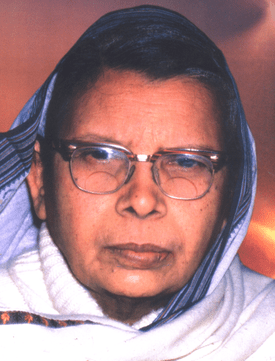
2.Mahadevi Varma: Mahadevi Varma was an Indian Hindi-language poet and a novelist. She is considered one of the four major pillars of the Chhayawadi era in Hindi literature. She has been also addressed as the Modern Meera.  Poet Nirala had once called her “Saraswati in the vast temple of Hindi Literature”. Varma had witnessed India both before and after independence. She was one of those poets who worked for the wider society of India. Not only her poetry but also her social upliftment work and welfare development among women were also depicted deeply in her writings. These largely influenced not only the readers but also the critics especially through her novel Deepshikha. Varma was a feminist par-excellence even before the term became trendy in public discourse. She was turned down by her husband only a few years after marriage. Her looks were not the kind that the fashion industry portrays as desirable, but the physicality of being has little to do with the beauty of her soul and intellect. 

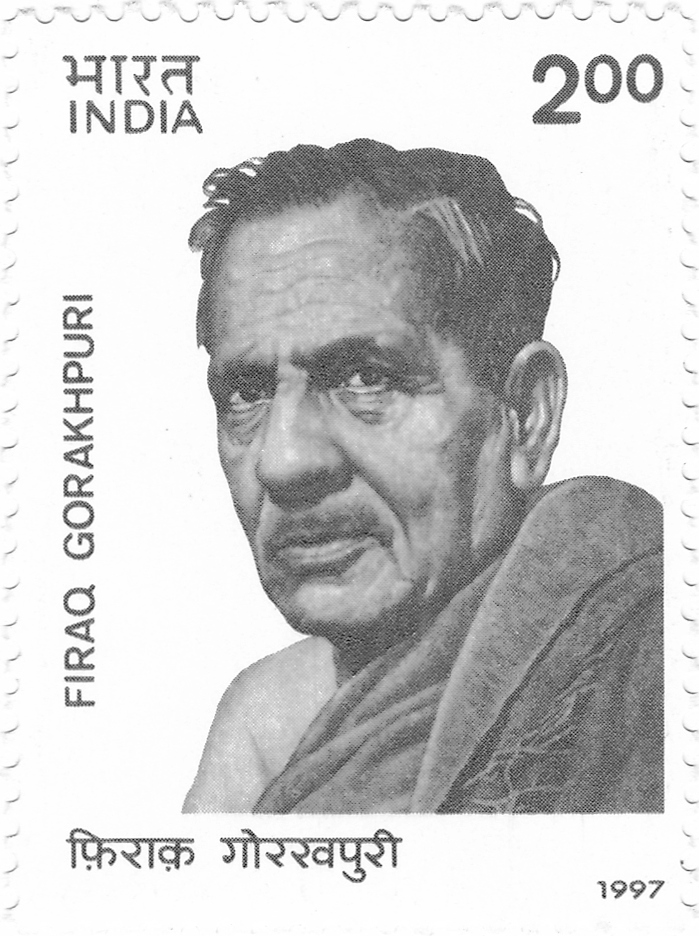
3.Firaq Gorakhpuri: Raghupati Sahay, better known under his pen name Firaq Gorakhpuri, was a writer, critic, and, according to one commentator, one of the most noted contemporary Urdu poets from India. He established himself among peers including Muhammad Iqbal, Yagana Changezi, Jigar Moradabadi and Josh Malihabadi. Some of his works are as followed, 

  • Gul-e-Naghma 
  • Gul-e-Ra’naa 
  • Mash’aal 
  • Rooh-e-Kaayenaat 
  • Roop   

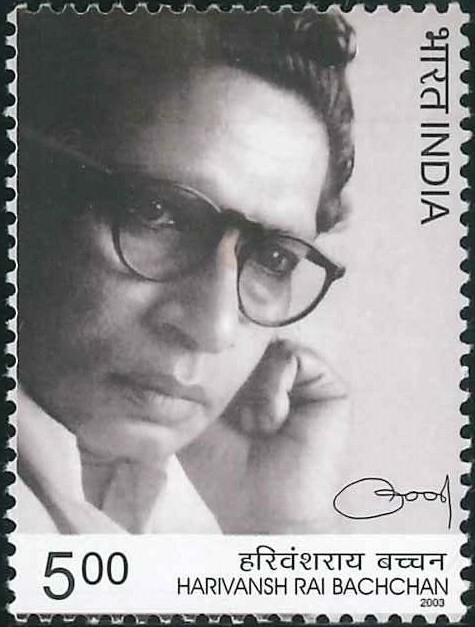
4. Harivansh Rai Bachchan: Harivansh Rai Bachchan was an Indian poet and writer of the Nayi Kavita literary movement (romantic upsurge) of early 20th century Hindi literature. He was also a poet of the Hindi Kavi Sammelan. He is best known for his early work Madhushala. He is also the husband of social activist, Teji Bachchan, father of Amitabh Bachchan and Ajitabh Bachchan, and grandfather of Abhishek Bachchan. In 1976, he received the Padma Bhushan for his service to Hindi literature. 

As the river Saraswati flows in the city and is regarded as the goddess of education according to the Hindu scriptures, hence, Allahabad is gifted with literature. The city is buffet of art and literature and is a feast for explorers. 

About that Artist – Jan van Eyck

Jan Van Eyck was one of the earliest Netherlandish painters, most renowned for his religious and naturalistic oil paintings in the 1400s and is also believed to be the inventor of oil paintings. His work includes portraits, single panels, triptychs and polyptychs, most of them are speculated to be painted in the 1430s. He paid special attention to the religious subjects and realism. 

Even though the exact year and place of Jan van Eyck’s birth is unknown but is believed to be born in the 1390s in Maaseik, a territory that belonged to the Holy Roman Empire, a city now known as Belgium. He is classified under the Flemish painters (artists who were active during the 15th and 16th centuries in Flanders). He was working in Hague somewhere between the years 1422 and 1424. Van Eyck, was the official painter to John of Bavaria, Count of Holland and continued to to work in the palace of Hague until 1325, the year in which the Count died.

After the Count’s death, he began working for Philip the Good, duke of Burgundy and worked for the duke until his death. Under Philip the Good, he did not just work as a painter but was also given political and diplomatic tasks, for which Van Eyck travelled all around Europe.

He took a lot of trips around the continent on Philip the Good’s behalf working on projects that were kept a secret and was given a salary for the same and his income did not depend solely on commissions.

It is believed that Van Eyck came from a family of painters. His brother Hubert van Eyck and he collaborated on perhaps one of Jan’s famous works Ghent Altarpiece, a polyptych altarpiece in St Bavo’s Cathedral, Ghent, Belgium which is considered as one of the most profound oil paintings. It began in 1420 and was completed about 12 years later in 1432. 

In around 1431 Jan Van Eyck, bought a house in Burges and married a lady, Margaret with whom he had 2 children. The prime of his career began in the mid 1430s, a time during which he painted Madonna of Chancellor Rolin, Lucca Madonna and Virgin and Child with Canon van der Paele.

Madonna of Chancellor Rolin, in which Virgin Mary is being crowned by an angel while holding Jesus in her lap and presenting him to Rolin. This painting was kept in a church in  Notre-Dame-du-Chastel in Autun until a fire burnt the church down in 1793 and then later, it was moved to Musée du Louvre, Paris.

Lucca Madonna, an oil painting depicting Mary sitting on a throne with Jesus Christ sitting on her lap.

In July, 1441, Van Eyck passed away and was buried in the Church of St Donatian’s graveyard. After the artist’s death, his widow was paid Van Eyck’s annual salary by Philip as a sign of utmost respect towards the artist. His reputation continued to grow after his death and many of his unfinished works were completed after his death. His brother Lambert van Eyck conducted a workshop after his death as well. 

About 20 paintings are known to be made by him in the 21st century and all of them are still waiting for the mystery that encompasses them to unwind itself.

The Genius of da Vinci- 3

Leonardo and Science                                                                       

Leonardo’s genius went beyond art and paintings, he shared just as much of a connection with science as he did with his art if not more. His contribution to science and scientific inventions were most probably a result of his artistic abilities.             

Leonardo studied anatomy, botany, light, chemistry, astronomy, mathematics, to name a few without receiving any sort of formal education.                                                    

Leonardo kept a log of his ideas, observations, and scientific drawings. According to him science and art shared a resemblance with each other which is quite evident from his journals that seem to blend art and science together.

FACTOID  Leonardo sometimes wrote from right to left because he was a lefty. Therefore most of his writing is in mirror image.

Leonardo learned the basics of anatomy and the human body when he was working for Verrocchio. Leonardo dissected about 30 human corpses in his lifetime. The hospitals in Italy let him continue his studies for research purposes after he established himself as a great artist.

In his dissection studies, he would pull on different muscles to see the effect it would have on the movement of other muscles. His anatomy research also included his studies of facial features. He studied the changes that different emotions caused in the facial features and those of people with a facial deformity or a sickness as well. He studied the human skeleton and pointed out that the sacrum (a bony structure in the vertebral column) is a fusion of 5 bones, which now holds to be true. He did all of this back then, when relatively close to no resources existed.

He studied the human heart and figured out how the valves of the heart work but couldn’t figure out the whole circulation system. In 2005, a heart surgeon in The UK took aid from Leonardo’s journals of the human heart. His studies are being used by top surgeons in the 21st century, over 500 years later.

Leonardo da Vinci was granted the permission to perform his experiments and do all this research after establishing himself as a profound artist during that time. The hospital gave him corpses to dissect and so he did.

Leonardo’s journals contain drawings of some flying machines that he was working on at that time. One such machine had wings that resembled the wings of a bat. Though his drawings were not fully correct and would not have worked in practicality, it is still exceptional that a man like him without major resources could do so much. 

His journals contain much more than whatever has been mentioned so far and will probably remain alien to the world or even if someone is able to somehow get their hands on said journal will also need the intellect to understand it.

Leonardo was much more than an artist but sadly that’s exactly what most people know him as. His ability to blend art and science made him extremely special. Imagine the things he could have achieved if he were born in today’s time. We would know so much more about the things unknown to mankind. He was an artist ahead of his time and needs to be recognized not just for his art but his true genius.

The Genius of da Vinci – 2

Adoration of the Magi 

One of the many paintings that Leonardo left unfinished, that is a skill all artists possess. The painting portrays the Virgin Mary with her chid and the Magi (the three wise men who paid homage to Jesus as the king of Jews) kneeling in adoration in front of them. Behind them, some ruins along with a few horsemen that appear to be fighting and a palm tree which holds a significance in the Bible.

This unfinished masterpiece now resides at the Uffizi Gallery in Florence, Italy.

The Last Supper                                                                               

The Last Supper is a mural painting that depicts Jesus having his last supper (the last meal of Jesus with his disciples in Jerusalem before he was arrested and crucified). In the painting, Jesus’ Apostles can be seen reacting to him saying “one of you will betray me”, “one of you”, referring to one of his apostles.                                                          This was painted by Leonardo in the late 15th century and started to deteriorate quite quickly, due to humidity and the painting techniques used by the artist. It took a long time to restore this painting with the final restoration being done in 1999 and was then returned back to where it belongs- Convent of Santa Maria Delle Grazie in Milan, Italy.

Salvator Mundi                                                                                    

In this painting, Leonardo shows Jesus wearing a robe, with the fingers of his right hand forming a cross pointing upwards while holding a crystal ball in his left.                        

This painting was sold for $450 million to Badr Bin Abdullah, a Saudi minister, in 2017.   What makes it worth $450 million?                                                                                

Well, you see no piece of art is only famous for its artistic grandeur, most pieces of art involved in some sort of controversy have a tendency to embark themselves in textbooks. Salvator Mundi went through it’s fair share of controversies. There were multiple times since the birth of this painting when it was thought to be destroyed. The painting vanished from the public eye in the year 1763 and was found in the 1900s in a rather impaired condition. Then in 2005, a group of individuals bought this painting for about $10,000 and was densely overpainted which made it look like a knock-off. Dianne Dwyer Modestini was given the job to restore this painting and the process came to an end around 2010.                                                                                                       

Even now, theories exist about the whereabouts of this piece which adds to the fascination.

Mona Lisa                                                                                          

One of the greatest paintings to ever be painted. Mona Lisa is a portrait painting of an Italian woman Lisa Gherardini painted in the early 1500s. The painting shows the woman looking directly at the observer. The woman in the painting possesses a certain amount of poise and grace. The landscape shown by Leonardo looks very surreal making the painting all the more captivating. The lady’s smile has been a subject of discussion among art lovers but a 2003 study suggested that the smile vanishes when you look directly at her mouth and reappears when you observe the face as a whole.  Leonardo used a technique called ‘sfumato’ with this one which is a technique involving the blending of colors into one another making the transition between different tones easier and giving life to the painting.                           Mona Lisa is housed by the Louvre museum in France

The genius of da Vinci 1

Leonardo da Vinci, a Renaissance man born in Italy in 1452, considered as one of the greatest painters the world has ever witnessed, was not just a painter but a man of great intellect. His scientific journals and studies way ahead of their time are to this date used by scientists to get a better understanding of them . In addition to being a painter, a sculptor, he was an anatomist and was well known in the field of engineering, architecture and astronomy as well. da Vinci was unmatched, the only artist who was able to get close to his art was the sculptor of the statue David Michelangelo. The fascinating thing is that he was able to do all this without being exposed to a speck of formal education or training in any field except in painting. He was taught how to read and do basic mathematics all the rest was his own creation.

Leonardo was a genius to say the least, he possessed curiosity ever so great. Maybe, this is what made him so great, his desire for knowledge.                                                                   

His scientific evaluations and anatomic studies are very much evident in his paintings. He used his scientific knowledge to better himself as an artist, and so he did.                                     

Here, we are going to take a look at a few of his paintings and some of his contributions in the milieu of science.

Leonardo da Vinci was born in a town in Vinci, Florence. His father was a Florence based legal notary and his mother belonged to a lower class. Not much is known about his family.

PAINTINGS

Leonardo is undoubtedly one of the greatest artists to have ever lived, but where did he start his artistic journey from?

Leonardo worked as an apprentice under Andrea del Verrocchio, an Italian painter, and sculptor of the 15th century. Leonardo first got introduced to Verrocchio at one of his workshops. He learned a plethora of skills by working for Verrocchio and later also collaborated with him for a painting called The Baptism of Christ around 1475.

Baptism of Christ was a collaborative effort of Andrea del Verrocchio and his student Leonardo da Vinci. This painting depicts Jesus being baptized (the Christian act of sprinkling water on someone, symbolizing purification), with two angels beside him, kneeling. The one performing Jesus’ baptism is John the Baptist, who can be seen with a golden cross and a halo over his head. The pair of hands shown above Jesus’ head is God’s representing approval and acceptance. A dove can also be seen above Jesus’ head as well, symbolizing the Holy Spirit.

Saint Jerome in the Wilderness Another unfinished yet wonderful piece by da Vinci portrays Saint Jerome, a Latin priest in the Christian Church, in the middle of the desert, kneeling, looking fixedly upwards with his arm extending outwards. A lion can be seen resting on the ground looking at the Saint. The lion’s presence can be accounted for by the fact that Saint Jerome helped a lion that entered the monastery where he stayed once, by removing a thorn from the lion’s paw.                                                                                                              

Leonardo used a method called tempera for this painting, which involves mixing of painting pigments with water-soluble emulsions, along with classic oil painting techniques.                                                                                     

This painting is currently present at the Vatican museum in Rome.

Why the long face? The Scream

The Scream is one of the most famous artworks on the planet. Almost everyone of us must have seen it somewhere or the other. Either in memes or maybe on some educational TV channel but very little population knows the name of the artist or even the name of the painting itself. 

Figure on cliffside walkway holding head with hands

Edward Munch

The Scream is an artwork by the Norwegian artist Edward Munch completed in 1893.

Munch was a painter and printmaker born in Norway in 1863. His paintings were greatly inspired by the expressionism movement and symbolism. All his paintings  had a certain underlying psychological tone to it which is hard to miss. Munch had a miserable childhood, and that misery manifested itself later in his paintings. His mother and sister died of tuberculosis while he was very young and later, still at a young age he lost his father and his brother too. Death and gloom always meandered around him and followed him everywhere. Another sister of his suffered from mental illness too.

To understand a piece of art it is important to understand the artist, his experiences, his life to be able to get as close to meaning the artist was trying to show because there is no possible way that we can fully understand an artist’s psyche at the time of making it even though art is interpretive.Munch depicted raw and violent emotions in his work

The scream is an autobiographical work of art where while he was walking along a path one evening with a fjord below, feeling tired and ill, when looked over the fjord the scene looked to him as if blood was covering the sky. He felt a scream coursing through the clouds. Munch had a history of ill mental health in his family and during that evening it is possible that he heard the scream inside his own head.Soon after painting The Scream abandoned this style and barely went back to it.

Theft 

A work of art doesn’t become famous just because of the beauty or the skill behind it but a multitude of things influence it’s popularity like what it represents, political environment, controversies it was involved in.

Similarly this painting is not just famous for its artistic grandeur but it was in the news a lot due to the thefts.

In 1994 thieves broke into a museum in Oslo and stole the painting also leaving a note that read thanks for the poor security and demanded 1 million USD as ransom which was refused. About 3 months later the two men were caught as a result of the sting operation carried out by the Norwegian police.

In 2004, a 1910 version of The Scream was stolen from the Munch museum in broad daylight by two masked gunmen who stole The Scream and Madonna by Munch. The Munch museum was closed for 10 months after the incident for security reasons. It took about 2 years for the Norwegian government to recover the two paintings with some major damage to the paintings which were recovered later.