Planning In India In A Globalizing World

As history has shown, India’s approach to development always remains contextual. This is evident when the nationalist leaders opted for a Soviet type centralized planning as perhaps an effective means for development. The idea was widely acclaimed regardless of the ideological differences among those who presided over India’s destiny following decolonization. The Planning Commission which was constituted in 1950 was hailed as an instrument to bring about quick development in India. India’s trajectory of development however proved otherwise : instead of being instrumental in contributing to a uniform development in the country, the Planning Commission failed to accomplish the goal; it was felt that centralized planning did not appear to be effective in attaining the goal that the nationalist leadership sought to attain.

The impact of the Planning Commission on India’s development cannot be easily ignored since it had been in place for more than six decades following the withdrawal of colonisation in India in 1947 while the NITI Aayog is too new to have any sway on the trajectory of growth in the country.

What is striking is the fact that while the Planning Commission was considered to be a piece of ideological baggage borrowed from the former Soviet Union, the NITI Aayog represents an effort toward articulating India’s neoliberal endeavour for sustainable economic growth. Ideologically drawn, both the planned development of the erstwhile era and its opposite, as conceptualized by the NITI Aayog, remain important pillars of India’s growth trajectory since independence. Centralized planning may have become futile though it undoubtedly had its role in the state directed development era.

Planning And Economic Development

With the formation of the Planning Commission in 1950, India was ushered in the state-led development era in which the state became a critical economic actor. Despite its historical antecedents, the idea of the state directed planned economic development gained significant salience in independent India, especially with Jawaharlal Nehru, India’s first prime minister, at the helm of affairs. Given his staunch opposition to the Gandhian model of democratic decentralization, Nehru always preferred the state-driven economy as perhaps the only driving force for India’s rapid socioeconomic regeneration in the aftermath of colonial rule.

There are two fundamental questions that need to be addressed: first, has the idea of the state-driven economic development lost its relevance just because of its failure to accomplish the stated goals or due to its vacuous claim in contrast with the rising importance of a market-driven counter ideology providing an alternative to the erstwhile strategy of the state-directed economic development? There is a connected second question: whether the market – driven strategy shall be useful for peripheral societies, including India, where the proportion of the people living below the poverty line is staggeringly alarming.

The Objective Of Economic Development

The following were the original objectives of economic planning in India:

  • Economic Development: This is the main objective of planning in India. Economic Development of India is measured by the increase in the Gross Domestic Product (GDP) of India and Per Capita Income
  • Increased Levels of Employment: An important aim of economic planning in India is to better utilise the available human resources of the country by increasing the employment levels.
  • Self Sufficiency: India aims to be self-sufficient in major commodities and also increase exports through economic planning. The Indian economy had reached the take-off stage of development during the third five-year plan in 1961-66.
  • Economic Stability: Economic planning in India also aims at stable market conditions in addition to the economic growth of India. This means keeping inflation low while also making sure that deflation in prices does not happen. If the wholesale price index rises very high or very low, structural defects in the economy are created and economic planning aims to avoid this.
  • Social Welfare and Provision of Efficient Social Services: The objectives of all the five year plans as well as plans suggested by the NITI Aayog aim to increase labour welfare, social welfare for all sections of the society. Development of social services in India, such as education, healthcare and emergency services have been part of planning in India.
  • Regional Development: Economic planning in India aims to reduce regional disparities in development. For example, some states like Punjab, Haryana, Gujarat, Maharashtra and Tamil Nadu are relatively well developed economically while states like Uttar Pradesh, Bihar, Orissa, Assam and Nagaland are economically backward. Others like Karnataka and Andhra Pradesh have uneven development with world class economic centres in cities and a relatively less developed hinterland. Planning in India aims to study these disparities and suggest strategies to reduce them.
  • Comprehensive and Sustainable Development: Development of all economic sectors such as agriculture, industry, and services is one of the major objectives of economic planning.
  • Reduction in Economic Inequality: Measures to reduce inequality through progressive taxation, employment generation and reservation of jobs has been a central objective of Indian economic planning since independence.
  • Social Justice: This objective of planning is related to all the other objectives and has been a central focus of planning in India. It aims to reduce the population of people living below the poverty line and provide them access to employment and social services.
  • Increased Standard of Living: Increasing the standard of living by increasing the per capita income and equal distribution of income is one of the main aims of India’s economic planning.

REFERENCES : Public Administration By Bidyut Chakrabarty and Prakash Chan Kandpal

Administrative Reforms In India

Public Administration is a continuous process and, in the sense, it is always an undergoing reform. So, in public administration, ‘reform is a journey rather than a destination’. Reforms are an obvious response to the new challenges confronting state institutions managing public affairs. At the root of such an exercise lies the effort at enhancing administrative capability in the changed scenario. The problem of administrative reform has received continuing attention in India, both at the centre and in the states.

Since Independence, there have been a large number of changes in the structure, work methods, and procedures of the administrative organisations. Although these changes have been gradual, at times not too perceptible, they do indicate the efforts made by the government to affect procedural and policy innovation in the administrative system and to keep pace with the changed situations, growing needs, and exigencies of the government. With this background, the present chapter makes an attempt to understand the concept of administrative reform, to analyze the initiatives of reforms after Independence, and understand the changing patterns of administrative reforms in India in the post – liberalization era.

Theoretical Underpinning Of Administrative Reforms

Public administration as an academic discipline was born with a bias toward change and reform. The term ‘reform’ literally means forming again. The Oxford English Dictionary defines ‘reform’ as ‘to convert into another and better form, to amend or improve by some change of form, arrangement or composition; to free from previous faults or imperfection.’ Following this definition, ‘administrative reform’ is to convert public administration into a better, improved form.

As An Academic Discipline

The Public Management and Administration field, in essence, is broad, necessitating a
specific study of theoretical frameworks. A review of conceptual literature and
contemporary case studies material on structural transformation and policy reform was
conducted to enlighten the research question and the statement of research. The existing
knowledge was highlighted in terms of its relevancy to this research, thus enabling the
incorporation of valid citation on previous experiences with civil service reform.
Conceptual definitions by proponents usually do not provide generic approaches on
administrative reform process, hence, the need for a focussed review of literature.

The objective is to consult the theoretical material relevant to public service reform.
For any research, it is important to establish a relationship between theoretical and
research perspectives (Procter, 2002) and identify gaps in the literature (Johnson, J.
1991). Varying views of different schools of thought cited must be contrasted so that
what has happened over time helps to show how others handled similar problems in the
past (Gerstenfeld, 2004). Philosophical or metaphysical nature of the phenomena being
investigated, whether observable or unobservable, has to be proved early before the
scientific knowledge of the object that is theory informed and the paradigms position
used in the research is established, appropriately in the concept definition section.
Research in the Public Administration field must not overlook or underlook the societal
imperatives – dynamics, which are underpinning public service reform. Political, social
and economic imperatives of a given society determine the type of public administration adopted for a particular developmental state. Each societal imperative would obviously contribute differently to the internal environment. This pattern is not common in every country as developed and developing societies likewise experience their unique situation where peace and stability enhance the conditions for reform.

Evolution Of The Cold War

Cold War After The Truman-Stalin Era

In early 1953, there was a change in the leadership of both the superpowers- the US and USSR. In the US, President Truman’s tenure ended in January 1953. He was succeeded by Dwight Eisenhower. an ex-army general who had commanded the Allied forces in Europe during the Second World War. Meanwhile. Soviet leader Stalin died in March 1953. He was succeeded as party chief by Nikita Khrushchev and by Georgy Malenkov as prime minister. The two Soviet leaders were not very comfortable with each other. Malenkov was replaced by Nikolai Bulganin in 1955. He was more acceptable to the party chief.

But in 1958 even Bulganin was dropped and Khrushchev assumed the prime ministership as well. President Eisenhower led US for eight years till he was succeeded by John F Kennedy in January 1961. Khrushchev remained at the helm of affairs till he was overthrown in 1964 by the troika of Leonid Brezhnev, Nikolai Podgorny and Alexei Kosygin. After the Truman-Stalin era, the US-Soviet relations eased considerably, but the Cold war showed no signs of ending. During 1953-64 several steps were taken by both the sides to improve relations, but at the same time tension got accelerated on different occasions.

CRISIS IN POLAND

Poland was the first to ignite. In June 1956, riots in the industrial city of Poznam were brutally suppressed, leaving dozens of people dead and hundreds wounded. A conflict occurred in the Polish Communist Party between two factions – one owing allegiance to Boleslaw Bierut, who had died earlier the same year, and the other led by Gomulka, who was a Nationalist Titoist communist, and had remained in jail since 1949, and was recently released. Gomulka faction succeeded.

In October, Polish Communist Party issued a proclamation that Poland would henceforth pursue a ‘national road to socialism’, and Gomulka was elected Secretary of the Polish Communist Party. The Soviet leaders decided not to use force against Gomulka. This was second set-back to USSR after Yugoslav decision in 1948 to follow Nationalist Communism.

REVOLT IN HUNGARY

Since the end of Second World War, Hungary was governed by an orthodox Communist leader, Matyas Rakosi, a nominee of Stalin. (He had been freed from jail before the War on Stalin’s initiative after the Soviet Union returned old Hungarian flags captured by the Czar in 1849.) The Rakosi regime was severe ‘even by Stalinist standards.’ In 1953, he was summoned to Moscow, reprimanded and replaced by a reformist communist Imre Nagy.

A more intangible effect of 1956 arises with the spread of its talented diaspora. Many thousands of gifted Hungarians left their country and settled as far afield as Australia, the United States, and across Western Europe. The contributions they made to their adopted countries were incalculably beneficial. Nowhere have I heard the kind of objections to Hungarian refugees that one regularly encounters in relation to other refugee and asylum-seeking groups. To some degree this is because everyone knew what the Hungarians had fled from; they received instinctive sympathy. But it also reflects the performance of the Hungarians in their adopted countries. They assimilated well and quickly, and were soon more than repaying their hosts.

Even though assimilated, however, they were eloquent voices critical of communism and the Soviet empire. The eminence many soon achieved in their fields of scholarship and enterprise added weight to their criticisms. And in the United States especially, they formed the influential “captive nations” lobby with other émigré groups, to press for a realistic foreign policy and, in time, to provide Reagan with intellectual heft.

REFERENCES : International Relations By V.N. Khanna

Rise Of China And The International System

Introduction

China has undergone a massive transformation in the last four decades. It has emerged as a major world power within a short span of time and is set to challenge the hegemony of the United States in the coming years. China’s spectacular rise is predominantly due to its unprecedented economic growth which averages nearly 10 per cent for the last forty years. It has to be noted that this achievement has no precedence in recorded human history and even critics of China have acknowledged this grand success. Even the World Bank has noted that China has ‘experienced the fastest sustained expansion by a major economy in history – and has lifted more than 800 million people out of poverty.’

This transformation began in 1979 with the introduction of economic reforms and today China ranks first in the world in terms of economic size on Purchasing Power Poverty (PPP) basis. Many economists are predicting that China is set to emerge as the world’s largest economy in a couple of decades or even sooner. It is notable that when this happens, it will be for the first time in more than a hundred years a non- European country will hold the mantle of being the foremost economic power. This will be a seismic shift in international politics.

History Of China’s Economic Growth

Economist Angus Maddison’s work which studies Chinese economy through centuries notes that China had the world’s largest economy as late as 1820. It is often forgotten that China was one of world’s foremost economic powers before the negative impact of colonialism. By the beginning of the 19th century, the Qing dynasty which was ruling China has serious internal weakness which left the country vulnerable to Western and later Japanese imperialist ambitions. China lost the First Opium War with Britain in 1839 and subsequently signed the Treaty of Nanking in 1842 which was the first of many humiliating unequal treaties which the country would sign. It was a part of this treaty that Hong Kong was ceded o Britain and ports like Shanghai and Guangzhou were opened for British trade.

China also lost the Second Opium War in 1856 which was jointly fought by British and the French with the support of the United States. China was forced to sign the Treaty of Tientsin in 1858. This opened more ports for foreign trade and also granted more rights for foreigners to travel and trade within Chinese territory. By this time, China had already signed the Treaty of Wanghia with the United States in 1844 granting certain privileges to the country. During this phase of Chinese weakness, several European countries including France and Russia signed unequal treaties with China to gain trade privileges.

Implications Of The Rise Of China

With a rising economy, increasing military strength and growing ambitions, there is no doubt that China is set to dominate international politics in the century. This will however have major ramifications on the international system which needs to be discussed.

China’s rise has already caused concerns about whether the post Second World War liberal international political order will be threatened by the emergence of an authoritarian country as a systemic power. Since the end of the Second World War, the United States and its Western allies have set up international institutions like the United Nations, International Monetary Fund, World Bank and the WTO to construct a rule based international order.

Strategically, interdependence amidst economic globalization has eroded the foundation for a “new Cold War”, which would require four conditions.  First, policymaking in both countries would have to be ideologically driven so that, second, the world can be politically divided into two camps against each other. Third, their economies would be independent of each other upon which, fourth, both sides could form alliances to sanction against each other.

However, like most countries today, policymaking in both the US and China are essentially interest oriented, not ideologically determined. Hence it is virtually impossible that the world could retreat to Cold War dynamics, where nations are divided into two camps politically hostile and economically independent of each other. Moreover, although a US-led security system has survived the end of the Cold War, the US allies would be reluctant to join the fight should confrontation take place between the two superpowers. As for China, Xi Jinping made it clear in his speech at the Belt and Road Initiative summit in May 2017 that China would not pursue any alliance but strives to foster partnerships with other countries.

Thus, despite Trump’s high-profile measures against China, it is hard to imagine that either the US or China would go to war against each other. This is not necessarily because they would give up the competition and even rivalry, but because it will be extremely difficult for both Beijing and Washington to achieve a policy consensus at home and form alliance abroad, which are necessary for a confrontation between the two global powers.

However, the US “tough approach” against China will have a far-reaching negative impact on world order and stability, not only because Trump’s anti-China measures are an essential part of his “America first” unilateralism and his anti-establishment impulse in international affairs, but also because China has already become a deep-rooted stakeholder in all the three layers of today’s international order, i.e., the political order centered on the United Nations and its affiliated organizations, the economic and trade order based on WTO and other multilateral trade agreements, and the financial order maintained by the World Bank, IMF and other institutions like the ADB and AIIB.  Thus, it is not surprising that even America’s closest allies in Europe and Asia – despite their substantial differences with China in terms of value and political systems – are reluctant to join the US in its effort to roll back on China.  This does not mean they support China at all.  But like China, they are also deep-rooted stakeholders of the existing international order that based on multilateral arrangements. After all, the essential purpose of reckless unilateralist behavior by the Trump Administration (e.g., withdrawals from the Paris Agreement, the Iranian Nuclear Deal, the UN Human Right Council, levying heavy tariff taxes on almost all important trade partners, and demanding allies to pay more for the US security commitments) is to rewrite the rules of game in America’s term at the expense of the entire international order. It is in this regard that Trump’s “America first” has turned into “America isolated” because such an approach hurts all the stakeholders of the existing international order, including the US allies.

By contrast, China’s response to the US pressure sounds rational and positive.  Xi Jinping made it clear in his speeches at the Bo’ao Forum for Asia in April 2018 that China will resolutely continue its reform and openness policy.  Meanwhile, Beijing will firmly defend the free trade system based on multilateral arrangements on the one hand, and carry on its “peaceful development” strategy on the other hand.  While it remains to be seen whether, and to what extent, China can turn the rhetoric into credible actions, how, and by what means, China can manage the volatile relationship with the US under a highly self-centered and unpredictable Trump Administration will indeed have a far reaching impact on peace and development of the world.  The good news is that Trump’s ego-driven and unilateral behaviour can actually strengthen China’s hand, only if Beijing can handle it appropriately.  The bad news is that the US still is the strongest power on earth.

REFERENCE : Russia in Global Affairs, International Relations by V.N. KHANNA

Public Policy

Public policy is a frequently used term in our daily lives. We often read in newspapers about a public health policy, education policy, environmental policy, agricultural policy, industrial policy, and so on. Public policies are primarily framed by the government to satisfy public needs and demands. They are the means by which ends of a collective community are served. Without a policy, government and administration are rudderless. Successful policies make for successful government and administration, and hence there is a saying that when a policy fails, the government fails.

Theoretical Dimensions : The Context

Public policy is a relatively new subfield in political science. Its development as an area of study emerged out of the recognition that traditional analyses of government decisions were incomplete descriptions of political activities. As the relationships between society and its various public institutions became more complex and more interdependent, the need developed for more institutions became more complex and more interdependent, the need developed for more comprehensive assessments of what governments do – how and why they pursue some policy alternatives over others.

The focus on the public policy process has developed with the emergence of modern society and industrialization. During the nineteenth century, representative governments began to evolve in some parts of the world. With increased political participation by larger portions of the public, government decisions assumed greater importance and legitimacy.

What Is A Public Policy?

The term “public policy” refers to a set of actions the government takes to address issues within society. For example, public policy addresses problems over the long-term, such as issues with healthcare or gun control, and as such, it can take years to develop. Public policy addresses issues that affect a wider swath of society, rather than those pertaining to smaller groups. To explore this concept, consider the following public policy definition.

For example, public policy might tackle the problem of student loans by creating a student loan forgiveness program that affects several students at once, rather than paying off the loan of one student. Something important to remember about public policy is that it does not just refer to the government’s actions, but also to the behaviours and actions that result from those actions.

Significance Of Public Policy

It is evident that the public policy is the significant factor in the democratic government and it
emphasizes on the public and its problems, in fact it is a discipline which is branded as
public. The concept of public policy assumes that there is an area of life which is totally
individual but said in public. Likewise, public policies have a significant purposes to work in
the society where the democracy is prevails.

The important role of the public policy is to make the society to lead a better life and to maintain the delivery of the goods and services are significant, it is regarded as the mechanism for developing economic-social system, a
procedure for determining the future and so on.

REFERENCES : Public Administration by Bidyut Chakrabarty and Prakash Chand Kandpal

Gadgets that will make your life easier!

This is an image of gadgets that will make your life easier!


With rapid industrialisation and innovation making its way through centuries. People living through them benefit widely due to employment opportunities and hi-tech gadgets being produced. We cannot imagine our lives today without our phones and it is rendered useless without a good internet connection. With the continuation of experiments and innovations, the boundaries of possibilities are being pushed and new gadgets arrive in the market that vow to make our lives easier. 

We will be looking at such gadgets in the list below. Make sure to check them out!

1.Wireless earphones or earbuds

Nothing is more frustrating than grappling with tangled earphone wire when you need to listen to some music. Many tech giants have come with affordable solutions to this problem in the form of wireless earphones and earbuds. Yes, there are affordable options to choose from. You can also choose from a range of manufacturers to buy your wireless earphones as its a product competed for production by many popular brands. 

Click here to find some affordable wireless earbuds.

2. Powerbank

With a portable powerbank in hand, you no longer need to worry about losing all the charge in your phone. Or your wireless pods if you own a pair. However, you will have to remember to charge the power bank to use it for its intended purpose. Apon charging it, your powerbank can sustain long enough to power your mobile phones over long journeys. 

3. Streaming sticks

Streaming sticks are the modern solution for streaming video content on your television or computer using a Wifi or 4G internet connection. It comes with a remote as well to toggle through streaming services on your electronic devices. It works as an amazing alternative over set-top-boxes and cable TV connections. 

Google Chromecast or Amazon FireTV can be viable options to look for while purchasing a streaming stick.

4. Go Pro

GoPros are tinier versions of a traditional camera that allows you to capture photos and videos while you are on the run. GoPro is basically a US based brand that has widely become synonymous with compact and portable cameras. These compact cameras from GoPro are expensive. But if you don’t mind spending extra for a YouTube video or to simply capture a worthwhile experience, you can give this a go!

5. Selfie stick

Works every time when you lack a tall friend in your group. This selfie stick can be a portable extension for your arm while taking selfies. Or groupfies!

6. Fitness tracker

The rest of the world might not be interested in knowing the steps you covered. But you would want to keep tabs on it. Fitbit wrist bands can do the job by notifying you about the number of steps you have covered. There are more complex alternatives such as smartwatch that come with GPS connectivity and waterproofing as well. 

7. E- Reader

E-Readers don’t have the traditional glare you receive from your smartphones and computers. Thus, taking it easy on your eyes while you read your favorite book on one of them. You also have thousands of reading options to choose from on a single device. 

8. A lost-stuff finder

Here comes a hi-tech gadget that will help you find your important stuff. It’s a small chip-like structure that you can place inside your wallet or clip it to your keys. When you lose track of your items, you can trigger a sound on the chip from your smartphone to find your lost items. 

9. VR viewer

Get the experience of a virtual reality from Samsung gear VR or Google daydream view that can be operated from your smartphones. Because why not. There are tons of 360 degree videos and VR contents out there for you to witness. 

10. Wireless Charging pad

If your smartphone supports wireless charging, getting a wireless charging pad will be worth it. It will definitely make your life easier by not having to look for adaptors or cables anymore. It also looks cool!

So these are some of the tech-gadgets mentioned that can make your life

easier. 


References


Alex Fitzpatrick, the 20 tech accessories everyone should have, time.com


World System And Dependency

Structural approaches of international relations, also known as ‘neo-radical approaches’, are of recent origin. Theories in support of these approaches were advocated by leftist writers who were deeply influenced by Marxism-Leninisim. The structural approaches, including the ‘World System Approach’ and the ‘Dependency Theory’, consider the world structure from the class point of view, based largely on the level of development and accumulation of capital. Western capitalist countries, having huge accumulation of capital, are termed as the centre or core of the world system, while third world countries, lacking development and capital, are called the periphery. We shall examine the concept of development and underdevelopment with reference to the centre versus periphery.

A reference may be made here to neo-realists, who also examine the international structure, but from the political angle. They describe the international structure as chaotic or anarchic because there is no all powerful central authority to discipline the nation states, and to resolve their disputes and maintain world peace. The leftists, on the other hand, largely concentrate on economic relations between the rich industrialized nations of the capitalist world on the one hand and the poor developing third world countries on the other. This chapter will discuss the centre-periphery aspect of development as advocated by the neo-radicals.

Economic Accumulation : The North-South Divide

There is enormous gap today between income levels in the world’s industrialized regions and those in the third world. The rich industrialized countries generally lie in the northern parts of the world, while the poor developing countries are in the south. This difference in the income levels has caused differences in the overall prosperity between the rich North and the poor South. How can this gap be explained? This may be done with the help of the liberal view and also with reference to the revolutionary or radical world view.

The liberal view explains the problem by stressing that the capitalist countries have overall efficiency in maximizing economic growth. This view holds that the poor countries are merely lagging behind the industrial north. The liberals would make us believe that more wealth creation in the North is a good thing, as is wealth creation in the South. According to this view, there is no conflict between the two, as eventually the South will also acquire more wealth.

The leftist, or socialist, view is that the divide may be viewed not only in terms of creation of wealth but also with regard to its distribution. According to this view, the creation of wealth in the North often comes at the expense of the South.

The World System Approach – Centre And Periphery

The system of regional class divisions has been viewed by scholars of international relations with Marxist orientation as the ‘ world system’ or ‘capitalist world economy.’ The world system approach is a leftist theory and it relies on global system of analysis. Marx himself had limited his theory to domestic class conflict only, but Marxist scholars apply the same logic in their world system approach. In this system, class divisions are regionalized. The third world countries (exceptions apart) generally produce raw materials, including agricultural products.

These activities need large manpower but not much of capital. The peasants working in agriculture, mining and other sectors are paid low wages. The industrialized countries, on the other hand, mostly produce manufactured goods. This requires large amount of capital, and needs more skilled workers who are paid high wages. The industrialized manufacturing regions are called ‘centre’ of the world system; and the extraction regions (producing raw materials and agricultural items) are known as ‘periphery’.

Reference : International relations by V.N Khanna

Books that can scare the wits out of you!


This is an image of Books that can scare the wits out of you!

This one is for all you horror fans out there! Would you care for a ‘lights on’ experience at night? Then you should definitely check out some of the books on this list as they are filled with horror inducing components. Books in the horror genre have the ability to excite its readers and keep them hooked till the end. So all those who don’t mind some good scares coming your way, here are some books that are written to scare the wits out of you. 

1.Mrs Peregrine’s home for peculiar children

A family tragedy drives a 16 year old boy to an island off the coast of Wales where he discovers a crumbling structure. Upon navigating its living rooms and bedrooms he discovers that the place is inhabited by young residents. However, their peculiar mannerisms and behavior scares him out of his wits and makes him wonder if they are truly alive or long past dead! 

What happens to him from there on? Who are those residents of that crumbling structure? Only the pages of this fantasy horror book can tell. The texts in this book are also accompanied by vintage photographs that add to the already scary reading experience. There are also sequels written for this book so you can read up further after you are left on a cliffhanger. 

2. Sharp Objects

Consider this a PG-13 book due to its portrayal of drug use, foul language, and sexual situations. The story follows Camille Preaker, a reporter who recently got discharged from a psychiatric hospital. She is told to cover a murder story in her hometown which you might think will make her feel at home. But with a hypochondriac mother and an eccentric half-sister, her experience only turned to the worse. While battling the problems of her own, she not only covers the story of the murder but is also close at heels with the murderer. 

This book has the makings of a handsome psychological horror that will refuse to let you go before scaring the wits out of you. 

3. Lord of the flies

The book ‘Lord of the flies’ proves that a story doesn’t require supernatural elements to make it scary. In fact, young children are the source of sheer terror and shock in this novel by William Golding. Replace Tom Hanks in the movie Cast away with a couple of school boys and that forms the premise of this book. However what follows is way worse than a single man fighting on a lone island for survival. All innocence and morals are lost as young boys indulge in evil practices to survive an uncharted island with no adult supervision. 

This book is often treated as an allegory, political satire, and a prediction of the apocalypse due to its uncanny resemblance with the contemporary occurrences. 

4. Pet Sematary

It hit them like a ton of bricks when a family that recently moved into a remote town lost their little girl in a road accident. All hopes are lost until the father from the family of three discovers a cemetery that is claimed to bring back the dead! So first goes their dead family cat and then the little girl beneath the surface of the eerie cemetery. However, what comes out from the cemetery happens to be more than just a normal living being. 

The very sight of the cemetery in the first place is sure to scare anyone out of their wits. What follows during the rest of the story is a treat for genuine horror fans. There have also been movie adaptations of the book, but reading the book delivers the wholesome experience without having anything missed out or altered for cinematic constraints. 

5. The Stand

Living through a pandemic is no joke. Several lives are lost. Many fall sick. And when such an occurrence is used as a central theme in a horror fiction novel, all hell breaks loose over its readers! ‘The Stand’ portrays a deadly virus that almost wipes out the entire world. With a partial pandemic looming over our heads, this could be a very relatable and terrifying novel to read during this time. 

Here ends your quest for scary books to read. Do drop in more books from this genre in the comment section below. 


References


Jeffrey Somers, 5 October 2020, 25 of the most terrifying horror books ever, https://www.barnesandnoble.com/blog/25-terrifying-horror-books-ever/


Feel-good books that can turn your bad days around!


This is an image of feel-good books that can turn your bad days around!

Having had a bad or lonely day, who wouldn’t want to find something to do that makes them forget reality and simply have a nice time? But apart from scouring through Netflix and Prime Video looking for movies or shows to watch, you can also give books a chance as it gives you the privilege of imagining everything in your head as you read. In other words, you can create your own movie or visual adaptations of the books you read right in your head! 

Now let us shift focus to the ‘feel-good’ portion of this article and dive into the list of feel-good books that can put a smile on your face!

1.Chicken Soup for the Indian Soul

Chicken Soup for the Soul is a popular book series that comprises heartwarming short stories that you would wish were true if you read them. And fortunately they are real as these stories are personal accounts of people from different walks of life. These stories are rich in kindness, encouragement, help and generosity exchanged among people. 

With the Indian souls having a lot of short stories to share, this popular series has dedicated the book ‘Chicken Soup for the Indian Soul’ to the Indian readers and writers. This book contains short stories written by Indian souls that would definitely put a smile on your face. The genre of feel-good books would remain meaningless without this book. Or the entire series of Chicken Soup books for that matter. 

2. Everyone has a story to tell- By Savy Sharma

When 4 separate lives intertwine with each other, it need not always result in a crime thriller. It could also become a heartwarming union. ‘Everyone has a story to tell’ follows the lives of four different individuals with different desires and dreams. As the story goes on they form a strong connection and help each other in the pursuit of their dreams. As readers you will find yourself rooting for their success and relationships with each other. 

The incidents in the story are very relatable, giving you the sense of comfort in knowing that you are never alone with your negative feelings. Thus it becomes an important addition to the segment of feel-good books. Like the previous entry on this list,this book is also a part of a series so you can follow this up with the sequels if you liked it. 

3. A man called Ove

‘A man called Ove’ follows a man in his late 50s who’s most obvious possession is his sour attitude. He seems to dislike everything and tries to avoid confrontation with his neighbours everyday. As he awaits the final days of his life, the story unfolds in a way that the readers are left with love and admiration for this man named Ove. 

This feel-good book could be your company during the days filled with feelings of loneliness and hopelessness. If you let it. You might also start admiring your own life alongside the lovable character of this story!

4. The Namesake- By Jhumpa Lahiri

Relocating to a new location can be a stressful and scary experience. Excluding the benefits of seeing and experiencing new things, it brings with it a host of challenges in the form of language barriers, unknown cultural backgrounds, and foreign beliefs. The book ‘The Namesake’ highlights this struggle as it focuses on a family originating from Calcutta who shifted to Massachusetts and went through everything that you can expect after traveling half the way across the world and trying to fit in. 

Just like a good song that comforts you as it’s lyrics resonate the instances in your life, this feel-good book also reassures you that it understands and relates to your feeling of being left out in an unfamiliar society. It’s coverage of themes such as generation gap, coming of age and self identity are the icing on the cake. 

5. The hundred year old man who climbed out the window and disappeared

Upon reaching the brink of his life by his age, yet being strong and energetic in his heart. A 100 year old man embarks on a unique journey to escape his 100th year birthday celebration! The story rightfully begins by justifying the long title. However what follows is not only what happens afterwards, but also a journey heading back towards the important events of the 20th century in which the man has played important roles. 

This synopsis indeed reminds us of the movie Forrest Gump. It can be considered as the Swedish and written version of the movie which leans more on the humorous side of the line. 

So these are some of the feel-good books that are written to spread the feel-good vibes among readers. Sky is the limit when it comes to the sources from where you can buy these books. After-all, you have the internet in your hands!

Happy feel-good reading!


References


Joanne Finney, 17 of the best feel-good books, http://www.goodhousekeeping.com

Sinigdha Kulkarni, 2 April 2020, 11 feel-good books to read while in lockdown, http://www.vogue.in


Technologies that have gone obsolete. 

This is an image about Technologies that have gone obsolete.

With rapid technological advancements, we witness several unique and innovative technologies that take the market by storm! They become the talk of the town, sometimes go out of stock, and build a foundation for newer and better technological ideas to formulate. Finally, no matter how advanced these technologies are, it goes obsolete as it paves way for newer technologies to storm the market. 

We have had the privilege of witnessing several such technologies that completely blew our minds. But sadly, some are no longer in use or have gone obsolete. 

Here is a list of some of the technologies that have gone obsolete. 

So let us reminisce about the past!

1.Telephones and wired landlines

This is an image of telephones and wireless landlines.

I am reminded of the classic monotonous ringtone of a telephone as I write about this! Although not often used today, telephones and landlines have had a long run as it’s origins can be traced back to the 1840s. It has gone through several advancements and iterations, such as the rotary dial phones and wired landlines. 

Rotary dial phones have gone obsolete and the wired landlines are waiting to be one as portable and handheld solutions are multiplying across the world. However, we would never forget the long conversations we have had while sitting close to a telephone and holding on to the receiver. 

2. Phone booths

This is an image of phone booths


Gone are the times when people queued up outside a phone booth to make a call. Now you might see people queuing up to buy the latest I-Phone before it goes out of stock for a while! With handheld devices and network services being made available and affordable, phone booths no longer serve the purpose for which it was originally intended. 

There have been rumours about Google planning to develop these telephone booths into Wifi spots. For now, it stands as a reminder of the telephone’s long history. 

3. Pagers and beeper

Pagers and beepers were used in the 1980s as portable alternatives to landline telephones. They were mainly used by emergency service workers and doctors for people to reach out and connect with them, even when they were away from a landline telephone. Users could send and receive messages with these pagers and beepers. 

The early 2000s witnessed it’s decline as smartphones emerged into the market. But due to their durability and better network coverage, they are still in use by a few numbers. However, among the vast majority, this technology has gone obsolete. 

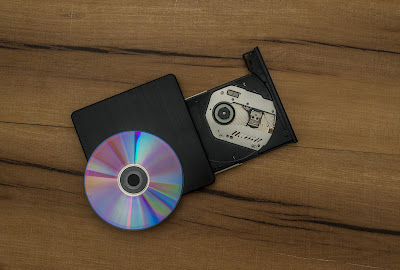
4. DVD a.k.a Digital Versatile Disc

This is an image of DVD


DVD is an evolutionary and a very familiar video format for many of us. We all have had the pleasure of inserting the DVDs into our DVD Players to enjoy audio and video content. It had several advantages over its predecessors as it had more storage space and was more durable. 

Today, video streaming platforms and high speed internet have replaced the DVDs to become the most sought after medium of entertainment

5. Floppy disc

This is an image of a Floppy disc

In the modern ages, Floppy disc is the universal computer icon that indicates the function of saving files. However, with the auto-saving options made available in many softwares, these are disappearing even as an icon. Floppy discs were mainly in use during the 1970s. The initial ones were capable of storing upto 80 kilobytes of data. With further developments made to the floppy discs, it’s storage capacity was increased to hold upto 144MB of data. 

Due to low durability and vulnerability to corruption, it was soon replaced by CD-ROMs. Today, one can say that this technology has gone obsolete. 

Which of these inventions do you remember using and which are the ones that I have missed out? I am sure there are many. Put them in the comments below! 

Important inventions that changed our world.


This is an image of important inventions that changed our world.

The only thing constant in this ever-changing world is change. This ‘change’ has cultivated some interesting inventions that shaped our world and made our lives easier. So much easier that today we cannot imagine our lives without them. These innovations further evolve and develop to create new possibilities in the future. From the modeling of a wheel to designing a medium that travels beyond the earth, here are some of the important inventions that changed our world

So be ready to be amazed!

1.Compass

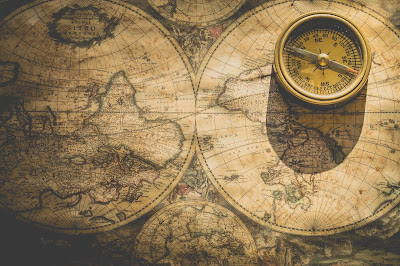
This is an image of compass

The earliest form of compasses were likely to be invented by the Chinese in 200 BC for religious purposes. It was started being used for navigational purposes by the 11th century. Over the years this invention saw several developments and modifications and it currently resides in our smartphones. 

2. Automobiles

This is an image of automobiles.

This is an invention that eventually went on to take the load off the horses and put them on the wheels! It all began from Nicholas Joseph Cugno who designed an automobile powered by steam that was suitable for human transportation. The evolution of the automobiles witnessed the contribution of different engineers and scientists. It became mainstream due to Henry Ford’s mass production techniques. Other popular manufacturers such as General Motors and Chrysler also contributed to the mass production of automobiles

3. Steam Engine

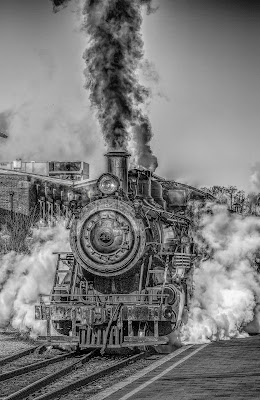
This is an image of a steam engine.

Trains have been a popular, reliable, and affordable choice of transport for many years, the origin of the same can be traced back to 1698, when Thomas Savory invented the steam engine to withdraw water from the congested mines by using pressure from the steam. After some modifications by forthcoming engineers, this steam engine was being used to power trains. 

Although not in use today, it is an important milestone in the development of today’s modern transport system. 

4. Airplanes

This is an image of airplane.

Leonardo da Vinci’s sketches of flying machines and countless other inventions over the centuries led to the first successfully controlled flight by the well-known Wright brothers. Their achievement laid the foundation for development and commercialisation in the field of aeronautical engineering which is prevalent today. 

5. Light bulb

This is an image of a Light bulb

There is more to the history of a lightbulb than the ever famous Thomas A Edison. Humphry Davy pioneered the functional electric bulb during the early 19th century. Wilson Swan made modifications to the conventional electric lightbulb and increased it’s span of use. 

Thomas A Edison can be credited for the commercialisation of the lightbulbs as he further increased it’s illumination span by 1200 hours. He went on to produce and sell these lightbulbs under his company named Edison Electric Light Company. 

6. Printing Press

This is an image of a printing press

The establishment of the Printing Press in 1436 by Johannes Gutenberg, a German goldsmith, helped spread knowledge and information among the public. Although the origins of the printing press can be traced back to the Chinese and Koreans’ printing methods, HIs printing machine was a development over the pre-existing printing modes and had been first introduced to the west. Gutenberg’s press went on to produce upto 20 million materials in the following years which consisted of books, individual papers, and pamphlets. 

We hope that you too would marvel at these inventions that has shaped our present. 

The Upper Paleolithic World

Introduction

After about 40,000 years ago, we see many significant changes in the archaeological record, reflecting important changes in cultural and social life. We see art, many new inventions, and considerable increases in the population. This period of cultural history in Europe, the Near East, and Asia is known as the Upper Paleolithic and dates from about 40,000 years ago to the period known as the Neolithic (beginning about 10,000 years ago, depending on the area). In Africa, the cultural period comparable to the Upper Paleolithic is known as the Later Stone Age and many have begun much earlier.

In many respects, lifestyles during the Upper Paleolithic were similar to lifestyles before. People were still mainly hunters, gatherers, and fishers who probably lived in small mobile bands. They made their camps out in the open in skin-covered huts and in caves and rock shelters. And they continued to produce smaller and smaller stone tools.

But the Upper Paleolithic is also characterized by a variety of new developments. One of the most striking developments is the emergence of art – painting on cave walls and stone slabs, and carving tools, decorative objects, and personal ornaments out of bone, antler, shell and stone. (Perhaps for this, as well as other purposes, people began to obtain materials from distant sources.) Because more archaeological sites date from the Upper Paleolithic than from any previous period and some Upper Paleolithic sites seem larger than any before, many archaeologists think that the human population increased considerably during the Upper Paleolithic. And the new inventions, such as the bow and arrow, the spear thrower, and tiny replaceable blades that could be fitted into handles, appear for the first time.

The Last Ice Age

The Upper Paleolithic world had an environment very different from today’s. The earth was gripped by the last ice age, with glaciers covering Europe as far south as Berlin and Warsaw, and North America as far south as Chicago. To the south of these glacial fronts was a tundra zone extending in Europe to the Alps and in North America to the Ozarks, Appalachians, and well out onto the Great Plains. Environmentally, both Europe and North America probably resembled contemporary Siberia and northern Canada. Elsewhere in the world conditions were not as extreme but were still different from conditions today.

For one thing, the climate was different. Annual temperatures were as much as 50 °F below today’s, and changes in ocean currents would have made temperature contrasts (i.e., the differences between summer and winter months) more extreme. The changing ocean currents also changed weather patterns, and Europe experienced heavy annual snowfall. Not all the world was cold, however; still, the presence of huge ice sheets in the north changed the climate throughout the world. North Africa, for example, appears to have been much wetter than today, and South Asia was apparently drier. And everywhere the climate seems to have been highly variable.

Upper Paleolithic Europe

With the vast supplies of meat available from megafauna, it is not surprising that many Upper Paleolithic cultures relied on hunting, and this was particularly true of the Upper Paleolithic people of Europe, on whom we focus here. Their way of life represents a small pattern throughout the Old World. But as people began to use more diverse resources in their environments, the use of local resources allowed Upper Paleolithic groups in much of the Old World to become more sedentary than their predecessors. They also began to trade with neighbouring groups to obtain resources not available in their local territories.

Reference : Anthropology by Ember and Ember

Thinking out of the box

This is an image of Thinking out of the box.
Photo by Ivan Bertolazzi on Pexels.com

No one remains a stranger to this phrase, But there is nothing more vague and inarticulate than this phrase. From the moment we are born into this world, we are being directed to behave and do things in a certain way. When we reach adolescence, we no longer have to be told to behave in a certain way as we begin to realise what the society expects from us and behave in accordance to their expectations. Finally, when we enter adulthood, we become champions in complying to societal expectations. 

After going through all these stages in life, while in a group discussion or a meeting, a team leader or a manager asks us to think outside the box. That’s unfair. Nobody taught us to think for ourselves, even if we did, it fell in the societal pattern of studying, marrying, rearing kids, and retiring. 

What is thinking out of the box?

In a professional terminology, thinking out of the box basically means coming up with a new idea (because the contemporary ones didn’t work) that would reap huge benefits for the company. In terms of life, thinking out of the box means being indifferent to societal norms and expectations as you do things your own way. Although my monologue above is defensive towards societal expectations, it is often impractical as not all of us can afford to waste our time and resources on carving a new path, when we can comply with our society and become financially stable and independent.   

How to think outside the box?

Nevertheless, we can still incorporate the habit of thinking outside the box to make a difference in our lives when needed. Thinking out of the box does not require racking your brains till you come up with a feasible idea. 

Take up a new course

Enrolling yourself for a new course will open doors to learning about new and unfamiliar things. Learning new things will influence your thinking in different areas and aspects of your life. Thereafter when you are confronted with a problem, you will be equipped with knowledge from the specialisation in a certain field that can aid you with thinking out of the box. 

Daydream

Although it sounds counter intuitive, daydreaming is an important factor that influences your thinking out of the box. While daydreaming, your brain is led astray from the logical aspects and helps you make connections and co-relations that you couldn’t come up with while racking your brain. So, turn your attention away from the problem you are facing and let your imagination go wild!

Read a book from a new genre

Thinking out of the box would require you to do things differently or try new things. So how about reading from a different genre than the one you usually prefer? Try nonfiction or didactical if you have always preferred fiction. Fiction might have accustomed you to think in a certain manner. To break that monotony in thinking, reading from a different genre might just do the trick. 

Pen a poem

The motive behind doing this relatively weird stuff during a serious confrontation is to break free from rational and logical thinking and invite new possibilities and ideas into the situation. Try writing a poem on the basis of your problems. As your mind begins wandering to support your efforts in poetry, you expand your horizon of thinking, leading to thinking outside the box. 

So there you go, a vague article on an equally vague topic. Thinking out of the box. Do drop in your thoughts in the comment box. Now that’s a rhyme scheme created which can be considered as the first two lines of a poem. I was wondering how to end this article so I made a rhyme scheme, a.k.a a poem. 

Digital And Text Based Literacy

Meaning And Introduction

The field of literacy studies has made many of us take a deeper look into the similarities and differences between text based and digital literacy. It seems not only through the literature but also by observation as a classroom practitioner that there are certain elements and conflicts between digital literacy and text based literacy that need to be combed through by educators in the field.

One of the most powerful lessons we’ve learned through our work with schools is the importance of doing the work we ask our students to do. Nothing helps us anticipate misunderstandings or understand the strategic support our students will need as much as stepping into their shoes, and doing the reading, writing, and thinking they will do as part of upcoming instruction. The approach to these said instructions is what one may categorize into digital literacy and text based literacy.

Similarities And Dissimilarities

There are a number of similarities between digital and text based literacy, one of them being, both have a common goal, which is, to gather information and communicate effectively. Digital literacy means having the skills you need to live, learn, and work in a society where communication and access to information is increasingly through digital technologies like internet platforms, social media, and mobile devices. While, text literacy is the ability to gather information to communicate using text. The common goal in both the cases is clearly somewhat similar, just the catalyst is different.

From school to the workforce, digital literacy is vital in many areas of life — but simply, having it is an absolute necessity for anyone who uses the internet. Sometimes forms and applications are only available online, so you’ll need to be comfortable accessing and using them. In short, digital literacy is a necessary skill for navigating in our modern, digital world.

Advantages And Disadvantages

Text based literacy has many advantaged over digital literacy. Text based materials are available all the time, regardless of not being in a good internet zone. Text based materials are not as expensive, But its limitation says, they are not as interactive as digital literacy might be. Also, text based literacy works merely on facts and memorization and has zero scope of innovations and ideas, unlike digital literacy.

Importance Of Effective Communication Skills

Contemporary World

People feel generally competent and confident when discussing matters of communication. Some perceive communication as one of the fundamental differences between human and other animal species, and as the very element that led to human change, development, adaptation, and domination. But to try and define such a broad term is a difficult task – one that many scholars have undertaken. The essence of communication though can be expressed in simple words: communication is the transfer of thoughts, feelings, ideas, and opinions from one person to another (or to a group of others) through specific channels.

The Virtual Scenario

Virtual communication clearly has many advantages including increased productivity, reduced business costs and a better work/life balance of the workforce. However, virtual communication also entails numerous challenges and obstacles which are often neglected in light of the benefits.

When communication is effective, it leaves all parties involved satisfied and feeling accomplished. By delivering messages clearly, there is no room for misunderstanding or alteration of messages, which decreases the potential for conflict. In situations where conflict does arise, effective communication is a key factor to ensure that the situation is resolved in a respectful manner. How one communicates can be a make or break factor in securing a job, maintaining a healthy relationship, and healthy self-expression.

In contemporary virtual  scenario, effective communication  fosters trust with others. Your ability to listen attentively and embrace different points of view helps others trust that you are making optimal decisions for everyone in the group. The ability to communicate effectively plays a large role in resolving conflicts and preventing potential ones from arising. The key is to remain calm, make sure all parties are heard and find a solution that is ideal for everyone involved. With people feeling more confident in their work and in their understanding of what they need to do, they become more engaged with their work as a whole. To cite a day-to-day example, video-conference with clients on another continent or even replying to a flood of emails for that matter, can be two of the very prominent instances, one may come across quite frequently.

A video-conference with clients on another continent, can be best accomplished only with one’s spontaneous communication skills, virtually. It is definitely not as easy as it may seem in an authentic face-to-face scenario.

The same holds true for online classes as well. Communicating with teachers, and students, virtually, isn’t as fun as it used to be in the past in a non-virtual scenario. To make situations like these more welcoming. One must have good communication skills and must know the right way to make use of it too. Being able to communicate effectively is one of the most important life skills to learn.