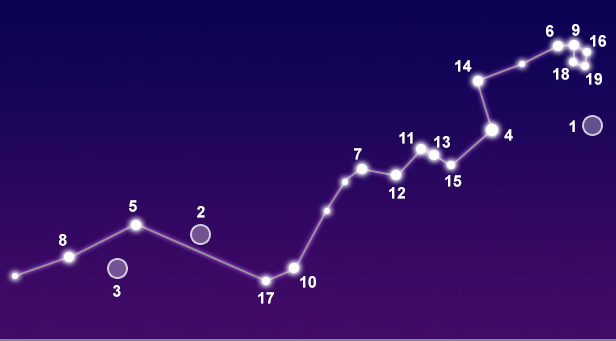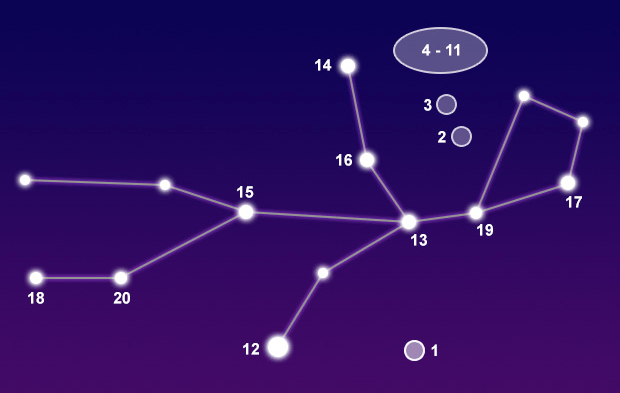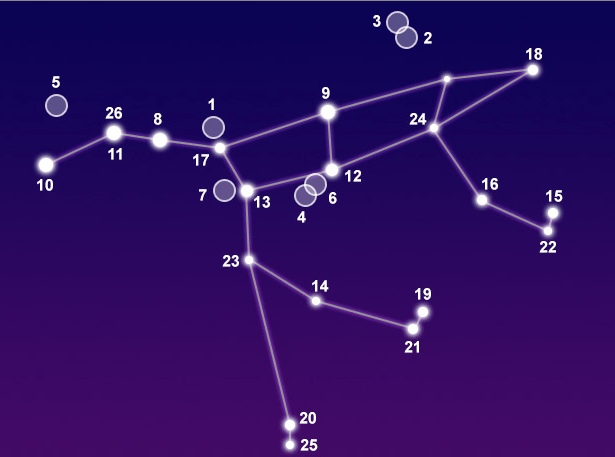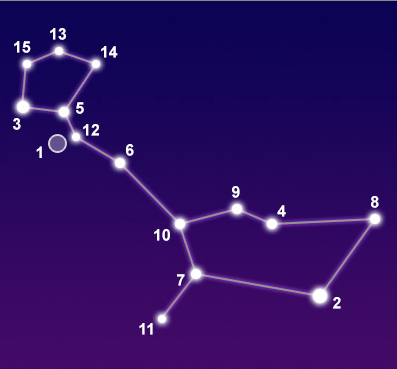
Star Clusters- The family of stars

Many Stars in the milky way spend at least part of their lives in clusters.  Clusters are scientifically interesting because all their stars formed around the same time and generally have similar characteristics. For example, if the cloud in which they formed was rich in certain kinds of elements, then the stars from that cloud will contain higher amounts of those materials. If the cloud was metal-poor (that is, it had a lot of hydrogen and helium but very little of other elements), then the stars that form will reflect that metallicity. Their similarity makes cluster stars good targets for the study of stellar evolution (how stars age and die). Very young clusters interact with the remains of the gas and dust cloud from which they formed. Understanding how all types of clusters form in our galaxy gives astronomers good insights into how the process happens in other galaxies as well.  There are two types—open and globular.  

Open Clusters

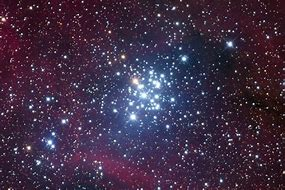
Open clusters usually have up to a thousand or so stars gathered into an irregularly shaped collection. They are often found in the plane of the galaxy, which is where they form. Most of the stars in these clusters are less than 10 billion years old, and some still lie embedded in what’s left of their birth clouds. Our Sun was created in an open cluster that formed about 4.5 billion years ago. It has since moved away from its stellar siblings and now travels the galaxy alone.  Open clusters are generally found in spiral galaxies such as the Milky Way and irregular-type galaxies such as the Large and Small Magellanic Clouds, which are two of our galaxy’s closest neighbors.  Example of Open Clusters:

Pleiades in Taurus constellation
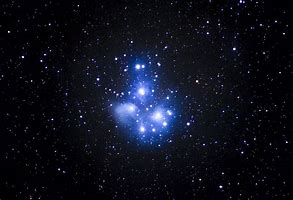
Jewel Box in Crux constellation
Globular Clusters

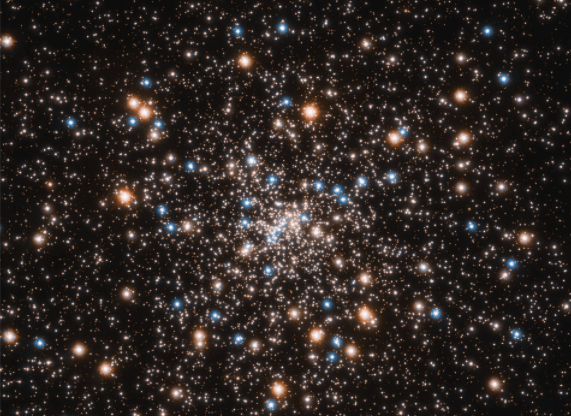
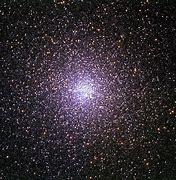
Globular clusters are collections of hundreds of thousands of old stars. The gravitational influence of all those stars binds the cluster together into a spherical, globular shape. Globulars swarm around the central region of the galaxy, called the halo. The Milky Way Galaxy has about 160 of these tightly packed clusters, but other galaxies have many more. Globulars roam around the halo and probably formed about the same time as the galaxy did.  Example of Globular Cluster: Tucanae
Cluster Formation

A cluster begins to form when some event triggers motion and turbulence in the birth cloud. For an open cluster, it could be a supernova explosion or a fast-moving wind ejecting material from an aging star in the near neighborhood. For a globular cluster, a galaxy collision could be one kind of trigger event. Whatever happens, it sends fast-moving material and shock waves through the birth cloud and starts the process of star birth. Once formation is complete, the cluster stars continue to evolve. If they are not strongly bound together by gravity, after about 100 million years they start to go their separate ways. Even though members of the cluster may get separated by large distances, they all tend to move through space in the same direction and at about the same speed. Sometimes interactions in the cluster will “kick” some stars out into space, sending them on radically different trajectories into the galaxy. Eventually, these stellar associations dissipate into what’s called a moving group, before they finally scatter to become part of the larger stellar population in the galaxy.

http://en.wikipedia.org/wiki/Star_cluster
https://en.wikipedia.org/wiki/Open_cluster
Are “They” Out There?

These days, the possibility of finding life “out there” is an integral part of astronomy. The exploration of mars has been spurred in large part by  the search for life or at least conditions that could support it. Extraterrestrial life is hypothetical life that may occur outside Earth and which did not originate on Earth. Such life might range from simple prokaryotes (or comparable life forms) to intelligent beings and even sapient beings, possibly bringing forth civilizations that might be far more advanced than humanity. Given the size of the universe – there are at least 100 billion stars in our home galaxy alone and perhaps 100 billion galaxies of much the same size scattered throughout deep space – few scientists believe that the Earth is the only home of life. But until quite recently, the field of exobiology – the study of extraterrestrial life also known as astrobiology – was almost moribund. It could come up with some interesting speculations but that was about all. The Drake equation speculates about the existence of sapient life elsewhere in the universe.

See the source image

The Drake Equation:

Astronomer Frank Drake (1930–), who was doing radio astronomy searches for signals from alien civilizations in the early 1960s, came up with an equation that can help estimate how many civilizations could be in the galaxy. His equation looks like this:

N = R* • fp • ne • fL • fi • fc • L

where N is the number of civilizations in our galaxy that have the ability to communicate with us. To get to N, you have to multiply the following factors: 

R*—the average star formation in our galaxy each year

fp —the number of those stars that have planets

ne —the number of planets that could potentially support life (for each star that has planets) 

fL —the number of those planets that actually go on to develop some kind of life

fi—the number of planets that actually do develop intelligent life 

fc—the number of civilizations that are technologically advanced enough to advertise their existence (through radio signals, etc.) 

L—the length of time it takes for those civilizations to start releasing their “I’m here” signals

Necessities for life

The most vital ‘exobiology’ discoveries, though, were made right here on Earth. Biologists have learned that life is much more robust than most scientists believed 30 years ago. Earth microorganisms have been found thriving in astonishingly hostile environments. Deep beneath the oceans, for example, near the volcanic vents known as black smokers, some microbes grow and multiply at temperatures above 110 degrees – according to some scientists, perhaps as high as 170 degrees. 

Others thrive in acid conditions that would strip the skin from a human, while others still make a comfortable living in hot rocks kilometres below the ground. Some even prefer cold to heat: Antarctic life-forms can manage very well in what amounts to a permanent deep-freeze.

The existence of these so-called extremophile organisms radically changed our view of what might be called “the necessities of life”. Extremophiles live happily without sunshine, without moderate warmth, without organic molecules to feed off and with no need for photosynthesis – many digest raw minerals and fuel themselves with basic chemical reactions.

The Kepler Mission

The Kepler mission is on the hunt for Earth-like planets around other stars, called exoplanets, and has found many planet candidates, not all of them suitable for life as we know it. Astronomers using the European Southern Observatory in Chile have even found an Earth-sized planet circling around Alpha Centauri B, which lies 4.37 light-years from Earth. While the newly discovered planet is too hot and close to its star to be hospitable to life, the discovery is another step towards finding life elsewhere.

I am sure that in the distant future we will find life elsewhere. The chances of ET being highly advanced or dangerous human eaters, is very very low. Most probably they will be some microscopic organisms(sorry to disappoint you). But, do not let this stop you from imagining.

https://en.wikipedia.org/wiki/Extraterrestrial_life https://www.esa.int/Science_Exploration/Human_and_Robotic_Exploration/Exploration/Extraterrestrial_life

The Big Bang

Ever heard of the Big Bang? No, not the TV show. The beginning of the Universe as we know it. 

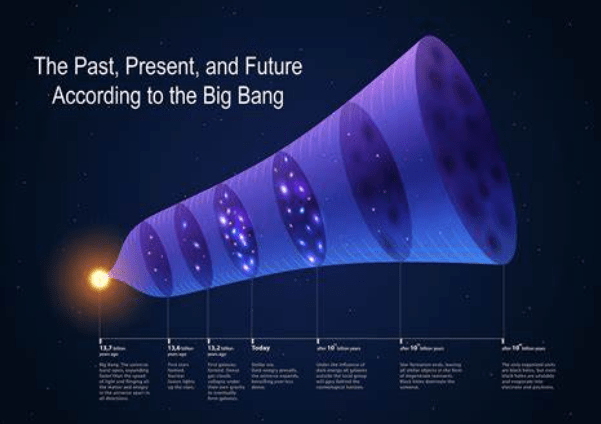
The Big Bang theory is the prevailing cosmological model explaining the existence of the observable universe from the earliest known periods through its subsequent large-scale evolution. The model describes how the universe expanded from an initial state of high density and temperature,  and offers a comprehensive explanation for a broad range of observed phenomena, including the abundance of light elements, the cosmic microwave background (CMB) radiation, and large-scale structure.

Crucially, the theory is compatible with Hubble–Lemaître law—the observation that the farther away a galaxy is, the faster it is moving away from Earth. Extrapolating this cosmic expansion backwards in time using the known laws of physics, the theory describes an increasingly concentrated cosmos preceded by a singularity in which space and time lose meaning (typically named “the Big Bang singularity”). Detailed measurements of the expansion rate of the universe place the Big Bang singularity at around 13.8 billion years ago, which is thus considered the age of the universe. 

Timeline

The first second after the Big Bang, the entire universe was a soup of subatomic particles, superheated to 10 billion degrees. In that first second, amazing things happened: The force of gravity separated out from the electronuclear force and was joined soon thereafter by the electromagnetic force. The universe changed from being a hot soup of quarks and gluons (elementary particles), and protons and neutrons began to form. At the ripe old age of one second, the newborn universe was cool enough that it began forming deuterium (a form of hydrogen) and helium-3. At this point, the newborn universe had doubled in size at least ninety times!

Over the next three minutes, the infant universe continued to cool down and expand, and the creation of the first elements continued. 

For the next 370,000 years, the universe continued its expansion. But it was a dark place, too hot for any light to shine. There existed only a dense plasma, an opaque hot soup that blocked and scattered light. The universe was essentially a fog. 

The next big change in the universe came during the era of recombination, which occurred when matter cooled enough to form atoms. The result was a transparent gas through which the original flash of light from the Big Bang could finally travel. We see that flash today as a faint, all-encompassing, distant glow called the cosmic microwave background radiation (sometimes shortened to CMB or CMBR). The universe was leaving its cosmic dark ages behind. Gas clouds condensed under their own self-gravity (possibly helped along by the gravitational influence of dark matter) to form the first stars. These stars energized (or ionized) the remaining gas around them, lighting up the universe even more. This period is called the Epoch of Reionization.

From the Big Bang to You 

Pre–Big Bang: quantum density fluctuations

Pre–Big Bang: cosmic inflation

13.8 billion years ago: the Big Bang

13.4 billion years ago: the first stars and galaxies 

11 billion years ago: the Milky Way Galaxy starts to form 

5 billion years ago: the Sun begins to form, along with the planets 

3.8 billion years ago: the first life appears on Earth 

2.3 million years ago: the first humans appear Modern time: you were born

https://en.wikipedia.org/wiki/Big_Bang
https://science.nasa.gov/astrophysics/focus-areas/what-powered-the-big-bang

The Stunning Galaxies

A galaxy is a gravitationally bound system of stars, stellar remnants, interstellar gas, dust, and dark matter.The word galaxy is derived from the Greek galaxias , literally “milky”, a reference to the Milky Way. Galaxies range in size from dwarfs with just a few hundred million (108) stars to giants with one hundred trillion (1014) stars, each orbiting its galaxy’s center of mass.

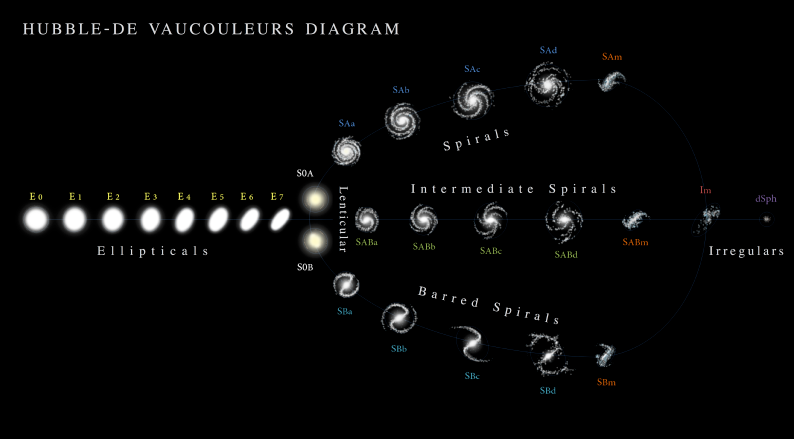
Galaxies are categorized according to their visual morphology as elliptical, spiral, or irregular. Many galaxies are thought to have supermassive black holes at their centers. 

Some famous Galaxies: 

1]Milky Way

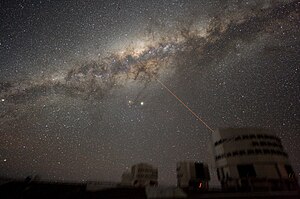
ESO-VLT-Laser-phot-33a-07.jpg

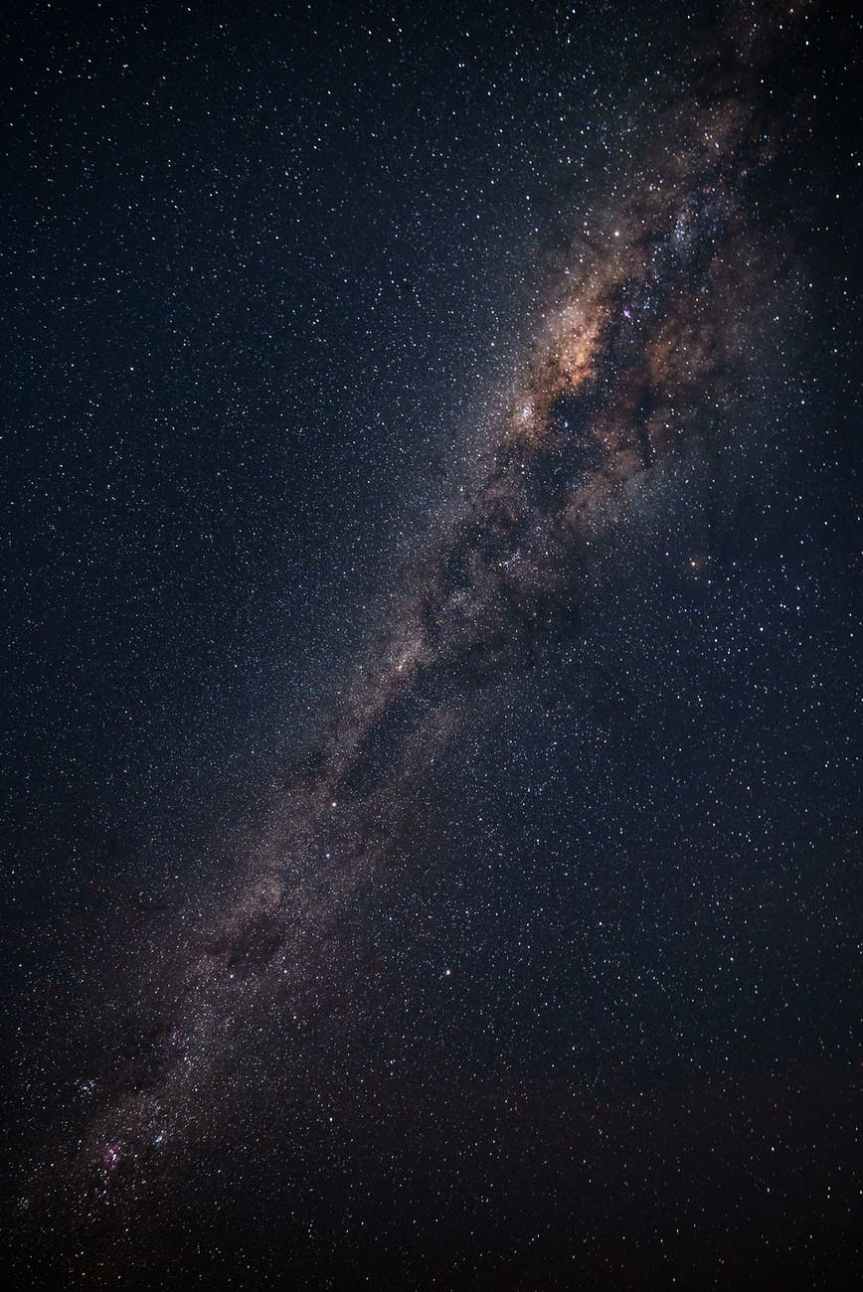
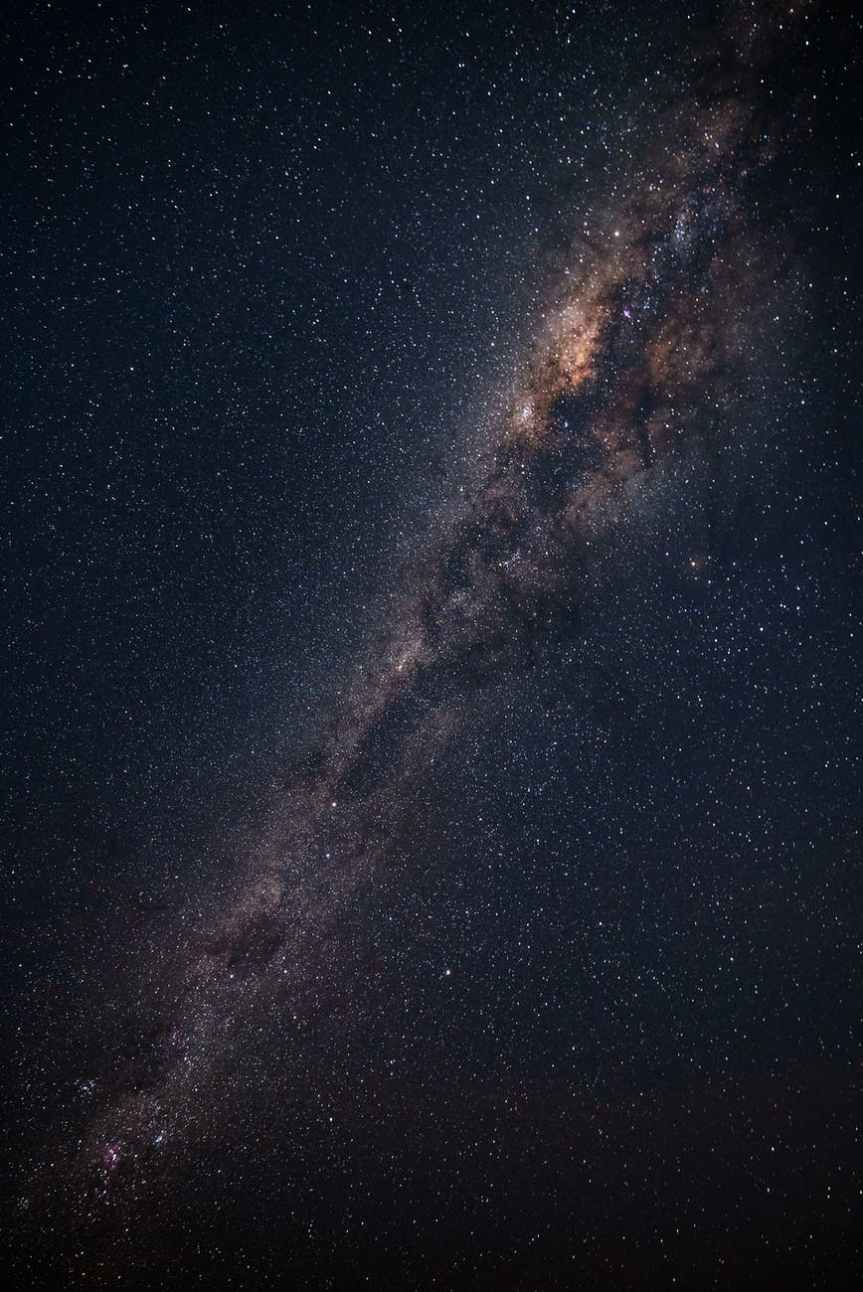
The Milky Way is the galaxy that includes our Solar System, with the name describing the galaxy’s appearance from Earth: a hazy band of light seen in the night sky formed from stars that cannot be individually distinguished by the naked eye. From Earth, the Milky Way appears as a band because its disk-shaped structure is viewed from within. Galileo Galilei first resolved the band of light into individual stars with his telescope in 1610. The Milky Way is a barred spiral galaxy with an estimated visible diameter of 100,000–200,000 light-years. Recent simulations suggest that a dark matter disk, also containing some visible stars, may extend up to a diameter of almost 2 million light-years. The Milky Way has several satellite galaxies and is part of the Local Group of galaxies, which form part of the Virgo Supercluster, which is itself a component of the Laniakea Supercluster.

2]Andromeda-

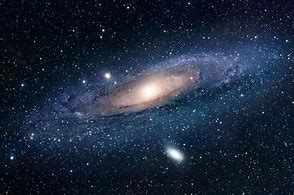
The Andromeda Galaxy also known as Messier 31, M31, or NGC 224 and originally the Andromeda Nebula, is a barred spiral galaxy approximately 2.5 million light-years (770 kiloparsecs) from Earth and the nearest major galaxy to the Milky Way. The galaxy’s name stems from the area of Earth’s sky in which it appears, the constellation of Andromeda, which itself is named after the Ethiopian (or Phoenician) princess who was the wife of Perseus in Greek mythology. The virial mass of the Andromeda Galaxy is of the same order of magnitude as that of the Milky Way, at 1 trillion solar masses (2.0×1042 kilograms). The Andromeda Galaxy has a diameter of about 220,000 ly (67 kpc), making it the largest member of the Local Group in terms of extension. The number of stars contained in the Andromeda Galaxy is estimated at one trillion (1×10¹²), or roughly twice the number estimated for the Milky Way.

3]Barnard’s galaxy

NGC 6822

NGC 6822 (also known as Barnard’s Galaxy, IC 4895, or Caldwell 57) is a barred irregular galaxy approximately 1.6 million light-years away in the constellation Sagittarius. Part of the Local Group of galaxies, it was discovered by E. E. Barnard in 1884 (hence its name), with a six-inch refractor telescope. It is one of the closer galaxies to the Milky Way. It is similar in structure and composition to the Small Magellanic Cloud. It is about 7,000 light-years in diameter.

4]Black eye galaxy

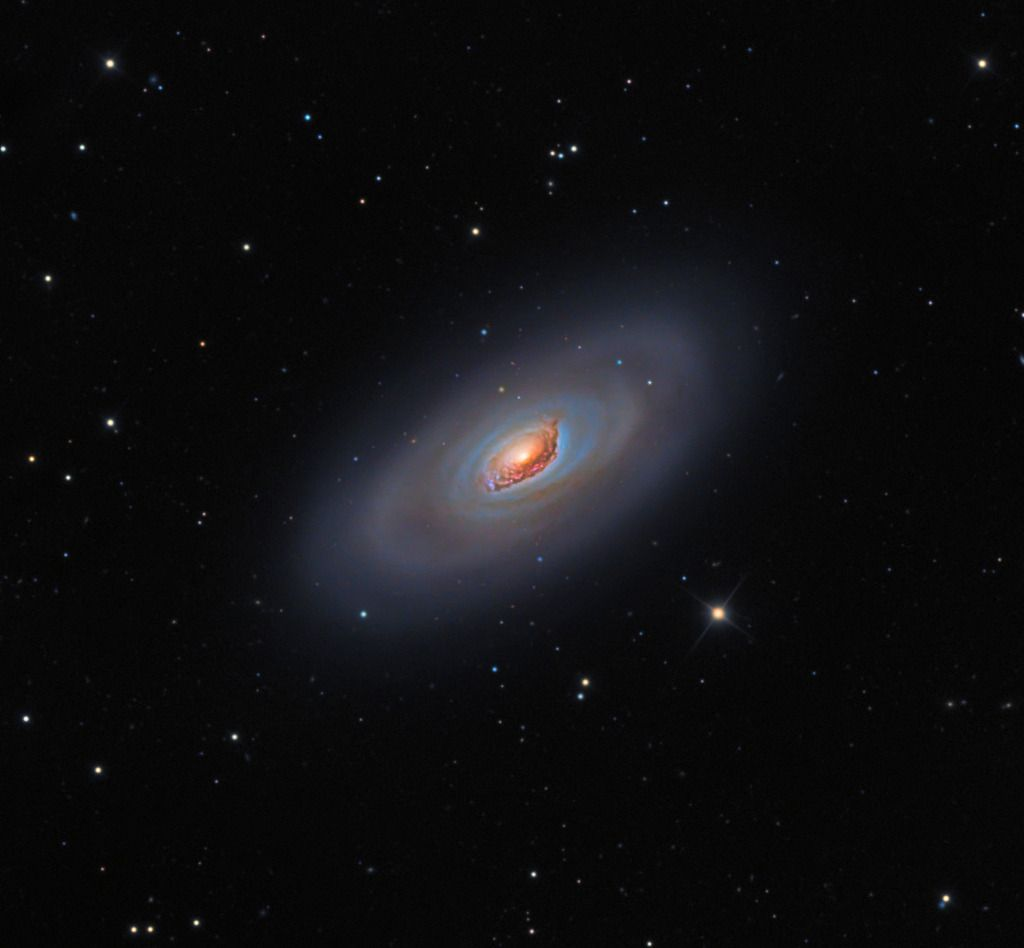
The Black Eye Galaxy (also called Sleeping Beauty Galaxy or Evil Eye Galaxy and designated Messier 64, M64, or NGC 4826) is a relatively isolated spiral galaxy 17 million light-years away in the mildly northern constellation of Coma Berenices. It was discovered by Edward Pigott in March 1779, and independently by Johann Elert Bode in April of the same year, as well as by Charles Messier the next year. A dark band of absorbing dust partially in front of its bright nucleus gave rise to its nicknames of the “Black Eye”, “Evil Eye”, or “Sleeping Beauty” galaxy. M64 is well known among amateur astronomers due to its form in small telescopes and visibility across inhabited latitudes.

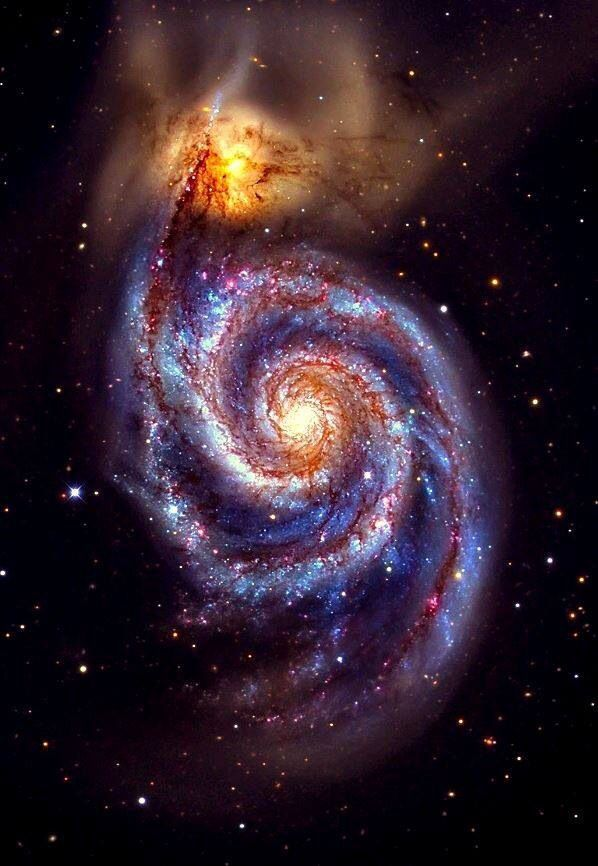
5]Whirlpool galaxy

The Whirlpool Galaxy, also known as Messier 51a, M51a, and NGC 5194, is an interacting grand-design spiral galaxy with a Seyfert 2 active galactic nucleus. It lies in the constellation Canes Venatici, and was the first galaxy to be classified as a spiral galaxy. Its distance is estimated to be 31 million light-years away from Earth

http://en.wikipedia.org/wiki/NGC_6822
https://en.wikipedia.org/wiki/Black_Eye_Galaxy

Astronomical Terms

Astronomy is the branch of science dealing with the study of celestial objects. It requires various scientific terminologies. Here are a few important ones: 

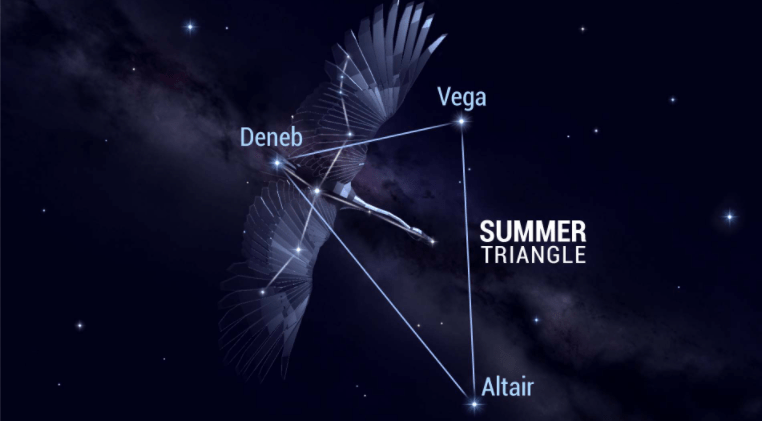
Asterism example
  1. Asterism: Any pattern of stars recognizable in Earth’s night sky.
  2. Albedo:  A measure of the proportion of the total solar radiation received by an astronomical body, such as a planet, that is diffusely reflected away from the body. It is a dimensionless quantity typically measured on a scale from 0 (indicating total absorption of all incident radiation, as by a black body) to 1 (indicating total reflection).
  3. Azimuth: An angular measurement of an object’s orientation along the horizon of the observer, relative to the direction of true north. When combined with the altitude above the horizon, it defines an object’s current position in the spherical coordinate system.
  4. Conjunction: A phenomenon during which two astronomical objects or spacecraft have either the same right ascension or the same ecliptic longitude as observed from a third body (usually the Earth), such that, from the observer’s perspective, the objects appear to closely approach each other in the sky.
  5. Diurnal motion: The apparent motion of an astronomical object (e.g. the Sun, a planet, or a distant star) around the two celestial poles in the Earth’s night sky over the course of one day. Diurnal motion is caused by Earth’s rotation about its own axis, such that every object appears to follow a circular path called the diurnal circle.
  6. Dwarf star: The category of ordinary main sequence stars like the Sun.
  7. Elongation: The angular separation between the Sun and an orbiting body, such as a planet, as it appears from Earth.
  8. Ephemeris: A list or table of the expected positions of astronomical objects or artificial satellites in the sky at various dates and times. 
  9. Extinction: The absorption and scattering of electromagnetic radiation by matter (dust and gas) between an emitting astronomical object and the observer. 
  10. Facula: A bright spot on a star’s photosphere formed by concentrations of magnetic field lines.
  11. Field galaxy: Any galaxy that does not belong to a larger cluster of galaxies and is gravitationally isolated.
  12. Fulton gap: The apparent uncommonness of planets having a size between 1.5 and 2 times that of the Earth
  13. Galactic period: The time a given astronomical object within a galaxy takes to complete one orbit around the galactic center. Estimates of the duration of one revolution of the Solar System about the center of the Milky Way range from 225 to 250 million terrestrial years.
  14. Geosynchronous orbit (GSO): A synchronous orbit about the Earth, i.e. with an orbital period equal to Earth’s rotational period, such that the orbiting object appears to return to exactly the same position in the sky after a period of one sidereal day. All geosynchronous orbits have a semi-major axis equal to 35,786 kilometres (22,236 mi); geostationary orbits are a special case of geosynchronous orbits.
  15. Hypergalaxy: A system consisting of a large galaxy accompanied by multiple smaller satellite galaxies (often elliptical) as well as its galactic corona. The Milky Way and Andromeda systems are examples of hyper galaxies.
  16. Julian year (a): A unit of time defined as exactly 365.25 days of 86,400 SI seconds each. 
  17. Laniakea Supercluster : Also called the Local Supercluster, or Local SCI.- contains Virgo supercluster.
  18. Moving group: Also called a stellar association. A loose grouping of stars which travel together through space. Although the members were formed together in the same molecular cloud, they have since moved too far apart to be gravitationally bound as a cluster.
  19. Nutation: A continuous, gravity-induced change in the orientation of an astronomical body’s axis of rotation which results from the combined effects of small, short-term variations. Nutation is distinguished from precession.
  20. Occultation: A celestial event that occurs when a distant astronomical body or object is hidden by another, nearer body or object that passes between it and the observer, thereby blocking the first object from view. Solar and lunar eclipses are specific types of occultations.
  21. Periapsis: Also called the pericenter. The point at which an orbiting body is closest to its primary. 
  22. Planetesimal: Any solid object (generally larger than 1 kilometre (0.62 mi) in diameter) that arises during the formation of a planet whose internal strength is dominated by self-gravity and whose orbital dynamics are not significantly affected by gas drag. There is no precise distinction between a planetesimal and a protoplanet.
  23. Prograde motion: Also called direct motion. Orbital or rotational motion of an object in the same direction as the rotation of the object’s primary.
  24. Roche limit: The distance from an astronomical object at which the tidal force matches an orbiting body’s gravitational self-attraction. Inside this limit, the tidal forces will cause the orbiting body to disintegrate, usually to disperse and form a ring. Outside this limit, loose material will tend to coalesce.
  25. Sidereal period: The orbital period of an object within the Solar System, such as the Earth’s orbital period around the Sun. The name “sidereal” implies that the object returns to the same position relative to the fixed stars of the celestial sphere as observed from the Earth.
  26. Starburst galaxy: Any galaxy that has an anomalously high rate of star formation.
  27. Synodic day: The time it takes for an object to rotate once about its own axis (e.g. its rotation period) relative to the primary it is orbiting (rather than to distant fixed stars).
  28. Syzygy: The straight-line configuration of three celestial bodies in a gravitational system. The synodic month, or complete cycle of phases of the Moon as seen from Earth, averages 29.530588 mean solar days in length
  29. Transit: An astronomical event during which a body or object passes visibly across the face of a much larger body. 
  30. Zodiac: The area of the sky that extends approximately 8 degrees north or south (in celestial latitude) of the ecliptic, the apparent path of the Sun across the celestial sphere over the course of the year as observed from Earth.

https://en.wikipedia.org/wiki/Glossary_of_astronomy
https://telescopeadviser.com/glossary-of-astronomy-terms/#:~:text=Glossary%20of%20Astronomy%20Terms%201%20Altazimuth%20Mount.%20…,Astronomy.%20…%2010%20Astrophotography.%20…%20More%20items…%20

Top 10 Largest Constellations

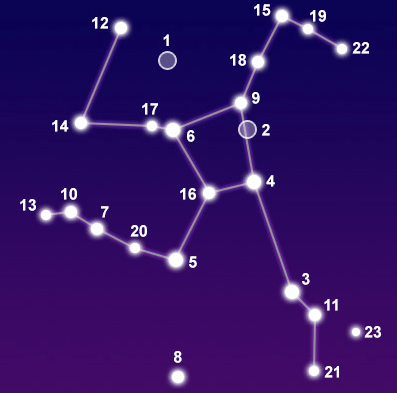
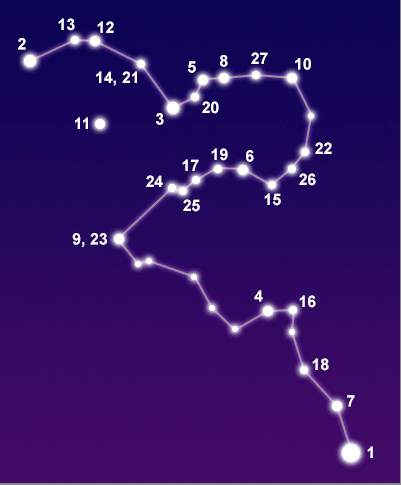
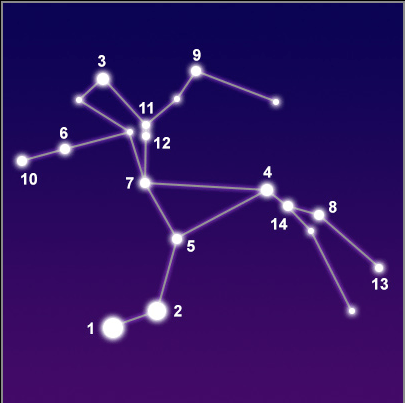
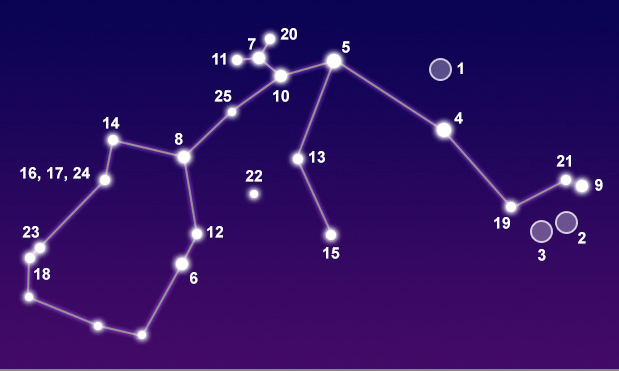
A constellation is an area on the celestial sphere in which a group of visible stars forms a perceived outline or pattern, typically representing an animal, mythological person or creature, or an inanimate object. In 1922, the International Astronomical Union (IAU) formally accepted the modern list of 88 constellations, and in 1928 adopted official constellation boundaries that together cover the entire celestial sphere. Any given point in a celestial coordinate system lies in one of the modern constellations. 

Top 10 Largest Constellations

Hydra

1]Hydra(Water Snake)– Hydra, the water snake, is the largest constellation in the sky. It lies in the southern celestial hemisphere, stretched across 102.5°. It occupies an area of 1303 square degrees in the night sky. The constellation lies in the second quadrant of the southern hemisphere (SQ2) and can be seen at latitudes between +54° and -83°. 

Virgo

2]Virgo(Virgin)– Virgo constellation lies in the southern sky. Its name means “virgin” in Latin. The constellation is represented by the symbol ♍. Virgo is the second largest constellation in the sky, occupying an area of 1294 square degrees. It is located in the third quadrant of the southern hemisphere (SQ3) and can be seen at latitudes between +80° and -80°. . The brightest star in the constellation is Spica, Alpha Virginis, with an apparent magnitude of 0.98.

Ursa Major

3]Ursa Major(Big Bear)– Ursa Major constellation lies in the northern sky. Its name means “the great bear,” or “the larger bear,” in Latin. Ursa Major is the largest northern constellation and third largest constellation in the sky, occupying an area of 1280 square degrees. It is located in the second quadrant of the northern hemisphere (NQ2) and can be seen at latitudes between +90° and -30°.

Cetus

4]Cetus(The Whale)- Cetus constellation is located in the northern sky. The constellation was named after Cetus, the sea monster from the Greek myth about Andromeda. In the myth, the princess was sacrificed to the monster as punishment for her mother Cassiopeia’s boastfulness. Cetus is the fourth largest constellation in the sky, occupying an area of 1231 square degrees. It lies in the first quadrant of the southern hemisphere (SQ1) and can be seen at latitudes between +70° and -90°. 

Hercules

5]Hercules- Hercules constellation is located in the northern sky. It was named after Hercules, the Roman version of the Greek hero Heracles. Hercules is the fifth largest constellation in the sky, but has no first magnitude stars. It occupies an area of 1225 square degrees in the sky. The constellation lies in the third quadrant of the northern hemisphere (NQ3) and can be seen at latitudes between +90° and -50°. 

Eridanus

6]Eridanus (River)- Eridanus constellation lies in the southern hemisphere. It represents the celestial river that runs from Cursa (Beta Eridani) near Rigel in Orion all the way to Achernar (Alpha Eridani) in the far southern sky. Eridanus is the sixth largest constellation in the night sky, occupying an area of 1138 square degrees. It is located in the first quadrant of the southern hemisphere (SQ1) and can be seen at latitudes between +32° and -90°.Achernar, the constellation’s brightest star, is the ninth brightest star in the sky. 

Pegasus

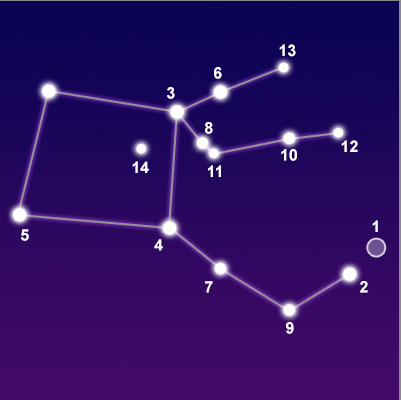
7]Pegasus – The Pegasus constellation lies in the northern hemisphere. Pegasus is the seventh largest constellation in the sky, occupying an area of 1121 square degrees. It is located in the fourth quadrant of the northern hemisphere (NQ4) and can be seen at latitudes between +90° and -60°. 

Draco

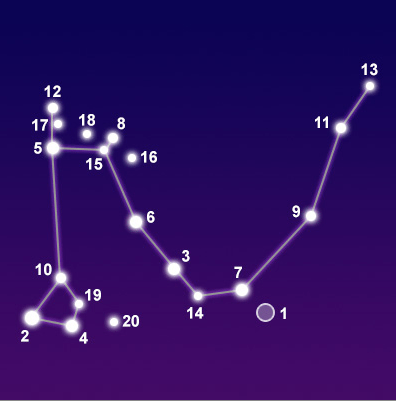
8]Draco (Dragon) – Located in the northern celestial hemisphere, the constellation represents Ladon, the dragon that guarded the gardens of the Hesperides in Greek mythology. The name Draco means “the dragon” in Latin. Draco is the eighth largest constellation in the night sky, occupying an area of 1083 square degrees. It lies in the third quadrant of the northern hemisphere (NQ3) and can be seen at latitudes between +90° and -15°.

Centaurus

9]Centaurus (Centaur)–  Centaurus constellation is located in the southern hemisphere.  It represents the centaur, the half man, half horse creature in Greek mythology. Centaurus contains two of the top ten brightest stars in the sky: Alpha Centauri and Beta Centauri. Centaurus is the ninth largest constellation in the sky, occupying an area of 1060 square degrees. It lies in the third quadrant of the southern hemisphere (SQ3) and can be seen at latitudes between +25° and -90°.

Aquarius

10]Aquarius (Water Bearer)– Aquarius constellation is located in the southern hemisphere. It is one of the 12 zodiac constellations. The constellation’s name means “the water-bearer” (or “cup-bearer”) in Latin and its symbol is ♒, which represents water. Aquarius is the 10th largest constellation in the sky, occupying an area of 980 square degrees. It is located in the fourth quadrant of the southern hemisphere (SQ4) and can be seen at latitudes between +65° and -90° The brightest star in the constellation is Beta Aquarii, also known as Sadalsuud, with an apparent magnitude of 2.87. 

http://en.wikipedia.org/wiki/Constellation  https://www.go-astronomy.com/constellations.htm  https://www.constellation-guide.com/constellation-map/largest-constellations/

Asteroids- The Floating Rocks

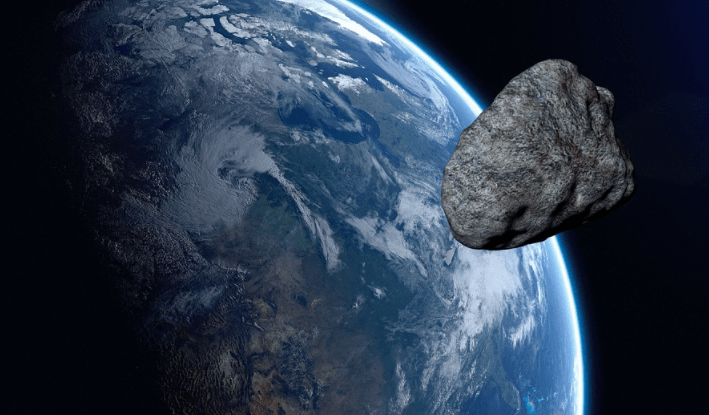
Asteroids, sometimes called minor planets, are rocky remnants left over from the early formation of our solar system about 4.6 billion years ago. The current known asteroid count is: 1,100,048. Most of this ancient space rubble can be found orbiting our Sun between Mars and Jupiter within the main asteroid belt. Asteroids range in size from Vesta – the largest at about 329 miles (530 kilometers) in diameter – to bodies that are less than 33 feet (10 meters) across. The total mass of all the asteroids combined is less than that of Earth’s Moon.

See the source image

Composition

The three broad composition classes of asteroids are C-, S-, and M-types.

  • The C-type (chondrite) asteroids are most common. They probably consist of clay and silicate rocks, and are dark in appearance. They are among the most ancient objects in the solar system.
  • The S-types (“stony”) are made up of silicate materials and nickel-iron.
  • The M-types are metallic (nickel-iron). The asteroids’ compositional differences are related to how far from the Sun they formed. Some experienced high temperatures after they formed and partly melted, with iron sinking to the center and forcing basaltic (volcanic) lava to the surface.

Asteroid Classification

Main Asteroid Belt: The majority of known asteroids orbit within the asteroid belt between Mars and Jupiter, generally with not very elongated orbits. The belt is estimated to contain between 1.1 and 1.9 million asteroids larger than 1 kilometer (0.6 miles) in diameter, and millions of smaller ones. Early in the history of the solar system, the gravity of newly formed Jupiter brought an end to the formation of planetary bodies in this region and caused the small bodies to collide with one another, fragmenting them into the asteroids we observe today.

Trojans: These asteroids share an orbit with a larger planet, but do not collide with it because they gather around two special places in the orbit (called the L4 and L5 Lagrangian points). There, the gravitational pull from the Sun and the planet are balanced by a trojan’s tendency to otherwise fly out of orbit. The Jupiter trojans form the most significant population of trojan asteroids. It is thought that they are as numerous as the asteroids in the asteroid belt. There are Mars and Neptune trojans, and NASA announced the discovery of an Earth trojan in 2011.

Near-Earth Asteroids: These objects have orbits that pass close by that of Earth. Asteroids that actually cross Earth’s orbital path are known as Earth-crossers.

Potentially hazardous asteroids- NEAs that are of greatest threat to Earth, which have chances of colliding with Earth are listed as potentially hazardous asteroids or PHAs.

Missions to asteroids

  • OSIRIS-REx – Sample Return Mission to Asteroid Bennu (2016)
  • Hayabusa2 – JAXA Sample Return Mission to Asteroid Ryugu (2014)
  • PROCYON – JAXA Small Satellite Asteroid Flyby Mission (2014)
  • Dawn – NASA Orbiter of Asteroids Ceres and Vesta (2007)
  • Rosetta – ESA Comet Mission, flew by asteroids Steins and Lutetia (2004)
  • Hayabusa (Muses-C) – ISAS (Japan) Sample Return Mission to Asteroid 25143 Itokawa (2003)
  • Genesis – NASA Discovery Solar Wind Sample Return Mission (2001)
  • Stardust – NASA Comet Coma Sample Return Mission, flew by asteroid AnneFrank (1999)
  • Deep Space 1 – NASA Flyby Mission to asteroid Braille (1998)
  • Cassini – NASA/ESA Mission to Saturn through the Asteroid Belt (1997)
  • NEAR – NASA Near-Earth Asteroid Rendezvous with 433 Eros
  • Galileo – NASA Mission to Jupiter via asteroids Gaspra and Ida

https://en.wikipedia.org/wiki/Asteroid
https://solarsystem.nasa.gov/asteroids-comets-and-meteors/asteroids/overview/

Meteors Vs Meteoroids Vs Meteorites

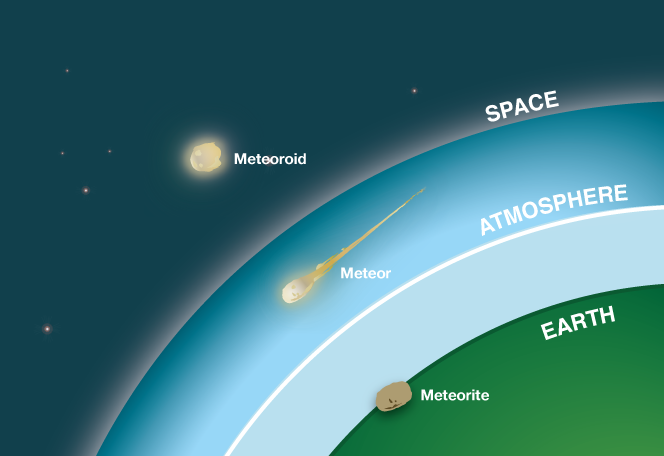
Meteors, Meteor showers, Meteoroids and Meteorites, sounds very confusing right? They all sound similar but have different meanings. A meteoroid is a small rocky or metallic body in outer space. Most are pieces of other, larger bodies that have been broken or blasted off. Some come from comets, others from asteroids, and some even come from the Moon and other planets.When meteoroids enter Earth’s atmosphere, or that of another planet at high speed and burn up, they’re called meteors. This is also when we refer to them as “shooting stars.” Sometimes meteors can even appear brighter than Venus — that’s when we call them “fireballs.” When a meteoroid survives its trip through the atmosphere and hits the ground, it’s called a meteorite. I hope you are clear with the difference now. To know further about them, and the type of meteor showers, read ahead.

See the source image

Meteoroid

In 1961, the International Astronomical Union (IAU) defined a meteoroid as “a solid object moving in interplanetary space, of a size considerably smaller than an asteroid and considerably larger than an atom”. Meteoroids are significantly smaller than asteroids, and range in size from small grains to one-meter-wide objects.Objects smaller than this are classified as micrometeoroids or space dust. Most are fragments from comets or asteroids, whereas others are collision impact debris ejected from bodies such as the Moon or Mars.

Almost all meteoroids contain extraterrestrial nickel and iron. They have three main classifications: iron, stone, and stony-iron. Some stone meteoroids contain grain-like inclusions known as chondrules and are called chondrites. Stony meteoroids without these features are called “achondrites”, which are typically formed from extraterrestrial igneous activity; they contain little or no extraterrestrial iron.

Meteor

A meteor, known colloquially as a shooting star or falling star, is the visible passage of a glowing meteoroid, micrometeoroid, comet or asteroid through Earth’s atmosphere, after being heated to incandescence by collisions with air molecules in the upper atmosphere, creating a streak of light via its rapid motion and sometimes also by shedding glowing material in its wake. Although a meteor may seem to be a few thousand feet from the Earth, meteors typically occur in the mesosphere at altitudes from 76 to 100 km (250,000 to 330,000 ft). Millions of meteors occur in Earth’s atmosphere daily. Most meteoroids that cause meteors are about the size of a grain of sand.

A fireball is a brighter-than-usual meteor that also becomes visible when about 100 km from sea level. The International Astronomical Union (IAU) defines a fireball as “a meteor brighter than any of the planets” (apparent magnitude −4 or greater).

Meteor Shower

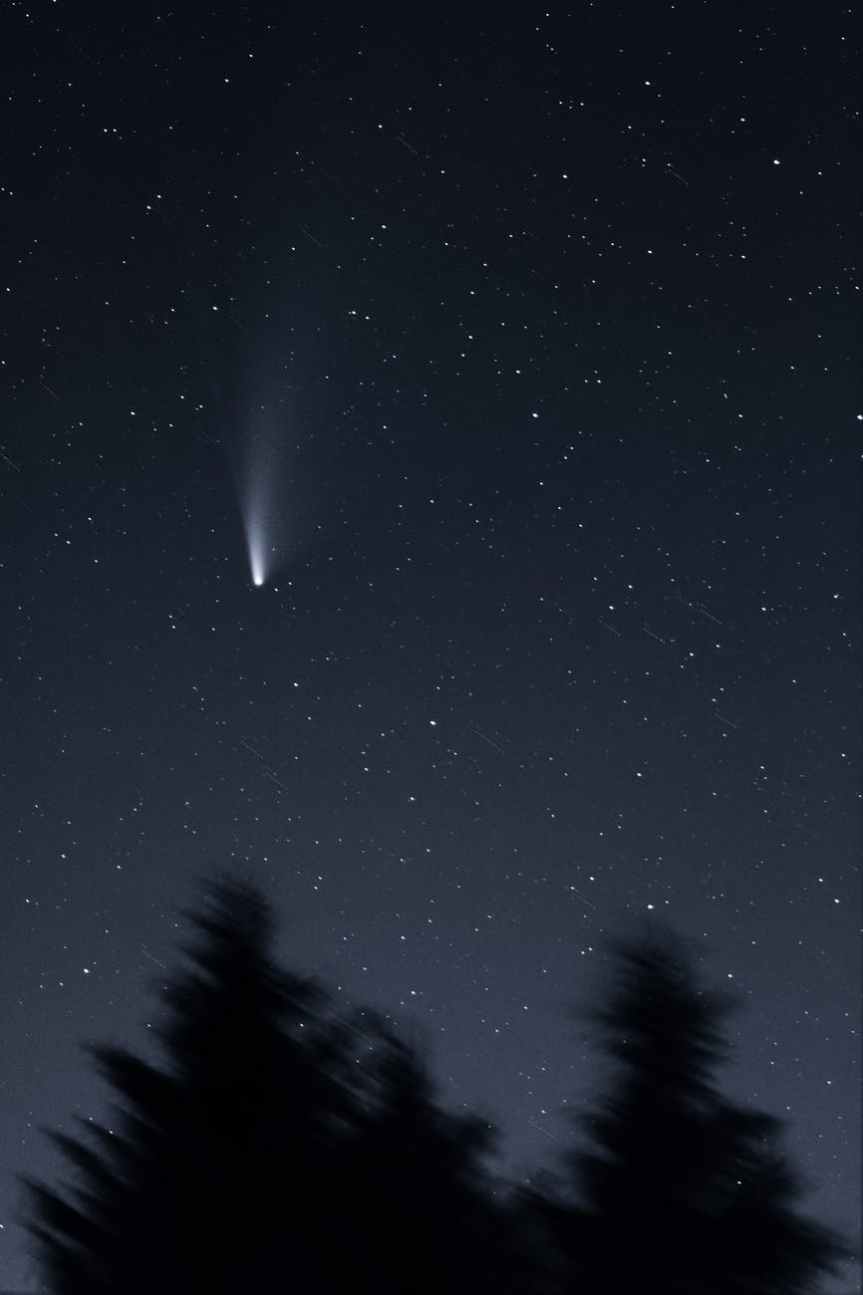
A series of many meteors appearing seconds or minutes apart and appearing to originate from the same fixed point in the sky is called a meteor shower. A meteor shower is the result of an interaction between a planet, such as Earth, and streams of debris from a comet or other source. The passage of Earth through cosmic debris from comets and other sources is a recurring event in many cases. 

Meteor showers throughout the year:
January: Quadrantids
April: Lyrids 
May: Eta Aquarids 
June: Arietids and Bootids
July: Southern Delta Aquarids
August: Perseids 
October: Orionids 
November: Leonids 
December: Geminids
Each of these, except the Geminids, is caused by Earth moving through a stream of comet debris. The Geminids come from a stream of debris from the Asteroid 3200 Phaethon, which is probably a dead comet.

Meteorite

A meteorite is a portion of a meteoroid or asteroid that survives its passage through the atmosphere and hits the ground without being destroyed. Meteorites are sometimes, but not always, found in association with hypervelocity impact craters; during energetic collisions, the entire impactor may be vaporized, leaving no meteorites. Geologists use the term, “bolide”, in a different sense from astronomers to indicate a very large impactor. Meteorites can be very useful in studying the history of the Solar System to other planets.

https://solarsystem.nasa.gov/asteroids-comets-and-meteors/meteors-and-meteorites/in-depth/ http://en.wikipedia.org/wiki/Meteoroid

All you need to know about Eclipses

Ever heard of eclipses? I am sure you must have. Ever seen one? If you have then you are very lucky, and if you have observed a total or annular solar eclipse you are even luckier and I am jealous. The word eclipse is derived from the ancient Greek noun ἔκλειψις (ékleipsis), which means “the abandonment”, “the downfall”, or “the darkening of a heavenly body. 

What is an Eclipse?

For any two objects in space, a line can be extended from the first through the second. The latter object will block some amount of light being emitted by the former, creating a region of shadow around the axis of the line. Typically these objects are moving with respect to each other and their surroundings, so the resulting shadow will sweep through a region of space, only passing through any particular location in the region for a fixed interval of time. As viewed from such a location, this shadowing event is known as an eclipse.

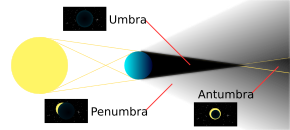
Typically the cross-section of the objects involved in an astronomical eclipse are roughly disk shaped. The region of an object’s shadow during an eclipse is divided into three parts:

  • The umbra, within which the object completely covers the light source. For the Sun, this light source is the photosphere.
  • The antumbra, extending beyond the tip of the umbra, within which the object is completely in front of the light source but too small to completely cover it.
  • The penumbra, within which the object is only partially in front of the light source.

Eclipses on Earth

On earth lunar eclipses and solar eclipses are the major form of eclipses which occur here on Earth.

Lunar eclipse:

Image result for Total Lunar Eclipse Diagram

The Moon moves in an orbit around Earth. At the same time, Earth orbits the Sun. Sometimes Earth moves between the Sun and the Moon. When this happens, Earth blocks the sunlight that normally is reflected by the Moon. Instead of light hitting the Moon’s surface, Earth’s shadow falls on the Moon. This is an eclipse of the Moon, or a lunar eclipse. A lunar eclipse can occur only when the Moon is full. A lunar eclipse usually lasts for a few hours. At least two partial lunar eclipses happen every year, but total lunar eclipses are rare. It is safe to look at a lunar eclipse. A lunar eclipse can be seen from Earth at night. 

There are two types of lunar eclipses:

  1. Total lunar eclipse- A total lunar eclipse occurs when the Moon and the Sun are on exact opposite sides of Earth. Although the Moon is in Earth’s shadow, some sunlight reaches the Moon. The sunlight passes through Earth’s atmosphere, which filters out most of the blue light. This makes the Moon appear red to people on Earth.
  2. Partial lunar eclipse-A partial lunar eclipse happens when part of the Moon enters Earth’s shadow. In a partial eclipse, Earth’s shadow appears very dark on the side of the Moon facing Earth. What people see from Earth during a partial lunar eclipse depends on how the Sun, Earth and Moon align.

Solar Eclipse:

Image result for Total solar Eclipse Diagram

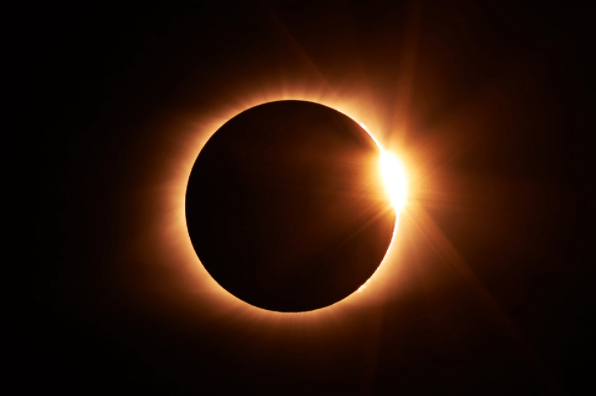
Sometimes when the Moon orbits Earth, the Moon moves between the Sun and Earth. When this happens, the Moon blocks the light of the Sun from reaching Earth. This causes an eclipse of the Sun, or a solar eclipse. During a solar eclipse, the Moon casts a shadow onto Earth. Solar eclipses happen every 18 months somewhere on Earth. Unlike lunar eclipses, solar eclipses last only a few minutes.

There are three main types of solar eclipses:

  1. Total solar eclipse: A total solar eclipse is visible from a small area on Earth. The people who see the total eclipse are in the center of the Moon’s shadow when it hits Earth. The sky becomes very dark, as if it were night. For a total eclipse to occur, the Sun, Moon and Earth must be in a direct line.
  2. Partial solar eclipse: This happens when the Sun, Moon and Earth are not exactly aligned. The Sun appears to have a dark shadow on a small part of its surface.
  3. Annular solar eclipse: An annular eclipse happens when the Moon is farthest from Earth. Because the Moon is farther away, it seems smaller. It does not block the entire view of the Sun. The Moon in front of the Sun looks like a dark disk on top of a larger Sun-colored disk. This creates what looks like a ring around the Moon.

Eclipses on other planets

The gas giant planets have many moons and thus frequently display eclipses. The most striking involve Jupiter, which has four large moons and a low axial tilt, making eclipses more frequent as these bodies pass through the shadow of the larger planet. Transits occur with equal frequency. It is common to see the larger moons casting circular shadows upon Jupiter’s cloud tops.

On the other three gas giants (Saturn, Uranus and Neptune) eclipses only occur at certain periods during the planet’s orbit, due to their higher inclination between the orbits of the moon and the orbital plane of the planet. The moon Titan, for example, has an orbital plane tilted about 1.6° to Saturn’s equatorial plane. But Saturn has an axial tilt of nearly 27°. The orbital plane of Titan only crosses the line of sight to the Sun at two points along Saturn’s orbit. As the orbital period of Saturn is 29.7 years, an eclipse is only possible about every 15 years.

On Mars, only partial solar eclipses (transits) are possible, because neither of its moons is large enough, at their respective orbital radii, to cover the Sun’s disc as seen from the surface of the planet. Eclipses of the moons by Mars are not only possible, but commonplace, with hundreds occurring each Earth year. There are also rare occasions when Deimos is eclipsed by Phobos. Martian eclipses have been photographed from both the surface of Mars and from orbit.

Pluto, with its proportionately largest moon Charon, is also the site of many eclipses. A series of such mutual eclipses occurred between 1985 and 1990. These daily events led to the first accurate measurements of the physical parameters of both objects.

Eclipses in 2021

  • May 26, 2021 — Total Lunar Eclipse
  • Jun 10, 2021 – Annular Solar Eclipse
  • Nov 18–19, 2021 — Partial Lunar Eclipse
  • Dec 4, 2021 – Total Solar Eclipse

Scientists use solar eclipses as an opportunity to study the Sun’s corona. The corona is the Sun’s top layer. During an annular eclipse, NASA uses ground and space instruments to view the corona when the Moon blocks the Sun’s glare.

https://www.nasa.gov/audience/forstudents/5-8/features/nasa-knows/what-is-an-eclipse-58/ http://en.wikipedia.org/wiki/Eclipse

The Solar Family

The universe is a big place. We have been granted a family in this vast dark nothingness- our solar system. So, what is so cool about it? There are thousands of such systems, but how is ours special? It is special since we ‘live’ here. It is the only known place to have life so far. 

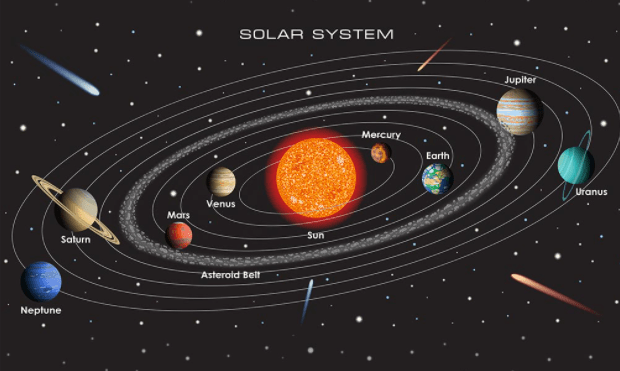
The solar system contains the sun, eight planets, many dwarf planets, comets, moons and asteroids. The Sun is our star. It is the source of energy and heat. It makes up 99.8 percent of the solar system’s entire mass, yet it is not that big of a star.

What is a planet?

The early sky gazers called planets as ‘planetes’ (wanderers). So, is a planet just a round object orbiting around the sun? Or perhaps is it an object having moons and  a large size? The definition of planets is a little more complex than that. A planet is defined by the International Astronomical Union (IAU) as a celestial body that has its primary orbit around the Sun, has sufficient mass for its own gravity to mold it into a round shape, and has cleared the neighborhood around its orbit by sweeping up all the planetesimals, which means that it’s the only body of its size in its orbit (got me breathless there).This complex definition excludes comets, asteroids, and smaller worlds that aren’t rounded by their own gravity. The IAU also defined another class called dwarf planets. These are objects that meet the first two criteria for planets but have not yet cleared their orbits. 

Inner solar system 

The area surrounding the sun, and bounded by the asteroid belt is the inner solar system. Here lie the first four planets of the solar system- Mercury, Venus, Earth and Mars. These planets are also referred to as “terrestrial” planets from the word ‘terra’ which is Latin for ‘earth’. It indicates that these planets have a similar rocky composition to Earth.

Asteroid belt

It is a collection of rocky objects (asteroids) of various sizes orbiting the Sun, located roughly between the orbits of the planets Jupiter and Mars.

Outer solar system

It lies beyond the asteroid belt. It consists of the gas giants- Jupiter, Saturn, Uranus and Neptune. These planets consist mostly of small rocky cores buried deep within massive spheres of liquid metallic hydrogen and some helium, covered by cloudy atmospheres. Neptune and Uranus are sometimes called as ‘ice giants’ as they contain significant amounts of super cold oxygen, carbon, nitrogen, sulphur and possibly some water. Each gas giant has a set of rings. Saturn’s is the most extensive and beautiful.

Kuiper belt

It extends from the orbit of Neptune out to a distance of well beyond 50AU from the sun. Think of it as a very distant and much more extensive version of the asteroid belt. It contains the dwarf planets- Pluto, Haumea, Makemake and Eris – as well as many other smaller icy worlds.

Oort cloud

The entire solar system is surrounded by a shell of frozen bits of ice and rock called the Oort cloud. It stretches out to about a quarter of the way to the nearest star. 

The solar system is about 4.6 billion years old and will continue to remain for another 1 or 2 billion years. Till then, this is our family, a huge one but is a family after all.

https://solarsystem.nasa.gov/
http://en.wikipedia.org/wiki/Solar_System

Astronomy- The Science of Space

When you look at the night sky, you admire the fascinating beauty of millions of stars and galaxies of the universe. Humans have looked in awe and wondered what those twinkling dots of light are, since ancient times. Due to their inborn curiosity, humans have found answers to their questions and ventured deeper into the unknown. 

Today, many spacecrafts have been sent beyond our little world -earth -and humans have even walked on the moon! All this has been possible only because of our thirst to know more. So, space has its own separate branch of science- Astronomy.

What is astronomy?

Astronomy is the branch of science dealing with the study of the universe. There are two major types of astronomy- observational and theoretical. In observational astronomy, many different types of electromagnetic waves like X-rays , gamma rays, microwaves, UV rays, infrared and visible light. Theoretical astronomy mainly deals with simulations and creating theoretical models to predict the observations.

Distance in astronomy

We know that the universe is a very very large place. So, to measure distance in the cosmos we need bigger units of length than kilometers: 

Astronomical unit(AU): It is used to define the distance between Earth and the Sun. 1AU is equivalent to 149 million kilometers (93 million miles). 

Light year(ly): It is defined as the distance travelled by light in one year. The speed of light is 300,000 kilometers per second. So 1ly is equal to 9.5 trillion kilometers(a lot right!).

Parsec: It is  defined as the distance at which the mean radius of the earth’s orbit subtends an angle of one second of arc. 1 parsec is equal to 3.26light years. 

Some fun facts:

  • The limit of the visible universe is about 46.5billion light years(radius) which equals to 4.4* 10^26metres (humongous!).
  • The universe is about 13.8billion light years old.
  • The universe formed as a result of the Big Bang-literally a single point expanded to form the universe!
  • The universe is expanding at the rate of 72 kilometers per second.
  • There are more than one hundred thousand million stars in our galaxy (the milky way). Imagine if there are trillions of galaxies like our own, how many stars would that be!
  • The death of the universe is not completely predicted yet. Some say that it will become a dark and cold place when all the stars die. Others say that the universe will end with “the Big Crunch”.
  • When you look at the sun, you look about 8 minutes into the past, since light has taken 8 minutes to reach us. 
  • The milky way has a supermassive black hole at its center- Sagittarius A*

Are we alone?

We haven’t found any other life in the universe but the search is on. Since there are billions of stars, the chances of them having earth like planets are high. So, there probably are “aliens” out there, we just haven’t found them yet or they haven’t found us yet. Sadly, the chances of having contact with a developed alien life like us are very low. However, that won’t stop us from looking. Hopefully, we will find them soon (and let them be friendly!).

Astronomy is a diversified branch with biology, geology, chemistry, mathematics and physics, all different types of fields coming together. There is a lot of scope for a great career in this discipline. Besides, who wouldn’t want to find out the secrets of the universe. 

http://en.wikipedia.org/wiki/Astronomy
https://www.sciencedaily.com/terms/astronomy.htm

‘Aryabhata’- Father Of Indian Mathematics

Aryabhata was one of the first Indian mathematicians and astronomers belonging to the classical age. He was born in 476 BC in Tarenaga, a town in Bihar, India. His major work, Aryabhatiya, a compendium of mathematics and astronomy, was extensively referred to in the Indian mathematical literature and has survived to modern times. The mathematical part of the Aryabhatiya covers arithmetic, algebra, plane trigonometry, and spherical trigonometry. It also contains continued fractions, quadratic equations, sums-of-power series, and a table of sines. It is however definite that he travelled to Kusumapara for studies and even resided there for some time. It is mentioned in a few places that Aryabhata was the head of the educational institute in Kusumapara. The University of Nalanda had an observatory in its premises so it is hypothesized that Aryabhata was the principal of the university as well. On the other hand some other commentaries mention that he belonged to Kerala.

Mathematical Work

Aryabhata wrote many mathematical and astronomical treatises. His major work, Aryabhatiya, a compendium of mathematics and astronomy, was extensively referred to in the Indian mathematical literature and has survived to modern times. The mathematical part of the Aryabhatiya covers arithmetic, algebra, plane trigonometry, and spherical trigonometry. It also contains continued fractions, quadratic equations, sums-of-power series, and a table of sines. His chief work was the ‘Aryabhatiya’ which was a compilation of mathematics and astronomy. The name of this treatise was not given to it by Aryabhata but by later commentators. A disciple by him called the ‘Bhaskara’ names it ‘Ashmakatanra’ meaning ‘treatise from the Ashmaka’. This treatise is also referred to as ‘Arya-shatas-ashta’ which translates to ‘Aryabhata’s 108’. This is a very literal name because the treatise did in fact consist of 108 verses.

Aryabhata worked on the place value system using letters to signify numbers and stating qualities. He also came up with an approximation of pi and area of a triangle. He introduced the concept of sine in his work called ‘Ardha-jya’ which is translated as ‘half-chord’.

Astronomical Work

Aryabhata also did a considerable amount of work in astronomy. He knew that the Earth is rotating on an axis around the sun and the moon rotated around it. He also discovered the position of nine planets and stated that these also revolved around the sun. He pointed out the eclipses, both lunar and solar. Aryabhata stated the correct number of days in a year that is 365 days. He was the first person to mention that the earth was not flat but in fact a spherical shape. He also gave the circumference and diameter of the earth and the radius of the orbits of 9 planets.

More about Aryabhata

Aryabhata was a very intelligent man. The theories that he came up with at that time present a wonder to the scientific world today. His works were used by the Greeks and the Arabs to develop further. A commentary by Bhaskara I, a century later on Aryabhatiya says:

‘Aryabhata is the master who, after reaching the furthest shores and plumbing the inmost depths of the sea of ultimate knowledge of mathematics, kinematics and spherics, handed over the three sciences to the learned world.’

Aryabhata’s Legacy

Aryabhata was an immense influence to mathematics and astronomy. Many of his works inspired Arabs more particularly. His astronomical calculations helped form the ‘Jalali calendar’. He has been honored in many ways. The first Indian satellite is named after him as ‘Aryabhata’, so is the lunar crater. An Indian research center is called ‘Aryabhata Research Institute of Observational Sciences’.

Who is Aryabhatta? What is he known for? - Quora