India’s Olympic Wins

The first modern Olympics were held in Athens, Greece, in 1896 and it took India only four years before seeing their first representation at the Summer Olympic Games. It all started for India in 1900 when they sent the athlete Norman Pritchard to Paris where he won two medals in Men’s 200 meters and Men’s 200 meter hurdles. Till date, India has participated in every Summer Games since 1900, sending their first Olympic team in 1920 comprising four athletes and two wrestlers. It was, however, not till 1928 that India saw its next medal, after which there have been several Olympic medals obtained. Today India holds a total of 28 Olympic medals and seems to be improving its performance at the Olympics.

Hockey

The Indian hockey team dominated the Olympics from 1928 for decades to come, winning an unprecedented 3 gold medal titles. The dominance of India’s hockey team started in 1928 in Amsterdam, when Dhyan Chand scored a hat-trick against the Netherlands in the final. Major Dhyan Chand is revered today as one of the greatest sportsman in India, and also the greatest player in the history of hockey. By the Berlin Olympics in 1936, the gold medals had piled up for India and London 1948 was the first gold medal post-independence for India. The Indian team kept winning until 1960 when the gold streak was finally broken.

Boxing

In Beijing 2008, Vijender Singh became the first Indian boxer in history to win an Olympic medal. Then in London 2012, India’s newfound love for boxing saw Mary Kom winning a bronze medal for the country. With her win, Mary Kom had become, and remains to be a role model for Indian women wanting to get involved in sports.

Shooting

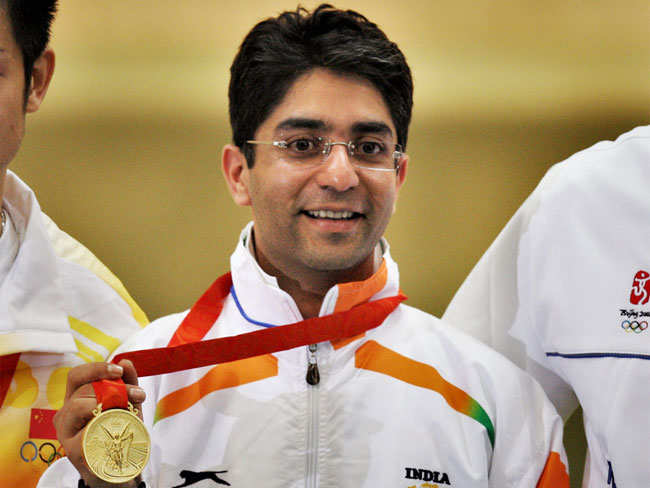
Rajyavardhan Singh Rathore was the first shooter to help India get a medal at the Athens Olympics in 2004, and inspired an entire generation to take up the sport. Following his footsteps, Abhinav Bindra won the gold medal in Men’s 10m Air Rifle at the 2008 Beijing Olympics. He remains the only individual Olympic gold medalist in India and perhaps the most notable among the Indian Olympic winners.

Tennis

India had gone without a medal of any sort for four straight editions before Leander Paes won a bronze medal in 1996. After losing to Andre Agassi in the semi-final, Paes went on to beat Fernando Meligani in the bronze medal match. The medal was a huge achievement for India as they had returned without a medal for many years before Paes won in Atlanta.  

Weightlifting

Breaking the norm of only men fetching Olympic medals for the nation, India saw Andhra Pradesh’s Karnam Malleswari clinching the bronze medal in the 54kg category at Sydney 2000, becoming the first woman in doing so. She had created history, and after her many female athletes would follow to win medals for India.

Wrestling

In 1952, Khashaba Dadasaheb Jadhav had created history by becoming the first Indian to win an Olympic medal in an individual sport at the Helsinki Olympics. The sport was wrestling, and he had won a bronze medal for it. After that in 2008, Sushil Kumar clinched a bronze medal in wrestling after a great deal of struggle and effort. Furthermore, in a traditionally male-dominated sport, Sakshi Malik became the first Indian woman wrestler to win an Olympic medal with her bronze medal finish in the Women’s freestyle 58 kg category at the 2016 Rio Olympics.

Badminton

In London 2012, Saina Nehwal became the first Indian badminton player to win an Olympic medal when her opponent, China’s Wang Xin, was forced to retire hurt during the match in the semi-final. She was the first Indian athlete to win an Olympic bronze medal in the women’s badminton singles. In the following 2016 Rio Olympics, the nation witnessed PV Sindhu take one step closer to gold by becoming the first Indian shuttler to reach an Olympic final in the 2016 Games. She was not able to clinch the victory but won a silver medal in the Olympics. She was also the youngest Indian (21 years old) to achieve this feat.

Conclusion

Every single Indian medal winner may not be mentioned in this Article, but it is important to highlight that every single person who has won a medal for India must be respected, whether that medal is bronze, silver or gold. The Olympics are a worldwide event with the highest level of competition possible, so we should be proud of those who have won for India.
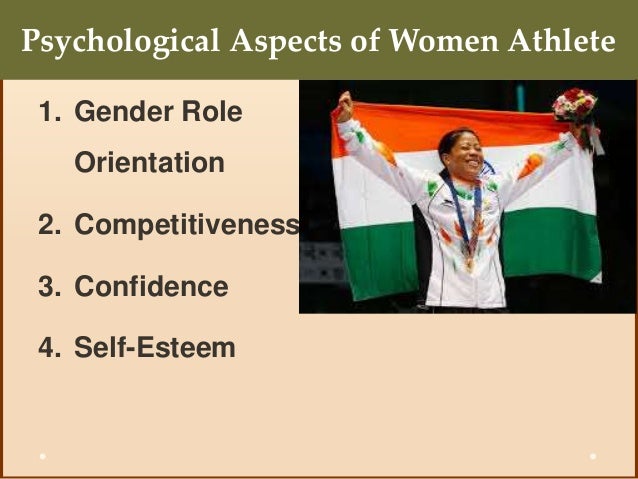
PSYCHOLOGICAL ASPECTS OF WOMEN ATHLETE

Lesson 6 women and sports

Over the past several decades , the role of women has changed drastically .However , gender beliefs and stereotypes still do exist across the world especially in sports . Most of the people in our society consider that sports are not meant for females but only for males .Social tradition , customs and cultures have great influence upon the psychology of women . In a male dominating society , males are expected to be aggressive , independent , dominating , robust and confident , whereas females are expected as well as considered to be emotional , sensitive , cooperative , sympathetic , loyal , etc. It is a well – known fact that participation of women in sports is increasing year after year .With this enhancement in female participation in sports , there is also renewed interest in the psychological characteristics of the female athletes and the effects of athletics on women . The various psychological traits of women athletes are stated below .

  1. Gender Role Orientation : It is an established fact that there has been an increase in the level of women’s participation in the types of sports that have been traditionally limited to only males , e.g., wrestling , weightlifting , kick boxing , body building , etc . However , many sports have been still considered inappropriate for women . For a long time it was considered that women should not take part in athletics because of the potentially harmful masculinising effects of sports .
  2. Competitiveness : It is evident that in the field of sports , both men and women are competitive in their own fields . In fact , women are more goal oriented and perform magnificently in artistic activities such as gymnastics . However , a number of research studies indicate that females who take part in sports are more competitive in comparison to the females who do not participate in sports .
  3. Confidence : As mentioned earlier , due to social pressures , women tend to have less confidence than men . Participation in sports , competitive environment , awards and recognitions increase confidence levels of sportspersons . However , a significant difference may exist between sportswomen and non- sportswomen .
  4. Self-esteem : Most of the research studies indicate that training plays a vital role in performance . Self -esteem improves with good performance . In the field of sports , intensive training helps in enhancing self-esteem . Research studies also show that those people who engage in sports have high self-esteem in comparison to non-participants .
  5. Aggression : Aggression is a forceful , goal- directed action that maybe verbal or physical . Participation in sports has many positive aspects which usually involve aggressive behavior . Various studies of aggression show that athletes who participate in contact sports , i.e., football players , judos or wrestlers are more aggressive than the athletes who participate in less contact sports . However , females who participate in contact sports show more aggression in comparison to females who do not participate in sports at all.

23 June – World Olympics Day – History…

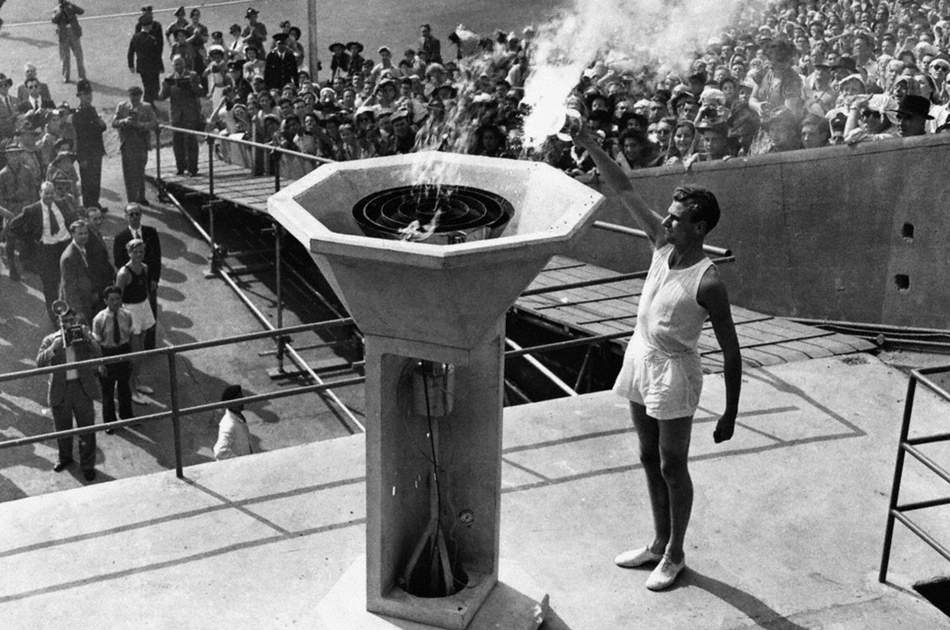
On the 23rd of June 1894 the International Olympic Committee was founded at the Sorbonne in Paris. Prior to the IOC establishment by Pierre de Coubertin the British physician Dr. William penny Brookes had set up the Wenlock Olympian games in the English market town of Much Wenlock although he always maintained that he had the idea of reviving the ancient Olympic Games for amateur athletes himself, Coubertin entered correspondence with Brooks and benefited from his connections with the Greek government Coubertin was the Secretary General of the Union of French sports associations.

A Brief Look At The Olympics History

Image source: Confidential man.com

Coubertin first proposed establishing a modern Olympic Games at his meeting on the 25th of November 1892 although his enthusiasm was met with little more than general polite applause Coubertin wasn’t deterred and commenced to get the groundwork for what was to become the primary Olympic Congress at the Sorbonne in Paris in 1894. Initially invited participants to a gathering entitled reflections on and propagation of the principles of amateurism Coubertin later changed the name to a congress on the revival of the Olympic Games seventy-nine delegates from nine countries subsequently met at the Sorbonne though Coubertin himself recognized that there was still little enthusiasm for reviving the games. Despite this a vote was held at the last word meeting of the Congress on the 23rd of June that established the International Olympic Committee Coubertin was elected to the role of general secretary with the Greek businessman and writer Demetrius Vikelas because the first president it had been further agreed that the primary modern Olympic Games would happen in Athens in 1896. The second in Paris four years later the IOC has remained liable for the Olympic Games ever since.

All About the Olympics for Kids - The History and Symbols of The ...

There are two main events there are the Winter Olympics and the Summer Olympics if you’re wondering when the winter and summer olympics take place they take place every four years when you see the Olympic logo there are five rings the reason for that is in history it has been told that a man named Baron de Coubertin saw the five rings on an ancient Greek artifact the reason we see five colors on each ring is to represent the five continents Europe, Asia, Africa, Oceania and the Americas finally with sports like track gymnastics figure skating and more each category is awarded a gold silver and bronze medal for the first second and third place winners. Hope you enjoy the Olympics.

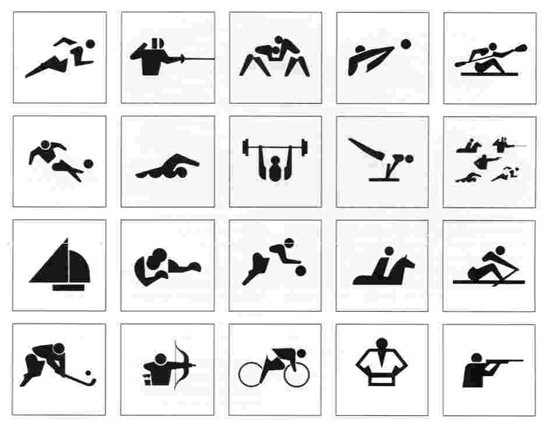
The History of the Olympic Pictograms: How Designers Hurdled the ...

Image source: Smithsonian magazine