
MULTIMIDEA IN MARKRETING

Services | Enforcer Web Solutions & Multimedia Marketing

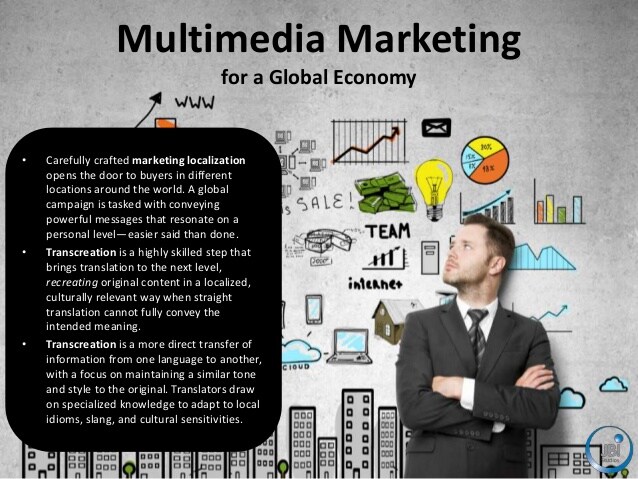
Advertising has become very prevalent in our daily lives , so for a product to stand apart , it is very essential to present it in a dynamic , visually stimulating manner to grab the attention of consumers . The business world is slowly rejecting run of the mill tradition methods (such as placing ads in yellow pages , distributing pamphlets , etc.) and adopting solutions from the electronic era . Only companies with a nerve to radically change their marketing strategies for the new millennium will survive and be able to cater to ever- changing customer’s mindset . Applications of multimedia in the marketing field include the following :

  • Presentations for launching the products of a company . Reaching the target audience with necessary technical services or products requires clear communication stating the benefits and features , outlining its applications and any other product -related details , all presented in a well- designed and interactive manner so that the users can be familiarized faster . Multimedia presentations helps in motivating , informing and captivating audiences via PCs , laptops , plasma screens or kiosks delivered via CD-ROM or the Internet .
  • Multimedia is used to create interactive product catalogues , training tutorials , buyer guides and information directories with adequate search and navigation facilities to guide the user to easily trace the desired information . A buyer guide can list the nearly dealers , a comparison of the top brands , maps of the city and other helpful guest services .
  • E-mail advertising or placing banner ads on the internet is an extremely cost -effective method of launching a product , promoting an event or selling services . Effective use of multimedia in advertising can make potential clients sit up and make notice .
  • Multimedia applications help in building brand loyalty as well as improving sales .Brand loyalty will be improved as the users are provided a custom application which entertains ; informs or assists them .
  • Graphical elements , animations , as well as audio and video can be used to more effectively deliver sales instructional or marketing messages , thereby differentiating a firm from its competitors .

Audacity and controversy after its new privacy policy

Audacity is free and open-source software that is available for Linux, Windows, macOS, and other UNIX operating systems. The project was started by Dominic Mazzoni and Roger Dannenberg in the fall of 1999 at Carnegie Mellon University, Pennsylvania. The software was officially released on May 28, 2000. It is a digital audio and recording application. It is one of the most popular free and open-source software with over 100 million downloads.

In July 2021, the software was acquired by the Muse Group. The acquisition has brought several changes in the privacy policy of the software. Audacity is very popular software in the audio editing space and is being used by beginner podcasters and musicians to professionals.  The recent changes in the privacy policy under the new ownership have led to accusations that it is spyware now. The new policy states that alongside collecting user data for “app analytics” and “improving our app”, which is not unusual. But further in the policy statement, it’s mentioned that the data collected will also be used for “Legal enforcement”.

The policy is a little unclear and it states:

“It may share personal data with “any competent law enforcement body, regulatory, the government agency, court, or other third parties where we believe disclosure is necessary.”

https://www.audacityteam.org/about/desktop-privacy-notice/

The language used quite vague but roughly it can be interpreted that Audacity will share data if requested by the law enforcement or court order. But they can also transfer more data if there is a potential buyer or merger in the future.

Another concerning change is the banning of under 13 years old users which was not a case earlier. This also violates the license under which the software is currently distributed.

It has been a concern for many users of the program. But this also raises a bigger question about data collection. This also hints at the intention of the purchase. The software already has a user base of millions and the potential of data collection is rather high. The policy to further distribute the data to third parties is a decision that is being bet with the most criticism. Another thing to understand is that Audacity is a small lightweight piece of open-source standalone software. But with this new policy, the software might no longer remain offline software. But these are still speculations.

Some years back similar instance occurred when Oracle Corporation had acquired a very popular office suite: Open Office. As users and contributors were not happy with the changes under the new ownership of Open Office, a new fork of Open Office was created. Contribution for this new Open Office alternative, Libre Office had increased in a very short period of time and it emerged as a viable successor of Open Office. Soon Libre Office also replaced Open Office in most of the future Linux distributions. There is already a new fork of Audacity and it is being actively worked on.

But we can also interpret it as a case of incorrectly drafted writing. There can be a possibility that the language used in the new policy changes was understood differently and things got overblown.

References: