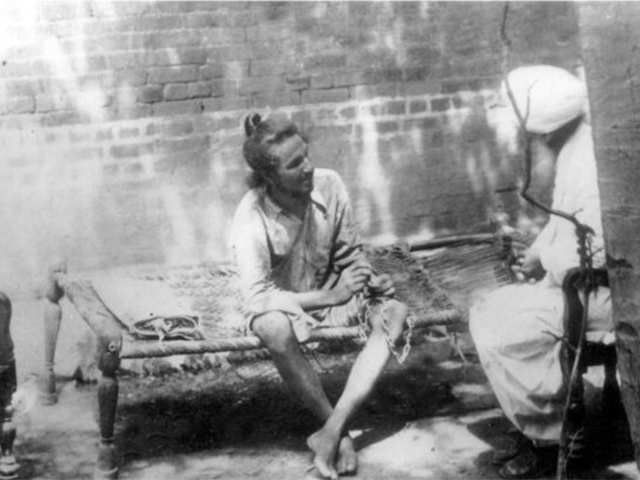
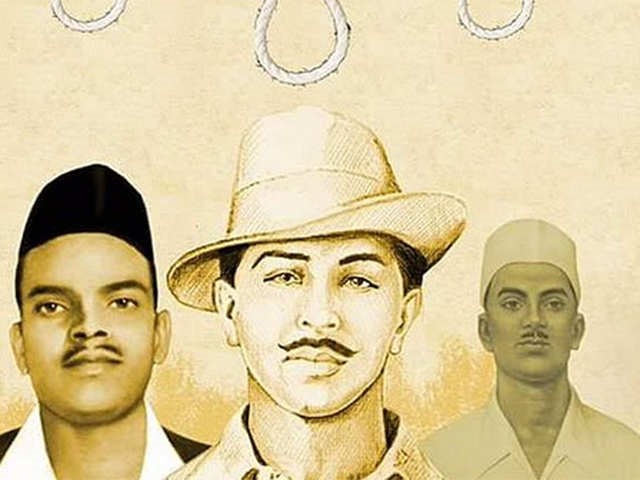
Bhagat Singh- The Legend.

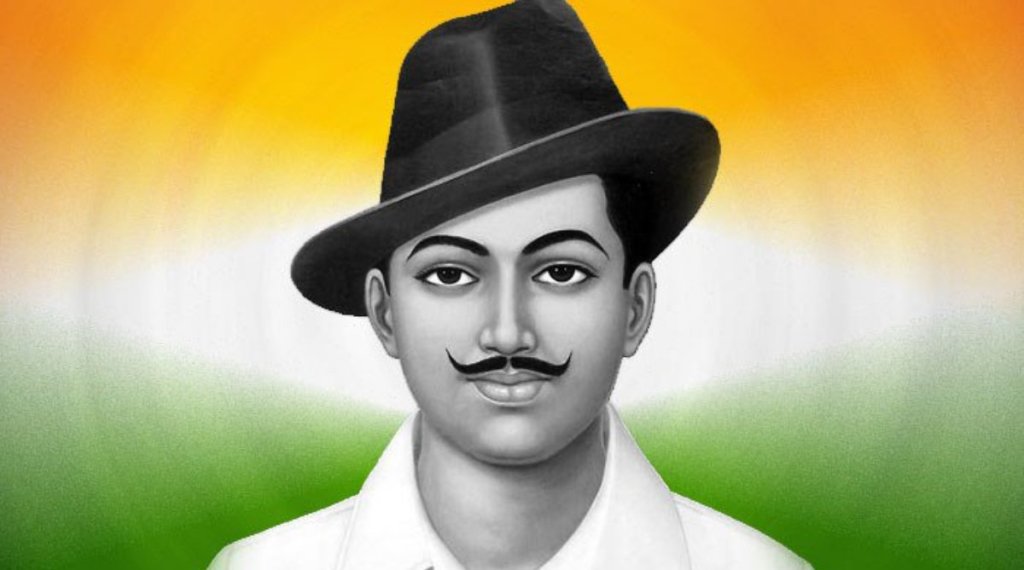
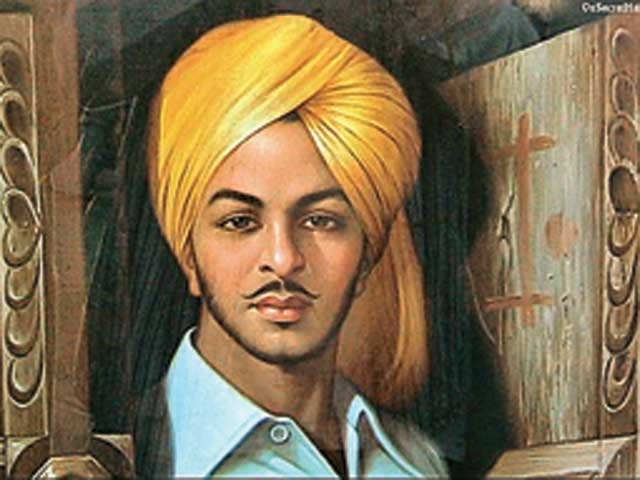
Bhagat Singh was a true symbol of heroism for the youth of India. Born on September 28, 1909, in Lyallpur now in Pakistan. Bhagat was the son of Shri Kishan and Shrimati Vidyavati. He was still a student of the National College and only sixteen years of age when he joined the revolutionary movement.

  The very tragedy of Jallianwala Bagh in 1919, where the British fired at the gathering in the bagh killing men, women, and children. This event caused a wave of terror and anger amongst the people all over the country. Bhagat Singh then a young lad of twelve years was greatly disturbed by this event. The feeling that the British must be driven out of India., lodged in the young boy’s mind. He asked his father Kishan Singh who himself was a revolutionary for permission to join the revolutionary movement.

  Later on, he even refused to marry and dedicate his life to the Liberation of India. He organized revolutionary activities others like namely Raj Guru, Chandrashekhar Azad, Sukhdev, and others. The planned agitations in Panjab, U.P., Delhi. They also planned agitation against the Simon Commission who had come from England to India to decide how much freedom and responsibility could be given to Indians. The absence of Indians on the committee made the Indians very angry. They protested with black flags, shouting ‘Go Back, Simon’. Lala Lajpat Rai was the patriot leader of this group. An officer named Saunders had hit Lala Lajpat Rai on his chest. Lalaji was badly injured and succumbed to his injuries a month later. This loss was avenged by Bhagat Singh and his revolutionaries who decided to kill Scott who had ordered the assault, instead they killed Saunders, the same officer who had hit Lalaji and killed him.

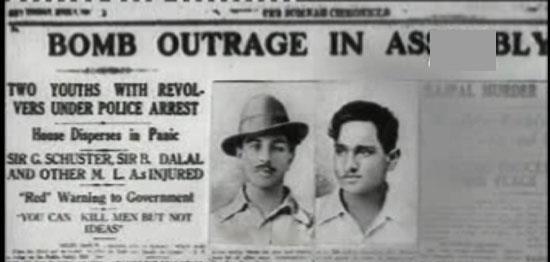
   They also exploded a bomb in the Central Legislative Assembly of ‘Inqalaab Zindabad’ ( long live Revolution). Bhagat Singh and his companions were arrested and a trial commenced. The judgment said that Bhagat Singh, Raj Guru, and Sukhdev were to be hanged until death while some others were jailed for a few years. The day decided was the 24th of March 1931, but they were hanged a day earlier and not even their families were allowed to meet them. Even on the day of hanging, they were fearless and cheerful. Kissing the rope, they themselves put it around their neck, they died with the name of Bharat Mata on their lips.

  Bhagat Singh was a revolutionary and a true patriot. He was against the tyrannical explorers and was of the view that the people were strong enough to rid themselves of their capitalist oppressors. He urged the people to feel proud and dedicate themselves to the liberation of their Motherland. Bhagat Singh died when he was only twenty-four years of age. An age at which other young people indulge in trivial pleasures and have no real aim in life. We owe it to him, and to the others who had died for the nation, to realize their dreams and shape India according to the ideals set by them that of a progressive and peaceful India.

Bhagat Singh

We don’t need occasion to celebrate heroes and Bhagat Singh is one of the greatest hero India has ever seen. He was born in 1907 in the family of freedom fighters . His almost all the family members were active in politics. From his grandfather Arjun Singh to his uncles Ajit Singh and Swaran Singh, all had served the country once in their lifetime. Thus, the spirit of freedom was embedded in his heart from very childhood.

Bhagat Singh was not a great supporter of non violence , yet, he was also not a firm believer of violence. He took the path of violence out of helplessness and to protect his homeland. Just as the former Prime Minister Pandit Jawaharlal Nehru wrote about him ,”Bhagat Singh did not become popular because of his act of terrorism but because he seemed to vindicate for the moment, the honour of Lala Lajpat Rai, and through him of the nation , he became a symbol ; his act was forgotten , the symbol remained , and within a few months each town and village of the Punjab and to lesser extent in the rest of Northern India, resounded with his name .”

Bhagat Singh at the age of 12 went to Jallianwala Bagh hours after thousands of unarmed people gathered at the public meeting and had been killed. At the age of 14 he was amongst the villagers who welcomed protesters against the killing of a large number of unarmed people at Gurudwara Nankana Singh on 20 February 1921. He stated the act of bravery from the very young age but his real struggle of freedom began when he joined Young Revolutionary Movement.

He joined National College in Lahore in 1923. In 1926 he founded Indian Socialist Youth Organization ” Naujawan Bharat Sabha”. He also joined the Hindustan Republic Association in 1924.

He was so devoted to the freedom that he ran away from his home when his father arranged his marriage. He wrote in a letter — “My life has been dedicated to the noblest cause, that of the freedom of the country. Therefore , there is no rest or worldly desire that can lure me now”.

In December 1928 Bhagat Singh along with his companion Shivaram Rajguru, shot British officer, John Saunders . They had mistaken Saunders for James Scott, whom they had originally planned to assassinate. They were agitated due to the death of Lala Lajpat Rai and believed that James Scott was responsible for it. They fled away from the crime scene and were not caught for many months

In April 1929 Bhagat Singh and Batukeshwar Dutt was arrested for bombing Central Legislative Assembly in Delhi. It was during this trial that Saunders’ case reopened.The police found some evidence regarding Saunders and thus Bhagat Singh was convicted and hanged in March 1931, at the mere age of 23 ( Many that believes that Bhagat Singh was not given a fair trial, thus, it is suggested to read “The Trial of Bhagt Singh” by AG Noorani, as it gives the detailed account of the case)

The life of Bhagat Singh inspires many till now. He fought for what was right. He became famous not for his violent act but for his strong opinion regarding justice and freedom. He was brave and courageous man who prioritised freedom above anything else.

Ideal student

An ideal student is one who is good at skills and an motivation to everyone in the class. Schooling is one of the best blessings that a child can have. It is one of the best feelings which no others can have.

The ideal student is the one who respects others feelings and who will be obedient in many of the situations.

The student’s relation with the teacher is a great one. A student must maintain a healthy relationship with the teachers. Teachers play a very important role in making the student perfect and make them to understand the need of the situation. Teachers help the students to reach their desired goals and in any situation teacher motivates a student to get up and stand in all the ups and downs. Like that of the mother and the father, the teacher also feels equally happy when their student acheives high in their life and when they reach their desired goals.

An ideal student will never feel low at the failures. Instead, they will take their mistakes as an experience and will continue the hard work.

Some of the qualities that make an ideal student are :

  1. Hard work
  2. Discipline
  3. Taking responsibility
  4. Maintaining friendly relationships
  5. Respecting everyone
  6. Raising diubts without features.

SOME QUALITIES THAT MAKE AN IDEAL STUDENT FOR KIDS :

  1. • Ideal student traits make him uniqu, anong others.
    • It is believed that an ideal student will never waste his time and energy on non- productive things.
    • The ideal student has inborn winning qualities.
    • Ideal students will always goal- oriented. Thys, they play according to actions to reach their goals.
    • It is proven that ideal students will punctual in school and always on time regularly.
    • He respects everyone. He also obeys their instructions and others.
    • Ideal students are not bookwarms. They keenly observe and read wisely.
    • Ideal students take his studies with all seriousness. They dont’t allow any other activites to disturb them
    • Ideal students always seek the teacher’s guidance. Also, they believe in the knowledge of their teachers.
  2. SOME QUALITIES THAT MAKE AN IDEAL STUDENT FOR SCHOOL STUDENTS :
  1. • Ideal students are always thirsty to gain knowledge.
  2. • They always strive to reach their goals
    • Ideal students always dedicated to their education and work.
    • Ideal students behave well and very attentive in classes. They always listen to their teachers while classes are going on
    • They never hesitate to raise their doubts about studies if they feel some difficulty in understanding.
    • one of the best things about ideal students is that they are very friendly. Also, they help yo his friends regarding studies.
    • Ideal students are creative and think out of the box for any completion of tasks.
    • He always inspire eveyone and attracts the teachers and elders easily.
    • Ideal students are very responsible and underdtand the value of every wird from their elders.
  3. SOME QUALITIES THAT MAKE IDEAL STUDENT FO HIGHER CLASS STUDENTS :

• Ideal students are always fit both physically and mentally.
• Ideal students can differentiate between what is right and what is wrong .
• Ideal students always keep friendly relations with othet students even though he has many competitors
• He always maintains his promise and never feels proud of his awards and achievements.
• Ideal students will nevet trust in superstitions, but believe beliefs. It is because they think very logically abd ratinally.
• An ideal students tries to improvr in all aspects of his life and to reach goals.
• Ideal students show affection and respect towards their elders and parents.
• Ideal students read a lot of books.
• The ideal students will take responsibility for their society and country.
• An ideal student will never look fir shortcuts. They believe that hard work is the only way to succeed in life.


In simple terms, an ideal students is science towards academics and maintains friendly relations with teachers and elders. Aldo, an ideal student will have leadership and communication skills.
The role of an ideal student is both attentibe and punctual in duties. He goes to his school, college or university in time. He attends the classes on regular basis .

Martyrs’ Day: The Day Bhagat Singh, Sukhdev and Rajguru Lay Down Their Lives For Freedom

Martyrs’ Day it is

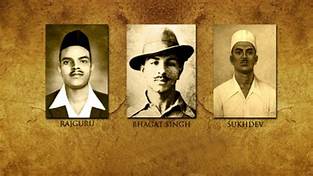
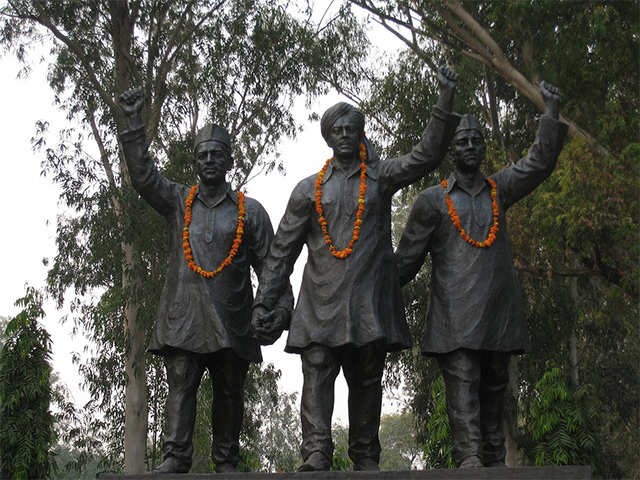
Bhagat Singh, Sukhdev Thapar, and Shivaram Rajguru – some of the most revered figures of the Indian freedom struggle – were hanged on March 23, 1931 in Punjab’s Hussainwala (now in Pakistan). Their execution spurred many youth to take up the revolutionary path, playing a vital role in energizing the fight against the British empire.

On Martyrs’ Day, also knowns as Shaheed Diwas or Sarvodaya Day, Indians pay homage to the martyrs who infused fresh blood in the fight for India’s independence.

Childhood of Bhagat Singh

At the age of 23, if anyone was smiling just before he was being hanged, he was Bhagat Singh.

Born on September 27, 1907 in Punjab’s Banga village near Jaranwala (now in Pakistan), Bhagat Singh grew up in a freedom fighters family. His uncle, Sardar Ajit Singh, as well as his father- Kishan Singh, were great freedom fighters. At an early age, Bhagat Singh started dreaming of growing guns in the fields so that he could fight against the colonial rule.

The Ghadar Movement left a deep imprint on his mind. Kartar Sing Sarabha, hanged at the age of 19, became his hero. The massacre at Jallianwala Bagh on April 13, 1919 drove him to go to Amritsar. He was preparing fof his B.A. examination when his parents planned to have him married.

He vehemently rejected the suggestion and said that, if his marriage was to take place in Slave-India, my bride shall be only death.

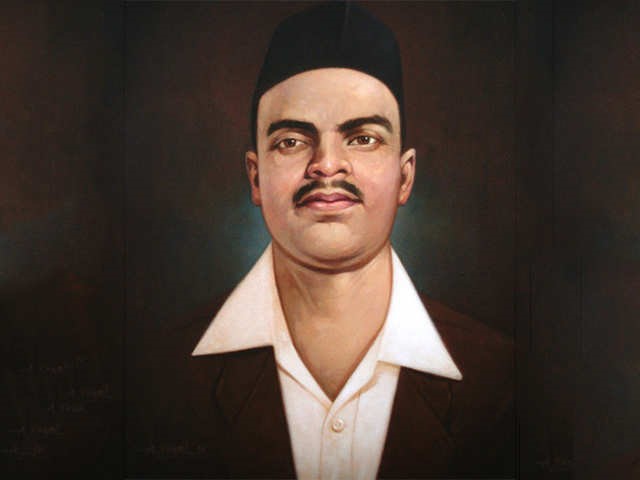
Shivaram Rajguru

Shivaram Rajguru, born on August 24, 1908, had witnessed British’s atrocities on India and its people.

This instilled within him a strong urge to join hands with the revolutionaries in a bid for India’s freedom struggle. He joined HSRA with a motive to strike fear into the heart of the British empire.

​Rajguru made British to take notice of the growing domestic uprising when they dealt crucial blows with attacks like in the Lahore Conspiracy Case and the bombing of the Central Assembly Hall in New Delhi.

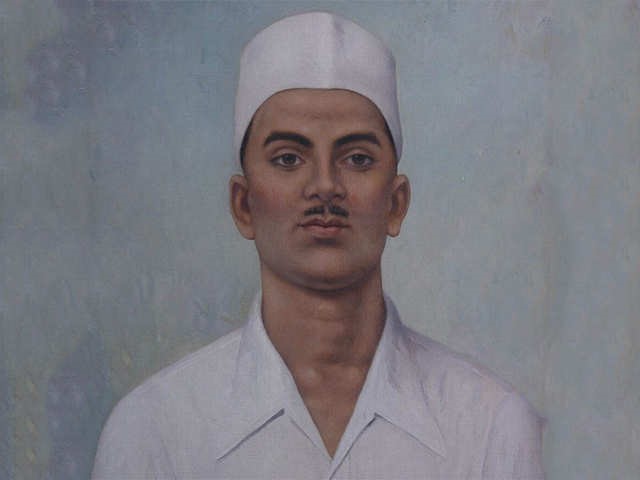
Sukhdev Thapar

Born on May 15, 1907, Sukhdev Thapar had witnessed the brutal atrocities that the Imperial British Raj had inflicted on India, which then led him to join the revolutionaries, vowing to set India free from the shackles of British dominion. As a member of the Hindustan Socialist Republican Association (HSRA), Sukhdev Thapar organised revolutionary cells in Punjab and other areas of North India.

He even went on to educate the youth at the National College in Lahore, greatly inspiring them about India’s glorious past. He along with other renowned revolutionaries started the ‘Naujawan Bharat Sabha’ at Lahore that was an organisation involved in various activities, mainly gearing the youth for the freedom struggle and putting an end to communalism.

He also took active part in several revolutionary activities like the ‘Prison hunger strike’ in 1929; however, he is best remembered for his courageous attack in the Lahore Conspiracy Case.

Assembly Incident Trial

The dramatic protest was met with widespread criticisms from the political arena.

Bhagat Singh responded – “Force when aggressively applied is ‘violence’ and is, therefore, morally unjustifiable, but when it is used in the furtherance of a legitimate cause, it has its moral justification.”

Trial proceedings commenced in May where Bhagat Singh sought to defend himself, while Batukeshwar Dutt was represented by Afsar Ali.

The court ruled in favour of a life sentence citing malicious and unlawful intent of the explosions.

Lahore Conspiracy Case

Soon after the sentencing, the police raided the Hindustan Socialist Republican Association (HSRA) bomb factories in Lahore and arrested several prominent revolutionaries.

Three individuals, Hans Raj Vohra, Jai Gopal and Phanindra Nath Ghosh turned approver for the Government which led to a total of 21 arrests including those of Sukhdev Thapar, Jatindra Nath Das and Shivaram Rajguru. Bhagat Singh was re-arrested for the Lahore Conspiracy case, murder of Assistant Superintendent Saunders and bomb manufacturing.

Trial started against 28 accused in a special session court presided over by Judge Rai Sahib Pandit Sri Kishen, on July 10, 1929.

Prison Hunger Strike

In jail, Bhagat Singh and his fellow inmates declared an indefinite hunger strike in protest of the prejudiced difference in treatment of the white versus native prisoners and demanded to be recognised as ‘political prisoners’.

The hunger strike received tremendous attention from the press and gathered major public support in favour of their demands. Death of Jatindra Nath Das, after 63 days long fast, led to the negative public opinions intensifying towards the authorities.

Bhagat Singh finally broke his 116-day fast, on request of his father and Congress leadership, on October 5, 1929.

Saunders’ murder

On December 17, 1927, Bhagat Singh and Shivaram Rajguru shot and killed assistant superintendent of police John Saunders.

They were supported in this act by their compatriots Sukhdev Thapar and Chandrashekhar Azad. However, their original target was not Saunders but superintendent of police James Scott who had ordered his men to lathi-charge protesters leading to the death of the nationalist leader Lala Lajpat Rai.

Owing to the slow pace of the legal proceedings, a special tribunal consisting of Justice J Coldstream, Justice Agha Hyder and Justice GC Hilton was set up on the directives of the Viceroy, Lord Irwin on May 1, 1930. The tribunal was empowered to proceed without the presence of the accused and was a one-sided trial that hardly adhered to the normal legal rights guidelines.

The tribunal delivered its 300-page judgement on October 7, 1930. It declared that irrefutable proof has been presented confirming the involvement of Bhagat Singh, Sukhdev Thapar and Shivaram Rajguru in the Saunders murder. Bhagat Singh admitted to the murder and made statements against the British rule during the trial. They were sentenced to be hanged till death.

Shaheed Diwas

On March 23, 1931, 7:30 am, Bhagat Singh along with his comrades Rajguru and Sukhdev were hanged in Lahore Jail.

It is said that the trio proceeded quite cheerfully towards the gallows while chanting their favourite slogans like “Inquilab Zindabad” and “Down with British Imperialism”.

India’s beloved sons were cremated at Hussainiwala on the banks of Sutlej River.

At the time of their execution, Bhagat Singh and Sukhdev Thapar were just 23 years old. And Shivaram Rajguru was only 22 when he was hanged on March 23.