After about 40,000 years ago, we see many significant changes in the archaeological record, reflecting important changes in cultural and social life. We see art, many new inventions, and considerable increases in the population. This period of cultural history in Europe, the Near East, and Asia is known as the Upper Paleolithic and dates from about 40,000 years ago to the period known as the Neolithic (beginning about 10,000 years ago, depending on the area). In Africa, the cultural period comparable to the Upper Paleolithic is known as the Later Stone Age and many have begun much earlier.
In many respects, lifestyles during the Upper Paleolithic were similar to lifestyles before. People were still mainly hunters, gatherers, and fishers who probably lived in small mobile bands. They made their camps out in the open in skin-covered huts and in caves and rock shelters. And they continued to produce smaller and smaller stone tools.
But the Upper Paleolithic is also characterized by a variety of new developments. One of the most striking developments is the emergence of art – painting on cave walls and stone slabs, and carving tools, decorative objects, and personal ornaments out of bone, antler, shell and stone. (Perhaps for this, as well as other purposes, people began to obtain materials from distant sources.) Because more archaeological sites date from the Upper Paleolithic than from any previous period and some Upper Paleolithic sites seem larger than any before, many archaeologists think that the human population increased considerably during the Upper Paleolithic. And the new inventions, such as the bow and arrow, the spear thrower, and tiny replaceable blades that could be fitted into handles, appear for the first time.
The Last Ice Age
The Upper Paleolithic world had an environment very different from today’s. The earth was gripped by the last ice age, with glaciers covering Europe as far south as Berlin and Warsaw, and North America as far south as Chicago. To the south of these glacial fronts was a tundra zone extending in Europe to the Alps and in North America to the Ozarks, Appalachians, and well out onto the Great Plains. Environmentally, both Europe and North America probably resembled contemporary Siberia and northern Canada. Elsewhere in the world conditions were not as extreme but were still different from conditions today.
For one thing, the climate was different. Annual temperatures were as much as 50 °F below today’s, and changes in ocean currents would have made temperature contrasts (i.e., the differences between summer and winter months) more extreme. The changing ocean currents also changed weather patterns, and Europe experienced heavy annual snowfall. Not all the world was cold, however; still, the presence of huge ice sheets in the north changed the climate throughout the world. North Africa, for example, appears to have been much wetter than today, and South Asia was apparently drier. And everywhere the climate seems to have been highly variable.
Upper Paleolithic Europe
With the vast supplies of meat available from megafauna, it is not surprising that many Upper Paleolithic cultures relied on hunting, and this was particularly true of the Upper Paleolithic people of Europe, on whom we focus here. Their way of life represents a small pattern throughout the Old World. But as people began to use more diverse resources in their environments, the use of local resources allowed Upper Paleolithic groups in much of the Old World to become more sedentary than their predecessors. They also began to trade with neighbouring groups to obtain resources not available in their local territories.
No one remains a stranger to this phrase, But there is nothing more vague and inarticulate than this phrase. From the moment we are born into this world, we are being directed to behave and do things in a certain way. When we reach adolescence, we no longer have to be told to behave in a certain way as we begin to realise what the society expects from us and behave in accordance to their expectations. Finally, when we enter adulthood, we become champions in complying to societal expectations.
After going through all these stages in life, while in a group discussion or a meeting, a team leader or a manager asks us to think outside the box. That’s unfair. Nobody taught us to think for ourselves, even if we did, it fell in the societal pattern of studying, marrying, rearing kids, and retiring.
What is thinking out of the box?
In a professional terminology, thinking out of the box basically means coming up with a new idea (because the contemporary ones didn’t work) that would reap huge benefits for the company. In terms of life, thinking out of the box means being indifferent to societal norms and expectations as you do things your own way. Although my monologue above is defensive towards societal expectations, it is often impractical as not all of us can afford to waste our time and resources on carving a new path, when we can comply with our society and become financially stable and independent.
How to think outside the box?
Nevertheless, we can still incorporate the habit of thinking outside the box to make a difference in our lives when needed. Thinking out of the box does not require racking your brains till you come up with a feasible idea.
Take up a new course
Enrolling yourself for a new course will open doors to learning about new and unfamiliar things. Learning new things will influence your thinking in different areas and aspects of your life. Thereafter when you are confronted with a problem, you will be equipped with knowledge from the specialisation in a certain field that can aid you with thinking out of the box.
Daydream
Although it sounds counter intuitive, daydreaming is an important factor that influences your thinking out of the box. While daydreaming, your brain is led astray from the logical aspects and helps you make connections and co-relations that you couldn’t come up with while racking your brain. So, turn your attention away from the problem you are facing and let your imagination go wild!
Read a book from a new genre
Thinking out of the box would require you to do things differently or try new things. So how about reading from a different genre than the one you usually prefer? Try nonfiction or didactical if you have always preferred fiction. Fiction might have accustomed you to think in a certain manner. To break that monotony in thinking, reading from a different genre might just do the trick.
Pen a poem
The motive behind doing this relatively weird stuff during a serious confrontation is to break free from rational and logical thinking and invite new possibilities and ideas into the situation. Try writing a poem on the basis of your problems. As your mind begins wandering to support your efforts in poetry, you expand your horizon of thinking, leading to thinking outside the box.
So there you go, a vague article on an equally vague topic. Thinking out of the box. Do drop in your thoughts in the comment box. Now that’s a rhyme scheme created which can be considered as the first two lines of a poem. I was wondering how to end this article so I made a rhyme scheme, a.k.a a poem.
Getting ahead or wealthy in life can be challenging. There are certain daily habits one must follow to achieve success. These habits enable people to use their potential and get things done on time. Many successful and wealthy people are said to have followed or maintained these habits to get to where they are today. So let us do ourselves a favor today by learning about some of these habits.
Everyday isn’t going to be a bliss in our lives. Instead, each day brings with it a challenge and problem of its own. But we don’t have to be upset or defeated by them. A positive attitude is one of the key habits of successful people that you can adopt. It is the habit of finding positive attributes in every challenge you face.
You might be overwhelmed and swamped with problems in your lives, but the idea that one day you will emerge as a resilient and a strong person after going through them can be relatively less draining.
After all, we can only control our reactions and not our circumstances.
The path to success is not always about solitude. It requires you to share your ideas with others and even help others. One doesn’t have to be super rich to help or share with people around them. You can share your ideas with people that can benefit you as well as them. Volunteering for a cause is also a great idea of helping and sharing with your community.
J.K. Rowling says that she used to read anything that comes her way as a child. She states that one must read as much as possible as nothing is as rewarding as reading. Today there are books, e-books and blogs being written on every possible field. You can read from a wide range of reading materials based on your fields of interest.
Reading also helps you develop your vocabulary. You can post or publish your own writings based on the knowledge and vocabulary you have gained by your readings.
Frugality is the habit of being cautious with expenditures. Successful people are very thrifty with their money and resources. They draw comparisons while making deals or purchases and find ways to save money. It is also known as being economical. Economically spending can result in reduction of wastage on resources and money. Thus leading to efficiency.
Success and wealth has often been associated with the habit of rising early. Early risers can devote more time to their work and get more things done. It is again one of the key habits of successful people that you can adapt. There are several benefits of rising early in the morning such as:
Enhancement of organisation skills as you plan your day ahead under a peaceful and calm environment in the mornings.
Rising early gives you enough time to prepare a healthy breakfast which is important to carry on the following tasks of the day.
Rising early puts you at the advantage of being on time. You get the following tasks of the day done without any delay.
Finally, early rising also helps you sleep early without leaving you watching your phone during midnight.
These are some of the habits of successful people you can adopt to be successful yourself.
The cities mentioned in this list belong to different states in India. Each city showcases the distinct culture and beauty of their state. Many companies and factories have been set up in these cities since the beginning of globalisation. This has led to people migrating from different parts of the country in search of a livelihood.
Today these cities are commonly rich in manpower and resources which increases its scope of development. Although they are overpopulated, residents and visitors alike benefit from modern facilities and technological advancements that are introduced on a regular basis.
So, welcome to some of the best cities to live in India.
Ever came across the news about people quitting their 9 to 5 jobs and starting their own businesses? It might probably have occurred in the city of Bangalore. It is an IT hub for people doing their 9 to 5 jobs, and a start-up city for people starting their own businesses. Bangalore is located in one of the southern states of India. It also bags the title of the third largest city in India.
It has everything you can expect from a tier one city. Shopping hubs, entertainment opportunities, buzzing nightlife, art, culture and so on. Thanks to its rapid industrialisation. The city also has lakes, gardens and generous spaces for recreation. However, the goodness it reeks of also becomes the reason for overpopulation, it is infamously known for its hour long traffic jams!
Pune houses some of the best educational centres and IT companies that attract youngsters who are yearning for a livelihood. Housing, transport and food are affordable if spent wisely. Thus, making it one of the best cities to live in India. It is indeed known as the cultural capital of Maharashtra, due to its historical sites, museums and heritage. It is an ideal city for tourism as it has many sightseeing options such as Sinhagad Fort, Khadakwasla Dam, Tulsibaug, Shaniwar Wada, etc.
Ahmedabad, the city in Gujarat, is famous for its Sabarmati Ashram, which carries the pride of once being Mahatma Gandhi’s residence. Today it has been established into a museum which is visited by millions of tourists every year. Ahmedabad is one of the best cities to live in India due to its affordability and ideal places to stay.
Manek Chowk, Lal Darwaja Market, and the famous shopping centre at Dhalgarwad are some of weekend getaways and visual treats for the explorers of Ahmedabad.
Chennai is not only the best, but also one of the cheapest cities to live in india. It is the capital city of Tamil Nadu
which is well known for its extravagant temples, beautiful churches, passion for classical music and popular beaches. Like Bangalore, it also comprises factories and industries of the elites that support the economy of the city and its residents.
Chennai boasts awesome connectivity with its expansive transport system of buses, rickshaws and cabs. It also acts as a host of several start-ups and unique initiatives in an effort to suffice development in the city.
Navi Mumbai is a booming town, nearer to Mumbai, the city of dreams. It holds the title of the largest planned city in the entire world that boasts of tourist attractions such as Golf courses, waterfalls, wonderful parks, etc. Plans of establishing an international airport and metro train connectivity are being carried on with great enthusiasm.
What makes it one of the best cities to live in India is it’s relatively calmer, less polluted and populated environment in comparison to Mumbai. But it’s relatively higher cost of living and rent can be a turnoff for many.
Want to experience the city lifestyle or planning on settling in a new city? Do check out at least four of the cities mentioned in the list.
The field of literacy studies has made many of us take a deeper look into the similarities and differences between text based and digital literacy. It seems not only through the literature but also by observation as a classroom practitioner that there are certain elements and conflicts between digital literacy and text based literacy that need to be combed through by educators in the field.
One of the most powerful lessons we’ve learned through our work with schools is the importance of doing the work we ask our students to do. Nothing helps us anticipate misunderstandings or understand the strategic support our students will need as much as stepping into their shoes, and doing the reading, writing, and thinking they will do as part of upcoming instruction. The approach to these said instructions is what one may categorize into digital literacy and text based literacy.
Similarities And Dissimilarities
There are a number of similarities between digital and text based literacy, one of them being, both have a common goal, which is, to gather information and communicate effectively. Digital literacy means having the skills you need to live, learn, and work in a society where communication and access to information is increasingly through digital technologies like internet platforms, social media, and mobile devices. While, text literacy is the ability to gather information to communicate using text. The common goal in both the cases is clearly somewhat similar, just the catalyst is different.
From school to the workforce, digital literacy is vital in many areas of life — but simply, having it is an absolute necessity for anyone who uses the internet. Sometimes forms and applications are only available online, so you’ll need to be comfortable accessing and using them. In short, digital literacy is a necessary skill for navigating in our modern, digital world.
Advantages And Disadvantages
Text based literacy has many advantaged over digital literacy. Text based materials are available all the time, regardless of not being in a good internet zone. Text based materials are not as expensive, But its limitation says, they are not as interactive as digital literacy might be. Also, text based literacy works merely on facts and memorization and has zero scope of innovations and ideas, unlike digital literacy.
In India, poverty is presently estimated by fixing a poverty line based on a differentiated calorie-norm. This means that the level of poverty depends upon the capacity of a person to purchase food and a person who can buy specific amount of food to cross the poverty line margin for nutrients and calorie intake is above the poverty line. Whereas, the person who cannot buy enough food to meet the required nutrition value of calories and carbohydrates is below the poverty line. This level is not the correct parameter to check the level of poverty.
A task force of the Planning Commission in 1979 defined the poverty line as that per capita expenditure at which the average per capita per day calorie intake was 2400 calories in rural areas and 2100 calories in urban areas. Average per capita expenditures incurred by that population group in each State which consumed these quantities of calories, as per the 1973-74 survey of NSSO, were used as the poverty lines.
The debate on the extent of poverty in India has been a matter of global interest in the recent years. The primary reason for the global interest in the debate is that the levels of poverty in India and China have come to exert significant influence over the trends in world poverty itself.
Within India too, there has been growing contestation around poverty estimates, particularly in the period of economic reforms. First, there are persistent disagreements among economists on whether the rate of poverty decline after economic reforms was slower than in the preceding period. Secondly, the shift to targeted, rather than universal, welfare schemes has witnessed the use of poverty estimates to decide on the number of households eligible to access these schemes. The report of the Expert Group on the estimation of poverty, chaired by Suresh Tendulkar, is the latest input to the “Great Indian Poverty Debate.”
It is to be noted here that many subsidies and programs are launched by the government but these additional increments do not reach the actual people that are in need of them. Instead it is sent back to the businessman and thus a lot of profit is earned on these subsidized goods. Thus, to lower the level of poverty in India, schemes have to be launched in order to directly benefit the people in need.
The Hindu states that, “A final issue with the report, of much long-term consequence, relates to the wisdom of abandoning the calorie norm. It is indeed true that the levels of calorie intakes are not well correlated with nutritional outcomes. However, abandoning the calorie norm altogether and taking solace from the fortuitous fact that calorie intakes appear adequate at the new poverty lines is an arbitrary proposition. It is unclear whether there is any basis, theoretical or empirical, for this relationship to hold true across time.”
the Tendulkar Committee has pitched for a policy position that is stranded between the harsh realities of poverty in India and the fiscal conservativeness of a neo-liberal framework. The real challenge lies in preserving the positives from the report, and strongly persisting with the demand for a universal social security system.
Time is precious, it’s a saying that is reiterated often by everyone! We all are gifted with 24 hours everyday and many more during our whole lives. But often we don’t know how to utilize them. We understand how precious time is only when it passes away, leaving us with only a few hours left to turn in an assignment! This doesn’t have to repeat because here are some ways you can make the best use of time.
Keep track of your time
When time passes you in a whiff, leaving you with the feeling of having nothing done from your ‘to do list’. The moment has come to identify how you have been utilizing your time. A simple note making activity along the week can do the trick. Keep tabs on the activities you do on a regular basis across different time periods. You can do this the old school way by writing down in a notebook or the modern way by typing in your smartphone. The aim of the activity is to figure out the tasks that waste your time by the end of the week and curb the duration of indulging in such activities.
For example if using your mobile phone or watching television is eating up your time, leaving you with no time to do what is necessary. Keeping track of your time will help you understand this mishap and rectify your actions. Thus helping you to make the best use of time.
Make a ‘To do list’, but avoid listing a ton of items.
Making a ‘To do list’ is supposed to motivate us to get things done for the day. But listing a ton of tasks kills the motivation to do the same. Listing even 3 important items to do for the day can help you get things done and motivate you to do more. Three tasks might seem very less, but it accounts for a day well spent as you accomplish the 3 most important tasks that need to be done, rather than listing 10 items in your ‘to do list’ and get nothing finished.
Doing less also helps you focus and spend adequate time over your important tasks, making you less prone to make errors and getting things done efficiently.
Plan your day before time
We all have heard the famous words of Benjamin Franklin, “If you fail to plan, you are planning to fail.” Although it sounds daunting and negative, it makes a lot of sense when you try to make the best use of time. When you haven’t given a thought about the day ahead, you end up spending the day doing mundane things that take up the majority of your time.
It is best to plan the next day before going to bed or during the early hours of the day to make the best use of time. This helps you to remember the important things to be done for the day and keep you occupied.
We all develop some habits in our lives that are harmful or keep us from being productive. You might probably take your love for music to the next level by having your earphones plugged in for several hours. This could be harmful to your ears or reduce efficiency as you listen to music in the background while doing something important. Hence, it becomes necessary to fix a duration for plugging in some music rather than doing so all the time.
Similarly, you can curb other time consuming habits by spending less time over them or putting them away during your time of productivity.
Put your phone away to resist the urge for checking messages while you study or work on an assignment.
Turn off the Wifi or mobile data on your phone to prevent notifications from interrupting your work schedule.
Begin with the most important task for the day
Although it sounds intimidating, waking up after the right duration of sleep leaves you with great energy and potential to complete important tasks that you have planned for the day. Maybe that’s why schools, colleges and offices expect people to arrive in the morning as they are equipped with sufficient energy for conveyance and other important things.
Finishing the significant tasks in the morning such as studying or attending meetings, equips you with the necessary information and a sense of accomplishment to carry on with the rest of the day. Thus making the best use of time.
Figure out what is important to you in the long run
Finally, it’s all in the bigger picture. You need to figure out what carries significance in your life. Some may want to explore while the others may want to settle down. What is important to you would determine your actions.
Do tasks that provide good returns.
Taking a break during the day from your studies or work is something you deserve. As you plan your activities and ‘to do lists’, it is also necessary to plan your time of leisure. Playing video games or watching television for 4 hours straight can be tempting, but it prevents you from reading the book you were planning on reading or meeting up with a good friend.
It is better to limit your time over tasks that provide less returns and focus more on tasks that add value to your life. So pick an interesting book while you feel the urge to binge watch or initiate a meet-up with friends which you have been putting off for a while.
Because making the best use of time is to learn new things and add new experiences to your life.
The WHO declared Covid 19 as a global pandemic on 11th March 2020. It is obvious that we all have been affected in an adverse manner. All parameters of society was unstable as a result of the outbreak of this pandemic. But the challenges faced by each individuals different according to their social status. For example, the digital age helped a lot of people to work during this pandemic. While some people tried to adopt to the current situation, through the advantage of technology, some other sections of the society was under a huge economic and mental stress. This stress even continues even after one year of the outbreak. The situation is similar with educational sector also. Students were largely affected by the pandemic as the government decided to temporarily close educational institutions in an attempt to reduce the spread of COVID 19. Even though online mode of education is provided by majority of educational institutions, there are many limitations to this mode.
Even though online education is significant during the pandemic, it has certain advantage and disadvantage. The major factor is the access to online study materials. Most of the students, especially college students use smartphones for accessing study materials. And the use of laptops and computers are less compared to smartphones. It is obvious that some students, who are from financially backward families, find it very difficult to access online study materials in time. And this adversely affects the consistency of their studies also. So the students who learn the given study materials on a regular basis are very less. Another problem faced by students during online classes is the connectivity issues. Many of them face connectivity issues, insufficient data and unfavorable environment. Even though online education permits students to sit in their comfortable environment at home, many students do not have suitable environment at home. Many families have more than one or two students at home and this is one of the reason for unfavorable environment and lack of privacy. And as per the result majority students go through mental stress.
Some educational institutions provide recorded classes to students, so that they can access them at their convenient time. And majority students prefer recorded classes than live classes so that their connectivity issues and insufficient data will not limit their learning.
While analyzing the impact of COVID 19, lockdown and online mode of education with respect to the life of students, it is evident that most of the students prefer offline education. It is good for learning, knowledge and mental health. Many students suffer from stress which is increased than pre covid times. More than learning offline classes helps the students to attain social skills by learning with their peers. To tackle this mental stress interactive counseling sessions with students, systematic scheduling of class hours and classwork will help.
Its been six years of the advent of the Companies Act, of 2013 that obligated companies to contribute over a specific size and profitability, a portion of their profits or benefits towards societal development, discourses about corporate social responsibility, or CSR, is all over the place. There have been workshops, seminars, meetings, newspaper articles, and award distribution ceremonies galore on the matter. Today, CSR has become an important aspect for all companies in contributing towards both, society as well as increasing the brand value reputation of the companies. As corporate social responsibility (CSR) is not compulsory, many companies might not prioritize it or engage in it. However, there are many companies ranging from middle-class companies to highly valued companies who have contributed a lot to CSR and continue to contribute, knowing its importance. The top 6 companies with the best CSR reputation are:
INFOSYS LIMITED
Image credit: Alamy
Infosys Limited is ranked as the top company in India, contributing the most towards CSR. Being an early adopter of corporate social responsibility (CSR) initiatives, its contributions to the environment and society have been key factors in the holistic growth of its business.
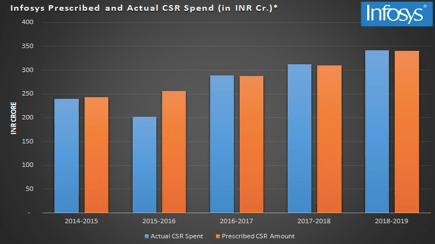
The company spent nearly Rs. 360 crores on various CSR schemes in the financial year 2019-20[1]. It has contributed to many covid relief works and among its main CSR initiatives in the financial year, 2019-20 were a 100-bed quarantine set up in Bengaluru in partnership with Narayana Health City, and another one which had 182 beds for COVID-19 patients for Bowring and Lady Curzon Medical College & Research Institute[2]. This company has also established the Infosys foundation— a nonprofit nodal body aimed at contributing toward community and society development and betterment and also fulfilling its CSR commitments. Infosys Foundation has worked with many non-government organizations for implementing its projects. Highlights of the Foundation’s interventions in the past include the introduction of Aarohan Social Innovation Awards, restoration of water bodies in Karnataka, enabling the pursuit of access and excellence in sports through the GoSports Foundation, and disaster relief efforts in Tamil Nadu, Karnataka, and Kerala[3].
Image credit: The CSR journal
The above graph shows CSR spending of Infosys Ltd. in the last 5 years[4]
ROLEX WATCH CO. LTD.
Image credit: prezi.com
Rolex has been on the top 10 list of the most reputable companies in the world for four consecutive years. Rolex’s success is attributed to the authenticity and longevity of its charity work. By investing in and committing to long-term social enterprise projects, Rolex has an impressive record of over forty years of philanthropic work[5]. The Rolex Awards for Enterprise which were established to commemorate the 50th anniversary of the Oyster Chronometer is a great example of CSR activity carried out by the company. All the individuals who demonstrate leadership and entrepreneurialism in the areas of technology, applied sciences, and the environment are presented with these awards. Since the inception of the Awards, 33,000 people from over 190 countries have applied, and 140 laureates have been selected[6]. These laureates have worked on projects benefitting millions of people in 60 countries across the globe[7]. Several initiatives under the Rolex Perpetual Planet have been taken up for upgrading our environment. These include watching over the Earth’s blue heart, Heroes of the Oceans, and Paula Kahumbu: defending rights for elephants.
MAHINDRA AND MAHINDRA LTD.
Image credit: Avinash Chandra
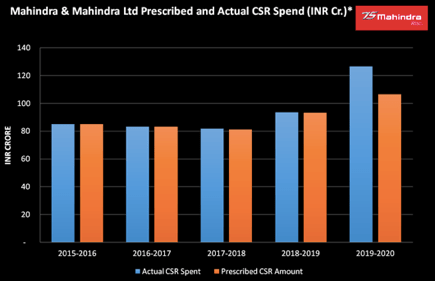
Mahindra and Mahindra ltd. is known for its contributions to climate change and sustainable business practices. The company spent INR 93.50 crores on CSR initiatives during the financial year 2018-19[8]. The biggest CSR project for educating girls in India known as Nanhi Kali was conducted by Mr. Mahindra. This project provides free education to girls, who belong to low-income backgrounds and also empowers their families. The group works closely with non-profits like Naandi Foundation, which feeds over 1.3 million government school children every[9]. This project also encourages environment-friendly farming practices by working with many small farmers. Mahindra and Mahindra Ltd. has also won the award for India’s best CSR project in the Environment and Sustainability category for its green initiative of project Hariyali, which aims at planting 1 million trees on India’s green cover every year. In the financial year 2019-20, Mahindra & Mahindra planted 1.32 million trees, taking the total tally to 17.93 million trees[10]. Of these, 10.78 million trees have been planted in the Araku Valley, which besides greening the environment, also provides livelihood support to tribal farmers growing coffee in the region[11]. The company’s other CSR projects include Mahindra Pride schools: a unique 90-day livelihood training program for youths from socially and financially disadvantaged communities, Integrated Watershed Management Programme, saving a life with safer roads, employee social options, and covid-19 releif[12].
Image credit: The CSR Journal
The above graph shows the CSR Spends of Mahindra and Mahindra Limited for the last five years.
WALT DISNEY COMPANY
Image credit: Money Inc
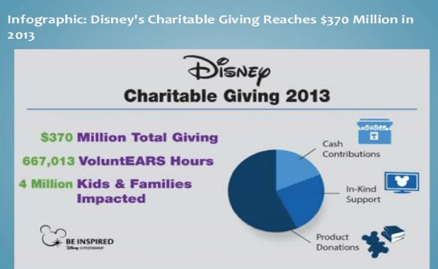
Considering the Walt Disney company CSR report, it can be said that it is well organized, and consistent, and is in connection with the global reporting initiative (GRI) too. The company has contributed a lot towards renewable energy, workforce investment, community engagement, charitable giving, and diversity and inclusion. In the financial year of 2019-20, Disney brought online a massive 270-acre, 50+-megawatt solar facility onsite in Orlando, in collaboration with the Reedy Creek Improvement District and Origis Energy USA[13]. The facility generates enough power from the sun to operate two of the four theme parks at Walt Disney World annually[14]. This, along with other initiatives, helped to reduce the net emissions by 47% in FY19 from 2012 levels[15].
Disney has also donated a lot towards workforce investment, supporting the long-term career goals of its employees through education.
The company is investing $150 million over the first five years to cover 100% of employee tuition, books, and education fees[16].
Disney also gave $338.2 million in cash and in-kind donations to non-profit organizations that bring comfort, inspiration, and opportunity to kids, families, and communities around the world[17].
Image credit: Slideshare
COCA- COLA COMPANY
Image credit: India Frontline
Coca-Cola aims to create a sustainable and better future. For this, they follow various activities like Focusing on a World Without Waste, Maximising water conservation, reducing carbon footprint, etc.
In addition to this, all the countries where coca-cola has its market, have increased employment and helped to raise the standard of living which has, in turn, helped to strengthen the national economy.
The company has also launched its project known as the last mile, which aims to expand access to HIV and malaria medicines across Africa. The Coca-Cola Foundation recently awarded a $2 million grant to Project Last Mile—$1 million for South Africa and $1 million for additional countries across the continent—as part of the foundation’s $20 million “Stop the Spread” fund[18]. An additional $500,000 grant from The Coca-Cola Foundation has supported COVAX, a program co-led by the World Health Organization (WHO) to ensure equitable global access to COVID-19 vaccine tests and treatments in the world’s poorest countries[19].
The company also aims at making all its packaging 100% recyclable and also reduce its carbon emissions 25% by 2030 from a 2015 base year[20]
Image credit: research-methodology.net
TATA CHEMICALS LTD.
Image credit: csrbox.org
The CSR model of Tata chemicals limited is very unique. Although the prescribed CSR for 2019-2020 was 21.39 Crores, the company went on to spend 37.81 crores on community development projects[21]. Tata Chemicals spends INR 12 crores on CSR annually, and wildlife conservation accounts for 30% of the budget of the TCSRD[22]. The company has also established the Tata Chemicals society for rural development. The company’s CSR agenda also focuses on empowerment, inclusion—especially of women and socially backward communities, volunteering, technology, innovation, etc. At Okhai, the company provides sustainable livelihood to 900 rural women artisans by applying their traditional handicraft-making skills to create marketable products[23].
Blossom: Promotion and development of native handicrafts •Enhance: Overall enhancing the quality of life, Aspire: Education and vocational skill development, Conserve: Investment in Bio-diversity, natural resource, and climate change management leading to increase in environmental sustainability, Nurture: Health care, sanitary solutions, and safe drinking water are some of the other projects taken up by Tata chemicals ltd[24].
Let’s begin by knowing what Mass Media or Mass Communication is. Mass media refers to the media technologies such as movies, songs, news, podcasts, advertisements and photos, that are utilized to carry information to the masses.
Importance of Mass Media
This blog you are reading is helping you gain knowledge about Mass Media and communication. Hence this blog becomes a media technology and educating you in the field of Mass Media defines its importance. From applying for a job to reaching out to a friend on your phone, everything becomes a portion of Mass Media as they help users pass on information from one place to another or one person to another.
Here are some advantages of Mass Media to highlight its importance.
It becomes a voice for the voiceless: Mass Media provides every individual with an opportunity to practice their freedom of speech and spread their ideas among the world. YouTube is a great example of Mass Media. As a platform in this 21st century it helps both small and large creators publish their videos for everybody to watch.
Enables widespread communication: Today, the world is often referred to as a global village. This is made possible due to several types of mass media technologies such as social media, internet, and other digital content. It helps governments, businesses and organizations to communicate with each other and stay connected.
Diversifying culture: Mass Media helps in diversifying languages and cultures beyond its place of origin. A good internet connection and a mobile phone or a computer is all you need to learn a new language or gain knowledge about a new culture. You can even take a peek around the world without leaving your home.
The Evolution of Mass Media
Mass Media can be traced back to the 800 AD which consisted of prehistoric arts, writings and some basic printing technology. The introduction of Gutenberg’s printing press in the 1450s helped art and literature gain a wider reach among the people.The year 1605 witnessed the publishing of the first weekly newspaper in Antwerp, known as ‘Relation’. This was followed by the inventions of radio and television in 1895 and 1925 respectively. Finally in 1990, the world wide web was introduced by Tim Berners Lee.
The number of people benefiting from these media technologies witnessed a steady growth from a handful, to thousands, and millions with the introduction of newspapers, radios and televisions. Today, due to the internet, these numbers are reaching billions. In 2018, the number of World Wide Web’s users was estimated to be 4 billion.
The 21st century has introduced the ability for even individuals to broadcast a customised message for thousands across the globe. You no longer need to be a part of some huge networking channel to do so. A good internet connection and a hand held device can do the job.
The functions of Mass Media
Mass Media, in the form of writing, podcasting, and publishing, has a significant effect on the masses. Commercials on television, billboards and social media influence the audience into buying a product or availing a service. Hence companies across the world look for suitable mediums such as social media, blogs, forums, or video streaming platforms to convey their messages based on their businesses. Once they find the right mass media technology, they conduct campaigns to communicate their ideas.
Majority of the companies today create and maintain their social media pages, maintain blog posts on their websites, and run advertisements on video streaming platforms to educate viewers about their products or to entertain them. These define the functionality of Mass Media.
Courses in the field of Mass Media and communication
After addressing the ‘Wh’ questions of Mass Media, let us dive into the courses one can opt for in the field of Mass Media and communication. There are three kinds of courses available for aspiring students in the field of Mass Media and communication. Courses at undergraduate, postgraduate and diploma levels.
Both the course levels familiarise students both practically and theoretically in the field of Mass Media and Communication.
Eligibility for courses in Mass Media and communication (UG PG)
A student aspiring to seek admission in a Bachelor of Arts in Mass Communication course, he or she must fulfil some eligibility criterias.
The applicant should have completed senior secondary schooling (10+2) from a recognized university.
The applicant must have scored a minimum of 50% from the aggregate in their senior secondary schooling.
Similarly, students aspiring for seeking admission in the Master of Arts in Mass Communication course must fulfil the following eligibility criterias.
The applicant must have a Bachelor’s degree in any stream from a recognized university.
The applicant must have scored a minimum of 50% from the aggregates in their Bachelor’s degree.
Institutes may also require you to give an entrance exam to fulfil the admission process.
Here’s what you will learn from Mass Media and Communication courses
Courses in Mass Media helps you get acquainted with subjects such as Public Relations, Design and Graphics, Digital Media, Reporting and Editing for Print Media, Data Journalism, Photojournalism, Event Management, and Media Law and Ethics. The courses are inclusive of Computer based learning, Guest Lectures, Seminars, Workshops, Massive Open Online Courses, Individual and Group projects, and community based projects.
Scope for Mass Media courses under employment prospect.
With an increase in media technologies following new inventions and establishments such as Television Channels, Radio Stations, Advertising Agencies, PR Agencies, etc. Scope in this field is also parallely increasing. Here are some of the job profiles candidates can look out for upon completion of the course.
Journalism
Public Relations
Advertising
Media Planner
Broadcasting and Production
Event Manager
Conclusion
Mass Media and Communication as a field in academics has a great scope in India and overseas. Freshers with expertise in specific areas and sufficient experience will be hired by prominent media companies for different job profiles. Individuals with good communication skills, writing proficiency, and passion for learning can pursue an undergraduate or a postgraduate course in Mass Media and Communication.
References
Ritika Shrivastava, May 17, 2021 09:36 IST, shiksha.com
The concept of space is diverse and is used across different disciplines. However, the article focuses on the everyday meaning of space i.e., physical landscape occupied by animate and inanimate objects alike. With the ever-increasing population and limited land resources ultimately gives way to struggle for space or to find solutions to increase the space. The pursuit to increase space has led to shrinking of green spaces, destruction of habitats among many others. A very unsustainable solution had been adopted by the governments and people to incorporate the beings on the stagnant resource.
The coming up of new cities – new households have also roped in new modern-day problems degrading the quality of living the cities – making the lower income families susceptible to harsh effects of diseases and disasters. Keeping this in mind, UNESCO has come up with 17 Sustainable Development Goals (SDGs). One of the SDGs is Sustainable Cities and Communities (SDGs 11) which is further broken in many different parts. Safe and Inclusive Green Spaces is one of them – the subject of the article.
Why do we need ‘Safe’ and ‘Inclusive’ ‘Green Spaces’? Let’s start with the need for green spaces. It has been estimated that by 2050, 68% of the global population will come to reside in urban areas. Asia and Africa will see the influx of people to urban areas more than ever. However, the quality of living can never be assured. Study suggests that nine million people die every year due to the direct effects of air pollution.
One of the major problems that the urban areas face is the frequent appearances of ‘urban heat island’. Urban Heat Island refers to trapping of heat in between the built-up areas. The presence of built-up areas in close proximity and lack of green spaces disable the proper air circulation – trapping of heat – increasing the temperature by many folds – leading to the severe cases of heat stroke during the summer peak. Studies have confirmed that green spaces can easily mitigate the harsh effect of urban heat island. Other than this, green spaces will allow proper infiltration of rainwater – preventing water logging. It also filters the harmful particles – increasing the longevity of life. Green Spaces is a step towards the creation of harsh climate resilience cities.
The ‘Safe’ and ‘Inclusive’ component of the same is quite self-explanatory and can be interpreted in different ways as well. The article interprets these component as non-discriminatory measures. The cities are not only becoming the hub of crime rates but also of the subtle ways of exclusivity. The Spaces need to be constructed in such a way that it looks approachable for all the genders across all the sections. It should not scare one away and accepts the other. The need for safe and inclusive green spaces is because of the issues that surrounds us – crime rates; the harboring of hate for certain section sections and most important for the sustainable way of living – without fear, with quality.
If we focus on India, urbanization in India has followed quite the same path as other developing countries or some of the developed ones – concentration of population in certain cities of the country. Though the country does not have any primate states, it has primate cities at the regional level such as Ahmedabad, Patna, Mumbai, Delhi. The growing concentration in only certain parts of the country has also led to environmental degradation. Moreover, the paucity of space has led to evolution of cramped houses and walls on the fringes of the cities. The cities are also severely affected by various natural disasters – heatwaves, floods among many other extremes. The frequent changing course of the river in Bihar has been its major cause of worry. The drowning of Mumbai due to few hours of heavy rain yet again points to our lack of sustainable of planning. The death of over 1334 people in Ahmedabad in 2010 due to heat waves should drag our attention to the harsh effect of environmental degradation.
The governments across countries are formulating plans to survive the changing climate – the need of the hour also calls for individual and community level participation. Individually, people can partake in activities such as terrace gardening – contributing to the making of green spaces. Community can come together for the building of green parks, for taking up the work of cleaning alongside each other. An important role can be played by youth – to spread awareness and to bring in practice against littering, against wastage, towards sustainability.
Although it sounds complex, Logical Reasoning is a simple process that involves effective thinking. It is put into action when we ask questions like, “If this is true, what else is true?, If this isn’t true, what else couldn’t be true?” These questions raised are inferences, they form connections between the given primary sentence and the secondary sentence. There are rigid rules that determine if something can be considered an inference or not.
For Example:
If there are puddles of water on the road, it rained yesterday.
Considering this sentence to be true, the following sentence could also be true.
If there are no puddles of water on the road, it wouldn’t have rained yesterday.
Just because there are puddles of water on the road, it doesn’t mean that it rained yesterday.
Ludwig Wittgenstein states that, “Logic takes care of itself; all we have to do is to look and see how it does it.”
There are two types of Logical reasoning that are categorized by their respective inferences.
Deductive Logical Reasoning:
Deductive logical reasoning is identified when the secondary sentence in accordance with the primary sentence, must be true. For example, if it is true that there are always puddles of water while it rains and it’s true that it rained. Then it must be true that there will be puddles of water. Obviously the world doesn’t always conform to the conditions of deductive logical reasoning. There wouldn’t be a puddles of water every time or everywhere it rains as mentioned in the above example But deductive logical reasoning is an important quotient in fields such as law, science, and engineering that possess rigid principles.
Inductive Logical Reasoning
Inductive logical reasoning can be associated with when the secondary sentence, which is in accordance with the primary sentence, could probably be true. The secondary statement in Inductive reasoning is less definitive in comparison with deductive reasoning. But this kind of reasoning proves to be more useful. Induction helps us to guess what will happen in the near future. We observe how things are happening, how things had happened before, and draw conclusions about how things will happen in the future. However these conclusions are based on estimations and not certaninity. For example, there is a probability that it will rain tomorrow. But it is not certain as there are several other factors that could have caused the formation of dark clouds.
Importance of Logical Reasoning
Logical Reasoning, in accordance with Analytical Ability, is useful in everyday situations. It helps you make decisions, identify truths, and arrive at solutions while solving complex problems. It also helps you formulate new ideas and set achievable goals. Logical reasoning is also an important factor for testing intelligence in IQ tests.
Analytical ability is a skill which helps you understand the complexities of a problem and provide solutions for it. Analytical thinking is a process involving utilization of existing resources to accurately assess situations. Analytical ability heavily focuses on the cause and effect relationship that predicts the impacts of different solutions. Employers expect their potential employees to possess the skill of analyzing as it is important for making decisions that benefit their company.
Here are some common factors of analytical ability that can be put to fair use:
Attention to detail: This is an important factor of analytical ability that involves identifying specific details, picking up on social cues, and finding subtle patterns in an aspect that helps you stock up on data necessary to think analytically.
Research: A factor of analytical ability that helps in identifying relevant information and reliable sources for the information through research. It further enhances the ability to analyze.
Data mining: Data mining involves looking through large sets of data and finding patterns among them to make analytical projections about situations in the future.
Data analysis: Data analysis is the process of using information uncovered by data mining to make models, tables, and other visual representations to help others understand your analysis.
Diagnostics: Diagnosing the cause of a problem and clearly defining it forms an integral part of analytical ability.
Organising: Organising information into different categories makes it easier to access the most relevant information and create convenient patterns for analysing information.
Problem-Solving: Problem-solving is an analytical ability that involves utilising the information gathered on real-world situations to arrive at solutions.
Forecasting: This process involves making predictions about the future with the information in hand. It encourages further analysis to create plans for handling foreseen challenges.
Decision making: Taking a course of decision adds credibility to your analysis as it shifts the focus from theories to strategies.
Importance of Analytical Ability
Analytical ability is important because it helps people to arrive at a solution while dealing with complex problems by taking necessary decisions and fruitful actions. This ability comprises several related skills such as decision making, critical thinking, attention to detail, research skills, etc as mentioned above.
Every person has their own language of expression. Each being express themselves in a way that is so unique to them and that way gives them next level comfort and warmth. Every morning they find one or other way of letting people know what they are feeling but the best way they can and should and mostly express themselves is through their love language. A language that makes them more of themselves and less of everyone else, a language that describes them in the most perfect way, a language that makes them free, independent and illuminated. This language is so pure and pious. And this language as said, have many forms and states but with each different personality these forms and states of this language also becomes different making it not only unique but special in its own way.
Poetry has to be the one that is close to my heart and special to my personality. But as mentioned, it might not necessarily be same poetry as someone else. I might write in way that not only describes my state of mind but also my insecurities or even the thoughts that are deep engraved in by sub-conscious. My language has to be poetry, it is the way I express myself. My poetries not only make me free but also lead me out of the dark tunnel of silence in to the world that has bright sunny day of full of thoughts and intellect. I express only grief, anger, or despair through my poetries but also, love, compassion and even bliss through it. Every emotion finds its place in my poetry and just fit well in its position to portray myself being just the way I want to.
Some people have painting as their language. They communicate their thoughts, feelings through painting them in colours. They choose red for love and green for happiness and black for grief and they go for white to describe peace. These colours express them way better than words could ever. They paint the canvas of their life with these colours of emotions and passion and at the same convey their opinions in the most colourful way to the person across the room. They have colour for each occasion and they have the best strokes to kill the heart breaking moments of life. Their paintings not only describe them as the painter who knows how well to use colours but those pieces are the reflection of their inner self and that they paint a part of themselves with each of their painting and say it out loud in those art works just as perfectly anybody could through writing.
Along with these languages that mostly involve the imagination in their expression, there come are languages that help beings express themselves through the moves of their body. Dance as they say, one must dance to express, not to impress has to be one of the most powerful of expressing and channeling their inner energy in conveying what they want to. With all the gloomy days taking a toll on the dancers they become quite and choose to perform only for themselves or on the music that fits their conditions but sometimes, their performance has a glow that shows us how happy or contended they are. This dance language is the language that makes us express through our body, a language that makes us believe in the beauty of this self that god created.
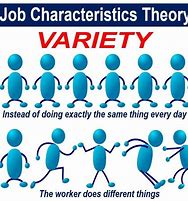
In the 1960’s, a research conducted by industrial psychologists and management theorists stated that repetitive tasks given to employees were leading to demotivation in them and the mundane technique of production line work was resulting in lesser productivity among the workforce. Hackman and Oldham, designed a corporate psychology model named – The Job Characteristics Model, based on this research. These two psychologists proclaimed that job tasks are itself a motivation for the employees. Their theory also approved the fact that, monotonous job work causes dissatisfaction among people, whereas a challenging job enhances motivation. The Job Characteristics Model incorporates five core constituents – Skill Variety, Task Identity, Task Significance, Autonomy and Feedback.
SKILL VARIETY –It incorporates questions related to, job variety, if the job is challenging enough and whether the job profile monotonous and too easy for the employee. Generally, an employee does perceive a benefit if he/she gets a job profile consisting of various skills sets. A variety in skills at a workplace helps one to work better, learn more, create a happier corporate environment and also encourages one to get creative while tackling different situations.
For Instance – A construction site painter has a lesser skill variety than a corporate event planner who regularly gets in touch with new people, plans and executes several events.
TASK IDENTITY – Being able to identify with the work given and taking pride in outcome of the work completed, is essential to build a satisfied employee. Rather than constantly rendering employees with a single portion of a project, allowing them to handle the entire project, results in a happier employee. The degree of noticeable work completed by a single employee and him being identified by it, is an essential component of Task Identity.
For Instance – The Aston Martin cars designed by Ford Motors in England, has its every engine handmade and autographed by a single craftsman after 16 weeks of completion of the model.
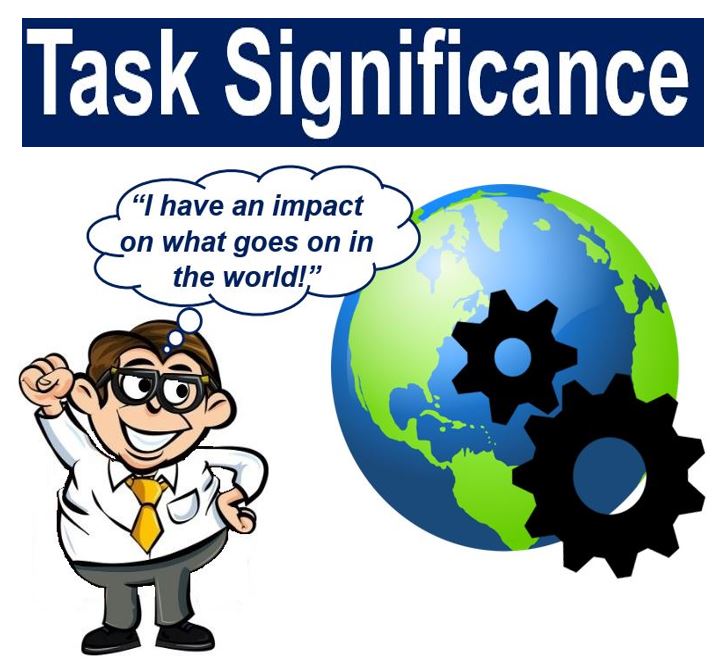
TASK SIGNIFICANCE – It refers to the degree to which a worker feels his/her job contributes to the overall efforts of the organization and to the world at large. The workers perceive their job as meaningful when the significance of the task performed by them is high and vice versa. Research explains how increasing task significance is connected to enhancement of job performance.
For Instance – A web designer who curates a corporate web profile for XYZ firm single handedly, experiences a greater task significance than a worker working in a product assembly line.
AUTONOMY – It is associated with the freedom that a worker gets in an organization. The independence to plan the workday and set up new procedures that one would like to follow, increases the sense of responsibility in employee, which in turn contributes to a greater motivational force. Allowing the employees to decide their pace of work, order of task completion or even letting them have a greater control over their tasks encourages them to work better. So, as long as the standards of work are met and the work gets completed within the stipulated period of time, it is upto the individual employee to decide how the work can be carried out.
For Instance – The firm ‘Google’ is known for the autonomy that it provides to the staff. This has helped them to foster a happier work environment by ensuring that the staff feels valued.
FEEDBACK – It is a constructive method to ensure a steady development in the work. Effective feedback given by seniors is essential for employees to understand their current level of performance, provides a sense of engagement and activity and lets them know what can be done by them to reach a higher level. It helps promote positive changes, set new bars for the team, and gives an individual an overall realistic view of the happenings in the firm.
For Instance – Employing Positive, Negative or Corrective forms of feedback is said to create a clear and honest flow of communication between various levels of employees.
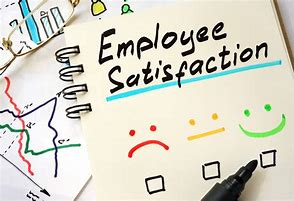
Several companies face the issues of employee absenteeism, higher rates of employee turnover, late marks and at times lower levels of employee productivity. The only modus operandi of tackling these issues is – ‘Employee Satisfaction’. Job Satisfaction helps the employees to work passionately, deliver their level best and stick to the organization even in the worst case scenarios. Doug Conant has rightly said, “To win in the marketplace, you must first win in the workplace”.
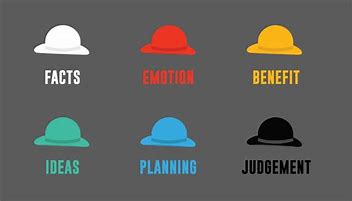
Edward Charles FrancisPublius de Bono, a Maltese physician, psychologist, philosopher and consultant, scripted the book ‘ Six Thinking Hats’. The conceptualization of this book has helped many organizations to boost their firm’s productivity by dividing the job profiles of the employees based on their styles of thinking. Each person takes up the role of a hat ensuring that all viewpoints and styles are covered efficiently. Accordingly, people can cohesively pool in their thoughts based on their area of interpretation. Often, firms arrange for activities wherein employees are divided into teams of different hat colours and are asked to speak about the firm’s newly launched product or idea based on the colour of their hat. This provides stimulus for gathering opinions.
WHITE HAT – It is also called as the Factual Hat. The white hat is associated with facts and information. It represents gathering of information. Discussions related to information available, information needed, missing facts, source of information are conducted. It deals with knowledge and insights at the beginning or end of a session.
GREEN HAT – It is also known as the Creative Thinking Hat. It represents growth and movement in an organisation. Lateral thinkers metaphorically wear this hat to show that they are looking for new ideas and solutions. It deals with openness to ideas, proposals, suggestions, ways to solve difficulties, and other alternative opinions.
BLUE HAT – It is also known as the Director’s Hat. It symbolizes limitless performance, calmness and control over oneself. It is generally worn by the facilitators during a discussion. It deals with management and organization. The blue hat wearers ask for summaries, decisions, conclusions and are the ideal people to set the agenda of thinking. Therefore, analyzing the information and reaching a logical conclusion is the central idea of this hat.
RED HAT – It is also known as the Hat for the Heart. It represents feelings, emotions, and instincts rather than logical reasoning. When one is involved in this arena of though process, he may express his feelings without having to give a logical reason behind it. It is a complete opposite of the White Hat which is entirely fact based. While working, employees do experience intuitions about another colleague as disloyal to the firm. The red hat allows a person to voice such sixth sense emotions with an appropriate label.
YELLOW HAT – It is also known as the Optimist’s Hat. Yellow hat thinkers reflect positive attitudes and scope for new opportunities. Such thinkers assess a plan and notice the benefits in it. Entrepreneurs and risk taking employees are involved in the group of yellow hat thinkers. The hat focuses on value, benefits and the positive speculation of why a venture may work.
BLACK HAT – It is also known as The Hat of Caution. It prevents an individual from indulging into immoral, illegal or unprofitable ventures. Employing a critical judgement to assess the risks involved in a plan is the task of black hat holders. It is often regarded as the most powerful hat because it assists in spotting shortcomings, giving reasons as to why a plan may not workout and giving out suggestions to overcome the drawbacks.
The concept of Six Thinking Hats developed by Edward de Bono, can be used as a powerful tool for inculcating the ideas of being more productive, focused and mindfully involved in the working of an organization. This tool can help an organization, to develop leadership skills, creative thinking, critical analysis and improve the overall performance of the establishment.


























 Eduindex
You must be logged in to post a comment.