5 feminist books to read.

A Vindication Of The Rights Of Women by Mary Wollstonecraft.
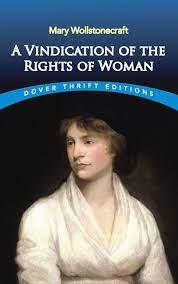
Mary Wollstonecraft’s feminist essay A Vindication of the Rights of Women was published in 1792 as a book-length feminist essay. A Vindication of Women’s Rights campaigned for female equality, especially in the field of education. Wollstonecraft criticised the cultivation of conventional feminine qualities like as submission and service, arguing that women who were not well-educated could not be excellent mothers, spouses, or household administrators. She said that women were supposed to devote too much time to maintaining their delicate look and soft attitude, forsaking brains for beauty and transforming themselves into flower-like playthings for males.

Wollstonecraft addressed themes such as the need of educating women equally, treating women with respect, and giving women with the appropriate training to be excellent spouses and mothers, as well as educated companions for their husbands, in thirteen chapters.Women spend many of their initial years of life accumulating a scattering of achievements, while body and mental strength are sacrificed to libertine ideas of beauty… Can they run a family with prudence or look after the babies they bring into the world?How could women educate, raise children, and maintain a household if they were only concerned with their personal looks and minor achievements such as speaking French fluently, playing the piano, and sketching, Wollstonecraft argued? Such achievements made a woman appealing to a man as a source of entertainment, but not as an equal partner.Although Wollstonecraft recognised that raising a family would be the primary responsibility of many women at the time, she insisted that a husband and wife whose relationship was founded on reason and equality would parent happier and more well-rounded children than families governed by strict discipline and parental inequality. To that aim, she suggested a national education system in which boys and girls would be taught together and all classes would have access to education. Wollstonecraft warned against false sensibility, while writing during the time of Romanticism, a movement renowned for emphasising sensibility/feeling above sense/rational reasoning.

A Room of One’s Own by Virginia Woolf.
Virginia Woolf’s A Room of One’s Own is a long essay. The article, which was first published on October 24, 1929, was based on a series of lectures she gave in October 1928 at Newnham College and Girton College, two women’s institutions at Cambridge University. Despite the fact that this long essay uses a fictitious narrator and narrative to investigate women as authors and characters in fiction, the manuscript for the Women and Fiction lecture series, and therefore the essay, is deemed nonfiction. The essay is regarded as a feminist text, and it is notable for its argument for a literal and figurative place for women authors in a patriarchal literary world.

Bad Feminist – Roxane Gay.
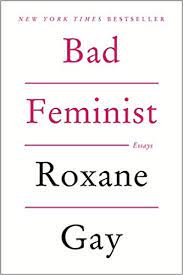
How could women educate, raise children, and maintain a household if they were only concerned with their personal looks and minor achievements such as speaking French fluently, playing the piano, and sketching, Wollstonecraft argued? Such achievements made a woman appealing to a man as a source of entertainment, but not as an equal partner.

Sister Outsider by Audre Lorde
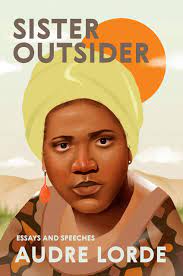
Audre Lorde’s literary and philosophical personae are brought to life in this collection of fifteen articles published between 1976 and 1984. These articles delve into and illustrate Lorde’s intellectual growth, as well as her long-standing worries about how to increase empowerment among minority women authors and the critical need to define difference—difference in terms of sex, ethnicity, and economic position. Sister Outsider is a title taken from her poetry book The Black Unicorn (1978). Sister Outsider’s poetry and articles emphasise Lorde’s recurring subject of continuity, notably the geographical and intellectual relationship.

The Handmaid’s Tale by Margaret Atwood
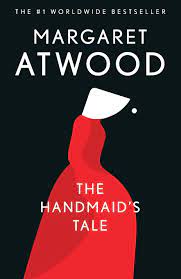
In the Republic of Gilead, Offred is a Handmaid. She is permitted to leave the Commander and his wife’s house once a day to stroll to the local grocery market, where the signs are now images rather than words because women are no longer allowed to read. Because, in an era of diminishing births, Offred and the other Handmaids are valued only if their ovaries are viable, she must lie on her back once a month and hope that the Commander gets her pregnant. Offred recalls the years when she lived with and made love to her husband, Luke; when she played with and protected her daughter; and when she had a career, her own money, and knowledge. But that’s all gone now.
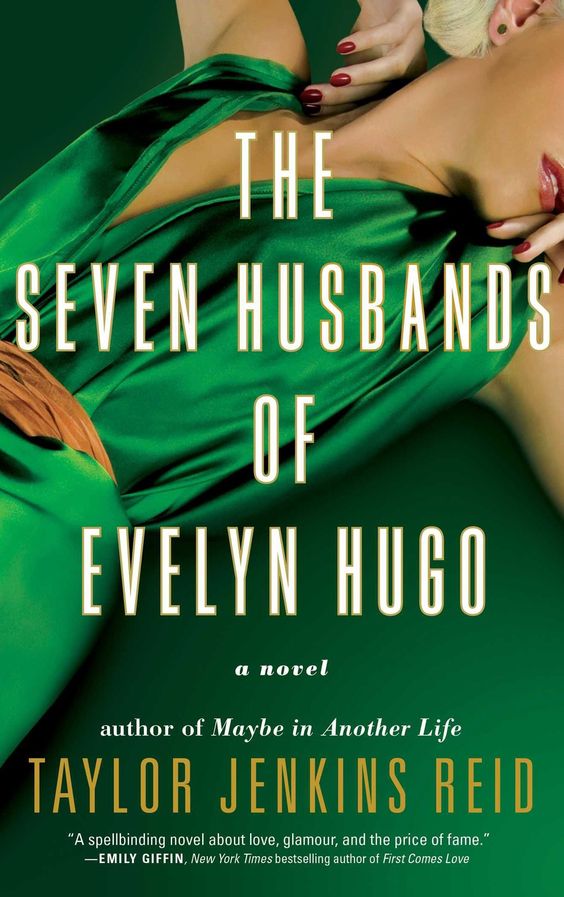

How many husbands is too many?

“I’m under absolutely no obligation to make sense to you.” 

― Taylor Jenkins Reid, The Seven Husbands of Evelyn Hugo

About the book:

Author: Taylor Jenkins Reid

Published on: June 13th 2017

Publisher: Atria Books

Genre: Novel, Romance novel, Historical Fiction, Psychological Fiction

My rating: 5/5

The plot:

Evelyn Hugo, a veteran actress of Hollywood, now in her seventy wants the world to know about her glamorous and scandalous life. For the same, she asks for a writer in a magazine who has never actually reached her true potential at the place she now works. Shocked as to why out of everyone at her company, Evelyn Hugo has chosen her (Monique Grant). Evelyn Hugo then reveals her life in detail which will help Monique use this opportunity to jumpstart her career as her personal life is basically non-existent, with her husband leaving her and her professional life so far was at a standstill. Monique is determined to make the most of this opportunity. As the interview comes to end, Evelyn life intertwines with Monique’s own tragic life.

Review:

To be honest, The seven husbands of Evelyn Hugo had not caught my attention, even though every time I was on social media, the book kept showing up on my for you page. Going into this book, I thought it would be a 2.5 or 3 star read for me. None of the books so far, have interested me that much. However, the more I read this book, the more I fell in love with it. For me, the book showed the reader different kinds of love, not just romantic love, it showed platonic love, family love and the lengths you would go to protect your people. The book captures you in a way, with each page showing you the scandalous life of our protagonist. And as the book comes to end, you wonder whether the life she had, was worth the things she done. I still think about this book everyday, looking to find every kind of love there is. Hopefully, when you read the same, you find love in everything other do for you and you do for them.

This book is an absolute beauty, filled with beautiful quotes. Some of the famous quotes which give us a preview of the authors beautiful writing are listed below:

“People think that intimacy is about sex. But intimacy is about truth. When you realize you can tell someone your truth, when you can show yourself to them, when you stand in front of them bare and their response is ‘you’re safe with me’- that’s intimacy.” 
― Taylor Jenkins Reid, The Seven Husbands of Evelyn Hugo.

“Never let anyone make you feel ordinary.” 
― Taylor Jenkins Reid, The Seven Husbands of Evelyn Hugo.

Don’t ignore half of me so you can fit me into a box. Don’t do that.” 
― Taylor Jenkins Reid, The Seven Husbands of Evelyn Hugo.

“I’m under absolutely no obligation to make sense to you.” 
― Taylor Jenkins Reid, The Seven Husbands of Evelyn Hugo.

“It’s always been fascinating to me how things can be simultaneously true and false, how people can be good and bad all in one, how someone can love you in a way that is beautifully selfless while serving themselves ruthlessly.” 
― Taylor Jenkins Reid, The Seven Husbands of Evelyn Hugo.

“When you’re given an opportunity to change your life, be ready to do whatever it takes to make it happen. The world doesn’t give things, you take things.” 
― Taylor Jenkins Reid, The Seven Husbands of Evelyn Hugo.


About the author:

Taylor Jenkins Reid is an American novelist best known for her novels The Seven Husbands of Evelyn HugoMalibu Rising, and Daisy Jones & The Six.

𝑻𝒉𝒆 𝑷𝒓𝒊𝒏𝒄𝒆 𝒂𝒏𝒅 𝒕𝒉𝒆 𝑵𝒊𝒈𝒉𝒕𝒊𝒏𝒈𝒂𝒍𝒆 – Book Review

𝑨𝒔 𝒇𝒐𝒓 𝒕𝒉𝒆 𝒕𝒘𝒐 𝒍𝒐𝒗𝒆𝒓𝒔, 𝒕𝒉𝒆𝒚 𝒘𝒆𝒏𝒕 𝒕𝒉𝒓𝒐𝒖𝒈𝒉 𝒕𝒉𝒆 𝒂𝒓𝒅𝒖𝒐𝒖𝒔 𝒋𝒐𝒖𝒓𝒏𝒆𝒚 𝒐𝒇 𝒈𝒆𝒕𝒕𝒊𝒏𝒈 𝒌𝒏𝒐𝒄𝒌𝒆𝒅 𝒅𝒐𝒘𝒏 𝒂𝒏𝒅 𝒓𝒊𝒔𝒊𝒏𝒈 𝒖𝒑 𝒂𝒈𝒂𝒊𝒏 𝒐𝒇 𝒍𝒐𝒔𝒊𝒏𝒈 𝒕𝒉𝒆𝒎𝒔𝒆𝒍𝒗𝒆𝒔 𝒂𝒏𝒅 𝒅𝒊𝒔𝒄𝒐𝒗𝒆𝒓𝒊𝒏𝒈 𝒕𝒉𝒂𝒕 𝒍𝒂𝒔𝒕 𝒔𝒉𝒓𝒆𝒅 𝒐𝒇 𝒘𝒊𝒍𝒍 𝒕𝒐 𝒇𝒊𝒏𝒅 𝒕𝒉𝒆𝒊𝒓 𝒘𝒂𝒚.’

‘𝑻𝒉𝒆 𝑷𝒓𝒊𝒏𝒄𝒆 𝒂𝒏𝒅 𝒕𝒉𝒆 𝑵𝒊𝒈𝒉𝒕𝒊𝒏𝒈𝒂𝒍𝒆’ 𝒃𝒚 𝑨𝒃𝒊𝒔𝒉𝒆𝒌 𝑩𝒉𝒂𝒕𝒕

Interpretation

A beautiful book you read recently?

Beautiful song it was! I listened to a beautiful song and then I was wondering, did I just read a book? It’s rhythmical and melodious. The blurb says it’s a ‘tragic tale of two star crossed love’, but it wasn’t. It was balmy and soothing, it uplifted my spirits and delineated a beautiful love story with the aesthetic backdrop of post independence period.

I have read a lot of exhausting and overwritten Indian romance with the backdrop of post independence period, ‘The Prince and the Nightingale‘ is certainly a comfortable read for me, the writing style, character sketch and everything is comforting, reading this book is quite similar to watching a vintage romance movie.

Plotline

The story revolves around Abhimanyu, a prince who has decided to follow his passion after the collapse of princely states in India and Meera, a commoner who struggles to earn a good position in the society, the family roots of Meera intimidate her to follow her passion, when these two different people from different social backgrounds meet, melodious and melancholic song of ‘The Prince and the Nightingale’ commence painstakingly.

If you are looking for a good, refined Indian romance novel, I would certainly recommend this book.

Little Women : A classic for the ages

by Louisa May Alcott

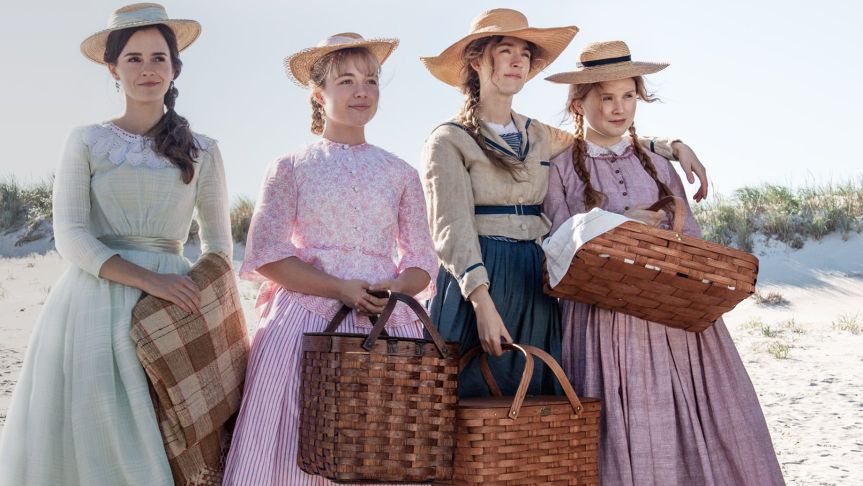
Although it hadn’t won any awards at the time of its release, multiple film adaptions, television shows, plays and retellings are a testament to the cult that surrounds the book “Little Women” by author Louisa May Alcott (1832-1888). Published in two volumes in 1868 and 1869, Alcott wrote the book in response to a request from her friends and family to write a book for young girls. The first novel was a huge success and struck a chord with readers and Alcott was flooded with letters requesting the second volume immediately. She quickly wrote the next volume to accommodate them. Eventually, the two volumes were released as one novel in 1880.

The novel continues to be very widely read and the ambitious female characters in it contributed to the rise of feminism in 20th century America. It revolves around the story of the four March sisters: Margaret “Meg”, Josephine “Jo”, Elizabeth “Beth” and Amy as they live their lives and grow into adults. The girls must contend with learning to become good women and learning about who they are as people with the help of their mother and father.

While on the surface it may come across as a simple story about the four March girls’ journeys from childhood to adulthood, Little Women centres on the conflict between two emphases in a young woman’s life—that which she places on herself, and one which she places on her family. In the novel, an emphasis on domestic duties and family detracts from various women’s abilities to attend to their own growth. For Jo and, in some cases, Amy, the problem of being both: an individual skilled at what they do and to be a dutiful woman creates conflict and pushes the boundaries set by nineteenth-century American society.

At the time when the novel was composed, women’s status in society was slowly increasing. As with any change in social norms, however, progress toward gender equality was made slowly. Through the four different sisters, Alcott explores four possible ways to deal with being a woman bound by the constraints of societal expectations: marry young and create a new family, be subservient and dutiful to one’s parents and immediate family, focus on one’s art, pleasure, and person, or struggle to live both a dutiful family life and a meaningful professional life . While some of the March sisters conform to society’s expectations of the role that women should play, the others initially attempt to break free from these constraints and nurture their individuality. Eventually, however, settling into a more customary life. While Alcott does not suggest that one model of womanhood is more desirable than the other, she does recognize that one is more realistic than the other.

The novel contains five intrinsic aspects: character, theme, setting, plot, and writing style. It is an unusual example of young adult literature of the time because Alcott gives her character with both faults and virtues, avoids teaching to reader, writes in a simple but accurate style, employs simple and often humorous dialogue. Heart-warming and emotional, Little Women by Louisa May Alcott has stood the test of time, and indeed deserves the title of being the cult classic we all know.

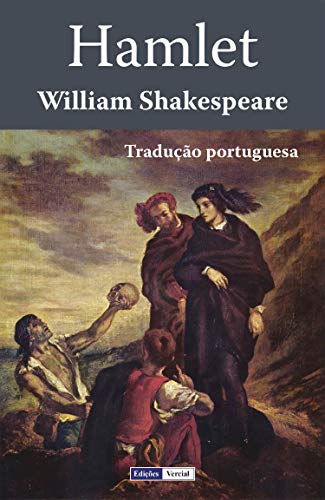
A Comparative Analysis on the Movie “Haider” and the Play “Hamlet”

An Introduction:

“Haider” is a movie based on the setting of the insurgency-torn Kashmir of 1995, where there was a massive dispute between India and Pakistan. This movie is an adaptation of one of the classic plays of Shakespeare’s “Hamlet”. Although the director Vishal Bhardwaj tried to portray the original play as it is with excellent cinematography but there are several incidents which contrast with the play, but many instances make this movie worth being called an adaption of the Shakespearean play.

The contrast in setting:

If we begin with the setting of Hamlet, we see it begins in the ancient fortress of Denmark in the late middle ages of the 14th and 15th centuries. Whereas in the Movie Haider, Set in Srinagar in 1995, during militancy and a brutal Indian counter-insurgency. The setting itself changes a lot of cultural and linguistic widegap that made the play and movie different.

The contrast in Cultural, linguistic, and Religion:

Since Haider is a Bollywood movie and the director tried to make this movie in favor of the Indian audience to make it more likable and hit it was essential to be relatable to the Indian context. When we investigate Hamlet, it has all those autocratic lives of kings and queens and has a lavish livelihood.

Linguistically also there is a widening between the 2 as one is in Hindi with a mixture of Urdu dialects, whereas Hamlet is in old English which also shows that the movie is culturally different in all terms.

Hamlet has been portrayed through the Reflection of Christianity, on the other hand, Haider portrays the political mishappen with Islamic reflection.

At certain times when there is a contrast in culture and norms the effects are often visible and here there are certain differences in the plot whereas the relationship is portrayed in both.

In context to Plot:

There are several events that have been edited in the movie from the play. Such as the major ones counted as: The play shows us the King of Denmark is already dead and the ghost of King Hamlet tells the truth to Prince Hamlet about his murder, as when we investigate the movie it is the character Roohdaar who tells Haider about the culprit of his father’s murder.

Also, the relationship between Gertrude and hamlet is not much affectionate as the way it is shown in the movie about Haider and Ghazala.

All Shakespearean Tragedy Plays has this element of all the characters die in the end. But in the movie, we see that some of the characters like Roohdaar, Khurram, and Haider himself were alive in the end.

If we compare the Themes then substantially all the themes like Revenge, Corruption, Religion, Politics, women, Madness Vs. Sanity is the major theme portrayed in the movie exactly like the play.

One of the most striking scenes is the equivalent of the “to be or not to be” scene in Shakespeare. Haider turns the “to be or not to be” soliloquy into a confessional and motivational speech in front of a crowd in the market square. It is decidedly more public and more political. He uses the hangman’s rope around his neck as an imaginary microphone. Haider also carries a boom box with a cassette player. The first question he poses points to an existentialist inquiry: “Hello, mike testing 1, 2, 3. Hello. Can you hear me?” Like Hamlet, Haider has longed to be heard. He urges the crowd to reflect on Kashmir’s political crisis: “Do we exist or do we not? Chutzpah is our problem.”

Haider Vs Hamlet – A contrast to the Characters:  

  1. Hamlet Vs. Haider: looking into the character analysis of the play Hamlet, prince hamlet is an idealistic knowledgeable person who is very Melancholy, cynical in nature and is having a huge amount of Hatred for his own uncle Claudius who has married his mother Gertrude and hamlet has a repulsion towards his mother’s sexuality.

                     A similar portrayal is in the movie where Haider is a student of “Revolutionary poets of British India” who studies at Aligarh University comes to find his Missing Father (Doctor Hilaal Meer), there he comes to know about his Mother Ghazala having illegitimate affair with his own uncle Khurram.

We can bring to a point that both Haider and Hamlet are closely similar in their character whereas due to some contrast in the context both the characters differ in some situations, but one thing is certain is about both characters becoming insane and the theme of sanity vs madness gives highlight due to the death of king hamlet/Dr.Hilaal Meer.

  • Ophelia Vs. Arshia: Since the play/movie is also about the tender love story of Haider- Arshia/hamlet- Ophelia, this portrays the role of love which leads to the death of people due to the brutal conspiracies done by Polonius and Claudius for taking an avenge from prince hamlet. Love is taken as a key to a dark plot of killing hamlet by making Ophelia as a medium/ messenger of hamlet.

The same plot goes into Haider too where Arshia was a journalist and was in love with Haider, but her love became a tragedy where her own father Parvez used her daughter to keep a track of her whereabouts of Haider when he was trying to find his father’s murderer.

Both Arshia/Ophelia can be a contrast because Arshia on the one side was a stern woman who took her own stand despite all the barriers of her being a woman in a patriarchal world, whereas Ophelia was very sensitive, and a woman suppressed by other men and did what her father told her to do.

In the end, both die out of the madness of losing their father and love at the same time and commits suicide.

  •  Claudius Vs. Khurram: The evil of the play who dies in the end, whereas in the movie he does not, as Haider changes his ideology for not killing his uncle due to his mother notions that “Intekaam se Intekaam Paida hoti Hai!” In the play and the movie Claudius/Khurram is the one with all sinister mind and political ambitions who wanted to kill his own Nephew and wanted to have full rights on Ghazala/Gertrude. His lust for women and power goes in the end when he was in the verge to die.
  •  Polonius Vs. Parvaze: Father of Ophelia/Arshia who was good close friend of Claudius/ Khurram and was giving a prominent contribution in the dark conspiracy made by Claudius, but later gets mistakenly killed by Hamlet when hamlet losses his sanity. Polonius had the greed of power and money and was as sinful as his friend Claudius.

Parvez in the movie was the police inspector which was helping Khurram with his own daughter Arshia who was in extreme love with Haider.

  • Gertrude Vs. Ghazala: Married to the new king of Denmark who was hamlet’s uncle. Often as a woman there where many questions raised on her married and love life as she remarried a man which was against the ethics and she had a very fragile relationship with her own son Hamlet, and they did not have an ideal mother son relationship.

In the movie, we see that Ghazala and Haider had an affectionate relationship despite all the hatred between them in the end Ghazala even sacrificed her life for Haider by killing herself with a bomb explosion.

  • Roohadaar: He was an ISI agent but considered to be the ghost of hamlet and in the play, we do not have any character related to Roohdaar as the ghost of king hamlet himself tells the truth to prince hamlet about his brutal murder, whereas in the movie Roohdaar and the militant group himself tells the murder of the doctor.

Indeed, he was a good friend of the doctor and was in the prison with the doctor and he was the messenger to stimulate an urge of hatred in Haider’s mind towards his own uncle.

  • Horatio (A good friend of Hamlet): This character is missing in the movie as he was a good friend and played a positive supportive role for hamlet. Also, a reason why the movie and play are somewhat out of context from each other due to some change in the character appearance.
  • Fortinas: A close acquaintance of hamlet who had faced the same pain of losing father just like hamlet, but we do not know which character will fit the best for this. so, we can consider that this character is not available in the movie as Haider in the movie was often a loner in the movie and beacme distant from his close ones in the later part of the movie.

Conclusion:

Though the tale is somewhat similar in the movie and play but also certain characters and stories are invisible as this makes the movie or the play incomplete. Since it is an adaption so we cannot expect to be the twin of each other.

From in critic’s point of view, this movie can be rated 7.5/10 as it has all those elements of Shakespearean plays and the cinematography of Vishal Bhardwaj which is perfectly splendid!

Taken all the consideration the story is well portrayed in the movie in spite of all the cultural and religious differences with all those political contexts.

Themes of Revenge, women, corruption, religion, politics, madness are common in both the movie and play.