The Quit India Movement Day

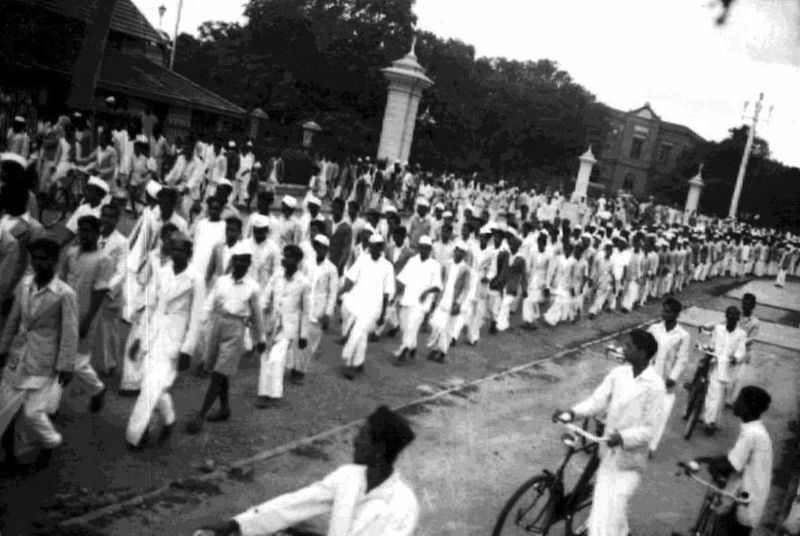
August 8th marks a very iconic day in Indian history. The Indian National Congress declared its ultimatum for the British to leave India. This movement in itself had contested set of consequences – the strengthening of the Muslim League, the rise of freedom struggle motivated Subash Chandra Bose to invade the British camps in Noth East and Gandhi, for the fist time in his career was willing to go agressive even if he had his own definitions of the word – when he announced, “karo ya maro” (Do or Die).

Quit India Movement: Who gave the slogan 'Do or Die' - Oneindia News

The Quit India movement came up at the heels of the failure of the Cripps Mission that was sent by the Raj to secure Indian cooperation towards the British war efforts in the second world war. The leader of the mission, Sir S. Cripps was left wing British statesman who was sympathetic to the cause of Indian self rule but was also a member of the war cabinet of 1942.

The proposals of the mission were refused by the Congress which had seen similar proposals in the first world war where the Raj had promised more autonomy but ended up imposing harsher taxes that resulted in the Non-Cooperation movement, the Rowlatt and Jalia Walah Bagh massacres. The Indian National Congress resigned from its positions in all provincial governments and announced the Quit India Resolution that led a national movement that was difficult for the British to look after in the face of the then ongoing second world war. Virtually all of the INC leaders were jailed for the next three years and the Muslim league got enough time to build itself a support that shook the years Gandhi had spent projecting himself and his colleagues as leaders of a secular, united state of India. To add to it was the vehement opposition Hindu nationalists showed to the movement where many, including the Hindu Mahasabha and Veer Savarakar denounced the movement pointing out to the power vacuum it might cause and quite correctly predicitng the Muslim League partially filling the same.

The British soon left the subcontinent – too weak due to the war to control a population that was showing both civil disobedience and had an army of its own – a reference to the insurgency and attacks the INA had started in the Raj’s territories.

The Quit India movement – with all its pros and cons and consequences formed a very important phase in the history of modern India.
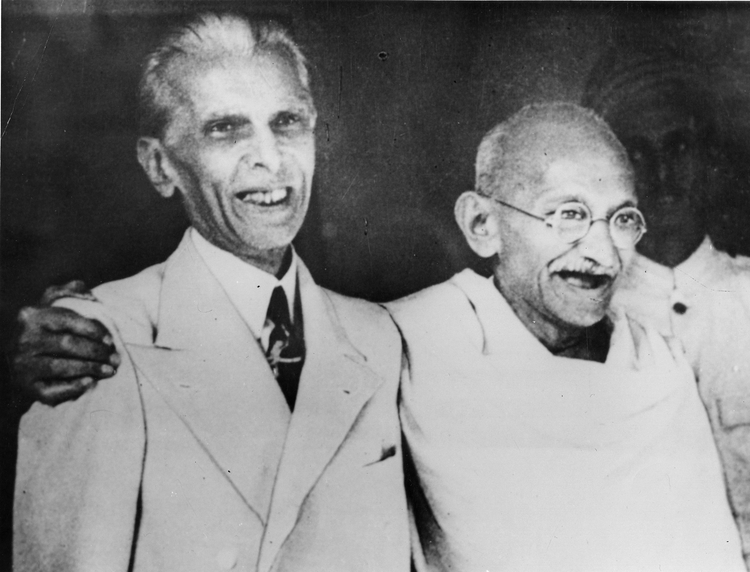
Jinnah expected India and Pakistan to be best of friends - Telegraph India
Jinnah and Gandhi had quite different outlook and faced different consequences due to the Quit India Movement – one failed in his projection of a secular and inclusive India, the other successfully used it to campaign for Pakistan

East India Company

East India Company also known as Honorable East India Company or East Trading Company was an English stock company founded in 1600. This company was formed to trade in Indian region and then later in other Asian parts. East India Company had dominated trade in large Indian subcontinent, parts of Hong Kong and southeast Asia.

This company was responsible for half of world’s trades in 1700s and 1800’s. They traded primarily in goods that included silk, cotton, spices, tea, sugar and many others. Later, it went onto rule India which led to the beginning of British Empire.

Company initially started to trade in eastern part of India and gradually began to conquer various parts of India with advanced military defense. In 1757, was the start of British rule.

Origin Of East India Company

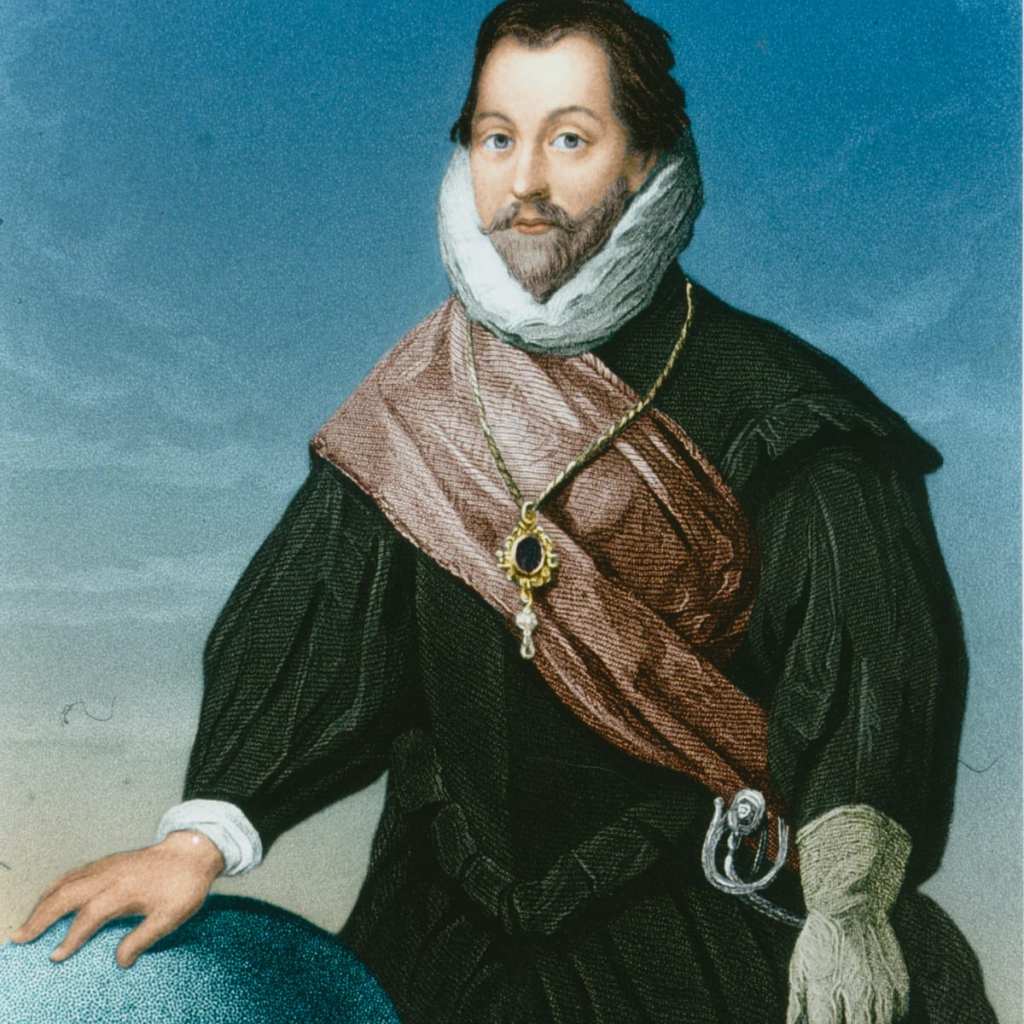
Francis Drake in 1577 went on an expedition to Spanish in search of gold and silver. He sailed through Pacific Ocean which was discovered only by Spanish and Portuguese. Sailing across East Indies, he came across the spice island known as Moluccas. When he met Sultan Babullah of that island, in exchange of gold and silver, he got cloves and nutmeg. British did not understand the value of these spices and how much that could benefit them. This idea was celebrated by English people.

Spanish and Portuguese were defeated and their ships were captured to travel the world. To sail around the Indian Ocean, Queen Elizabeth I had given permission. The objective behind the sail around Indian Ocean was to gain monopoly in Eastern Trade that was acquired by Spanish and Portuguese for a long time. Portuguese sailing ship, Madre de Dues was captured. The ship had cargo consisted of cloth, pepper, cloves, gold, silver, jewels, pearls, nutmeg, dye and cinnamon. The ship had hidden information of trades of India, Japan and China.  Ships sailed east could not be found but a year after Ralph Filtch, a merchant had returned back after a fifteen-year long expedition. He had travelled across Indian Ocean, Mesopotamia, Southeast Asia and Persian Gulf. Since, he had known so much about Indian Subcontinent, he was consulted on Indian affairs. He gave entire information to James Lancaster, who commanded first East India Company voyage.

Formation and Expansion

On 22nd September, 1599, a large group of merchants ventured on to East Indies. The first adventure was not a success, they still went on a second adventure a year later and this adventure was successful. East India Company was formed on 31st December, 1600 with the success of second adventure. This trading company was governed by one governor and 24 directors. These directors had to report to the Court of Proprietors.

Western part of India was majorly traded by Portuguese. Goa and Bombay were the operational bases. East India Company attacked trading operations in China and created trading power. Bombay was given in form of dowry to Company by Portuguese when King Charles II married to Catherine of Braganza. Company expanded their trading bases to Surat, Bombay, Calcutta and Madras. They had 23 factories in India of cotton, silk, tea and dye. With growing trade in India, they soon gained power over Indian states by defeating the Dutch and Portuguese. They created an overall power over India and other neighboring parts. In India, the company was abolished by the government and taken over by the Crown in 1858.

STORY OF PARLE -THE SWADESHI BISCUIT

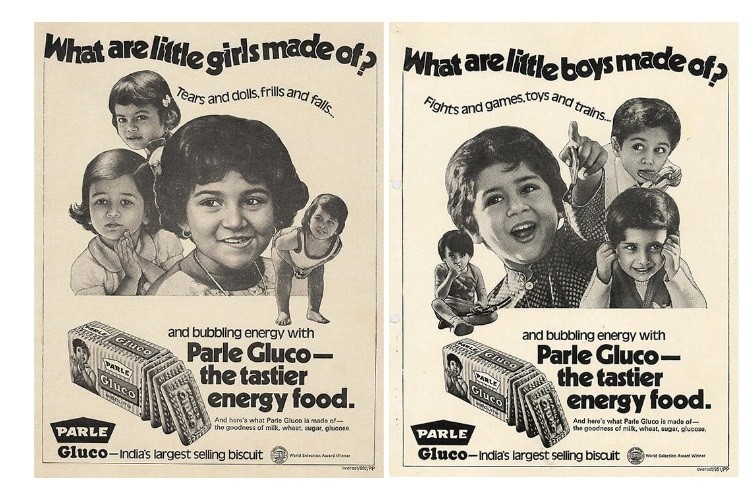
There may not be a single Indian who hasn’t heard of Parle; from its beginning in 1939, it has become an indispensable part of the everyday life of most Indians. 400 million Parle-G biscuits are produced daily and According to an estimation, every second, over 4500 people enjoy a Parle-G biscuit, originally known as Parle Gluco.

Parle-G was the first FMCG brand in India to reach Rs. 5000 crore mark in retail sales in 2013. It was also listed #29 in the Brand Trust Report India’s Food & Beverage category in the year 2019.

Parle-G now has over 130 factories and is sold in over 5 million retail outlets throughout India. Every month, Parle-G manufactures about a billion packs of biscuits. Parle-G is available in the most distant of places. Certainly, a mass-market item.

THE EMERGENCE OF PARLE

Under the British Raj, foreign goods were marketed at exorbitant prices across the Indian market. At the time, candy was a huge hit.

The founder of the Parle firm, Mohan Lal Dayal, was not pleased with this and was heavily inspired by the Swadeshi movement. To combat this trend, he chose to begin manufacturing candy domestically. To accomplish this, he flew to Germany to acquire the skills to manufacture candies and later returned to India in 1929 with a candy-making machine that cost Rs 60,000 at the time. He began his business in Mumbai, where he acquired an old factory located between Irla and Parla. The factory got named after the location where it all began. The company began with just 12 employees, all of whom were family members.

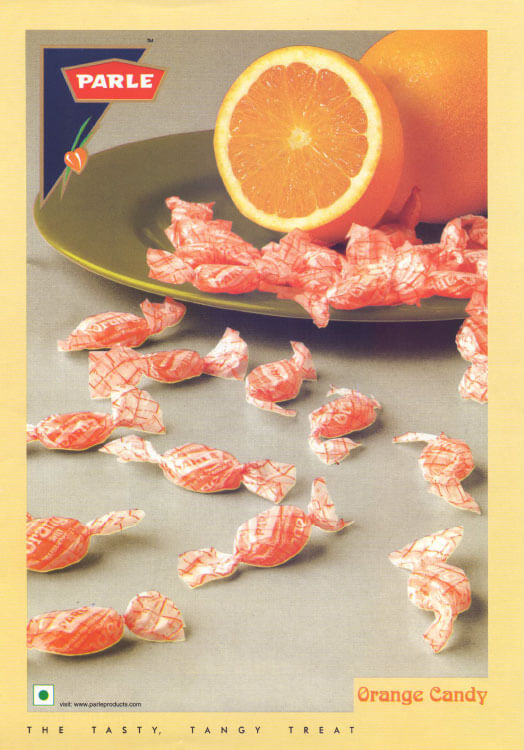
Parle’s very first product was The Iconic orange candy, and from there they expanded into confectioneries and toffees. After a decade later, in 1939, the ‘Parle Gluco’ biscuit, an economical biscuit intended for the general public, was introduced. So that Indian people can afford and enjoy delicious candies with their families.

Under British rule, Biscuits were a high-end product, enjoyed primarily by Britishers and upper-class Indians, with the majority of them being imported into the country. The market was dominated by British brands such as United Biscuits, Huntly & Palmers, Britannia, and Glaxo. These were imported and expensive.

The wheat-based biscuit was reasonably priced, and it was readily available to the majority of Indians. Produced by the Indians for the Indians, Parle-G was India’s response to the British-made biscuits and became the British-Indian Army’s go-to cookie during World War II. The Parle Gluco cookie became immensely popular and it swiftly took over the market. All British businesses began to lose money at that point. Parle also made India’s first salted cracker, Monaco, in the early 1940s.

Due to a shortage of wheat, one of Parle’s primary ingredients, following Partition in 1947, the company had to halt production of Parle Gluco & they instead began making and selling barley biscuits.

THE FOREVER ICONIC PACKAGING

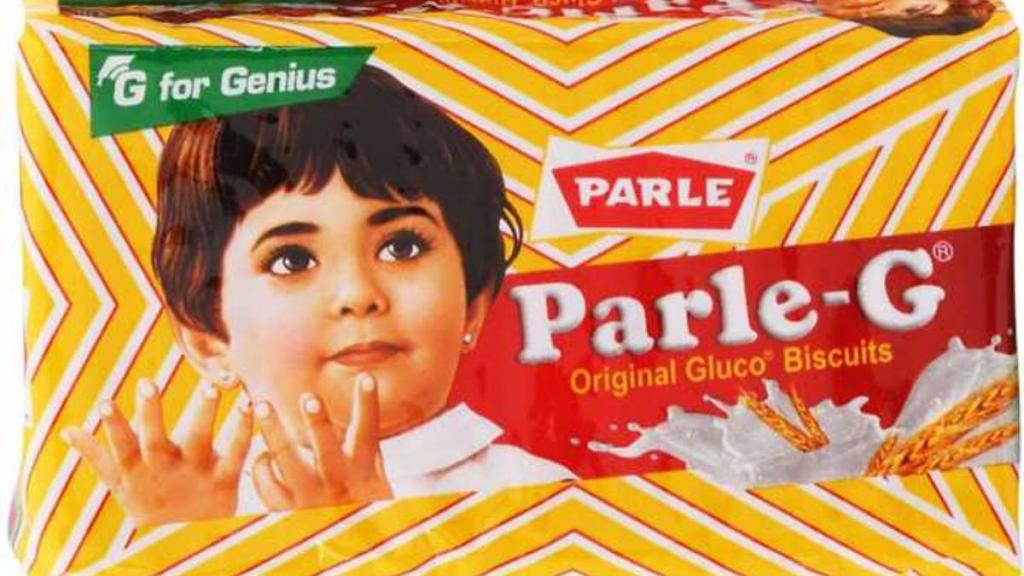
Over time, more and more brands featuring the words “gluco” or “glucose” in their names began to appear on the market. Britannia also introduced the ‘Glucose D’ biscuits. In the 1980s, Parle Gluco changed its name to ‘Parle-G’ and released a new box with white and yellow stripes and an illustration of the ‘Parle-G Girl’ to maintain its sales and stand out in the marketplace to consumers. Over time, more and more brands featuring the words “gluco” or “glucose” in their names began to appear on the market. Britannia also introduced the ‘Glucose D’ biscuits. In the 1980s, Parle Gluco changed its name to ‘Parle-G’ and released a new box with white and yellow stripes and an illustration of the ‘Parle-G Girl’ to maintain its sales and stand out in the marketplace to consumers. The packaging became legendary & is still recognized by Indians today.

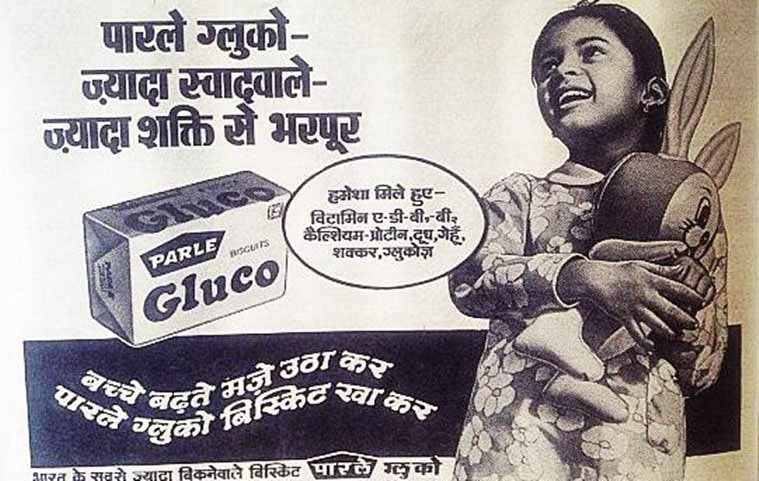
Parle also debuted their first TV commercial for Parle-G in 1982 on Doordarshan, with the catchphrase “Swaad Bhare, Shakti Bhare, Parle-G.” Shatkimaan, the public’s beloved superhero at the period, accepted to do a commercial for Parle-G in 1998.

 Changed to “Genius” in the early 2000s, the “G” in Parle-G stood originally for “Glucose”. As per figures from 2009-10, Parle-G’s sales outstripped the combined sales of all other biscuit brands in China, the world’s fourth-largest biscuit-consuming country. As shown in a 2011 Nielsen survey, Parle-G had eclipsed Cadbury as the best-selling biscuit brand in the world.

Parle will forever remain Iconic, for why it started, for whom it started and for what it has provided to the people of country. A happy part of every Indian’s childhood, it will continue to remain an integral part of everyone’s chai time.

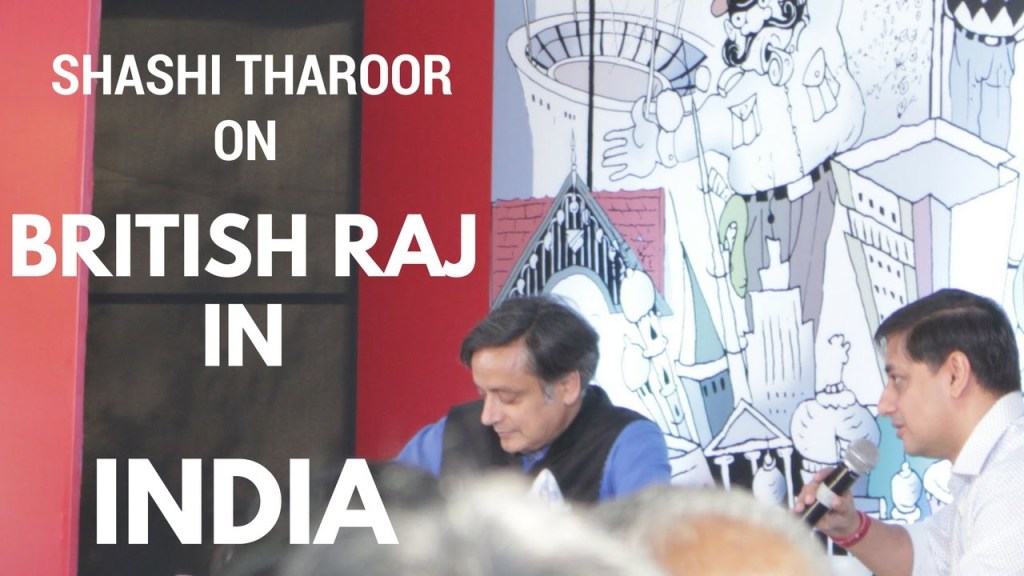
Shashi Tharoor and his Ideology on the British Rule in India

Shashi Tharoor is a writer and that too an extraordinary one. He is a legend and his pen has the power to change the world through his words. He writes others maybe imagine but can not put into appropriate words. He has many published works which are just perfect. One such work of his is the book named An Era of Darkness : The British Empire in India. This book was also published in United Kingdom under the name Inglorious Empire : What the British did to India. It was of course a best seller. This book basically depicts what is in Shashi Tharoor’s mind about the British rule in India. His ideology about the British Empire is written in this amazing work. Through this book he wants us to know about “the origins of the difficulties that confronted India.” , as stated by himself. In simple words, he wants us to understand about the evils of the British Rule in India and how it affected us. He strongly desires an apology from the British, same as whole of the country does. In his opinion, an apology would be most desirable, rather than compensation by cash or other valuables. This book also exposes the corruptions during that period along with questions their claim on superiority.

Photo by Pixabay on Pexels.com

He deeply explains the way how it all came to the establishment of British Empire and also about why it all happened. He puts light on the manipulations of the British on the people of our country. He has clearly stated in his book that “this book is an argument and not a story.” He argues that the ruling record of the Indian governments is far better than the British. He accepts the fact that the British has in fact paid the reparations in form of aids over the years, but he is adamant that they were not due to guilt. According to Tharoor, India suffered many problems and conflicts due to racism, wars, disputes for kingdoms and other several problems, under the British Rule. He also states in his book that “this just basic knowledge about the history of our country but is still unknown even to the educated Indians.” He stresses on his point of the reparations, by saying that day by day it is getting late to amend things but it’s certainly not that late. The damage is done but can still be somewhat repaired to some extent.

Tharoor has remarked that every single thing the British did and the rules they imposed on the citizens were for their own benefit and not ours. He is right of course in all his arguments. The correct word for the Rule of British in India has to be ‘rotten’. The British Rule and their Empire was rotten in terms of all the policies they put up to follow, all the standards as compared to ours. He has done an impeccable job on the book and made us realize what we had forgotten with time.

Shashi Tharoor and his ideology about the British rule in India.

Shashi Tharoor is an Indian politician, a prolific writer, diplomat and an active member of Parliament from Kerala since 2009. He wrote several fictional as well as non-fictional books including “An era of darkness: the British Empire in India, “Inglorious empire: what British did to India” and many more.
His collective ideology is assembled in every of his article and book that oppose the controversial notion that the British Raj was beneficial to India, in the long run. The damage that the British government did to India is beyond the act of reparation, quoted by Tharoor in his interview.


Furthermore, the British bequest such a Railways, rule of law, parliamentary democracy, and all those extravagant commodities were not intended for the betterment of Indians. The only motive of establishing “The Railways” was to siphon off the Indian resources to the Britain treasury. British entered India as an East India Company to trade spices and deceptively captured 2/3 of India including Bengal. Several policies such as the Free Market policy, The Malthusian policy, Victorian fiscal prudence were made by the British that worsens the conditions of Indians in their motherland even more. Poor Indians were forced to live in miserable situations with no basic rights. Millions of Indians died due to starvation in the year 1891-1900 due to over-exploitation of agricultural produce and partly due to Free-market policy up to some extent. To be more accurate, the policies made by the British had the hidden agenda of corruption and injustice that damage the country and countrymen altogether. Under British Raj, the most thriving textile industry in India perished into the thin air. It was a common practice of East India Company to mutilate the skilled workers by chopping off their fingers so that they couldn’t weave anymore, thereby destroyed the largest part of the Indian economy.

The Bengal Famine of 1943 is another outrageous event that happened under the British raj that costs millions of lives. According to a recent study, the famine was not only caused by the drought but also by the complete failure of the policy of British India under the Ministry of Winston Churchill, who is remembered as the man who caused the Bengal famine.

Besides corruption, brutality and the horrendous massacre, “The Jalianwala Bagh”, is the heinous crime for which The Royal family owe an apology to every Indian or at least to the family undergone terrible damage under the British reign.


Tharoor has written a total of 15 books in his career, and thousands of articles in publications including the New York Times, the International Herald Tribune, The Times of India and many more. His books are available in many languages across the globe such as French, Italian, Roman, Polish as well as Bengali and Malayalam. He is known for his humorous criticism of the inhuman system in a civilised manner.