NYKAA Business Model | How Nykaa Earns? | Case Study

 Hello Friends , we are going to talk about NYKAA If you are a girl or if you have a girlfriend or if you have a sister, You may have heard about this NYKAA is an ecommerce store Who provides cosmetics Cream, shampoo, lipstick They provide stuff like these If you are a female, then do tell me in the comments Whether you order things from NYKAA or not If you are male then also comment if you have ever used it You must be aware that cosmetic market is a profitable market. After a lot of research You get a 30-70% discount on normal products. Means this much commission Now they are dealing with high end products. Like MAC Whose foundation cream is worth 3k So in this, they may get More commission in this But right since childhood I’ve hearing this that margin is high in cosmetics And they brought it online Means you don’t need to go to stores You can order online. 

Brands like MAC etc If i am not pronouncing their names well I am punjabi, understand it :p When you go to their stores You can imagine the amount of money they spend on infrastructure. So if you want to spend this much money And people get free makeup from there Like come and try this lipstick It’s a part of your expenses. And this was the problem they catered. So it’s a nice business model. NYKAA was started by Falguni in 2012 She was an investment banker Means investment work and after that she started NYKAA and after 5 years, she reached Break even Means No profit No loss Means before that she was in loss In starting, it took 1000 to acquire one customer. Means Online marketing If you have heard about them, then it’s from their online campaign .

They don’t advertise much on tv. They give sponsorship in femina Means 1000 for one customer. Which is reduced to 200-300 And the cart size of this industry Means the amount people add is between 1250-1500 Which is upto US standard You can imagine the high exclusive audience. They like expensive makeup and are switching towards NYKAA> They don’t have time to go to stores To buy a lipstick They can order online easily and delivery is fast They have a fast delivery system Why because they have an inventory model Means you already have all the products in bulk and they can directly send the product from their warehouse directly And delivery process is fast. If you’ll visit their website. their monthly traffic is around 10M and according to their CEO 50% customers are repeated Repeat customer means Now they don’t need to spend much on acquisition.

 Those 50% customers will buy things without any ads And other 50% customers. We need to show them ads via social media. Affliate They have to spend on those 50% and one more thing If you want to open an ecommerce store You should have an advantage, their advantage is They are buying directly from the brands and don’t offer discounts on their own. Unless Until brands offers it. Whenever you see a discount on their site. Those discounts are from brands itself. If you receive a gift from them, it’s from brand not from NYKAA> So it’s an advantage, Now they have started their own product line. Every ecommerce department is doing it. Here you already had a marketplace and an audience who likes buying a lot of products. You have shown them your products. 

And they tried your products. If your product quality turned out to be good. You created a new set of audience. You want to buy your products in the inventory model. and earlier company was giving you commission BUt here profit is yours They are opening their own stores. Their idea is to open 30 stores till 2020 They may open more than 30 stores because recently they received funding and have reached break even. If you ask them about IPO She was an investment banker means she knew about IPO But according to her, unless until her profit reaches 200 crore. They won’t launch IPO talking about their revenue. Their revenue in last year was 214 crore. and now have increased to 570 crore You can imagine their growth And have already reached break even meanns profit!!!! Expenses are less.

Whether salary cost or maintaince cost or in marketing. NOw that they have reached break even, profitablility is high Let’s talk about financial stats They have received funding in 6 rounds. From 9 investors and they have received 69 Million dollar funding and it’s a maharashtra based company that’s it. If you need more info, you can check on crunchbase about their financial stats. One more thing, in starting .

They faced a lot of issues in order to convince brands. Imagine They are selling nivea to a high end product If they are shown together SO they faced issues in the starting. then after some time Brand understood their pitch They want to create a platform where every audience get their desired products. Their biggest competitor is SEPHORA What do they do They only sell high end products. NYKAA on the other side sells both type of products. and we’ll target all the audience. so according to me, business model is profitable You tell me in the comments about their business model.

Why Most Of The Startup Fails? -10 Reasons Why Startups Fail.

Helllo Friends !….. ,You may have often seen that most of the start-ups got closes in their first year They have an idea but still, the company got closed So in this video, we will talk about the top 10 reasons behind every startup fail. If you are also planning to start your own venture so please consider all these 10 reasons. The first thing is what is the type of industry Whichever industry we have chosen is that right for us or not? For Example – As you guys, all know I was a marketing head at an E-commerce company Where I realized that too many things are going wrong in this industry. The cost of the product that we are selling is for 4800 and the same product was selling on Amazon is for 4100 on his platform. Including all the taxes and profits. How is it possible? Then I realized that they are playing a Big game.

 We were placing orders for 100 products but they might be placing an order for 50k products maybe that’s why they are able to sell their products in such competitive pricing. There are chances that they have a lot of funds that’s why they are trying to destroy the market So that no other e-commerce platform wouldn’t d be able to compete with them. Another big reason behind this they are considering their logistic cost to zero They consider their logistic cost as loss for now There are so many factors which make me realize that if I want to open an e-commerce store like Amazon or Flipkart so I wouldn’t be able to flourish Because I don’t have the same amount of fund that they have or how long I would able to fight with them 1or 2 years. 

After then I will be broke like so many other’s companies. Now come to the second point and that is a faulty business model I think that If I do this business so I would be profitable. But, If I do overall calculations so I will find myself in the loss For example – we open a factory and product costing is coming 80rs And what we do next is we made all the plans regarding the selling price and all Then we decided that we will sell this product at a profit margin of 95 rupees. Then we did all the packaging and branding of that product. Then we got to know that the price of raw material frequently fluctuates. In starting, the price of raw material was 60 rupees and now it is available for 110 rupees. So now Can I increase the price of my product? No, Because we did all the branding and marketing of that product for the pricing of 95 rupees. 

Or maybe at the timing of calculating the total cost we made some errors. We didn’t include rent and employees salary under that calculation. In short, we have to make our strong business model. If we don’t want to let our startup fail. There are many businesses which are in auto-pilot mode in which money comes automatically. Like I told you about Trivago Business model Now comes to the third point and that is marketing myopia. In this topic, I have already made a video but let me tell you how marketing myopia affects business model. Sometimes, we feel that our product is the most optimum product for the consumer. For example – You decided that you are going to make pager that is used a long time ago for only sending the messages. If you know about it, drop a comment below with yes. You are making pager in this modern era and telling everyone that your pager is a touch screen. But the consumer needs a touch smartphone with a strong camera, display, processing power.

 But No you have already decided to sell pager. By doing things in this way your business will come to an end like Nokia. Along with that, we also have a week feedback system. In initial days every business product is going through the developing stage. Right now even they don’t know what kinds of problems customer’s are finding in their products. We think that our product is good For example – My protein business, we think that the quality and taste of our protein powder is superior. The chocolate favors of our protein powder are good. This is what we exactly think. But until we asked the customer’s about our product feedback and asked them how was our product? We have to ask our customers about possible changes and other things. 

When we received feedbacks and work on it so the customers become loyal to us. Maybe he couldn’t buy my product before but I simply called him and develop my product according to his feedbacks After then I said thank you because of him I able to make changes in my product. Now, there are high chances that he will buy one more time from me and if he like my product then he will recommend others. Ultimately my customer base will be increased So basically we have to build at least one feedback system doesn’t matter what kind of business we are doing. So we can get in touch with the consumers directly And know where our product is lacking and what kind o possible changes can be done. If you are in the service industry, for example, you own a salon. you should always ask your customer about his experienced and his suggestions. 

Many companies use feedback form so that is also the part of the system. Next point is you do n’t have a passion for doing business. He just got into the business because of the peer pressure. I have seen that go daddy makes websites for businesses for 100 or 1000 rupees. Will try to expand his father’s business by running ads But why would I do it? Because my friends are doing business People don’t know about the industry and they do not have any experience but still, they do business. What happens after then, if business got fail they feel demotivated. Ultimately the company got wasted Along with that, the other problem is we don’t have enough skills for starting a business. For example – I want to open digital marketing and a web development company but I don’t know anything about both of them But I feel like I am a good manager so I will hire employees who know these skills And I will manage all of them and will make money by doing these. In order to do something, you have to learn that skills first otherwise anyone will make you fool. Your own team will make you fool. They will tell you it will take around 1 month to make this website. 

But if you have knowledge about that you can tell him that no it will hardly take 1 week to complete the website If someone is doing digital marketing so maybe their strategy will be different So at that point, you can also add up your strategies which will work. Because as a boss it’s totally your responsibility to do the project in the right way. None of your clients will blame your employee, they will blame you for anything which goes wrong. Ultimately, all the clients will go away and the company will shut down There’s a huge blunder for any startups which is lacking necessary skills. Even if you don’t have a passion still you can do business by learning it, But if you don’t have the required skills for running a business then you are going to face a huge failure. 

The next point is we have a wring team members. What we did is we hired some of our cousin’s brothers or sisters and also hired our best friends and all. Because we think we have a good understanding so that we can do great business. Yes, understanding between team members is necessary but there should also have some skills set. For example – I know about digital marketing but doesn’t have knowledge about sales. Because of that, I can’t pitch my services to potential customer’s. So do I need someone in my team who knows digital marketing or knows about sales? Second example – I have all the knowledge about digital marketing but I need a guy knows about finances Who can file my GST and handle all the other things related to finance and tax. 

Because no one knows about everything So what mistake we made is we hired our siblings and friends And we tell them to learn while doing the work Ultimately this thing will lead us to waste of time, money and resources and at the end, the company will come to an end. So we should make a team of those who know different skills set. So by doing this thing altogether, we can become an idle team and grow our company. There is no doubt that understanding between members is also important so don’t avoid it as well as. But the most important thing is to complement other’s The next thing is the cash burn rate cash burn rate is how much money do I need in a month to run my company.

 It should be a total of all the expenses like marketing cost, rent, the salary of employees, and all. For example, we have a 10 lakh rupees and the rate of cash burning rate is 1 lakh rupee per month. So it means we can run our company for just 10 months. So we have to keep this thing in our mind with the purpose of making it profitable within 10 months. Otherwise, after then we will have to shut down it. Or If you have already started a business without knowing your cash burning rate Or you think you will decide your cash burning rate after a few months. So it means your company is going to close soon and all the money will be wasted. And the last point is which includes two sub-points. 

First one is you failed to raise funding for your start-ups. You have a good business model but you always failed while pitching your business model in front of the investor. And because of that your business usually fails We have already made a series of funding to investors. So you can check that series. Funding to investors is also a kind of art. You have a good business model and burning cash rate is also low and you may also cross the break-even point But in order to grow your company to a big level. you need some funds Along with that, the second point is you are hungry for the funding in your initial days of business. 

Equity of your company gets dilute by receiving quick funding. In the starting days of business, you have to dilute 30-40% of your company equities for some funding. And because of that, all the power you had earlier is now shifted to the investors. For example – If you are able to cross break-even point within 8-10 months. it means your company is in profit. In this stage, you need to work on your company 1 year more to make it more profitable and capture some more market share After then you can go for funding if you want to. There are many companies who shut down just because of , They all were just running behind the funding and then had some issues with the investors and because of that, they didn’t give any funding to them. 

Big Basket Business Model – How Big Basket Earns

Hello Friends ! Big Basket, our grocery leader in India so the story starts in 1999 when there was a .com boom and this is one of the 1st e-commerce company who came to buy online after 2 years they added grocery too in starting a lot of people came online but you know in starting people don’t buy online only COD can operate at that time and not online payment so people came but did not buy it so they analyze and they came to offline and in south India they got a huge success they opened a fab mart and sell everything in it but still it did not make much profit and in 2006 Birla group overtook it and in 2011 they again return online under sell retail network in 2011 only they got a funding do try to understand this.

If you want to have a grocery business so what are the options 1st is inventory modal, means I will buy product directly from the company at a discount rate next I will be selling to my target audience and rest is my profit 2nd is market place, like amazon and flipkart do here if I will get an order then I will transfer to other and they will deliver it 3rs is hybrid here I am doing the both 1st and 2nd logically they did marketplace, they captured small-small grocery shop and made a pact with them and now the orders they get via there app and website, they do forward to these small grocery shops and deliver the product via a delivery boy so this was the simple process slowly they got the findings and they started to grow and then they shifted to inventory model because in this there is a lot of margin and you can too control your quality they have 18000 listed products, more than 1000 brands and still it’s going under loss.

 but slowly and slowly there revenue is increasing last year they did Rs1176 crore revenue and had a loss of Rs191 crore they had a 1500 ticket size and 650 ticket size if one opts for express delivery there target is by the end of 2020 we gonna to take 2000 crore revenue in my opinion fab mart too was a good business model but in 1999’s internet used to be a new technology and people don’t trust internet and online payment, not good speed, and not visual websites so they took a good step by coming to offline market and made money and reinvested afterword so from 2011 they are in loss, but in coming years they will be coming in profit because it’s inventory modal will keep on increasing with the advent of revenue there expenses will tend to decrease they do a simple strategy by ranking it’s customer basically. 

If you order today then you are not it’s customer so suppose in 3 month you ordered 2-3 times, then you became a silver customer for them silver customer means that this is our potential customer and their platinum customer comes 95% repeatedly so your expenditure get’s decreases time to time countanously in 13 funding round, they had taken 884 million dollar and recently they had taken 300 million dollar funding from Alibaba in June 2015 they acquired deliver and that inquisition was good according to me because of this they are able to deliver products on time before that in inventory modal they used to get delay in delivery time.

Now they can deliver vegetables in 2 to 3 hours in vegetable you need to deliver within 1 hours and not in 2 to 3 days so this thing is possible due to delivery acquisition and I will be giving them +1 in grocery they operate in 35% of profit margin and in other item 10-12% margin you may be finding it more but if you see there expenditure-website, app, delivery and many more things to run this makes there expenditure and still they are under loss there is 2 trillion dollar economy in this globally out of which 300 billion dollar online is there if we take globally then it will fluctuate 15-30% in online retail .

If you want to do this type of business then target the cities because in cities there is a lot more awareness, less acquisition cost and you will be getting at a less rate ultimately will tend to sell in your products and will increase your potential customer in village your accusation cost will tend to rise due to lack of education .

Starbucks Failed In Australia WHY ?….

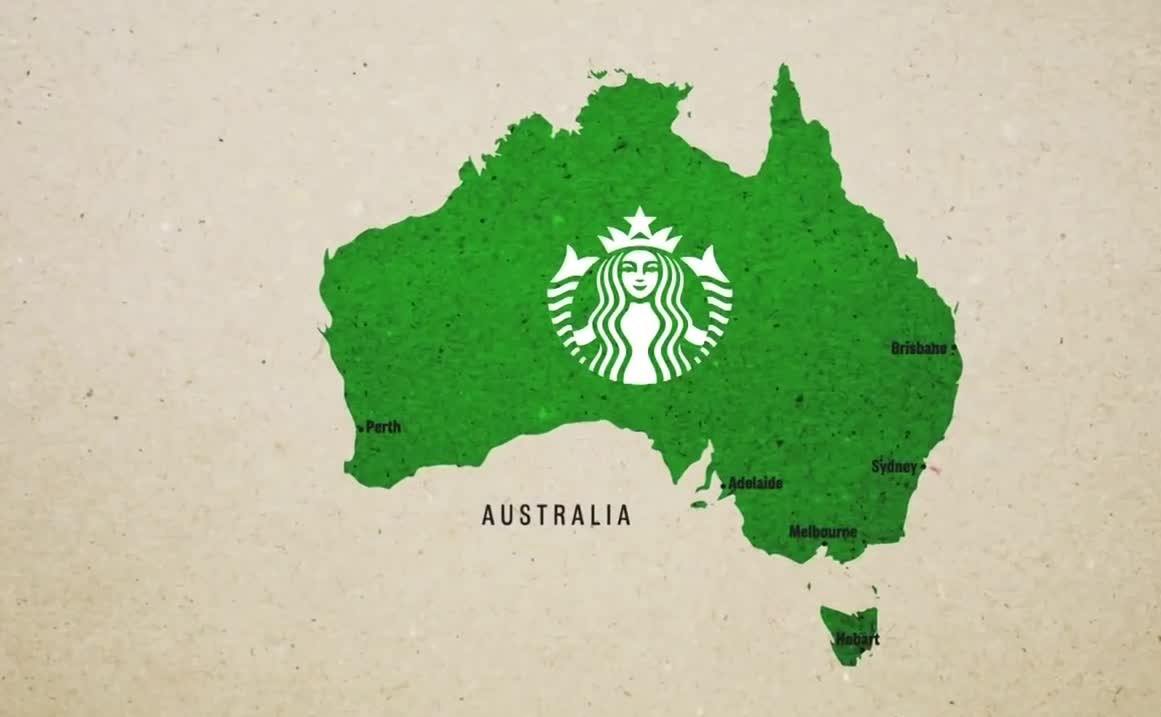
Starbucks has coffee shops all over the world There are more than 28,000 locations and 76 markets From Shanghai to Guantanamo Bay And in China, a new Starbucks location opens up every 15 hours But there is one continent that seems uninterested in the hype over the Seattle based coffee chain And that continent is Australia It’s proven to be one of the toughest markets in the world to break into So tough in fact, that Starbucks closed more than two-thirds of its stores on the continent back in 2008. So what went so wrong with Starbucks and Australia To answer that let’s go back to July of 2000 When Starbucks opened its first Australian shop in Sydney.

 From there it expanded fast By 2008 Starbucks had 87 stores across the continent I think one of the problems with Starbucks and its true for a lot of businesses that have been successful in one country is that they thought that their business model could just roll out to a different environment and there was no need for them to adjust But that was the problem They tried to grow the Empire too fast Starbucks rapidly opened up multiple locations instead of slowly integrating them into the Australian market When they launched they launched too rapidly and didn’t give .

The Australian consumer an opportunity to really develop an appetite for the Starbucks brand They also moved into regional areas into outer suburbs of major cities And so for the Australian consumer it was almost like it was too available for them And so there wasn’t this point of difference, this want, this need for Starbucks And it wasn’t an organic growth which is what we very much saw in the US In its first 7 years in Australia, Starbucks accumulated $105 million in losses By 2007, Starbucks Australia was hanging on by a thread taking big loans from the US, totaling up to $54 million And in 2008, Starbucks announced it was shutting down 61 stores But of course 2008 was a difficult time for businesses due to the financial crisis Along with Australia closures, Starbucks also closed 600 underperforming American stores But even still such a retreat in Australia was embarrassing for the brand.

When you’re shutting down 75 stores For the Australian consumer when they, when they did leave the market or at least a large number of bestowals were shut down they didn’t really care It’s partly because Australians are spoiled for choice when it comes to coffee Australia’s coffee market is one of the biggest in the world the industry is expected to hit more than $6 billion in total revenue in 2018 They’ve been immersed in nuances of cafe culture since the mid 1900s when Italian and Greek immigrants began traveling to the country The immigrants introduced Australians to espresso By the 1980s, Australians were fully engulfed in cafe culture.

They’ve also grown accustomed to specialty menu items like a flat white or an Australian macchiato So cafes in Australia were born out of like the Italian culture of, you know, meeting of friends and knowing your local barista and it being kind of like a local meeting place where everyone knew each other and that coffee was just a part of that and then Starbucks came in with what is more of an American style like coffee culture which is essentially just like coffee is a product, coffee is a commodity Coffee is like, like perk me up in the morning it’s caffeination Starbucks had a basic menu and offered more sugary drinks which most Australians didn’t like in Australia where, you know, local tastes are different So we don’t really want a coffee that’s, you know, hundreds of ounces with lots of sugar in it We want something a little more sophisticated Plus Starbucks charge more than local cafes .

So Australians instead opted to pay less for coffee they liked from a local barista they trusted And so when you come in with this big like hey, we’re going to open all these cafes And they’re all gonna be to go focus It just was the complete wrong market for what, what the Australian was used to But there is one American coffee company that’s thriving in Australia Founded in Chicago and now based in Australia Gloria Jean’s got the traction in Australia that Starbucks couldn’t Gloria Jean’s has more than 400 Australian locations And serves more than 35 million consumers in Australia each year So what is Gloria Jean’s doing in Australia that Starbucks isn’t Well the company attributed to success to two Australians who franchised the business in their home country Shops started to show up in Australia in 1996 Fast forward to today, the company has a presence in every Australian state .

The reason? Its menu The chain offers a wide variety of espresso drinks and specialty coffee Failing to adapt its menu to Australians coffee culture proved to be a mistake for Starbucks And the company faces another challenge later this year Italy Starbucks is opening its first store in Milan in late 2018 home of the espresso, Italy is rich in cafe culture But according to Starbucks it’s not going to make the same mistakes that it did in Australia The company said that it would develop in Italy with humility and respect for its coffee culture It announced it would be opening a roastery which is not your average cafe It gives customers a chance to see coffee beans roasted and processed before their eyes So there’s a chance that it won’t struggle like it did in Australia But Starbucks isn’t admitting defeat in Australia either Starbucks is staging a comeback on the continent In 2014, Starbucks locations in Australia were purchased by the Mount Waverley base withers group .

So this time it’s taking a different approach to putting Starbucks on the continent So if you just think about Australia as a big tourist destination There’s a lot of U.S. and Chinese tourists Starbucks has been very successful in China and it makes a lot of sense for them to build out because there are people looking for something that’s familiar to them Now with 39 locations in Brisbane, Melbourne, the Gold Coast, and Sydney areas this time it’s not looking to appeal to Australians but instead the coffee giant hopes to be a familiar face for tourists visiting popular vacation destinations in Australia free Australia has always been a high-volume tourist market .

The same thing in terms of international students at our universities are potential opportunities for them And we’re starting to see Starbucks enter into some large shopping malls here in Australia as well Australia welcomed 9 million tourists from 2017 and 2018 And those international visitors spent more than $30 billion in 2017 alone So tourists could possibly be the key to keeping the company afloat and preventing another downfall .

How did India's MTR Foods Overcome The Economic Downturns

 Hello everybody , On 25th of June 1975 the Indira Gandhi government officially declared a nationwide emergency. The fundamental rights were curbed, the press was censored and within a fortnight the livelihood of 620 million Indians was at stake. Little did they know that the next 21 months of their lives would be known as the darkest chapter in the history of Indian democracy. And all of this was happening during a time when India was already witnessing a socioeconomic crisis. During this time, let alone business prosperity even survival was considered to be a miracle. And the story that I’m about to tell you today is the story of one such miracle wherein amidst this economic nightmare while most businesses were shutting down there was one incredible businessman who turned this very same emergency into an business opportunity and built a business empire that now has a revenue of 1000 crores. This businessman is Mr Sadananda Maiya and the company that I’m talking about is Mavalli Tiffin Room which is popularly known as MTR. 

The question is- What was so special about MTR and how was it able to turn an economic nightmare into a business opportunity ? The answer to this question lies in the rich history of MTR that dates back to 1924. This is when the Maiya family started the MTR restaurant with the vision to serve the most authentic, hygienic and the tastiest South Indian food to its customers. And the entire family was so dedicated to their profession that even during the post-independence time when the country was witnessing a political turmoil they still served the most authentic, hygienic and the tastiest South Indian food in town. Within a few years the restaurant became so popular that it became a hotspot for tourists television personalities and even film stars. But after 5 long decades of prosperity; in 1975 when the emergency was imposed the family hit a dead end due to the socio-economic crisis. 

During this time, apart from the emergency India had already seen 2 bad agricultural years and due to the formation of OPEC the oil prices had quadrupled and the inflation in the country had skyrocketed to 15%. The situation was so bad that the government had to stop all new construction work they froze the wages and salaries in the public sectors And imposed compulsory savings on income tax payers. And this meant that every single rupee was a lifesaver for a middle class person and it obviously meant that rarely anybody ever went to a restaurant. On top of that, the government required every restaurant to conform to prices set by the government and it was practically impossible to run a profitable restaurant business with those given prices. For example, under the President’s rule, the price of Idli was clipped to 10p from 25p while a cup of coffee which costed one rupee was to be sold for just 25p. 

Now, people, when something like this happens most of the restaurant owners do either one or many of these 3 things to survive. And this is something that you would’ve seen even during the COVID-19 crisis. Number one, they do extreme cost cutting and fire all of their employees. Number two, they indulge in adulteration and serve extremely low quality food to their customers which eventually leads to health hazards. Or number three they just shut their shop altogether and wait for the situation to get back to normal. And this is exactly what the restaurant owners did in 1975 because they saw no other option to survive. But you know what ? Even during this time MTR foods still served the most authentic, hygienic and the tastiest South Indian food to its customers without compromising on their quality. 

And not just that They retained most of their employees and built a supply chain that was so robust that when the emergency was lifted MTR went on to become one of the most successful food companies in the country. The question is- What exactly was this strategy and what was so special about it ? As it turns out, when the government imposed the prices the MTR restaurants started bleeding. They were loosing out ₹25,000 on weekdays and lost upto 1 lakh rupees during weekends. But even during that time Sadanand Maiya sir was not willing to compromise on his family business values. At the same time he did not want to fire any of the employees because they had stayed loyal to the business for decades So you know what ? He took a bold step to shut down the restaurant altogether and made 3 strategic changes to it’s business.

 Number one, he realised that inspite of the emergency, the demand for food did not go down. It’s just that the purchase power of the customers had declined drastically. And the supply chain of the restaurant was too costly to actually cater to their demands. So, to reduce the cost he moved from cooked food to packed food. Because of this the heavy cost and loss due to perishable items was completely eliminated. On top of that instead of adulterating the costly ingredients he changed the ingredients altogether. For example, they moved from rice idlis to rava idlis to make idlis cost effective. And even today, Rava Idli is one of MTR’s signature dishes. 

Number two since he could not comply by the prices imposed by the government he turned the same restaurant into a grocery store and started selling food mixes via grocery sales. And last and most importantly he trained his entire staff to build an efficient supply chain to make packed food and sold it at an affordable price. In the corporate world this is what we call as reskilling. And that is how ladies and gentlemen MTR was able to survive the emergency without compromising on its business values. And guess what ? As soon as the emergency was lifted MTR restaurant reopened but this time along with the restaurant they had a ready to fire manufacturing chain which produced nothing but high quality products. Soon enough it extended to multiple food mixes like pickles, like spices and even special spice mixtures. Fast forward to today MTR has emerged as one of the finest food brands in the country with a revenue of almost 1000 crores. And MTR exports its products to 21 countries including US, UK, Australia and Japan. 

And most importantly it has successfully stood the test of time for 97 years without ever compromising its values And even during the COVID crisis, 10 years after Maiya sir stepped down The company is still setting very high standards for change management in the industry. While most companies were clueless and struggled to keep their supply chain intact during the COVID crisis; MTR foods had already doubled their inventory level from 14 days to 30 days capacity. And while the first lockdown was imposed on 25th of March MTR rigorously started preparing for the crisis way back from 10th March itself. And this is when none of us had a clue that our lives were about to change forever. 

And that is how time and again by turning a business threat into a business opportunity MTR has consistently set a benchmark for other brands to follow and from entrepreneurs like you and me to learn from. Now there are 3 very important lessons that we need to learn from this iconic case study. Number one and this is something that has been followed by Dhirubhai Ambani sir better than anybody else wherein his policy was everytime you see a market crisis you need to realize that your competitors are facing the exact same crisis as you are. The question is are you going to see it as an obstacle and succumb to it or treat it as a business opportunity and get way ahead of your competition.

 Number two, money can build a company but it takes guts, quality and values to build a brand. And last and most importantly as much as the Internet is filled with American and European business case studies we often fail to realise the fact that India has had a long history of political and economic crisis and the adversity has been so much that let alone business, even staying alive was considered to be a big deal.

 But even during these times we have had some incredible entrepreneurs who were able to build a business empire and have established a golden legacy for us to follow and we being in the Indian markets need to pay very close attention to these lesser known goldmines because they have got nuggets of wisdom that can turn us into extraordinary business leaders of this country. 

How did India's MTR Foods Overcome The Economic Downturns

 Hello everybody , On 25th of June 1975 the Indira Gandhi government officially declared a nationwide emergency. The fundamental rights were curbed, the press was censored and within a fortnight the livelihood of 620 million Indians was at stake. Little did they know that the next 21 months of their lives would be known as the darkest chapter in the history of Indian democracy. And all of this was happening during a time when India was already witnessing a socioeconomic crisis. During this time, let alone business prosperity even survival was considered to be a miracle. And the story that I’m about to tell you today is the story of one such miracle wherein amidst this economic nightmare while most businesses were shutting down there was one incredible businessman who turned this very same emergency into an business opportunity and built a business empire that now has a revenue of 1000 crores. This businessman is Mr Sadananda Maiya and the company that I’m talking about is Mavalli Tiffin Room which is popularly known as MTR. 

The question is- What was so special about MTR and how was it able to turn an economic nightmare into a business opportunity ? The answer to this question lies in the rich history of MTR that dates back to 1924. This is when the Maiya family started the MTR restaurant with the vision to serve the most authentic, hygienic and the tastiest South Indian food to its customers. And the entire family was so dedicated to their profession that even during the post-independence time when the country was witnessing a political turmoil they still served the most authentic, hygienic and the tastiest South Indian food in town. Within a few years the restaurant became so popular that it became a hotspot for tourists television personalities and even film stars. But after 5 long decades of prosperity; in 1975 when the emergency was imposed the family hit a dead end due to the socio-economic crisis. 

During this time, apart from the emergency India had already seen 2 bad agricultural years and due to the formation of OPEC the oil prices had quadrupled and the inflation in the country had skyrocketed to 15%. The situation was so bad that the government had to stop all new construction work they froze the wages and salaries in the public sectors And imposed compulsory savings on income tax payers. And this meant that every single rupee was a lifesaver for a middle class person and it obviously meant that rarely anybody ever went to a restaurant. On top of that, the government required every restaurant to conform to prices set by the government and it was practically impossible to run a profitable restaurant business with those given prices. For example, under the President’s rule, the price of Idli was clipped to 10p from 25p while a cup of coffee which costed one rupee was to be sold for just 25p. 

Now, people, when something like this happens most of the restaurant owners do either one or many of these 3 things to survive. And this is something that you would’ve seen even during the COVID-19 crisis. Number one, they do extreme cost cutting and fire all of their employees. Number two, they indulge in adulteration and serve extremely low quality food to their customers which eventually leads to health hazards. Or number three they just shut their shop altogether and wait for the situation to get back to normal. And this is exactly what the restaurant owners did in 1975 because they saw no other option to survive. But you know what ? Even during this time MTR foods still served the most authentic, hygienic and the tastiest South Indian food to its customers without compromising on their quality. 

And not just that They retained most of their employees and built a supply chain that was so robust that when the emergency was lifted MTR went on to become one of the most successful food companies in the country. The question is- What exactly was this strategy and what was so special about it ? As it turns out, when the government imposed the prices the MTR restaurants started bleeding. They were loosing out ₹25,000 on weekdays and lost upto 1 lakh rupees during weekends. But even during that time Sadanand Maiya sir was not willing to compromise on his family business values. At the same time he did not want to fire any of the employees because they had stayed loyal to the business for decades So you know what ? He took a bold step to shut down the restaurant altogether and made 3 strategic changes to it’s business.

 Number one, he realised that inspite of the emergency, the demand for food did not go down. It’s just that the purchase power of the customers had declined drastically. And the supply chain of the restaurant was too costly to actually cater to their demands. So, to reduce the cost he moved from cooked food to packed food. Because of this the heavy cost and loss due to perishable items was completely eliminated. On top of that instead of adulterating the costly ingredients he changed the ingredients altogether. For example, they moved from rice idlis to rava idlis to make idlis cost effective. And even today, Rava Idli is one of MTR’s signature dishes. 

Number two since he could not comply by the prices imposed by the government he turned the same restaurant into a grocery store and started selling food mixes via grocery sales. And last and most importantly he trained his entire staff to build an efficient supply chain to make packed food and sold it at an affordable price. In the corporate world this is what we call as reskilling. And that is how ladies and gentlemen MTR was able to survive the emergency without compromising on its business values. And guess what ? As soon as the emergency was lifted MTR restaurant reopened but this time along with the restaurant they had a ready to fire manufacturing chain which produced nothing but high quality products. Soon enough it extended to multiple food mixes like pickles, like spices and even special spice mixtures. Fast forward to today MTR has emerged as one of the finest food brands in the country with a revenue of almost 1000 crores. And MTR exports its products to 21 countries including US, UK, Australia and Japan. 

And most importantly it has successfully stood the test of time for 97 years without ever compromising its values And even during the COVID crisis, 10 years after Maiya sir stepped down The company is still setting very high standards for change management in the industry. While most companies were clueless and struggled to keep their supply chain intact during the COVID crisis; MTR foods had already doubled their inventory level from 14 days to 30 days capacity. And while the first lockdown was imposed on 25th of March MTR rigorously started preparing for the crisis way back from 10th March itself. And this is when none of us had a clue that our lives were about to change forever. 

And that is how time and again by turning a business threat into a business opportunity MTR has consistently set a benchmark for other brands to follow and from entrepreneurs like you and me to learn from. Now there are 3 very important lessons that we need to learn from this iconic case study. Number one and this is something that has been followed by Dhirubhai Ambani sir better than anybody else wherein his policy was everytime you see a market crisis you need to realize that your competitors are facing the exact same crisis as you are. The question is are you going to see it as an obstacle and succumb to it or treat it as a business opportunity and get way ahead of your competition.

 Number two, money can build a company but it takes guts, quality and values to build a brand. And last and most importantly as much as the Internet is filled with American and European business case studies we often fail to realise the fact that India has had a long history of political and economic crisis and the adversity has been so much that let alone business, even staying alive was considered to be a big deal.

 But even during these times we have had some incredible entrepreneurs who were able to build a business empire and have established a golden legacy for us to follow and we being in the Indian markets need to pay very close attention to these lesser known goldmines because they have got nuggets of wisdom that can turn us into extraordinary business leaders of this country. 

How did India's MTR Foods Overcome The Economic Downturns

 Hello everybody , On 25th of June 1975 the Indira Gandhi government officially declared a nationwide emergency. The fundamental rights were curbed, the press was censored and within a fortnight the livelihood of 620 million Indians was at stake. Little did they know that the next 21 months of their lives would be known as the darkest chapter in the history of Indian democracy. And all of this was happening during a time when India was already witnessing a socioeconomic crisis. During this time, let alone business prosperity even survival was considered to be a miracle. And the story that I’m about to tell you today is the story of one such miracle wherein amidst this economic nightmare while most businesses were shutting down there was one incredible businessman who turned this very same emergency into an business opportunity and built a business empire that now has a revenue of 1000 crores. This businessman is Mr Sadananda Maiya and the company that I’m talking about is Mavalli Tiffin Room which is popularly known as MTR. 

The question is- What was so special about MTR and how was it able to turn an economic nightmare into a business opportunity ? The answer to this question lies in the rich history of MTR that dates back to 1924. This is when the Maiya family started the MTR restaurant with the vision to serve the most authentic, hygienic and the tastiest South Indian food to its customers. And the entire family was so dedicated to their profession that even during the post-independence time when the country was witnessing a political turmoil they still served the most authentic, hygienic and the tastiest South Indian food in town. Within a few years the restaurant became so popular that it became a hotspot for tourists television personalities and even film stars. But after 5 long decades of prosperity; in 1975 when the emergency was imposed the family hit a dead end due to the socio-economic crisis. 

During this time, apart from the emergency India had already seen 2 bad agricultural years and due to the formation of OPEC the oil prices had quadrupled and the inflation in the country had skyrocketed to 15%. The situation was so bad that the government had to stop all new construction work they froze the wages and salaries in the public sectors And imposed compulsory savings on income tax payers. And this meant that every single rupee was a lifesaver for a middle class person and it obviously meant that rarely anybody ever went to a restaurant. On top of that, the government required every restaurant to conform to prices set by the government and it was practically impossible to run a profitable restaurant business with those given prices. For example, under the President’s rule, the price of Idli was clipped to 10p from 25p while a cup of coffee which costed one rupee was to be sold for just 25p. 

Now, people, when something like this happens most of the restaurant owners do either one or many of these 3 things to survive. And this is something that you would’ve seen even during the COVID-19 crisis. Number one, they do extreme cost cutting and fire all of their employees. Number two, they indulge in adulteration and serve extremely low quality food to their customers which eventually leads to health hazards. Or number three they just shut their shop altogether and wait for the situation to get back to normal. And this is exactly what the restaurant owners did in 1975 because they saw no other option to survive. But you know what ? Even during this time MTR foods still served the most authentic, hygienic and the tastiest South Indian food to its customers without compromising on their quality. 

And not just that They retained most of their employees and built a supply chain that was so robust that when the emergency was lifted MTR went on to become one of the most successful food companies in the country. The question is- What exactly was this strategy and what was so special about it ? As it turns out, when the government imposed the prices the MTR restaurants started bleeding. They were loosing out ₹25,000 on weekdays and lost upto 1 lakh rupees during weekends. But even during that time Sadanand Maiya sir was not willing to compromise on his family business values. At the same time he did not want to fire any of the employees because they had stayed loyal to the business for decades So you know what ? He took a bold step to shut down the restaurant altogether and made 3 strategic changes to it’s business.

 Number one, he realised that inspite of the emergency, the demand for food did not go down. It’s just that the purchase power of the customers had declined drastically. And the supply chain of the restaurant was too costly to actually cater to their demands. So, to reduce the cost he moved from cooked food to packed food. Because of this the heavy cost and loss due to perishable items was completely eliminated. On top of that instead of adulterating the costly ingredients he changed the ingredients altogether. For example, they moved from rice idlis to rava idlis to make idlis cost effective. And even today, Rava Idli is one of MTR’s signature dishes. 

Number two since he could not comply by the prices imposed by the government he turned the same restaurant into a grocery store and started selling food mixes via grocery sales. And last and most importantly he trained his entire staff to build an efficient supply chain to make packed food and sold it at an affordable price. In the corporate world this is what we call as reskilling. And that is how ladies and gentlemen MTR was able to survive the emergency without compromising on its business values. And guess what ? As soon as the emergency was lifted MTR restaurant reopened but this time along with the restaurant they had a ready to fire manufacturing chain which produced nothing but high quality products. Soon enough it extended to multiple food mixes like pickles, like spices and even special spice mixtures. Fast forward to today MTR has emerged as one of the finest food brands in the country with a revenue of almost 1000 crores. And MTR exports its products to 21 countries including US, UK, Australia and Japan. 

And most importantly it has successfully stood the test of time for 97 years without ever compromising its values And even during the COVID crisis, 10 years after Maiya sir stepped down The company is still setting very high standards for change management in the industry. While most companies were clueless and struggled to keep their supply chain intact during the COVID crisis; MTR foods had already doubled their inventory level from 14 days to 30 days capacity. And while the first lockdown was imposed on 25th of March MTR rigorously started preparing for the crisis way back from 10th March itself. And this is when none of us had a clue that our lives were about to change forever. 

And that is how time and again by turning a business threat into a business opportunity MTR has consistently set a benchmark for other brands to follow and from entrepreneurs like you and me to learn from. Now there are 3 very important lessons that we need to learn from this iconic case study. Number one and this is something that has been followed by Dhirubhai Ambani sir better than anybody else wherein his policy was everytime you see a market crisis you need to realize that your competitors are facing the exact same crisis as you are. The question is are you going to see it as an obstacle and succumb to it or treat it as a business opportunity and get way ahead of your competition.

 Number two, money can build a company but it takes guts, quality and values to build a brand. And last and most importantly as much as the Internet is filled with American and European business case studies we often fail to realise the fact that India has had a long history of political and economic crisis and the adversity has been so much that let alone business, even staying alive was considered to be a big deal.

 But even during these times we have had some incredible entrepreneurs who were able to build a business empire and have established a golden legacy for us to follow and we being in the Indian markets need to pay very close attention to these lesser known goldmines because they have got nuggets of wisdom that can turn us into extraordinary business leaders of this country. 

What is Capitalism? – How does Money make Money

 Hello everyone, The word ‘Capitalism’ comes from the word Capital which means Money. Or any type of wealth. Whether you have houses, cars on land, they are your capital. In the last video, I gave you the basic definition of Communism. It is a society where every person works according to his ability and receives according to his needs. If we have to define Capitalism similarly, Capitalism is a society where “from each according to his ability, To each according to his capital.” 

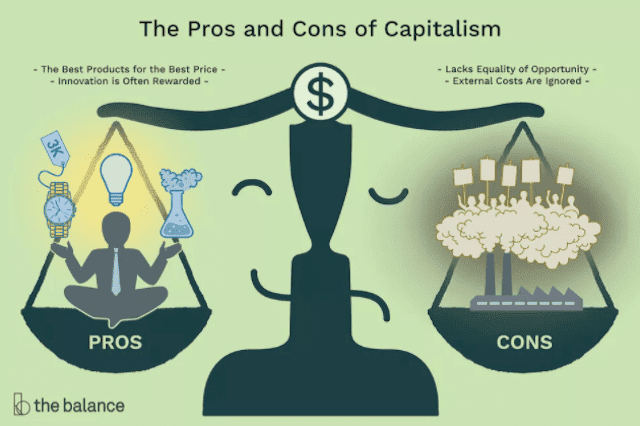
A society where every person works according to his ability but they get returns according to their capital. The person with the most capital will get the most profit. After knowing the definition you’d ask me: “What kind of a society is this?” “Where a person who has more money will get more money.” You heard it right, friends. I’ll talk about the exact workings later in the video. Basically, Capitalism is an ideology that promotes privatisation where the means of production like land, fields, factories, and industries, are owned by private individuals. 

In Communism they were owned by the public, everyone owned these. Similar to Communism, Capitalism is a very broad term and ideology. Where there are many subsections of ideologies with differences among them. But if you look at it broadly, there are a few things that are common in all the types. First is the Privatisation. Second, minimal interference by the Government. Most Capitalists believe that the Government has no business to be in business. This dialogue has been used by our Government recently. The third is the Free Market and Competition. and Fourth is something that is easily seen in a capitalist society, “Money Begets Money.” 

Money is earned through Money. I’ll explain this later. First, let’s talk about the history of Capitalism. The oldest example of Capitalism is Feudalism. This can be called the primitive form of capitalism. This was around the 10th century when landlords occupied land, and the farmers and labourers who worked on the land, worked tirelessly to grow crops. But all the profits from the land, was used to be taken by the landlords, and the farmers hardly earned enough to get by. You may wonder how this is an example of capitalism. The land was owned by an individual, the landlord. And to whom did most of the profit from the land go? The Landlord. Capitalism works similarly today. 

Whatever you do at whichever company, suppose you’re an employee at Apple, you work the whole day and get a monthly salary in return. But the company earns profits. Where does the profit go? It doesn’t go to you It goes to the owner of the company. Obviously, there are differences. Today you get workers’ rights and minimum wages and are not exploited, in most of the cases Who is the owner of this Apple company? That person who holds the most number of shares of the company. Even you can become the owner of the company through the share market. 

If you buy some shares Apple, any profits earned by it, you will get a part of. Because you are also an owner of a portion. We live in such a capitalist society today. An employee works in a company for a monthly salary and the profit earned by the company will be distributed among such people who don’t even know the day to day working of the company. You can earn the profit of the company by doing nothing if you invest in the company. And who can invest? Someone who already has the money. As I said, money makes money. 

One with the most money in a capitalist world can make more money easily by investing in such companies and taking their profits. Modern Capitalism started in the 16th-17th century in Britain and Netherlands. The first stock exchange of the world was the Amsterdam Stock Exchange, and the first company to be listed was the Dutch East India Company in 1602. Like there’s Karl Marx for Communism, similarly there’s Adam Smith for Capitalism. Known as the Father of Capitalism. In 1776 he wrote the book The Wealth of Nations. In the book, he talked about a policy Laissez-Faire. It is a French word that literally means ‘leave alone.’ That government should leave the economy alone and should not interfere. From here Free Market Capitalism started. Suppose you want to open a pizzeria and so does your neighbour. 

If a third person does not interfere between the two, there will be a very interesting and fair competition between you. About who can make the better pizza and sell it at a lower rate. Both of you will try to compete with each other and start experimenting. Trying to improve the quality of the pizza. Because of this competition, both of you will innovate and think of new ways. About how the pizza can be improved and sold at a lower price. In the opinion of Adam Smith, this competition was the invisible hand of the free market. Where no one is forcing you to make a better pizza, but the market situation is forcing you to innovate to make a better pizza. You are working only for your self-interest. You want your restaurant to grow and earn more profit and to perform better than your neighbour. 

But your working in your self-interest is also benefiting others. It is also in the interest of society that you work for your self-interest. This is the philosophy of Adam Smith. To increase the efficiency of your pizzeria you’d eventually realise that doing everything yourself was not smart. If you start taking orders yourself and making the pizza, it’ll take a lot of time. It would be better to hire a few people. One to take the orders at the front desk. One who’ll make the pizza and buy ingredients for it. One who will put the toppings on the pizza and put it in the oven. And one whose work would be to deliver the pizza. 

This is the Division of Labour. Every person is specialising in his work and because of the specialisation, productivity and efficiency increase rapidly. Adam Smith talked about this as well. This is one of the major reasons for the success of Capitalism across the world. Everyone realised that if they want to work in a better manner at a better speed, division of labour and specialization is necessary. Take Apple company, if a person wants to build an iPhone, it will take him years. but if there is an assembly line of workers to manufacture these iPhones, where the first person would fit the screen the second will fit the screws, then the assembly line will be able to manufacture numerous iPhones in a day. 

By implementing these ideas Industrial Revolution began. Where large factories were established; but what happened then? I talked but that in the Communism video. The workers were forced to work for hours in terrible conditions. They were getting exploited and eventually communist ideologies started. After hearing this you’d think that Karl Marx and Adam Smith would be sworn Enemies. But this wasn’t so, in reality, Karl Marx has written a book Das Kapital, where he agreed on many viewpoints of Adam Smith. There were definite disagreements between them but it can be said that they were looking at the same situation from different perspectives. 

On one hand, Adam Smith focuses on productivity and efficiency, On the other hand, Karl Marx agrees that productivity and efficiency would indeed increase but his focus is on an individual. He says that a worker would start feeling alienated if he works on repetitive tasks. To do the same for hours and years on end. The worker would not be proud of his work. He would question the purpose of his life. Seeing himself as only a small gear in a piece of large machinery. Karl Marx believed that specialisation would make workers more easily replaceable, and the capitalist would get more power to exploit the workers. The ideas of Karl Marx and Adam Smith are two perspectives of the same situation. Remember that both of them were born in different eras. Adam Smith died in 1790 and Karl Marx was born in 1818. 1790 was a time when the Industrial Revolution had just begun. And Karl Marx grew up seeing the workers being exploited in the factories. 

Maybe if they lived in the same era, their opinions would have agreed. Moving ahead in history, we know that Communism was first implemented in the Soviet Union. When it comes to the implementation of capitalism, in 1902 a significant incident happened. Three large steel companies in the USA, Carnegie Steel, Federal Steel and National Steel, merged together to become The US Steel. This was the first billion-dollar corporation in the world. Elbert H Gary was the chairperson of the company. And in the first year, it manufactured 2/3rd of the total steel manufactured in the US. But there remained some competition in the steel industry. 

So Garry invited all his competitors for a dinner and asked them why they were fighting amongst themselves while someone else was benefitting from their competition. He suggested that they work together and stop competitive pricing. This was how the first billion-dollar company in the world became a monopoly. According to the theory of Adam Smith, the Invisible hand of the free market was supposed to work and set things right. but in reality, this did not happen. Whenever there’s a monopoly for anything or a company, it is terrible for the consumers. Imagine you are stranded in a village late at night, waiting for a taxi. And the nearest city is 100-200 km away.

 But there is only one taxi. You ask the taxi driver to take you to the city, While he charges ₹500 for the distance normally, but he tells you that he would charge you ₹50,000 for taking you. You will not have any option. The taxi driver will have a monopoly here. You are stuck in a situation where the only way out is to, either give in or remain stuck there. You are forced to pay that sum. This extra amount is known as profit in Capitalism. In Das Kapital, Karl Marx talks about this theory, the Theory of Surplus Value. If I run a company that manufactures a product, and you are an employee working in the company that actually makes the product, Suppose I earn a profit of ₹80,000 by selling that product, but I pay ₹8,000 to you as salary.

 The ₹72,000 that we put call profit, Karl Marx called Surplus Value. All the surplus value and profits are taken away by me and you get only a salary. This is often seen in Capitalism. There can be many examples for this. A trader that buys products very cheap from the farmer and sells it at a much higher price The profit or surplus value is taken by the trader. A scientist discovers the formula for a vaccine, but in reality, the pharma companies selling that vaccine get the most profits. A singer that actually sings the song, but it is the music label that takes most of the profit. 

According to Karl Marx, this is a system where everyone is trying to climb a ladder to stop being exploited, but as soon as they reach the top they would start exploiting others. A system where work is not rewarded but money is. If you have the money to establish a company and employ people, you can take away the maximum profits. But obviously, not every company is like this, not every company owner is like this that’d keep on exploiting the employees. In contrast to the companies owned by private individuals are Joint Cooperative Companies such as Amul. More than 36 lakh of farmers are joint owners of Amul Co-operative. This is not a company listed on the stock market. You and I cannot invest our capital in Amul company. The profit earned by Amul and its benefits is distributed among these farmers that have created this company together. 

But obviously, to make such cooperative, one person has to take the lead. In the case of Amul, it was Tribhuvandas Patel who set up the Cooperative in 1946. Under the guidance of Sardar Vallabhbhai Patel. Regarding this there was a film as well called Manthan. It was the first crowd-funded film in India. More than 5 lakh farmers working in Amul contributed ₹2 each to make this film. Anyways, I got too diverted in the story. Coming back to the history of Capitalism, in 1929, capitalism received a huge shock when the stock market crashed terribly and a Great Depression started. The recession has been a very regular feature in Capitalism. 

There were large scale unemployment and poverty in the USA because of this. At this point entered the revolutionary economist Keynes, who altered the history of Capitalism. He believed that the Invisible Hand of the free market does not actually exist. In reality, if the free market is left free, it will lead to depression, recession, monopolies. The theory of Keynes was that governments should interfere and regulate the companies. Small companies should be subsidized, and big companies should be prevented from getting monopolies, there should be strict rules and regulations in place. 

In the decades that followed Keynes, countries all over the world took inspiration from him and implemented a model of Capitalism where rules and regulations existed. The next big shock to Capitalism was in the 1980s when Ronald Reagan in the USA and Margaret Thatcher in the UK reintroduced the free market of Adam Smith to the world. The capitalism implemented in these two countries is known as Neoliberalism. 

The basic foundational idea is of Adam Smith that government should not interfere in the market and market share run itself, and there exists an invisible free hand of the market, The current status is that in the last 40 years, in many countries of the world, especially the USA, we have seen Neoliberalism being implemented. Because of this inequalities have been rising significantly in the US. The rich are getting richer and the poor are not able to improve their situation. The big companies are starting to become monopolies. 

The Story of Spice King Of India From A Tonga Driver To A Millionaire

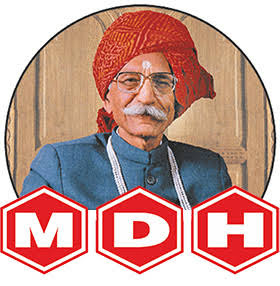
Hi everybody , one of the most iconic business Maharajas of India whose name was Mahashay Dharampal Gulati. This is a story of a man who went from being a tonga driver to building an empire with an operating revenue of 2000 crores. And the reason why his story is even more special is because he built a business during a time when people were struggling hard even to stay alive because back then India was still recovering from the massacres of partition.

 Dharampal Ji was born in the year 1923 in Sialkot, which today, falls in modern-day Pakistan in a Hindu family which had high ideals of honesty and simplicity. And since childhood, he was a carefree kid but with a sheer will to do something extraordinary. 

Gulati Ji, since childhood, experienced a lot of failures, he first dropped out of school in class 5 and tried doing several jobs where he couldn’t find any fulfilment. 

Then he tried selling Mehendi (Henna) from street to street. and even that did not work out. Then, his father tried to set up a separate shop for him and his brother and eventually, even that venture failed. So after spending years trying to do different kinds of jobs like selling wood, mirrors he finally decided to settle in and start running his father’s spice shop which at that time was named as Mahashian Di Hatti. 

But when he was just 25 years old and he began to settle down in his business and his business began to pick up the India-Pakistan partition happened. and within a midnight, the entire nation was in chaos. And because Sialkot became a part of Pakistan soon enough there was such a massive bloodshed that hundreds of innocent people were being killed due to the Hindu-Muslim riots. 

During that time they somehow managed to board a train that brought them to Amritsar and people, if you have seen the movie ‘Bhaag Milkha Bhaag’ you would pretty much have an idea of how terrible the situation of partition was. In fact, the very train that Gulati Ji’s family boarded had the dead bodies of the people who had been killed due to the massacres of partition.

 So, he stayed in the refugee camp of Amritsar for quite some time and then decided to move to Delhi wherein he became a tonga driver. Now people, back then he was already married for 7 years because he got married at the early age of 18. So he had responsibilities on his shoulders to provide good life for his family.

 But then after a few months he understood that tonga driver’s profession was not good enough to provide a good life for his family. And that is when he decided to restart his father’s business and set up a small spice shop in Delhi. And that is when he named his shop Mahashian Di Hatti which today is known by the name MDH

Now, people, even after partition India was still struggling hard to recover from the massacres of partition. There were millions of people who had lost their everything and India as a country was in a state of poverty wherein 80% of the entire country’s population lived below the poverty level. 

So, the markets, in general, never focused on quality because if you had to produce quality product during that time it would increase the cost of production, it would decrease your margins of profit and most importantly, because the cost of the product will increase majority of the peope will not be able to afford it eventually, resulting into decrease in sales. 

So running a viable business during that time by selling quality products was practically impossible. So, the majority of the poducts that were being sold in he market including milk and salt were being completely . 

For example, milk was being mixed with a lot of water to increase the quantity. And to compensate for the density, even harmful chemicals were used. Similarly, yellow soil was mixed with haldi (turmeric) and sawdust was being mixed with dhaniya (coriander) powder. And just like that, even spices were being adulterated to a large extent because it was practically impossible for a common man to be able to understand the difference between pure spices and adulterated spices.

But even during that time Gulati Ji poured his blood and sweat and always made sure that his shop always sold pure spices. Because he believed that the primary intent of any business should not be to make money but to do great service. And money should always be a bi-product of great service.

That is why Gulati Ji worked very hard to monitor every single process of the production of spices just so that he can give a common man of India, a taste of pure spices And people can you imagine how difficult it would have been ? 

He had to keep the cost low just so that he can match the cost of the adulterated spices. Number two, he had to keep his margins very thin because his cost of production was way higher as compared to adulterated spices. 

And most importantly he was making very less money, inspite of making the best product in the market. But all throughout these difficult times, this great man worked tirelessly with the hope that he’ll be able to build a brand one day that the mother of a common household can blindly trust upon when she makes a meal for her family. And guess what ? 

Slowly and steadily, people began to realize the differnce between Gulati Ji’s spices and the adulterated spices and soon enough people started to line up at his shop just to buy his products. And that is how Gulati Ji’s small shop- Mahashian Di Hatti Masale as in, MDH masale, became a popular brand in Delhi. 

And as his business started growing, he started to recruit his friends and family into his business with the hope that they will be able to stand by his belief of providing excellent quality spices to people. And he also started outsourcing a few processes like powdering turmeric. 

And yet again, when everything looked well, he faced even tougher challenges and here’s where ordinary people like you and me have something very important lesson to learn. 

People, Gulati Ji was a person who did every small thing in his shop starting from the raw material transportation to the grinding of spices, he participated in every single activity and that is the reason why he soon enough became an expert in finding out even a little bit of adulteration in his spices.

 So, when he was scaling up he was able to maintain the same excellent quality standards that he used to maintain while he was selling spices from his small shop. And because of his sharpness and diligence he was able to spot certain loopholes in his system which could have completely destroyed his business altogether.

 Because soon enough he discovered that the contractor who was powdering his turmeric was actually mixing Chana Dal to adulterate the turmeric powder. And when he spotted similar practices being followed in a lot of these outsourcing ventures.

 He understood that this loophole would betray the trust of his customers. And just to keep the trust of his customers he ended all of his outsourcing practices and poured in his entire life saving to open up his own factory wherein he could powder all the spices.

 And not just that. He was betrayed by his childhood friend who used to take a commission on every single material which used to come in from the supplier. And many of his friends and family who were supposed to help him grow, started causing a lot of troubles while this man was putting his blood and sweat just to make sure that he can sell pure spices to the mothers of India. 

And that is how, by facing a lot of hurdles Gulati Ji was able to establish a brand which the mothers of India could trust. And that is how due to the incredible hard work of Gulati Ji, today, people like you and me have the luxury of having mouth watering dishes like Chole Batture and Pav Bhaaji.

 And in this world where people talk about retiring at the age of 30 and people like you and me who often feel lazy inspite of achieving nothing. This legendary person was shooting for an advertisement even at the age of 97. 

So because of this incredible dedication and persistence combined with extraordinary business acumen today, MDH has reached a level wherein it exports its spices to US, China, Vietnam, UAE, Malaysia, Saudi Arabia, UK, Germany, Singapore, Sri Lanka with US exports alone valued at $351.6 million. And all of this put together, turned Gulati Ji into one of those icons because of whom India, today, is known for spices all across the world.

 Now the question is- What can we learn from this incredible story of the king of spice ?

 Lesson 1, we all need to realize that optimism is the faith that leads to greatness and the real test of optimism is how you choose to react even during the times of calamity just like partition in Gulati Ji’s life. While and optimist will try to see an opportunity in every difficulty, a pessimist will try to see difficulty even during the times of great opportunity. 

Lesson 2, while outsourcing is essential for scaling up of any business it is also important to note that outsourcing along with a lot of growth will also bring in a lot of loopholes. So, as a leader of a business organisation it is important that you do all the petty works in the beginning because what might look like petty experience in the beginning will eventually help you find the loopholes in your business which could potentially destroy your whole business. 

And last and most importantly, each one of us needs to understand that greatness comes at a cost that very few people can afford. For example, at that time, very few people could actually settle in for less profits by selling pure spices.

 Very few people had the ability to put in the hardwork to have a look at every single process just so that they could sell pure spices and keep the trust of an innocent mother when she wanted to make something tasty for her family because very few people understand that the cost of greatness cannot be paid with stacks of currency notes but with every ounce of blood and sweat that you put in to achieve it.

 Because at the end of the day, greatness comes at a cost of persistence. And once a great man said that “Nothing in this world can take place of good old persistence. Talent will not, which is why in this world there is nothing more common than unsuccessful men with talent. 

Genius will not, which is why unrecognised genius is practically a cliché. Education will not, which is why the world is full of educated fools. 

Persistence and determination alone are all powerful.” In our case they were powerful enough to turn an ordinary refugee into the spice king of India who will live in our hearts forever. Thank you.