Why developing countries are so poor?

Natural, economic and social resources are the major components of economic development. But it is observed that some countries have limited resources yet development has taken place, for e.g. Switzerland, Denmark, Japan, etc. This is mainly due to human efforts and advance technology. On the other hand some countries have lot of resources yet they are less developed. 

Source – Blogger

In these countries, the wealth is unevenly distributed among the people. Rich people have excessive wealth, which is continuously increasing, while the poor are becoming more poor. Most of the people in these countries are engaged in subsistence agriculture. It is associated with low productivity. Manufacturing and employment is low. The geographical distribution of the population is mostly rural, despite recent rapid urban growth. Due to high birth rate and death rate, the structure of the population has a high proportion of non-productive people under the age of fifteen. Due to poverty, people get insufficient and low quality food, therefore, there is a serious problem of malnutrition. Due to the type of food they get, their energy level is low and they develop diseases related to malnutrition. As a result, there is low life expectancy. Infant mortality rate is extremely high.

Most of the countries are facing environmental problems. Climate has a direct effect on human activities. Many developing countries are in regions where activity rates are reduced and the body is more prone to diseases, because of the hot and humid climate. Uncomfortable climate along with poverty, diseases, ignorance and poor diet has led to very less development.

The climate affects agriculture, transport and other economic activities, that influences the development of country. Tropical countries have frequent droughts and occasional heavy rainfall that result in erosion and leaching of soils. Extreme climatic conditions also affect transport facilities, especially roads, which are easily washed out. Similarly heat, dust and water can badly affect transport machinery such as vehicles or railway locomotives.

Natural resources are very important in the process of development, providing a base for industrial growth or earning foreign currency from their export. However, the distribution of the world’s energy resources, especially coal and oil is very uneven. Many developing countries lack the raw material. Whereas the developed countries grow their wealth and power with these resources. On the other hand, the potential for hydro-electric and solar-generated energy is quite considerable in many parts of these countries. For example, Africa possesses 40 per cent of the world’s hydro-electric power potential. The difficulty is to realize this potential.

Despite their importance, lack of resources is not a problem of underdevelopment, because countries like Denmark, Switzerland and Japan have achieved high levels of development on a very limited resource base. Resources are neutral and only can be useful, when it applies technology & will to use it. Many of the problems arising from climatic difficulties can also be solved by the use of medical facilities, pesticides, scientific farming practices and so on. Those countries with an abundance of natural resources certainly have much better prospects for development, than those which do not have them. But in the regions where natural resources are in abundance, but the region is socio- economically backward, such regions fails to take advantage of the favorable environment. Hence regions remain underdeveloped.

There is a serious shortage of capital in the developing countries to finance the establishment of industry, agricultural improvement, and transport systems and so on. The size of the domestic market in these countries is often not large enough to sustain industrial development, because the purchasing power of the consumer is too low. The problem is compounded by the fact that, it is extremely difficult for a developing country to break into international markets, where they have to compete with the advanced industrial producers of the developed world.

The infrastructure in the less developed countries of the world is poorly developed. Power supply, transport networks, industrial and commercial services, education facilities are the elements that form the framework for the economic activity to develop. Such facilities are very expensive to establish and they give only small returns. The economies of most developing countries are imbalanced and inefficient. Despite the fact that at least 50 to 90 per cent of employment is in agriculture. On the other hand, some primary commodities, such as oil or scarce minerals, are rapidly becoming expensive, so the poor countries cannot afford to buy them. For example, minerals such as Copper, Tin, Zinc, and fuels such as mineral oil have become very expensive. The developing countries may not be able to compete with the developed countries to buy them. It might be argued that, there is a vast hydroelectric power potential in the tropics, which will help to solve these problems, but such installations are very expensive.

Second World War(1939- 1945)

World War II was a global conflict that lasted from 1939 to 1945. It was the deadliest conflict in human history, with an estimated 50-85 million fatalities worldwide, including civilians and military personnel. The war was fought between two main alliances: the Axis powers, consisting of Germany, Italy, and Japan; and the Allied powers, consisting of the United States, Great Britain, France, and the Soviet Union, among others.

The war began on September 1, 1939, when Germany invaded Poland. Britain and France, who had guaranteed Poland’s security, declared war on Germany on September 3. The early years of the war were marked by German victories in Europe and the rapid expansion of the Axis powers, including the invasion of the Soviet Union in 1941.

The tide of the war began to turn in favor of the Allies in 1942, with significant victories in North Africa and the Soviet Union. In 1944, Allied forces landed in Normandy and began the liberation of Western Europe. The war in Europe ended on May 8, 1945, when Germany surrendered.

The war in the Pacific continued until August 15, 1945, when Japan announced its surrender after atomic bombs were dropped on the cities of Hiroshima and Nagasaki by the United States.

The aftermath of the war led to significant changes in the political and social landscape of the world, including the formation of the United Nations and the beginning of the Cold War between the Western powers and the Soviet Union.


Source – Wikipedia

Causes of World War II:

1. The Treaty of Versailles (1919): The treaty of Versailles had in itself the germs of the Second World War. The Germany was very badly treated. She was forced to sign the treaty at the point of a bayonet, in a spirit of revenge. To tear away the treaty of Versailles, Hitler joined hands with Mussolini of Italy.

2. Nationalist Movements of Germany & Italy: The rise of the national movement in Germany & Italy added fuel to the fire. Although Hitler tried to assure the world that he meant peace, he could not conceal his ambition for long. He embarked on a career of aggression which ultimately lead to war. The same was the case with Mussolini who had established his dictatorship in Italy in 1922.

3. Conflict of Ideology between Dictatorship & Democracy: Countries like Germany, Italy & Japan represented the ideology of dictatorship while Great Britain, France & USA represented the ideology of democracy. Mussolini described the conflict between the two ideology thus: ‘The struggle between the two worlds can permit no compromise. Either we or they’

4. Inefficiency of League of Nations: Unfortunately, when hostility was growing between the two camps there was no effective international organization which could bring the leaders of the two camps on a common platform and bring about a reconciliation between them. The League of Nations was practically dead.

5. Colonial & Commercial Rivalry: The colonial and commercial rivalry between England and France on one side, and Germany and Italy on the other brought them in conflict with each other.

6. Aggressiveness of Berlin-Rome-Tokyo Axis : Hitler had became very aggressive. He annexed the Saar Valley, occupied Rhineland and Austria captured Czechoslovakia etc. Mussolini attacked Abyssinia (Ethiopia) Japan attached China. This aggressive mood of the Fascist Power got its fullest expression when they formed an Axis providing for mutual aid in the international sphere.

7. Immediate Cause: The immediate cause of the war was the refuse of Poland to Surrender. Germany gave an ultimatum to Poland regarding : (i) surrender the port of Dazing, (ii) the right of establishing a rail link between Germany and East Prussia through the Polish corridor. These two demands were rejected by Poland. So Germany invaded Poland on Sept. 1, 1939. Britain and France as they were under treaty obligations to aid Poland, declared war against Germany on Sept. 3, 1393.

Noise Pollution- Causes, & Preventive Measures

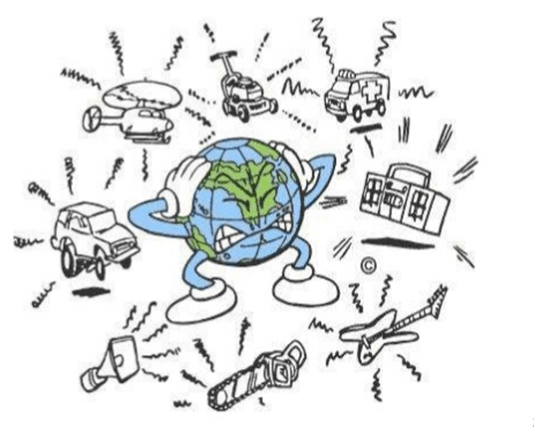
 Noise is usually defined as unwanted sound or a sound without value that causes discomfort to the listener. Noise is usually measured in units of decibels and is denoted by dB.

1. On human beings:-

Mental health

Exposure to intense levels of noise can cause personality changes and violent reactions. Noise has also been shown to be a factor that attributed to violent reactions. 
Psychological health effects from noise include depression and anxiety stress. Individuals who have hearing loss, including noise induced hearing loss, may have their symptoms eased with the use of hearing aids. Individuals who do not seek treatment for their loss are 50% more likely to have depression than their aided peers. These psychological effects can lead to detriments in physical care as reduced self-care, work-tolerance, and increased isolation.

Physical health

Exposure to loud sound or longer exposure causes threshold shift. Noise-induced threshold shifts are seen as a notch on an audiogram from 3000 to 6000 Hz, but most often at 4000 Hz.
Exposure to loud noises, either in a single traumatic experience or over time, can damage the auditory system and result in hearing loss and sometimes tinntius as well. Noise induced hearing loss is sometimes unilateral and typically causes patients to lose hearing around the frequency of the triggering sound trauma.

2. On animals:-

Marine animals

Two main reasons that make an environmental impact of noise in marine life a grave are – 1. Noise travels much more in water, covering greater distances than it would do on land while travelling though air, and secondly because the marine life is extremely sensitive to noise pollution and an absence of any mechanism to safeguard them against it, underwater noise pollution disrupts marine life in more serious ways.

The deaths can occur because of haemorrhages, changed diving pattern, migration to newer places, and damage to internal organs and an overall panic response to the foreign sounds. There is also a disruption in normal communication between marine animals because of underwater noise pollution. This means animals prone to noise pollution cannot call their mates, look for food or even make a cry for help under such circumstances.

Birds

Anthropogenic noise, emitted from the oil and gas compressors, is becoming a global issue. The idea of the study was to measure the stress levels of the birds compared to the distance they were nesting with the oil and gas compressors.

So much so that they were showing Post Traumatic Stress Disorder-like (PTSD) symptoms. In the birds, their corticosterone levels were relatively low. And that isn’t exactly what you would expect to see in a high-stress situation. This is likely to be what was happening with the birds. It triggered health defects such as stunted growth, issues with their reproduction, and fewer feathers on the birds. Their ability to hear predators also seemed to be jeopardised because of the noisy surroundings.

Preventive measures to reduce noise pollution

  • Factories should be established away from the settlements.
  • Settlements should be located 20 kms away from the mining areas and coal areas.
  • Explosives should be not used in mountainous, forest and mining areas.
  • Use of horn in public places should be banned.
  • The sound of musical instruments should be controlled to desirable limits.
  • The use of sound amplifiers of high power should be banned in religious events.
  • The use of sound absorber tiles should be encouraged in the construction of multi-storeyed buildings.
  • In industrial, commercial and hospital buildings, adequate soundproof systems should be installed.
  • Intensive plantation should be made in the entire building complex.
  • Planting green trees along the roadside reduces the intensity of noise pollution.
  • Protective tools should be provided for workers.
  • Legal provisions should set limits on noise and control over noise pollution.

Stagflation: a serious economic issue

Photo by Reynaldo #brigworkz Brigantty on Pexels.com

Stagflation is a situation wherein there persists both inflation(consistent rise in the prices of all the goods and services available in a country) as well as stagnation(lack of any economic development). Since 1970, there have been paradoxical developments in most developed nations of the world. There has been a considerable fall in the level of production and employment on one hand, and rise in the general price level on the other. That is nothing but inflation and stagnation coexisting. Inflation and unemployment are mutually exclusive economic phenomena. There has always been an trade off between these two in an economy. Thus, when both of this coexist, it leads to the rise of a paradoxical situation called Stagflation.

The features on stagflation include:

  • Rise in general prices.
  • Rise in the wage rate.
  • Reduction in the level of demand for goods and services.
  • Reduction in the level of production.
  • Emergence of excess capacity.
  • Increase in involuntary unemployment (a situation wherein people are willing to work at the prevailing wage rate but do not get any work).

Causes of stagflation:

  • Increase in the supply of money.
  • Rise in wage rates under pressures from trade unions.
  • Consistent rise in agricultural prices, owing to the government policy.
  • Rise in administered prices.
  • Credit expansion by the banks.
  • Increase in saving and investment.
  • Reduced demand for labor resulting in unemployment.
  • Rise in prices of petroleum and coal.
  • Increase in industrial capacity.

Stagflation is certainly a more difficult proposition than inflation. In the words of Haberler, “The combination of unemployment and inflation is a very delicate matter, if we fight recession, we stimulate inflation and if we fight inflation, we stimulate recession.

Some measures to control stagflation:

  • Creation of bank credit and supply of money must be checked.
  • Excise duty and other indirect taxes need to be reduced to stimulate production.
  • Consumption level is to be very carefully encouraged.
  • Labour intensive enterprises are to be encouraged to stimulate employment.
  • Appropriate income policy needs to be pursued to strike against the problem of inflation.
  • Wage rate must be suitably regulated.

Stagflation not only causes economic unrest but also leads to social instability. There are many instances where the rich gets richer and the poor gets poorer. There seems a moral dispute within the people resulting in hoarding, black marketing ,etc. Thus, stagflation is an serious economic hindrance which needs to be kept in check.

Autism Spectrum Disorder

Photo by Polina Kovaleva on Pexels.com

What is Autism Spectrum Disorder?

  • It is a developmental disorder characterized by behavioral and communicational affections.
  • It impacts a person’s ability to navigate social interactions and causes repetitive and restricted behavior.
  • Many children show symptoms of autism by 12months to 18 months of age or earlier.

What causes Autism?

  • Genetic factor:
    • Something happens during fetal development that alters a gene.
    • Child inherits problematic gene/genes from one or both parents
  • Environmental factors: Mothers exposed to high levels of pesticides and air pollution may also be at high risk of having a child with ASD.
  • Brain Development: Children with ASD have more cells in their brain, than they require. Even the connections between the cells are not proper.

These factors by themselves, don’t cause autism. Rather, in combination with genetic factors, they appear to increase risk.

World Autism Day

  • Mozah Bint Nasser Al-Missned, the UN representative from Qatar proposed the idea of recognizing World Autism Day.
  • The UNGA unanimously declared 2nd April as World Autism Awareness Day to highlight the need to help improve the quality of life of those with autism, so that they can lead full and meaningful lives as an integral part of the society.

Facts about Autism

  • A puzzle ribbon is used as the new symbol for autism.
  • ASD now affects 1 in 68 children.
  • Boys are nearly 4.3 times more likely to be diagnosed with ASD than girls.
  • ASD is more common than childhood cancer, diabetes and AIDS combined.

Tuberculosis: a global emergency

Tuberculosis is a specific infectious disease caused by myobacterium tuberculosis. The pathogen primarily affects lungs and causes pulmonary tuberculosis. It can also affect the intestine, bones, joints, lymph gland, skin and other tissues of the body. Tuberculosis remains a worldwide public health problem. There are 15-20 million cases of infectious tuberculosis in the world. Eight million new victims and 2.9 million deaths are known to occur every year. The disease is credited with killing over one million women and nearly 1,70,000 children every year. WHO has declared TB as a global emergency.

FACTORS CAUSING TUBERCULOSIS:

  1. Agent Factors: Tuberculosis is caused by a facultative intracellular parasite myobacterium tuberculosis. The most common source of infection is the affected human himself whereas the milk of the bovine (affected cattle) is also an active source of spreading the disease. Patients remain infected as long as they remain untreated. Effective antimicrobial treatment reduces infectivity up to 90% within 48hours.
  2. Host factors: Tuberculosis affects people of all age groups. It is more prevalent in males than the females. It is not a hereditary disease but inherited susceptibility is an important risk factor. Man has no inherited immunity against tuberculosis. It is acquired as a result of natural infection or BCG vaccination.
  3. Social factors: Social factors include many non- medical factors such as poor housing, poor quality of life, overcrowding, population explosion, malnutrition, lack of education, etc.

Tuberculosis is transmitted mainly by droplet infection which is generated by sputum positive patients with Pulmonary tuberculosis. In most cases the bacteria affects the lungs. Pulmonary tuberculosis destroys the lung tissue, rupturing blood vessels in the process.

CONTROL OF TUBERCULOSIS:

The control measures consists of two components, namely:

  • Curative component
  • Peventive component

CURATIVE COMPONENTS include case find in and chemotherapy whereas PREVENTIVE COMPONENTS include vaccination. The first step in tuberculosis control is early detection of sputum positive cases followed by chemotherapy.

To tackle this global emergency, the National Tuberculosis Program me was initiated in 1962. The long term goal of the programme is to “reduce the problem of tuberculosis in the community sufficiently and quickly to the level where it ceases to be a public health hazard.”

Despite effective case finding and therapeutic tools and declined mortality, tuberculosis still remains to be a serious communicable disease worldwide.

Everything about cancer

Photo by Miguel u00c1. Padriu00f1u00e1n on Pexels.com

Cancer is a group of diseases involving abnormal cell growth with a potential to invade or spread to other parts of the body. There are over a hundred types of cancer that affect humans. In2015, bout 90.5 million people had cancer. About 14.1million new cases occur every year causing 8.8 million deaths. The not common types of cancer in males are lung cancer, prostrate cancer and stomach cancer whereas in females, the most common types are breast cancer, lungs cancer and cervical cancer. In children, acute lymphoblastic leukemia and brain tumors are most common.

Possible symptoms of cancer include a lump ( a compact mass of a substance without a definite shape), abnormal bleeding, prolonged cough, unexplained weight loss, etc. These symptoms may differ according to the type of cancer.

Causes of cancer:

  1. Environmental Factors:
    1. Tobacco: Tobacco in various forms of its usage (smoking, chewing) is the major environmental cause of cancer of lungs, pancreas and kidney.
    2. Alcohol: Excessive intake of alcohol is associated with oesophagal and liver cancer. It is estimated that 3% of all cancer deaths are caused by alcohol.
  2. Dietary factors: These factors are depended on our food consumption. For example, smoked fish is related to stomach cancer, dietary fiber is related to intestinal cancer and high fat is related to breast cancer.
  3. Occupational exposure to chemicals: Exposure to a wide variety of chemicals such as asbestos, arsenic, benzene, chromium, cadmium, etc, through work environment also causes cancer.
  4. Other factors such as unlught, radiation, water pollution and exposure to pesticides are also some causes of cancer.

Prevention of cancer:

  1. Primary prevention:
    1. Control of tobacco and alcohol consumption.
    2. Improving personal hygiene.
    3. Reducing the exposure to radiation.
    4. Protection from occupational exposure to chemicals.
    5. Immunization
    6. Consumption of healthy food
    7. Medical treatment
    8. Education and awareness
  2. Secondary Prevention:
    1. Camcer registration
    2. Early detection of cases
    3. Proper healthcare facility and treatment.

“Freedon from cancer” is now considered as the right of cancer patients.

Urbanization: Causes and effects

Photo by Quintin Gellar on Pexels.com

Urbanization is an increase in the number of people living in towns and cities. It occurs mainly because people from rural areas move to urban areas. It can also be explained as the expansion of a city or metropolitan area.

Causes of urbanization

  • Rural to urban migration of happening on a massive scale due to population pressure and lack of resources in the rural areas.
  • People living in rural areas are pulled to the city because they believe that standard of living in urban areas are much better than rural areas.
  • Natural increase of population is caused by a decrease in death rate while birth rate remains high.

Effects of urbanization

A range of economic, political, social, cultural, environmental factors affect urbanization.It is encouraged socially and culturally through social media.

  • Socio- cultural impacts:
    • Cities have a strong socio- cultural impact on their surrounding rural areas.
    • The mass media depicts city life as superior to rural life.
    • The fertility rates in cities is often lower than rural areas due to absence of agriculture, cost of children, food and living space of cities and family planning.
  • Socio- economic impacts:
    • As the city grows, the cost of housing and infrastructure also grows and there will be less water, land and building materials available and causes congestion problems.
    • Unemployment grows and drug abuse, crime rates and homelessness also grows.
  • Environmental issues:
    • Wastes are a major problem in large cities.
    • Air pollution results from over dependence on motorized transport systems and from burning of coal to supply energy.
    • Water pollution results from poor sewage facilities and disposal of industrial heavy metals into water bodies.
    • Vast quantities is solid wastes are produced in the industries and pollute the environment.
    • Traffic congestion and noise pollution are major environmental impacts of large cities.

Benefits of urbanization

  • Moderate urbanization helps in improvement of economy.
  • It helps in the growth of commercial activities.
  • There is a socio- cultural integration as a result of urbanization.
  • There is an efficient use of resources.
  • There is an increase in the supply of labour.

The problem of this rapid urbanization is faced by the whole world. The greatest challenge is to minimize the negative aspects of urbanization and build the benefits of urbanization. For this, more opportunities should be created in the rural areas for people to take up. The rural infrastructure also needs to be taken into consideration in order to keep urbanization in check.

Noise Pollution- Causes, Effects & more

Noise is usually defined as unwanted sound or a sound without value that causes discomfort to the listener. Noise is usually measured in units of decibels and is denoted by dB.

1. On human beings:-

Mental health

Exposure to intense levels of noise can cause personality changes and violent reactions. Noise has also been shown to be a factor that attributed to violent reactions. 
Psychological health effects from noise include depression and anxiety stress. Individuals who have hearing loss, including noise induced hearing loss, may have their symptoms eased with the use of hearing aids. Individuals who do not seek treatment for their loss are 50% more likely to have depression than their aided peers. These psychological effects can lead to detriments in physical care as reduced self-care, work-tolerance, and increased isolation.

Physical health

Exposure to loud sound or longer exposure causes threshold shift. Noise-induced threshold shifts are seen as a notch on an audiogram from 3000 to 6000 Hz, but most often at 4000 Hz.
Exposure to loud noises, either in a single traumatic experience or over time, can damage the auditory system and result in hearing loss and sometimes tinntius as well. Noise induced hearing loss is sometimes unilateral and typically causes patients to lose hearing around the frequency of the triggering sound trauma.

2. On animals:-

Marine animals

Two main reasons that make an environmental impact of noise in marine life a grave are – 1. Noise travels much more in water, covering greater distances than it would do on land while travelling though air, and secondly because the marine life is extremely sensitive to noise pollution and an absence of any mechanism to safeguard them against it, underwater noise pollution disrupts marine life in more serious ways.

The deaths can occur because of haemorrhages, changed diving pattern, migration to newer places, and damage to internal organs and an overall panic response to the foreign sounds. There is also a disruption in normal communication between marine animals because of underwater noise pollution. This means animals prone to noise pollution cannot call their mates, look for food or even make a cry for help under such circumstances.

Birds

Anthropogenic noise, emitted from the oil and gas compressors, is becoming a global issue. The idea of the study was to measure the stress levels of the birds compared to the distance they were nesting with the oil and gas compressors.

So much so that they were showing Post Traumatic Stress Disorder-like (PTSD) symptoms. In the birds, their corticosterone levels were relatively low. And that isn’t exactly what you would expect to see in a high-stress situation. This is likely to be what was happening with the birds. It triggered health defects such as stunted growth, issues with their reproduction, and fewer feathers on the birds. Their ability to hear predators also seemed to be jeopardised because of the noisy surroundings.

Preventive measures to reduce noise pollution

  • Factories should be established away from the settlements.
  • Settlements should be located 20 kms away from the mining areas and coal areas.
  • Explosives should be not used in mountainous, forest and mining areas.
  • Use of horn in public places should be banned.
  • The sound of musical instruments should be controlled to desirable limits.
  • The use of sound amplifiers of high power should be banned in religious events.
  • The use of sound absorber tiles should be encouraged in the construction of multi-storeyed buildings.
  • In industrial, commercial and hospital buildings, adequate soundproof systems should be installed.
  • Intensive plantation should be made in the entire building complex.
  • Planting green trees along the roadside reduces the intensity of noise pollution.
  • Protective tools should be provided for workers.
  • Legal provisions should set limits on noise and control over noise pollution.

Globalisation

Introduction

Globalisation is the process of international integration arising from the interchange of world views, products, ideas and other aspects of life. The vital element of globalisation is ‘worldwide interconnectedness’ that is created and sustained as a consequence of these constant flows. Globalisation is a multi-dimensional concept. It has political, economic and cultural manifestations and these must be adequately distinguished. The impact of globalisation is vastly uneven- it affects some societies more than others and some parts of some societies more than others and it is important to avoid drawing general conclusions about the impact of globalisation without paying sufficient attention to specific contexts.

Causes of Globalisation

  • There are many causes of it but technology affects it more than anything else. Invention of printing, integrated chip(IC), telephone, internet has revolutionized communication between people in different parts of the world.
  • Due to faster communication and transportation, ideas, commodities, capital move more easily to any part of the globe than ever. As people got the technology of better communication and transportation they recognise these mediums to connect rest of the world.
  • The Ebola virus is not confined to only African continent but it affects other nations too.
  • It has mainly 3 types of consequences:-
    1. Political : Globalisation results in discomfort in functionality and working of government. The increased role of MNC all over the world leads to reduction in the capacity of govt. to take decisions on their own. But at the same time globalisation does not always reduce state capacity. The importance of state continues to be unchallenged basis of political community. Indeed in some manner state capacity has recieved a boost as a consequence of globalisation. Due to advancement in technology available in state, it can collect information about its citizens. With this information, the state is better governed. State becomes powerful than earlier due to emergence of new technology.
    2. Economic : The economic globalisation involves greater economic flows or exchange of commodities among different countries of the world. The mention of economic globalisation draws our attention to the role of international institutions like IMF and WTO in determining economic policies across world. The restrictions imposed by different countries on capital across countries and allowing imports of other countries have been reduced. Capital across countries means that investors in prosperous countries can invest in other countries including developing countries where they might get good returns. There is less movement of people across the globe because developed countries have carefully guarded their borders with visa policies to ensure that citizens of other countries cannot take away the jobs of their own citizens.
    3. Cultural : It refers to impact of globalisation in what we eat, wear, drink, watch and think. The cultural effect of globalisation poses a threat to different cultures in the world other than western culture. There is a cultural homegenisation which means rise of uniform culture, as we notice the popularity of American things like McDonald’s, Pizza, KFC, GOOGLE, blue jeans and hollywood movies has spreaded across the globe. This is dangerous not only for the poor countries but for the whole of humanity because it leads to the shrinkage or extinction of the rich cultural heritage of the entire globe. But cultural consequences of globalisation is not always negative as sometimes external culture influences simply enlarge our choices and sometimes they modify our culture without overwhelming the tradition. The Maggi is no substitute for noodles, therefore, does not pose any real challenge. Globalisation leads to each culture becoming more distinctive and different. This phenomenon is called Cultural Hetergenisation. Those who are concerned about social justice are worried about the extent of state withdrawal caused by process of economic globalisation. They point out that it is likely to benefit only a small section of population while impovershing those who were dependent on govt. for jobs and welfare. They have emphasised the need to ensure institutional safeguards to minimise the negative effects of globalisation on those who are economically weak. Many movements all over the world feel that safety nets are insufficient or unworkable. They have called for a stopping to forced economic globalisation, for its results would lead to economic ruin for the weaker countries, especially for the poor within these countries. Some economists have described economic globalisation as re-colonisation of the world. Advocates of economic globalisation argue that it generates greater economic growth and well-being for larger sections of population when there is de-regulation. Greater trade among countries allows each economy to do what it does best. This would benefit the whole world. They also argue that economic globalisation is inevitable.

India and Globalisation

From the colonial period, India became an exporter of primary goods and raw materials and a consumer of finished goods. After independence, because of the experience with British, we decided to make things ourselves rather than depending on others. We also decided not to allow others to export to us so that our own producers could learn to make things. This step generated its own problem. India had a fairly sluggish rate of economic growth (due to ignoring other sectors such as health, housing, etc.). In 1991, responding to a financial crisis and to the desire for higher rates of economic growth, India began programme of economic reforms that opened doors for trade and FDI.

India and Resistance to Globalisation

Resistance to globalisation in India has come from political parties as well as through forums like the Indian Social Forum. Trade Unions of industrial workforce as well as those representing farmers interests have organised protests against the entry of multinationals. The patenting of certain plants like Neem by American and European firms has also generated considerable opposition.

Alcohol Addiction in Teenagers

ALCOHOL ADDICTION IN TEENAGERS


This topic is an essential part of the present society and touches almost all sections of the society, including parents, teenagers, school administrations, and churches. There has been a notable increase in the level of moral decadence especially among the young generation. This has been as a result of the lack of sufficient parenting techniques and inadequate monitoring of the movements of teenage children, both at schools and home. This paper examines the current situation of alcohol addiction among teenagers, the factors that facilitate early exposure and addiction to alcohol. It also takes a look at the efforts that various institutions are making to control the situation, and the challenges that hinder the effective control of the social vice (Biddulph, 2003).

One can define addiction to alcohol as a continuous urge and desire to consume alcoholic drinks at all times of the day. An addict is an individual who cannot survive without the commodity, to which he has an addiction. On several occasions, the individual will experience certain side effects as a result of not consuming the commodity or service. For example, an individual who has an alcohol addiction is likely to suffer from anxiety and restlessness if he or she does not take alcohol regularly. Addiction to alcohol manifests itself in different ways, depending on the body set up of the individual suffering from the addiction. Alcohol remains to be the most abused drug among teenagers in most countries, notably, in the United States. According to recent findings, approximately a half of the junior and senior high school students consume alcoholic drinks on a monthly basis. In addition, approximately 14 percent of teens in the USA have been under intoxication at least once in the past year. The most alarming trend that is arising is that these teens drink a wide variety of the alcoholic drinks, which increases the damage on their health. Other specialists have defined alcohol addiction as the negative pattern of alcohol use that leads to several health problems. Some of the problems include the urge for additional alcohol to experience intoxication, difficulties that occur when the impacts of the alcohol wears off from the individual, and other social problems that come as a result of consuming alcohol (Castillo, 2009).

Causes and Risk Factors of Alcohol Addiction among Teenagers

There are certain elements that encourage the progress of an alcoholic behavior among teenagers. Most of these factors usually comprise of family factors that occur in the homes of these teenagers. First, low levels of supervision and communication from the parents to teenage children is likely to foster a drinking habit in a teenager. Children in the teenage years are in a period of experimentation, and it is at this time that they need adequate attention from the parents. When parents fail to stay close to their children at this stage in life, there is a tendency that these children may fall victims of peer pressure, and start consuming alcohol (Essau, 2002).

Family conflicts also contribute massively towards alcohol addiction among the teens. Young children are not proficient at dealing with problems in their families. The most notable family conflict in families is that of marital misunderstandings between the mother and father. Teenagers tend to keep their minds off the misunderstandings between parents by consuming drugs, mostly alcohol. Persistent conflicts in the family will lead to the development of the drinking habit in such a young person, leading to addictiocauen (Monti, 2012).

Family History of Alcohol Addiction

Some teenagers tend to drink alcohol because some members of the family were heavy drinkers. This is most common in a situation where these past family drinkers were successful in life at some point. Thus, a teenager will look at alcohol as a positive effect on someone’s potential and success. This continued exposure to alcohol will eventually lead to addiction at a tender age.

Exposure to alcohol at a tender teen age is likely to lead to heavy alcoholism in the later years of an individual. For instance, teens that start drinking at an age of 14 to 16 years have a high tendency of suffering from alcoholism during their maturity age (Stewart, 2009).


<

p style=”background-color: white;color: #444d7d;font-family: arial, helvetica, sans-serif;font-size: 14px;margin: 0px 0px 10px;text-align: justify”>