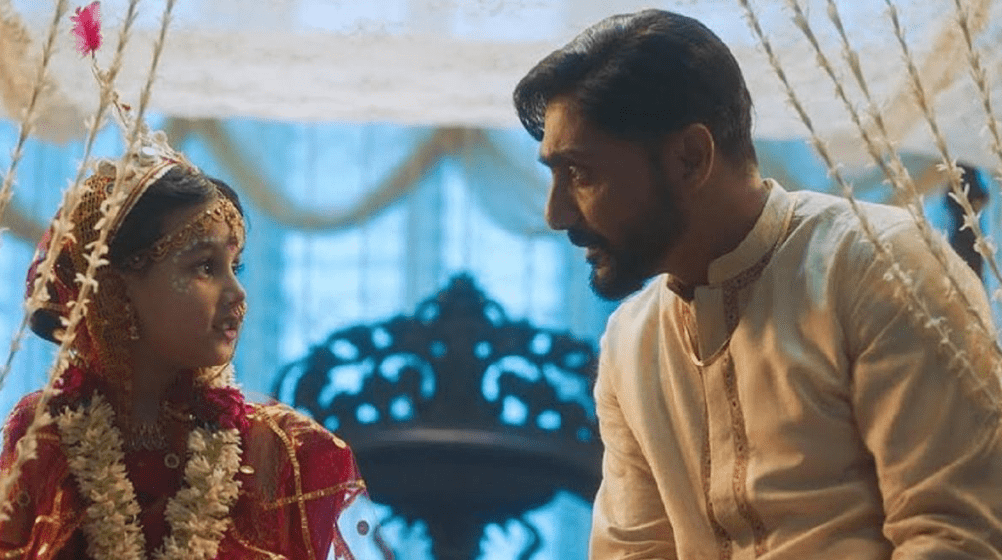
Child Marriage: A Legal View

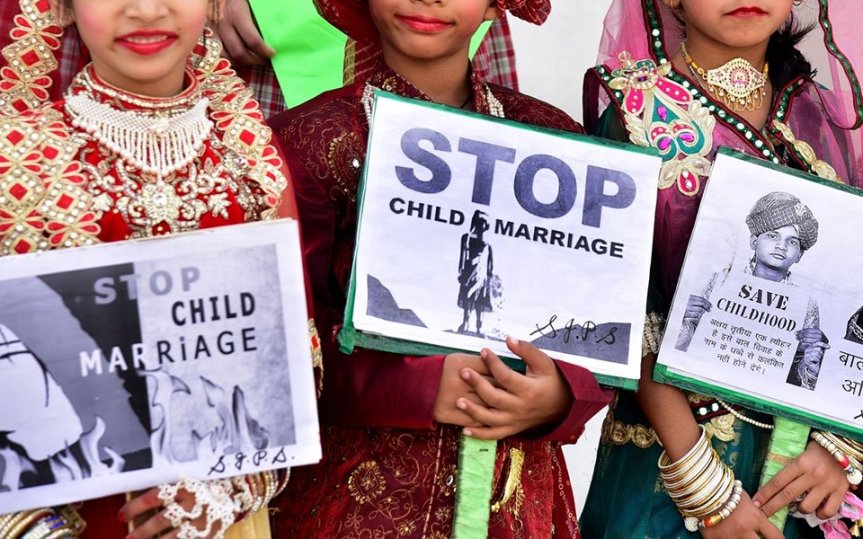
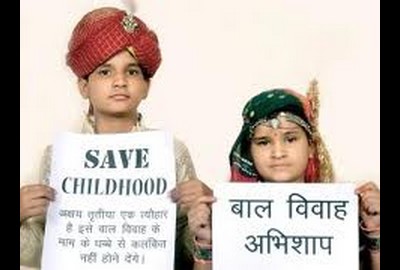
In the culture of Indian society, the practice of child marriage still subsists. Child marriage refers to a marriage duly performed by minors mainly between a female below the age of 18 years and a male below 21 years. Child marriage is customarily in rural regions where there is increased rate of poverty and illiteracy. Social customs and rites, ignorance, benight and consideration of women as a burden financially, are few factors that causes solemnization of child marriage. Such marriages have their unintended consequences like problems related to health due to pregnancy at early age, deliberately cruel gender inequality cycle and further worsening of women status also happen.

Considering all these factors, the British government in 1929 enacted the Child Marriage Restraint Act. This was the first secular law towards restraining the child marriage peril. The Act only held punishments to those adult males who married minors and the parents who encouraged such marriages but the marriage was not made void. As the punishment and fine was considerably less, the Act was hence amended now and then to increase the limit of age.

Due to the inadequacy of the Child Marriage Restraint Act 1929, a new legislation was enacted namely, Prohibition of Child Marriage Act, 2006. This new Act anticipate in averting child marriage along with intensified punishments such as fine of Rs. 1 lakh or imprisonment for two years. Provisions for the maintenance of the girl child were also implied. In case if the husband is major, he is liable to pay for the maintenance and if the husband is minor, then his family is liable to pay for the same.

The marriage would be void if the child is used for trafficking or any sort of purpose that is immoral. Under the prohibition of Child Marriage Act 2006, the age of a female is 18 years and for male is 21 years. A girl can obtain a degree of nullity within two years before attaining the age of 18 years if entered into a child marriage under the Hindu Marriage Act 1956. The parties though not did consent to the union in child marriage yet they are punishable As for now there is no such provisions for punishing the people or the parents involved in the solemnization of marriage. A girl can declare a marriage invalid if she’s married off before attaining an age of 15 and can challenge it until she is 18. However till now there is no such provision which states child marriage invalid. In India, Muslim law is not codified, thus the scholars interpret provisions of the Quran. Child marriage is not barred under the Muslim law. A guardian has authority to get a child married. Although, there is an option of puberty available to the couple where they can refuse to accept the marriage after attaining puberty following the condition that they should do it before attaining the age of 18 then only the marriage can be said rejected. According to the Muslim law, the age of puberty is 15 years. Nevertheless, the marriage prior the age of 7 is void ab initio. Under the Indian Christian Marriage Act, if a marriage is to be contracted between the minors, a notice preliminary is set to be issued 14 days before marriage. Post the expiration of the 14 days, the parties have the right to go on with the solemnization of marriage without consent of the guardian or parents. Under the Parsi marriage and divorce Act, a child marriage is considered invalid. In India, Jewish law is uncodified. According to the Jewish law, the age of puberty is the marriageable age which is fixed at 12 years.

Child marriage is jeopardy and it cannot be restrained without the support of the society. Under the prohibition of child Marriage Act, several demands have been made to make the child marriage void ab initio but the society is complex as well as complicated and making child marriage void will only prove to be hazardous for the rights of women who are victims of child marriage.
Child Marriage in India: The Problem and The Cure

Child Marriage in India

Introduction

Our country India has always been known to the world for its diverse cultural enrichments. But, the legacies from our past beliefs also bore with it some evil practices to the society that we are still dealing with. And one of those practices is the child marriage. The seeds of the problem are still buried so deep in the society and the mind of its people, that it stands alone as a huge socio-cultural challenge till today.

Historic Background

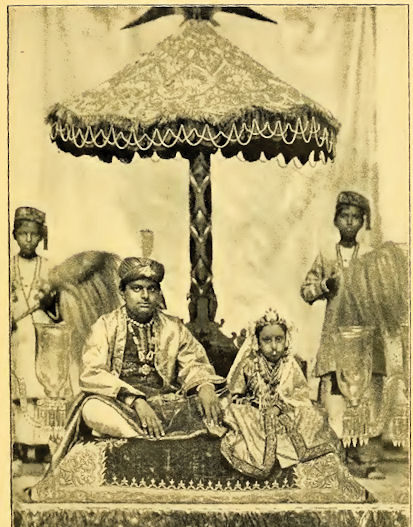
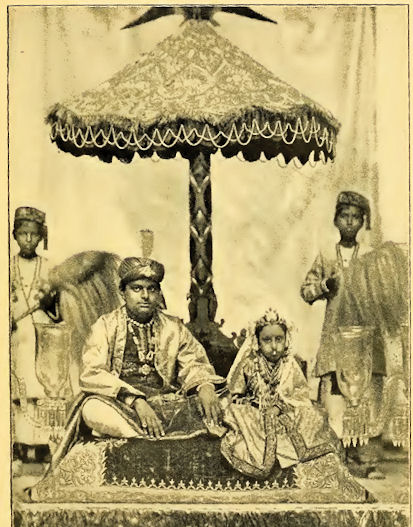
The Vedic history of India dated back to from 200 BC to 700 AD, scribes the marriage as a freedom of choosing desired partner for both men and women. But, with the formation of Government and political modification due to multiple invasions in Medieval India, the women lost their rights to education and choosing their partner and rather were subjected to obey rules and the code of behaviour. Though, age at which the girl was to be married differed and it was rare for girls younger than 12 to be married in antiquity however it became increasingly common for girls as young as six or eight to be married as young brides or “Valika Vadhu”. The parents decided on the marriages of their children at a very early age although the daughter stayed with her parents until she attained the age of puberty. Reaching to which she was bid off to her in-laws through ‘Gehna’ ceremony, in Rajasthan. While in Bengal, this practice was known as ‘Koulinya Pratha’ where a girl child was often married off to an old ‘Kulin Brahmin’ which later on led her to be ‘Sati’ after his husband’s death.

Laws against Child Marriage

The Child Marriage problem in India was first addressed during the British Era. The Child Marriage Restraint act was established in 1929 and come to force in 1930, which defined the minimum ages of marriage for men and women as 18 and 14 years respectively. However, after India’s independence, the minimum age of marriage for women was increased to 15 years. In 1978, the ages of both men and women were revised again to 21 and 18 years. In 2006, the Prohibition of Child Marriage Act came in force, though it was Inapplicable to the Muslim community. Recently in December 2021, Union Cabinet approved to raise the minimum age of marriage for women to 21 years.

The plea is getting stronger.

The Situation in Current Times and the Consequences

Though there are active laws against Child Marriage, but this practice is still ghostly being performed in various parts of India. According to a survey by UNICEF in 1998, the Child Marriage rate in India is 47%, while by UN reports it to be 30% in 2005. Jharkhand has been found to hold the highest rate while Kerala possess the lowest rate in India. Rural Child Marriage cases were found 3 times higher than Urban ares in India in 2009. The consequences of the evil practice, leave many young women shattered for their entire life. Child Marriages have reported a large number of non-consensual marital rapes, physical abuse and domestic violence, low rates of women literary, deaths during childbirth and post natal problems of both underage mothers and newborns.

Our Take: Fighting for a Social Cause

In this modern Era, India is emerging fast as an United country, with largely powered new age youths. And the present generation can give a tremendous change from the society. The situation is already getting better with more to children and giving equal opportunity to both in order to eradicate the practice completely citizens showing their responsibility male and female children. Bachao,Beti Padhao” movement The Government’s “Beti has stirred up the thoughts of young Indian people With many small initiatives, in every state, for a better future. the idea of going along with everyone with equal opportunities are being accepted by Indian parents for marrying their sons and daughters age. The priorities are being given to qualify for a good education and career build up at a matured before getting married.

The youths’ take is most important.

Conclusion

The citizens are the pillars of society and the future lies on the hand responsibility to work together to effort gets counted when we should try our best to improve of every citizen. It is our make our society even better and free from any evil practices. Every work together for a larger cause. more for a better India. The progress so far is appreciable and we

Child Marriage

The Beginning

God resides in the heart of a child. Child is as pure as water. When dirt enters in water it becomes impure. When a child is married the child loses the inner purity. To fulfill some “so called” rituals and respect their tradition people get ready to tie their children’s knot with someone even before the appropriate age. To prove our traditions, to respect them do we really need sin like child marriage? On one hand we talk about children and on the other hand we talk about marriage, how come we are living with this contradiction? We are living in a society where a separate section of society feels marrying their children after 18 is as dangerous as nuclear bomb. The actual nuclear bomb is child marriage. Because of this many children have died or let me say they have martyred. And here we are crying over GST; high price of tomatoes. This is the culture we are living with, this is the nation we are residing in.

The Middle

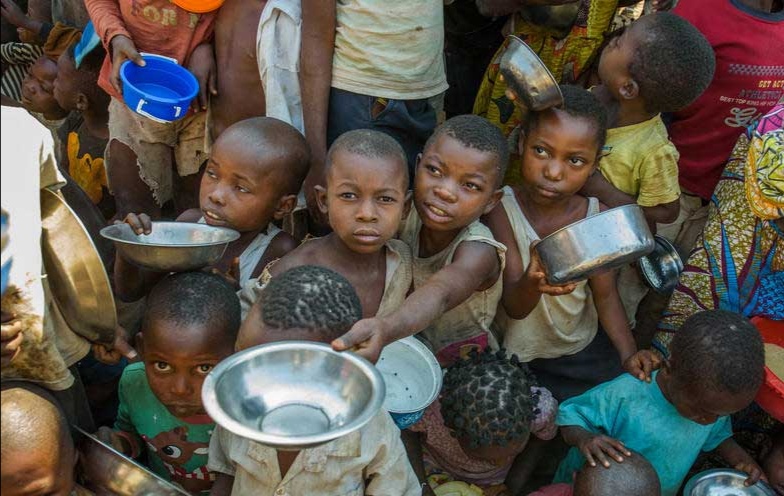
What actually child marriage is? Child marriage is a human rights violation. Despite laws against it, the practice remains widespread, in part because of persistent poverty and gender inequality. In developing countries, one in every three girls is married before reaching age 18. Child marriage is related to child espousal and court approved early marriages after teenage pregnancy. In many cases, only one marriage-partner is a child, usually the female. Child marriages were common throughout history for a variety of reasons, including poverty, insecurity, as well as for political and financial reasons. Today, child marriage is still fairly widespread in developing countries, such as parts of Africa, South Asia and Latin America. The incidence of child marriage has been falling in most parts of the world. Somewhere child marriage has given rise to teenage pregnancy. In poor countries, early pregnancy limits or can even eliminate their education options. This affects their economic independence. This makes girls more vulnerable to persistent poverty if their spouses die, abandon, or divorce them. Girls in child marriages are more likely to suffer from domestic violence, child sexual abuse, and marital rape.

Picture Credit: http://shorturl.at/afpCZ


The United Nations, through a series of conventions has declared child marriage a violation of human rights. Child marriages violates a range of women’s interconnected rights such as equality on grounds of sex and age, to receive the highest attainable standard of health, access to education and freedom from violence. The society is interlinked with each other. If one factor gets effected the whole system is disturbed. Then in which world we thought that child marriage would not create any change in our surroundings? Or the objects encircling us wouldn’t have any effect on child marriage? Factors that impact child marriage include poverty, gender inequality, protecting family honor; tradition and culture; and insecurity, particularly during war, famine or epidemics. Other factors include family ties in which marriage is a means of consolidating powerful relations between families. Why have we made marriage a form of business? Why always dowry has to be included in marriage? Why bride’s price is to be paid? Providing a girl with a dowry at her marriage is an ancient practice which continues in some parts of the world. These difficulties pressed families to betroth their girl, irrespective of her age, as soon as they had the resources to pay the dowry. A bride price is the amount paid by the groom to the parents of a bride for them to consent to him marrying their daughter. In some countries, the younger the bride, the higher the price she may fetch. Hence, the rise of the menace like child has become so popular all around the globe.

The End

Some of these marriages could have been stopped, in fact they should have been prevented only if people were well aware? No, only if we were all aware. We as a society need to come together to stop this gruesome crime. We need to stand against such traditional practices that endanger the lives of young kids, which lead to the creation of a dark cloud over these kids’ future. We just don’t need an end to this practice but we need an end to the thought process that lead people to think crimes like this to be okay in the name of traditions, we need an end to this totally aggravated legacy of ruining children’s life.

CHILD MARRIAGE

Child marriage in India, according to the Indian law, in a marriage where either the woman is below the age of 18 or the man is below the age of 21. Most child marriages involve girls, many of whom are in poor socio-economic conditions.

Child marriage was outlawed in 1929, under Indian law. However, in the British colonial times, the legal minimum age of marriage was set at 14 for girls and 18 for boys.

The minimum legal age for marriage was increased to 15 for girls in 1949, and to 18 for females and 21 for males in 1978.

Prohibition of Child Marriage Act

The Indian Government enacted the Prohibition of Child Marriage Act of 2006 by replacing the earlier legislation of the Child Marriage Restraint Act, 1929, to ensure that child marriage is eradicated from within the society.

Child Marriage Prohibition Officers (CMPO) are to be appointed in every state to prohibit child marriages, ensure the protection of the victims as well as prosecution of the offenders.

What is the punishment of child marriage?
Whoever performs any child marriage shall be punishable with rigorous imprisonment which may extend to two years and shall be liable to fine which may extend to one lakh rupees unless he proves that he had reasons to believe that the marriage was not a child marriage.

Poverty in India

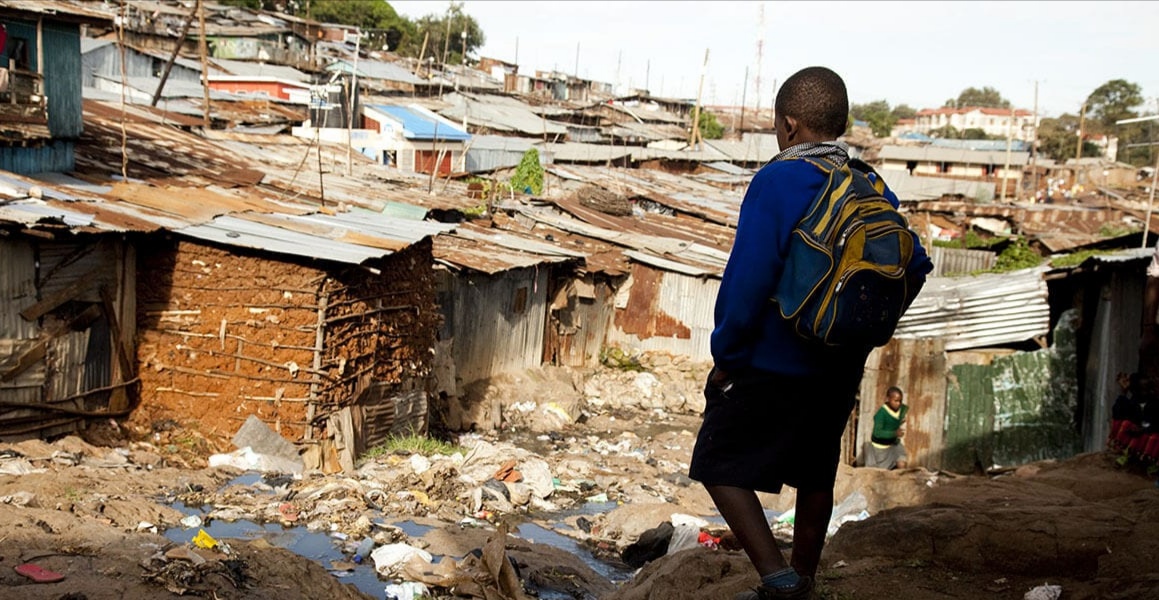
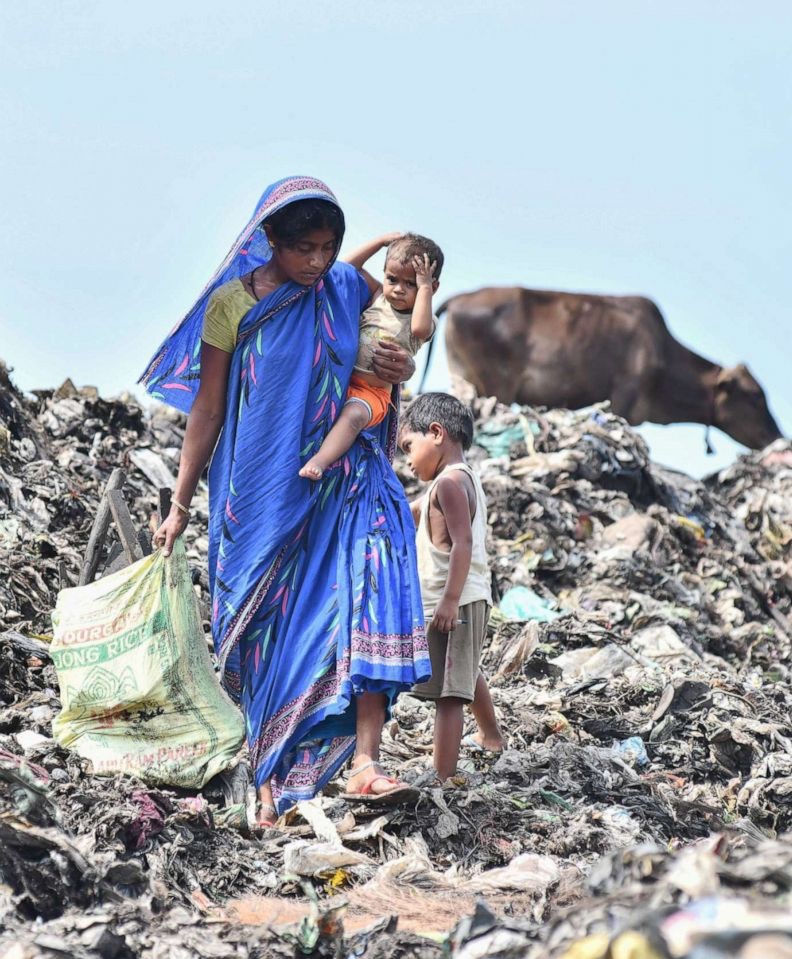
Poverty one of the major problem in India. India is the second most populous country after China with 1.2 billion people and it is the seventh largest country in the world in terms of area.

Around ⅔rd of people in India live in poverty in which 68.9 % of Indian population lives on less than 2 dollar a day and over 30% even have less than 1.25 dollar per day. And thus they are considered extremely poor.

India subcontinent is one of the poorest country in the world.

The most poor section of our country is children and Womens. They are considered as the weakest member of Indian society and that’s why they suffer the most.

In India womens are not considered as the strongest member of the society because of a patriarchy.

Education and job for womens are not considered important in our society.

By preventing education for Childrens and womens leads to the poverty and poverty is also preventing children from getting an education

Poverty in India impacts children and families in a variety of different ways:-

  • High infant mortality
  • Child labour
  • Malnutrition
  • Lack of education
  • Child marriage

High infant mortality rate

  • India is one of the country with highest child mortality rate.
  • Around 1.4 million children die each year in India their fifth birthday.
  • Major causes of death are due to pneumonia, malaria, diarrhoeal diseases as well as chronic Malnutrition.

Child labour

  • Child labour for children under the age of 14 in India is prohibited by law.
  • According to official figures 12.5 nilganj children between the age of 5 to 14 are working.
  • It is believed that Indian children’s contribute to the living wood of their poor family.
  • Children’s work in the field in factories, in quarries, private households .

Malnutrition

  • India is one of the world’s top countries when it comes to Malnutrition.
  • 7.8 infants were found to have birth weight less than 2.5Kg
  • More than 200 million people don’t have sufficient access food.

Lack of Education

  • Most of childrens have no access to education in India.
  • Girls are excluded from the school in higher numbers with respect to boys.
  • We should have to treat them equally but it is believed to be inferior on lower caste.
  • Without education, chances of finding living from employment in India is impossible.
  • If educated peoples start teaching childrens at free of cost then it also be very useful in making a better world.
  • Like If 30 college students are studying in 1 course and they start teaching poor childrens only 1 day per month then the childrens study 1 month at free of costs.
  • We also have to put some efforts in making better world not for others, but for ourselves as well.

Child marriage

  • As we know Child marriage is crime according to Child marriage Restraint Act, 1929.
  • But it is still widespread in many regions of India.
  • Poverty is also the main reason behind this.

Overpopulation

  • Overpopulation leads to high competition in every aspects of life.
  • We see lack of job opportunities, education.
  • Food production is not as much to fulfill the need of this higher population.
  • Due to overpopulation, and not doing work after having such high population in India is main reason behind poverty.
  • If we utilise this overpopulation as the opportunity to increase country’s financial condition then it actually going to worth it.

Raja Ram Mohan Roy

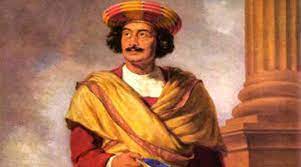
Raja Ram Mohan Roy, also the initiator in the Indian Renaissance ( a period in History that sees the transition in terms of Art and Literature) brought a revolution in society because of his positive approach towards life.  The title ‘Raja’ was bestowed upon him by the Mughal emperor Akbar II, in 1831. From his early childhood only he was outward and had a different perspective of seeing life. Raja Ram Mohan Roy was born on August 14, 1774, to Ramakanta Roy and Tarini Devi in Radhanagar village of Hoogly district, Bengal Presidency. He belonged to a wealthy Brahmin family but his father was orthodox. At the early age of 14 yrs only he wanted to become a monk but his mother simply denied it.

Personal life.

He married thrice and had two sons from his second wife. His first two wives died early but his third wife survived even after his death. He got his education in Bengali and Sanskrit from his village school. Later he was sent to Patna for higher education and to learn Persian and Arabic languages which were a part of the Mughal court. He was fond of studying and read Quran. Further, he went to Kashi to master Sanskrit and in no time he learnt it and started reading scriptures, Vedas and Upanishads. After attaining knowledge in these languages he started studying English. Euclid and Aristotle had a huge impact on his thinking. After attaining so much knowledge from various sources gave a new dimension to his life which even he was not aware of. He had never thought that because of him, society will change he will become the creator of the new modern society. After getting his education, he started working as a clerk under the service of East India Company. Later he was promoted to the position of Diwan. This was all due to his dedication to his work.

Abolition of Sati Pratha

While the society saw a lot of changes and barbarism, Raja Ram Mohan Roy thought of changing the society so he talked to Lord William Benedick who helped him after seeing his plea. He made a rule that Sati Pratha would not be followed anymore. Those who tried doing so would be prosecuted. It was very difficult to accept the new normal but it proved to be a blessing in disguise for the girls.

Pardah system

The time when wearing a mask in hot weather is so difficult, we can understand how difficult it must have been for women to cover themselves or to keep a veil around them, But it was done. The time when trying to change society was almost impossible, Raja Ram Mohan came up with the idea of changing the mentality. He opposed the idea, brought a revolution, and unveiled an era of freedom for women for which women are still thankful to him that he understood the problems of a woman in spite of being a man.

Child Marriage

These days it is very common not to be married even at the age of 30 yrs and during the Eighteenth century… children were married at an early age of 8-9 yrs. It was important for people to understand that a child does not have the mental capacity to understand relations till the time he/ she attains maturity and he/she needs to understand himself first. During that period Raja Ram Mohan Roy stopped this corruption in the society as he himself was a sufferer in the hands of fate due to his three marriages.

Brahmo Samaj

He founded the Brahmo Samaj in 1828, Its chief aim was the worship of the eternal God. It was against priesthood, rituals, and sacrifices. It focused on prayers, meditation, and reading of the scriptures. It was against idol worship and followed the British learnings. Today it exists in the name of Adi Dharma.

CONCLUSION

We learn from him that it is very important to raise our voice against misdeeds and injustice…we expect a change in society but we ourselves are not ready to change. It is mandatory as said by Gandhiji “ to be the change that you wish to see in the society .’’ 

“Bulbul” movie review

I saw this Hindi movie recently and I would like to give my opinion on it. “Bulbbul” was recently released on Netflix on 24 June, 2020 by the production company ‘Clean Slate Films’. A supernatural horror produced by Anushka Sharma and directed by Anvita Dutt Guptan. It is roughly based on Rabindranath Tagore’s “The Broken Nest” which is based on his own life incidents.


The movie is set in 18th or 19th century Bengal. It doesn’t have many characters. Our main characters are Bulbbul, a child who is barely five years old when she gets married to Indranil, also known as ‘Bado thakur’. Indranil has two brothers namely Mahendra, his mentally challenged identical twin and Satya, the youngest close to Bulbbul’s age which is the reason why they become close friends which becomes a matter of concern for her husband. Bulbbul grows up to be an enigmatic woman. We see how men in her village are brutally being killed by some witch or chudail.


Basically the film takes us on a journey of Bulbbul’s growth from an innocent child bride to a strong woman who runs her own household.
The character of Bulbbul is played by Tripti Dimri. In my opinion, I don’t think anyone could have done a better job playing the role. Though not from a Bengali background she does a pretty great job in giving us those typical Bengali vibes. Rahul Bose as Indranil (as well as Mahendra) does a pretty great job too. Handling two very different roles at the same time is not easy but he did it. Avinash Tiwary acts as Satya; another great work. Paoli Dam as Mahendra’s wife, Binodini. Parambrata Chatterjee as Sudip, the village doctor. I feel the cast was great. Each one of them did a wonderful work and I cannot imagine anyone else replacing them.
The music is exceptionally good, gives you goose bumps every time you listen to it not because it scares you but it feels like there’s a story behind everything screaming to be heard. Hats off to Amit Trivedi. It gives a special essence to the movie. Another thing I loved was the cinematography. Scenes where the witch or the chudail was to be, the screen would turn red telling us to hold on to our seats for something is about to happen. It has a feminist theme. It shows how women change themselves due to past abuse. Paoli Dam’s character had this dialogue “Badi havelion me bade raaz hote hai” translates to “big havelis have big secrets”. This explains a lot about the chudail. One would understand when they see the movie.
Lesson I learnt was innocence is a pure thing taking that away from someone is sinful.
The movie is family friendly except a couple of scenes but I think it’s high time little girls need to be made aware what the real world holds.
It has a 4.3/5 audience rating. I would totally give it a 4.5/5 just because there is this one thing that it becomes predictable midway. Apart from that it is a masterpiece and a change from regular Indian thriller.

Thank you for reading. Have a nice day!

HOW PHOOLAN DEVI BECAME A BANDIT QUEEN (part 1)

She belonged to a  poor rural family in Uttar Pradesh and was married at a very young age of 11 years with Puttilal Mallah. He was three times older to her, she tolerated endless beatings and sexual abuse by her husband. When the situation became intolerable, after several attempts she finally ran away and returned to her family. 

Starting of imprisonment 

After some time, Maya Din (her cousin), remembering the insult that he faced due to phoolan in childhood, went to the cops and accused her of stealing his belongings. The cops kept Phoolan for almost three days and abused her, and then let her go with a threat to behave better in the future and live peacefully without battling with her family or with anyone else. When she was released, her parents wanted her to return back to her in-laws as she turned sixteen, but they never accepted her. Somehow they took Phoolan, but she again returned to her parents(not virgin anymore). Her in-laws later stated that under any circumstances they will not take Phoolan back. Life as a Bandit was not at all easy. In 1789 she fell with a gang of Dacoits. Nobody knows whether she was kidnapped or her own insanity, she always regretted this juncture. The leader of the gang was Babu Gujjar, who raped, assaulted, and dehumanized her for three days. The second-in-command of the gang Vikram Mallah saved her as they both were from the same caste. Vikram Mallah killed Babu Gujjar due to a rape. The following morning, he became the leader of the gang. Though Vikram was married and so was she, they resided together. After a few weeks, their gang attacked the village of Phoolan’s husband. She herself dragged him on the road and left him almost dead with a note “older men not to marry young girls”. However, he outlived but with a permanent abdomen pain. After this incident as legally, he was her husband, villagers avoided his company due to the threat of the gang. She then learned using a rifle from Vikram and became a gang activist across the UP- MP border in Bundelkhand. Activities such as kidnapping for ransom, visiting villages looting wealthy upper-caste society were a part of spreading threat and caste discrimination. 

Phoolan’s tongue was actually a problem for every other gang member as the gang consisted of mixed caste members.

Vikram’s death.

 The trouble began within the gang itself resulting in Vikram and Phoolan standing on the same side and the rest of the gang members on the other as the majority of the gang later had Rajputs. Soon after a gunfight happened. Vikram and Phoolan escaped, yet they were later chased and Vikram Mallah was shot dead. Phoolan was taken to the Rajput-dominated village of Behmai by her, not so-called gang members, where she was locked, raped, and molested by gang members of upper-caste for a span of three weeks. They even paraded her uncovered throughout the village. Then she again managed to escape with the help of low caste villagers and gang members involving Man Singh. Later they became lovers and set up a new gang. 

Murders in Behmai

Revenge was in her blood, after the escape she returned back. She demanded to confront the one who was responsible for the assault but couldn’t find it. To spread fear she then took young men of the village and aligned them and shot 22 men. Every department tracked her but failed as she had the support of needy ones.

Vikram taught Phoolan, “If you are going to kill, kill twenty, not just one. For if you kill twenty, your fame will spread; if you kill only one, they will hang you as a murderer.” This motivated her to kill 22 men of the upper caste. 

She was assaulted so many times, didn’t give up, always came back for revenge. She has gone through every evil aspect including child marriage, rape, assault yet came to be fearless.