COCOA TO YOUR MOOD

N kavya

The secret affinity for cocoa which you publicly call Chocolate lover.

Cocoa, the must-do element in our deserts is slowly becoming one of the crops in our country. You can see this in Karnataka, Tamil Nadu, and Kerala. We can see cocoas cultivated as an intercrop for coconut because the coco tree sheds leaves that are converted naturally to organic manure and it helps in better yielding. The area under cocoa cultivation is under the supervision of many chocolate-producing companies, as contract farming areas. The cocoa is a small evergreen tree. The cocoa takes three years to yield. Then we can see it gives yields every three months in a year. After the process of fertilization, we can see the exocarp (outer layer) turning to green color. One week later, the exocarp ripens to a final yellow color indicating that it is ready for the harvesting process. Then, the plantation caretakers break the exocarp of cocoa which is a thick shell, and then remove the cocoa beans. You can see the cocoa beans covered fully with a white pulp so they make sure the beans are sundries as the white pulp drips out in the process. Later, they wash the cocoa beans thoroughly and then sundry beans for five days. Then, we can see the cocoa beans turning from pinkish to golden brown color. The caretakers store the cocoa beans away from sunlight. Then, every two months the respective company that signed the contract visits the plantation and collects the cocoa beans, and pays them accordingly to the market value. Currently, the market value of cocoa beans is rupees 170/per kg. The collectors later process the cocoa beans in the companies and the cocoa beans are granulated into powder-sized fine cocoa powder. Which we use for multiple purposes such as baking, cooking, and even pastry making.

Image Credits- Google

The plantation workers, collectors’ processors, and many other people involved in the process work hard and bring to us the cocoa powder and chocolate flavor that we all love. Cocoa is nutritious and is very easy to add to our diets. It helps maintain blood sugar and improves heart and brain health. It is rich in antioxidants and also promotes a healthy vision. It also has its demerits such as sleeplessness, increased urination, irritability, dehydration, nervousness, and has high-calorie count.

Cocoa also provides the raw material for the multi-billion global chocolate so the major chocolate-producing companies in India such as Amul, Hershey’s, and Cadbury encourage the coconut or areca nut plantation owners to grow the cocoa trees by giving free cocoa tr.ess and also providing the manure needed to the plants. The government also encourages providing subsidies to the farmers because it provides a livelihood for smallholder farmers. At last, cocoa powder, as well all know, is a must-have in any kitchen as it is very much loved by individuals of all age groups and is also a raw ingredient in many easy dishes such as chocolate custard, cake.

Image credits – google
Image credits- Google
Image credits – Google
Image credits- Google

The Easiest Dessert Recipe You Can Follow

Let’s face it, many of you watch a recipe video or a blog post about a certain food you are craving and you want to try making it. As soon as you enter the kitchen and list off the few ingredients you need, your mom hits you with the, “We don’t have any of those, Beta.” Well, I have been a victim of that too, so I curated the easiest technique of making donuts. I can give you 99.9% (not a 100 because even Dettol doesn’t guarantee you that 1%) guarantee that you will have all the ingredients you’ll need in the cabinets and drawers of your kitchen.

Donuts, or doughnuts, is made by frying sweetened dough, topped with toppings of your choice. Noticed I said fried? Yes, you read it right, you don’t need an oven to make these sweet, puffy and warm delicacies.

Moving on, let me show you what you’ll need and how you can make the easiest and the tastiest donuts in the comfort of your home.

Ingredients

  • Refined wheat flour
  • Sugar
  • Yeast
  • Butter
  • Baking powder
  • Refined oil
  • Chocolate (optional)
  • Vanilla extract (optional)

Steps

  1. To activate the yeast, add a teaspoon of sugar in a cup of warm water and stir until dissolved, sprinkle in some yeast and let sit until frothy—for about 8 minutes.
  2. In a clean bowl mix the activated yeast with flour, butter, sugar and half a teaspoon of baking powder. Add vanilla extract if available to enhance the flavour. When the dough is ready, cover it with a clean cloth and let it rise for a few hours.
  3. Once the dough has risen, roll the dough ½” thick and cut out circles in it with the help of a doughnut cutter or 3″ and 1″ biscuit cutters. You can even use a clean container lid and punch holes using a smaller container lid.
  4. Heat the oil for 3 minutes on medium and pop in 2-3 donut rings. Cook on both sides until the colour is slightly deep golden and place them on a baking sheet for 5 minutes.
  5. Coat with powdered sugar or melted chocolate—lo and behold, your homemade donuts are ready to be devoured!

Try out this recipe once, you’ll never regret it! As for store-bought donuts, you can bid them goodbye!

Chocolate Poisoning: Comfort For Us, Catastrophe For Our Pet Friends

Chocolate is one of the favourite foods of human beings. A gift, a comfort food, a truce, you name it, chocolate has everything covered. And it is unanimously favourite in almost all the age groups, but more in the younger ones. All and all, chocolates’ demand isn’t going down anytime in the near future. And speaking of tasty treats, we are taught to share it with friends. But are they good for our furry, pet friends too? Actually they aren’t! 

Animals, especially the commonly domesticated ones, are susceptible to chocolate poisoning. Chocolate contains a compound theobromine (C7H8N4O2), which is an alkaloid found in the cocoa trees. Apart from chocolate, this alkaloid is also found in tea leaves, kola nut, etc.  It has resemblance to the stimulants like caffeine and theophylline, and can be classified as xanthine alkaloid. For now, the median lethal doses for the cats, dogs, rats and mices are commonly known.

Alkaloids are organic compounds with a typically basic chemistry, but they also contain some compounds with neutral, or even slightly acidic properties. They all, uniformly, have a bitter taste. In nature, bitter taste is a danger indicator, and hence, are produced in several plants, like cocoa plant, as a response to the avoid predators. Animals, under the usual circumstances, do not consume the cocoa seeds. Even if some animals consume the cocoa pods, they dispose of the cocoa seed, despite their fat content, most likely due to the high amounts of theobromine.  

But, in chocolate, cocoa’s bitter flavour is partially or fully masked by the added sugar and fats. Hence the animals, especially the ones whose taste buds can detect sweetness, like dogs, have a tendency to consume them. Cats, on the other hand, due to absence of ability to detect sweetness, are not very prone to consuming chocolates accidently. 

Even in human beings, it can cause effects on consumption above a limit. The lethal dosage 50% (LD50), which happens to be the quantity that can kill 50% of the individuals of a particular species, in humans happens to be 1000mg/kg. At a consumption level of 0.8-1.5g/day, symptoms like sweating, headaches and trembling are observed. At 250mg/day, limited effects on the mood is observed. Along with human beings, rats and mices also have a good tolerance to theobromine, with the LD50 levels being 837 mg/kg and 1265 mg/kg respectively.

But, cats and dogs have comparatively lower quantities for LD50. The dogs drop down at the 300mg/kg level, while cats are at 200mg/kg. Hence, even a small amount of cocoa consumption can be harmful for them, especially for the smaller sized individuals. Also, the type of chocolate consumed is an important factor in the theobromine poisoning cases. The dark chocolate items contain a very high amount of theobromine concentration. In comparison to that, milk chocolate contains relatively smaller concentrations (10 times lesser than dark chocolate). Unsweetened cocoa powder is the most concentrated. 

The early symptoms of chocolate poisoning include vomiting, nausea, diarrhea, increased urination and mood swings.Dogs and cats digest theobromine slower than the human beings, and hence, are susceptible to succumbing to chocolate poisoning. Clinical symptoms of poisoning can last upto 72 hours. More severe symptoms include epilrptic seizures, internal bleeding and cardiac arrests. All these can lead to an eventual death.

If identified early, chocolate poisoning is treatable. Veterinarians treat these cases by inducing vomiting within two hours of ingestion, and by administering benzodiazepines for seizures. 

But whatever be the treatment, the ordeal is painful for the animals. And as the old saying goes around, “ Prevention is better than cure”. So, the least we can do for our beloved pets is to keep them safe from accidental consumption of harmful items.

Website Reference:

https://en.wikipedia.org/wiki/Theobromine_poisoning

https://en.wikipedia.org/wiki/Theobromine

Chocolate and its Evolution

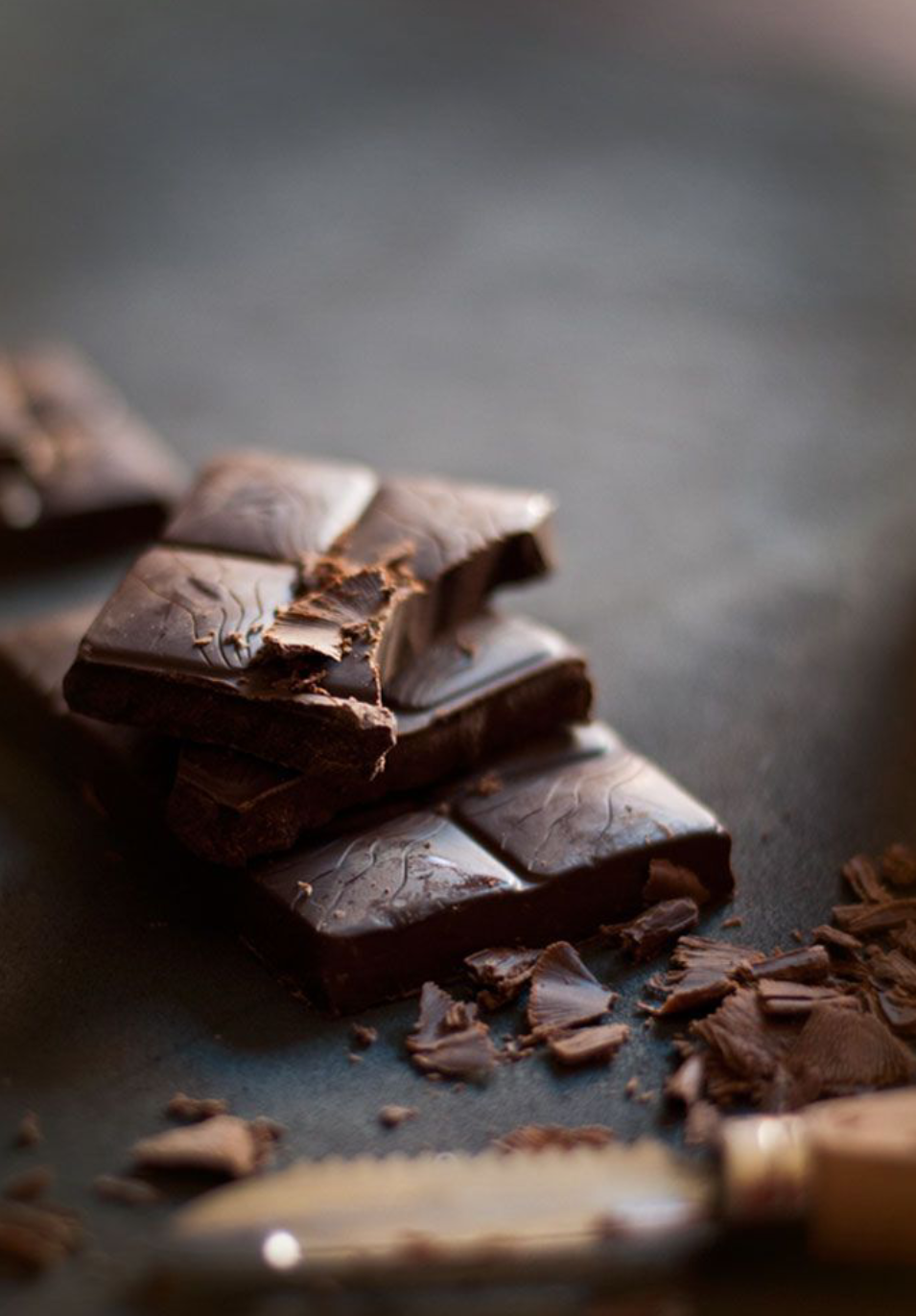
Chocolate is a sweet brown food preparation of roasted and ground cacao
seeds that is made in the form of liquid, paste or in a block or used as a flavoring ingredient in other foods .The word ‘Chocolate’ is the Aztec word, ‘Xocolatl’, which means ‘Bitter Water’.Theobroma cacao is the scientific name of the tropical tree that bears the fruit whose name means the ‘food of he gods’.

The Brief history behind chocoloate

Before the 16th century chocolate existed in mesoamerica. The first
people to use chocolate were probably known as Olmec of what is today southeast Mexico. They lived in the area around 1000 BC where the cacao trees grew
wild. It is not yet known if the Olmecs actually used chocolate.However the Maya who inhabited the same general area a thousand years later did use chocolate. The Mayans used the cacao beans as currency. Even after
counterfeits were made by carving clay, the beans were still used as currency in parts of Latin America until the 19th century. The Mayans also used chocolate in religious rituals. They were also
used in marriage ceremonies and baptism. They even had a cacao god. But the Mayans prepared chocolate strictly for drinking. Only the rich
could afford this luxury. Emperors were often buried with jars of chocolate at their side.After the Aztecs overthrew the Mayas they kept the chocolate tradition
alive. The Aztecs dominated the region and continued using cacao as currency. Soon after the Spanish conquest of the Aztecs, chocolate was imported to Europe.

How did chocolate become so popular?

The Spanish initially did not like the bitter taste of chocolate but imported it back
to Europe. It was therefore initially used as medicine to cure abdominal pain . By the 1590s chocolate was mixed with honey, vanilla, and sugar, giving it a much
sweeter taste. Initially chocolate was considered sinful by some members of the church as some
drank it to divert themselves from a long service. This changed as the elite and
noblemen supported its consumption. However chocolate always remained a drink.
After the introduction of industrialization, entrepreneurs began experimenting
with different machinery to facilitate the process of separating cacao butter from
cacao seeds. Soon cacao powder was produced and chocolate now became more mass
produced. However it was still a product for the upper class.

Who first invented chocolate

The creation of the first modern chocolate was by Joseph Fry who
discovered in 1847 that he could make a mold able chocolate paste by
adding melted cacao butter into Dutch cacao.It was by 1868 a little company called Cadbury was marketing boxes
of chocolate candies in England. Milk chocolate hit the market a few
years later pioneered by another name – Nestle. By the 19th century chocolate became a mass produced.

Types of chocolates

Chocolate Liquor : Its referred to as unsweetened chocolate and is the
base of all types of chocolate. This thick dark brown paste is created from
cacao nibs, the inside of the cacao beans. Despite the name it doesn’t
contain alcohol.
● White chocolate : It is made by combining sugar, cacao butter, milk,
vanilla, and an emulsifier (lecithin).
● Milk chocolate : It is made by combining chocolate liquor, sugar and milk.
Sometimes emulsifiers are added for smoothness.
● Dark chocolate : It is referred to as black or semisweet and made of
chocolate liquor and sugar.
● Bittersweet chocolate : It is often referred to as extra dark chocolate.
● Ruby chocolate : This chocolate has a hot-pink hue as it derives colour
from a specific type of cacao. It gives a taste of fruitiness and sour taste.

Food from scratch…

Noodles

A 4000 year old bowl of noodles unearthed in China is the earliest example ever found of one of the world’s most popular foods. Noodles have been a staple food in many parts of the world for at least 2000 years. But who inverted the noodle? This is a hotly contested topic – with the Chinese , Italian and Arabs all staking a claim.

Ice cream

The first ice cream was probably made by chance when someone left some milk outside on a cold night and it froze!

Alexander the great enjoyed ice cream made with milk, fruit juice, honey and snow in the 4th century B.C. and the Roman emperor Nero ordered ice to ne brought from the mountains and combined it with fruit toppings. The Chinese also had a method of making ice creams and some believe that ice cream came to Europe from China.

It was Quintus Maximus, a roman general, who first wrote down a recipe for ice cream. Marco Polo brought the Chinese recipe to Venice after his visit to Peking. The king of England, Charles I is supposed to have offered his chef a handsome reward to keep his ice cream recipe a secret!

You favourite ice cream cone was invented by a pastry maker Ernest Hamwi in 1904, at the World Fair in St. Louis. He put a scoop of ice cream on his pastry when an ice cream seller in a neighbouring stall ran out of dishes- and it became an instant hit!

Chocolate

Cocoa, from which chocolate is made is said to have originated in the Amazon atleast 4000 years ago. The origins of chocolate can be traced back to the ancient Mayan and Aztec civilization in central America, who first enjoyed ‘chocolatel’, a much prized spicy drink made from roasted cocoa beans, the Aztecs believed that the cocoa tree was a gift from their God, Quetzalcoatl. According to legend, He had been banished by the other gods for giving the tree to mankind, but he promised to return to them one day.

The Spanish, led by Hernando Cortez, invaded Mexico in the 16th century. When the Aztecs saw Cortez, they believed their god had returned and welcomed him with a golden cup of chocolate! When Cortez returned to Spain in 1528, he loaded his galleons with cocoa beans and equipment for making the chocolate drink. Soon ‘chocolate’ became a fashionable drink enjoyed by the rich in Spain.

It was in 1847 that solid chocolate, as we know of today, was made by Fry and sons of Bristol by mixing sugar with cocoa powder and cocoa butter and your favourite treat was born.

Chewing gum

Thousands of years ago people chewed gum in it’s natural form. The most common ancient chewing gum was tree resin lumps, but people chewed various sweet grasses, leaves, grains and waxes also. The first commercial Chewing gum was made and sold in 1848 by John Bacon Curtis. He made a sticky, rubbery material from the spruce tree which could be chewed. In the 1860’s, Thomas Adams began selling chicle, a gum from the sapodilla tree of Mexico’s Yucatan desert.

Thank you for reading. Have a nice day!🌼