Role of civil services in a democracy .

In the process of governance, which involves several sets of activities to deliver effective services to people, civil services play a pivotal role in providing shape to policies that reflect people’s needs and put their suggestive, analytical and informative roles to implement the
policies. It is recognized that civil services play a crucial role in all societies. In the modern administrative state, public administration has become so significant that our development, upliftment and progress depend mainly upon the efficient functioning of civil services that are
the bedrock of public administration. Civil services have assumed more important role in democracy to ensure good governance, both in developing and developed countries. Civil Services form a part of bureaucracy, wherein the roles of civil servants are determined by
written rules. It’s an impersonal system operating on the basis of calculable rules and staffed by full time appointed officials. Usually, the civil servants are selected on basis of their technical
qualifications, receive fixed salaries, have a defined sphere of competence and work under a clearly defined hierarchy of offices.
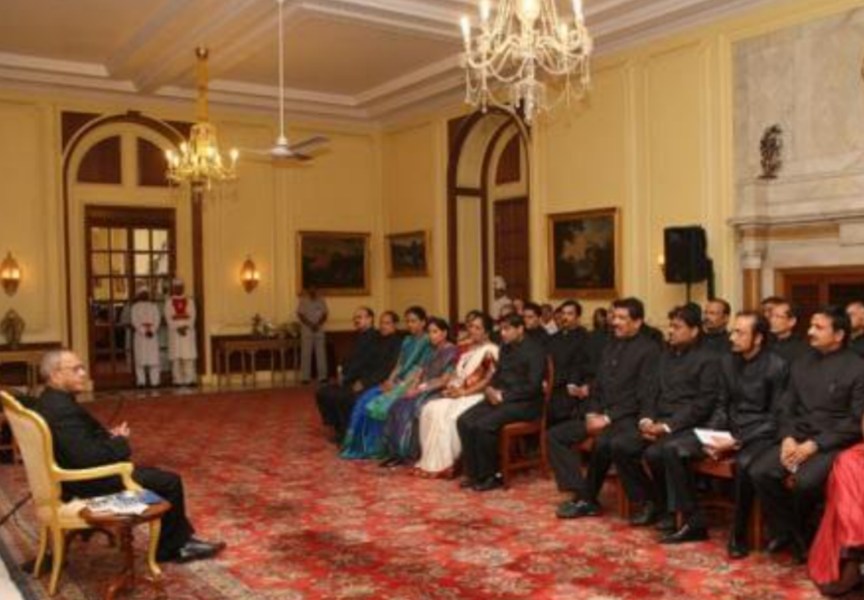
The role of Civil Servants across the domains of policy making and policy implementation is critical to the development process. They assist in identifying major policy areas such as preparing major policy proposals, analyzing various alternatives and solutions to societal problems requiring urgent attention, dividing the major policies into sub-policies, determining
program of action and suggesting modification in the existing policy on the basis of its experience on the implementation front.Civil services carry on the governance when governments change due to elections etc. Ramsay
Muir has remarked that while governments may come and go, ministers may rise and fall, the administration of a country goes on forever. It is needless to say that civil services form the backbone of administration. E.g. In India, when the President’s Rule is imposed in a state, the
Governor runs the state through the Chief Secretary and other civil servants.The civil servants are responsible to the ministers of the departments in which they serve. The ministers are accountable to the people through the Parliament or State Legislatures, and the civil servants are accountable to the ministers. They should ideally serve the elected government of the day, as government policies are the functions of the civil services. However, an impartial civil servant is also accountable to the Constitution of India on which he has taken an oath of allegiance.

In India, bureaucracy or civil services is permanent and does not change with the government. The recruitment is based on merit and through competitive exams. This is in contrast to the system followed in the US, where civil servants, especially in the higher echelons, change with the government. This is called the spoils system where people who are close to the government of the day get posts.
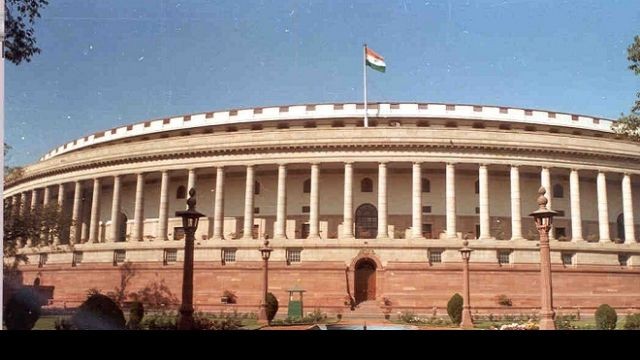

With bad laws and good civil servants it’s still possible to govern. But with bad civil servants even the best laws can’t help.

-Otto von Bismarck
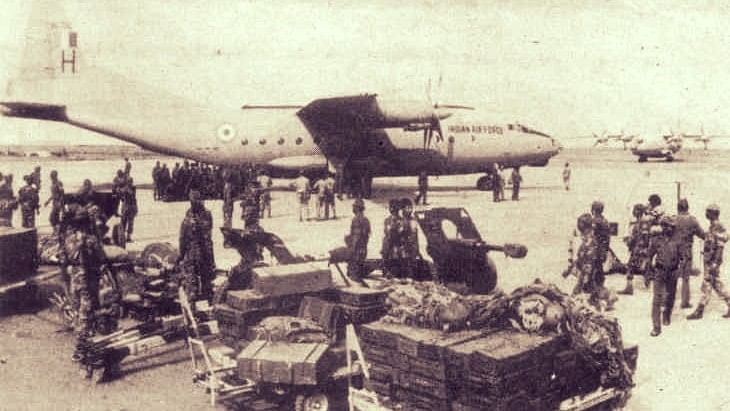
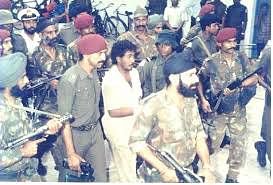
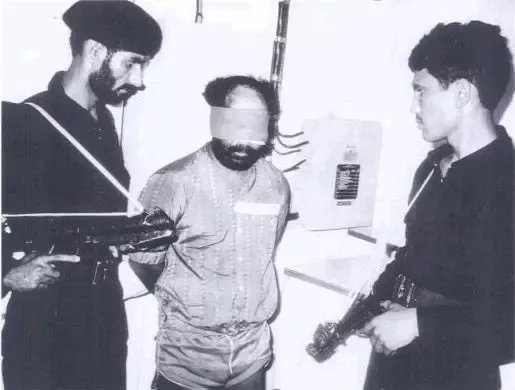
Operation Cactus by Indian Armed Forces which saved Maldives freedom.

Operation Cactus, led by the Indian Armed Forces in 1988, to stop a group of Maldives mercenaries led by businessman Abdullah Rutufi, and armed mercenaries of the Tamil Elam People’s Liberation Organization (PLOTE), a separatist Tamil organization in Sri Lanka. It’s strategy was to overthrow the government in the Maldivian island republic.

Thier were two coup attempr done before 1988.The 1980 and 1983 coup attempts against President Maumoon Abdul Game were not considered serious, but the third coup attempt in November 1988 surprised the international community. About 80 armed PLOTE mercenaries boarded a speedboat from a Sri Lankan cargo ship hijacked in the capital Male before dawn. A similar number has previously invaded Male in the guise of a visitor. The mercenaries soon gained control of the capital. This includes major government buildings, airports, ports, television and radio stations. The mercenaries then marched to the presidential residence, where President Gayoom lived with his family. However, before they arrived at the presidential residence, President Gayoom was escorted to the Defense Minister’s house by a Maldivian national security forces. The Secretary of Defense then took the president to a safe home.

Meanwhile, the mercenaries occupied the presidential residence and managed to take the Maldivian Minister of Education hostage. President Gayoom called on Sri Lanka and Pakistan government to intervene in the military, but both refused to help because of lack of military power. The president then demanded Singapore’s intervention, but Singapore refused for the same reason. He then contacted the United States and was told that it would take a couple of days for the US military to reach the Maldives from the nearest military base in Diego Garcia, which was almost 1000 km away. The president then contacted Britain and who advised them to seek help from India. After that, President Gayoom sought help from the Indian government. India soon accepted their request and an emergency meeting was convened at the Secretariat Building in New Delhi. Within 16 hours of SOS, India was ready for thier missions.

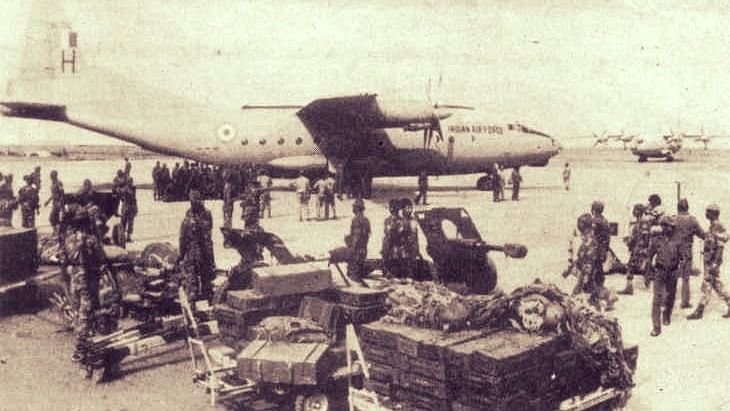
Rejaul Karim Laskar, a member of India’s then ruling party, the Indian National Congress, said that intervention of India in coup d’etat was necessary because without India’s intervention, outsiders powers were tempted to intervene and establish base in the Maldives. . Therefore, India intervened through “Operation Cactus”. On the night of November 3, 1988, the Ilyushin Il-76 aircraft of the Indian Air Force took elements of the 50th Independent Parachute Regiment, the 6th Parachute Regiment Battalion, and the 17th Parachute Field Paratrooper Regiment under Brigadier General Farsala from Agra Air. He flew non-stop for over 2,000 kilometers (1,240 miles) and landed at Male International Airport on Hulhule Island. Indian Army paratroopers arrived in Hulhule nine hours after President Gayoom proceedings.

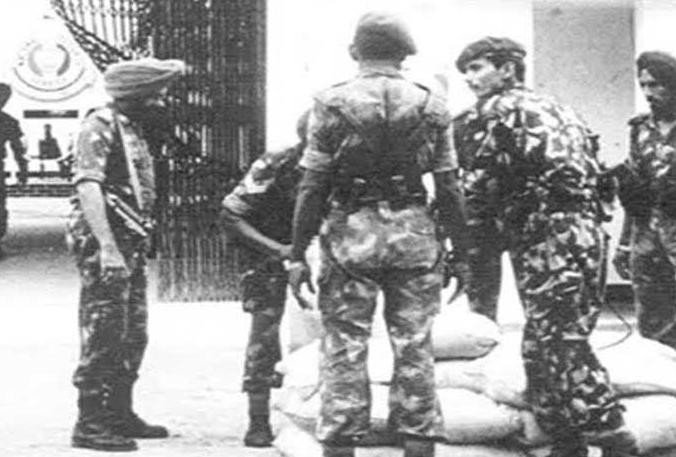
Indian paratroopers quickly secured an airfield and sailed to Male on a confiscated boat to rescue President Gayoom . Paratroopers handed over control of the capital to President Gayoom ‘s government within hours. Some of the mercenaries fled to Sri Lanka on a hijacked cargo ship. Those who could not arrive at the ship in time were immediately rounded up and handed over to the Maldivian armed Forces and government. According to reports, 19 people died in battle, most of them mercenaries. The dead included two hostages killed by mercenaries. And Operation Cactus took 18 hours for Indian Armed Forces from start to finish. Indian Navy frigate Godavari and Betwa intercepted a cargo ship off Sri Lanka and captured mercenaries. The swift intervention and accurate intelligence of the Indian Army was able to successfully subdue the coup attempted in the island nation.

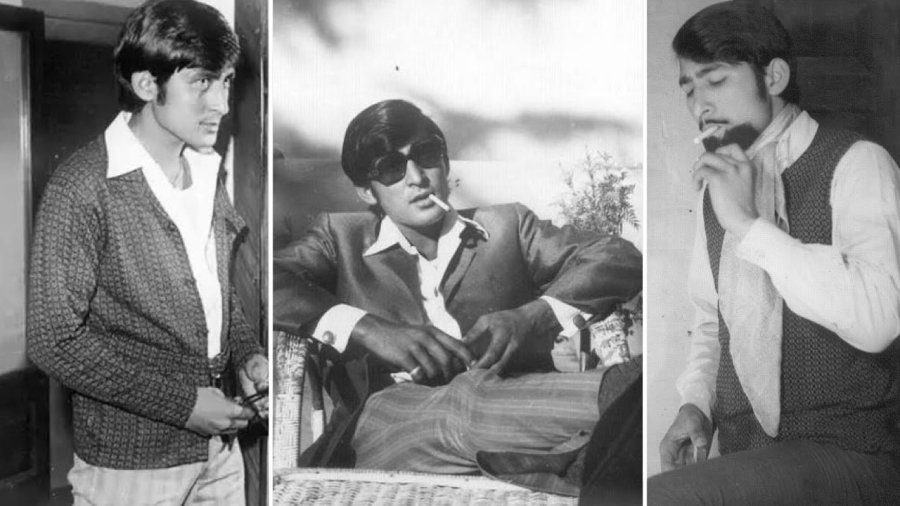
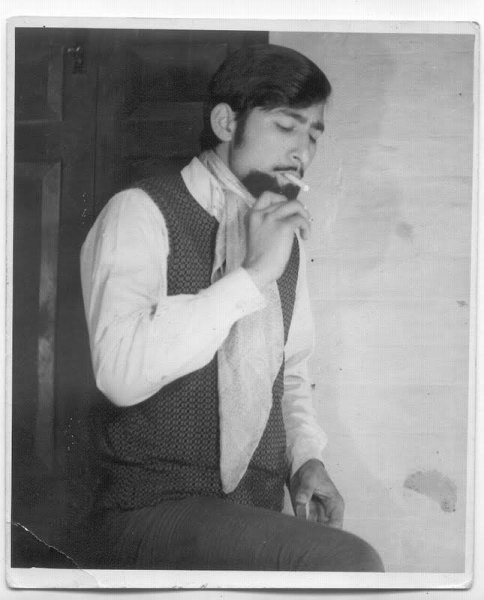
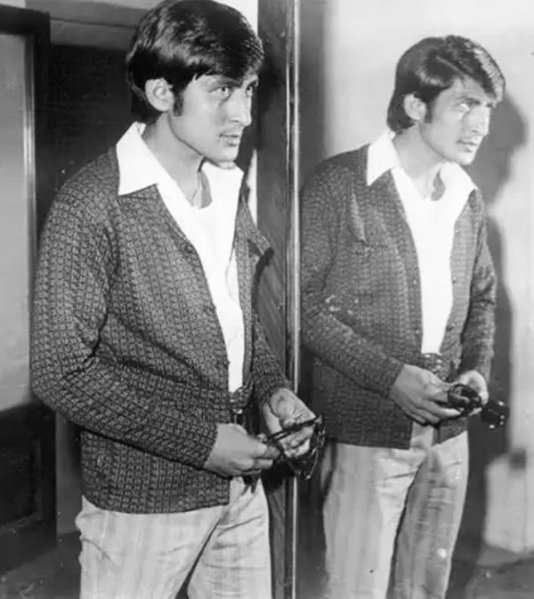
“Black Tiger” Of India Ravindra Kaushik.

Ravindra Kaushik who served in (R&AW) ,famously known as Black Tiger was born in Sri Ganganagar, Rajasthan on 11 April 1952 in a Brahmin family.
Ravindra during his graduation days used to do drama plays and during this time Kaushik displayed his talent at the national level dramatic meet in Lucknow, Uttar Pradesh, which was witnessed by officials from the Research and Analysis Wing. After which he was contacted and offered a job of being an undercover Operative for Research and Analysis Wing in Pakistan.

After agreeing to work for R&AW Kaushik was given extensive training in Delhi for two years. He underwent circumcision so he could pass as a Muslim. He was taught Urdu, given Islamic religious education and acquainted with the topography and other details about Pakistan. Being from Sri Ganganagar, a city near Rajasthan’s border with Punjab, he was well versed in Punjabi, which is widely understood in Punjab and Pakistan as well., India. In 1975, at the age of 23, He was sent to Pakistan.
Kaushik was given the cover name “Nabi Ahmed Shakir” and entered Pakistan in 1975. He was successful in getting admission in Karachi University and from where he completed his LLB. He then joined Pakistan Army as a commissioned officer and eventually promoted to the rank of a major. While living in Pakistan under his cover he married a local girl named Amanat, the daughter of a tailor in one of the army units, and with whom he fathered a boy .

From 1979 to 1983, while working as an officer, he passed on valuable information to R&AW which was of great help to India. He was given the title of ‘Black Tiger’ by India’s then home minister late S. B. Chavan.

In September 1983, R&AW sent a low-level operative, Inyat Masih, to get in touch with Kaushik. However, Masih was caught by Joint Counterintelligence Bureau of Pakistan’s ISI and blew Kaushik’s cover. Kaushik was then captured, tortured for two years at an interrogation center in Sialkot. He was given the death sentence in 1985. His sentence was later commuted to a life term by the Supreme Court of Pakistan. He was kept in various jails in various cities, including Sialkot, Kot Lakhpat and in Mianwali jail for 16 years. He managed to secretly send letters to his family in India, which revealed his poor health condition and the trauma faced by him in Pakistani jails.He also adresses his thoughts on his country and department. In one of his letters he wrote:
“Kya Bharat jaise bade desh ke liye kurbani dene waalon ko yahi milta hai?” (Is this what people who sacrifice their lives for a big country like India get?”
In November 2001, he was caused with pulmonary tuberculosis and heart disease in Central Jail Mianwali in Pakistan.
He served for Research and Analysis Wing from 1975 to 1983.

“Writing about magic is harder than writing about spies because you’re dealing with something that doesn’t really exist.”

-Anthony Horowitz

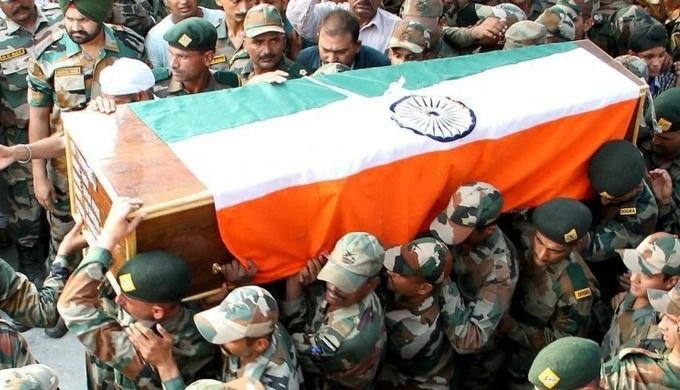
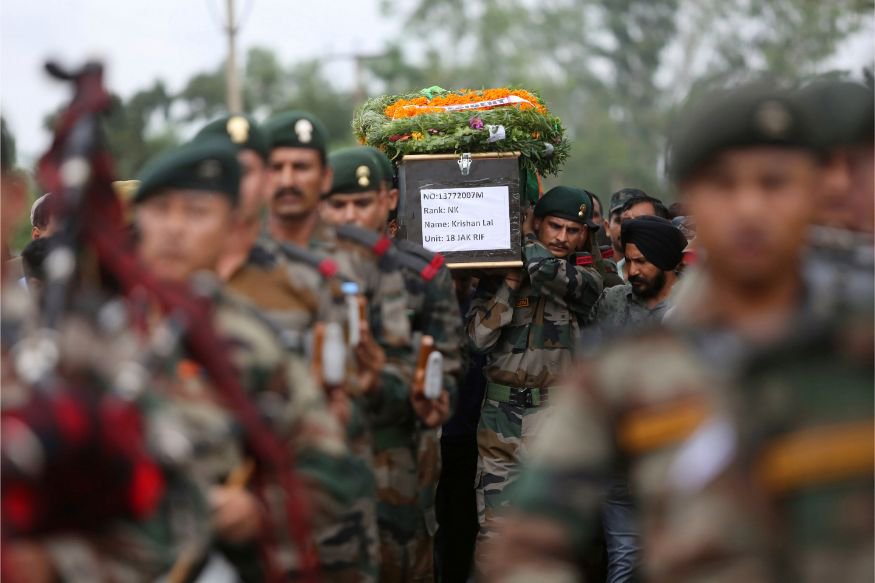
No use of ‘Martyr’ word in Army for death of on duty soldier .

History of the use of the word martyr:
The government has claimed for nearly a decade that the word “martyr” has not been officially recognized. In 2013 and 2014, in response to RTI’s request, the Ministry of Home Affairs revealed that the words “martyr” and “shahid” were not defined anywhere by the Government of India.
In December 2015, then Home Affair Minister Kireen Rijiju said in Lok Sabah that it is advised that the word “martyr” is not refer to any of the victims of the Indian army. He added that such terms were not used by Central Armed Police Forces (CAPF) and Assam Rifles personnel either.
In December 2021, Minister of State Home Nityanand Rai told Rajya Sabha again that there was no formal term like “martyr.”


Objections to the use of martyrs’ words:
The word “martyr” has religious implications and has historically been used to refer to people making sacrifices for their religious beliefs like in Christianity . The word “Shahid”, which is used as a Hindu alternative to the word “Martyr”, also has a religious meaning and is associated with the Islamic concept of Shahadat. The word “martyr” is said to be derived from the Greek word “martur”. In various dictionaries, “martyr” is defined as a person who is willing to die as a punishment for refusing to abandon religion.
Since the Indian army is not affiliated with any religion and does not sacrifice their lives for religious principles, the use of such words for their sacrifice is found wrong,including the supreme leader of the army. Using words like martyr may not be correct in context to armed forces especially in India according to many legal experts and prominent officers of army and retired officers.

Steps Taken By Government To Stop Use Of Martyr Word:
Despite the repeated assertions of the government about the word martyr having no official recognition, it was mostly used in government statements issued by various PR Officers for the defence services and the CAPFs. Many senior serving and retired officers also used it frequently to describe the death of soldiers in action. Thus, the word remained in common use.
The Army in 2022 issued a letter to all its commands asking them to abstain from using the word martyr as it may not be appropriate for soldiers who die in the line of duty. They have been, instead, asked to use phrases such as killed in action, supreme sacrifice for the nation, battle casualty, laid down their lives,veergati etc.

“Either I will come back after hoisting the tricolor, or I will come back wrapped in it, but I will be back for sure. “

-Late Captain Vikram Batra (PVC)

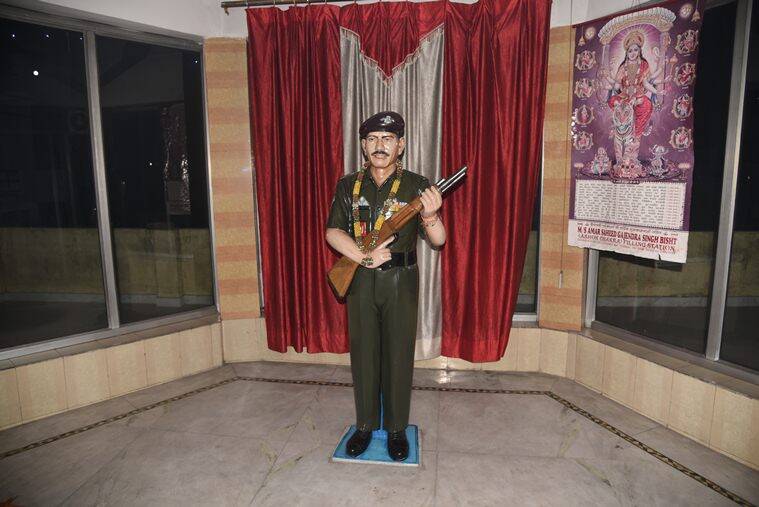
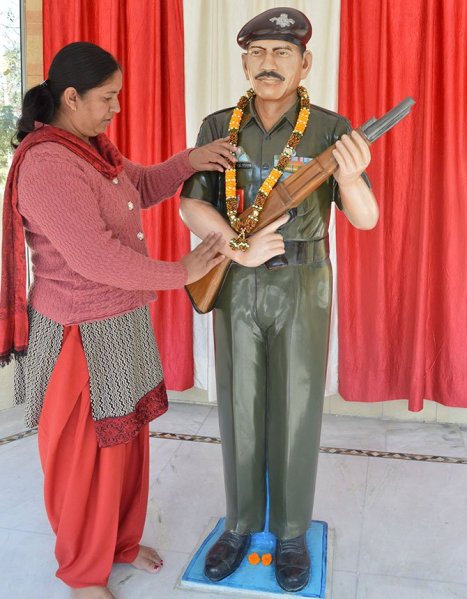
A warrior who can not be forgotten Hav. Gajender Singh Bisht.

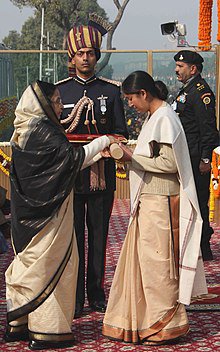
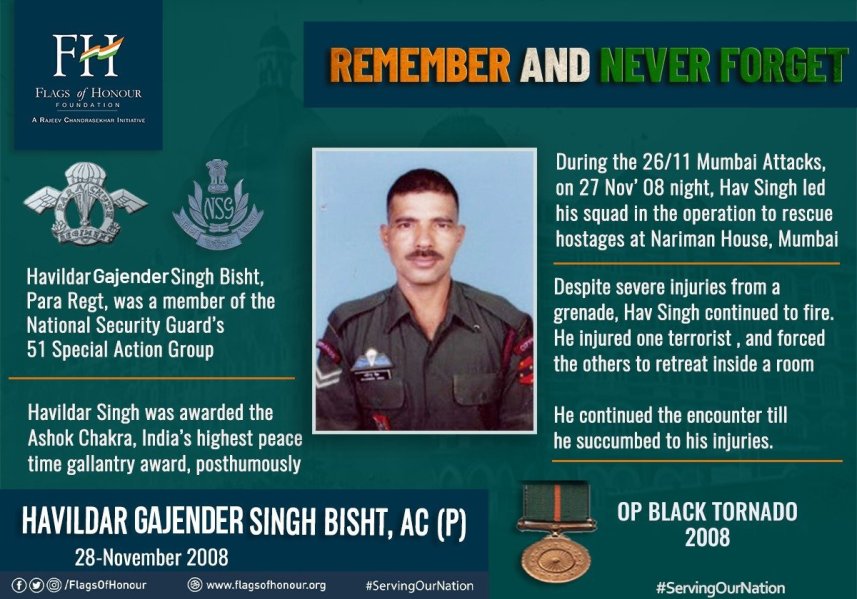
Havaldar Gajender Singh Bisht was an NSG commando who was martyred in the 2008 Mumbai attack. His bravery received the Ashoka Chakra Award from the President of India on January 26, 2009, on the Anniversary of the Republic of India.
He was born on 1 July,1972 in Dehradun, Uttarakhand.

He persued his education from the Janata Inter College in Naya Gaon.As a student he used to participate in every event organised in the school, sports or cultural activities. But he had a particular interest in boxing. Havaldar Gajendra Singh joined Garhwal Rifles in 1991 and later decided to become part of the 10 Para (Special Forces). Havaldar Gajendra also actively participated in Operation Kargil in 1999. Havaldar Gajendra was a trained commander of the Indian Army Special Forces, but he was commissioned to serve the National Security Guard’s Elite Special Action Group.
Gajendra Singh Bisht was a member of the 51st Special Action Group of the National Guard. He was part of a team of NSG Command rushed to the roof of Nariman’s house to neutralize an terrorist inside the building who had at least six hostages.


According to NSG Secretary Jyoti Krishna Dutt, Bisht led one of the teams entering the building. The team was hit by a violent terrorist attack and returned to fire while trying to contain the situation. Terrorists also threw some grenades at Commando. At this point,Bisht had the opportunity to retire with his team. But he realized they needed to seize this opportunity and went forward with thier mission.Instead of turning his back on the militants, he made the way to other troops instead, despite the grenades being thrown. He suffered multiple gunshot wounds in the process, but moved forward and was eventually injured. This allowed his team to secure a dominant position in the encounter. On the night of November 27, 2008, Havildar Gajender Singh Bisht led his army in an operation to rescue hostages from terrorists at the Nariman House in Mumbai. While securing the Nariman House during Operation Black Tornado, Bisht got fatally injured at Jewish center attack and died.

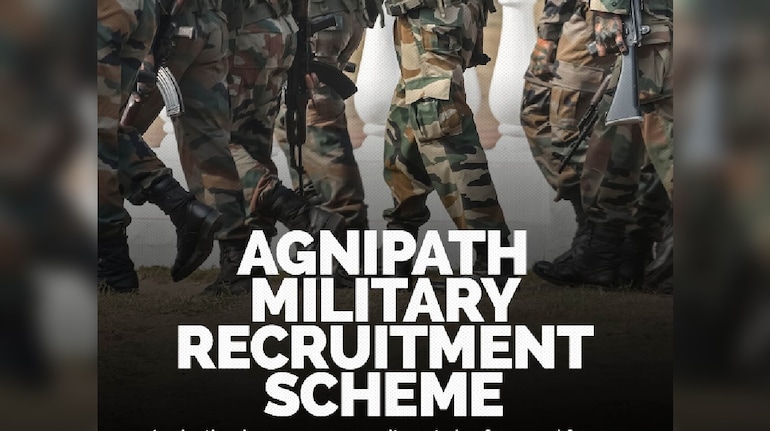
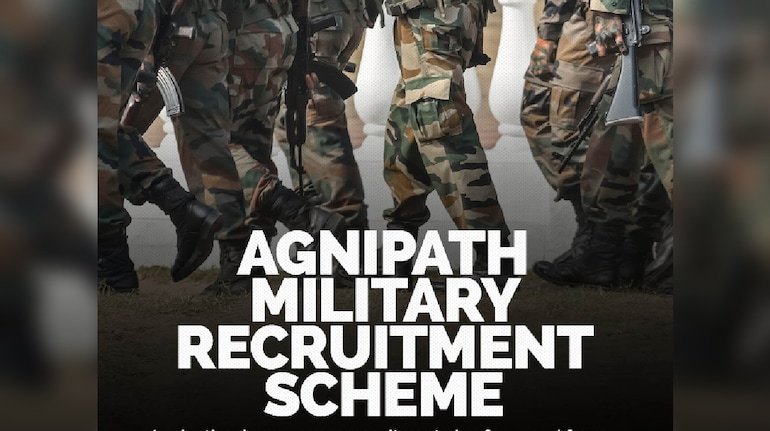
Agnipath Scheme a new vision for future India?


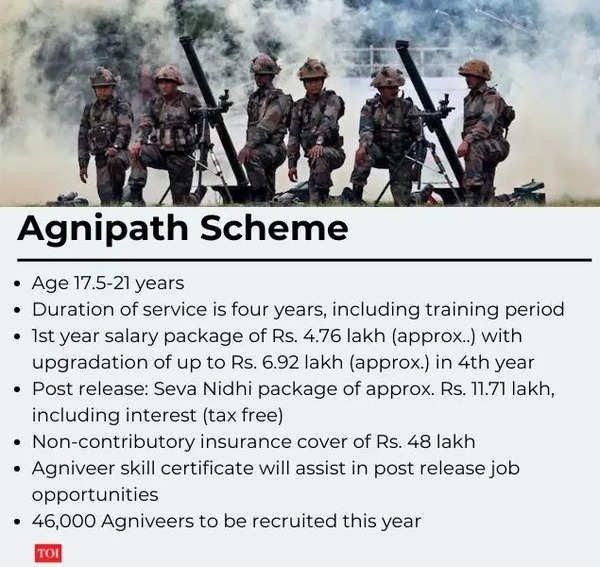
The Agnipath Program is a new program launched by the Government of India on June 14, 2022 to recruit soldiers under Corporal into three armies. The Agnipath program will be the only means of recruiting the military. All new employees will only be hired for 4 years. The personnel hired under this system are called Agniveers, a new military rank. The introduction of this system has been criticized for lack of consultation and open debate. The program is scheduled to start in September 2022. The Agnipath program was approved by the Government of India in June 2022 and will be implemented from September 2022. The announcement was made on June 14, 2022. This program is intended for both male and female applicants between the ages of 17.5 and 21. In widespread protests against the Agnipath program, the central government raised the cap from 21 to 23, but only in 2022. Recruitment under this program is held twice a year by the Indian Army, Indian Navy, and Indian Air Force. The available posts are below the executive list. The Agnipath program is the only way to serve in the army.


New employees, under the Agnipath scheme will be called “Agniveers,”who will have a four-year tenure, including six months of training followed by a 3.5-year deployment. After leaving the service, they have the opportunity to apply to continue in the army. Less than 25 percent of the retired group’s total strength is selected for the permanent roster. Employees who retire after four years of work are not eligible for a pension, but will receive a lump sum of approximately Rs 11,71,000 at the end of their tenure. The Government of India plans to hire 45,000-50,000 new employees each year through this program. In September 2022, 46,000 young people will be hired through this program. Prior to the start of the Agnipath program, soldiers were in the army for more than 15 years of service on a lifetime pension. As of 2019, there was no military recruitment for three years. The Government of India quoted the COVID-19 pandemic in India tye reason for no recruitment. Meanwhile, 50,000 to 60,000 soldiers continued to retire each year, leading to labor shortages and beginning to affect the military’s operational capabilities.


On June 16, 2022, fierce protests took place in several Indian states, where military candidates who were preparing for the armed forces were angry at the new system, demanding its rollback, and damaging public property. By June 17, 12 trains had been fired, affecting the movement of 300 trains. 214 trains were canceled, 11 trains were detoured, and 90 trains ended short of their destination. This scheme does not include long-term holdings, pensions and other benefits that existed in the old scheme. Individuals who wanted to join the army were disappointed with the rules of the new system. Of particular concern were short tenure, no early retirement pension, and an age limit of 17.5-21 years, making many of the current candidates unsuitable for serving in the Indian Army.

On June 20, a national strike called Bharat Bandh was summoned by a protesting organization calling for the withdrawal of the program. The call was made via social media without naming the organization. More than 600 trains were canceled due to a strike. Section 144 was imposed in parts of Rajasthan, Punjab, Uttar Pradesh and Haryana.

Integration of Indian States of Independent India.

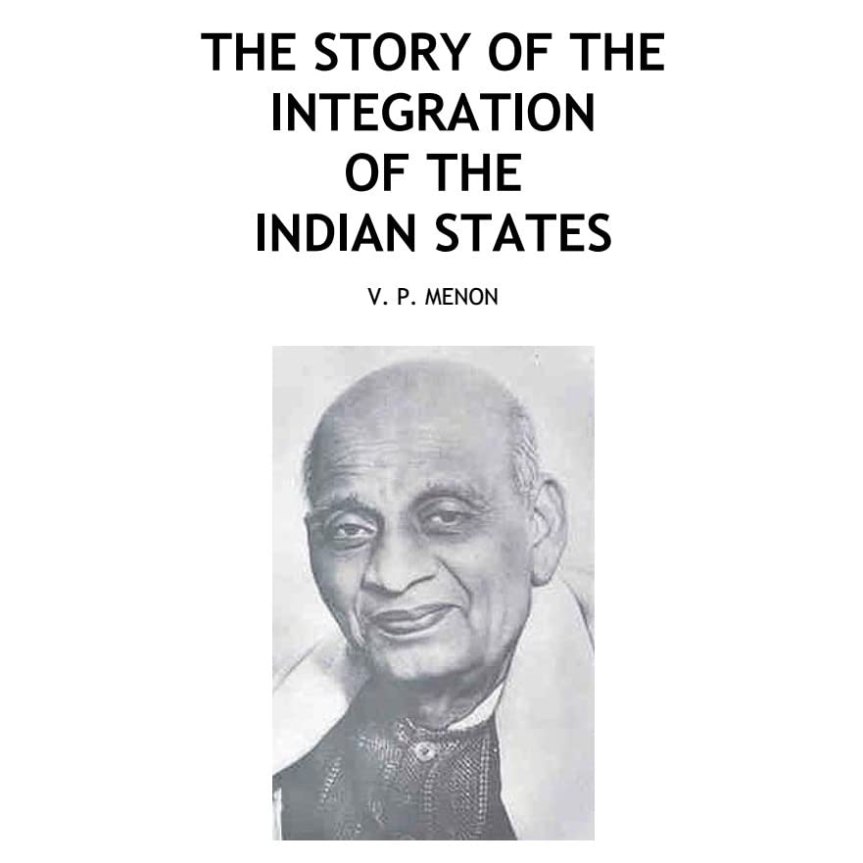
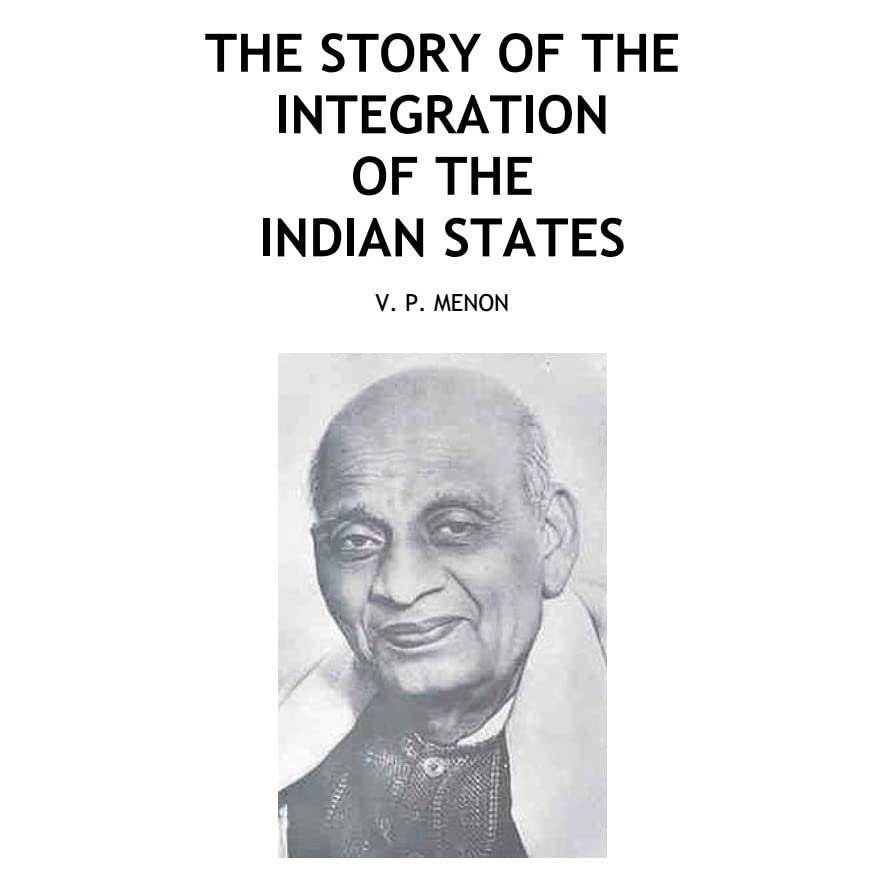
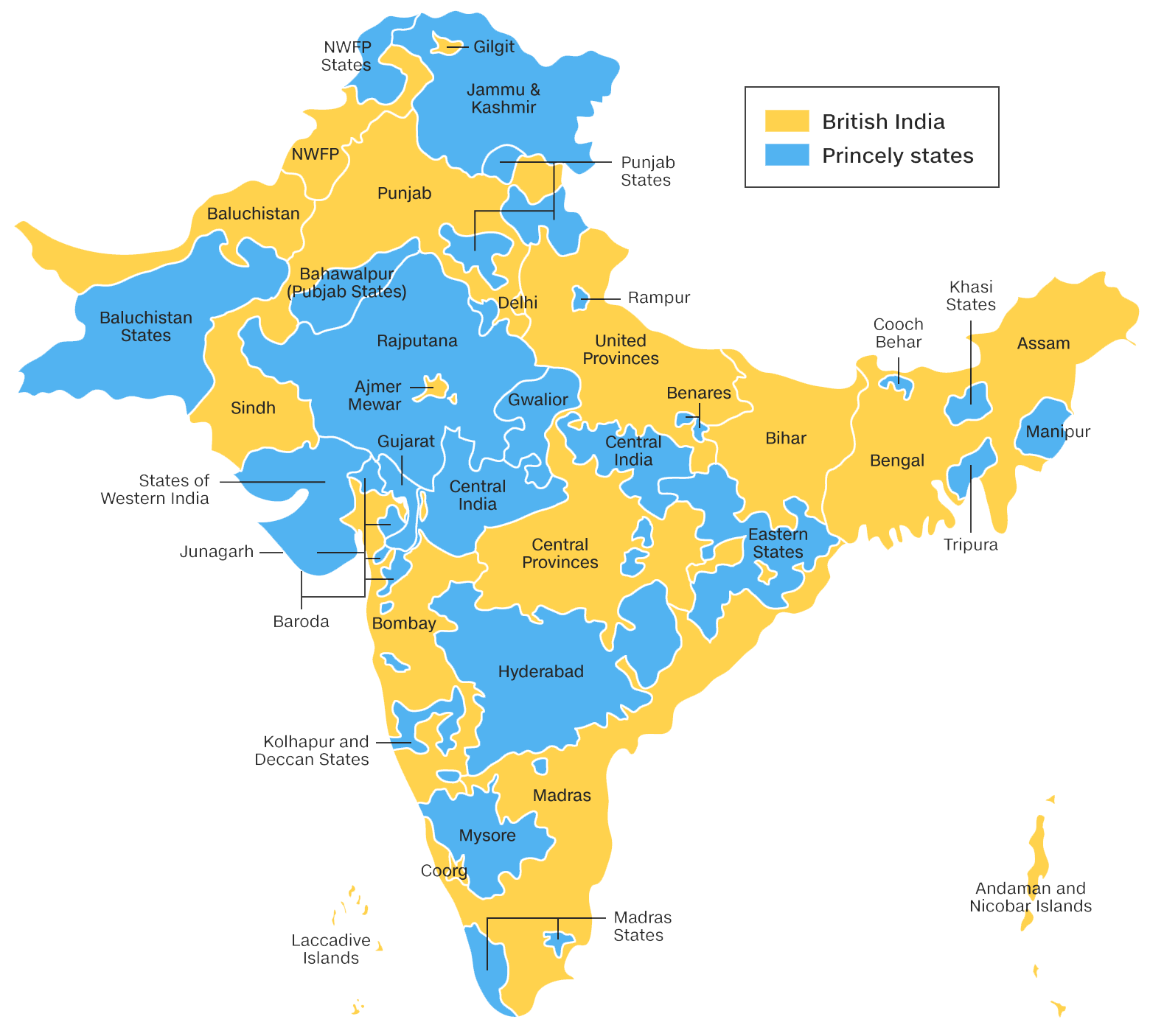
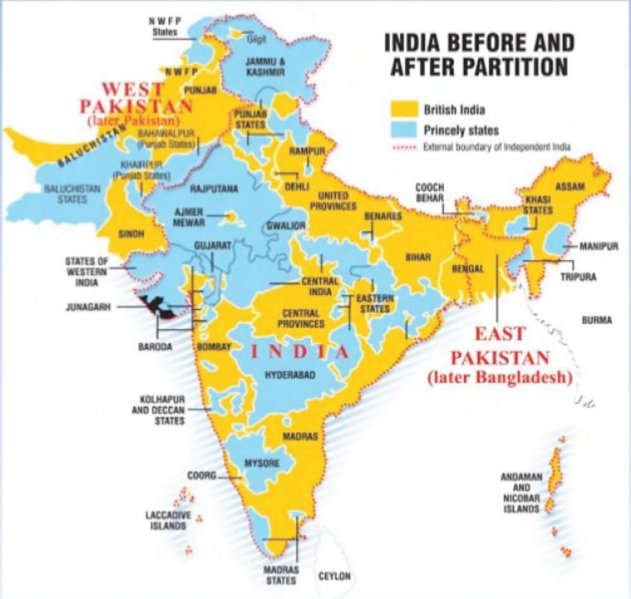
Sardar Vallabhbhai Patel played an important role in the integration of the princely state into the Dominion of India. This achievement laid the foundation for Patel’s popularity in the post-independence era. He is still remembered as the man who united India today. In this respect he is compared to Otto von Bismarck, who united many German states in 1871. The June 3 plan gave more than 565 princely states the option of joining India or Pakistan or choosing independence. Most Indian nationalists and the masses were afraid that most people and territories would be fragmented without the participation of these states. Parliament and British officials considered Patel to be the best man on a mission to secure the conquest of the princely state from Indian rule. According to Gandhi only Patel could solve this problem. Patel had practical insight and determination to accomplish monumental work. Patel asked V.P. Menon, a senior official involved in the division of India, to become his right-hand man as Principal Secretary of State. Patel used a social gathering and informal setting to involve most monarchs and invite them to their home in Delhi for lunch and tea. At these meetings, Patel stated that there was no essential conflict between Congress and the prince’s order. Patel aroused the patriotism of the Indian monarchs and urged them to embrace the independence of their country and act as responsible rulers who care for their people’s future. He persuaded the rulers of 565 states about the impossibility of independence from the Republic of India, especially in the face of rising opposition from their subject. He proposed favorable conditions for the merger, including the creation of a secret purse for the descendants of the ruler. Patel encouraged the rulers to act patrioticly, and to thought about his states people and their futur, but he did not rule out violence. He emphasized the need for the princes to join India in good faith and gave them to sign the membership certificate until August 15, 1947. All but three states were willing to join the Indian Union. Only Jammu and Kashmir, Junagad and Hyderabad were States which were tough to brought under Indian Dominion.


Junagadh being situated in Gujrat it was very important for Patel to bring it under Indian’s dominion. This was also important because there was the super-rich Somnath Temple (a temple where different stones were their including emeralds, diamonds, and gold which were looted by Mohd. Ghazni) in the Kathiawar district. Bieng under the pressure from Sir Shah Nawas Bhutto, a Nawab who joined Pakistan. However, it was far from Pakistan, with 80% of its state population being Hindus.Patel combining diplomacy and power, Pakistan invalidated Pakistan’s accession and demanded that Nawab join India. Patel sent troops to occupy the three principalities of Junagadh to show his determination. After widespread protests and the formation of the civilian government, or Aarzi Hukumat, both Bhutto and Nawab fled to Karachi, and under Patel’s orders, Indian troops and police forces invaded the state. A later organized referendum resulted in 99.5% of the votes in favor of the merger with India. After taking over, Patel, who spoke at the University of Bahauddin in Junagad, emphasized his sense of urgency regarding Hyderabad. He believes this is more important to India than Kashmir.


Hyderabad was the largest of the princely states and which included States parts of which are now Telangana, Arndra Pradesh, Karnataka and Maharashtra. Its ruler, Nizam Osman Ali Khan, was Muslim, but more than 80% of the population of state was Hindu. Nizam called for independence or accession to Pakistan. Under Kasim Razvi, an army of Nizam-faithful Islamic troops called Razakar urged Nizam to confront India and at the same time organize an attack on the people of India’s soil. The standstill agreement was signed by Lord Mountbatten’s in desperate efforts to avoid the war, but Nizam refused to trade and changed his position. At a cabinet meeting in September 1948, Patel emphasized that India should stop speaking and reconciled Nehru and Governor Chakravarti Rajgoparachari with military action. After preparation, Patel ordered the Indian troops to invade Hyderabad (in his position on behalf of the Prime Minister) when Nehru traveled to Europe. This action, called Operation Polo, in which thousands of Razakar troops were killed , but Hyderabad was secured and integrated into the Republic of India. Mountbatten and Nehru’s main goal was to avoid forced annexation to prevent the outbreak of Hindu and Muslim violence. Patel argued that if Hyderabad was allowed to survive as an independent state surrounded by India, the government’s fame would decline and neither Hindus nor Muslims would feel reassured in their empire. After defeating the Nizam, Patel held him as the head of state of the ritual and met with him. India had 562 princely states after addition of Junagarh, Heydrabad and Jammu& Kashmir.

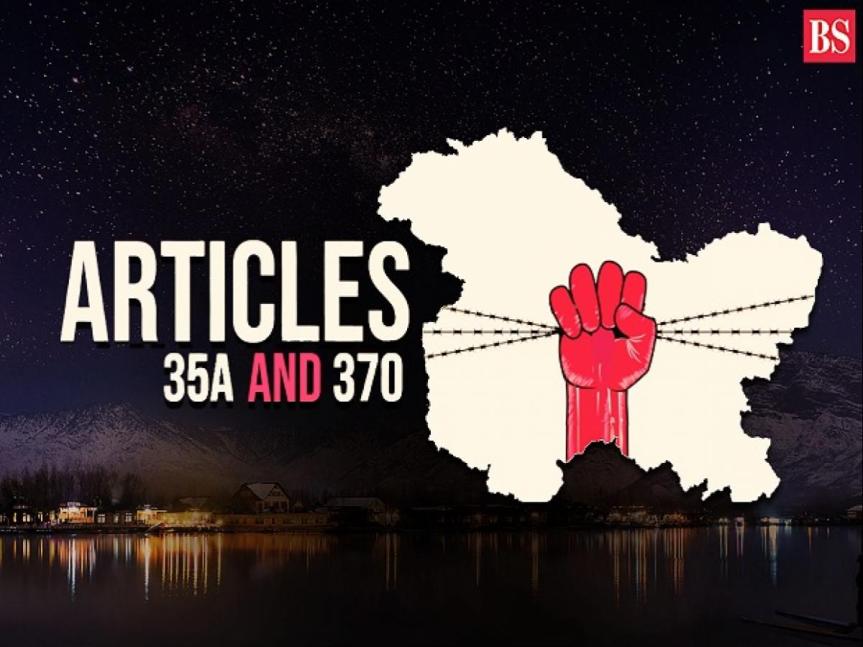
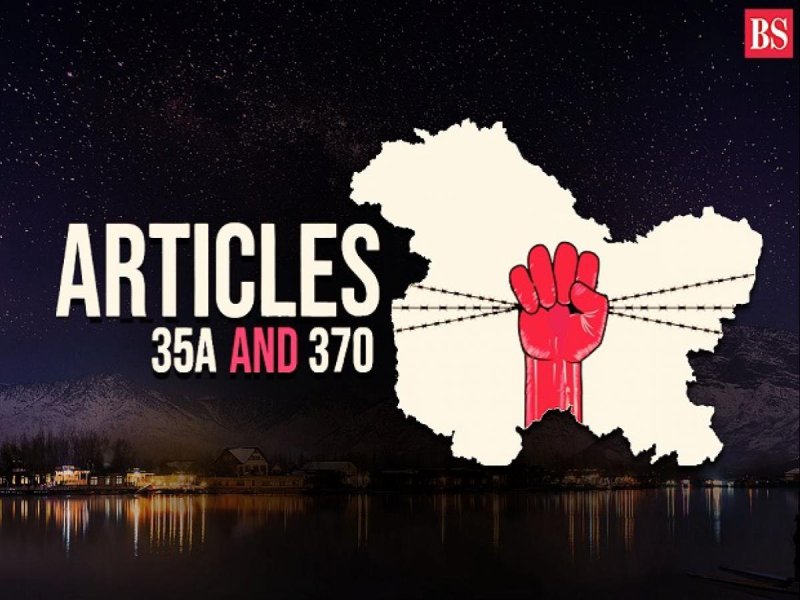
Article 370 & Article 35A

Article 370
The first accession of Jammu and Kashmir, like all other princely states, involved three issues: defense, diplomacy, and communications. All princely states were invited to send representatives to the Constitutional Parliament, which drafted the Constitution across India. They were also encouraged to establish a constituent parliament for their own state. Most states were unable to establish a parliament in time, but some states, especially Saurashtra Union, Travancore-Cochin, and Mysore. The State Department had drafted a model state constitution, but on May 19, 1949, the governors and Chief ministers of each state met in the presence of the State Department and agreed that no separate state constitution was needed. They accepted the Indian Constitution as their own constitution. The state in which the elected constituent council proposed some changes that were accepted. Therefore, the status of all states has been placed on par with the status of ordinary Indian states. In particular, this meant that the subjects available for legislation by central and state governments were consistent and same throughout India.

In the case of Jammu and Kashmir, state politicians have decided to establish a separate constitutional council for the state. Representatives of the Indian Constitutional Assembly applied only the provisions of the Indian Constitution corresponding to the original accession documents to the state, and demanded that the state Constitutional Assembly decide on other matters. The Government of India agreed to the request shortly before its meeting with the other states on 19 May. Therefore, Article 370 was included in the Constitution of India, which provided that other provisions of the Constitution empowering the central government would apply to Jammu and Kashmir only with the approval of the State Constitutional Assembly.This was a “provisional provision” because it was applicable until the State Constitution was enacted and adopted. However, the State Constitutional Assembly was dissolved on January 25, 1957, and did not recommend the abolition or amendment of Article 370. This article was considered an integral part of the Indian Constitution, as confirmed by various recent April 2018 rulings by the Supreme Court of India and the Supreme Court of Jammu & Kashmir.

Article 35A
Article 35A of the Constitution of India was a provision authorized by state to define the “permanent residents” of Jammu and Kashmir State and to give them special rights and privileges. It was added to the Constitution by an Executive Order, the 1954 Constitutional Order (application to Jammu and Kashmir). It was issued by the President of India under Article 370. Jammu & Kashmir has these privileges, the ability to acquire land and real estate, vote and participate in elections, pursue government employment, and receive the benefits of other governments such as higher education and medical expenses. Defined to include. Non-permanent residents of the state were not eligible for these “privileges”, even if they were Indian citizens.

Not possible to postpone civil service exams: UPSC tells SC

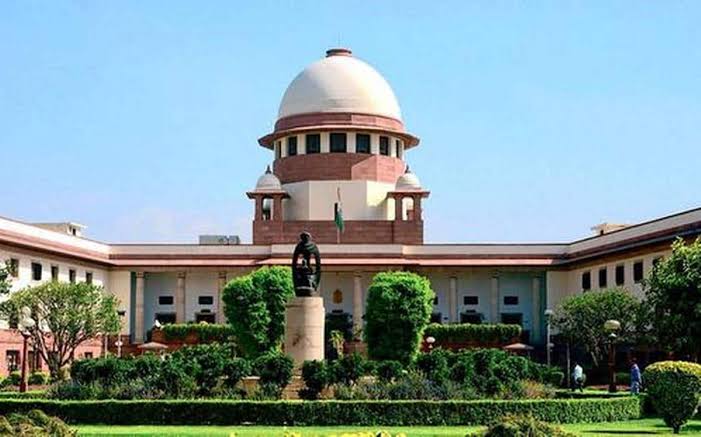
The Union Public Service Commission (UPSC) on Monday informed the Supreme Court that it is impossible to defer the Civil Services Preliminary 2020 as all logistical arrangements have already been made. A 3-judge bench headed by Justice AM Khanwilkar asked UPSC to put this stand in affidavit along with the arrangements made. The matter will be heard on Wednesday.

The bench comprising Justices AM Khanwilkar, BR Gavai, and Krishna Murari has directed the UPSC to file its affidavit in the case by tomorrow.

Twenty civil services aspirants had approached the Supreme Court, seeking the crucial exam to be deferred by two to three months due to the flood situation in several parts of the country along with the coronavirus crisis. The exam, which was earlier scheduled on May 31, was rescheduled to October 4 due to the pandemic

The plea said the Civil Services Exam, being a recruitment examination, is altogether different from an academic examination and in the event of its postponement, there would not be any question of delay or loss of any academic session.

It said that due to non-availability of exam centres in their home towns, many aspirants are facing unimaginable hardship due to non-availability of or unsafe health conditions in, the PG accommodation/ hostels/ hotels etc, where they are forced to stay with their family members, once they are travelling to an outstation Examination Centre.

It is pertinent to mention here that despite alarming spurt in COVID-19 pandemic, UPSC did not increase the number of Examination Centres, resulting into a situation where many candidates from rural areas will be forced to travel for around 300-400 Kilometres, in order to reach to their Examination Centres and there will be high probability of such aspirants, getting affected while using public transportation for such travel, the plea said.

Things You Need To Know about Civil Services Examination

Being a civil servant is no simple dream. It requires constant effort and hard work. Making sure to put the right effort matters in making to the top of the list. Here in the below are the various things you need to know before you write Civil Services.

Eligibility

The Age limit is from 21 years to 32 years (General category) and 35 for OBC and no age limit for SC/ST

Education qualification – Graduation from any stream.

Examination

The Exam is divided into three stages

  • Preliminary Round
  • Mains
  • Interview

These are the three stages of a civil service examination. Stage two and three are combined together to rank the candidates.

PRELIMINARY EXAMINATION

There are two papers in this round. Each paper of 200 marks. Both are compulsory and it is objective type.  2 hours are given for each paper. And a negative marking of 1/3rd of the total of the particular question.

  • General Studies
  • CSAT

General Studies Paper Syllabus

  • Current events of national and international importance.
  • History of India and Indian National Movement.
  • Indian and World Geography-Physical, Social, Economic Geography of India and the World.
  • Indian Polity and Governance – Constitution, Political System, Panchayati Raj, Public Policy, Rights Issues, etc.
  • Economic and Social Development – Sustainable Development, Poverty, Inclusion, Demographics, Social Sector initiatives, etc.
  • General issues on Environmental Ecology, Biodiversity, and Climate Change – that do not require subject specialization.
  • General Science

CSAT Syllabus

  • Comprehension
  • Interpersonal skills including communication skills
  • Logical reasoning and analytical ability
  • Decision-making and problem solving
  • General mental ability
  • Basic numeracy (numbers and their relations, orders of magnitude, etc.) (Class X level), Data interpretation (charts, graphs, tables, data sufficiency, etc. – Class X level)

It is mandatory for the candidate to appear for both the exams and the minimum qualifying mark is 33%.

MAINS EXAMINATION

This examination consists of the following papers :

Qualifying paper

( Candidate have to qualify these two papers, only then rest of the papers will be evaluated)

Paper A : One of the language in the Eighth Schedule of the Constitution. Candidate can chose any one from the list

Paper B : English

Structure of the language papers:

The types of questions asked are –

  1. Essay – 100 marks
  2. Reading comprehension – 60 marks
  3. Precis Writing – 60 marks
  4. Translation:
    1. English to compulsory language (e.g. Hindi) – 20 marks
    2. Compulsory language to English – 20 marks
  5. Grammar and basic language usage – 40 marks

Both the papers carry 300 marks each and in order to qualify, you need to score at least 25% in each. This marks wont be evaluated for the merit list.

Papers to be counted for merit

Paper I : Essay

Candidate will be asked to write essay on various topis to analyze the writing pattern ,behavior and thinking pattern too.

Paper II :  General Studies – I

Indian Heritage and culture, History and Geography of the world and society

Paper III :  General Studies – II

Governance, Constitution, Policy, Social Justice and International Relations

Paper IV : General Studies – III

Technology, Economic Development, Bio- Diversities, Environment, security and disaster management.

Paper V : General Studies – IV  

Ethics, Integrity and Aptitude

Paper VI : Optional Subject – Paper 1

Paper VII : Optional Subject – Paper 2

These are the optional Papers

(i)Agriculture

(ii) Animal Husbandry and Veterinary Science

(iii) Anthropology

(iv) Botany

(v) Chemistry

(vi) Civil Engineering

(vii) Commerce and Accountancy

(viii) Economics

(ix) Electrical Engineering

(x) Geography

(xi) Geology

(xii) History

(xiii) Law

(xiv) Management

(xv) Mathematics

(xvi) Mechanical Engineering

(xvii) Medical Science

(xviii) Philosophy

(xix) Physics

(xx) Political Science and International Relations

(xxi) Psychology

(xxii) Public Administration

(xxiii) Sociology

(xxiv) Statistics

(xxv) Zoology

(xxvi) Literature of any one of the following languages: Assamese, Bengali, Bodo, Dogri, Gujarati, Hindi, Kannada, Kashmiri, Konkani, Maithili, Malayalam, Manipuri, Marathi, Nepali, Odia, Punjabi, Sanskrit, Santhali, Sindhi, Tamil, Telugu, Urdu and English.

Each paper carries 250 marks each and can be written in any language under the eighth schedule of the Indian Constitution.

INTERVIEW

The Final round is the Interview round. The interview round is created to test the all round personality of the character. It exposes them to emotional intelligence and see how they deal with certain situations and conversations.The Interview test will be of 275 marks and the total marks for written examination is 1750. This sums up to a Grand Total of 2025 Marks, based on which the final merit list will be prepared

BPSC 66th PRELIMS 2020: Date Announced

Picture credit: GOOGLE images

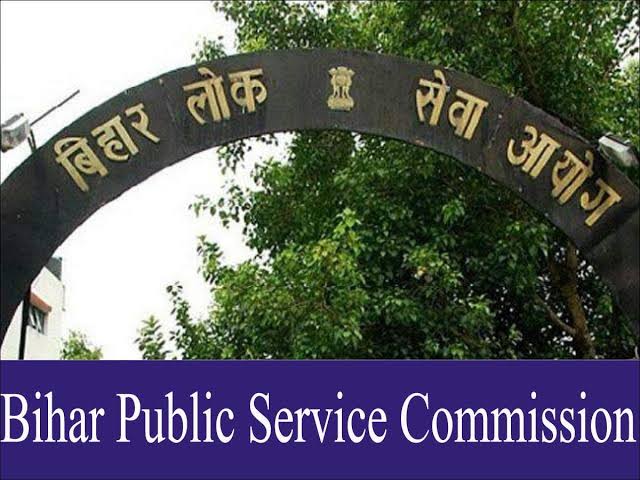
Bihar Public Service Commission has released an official notification for the 66th combined civil services recruitment examination on its official website on Wednesday i.e., September 16.

The eligible candidates can apply for the 66th combined civil services recruitment examination through the official website of BPSC bpsc.bih.nic.in from September 28. The last date to submit online applications for the recruitment is October 20. The BPSC 66th combined civil services recruitment examination will be conducted on December 27.

The 66th Combined (Preliminary) Competitive Examination 2020 are for 562 Posts including Superintendent of Police, Jail superintendent, State Tax Assistant Commissioner, Bihar Probation Service officer, Additional District transport officer, Food Supply Inspector, Revenue officer, Block Panchayati Raj Officer and other.

Candidates with certain educational qualification can apply for BPSC 66th PCS Notification 2020 on or before 20 October 2020. Opening Date for Submission of Application for BPSC 66th PCS Notification 2020 is 28 September 2020. 

Applying candidates should note that the selection process for the BPSC 66th PCS Notification 2020 will consists of two stages i.e. Prelims and Mains. Candidates qualifying the 66th Combined Competitive Pre Exam will be called for Main Exam followed by the interview round.  

The commission has also put out several instructions while applying for the examination. The last date to apply according to the BPSC 66th notification is October 20, 2020. The BPSC 66th preliminary examination is scheduled to be held on December 27, 2020. Here is a look at some of the important dates according to the BPSC 66th notification.

Candidates having a bachelor’s degree in any discipline from a recognised university are eligible to apply. The candidates will have to clear the preliminary exam followed by a main exam and interview.

Meanwhile, BPSC has also announced the dates for conducting 65th BPSC Main Examination. The 65th BPSC main exam will be held on October 13, 14 and 20. A total of 434 vacancies will be filled through BPSC 65th recruitment drive.