Indian community in Russia

 Prime Minister Shri Narendra Modi interacted with the Indian community in Russia at an event held in Moscow today. He was greeted with special warmth and affection by the community members.

In his address to the community, Prime Minister thanked the Indian diaspora for the warm welcome and lauded its contribution in enhancing the India-Russia relationship. While greeting them on behalf of 1.4 billion Indians, he noted that his interaction with the community was special, as it was his first address to the Indian diaspora in his historic third term.

Prime Minister spoke about the visible transformation that has happened in India in the last ten years. This was a matter of great pride for all Indians, he noted. He stated that in his third term, it was the objective of the government to become the third largest economy in the world. He talked about India’s economic growth which accounted for significant percentage of global growth; its digital and fintech success; its green development achievements; and its impactful socio-economic programs empowering common people. He underlined that India’s transformative success has happened because of the dedication, commitment and contribution of 1.4 billion Indians, each one of whom today dreams of making India a developed country. India, he noted, through its committed efforts, from tackling climate change to meeting sustainable development goals, was making significant contribution to global prosperity – as a Vishwabandhu, a friend to the world. He further noted that India’s call for peace, dialogue and diplomacy to resolve global issues had high resonance.

Prime Minister encouraged the Indian community to continue playing a proactive role in forging a stronger and deeper partnership with Russia. He mentioned that a decision to open two new Indian Consulates in Kazan and Ekaterinburg has been taken which would give further boost to people-to-people ties. This announcement was received with great applause. He lauded the efforts of the community to nurture and nourish Indian cultural traditions in the country and share its vibrancy with the Russian people.


***

Community: meaning and characteristics

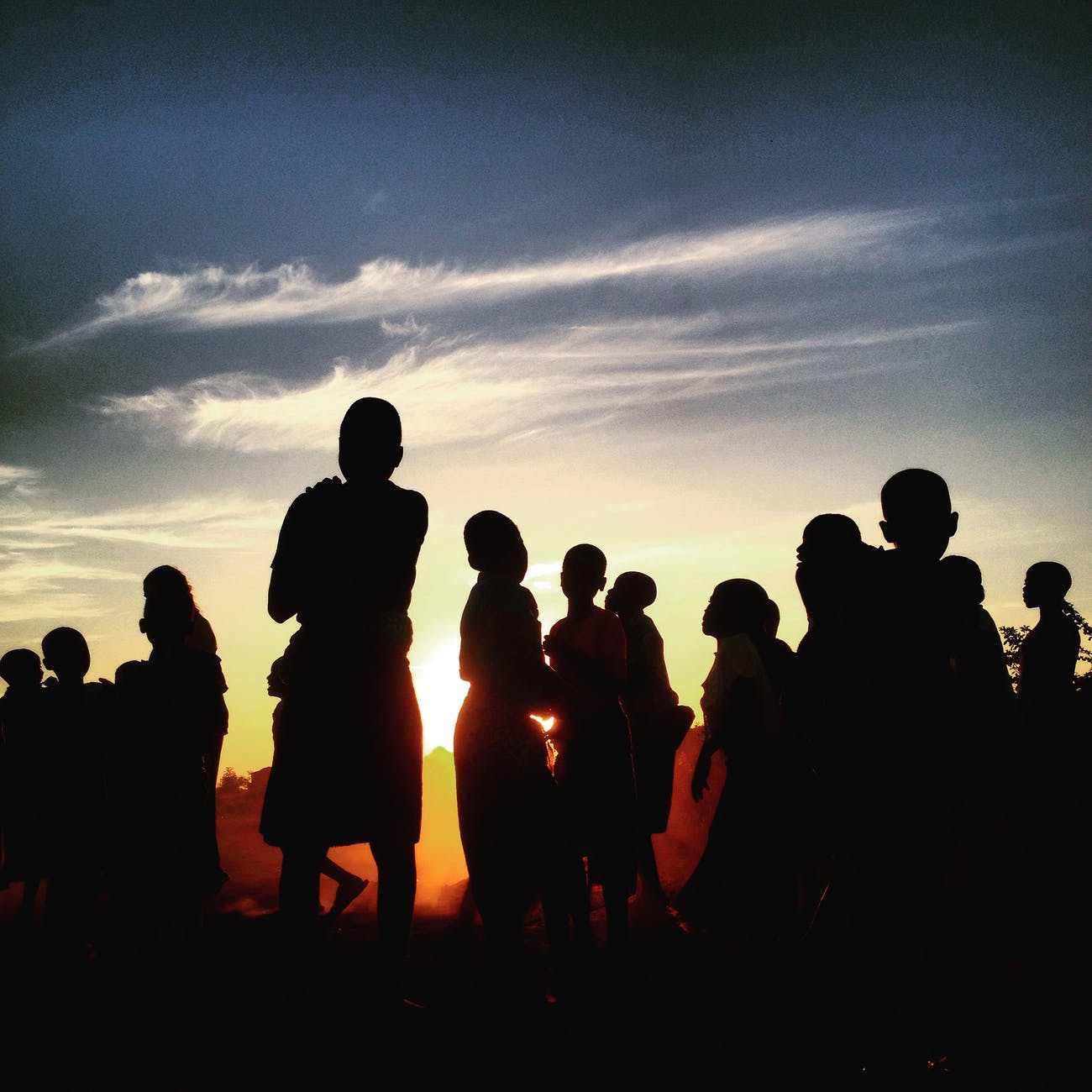
Photo by Keith Wako on Pexels.com

The term ‘community’ is given different interpretations and used in different ways to mean different things. People often use the term community to refer to a racial community, or a religious community, or a national community, etc. It is used in various contexts.

Some definitions of community:

1. Bogardus defined community as “a social group with some degree of ‘we-feeling’ and living in a given area”.

2. Talcott Parsons said “Community is the aspect of all social units.”

3. Lundberg defined community as “a human population living in a limited geographical area and carrying on a common interdependent life”.

4. MacIver said “Community is an area of social living marked by some degree of social coherence”.

5. According to Duncan Mitchell, “community denotes the collectivity of people who occupied a geographical area, are engaged in economic and political activities and constitute a self- governing social unit.

A community is essentially an area of social living. It is marked by some sorts of social coherence. ‘Community’ is an all-inclusive term. It includes all our social relationships. Elements of community: The main bases of community are: 1. Locality and 2. Community sentiment.

1. LOCALITY: A community is a territorial group. It always occupies some geographical area. Locality is the physical basis of community. In contrast to a society, a community is more or less locally limited. Even the wandering tribe or nomad community, for example, has a locality, though changing habitation. A group of people forms community only when it begins to reside definite locality. For example, caste is not a community since it is not necessary that all the members belonging to a certain cast live together in a definite location, whereas a village and a city can be called a community under certain conditions. Living together facilitates people to develop social contacts, gives protection, safety and security. It helps the members to promote and fulfil their common interests.

2. COMMUNITY SENTIMENT: Locality alone cannot make a group, a community. There are cases where people do live together but do not have any contacts or communications. These cannot be placed under community. For example, in a city there can be different localities. The members of these locality need not be sharing any common interests or may not have common outlook. A community is essentially an area of common living with a feeling of belonginess. ‘Community sentiment’ means a feeling of belonging together. The members must be aware of their staying together and sharing common interests. The members develop a sense of ‘we-feeling’. Without a sense of identification, a sense of awareness, a sense of living and sharing some common interests in life, there cannot be a community.

Other Aspects of Community:

1. Stability: A community is not a temporary group like a crowd or a mob. It is relatively stable. It includes a permanent group life in a definite place.

2. Naturalness: Communities are not created deliberately. They are not created by an act of will or by planned efforts. Individuals become its members by birth itself. Membership, hence, is not voluntary. This does not mean that caste is a community.

3. Size of the community: A community can be big or small. A small community can be included in a bigger community. For example, a city and a village may be included in a wider community called district. Thus, the term community is used in a relative sense.

4. Regulation of relations: System of traditions, customs, morals as well as set of rules and regulations are there to regulate the relation between its members.

IS BEING AN INTROVERT AWFUL ?

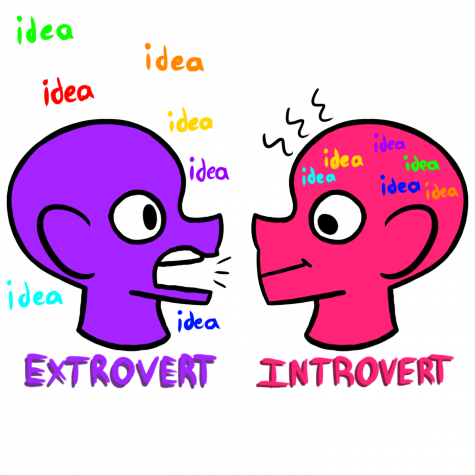
Above all else, let me clear out that one ought not get befuddled between the words “introvert” and “being shy”. An outgoing/ extrovert person can likewise feel timid here and there and that doesn’t imply that he/she is an introvert. An Introvert is a tranquil individual that doesn’t prefer to talk definitely and likes to remain quiet about their contemplations for the most part. They are somewhat individual that returns home just to unwind and have the opportunity to think. However, that doesn’t imply that a friendly individual can’t be a contemplative/introvert person. Similarly as they partake in the calm opportunity to get themselves, they’re probably a contemplative person somewhat. Being a contemplative person is regularly viewed as frail. They aren’t exactly on par with the social butterflies, who simply appear to float through life.

OPINION: Introverts still make great leaders – The Lancer Feed

However, that is false, there isn’t anything amiss with being a introvert. The primary issue is with society, which doesn’t see it similarly. Society has instructed us that being an introvert or thoughtful person is the most exceedingly terrible thing you can be and that everybody should need to be outgoing.

The Perks Of Being An Introvert | Writers Write

They are informed that being active is acceptable and being modest and calm is terrible. They are advised in schools to lift hands, take an interest in a class or we lose marks. For introverts, those are a portion of the exceptionally hard principles to accomplish. Insights say that half of Indian populace is comprised of introverts. So society is saying that 675 Million individuals need to change what their identity is to be acknowledged, to be effective and to be content. I’m additionally told this thing since youth that I should change myself and become a outgoing individual. Indeed, presently likewise my companions, educators and direct relations bother me as a bashful individual and they request that I go along with them in their discussion which I don’t need. Furthermore, some of the time it’s truly irritating.

How to Know If and Why You're an Extreme Introvert | SocialPro

Continuously recollect inside this enormous gathering of self observers are individuals like Emma Watson, Michael Jordan, Albert Einstein, Elton John, Audrey Hepburn thus a lot additional moving individuals. Being an Introvert has not prevented any of them from accomplishing their objectives or being cheerful. Pioneers like Abraham Lincoln, Rosa Parks and Mahatma Gandhi. Every inconceivable pioneer and all are introverts. Being a thoughtful/introvert person has no impact on how glad you or fruitful you will be the length of you see it in the correct manner. In the event that you consider yourself to be a thoughtful person and think its the most exceedingly awful thing on the planet, you are never going to be really content with yourself. In any case, in the event that you acknowledge yourself as a introvert and you’re cheerful, there isn’t anything in your method of you accomplishing your objectives.

Introverted Leadership
INTROVERT LEADERS

So in conclusion there is noting wrong in being an introvert. I am an introvert myself and I don’t feel like to change myself for the society and so should you. As long as you are happy others opinion doesn’t matter.

Also, in case you are an extrovert and you see an individual sitting at the side of your working environment simply contemplate what incredible thoughts he/she is coming up with.

In a World of Extroverts, What Does it Mean to Be an Introvert at School

RESOURCES:

https://timesofindia.indiatimes.com/readersblog/wakeup-india/is-being-an-introvert-bad-23079/

LGBT COMMUNITY

BY: VAIBHAVI MENON

LGBT or GLBT is an initialism that stands for lesbian, gay, bisexual, and transgender. In use since the 1990s, the term is an adaptation of the initialism LGB, which began to replace the term gay in reference to the broader LGBT community beginning in the mid-to-late 1980s. The first widely used term, homosexual, now carries negative connotations in the United States. It was replaced by homophile in the 1950s and 1960s, and subsequently gay in the 1970s; the latter term was adopted first by the homosexual community. As lesbians forged more public identities, the phrase “gay and lesbian” became more common. A dispute as to whether the primary focus of their political aims should be feminism or gay rights led to the dissolution of some lesbian organizations, including the Daughters of Bilitis, which disbanded in 1970 following disputes over which goal should take precedence.

As equality was a priority for lesbian feminists, disparity of roles between men and women or butch and femme were viewed as patriarchal. Lesbian feminists eschewed gender role play that had been pervasive in bars as well as the perceived chauvinism of gay men; many lesbian feminists refused to work with gay men, or take up their causes. Lesbians who held the essentialist view, that they had been born homosexual and used the descriptor “lesbian” to define sexual attraction, often considered the separatist opinions of lesbian-feminists to be detrimental to the cause of gay rights. Bisexual and transgender people also sought recognition as legitimate categories within the larger minority community. After the elation of change following group action in the 1969 Stonewall riots in New York City, in the late 1970s and the early 1980s, some gays and lesbians became less accepting of bisexual or transgender people. Critics said that transgender people were acting out stereotypes and bisexuals were simply gay men or lesbian women who were afraid to come out and be honest about their identity. Each community has struggled to develop its own identity including whether, and how, to align with other gender and sexuality-based communities, at times excluding other subgroups; these conflicts continue to this day. LGBTQ activists and artists have created posters to raise consciousness about the issue since the movement began.

From about 1988, activists began to use the initialism LGBT in the United States. Not until the 1990s within the movement did gay, lesbian, bisexual, and transgender people gain equal respect. This spurred some organizations to adopt new names, as the GLBT Historical Society did in 1999. Although the LGBT community has seen much controversy regarding universal acceptance of different member groups (bisexual and transgender individuals, in particular, have sometimes been marginalized by the larger LGBT community), the term LGBT has been a positive symbol of inclusion. Despite the fact that LGBT does not nominally encompass all individuals in smaller communities (see Variants below), the term is generally accepted to include those not specifically identified in the four-letter initialism. Overall, the use of the term LGBT has, over time, largely aided in bringing otherwise marginalized individuals into the general community. Transgender actress Candis Cayne in 2009 described the LGBT community as “the last great minority”, noting that “We can still be harassed openly” and be “called out on television”.

South India Is Better For Women Than North India

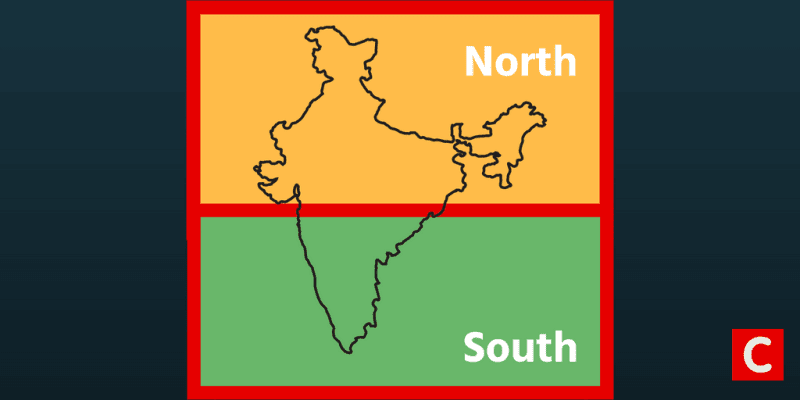
Hi everybody, If you were to ask an Indian woman, to prefer between living in North India or South India, imagine what would her answer be? Don’t worry, it’s not a trick question? Most women would prefer to live in South India. And it shouldn’t come as a surprise. In South India, women marry late, live longer, and are more educated. 

The gender gap in education is 26% for the north and while for the south it’s only 9%. Other than economic and social benefits, safety is another factor that could explain the woman’s preference. Compared to North India there could be less crime against women in the south. If you notice, I used the word ‘could’. It’s because data suggest that states like Kerala have high crime rates against women. But it’s not clear why the crime rate is higher in Kerala. 
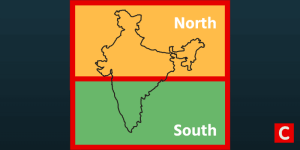
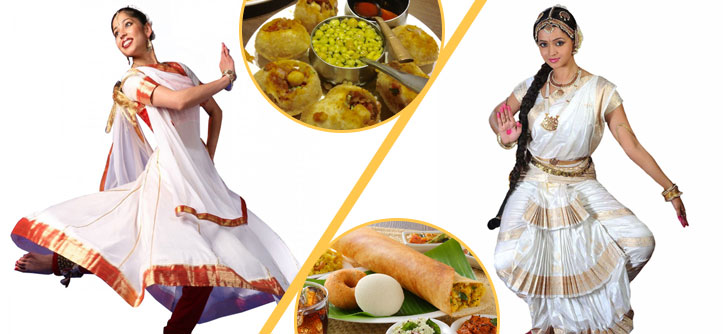
NORTH INDIA VS SOUTH INDIA

Due to which a woman and her family will feel safer to lodge a police complaint against a crime. compared to the north Indian states? We’re aware that the family of a sexual assault victim doesn’t lodge a complaint in India. Around 99% of the sexual assault cases go unreported. Like the data we studied before, due to many socioeconomic indicators, women of South India live better lives than that of North India. But what’s the reason?

 It’s very interesting to find an answer to such a question. Because this difference didn’t arise in the past 70 years. It dates back to the 19th century. According to research, due to a famine in the 19th century, the women in Punjab got affected more severely than the women in Madras. Around that time the sex ratio of South India was better compared to the north. 

So Maharastra has been included in South India and West Bengal in North India. Professor Alice Evans wrote a detailed article on this subject. In her article, she wrote that when during the 19th century a group of Marathi women traveled to Calcutta, they got surprised by what they saw. According to the group of Marathi women, a woman in Calcutta could scarcely stand in presence of her relatives. Her face was always veiled. 

She wasn’t allowed to speak to any man, muss less laugh with him. Before discussing the factors that could explain this difference, let’s first understand the factors that can’t explain it. One such factor is Poverty. Many might think South India has more female empowerment given how rich the state is. But it’s not necessarily the truth. According to the GDP, Punjab and Haryana are one of the richest states in India. But these states have the worst sex ratio too.

 Doctor Evans uses these charts to prove that it’s not necessary that a woman belonging to a rich state will find better job opportunities. The second factor that can’t explain the difference, is the marriage custom or traditions. In North India, women are generally married into other villages. When they go away from their families, the chances of them ever getting their share of inheritance of property becomes nil. 

In South India, women are most probably married into the same village. And according to research when a woman marries into the same village, she’s more likely to move freely, and earn more cash. And the logic behind this is that in an intra-village marriage, you get more freedom as you live within the security of your parents and a community with whom you’ve grown accustomed. But can this norm of intra-village marriage explain the gender difference? Alice believes that it can’t. As we can see the examples of cousin marriages in the Middle East and North Africa. 

Even though after marriage the women live among their relatives, the cases of women empowerment weren’t reported in these regions. The third reason is that of colonialism. This map shows the years Britishers governed a certain region of India. They governed some regions for more than 200 years and on the other hand, they scarcely governed some regions at all. Given this, we never saw much difference in the terms of women empowerment. 

As you can notice, Britishers governed the regions of Tamil Nadu and UP for the same time period. But there’s a huge difference in the female literacy rate of UP and Tamil in the data of the 19th and 20th centuries. Now let’s discuss the factors that can better explain the difference. And one of the factors relied largely on the British administration. Looking at a broader level we won’t sense the difference that the Britishers created in the women empowerment between North and South India. 

But we dig deeper, it becomes clearer. According to Hindu law, there are two types of property inheritance rights. One is called Mitakshara and another is called Dayabhaga. Dayabhaga originated in the Bengal region. According to Dayabhaga, women could inherit property. Mitakshara operated in Madras and Bombay presidency. According to this law, women had no inheritance rights.

 Looking at the surface level, you might think that the Bengal region should have more women empowerment given it had Dayabhaga law, which ensured property to women. But we saw in research how surprised the women of Madras were on seeing restrictions on the women of Calcutta. So what’s going on here? If Bengali women held more rights, why didn’t they have a better position? According to research, the district governed by Dayabhaga saw an increase in the practice of Sati Pratha (widow immolations) too. 

Instead of improving a women’s position in society, inheritance rights led to an average increase of between 115 and 437 widow immolations in Dayabhaga districts. This law was enacted at the time of extreme elite patriarchy. This suggests that women were subjected to torments. This positive law backfired. Many joint families argued that by implementing Dayabhaga law they would tarnish their traditions. Due to this, the districts where women were given the rights of inheritance, saw an increase in the practice of sati too.

 The second factor that can explain this difference is the tradition of Ghunghat (veil). This system originated in the Arabic region and was introduced to India during the Islamic invasions. This was a mode of ensuring status. The families that belonged to higher status wanted their women to practice Purdah (veil) to maintain their status of superiority. The cast system of India was already had several restrictions for women. If a woman from an upper-caste married a man belonging to a lower caste, the family of the woman lost its honor. And the Purdah system got added to that.

 This was common among the Rajput families belonging to North India. This practice severely affected the way the women lived their lives. In rural Haryana, if a woman failed to cover her face with a veil, she was subjected to afflictions and her character was questioned too. This affected the women’s ability to earn a living. As researches have shown that due to Purdah or Ghunghat, women become more dependent on men for financial support. 

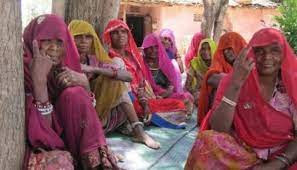
Many of you might wonder who would be practicing an age-long tradition of the Purdah system nowadays. But that’s not true. In rural Rajasthan, 98% of women in the age group of 18-25 cover their faces with a veil. The third reason is the difference in the agricultural practices between North and South India. In India, crop cultivation has two patterns. One is the cultivation of wheat by plowing of fields as seen in North India. 

Another one is the wet and intensive cultivation of rice in South India. If we take wheat for an instance, the intensive plowing isn’t carried out by women. And cultivation of wheat isn’t labor-intensive. This lowers the demand for female labor in the field. Whereas cultivation of rice is labor-intensive. Here women are required to contribute to the workforce. Dr. Evans states in her research that, women are required to step out and contribute to the workforce for the cultivation of rice. And that’s the reason why women in South India are better empowered as compared to their North Indian compatriots.

 These three factors can explain the difference in the condition of women in North and South India. Inheritance rights, Purdah/Ghunghat system (veil system), and the agricultural practices. But we need to let go of the delusion that women living in south India are leading a perfect life. They too have to face problems of their own. 

Our government shouldn’t have an objective that they should somehow provide North Indian women the quality of life as that of South Indian women. They should have a broader objective. If you consult the rankings, India is further low in gender issues. In the UN’s Gender Inequality Index, India ranks 131st, even lower than Iraq. According to World Bank, nations not well off as India, like Bangladesh and Nepal, have better literacy rates among girls. 

Our politicians dream about making India a superpower. But it would never become a reality until Indian women are given opportunities to contribute too. Through this video, we learned the differences in the situation of women in North and South India. But North Indian women shouldn’t take the lives of South Indian women as their ideal. They should aim for something better than that. This is the way India will become a superpower.


SOCIAL ENTREPRENEURSHIP


SOCIAL ENTREPRENEURSHIP

social entrepreneur is an individual who chases new applications that have the prospects to clear-up community-related issues. These individuals are fully prepared to take on the risk or threats and attempt to originate optimistic commute in society through their creativity and initiatives. 

Entrepreneurs are those individuals who volunteer into new region first and foremost with aim of making revenue out of the same. Of course there they socially responsible also and have the obligation of contributing to the well being of the society in which they operate; but this obligation is secondary. In social entrepreneurship this obligation of contribution to social well being is primary and in a way profit takes a back seat or is more or less secondary but essential to the survival!

A social entrepreneur is somebody who takes up a pressing social problem and meets it with an innovative or path breaking solution. Since profit making is a secondary objective, therefore they are people who are passionate and determined about what they do. They possess a very high level of motivation and are visionaries who aim at bringing about a change in the way things are.

By definition social entrepreneurs are great people recruiters who present their ideas or solutions in a way that many people, who are either part of the problem or surrounding it, recognize a need for change and get onboard the change bandwagon. Thus mobilizing the masses for bringing about change is a hallmark of a social entrepreneur.

Social entrepreneurs operate with an aim of changing the face of society. Be it health, sanitation, education, they are present everywhere. There are people even who work on bringing about change in the modern innovations because their impact has been detrimental to human life. They thus work towards improving systems, creating new solutions, laying down fair practices.


Some of the very famous people who inspire others to take up social entrepreneurship are:

  • Susan B Anthony: was the Co-Founder of the first women’s temperance movement and a prominent American civil rights leader for women’s rights in the 19th century.

  • Vinobha Bhave: is a prominent figure in Indian modern history and was the founder and leader of the Land gift movement that helped reallocate land to untouchables.

  • Maria Montessori: a pioneer in education. Developed the Montessori approach to early education in children.

  • Florence nightingale: she laid the foundation for the first school of nurses and worked to improve the hospital conditions.

  • Margaret Sanger: She was the founder and Leader of the planned parent hood federation of America, championed the family planning system around the world.

These are examples of some people who fought for what they believed in and brought about varying degrees of change in their respective spheres of work.

Social entrepreneurship has witnessed a boom in the past few years with more and more people getting attracted to it. There is now a healthy competition and world class graduates are giving up lucrative jobs to work and contribute in meaningful ways towards the society.

As Bill Drayton would say it aptly ‘Social entrepreneurs are not content just to give a fish or teach how to fish. They will not rest until they have revolutionized the entire fishing industry’. Such is the passion and the commitment required to be called a social entrepreneur that it may not be misappropriate to say that it is more challenging that traditional entrepreneurship!

Advantages of a social enterprise that are entrepreneur specific like:


  • Social entrepreneurs find it easier to raise capital. There are huge incentives and schemes from the government for the same. since the investment industry here is ethical, it is easier to raise capital at below market rates.
  • Marketing and promotion for these organizations is also very easy. Since a social problem is being tackled with a solution, it is easier to attract attention of the people and media. The degree of publicity often depends on the degree of uniqueness of the solution.
  • It is easier to garner support from likeminded individuals since there is a social side to the enterprise. It is also easier to get people onboard at lower salaries than compared to other industry.

<

p style=”line-height: 1.4;margin: 0px 0px 15px”>

LINUX

After it’s first launch , thousands of programmers and users got attracted towards LINUX . Today we can say that Linux is the first choice of millions of people all over the globe . It is different from other operating systems as it comes with a host of positive developments . This is because of what LINUX offers to users and programmers , such as scalability , security , consistency , user friendliness , freedom and non pirated enterprise software . Many of the advantages of Linux are an aftermath of its origins , deeply rooted in UNIX .

Linux is Free : Linux is a freely distributable operating system . The first thought that comes to mind is what does free means . When we say Linux is free that does not mean it is always free of cost . Here , free implies the freedom to work . You can download the Linux for free from Internet , without registration and without going into per user per year kind of licensing . You are free to use , free to customize , free to modify , free to distribute and also free to brand your modified variant . Modification is possible because its source code is freely available . This makes the Linux free . It has already been explained that no licensing is required for Linux . Again , this does not mean that there is no license . Like any other software Linux also has a license . Linux comes with GNU Public License (GPL) . The license states that anybody who may want to use and apply Linux can do so . Anybody has the right to change Linux and eventually redistribute a changed version , on the condition that he makes available the code after redistribution . In other words we can say that you are always free to grab a kernel image , for any of your functionality as long as your client can still have a copy of that code .

Linux is Hardware Independent : Linux is compatible with nearly all available hardware . As mentioned in the previous section , its source code is freely downloadable and that also comes with the GPL license , you are free to follow the documentation available and customize so as to work with your unsupported hardware . This makes the Linux hardware independent .

Linux is Secure : Linux has proven , beyond doubt , the sound security level it offers . This security aspect is the key feature of Linux and its security model is entirely based on UNIX , which we all know is very robust and of proven quality . In Linux , security is not only restricted to the security from internet threats but it is also very much secure from other system related breaches or malpractices . Linux offers security at all levels , such as User level , Application level , System level , Device level , Inner threats , External threats .

Linux is Scalable : When Linux was in the gestation process , its creators wanted to make an operating system that was extensively suitable for any application , any hardware , and any process . They wanted it to work with computers with high power and capacities like of super computers , mainframes , and with computer for personal use like PCs , laptops and even with computers of limited resources like Palmtop , PDAs , etc., so that Linux fits everywhere .

LIBRARIES: A BOON TO THE SOCIETY

THE HARD COPY OF LIBRARY

According to WIKIPEDIA, “A library is a collection of materials, books or media that are easily accessible for use and not just for display purposes. It is responsible for housing updated information in order to meet the user’s needs on a daily basis. A Library provides physical (hard copies documents) or digital access (soft copies) materials, and may be a physical location or a virtual space, or both. A library’s collection can include printed materials and other physical resources in many formats such as DVDs, CDs and Cassette as well as access to information, music or other content held on bibliographic databases.”

IMPORTANCE OF LIBRARIES TO MAN

Libraries are said to be the storehouse of culture. If a man is to be known by the company he keeps, society is to be known by the number of good libraries it has. Man’s craving for knowledge is eternal. He wants to know more; he wants to enjoy more. But he cannot always move about for various reasons. He goes to a library and reads books of his choice. Libraries preserve books of various types, old and new. There are also periodicals and daily papers to meet the demands of the people. In all ages, libraries have been considered to be the best medium of public instructions.

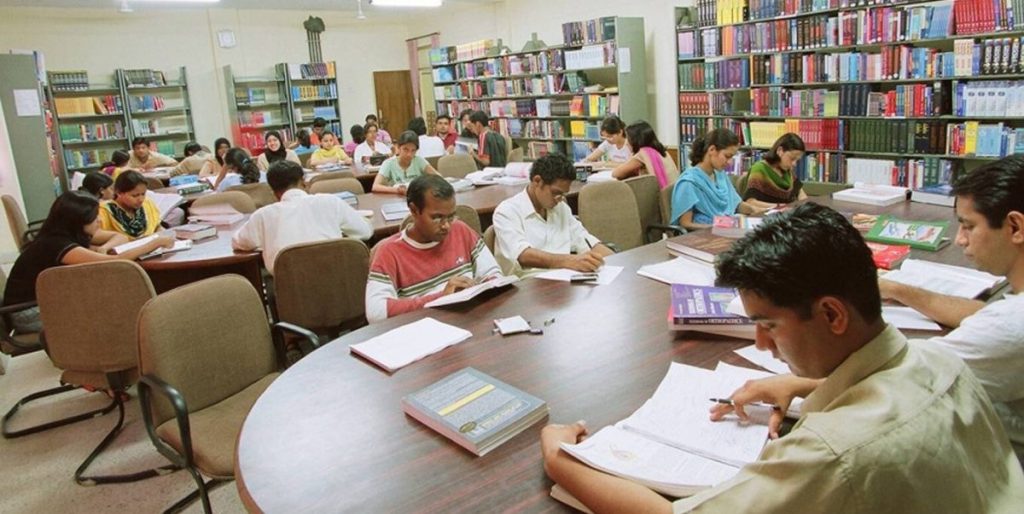
The doors of library are exposed to everyone for rewarding the requirement for information. They are run by the government, schools, colleges, and universities. The society members of the neighbouring locality can visit these libraries to boost their information and complete their research.

TYPES OF LIBRARIES

There are different types of libraries, such as public libraries, circulating libraries, private or personal libraries. Of these, public libraries are most important. These are financed either by Government or by public institutions. All readers are allowed to read here. These libraries have two sections-lending and reference. Books are lent out to those who deposit money. Others are allowed to sit a id read books during the period, these are kept open. As libraries spread education, the Government of India have taken up a scheme to establish rural libraries for the benefit of rural people. They sanction annual grants to these libraries in cash or kind. In these libraries, books are stocked to suit the half-literate people of villages.

A FRIEND IN NEED

Government-managed libraries are well equipped and well manned. Only technical men are employed here to help the readers. Quite a large number of scholars, students and members of the public daily attend such libraries for reading and making notes. There are public libraries organised by public institutions. These libraries cater to the needs of a large number of people living in particular localities. Students of schools and colleges also utilise these libraries and derive benefit from them. But these libraries are in bad shape. Government grants to these libraries are not adequate. Public-spirited men now-a-days, are rare. Development of libraries is an important task of a welfare Government. Common people and students get opportunities to read in these libraries. In our country where the percentage of illiteracy is high, these libraries help in expanding the facilities for reading. Public libraries and rural libraries do a lot of good to the localities where they are established. Now the Government has established primary unit libraries, town libraries etc. The Government gives regular grants for the purchase of books and equipment. But still the grants are not adequate. However, they help the public libraries to satisfy the needs and aspirations of the local people.

CONCLUSIONS

So, if we can see deeply a library Builds and helps to connect Community, it Provide Access to the full range of information resources needed to live, learn, govern, and work. It Promote Literacy to both children and adults. It Protect Your Rights to read and offers freedom of information gathering and sharing. People becomes innovative and smart in the company of library, which enhances creation and collaboration.

The Joys of Volunteering

Volunteering is a voluntary act of an individual of doing some work for the society as community service. It may include different forms of work. Some volunteers are specially trained in a particular field while some offer to help and join hands for a good cause freely. Volunteering has different sectors like medical, disaster management, education and upliftment of community. There are several NGOs and organisations which offer volunteering opportunities.

Photo by Abel Tan Jun Yang on Pexels.com

It can help you to make new friends, advance your career, and feel better. Taking some time out of our busy schedules and finding time for volunteering can be difficult for some of us. But you can start small for the sake of trying it out. Volunteering lets you help and reach out to people from different backgrounds and create social change in your own little way. It provides vital help to individuals and gives you a chance to make lives better. Surely it makes people’s lives better but it gives you greater benefits. Give a little time to volunteering and you will get a lot in return!

Photo by Pixabay on Pexels.com

It helps you feel happier and healthier. Once you start volunteering, you will meet a lot of new people from different communities. Working with underprivileged communities makes us more aware of our surroundings and feel grateful about our own lives. Also, when you start doing something new it gives you a fresh start and brightens your mood. Most of us love doing new things. Volunteering will also help you spend some quality time outside of work. It will bring both fun and fulfillment to your life. It will help you combat better with issues of mental health like depression and anxiety. It will also improve your mood and give you immense joy. Seeing the smile on the face of a child will surely brighten your day.

You will meet a lot of new people. Your fellow volunteers will either be from similar fields as yours, which will definitely be a positive side or they will be from completely different walks of life giving you a chance to know about a lot of new things. If you are a person who struggles with making new friends, it is a great opportunity for you to start new friendships. Once you start working as a team with others, you will share your ideas and share responsibilities for carrying out a task. While working and planning together it is most likely that you will become great friends. This will also make you a more social person and increase your communication skills. Volunteering helps you to network with a lot of people. Especially if your career path values societal issues, it will be really helpful for you to meet important people and make connections.

Lastly it will help you enhance your career prospects. Almost all companies or educational institutions value a volunteering experience. They will be glad to know that you have been a part of something so meaningful. Volunteering increases your chances of getting selected and helps you improve your resume. It will also give you experience of working with a team and make you a more empathetic and responsible person.