1st International Conference on Advances in Water Resources (AWaRe 2025)

Eduindex News Network

Daily writing prompt
What is the last thing you learned?

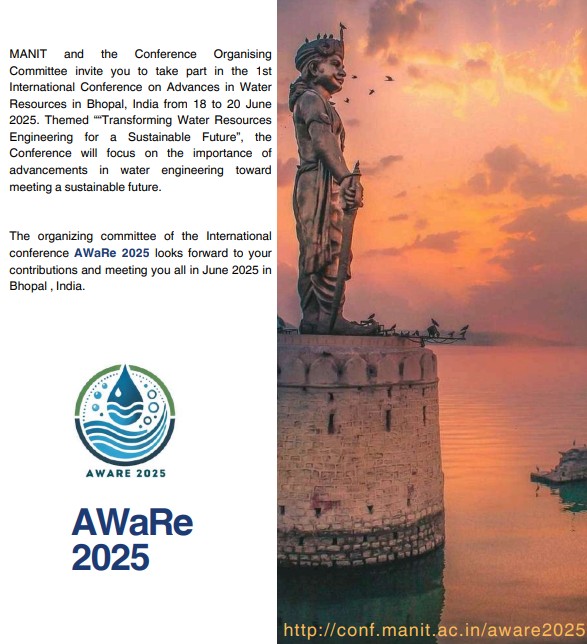
1st International Conference on Advances in Water Resources (AWaRe 2025)
Date: 10th – 12th June 2025
Venue: Maulana Azad National Institute of Technology (MANIT), Bhopal, India
Website: AWaRe 2025

About the Conference

The 1st International Conference on Advances in Water Resources (AWaRe 2025) aims to bring together experts from academia, industry, and research organizations to discuss innovations and challenges in water resources engineering. Organized by the Department of Civil Engineering and the Centre of Excellence in Water Management at MANIT Bhopal, in association with the Central Water Commission (CWC), India, this conference will provide a platform for knowledge exchange and collaboration.

The theme for AWaRe 2025 is “Transforming Water Resources Engineering for a Sustainable Future.” The event will explore cutting-edge research and technological advancements that enhance water conservation, management, and sustainability, ensuring a balance between human development and environmental protection.

Key Themes of the Conference

AWaRe 2025 will cover a wide range of topics, including but not limited to:

1. Innovations in Hydraulics

  • Urban hydraulics and hydraulic structures
  • Computational fluid dynamics (CFD)
  • Environmental and eco-hydraulics
  • Coastal hydraulics and offshore structures

2. Sustainable River Engineering and River Training

  • Sediment transport and river morphology
  • Nature-based solutions for large rivers and lakes
  • Trans-boundary water sharing

3. Catchment Hydrology and Watershed Management

  • Flood forecasting and protection measures
  • Climate modeling and climate change mitigation
  • Integrated watershed management and disaster risk reduction

4. Subsurface Water Dynamics

  • Groundwater resource assessment and planning
  • Seawater intrusion and forensic groundwater hydrology
  • Smart aquifer recharge and management

5. Hydro-informatics and Advanced Data Analytics

  • Big data management in water resources
  • AI-driven tools for decision support
  • Cyber infrastructure for water systems

6. Green and Blue Nexus

  • Water reclamation and reuse
  • Renewable energy and sustainable coastal water management

About the Organizing Institution

Maulana Azad National Institute of Technology (MANIT), Bhopal

Established in 1960, MANIT Bhopal is one of India’s premier engineering institutions. It was designated as a National Institute of Technology (NIT) in 2002 and is recognized for its contributions to technical education and research.

The Department of Civil Engineering, one of the institute’s oldest departments, offers B.Tech., M.Tech., and Ph.D. programs in various fields, including Water Resources Engineering. The Centre of Excellence in Water Management, established in 2021, specializes in research and postgraduate education in water resources engineering and management.

Registration Details

CategoryRegistration Fee
Research ScholarsRs. 2000
Academicians / Scientists / Professional ResearchersRs. 3000
Industry Personnel (Public & Private Enterprises)Rs. 4000
Foreign Delegates / Authors$200

Important Dates

  • Full Paper Submission Opens: 1st December 2024
  • Full Paper Submission Deadline: 15th March 2025
  • Paper Acceptance Notification: 15th April 2025
  • Early-Bird Registration: 15th May – 1st June 2025

Why Attend AWaRe 2025?

  • Engage with Global Experts: Learn from internationally renowned researchers and industry leaders.
  • Showcase Your Research: Present your work to a diverse audience and receive valuable feedback.
  • Networking Opportunities: Connect with professionals, academics, and policymakers.
  • Workshops & Technical Sessions: Gain insights into the latest advancements in water resources engineering.

MANIT Bhopal invites researchers, scholars, and industry professionals to participate in AWaRe 2025 and contribute to shaping the future of water resources management. We look forward to your valuable contributions and active engagement in the conference discussions.

For more details, visit AWaRe 2025 Website.

Interaction of MANIT Director and Experts with PhD Scholars

Daily writing prompt
What bores you?

Date: 12th February 2025
Venue: Vivekanand Conference Hall, MANIT Bhopal

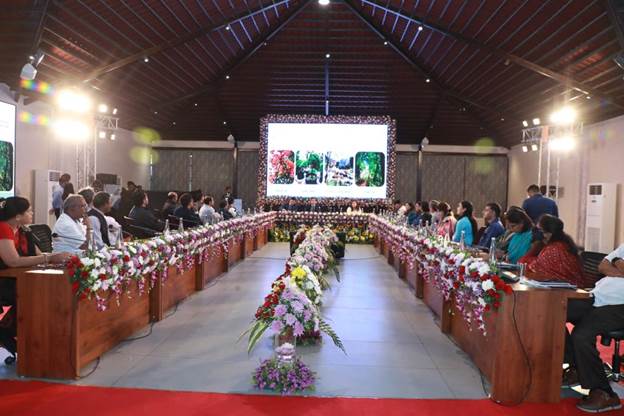
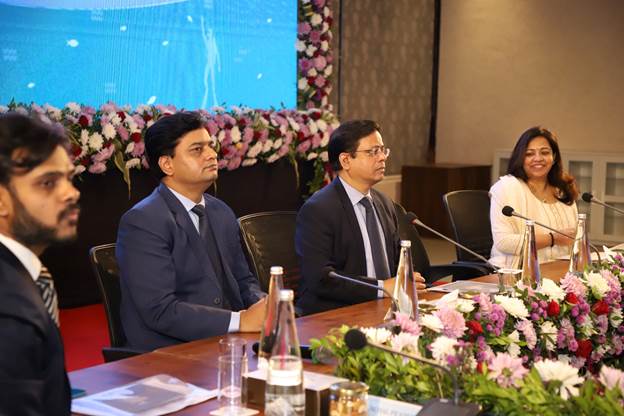
Bhopal, 12th February 2025 – An interactive session between the Director, esteemed experts, and PhD scholars of MANIT was conducted at the Vivekanand Conference Hall. The session focused on providing guidance on crucial aspects of research, including research metrics, journal selection, societal and industrial relevance of research, and the importance of timely completion of PhD programs.

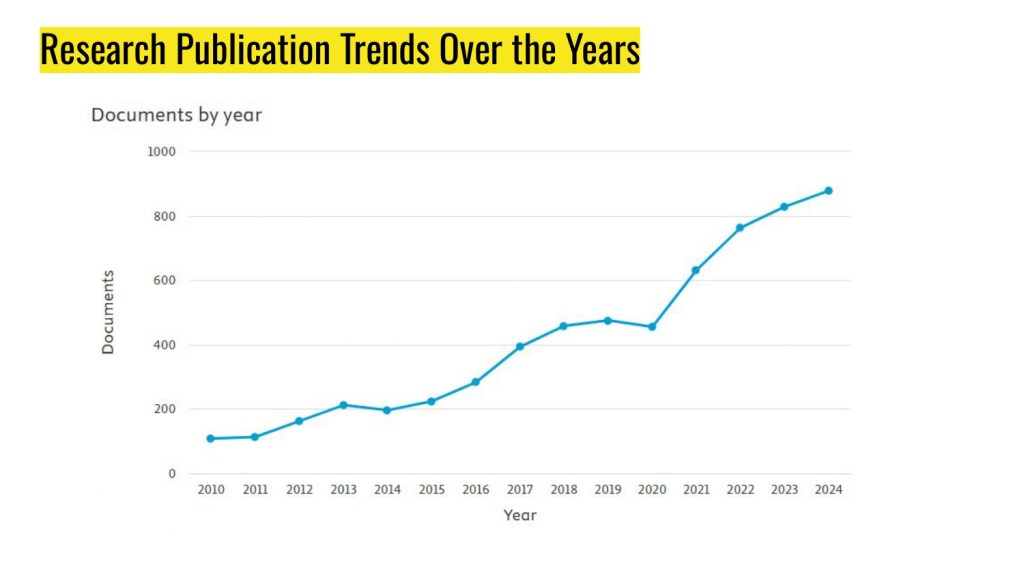
Fig. Research Publication Trends of MANIT indexed in Scopus

The session began with a discussion on the basics of research metrics, where the significance of impact factor, h-index, citation index, and other evaluation parameters was highlighted. Scholars were advised to focus on the quality and novelty of their research rather than solely on numerical metrics. Following this, scholars presented their research progress and received constructive feedback from the experts. The importance of structured research planning and setting regular milestones was emphasized to ensure timely completion.

Experts then provided guidance on selecting reputable journals based on indexing, peer-review standards, and relevance to the research domain. Scholars were encouraged to avoid predatory journals and aim for Scopus, Web of Science, and UGC-CARE-listed journals. The discussion also underscored the need to align research with real-world problems and societal needs. Opportunities for collaboration with industries and governmental bodies were explored to enhance practical applications, and scholars were encouraged to explore patents, technology transfers, and start-up ideas arising from their research.

One of the key concerns addressed was the timely completion of PhD programs and avoiding the ‘slow poison’ of prolonged stipend dependency. The adverse effects of extended PhD durations and over-reliance on stipends were highlighted, and scholars were motivated to complete their research within the stipulated timeframe to contribute effectively to academia, industry, or policy-making. The importance of skill development and networking for post-PhD career opportunities was also stressed.

The session was highly interactive and insightful, offering scholars valuable perspectives from the Director and experts. The discussion reinforced the importance of quality research, timely completion, and the broader impact of scholarly work on society and industry. Scholars were encouraged to remain dedicated, innovative, and socially responsible in their research endeavors.

32nd International Conference of Agricultural Economists

 Prime Minister Shri Narendra Modi will inaugurate the 32nd International Conference of Agricultural Economists (ICAE) on 3rd August 2024, at around 9.30 AM at National Agricultural Science Centre (NASC) Complex, New Delhi. Prime Minister will also address the gathering on the occasion.

The triennial conference, organised by the International Association of Agricultural Economists will be held from 02 to 07 August 2024. The ICAE is being held in India after 65 years.

The theme for this year’s conference is, “Transformation Towards Sustainable Agri-Food Systems.” It aims to tackle the pressing need for sustainable agriculture in the face of global challenges such as climate change, natural resource degradation, rising production costs and conflicts. The conference will highlight India’s proactive approach to global agricultural challenges and showcase the nation’s advancements in agricultural research and policy.

The ICAE 2024 will serve as a platform for young researchers and leading professionals to present their work and network with global peers. It aims to strengthen partnerships between research institutes and universities, influence policymaking on both national and global scales, and showcase India’s agricultural progress, including advancements in digital agriculture and sustainable agri-food systems. The conference will witness participation of around 1,000 delegates from around 75 countries.

Elevate Your Conference Experience: Unlock the Power of Publication Support with Pen2Print

body {
font-family: Arial, sans-serif;
line-height: 1.6;
margin: 20px;
}

    h1 {
        color: #333;
    }

    img {
        max-width: 100%;
        height: auto;
        margin-bottom: 15px;
    }

    .rating {
        display: inline-block;
        unicode-bidi: bidi-override;
        color: #888;
        font-size: 24px;
        height: 1em;
        position: relative;
    }

    .rating span {
        display: inline-block;
        position: absolute;
        overflow: hidden;
        color: #FFD700;
    }

    .rating input {
        display: none;
    }

    .rating label {
        cursor: pointer;
        width: 1em;
        font-size: 24px;
        text-align: center;
        line-height: 1.6;
    }

    .rating label:before {
        content: '★';
    }

    .rating input:checked ~ label,
    .rating input:checked ~ label ~ label {
        color: #FFD700;
    }


<h1>Dear Conference Organizers, Esteemed Researchers, and Academic Enthusiasts,

Are you gearing up to host an exceptional conference that deserves widespread recognition and global impact? Look no further! Pen2Print is here to elevate your conference experience with our comprehensive publication support services, ensuring that your research reaches the pinnacle of success.

Unleashing the Power of Publication Support:

  1. Conference Proceedings ISBN Allotment:
    Give your conference proceedings the recognition they deserve with our ISBN allotment services. A unique ISBN not only adds credibility to your proceedings but also facilitates their cataloging and accessibility.

  2. Publication as a Special Issue in International Journal of Research (IJR):
    Take your research to new heights by featuring it in a special issue of the esteemed International Journal of Research (IJR). Benefit from the wide readership and high impact factor that IJR offers, amplifying the visibility of your work.

  3. Allotment of DOI (Digital Object Identifier):
    Ensure the permanence and traceability of your research with the allotment of a DOI. A DOI guarantees that your work remains easily accessible and citable, enhancing its impact in the academic community.

  4. Indexing of Articles:
    Secure a place for your articles in renowned indexing services, increasing their discoverability and readership. Pen2Print ensures that your research receives the recognition it deserves by indexing it in reputable databases.

Maximize Exposure and Impact:

  • Promotion of Your Conference:
    We don’t stop at just publication support! Pen2Print goes the extra mile by actively promoting your conference. Leverage our extensive network and marketing strategies to ensure maximum participation and engagement.

  • Send Your Inquiry Today!
    Ready to take your conference to the next level? Send an email to editor@pen2print.org to inquire about our publication support services. Our dedicated team is committed to assisting you every step of the way.

Why Pen2Print?

  • Expertise:
    Benefit from the expertise of our seasoned professionals who understand the nuances of academic publishing.

  • Global Reach:
    Ensure your research reaches a global audience through our wide network and collaborations.

  • Tailored Solutions:
    We offer customized solutions to meet the unique needs of your conference and research.

Don’t let your hard work remain confined—let Pen2Print be your partner in unlocking the full potential of your research. Elevate your conference experience and make a lasting impact in the academic world!

Get SPECIAL ISSUE in IJR

Get ISBN for Conference Proceedings

Best Regards,

editor
Pen2Print Team

editor@pen2print.org

https://www.pen2print.org

Top Ten Conferences in the World

 Identifying the absolute top ten conferences in the world is subjective and can vary depending on the field, relevance, impact, and attendee experience. However, here’s a diverse list that often garners significant attention and participation:

  1. CES (Consumer Electronics Show): Held annually in Las Vegas, CES is a premier global event for showcasing cutting-edge consumer technologies, innovations, and trends across various industries.

  2. World Economic Forum Annual Meeting (WEF Davos): An influential gathering of global leaders, business tycoons, policymakers, and intellectuals in Davos, Switzerland, discussing key economic, political, and societal issues.

  3. TED (Technology, Entertainment, Design) Conference: Known for its powerful talks on diverse topics, the TED Conference brings together thought leaders, innovators, and influencers sharing inspiring ideas and stories.

  4. SXSW (South by Southwest): Held in Austin, Texas, SXSW is a multifaceted event encompassing technology, music, film, and culture, attracting a diverse global audience.

  5. Mobile World Congress (MWC): A leading event in the mobile technology industry held in Barcelona, MWC showcases the latest advancements in mobile devices, networks, and technology trends.

  6. Web Summit: Europe’s largest tech conference gathering global tech leaders, startups, and innovators discussing emerging technologies, entrepreneurship, and digital transformation.

  7. IEEE International Conference on Robotics and Automation (ICRA): A prestigious conference in the field of robotics and automation, attracting researchers, engineers, and industry professionals worldwide.

  8. American Association for Cancer Research (AACR) Annual Meeting: A significant conference in oncology and cancer research, featuring cutting-edge research and discussions on cancer prevention and treatment.

  9. International Conference on Machine Learning (ICML): One of the prominent conferences in machine learning and artificial intelligence, gathering researchers and experts to discuss the latest advancements.

  10. United Nations Climate Change Conferences (COP): These annual global events bring together countries, organizations, and stakeholders to address climate change and environmental sustainability.

Each of these conferences has its unique focus, audience, and impact within its respective field, attracting a diverse range of attendees and speakers from around the world. The significance of these conferences often lies in their contribution to knowledge exchange, networking opportunities, and shaping global discussions and innovations.

National Conference on Adventure Tourism focused on Destination Planning, Development and Management

 Ministry of Tourism organized a two-day National Conference on Adventure Tourism at Ekta Nagar, Gujarat with the theme ‘Viksit Bharat@2047: Making India a Global Adventure Tourism Hub’. The aim of the conference was to provide a platform to deliberate and devise strategies and initiatives to make India a Global Adventure Tourism Hub.

On the second day of the National Conference of State Tourism Secretaries, the Ministry of Tourism focused on Destination Planning, Development and Management. The Government of Gujarat made a detailed presentation on the Statue of Unity as a tourist destination, its evolution, master plan, destination development and management authority and way forward.

The Ministry of Tourism shared the ongoing exercise of preparing destination master plans and development under Swadesh Darshan 2.0.

The Ministry also discussed progress on engagement with the States on Incredible India Portal, Meet in India campaign, Wed in India campaign, Travel for LiFE program and Best Rural Tourism Village and Homestay competition.

The States were requested to work closely with the Ministry of Tourism on these initiatives which will help holistic and sustainable development of the tourism sector in the States.

The States were also encouraged to participate in various national competitions launched by the Ministry, which will help discover best practices in the country in various areas and their subsequent replication.

***

ISBN no for Conference Proceedings

 Using ISBNs (International Standard Book Numbers) for conference proceedings and reports provided by Eduindex offers numerous advantages that significantly benefit both the organizers and participants. These benefits range from enhancing the credibility and accessibility of the proceedings to streamlining cataloging and distribution processes.

Firstly, assigning ISBNs to conference proceedings and reports lends them a unique identification code, allowing for easy and precise cataloging in libraries, databases, and book-selling platforms. This distinct identifier aids researchers, scholars, and students in efficiently locating and referencing these materials, contributing to increased visibility and recognition within academic circles.

Moreover, the inclusion of ISBNs elevates the perceived quality and credibility of conference proceedings. It establishes a level of professionalism and standardization, signaling that the content has undergone a formal process and adheres to publishing norms. This, in turn, enhances the reputation of the conference and its contributors, fostering a greater willingness among academics to participate and engage with the scholarly work presented.

Another advantage lies in the improved accessibility and global reach facilitated by ISBNs. These unique numbers enable easy dissemination of conference proceedings across various platforms and geographic locations. This accessibility encourages wider readership and knowledge dissemination, transcending geographical boundaries and ensuring that valuable research reaches a broader audience.

The streamlined process of obtaining ISBNs through Eduindex further adds to the advantages. The affordable cost and prompt allotment within a week of the request make it convenient for conference organizers to ensure their proceedings are properly registered and identified, without incurring significant expenses or delays.

In conclusion, the utilization of ISBNs in conference proceedings and reports offered by Eduindex offers a multitude of benefits. From enhancing credibility and visibility to facilitating efficient cataloging and global accessibility, the inclusion of these unique identifiers significantly augments the value of academic content. For those interested in availing themselves of these benefits, reaching out to editor@pen2print.org can be the first step toward acquiring ISBNs and maximizing the impact and reach of scholarly work.

Global Fisheries Conference India 2023

 Union Minister for Fisheries, Animal Husbandry & Dairying Shri Parshottam Rupala will inaugurate Global Fisheries Conference India 2023 at Gujarat Science City, Ahmedabad on 21st November 2023. The concept has thus taken shape of a two-day conference from 21st to 22nd November 2023 on the occasion of World Fisheries Day being celebrated globally. The Global Fisheries Conference India 2023 was conceptualised by the Department of Fisheries with the aim of devising a way forward for the Indian Fisheries and Aquaculture sector in conjunction with the stakeholders from the fisheries’ value chain. 

The event will kick-start with the inauguration of the Exhibition by Union Minister Shri Parshottam Rupala and followed by the Inaugural session, Press Conference, International Round table and parallel Technical Sessions, Industry Connect Sessions and G2G/G2B and B2B Bilaterals. The exhibition stalls and food mela will be accessible to all visitors and participants throughout the two days, post inaugural ceremony.

One of the key event will be the International Roundtable led by Union Minister Shri Parshottam Rupala with the foreign missions of France, New Zealand, Norway, Australia, Russia, Spain, Zimbabwe, Angola, Brazil and Greece, International organisations namely Food and Agriculture Organisation (UN-FAO), Asian Development Bank (ADB), Deutsche Gesellschaft für Internationale Zusammenarbeit (GIZ), Bay of Bengal Program (BoBP), Marine Stewardship Council India (MSC India) among others, Ministers from the States/UTs of Arunachal Pradesh, Haryana, Uttar Pradesh, Himanchal Pradesh, Meghalaya, Nagaland, Tripura, Goa and Andhra Pradesh along with senior officials from Department of Fisheries (GoI), National Fisheries Development Board (NFDB), State/UT Fisheries Departments and Fisheries institutes. The objective of the International Roundtable will be to discuss collaborations with international organizations, Ministries, research institutions among others on sustainable fishing practices, aquaculture technologies and resource management. 

Global Fisheries Conference India 2023 is a unique opportunity that is expected to bring together varied stakeholders at one place platform. More than 5000 participants will be hosted during the two days for multiple sessions and engaged in thought provoking discussions and deliberations. In total a series of ten sessions have been planned for the Technical Sessions and the Industry Connect Sessions. Whilst open forums for Government-to-Government (G2G)/Government-to-Business (G2B) and Business-to-Business (B2B) Bilaterals will be simultaneously held.

The Technical Sessions have been planned with the objectives of fostering deeper understanding of trending topics in Fisheries sector pertaining to challenges and opportunities in Inland Aquaculture, Coastal Aquaculture and Mariculture, Deep Sea Fishing, sustainable aqua feed, fish health management, innovations & best practices, New and Emerging Technologies etc. 

The Industry Connect Sessions are also planned during event with focus on bringing together business and industrial organisations in the fisheries sector to share market insights, trends, opportunities and challenges while networking and foster collaborations/partnerships. 

The G2G/G2B/B2B bilaterals are also being facilitated to entail discussion and dialogues between policy makers, experts and industry for knowledge sharing, networking etc. This is an open format forum for stakeholders to freely explore opportunities for bilateral discussion and deliberations. 

The exhibition is also organized that hosts more than 200+ exhibitors, who are demonstrating a wide range of products, services and innovations by the start-ups, associations, co-operatives, SHGs, and small-medium enterprises from the sector. A special pavilion has been set up that exhibits chosen start-ups RAS, Artificial Reef, Seaweeds, Transponders, Raceways, Deep Sea Fishing Harbours etc.

At a macro level, all activities planned during the Global Fisheries Conference 2023 are expected to yield views and thought process of national and international stakeholders for identifying focus areas, gaps, opportunities, solutions and partnerships for the development of the Indian Fisheries sector.

*****

United Service Institution of India to organise Annual UN Forum 2023 on ‘International Humanitarian Law & Peacekeeping’ in New Delhi

 United Service Institution of India (USI), the country’s oldest think-tank established in 1870 for research and debate on national security and military affairs, is organising its Annual UN Forum 2023 in New Delhi in November 21-22, 2023. The forum on ‘International Humanitarian Law and Peacekeeping’ is being organised in collaboration with the International Committee of the Red Cross and the Centre for UN Peacekeeping Operations.

With contemporary UN peacekeeping missions increasingly being deployed in volatile environments characterised by asymmetric warfare, ensuring adherence to International Humanitarian Law (IHL) principles has become critical. However, applying IHL norms presents challenges arising from the complexity of modern conflicts, actions by non-state actors and blurred lines between combatants and civilians in urban battlespaces.

Against this background, the forum aims to discuss the applicability and limitations of implementing IHL frameworks in UN peace operations through an interactive, multi-stakeholder approach. The sessions will enable a deeper examination of some of the contemporary issues like the protection of civilians, accountability for crimes against peacekeepers, the role of women in peacekeeping operations, and leveraging technology for more effective operations.

The forum will involve insightful perspectives presented by both academicians and practitioners who have first-hand experience of peacekeeping challenges. Keynote addresses will be delivered by senior officials from the Indian Armed Forces and the Ministry of External Affairs. The forum will be held over two days as under:

  • Session 1 will discuss application of IHL principles to peacekeeping given situations involving non-state actors and urban warfare.
  • Session 2 will analyse constraints to protection of civilian mandates and overcoming them by integrating IHL norms.
  • Session 3 will examine legal frameworks to ensure accountability when peacekeepers are targeted, and measures to enhance their protection.
  • Session 4 will focus on the importance of gender-inclusive peacekeeping and challenges for women peacekeepers.
  • Session 5 will discuss utilising technology for more effective peacekeeping through data analytics, AI and advanced surveillance.

The event will conclude with a plenary session aimed at consolidating takeaways for peacekeeping practitioners and providing recommendations to further informed discourse on IHL and its integration into UN peace operations. The dialogues during the forum can contribute to developing training modules and policy frameworks to make peacekeeping more effective while ensuring the rights and safety of peacekeepers and civilians.

****

36th Annual Conference and Literary Festival of All India Santali Writers’ Association at Baripada, Odisha

 The President of India, Smt Droupadi Murmu graced the inaugural session of the 36th Annual Conference and Literary Festival of All India Santali Writers’ Association at Baripada, Odisha today (November 20, 2023). 

Speaking on the occasion, the President appreciated writers and researchers who are contributing to the Santhali language and literature. She appreciated that All India Santali Writers’ Association has been promoting Santhali language since its establishment in 1988. She noted that use of Santhali language has been increased in government and non-government sectors, after its inclusion in the Eighth Schedule of the Constitution on 22 December, 2003. She remembered former Prime Minister, Shri Atal Bihari Vajpayee, on the occasion, during whose tenure Santhali language was included in the Eighth Schedule.  

The President said that most of the Santhali literature was available in the oral tradition. Pandit Raghunath Murmu has not only invented the Ol Chiki script, but he has also further enriched the Santhali language by composing plays like ‘Bidu Chandan’, ‘Kherwal Bir’, ‘Darege Dhan’, ‘Sido- Kanhu – Santhal Hool’. She highlighted that many Santhali writers are enriching Santhali literature with their works. She said that it is a matter of pride that Damayanti Besra and Kali Pada Saren – popularly known as Kherwal Saren – have been honoured with Padma Shri in 2020 and 2022 respectively for education and literature. 

The President said that authors are vigilant watchdogs of society. They make society aware and guide it through their work. Many litterateurs showed path to our national movement during the freedom struggle. She urged writers to continuously create awareness in the society through their writings. She stressed that creating awareness among the people of tribal communities is an important task. She said that building a strong and vigilant society is possible only through continuous awareness. 

The President said that literature is a mirror of the culture of a community. She said that natural co-existence of humans with nature is seen in the tribal lifestyle. She added that the tribal communities believe that the forest does not belong to them but they belong to the forest. She highlighted that today climate change is a huge problem and nature-friendly living is very important to tackle this issue. She urged writers to write about the lifestyles of tribal communities so that other people could know about the life values of tribal society. 

The President said that India is a beautiful garden of different languages and literatures. She added that language and literature are the subtle threads that bind the nation together and literature is enriched by extensive exchange between different languages which is possible through translations. She said that readers of Santhali language should also be introduced to the literature of other languages through translation. She underlined the need for similar efforts to make Santhali literature reach the readers of other languages. 

The President said that there is a need to keep children engaged in self-study right from the beginning. She added that that anyone can become a good reader by doing self-study since childhood. She highlighted the need to create entertaining and comprehensible children’s literature. She stated that emphasis should be laid on creating interesting children’s literature not only in Santhali literature but in all Indian languages.

***

International Conference of the Indian Navy – the Indo-Pacific Regional Dialogue (IPRD

 The annual apex-level international conference of the Indian Navy – the Indo-Pacific Regional Dialogue (IPRD) – will be held in New Delhi from 15 to 17 November 2023. The event will include a Keynote Address by Shri Jagdeep Dhankhar, the Hon’ble Vice President of India on 15 Nov 23, and a series of Special Addresses by Union Ministers and senior officers of the Government of India, designed to provide overarching guidance to the deliberations of this mega conference (https://maritimeindia.org/indo-pacific-regional-dialogue-2023/)

The IPRD follows hard on the heels of the Goa Maritime Conclave 2023, which had been conducted by the Indian Navy from 29 to 31 Oct 2023 in Goa (https://www.pib.gov.in/PressReleasePage.aspx?PRID=1973395). In terms of conceptual positioning, the Goa Maritime Conclave seeks to project the Indian Navy’s cooperative engagement at the strategic-operational level, by providing a forum for the Chiefs-of-Navy and Heads of Maritime Agencies in the Indian Ocean Region.   The IPRD, on the other hand, is the principal manifestation of the Navy’s international engagement at the strategic-level, addressing ‘holistic’ maritime security issues across the Indo-Pacific

The first two editions of IPRD were held in 2018 and 2019 respectively at New Delhi.  IPRD 2020 was cancelled due to the Covid-19 outbreak. The third edition of IPRD was held in 2021 in online mode and the fourth edition was conducted, reverting to a physical format, at New Delhi in 2022. 

The National Maritime Foundation (NMF) is the Indian Navy’s knowledge partner and chief organiser of each edition of the IPRDwhich aims to review various maritime trends within the Indo-Pacific region, the regional opportunities and challenges that arise therefrom, and foster the exchange of solution-oriented dialogue amongst key stakeholders.   

Theme of IPRD-2023

The overarching theme of IPRD-2023 is “Geopolitical Impacts upon Indo-Pacific Maritime Trade and Connectivity”.   This year’s edition of the IPRD builds upon the previous one, which focussed upon ‘Operationalising the Indo-Pacific Oceans Initiative (IPOI)’, by specifically addressing the ‘Trade, Connectivity and Maritime Transport’ pillar of the IPOI.  Both ‘Trade’ and ‘Maritime Transport’ are, of course, segments of maritime connectivity. 

The Hon’ble Prime Minister of India, Shri Narendra Modi, had espoused the principle of “responsible maritime connectivity” in his remarks at the UNSC high-level open debate on “Enhancing Maritime Security: A Case for International Cooperation” on 09 August 2021, in which he specifically emphasised three key aspects in marine infrastructure creation, namely,  the physical sustainability of such projects, the absorption capacity of the countries where such infrastructure is proposed to be developed, and  appropriate global norms and standards for the creation of marine infrastructure.  However, geopolitical disturbances, wherever they might occur, pose significant maritime challenges, including adverse impacts upon trade and maritime connectivity.  These challenges have been evident in the events that have occurred in recent years — from the COVID-19 pandemic to the maritime manifestations of the rash of escalating tensions, as also armed conflicts, that are breaking-out across a world increasingly embroiled in geopolitical contestations.

Therefore, IPRD-2023 will, through the agency of a series of globally renowned subject-matter experts and eminent speakers, explore geopolitical impacts upon Indo-Pacific maritime trade and connectivity through six professional sessions spread over a three-day period.  The sessions are:

(1) Nodes of Maritime Connectivity;

(2) China’s Impact vis-à-vis Maritime Connectivity across the Indo-Pacific;

(3) Maritime Connectivity through Shipping and Trade;

(4) Maritime Connectivity through Shipping and Trade (Part 2);

(5) Private Industry in the Safety and Security of Indo-Pacific Maritime Trade and             Shipping; and

(6) Maintaining a Rules-based, Safe, and Secure Indo-Pacific.

Practitioners and domain-experts from within the Government of India, Indian defence industry, and Indian academia will also enrich the conference by their presence and contributions.

International participation in IPRD 2023 will be through eminent speakers from 16 countries, who are expected to offer diverse regional perspectives on the subject, as also through the presence of representatives of the various embassies and high commissions in New Delhi.

As with previous editions of the IPRD, participation of the vibrant student community and scholars, eminent citizens, military practitioners, members of the diplomatic corps, and think-tanks from India and abroad will add effervescence to this event.

_________________________________________________________________________

VM/PS                                                                                                                                    211/23


WHO Traditional Medicine Global Summit 2023

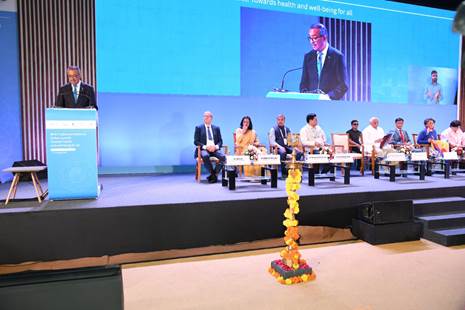
 World Health Organization (WHO) has released the outcome document of first WHO Traditional Medicine Global Summit 2023 in form of “Gujarat Declaration”. The declaration reaffirmed global commitments towards indigenous knowledges, biodiversity and traditional, complementary and integrative medicine. WHO underlined that the application of rigorous scientific methods is needed to better understand, assess and, where appropriate, apply more holistic, context-specific, complex and personalized approaches for health and well-being for all.

It reiterates that India as host of the WHO Global Traditional Medicine Centre at Jamnagar, Gujarat has an important role in scaling up WHO’s capacities to support member states and stakeholders in taking forward the summit action agenda and other relevant priorities.

The action points of two day WHO Traditional Medicine Global Summit 2023 held at Gandhinagar, Gujarat are based on the evidence, discussions and outcomes presented at the Summit. Deliberation were done on varied topics like Health and well-being of people and the planet, research and evidence, universal health coverage, primary health care and health systems, Data & routine information systems, digital health frontiers, biodiversity and sustainability, human rights, equity and ethics.

Union minister of Ayush Shri Sarbananda Sonowal had said, “Gujarat declaration is testimony of our  prime minister Shri Narendra Modi’s commitment to promote our ancient knowledge of Traditional Medicine system. Through collaborative efforts and sustainable practices, we can ensure a healthier future for generations to come.”

During the WHO traditional Medicine global Summit, Director General of the World Health Organization Dr Tedros Adhanom Ghebreyesus, had said that “Gujarat Declaration” will serve as a catalyst to harness the potential of traditional medicine through the lens of science and will focus on the integration of traditional medicines in national health systems and help unlock the power of traditional medicine.

Gujarat declaration talks about scaling up efforts to further implement evidence-based TCIM (Traditional complimentary integrative medicine) interventions and approaches in support of the goal of universal health coverage (UHC) and all health-related Sustainable Development Goals (SDGs). It states the role of multi-regional, multi-disciplinary and multi-stakeholder collaborations demonstrated at the Global Summit through the WHO GCTM that is aligned with and complementary to the work of WHO major offices, to maximize evidence based benefits of TCIM in global health.

Support the evidence-based integration in national health policies and systems based on the highest quality research. Accelerate the production, regulation, and formal utilization of scientifically proven TCIM products and practices. Advance policies that promote standardized TCIM documentation, including through expanded and accelerated use of the WHO International Classification of Diseases (ICD-11) to enable integration of evidence and data collection on TCIM in a standardized way within routine health information systems. Establish a global network of TCIM reference clinical centres that can routinely undertake standardized data collection and monitoring based on WHO ICD-11 coding of the implementation.

The highlight of summit was how to enable the appropriate development and application of digital health technologies, and artificial intelligence (AI) in particular, to advance digital health resources on TCIM for people’s health and well-being.

It mentions that actions should be promoted and taken at all levels to safeguard, restore and sustainably manage biodiversity, and to ensure the fair and equitable sharing of the benefits arising from the use of biodiversity resources, related genetic material and Indigenous knowledges. Fully recognize, respect and protect the rights of Indigenous Peoples, as provided in the UN Declaration on the Rights of Indigenous Peoples. Incorporate ethical methods and processes in TCIM research and practice.

The First global summit on Traditional Medicine was organised by the World Health Organization (WHO) and co-hosted by the Ministry of Ayush, from August 17-18, 2023, at Gandhinagar, Gujarat.

Climate Change Narrative from Total Emissions to Per Capita Emissions of each country


The Union Minister for Power and New & Renewable Energy Shri R. K. Singh has called for a change in the global climate change discourse and narrative, shifting from a focus on total emissions to per capita emissions of each country. “India’s per capita emissions are one third of global average, one of the lowest in the world; despite that, the developed countries until recently had been putting pressure on large countries like India, to reduce emissions. Their per capita emissions remained 3 – 4 times the global average. The narrative was on total emissions of each country.”
“Point of comparison should be Per Capita Emissions”

The Minister asserted that the narrative and discourse should not be about total emissions. “If we talk about total emissions, the country with minimum emissions could be an island nation with small population, even though they may be consuming huge amounts of energy and emitting huge quantities of carbon dioxide per person. Hence, the point of comparison has to be per capita emissions. This is the change in discourse which is needed, and I want institutions like TERI to talk about this.”

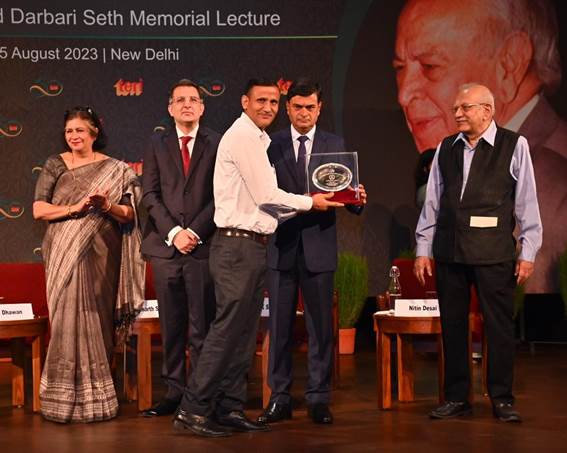
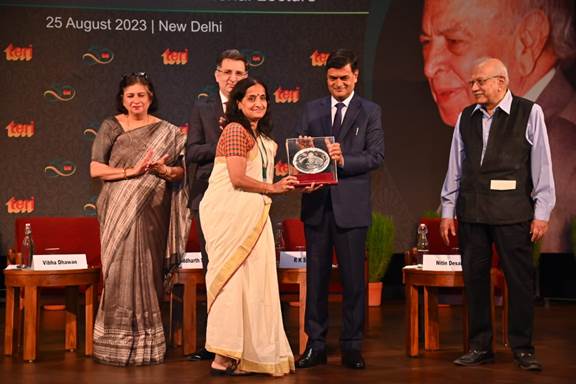
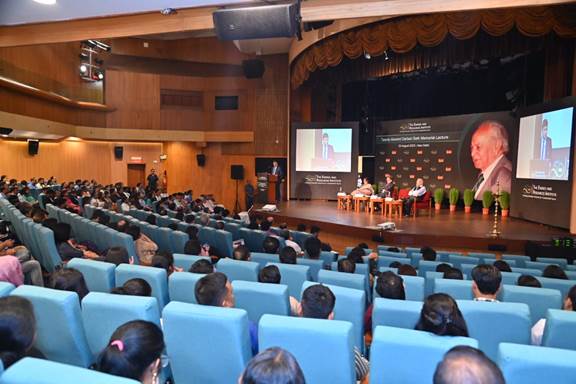
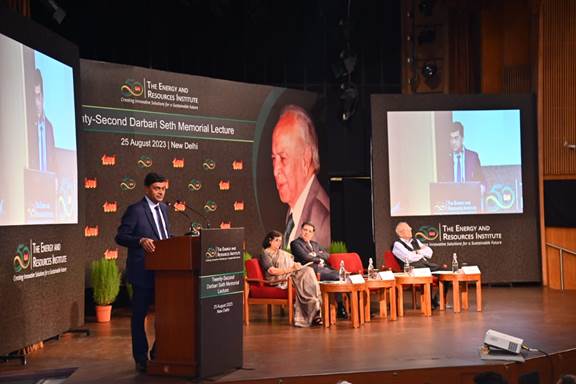
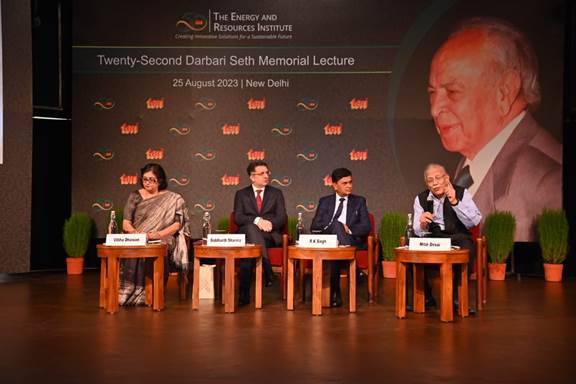
The Minister said this, during his Presidential Address at the Twenty-Second Darbari Seth Memorial Lecture, held in New Delhi today, August 25, 2023, in memory of Late Shri Darbari Seth, the founder of TERI.

Noting that developed countries would talk about phasing out of coal, but not about phasing out of natural gas or other fossil fuels, the Minister exhorted TERI to come out with studies on climate actions by various countries. Once the global South starts controlling the narrative, the world will be a much fairer place, said the Minister, adding that India has been insisting on phasing out of all fossil fuels.
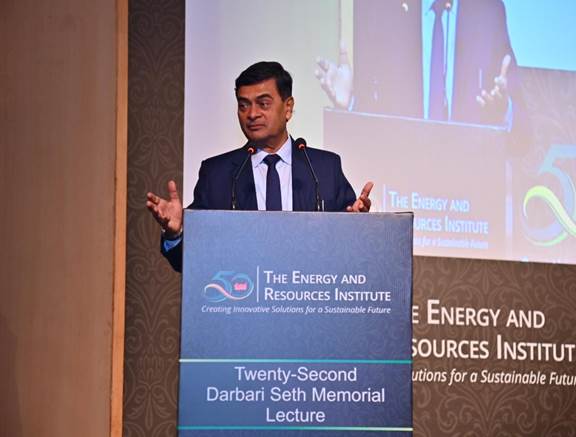
Speaking about India’s actions towards reducing carbon emissions, the Union Minister said that India has achieved its NDC target of 40% of our installed electricity capacity coming from non-fossil energy sources nine years ahead of schedule, in 2021 itself. “Today, 43% of our capacity is from non-fossil fuel sources. No other country has added renewable energy capacity at a rate at which we have done. We pledged at COP-21 in 2015, that we will reduce our emissions intensity by 33% by 2030; we did this by 2022, eight years in advance. So, in Glasgow, we have said that by 2030, we will have 50% of our capacity coming from renewables and that we will reduce our emission intensity by 45%. We will achieve that too well before time.”

“The truth needs to be told, developing countries need space to grow”

Shri Singh said that the developed countries have reached their peak of development; so, their emissions will either remain static or come down. “However, the building stock of developing countries will multiply, since we are developing; we will need more cement, steel and aluminium to construct those buildings and plants. This will lead to more emissions. So, we need space to grow. This point needs to be made by think tanks like TERI, that this is the space which is required by developing countries to grow.”

The Minister said that the nation is not going to compromise on the availability of energy for our growth, adding that the country is responsible for only 4% of legacy carbon dioxide load in the environment, whereas our population is around 17% of world population.

The Minister said that this discourse needs to be changed not at only at the level of world leaders, but also among the people around the world in the developed countries. “The truth needs to be told, I want institutions like TERI to step up and change the discourse.”
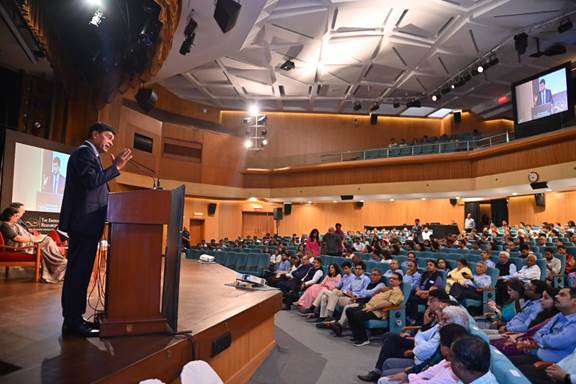
“Can you imagine someone thinking about climate change in the year 1974?”

Paying tribute to Shri Darbari Seth, the founder of The Energy and Resources Institute (TERI), the Union Power and New & Renewable Energy Minister asked the gathering, “can you imagine someone thinking about climate change in the year 1974?” The Minister said that this occasion serves to honour Shri Seth’s unwavering determination, entrepreneurial spirit, and strength of mind. “As a towering figure of his era, Shri Seth moulded Tata enterprises’ destiny, dedicating his time and effort fervently to the noble cause of sustainable development. This commitment steered TERI’s journey, propelling it toward a future committed to fostering a greener world and a safer planet.”

The Minister said that the organization which Shri Seth founded has grown and spans the total spectrum of issues which affect sustainability. “TERI has done well. It has earned reputation for probity and publications which we can rely upon.”

The 22nd Darbari Seth Memorial Lecture

The 22nd Darbari Seth Memorial Lecture year marks the 102nd birth anniversary of Shri Seth and brought together thought leaders, industry, and policymakers for insightful discussions, inspired by the ideals of Shri Seth, towards fostering collaborative efforts and finding meaningful solutions for climate change.

The 22nd Darbari Seth Memorial Lecture was delivered by Shri Siddharth Sharma, Chief Executive Officer, Tata Trusts. On the occasion, Winners of “TERI Roll of Honour” were felicitated and mementos were presented to TERI employees who have completed 20 and 10 years of service in TERI. Chairman, TERI Governing Council, Shri Nitin Desai delivered the welcome address and Director General, TERI, Dr. Vibha Dhawan delivered the vote of thanks.
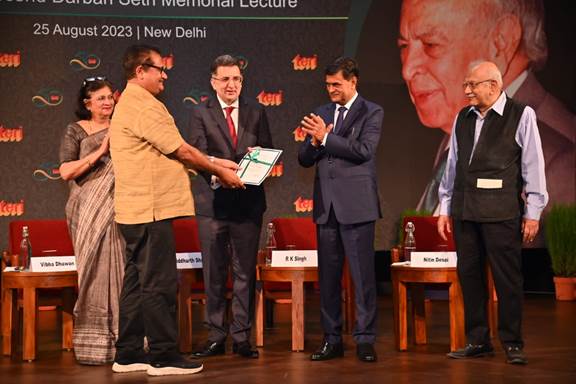
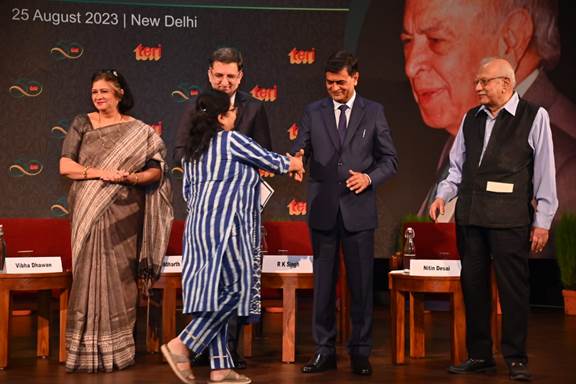
In the 22nd Darbari Seth Memorial Lecture, Chief Executive Officer, Tata Trusts, Shri Siddharth Sharma said that Shri Darbari Seth was an extraordinary leader who could get his people to move mountains. “It is his defining interest in his energy, energy conservation and environmental sustainability much before it became the existential issue of our times which made him take the lead and set up TERI. He said that men like him leave behind enduring legacies and uplift the generations that follow.”

Shri Sharma said that TERI has grown from humble beginnings into a globally renowned institution at the forefront of sustainable development and environmental research and that the institute has taken pioneering steps in addressing climate change. He said that the institution must continue to push the boundaries of knowledge, drive transformative change and advocate for policies which promote sustainable development.
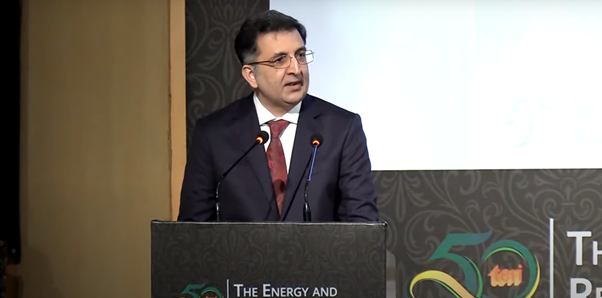
 

“Tata Group has committed to Net Zero aspiration by 2045”

Speaking of the need for a just energy transition and recounting India’s climate action commitments including climate justice and sustainable lifestyles, the speaker said that the Tata Group as a responsible partner in national development has committed to a Net Zero aspiration by the year 2045, riding on the pillars of deep decarbonization, circular economies and preserving nature and biodiversity.


“Citizens need to come together and build new frameworks to address the climate crisis”

Speaking of the climate crisis, Shri Sharma pointed out that markets have a critical role in shaping the future of India’s economy, highlighting the need for cross-sectoral collaboration among academia, civil society, private sector and the state. “India’s response to climate change has major repercussions, both domestically and globally. While India has become a world leader in promoting policies and practices for addressing climate change, mitigation of risks cannot rest with the state alone.”

The speaker said that citizens need to come together and build new frameworks to respond to the crisis. Here, institutions like TERI can not only find solutions for the nation but also influence global responses based on India’s learnings, he added.

The Tata Trusts CEO spoke also of the philosophy of the Tata Group and the contribution of the Group to nation building over its long history since 1868. He said that the Tatas represent one of the finest examples of a distributive model of wealth, where a substantial portion of the profits of businesses are shared with the communities from which they are derived, in the form of welfare initiatives.  

The event can be watched here (Part I) and here (Part II). A film on TERI @ 50 was played on the occasion, which can be watched here.


***

Global Maritime India Summit 2023

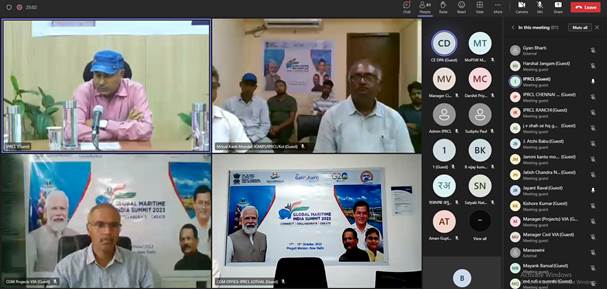
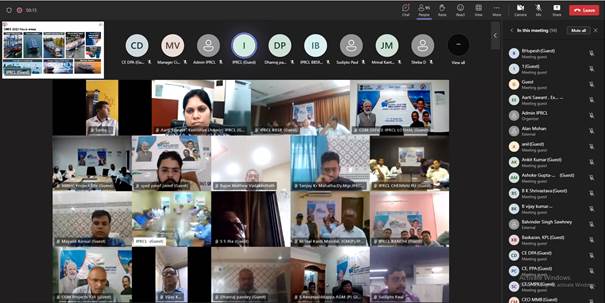
 As part of series of roadshows under the guidance and direction of Ministry of Ports, Shipping & Waterways for inviting and attracting clients and various stakeholders to participate actively in forthcoming Global Maritime India Summit scheduled to be held in October in New Delhi, Indian Port Rail & Ropeway Corporation Limited (IPRCL) organized a virtual roadshow today. This had a pan India presence involving corporate and regional & site offices of IPRCL across various States in India. Representatives from Zonal Railways, State Maritime Boards, MoRTH, Major Ports, major Government sector units like Coal India Ltd., NICDC, NTPC, OMC, NALCO participated in the roadshow. Various industrial bodies and corporate units like JSW, Vedanta, Tata Steel, Jindal Power, Thriveni, Pipava Port, Rungta Mines, Legacy Warehouse, Ennore Tank Terminal, URC and various other units were active participants in the roadshow. More than 190 participants were available in the roadshow consisting of Central and State Government agencies, Railways, Ports, Maritime Boards and various officials from different corporate and industrial units related to maritime, infrastructure, logistics and other sectors.

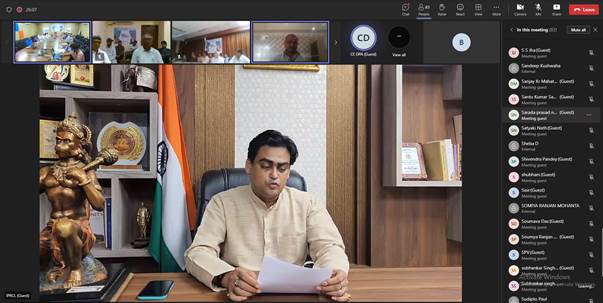
The Minister of State for Ports, Shipping & Waterways (MoPSW) Shri Shantanu Thakur virtually graced the occasion inspiring the stakeholders to join and participate in GMIS – 23. He said that GMIS-23 will provide viable opportunity to connect with industry leaders, innovators and business experts in maritime sector around the world and to collaborate and discuss. He further highlighted that the summit will also offer an unparallel opportunity to showcase talent and forge new partnership for gaining insights into national and global port related industrial, infrastructure and logistics opportunities. He mentioned that this event is inspired by our Prime Minister Shri Narendra Modi Ji’s inspiring vision of making Indian maritime sector as a leading blue economy of the world.

A person sitting at a desk looking at a piece of paperDescription automatically generated

In his inaugural speech Managing Director, IPRCL Shri Anil Kumar Gupta emphasized that the roadshow will be an enlightening experience, focused on providing stakeholders with comprehensive insights into forthcoming GMIS-23 involving global participation. Summarizing business opportunities in the GMIS-23, Shri Gupta explained that by attending this event, clients will gain access to a wealth of knowledge, expert perspectives, opportunity to collaborate and build a wider network.

A screenshot of a video conferenceDescription automatically generated

A presentation was shown to all clients highlighting the professional profile of IPRCL and essential information about GMIS-23. Presentation widely covered the success journey of Indian Maritime sector and the growth trajectory since last decade in various areas of maritime industry. The smart port, green shipping, capacity enhancement through automation, ship building & recycling, maritime tourism, inland waterways grids, maritime safety & security were deliberated for the knowledge of clients. Corporate video of GMIS was also presented to enlighten clients about business opportunities in GMIS. Shri Anang Pal Malik, Director Works and Shri R.K. Lal, CGM Business Development, IPRCL interacted with clients flagging advantages for business growth and collaboration by participating in Global Maritime India Summit 2023.

A screenshot of a video conferenceDescription automatically generated

Senior officers from South-Eastern Coalfields Ltd. and JNPA represented their companies as Guest speakers and highlighted business opportunities which companies will gain during GMIS-23.

*****


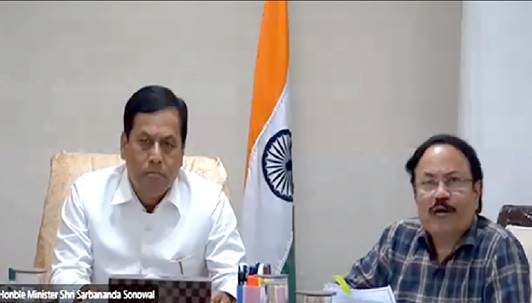
Deliberating on the growth prospects of Indian maritime industry, the Minister of Ports, Shipping & Waterways, Shri Sarbananda Sonowal extended a warm invitation to all the Indian Ambassadors from the East and the West Zones to explore the investment opportunities in the domestic maritime sector.

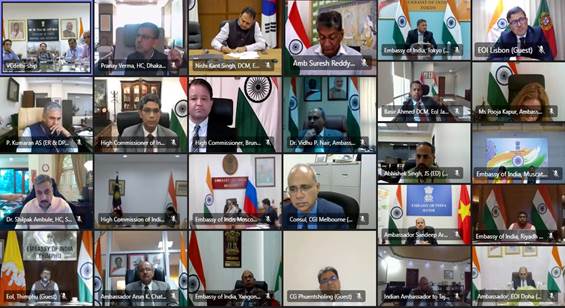
The meeting saw a remarkable display of collaboration and commitment to maritime excellence with participation from more than 45 Indian missions including USA, UK, France, Canada, Singapore, Russia, UAE, Australia, Korea, Spain, Sweden, Switzerland, Denmark, Netherlands, Brazil etc. to name a few. Indian missions from the Commonwealth of Independent States, BIMSTEC, Middle east, Gulf and other neighbouring countries on eastern side were also present.

Shri Sonowal alluded to the upcoming Global Maritime India Summit (GMIS) 2023 and urged ambassadors to leverage their positions to drive participation from respective governments and corporates in various countries across the globe. Highlighting India’s emergence as the 5th largest economy in terms of GDP and the 3rd largest in purchasing power parity, Shri Sonowal outlined that the nation’s progress in the maritime domain, characterised by a commitment to 100% Foreign Direct Investment through automatic routes.

“With a potential investment of more than INR 10 lakh crore (US$12,000 million), we can drive economic transformation that resonates within our borders and reverberates globally. We recognize the importance of robust international trade relations for its economic growth and are taking various initiatives to enhance global cooperation on the maritime front” the Minister noted.

The emphasis on the blue economy was visible as the Minister invited investors to participate in diverse industries, creating an expansive canvas for growth. From cruise tourism to shipbuilding and maritime education, the vision encompasses multiple domains that present opportunities for international collaboration.

Reflecting on the collaboration potential, Shri Sonowal concluded, “India has already entered bilateral agreement & MoUs with 34 countries on maritime transport & cooperation and signed MoUs on recognition of certificates of seafarers with 40 countries. We have also been an active participant in various multinational maritime forums for equitable and sustainable development. Through your support, we shall attain mutual growth and reap the rewards, cultivating a legacy of collaboration, innovation, and prosperity”

Shri T K Ramachandran, Secretary, Ministry of Ports, Shipping & Waterways discussed the goals of the upcoming Global Maritime India Summit (GMIS) during his introductory remarks. He underlined the global aspect, emphasising three key elements: advancements in ports and interior waterways, partnerships with foreign businesses for technology and project execution, and the unique trade requirements of many nations.

Additionally, Shri Periasamy Kumaran, Additional Secretary (ER & DPA), Ministry of External Affairs provided an overview of the transformative phase in India’s ports and shipping, focusing on potential for domestic and foreign investment. He went on to discuss how Indian missions aid in business networking and matchmaking, encouraging participants to find possible investors and partners, promote conversations, and serve as information hubs for the sector.

About Global Maritime India Summit (GMIS), 2023:

GMIS 2023 is a premier maritime sector focussed event to bring together pivotal figures from the industry to explore opportunities, understand challenges, and stimulate investment within India’s maritime sector. Building upon the legacy of its preceding editions, this third instalment aims to unveil broader prospects for domestic and international maritime stakeholders and investors. Ready to make its presence felt on the global stage and spotlight India’s maritime industry, the Maritime India Summit has now evolved to the ‘Global’ Maritime India Summit this year. The summit is slated for 17th to 19th October 2023, at Bharat Mandapam, New Delhi.

For more details on the Global Maritime India Summit 2023, including a complete agenda and registration details, please visit the official website at www.maritimeindiasummit.com

*****

One Day National Seminar on Rice Fortification

 The Department of Food and Public Distribution, Ministry of Consumer Affairs, Food & Public Distribution organised a one-day National Seminar on Rice Fortification” here today.

While addressing the seminar, Secretary, DFPD, Shri Sanjeev Chopra mentioned, “We are on track to achieve the target of 100% distribution of fortified rice across all rice consuming districts in the country.”

Government of India is committed to ensure the nutritional security of the country through fortified rice distribution across government food safety net schemes. The seminar served as a dynamic platform for multistakeholder discussions where besides government stakeholders, technical experts from institutions and academia provided meaningful insights on different aspects of rice fortification programme such as evidence, safety of consumption, operational challenges and quality assurance and quality control. The prevailing challenges and queries of states were addressed by the group of experts and deliberations were made to derive a roadmap to the programme for the coming year. 


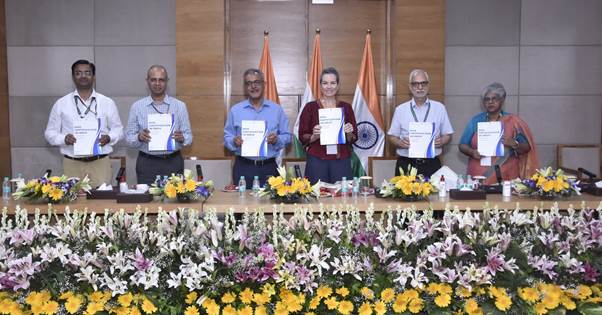
From Left to Right: Dr. Kapil Yadav (AIIMS), Shri Ashok K K Meena (CMD, FCI), Shri Sanjeev Chopra (Secretary, DFPD), Ms. Elisabeth Faure (Country Director WFP India), Sunil Bakshi (Advisor FSSAI) and Dr. Sirimavo Nair (MSU Baroda)

The seminar was divided into four technical sessions, each deliberating on discussions held in prior working group meetings focussing on key aspects of rice fortification. The first of these sessions emphasised on concerns regarding safety of consumption of fortified rice for the general population as well as individuals with Haemoglobinopathies and SCD. Dr. Reena Das, Dept. of Haematology, PGIMER, Chandigarh recommended on behalf of the panel that fortified rice consumption is safe and addressed the prevailing myth regarding toxicity from its consumption. The second session led by Dr. Prashant T., Associate Professor at St. Johns Research Institute, Bangalore aimed at providing evidence-based insights from National and International experiences on rice fortification. He shared numerous studies which pointed out the effectiveness of iron fortification in the reduction of anaemia. In the third technical session, a group of experts from organisations like FSSAI, FCI, BIS, WFP, Microsave and IIT Kharagpur working at the national level as well as at the field, engaged in a discussion to explore strategies to address on-ground operational challenges to streamline the distribution process. Concluding the day’s discussions, the last technical session led by Dr. Balasubramaniam, Joint Director, FSSAI focussed on providing insights into the quality aspects and recommended strategies that may be adopted to improve the quality of fortified rice being distributed.

The seminar witnessed the launch of a national IEC campaign developed by the Department for awareness generation at the beneficiary level and release of a guidance handbook on rice fortification which will act as a ready reckoner for all guidelines, notifications and orders related to rice fortification.

The event brought together technical experts, leaders from government ministries, research institutes and international organizations fostering an enriching dialogue to build a common understanding and leverage universal supply of fortified rice in food safety net schemes.

Food Secretaries from States/UTs across the country along with technical experts in the domain and development partners working on-ground participated in the Seminar jointly reflecting upon the challenges and opportunities together for achieving the transformation of food and nutrition security ecosystem in the country.

****