9th Commonwealth Parliamentary Association (CPA)- India Region Conference in Udaipur, Rajasthan

 Honorable Governor in the State of Rajasthan, परम आदरणीय श्री कलराज मिश्रा जी his presence here has been one of enlightenment in the largest democracy on the earth, home to one sixth of the humanity, there are not many who can match, his experience, exposure and contribution. He has had the occasion to be in both Houses of Parliament and in Uttar Pradesh Assembly and the Council. On the Executive side, he has contributed as a senior minister in Uttar Pradesh and Central Government. He has held positions in organizations of great significance. His holding position of Governor in State of Rajasthan is an honour not to him, but to the chair he occupies. We are grateful Sir for your enlightened wisdom. You have in great detail given out the entire scenario and I’m sure you have given us enough food for thought. You will guide us, motivate us and inspire us. We wish you many years of good health and public life working.

Shri Om Birla, Hon’ble Speaker Lok Sabha. It’s a unique and rare honour when you become a speaker of the largest democracy on the planet, and mother of democracy, but over the years in spite of political weaklings Shri Om Birla has found place in the heart of Parliamentarians, he devised innovative mechanism to ensure every member of Parliament takes to the floor. where there have been occasions toughness was called for Shri Om Birla ji took recourse to persuasive mechanism only. He has contributed at a global level also, he has visited several countries. And it was heartening for me as Vice President to know that some of the global leaders reflected about him in a very glowing manner. His presence here and his being part of the system is a boon to us. I have seen as the chairman of Rajya Sabha, a man of simple habits but very effective and firm when it comes to changing the mechanism and that is why I will not stretch you all much on the first subject. Shri Birla ji has in great detail reflected on digital aspects and technological empowerment of representatives to help the people at large. He doesn’t look at legislature through political prism. In that sense. We are lucky to have a speaker who has a statesman like approach.

Dr. CP Joshi is another gem in the jewel, he has enormous capability to distance the two things, politics and the job of his speaker. When he has won hat of speaker, he doesn’t look through a political prism and therefore, he has become somewhat of a role model by holding several functions in the state legislature which are normally beyond contemplation given the highly divisive politics we have in the country. But his love for his area is reflected every time. Udaipur and Nathdwara are never out of his mind.

Sri Satish Mahana, I have had the occasion to be the member of Lok Sabha in 1989 but in number of months I spent in Lok Sabha, Mr. Mahana has spent twice that number in months in the legislature, more than three decades a legislator in contiguity but what stands out about him is and what will be a matter pride for every speaker here, every Deputy Speaker, every chairman of a council and both for Mr. Birla and myself- he has shown his toughness that bureaucracy cannot take legislatures lightly, a matter that was pending for nearly two decades. It was less than two decades. He decided, he decided very firmly and he decided with a soft heart. I would appeal to everyone to read his judgment, when for breach of privilege, he convicted some officials, he reinforced the supremacy of legislature. He did not show weakness. It is our bounden duty to enforce respect for legislature which means the respect for the people at large.

He punished them symbolically, but effectively. That judgement, I am sure, everyone here would like to go through. CPA Chairperson Mr. Ian Liddell-Grainger, I’ve not known him personally for long. I’ve had interaction with him only recently. But my connect with CPA goes back to more than three decades. When I was a Minister, a junior Minister, and of course, a younger person, at that point of time. I was a facilitator for organising CPA in Delhi. I know the importance of CPA and therefore his presence here would mean a lot to us. I would take the occasion here to indicate to him that CPA is very functional body. Representation is one part of it. But in the CPA Secretariat, there is need to upgrade the participation of human resource from 1/6th of humanity. That will help the CPA Secretariat, that will generate good vibes and I’m sure a man at his senior level will look into it. Mr Sanyam Lodha, Secretary CPA, energetic person, I know him for long, will not take the risk of saying more about him, but the best for him is yet to come. We have friends, three members of Parliament I must acknowledge their presence here. Shri Rajiv Shukla, is a very senior member of Rajya Sabha. I’m grateful to him in particular, because I requested him that given his seniority and given the presence of CPA Chairperson, his participation would add value to the proceedings. We have Smt. Sulata Deo a lady member of Rajya Sabha, who glorified the institution by being an extremely effective woman Chairperson. I’m sure she would gain a lot here. We have Shri Uday Pratap Ji, from Lok Sabha, a man from Madhya Pradesh.

Friends, legislatures cannot function unless we have spinally strong Secretariat and Lok Sabha in particular is fortunate to have a very experienced man, Shri Utpal Kumar Singh, a senior IAS officer, is extremely committed man devoted to his job. We have Mr. Rajit Punhani, is Secretary Rajya Sabha, a senior IAS officer, equally committed to his job. I greet the honourable Speakers, Deputy Speakers, Members of the Secretariat, Honourable Ministers of the State government and distinguished guests on this significant occasion.

Friends, it gives me immense pleasure to address this distinguished gathering at the conclusion of today and very fruitful deliberations as I could make out, this 9th Commonwealth Parliamentary Association, India Region Conference. And this is being held in the City of Lakes. I’m sure you all would have had a very soothing comfortable time here. We all are aware: CPA India region is dedicated to safeguarding the bedrock principles of democracy and advancing the values that its parent association tirelessly strives to uphold. The world knows us and very well; we are mother of democracy. We are the largest democracy; we are home to 1/6 of humanity. And our democracy is unique in the world, because Bharat has Constitutionally structured democracy at the village level, at the Panchayat level, at the zila parishad level, at the state level and at the central level. This platform offers us unique and unparalleled opportunity to engage in in depth deliberations concerning the critical challenges that currently besiege legislatures and the nation.

Friends, one of the two themes of the conference has great topical relevance. It’s of contemporaneous bearing, it is staring us in our face, it is writing on the wall that has to be addressed. It can no longer be delayed and that is, role of public representatives in strengthening the nation through democratic institutions. I congratulate the CPA Secretariat for having chosen this subject for deliberation by those who are supreme stakeholders in performance of legislatures and their output.

I’m sure deliberations would have been rewarding experience, both on the technological aspect as well to the second part for all the participants.

Friends, every legislator as a representative of the people bears constitutional and moral responsibility to vigorously endeavour to find tangible and meaningful resolution to address challenges faced by the people. This is the expectation when people elect legislators that the person represents them in the theatre of legislature. They have a lot of expectations.

Time has come when we need to engage into reality checks: are we really coming up to their expectations?

Public representatives are supposed to be role models for the people. They are expected to exemplify conduct which is worth emulation by others. When we look within, when we ponder and reflect, we find a worrisome scenario. We have to take note of the ground reality.

Friends, I am saying with pain and a deep sense of responsibility, be in no doubt there should be no doubt at all, the institution of public representatives is under severe strain. Their reputation, their conduct, their contribution is under severe strain.

The temples of democracy meant for dialogue, deliberation, debate and discussion are, these days, because of the legislators, representatives of people, hotbeds of disturbance and disruption.

As a consequence of such unwholesome scenario, Parliament and legislatures are fast surging into irrelevance. Think within, when legislature meets, Parliament meets, who is bothered? What is the space occupied? What is the perception generated? Only disruption and disturbance or boycott for unruly conduct gets reported. This gruesome situation ill augurs for democratic values.

It is paramount role of public representatives to ensure executive accountability and fiscal discipline in governance. Public representatives represent the public in the most important theatre. They have the power to generate accountability of the Executive, of the government. They have to get into the job of securing fiscal prudence. Are we doing that?

Surely, we can. Surely, we must. Surely that is the obligation of our oath. But that unfortunately is not happening.

Friends, remember, executives in the country are having lofty accomplishments. Highway infrastructure, rail, road, connectivity, great projects, digital penetration in the villages. Great job. Judiciary is equally performing.

But how about legislature, the third most important and the most important thing of governance? We have to see; we are far from giving delivery to the people or performing the way we should have.

Political intoxication of the people by distribution of largesse requires serious deliberation. What we see all around… look at the advertisements, look at the performance of state governments. Look at how public exchequer is being channelized. Who has to check it? It doesn’t require one to be a great economist to know that your finances must measurably go for capital expenditure.

You have to empower human resource, you have to reach their mind and heart for capacity building- as against this you’re reaching the pocket.

That is something which legislators have to think about. This political intoxication of reaching out to the pocket of the people, by greasing their palms or their pockets, may be a short-term success story, but for the nation, a long-term damage, and we have in the world countries that have been bled because of such kind of situations. Luckily our governance is very effective and economic macro parameters are under control, but who has to think about it? People have entrusted this thinking job to representatives. If they don’t do it, things will be in difficult shape.

We must acknowledge and I say it with great pain that a dysfunctional legislature has the potential to undermine democratic values and would impede the blossoming of democracy. If legislature doesn’t work, who gets advantage? The government! Who gets reprieve, the bureaucrat. If legislature doesn’t function, it means that representatives don’t get the opportunity to mould policy to raise issues. This is absolutely something which must engage our thought process.

In any democracy, parliamentary sovereignty is inviolable. Of all the organizations- executive, judiciary and legislature, the legislature is supreme. We have made legislature vulnerable. We have made it vulnerable because we have refused to vindicate our oath.

We have not focused on our duties. We have taken our job very lightly. The people present in this room have the capacity to motivate, generate a feeling, an ecosystem whereby all legislators understand the damage they are doing by engaging into conduct which is not expected of them.

For success of democracy, legislature, executive, judiciary must act in harmony, must act in tandem and togetherness but Parliament alone, legislature alone, is the repository of the will of the people through representatives.

But we are damaging our spine. We are turning out to be spinally so weak that we cannot even make a point and incursions are taking place that are not healthy for governance. I appeal to every legislator to think within, reason out with his or her party. You cannot act in a manner by damaging your spine. You’ll be bed ridden.

Effective and productive legislature functioning is the safest guarantee to blossoming of democratic values. Imagine if legislatures function without disruption, without disturbance, debates take place, surely we will have better laws. The Honourable speaker was right on the dot, we make law and people don’t know about it for years. Because laws are passed without participation. I had the great pain and anguish in telling people, when you walk out of a Parliamentary theatre- Lok Sabha, Rajya Sabha or assembly, you are not walking out from theatre, you’re walking out from your duty. You’re walking out from your obligations. You are betraying the trust of the people. Your role as trustee of the people is coming to an end and you have no reason to know why you are walking out.

Recurrent disruptions that result in squandering of valuable Parliamentary hours must prompt us to introspect atleast now as a collective body. The Parliament missed the mark in living up to its profound constitutional responsibilities. Disorder in the temples of democracy, these cases have become the new norm. It’s been taken for granted that the entire session will be washed. Take for instance Manipur. In Lok Sabha, where Honourable speaker presides, the Honorable Home Minister extensively gave everything to the people at large about Manipur. The Honorable Prime Minister gave everything extensively at a micro level but in Rajya Sabha I was the first one on 20th of July to agree for a discussion. This didn’t fructify till the end. Time for everyone to think why the House of Elders, the Upper House, the House that is in continuation unlike Lok Sabha, could not debate, discuss- why?

At this occasion, friends, I recollect what Dr. BR Ambedkar said, I quote “Unless we in Parliament realize our responsibilities and shoulder the task of looking after the welfare of and good of the people, I have not the slightest doubt in my mind that this Parliament will be treated by people outside with utter contempt”.

This is what Dr. Ambedkar said. We have proved him to be prophetic. People have no respect for us. People have respect for executive. It is performing, delivering, it is giving you gas connections, it is giving you highways, airports. It’s giving you toilets, jal in every nal. What are we doing? Let us engage into self-audit, so that we know where we are.

Friends, we are now faced with grim reality. Let us all pledge to be alive to these prophetic concerns by Architect of the Constitution and cautions of the founding fathers of our republic and retrieve the cliff hanging situation. We are clinging. We are about to lose grip. If Parliamentarians, representatives of the people don’t occupy public space in Parliament, other people will occupy outside. Our representative is under constitutional oath. Others are not. There surely can’t be a situation we are imagining.

Honourable members, a poignant question that heavily weighs on my mind. When members fritter away the invaluable opportunity to engage in robust debates, and hold the government accountable, where does the blame truly lie? Who do I blame? As Chairman, Rajya Sabha or Mr Birla as the speaker of Lok Sabha? It is on individual members, their political party parties or the greater political coalitions to which they pledge their allegiance?

Now, when I talk to individual members, they are best of human resource. They want debate. I don’t know what happens when they come into the House. Everything evaporates, which means they are unable to convince their political masters and bosses that do not come in the way of the discharge of Constitutional duties. Politics is important. You play the politics the way you want but you cannot play politics all the time. You cannot have political specs all the time. Issues concerning the nation are concern of everyone, the ruling and the opposition.

Now, we as presiding officers, what do we do? We face a grim situation. I faced as Chairman, Rajya Sabha. For every indecorous act, for every behaviour which people will not approve, every behavior which goes against the rule, they have a past precedent that it was done in 2011, it was done in 1997. We must decide today- what is wrong is wrong, what is indecorous is indecorous. We shall not sanctify our wrong because such a wrong has taken place earlier in that regime. The world is changing. India is rising. It is unstoppable. We are the fifth largest economy on the globe. We have beaten our erstwhile colonial rulers for centuries, they ruled us for centuries. We will be the third largest economy by turn of the decade.

Global bodies are hinting that India is the favourite destination of Investment and Opportunity. In this scenario, how can we be in our own chains?

Friends, I firmly believe the government and the opposition play indispensable roles within the framework of Parliamentary democracy. The synergy between the government and the opposition is pivotal. Why is it missing? Are we here in legislature to score brownie points?

No, our motto has to be to serve the people at large. We are far distanced from that wholesome activity. A Parliament where the government and opposition work in tandem is always in the interest of the nation.

Every legislator takes his place in the chamber of Parliament, he becomes a part of history. He becomes a glorified citizen.

I fail to understand after getting such embellishment, such great honour, when you become part of history… the only achievement is: non-performance, poor performance, indecorous behaviour. This is more menacing than COVID. It is time we find a solution to this.

Those who used to advise India, a few decades ago are now seeking our advice because we as a nation have risen. Indian genius is impacting global corporates. They are contributing to global economy, and we as legislators have to introspect, reflect and make amends.

We have in India a promising trajectory of growth. It is incremental. All elements the world envying us, the world is stunned as all major economies are struggling, we are not suffering. I can tell you by way of illustration 46% of digital transactions in the world in 2022, were from India. Our digital transactions, were four times that of USA, UK, France and Germany taken together. Our per capita data consumption of internet was more than that of US and China taken together. Our people are performing. We see the change.

What I could not visualize your dream as a Member of Parliament in 1989 is a ground reality. I could never imagine, Swachh Bharat Abhiyaan, a toilet in every household, water in every tap, electricity in every household, connectivity in every village would take place. It has taken place in my lifetime.

We would have done much better, if legislators, public representatives were accountable to their oath, accountable to the people. The acted as trustees to the people rather than being in bondage and that bondage is not democratic. It takes essence out of democratic values

What is the prime role of the opposition? The opposition functions through public representatives. Where? Not on the street which sometimes they do. They have to do it on the floor of the House be it Parliament or Legislature. They have to generate accountability, transparency; that can’t be done if you walk out of the house.

I would appeal to everyone, particularly those present here to think and make the institution efficacious, effective, penetrating and result oriented. Criticising the government is the role of the opposition that can take place on the front of the House, that opportunity is being missed.

There are several issues which we need to debate in the House. Ours is a country that has robust judicial system. Access to judicial system is of the highest quality, recent events have shown it. But whenever someone is visited with a notice they take to the streets. I, from this platform, appeal to our younger people: time has come for them. They are the greatest stakeholders of governance in this country. Their future is at stake. They are the foot soldiers of Bharat@2047. They must exercise their judgement, discretion and option to ensure that their representatives fall in line. They will have to take this call.

I have no doubt, the kind of ecosystem that is emerging in the country, Bharat@2047, when it celebrates centenary of independence, will be at peak. यदि इतने बड़े हवन में, इतने बड़े यज्ञ में हर कोई अपनी आहुति दे रहा है, वो आहुति नहीं दे रहे रहें हैं जिनका परम कर्त्तव्य है, जिनके लिए आवश्यक है, वो जनता के प्रति अपनी वफादारी दिखाएं,

A single Member of Parliament or legislature by proper function in legislature and Parliament can put the government in line.

…..वो जमाने चले गए जब मैं पार्लियामेंट की हिस्ट्री को देखता हूं , भूतकाल में जाता हूं शासक दल के पास बहुसंख्या होती थी, पर प्रतिपक्ष इतना मज़बूत होता था, एक एक व्यक्ति प्रश्न पूछता था, तयारी करता था, अपनी बात कहता था, बात का असर होता था, जनता के अंदर एक भावना जागृत होती थी और एक समुद्र बन जाता था। वो सब पता नहीं बातें कहां गईं, आज के दिन आपसी बर्ताव आक्रोश पूर्ण हो गया है, जब देश में अब कुछ ठीक चल रहा है…

We don’t have to agree to everything under the sun. We can agree to disagree but then we have gone much beyond that.

Friends, our Constitution provides freedom of speech but legislators have a unique freedom- anything they say on the floor of the parliament or legislature, एक सौ चालीस करोड़ जनता भी मुकदमा नहीं कर सकती, ना दीवानी मुकदमा कर सकती है न फौजदारी मुकदमा कर सकती है, इतना बड़ा अधिकार मिलता है लेजिस्लेटर को कि विधान सभा या सदन के अंदर कुछ भी कहें, मुकदमा नहीं होता, पर ये बेलगाम बात नहीं है, ये गभीर विषय है आप इसका दुरुपयोग नहीं कर सकते, इसका दुरुपयोग यदि होता है तो सबसे ज्यादा ज़िम्मेदारी उन लोगों पर है जो यहां बैठे हैं…We cannot be merciful then. We are protectors- एक सौ चालीस करोड़ लोगों की हिफ़ाज़त हम करेगें, हम ये इजाजत नहीं दे सकते की अनर्गल बात, गलत बात, तथ्यहीन बात, तथ्यों से परे बात, आप तुरन्त कह दो और अकाउंटबिल्टी नहीं लो, ये चिंतन का विषय है इस पर मंथन करना चाहिए जरूर अच्छा निष्कर्ष निकलेगा।

Friends, the discussions over these two days I am sure must have been very enlightening and you will take home homework so.

महामहिम राज्यपाल राजस्थान इस क्षेत्र के बहुत बड़े अनुभवी हैं, भीष्म पितामह है, इनके मुकाबले के बहुत कम देश में हैं इन्होंने भाउक तरीके से अपनी बाते कही है, मैं कुछ बातें खुलकर कह रहा हूं, आपने वो बातें दबी जबान में कही हैं, पर कुछ शंका नहीं रखी है समय बीतता जा रहा है देश के लिए नहीं, समय बीतता जा रहा है पब्लिक रिप्रेजेंटेटिव के लिए कि वो कितना खरा उतरता है, वो कितना योगदान कर पाता है, या वह पार्लियामेंट या संसदीय व्यवस्था के उपर इतना कुठाराघात करता है के जनता का उस पर विश्ववास नहीं है, कि मुद्दे संसद में नहीं, संसदीय व्यवस्था में नहीं उसके बाहर तय होंगे, ये हमारे लिए एक अच्छी बात नहीं है, मुझे समझ में नहीं आता और सामान्य आदमी को भी नहीं आता इसमें कोई बहुत विद्वान होने की आवश्यकता नहीं है, मैं विद्वान बिलकुल भी नहीं हूं हम बातचीत से दूर कैसे हट सकते हैं, दूसरे की बात सुनने का मतलब ये नहीं है कि उसकी बात मान ली गई है पर ऐसा क्या की बात ही नहीं सुनेंगे, ये मैं हालात जब भी सदन चलता है रोज़ देखता हूं, मुझे बहुत पीड़ा होती है, लोग

Our power corridors have been fully sanitized of these menacing power brokers, no one can take leverage of decision these days.

ऐसी परिस्थिति में हम और आगे बढ़ने का काम क्यों न करें, यदि अगर पब्लिक रिप्रेजेंटेटिव यदि ठान लें तो इसमें कोई संदेह नहीं है मुझे, भारत की छलांग और भी ज्यादा तीव्र हो जायेगी, छोटे मोटे राजनितिक फायदे के लिए देश की संस्थाओं को कलंकित करने की प्रवृत्ति है, मैं अंकुश की बात नहीं कर रहा उसको सोचना चाहिए आपको आश्चर्य होगा, दुनिया के किसी भी देश के विद्यार्थी विदेश में हैं उनके प्रोफ़ेसर विदेश में हैं सिवाय भारत के और किसी देश के नागरिक अपने देश की, मैं बहुत गलत शब्द कर रहा हूं, ऐसी तैसी नहीं करते, ऐसा क्यों हो रहा है।

Friends, I’ve taken enough time, in conclusion, I would like to express my heartfelt gratitude to the participants, speakers and organisers who contributed to the richness of discussions and insights in this conference. The collective dedication to strengthen democratic principles and governance is a testament to the unwavering commitment to the wellbeing and progress of our nation. Let us collectively endeavour to create a brighter and more prosperous future for all.

I will leave you with Dr. BR Ambedkar’s observations: “The Constitution can only provide the organs of the state such as the legislature, the executive and the judiciary, the factors on which working of those organs of the state depend are the people and the political parties.”

I leave you with this thought. I’m grateful to Dr. CP Joshi for affording me this valuable opportunity to be in City of Lakes- a great place- and to share my thoughts with those, each of whom is a nerve centre, epicentre of big change.

Thank you so much!

***
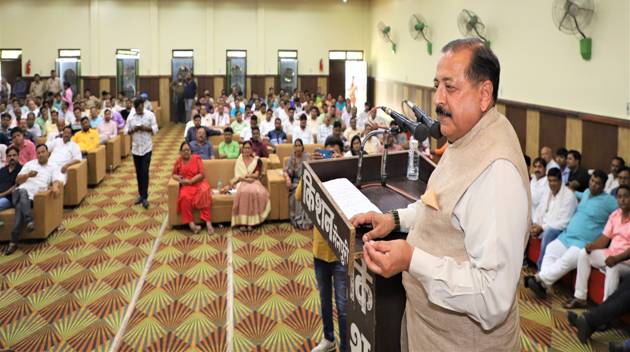
Blue Economy and Space Economy

 Blue Economy and Space Economy are among some of the new concepts introduced in last 9 years by Prime Minister Narendra Modi.

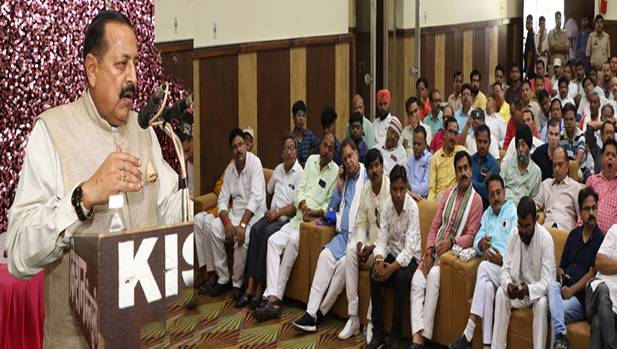
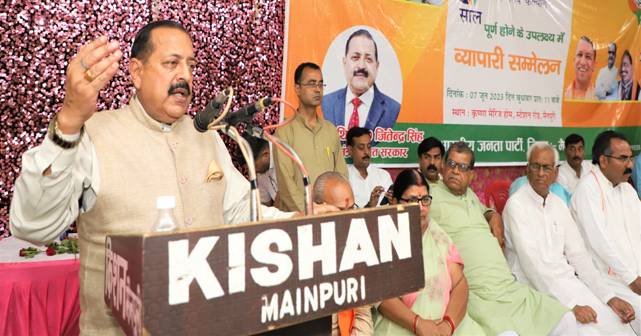
This was stated here today by Union Minister of State (Independent Charge) Ministry of Science & Technology, PMO, Ministry of Personnel, Public Grievances & Pensions, Atomic Energy and Space, Dr. Jitendra Singh while addressing “Vyapar Sammelan” (Industry and traders’ Meet) as a part of the month-long campaign to commemorate the 9 years of Modi government.

Dr. Jitendra Singh said, one of the hallmarks of Prime Minister Modi’s approach towards the economy has been that he not only reinforced and strengthened the existing pillars of economy by imposing a check on pilferage or malpractice and by reducing the load of avoidable restrictions and regulations for ease of business, but he also introduced new dimensions to Indian economy which hardly received any attention by previous governments even though these were important. If India has to compete globally, it will have to stand up to global parameters and the value addition to the future economy of the country will come from hitherto lesser explored areas like ocean resources and Space.

It is also a matter of pride, said the Minister, that even though our space journey started several years after countries like USA and Soviet Union, but today, these countries are using our technology provided by ISRO (Indian Space Research Organisation) for launching their satellites. 353 out of the total 385 foreign satellites launched so far have been launched during the last 9 years and 174million US Dollars have been earned while the launching of the European Satellites has yielded 86 million Euros.

Dr Jitednra Singh said, while India has as the fastest growing economy, overtaken the United Kingdom, it has also generated revenue by launching their satellites.

As far as the Blue Economy is concerned, Prime Minister Modi spoke about the Deep Sea Mission in his Independence Day address because he wants to make people aware of the Blue wealth that lies hidden under the seabed.

Dr Jitendra Singh called upon the business community to adapt to the new culture of business and make maximum use of technology.

The Minister said, there is no such technology which is not available in India but sometimes we were not able to utilise it because we are not fully aware of it. The government today is not only providing ease of business but also offering assistance in developing new entrepreneur products and marketing the same, he said.

The Minister particularly called upon the business community to identify potential StartUps. He said it goes to the credit of Prime Minister Narendra Modi that India stands at Number-3 in the world in StartUp Ecosystem. But in order to sustain this, we have to continuously work hard.

Dr Jitendra Singh also hailed Prime Minister Narendra Modi for revival of Khadi business which has yielded more than 10 Lakh Crore of turnover.

Conference Proceedings Publication with ISBN


Conference proceedings publication with ISBN (International Standard Book Number) is a common practice in academic and research communities. It involves publishing the papers presented at a conference in the form of a book or a collection of papers, which are assigned a unique ISBN number. This enables the papers to be easily cited and referenced, and provides a permanent record of the research presented at the conference.

The process of publishing conference proceedings usually involves the following steps:

Call for papers: The conference organizers issue a call for papers, inviting researchers to submit their papers for consideration.

Review process: The papers are reviewed by a panel of experts, who assess their quality and relevance to the conference theme.

Acceptance and revision: Papers that meet the criteria for acceptance are selected for inclusion in the conference proceedings. Authors may be required to revise their papers based on feedback from the reviewers.

Editing and formatting: The papers are edited and formatted for publication in a book or a collection of papers.

Publication and distribution: The proceedings are published and distributed to the conference attendees and other interested parties, such as libraries and academic institutions.

The use of ISBN numbers for conference proceedings is important because it ensures that the proceedings are easily accessible and can be referenced in academic publications. It also provides a measure of quality control, as only papers that meet certain standards are accepted for publication.

Overall, the publication of conference proceedings with ISBN numbers is a valuable way to disseminate research and promote academic exchange, as well as to provide a lasting record of the research presented at a conference.

<

p style=”text-align: justify”>Contact us: Send mail to editor@pen2print.org or editor@edupub.org for getting Conference Proceedings published with ISBN or Conference Proceedings in IJR Journal

First Global Buddhist Summit hosted by Ministry of Culture in collaboration with International Buddhist Confederation

 The Prime Minister, Shri Narendra Modi addressed the inaugural session of the Global Buddhist Summit at Hotel Ashok in New Delhi today. The Prime Minister walked through the photo exhibition and offered flowers to the Buddha statue. He also offered monk robes (Chivar Dana) to nineteen eminent monks. Union Minister for Culture, Shri G Kishan Reddy, Union Minister for Law and Justice, Shri Kiren Rijiju, Union Ministers of State for Culture, Shri Arjun Ram Meghwal and Smt Meenakshi Lekhi, and Secretary General of International Buddhist Confederation, Dr Dhammapiya were present on occasion.

The two-day Summit is being hosted by the Ministry of Culture in collaboration with International Buddhist Confederation on 20-21 April. The theme of the Global Buddhist Summit is “Responses to Contemporary Challenges: Philosophy to Praxis”. It is an effort towards engaging the global Buddhist Dhamma leadership and scholars on matters of Buddhist and universal concerns, and to come up with policy inputs to address them collectively. The discussion at the Summit explored how the Buddha Dhamma’s fundamental values can provide inspiration and guidance in contemporary settings.

Addressing the gathering, the Prime Minister welcomed everyone from different corners of the world to the inaugural session of the Global Buddhist Summit. “Buddha is beyond the individual, it is a perception”, and Buddha is a sensation that transcends the individual, he is a thought that transcends form and Buddha is a consciousness beyond manifestation. “This Buddha consciousness is eternal”, the Prime Minister said. Noting the occasion, he expressed confidence that the inaugural Global Buddhist Summit will create an effective platform for the efforts of all nations and thanked the Ministry of Culture and International Buddhist Confederation for this momentous event.

The Prime Minister credited the teachings of Lord Buddha for an inherent empathy in India for the issues of humanity. He mentioned peace missions and India’s whole-hearted efforts in rescue work for disasters like the earthquake in Turkiye. “This emotion of 140 crore Indians is being seen, understood and accepted by the world”, he said. Platforms like IBC, he continued, are giving the opportunity to like-minded and like-hearted countries to spread Buddha Dhamma and peace.

Click here for full text of PM speech

On the occasion , Minister of Culture, Tourism and Development of North-Eastern Region Shri G Kishan Reddy said that it is a matter of pride for all of us that the Global Buddhist Summit is being inaugurated by the Prime Minister of India, Shri Narendra Modi. He informed that the theme of this two-day Global Buddhist Summit is ‘Responses to Contemporary Challenges- Philosophy to Praxis’. About 170 International Delegates from more than 30 different countries of the world are participating in this Global Buddhist Summit. The two day Global Buddhist Summit will discuss topics like Peace, Environment, Morality, Health, sustainable development and Buddhist Confederation. The Global Buddhist Summit is an initiative of the Modi government and it will help in strengthening our cultural and diplomatic relations with the world, the Minister added. He said  that Prime Minister has said that major challenges of the world can be solved by Buddhist philosophy of life and I think the Global Buddhist Summit will be a successful effort in that direction.

On the occasion, Union Minister of Law and Justice Shri Kiren Rijiju said that the support from the Mahā Sangha, world over and the Supreme Patriarchs, Sangha Nayakas, Meditation Masters, various Buddhist Associations, Monastic body, learned Buddhist Scholars have brought us to this historic Day when we are all witnessing this auspicious Day happening. I am glad to know the theme of this Global Buddhist Summit is – ‘Responses to Contemporary Challenges – Philosophy to Praxis’ and that the Summit is divided into two separate parallel sessions – a Sangha Session and an Academic Session with several diverse sub-themes, such as, Buddha Dhamma and Peace, Environmental Crisis, Health and Sustainability, Preservation of Nalanda Buddhist Tradition, Buddha Dhamma Pilgrimage, Living heritage and Buddha Relics etc”.  He also congratulated all the members of the International Buddhist Confederation to make it Successful.

He also said ” Buddha Dhamma is not just a religion; it is a way of life that emphasizes compassion towards all beings. The teachings of impermanence and interdependence remind us that everything in the world is changing and are interconnected, and we must learn to live in a way that is sustainable and respectful of the earth and its resources. “

On the occasion, an exhibition, the Panch Pradarshan, the celebration of Five Exhibitions was organised as part of the two-day Global Buddhist Summit on the theme, “Responses to Contemporary Challenges: Philosophy to Praxis”

These depict the 10-years of IBC’s journey, the rich cultural legacy of Buddha manifesting in the heritage of Vadnagar city, Gujarat, travel accounts of Buddhist pilgrim Xuanzang, work of Buddhist religious leader and master Atisa Dipankara Srijana, and Digital Restoration of Ajanta Paintings showcases the process involved that goes into the digital restoration of cultural artifacts through the example of the digital restoration of the cave painting of Padmapani (Ajanta Ellora).

The programme started with the offering of flowers to the Buddha statue by the Prime minister while the Mangalacharan was being recited.Dr Subhadra Desai gave a classical rendering of the Ratana Sutta.

The Summit witnessed the participation of eminent scholars, Sangha leaders and Dharma practitioners from all over the world, who will discuss pressing global issues and look for answers in the Buddha Dhamma based on universal values. The discussions were held under four themes: Buddha Dhamma and Peace; Buddha Dhamma: Environmental Crisis, Health and Sustainability; Preservation of Nalanda Buddhist Tradition; Buddha Dhamma Pilgrimage, Living Heritage and Buddha Relics: a resilient foundation to India’s centuries-old cultural links to countries in South, South-East and East Asia.

******

Round Table Conference on ‘How to Effectively Redress the Grievances pertaining to Real Estate Sector’

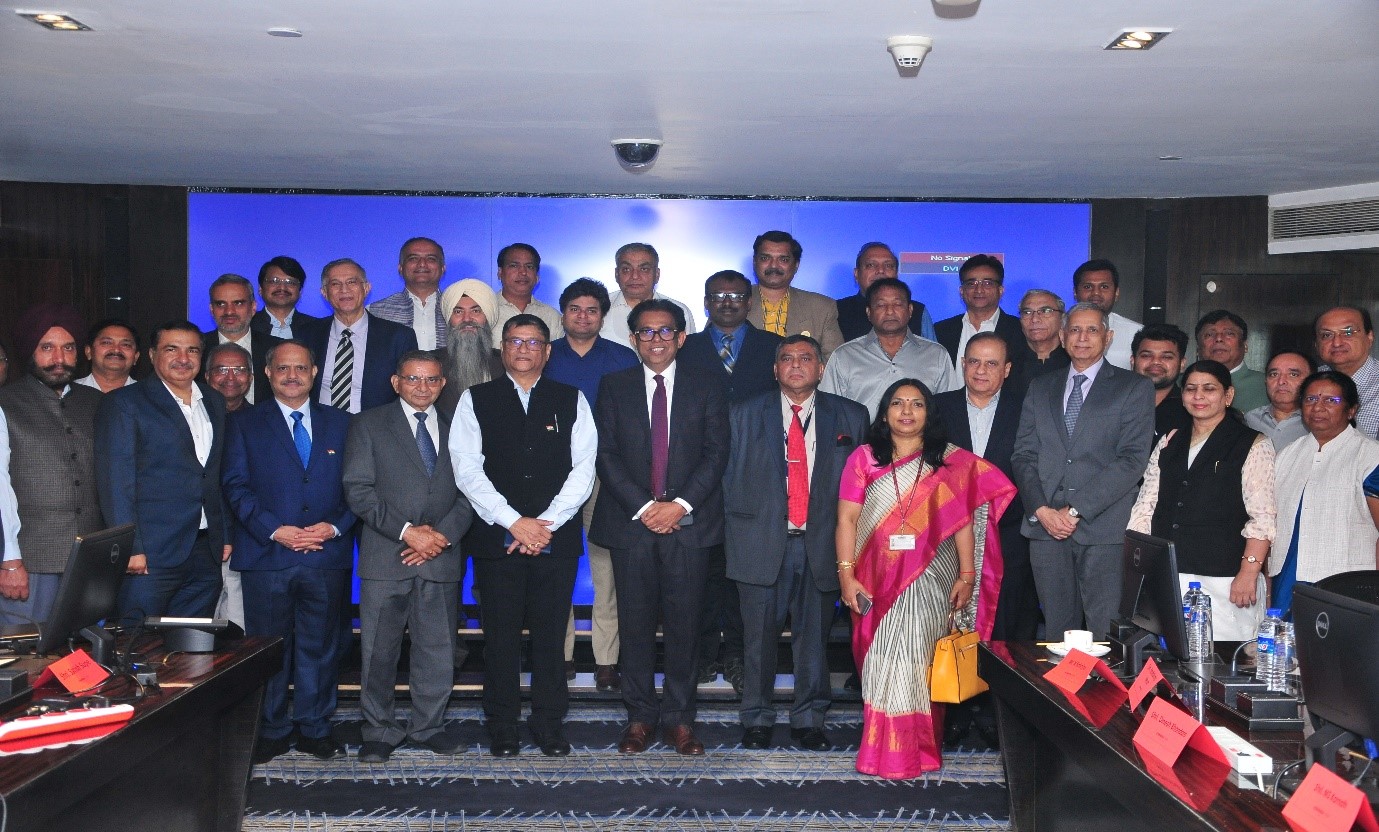
 Department of Consumer Affairs, in association with the Government of Maharashtra, organized a Round Table Conference on “How to Effectively Redress the Grievances Pertaining to Real Estate Sector” in Mumbai today (April 18, 2023). The conference had participation of a diverse group of stakeholders, including government officials,  Chairman of RERA, Delhi, Chairman MahaRERA, Officials  from MOHUA, IBBI, legal experts, industry leaders, and consumer rights activists, to identify actionable solutions to the pressing issues faced by homebuyers and builders in the real estate sector. Several topics related to real estate were covered during the conference, such as systemic policy interventions to reduce litigation in the housing sector, the reasons for the high number of cases filed before Consumer Commissions despite the existence of separate authorities like RERA specifically for housing sector cases, and ensuring effective and timely resolution of housing sector cases.

The Secretary of the Department of Consumer Affairs for the Government of India, Rohit Kumar Singh, in his address, highlighted the staggering number of pending cases in the housing sector at different consumer Commissions. Out of over 5.5 lakh cases currently awaiting resolution, over 54,000 cases  related to housing sector. This backlog of cases highlights the importance of providing speedy justice and streamlining the process for homebuyers.

To address these challenges, the Secretary suggested implementing a simple, model buyer agreement that could help to streamline the homebuying process and protect consumers from potential abuses. This agreement could help to reduce disputes between homebuyers and builders and ensure that consumers have access to effective, speedy, hassle-free, and inexpensive grievance redressal mechanisms.

The Secretary, Department of Consumer Affairs, also highlighted the significance of the Consumer Protection Act 2019, which recognizes housing construction as a service and categorizes developers as product sellers. This recognition helps to ensure that homebuyers have access to the same consumer protections that they would receive when purchasing any other type of product or service. It was also highlighted the need for continued focus on the housing sector in India, particularly when it comes to protecting consumers and streamlining the homebuying process. By implementing measures like model buyer agreements and effective grievance redressal mechanisms, the backlog of cases can be redressed and ensure that homebuyers are treated fairly and protected from potential abuses, he stated.

Additional Secretary, Department of Consumer Affairs, Govt of India, Nidhi Khare, in a detailed presentation outlined a comprehensive overview of the legal provisions under various statutes designed to protect the interests of homebuyers. She delved into the roles and responsibilities of homebuyers under the Real Estate (Regulation and Development) Act, 2016 (RERA), Consumer Protection Act, 2019, and the Insolvency and Bankruptcy Code, 2016. The presentation also addressed the increasing number of cases filed by homebuyers and the impact of these disputes on both homebuyers and builders, leading to distrust within the sector.

During the conference, Member NCDRC, Binoy Kumar, underscored the importance of the builder-buyer agreement as the fundamental document governing transactions in the real estate sector. He suggested that the buyer agreement should be made more efficient and in line with Supreme Court orders, which would subsequently reduce the number of cases filed by homebuyers.

During the conference, several key takeaways emerged as crucial points of discussion. The prevalence of real estate cases in consumer commissions led to suggestions for utilizing similar judgments to expedite the legal process and encouraging parties to engage in discussions to resolve disputes amicably. The success of conciliation in resolving disputes was emphasized, urging for better cooperation between consumer courts and RERA to prioritize conciliation over litigation. The importance of completing and distributing incomplete projects, rather than opting for insolvency under IBC, was stressed, along with a call for transparency among all stakeholders.

Insights were also provided on misleading advertisements in the real estate sector, emphasizing the need for enhanced transparency between buyers and developers to avoid future legal disputes. Lastly, recommendations were made to improve the Builder Buyer Agreement, including disclosing additional charges, outlining issue redressal processes, ensuring legal compliance by developers to keep consumers informed about project progress, and implementing initiatives to resolve minor issues through phone calls. These takeaways aim to enhance transparency and consumer protection in the real estate sector.

During the conference, key problems identified for the homebuyers are as follows:

  • Delay in delivery of possession of property to homebuyers.
  • No compensation for delay in possession to homebuyers.
  • Biased, one-sided, and unfair builder-buyer agreements.
  • Amenities not provided to homebuyers as per the agreement.
  • Misleading advertisements by developers and influencers for luring homebuyers.
  • Non-adherence to the model builder-buyer agreement proposed by RERA.

Key suggestions made during the deliberations included:

  • Sending the draft agreement to buyers before execution.
  • Clearly mentioning permissions and sanctions obtained from competent authorities on the first page of the agreement.
  • Prohibiting builders from launching projects before obtaining all necessary permissions and sanctions.
  • Including an exit clause for homebuyers in all agreements, valid until the Occupancy Certificate (OC) or Completion Certificate (CC) is obtained and possession is offered by the builder.
  • Including a schedule of additional charges beyond the cost of the unit/apartment in all agreements.
  • Requiring all agreements to contain mandatory declarations regarding no dues from any authority/banks and all necessary legal sanctions and approvals from competent authorities.
  • Taking strong action against unfair and misleading advertisements by developers and endorsers.
  • Forming a committee comprising members of the National Commission, various State Consumer Commissions, RERA, Department of Consumer Affairs, and IBBI to effectively deal with the issue.

The Department will also collaborate with other relevant authorities and organizations to ensure the effective implementation of the proposed measures, monitor their impact on the real estate sector, and make necessary adjustments as needed.

Furthermore, the Department of Consumer Affairs will maintain an open dialogue with stakeholders and the public, keeping them informed about progress in addressing real estate issues in consumer commissions and seeking their feedback for continuous improvement.

The Round Table Conference concluded with a commitment from all stakeholders to work collaboratively to establish a more effective and efficient framework for addressing disputes and grievances. This will ultimately lead to a more transparent and consumer-friendly real estate market.

In conclusion, the Round Table Conference on Consumer and the Real Estate Sector marks a significant step forward in tackling the pressing issue of pendency of real estate cases in consumer commissions. By bringing together key stakeholders to discuss and identify actionable solutions, the Department of Consumer Affairs demonstrated its commitment to protect consumer interests and ensuring a fair, transparent, and efficient housing market for all homebuyers.

*****

Department of Pharmaceuticals in partnership with Indian National Science Academy organizes a S20 Webinar on “An Integrated Approach to Combat Neo-Infections: A Way Forward, through Vaccines, Diagnostics and Therapeutics”

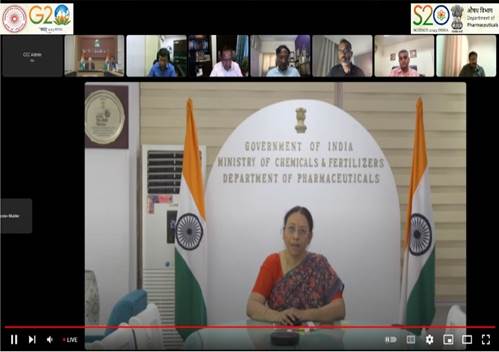
 Department of Pharmaceuticals (DoP), Ministry of Chemicals and Fertilizers, Govt. of India in partnership with the Indian National Science Academy (INSA), organized a S20 Webinar on “An Integrated Approach to Combat Neo-Infections: A Way Forward, through Vaccines, Diagnostics and Therapeutics” today with deliberation from eminent speakers across the G-20 counties like Australia, US, UK, Canada, South Africa, European Union, Brazil and Indonesia. This S20 webinar focused on discussing a need for collaborative models that would help to strengthen and support research and development (R&D) in Vaccines, Therapeutics, and Diagnostics (VTDs).

During the G20 Presidency of India, the Science 20 or the S20 engagement group has planned a number of webinars and workshops on topics of current interest. The Indian National Science Academy (INSA) is coordinating the S20 activities under the overarching theme, “Disruptive Science for Sustainable Development” with three subthemes focussing on “Clean Energy for Greener Future”, “Universal Holistic Health”, and “Science for Society & Culture”. The emphasis is on the disruptive innovation aspect of science that identifies with the nature and essence of the overarching theme.


An important objective of the sustainable development is to increase the healthy life expectancy of all humans, while promoting well-being across the whole life course. Indeed, creating better global health would not only mean creating better medical infrastructure or ease of access in medical care, it would also require sustainable practices which would help enhance cumulative global health standards. The idea is to create awareness among various stakeholders about disease agonistic platforms for new drug development and develop cost-effective therapeutics for priority pathogens. This could be done through a network of R&D institutions across G20 countries which would function in tandem in sustainable manner and contribute to collective preparedness for thwarting future pandemics.

Sh. Rajneesh Tingal, Joint Secretary, Department of Pharmaceuticals, in his opening remarks highlighted various initiatives taken by DoP to foster innovation in India and the need of strengthening research collaboration in vaccines, therapeutics & diagnostics. This was followed by welcome address by Ms. S. Aparna, Secretary, DoP & Prof. Ashutosh Sharma, President INSA & S20 Chair. During her welcome address, Ms. S. Aparna, highlighted the need of creation of Global R&D Network which will help to fight future pandemics. She also emphasized in designing a roadmap by identifying and setting up priority areas for collaboration, strengthening cooperation and partnership among G-20 countries in the arena of Early stage research on vaccines therapeutics and diagnostics for coordinated approaches in fighting emerging disease threats and capacity building in medical countermeasures with the vision of strengthening the global health architecture “One Earth, One Health, One Future”. Prof. Ashutosh Sharma depicted the role of S20 in furthering the agenda of G20 where science will have to play a key role to achieve the economic growth to pull millions of people out of poverty while ensuring that development is inclusive and sustainable.

S20 Webinar featured notable eminent speakers across the G-20 counties. The therapeutics session was moderated by Dr. Girish Sahni, Ex-Director General, Council of Scientific & Industrial Research (CSIR), Govt. of India, involving speakers like Prof. Nicola Mulder, University of Cape Town, South Africa, Dr. Vishal Singh, Penn State University, Pennsylvania, United States, and Dr. Ahmed Aman, Leslie Dan Faculty of Pharmacy, University of Toronto, Canada.

The vaccines session was moderated by Dr. Pramod Kumar Garg, Executive Director, THSTI, Faridabad, India involving Mr. Sourabh Sobti, Coalition for Epidemic Preparedness Innovation, United Kingdom, Prof. Nikolai Petrovsky, Vaxine Pty Ltd., Flinders Medical Centre, Australia, and Dr. Marco Aurélio Krieger, FIOCRUZ University, Brazil as eminent speakers.

Finally, the diagnostics session was moderated by Dr. Anup Anvikar, Director, National Institute of Biologicals (NIB), Noida, India with the engagement of Dr. Nivedita Gupta, Scientist F, ICMR, New Delhi, India, Dr. Vinay K. Nandicoori, Director, CSIR-CCMB, Hyderabad, India, and Dr. Sara Frojdo, Senior Technology Officer, Business Intelligence, FIND, Diagnostics, Geneva, European Union.

Following this, a panel discussion for fireside chat was held, which was moderated by Prof. Narinder K. Mehra, Vice President (Int. Affairs), INSA, New Delhi, India with the engagement of peer-panelist across G20 countries representation from Prof. Nicola Mulder, University of Cape Town, South Africa, Prof. Satryo S. Brodjonegoro, Chairman, Indonesian Academy of Science, Indonesia, Prof. Anil Gulati, Chairman and CEO, Pharmazz Inc., United States.

Some of the key points deliberated by the esteemed speakers included:

  1. Creating a collaborative ecosystem for turning discovery into beneficial therapeutics.
  2. Collaborative efforts to generate important insights while keeping collaborators engaged and committed to their partnerships.
  3. Creating a self-sustaining network of industry-academia and cross-functional industrial collaborations.
  4. Workforce development as a key component of a robust discipline of innovative therapeutic development.
  5. Collaborative environment for innovation & learning to transform processes, technologies, and policy elements of innovation.

Various specific suggestions for building a collaborative ecosystem of the panel members to translate discoveries into effective therapeutics along with suggestions of the participants received during the feedback session were noted and the same would be utilized for developing a robust networked research ecosystem.

The webinar has got good response with more than 1500 registrations across the G-20 countries. This S20 webinar witnessed more than 500 viewers across the virtual platforms. Webinar concluded with a note of appreciation by Prof. USN Murty, Director, NIPER-Guwahati, India to all the S20 speakers, panellists, moderators, and wide participants for their valuable contributions & active participation.

*****

ICMR2023 Conference

International Conference on Multidisciplinary Research (ICMR) 2023 – ICMR 2023 aims to improve its ability to bring together worldwide researchers and professionals, encourage intellectual development of scholars and provide network opportunities for conference attendees for making long lasting academic cooperation. To reach its goal, ICMR2023 benefits from its advisory board members consist of well-known academicians all around world and provide publication opportunities.


Any scholar or professional interested in engineering, science and education around the world is welcome to attend ICMR2023 conferences, which are held couple of times a year.

List of Topics

  • Engineering Topics 
  • Industrial Engineering
  • Textile Engineering
  • Civil and Architecture Engineering
  • Mining Engineering
  • Mechanical Engineering
  • Renewable Energy
  • Chemical Engineering
  • Electrical-Electronics Engineering
  • Metallurgical and Materials Engineering
  • Environmental Engineering
  • Computer and Informatics Engineering
  • Food Engineering
  • Geological Engineering
  • Science Topics 
  • Social Sciences
  • Theology
  • International Relations
  • Communucation Studies
  • Political Science and Public Administration
  • Linguistics
  • Medical Sciences
  • Applied Sciences
  • Law
  • Agriculture
  • Education Topics 
  • Vocational and Technical Education
  • Early Childhood Education
  • Science Education
  • E-learning
  • Secondary Science Education
  • Elementary Education
  • Primary Education
  • Professional Development & Teacher Training
  • Foreign Language Training
  • Educational Sciences
  • Mathematics Education

Venue

The conference will be held in Zoom meeting

Contact

All questions about submissions should be emailed to icmr2023@edupub.org or editor@edupub.org

Important Things to Note

Important Dates

Date for Submission of Papers

20 March 2023 (without Late fee)

30 March 2023 (with late fee)

Acceptance Mail for Papers

10 April 2023

Date of Online Conference

20-22 April 2023

Email id for Submission of Papers

Email: icmr2023@edupub.org

Special Issue for Conference Papers

Visit conference Official Site at https://icmr.edupub.org/

ISBN for Conference Proceedings 

ICMR 2023

International Conference on Multidisciplinary Research (ICMR) 2023 is one of the substantial and most reputable international events of Business, Economics, Social Sciences and natural sciences. Appealing outstanding researchers from over 100 countries worldwide, the conference exhibits a friendly, supportive environment to accept feedback, exchange ideas and find inspiration. The main aim is to provide a forum for people coming for different academic backgrounds to interact and present their researches. Moreover, the conference generates the possibility for publications of research papers in indexed and organized journals. International Conference on Emerging Trends in Multidisciplinary Research (ICMR-2023) will provide a platform for debating on issues and challenges in the aforementioned fields. The objective is to back discussions on strategies that will accelerate worldwide growth and economic recovery as well as evolution in technology and scientific research.  

EDUPUB® is an india based international consulting firm serving the world’s leading businesses, governments, public and private universities of world and not for profit organizations in every field of life. Its mandates is to develop stakeholders in diverse fields ranging from the basic necessities like sustainable health conditions, reduction in the poverty and the basic human rights to the more complicated and glittering demand of time like science and technology, entrepreneurship and telecommunication by focusing on the findings of extensive research conducted by researchers all around the world.

Conference Tracks

Academics from various fields, with an interest in the above themes, are welcome to present their papers. The conference has a multidisciplinary emphasis and, therefore, inviting contributions from across disciplines, e.g.

  •        Social Sciences,
  •        Development and Sustainable Development Studies,
  •        Education,
  •        Science and Technology,
  •        Business and Economics,
  •        Management,
  •        Philosophy,
  •        Psychology,
  •        Sociology,
  •        Political Science
  •        Others.


Send papers to editor@edupub.org

Publication

IJR – International Journal of Research with ISSN 2348-6848 and book with conference proceedings 

Important Things to Note

Important Things to Note

Important Dates

Date for Submission of Papers

20 March 2023 (without Late fee)

30 March 2023 (with late fee)

Acceptance Mail for Papers

10 April 2023

Date of Online Conference

20-22 April 2023

Email id for Submission of Papers

Email: icmr2023@edupub.org

Special Issue for Conference Papers

Visit conference Official Site at https://icmr.edupub.org/

ISBN for Conference Proceedings 

International Conference on Multidisciplinary Research (ICMR) 2023

International Conference on Multidisciplinary Research (ICMR) 2023, is to shed light on the hurdles linked to the practical administration of all the most modern information being produced in educational research, from a multidisciplinary perspective. Today, more than ever, budding academics, scholars, and researchers in the initial degrees of their careers are discovering it to be increasingly difficult to keep up-to-date with advancements that are taking place. This convention strives to assist them in keeping up with all these developments.

The intention of the International Conference on Multidisciplinary Research (ICMR) 2023, is for authorities, academics, professionals, and students involved in educational research from a multidisciplinary perspective, from all over the globe, to gather collectively and bestow contemporaneous research findings that familiarize and enlighten participants concerning the advancements that have been taking place

International Conference on Multidisciplinary Research (ICMR) 2023, supports all researchers (budding and veteran) to present their investigative research outcomes by exhibiting appropriate study articles/presentations/papers at the event, no matter what particular discipline of educational research, they practice in. Those responsible for the most excellent research articles will be rewarded well. They will obtain an unbelievable chance to have their research conclusions and outcomes distributed in prime publications and magazines known and recognized throughout the world. This will not only assist them in obtaining the required exposure that they require to spread the word about their investigative work amongst international research societies but additionally pave the way to a host of unbelievable possibilities for funding and carrying out advanced research projects.

Submission Guidelines

The following paper categories are welcome:

  • Educational Administration
  • Creative Technologies in Education
  • Technology Management in Education
  • Teaching and Instruction
  • Curriculum Design
  • Pedagogy
  • E-Learning
  • Social Media in Education
  • Buddhist and Psychological Education
  • Social Science Education
  • Professional Learning Community
  • Educational Research
  • Measurement and Evaluation
  • Artificial Intelligence (AI) in Education
  • Buddhist Studies
  • Buddhist Psychology
  • Buddhist Management
  • Linguistics
  • English Studies
  • Meditation Innovation
  • Public Administration
  • Social Sciences
  • Social Development
  • Economics
  • Peace Studies
  • Humanities
  • Political Sciences

Important Dates

  • Important Dates

    Date for Submission of Papers

    20 March 2023 (without Late fee)

    30 March 2023 (with late fee)

    Acceptance Mail for Papers

    10 April 2023

    Date of Online Conference

    20-22 April 2023

Website 

For more details Visit: https://icmr.edupub.org

Email id for Submission of Papers

Email: icmr2023@edupub.org

Special Issue for Conference Papers

Visit conference Official Site at https://icmr.edupub.org/

ISBN for Conference Proceedings 

International Conference on Multidisciplinary Research (ICMR) 2023

 The modern Internet is a collection of traditional hosts, powerful computer systems, mobile phones, and a range of IoT devices interconnected by different network technologies and complex infrastructures. In this cyberspace, administrated in different domains and powered with a variety of highly interactive, smart-enabled and multiple-area-spanning services, a huge load of sensitive data is constantly produced and transferred.


On the negative side, the Internet is subject to many new and old security and privacy risks and challenges, and its use magnifies the attack surface. Therefore, the task of ensuring security, privacy, safety and resilience requires multidisciplinary approaches to combine computer science knowledge with knowledge from different fields, such as behavioral sciences, sociology, criminology, investigations and law.
 
This special issue aims to offer a mixture of selected extended versions of papers presented at the International Conference on Multidisciplinary Research (ICMR) 2023 and accepted papers originating from the public call. We welcome submissions dealing with the above mentioned risks and problems, new challenges,  interdisciplinary issues, and innovative multidisciplinary solutions (defense mechanisms, methods, and countermeasures) for promoting cyber security in the cyberspace.
 
We cordially invite prospective authors to submit original papers on the following topics (list is not exhaustive):
  • Cybersecurity and cyber resilience
  • Cyber insurance
  • Digital privacy
  • Digital currency, blockchains and cybercrime
  • Law, investigation, internet jurisdiction and ethics
  • Child safety in the cyberspace
  • Cyber forensics
  • Surveillance, interception, blocking and sovereignty
  • Cyber warfare
  • Network security
  • Critical infrastructure security
  • Embedded systems security
  • Business continuity and disaster recovery
  • Information security governance
  • Security management
  • Cloud security
  • Internet of things security
  • Big data and cybersecurity
  • Healthcare information security
  • Software development security
  • Cyber-physical systems security
  • Adversarial machine learning
  • Trust management

Submission and Evaluation Procedure

International Journal of Research (IJR) is a high-quality electronic publication that deals with all aspects of computer science. IJR has been appearing monthly since 2012 and is thus one of the oldest electronic journals with uninterrupted publication since its foundation. A number of special issues as well as the printed archive editions of the volumes are also available in print and can be ordered directly from IJR office.
 
Manuscripts must be submitted in PDF format, written in English with no direct or indirect reference to authors, and should not exceed 20 pages. Papers should be prepared according to the IJR guidelines for authors and should be submitted online to be included in the review process. Illustrations and tables must be provided as integrated parts of the manuscript. 
Please, bear in mind that the extended version of papers originally presented at the International Conference on Multidisciplinary Research (ICMR) 2023 or workshop must contain at least 50% new content, and the title and abstract of the extended version must clearly and unmistakably differ from those of the article presented at the conference. The key difference to original to the ICMR’23 papers must be stated in the introduction.
 
Only novel research papers which are currently not under review at another event or a journal will be accepted for the review process. For more details, please also refer to:
 

Important Things to Note

Important Dates

Date for Submission of Papers

20 March 2023 (without Late fee)

30 March 2023 (with late fee)

Acceptance Mail for Papers

10 April 2023

Date of Online Conference

20-22 April 2023

Email id for Submission of Papers

Email: icmr2023@edupub.org

Special Issue for Conference Papers

Visit conference Official Site at https://icmr.edupub.org/

<

p style=”background: 0px 0px white;border: 0px;color: #656565;font-family: Verdana, Arial, Helvetica, sans-serif;font-size: 11pt;line-height: 1.4;margin: 0px 0pt 12px 10pt;max-width: 650pt;padding: 0px 0px 5pt;text-align: justify;vertical-align: baseline”>ISBN for Conference Proceedings 

International Conference on Multidisciplinary Research (ICMR) 2023

 ABOUT ICMR2023International Conference on Multidisciplinary Research (ICMR) 2023

 cordially invite you to submit your research papers and industry reports to our upcoming conference. Currently in its seventh edition, ICMR2023 offers a venue for the dissemination of multidisciplinary research pertaining to e-technologies. The conference aims to bring together researchers and practitioners interested in exploring the many facets of Internet applications and technologies, with a primary focus on technological and managerial issues, but also a keen interest in social, ethical, and legal issues.

As in prior years, ICMR2023 welcomes research and practice submissions on various topics related to e-technologies. In particular, this year, we invite contributions on the ever-increasing role of Internet of Things (IoT) in the service of individuals, organizations and businesses. Toward this, the theme of ICMR2023 is Embracing the Internet of Things (IoT): From Architecture to Adoption. We invite contributions that deliberate various aspects of IoT including but not limited to enabling technologies, applications and services, business implications and societal impacts. Contributions on other e-technologies are also welcome.

CONFERENCE PROCEEDINGS & PUBLICATIONS

All accepted papers will appear in the conference proceedings, to be published by Springer Verlag Lecture Notes on Business Information Processing (abstracted/indexed in ISI Proceedings, DBLP, EI, Scopus, and the Springer Digital library).

The program committee will award a Best Paper Award to the best paper in terms of: 1) originality, 2) presentation, and 3) impact. The finalists will be invited to submit their papers to a special issue of a refereed journal. Members of the program committee will shepherd these papers through the review process.

CONFERENCE TOPICS

Submissions are invited in the areas mentioned in the following non-exhaustive list:

  *  Applications
     –  e-Business (B2B, B2C, etc.)
     –  e-Health
     –  e-Education
     –  e-Justice
     –  eGovernment
     –  Social Media and Social Commerce

  *  The Internet of Things (IoT)
     –  Challenges and opportunities
     –  Business models
     –  Advancements in Cyber-Physical Systems (CPS)
     –  Applications (smart processes, smart infrastructures, etc.)
     –  Architectural and deployment patterns
     –  Big data for IoT
     –  Cloud of Things
     –  Green IoT
     –  Experimental prototypes, test-bed and field trial experiences
     –  Real case deployment scenarios and results
 
 *  Methodologies and Models
     –  Computational models
     –  Service composition
     –  Pervasive and Ubiquitous Computing
     –  Process modeling languages
     –  Process adaptation
     –  Programming models and toolkits
     –  Social networks analysis
 
 *  Architectures and Implementations
     –  IoT middleware
     –  Architecture of Big Data
     –  Cloud, edge and fog computing
     –  Novel deployment technologies
     –  Software defined networks (SDN) and IoT
     –  Modeling and architectures of context-aware applications
     –  Distributed transactions
     –  Recovery

  *  Business Implications
     –  Business models & strategies
     –  Analytics and performance management
     –  IT Governance and Enterprise Architecture
     –  Value chains and ecosystems
     –  IoT cost considerations (e.g. Capex and Opex)
     –  Organizational transformation
     –  Disruption, Innovation and Competitive Advantage
     –  Consumer Behaviour
     –  Customer experience management
     –  Industry 4.0

  *  Social and Legal Implications
     –  Trust
     –  Legal issues
     –  Privacy and data protection
     –  Governance and public policy challenges
     –  Cybercrime

  *  Security, Privacy and Trust
     –  Vulnerability and risk assessment
     –  Attack detection and remediation
     –  User privacy and identity management
     –  Mitigation and protection mechanisms
     –  Models and architectures

<

p style=”font-family: Verdana, Arial, Helvetica, sans-serif;font-size: 11pt;line-height: 1.4;margin: 0px 0pt 12px 10pt;max-width: 650pt;padding-bottom: 5pt”>
For questions or further information, please consult the conference website https://icmr.edupub.org or contact icmr2023@edupub.org

International Conference on Multidisciplinary Research (ICMR) 2023

International Conference on Multidisciplinary Research (ICMR) 2023

The International Conference invites abstracts from delegates of all over the globe including guest/ invited speakers, faculties, research scholars, post graduate and graduate students from different organizations. Abstracts up to 250-300 words should be prepared using Times New Roman (12pt), in single line. Title should be in bold. The abstract should be free from plagiarism. Mention names of the author(s), affiliation(s), and mail id of the corresponding author. Underline the name of presenting author and email to icmr2023@edupub.org The selected full-length paper will be published in UGC approved or SCOPUS indexed journal. All the abstracts will be published in the form of conference proceeding with ISBN No. Article Processing Charges will be as per the selected journal and the publication charge will be completely paid by author.

List of Topics

Modern Education Challenges.

Hybrid Mode Education.

Challenges In Multidisciplinary Education.

Impact Of Culture On Education.

Future Perspective of online Education.

Technical Education. Digital Education.

Nai Talim in Education .

NEP 2020 and Indian Education System.

Fusion of Traditional Indian Education System on Modern Education Challenges

Publication

The selected full-length paper will be published in UGC approved or SCOPUS indexed journal. All the abstracts will be published in the form of conference proceeding with ISBN No. Article Processing Charges will be as per the selected journal and the publication charge will be completely paid by author.

Venue

Hybrid Mode

Contact

icmr2023@edupub.org

Important Things to Note

Important Dates

Date for Submission of Papers

20 March 2023 (without Late fee)

30 March 2023 (with late fee)

Acceptance Mail for Papers

10 April 2023

Date of Online Conference

20-22 April 2023

Email id for Submission of Papers

Email: icmr2023@edupub.org

Special Issue for Conference Papers

Visit conference Official Site at https://icmr.edupub.org/

ISBN for Conference Proceedings 

International Conference on Multidisciplinary Research (ICMR) 2023

International Conference on Multidisciplinary Research (ICMR) 2023 will be held online globally
ICMR2023 will be a major conference organized with the objective of bringing together researchers, scholars and practitioners from academia and industry working in the area of advanced Engineering, Technology, Computing, Communication Technology, Management, Future computing problems, Advanced Computing and Data science in Digital Era.

Submission Guidelines

All papers must be original and not simultaneously submitted to another journal or conference. The following paper categories are welcome:

List of Topics

  • TRACK 1 : Engineering & Technology- E-Learning, e-Governance, Internet of things,Smart Cities, m-Commerce, Biomedical Technologies
  • TRACK 2 : Future Computing- Big data-oriented computing, Fog-computing,sensing data, Mobile Edge Computing, Water and Soil conservation, Urban computing, Renewable Energies
  • TRACK 3 : Communication Technology- Mobile Apps, Wireless/ Mobile Communication, 3G/4G/5G Network Evolutions, Satellite Communication Systems, Machine to Machine
  • TRACK 4 : Management- Supply Chain Management, Customer Relationship Mgt, International Trade, Financial Sustainability , SMEs, Economics and Demography, Micro Finance, Collaborative Arts & Culture, Entrepreneurship Management, Management Information System
  • TRACK 5 : Multidisciplinary- Machine Learning, Image processing interpretations,High performance computing, Database and Data Mining, Security, Data Science.

“Education can, and must, contribute to a new vision of sustainable global development.”(UNESCO, 2015)

International Conference on Multidisciplinary Research (ICMR) 2023 has to be understood as an integral part of quality education, inherent in the concept of lifelong learning. All educational institutions – from preschool to higher education and in non-formal and informal education – can and should consider it their responsibility to deal intensively with matters of sustainable development and to foster the development of sustainability competencies. ICMR2023 provides an education that matters and is truly relevant to every learner in the light of today’s challenges.

Education for Sustainable Development is holistic and transformational education that addresses learning content and outcomes, pedagogy and the learning environment.  Thus, ESD does not only integrate contents such as climate change, poverty and sustainable consumption into the curriculum; it also creates interactive, learner-centered teaching and learning settings. What ICMR2023 requires is a shift from teaching to learning. It asks for an action-oriented, transformative pedagogy, which supports self-directed learning, participation and collaboration, problem-orientation, interdisciplinary approach and the linking of formal and informal learning. Only such pedagogical approaches make possible the development of the key competencies needed for promoting sustainable development. With the introduction of the New Education Policy 2020, India would like to train our youth to face the global challenges and contribute their best to the society. 

About the Seminar

All educational institutions – from preschool to higher education and in non-formal and informal education – can and should consider it their responsibility to deal intensively with matters of sustainable development and to foster the development of sustainability competencies. 

International Conference on Multidisciplinary Research (ICMR) 2023 on 20-21 April 2023. Submit papers for review to icmr2023@edupub.org before 30th March 2023.

The proposed Seminar aims at integrating the principles and practices of sustainable development into all aspects of education and learning. It also aims to encourage changes in knowledge, values and attitudes with the vision of enabling a more sustainable and just society for all. The Seminar is an effort to provide a forum for Educationists, Teacher Educators, Research Scholars, and Teachers to come together for exchange of views, ideas and experiences and to deliberate upon various issues related to Education for sustainable Development.

Submission Guidelines

All papers must be original and not simultaneously submitted to another journal or conference.

The Abstract/Paper should be typed in MS Word, 12 point Times New Roman and 1.5 line spacing. The Abstract should be limited upto 500 words only and the full paper should be 10-12 pages. Author(s) should mention their designation along with the institutional affiliation and contact details.  Only after the acceptance of the abstract, the prospective paper presenters need to submit their full paper. How-ever the organizing committee will reserve the right to accept or reject the final paper at their discretion. The Plagiarism must not exceed the limit of 20% including References. 

Kindly send your Abstracts and Full length paper on icmr2023@edupub.org

List of Sub-Themes

  • Sustainable Development and Innovative Pedagogic Practices
  • Sustainable Development and Gender Equality
  • Sustainable Development and Multidisciplinary approach to Curriculum
  • Sustainable Development and ICT
  • Sustainable Development and Globalization
  • Sustainable Development and Liberal Learning
  • Inclusive and Equitable Quality Education for Lifelong learning
  • Moral and Global Education of Youth
  • Education and Employment 
  • Global Educational Movements to eradicate illiteracy
  • Issues and challenges in Global and Regional Leadership in Education
  • Social, Environmental and Spiritual Consciousness among Learners
  • Global Social, Economical  and Environmental issues for Sustainable Development

Organizing Committee

Publication

The selected papers will be published in the Special issue of IJR – International Journal of Research at https://ijrjournal.com

Venue

The conference will be held online mode.

Contact

All questions about submissions should be emailed to icmr2023@edupub.org

International Conference on Multidisciplinary Research (ICMR) 2023

International Conference on Multidisciplinary Research (ICMR) 2023 will be held online globally
ICMR2023 will be a major conference organized with the objective of bringing together researchers, scholars and practitioners from academia and industry working in the area of advanced Engineering, Technology, Computing, Communication Technology, Management, Future computing problems, Advanced Computing and Data science in Digital Era.

Submission Guidelines

All papers must be original and not simultaneously submitted to another journal or conference. The following paper categories are welcome:

List of Topics

  • TRACK 1 : Engineering & Technology- E-Learning, e-Governance, Internet of things,Smart Cities, m-Commerce, Biomedical Technologies
  • TRACK 2 : Future Computing- Big data-oriented computing, Fog-computing,sensing data, Mobile Edge Computing, Water and Soil conservation, Urban computing, Renewable Energies
  • TRACK 3 : Communication Technology- Mobile Apps, Wireless/ Mobile Communication, 3G/4G/5G Network Evolutions, Satellite Communication Systems, Machine to Machine
  • TRACK 4 : Management- Supply Chain Management, Customer Relationship Mgt, International Trade, Financial Sustainability , SMEs, Economics and Demography, Micro Finance, Collaborative Arts & Culture, Entrepreneurship Management, Management Information System
  • TRACK 5 : Multidisciplinary- Machine Learning, Image processing interpretations,High performance computing, Database and Data Mining, Security, Data Science.

“Education can, and must, contribute to a new vision of sustainable global development.”(UNESCO, 2015)

International Conference on Multidisciplinary Research (ICMR) 2023 has to be understood as an integral part of quality education, inherent in the concept of lifelong learning. All educational institutions – from preschool to higher education and in non-formal and informal education – can and should consider it their responsibility to deal intensively with matters of sustainable development and to foster the development of sustainability competencies. ICMR2023 provides an education that matters and is truly relevant to every learner in the light of today’s challenges.

Education for Sustainable Development is holistic and transformational education that addresses learning content and outcomes, pedagogy and the learning environment.  Thus, ESD does not only integrate contents such as climate change, poverty and sustainable consumption into the curriculum; it also creates interactive, learner-centered teaching and learning settings. What ICMR2023 requires is a shift from teaching to learning. It asks for an action-oriented, transformative pedagogy, which supports self-directed learning, participation and collaboration, problem-orientation, interdisciplinary approach and the linking of formal and informal learning. Only such pedagogical approaches make possible the development of the key competencies needed for promoting sustainable development. With the introduction of the New Education Policy 2020, India would like to train our youth to face the global challenges and contribute their best to the society. 

About the Seminar

All educational institutions – from preschool to higher education and in non-formal and informal education – can and should consider it their responsibility to deal intensively with matters of sustainable development and to foster the development of sustainability competencies. 

International Conference on Multidisciplinary Research (ICMR) 2023 on 20-21 April 2023. Submit papers for review to icmr2023@edupub.org before 30th March 2023.

The proposed Seminar aims at integrating the principles and practices of sustainable development into all aspects of education and learning. It also aims to encourage changes in knowledge, values and attitudes with the vision of enabling a more sustainable and just society for all. The Seminar is an effort to provide a forum for Educationists, Teacher Educators, Research Scholars, and Teachers to come together for exchange of views, ideas and experiences and to deliberate upon various issues related to Education for sustainable Development.

Submission Guidelines

All papers must be original and not simultaneously submitted to another journal or conference.

The Abstract/Paper should be typed in MS Word, 12 point Times New Roman and 1.5 line spacing. The Abstract should be limited upto 500 words only and the full paper should be 10-12 pages. Author(s) should mention their designation along with the institutional affiliation and contact details.  Only after the acceptance of the abstract, the prospective paper presenters need to submit their full paper. How-ever the organizing committee will reserve the right to accept or reject the final paper at their discretion. The Plagiarism must not exceed the limit of 20% including References. 

Kindly send your Abstracts and Full length paper on icmr2023@edupub.org

List of Sub-Themes

  • Sustainable Development and Innovative Pedagogic Practices
  • Sustainable Development and Gender Equality
  • Sustainable Development and Multidisciplinary approach to Curriculum
  • Sustainable Development and ICT
  • Sustainable Development and Globalization
  • Sustainable Development and Liberal Learning
  • Inclusive and Equitable Quality Education for Lifelong learning
  • Moral and Global Education of Youth
  • Education and Employment 
  • Global Educational Movements to eradicate illiteracy
  • Issues and challenges in Global and Regional Leadership in Education
  • Social, Environmental and Spiritual Consciousness among Learners
  • Global Social, Economical  and Environmental issues for Sustainable Development

Organizing Committee

Publication

The selected papers will be published in the Special issue of IJR – International Journal of Research at https://ijrjournal.com

Venue

The conference will be held online mode.

Contact

All questions about submissions should be emailed to icmr2023@edupub.org

International Conference on Multidisciplinary Research (ICMR) 2023

International Conference on Multidisciplinary Research (ICMR) 2023

 believe that students outside the country must be able to adapt to changes in global but at the same time should not bleed regarding identity as an global.

International Conference on Multidisciplinary Research (ICMR) 2023

 has shown on many occasions that to be considered a central role in the regional and business fundamental political structures. The Industrial Revolution 4.0 becomes a golden opportunity for each ICMR2023 to show its existence in the global market. For this reason, It will be the very first leap on the youth movements, in which our youth become the indicator of significant changes in the future, which will be realized by using all the potential of the ICMR2023 diversity.

Submission Guidelines

Authors are invited to submit complete, original and unpublished research papers to the 

International Conference on Multidisciplinary Research (ICMR) 2023

 which may address theoretical, methodological or practical aspects related to multidisciplinary

Please prepare your manuscript using the following guidelines:

  • Article files should be provided in Microsoft Word or PDF format. PDF as a sole file type is not accepted, a PDF must be accompanied by the source file.
  • Articles should be:
    • Written between 4 to 8 pages, typed in the single column using Times New Roman. This includes all text including references and appendices.
    • Maximum pt. the font for Title is 14pt.
    • Name and affiliation of all authors should be included after the title. Insert only corresponding email.
    • The maximum is 300 words in total for abstract. Authors should provide appropriate and short keywords (at least 3 words).
    • Headings must be concise, with a clear indication of the distinction between the hierarchies of headings. The preferred format is for first level headings to be presented in bold format and subsequent sub-headings to be presented in medium italics.
    • Your manuscript should include an introduction, the previous study (literature review), objectives, methodology, results, discussion and conclusion. However, depending on your content, some of our suggestion can be expanded or reduced.
    • Equations should be centered with equation numbers on the right-hand side (flush right).
    • Figures, tables, and equations must be inserted in the text and may not be grouped at the end of the paper. If you need to arrange a number of figures, a good tip is to place them in a table, which gives you additional control of the layout
    • Cite all Figures/Table/Equations in the text consecutively. The word “Figure” should be spelled out if it is the first word of the sentence
  • We suggest that notes or endnotes should be avoided unless necessary. If necessary, it must be identified in the text by consecutive numbers, enclosed in square brackets and listed at the end of the article.
  • References can be in any kind of style but make it consistent throughout the paper.

List of Topics

Business and Management

  • Business Competitiveness, Standards & Sustainability Initiative
  • Customer and Consumer Studies
  • Disaster Management Institute
  • Event Management
  • Halal Food and Processing
  • Knowledge Science
  • Leadership, Innovation and Change
  • Marketing Research
  • Occupational Safety
  • Operation Excellence
  • Product and Brand Management
  • Technology and Supply Chain
  • Tourism and Hospitality
  • and others

Economic and Finance

  • Accounting Information Systems
  • Development Auditing and Assurance
  • Economics and Financial Policy
  • Environment and Sustainability
  • Political and Economic Risk
  • Risk Management
  • Strategic and Sustainable Accounting
  • Sustainable Agriculture and Food
  • Tax and Customs
  • Trade and Regional Integration
  • and others

Islamic Studies and Law

  • International Law
  • Islamic Finance and Economics
  • Islamic Jerusalem Studies
  • Legal and Justice
  • Syariah and Islamic Business Law
  • Syariah Governance
  • and others 

Engineering

  • Electrical Engineering
  • Electric Drives and Control
  • Environmental Engineering
  • Mechanical Engineering
  • Medical Device and Policy
  • Civil Engineering
  • and others

Medical and Medicine

  • Clinical Pharmacology
  • Medical Science
  • Health Science
  • Public Health
  • Obstetrics and Gynaecology
  • Ultrasound in Obstetric Emergencies
  • and others

Computing and Information Technology

  • Accessing and Constructing Digital Information
  • Advanced and Smart Digital Opportunities
  • Cloud Computing
  • Communication Networks and Security
  • Computer Organization and Architecture
  • Data Science
  • Digital Communication and online communities
  • Human Centered  Computing
  • Information Systems and Software Engineering
  • InterNetWorks
  • Optical Computing
  • and others

Social Sciences and Others

  • Advanced Communication
  • Asian Studies
  • Civic Media
  • Creative Humanities, Multimedia and Innovation
  • Demographic Study
  • Environmental Policy
  • Excellent Teachers and Leaders in Education
  • Expressive Arts
  • Institute of Local Government Studies
  • International Business Strategy and Political Economy
  • Language and Cross Cultural
  • Maritime and Port Management Studies
  • Philosophy and Civilisation
  • Political Analysis
  • Psychotherapy, Correctional & Rehabilitation Volunteerism and Social Care
  • Security and Foreign Policy Studies
  • State, Human Rights and Democratization Studies
  • Urban Planning and Housing
  • and others


Send papers for publication to icmr2023@edupub.org

VENUE AND LOCATION

The conference will be held online and link will be sent to participants. 

Contact

All questions about submissions should be emailed to icmr2023@edupub.org