Significance of Biodiversity

Biodiversity in simple words is the biological diversity or the variety of life forms that can be found on earth as well as to the communities that they form and the habitats in which they live. Biodiversity provides us with various benefits directly or indirectly, it plays numerous functions which can be classified as : ecological, economical and social benefits. It maintains balance in the ecosystem by :
✓ Recycling and storage of nutrients
✓ Fighting pollution
✓ Stabilising climate
✓ Maintenance of water resources
✓ Replenishment of Soil and control of soil erosion
Economically provides us with all raw materials for industries, helps in meeting our medical needs and more importantly provides us with food. The biodiversity looks after us in all the aspects in one hand and on the other hand it repairs all the destructions caused by us.

Biodiversity is the basis for our survival. But we human beings are the major reason for its destruction. We are not only pushing other species to danger but slowly demolishing the habitat that we live in, further paving way towards our extinction.

The saddest part is that though most of us are aware of these facts, we are not paying attention to it. But we need to realise the fact that each and every action of us has an impact on the world. We can’t pass out a day without making changes or influencing our surrounding. The process of conservation is incomplete without our participation.So we must realise the need or the urge for conservation of biodiversity. Everyone must be aware of its importance and work towards preserving our future.

World Nature Conservation Day

Conservation is the care and protection of  resources so that they can persist for future generations.

Conservation seeks the sustainable use of nature by humans along with preservation.

Preservation means protecting nature.

World Nature Conservation Day is celebrated on 28 July annually.

It is celebrated to generate awareness of the nature and its conservation.

Nature conservation means conserving habitat of different living organism, preventing deforestation, halting species extinction, reducing overfishing and mitigating climate change.

There is increasing interest in extending the responsibility for human well-being to include the Welfare of sentient animals.

Government play a major role in conserving our natural resources and various living organism.

There are various natural conservation is the laws implemented by government.

There are various threat to biodiversity:-

  • Habitat loss and fragmentation
  • Introduction of alien invasive species
  • Disturbance
  • Harvesting and over exploitation
  • Soil, water and atmospheric pollution
  • Intensive agriculture and forestry
  • Climate change

Habitat loss and fragmentation

  • Forests and grasslands turned into deserts.
  • Mangroves get cleared for fuel wood and prawn farming leads to Habitat loss of marine fish.
  • Waste land is increasing.
  • Human activities likely to eliminate approx 10 Millions species by the year of 2050.
  • Rate of disappearance of tropical forest in India is 0.6 % per year.

Thus, there is a need for conservation of living organism as well as natural resources.

Project Tiger – 268 in 1972 in 9 tiger reserve which increases to 1500 in 1997 in 23 Tiger Reserves.

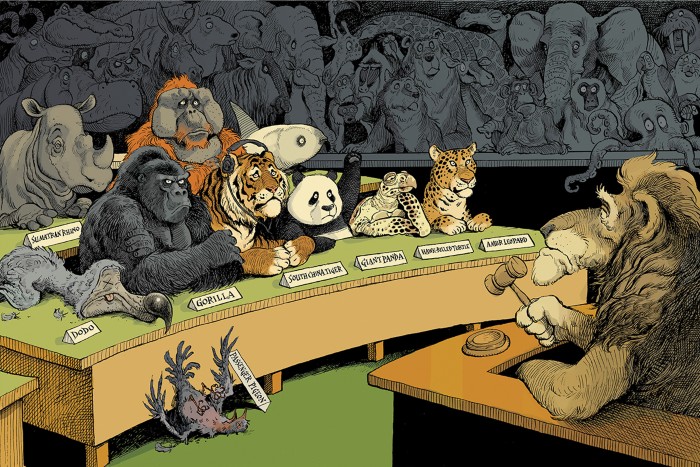
Extinction of Dodo in Madagascar

Alien species

  • Introduction of Exotic breeds and disappearance of native species through biotic interaction.
  • Invasive species is a threat for Island ecosystem due to lack of competitors and Predator that control the population of native ecosystem.
  • E.g.-
    • Amazon sailfin catfish responsible for destruction of the population of Switzerland of Kolkata
    • Water hyacinth
    • Lantana bushes

Disturbance

  • Natural disturbance are very much differ from man made disturbance.
  • Natural disturbance like forest fire, cyclone, draught, Tsunami, etc. They disturb ecosystem very different way.
  • Human disturbances like synthetic compound, pesticides, massive release of radiation or spillover of oil in soil also affect our environment.
  • Biomagnification.
  • Eutrophication i.e, nutrient enrichment
  • Effect of anti-inflammatory drugs, diclofenac on vultures.

Harvesting and over exploitation

  • Exploitation includes hunting, fisheries, the impact of trade in Species and species parts.
  • Due to exploitation many species are getting treated at Global label such as births 30%, mammals 33%, amphibian 6%, marine fishes and reptiles.
  • Fishing often takes large incident catches of non-targeted species and crawling can destroy whole Marine community that live on sea floor.
  • Illegal poaching of animal for large economic benefit.
    • Skin and bones of Tiger, Ivory of elephant, horns of Rhinos, perfume of the Musk deer.

Climate change

  • Climate change is a major threat for all the species present on the globe.
  • Due to climate change the Global temperature is rising (0.74 degrees celsius in global mean surface temperature relative to pre- industrial levels), more extreme weather events, changing pattern of rainfall and drought can expected to have significant impact on biodiversity.

These factors affect directly and indirectly to the species in the form of:-

  • Loss of Polar habitat
  • Loss of coral reef
  • Ocean acidification
  • Shifting of weather
  • Effect on food chain

IUCN  Red List category

Red list is a catalogue of taxa that are facing the risk of extinction.

  • At present it is known as International Union for the conservation of nature and natural resources
  • IUCN has recognised 9 Red List categories of species:-
    1. Extinct
    2. Extinct in the wild
    3. Critically endangered
    4. Endangered
    5. vulnerable
    6. Near threatened
    7. Least concern
    8. Data deficient
    9. Not evaluated

The protected areas of India are :- National Park, Wildlife sanctuaries, conservation Reserves, community Reserves, biosphere reserve, Marine protected areas.

Measures should be taken to conserve nature:-

  • Reduce reuse and recycle
  • Choose sustainable development
  • Choose long lasting light bulbs
  • Try to use renewable resources more than non-renewable resources.
  • Save water
  • Volunteer for clean up our environment
  • Volunteer for clean up our environment
  • Use public transport system
  • Plant more trees
  • Try to avoid plastic
  • Try to minimise pollution at individual level
  • Use reusable shopping bags
  • Educate others about anthropogenic activities or impact of anthropogenic actions on our environment and what can we do to prevent its bad effects.

The importance of water.

All plants and animals need water to survive. There can be no life on earth without water. Why is water so important? Because 60 percent of our body weight is made up of water. Our bodies use water in all the cells, organs, and tissues, to help regulate body temperature and maintain other bodily functions. Because our bodies lose water through breathing, sweating, and digestion, it’s crucial to rehydrate and replace water by drinking fluids and eating foods that contain water.

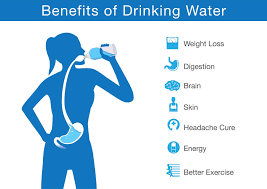
Water helps by creating saliva

Water is the main component of saliva. It’s critical for breaking down solid food and keeping your mouth healthy. If you find your mouth is drier than usual, increase your water intake. If that doesn’t work, see your doctor

  • It regulates body temperature

Staying hydrated is critical to maintaining a normal body temperature. Our bodies lose water when we sweat, and in hot environments. Sweat keeps our bodies cool, but our body temperatures will go up if we don’t replenish the water we lose. That lack of water causes dehydration, which in turn causes levels of electrolytes and plasma to drop

  • Water aids cognitive functions

Proper hydration is crucial to staying in good cognitive shape. Research has shown that inadequate water intake can negatively impact our focus, alertness, and short-term memory

  • Water protects the tissues, spinal cord, and joints

Water  helps lubricate and cushion our joints, spinal cord, and tissues. This helps us to be more physically active, and reduces the discomfort caused by conditions such as arthritis

  • It helps excrete the waste in our bodies through perspiration, urination, and defecation

Our bodies use water to sweat, urinate, and pass healthy bowel movements. We all need water to replenish fluids lost from sweating. We also need water in our systems to have healthy stools and avoid constipation. Drinking enough water helps our kidneys to work more efficiently  thus preventing kidney stones

  • Water maximizes our physical performance

Drinking plenty of water while working out, taking part in sports or just being on the move, is essential.  Keeping ourselves hydrated also affects our strength, power, and endurance

  • It helps to boost our energy levels

Drinking water helps to boost our metabolic rate. This boost has a positive impact on our energy levels. Drinking 500 milliliters of water can boost the metabolic rate by 30 percent in both men and women, one study has found. Negative effects of exercising in the heat, without staying hydrated, can result in serious medical incidents. In fact, extreme dehydration can cause seizures, and sometimes, even death.

  • Water prevents overall dehydration

Dehydration is the result of the body being deprived of adequate water. And,  since water is critical for the successful functioning of many bodily functions, dehydration can be very dangerous. Even leading to fatal consequences. Severe dehydration can lead to serious outcomes, including:

  • swelling in the brain
  • kidney failure
  • seizures

Make sure to drink enough water to replace what’s lost through sweating, urination, and bowel movements, to avoid dehydration.

The importance of water.

It’s pretty obvious that having adequate water in your body  is critical to nearly every part of it. Not only will maintaining your recommended daily intake help you to maintain your current state of good health, it could also improve it in the long run. The amount of water you need will depend on the environment and climate you live in, how physically active you are, and whether you are suffering from an illness, ailment or  any other health problems.

Here are some ways to make sure that  you drink enough water:

  • Carry a water bottle with you wherever you go. Keep taking sips from it as and when you feel the need
  • Track your water intake. Make sure you consume the optimum amount every day, which is a minimum of half your body weight, in ounces/milligrams