“RIGHT TO LIFE AND PERSONAL LIBERTY”

CONCEPT

Every person has the right to life library and security. Among all the fundamental right the right to life is unquestionably. Right to life means that no body can interfere in your freedom including government also. The people have human rights which protect their life and give them right to life. Right to life is concept which explain under the fundamental rights, that the citizen have rights to enjoy there life on there ways no body can stop them or restrictions on there fundamental rights.

The word “personal library” in Article 21[1] means nothing more than the liberty of the physical body, that is, freedom from arrest and detention without the authority of law. Personal liberty is one of the oldest concept which is safeguard by national court. The right to personal liberty as understood means in human rights not to be subjected to arrest any mode that does not admit to legal justification.

Personal liberty was not only merely the liberty of body, it also includes the other, freedom from restraintion and the law shall bind no person. Personal liberty was a widest concept that covers all the various rights. Right to personal liberty also means that free from the unnecessary restriction by the law on the member of the socity.

Every citizen has a right to life, liberty and the security. Among all the fundamental rights, right to life is unquestionably. The right to life and personal liberty is all about the development of human beings life. The right to life is a moral principle based on the right of freedom of peoples. The government should always take a proper measures or action to protect the life of peoples by making laws to protect citizen of their country and also in some conditions, by taking an good step to safeguard there states peoples at any risk.

There are many laws making by the government, which in any circumstance if a person might put in danger and if state was involve on that then the people might have the right to investigate. The main aim of the state to carry out the “justice”. According to the Constitution parliament and the State legislature in India have the power to make law. The meaning of personal liberty is that the citizen of state have there right arrest or detent according to law or if the person is guileless then he have right to protect there legal rights in such conditions. The right to personal liberty was an personal freedom in which no government can abbreviate.

ARTICLE 21

“No person shall be deprived of his life or personal liberty expect according to procedure established by law” [2]

The Article 21 explain about the protection to life and personal liberty, it protects the freedom of citizen. Two teams of Article 21:- First, “Due process of law”(USA).and second,”Procedure established by law”(India). The term “produce established by law” in India it taken from Japan. And in USA if citizen were deprive by law the tha term due process of law used, and in India it’s produce established by law was used. This rights are for both the citizens as well as non-citizen. And for those also how not have the knowledge about this concept.

Due process of the law is a very unique clause of the americanConstitution. It is very broad and formative concept. It is difficultto give the accurate definition which could explain it in very well manner. Due process of law literal meaning of it is ‘guarantee of fair procedure’. The Constitution promises there citizen or individual that government will not deprive him of life, liberty or property without due process of law. After having the brought explanation of life and liberty, now we will deal with the term”procedure established by law”. It does not have the same meaning as express in the due process of law. Procedure established by law express the wider connotation than the expression used in the Indian Constitution.

The Article 21 even thought to frame in negative language, established the person the fundamental right to life and personal liberty and it become the infinite source of many rights. It has the fundamental right for everyone who lives in country shall be live freely in the socity with the right that was enshrined in Article 21.

In Article 21 the right to life is not only with the physical existence of life but it is also for the other elements. Article 21 has proved to be avery fruitful source of right of the peoples.


[1] Protection of life and personal liberty No person shall be deprived of his life or personal liberty except according to procedure established by law.

[2] Article 21

Doctrine of Repugnancy

The distribution of powers is an important feature of federalism. When a federal state is formed it involves a division of authority between the central and the state government. The tendency of federalism is to limit on every side the action of the govt. and to separate the strength of the state among co-ordinate and independent authorities are particularly noticeable. In terms of different Articles read with Schedule VII of the Indian Constitution, the Union Parliament and State Legislatures have the power to make legislation. It further provides List I which is allocated for the Parliament, List II being those within the domain of the State Legislatures and List III which represent those areas where both Parliament and State Legislatures carry concurrent law making powers. The Constitution of India through Article 254 states that a law on a subject-matter prescribed in List III enacted by the State Legislature would be valid only in case, where it is not in violation to a law made by the Parliament on the same subject-matter. So as to put more light and certainty the principle “Doctrine of Repugnancy” was introduced, which is used to find out when and where a State law turns repugnant to the Parliamentary legislation.

Repugnancy is described as “a discrepancy or contradiction between two or more portions of a legal instrument (such as legislation or a contract)” by Black’s Law Dictionary. The Constitution of India can be easily described as a federal constitution because it contains the essential principles of a federal constitution. However the word federal isn’t directly mentioned in a very qualifying sense anywhere within the constitution. Dr. Ambedkar while addressing to the Constituent Assembly explained that the word “Union” is employed over “Federation” because “Indian Federation is not the result of an agreement among the States, as in the United States of America. Secondly, the states do not have any right to separate from the federation.” And this also articulates the supremacy of the Centre over the constituent States, and therefore the justification for the same can only be appreciated more in a country like India because of its heterogeneous character. Part XI of the Constitution deals with the “relations between the Centre and the States.” From article 245 to 254, these articles especially deal with the legislative relations between the centre and the states and the principle of Central supremacy is also mentioned in the same provisions too. And it’s in the light of this structural impulse, why we must appreciate the implication of the doctrine of repugnancy in its relation with the Constitutional law. The doctrine of repugnancy is often roughly understood as a conflict resolution principle, which is invoked when there exist two different tiers of Legislature, each competent to legislate on a similar subject, and where there is an irreconcilable inconsistency between the provisions of two laws enacted by the two legislatures on this field in exercise of their legislative competency. And the constitutional provisions which are relevant for solving such questions of repugnancy are to be found in Article 254 of the Indian Constitution.

It asserts that repugnant laws are laws that are so incompatible with one another that they can’t stand together at the same time, and that such a situation emerges when one law’s command, authority, or provision directly conflicts with another law’s command, power, or provision. The word “inconsistent” itself, within the legal sense, has been outlined as mutually repugnant in the sense that acceptance of one leads to the abandonment of the other. In such a situation, the ground-norm foresees a mechanism to resolve such a conflict, for “it is not possible to obey one law without disobeying the other”. The resolution proposed may vary from one polity to the other. Generally, one law prevails over another and the paramount legislation is determined by the nature or character of the federation.

Article 254 of the Constitution of India provides for the resolution of conflicts between Central and State legislations that are wholly repugnant to one another. The term “existing laws” which is mentioned under Article 254 has been defined under Article 366, clause 10, and these are the laws which are made by the competent legislatures before the Constitution. The provisions under Article 254 are attracted only if the statutes in question are wholly incompatible with one another and can’t stand together. And that there is no repugnancy unless the two laws are wholly repugnant to each other and their conjunctive application would manufacture absurd results. This doesn’t mean that the laws ought to be inconsistent in each and every letter and provision, but that in so far as the provisions are in fact inconsistent, the inconsistency should be absolute, so as to be militating against any possibility for harmonious construction.

As an interpretation principle, it’s a well-established principle of procedure that there is a presumption in the favor of the constitutionality of laws and also the onus to prove repugnancy lies on the party assailing the challenged law. Even so, the doctrine of harmonious construction dictates that the courts interpret the provisions of the laws in such a way as to avoid repugnancy and allow for the smooth coexistence of the challenged laws, with the laws being struck down on grounds of repugnancy in the manner prescribed by Art. 254(1) only when “the laws are fully inconsistent and absolutely irreconcilable.”

The laws made by the legislature of a state legislature or the Parliament with respect to their exclusively assigned spheres might incidentally with no consequence get in the restricted sphere, but as long as it can be shown that the legislation in its pith and substance falls in the four corners of the assigned sphere, the law would be intra-vires. The doctrine of pith and substance applies to concerns of repugnancy as well, though in a different way. If it can be shown that a law in pith and substance falls under a State or Union entry and any infringement on a concurrent subject is incidental and inconsequential, no repugnancy would arise.

There have been a number of judgments in India, on cases related to repugnancy arising out of conflicts between legislation with respect to Article 254 of the Constitution, and the widely held view on the scope, meaning and implication of repugnancy in several cases. M. Karunanidhi vs. Union of India[1], where a Constitution Bench of the Supreme Court considered the principles to be applied for determining repugnancy between a law made by the Parliament and a law made by the State Legislature, is one of the most commanding and authoritative judgments on the subject doctrine. Honorable court in this case, laid down following conditions which are essential for any repugnancy to arise.

  • That there is a clear cut and direct inconsistency between the Central Act and the State Act.
  • That such an inconsistency is absolutely irreconcilable.
  • That the discrepancy between the provisions of the two Acts is of such a kind that it brings them into direct conflict with one another, making it impossible to obey one without disobeying the other.

Thereafter, the Honorable Supreme Court after referring to reasoning of many judgments on the subject laid down following propositions:

  • That in order to decide the question of repugnancy it must be demonstrated that the two enactments contain conflicting and irreconcilable provisions, so that they cannot stand together or operate in the same field.
  • By implication, there can be no repeal unless the discrepancy is visible on the face of the two Acts.
  • There is no repugnancy where two statutes occupy the same field but there is room or opportunity for both statutes to operate in the same field without colliding.
  • That where there is no inconsistency but a statute occupying the same field looks to create distinct and separate offenses, no question of repugnancy arises and both the statutes continue to operate in the same field.

The aforesaid analysis of the relevance of the doctrine of repugnancy brings forward some salient points. The doctrine of repugnancy as interpreted by the courts in India, applies to law only when they’re wholly irreconcilable. The doctrine of harmonious construction asserts that the courts should interpret the statutes so as to avoid the occurrence of repugnancy and protect the legislative sanctity of the authority. The widely advocated view confines the application of repugnancy to only Concurrent List enactments. The current judicial position on repugnancy has numerous political implications. While the separation of laws under the State List from scrutiny from the perspective of repugnancy gives the State Legislature the freedom to enact on matters under the State List, the Centre’s supremacy has led to a situation where the Centre has professed a tendency to occupy entire fields in the Concurrent List to its exclusive jurisdiction through its laws. There has also been a tendency to use the President’s assent to advance the Central government’s policy in the states rather than allowing for repugnant but locally necessary laws to operate in the states based on discretion based on policy efficiency and in the spirit of the constitution. The most significant problem, however, has been the push to read Art 254 in a broader sense, to include concurrent field disputes in its scope, which would include Articles 252 and 253. The proposed explanation is that the text of the provisions allows for a much broader interpretation, that the terms “in the Concurrent List” are indicated to qualify only existing laws, and that the phrases “which the Parliament is competent to enact” apply to post-Constitutional laws. It’s also proposed that the provisions in Article 246 only provide the guiding principle, subject to which Article 254 must provide for a more comprehensive dispute resolution mechanism.


[1] [1979] AIR 898, SCR (3) 254

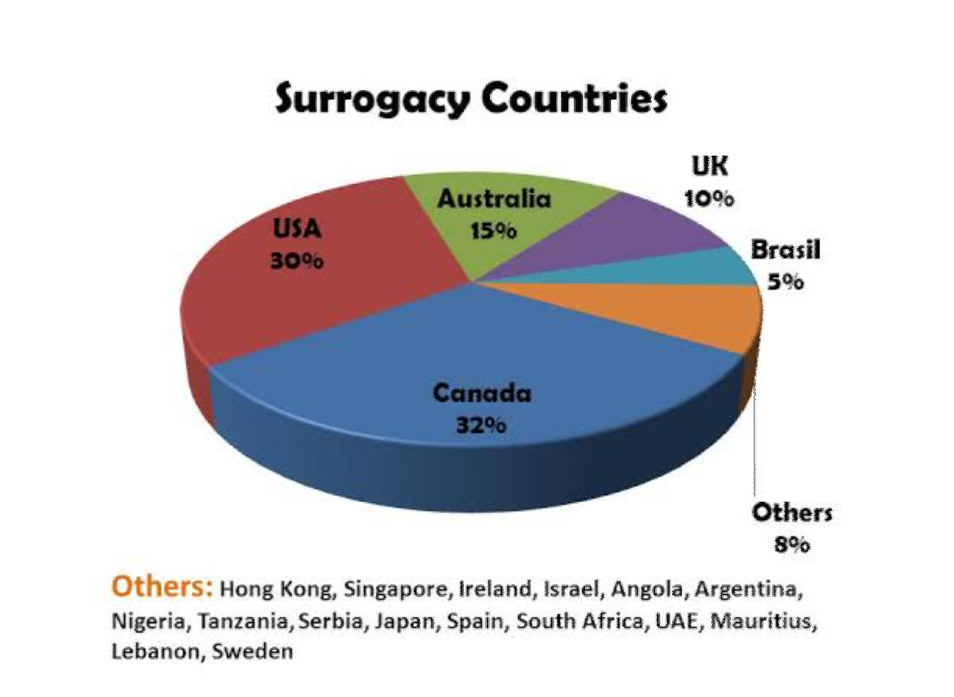
Should commercial surrogacy be banned in India?

Commercial surrogacy is the process by which an individual or couple pays a fee to a woman in exchange for her carrying and delivering a baby. At birth the child, homo-sexual couples, and single people who wish to be parents are the most common types of people who seek surrogate mothers.

Commercial surrogacy has been legal in India from 2002 onwards but due to unethical practices, a bill has been approved by the Union Cabinet in August 2016. This one lapsed when Parliament adjourned without taking the measure for a vote.

The new proposal came in 2019 that is to ban commercial surrogacy. The Indian minister of health has called the 2019 bill a “need of the hour” citing a rough estimate that between 2000 to 3000 unregulated clinics currently operate in the country. Under the new law anyone who performs or promotes this would be punished with up to 10 year of imprisonment and a fine up to one million rupees. The surrogacy bill’s provision restricting surrogacy to married heterosexual couples within strict age ranges also discriminates against members of L G B T community, older couples and unmarried people who might seek to have a child. The bill goes against the principles of equality provided under Article 14 of the Indian constitution.

Regulation, not ban, is needed. The commercial surrogacy in India needs a regulation and stricter rules that could ensure good care and pay to the woman alone and not agents or others. Good clinical facilities for the surrogate mother and a healthy environment where she could stay safely before and after delivery could lessen exploitation. There is no provision in the law about the custody of the child if the couple later refuse to accept it if the child is mentally challenged or born with a defect. People who hire surrogates have a need to do so due to medical reasons. It is not their choice. Regulation on this practice is very much needed and must be done to close loopholes due to which exploitation of surrogate mothers is taking place.

Indian society is yet to progress so much as to accept surrogate motherhood. The woman who rents her womb even if for the cause of humanity towards an unfortunate couple will never be accepted in society when she goes back to her normal life. People will look down on her and she may probably not be able to find a husband, if she was unmarried at the time of surrogacy. We need to be broad-minded and accept these women and respect their choice of renting their wombs.

Giving women a safe and free environment for surrogacy can help in curbing the evils attached and the industry could do well along with giving good money to such poor women so that they can make their lives better as well as give prosperity to their families.

Thank you for reading. Have a nice day!

DOMESTIC VIOLENCE

INTRODUCTION 

Domestic violence is defined when victims including anyone, despite external identities which differ from citizen to citizen1. Domestic violence was initially known as wife abuse, Victims of domestic violence include: 

  • Spouses 
  • Sexual/Dating/Intimate partners 
  • Family members 
  • Children 
  • Cohabitants 

DATA 

The National Family Health Survey (NHFS) data shows that almost 30% of Indian women have been abused in some way or the other by their husbands at some points of their life.  

Thirty-one percent of respondents in NFHS (Round 3, 2005) – somewhat 20,000 women –complained that they were sufferers of domestic violence. Surprisingly, almost 75% did not look for assistance from anyone.2Instances of reporting to the police amplifies more than two folds when the cases of domestic violence are severe. Ergo, even then only 1.5% of women go to the police. 

The ethnographic data evinces, that of the women becoming the sufferers of severe atrocities – ranging from broken bones, bruises to burns – none approached the police to report violence except in one instance where a woman sought police help not for battery, but the abduction of her toddler son by her husband. 

Many have a sceptical attitude towards the working of police, that unless bribed they won’t work and that seeking police intervention would tarnish their reputation in the society. 

The extent to which women approached multiple sources of help is quite scanty. Of all women experiencing domestic violence, 26% seek help from at least one source, and 7% seek help from more than one sources. Many women in the rural areas continue to bear the atrocities inflicted upon them because they have nobody to rely on except for their husband, so they accept their fate and do not report to the authorities concerned. 

CONSTITUTIONAL RIGHTS 

  1. RIGHT TO BE FREE FROM VIOLENCE: 

Every citizen in the country has the right to be free from violence at any point in time. This is because everyone is equal despite age, colour, race, caste, sex. Everyone deserves a peaceful life. This right is applicable from women and children who undergo domestic violence as well. 

  1. RIGHT TO DIGNITY: 

The Constitution provides personal liberty to all persons. It includes, all the dimensions of life which makes a person’s life purposeful, complete and provides a reason for them to live.3 The human life has its reason and there is no reason why life should not be enjoyed with permitted legal pleasures. 

  1. RIGHT TO SHELTER: 

The need of human is different from that of an animal. For animals it is about the safe guarding of the body, whereas for a human being it is the residing The Constitution aims at fulfilling the development of every child.  The shelter does not have to satisfy the features of a luxurious houses, but it should be mud proof and fire proof. This is the basic shelter any being requires to run a life. The Court held that the right to shelter is a fundamental right to citizens of the nation and it was looked into Article 21 of the Constitution. The right to shelter serves as an vital right to make life function naturally.4 

WHAT REMEADY DOES THE LAW PROFFER? 

The Indian parliament was well cognisant of the quantum of atrocities faced by women. Hence, in order to put the kibosh on domestic violence, the protection of women from Domestic Violence Act 2005 was created. This act has the women and their concern in its fulcrum. Prior to the formulation of this exemplary piece of legislation, women had to approach the courts under IPC (498-A) which did not even make a mention of “domestic violence”. Further, the women had to leave the matrimonial place in fear of what might transpire out of retaliation by the husband. By the virtue of section 17 and section 19 of this act, women can continue to stay in the matrimonial house and file a complaint against the preparators, thus vanquishing the fear that the rural women had that where will they sojourn till any significant decision is taken. Fear of being homeless after filing the complaint against the husband was one of the driving forces of women not complaining the offence against the husband especially in rural areas.  Moreover, if the women decide on discontinuing to stay in her matrimonial home, then by the virtue of  section 6, the protection officer or a service provider (NGO) may request the person in charge of any shelter home and that person in charge is under an obligation to provide shelter to such aggrieved woman. The magistrate, after hearing both the parties, if comes to a conclusion that the domestic violence has taken place or is likely to take place, then he may pass orders of protection by the virtue of section 18.  

In the case of Sabita Mark Burges vs Mark Lionel Burges,5 the Bombay High Court ruled that the court may, if it deems fir, may pass orders directing the respondent from a shared household or the lone ownership  of a man, a man has no right to inflict violence on the violence he lives with and if such a misadventure occurs, he may be stalled form entering the premises to secure the person of the wife and children. However, an exception of this rule is found when the respondent is a female. 

Furthermore, unlike IPC which is oblivious of domestic violence, the DV ACT adduces an all-encompassing and exhaustive definition of the term under section 3. The definition is not limited to merely physical injury, but also sweepingly takes into account the emotional, economic, mental, verbal and sexual abuse. An important judgement comes of Gujrat HC which provided new dimensions to the definition of “domestic violence”, in Bhartiben Bipinbhai Tamboli vs State of Gujarat & others6 on 20 September, 2016. 

In the case of Smt. Haimanti Mal vs, The State of West Bengal7 on 09.07.2019. Calcutta High Court granted Rs.1,00,000/- as compensation to the wife for psychological anguish that she had gone through owing to the behaviour of the husband.  

Section 2(f) of the act defines domestic relationship. Domestic relationship relates to the relationship between two persons in which they stay in a shared household together, by the virtue of relation by marriage, blood, relation which is of similar nature to marriage, adoption or a joint family, thus the act includes but is not limited to the married woman, it also takes  into its shade the mother, sister, daughter live-in relationship etc. In the case of Sadhana V. Hemant8, Bombay High Court held that if at the time of filing of petition, the wife has already been divorced, there cannot exist any domestic relationship and, divorced wife cannot be entitled for protection under Domestic Violence Act. 

In the case of D. Veluswamy V. D. Patchaiammal9, the court recognised the status of women in live in relationships under the definition of “aggrieved person”. However, in the same case 5 key ingredients were laid down: 

  • Their demeanour must be such that they seem to be husband and wife and they must be recognized as husband and wife in the society. 
  • Both must be of valid and legal age of marriage. 
  • They must meet the qualification of entering into a matrimonial relationship. 
  • They must have cohabitated with consent for a significant time duration. 
  • They must live together in a shared household. 

Shared household has been more elaborately and unambiguously defined in the judgement of S.R. Batra And Anr vs Smt. Taruna Batra10, authored by M Katju, wife would be entitled to the possession of only a share household, a shared household, interpreted in the light of section 2(s) cannot be a property belonging to mother-in-law or father-in-law. it must be a property that the husband owns or has taken on rent of belongs to aa joint family of which the husband is a member. 

OBLIGATIONS OF THE GOVERNMENT 

Under section 8 of the herein mentioned act, the government must appoint a protection officer in each district. The number of such officers may vary in accordance with the need. Also, such an officer, preferably must be a woman 

Section 11 lays down the duties of the government. It speaks that the central and the state governments are duty bound to publicise the sections of this act in media through various conduits like T.V. radio, newspaper etc. at regular intervals in order to ensure that no woman stays oblivious to her rights. The central and state government officers must be given public sensitisation and awareness training. 

CONCLUSION 

To summarize, every citizen of our nation is equal as per the Indian Constitution, but unfortunately women and children are ill-treated. While the legislation has worked immensely well for the protection of women, extant poor implementation is still an issue. The protection officer is usually a part time officer or an incompetent officer who fails to do justice to the job. There is no provision in favour of male child. The legislation is highly women centric and is often exploited by cunning women, hence is often construed against the tenants of article 14. Providing such a superfluous definition of domestic violence can be used against men often times to persecute them. It also perceives that only women can be subject to domestic violence and turns a nelsons eye to the cases in which the men are aggrieved. 

Minerva Mills Case: Analyzing the battle between Fundamental Rights & Directive Policies

According to the Constitution of India, Parliament and the state legislatures have power to make laws within their respective jurisdiction. This power, though, is not absolute in nature. The judiciary is given by the Constitution powers to determine the constitutional validity of all laws which means that the Supreme Court(SC) has the power to declare any law invalid or “ultra vires” if it violates any provision of the Constitution. Our founding fathers wanted the Constitution to be an adaptable document instead of a rigid framework for governance. Hence, Article 368 (Power of Parliament to amend the Constitution and its Procedure) gave power to the Parliament to amend the Constitution. But the Parliament could not distort, damage or alter the basic features of the Constitution under the excuse of amending it with the intention that the original ideas which were envisioned by the constitution-makers are preserved. Thus, the doctrine through which certain features of the Constitution are beyond the limit of the powers of amendment by Parliament is called the “Basic Structure” doctrine. No part of the Constitution can be so amended by Article 368 that it “alters the basic structure” of the Constitution or any constitutional amendment that violates the ‘basic structure’ would be invalid.

The phrase “Basic Structure” was introduced in the landmark case of Golaknath v.State of Punjab[1] for the first time in 1967 where the SC held that the Parliament has no power to amend Part III(Fundamental Rights) of the Constitution as the rights given are “transcendental and immutable”. According to the SC decision, Article 368 only lays down amendment procedure of the constitution and does not give the Parliament absolute powers to amend any part of the Constitution, but it was only in 1973 that the concept raised in the case Keshvananda Bharti v. State of Kerala[2] . The SC upheld the validity of the 24th Constitution Amendment Act by reviewing its decision in the Golaknath case. It was held that the Parliament has power to amend any provision of the Constitution, but the basic structure of the Constitution is to be preserved. Though the Apex Court held that the basic structure of the Constitution could not be repealed even by a constitutional amendment but it still did not give any clear definition of basic structure. After the declaration of the doctrine of basic structure of the Constitution by the Supreme Court in the case of Keshvananda Bharti v. State of Kerala, it was in the case of Minerva Mills vs Union on India[3]  which involved a further analysis of the basic structure in the context of the limitations to the amending powers of the Parliament and the balance between fundamental rights and directive principles of the state policy.

Minerva Mills Ltd. is a limited company dealing in textiles in Karnataka. On August 1970, the Central Government, after extensive production fall in the company, under section 15 of the Industries (Development Regulation) Act,1951 appointed a committee. This was to make a full and complete enquiry of the activities of the company as they believed that there had been or was likely to be significant fall in the volume of production. The appointed Committee submitted its report in January, 1971 to the Central Government, on the basis of which the Government passed an order on October 19, 1971 under section 18A of the 1951 Act, permitting the National Textile Corporation Ltd., to take over the administration of the Mills on the ground that its activities are being managed in a manner highly harmful to public interest. This undertaking was then nationalized and the Central Government took over the company under the provisions of the Sick Textile Undertakings Act of 1974.

In this case, the validity of the 42nd Constitutional Amendment Act,1976 was challenged on the ground that the clauses inserted are destructive of the ‘basic structure’ of the Constitution. The Supreme Court struck down the clauses (4) and (5) of the Article 368 on the same ground. The court ruled that a limited amending power itself is a basic feature of the Constitution. The historical judgment of this case laid down that: The amendment made to Article 31C by the 42nd  Amendment is invalid as it damaged the essential features of the Constitution. Clauses (4) and (5) are invalid on the ground that they violate two basic features of the Constitution which is limited nature of the power to amend the constitution and judicial review. The courts cannot be deprived of the power of judicial review. The procedure given in Clause (2) is mandatory. If there is no compliance between the amendment passed and the procedure, then it would be invalid. The Judgment thus makes it clear that the Constitution is supreme not the Parliament. Parliament cannot have unrestricted amending power so as to damage or destroy the Constitution to which it owes its existence and from where it also derives its power. The Fundamental Rights and the Directive Principles of State Policy should be complementary to each other and there should be no conflict between them. Certainly, Part IV is a part of the Constitution. Even though the Directives are not enforceable, Article 37 clearly mentions that it shall be the duty of the State to apply these principles. An unjustified importance on civil freedoms and rights in total disregard of the need to bring about social and economic justice, may lead to a mass disorder. Similarly any importance on the Directive Principles alone, in total disregard of the rights and freedoms, may lead to dictatorship. Hence, a harmonious balance should be maintained between Part III and Part IV and the real combination should come out only from harmonizing the spirit of economic democracy with the spirit of political democracy.

This case validated the ‘basic structure’ doctrine by highlighting the importance of the balance between fundamental rights and DPSP as a part of the basic structure of the Constitution. This case also broadened the concept of the ‘basic structure’ of the constitution which has safeguarded the survival of the fundamental features over which the constitution is based upon.

The court also reiterated the judgment in Kesavananda case holding that the power of Parliament to amend the constitution under Article 368 is of restrictive nature. The court relied on the explanation of Basic Structure that the circumstantial features can be changed but the basic features cannot be changed.

Basic structure of the Constitution is of key importance as it prevents the Parliament from having absolute power and becoming the principal of Law itself. It has now emerged in certainty that the struggle between Parliament and Judiciary is that the constitutional amendments and all the laws are subject to judicial review and laws that violates the basic structure are likely to be struck down. Substantially, Parliament’s power to amend the Constitution is not absolute or unconditional and the Supreme Court is the final negotiator and interpreter of all constitutional amendments.

Finally, the Basic Structure of the constitution reiterates that nothing is above the Constitution, neither the Parliament nor the Judiciary.


[1] Golaknath v State of Punjab, (1967) 2 SCR 762(India)

[2] Kesavnanda Bharati v Union of India, (1973) 4 SCC 225(India)

[3] Minerva Mills v Union of India, (1980)AIR SC 1789

Introduction to Fundamental Rights

The fundamental rights are defined as the basis humar rights of all citizens. These rights, defined in part 3rd of the constitution. Applied irrespective of caste, creed, place of birth, religion etc. They are enforceable by the court, subject to specific restrictions.

What is the purpose of fundamental rights ?

1. Preserve individual liberty,

2. Equality of all members of society,

3. Dr Ambedkar said that the responsibility of the legislature is just not to provide fundamental rights but also and rather,  to safeguard them.

List of fundamental rights 

There are six fundamental rights of Indian constitution along with to constitutional article.

Right to equality (article 14-18)

Right to equality guarantees equal rights for everyone irrespective of their caste, creed, birth of place, religion or race. This right also includes the abolition of titles as well as untouchability.

Right to freedom (article 19-22)

Freedom is one fo the most important ideals enhanced and cherished by the democratic country. Without freedom the democracy is meaningless. The freedom right includes many rights such as freedom of speech, freedom of expression, freedom of association And freedom to practice any profession and religion.

Right against exploitation (article 23-24)

This right implies the prohibition of traffic in human beings, beggar and other forms of force labour. It also implies the prohibition of child labour. The constitution prohibits the employment of children under 14 years in hazardous conditions.

Right to freedom of religion (article 25-28)

There is equal importance given to all religions. There is freedom of conscience, profession, practice and propagation of religion. The state has no official religion. Every person has the right to choose his/her religion.

Cultural and educational rights (article 29-30)

Special protection provided in the constitution to preserve and develop the language, Culture and religion of minorities. Every culture has the right to conserve it’s language, culture and religious practices.

Right to constitutional remedies (article 32)

Article 32 provide a guaranteed remedy, in the form of a fundamental right itself, for enforcement of all the other fundamental rights, and the supreme court is designated as the protector of these rights by the constitution.the supreme court has the jurisdiction to enforce the fundamental rights even against the private bodies. And in case of violation, award compensation as well as to the affected individual.

Right to privacy

Right to privacy is the latest right of our country being recently approved by the supreme court of india. According to this right we are liable to keep our material private and without our permission no one can interfere in our private matter.

Right to property was removed from the Indian constitution in 1978. It is no longer counted as a fundamental right.