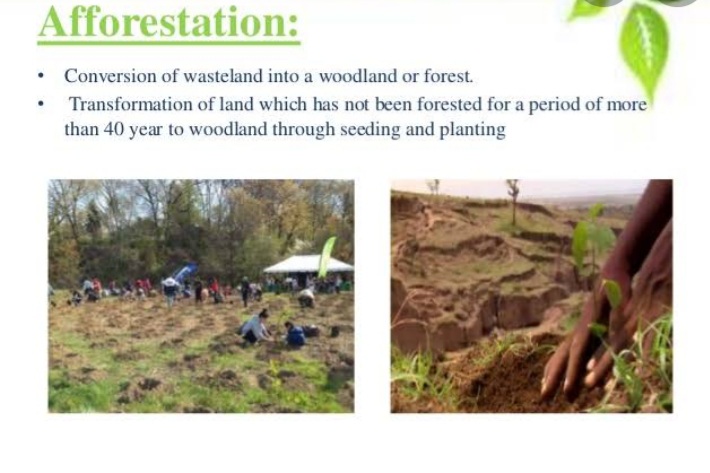
Afforestation

Afforestation is very useful to prevent and maintain the oxygen levels. Due to the deforestation, many of the trees are being cut and the oxygen supply has been reduced very drastically. Afforestation will help to maintain the oxygen levels in the atmosphere and helps the individual and the world to be healthy all the time. Oxygen is the minimum need for the individual to survive on the earth. If there is no oxygen, then which will cannot live or survive. When there is no o2, It is equally difficult for the animals to survive.

It also helps to maintain good forests. Deforestation, that is cutting of the trees makes the land abandoned and trees life less. When an individual takes a step forward to plant trees that is afforestation, good number of trees will be grown and the forests will be developed.

The most important thing for the animal’s survival is trees that give shelter and plants for the food. When the trees are being cut, some of the animals find no shelter and sometimes no food to eat. When afforestation takes place animals will find good shelter and also good food to eat.

Importance of Afforestation :

Afforestation helps to addess all the issues of soil erosion and barren land at the same time. Tress acts as wind barriers thereby weakening the speed of the wind and reducing its impact and ability to carry big soil particles.

The impacts of afforestation is occuring in many parts of world, can modify the nature and transformations of soil organic carbon and associated soil prevents, which in turn can affect plant diversity and ecosystem function. Afforestation also decreased soil bulk density and pH, and increased soil water content.

Types of Afforestation :

Afforestation materials are mainly divided into three categories: seed,seedling,and cutting. The choice of these three types of afforestation materials and methods is related to site conditions, tree species and age.

Various causes of Afforestation :

* Afforestation is highly fundamental in creating an alternative source pool of nature resource.

* Afforestation aids in tackling global warming and stabilizing global temperatures.

* protection of sensitive areas, biodiversity, and natural cycles.

* Afforestation can support wildlif.

* Afforestation creates employment and can provide a source of livelihood.

Advantages of Afforestation :
* A constant supply of forest products.

* prevents soil erosion.

* stabilizes the climate.

* Has the potential of reversing global warming and climate change.

* Better quality air.

* Improve watershed.

* preservation of wildlife.

* provision of employment and economic opportunities.

Disadvantages of Afforestation :
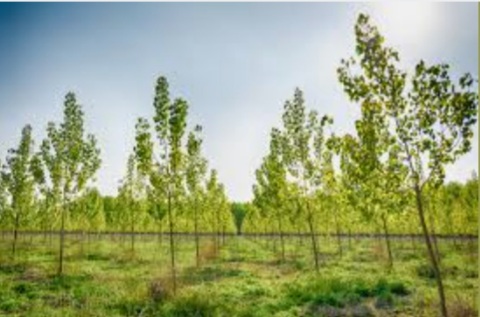
If not properly managed, afforestation can result in a reduction of local biodiversity, the modification of particular biomes, the intriduction of non – native and potentially invasive species, reduced stream flow and lost revenue from agricultural.
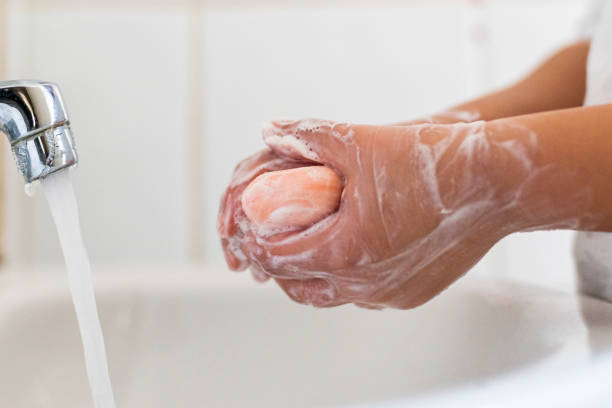
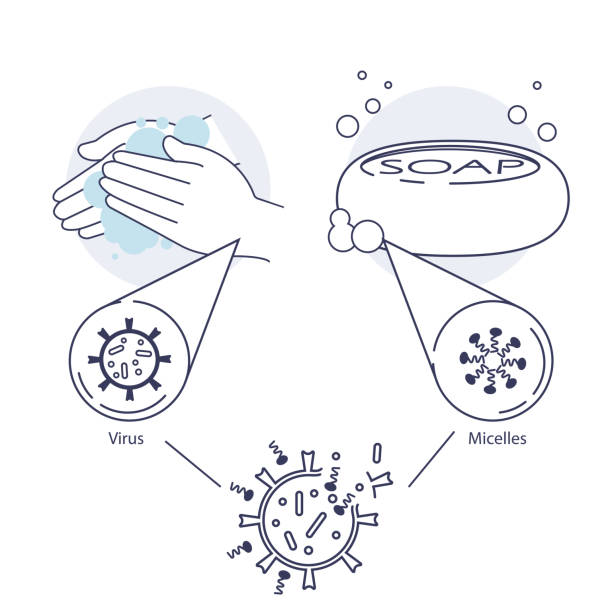
Soap vs. Hand Sanitizer

There are a plenty of hiding place for virus to stick. If you then touch your face, the virus can infect you. But there are two simple ways you can keep them away, soap and water, and hand sanitizer. It’s not best for any viral outbreak but best solution for covid. So which is better?

The corona virus that cause covid 19 is one of many viruses whose protective outer surface is made up of lipid bilayer. There lipids are pin shaped molecule whose heads are attracted to water means hydrophilic (water loving), and tails are repelled by it means hydrophobic (water hating). So in water rich environment, lipid naturally forms a shell, with heads outside and tails inside.

The actual process of destroying the virus happens in just one or two seconds. But doctors recommend at least 20 seconds of hand washing because of intricate structure of our hand. Soap and sanitizer need to get everywhere, including our palms, nails, fingertips and between our fingers to protect properly. And when it comes to corona virus outbreak, doctors recommend washing your hand with soap and water frequently. Both soap and sanitizer are similarly effective at killing the virus.

Soap and water has two benefits. It washes away any dirt which could otherwise hide virus particles. And it’s easier to fully cover your hand with soap and water for 20 seconds. On the other hand sanitizer is more convenient to use on the go. ( In the absence of sink and water). Hand sanitizer is just a emergency hands washing kit. When using sanitizer rub your hand together until they’re dry.

Unfortunately there are billions of people who don’t have access to clean drinking water which is a huge problem during this time.

Cleaning hand is very important because studies have found that we touch our face around 9 to 20 times per hour. Touching our face with uncleaned hand may be enough to infect ourselves.

How and why covid-19 hampered the mass production of automobiles?

The novel Corona Virus epidemic has had an instant and serious impact on the globally integrated automotive industry. Prodromes include a disruption in Chinese parts exports, large-scale manufacturing interruption across the world.

Due to an upset in supplying chains, a shortage of chips was created, which enforced automobile makers to drop production. A Shortage of a very critical part known as semiconductor chips has been brought up as a key reason. Both global and Indian manufacturers had announced production circulation linked to the obtainability of chips and been feigned to apply brakes on mass production.

What are the circumstances?

A conventional component across automobiles, electronic goods, medical devices, and smart appliances is the integrated circuits (IC) chips. IC’s are the foundation of all modern electronic equipment and the chip is their brain and nerve center. The circuit is a conglomeration of all electronic components — resistors, transistors, capacitors — compressed into a small silicon chip and connected all together, to perform individual or numerous tasks.

Earlier to the covid-19 pandemic, about trillions of chips were being produced on average globally every year. That is about 120 chips per person, which would appear to a great extent. All in all only a small percentage of the global population uses high-end connected equipment holding many chips. Nevertheless, the chip shortage today has a lot to do with the epidemic and how it changes customer’s actions.

After countries by countries went under lockdown people started purchasing more and more electronic equipment such as computers, mobile phones, gaming devices as they have to stay home. As a result of the lockdown in which factories were shut down, automobiles cut down on chip purchases. This affected the supply and demand throughout the world. Now as demands for automobiles appear to be on stream, chip companies are scrambling to adjust the production and distribution of the sectors such as automobiles.

Carmaking uses chips in most of the parts of the automobile, in everything from the power steering wheel, and fuel injector sensors to the navigation system, and parking cameras. As cars are also getting additional technologies and smarter and more affiliated electronic devices and equipment today, account for 40% of the cost of a new internal combustion engine car, up from less than 20% from last two decades, chips account for a scale of this escalate.

why may not carmakers hoard up?

At the last moment, the carmakers usually kept economical account holding and depended on an electronic industry contributing chain to nurture the production lines as per the opportunity. There can be two objectives behind that:-

(1) Firstly, constant reduction in the cost of production.

(2) Secondly, advancement in the processing powers of chips.

The counts of transistors going on an increase in the IC chips have doubled every year. This fact is widely known as Moore’s Law signifies the smaller device with substantial processing speeds.

Nevertheless, plenty of the evolution in chips design exists on the non-auto edge. The auto industry undergoes and large stuck to basic chips that have the same function for years.

So, what happens nowadays?

Countries’ evidence in semiconductor production is functioning to safeguard the dispense of their chips. The Indian government also started again to make an old effort for having companies build semiconductor fabrication set-up in India or get hands-on semiconductor fabs outside India. The Center’s primary effort on making India self-made for semiconductor fabs has overall been imposed severely by the company’s request to protect inevitable expenditures with different sops.

Death of Cinema Halls to Birth of Over The Top Platforms

The world has just started recovering from the deadly Covid-19 virus, even though it is a thing to be happy about, there are still sectors that are trying to rise including the entertainment industry (movie productions, theaters, film cities) from the hard hit by the pandemic.

What happened to the Cinema theaters of India?


India cinemas, with 6780 single screens and 2,100 multiplexes, is going through dark months amid the Covid-19 pandemic. This pandemic has resulted in the death of more than 40% of the single screens across the nation. Even though, the theaters nation-wide have implemented rules and regulations to minimize the danger by separated seats with 50% occupancy and encouraging digital payments. It would not be right to mention that the theater halls are full, as there are still large groups of people in the country who are hesitant to step inside cinema halls. Contrast to this, cinema lovers feel heartbroken to stare at empty cinema halls. It is predicted by many that most of the theater halls wouldn’t be able to survive the pandemic, in other words, many theaters will go missing when the pandemic comes to an end. This great fall of theaters has led many stars of the cinema industry to go for OTT release of their movies.

A cinema hall being sanitized


Rise of OTT Platforms in India


The fall of movie theater industry has led to the tremendous growth of Over The Top platforms in India. The situation has not only made top actors run behind OTT platforms but has also made cinema lovers to subscribe to OTT platforms craving for new releases. Hence making the whole movie watching experience easier and more comfortable. Just a click, would start a movie. Letting the audience themselves set the ambience for the movie watching experience at home. OTT platforms let the audience to control the volume and go back and forth in the movie, which makes the movie-watching experience being more ‘customized’. The year 2020 has seen a growth of OTT platforms by 60% followed by 20% growth in the first 4 months of 2021.In the year2020, the revenue from subscriptions for OTT platforms in India stands at 19 billion INR. “We are stuck” says Ekta Kapoor, a famous producer from the North Indian Television Industry. Producers have got no choice other than opting for an OTT release rather than releasing their movies in a half-filled screen. The business is favorable for the producer when the movie is streamed on Netflix or Amazon Prime Video or Hotstar, as the money is made with no prolonged worries. Although, top stars of the film industry are against the idea of streaming their movies on OTT Platforms they have to do it for the sake of the producer who invested crores on the project.

Major Over The Top Platforms of India


Amazon Firestick


Amazon Firestick, also known as Amazon Fire TV, is a famous Indian micro-console developed by Amazon. It is an USB-like device used to stream videos and movies via internet, connected to the HD television. The firestick includes a remote to access. With more than 50 million users currently, it was released in India on April 19, 2017. It was introduced with 1080p and 4k picture quality along with Dolby Digital Plus 7.1 Surround Sound System.
Amazon firestick created huge waves in the OTT industry by making users get access to watch their favorite movies more comfortably. The major perk of this gadget is that it is an user-friendly device which means, it can be understood and used easily by any age group. This feature made Firestick make millions in the market. As more than 70% of the elders in the country spend most of their time on watching television shows, producing a user-friendly gadget like Firestick will tempt the costumers to buy the product as easier accessibility is the important feature most of the people look forward to. Amazon firestick includes YouTube, which covers the kids and teenagers. India is currently emerging as the fastest growing market for Amazon’s firestick. As most of the content on the platforms are in Hindi and other local languages like Tamil, Telugu, Malayalam and Kannada there is a stronger engagement in India than other countries. Now the next big step from the company is that Amazon Fire TV is looking forward to collaborate with local companies to have the system pre-built into televisions. This would let the audience to watch their favorite local channel shows on smart TV.

Amazon FireStick

Covid-19 THIRD WAVE.

Raising the alarm bells for policymakers and citizens, a research report has contended that India may witness the third covid wave from August 2021. The report – COVID-19: The race to finishing line – prepared by SBI Research, claims that the covid third wave peak will arrive in the month of September 2021.

The research report says that India achieved its second wave peak on 7th May. “Going by the current data, India can experience cases around10,000 somewhere around the 2nd week of July. However, the cases can start rising by the second fortnight of August,” the report said.


These are the highlights from the report:

1. Global data shows that on average third wave peak cases are around 1.7 times the peak cases at the time of second-wave.
2. However, based on historical trends the cases can start rising by the second fortnight of Aug’21 with peak cases at least a month later.
3. India has started giving more than 40 lakh vaccination doses per day as shown by 7 DMA.
4. Overall, India has fully vaccinated 4.6% of its population, apart from 20.8% having received one dose. This is still lower than other countries including the US, the UK, Israel, Spain, France among others.
5. The decline in bank deposits in FY21 and concomitant increase in health expenditure may result in further increase in household debt to GDP in FY22.
6. States with high per capita GDP have been associated with higher Covid-19 deaths per million while low per capita GDP are associated with low Covid-19 deaths.
7. Only 4.6 per cent of the population in India is fully vaccinated, while 20.8 per cent have received one dose, much lower compared to other countries including the US (47.1 per cent), the UK (48.7 per cent), Israel (59.8 per cent), Spain (38.5 per cent), France (31.2), among others.

COUNTERING THE NEXT WAVE of covid -19

News

• State preparedness to manage the possible third wave of Covid-19 .

• Provides a real time analysis of data – few
suggestions and strategies for effective management
Delhi Administration’s policy responses .

In January 2021 – first wave subsides – the need for hospitalisation of covid-19 patients fell drastically.
 Delhi administration was using less than 20% of its bed capacity.

• In February 2021 – Delhi Government reduced the bed capacity to the level of just above 5,000
• In March 2021 – health system collapsed – increase in the number of covid-19 cases hit by the second wave of pandemic.

In April 2021 – bed occupancy went from 33%
to over 90%
 Government – increased its bed capacity – could not keep pace with the rise in covid
cases .

In May 2021 – utilisation of government hospital beds went rapidly back to 30%
 Many other areas in the country were experiencing a rise in cases.

Inference

• COVID-19 waves require the health infrastructure to be elastic .

• Demand for COVID-19-specific health infrastructure is spatially varied – health
capacity at a fixed location will not be sufficient.

• Conveys the difficulty that several administrations in the country face
 Hard to increase the capacity in response to the kind of surge – in April 2021
 Key health infrastructures don’t exist in all areas in our country

Real time analysis of data .

• 145 districts – accounted for 75% of the cases during the 1st wave – Same accounted
for up to 80% of cases during the 2nd wave.
Permanently at risk Districts – districts that were hit by the 1st wave, affected in the 2nd wave to a greater extent
 Population size, density and mobility make them prone to rapid spread.
 Need reserve capacity and resources to be expanded – prevent any risk associated
with possible 3rd wave

Suggestions

• Mobility framework – capacity to move healthcare facilities from one area to another
 Identify what resources can be moved – based on mobility costs and supply elasticity.

• Policy innovations in three areas
 Personnel management – Inducting trained final year medicine and nursing students – Rehiring of retired medical personnel – use
paramedical workers
 Resources with high mobility costs need to be evenly distributed – ensure equity in access in poorly served areas
 Spatial equity
 Expanding the health infrastructure covering all regions
 Providing accessibility through enhanced regional and area connectivity .

• Leads to sharing of resources within the country – reduces inaccessibility and
inequity.
• Efficiency of resource-sharing increases with the
area of coverage.
 States or districts – benefits of resource sharing is larger – coordinate and build trust
among themselves.

• Greater institutional coordination for a long run is
necessary
 Bodies such as the National Disaster Management Authority and the NITI Aayog could play a vital role.

India’s Healthcare Condition

Long before the virus invasion into India, the nation already suffered from a devastatingly poor healthcare system. With more corrupt systems in Public (government owned) hospitals where only miserable think of going while the middle or upper  middle and upper classes always seek for the genuine treatments at heavily priced private hospitals. Middle class economic sectors do end up with long term bank loans.

We’ve seen many cases in the past where private hospitals literally looted patient’s families, in some cases the patient was already dead while reaching the hospital and yet doctor’s kept the dead bodies for treatment and kept fooling the family by saying “we are doing the treatment and trying our best to save the patient”. All this was done just to add up bills for the families and friends of patient.

There’s a saying about doctors worldwide that they are a form of god who saves lives but this thought is questioned when some doctors commit the hideous sins ever known to humanity. This is happening even during the treatments of covid-19 specifically in India where many citizens are falsely reported covid positive and are admitted to expensive private medical institutes who charge hefty charges (8-12 Lakhs INR) from somebody who’s already negative from the virus contagion.

In many other cases where healthy citizens wrongly reported are admitted to hospitals and later their vital body parts viz. heart, kidneys, eyes, liver etc were removed for organ trade benefits. So how these doctors were able to do this and how still many are doing this right under the nose of government administrations. The answer comes to complete absence of investigation of each dead body, these doctors know it for sure that an alleged positive patient when claimed dead would be directly sealed into a body bag by the hospital workers. No policemen and neither family nor friends are allowed to have a sneak peek at the dead body. The dead body in a body bag is directly sent for cremation. This gives an upper hand for corruption and illegal organ trade.

Some 2.4 million Indians die of treatable conditions every year, the worst situation among 136 nations studied for a report published in The Lancet. Poor care quality leads to more deaths than insufficient access to healthcare–1.6 million Indians died due to poor quality of care in 2016, nearly twice as many as due to non-utilisation of healthcare services (838,000 persons).

“For too long, the global health discourse has been focused on improving access to care, without sufficient emphasis on high quality care,” Muhammad Pate, co-chair of the commission that produced the report, who is also chief executive of Big Win Philanthropy and former minister of state for health in Nigeria, said in a statement. “Providing health services without guaranteeing a minimum level of quality is ineffective, wasteful and unethical,” he said.

As the Indian government readies to roll out its ambitious national health protection scheme, the Ayushman Bharat Yojana, by the end of September 2018, the study’s findings are crucial.

“We need to better measure the quality of our health system as a composite entity rather than be merely content with certifying hospitals and laboratories,” said Srinath Reddy, president of the Public Health Foundation of India, a Delhi-based think tank, about the lack of mechanisms for monitoring quality in India. “Some elements of quality, mainly in maternal and child health, are being monitored under NRHM [National Rural Health Mission]. However, composite measures of the health system overall are unavailable,” he said.

Public accountability and transparency on health system performance are two ways to improve the quality of healthcare, the commission recommends.

Commonly used health metrics such as the availability of medicines, equipment and skilled attendants do not reflect quality of care and even “lead to false complacency about progress”, it says, proposing a dashboard of metrics that should be implemented by countries by 2021 to enable transparent measurement and reporting of quality care.

Impact of Covid-19 on Indian Economy and The World.

Corona Virus In India

India has been under lockdown phase 4 until May 31st with some relaxations. Prime Minister Mr. Modi announced a relief package of 20 lakh Crores INR for various sectors to propel economic growth on May 17. Some relaxations which were provided to Red, Orange and Green zone areas during the Lockdown 3.0 like opening of some of the individual shops of non-essential items were extended to Medium and small scale industrial sector, farm and trading sector. Malls, Cinemas, restaurants and places with probable high foot fall remained closed. India now is ranked third in the world in terms of coronavirus cases, after the US and Brazil.

The COVID-19 pandemic pushed economies into a Great pushback, which helped contain the virus and save lives, but also triggered the worst recession since the Great Depression. Over 75 per cent of countries are now reopening at the same time as the pandemic is intensifying in many emerging market and developing economies. Few countries have started to recover. However, in the absence of a medical assistance, the strength of the recovery is highly uncertain and the impact on sectors and countries are uneven.

The entire country remained under lockdown till May 31, 2020 followed by Unlock phase-1 from June 1 and June 14. Up to May 31, was the Lockdown 4. Earlier the Lockdown 3 was up to May 17, Lockdown 2 was upto May 3 and before that the Lockdown 1 was from March 22 to April 16, 2020. Prime Minister Mr.  Modi announced measures with some relaxations.  According to experts, this is being done to ensure that the Food Safety of India is protected as Rabi harvesting season is on anvil. PM Modi said detailed guidelines have kept in mind the needs of the informal sector and farmers. India now joins countries such as France, USA which are moving with the idea of unlock phases after extended lockdowns.

The Harsh Effects on World Economies

A high degree of uncertainty surrounds this forecast, with both upside and downside risks to the outlook. On the upside, better news on vaccines and treatments, and additional policy support can lead to a quicker resumption of economic activity. On the downside, further waves of infections can reverse increased mobility and spending, and rapidly tighten financial conditions, triggering debt distress. Geopolitical and trade tensions could damage fragile global relationships at a time when trade is projected to collapse by around 12 per cent.

This pandemic like no other will have a recovery like no other. First, the unprecedented global sweep of this crisis hampers recovery prospects for export-dependent economies and jeopardises the prospects for income convergence between developing and advanced economies. We are projecting a synchronised deep downturn in 2020 for both advanced economies (-8 per cent) and emerging market and developing economies (-3 per cent; -5 per cent if excluding China), and over 95 percent of countries are projected to have negative per ca-pita income growth in 2020. The cumulative hit to GDP growth over 2020–21 for emerging market and developing economies, excluding China, is expected to exceed that in advanced economies. Sooner or later this crisis will vanish and it has to because change is the undisputed law of nature. The only thing waiting for us after this epidemic is a shattering or rather say, a collapsing economy for many nations. We are fighting this pandemic together hence same should be our spirit in handling the ruptured economy. With confirmed case count for India crossing a million and more than 26000 deaths, all we can do is to get more strongly committed to all guidelines and suggested precautions by governments and health agencies worldwide.

WET MARKETS: The ugly truth

These markets have caused mayhem and a word of caution has been spread across the whole world in relation to them, they have been in the picture for a long time and also have become a host to the world’s deadliest pandemic.But their eradication can lead to a cultural and an economic crisis as well.

Wet market is a type of market which sells putrescible goods which includes a diversity of meats from sea food to poultry, the price ranges are overwhelming, one can find the rarest of meats and it’s definitely a jaw dropping sight to behold.

As we spread our raging voices over social media, through protests and education over animal rights and preserving and protecting endangered species and animal conservation, there will always be a component which we will be unable to change, and in this case it’s the wet markets.

It’s a million dollar business, the merchants, dealers and middle men earn thousands in a day under this trivial and disturbing business. It contributes greatly to any economy and is one of the important factors when it comes to the export and import in case of businesses as it can escalates both imports and exports and lead to an extraordinary rise in the market economy. The existence of wet markets is not a new trend but rather a very old one and they have been a part of the society from ages and continue to expand.

Most of Southeast Asia has wet markets all over the counties be it China, Malaysia, Indonesia or Japan etc. and even in certain parts of India .These wet markets are host to selling meat from all kinds of animals be it wild or even endangered animals such as bears, pangolin, bats, dogs, snakes, exotic bird species, diverse sea animals and even monkeys.


These wet markets which are lurking with unique meats and other items can be eye opening  for many of us who  have heard or seen them for the first time and can also come as a shock when we hear about the items being sold inside the market, but for many southeast Asians these are a common sight, these markets have consumers coming on a regular basis to buy fresh produce, besides meat they also do sell unusual herbs as well. And one can actually find fresh produce at whole sale prices most of the times.

People who buy from the wet markets generally buy products in bulk and hence majority of the consumer who are regular visitors completely depend on these markets. As most of the people living in towns and tiny villages and cities are everyday visitors of these markets, they are part of the community and hold a strong connection with the people.

Most of the restaurant and hotel owners buy their fresh ingredients for some of their extravagant delicacies from wet markets, hence the value which wet markets hold is quite high and eradicating them completely from the picture would put millions of lives at stake as not only will the regular consumers be effected but even the merchants along with the economy will also be affected.

It’s the wet markets which have been blamed for the spread of the current pandemic which has engulfed the world with chaos and has been blamed for the life changing calamity, these markets are not well kept they are crowded and there is hardly any space to walk around in the compact area of these markets, when it comes to hygiene maintenance its very low and the meat being sold has a very low shelf life hence have to be displayed in certain manner, which makes them a host to numerous faults and they have the capacity to start many epidemics. These markets don’t even meet the demands which a regulated and inspected market should have. But China along with many other countries is not ready to put a permanent lock on this business as it will disrupt the financial system of their countries.

Many have signed petitions to put an end to these markets forever but looking at the consequences which affect the population and economy people are not willing to wipe them completely from the picture.

Abdhi Upadhyay