Eliminating the barriers of the progress of the country

 The DMs shared their experience which has led to improvement of performance of their districts on a host of indicators. The Prime Minister sought direct feedback from them about the key steps taken by them which has resulted in success in the districts, and about the challenges faced by them in this endeavour. He also asked them about how working under the aspirational districts programme has been different from their work done earlier. The officers discussed how JanBhagidari has been a key factor behind this success. They spoke about how they kept people working in their team motivated on a daily basis, and made efforts to develop the feeling that they were not doing a job but were performing a service. They also spoke about increased inter-departmental coordination and benefits of data driven governance. 

If you wish to get solutions for your electrical need, you can visit at https://lyntec.com/
CEO, NITI Aayog gave an overview of the progress and implementation of the Aspirational District programme. He mentioned how the programme leveraged competitive and cooperative federalism, driven by a Team India spirit. The efforts have resulted in these districts performing remarkably better in every parameter, a fact which has been recognized independently by global experts as well. The best practises like smart classroom initiative from Banka, Bihar; Mission Aparajita to prevent child marriages in Koraput, Odisha etc. were replicated by other districts as well. Analysis of performance of districts vis-a-vis stability of tenure of key officials of the district was also presented.

Rural Development Secretary gave a presentation on a mission to uplift 142 selected districts, on the lines of the focussed work done in the aspirational districts. Centre and State will work together to uplift these identified districts to address the pockets of under-development. 15 sectors corresponding to 15 Ministries and Departments were identified. In the sectors, key performance indicators (KPIs) were identified. The aim of the government is to ensure that the KPIs in the selected districts surpass the state average in the next one year and that they come at par with national average in two years. Each concerned Ministry/Department has identified its set of KPIs, on the basis of which, districts were selected. The initiative is aimed at achieving saturation of various schemes by various departments in the districts in mission mode, in convergence with all stakeholders. Secretaries of various Ministries and Departments presented an overview of an action plan about how their ministries will go about in achieving these targets.

Addressing the officials, the Prime Minister noted that when the aspirations of others become your aspirations, when fulfilling the dreams of others becomes the measure of your success, then that path of duty creates history. Today we are seeing this history being made in the aspirational districts of the country, he added.

The Prime Minister noted that various factors led to a situation where aspirational districts, in the past, started lagging behind. In order to facilitate holistic development, special hand-holding was done for the aspirational districts. The situation has changed now as today, Aspirational Districts are eliminating the barriers of the progress of the country. The Aspirational Districts are becoming an accelerator instead of an obstacle. The Prime Minister underlined the expansion and redesigning that has taken place due to the campaign in the Aspirational Districts. This has given a concrete form to the federal spirit and culture of the Constitution, the basis of which is the team work of centre-state and local administration, the Prime Minister said.

The Prime Minister stressed that for development in aspirational districts, a direct and emotional connect between the administration and the public is very important. A sort of ‘top to bottom’ and ‘bottom to top’ flow of governance. Important aspect of this campaign is technology and innovation, he said. The Prime Minister also mentioned districts where excellent results have been obtained by the use of technology and innovation in the fields like malnutrition, clean drinking water and vaccination.

The Prime Minister noted that convergence is a major reason for the country’s success in the aspirational districts. All resources are the same, government machinery is the same, officials are the same but the results are different. Seeing the entire district as a unit enables the officer to feel the enormity of her efforts and give a sense of purpose of life and satisfaction of bringing meaningful change.

The Prime Minister noted that during the last 4 years, Jan-Dhan accounts have increased by 4-5 times in almost every aspirational district. Almost every family has got a toilet and electricity has reached every village. A new energy has been infused in people’s lives, he said. The Prime Minister said due to a tough life the people of Aspirational Districts are more hard-working, courageous and capable of taking risks and this strength should be recognized.

The Prime Minister remarked that aspirational districts have proved due to the elimination of silos in implementation optimum utilisation of resources takes place. He emphasized the exponential benefits of this reform and said when silos end, 1+1 doesn’t become 2, 1+1, becomes 11. We see this collective power in the Aspirational Districts today, the Prime Minister said. Elaborating on the approach of governance in the Aspirational Districts, the Prime Minister said that, firstly, people were consulted in identification of their problems. Second, the working style kept on being refined on the basis of experiences in the Aspirational Districts and measurable indicators, real time monitoring of progress, healthy competition among the districts and replication of good practices were encouraged. Thirdly, through reforms like stable tenures of the officers, creation of effective teams was encouraged.  THis helped in getting big results even with limited resources. The Prime Minister asked for developing detailed guidelines for field visits, inspections and night halts for proper implementation and monitoring.  

The Prime Minister drew the attention of the officers towards the changed mindset of New India. He reiterated that today, during the Azadi ka Amrit Kaal, the country’s goal is to achieve 100% saturation of services and facilities. That is, we have a long way to go compared to the milestones we have achieved so far and have to  work on a much bigger scale. He stressed time-bound targets for taking roads to all the villages of the districts, ayushman cards, bank account  to every person, Ujjwala gas connection, insurance, pension housing for everyone. He called for a two year vision for every district. He suggested that every district can identify 10 tasks to be completed in the next 3 months to improve ease of living for common people. Similarly, 5 tasks may be associated with the Azadi Ka Amrit Mahotsav to achieve historical success in this historical epoch.

The Prime Minister said the country is witnessing a silent revolution in the form of Digital India. No district should be left behind in this. He stressed the importance for digital infrastructure reaching every village and becoming a means of door-step delivery of services and facilities. He asked NITI Aayog to devise a mode of regular interaction between the district DMs. Central Ministries were asked to document the challenges of these districts. 

The Prime Minister said various ministries and departments of the government have prepared a list of 142 districts which are not so much lagging in development but are weak on one or two parameters. The Prime Minister emphasized the need to  work with the same collective approach as is being done in the Aspirational Districts. “This is a new challenge for all the governments- the government of India, the state government, the district administration, and the government machinery. Now we have to complete this challenge together”, Shri Modi said

The Prime Minister urged the Civil Servants to remember their first day in their Services and recall the passion and urge to serve the country. The Prime Minister asked them to move forward with the same spirit.

Covid Cases on the rise in post-Diwali week


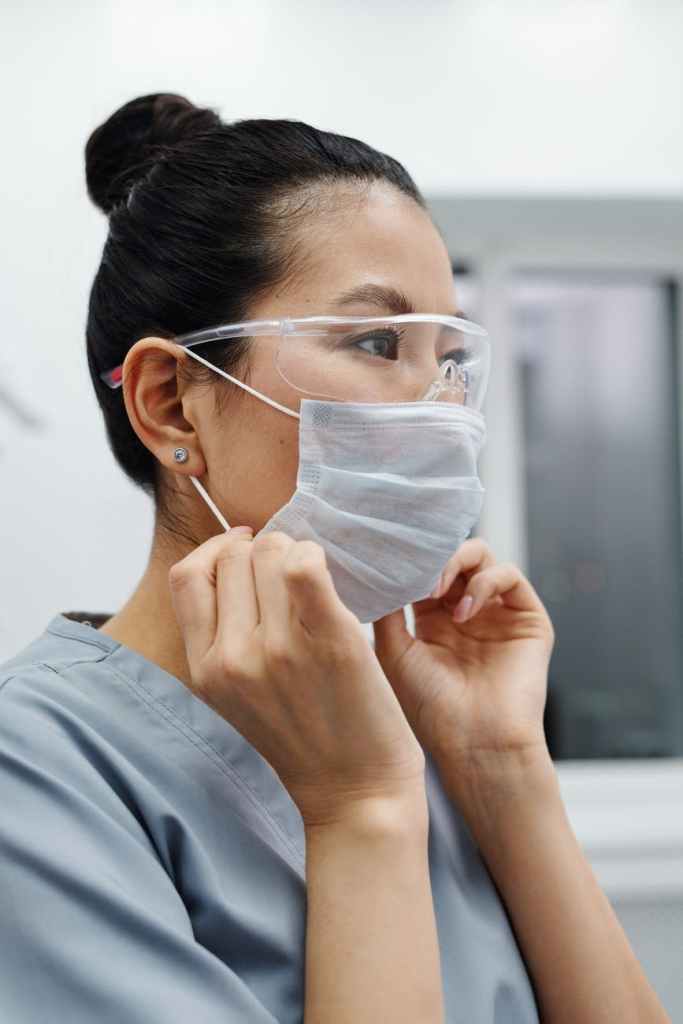
NEW DELHI: The end of the Diwali week marked a steady increase in new Covid-19 infections. India recorded 80,614 new cases of the coronavirus this week. With 10,789 new cases in the last 24 hours.

While cases in the southern states, namely Kerela and Tamil Nadu continue to gradually drop, a number of states observed a significant spike in cases. Jammu & Kashmir recorded a 34% increase in new cases in the past week.


Other states where the count increased in the current week are Karnataka, with a 17% increase, Maharashtra, Punjab, Delhi, Uttar Pradesh, Bengal, Rajasthan. Experts claim the increase in cases is a result of increased contact among people in the festive period. A major credit for the over-all spike can also be credited to increase in population in the markets. As most people connect the festival with an incentive to shop.

-Ananya Kaushal

Goods and Services Tax

Everyone may have heard about GST up to this point. GST is for Goods & Services Tax, which is a national tax levied on the manufacture, sale, and consumption of goods and services that makes no distinction between goods and services for taxation. It will largely replace all indirect taxes levied by the Indian central and state governments on goods and services. In India, The Atal Bihari Vajpayee government proposed the introduction of GST in 2000. The Goods and Service Tax Act was passed by Parliament on March 29, 2017, and into effect on July 1, 2017. To put it another way, the Products and Service Tax (GST) is a tax that is levied on the provision of goods and services.

For the purpose of tax collection, it was split into five tax slabs: 0%, 5%, 12%, 18%, and 28 percent. Individual state governments tax petroleum goods, alcoholic beverages, electricity, and real estate separately. Rough precious and semi-precious stones are taxed at a special rate of 0.25 percent, while gold is taxed at 3%. Furthermore, a 22 percent cess or other charges on top of the 28 percent applies to few things, such as aerated drinks, expensive cars, and tobacco products, are subject to GST. Pre-GST, most commodities had a statutory tax rate of around 26.5 percent; post-GST, most goods are likely to have a tax rate of around 18 percent. 

OBJECTIVES OF GST:

One of the main goals of the Products and Service Tax (GST) is to avoid double taxation or the effects of taxes on the cost of production and delivery of goods and services. The elimination of cascading effects, i.e. tax on tax till ultimate consumers, will considerably improve the competitiveness of original goods and services in the market, resulting in a positive influence on the country’s GDP growth. It is not only desirable but also necessary, to implement a GST to replace the existing numerous tax structures of the federal and state governments. It would be conceivable to offer full credit for input taxes collected if multiple taxes were integrated into a GST system. GST, or Goods and Services Tax, is a destination-based consumption tax based on the VAT idea.

 GST Rate of other countries:-

Australia 10%

France 19.6% 

Canada 5%

Germany 19%

Japan 5%

Singapore 7%

New Zealand 15%

Types of GST :

1. CGST (Central Goods and Service Tax)

The Central Goods and Services Tax (CGST) is a federal tax on goods and services. It applies to vendors who do business within the state. The collected taxes will be shared with the central authority. 

2. SGST (State Goods and Service Tax) 

A state’s Goods and Services Tax (SGST) is a tax on goods and services. It applies to vendors who do business in the state. The collected taxes will be distributed to the appropriate state authority.

3. IGST (Integrated Goods and Service Tax)

The Integrated Goods and Services Tax (IGST) is a type of tax that applies to both goods and services. It is relevant to suppliers who do interstate and import operations. The collected taxes will be split between the federal and state governments.


4. UTGST (Union Territory Goods and Services Tax)

 The UTGST is levied on supplies made in the Union Territories of the Andaman and Nicobar Islands,

Chandigarh, Dadra and Nagar Haveli, Daman and Diu, and Lakshadweep.

GST Advantages

  1. GST is an easy-to-understand tax that also reduces the number of indirect taxes.
  2. There will be no hidden taxes and the cost of conducting business would be cheaper because GST will not be a burden to registered shops.
  3. People will benefit because prices will drop, which will boost businesses since consumption will rise.
  4. Separate taxes for goods and services, as is the current taxation system, necessitate the split of transaction values into the value of products and services for taxation, resulting in increased complexities, administrative, and compliance expenses.
  5. When all of the taxes are integrated into the GST system, the tax burden can be divided evenly between manufacturing and services.
  6. GST will be levied only at the ultimate point of consumption, following the VAT principle, and not at numerous stages along the way (from manufacturing to retail outlets). This will aid in the removal of economic distortions and the creation of a common national market.
  7. GST will also aid in the creation of a transparent and anti-corruption tax administration. Currently, a tax is assessed when a finished product leaves a factory, which is paid by the manufacturer, and it is levied again when the product is sold at a retail outlet.
  8. GST is supported by the GSTN, a fully integrated tax infrastructure that handles all aspects of the tax.

Disadvantages

According to some economists, GST in India might have a detrimental impact on the real estate sector. It would raise the cost of new homes by up to 8% and diminish demand by roughly 12%.

According to some experts, CGST (Central GST) and SGST (State GST) are simply new names for the Central Excise/Service Tax, VAT, and CST. As a result, the number of tax levels does not decrease significantly.

Currently, only 4% of retail products are subject to tax. Garments and clothing may become more expensive after the GST is implemented.

It would have an impact on the aviation sector. Currently, service taxes on airfares range from 6% to 9%. With GST, the rate will rise to over 15%, nearly doubling the tax rate.

The entire ecosystem would experience teething problems and learn as a result of the adoption and migration to the new GST system.

Small yet distinct

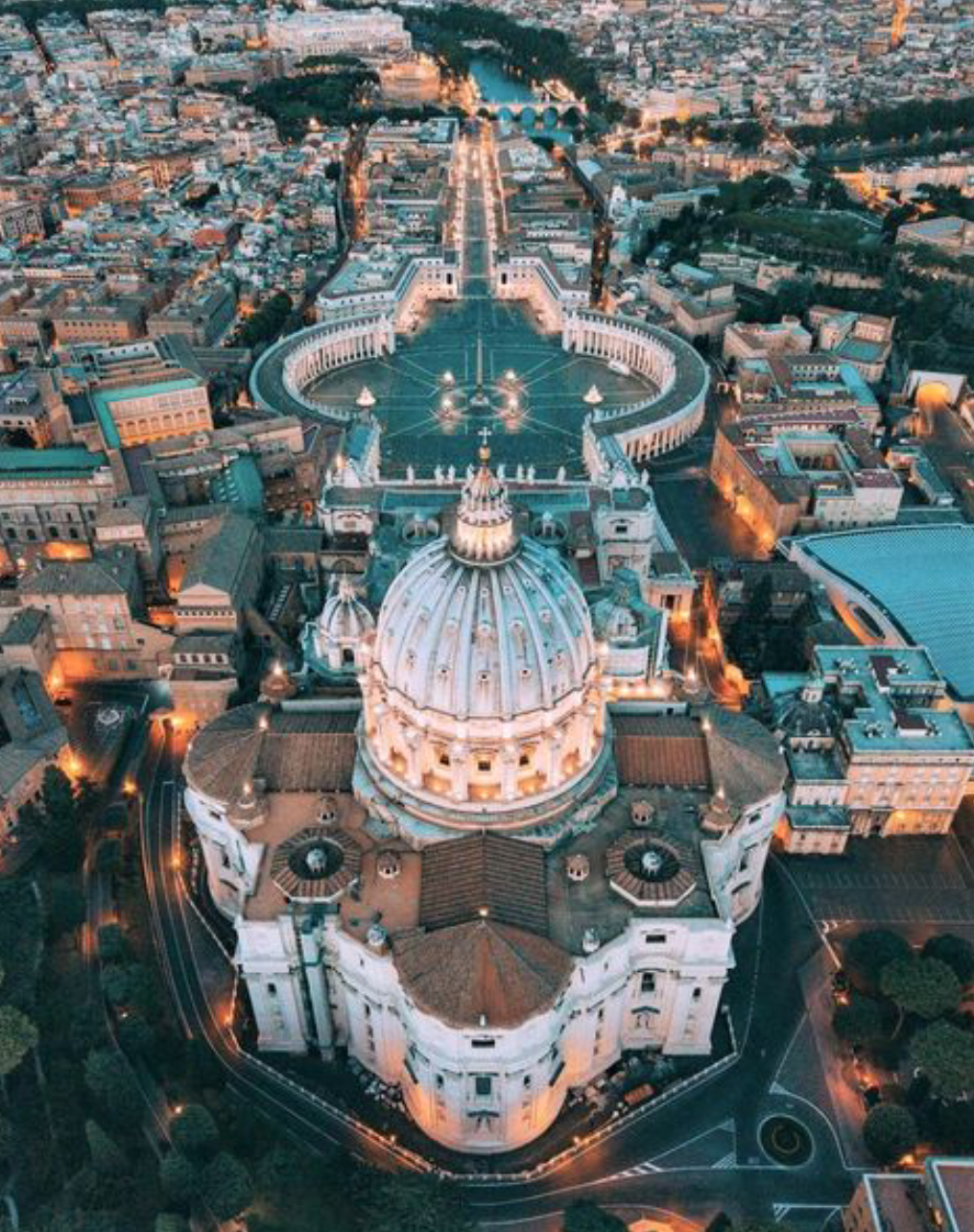
The word ‘country’ makes one think of a large land mass. However, not every country is huge. There are some countries that are really small in size. They are so tiny, that some of them can even be covered by foot! Some of these countries can fit entirely within the city of another country. The smallest country in the world, the Vatican City, for example, can fit into the city of Rome, capital of Italy. Many of these countries are only small in size. With their wealth and natural resources, they can even compete with any of the larger countries. So, here’s a showcase of some of the small, yet distinct countries.

• Vatican City

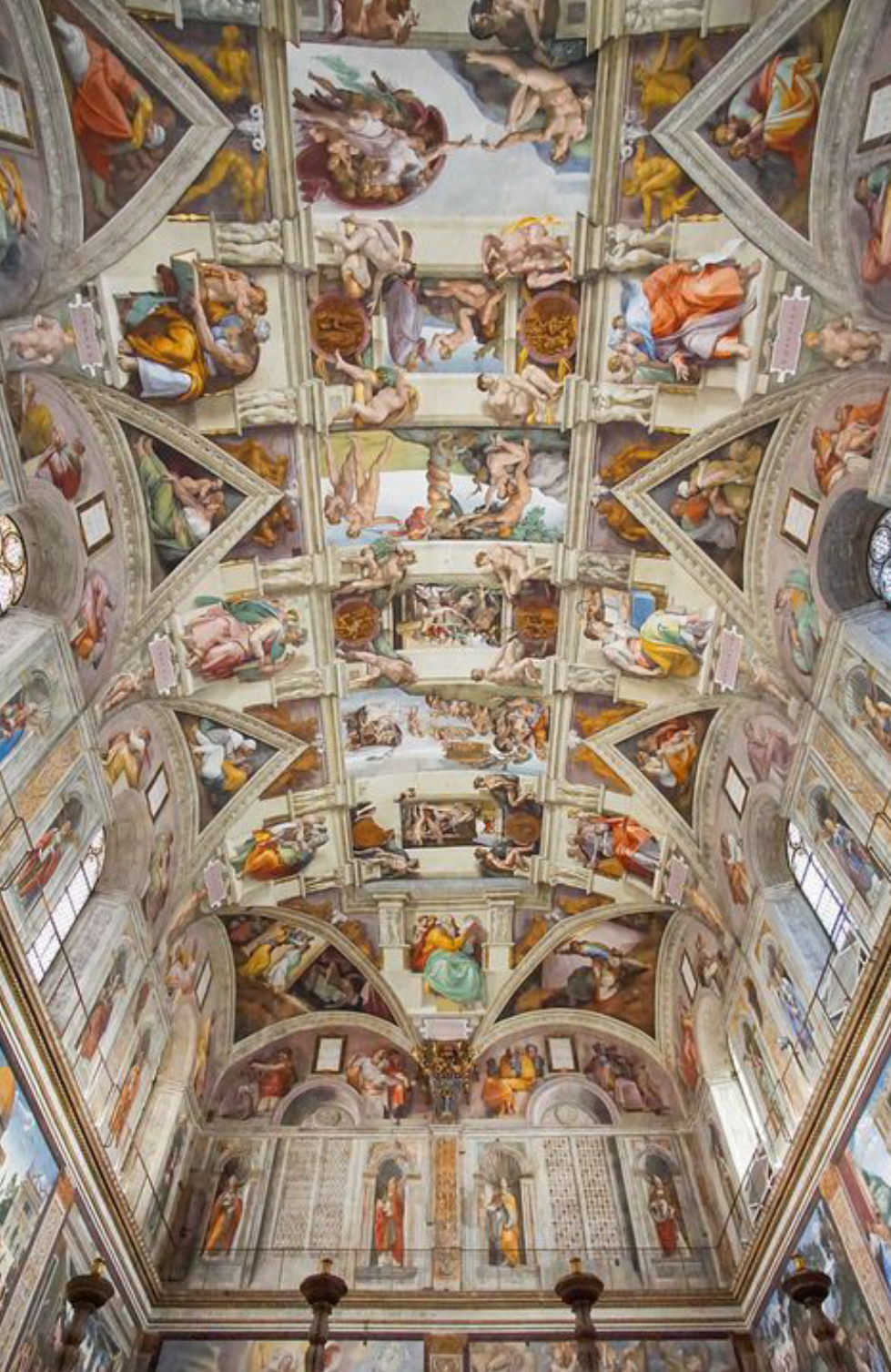
Vatican City is the world’s smallest fully independent nation state. It is also the smallest by population. Situated on the western bank of the Tiber river, the Vatican City’s 3.2 kilometre border is landlocked by Italy. The Vatican City has served as the official home of the pope of the Catholic church since 1377. However, Vatican City was not declared an independent state until the Lateran treaty of 1929 which created the independent state of Vatican City for the Catholic church. Today nearly 75% of the Vatican’s citizens are members of the clergy. Along with the centuries old buildings and gardens the Vatican maintains its own banking and telephone systems post office pharmacy newspaper and radio and television stations. Its 600 citizens include the members of the Swiss guard a security detail charged with protecting the Pope since 1506. The most significant building in Vatican City is Saint Peter’s Basilica. It is the Italian language that is used by most of those located within the state however the official documents are written in Latin.

• South Korea

Compared to the giants of Asia like India and China, South Korea is much smaller in size. Its total area is 100,032 square kilometres. South Korea has one pf the most homogeneous populations in the world which are thought to be descended from several Mongol tribes that migrated from central Asia. Tourism is a fast growing industry in South Korea.

• Portugal

Portugal is a sovereign state in Western Europe. It comprises of the continental part of Portugal on the western coast of the Iberian Peninsula and the small archipelagos of Madeira and the Azores in the Atlantic Ocean.

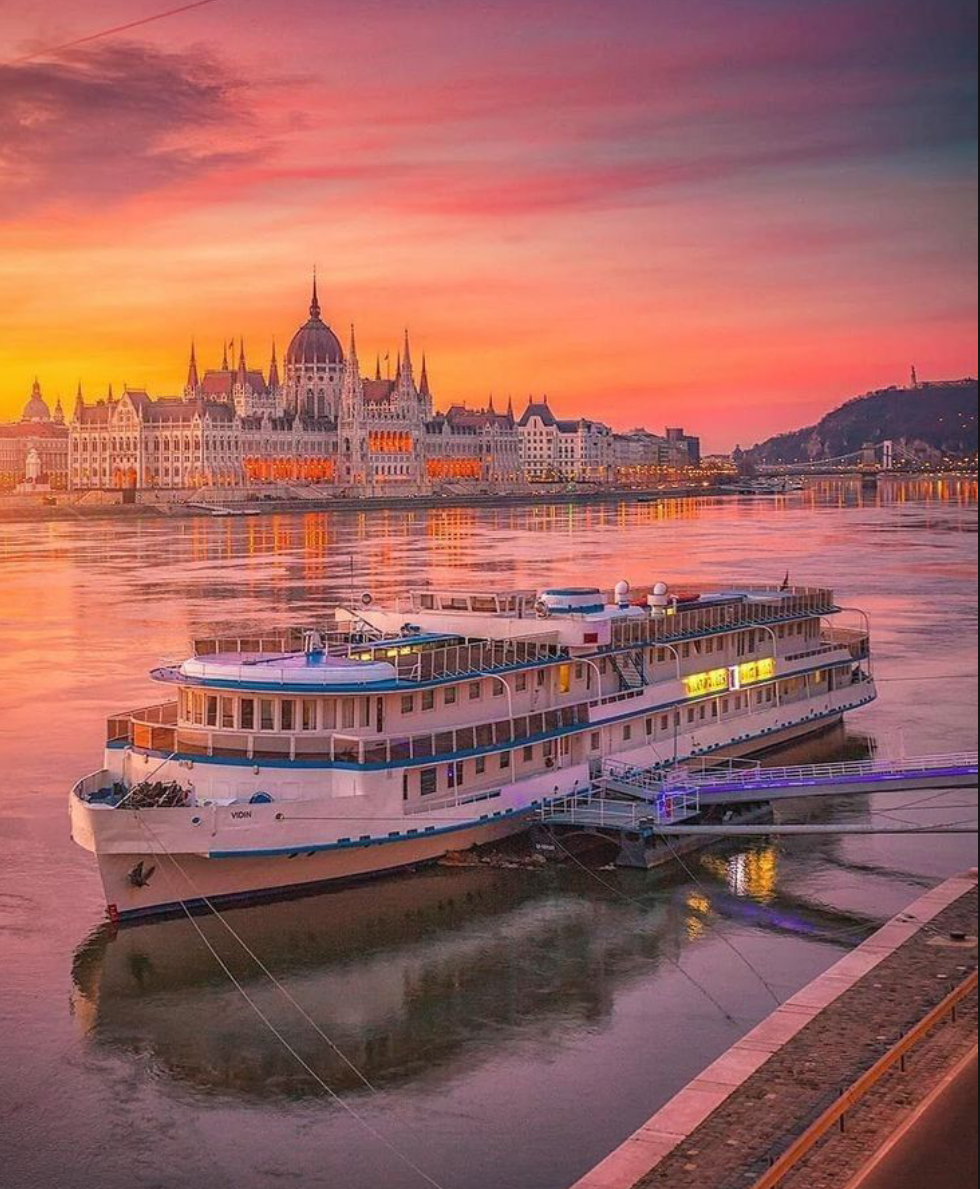
• Hungary

The name “Hungary” may very well come from the medieval Latin word ‘Hungaria’ which translates as “Land of Huns”. Another source states that the name is derived from the Turkish words on ‘Ogur’ meaning ‘ten arrows’ or ‘ten people’

• UAE

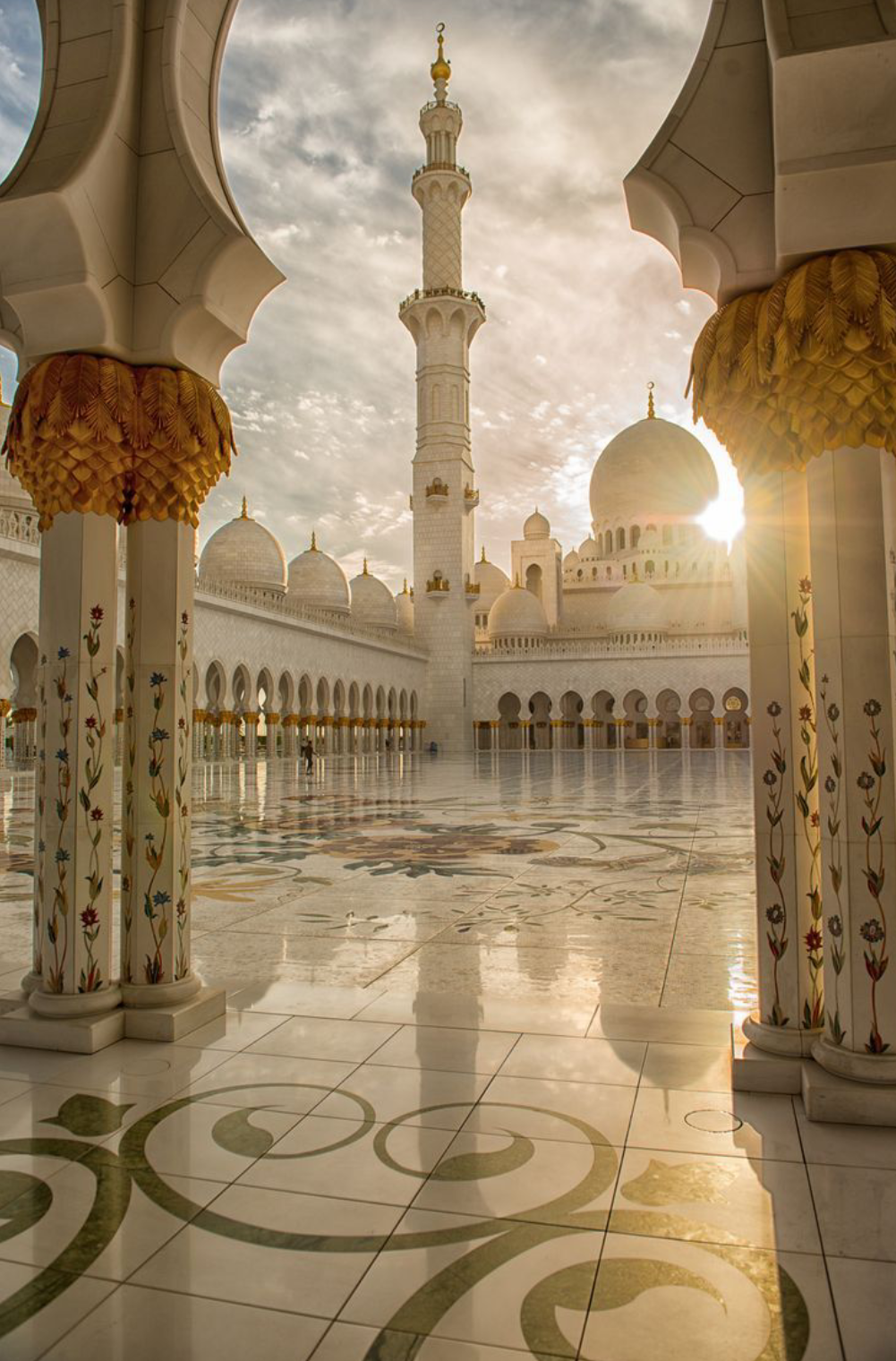
The United Arab Emirates is a constitutional federation of seven Emirates; Abu Dhabi, Dubai, Sharjah, Ajman, Umm al-Quwain, Ras al-Khaimah and Fujairah. The federation was formally established on 2nd December, 1971. The UAE’s oil reserves are the seventh largest in the world while its natural gas reserves are the worlds seventeen largest. The Dubai police fleet includes Lamborghini, a Ferrari and a Bentley. This is to allow them to catch speeders who can outrun other cars.

• Dominican republic

The island of Hispaniola, the second largest island of the Antilles in the Caribbean contains two separate countries, the Dominican republic and Haiti. The Dominican republic is the only country in the world to have an image of the Holy Bible on its national flag.

• Panama • Georgia • Ireland • Iceland • Sri Lanka • Costa Rica • Bhutan • Switzerland • Belgium • Israel • Fiji • Qatar • Jamaica • Singapore • Maldives …to name a few others.

Thank you for reading. Have a nice day!🌼

A temporary peace

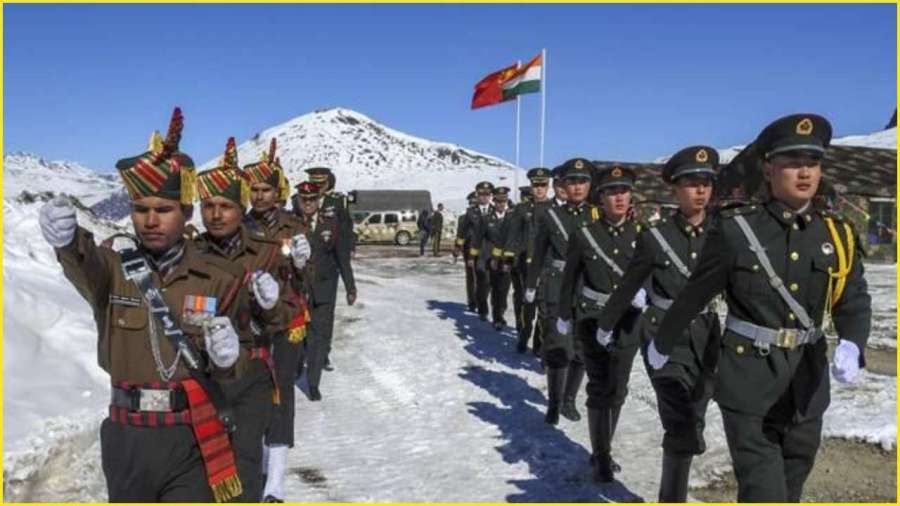
After a long period of worsening tensions on the contested Himalayan border, the countries India and China have surprised everyone by announcing that their troops are to quickly extricate.

A marathon meeting between Indian Foreign Minister S Jaishankar and his Chinese counterpart Wang Yi in Moscow has been followed by this announcement. It came despite the regular eloquence between the nuclear-armed neighbors, that had suggested increasing bitterness.

Earlier, in this week, China’s state-run Global Times had said Chinese troops would “quickly deal a heavy blow to Indian troops, and they will be all annihilated” if Delhi provoked a war.

India also had upped the ante, Defence Minister Rajnath Singh saying “there should be no doubt” about the country’s resolve to protect its territorial integrity.

The statements reflected the reality on the ground : a hostile face-off between troops.

In June they fought a deadly clash in Ladakh’s Galwan Valley with clubs and stones leaving 20 soldiers dead. Both countries still have a huge development in the region where they have overlapping territorial claims ; and overcoming their differences will not be easy.

Ice breaker’ envoy

Many observers, including Michael Kugelman, deputy director at the Wilson Center think-tank, believe that both countries were ready for a confrontation, but they also realised that a war even a limited one , was not an option.

It would have been catastrophic for both countries and the wider region. The economic stakes were too high to risk a war,” he said.

The fact that Mr Jaishankar served as ambassador in Beijing for many years and is known to share good relations with Chinese diplomats appears to have helped.

It did break the ice, Mr Kugelman says, adding that personal relations often play a role in crucial diplomatic negotiations.

India-China border dispute explained in 400 words
Rivals race to build along a disputed frontier
China and India face off on the roof of the world
Weather, an unlikely factor, may have also played a role. The higher ridges of the Galwan Valley become inhospitable in winters.

Lieutenant General (retired) Vinod Bhatia, who served in the Indian army, says troops are used to operating in harsh conditions, but “given a chance, both armies would want to avoid that”.

Reports also suggest that Indian troops recently occupied some ridges overlooking Chinese posts. Neither country has officially confirmed the reports.

“India may have used this advantage as a bargaining chip,” Lt-Gen Bhatia adds.

Both countries also have many other crises to deal with. India’s Covid-19 caseload continues to rise at an alarming rate and its economy is suffering. Any armed confrontation would affect the country’s ability to overcome these issues.

China, meanwhile, has tensions with the US and a host of other countries to deal with, as well as global condemnation of its controversial security law in Hong Kong.

How soon could peace be restored?

Yun Sun, director of the China Programme at the Stimson Center think-tank in Washington, says the joint declaration lacks details.

Firstly, it doesn’t mention the Line of Actual Control (LAC) – the de facto boundary separating the countries.

“Several points along the LAC are contentious where troops are still stationed, so there is no clarity on the resolution of these issues,” she says.
De-escalation takes time, says Lt-Gen Bhatia, and it will take longer in the current scenario.

“The area is too big and it will take time for commanders to come to an understanding. The military-level talks will happen when tensions are still high and emotions are raw,” he says.

Both countries want to maintain the status quo. And that is tricky, says Ms Yun, because the two sides define the status quo differently.

“Chinese troops have gone deep into the territory India claims, and there is no clarity if they will vacate those positions.”

What caused the escalation will also determine how quickly disengagement can happen. A major factor cited as a source of tension is a new road that connects Indian army stations in the region to a forward air base.

But Ms Yun believes the road can’t be the only source because its construction took 20 years and “it wasn’t a secret”.
She believes many factors, including India’s controversial decision to revoke a law that gave special status to the region and Washington’s improving relations with Delhi, played a role.

“Beijing felt punishing India will give a warning to Delhi and Washington at the same time. But what they did not calculate was that India will refuse to back down,” she says.

China has been in diplomatic confrontation with a number of countries since US officials accused it of not controlling the coronavirus outbreak effectively
So, they became more aggressive, she says, adding that this was reflected in the statements of Beijing officials in recent days. Aggression has been a key factor in China’s foreign policy – particularly in recent months. And Chinese state media often remind the country’s neighbours of its superior military might.

This happened during the stand-off with India as well – but only in the past few days.

Officials in Delhi and Beijing were largely restrained in their comments in June and July, even after the Galwan clash that left the Indian soldiers dead.

Mr Kugleman says this was because they didn’t want to undo PM Narendra Modi and Chinese President Xi Jinping’s efforts in improving relations. The two have met 18 times since Mr Modi came to power in 2014.

“But it all came undone in recent days, and now it will be interesting to see how China and India sell the announcement to their people,” he says.

Ms Yun says China will find it tricky to reverse the rhetoric because “it can’t come across as weak or bullied by India”.

Resolving these core issues, including unsettled disputes going back decades, along the LAC that stretches for 3,440km (2,100 miles), will not be resolved in a few days.

“So, it’s a good start,” Mr Kugleman says. “Talks are better than no talks, but we just have to be cautiously optimistic.”

Exhibition Industry

For many of us the word ‘Exhibition’ is merely limited to visiting a modern art gallery, raving at a collection of paintings by a renowned artist or getting awed by the international auto expo held every year. Surprisingly for some people it is the exhibition at school or college that restricts their thinking to idea of an ‘Exhibition.’

It may be startling to know that the exhibition industry is one of the most booming industries in India and has been contributing significantly to the GDP of the country for the past four years. In the globalised world of the 21st century which has been shrinked by communication, exhibitions and trade fairs underline the importance of face-to-face interaction among the different countries on a common platform.

Fairs and melas in every nook and corner of the country have been prevalent since the ancient times and even now. India being the second largest country in terms of population with 1.5 billion people and fourth largest GDP in terms of purchasing power parity (PPP) has emerged as the favourite regional market for exhibition and trade show organizers. It has behind it a rich heritage of Trade fairs – the Pushkar and the Kumbh Mela respectively for just not being trade fairs, but business generation too.
 
Main sectors like handicrafts, food, electrical, automation etc. are growing tremendously and thereby needs focused attention. Due to this business growth requires a platform where interactions can happen and growth prospects can multiply. Trade shows and exhibitions are apt for this and play a vital role in today’s business world.

Every year over 2,000 exhibitions are held in India with on an average, 100 exhibitors each. Of these between 10 to 15 percent are from overseas, bringing with them on an average 5 personnel per exhibitor. This makes between 100,000 to 150,000 international visitors coming to India every year through the exhibitions which results in huge spending on hotels, airlines, restaurants, entertainment, ground transportation, sightseeing etc. impacting the economy of the region in a very significant way.

In the list of countries offering indoor exhibition space, India ranks 16th offering a total of 2,60,000 sqm with USA and Germany topping the list. In the Asian scenario India is being surpassed by China which gives 66 percent of exhibition space.

Our country reflects buoyant growth and this in turn has driven demand for international trade shows as well. But the limited convention space and lack of infrastructure facilities are some of the bottlenecks we need to tackle to make this sector a booming industry. Growth in this sector depends upon new and modern venues. There is a need to find a quick-fix solution as exhibitions and trade shows highlight the social and economic prospects of the industry. Thus, the exhibition industry needs to promote the key role it can play in the development of city, region or industry far better.

India has ventured into the arena of exhibition industry very late. In 2006 the India Exhibition Industry Association (IEIA) was formed that represents the entire country and all segments related to the exhibition industry. It brings together all the exhibition organizers, managers, designers and stand contractors, freight forwarders, services and facilities providers, venue owners etc., so that there is a common platform available to the entire industry to consider ways and means for the sound and scientific development of various facets of the industry.

Thus, IEIA acts a one stop window where all the information pertaining to various exhibitions, trade shows, industry news, various agencies, private and public organizations operating in the exhibition industry can be accumulated.

For an exhibition to be successfully executed the 5P’s that come to fore are : Purpose, planning, passion, patience and persistence-but it is the passion that helps Indian exhibition organizers and service providers to open shows successfully.

The top 10 of B2B Fairs organized in India are : Aahar, ACETECH, Automation, bc India, Elecrama, IIJS, International Horti Expo, IITF, Kisan and Plast.

With growth prospects immense the exhibitions and trade shows in India have a huge potential which needs to be tapped in the right way, and helped to grow with best global practices. There needs to be a harmonious blend of global practices which is in sync with local business interests. Festivals like Diwali serve as the perfect launch pad to introduce ones product and build the brand in the market. As a result the marketing and the sales department benefit a lot.
 
Having said so it is important to know the importance of Trade fairs and Exhibitions :

  • Trade fairs and exhibitions contribute to intensification of competition as well as to an increase in growth and employment. They are the intermediary between producers and buyers
  • It improves the company’s image and increase brand awareness as well as the introduction of new products
  • They attract new customers and cultivate contacts with regular customers
  • Trade fairs serve the development and cultivation of customer relations, the search for partners and personnel as well as the positioning of the entire company
  • They work as test markets for new products and also market research instruments
  • They help to increase the level of awareness of the own company, to analyze the competitive situation and to prepare the sale of product and services.
  • For young companies in particular, exhibitions play a vital role to have an opportunity to gain an overview of the competition, their presentation and their products
  • Exhibitions are proven to generate more sales prospects than almost any other form of marketing or promotional activity.
  • They create a value proposition in a conducive business environment where customers are able to do generate business leads and network – under single roof
  • The knowledge shared and the people interacted with over 3-4days of an exhibition is immeasurable in its value as compared to other marketing tools.

To make India as an attractive destination with a promising market its high time that the exhibition sector should get the much needed industry recognition. The government needs to incentivize the sector the way it is done in China or Germany. Also the exhibition industry needs to be more of a government-funded model with the authorities providing finance for construction of trade fair venues as contrast to infrastructure in India which is being solely done by the private sector. The need of a public-private partnership model, where the government acts as a facilitator and is more actively involved in infrastructure development is the much required agenda.

But there are few bottlenecks and challenges that the Indian exhibition industry has to overcome to become a full-fledged emerging sector :

  • Problem of paucity of space and venue
  • Abysmal quality and high prices
  • Mind boggling array of NOCs and permissions
  • Application of multiplicity of taxes as there is no exemption from taxation and fees and subsidies for trade shows and venue creation
  • Non-uniform policies of the state governments
  • Unfair competition from state-owned venue owners
  • Narrow vision of the private sector

Despite the challenges, the Indian exhibition industry is one of the most exciting in the region. According to research the Indian exhibition industry now generates over 700,000 square meters in net space sales each year- making it the fifth largest in the Asia and clearly one with the potential for substantially more growth. Even in the new age of technology led communication, social media and the mobile internet, face to face interactions are still key to fostering profitable business relationships and that comes with exhibitions and trade fairs.

Thus, we need to grow at a faster rate and post higher returns. It has to be a consistent growth as regards the top-line and also the bottom-line. However, the question is not to realize the potential but how soon we can do it.

Indian National Flag

Every free nation of the world has its own flag. It is a symbol of a free country. National flags serve not only as a means of identity but also as a symbol for a country’s history and ideals. During the 1600s, as groups of people began to organize into states and nations, flags became an important way to identify a country’s territories and possessions. For its citizens, the flag grew into a symbol of pride and identity of a people and government. 

Every country put an immense effort to design their flags as it is a great deal of their thoughts which reflect through country’s national flag. Colors, symbols, and layout of the design are all features that represent some principle or event that is significant to the country to which it belongs. Historically flag was originated in ancient India more than 5000 years ago and was called as Dhvaja. In the Rig Veda which is the worlds’ oldest book (4000-5000 BC), there is mention of Dhvaja hoisted on an elephant being ridden by Devraj Indra.

Flag mentioned in Rig Veda was triangular of black colour and had some inscription in white. Use of flag came into vogue all over the world after 600 BC. Indian “national” flag was hoisted first in Calcutta on August 7, 1906 by Sir Surindranath Banerjee demanding freedom for India from British rule. Independence Day, 15th August 1947, is the most significant day in India’s history, when India became one nation, despite partition, with one National Flag that was hoisted at 10:30 AM by Pandit Nehru. Pt. Nehru quoted ” a flag not only of freedom for ourselves, but a symbol of freedom for all people.” 

In India, the term ‘Tricolor or Tiranga’ refers to the Indian National Flag which was designed by Pingali Venkayyaand. It is designed in such a way that reflects country’s integrity, aim for growth and peace. It is a horizontal tricolor of deep saffron (kesaria) at the top, white in the middle and dark green at the bottom in equal proportion. The ratio of width of the flag to its length is two to three. In the centre of the white band is a navy-blue wheel which represents the chakra and it has 24 spokes. National flag of India is also the war flag of Indian Defense Forces. 

Each colour of flag has different significance and purposeful meaning.

• Saffron stands for courage, sacrifice and renunciation

• White stands for truth in action and purity in thoughts

• Green is the symbol of life, abundance and prosperity

• Chakra is the symbol of progress and of movement

A few days before independence, the constitution assemble was formed to select a flag of Independent India. On 23 June 1947, the assembly created a committee headed by Rajindra Prasad and other members including Maulana Abul Kalam, Sarojni Naidu, C, Raja Gopalachari, K.M.Munsi and Dr. B.R.Ambedkar. The committee recommended that the flag of the Indian national congress should be adopted as the National Flag of India. Committee also suggested some suitable modifications so that it should be acceptable to all political parties. Its main task was to select a flag that should not be a under stone of any political party and it should reflect an image of Azaad Bharat.  

​​​​​​​The flag symbolizes freedom .On 22 July 21, 1947, Pandit Jawaharlal Lal Nehru proposed Indian National Flag at the constituent assembly as a horizontal tricolor of deep saffron, white and dark green color bands in equal proportions, with Asoka wheel (Chakra) in blue in the centre of the white band.  

Nehru also presented two flags, one in Khadi-silk and the other in Khadi-cotton, to the assembly. The resolution was approved unanimously. Indian Flag, by law, is to be made of khadi. The manufacturing process and specifications for the flag are laid out by the Bureau of Indian Standards. The right to manufacture the flag is held by the Khadi Development and Village Industries Commission, who allocate it to the regional groups. As of 2009, the Karnataka Khadi Gramodyoga Samyukta Sangha was the sole manufacturer of the flag. Its use and display are regulated by a code. A Flag Code was outlined to maintain the dignity and honor of the National Flag. Flag code is a set of rules which need to be followed to give respect to Indian National Flag.  

On January 26, 2002, the new ‘Flag Code of India2002’ was released by the Union government. According to new code the citizens of India are allowed to hoist the Indian flag over their homes, offices and factories on any day and not just National days as was the case earlier. Now Indians can proudly display the national flag anywhere and anytime, as long as the provisions of the Flag Code are strictly followed to avoid any disrespect to the tricolor. 

Following are some rules and regulations of Flag Code of India 2002 :

• The National Flag may be hoisted in educational institutions (schools, colleges, sports camps, scout camps, etc.) to inspire respect for the Flag. An oath of allegiance has been included in the flag hoisting in schools.

• A member of public, a private organization or an educational institution may hoist/display the National Flag on all days and occasions, ceremonial or otherwise consistent with the dignity and honor of the National Flag.

• Section 2 of the new code accepts the right of all private citizens to fly the flag on their premises

• The flag cannot be used for communal gains, drapery, or clothes. As far as possible, it should be flown from sunrise to sunset, irrespective of the weather

• The flag cannot be intentionally allowed to touch the ground or the floor or trail in water. It cannot be draped over the hood, top, and sides or back of vehicles, trains, boats or aircraft

• No other flag or bunting can be placed higher than the flag. Also, no object, including flowers or garlands or emblems can be placed on or above the flag. The tricolour cannot be used as a festoon, rosette or bunting

The Indian National Flag represents the hopes and aspirations of the people of India. Over the last five decades, several people including members of armed forces have ungrudgingly laid down their lives to keep the tricolor flying in its full glory.  

The flag should be flown at half-mast as a sign of mourning. The decision to do so lies with the President of India, who also decides the period of such mourning. When the flag is to be flown at half mast, it must first be raised to the top of the mast and then slowly lowered. Only the Indian flag is flown half mast; all other flags remain at normal height. The flag is flown half-mast nationwide on the death of the President, Vice-president or Prime Minister. On occasions of state, military, central Para-military forces funerals, the flag shall be draped over the bier or coffin with the saffron towards the head of the bier or coffin. The flag shall not be lowered into the grave or burnt in the pyre. 

The Indian National Flag symbol of our national pride. Achievers feel proud to proclaim with the hoisting of the national flag when they break or make new world record for the nation.  The Indian national flag was hoisted on Mt. Everest, the highest peak in the world, on May 29 1953, along with the Union Jack and the Nepalese National flag. National flag flew to space in 1984when Wing Commander Rakesh Sharma went to the space. The flag was attached as a medallion on the space suit of Rakesh Sharma. Such achievements not only bring proud feeling to the country but also spread a massive feel of inspiration among young youth. 

In nutshell, to fly the national flag is a sign of pride and patriotism. It is a positive affirmation of loyalty and commitment. It marks out a country that has confidence in itself, and is comfortable with its place in the world, its history and its future.  

“It will be necessary for us Indians Muslims, Christians Jews, Parsis, and all others to whom India is their home-to recognizes a common flag to live and to die for.” –Mahatma Gandhi

Republic day

India celebrates Republic Day on January 26 annually with a lot of pride and fervor. It is a day that is important to every Indian citizen. It marks the day when India became truly independent and embraced democracy. In other words, it celebrates the day on which our constitution came into effect. On 26 January 1950, almost 3 years post-independence, we became a sovereign, secular, socialist, democratic republic.

History of Republic Day

While we got independence from British rule on August 15, 1947, our country was still lacking a concrete constitution. Moreover, India also did not have any experts and political powers which would help in the functioning of the state affairs smoothly.  Up until then, the 1935 Government of India Act was basically modified in order to govern, however, that act was more bent towards the colonial rule. Therefore, there was a dire need to form an exclusive constitution that would reflect all that India stands for. Thus, Dr. B.R. Ambedkar led a constitutional drafting committee on August 28, 1947.  After drafting, it was presented to the Constituent Assembly by the same committee on November 4, 1947. This whole procedure was very elaborate and took up to 166 days to complete. Moreover, the committee organized sessions were kept open to the public. No matter the challenges and hardships, our constitutional committee left no stone unturned to include rights for all. It aimed to create the perfect balance so all citizens of the country could enjoy equal rights pertaining to their religions, culture, caste, sex, creed and more. At last, they presented the official Indian constitution to the country on January 26, 1950.

Moreover, the first session of the India Parliament was also conducted on this day. In addition to that, 26th January also witnessed the swearing-in of India’s first president, Dr. Rajendra Prasad. Thus, this day is very important as it marks the end of the British rule and birth of India as a Republic State.

Republic Day Celebrations

Indians celebrate January 26 each year with lots of enthusiasm and zeal. On this day, people forget their religion, caste, creed, sex, and more. It brings together the country as a whole. It truly shows the diversity of our country. The capital city of India, New Delhi, celebrates it with a Republic Day Parade that showcases the might of the Indian Military and the cultural diversity of our country.These parades take place in other cities as well, where a lot of schools participate in. It is a delight to watch the children and professionals put in so much effort. The way they grace the parade makes one proud of their country.  We also do National Flag Hoisting on this day. In New Delhi, after the President of India hoists our National Flag, 21 guns salute follow it with the national anthem played by the military band.Further, in schools, March Past takes place and it is mandatory for every student to attend the celebrations. In many schools, they distribute sweets on this day as well. While it is a very joyous day, we must not forget the struggle of freedom that our forefathers took part in. Moreover, it is a day to celebrate the spirit of freedom and make sure to help India reach greater heights in the future.