Looks like the torments are going to take up new dimensions this 2021. While 2020 introduced us to the new normal, 2021 superseded its predecessor and comes bearing a variety of diseases to offer. We faced the mutated Covid-19, the wave of black fungus originating from Rajasthan, a few days ago we came across white fungus and its implications. As a ‘cherry’ on top of it all, today, India reported the first case of yellow fungus in Uttar Pradesh.
What is yellow fungus?
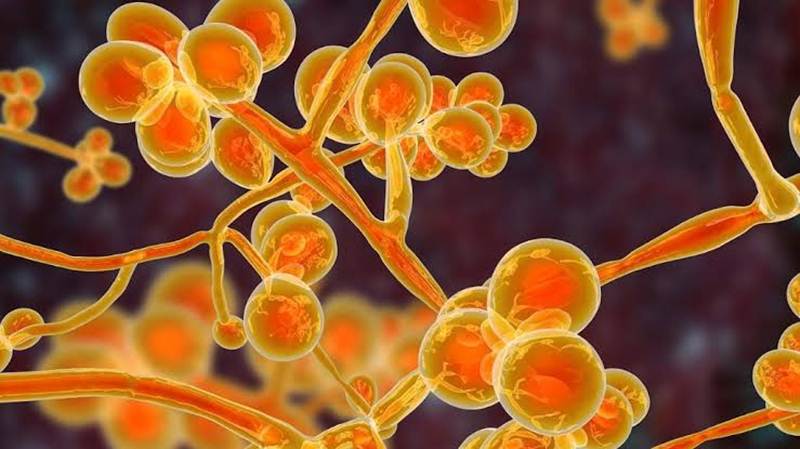
Yellow fungus otherwise known as mucor septicus, is a fungal infection just like black fungus and white fungus. It is said to often occur in lizards rather than human beings and has been classified deadly when compared to black and white fungus. The reason for its fatality is that it is harder to detect it, thus reducing the time to treat it at its earlier stages. In the worst case, it can also lead to organ failure and thus is not to be taken carelessly. The cause of fungal infections, be it black white or yellow, is said to arise due to poor hygiene. Fungal infections grow rapidly in atmospheres with higher humidity(30-40%).
Symptoms
Initial symptoms of yellow fungus are lack of appetite, lethargy and weight loss. The generality of early stage symptoms is the reason for its difficult detection. As the infection spreads, it can lead to sunken eyes, more time to heal wounds, development of pus and ultimately, it can induce necrosis(death of body cells and tissues), affecting organs leading to organ failure and in the worst case, death.
Out of the blue, why are fungal infections surfacing now?
Fungal infections are more likely to attack people with reduced immunity much than people with enriched immunity. Due the backlash faced by people due to Covid-19, the immunity system of people affected remained vulnerable. This vulnerability along with poor hygiene was taken advantage of, leading to rising cases of fungal infections. The director of the New Delhi’s All India Institute of Medical Sciences (AIIMS) Randeep Guleria, stated that another reason for the spread is due to the irrational use of steroids for the treatment of Covid-19 contributing to compromised immunity. Find what Randeep Guleria said regarding this here.
Preventive methods
What can be done on our part to fight fungal infections? The obvious answer to it is clean environment. Some methods to follow:
Keep your residing place dry and clean as humidity is a growth factor for fungus.
Avoid using damp towels, shoes etc as they can become breeding grounds.
Do not wear tight clothing which can lead to absorption of sweat causing humid patches
Dispose stale food as soon as possible
Covid-19 patients should be careful and should report to hospital immediately on encountering symptoms
Be on the look out during these crazy times. Stay indoors and come out only if it is absolutely necessary. Be safe and take care.
Considering the rate of global expansion it is impossible to imagine any place unexplored and far from the reach of humans. However, there do exist certain places around the world which are forbidden from public viewing.
>Poveglia Island, Italy
Considered one of the most haunted islands in the world Poveglia Island is rumoured to have about 50% of its soil consisting of human remains. Located in between Venice and Lido the island was used as a quarantine station for plague infected people from 1793 to 1814. Also, evidences from past have proved that the island was used by Napoleon to store weapons in early 1800s. By the year 1922, until 1968, the buildings there were converted into mental asylum for the ill. It is believed that mentally ill patients were brutally tortured and killed at the hospital. Afterwards the island was used for agricultural purpose.
>North Sentinel Island, India
Located in the Bay of Bengal, North Sentinal Island is apart of the Andaman and Nicobar Islands. It is home to the Sentinelese an indigenous tribe often known as ‘uncontacted’ people. According to the Andaman and Nicobar Islands Protection of Aboriginal Tribes Act prohibits people from outside the island to travel here. It is believed the Sentineleses have inherited the island from generations and wish to remain in no contact with the outside world. Out of respect to their voluntary isolation the island is banned for travelling.
>Tomb of Qin Shi Huang, China
The tomb of Qin Shi Huang, the first Qin emperor of China is situated in Lintong District, Xi’an, Shaanxi province of China. constructed over 38 years, from 246 to 208 BC, and is situated underneath a 76-meter-tall tomb mound shaped like a truncated pyramid. It is preserved in the respect of the late emperor.
>Bhangarh Fort, India
Built in the 16th century, Bhangarh Fort is located in Rajasthan, India. Claimed as one of the most haunted forts in India, trespassing near Bhangarh is legally prohibited between the sunset and sunrise. However, according to government claims, visiting the place after sunset is prohibited due to dense forest cover, the presence of wild animals and no street lighting facilities.
>Ilha da Queimada Grande, Brazil
Also known as Snake Island, Ilha da Queimada Grande is an island off the coast of Brazil in the Atlantic Ocean. As the name suggests, it is known for its snake population having an average of five snakes per mile. It is home to an endangered snake species, Bothrops insularis, a golden lancehead pit viper. The snakes became trapped on the island when rising sea levels covered up the land that connected it to the mainland. Considering the danger from one of the deadliest serpents in the world the Brazilian government has made it illegal for anyone to visit the island.
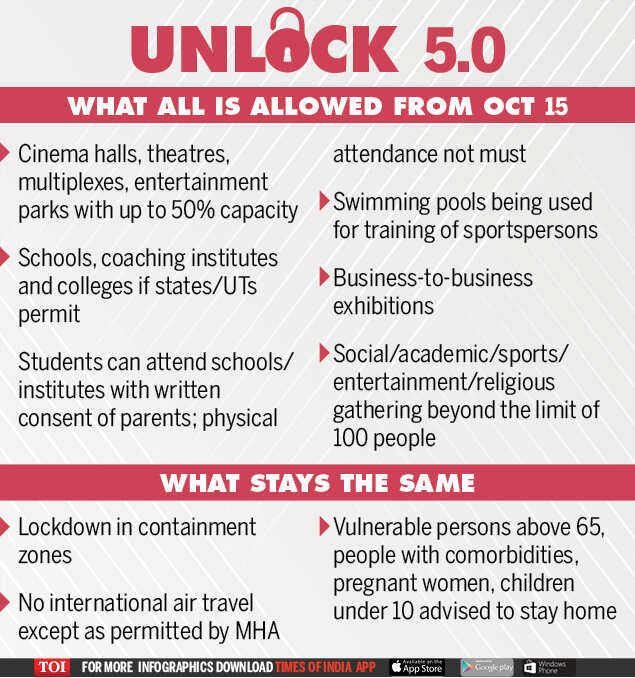
The ministry of home affairs has announced a detailed guideline for Unlock 5, or for reopening to be effective from October 1, shortly.
Here are the guidelines:
* Cinemas/ theatres/ multiplexes will be permitted to open with upto 50% of their seating capacity, for which, SOP will be issued by Ministry of Information & Broadcasting.
* Business to Business (B2B) Exhibitions will be permitted to open, for which, SOP will be issued by the Department of Commerce.
* Swimming pools being used for training of sportspersons will be permitted to open, for which the standard operating procedure (SOP) will be issued by Ministry of Youth Affairs & Sports.
* Entertainment parks and similar places will be permitted to open, for which the SOP will be issued by Ministry of Health & Family Welfare.
Opening of Schools, colleges, education institutions and coaching institutions
State/ UT Governments have been given the flexibility to take a decision after October 15, 2020, in a graded manner. The decision shall be taken in consultation with the respective school/ institution management, based on their assessment of the situation, and subject to the following conditions:
* Online/ distance learning shall continue to be the preferred mode of teaching and shall be encouraged.
* Where schools are conducting online classes, and some students prefer to attend online classes rather than physically attend school, they may be permitted to do so.
* Students may attend schools/ institutions only with the written consent of parents.
* Attendance must not be enforced, and must depend entirely on parental consent.
* States /UTs will prepare their own SOP regarding health and safety precautions for reopening of schools/ institutions based on the SOP to be issued by Department of School Education and Literacy , Ministry of Education, Government of India, keeping local requirements in view.
* Schools, which are allowed to open, will have to mandatorily follow the SOP to be issued by Education Departments of States/ UTs.
* Department of Higher Education (DHE), Ministry of Education may take a decision on the timing of the opening of Colleges/ Higher Education Institutions, in consultation with Ministry of Home Affairs , based on the assessment of the situation. Online/ distance learning shall continue to be the preferred mode of teaching and shall be encouraged.
As you travel you’re revealed to more new spirits, arts, and lifestyles than you are living in your hometown all the time. Amidst all the uniqueness in your lifetime, means of comprehending nature, and sustenance, which provides people a new purpose for their lives. If you feel like you are puzzled about what your goal is, what you aspire to do with your life, the profession, or the collegiate path you want to proceed, go explore! You might just be bewildered regarding what you learn as an innovative thought of life meaning and objective.
Travelling will surely make you extra self-sufficient and bold. You will recognize your skills in tackling unexpected situations. You will apprehend that you can sustain without any help. You will realize that you are much tougher and more courageous than you have expected. Traveling more will have great importance on your mental health, particularly if you’re not used to moving out of the comfort zone if you travel, you can encounter things that you could never endure at home. You may see magnificent sites and sceneries that you may not have seen where you live. You can try activities that you have never undertaken previously.
You may learn a lot of useful things. Tasting local cuisine in a different country is a new experience. All the flavors are diverse. By traveling solo you can easily make friends. Every destination you go to, every person you meet, and every sight seen creates exceptional memories. It’s the encounters you go through which enables you to skip everyday life and enfold nature, the capitals, or the people around you. But there are certain disadvantages too like there are fund issues to travel and not everybody requires to be a moneybag to see the world but at times commuting prices can sum up suddenly. This is very precise if you visit during peak season or an extravagant destination, such as France or New York.
Countries all over the earth have languages and dialects which their people are accustomed to. So no matter wherever you visit, unless you’re a language wizard, you’re going to run into a people and undergo a language restriction. Everybody will at a point miss their home. Be it a trip or a tried distraction from your everyday life, there will be a time where an awful feeling takes over and will make you desire to go home. Now in the pandemic were people are just waiting for the situation to get better are yearning for getting out of the house. So hopefully when the condition gets better, go and travel because we all deserve it.
Coronavirus Cases in India LIVE: Coroavirus cases in India have continued to see a spike in the past few days, breaching a new mark every other day. On Sunday, India registered its single-day and record spike of 64,399 coronavirus cases, taking the country’s Covid tally past 21 lakh-mark. India had crossed the 20 lakh-mark on Friday. In just two days, India recorded a spike of over 1 lakh cases. Experts have believed that India’s coronavirus peak is yet to come. As per World Health Organization data, India has been recorded more coronavirus cingle-day cases than the United States or Brazil for past four days. As India readies to prepare to fight coronavirus, stay with us to catch LIVE updates.
One hundred and nine days after the first person tested positive for Covid-19 in India, the country’s case count crossed the 1-lakh mark on Monday, with the number of infections having doubled in just a little over 12 days.
Both the spread of the virus and the spurt in cases in recent days will be a cause for concern for the authorities. On Monday, 4,713 fresh infections were reported from across the country, the third highest in a single day so far, led again by Maharashtra, which reported more than 2,000 cases (2,033 to be exact) for the second day running. As many as 24 states/UTs reported new cases during the day.
On the positive side, the number of people recovering from the infection is steadily rising. It was 38,908 on Monday, with the recovery rate at 38.8%. With 3,103 fatalities from the virus so far, India’s death rate too is relatively low at 3.1%.
However, as the country entered phase 4 of lockdown, the number of daily cases was still rising, indicating that the infection was yet to peak. On Monday, apart from Maharashtra, the number of new cases remained high in Tamil Nadu (536), Gujarat (366), Delhi (299, a slight drop from previous days), Madhya Pradesh (254), Uttar Pradesh (177) and Bihar (103).
Rajasthan and Karnataka registered their highest single-day rise in infections, with 305 and 99 cases, respectively. West Bengal (148), and J&K (106) were also close to their highest numbers.
At 131 deaths from the virus on Monday, the toll remained above 100 for the fourth straight day. Maharashtra recorded the highest 51 deaths, including 23 from Mumbai, while Gujarat reported 35 fatalities, a majority (31) from Ahmedabad alone. The toll was 12 in Delhi, where the death rate is now slowly rising after staying low for a long time.
Among Indian cities, Mumbai has recorded the highest number of Covid-related deaths at 757 while Ahmedabad district comes second with 524. When it comes to death rates, Gujarat’s financial capital has double the rate than the Maximum City. Compared to Mumbai’s rate of 3.64%, Ahmedabad recorded 6.22%. In the month of May, the rate reduced in Mumbai but increased to 6.95% in Ahmedabad.
NEW DELHI: One hundred and nine days after the first person tested positive for Covid- 19.
in India, the country’s case count crossed the 1-lakh mark on Monday, with the number of infections having doubled in just a little over 12 days.
Both the spread of the virus and the spurt in cases in recent days will be a cause for concern for the authorities. On Monday, 4,713 fresh infections were reported from across the country, the third highest in a single day so far, led again by Maharashtra, which reported more than 2,000 cases (2,033 to be exact) for the second day running. As many as 24 states/UTs reported new cases during the day.
On the positive side, the number of people recovering from the infection is steadily rising. It was 38,908 on Monday, with the recovery rate at 38.8%. With 3,103 fatalities from the virus so far, India’s death rate too is relatively low at 3.1%.
However, as the country entered phase 4 of lockdown, the number of daily cases was still rising, indicating that the infection was yet to peak. On Monday, apart from Maharashtra, the number of new cases remained high in Tamil Nadu (536), Gujarat (366), Delhi (299, a slight drop from previous days), Madhya Pradesh (254), Uttar Pradesh (177) and Bihar (103).
Rajasthan and Karnataka registered their highest single-day rise in infections, with 305 and 99 cases, respectively. West Bengal (148), and J&K (106) were also close to their highest numbers.
At 131 deaths from the virus on Monday, the toll remained above 100 for the fourth straight day. Maharashtra recorded the highest 51 deaths, including 23 from Mumbai, while Gujarat reported 35 fatalities, a majority (31) from Ahmedabad alone. The toll was 12 in Delhi, where the death rate is now slowly rising after staying low for a long time.
Among Indian cities, Mumbai has recorded the highest number of Covid-related deaths at 757 while Ahmedabad district comes second with 524. When it comes to death rates, Gujarat’s financial capital has double the rate than the Maximum City. Compared to Mumbai’s rate of 3.64%, Ahmedabad recorded 6.22%. In the month of May, the rate reduced in Mumbai but increased to 6.95% in Ahmedabad.
In terms of cases, Maharashtra reported 2,033, the second-highest count in a day. The state’s tally reached 35,086, with Mumbai reporting over 1,000 cases for the second day in a row (1,185) to breach the 21,000 mark. The city now has 21,335 cases.
Meanwhile, five doctors and 55 police personnel where among the 106 who tested positive for the virus in J&K. Four of these doctors had treated a Covid positive woman who died of co-morbidities on Sunday.
Tamil Nadu reported three deaths and 536 fresh Covid-19 cases on Monday, with people returning from Maharashtra being the only ones testing positive in many districts. The testing strategy continued to be a subject of debate with the ICMR releasing new guidelines and the state set to finalise its own by Tuesday. The state has been criticised for reducing the number of tests over the last one week by epidemiologists, doctors and political leaders.
In Uttar Pradesh, as many as 177 new cases, including 31 in Gautam Budh Nagar, took the state’s Covid tally to 4,649. The state also recorded six deaths, including two migrant workers. UP’s corona toll is now 118.
Russia is set to register world’s first coronavirus vaccine on August 12. The inoculation has been developed jointly by the Gamaleya Research Institute and the Russian Defence Ministry.
However, the clinical trial data and other documents of Russia’s COVID-19 vaccine are currently under expert review. The decision on registration will be made based on its results, according to the Russian health ministry.
“The documents that are needed to register the vaccine developed by the Gamaleya Research Institute of the Health Ministry, including clinical trial data, are under expert review. The decision on registration will be made based on the results of the review,” the ministry said.
Russia’s Deputy Health Minister Oleg Gridnev told state news agency, Sputnik news that the Phase-3 clinical trial of the COVID-19 vaccine was underway. He also said that senior citizens and medical professionals will be the first to get vaccinated.
The clinical trial of the Russian coronavirus vaccine is undergoing at two institutions: the Burdenko Main Military Clinical Hospital and the Sechenov First Moscow State Medical University. The clinical trials of the vaccine began on June 18 and included 38 volunteers. All of the participants developed immunity. The first group was discharged on July 15, and the secondon July 20.
How Russia’s coronavirus vaccine will work?
Alexander Gintsburg, director of the Gamaleya National Research Centre, said the vaccine used inanimate particles created on the basis of adenovirus. He added that the vaccine would cause no harm to a person’s health.
Abdul Kalaam once said – “Love your job but NEVER fall in love with your company”.
Desperate times calls for desperate measures. At least that’s what some of the reputed, well known and no-so-known companies have done in the recent times, owing to the pandemic. Many a companies are trying to cope with the lashes of COVID-19 by cutting costs, eliminating positions and retrenching people. Positions that were once considered to be very crucial to the functioning of the business were just scraped off from the hierarchy and employees occupying those positions were handed a ‘good-bye’ note.
But there is a stark difference in how some of the companies decided to do so. In some companies, the CEO was very transparent in explaining why there is a necessity to lay off people and they felt extremely sorry while doing so. They wrote long, meaningful mails and they at least tried to empathise with the laid off employees. And then there are other companies who’s CEOs just mailed a short message conveying that they are being laid off without any note of sorry or explanation, forget about transparency. But whatever be the mode or the reason of laying off, we as employees should understand that it is best for business and instead of leaving on a bad note, we should make sure to leave with respect and on a good note.
There is no doubt that we might be feeling very smitten inside, but we should not let that feeling empower us to destroy everything that we have accumulated over the years. Now, one must be wondering how to do so amidst such emotional times. I would like to suggest a few ways by which one can leave on a good note even when things might have not worked in their way. Some of those suggestions are:
Try to not dwell on the negative emotions. At the time of lay off, one might feel very low about it, but try not to feed into the negative emotions. Instead of that, one should think about one’ achievements, successes and milestones at the company. Think about what was your best contribution and what worked for you and try to harvest on that.
Try to work out a plan to handover your work. Since one is working remotely, one must be very methodical and careful while handing over very confidential information such as clients’ list project reports and other such documents so that others’ can plan out the work. It is very okay to feel about withholding information, but one should not do so because one should understand that it is not the end of one’s career.
Draft a proper good bye mail. Draft a short and clear mail, intended to one’s colleagues, friends and other people in one’s office network. Make sure to include your contact details – mostly phone number and personal mail id so that people can stay in touch with you. Also one should not forget to give a note of thanks to everyone, in spite of all differences. Such a habit will definitely help one in one’s career while searching for other jobs.
Try to build and amend bridges at the time of leaving. One should talk to the close colleagues, confidantes and the network of peers and mentors, so that they can assist to find a new job in this landscape.
These are the very few steps one should take to ensure that even though things did not quite work out well for you, there is always a way to make things better at some other place.
I have just been promoted to the second year of my postgraduate course and our dean was very much proactive in launching the online platform by buying a Zoom subscription, providing access to the online private library and even bought subscriptions to buy e-books. A necessary amount of fees was also reduced although there is no reimbursement of the internet or Wi-Fi charges. Around 2-4 classes of duration 90 minutes are usually scheduled each day, with a couple of days off each week. Faculties usually provide assignments with deadlines and we have to prepare presentations almost every week. Everything which one usually does in a MBA college, we are doing everything and even the faculties are trying to replicate the entire offline model of MBA into an online model. Truth to be spoken, they have been successful in their endeavours, but to what extent?
With each passing day, such online classes are becoming more of a burden. Attending classes every day, for such long hours as well as trying to grasp new topics is becoming increasingly difficult. Even though the faculties are trying to make things easy, there is something about this online platform that makes the entire teaching process a mile less effective. Recent trends suggest that the attention span of a normal 25 years old human being ranges from 10 to 20 minutes. This trend is well observed when we are studying a class environment, usually surrounded by friends who help us getting through the class. But coming to the online mode, what usually happens is our attention span gets drastically reduced and since there is no check with the reality, we often drift away from what exactly is happening in the class. What spikes our frustration is the absence of non-verbal cues during the class activities or during presentation. In classes, we can see our audience and change ourselves accordingly, but in online mode, it seems like a one way communication – we only speak without any response from the opposite end. And to add to that, we always face a fear of losing internet connection in the middle of class. And God forbid, the days when that happens, we have no other options but to succumb to our own senses to try and to understand what we have missed.
But that is not all. Post graduate study is so designed that group work is more of necessity which reduces time and increases effectiveness of our study. Studying solo in our rooms is making things harder, and this is piling up day by day.
But what is more frightening and despairing is that unlike the corporate, schools and colleges does not have any mental wellness programs. Hours of online classes with studying solo in our rooms is creating a mental challenge coupled with anxiety and stress. What actually is happening now is that students are trying to cram everything but what is the effectiveness? Are we really being able to retain anything at the end of the day? There is no doubt that the faculties are trying their best, but somewhere they have failed to consider the mental challenge that we are facing in the meantime.
Online class is perfectly fine for those curriculum which have been designed in that way. It does not work, or at least we are not ready to embrace this form as a substitute of offline mode of classes.
Till the time when everything was ‘normal’, there existed a phenomenon that was quite common and that which caused stress. Termed as ‘FOMO’, and acronym for ‘Fear of Missing Out’ which describes a perception that others are having a better life, experiencing better things and are having much more fun and you are leading just a regular life. This phenomenon has existed for many years, but with the advent and excessive use of social media, this phenomenon has gained too much importance. FOMO usually occurs when a bunch of your ‘social media’ friends post some photos of some event without you (usually displaying the positive aspect while hiding the negative aspect), you tend to measure your life on their scale and you consider your life to be very ‘normal’. You feel like you are missing out on all the fun. Over the years, FOMO has manifested itself due to ‘posts’ on Facebook and Instagram.
But wait, times have changed. COVID-19 has practically faded the phenomenon ‘FOMO’ which concurrently gave birth to ‘ROMO’, an acronym of ‘Reality of Missing Out.’ Not only this pandemic has paralysed the world, it has also erased the feelings of missing out on fun considering the fact that everyone is locked indoors. With ROMO, you know that it is not cool to go outdoors and have fun with friends while breaking the rules of isolation.
ROMO gives a feeling of despair while losing out to go on to even the simplest of things. Like going out for dinner to a nearby restaurant, missing out for an ice-cream treat at park, going out for grocery shopping or even simply just going out for a stroll. The usual feeling of ‘getting bored’ is now substituted by different conflicting feelings such as – ‘Will I die?’, ‘Will my parents be alive?’, ‘Will I ever be able to go out for a nice dinner?’, ‘Will I be able to enjoy life as before?’. Apparently, such questions keep on running across my or anyone’s mind.
Isolation and quarantine has practically crippled the entire world. Everything around us seems to be on hold – like we are waiting for some kind of a miracle to lift the veil of such darkness. Events like religious festivals, sports tournaments, summer parades at my school, convocation at my B-School, to name among a few, got cancelled. It is very heart wrenching to see that life is just pacing forward and we are actually missing our present and that is a very harsh reality. Family members waiting to receive their ‘chemotherapy’ sessions, pre-final year students waiting to get back to their college and grand-parents waiting to visit their children, and we all are waiting, running desperately to reach the end of the tunnel. Our present is fleeting like sand sifting through our fingers, waiting for everything to end.
It is rather funny to think that just a few months back, we all had the opportunity to make choices, deciding where to go and which options need to be thrown out of the window. But think about now. Do we actually have any opportunities to even think over?
COVID-19 has completely revolutionized the workplace by pushing most of the organizations and the businesses to quickly switch from ‘office model’ to ‘work-from-home’ model. While working under the roof of an office, there existed legislations and legal framework to monitor the behaviour, but those existing policies need to be adjusted so as to incorporate the WFH scenario.
Some key areas where the legal framework needs to be adjusted are:
Women working at night. Previously as per the Shops and Establishment Act of each state, women employees were prohibited to work during some specified hours at night or they have to arrange for transport services along with escort to make sure that they reach their home safely. So employers had to face compliance issue with regard to women employees. But now since most female employees have moved to WFH, so the employers are free from such compliance issues and at the same time, the floor is open for the employers to look out for those women population who could not previously access the jobs due to geographical and other constraints.
Change in compensation structure. Previously many allowances such as conveyance allowance, meal allowance or food coupons were given out to employees as a part of hardship allowance. But this might not be attractive now considering the WFH scenario. Instead, employers should provide other allowances such as internet reimbursement, ergonomic allowances, IT expenses etc.
Sexual harassment at the new workplace. POSH Act was passed in the year 2013 for the prevention of sexual misconduct at office. But now as the workplace has changed, new forms of misconduct such as repeated phone calls at inappropriate and ungodly hours, forcing to switch on videos, playfully passing lewd remarks and over-discussion of work are creeping up with time. Considering the face that the boundary between work and home has become blurred, POSH needs to incorporate some new rules to prevent such misconduct.
Overtime work. Just a few months back, employers used to measure productivity by checking the entry and exit times of an employee. They used to do so by either swiping their cards or by biometric screening. So if an associate is doing overtime work, usually it was thought that the person is very hardworking. But now the associates are working from home, so performance should now be measured depending on the outcome of the employees rather than on the time spent on doing the work.
Security and compliance threats. SEZ does not have guidelines for WFH facility but STPI has it. As per them, it is necessary for the employees to work on Virtual Private Network. So employees should spend on securing a robust and private WiFi so that that IT security is not compromised on the local system and confidentiality is maintained.
Modification of labour laws like maternity benefits and compensation laws. Previously associates can claim compensation from the employers if any accident occurs at the workplace, but now with the WFH arrangement, the existing compensation laws need to be modified so as to arrange for any compensation if any accident occurs at home.
Our workplace dynamics have completely changed and to enable smooth transition, employers also need to look into the existing legal structure so that eventually the employees does not feel to be disadvantaged. Our home is the new workplace and so laws have to be adjusted taking our ‘home-office’ into consideration.
5 days back on July 20, the Chief Minister of West Bengal, Mamata Bannerjee and the Home Secretary, Alapan Bandopadhyay conducted a meeting where it was jointly decided to impose a 2-day lockdown for every week in West Bengal. The sole reason for this lockdown is community transmission at some places in West Bengal. Due to such high rise of spread of infection, it was came as a verdict that offices, transports services and all the local shops will be closed on these 2 days. For this week 19th July to 25th July, those 2 days were Thursday (23rd July) and Saturday (25th July).
Due to the increase in the number of positive cases in west Bengal, our state minister had to take such a drastic step to contain the transmission. It was also decided that there will be further reviews if there arises any change in decision. To promote the mandatory 2-day lockdown, the city police have also undertaken quite a few steps to ensure compliance. They have released a mask-wearing awareness anthem, sung by Usha Utthup. At the same time, an awareness campaign ‘Mask-up Kolkata’ was promoted by Anuj Sharma, Police Commissioner.
Police raiding the streets of Kolkata
For one, the cases in West Bengal have been rising at an alarming rate. Apparently, Monday recorded 2,282 new cases, taking the total to 44,769. So to take this under control, the West Bengal police is also taking very strict steps to ensure that the citizens are following the lockdown rules. Around 10,000 policemen have hit the streets of West Bengal at around 5:30 am to curb the normal trends. Throughout the day, multiple cases came out where the house maids were trying to reach their places of work, shop owners even tried to open their shops with much disregard for the policemen and so much so, people just wandered off to the street saying that they were not aware of the rules of this new lockdown. But sadly, this time the police was there to check their behaviour and to make sure that there is no relaxation of the rules. The state ensured to circulate drones so as to prohibit people from leaving their homes. Cases arose where the bike riders tried to get away from the situation or where the shop owners forcefully tried to open their shops, ultimately resulting in police booking.
Yes at the end of the day, police cases arose from the places which had been declared as containment zones. As per Thursday’s report, 256 FIRs were registered, 1,273 people were arrested, 19 vehicles were seized, 665 people were booked for not wearing the masks and 128 people were caught for spitting openly on the roads. But in most of the cases, the victims complained that they were not aware of the exact conditions of this 2-day lockdown.
West Bengal, especially Kolkata, is doing a great job while trying to combat the increased transmission. But it is very necessary for Kolkata to stick to its own words to achieve success in this mission. And more importantly, we, the citizens should be cooperative enough to make this mission successful.
Millions across the world, rich and poor, younger and older, does not matter where, we are always facing the lurking danger of coronavirus infection. It is causing a tumultuous effect on the day to day lives of people, with increasing healthcare costs, decreasing accessibility to the proper healthcare facilities, rising prices of commodities and the ever increasing number of deaths every day. Poverty has hit its record in India and with time, there is a rising inequality in the provision of treatment, thus leading to preferential treatment.
But what is most astonishing is the fact that this diseases which was, at first, more common among the higher ranks of the society is spurring troubles among the lower ranks. Over the past few weeks, I could see a stark difference in the mode of treatment among the various ranks of the society. Consider the low wage or daily wage and the migrant workers. On the event of such a pandemic, they lost their sole earning potential, had to be transported back to their roots in ways that was unimaginable and even back at their home, poverty has reached the zenith of their lives. They basically had to pay their own fairs, which was multiple of the usual fares and they have to arrange for their own sanitation kit at the time, when they could not even afford the basic kit required for their survival. They are facing great uncertainties in their lives owing to stoppage of income, lost employment opportunities, educational hurdles of their children and many more. There were instances when the migrants tried to return to their homes walking on foot from the working locations and then losing their lives. It is very heart wrenching to see that how the lower sections of the society have to wait for uncountable hours just to get the basic treatment in the hospitals, and most of the times they succumb to their lives. Even for medical reasons other than COVID, they are being kept in isolation and the doctors do not even care to provide the basic treatment necessary to keep that patient alive. Such is the pathetic condition, not just for them but for all the common public.
And I am simply amazed to see how our own Bollywood is treating the entire pandemic. It seems like it’s a kind of spring break for them where they have been asked to do whatever they can. Many such pompous and self-centred Bollywood actors resorted to making videos such as washing the dishes when the bai is unable to come or when they are cooking some dish, which apparently we do it almost every day and then there are others who make their son playing an instrument while she teaches him how to do classical dance. And the worst part of it all is that, they all chant the same thing as to stay inside, wear mask, frequent sanitisation and doing things at home to keep mental stress at bay, but what they are forgetting is that they might have the opportunity to stay away at Disneyland, but others have to go out of their safe haven and do something to survive. Recently, a top notch Bollywood actor was tested positive for COVID and he and some of his ‘beloved’ family members had to be admitted to the hospital. He was tested on a regular basis for COVID and his family was getting the best medical care possible. The most surprising element of this news is that, first, it was broadcasted as a breaking news almost on all the national news channels and second, all the people were desperately praying for him and his family. Such is the disparity.
My only concern is in the fact that where is the praying when it comes to the ordinary people? People who are actually working for us, where are we when we need them? Why such disparity, even when the soul is not labelled?
Alas, our society still thinks actors are ‘heroes’.
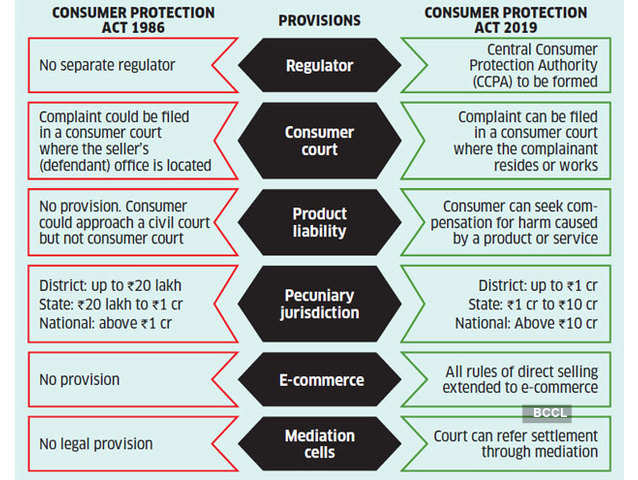
The Consumers can now cheer as the Consumer Protection Act, 2019 has recently replaced the three decade old Consumer Protection Act, 1986. The Consumer Protection Act, 2019 which came into effect on Monday (July 20) has replaced the earlier Consumer Protection Act, 1986.
The new Act as per the Experts say that “it gives more power to the consumers”. It seeks to revamp the process of administration and settlement of consumer disputes, with strict penalties, including jail term for adulteration and misleading ads by firms.
On July 20, 2020 certain provisions of the Consumer Protection Act, 2019 came into force as notified by the Central Government. Following the the key features of the relevant provisions:-
Key features of the Consumer Protection Act, 2019 which came into effect on July 20, 2020:-
1) Consumers can now institute a complaint from where they reside or work for gain.
2) The original pecuniary jurisdiction of the District Commissions has increased upto ₹1 crore from ₹20 lakh earlier.
3) The Pecuniary jurisdiction of State Commissions has been increased from ₹1 crore to Rs. 10 crore.
4) The National Commission can hear cases above ₹10 crore when compared to above ₹1 crore earlier.
5) While the provisions relating to e-commerce are not yet notified, a section relating to electronic service provider (covering software services, electronic payments) is notified.
6) The opposite party needs to deposit 50% of the amount ordered by the District Commission before filing an appeal before the State Commission. Earlier, the ceiling was a maximum of ₹25,000, which has been removed.
7) The limitation period for filing of appeals to the State Commission has been increased from 30 days to 45 days.
8) The Parties can be allowed to settle the disputes through mediation.
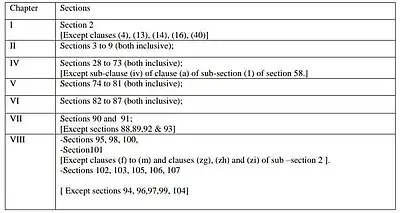
Following are the Sections which came into force:
Above mentioned provisions pertain to the Consumer Protection Councils, Consumer Disputes Redressal Forum, Mediation, Product Liability, punishment for manufacturing, selling, distributing etc spurious good or products which contain adulterant.
As per the rules, the e-commerce players will have to display the total ‘price’ of goods and services offered for sale along with break-up of other charges. Only a few certain miscellaneous provisions with regards and respect to the powers of the Central and State Government to make the rules and regulations have also been enforced.
On misleading advertisements there is provision for jail term and fine for manufacturers. There is no provision for jail for celebrities but they could be banned for endorsing products if it is found to be misleading.
For the first time there will be an exclusive law dealing with Product Liability. A manufacturer or product service provider or product seller will now be responsible to compensate for an injury or damage caused by the defective product or deficiency in services.
The Act has also defined an “e-commerce” as the buying or selling of goods or services including the digital products over digital or electronic networks. The existing definition of e-commerce has been adopted from India’s FDI Guidelines on e-commerce.
The definition of ‘e-commerce Entity’ as provided under the FDI Guidelines includes inventory and market place models.
There is also a provision for class action law suit for ensuring that rights of consumers are not infringed upon. The authority will have power to impose a penalty on a manufacturer or an endorser of up to 10 lakh rupees and imprisonment for up to two years for a false or misleading advertisement.
Biomedical Waste Management & Handling Rules, 1998 (“1998 Rules”) in India govern the handling, disposal and management of bio-medical waste (“BM Waste”)in India have been notified by the Central Government in the exercise of the powers conferred by Section 6,8 & 25 of the Environmental Protection Act, 1986. These rules provide for the framework of the management and Handling of disposal and scientific management of BM Waste
In wake of the COVID-19 pandemic, the Centre Pollution Control Board (“CPCB”) recently issued guidelines dated March 27, 2020 for handling, treatment and safe disposal of BM Waste generated during treatment, diagnosis and quarantine of patients confirmed or suspected to have COVID-19 (“Guidelines”).
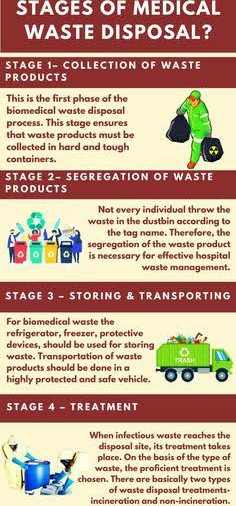
The Guidelines have been necessitated due to the super infectious nature of the Novel corona virus and provide for a mechanism for the segregation, packaging, transportation, storage and disposal of BM Waste in order to avoid further spread of the virus through BM Waste.
So what do you mean by the BM Waste and what are the categories of BM Waste that the hospitals generate?
The Bio-Medical Waste Management Rules 2016[1] (“2016 Rules”) define the BM Waste as any waste, which is generated during the diagnosis, treatment or immunisation of human beings or animals or research activities pertaining thereto or in the production or testing of biological or in health camps, including the categories mentioned in Schedule I the 2016 Rules.
The 2016 Rules apply to all persons who generate, collect, receive, store, transport, treat, dispose, or handle bio medical waste in any form. The next imminent question that comes to our minds is what are the categories of BM Waste that the hospitals generate?
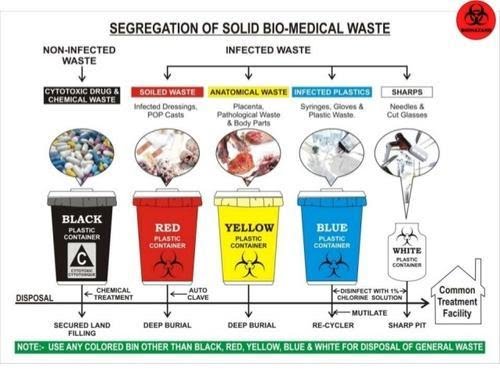
BM Waste generated from a hospital could be human anatomical waste, animal waste- microbiology & biotechnology, waste sharps, discarded medicines and cytotoxic drugs, solid & liquid waste.
Now that we know what’s the meaning and various categories of BM Waste, the most pertinent question arises that how is it supposed to be treated and disposed of by the hospitals in India during the ongoing COVID-19 pandemic?
While the hospitals in their usual course deal with the segregation, management and storage of BM Waste, the situation in times of COVID-19 is extraordinary the reason being the highly contagious nature of the virus and also it’s transmission cycle and multiplicity rate.
As the hospitals are being flooded with the suspected and confirmed cases, the Ministry of Health and family welfare (“MoHFW”) and the CPCB have issued various guidelines for the handling and management of waste generated from the COVID-19 facilities.
Under the 2016 Rules, while the hospitals are required to ensure that there is a secured location within its premises for a spill/pilferage free storage of segregated BM Waste in labelled/coloured bags or containers, the duty to transport the stored BM Waste from the hospital premises onwards to the common BM Waste treatment and disposal facility is of an ‘operator’ as defined in the Rules.
Specifically, in wake of COVID-19, the CPCB has issued Revision 1 to the Guidelines dated March 25, 2020 for Handling, Treatment and Disposal of Waste Generated during Treatment/Diagnosis/ Quarantine of COVID-19 Patients (“CPCB Guidelines”).
[2] The said CPCB Guidelines inter-alia, state that hospitals are required to depute separate BM Waste sanitation workers to COVID-19 isolation wards and maintain records of all waste generated in such isolation wards and ensure that the BWM generated is collected and separately stored in separate leakproof color-coded double layered bags or bins /containers labelled as “COVID-19 waste” as per the 1998 Rules and the Guidelines.
In fact the Bombay High Court in a recent pending public interest litigation has, while issuing notices to local municipal corporations and the State Pollution Control Board, also directed the Maharashtra government to clarify whether it was ensuring that all COVID-19 related biomedical waste generated in the state was being disposed of in a safe manner[3].
Now that we have a thorough understanding of how the BM Waste is supposed to be treated and disposed of the most important and the widely discussed about topic is that what are the measures that a hospital is required to take for the safety of its employees doctors, nurses and other support staff who are known as the (“healthcare personnel”) from the dangerous diseases like COVID-19?
In order to answer this pertinent question which is often there in the limelight, one must keep in mind that the Healthcare personnel who are the Frontline workers have a high risk of contracting the COVID-19.
While the hospitals are taking precautions and measures to control any spread of infection within the premises, it is particularly difficult given the highly super-infectious nature and hyper-speed feature of the virus. Due to this feature it spreads widely and it becomes a bit difficult to contain it in an over-crowded environment but it’s not impossible to achieve that as we all have been deterrent enough to contain it’s spread but still there is always scope for improvement.
The first steps towards controlling the spread of a virus is personal protective equipment also known as PPE which should preferably be a two-layered fluid-resistant apron and basic items like N-95 masks, face shield, full cover gowns and sanitisers but the same are rendered ineffective against the COVID-19 if the quality of these equipments is not up to the standard as required.
Greater emphasis is also to be laid upon the proper training and awareness of healthcare personnel towards proper use and disposal of the equipment. The spread of the COVID-19 virus is also particularly fast due to the heavy load of asymptomatic patients coming into the hospital and hence a greater need for the formulation of national COVID-19 protocol.
The MoHFW has vide its revised guidelines for clinical management of COVID-19 dated March 31, 2020[4] (“Clinical Management Guidelines”) impressed upon strict compliance of Infection prevention control (IPC) protocol for Hospitals and a consequent effect of the same is prevention and management of COVID-19 in the hospital staff.
This protocol inter-alia, standard precautions such as hand hygiene, use of PPE to avoid direct contact with patients’ blood, body fluids, secretions (including respiratory secretions) and non-intact skin, prevention of needle-stick or sharps injury, safe waste management, cleaning and disinfection of equipment and cleaning of the environment around a COVID-19 patient.
The 2016 Rules also provide as follows that in order to and for ensuring the safety of the healthcare workers and others involved in the segregation and pre-treatment of BM Waste, the hospital is required to train to all its healthcare workers, immunise them for protection against diseases which likely to be transmitted by handling of BM Waste, in the manner as prescribed in the National Immunisation Policy[5].
Also, hospitals are required to ensure occupational safety of all its health care workers and others involved in handling of BM Waste by providing appropriate and adequate PPE and also they must conduct health check ups at the time of induction and at least once in a year maintain the records for the same.
Now due to the pandemic if one is an employee ie the Healthcare personnel of the hospital one must understand the Legal aspect and angle also and the most important aspect of all is that what is the Legal obligations of the hospital, if and when an employee of the hospital tests positive for COVID-19.
Let’s answer this as it’s the most crucial and critical aspect. The present COVID-19 pandemic is an unprecedented event and is unlike any other infectious disease known to mankind and the medical world which is yet to fully decipher its modus operandi of infecting humans.
In a hypothetical situation wherein a hospital employee contracts COVID-19, it will be imperative for the employee in such a situation to establish that his possible exposure to COVID-19 was in the Hospital itself not in the community after considering that the employee is spending time outside as well apart from the hospital premises.
While in an ideal case, if it is proved that a hospital staff has contracted it ,i.e., it shall amount to ‘a hospital acquired infection’, then the hospital would be ordinarily liable. However, in the case of COVID-19 since it is seemingly impossible to trace down the exact source of the infection, in absence of such evidence and in light of utmost safety measures and precautions taken by the hospitals as per the guidelines, fastening of any liability on the hospital would be peculiarly difficult.
The defence available to the hospital may be culpability and negligence of the employee and proving that the hospital itself took all possible measures to avoid any mass spread of the infection.
The next relevant point to be analysed and answered is that when a Non COVID-19 patient contracts the virus during his term of being admitted in the hospital what are the Legal obligations of the hospital when this happens?
The National Consumer Dispute Redressal Commission in the matter of Apollo Emergency Hospital vs Dr. Bommakanti Sai Krishna & Anr.[6] observed that “As already observed, the infection occurred during the stay of the Complainant at the hospital. On the other hand, there is nothing to show that the source of infection lay outside the hospital. Thus, there is preponderance of possibilities of the infection having been acquired in the hospital itself. We therefore, do not accept the contention that it was necessary for the Complainant to produce expert evidence to prove negligence on the part of the concerned doctors in the hospital.”
The afore-stated judgement implies a presumption of liability on the hospital that in cases where the probability of acquiring the infection is much higher inside the hospital than from other sources. However, the same may not apply in COVID cases in light of the peculiar difficulty of tracing the source of acquiring the COVID-19 infection. Therefore, the presumption rendered by the aforesaid judgement will not be ipso facto applicable to cases of COVID patients.
As we have discussed the various pertinent relevant questions another one is that what are the legal obligations of the hospital, if and when a patient is misdiagnosed positive or negative for COVID-19 by the hospital due to a fault in the COVID-19 rapid testing kit (“testing kits”)?
The liability of a hospital in cases of misdiagnosis depends on the methodology of procuring of testing kits. A hospital may procure testing kit either from third party manufacturer or may manufacture them internally i.e. by itself or its subsidiary.
In cases where the misdiagnosis is on account of faulty testing kit procured externally, the hospital cannot be held directly liable as the liability may be shifted upon the manufacturer.
In cases where the misdiagnosis is on account of faulty testing kit is due to testing kits produced internally the hospital may be liable subject to it being proved that the misdiagnosed patient was indeed positive. However, factors such as the success rate of any testing kit not being 100% may have an interplay in determining the liability.
We have to be aware of what are the Legal liability of a hospital in a situation where the hospital discharges a mild/very mild/pre-symptomatic COVID patient to ramp up the capacity for serious COVID-19 patients.
A hospital will not be held liable for a systematic discharge of a mild/very mild/pre-symptomatic/moderate COVID-19 patient as the same is directed by the Central Government. On May 8, 2020, the MoHFW released its revised policy for the discharge of COVID-19 patients.[7] This revised policy provides that hospitals can discharge mild/very mild/pre-symptomatic in accordance with the protocols given therein.
In the earlier advisory[8], COVID-19 patients could be discharged only after chest radiograph clearance, viral clearance in respiratory samples, and if two of the patient’s specimens were negative within a period of 24 hours. The discharged patient would then have to home quarantine themselves in accordance with the revised policy.
So what is the protocol to be followed by a Hospital while disposing of the dead bodies of the COVID-19 patients?
The corpses are a source of infection for healthcare personnel/ other patients and cannot be disposed of by usual methods of disposal and therefore, the MHFW issued guidelines dated March 15, 2020 on dead body management in COVID-19.[9] The guidelines provide inter-alia, the protocol to be followed at the time of removal from the isolation room or area, put in bio-hazard bag and disinfection. Further, all surfaces of the isolation area (floors, bed, railings, side tables, IV stand etc.) should be wiped with 1% Sodium Hypochlorite solution and then it should allow a contact time of 30 minutes, and allow it to air dry as well.
While treating patients infected with the COVID-19 virus, what is the protocol for the treatment?
The All India Institute of Medical Sciences (AIIMS) has issued clinical protocol dated April 21, 2020 for treatment of Covid-19 patients and states such as Madhya Pradesh and Delhi have directed Hospitals and health centres dedicated to treating COVID-19 patients to follow the said clinical protocol.[10]
Treatment must be affordable for all. One must know whether or not there is a standardisation of costs of treatment of a COVID-19 for private hospitals?
Government hospitals are reaching their intake capacities and for that reason COVID-19 patients have been resorting to treatment in private hospitals. While some private hospitals are charging exorbitant amounts as costs of treatment, the same is worrying not just for the patients but also to the insurers.[11]
In a first, the State government of Maharashtra has capped treatment costs in private hospitals for people without medical insurance and for other patients, the capped prices will come into effect once they exhaust their medical insurance cover.[12]
The Hon’ble Gujarat High Court has vide its order dated May 22, 2020 directed the state government to issue a notification making it mandatory for all multi-speciality hospitals private/ corporate hospitals in Ahmedabad and on its outskirts to reserve 50% of their beds (or such other capacity as maybe specified by the state government) for COVID-19 patients.
In view of the same, the Government of Gujarat may come up with similar caps on costs as Maharashtra.[13] The Hon’ble Gujarat High Court also observed that the certain private hospitals authorised by the government to treat COVID-19 patients in Ahmedabad are charging exorbitant fees which is unaffordable for a massive section of the society and directed the state government to ensure that private hospitals do not charge exorbitant fees. [14]
Also in light of the same The Hon’ble Bombay High Court recently directed a charitable hospital to make court deposit of monies in a case pertaining to levy of exorbitant charges for treatment of COVID-19 patients belonging to poor strata of the society despite reserving 20% of its beds for poor and the needy.[15]
The guidelines given by the University Grants Commission (UGC) have become challenge in the Supreme Court. Today 31 students from various universities in 13 states and one union territory moved the top court. Amongst them, one is a COVID-19 patient. The UGC’s decision of postponing final-year exams till the 30th September 2020 becuase of the Corona pandemic is one of the main points of problem. Using the social media, students across the country have been demanding for the revised guidelines.
The petition has talked about the cancellation of final-year examinations for universities across the country. Results should be declared on the basis of past performance and internal assessment of a student, it says. The petitioners have also demanded that the mark sheets should be awarded and the degrees to successful students by July 31, 2020. The 31 petitioners have also demanded adoption of CBSE mechanism and providing of another chance to those dissatisfied with their marks.
Earlier on Saturday, Maharashtra Cabinet Minister and Yuva Sena President Aaditya Thackeray filed a writ petition in the court seeking relief for lakhs of students throughout the country. “Today Yuva Sena has filed a written petition in the Supreme Court with prayers to save lives of crores students, teachers, non-teaching staff and their family members by asking the UGC not to be stubborn about enforcing examinations when India has crossed the 10 lakh cases mark,” Thackeray mentioned. He further said that the academic excellence couldn’t be judged by one examination. “For academic excellence, we must calculate the aggregate marks of the past semesters. Beyond which, if students still feel the need to appear for an examination, they voluntarily may do so post COVID. The petition is for each and every student across the country, being forced to appear for an examinaton in an absolutely bizarre judgement of the situation by UGC and non-flexibility when it comes to human safety,” he said.






 Eduindex
You must be logged in to post a comment.