Content Writing Internship for Successful Career in Media

 🌟 Cultivating Brilliance Through Daily Writing: A Call to Track2Training Interns! 📝🌈

Dear Esteemed Track2Training Interns,

Welcome to a journey of self-discovery, growth, and impact with Track2Training NGO! As you embark on this exciting internship, we invite you to embrace a transformative habit that holds the potential to elevate your skills, amplify your voice, and leave a lasting imprint on the world – the habit of daily writing.

Why Daily Writing Matters:

  1. Clarity of Thought: Daily writing serves as a powerful tool to clarify your thoughts, helping you articulate your ideas with precision and coherence.

  2. Self-Reflection: It provides a unique opportunity for introspection, enabling you to explore your experiences, challenges, and triumphs on this enriching journey with Track2Training.

  3. Skill Enhancement: Writing consistently hones your communication skills, a crucial asset in any professional setting. It empowers you to convey complex ideas concisely and persuasively.

  4. Creative Expression: Unlock the doors of creativity! Through writing, you can unleash your imagination, foster innovative thinking, and find novel solutions to the challenges you encounter.

  5. Documentation of Progress: Track your personal and professional growth. Your daily musings will become a testament to your development, forming a valuable record of your internship experience.

How to Cultivate the Habit:

  1. Start Small: Begin with bite-sized writing sessions. Whether it’s jotting down observations, summarizing your day, or expressing your aspirations, every word counts.

  2. Set a Routine: Integrate writing into your daily routine. Whether it’s morning reflections, lunchtime musings, or evening summaries, consistency is the key to building this habit.

  3. Embrace Variety: Experiment with different writing styles – essays, reflections, poems, or even short stories. Embracing variety keeps the process engaging and dynamic.

  4. Create a Writing Space: Find a quiet, comfortable space where you can focus solely on your thoughts. This dedicated space will serve as your creative sanctuary.

  5. Celebrate Progress: Take a moment to appreciate your commitment. Celebrate milestones, no matter how small, and acknowledge the positive impact your daily writing is bringing to your personal and professional life.

Our Challenge to You:
Let’s embark on a 30-day writing challenge together! Commit to writing every day for the next month and witness the transformative power of this simple yet profound habit. Share your insights, challenges, and triumphs with your fellow interns, creating a supportive community of aspiring writers within Track2Training.

Remember, your words have the potential to inspire, inform, and ignite change. Let your daily writing be the catalyst for your personal and professional evolution.

Here’s to the magic that unfolds when pens meet paper and ideas take flight!

With enthusiasm and encouragement,

Training Co-ordinator
Track2Training NGO 🌍🚀

TOP 5 sectors that provide opportunities in post covid-19


The current situation are impact on ongoing pandemic, this changed lots of thing around us. Many of the changes have been come with negative impact for example small business house hit very badly, change in student’s education and their learning behaviours and many more industries have faced same impact.

 However there are some sectors which are still in high demand and we have to look this positive side of this pandemic as well. These sectors are providing opportunity in short term as well as in long term.  


1.     1.  E-learning platform

During this pandemic era, when all the schools and colleges are operating in virtual mode through online classes, it’s led to create a rise of web courses and online mode of education. The cost of education to also decrease, making it more financially accessible to a larger section of society as well. This helps many e-learning platforms to grow their market and reach every section of society though internet.  


2.    2E-Commerce sector

  E-commerce was already on the rise before the pandemic hit due to our increasingly digitized & globalised world looking for further convenience. But, during pandemic consumer had a no choice to gave up there old shopping habits for fear to get sick. It is expected that e-commerce industry is likely to reach over $ 200 billion in the coming 8 years.

                Amazon, Walmart and Ali Babaare large players that will take leverage of the growth opportunity. 


3.    Remote working software

 Thegovernments implementing more serious measures such as full or partial lockdowns, and businesses struggling to find ways to maintain adequate levels of productivity, many are turning to remote working apps and software. The desire to have more flexibility of working and remain safe from virus will also drive businesses to rely more on cloud and virtual office solutions.

  The concept of ‘’WORK FROM HOME’’ become more widely popular. The tech firms like zoom, Google meet saw an unpredictable growth     that remain continues for upcoming years.  


4.    OTT platforms

covid-19 has brought a shift to the entertainment sector where over the top (OTT) platforms   replaced old entertainment watching habits.  Over the past few months, online content consumption has risen exponentially, creating a vast user base for OTT platforms. Confined to their homes for months, people turned to OTT platforms to keep themselves occupied. The worldwide   OTT   platforms are Hotstar, Netflix, Prime, etc.

5.      HEALTH CARE

The pandemic has reminded us of many key essentials, but one of the biggest takeaways has been remembering how important it is to have skilled medical staff and top end medical equipment to combat unpredictable deadly and contagious diseases. The pandemic has undoubtedly brought the pharma and healthcare sectors to the forefront. While the crisis was unprecedented and did put a strain on the industry, it has recovered quickly and is now thriving. With a surge in demand for healthcare and pharma professionals, the industry is expected to be largely immune to the looming economic slowdown in the near future.


<

p class=”MsoNormal” style=”line-height: 18.15pt;margin-bottom: 0cm;vertical-align: top”>            Covid-19 is changed whole living pattern, from virtual classroom to remote working styles etc. Newer technologies are coming up to bridge   the gap created through social distancing. The new wave of technologies emerging helped to broom some sectors that provided new opportunities to all.  

Importance of Skill Development Training

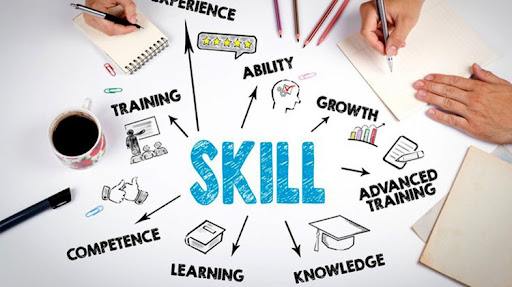
 In today’s competitive world, its very important for people to invest their time and resources to improve their skills, potential capabilities. One needs to do so in order to be future ready. One’s skills determines their ability to carry out any task effectively and efficiently. 

                                                              (Photo: doaram.com)

Skill development is a powerful tool to safeguard the future of youth and for their overall development. It is an important way to increase the employment rate of India. Skills are as essential as one’s academic qualifications. Education and skills should now go hand in hand to be successful. In today’s world, lack of education and skill development restricts people from realizing their potential capabilities and abilities. Eventually, this prevents them from contributing to the economic growth of a country. Thus, education and skill training is vital for the overall growth and personality development of an individual.
Illiteracy is one such reason for lack of skill training. The capability of the poorest sections of society to start business is restricted owing to because of their lack of business skills, illiteracy, their inability to take risks, capital, lack of investment, etc. It would be far better to upgrade their skills so that they can get employed. The strategy of the Ministry of Labor to specialize on skill upgradation has contributed significantly to this mission. 
According to the World Trade Organization, the GDP level can increase up to 3%-5% in 2035, if India focuses on skill development and training. India has taken many initiatives in this regard. The Ministry of Skill Development and Entrepreneurship (MSDE) is responsible for coordinating skill development activities in India. It has supported various organizations like National Skill Development Corporation (NSDC), which aims to promote skill development in the country by establishing institutes across the country and National Skill Development Agency (NSDA), which seeks to coordinate the efforts of the government and the private sector and aid in skill development.

Hon’ble Prime Minister Shri Narendra Modi launched the Skill India Mission, under the Ministry of Skill Development and Entrepreneurship on 15 July 2015, which aims to train over 40 crore people in India in different skills by 2022. The mission seeks to vocational training and certification of Indian youth for a better livelihood and respect in the society. Various initiatives under this campaign are National Skill Development Mission, National Policy for Skill Development and Entrepreneurship, 2015, Pradhan Mantri Kaushal Vikas Yojana (PMKVY), Skill Loan scheme, Rural India Skill etc.

                                                     (Photo: Indiamart)

Schemes & Initiatives through NSDC

  • Pradhan Mantri Kaushal Vikas Yojana (PMKVY)
  • Rozgar Mela
  • Pradhan Mantri Kaushal Kendras (PMKK)
  • Capacity Building Scheme
  • Udaan
  • School Initiatives and Higher Education
  • India International Skill Centres (IISCs)
  • Pre Departure Orientation Training (PDOT)

Schemes related to Entrepreneurship

  • Pradhan Mantri ‘YUVA’ Yojana

Other Schemes and Initiatives

  • Skill Loan Scheme
  • Indian Institute of Skills (IISs)
  • SANKALP
  • Academic Equivalence to Vocational Qualifications
  • Aspirational Districts
  • Swachh Bharat Abhiyan
  • Technology Initiatives

To encourage enterprise and boost employment generation, skill training initiatives are coming up with specialized courses on entrepreneurship in different sectors. Skill development is a very important tool to boost self-confidence of an individual and to instill trust on themselves. With proper skill development training, one can surely become confident and successful. It not only nurtures the inner will but also boosts the personality of an individual.

<

p style=”background: rgb(255, 255, 255);border: 0px;font-family: Roboto, sans-serif;font-size: 16.1px;line-height: 23px;margin: 0px 0px 15px;padding: 0px;vertical-align: baseline”>

What is Creative Writing?

Whether you’re writing a short story, long-fiction, poetry, or non-fiction, at some point in your education, you will likely be faced with the challenge of creative writing. You may do it because it’s required in your English or literature classes, or you may do it simply because you enjoy it.


Creative writing is a form of writing where creativity is at the forefront of its purpose through using imagination, creativity, and innovation in order to tell a story through strong written visuals with an emotional impact, like in poetry writing, short story writing, novel writing, and more.

It’s often seen as the opposite of journalistic or academic writing.
When it comes to writing, there are many different types. As you already know, all writing does not read in the same way.
Creative writing uses senses and emotions in order to create a strong visual in the reader’s mind whereas other forms of writing typically only leave the reader with facts and information instead of emotional intrigue.
Unique Plot
What differentiates creative writing and other forms of writing the most is the fact that the former always has a plot of some sort – and a unique one. 

1. Characters are necessary for creative writing. 

While you can certainly write a book creatively using the second person point of view (which I’ll cover below), you still have to develop the character in order to tell the story.
Underlying Theme
Almost every story out there has an underlying theme or message – even if the author didn’t necessarily intend for it to. But creative writing needs that theme or message in order to be complete. 
That’s part of the beauty of this form of art. By telling a story, you can also teach lessons.

2 Visual Descriptions

When you’re reading a newspaper, you don’t often read paragraphs of descriptions depicting the surrounding areas of where the events took place. Visual descriptions are largely saved for creative writing.
You need them in order to help the reader understand what the surroundings of the characters look like. 
Show don’t tell writing pulls readers in and allows them to imagine themselves in the characters’ shoes – which is the reason people read.

3 Point of View

There are a few points of views you can write in. That being said, the two that are most common in creative writing are first person and third person.
First Person – In this point of view, the narrator is actually the main character. This means that you will read passages including, “I” and understand that it is the main character narrating the story.
Second Person – Most often, this point of view isn’t used in creative writing, but rather instructional writing – like this blog post. When you see the word “you” and the narrator is speaking directly to you, it’s second person point of view.
Third Person – Within this point of view are a few different variations. You have third person limited, third person multiple, and third person omniscient. The first is what you typically find.
Third person limited’s narrator uses “he/she/they” when speaking about the character you’re following. They know that character’s inner thoughts and feelings but nobody else’s. It’s much like first person, but instead of the character telling the story, a narrator takes their place.
Third person multiple is the same as limited except that the narrator now knows the inner thoughts and feelings of several characters.
The last, third person omniscient, is when the narrator still uses “he/she/they” but has all of the knowledge. They know everything about everyone.
While non-creative writing can have dialogue (like in interviews), that dialogue is not used in the same way as it is in creative writing. Creative writing (aside from silent films) requires dialogue to support the story.
Your characters should interact with one another in order to further the plot and develop each character other more.

4. Imaginative Language

Part of what makes creative writing creative is the way you choose to craft the vision in your mind. 
And that means creative writing uses more anecdotes, metaphors, similes, figures of speech, and other figurative language in order to paint a vivid image in the reader’s mind.

5. Emotional Appeal

All writing can have emotional appeal. However, it’s the entire goal of creative writing. Your job as a writer is to make people feel how you want them to by telling them a story.

5. Read More, Understand skills and then Write 

If you really want to write, you need to read. Sure, at any time you could sit down and, having never read a poem, write a book of poems, or having never read a novel, write your own out of thin air, but here’s the thing: they would probably be awful. If you want to be a great writer, or even just a marginally good writer, you have to read. You have to know what has been done and what people are doing now to gain any sense of what you should be doing.

6. Don’t mistake mystery with obscurity

Don’t get caught in the trap of thinking that just because something is difficult to understand, it will create an air of mystery that will draw the reader in. This is rarely true. Don’t sacrifice clarity for cleverness. People generally don’t enjoy reading things that are obscure, whether this effect was achieved on purpose or accidentally. Resist the urge to be complicated for the sake of being complicated.

Know your audience

All writing is writing to someone (even if that someone is just you). You need to keep this in mind when writing. Really consider the question: who is your audience? How can you expect them to handle certain narrative decisions, plot devices, or characters? What is their goal in reading your piece? What is your goal in speaking to the audience? If you don’t have a readily defined audience, make one up and work from there.

Revise. Revise. Revise.

Rarely (super rarely) will your writing be “right” the first time. Sometimes you fail, but much more often, you simply need to revise… again and again. Yes, it can be tedious, but it’s a necessary part of the craft that separates writers from hobbyists and angst-filled teenagers. Learn to revise. Take a step back from your work and approach it with a critical eye. Take advice and input from others. Be ready to make substantial (and sometimes painful) revisions in the pursuit of great literature.

9. Kill your darlings

This is classic writing advice. Your darling could be a line, a scene, a poem or even a whole story. Sometimes you can become emotionally attached to a piece of writing that you are absolutely sure can be brilliant, but for one reason or another just doesn’t work. A lot of times, the reason it doesn’t work is because it’s not that good. It’s not. Really. Cut it and get on with your life. Your efforts are better spent working on something new.

10. Don’t Plagiarise, Be Original 

If you write good and original fiction then new readers will enjoy reading and you can earn a lot of name of fame if readers start liking your writing and you can also start earning from your creative work. 
Many publication houses and famous authors look for new budding creative writing and hire them as ghostwriter for writing in their name and they pay a lot to you.